Tears and tributes as crowds gather to mourn death of Thailand’s Princess Bha | Thailand | The Guardian

Keyword – World news
Trefwoorden – Thailand, Asia Pacific, World news
Title – Tears and tributes as crowds gather to mourn death of Thailand’s Princess Bha | Thailand | The Guardian
Author – https://www.theguardian.com/profile/natasha-may
Link – Tears and tributes as crowds gather to mourn death of Thailand’s Princess Bha | Thailand | The Guardian
Publish date – 2026-06-12T10:14:43.000Z
Category – News
URL – https://www.theguardian.com/world/2026/jun/12/crowds-mourn-death-thailand-princess-bha
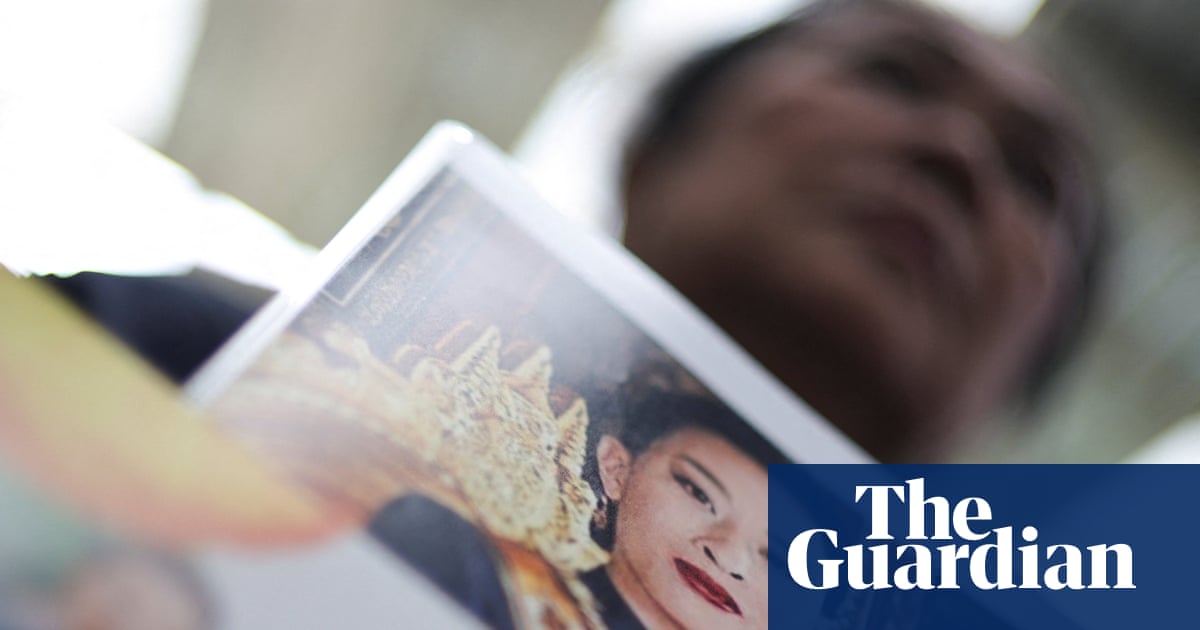
At King Chulalongkorn Memorial hospital in Bangkok, mourners dressed in black sat side by side, their eyes pink from crying for the woman whose portraits they cradled in their laps.

Some images were framed in gold, others in plastic sleeves, charting the life of Thailand’s Princess Bajrakitiyabha from a rosy-cheeked baby to a young royal in red military dress replete with shining badges and ceremonial sword. Later photos showed her posing with one of the dogs she was out training in 2022 when she became gravely ill with heart problems.

Bajrakitiyabha, known by the nickname Princess Bha, had been in hospital ever since, and after nearly four years in a coma, died on Thursday night at the hospital, aged 47.

Bajrakitiyabha had been considered by many analysts to be a well-suited heir to the throne, though this had never been addressed officially.

“I don’t believe she died,” said Sittinee Damaonsondpoan, one of the mourners. “The people of Thailand love her very much.”

The Thai language teacher had taken the day off work to come to the hospital to grieve. “I’m so sad,” Damaonsondpoan said, adding that the princess had carried the qualities of “everything good in Thailand: loyalty, kindness”.

She said the grief for the princess was compounded, coming so soon after the queen mother’s death in October .

While patients and medical staff passed by in the hospital’s busy central corridor, the mourners gathered in an outdoor covered foyer in humid 32C conditions. Volunteers handed out tissues and bottles of scent. Some people sat silently, their heads bowed, while others embraced.

The signs of the nation in mourning were visible beyond the hospital. News websites switched to black and white, while bus-ticket collectors wore black ribbon pins. The number 47 – the princess’s age – was sold out at local lotteries around the city, such as that run by Dao Buekaew in the central riverside district of Bang Rak.

The official mourning rites announced by the Royal Palace will begin on Saturday, when a funeral procession will bring the princess’s coffin from Chulalongkorn hospital to Piman Rattaya Throne Hall in the Grand Palace. According to local media reports based on a palace statement, the public will be allowed to take part in the royal bathing rites , pouring water over the princess.

Boonruksa Louhavitayarat, another mourner at the hospital, said she had heard the news from her child on Thursday night and knew she had to come the next morning.

Louhavitayarat said that, like the other women at the hospital, she had printed an image of Bajrakitiyabha to bring to the hospital in her honour. She carried multiple images of the princess, at various ages from infancy to adulthood. “My heart is very deep[ly] sad,” Louhavitayarat said.

In a televised statement , the prime minister, Anutin Charnvirakul, said the news had brought “profound sorrow and grief to Thai people throughout the Kingdom” and that no words could fully convey “the feelings of the Thai people for this great loss”.

“With her firm determination, Her Royal Highness dedicated her strength and ingenuity to creating a society founded upon justice, equality and human dignity,” Charnvirakul said.

“Her well-rounded abilities – as a legal scholar, diplomat and social worker – served as an enduring example, inspiring Thai people to believe in their own potential, strive for self-improvement, and use their knowledge for the benefit of society and the country.”

I’m 17 and very sensitive to graphic content. Does this mean I’m immature? | Young people | The Guardian

Keyword – Life and style
Trefwoorden – Young people, Australian lifestyle, Life and style
Title – I’m 17 and very sensitive to graphic content. Does this mean I’m immature? | Young people | The Guardian
Author – https://www.theguardian.com/profile/eleanor-gordon-smith
Link – I’m 17 and very sensitive to graphic content. Does this mean I’m immature? | Young people | The Guardian
Publish date – 2026-06-11T15:00:18.000Z
Category – Lifestyle
URL – https://www.theguardian.com/lifeandstyle/2026/jun/12/sensitive-graphic-content-film-tv-does-this-mean-im-immature

I’m 17, and feel like a sore thumb among my peers due to my aversion to almost everything stereotypically adult. I don’t want to consume drugs or alcohol, I’ve never been in a relationship and, in particular, I’m very sensitive to graphic content.

Earlier this year, I tried to warm myself up to several films featuring either explicit violence or sex, but a part of me felt uncomfortable beyond what was probably intended by the film-makers. The entire time, it felt as if I was pushing down my real self. After consuming various media, I quit the process of numbing myself, retreating back to only films and television with “moderate” or “mild” classification ratings.

I’m worried it reflects on my maturity. How can I not feel cowardice and like I’m unready for the real world, when almost every peer and adult I know is unbothered by it? I keep insisting to myself that this aspect of myself doesn’t matter – if it does to others, it’s not worth developing a relationship with them. But how can I feel as if I’m not keeping my life stagnant, inadvertently halting my psychological and emotional development to cater to my fears?

Eleanor says: I’m struck by the bundling of drugs, sex, relationships and violence. Movie ratings combine these too; we use “inappropriate” for depictions of evil and for good things that young people aren’t ready for. But I think it could be helpful to distinguish “things I don’t feel ready for” from “things I don’t like, and I don’t see why I ever should”.

For romance or depictions of sex, it’s totally fine to simply not feel ready. Just as few 17-year-olds want to role play being a parent even though they might one day want kids, knowing something is potentially part of a nice life later doesn’t need to mean you want to spend time around it now.

For depictions of violence, though, there are genuine questions about the ethics of enjoying it ever. Cards on table: I’m like you. I was once so disturbed by a movie I tried to make the case that horror films are fundamentally immoral. If you told me, “Great news, we’ve trained some puppies to act as though they’re being tortured for two hours,” I wouldn’t say, “Great, where can I watch?” So why am I supposed to enjoy the simulation of the worst things imaginable being done to people?

There are answers, as my viewing companions rightly pointed out. The story can be good enough, aesthetic experiences are interesting unto themselves, and since the Greeks we’ve thought that getting close to difficult emotions through fiction might let us process them in an environment where we know they can’t hurt us. Like a safe viewing platform over grief and fear. So I stress there are interesting questions about the ethics of watching violence, not obvious answers.

It might help to peel apart relationships, alcohol, depictions of sex and depictions of violence. For you they’re united by being adult: under that description you feel both averse to them and obliged to get used to them. But the people around you could categorise them totally differently. Romantic relationships could feel delightfully adolescent – not adult at all! Horror movies could be enjoyable not because they involve steely, grownup toleration for horrible things but because they feel silly, thrilling, like a rollercoaster.

So try not to feel as though enjoying this stuff is a bright line dividing the mature from the immature. Maturity and personal development have very little to do with drinking or watching things you don’t want to watch. It’s about learning to be you , on purpose, in ways that are kind to other people.

One way to be mature is to be calm and accepting about your feelings. These things disturb you. Some of them disturb me too. If we’re agitated and embarrassed about that reaction, funny things start happening. You’ve already seen how you can force yourself to do things you don’t really want to.

But it can also make us overcompensate, swing the pendulum too far the other way. In an effort to justify our feelings, we can act like other people’s aren’t justifiable – narrating a whole me-v-them personality trait to purchase some self-acceptance. Convert a simple “I don’t much enjoy alcohol” into a way of life organised around the idea that people who do drink are stupid; take “sex kind of freaks me out” and turn it into judgment of people who have it sooner. You don’t want to get stuck ping-ponging between two critical reactions, changing only what you’re critical of : “I’m immature, I have to force myself to change,” or “I don’t want to be around Them.”

A more stable synthesis might be: “I feel averse to these things for reasons I am curious about. I’m going to give myself time to see if that changes, and to ask myself how others might see them differently, in ways that explain their reactions, too.”

Ask Eleanor a question

The United States enter a charged World Cup asking: what is enough? | USA | The Guardian

Keyword – Football
Trefwoorden – USA, Football, World Cup 2026, US sports, Sport, World Cup
Title – The United States enter a charged World Cup asking: what is enough? | USA | The Guardian
Author – https://www.theguardian.com/profile/alexander-abnos
Link – The United States enter a charged World Cup asking: what is enough? | USA | The Guardian
Publish date – 2026-06-11T16:01:18.000Z
Category – Sport
URL – https://www.theguardian.com/football/2026/jun/11/usmnt-world-cup-preview

M auricio Pochettino paused. The microphone signal flickered. He tried, for a second time, to say a few things to the 5,500 fans who had gathered in the sun Monday at Championship Soccer Stadium in Irvine, California – the United States’ World Cup home base – for an open training session. Nothing. Then something. More choppy audio. By the time things came back online, he had developed a quip.

“We are in the greatest country in the world,” he said in his Rioplatense-accented English. “But the technology does not work.”

Pochettino’s adaptation to the US soccer scene has not been without hiccups. The Argentinian arrived on a $6m-per-year contract (the largest outlay for a coach in US Soccer history) with a résumé featuring some of the most famous clubs and players in the world. His job: to lead a nation more known for excellence in other sports to a historic finish at a World Cup they would co-host.

Over his 22 months in charge, the results – 15 wins, 10 losses, and a draw – are hardly indicative that a run of that magnitude is coming. His side have looked unsettled in their structure at various points, alternating brilliant passages with lackadaisical moments, full of fight one minute then meek the next. Yet Pochettino has fed into the hype, saying repeatedly that the US can win the World Cup. (“Why not?”, he is fond of asking.)

Many observers argue that it’s just as easy to see the team crash out in the group stage, or exit at the first knockout round, as they did at Qatar 2022. There are no pushovers in a group with Paraguay, Australia and Turkey. And the team have struggled against the type of quality sides they may face in the Round of 32, last 16, and beyond.

What is enough? It’s the uncomfortably vague question that looms over the US more than most at this tournament. The elite, like Spain, France, Brazil and Argentina, enter the World Cup knowing that anything less than winning the trophy will be a failure. Minnows – the likes of Curaçao, Jordan and Cape Verde – know that simply giving a good account of themselves will count for a whole lot.

The US performance, meanwhile, will be read as a referendum not just on a group of players considered to be the most talented in the history of the men’s program, but on the potential of American soccer itself.

“We want to do this for ourselves and for our own country,” Christian Pulisic, the team’s biggest star, told reporters earlier this month. “We have really good players playing in top clubs in the world, we have a good team. We’re going to do the best we can to prove ourselves right.”

The coach believes. The players believe. But what would be enough to make their country believe? The sport is no longer anathema here, but it is dominated by foreign powers – the Premier League, Mexico’s Liga MX and the Champions League all have a vice grip on what the public considers to be top-class soccer worth watching. What would be enough to make American soccer dominate soccer in America? To unleash an avalanche of attention that, for once, may match that given to baseball, basketball and American football? To hoover up an influx of commercial dollars that could – could – be put to good use and help solidify a domestic soccer culture in the American mainstream?

“The first gift an Argentinian gets is a football; here, it’s a baseball bat, a basketball, an oval ball,” Pochettino told the Guardian . “Changing that’s not today or tomorrow. But there are almost 400 million people, 80 million Latinos, who already have that football DNA, and there’s space [for all sports]. What’s the problem? That people want results now.”

Theoretically, a 2026 run that exceeds the previous modern high mark – the 2002 run to the quarter-finals – could lead to a boost in all these areas, if not instant results. But just as important, if not more so, is whether the public can truly connect with these players; from the trio of childhood friends (Pulisic, Weston McKennie and Tyler Adams) who form this team’s backbone, to the defensive anchor Chris Richards, to dual-nationals such as Antonee Robinson, Folarin Balogun, Alejandro Zendejas and Ricardo Pepi.

What would be enough to turn them into genuine household names?

That sort of work lies partially in events like Monday’s, where Pochettino addressed the crowd. Once the microphone was fully operational, he spoke of how proud he was to be based in Irvine, where the mayor’s office said more than 30,000 people applied for tickets to that open training. He thanked the fans for their support, and the thousands who won the lottery cheered, providing a pleasant counterbalance to the internet-fuelled negativity that can fester among this program’s diehards. They closely watched the team go through passing drills and took selfies in the autograph line as they congratulated the players on their success, asked about moments in their career, regaled them with stories of how long and far they had come to see them. To them, this team is already a ray of light in an otherwise dark world.

Yet among some in the broader US soccer fandom, there exists a palpable sense of unease about this tournament, and what US success could represent, and who may co-opt it. The US players did not go to war with Iran, and they did not enact racist travel bans that have already seen a top referee barred from entering the country. They did not send federal forces to terrorize their own citizens, or systematically demonize anyone who comes to this country in search of asylum or a better life. They did not build a UFC arena on the White House lawn, essentially a middle finger of counter-programming of a world event that so many in this country have worked so hard to bring to life.

But the waving stripes and shimmering stars on the players’ kits represent the country, and the government, that did all those things. Will any amount of success, any number of indelible, joy-generating goals be enough to erase that? Or to move past it?

Pochettino has completely steered away from political discussions, and seems to have advised his players to do so as well. On Monday he told the Orange county crowd that he could not be prouder to lead the US, that their players, the fans and the federation have made him a better person and a better coach.

“Well, I don’t know if I could be made a better coach,” he quipped – a clear joke that nonetheless did not land, at least not until he apologized for his “Argentinian humor”. He closed his speech with what he clearly thought would be an automatic rouser – a short 1, 2, 3 countdown, and “USA!” The crowd couldn’t find the cadence Pochettino intended, and struggled to match the rhythm. He tried again. “I think you can do better,” he said. “1, 2, 3 …”

The entire crowd shouted “USA” in unison.

Tartan Army toast Scotland’s World Cup return: ‘It’s a once-in-a-lifetime opportunity’ | Scotland | The Guardian

Keyword – Football
Trefwoorden – Scotland, Football, Sport, World Cup 2026, World Cup, US sports, Boston
Title – Tartan Army toast Scotland’s World Cup return: ‘It’s a once-in-a-lifetime opportunity’ | Scotland | The Guardian
Author – https://www.theguardian.com/profile/paulmacinnes
Link – Tartan Army toast Scotland’s World Cup return: ‘It’s a once-in-a-lifetime opportunity’ | Scotland | The Guardian
Publish date – 2026-06-12T09:00:42.000Z
Category – Sport
URL – https://www.theguardian.com/football/2026/jun/12/tartan-army-toast-scotland-world-cup-return-boston

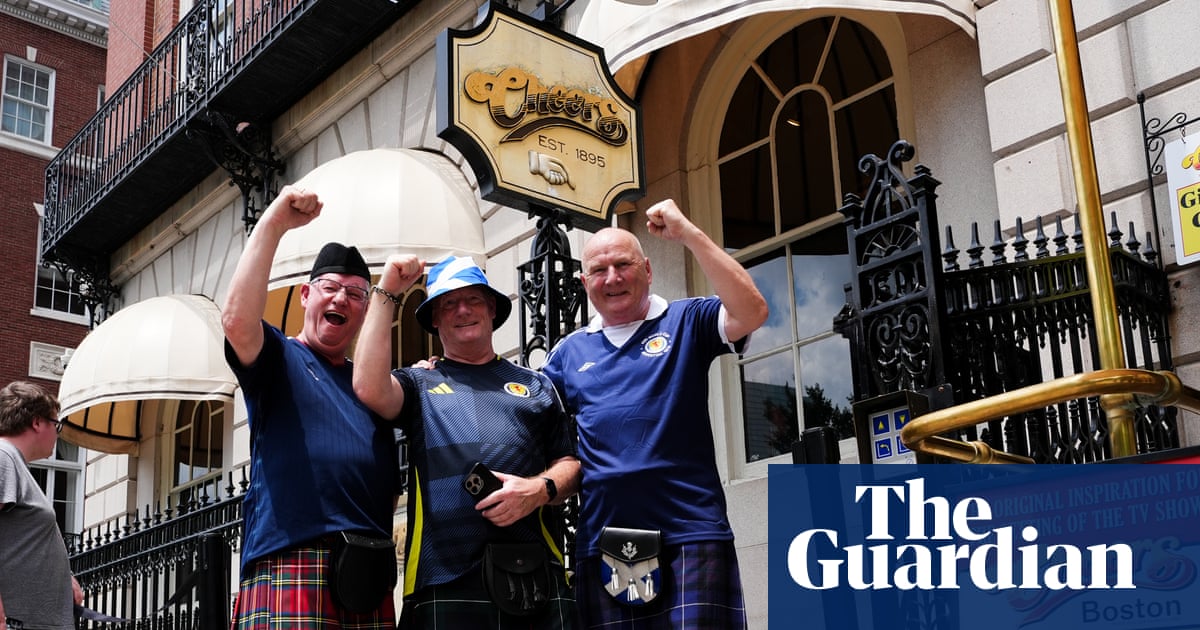
S am Adams is the beer of Boston, named after a founding father of the United States who was the fourth governor of Massachusetts. Downtown, there’s a tap room where you can drink it all day. On Thursday lunchtime the bar was packed, full of Scotland fans, and hanging over the first-floor balcony was a big yellow flag. It bore the legend “Remember Bannockburn 1314”.

Of all the bases the Tartan Army could have found for their World Cup journey, it had to be the city renowned for chasing the English out of town. Supporters dressed like William Wallace have been bonding with tour guides dressed as Paul Revere.

Others have been walking around wearing “Boston T Party” T-shirts, where the T stands for Tennent’s. Meanwhile, next to the site of the Battle of Bunker Hill, the Scottish Football Association has rebranded a local pub as Scotland House, and even had it sponsored by M&S Food.

The 2,000-person venue is expected to be at capacity on Saturday night, full of fans who have travelled to the US but don’t have a ticket for the game with Haiti and are in the market for complimentary Percy Pigs. But most bars in the city are already full of punters, with many giving interviews to local TV. With flights from Scotland crammed all week, estimates suggest as many as 40,000 Scots could be heading to New England for the World Cup.

“There are very few things in life left that you can genuinely describe as once-in-a-lifetime opportunities, but getting to see Scotland at a World Cup is one of them,” says Gordon Sheach. “I’m old enough to remember 1998. I was nine years old and actually it was what made me a Scotland fan. I watched the tournament and I thought: ‘I can’t wait till the next one.’ I didn’t think it would take the entirety of my teenage years, my 20s, and almost my 30s to come back. So now that it’s here, we’re fully committed to having the absolute time of our lives.”

Sheach runs the Tartan Scarf account on social media, a place that has become, over the past few years, an ever-expanding archive of clips and commentary on Scotland’s return from the international wilderness. First Euro 2020, then Germany two years ago and now this, a first World Cup in 28 years, and a tournament where expectations look to change. “As much as being part of the Tartan Army is about having a great time – you travel, you drink, you have a wonderful experience – I’d still quite like us to be successful on the pitch as well,” Sheach says.

“And I think for this team under Steve Clarke, that’s what they deserve. The last two Euros, where we’ve been great in qualifying, we haven’t done ourselves justice at the tournament. Now is the time to do that.”

Alan Risk is another travelling fan and part of the Hampden Roar podcast . He regards Scotland’s story under Clarke as one of growing resilience and the creation of a team supporters can identify with. “What we’ve got is a squad that has rebounded numerous times from disappointment,” he says. “As a fanbase, we’ve done the exact same thing.” Equally, the stories of the players who have become national heroes, from Andy Robertson to Scott McTominay, have been told in defiance of hard starts and setbacks. “There are so many players you can feel attached to. At one end you’ve got the bold personality of John McGinn but at the other there’s Aaron Hickey, someone who has had his setbacks but subtly gone about his work. I think quieter fans identify with his subtle professionalism.”

From being knocked out of the World Cup without losing a match in 1974, to the infamous campaign of ’78, a solitary point from Uruguay in ’86, defeat by Costa Rica in 1990 and a drubbing by Morocco eight years later, Scotland’s World Cup record is full of examples of the folly of daring to dream. But Sheach and Risk are focused on looking forward and convinced that victory will be secured on Saturday night.

“I think Haiti will come out of the traps very fast,” says Risk. “They’ve got a lot of speed and I think they’ll have to start the game rapid. But if we can get control of it fairly quickly, we can take control of the game.”

The venue for this Group C encounter is the Fifa-renamed Boston Stadium, actually 22 miles from the city in the town of Foxborough. The journey to the ground is poised to be a second odyssey of the week, with reports of phalanxes of school buses being secured to drive Scotland fans to the game. Sheach and Risk will be on the first train, stumping up the $80 (£60) return fare, arriving about three hours before kick-off in the hope of meeting Haiti fans.

“This is just as big a moment for them as it is for us, if not more so,” says Sheach. “It’s their first World Cup game in more than 50 years. So it’s a very special thing. It’s just one of those unique moments the World Cup can throw up.”

Helen Goh’s recipe for lemon pistachio snacking cake | Food | The Guardian

Keyword – Food
Trefwoorden – Food, Cake, Baking, Fruit, Eggs, Dessert, Snacks, Nuts and seeds
Title – Helen Goh’s recipe for lemon pistachio snacking cake | Food | The Guardian
Author – https://www.theguardian.com/profile/helen-goh
Link – Helen Goh’s recipe for lemon pistachio snacking cake | Food | The Guardian
Publish date – 2026-06-12T05:00:35.000Z
Category – Lifestyle
URL – https://www.theguardian.com/food/2026/jun/12/lemon-pistachio-snacking-cake-recipe-helen-goh

A good snacking cake earns its place not through grandeur, but reliability. It sits patiently on the counter, improves with a day’s rest and can be sliced into at odd hours: with coffee in the morning, tea in the afternoon or something stronger during a tense World Cup match. This lemon and pistachio version is especially companionable: tender, bright and just sharp enough to keep things lively.

Lemon pistachio snacking cake

Prep 10 min Cook 1 hr Serves 8-10

For the cake 220g unsalted butter 2 tbsp sunflower or olive oil 200g plain flour ¼ tsp baking powder ¼ tsp baking soda ½ tsp fine sea salt 250g caster sugar 1 tbsp finely grated lemon zest (from 2 large unwaxed lemons) 80ml lemon juice 3 eggs , at room temperature

For the glaze and topping 120g icing sugar , sifted 2-3 tbsp lemon juice 30g shelled pistachios , finely chopped

Heat the oven to 180C (160C fan)/350F/gas 4, and grease and line a 20cm square tin with baking paper, leaving an overhang on the sides. Put the butter in a small saucepan on a low heat, then, once melted, add the oil and leave to cool slightly.

In a small bowl, sift the flour, baking powder, baking soda and salt. In a large bowl, rub the sugar and lemon zest with your fingertips, until fragrant and damp – this helps draw out the oils in the zest and intensifies the lemon flavour. Pour in the melted butter mix, whisk until smooth and combined, then add the eggs one at a time, whisking well after each addition, until the mixture thickens and turns glossy. Whisk in the lemon juice, then add the dry ingredients, gently stirring and folding with the whisk until the mix is smooth and fully incorporated.

Scrape the batter into the lined tin, smooth the top and bake for about 35 minutes, or until a skewer inserted into the centre of the cake comes out clean. The cake should be lightly golden around the edges, with a slightly paler centre. Remove from the oven and put the tin on a rack to cool.

To make the glaze, in a small bowl whisk the icing sugar and lemon juice to a thick but pourable consistency. Spoon this over the top of the cooled cake and spread out into a thin, even layer. Scatter over the pistachios straight away, before the glaze begins to set, then cut into squares to serve.

The best recent science fiction, fantasy and horror – review roundup | Books | The Guardian

Keyword – Books
Trefwoorden – Books, Culture, Horror books, Fantasy books, Science fiction books
Title – The best recent science fiction, fantasy and horror – review roundup | Books | The Guardian
Author – https://www.theguardian.com/profile/lisa-tuttle
Link – The best recent science fiction, fantasy and horror – review roundup | Books | The Guardian
Publish date – 2026-06-12T11:00:45.000Z
Category – Culture
URL – https://www.theguardian.com/books/2026/jun/12/the-best-recent-science-fiction-fantasy-and-horror-review-roundup

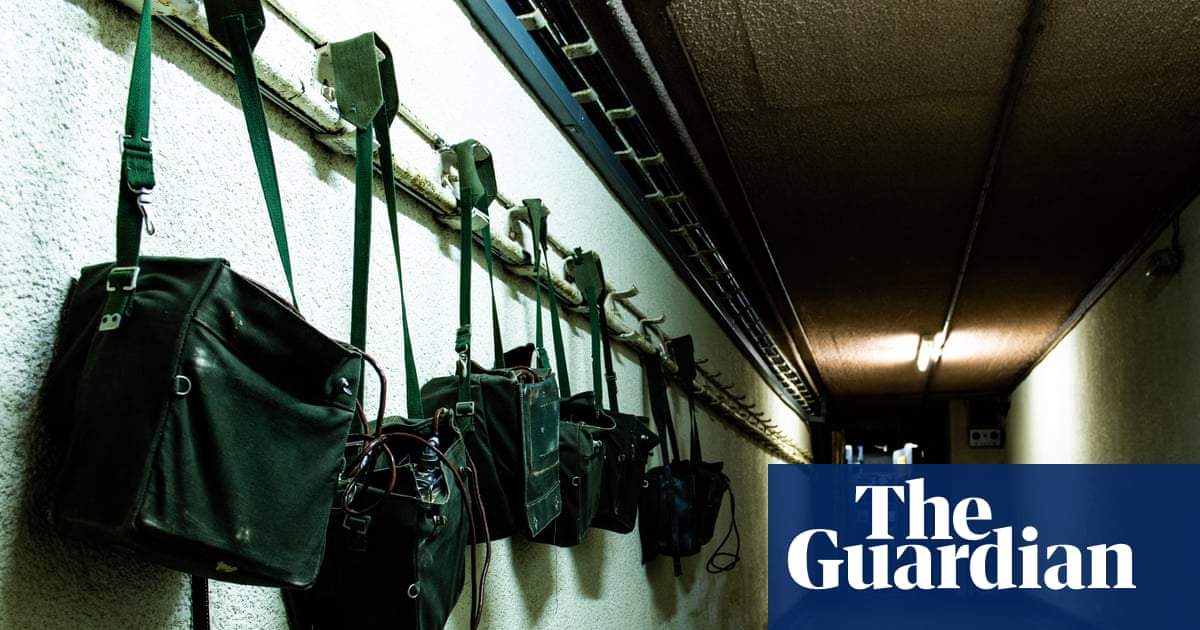
Not With a Bang by Temi Oh (Solstice, £20) The four daughters of a doomsday prepper were trained what to do in an emergency: grab their bags and head for the well-stocked bunker he had built in the garden of their London home. But when a world-shattering event occurs, the family are dispersed, individually forced to weigh their best options for survival as they shelter in place or struggle through devastated, chaotic streets. The story could suit a disaster movie (the author also writes screenplays), but it’s the complex characterisations and conflicted relationships that make for a powerfully compelling read. The characters are shown from different perspectives, and are flawed, human and real. Perfectly paced, this is a suspenseful depiction of survival amid civilisational collapse.

Tillinghast by Clare Cavenagh (Borough, £16.99) Stutley Tillinghast has lived alone for a long time. Formerly a minister in a rural Rhode Island parish, he is now caretaker of an empty church. He avoids contact with others – except when his peculiar need drives him to find someone he can kill without attracting attention, take what he requires, and then bury the body in the cellar with all the others. His life is upended by the arrival of a visitor from England, a young woman called Sarah who has come looking for her mother. There’s no possibility that Sarah could be his daughter, yet he recognises the symptoms of her illness: it is the same as his. She has become too weak to do what she must to save her own life, and he will not let her die. This debut novel, inspired by the 19th-century New England vampire panic, is a haunting, original modern gothic, a welcome departure from the usual tropes.

Atomic Coffin by Benedict Anning (Bantam, £20) This 1984-set debut combines a cold war spy novel with lurking horrors beneath the sea. Heidi Sperling, codename Thistle, is a British field asset in East Germany, where she intercepts a message regarding a previously unknown Soviet nuclear submarine on the seabed between Scotland and Iceland. Heidi is inexperienced as an agent, but required to meet the nearest British submarine and go with it to assess the threat. As the only person who speaks Russian, she is forced to overcome her fear and join the initial boarding party. The Russian sub appears empty of life, yet something is there. After the expedition’s leader disappears, Heidi finds herself under suspicion, and realises she can’t trust her own memories in what is a creepy, disorienting journey into fear.

The Unicorn Hunters by Katherine Arden ( Century, £20) In this historical fantasy inspired by the life of Anne of Brittany, Anne is a few years older than the teenager whose marriage was arranged to the king of France in the 15th century, and we are fully in a realm of folklore and fantasy, where Breton fairies are real. No one has seen a live unicorn in 100 years, but Anne is able to encounter one in the legend-haunted forest of Brocéliande, and to meet a wild-eyed man emerging from the Lost Lands two centuries after he strayed out of the mortal world. The result is rich, immersive and wonderfully escapist.

Bad Things Happen Here by Mark Morris (Flame Tree, £20) That a place can be haunted, or have a sinister atmosphere, is well established; less readily accepted is the idea that a resident spirit could leave one location to travel about and haunt others. In the latest novel by the British Fantasy award-winning author, the fifth floor of an otherwise ordinary hall of residence was the place where bad things happened to some first-year students. Twenty years on, the survivors find their lives disrupted by intrusive thoughts and hallucinations, until even the most determined rationalist among them considers calling in an exorcist, and decides they must go back to the source. A terrifyingly believable modern horror that will hold believers and sceptics in its thrall.

Socceroos video sends a pointed message on migration: ‘We’re a reflection of modern Australia’ | World Cup 2026 | The Guardian

Keyword – Football
Trefwoorden – Australia, World Cup 2026, Football, Australia sport, Sport, World Cup
Title – Socceroos video sends a pointed message on migration: ‘We’re a reflection of modern Australia’ | Australia | The Guardian
Author – https://www.theguardian.com/profile/jack-snape
Link – Socceroos video sends a pointed message on migration: ‘We’re a reflection of modern Australia’ | Australia | The Guardian
Publish date – 2026-06-11T23:05:39.000Z
Category – Sport
URL – https://www.theguardian.com/football/2026/jun/12/socceroos-multiculturalism-video-immigration-australia-national-football-team-fifa-world-cup-2026

The Socceroos have addressed growing anti-immigration sentiment in a powerful video message ahead of the World Cup , speaking of their pride in their heritage and playing for the national team.

Compared to their equivalent release ahead of the Qatar World Cup, which directly addressed the hosts’ human rights record , the Socceroos’ statement on Friday was uncontroversial.

However, in a climate of harsh deportations by United States Immigration and Customs Enforcement and the rise of One Nation in Australia , the Socceroos’ simple language held a clear message and its timing carried weight.

Awer Mabil, a winger playing for Castellón in Spain, begins the video: “I was born in Kakuma refugee camp in Kenya. My parents are South Sudanese.” Defender Lucas Herrington, who has Zimbabwean heritage, “was born in Brisbane, Australia”. Full-back Aziz Behich adds: “My family migrated from Cyprus.” Jason Geria, who has Ugandan roots, says he was born in Australia.

The message is a result of meetings in recent weeks with the players, organised by players’ union Professional Footballers Australia (PFA) and largely led by co-president Jackson Irvine.

PFA chief executive Beau Busch said the Socceroos “highlight the profound impact of multiculturalism” on the country. “At a time when some seek to divide us and question who belongs, the Socceroos stand as a powerful reminder of who we truly are as a nation and as Australians,” he said.

During the meetings, the Socceroos were invited to consider what kind of statement they wanted to issue ahead of the politically-charged tournament. They agreed to promote multiculturalism, and 20 of the 26-player squad recorded videos that make up the near-two minute message.

Irvine, the Socceroos’ outspoken midfielder who said last month Fifa’s awarding of a peace prize to Donald Trump “makes a mockery” of football as a force for positive change , presented the video’s key theme: “No matter where you come from, football is for everyone.”

That slogan is repeated by Jacob Italiano, Aiden O’Neill and Harry Souttar, the latter in a strong Scottish accent. “The Socceroos aren’t just a team, we are a reflection of modern Australia,” continues Irvine.

In the video, Mo Touré explains his upbringing, as a child to Liberian refugees, born in Guinea before moving to Adelaide as a refugee . Milos Degenek fled Croatia as an 18-month-old, living in Serbia as a refugee before moving to Sydney at the age of six.

The World Cup has brought players, staff and supporters of 48 teams to the United States, Canada and Mexico over the next six weeks. What should be a celebration of difference began on Friday amid tension around the place of migrants within US society.

The Trump administration has undertaken sometimes cruel mass deportations, including sending 21,000 people to places US calls too dangerous to visit, and this month threatened to send more ICE agents to New York .

“Our diversity is our strength,” says Mat Leckie in the video. “The Socceroos are the best representation right now of what Australia is,” says Geria.

In Australia, political party One Nation has surged in popularity. The populist party founded on anti-immigration policy has occupied the fringes of politics since its establishment in 1997.

One Nation has emerged, however, as a major electoral force, winning its first federal lower house seat and challenging the mainstream incumbents in polling.

Captain Maty Ryan, Paul Okon-Engstler, Jordy Bos and Herrington speak of the pride in playing for the Socceroos, as does Mabil. “There’s a lot of journeys behind the jersey, so to be a Socceroos has many different meanings, but with one purpose and that is to do the country proud,” Mabil said.

Irvine concludes: “We are proud of where we come from and who we represent, and proud to represent Australia.”

The Socceroos play their first World Cup match against Turkey on Saturday evening in Vancouver (Sunday AEDT).

Pro-Palestine activists believe ‘sea change’ coming in Labour’s approach to Middle East | Foreign policy | The Guardian

Keyword – Politics
Trefwoorden – Foreign policy, Labour, Palestine, Israel, Arms trade, Labour party leadership, International trade, Iran, UK news, Keir Starmer, Politics, Middle East and north Africa
Title – Pro-Palestine activists believe ‘sea change’ coming in Labour’s approach to Middle East | Foreign policy | The Guardian
Author – https://www.theguardian.com/profile/patrickwintour
Link – Pro-Palestine activists believe ‘sea change’ coming in Labour’s approach to Middle East | Foreign policy | The Guardian
Publish date – 2026-06-12T05:00:35.000Z
Category – News
URL – https://www.theguardian.com/politics/2026/jun/12/pro-palestine-activists-believe-sea-change-labour-approach-middle-east-israel

Pro-Palestine activists believe there could be a “sea change” in the Labour party’s approach to the crisis in the Middle East which could result in the government taking a tougher stance on Israel.

Campaigners have pointed to the threat posed to Labour by the Green surge in the local elections, the likely departure of Keir Starmer from No 10, and new polling which shows an appetite among Labour members for a ban on all arms shipments to Israel.

The relative optimism marks a mood swing for a campaign that has been hit hard by losing successive high court cases, the labelling of Palestine Action as a terrorist group, and the failure of Donald Trump’s Board of Peace to progress Palestinian self-rule.

Both of the frontrunners to replace Starmer as UK prime minister, Wes Streeting and Andy Burnham, have in the past urged Labour to do more to support Palestine. In the debates so far both have refused to describe Israel’s actions as genocide, although Streeting has accused Israel of committing war crimes. He also circulated a dossier from British doctors working in Palestine to cabinet, only to be accused by Starmer, according to an interview in the Observer, of doing so for the document to be leaked.

Neither Streeting nor Burnham have yet detailed what the UK should do differently in Gaza, either unilaterally or in concert, however. In July 2025 Streeting wrote that Israel’s rogue state behaviour justified applying sanctions to the state, “not just a few ministers” .

The most significant government moves until this week had been the partial suspension of arms exports to Israel in September 2024, and the recognition of Palestine as a state a year later.

Brian Brivati , a historian and the executive director of the British Palestine Project, is convinced steps will be taken. “There is a sea change about to happen inside government and it would be extraordinary if there was not, just because so much of the dynamic leads in one direction,” he said.

“[The former adviser] Morgan McSweeney has gone as Starmer’s gatekeeper in No 10 and he cut his teeth by linking Jeremy Corbyn to antisemitism. The electoral maths is obvious to MPs, including to new-intake MPs, who have woken up to what will happen in their seat after the Greens’ performance in the local elections.

“There is the contrast between the leadership shown on Ukraine with Palestine, and the failure to uphold international law. The poll of Labour party members by Medical Aid for Palestinians released last week showed 87% backing for a ban on trade with illegal settlements, while 78% back a total ban on all arms shipments to Israel.

“Then there is what is happening inside Gaza itself, including more than 900 deaths since the ceasefire and the absolute failure of the Board of Peace to achieve anything in six months. I would have expected Keir Starmer in the face of this just to do the bare minimum, but a [party] leadership election will mean a major shift in Labour’s approach, almost regardless of whether it is Burnham or Streeting, or anyone else.”

In startling remarks last week, Emily Thornberry, the chair of the foreign affairs select committee, said Labour had failed the Palestinians . After the act of recognition last autumn, the government had lost momentum while “the Trump peace plan has gone into the sand”, she said. “Recognition was a first step. Where is the second and 10th step?” she asked.

“What is happening inside Gaza is intolerable yet we tolerate it,” she added. She asked why, with the threat of the West Bank being partitioned in the next two months, the government had not used its convening power to end the deadlock over Hamas disarmament and Israeli withdrawal.

At an all-day British Palestine Project (BPP) conference last week, Thornberry was heckled when she described herself as a Zionist, but her call for Labour to do more reflects a frustrated mood. Another MP said: “It’s not just the diplomacy. We have not got the politics of this right.”

The sobering truth about Israeli public opinion was conveyed to the BPP conference by the Israeli pollster Dr Dahlia Scheindlin , and much of the day was spent disentangling what a new Labour leader could do to convince Israelis that occupation did not bring security.

The consensus was that possible practical actions were a full trade ban or a ban on the trade of goods made in illegal settlements; the belated publication of a full government response to the international court of justice decision on the illegality of the occupation made in 2024; and urgent steps to deter British and European firms from bidding for tenders for the E1 settlement area, a development that severs the north of the West Bank from the south.

A letter signed by Labour select committee chairs contained some of these ideas, but the government this week instead imposed sanctions on more settler groups, saying it was hard practically to ban illegal settlement trade. Ministers also backed a new international peace fund to support grassroots initiatives aimed at building trust between communities.

More broadly, Vincent Fean , a former consul general in Jerusalem, said: “Europe has lost diplomatic control of the Palestinian issue to Trump, and it needs to get it back, and Britain should be playing a bigger part in that.”

Activists feel Starmer has been unwilling to reflect how Gaza had become a defining issue for a generation. It is the Greens that have called for the release of Marwan Barghouti, an imprisoned Palestinian political leader. Chris Doyle , the director of the Council for Arab-British Understanding, said: “We seem to have mastered the art of vacuous press releases that express concern, deep concern and then, drum roll, grave concern.”

Daniel Levy, a former Israeli negotiator, said Labour needed some hard analysis about how Israel’s leaders accrete power. Britain had to be laser-focused “on trying to impact what Israel can and cannot do, what Israel can get away with, and what hopefully it can be prevented from doing,” he said.

“Criminalising this or that settler misses the point,” Levy said. “Sanctioning [Benjamin] Netanyahu and [Israel’s finance minister Bezalel] Smotrich is a badge of pride for them. I have a news alert. They were not going to spend their summer in the Lake District anyway. Eurovision, football, basketball – those are the things that send signals to Israel.

“We are witnessing the tectonic plates shifting. The Israeli-US war on Iran is likely to accelerate a shift away from the US. You undermine Zionism by offering something else. Apartheid was undermined by proposing a freedom charter that offered something else to the Afrikaner and white population of South Africa. There is no kissing point between a regime based on ethno-supremacy and their need for security.”

Elliot Anderson on the rise as face of England amid Manchester City transfer talk | England | The Guardian

Keyword – Football
Trefwoorden – England, Football, Sport, Nottingham Forest, Manchester City, World Cup 2026, World Cup
Title – Elliot Anderson on the rise as face of England amid Manchester City transfer talk | England | The Guardian
Author – https://www.theguardian.com/profile/davidhytner
Link – Elliot Anderson on the rise as face of England amid Manchester City transfer talk | England | The Guardian
Publish date – 2026-06-11T18:00:22.000Z
Category – Sport
URL – https://www.theguardian.com/football/2026/jun/11/elliot-anderson-england-2026-world-cup-thomas-tuchel-nottingham-forest-manchester-city-transfer

T he numbers around Elliot Anderson are rising fast – to extraordinary levels. A little like the player himself. At the beginning of last week, when he flew to Florida with the England squad for their pre-World Cup camp, he was the Nottingham Forest midfielder who had finished a gruelling club season, which featured four managers, on the right side of the relegation line.

The 23-year-old had established himself as a first choice in Thomas Tuchel’s England team over the course of the campaign, albeit he remained in single digits for caps. There was a lot of noise about Anderson on the transfer market. The richness of the promise was there for all to see.

Then Manchester City made their opening bid of £80m and the conversation around him changed significantly; the perceptions, as well. This kind of cash tends to make that happen. Forest rejected it and indicated that, if they were to sell, the fee would have to include nine figures. Another sharp intake of breath. But then City went again, as Anderson prepared to play in England’s final warm-up game before the World Cup against Costa Rica in Orlando on Wednesday, putting in another offer of £106m plus £16m in add-ons .

The record fee for a British player is the £105m Arsenal paid West Ham in 2023 for Declan Rice – Anderson’s England partner. Rice is now a Premier League title-winning superstar. The record fee paid by a British club is the £125m Liverpool gave to Newcastle for Alexander Isak last summer . The Forest chair, Evangelos Marinakis, is understood to want a basic fee of at least that for Anderson. Who would bet against him getting it? Or, certainly, who would bet against City getting a deal done? They appear to be pot committed, to use the poker term.

It feels as if some fans are struggling to reconcile City’s power play and the vast sums involved with the reality that Anderson has had two seasons as a Premier League regular with Forest. Before that, he made 13 starts in the competition for his boyhood club, Newcastle. Never mind that his performance levels have been excellent for Forest. He was instrumental for them in 2024-25 as they reached the FA Cup semi-finals and almost qualified for the Champions League.

A part of it is that Anderson’s rise has been so meteoric as to defy comprehension. Even he has given the impression that he is battling to get his head around it. “It’s been crazy, it has happened so quickly,” he said at the end of March, while on England duty. And that was before the latest developments.

Everybody needs to wise up. As Tuchel did when he went to watch Anderson in the European Under-21 Championship final last June when he ran the show in England’s victory against Germany . Tuchel left knowing he had the answer to his problem position of No 6; the player to free Rice up as the No 8. Tuchel called up Anderson last September and has counted on him as a starter ever since.

Anderson is primed to enter a different stratosphere. Is it a lot to handle? Yes. Is he handling it? Also, yes. There were two ways of assessing Anderson’s reaction to the City bid in the Costa Rica game. Either he wanted to show them he was worth it or the knowledge that they knew he was worth it boosted him. Maybe it was a bit of both.

What Tuchel and the England fans present saw was a complete midfield display. Costa Rica, who have not qualified for the World Cup , were close to the beaches; not quite on them yet. They played as if they wished they were. Anderson stamped all over the caveat. He was bright and urgent with the ball, picking it up and moving it securely, sometimes incisively. He set the tempo with a game-high 74 successful passes; the next best on the list was John Stones with 49. Anderson also had the most touches with 94; Nico O’Reilly was in second place with 56.

Anderson’s mobility and comfort in possession come from his younger days when he played as a No 10 or winger and what stands out are the economy of his touches, the sharpness of his turns. Then there is his work without the ball. It is Anderson’s basic toughness, as much as anything else. Costa Rica fouled him five times and there was the moment on 36 minutes when he was involved in a shuddering clash of heads with Orlando Galo. There were no histrionics; only a desire to bounce straight back up. It advertised a remorselessness.

Anderson made three tackles, had seven ball recoveries and won eight of his nine duels. When Costa Rica had their only flicker of an opening after a loose pass by the England goalkeeper, Jordan Pickford, there was an inevitability about Anderson being there to block Galo’s shot. “He’s a top player, there’s nothing more to say,” Tuchel said. “He’s the full package.”

Tuchel is relaxed about transfer negotiations involving his players going on at the World Cup. He knows it is a fact of the game and wants to enable them rather than suppress them. The Football Association has medics on hand who can carry out medicals, if needed. Tuchel would prefer there were no talks on the day before matches and on matchdays.

“Elliot seems not affected [by City’s transfer interest],” Tuchel said. “I won’t speak to him about it but my assistant coach spoke with him. It should push him because it’s proof of what he’s capable to do and at what level he can perform. At the moment it seems like a push for him.”

How must Newcastle be feeling after they decided to sacrifice Anderson on the altar of Premier League profitability and sustainability rules? And not only because there was no sell-on clause in the £35m deal that took him to Forest in 2024. Or Scotland, for whom Anderson played from under-16 to under-21 level? He was eligible for them through his grandmother only to be drawn to England, the country of his birth.

It was a close-run thing. Anderson joined up with the Scotland senior squad for the first time in September 2023 only to pull out after one training session. He needed more time to think before committing himself, having come to realise that an England career was still a distinct possibility. He got his first under-21 cap for them only a year later.

Tuchel argued that if Anderson were to sign for City during the tournament, it would remain business as usual. “He’s not a new player,” he said. “People will try to hang around his neck this price but in reality nothing changes. He just changes the club. That’s the rules of the game.”

Tuchel was kidding nobody. Anderson is headed for the stars. All people can do now is follow.

‘They are thugs thriving on division’: residents voice disgust and shame at Belfast rioters | UK news | The Guardian

Keyword – UK news
Trefwoorden – UK news
Title – ‘They are thugs thriving on division’: residents voice disgust and shame at Belfast rioters | UK news | The Guardian
Author – https://www.theguardian.com/profile/jamie-grierson
Link – ‘They are thugs thriving on division’: residents voice disgust and shame at Belfast rioters | UK news | The Guardian
Publish date – 2026-06-12T09:00:41.000Z
Category – News
URL – https://www.theguardian.com/uk-news/2026/jun/12/they-are-thugs-thriving-on-division-residents-voice-disgust-and-shame-at-belfast-rioters

Belfast residents have reacted with anger and disgust at the disorder in the city in response to a an online callout by the Guardian.

People were asked if they had been affected by the unrest sparked by the stabbing of Stephen Ogilvie in the city earlier in the week.

Hadi Alodid, 30, of Belfast, has been charged with the attempted murder of Ogilvie.

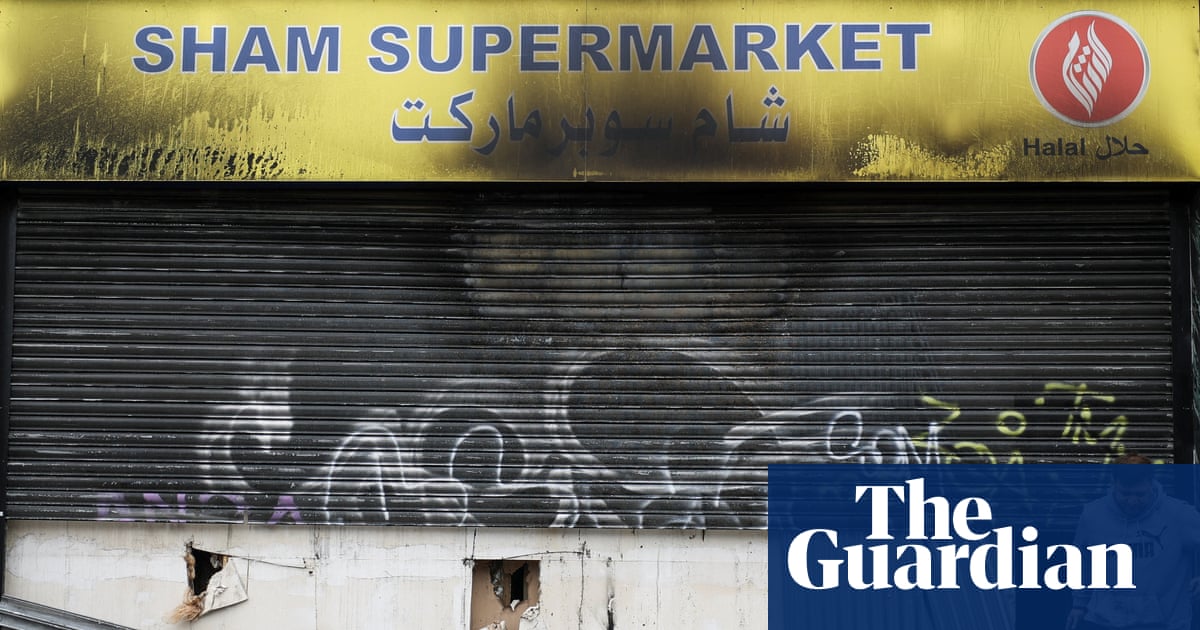
Hundreds of people took part in the riotssetting fire to cars, homes and a bus, and throwing bricks and petrol bombs at the police.

‘Too many people hold on to prejudice’

Ada Ní Deoradháin, 26, an Irish-Polish national who moved to Belfast at the age of 11, said: “The events reflect a history that still lingers here. Too often, people believe they can commit these acts without consequence.

“They attack homes, businesses and communities, yet are described as ‘protesters’ by some media outlets. These are not protests. They are targeted acts of intimidation and violence. These are pogroms. And they echo the 70s.

“As a Polish immigrant who grew up in Belfast, I live in this city in alienation. I am still cautious about who I speak to because of my accent, however faint it may be. Too many people hold on to prejudice, and its effects are felt daily.

“Friends of mine who are immigrants or people of colour share the same reality. Yet these experiences are not taken seriously when raised … That unwillingness to acknowledge prejudice allows it to persist – and combined with frustration, unhappiness and a lack of opportunities, it is then channelled into discrimination, mistreatment, and, ultimately, the kind of senseless, cruel attacks we are seeing now.

“These actions are also encouraged by far-right rhetoric from politicians and billionaires who benefit from division and unrest rather than peace and progress. Belfast deserves better than this … We want to move past a history of division and hatred that has lasted far too long.”

A number of respondents said the disorder had disrupted the healthcare provided to their relatives.

‘These rioters don’t represent the majority’

Adam, from Ballycastle, said: “My 72-year-old mother has been in hospital in Belfast with serious injuries after being knocked down by a car on Monday morning.

“I’ve been unable to drive to Belfast to see her in hospital as every evening since Tuesday it has been too dangerous. These rioters don’t represent the majority of people here. It’s disgusting and depressing that a minority can hold the rest of the country to ransom.”

A woman from Belfast who asked not to be named said: “My husband, 67, who has Parkinson’s, was to be admitted to the Royal Victoria hospital.

“He has been struggling for months with complications from the illness. We were informed that the hospital is not taking admissions due to the social unrest. There is no guarantee he will be admitted tomorrow or when. Everything is on hold.

“This is very distressing. The mob that is holding the city to ransom do not speak for the majority of people here. That they are being stoked by external voices is infuriating, but the focus for now must be the restoration of order. Police, politicians and community leaders need to intervene and get this rabble off the streets.”

‘To anyone who is fearful, please know you are welcome here’

Another resident who asked not to be named said: “I live and work in Belfast and over the past 24 hours normal life has become increasingly tense.

“What began as feelings of shock and disgust in hearing about the terrible attack that took place on a nearby street has evolved into shame and disbelief at the appalling behaviour of a group of thugs who only thrive on division, disruption and mayhem.

“These individuals do not represent Belfast, nor should their actions define a city that is known for being warm, friendly and welcoming. Belfast is far better than the scenes we have witnessed.

“As a parent of two young children, what upsets me most is the impact this unrest is having on innocent families, particularly the children who have been forced to leave their homes. It is difficult to imagine how frightening and traumatic that experience must have been for them.

“To anyone who is fearful for their home, family or business today, please know that you are welcome here. You are part of our community, and we value and appreciate the culture, diversity and richness that you bring to our city.”

Not all the respondents were critical of the disorder. One 42-year-old resident of east Belfast said “the effects of mass uncontrolled migration are felt everyday” and they flagged “strains on services and the collapse of my culture”.