From lardy cakes to simple scones: classic bakes that need no reinvention | Food | The Guardian

Keyword – Food
Trefwoorden – Food, Bread, Dessert
Title – From lardy cakes to simple scones: classic bakes that need no reinvention | Food | The Guardian
Author – https://www.theguardian.com/profile/felicity-cloake
Link – From lardy cakes to simple scones: classic bakes that need no reinvention | Food | The Guardian
Publish date – 2026-06-11T12:02:35.000Z
Category – Lifestyle
URL – https://www.theguardian.com/food/2026/jun/10/from-lardy-cakes-to-jam-doughnuts-and-fresh-scones-a-celebration-of-classic-bakes-that-need-no-reinvention

I got into a small and pointless argument with a friend recently when she announced that a certain bakery chain (expanding across England with astonishing speed) was the only place in her London neighbourhood where she could buy scones . Surely not, I said. Then I thought about where, if I wasn’t going to make my own (pictured top), I’d find them near my own home, and realised she may have a point. (FYI, fellow N1 folks, Quince Bakery always has them on the counter.)

A few days later, I was asked to go on BBC Radio 4 to comment on the decision by Somerset’s Burns the Bread to stop selling iced buns, which naturally made me desperately crave an iced bun. But were there any to be found near me? No. Thankfully, I’ve since realised you can get an excellent example for just £1.60* at Raabs the Bakers on Essex Road in London. But, before this turns into a food guide to my neighbourhood, may I point you in the direction of Ruby Tandoh’s lemon zest-spiked recipe , or Helen Goh’s strawberry finger buns should you also suddenly have a craving for soft, pillowy dough with a crackly smear of sugar on top. Both would be just as good not jazzed up.

Indeed, I suspect that the relentless human desire to jazz things up is to blame for the disappearance of old favourites, the rare treats of my childhood. I’m thinking of the lardy cake ( Tom Hunt has a recipe that makes good use of the riches from your Sunday roast), the bread pudding ( Nigel Slater’s rib-sticking number looks suitably dense), or even the classic jam doughnut . I will go to my grave ranting about the joys of a modest helping of strawberry jam before I’m overwhelmed, King Canute-like, by the ever-rising tide of salted caramel custard.

I’m all for innovation ( Dubai chocolate week was a good one, even if I’m still finding smears of cocoa on my kitchen cupboards), but trends now travel so fast that we’re in danger of losing many older, defiantly local specialities to a flattened global palate, largely centred around chocolate. The sweet spices and dried fruit that have been popular here for centuries in things such as parkin and eccles cakes are disappearing fast, just as Singapore is losing its sweet potato balls and steamed cakes , or India its candied gourd and garlic kheer to the unceasing march of less labour-intensive, more social media friendly desserts.

That said, back in the 18th century, Londoners queued around the block for the latest big thing, the Chelsea bun , which presumably displaced older favourites and it is itself now being superseded by the American-style cinnamon roll or the Scandinavian cardamom version . Perhaps there’s nothing new under the sun … but if you have an old favourite, it might be wise to go out and buy one, just in case.

*If you rolled your eyes at London prices from independent bakers (who are paying high-street rents), remember that’s significantly less than a cup of hot water and a teabag at Costa – and consider signing this petition to cut VAT for hospitality; ours is the second-highest in Europe .

What I ate this week

Chips on tour | When you’re on the road, as I am a lot at the moment for The Underdog book tour, you end up spending a few hours in a place, eating at weird times and grabbing something in a rush. This time, happily, it’s involved a lot of fish and chips, not a meal I have very often due to it being hard, though not impossible, to get really good stuff in London (although I did have some epic duck-fat fries at Jackson Boxer’s new Clerkenwell restaurant, Vesper ). I particularly enjoyed the haddock and chips at Settle’s The Fisherman , but top prize so far goes to the golden, lacquered fishcakes and crispy scraps at Scarborough’s Lifeboat Fish Bar , where even the mushy peas tasted homemade.

Great British Menu | Though global turmoil continues to highlight the importance of resilient local food systems, food miles seem to have all but dropped off the radar in recent years – 2009’s initial Fife Diet experiment feels very long ago. Artist Joanna Farrow is hoping to draw attention back with her commitment to a year living only on food grown and produced in Britain. (Drinks aside, she tells me: “I really can’t live without coffee, and the thought of digging up and grinding dandelion root is not appealing!”). She’s already feeling better connected to her diet, and finding that cooking from a more limited store cupboard is “strangely liberating”. Follow her progress on Instagram – I’m particularly invested in her quest to find homegrown yeast!

Making a noise in the library | If you happen to be in London this weekend, the British Library’s annual season of food talks and events kicks off on Saturday – I’ll be hosting a guided “audio amble” on Sunday morning , and taking part in a tribute to the legendary African American chef and food writer Edna Lewis in the afternoon , which includes a screening of an Emmy-winning documentary about her and a panel discussion of food writers who have turned to fiction . Other attractions in the packed schedule include an exploration of the Irish Table and an Edible Archive event on Palestinian memory and resistance including the chefs Fadi Kattan and Sami Tamimi .

The joy of texture | I was in Ireland last month for my book tour. Although I travelled by boat and train, which limited how much I wanted to lug home, one of the things I did not regret having to carry was a sachet of spicy peanut furikake from County Down’s Tacacucina, which I have been sprinkling on almost everything savoury ever since. It’s crunchy, savoury and completely addictive.

If you want to read the complete version of this newsletter please subscribe to receive Feast in your inbox every Thursday.

Funding cuts and repressive laws raise risk of new HIV epidemic, says UNAids | Global development | The Guardian

Keyword – Global development
Trefwoorden – Global development, Aids and HIV, Society, Health, United Nations, World news, Infectious diseases, Science, USAID, Trump administration, US foreign policy, Aid, Global health
Title – Funding cuts and repressive laws raise risk of new HIV epidemic, says UNAids | Global development | The Guardian
Author – https://www.theguardian.com/profile/kat-lay
Link – Funding cuts and repressive laws raise risk of new HIV epidemic, says UNAids | Global development | The Guardian
Publish date – 2026-06-12T09:30:41.000Z
Category – News
URL – https://www.theguardian.com/global-development/2026/jun/12/health-aids-disease-hiv-infection-unaids-funding-tests-cuts-risk-epidemic

A funding crisis and increasing repression of human rights are making the resurgence of an HIV epidemic more likely, the international agency tackling Aids has warned.

Winnie Byanyima, head of UNAids, said: “It’s the biggest disruption since the global HIV response was put together and it poses a major threat to the progress we have had.”

Although the annual number of new HIV infections and deaths from Aids-related causes are at record lows, a new UN report warns of the significant risk of a resurgence of the epidemic, unless there is renewed commitment and action.

Last year there were 570,000 Aids-related deaths recorded, and 1.2m new HIV infections.

However, amid an unprecedented fall in aid spending of about 23% , testing for HIV dropped sharply in 2025 in countries with the highest levels of the virus, the report found.

In one programme, testing fell by 22% on the year before. “That’s huge,” said Byanyima. “This means that people don’t know that they are HIV positive, continue transmitting the virus and so the disease will continue to spread and new infections will rise.

“Maybe even more people will die because they don’t show for treatment early enough or they don’t get on treatment early enough,” she added.

Prevention services, such as those distributing condoms or offering medication to protect against infection, were also hard hit by aid cuts, the report warned.

Those services were already underinvested in, Byanyima said, receiving only 11% of HIV spending in low- and middle-income countries in 2024. “Today we are seeing that money for prevention disappearing completely,” she said.

New domestic funding did not match the scale of what had been lost, she said, and also tended to be spent on treatment rather than prevention. She predicted the coming years would see “rising new infections, and rising numbers of people dying of HIV-related illness”.

The number of countries with new or more restrictive laws against same-sex relations has continued to increase, the report found, which it said “risks undermining decades of progress and pushing the people who need services the most away”.

Byanyima also highlighted the damage likely from “laws to reduce civic space”, offering as an example the “ sovereignty bill ” in Uganda that restricts external funding for civil society groups and “restricts their ability to operate”.

Community-led organisations that have played a key role in providing HIV services to vulnerable groups “are disappearing”, the report found. One survey of 79 community-led organisations across 47 countries found an 85% reduction in services for men who have sex with men and an 82% reduction in services for sex workers, both groups at the highest risk from HIV.

There were opportunities as well as threats, Byanyima said, including new methods of prevention such as a “miracle” twice-yearly injectable drug, lenacapavir, but they would be needed at far greater scale “to bend the curve”, she added.

UNAids has itself been hit by the Trump administration’s funding cuts, and the UN secretary general has proposed that the agency should be “sunset” by the end of this year .

Byanyima said a working group would present proposals to the UNAids board in October, but said she foresaw “a much smaller joint programme that is more dispersed within the UN but that continues to have a hub – leading for the UN and for the world”.

‘Demonized, called hysterical’: the rise of witchcraft retreats where US women go to defy man and church | Witchcraft | The Guardian

Keyword – US news
Trefwoorden – Witchcraft, US news, Ireland, Europe, World news, Women, Society
Title – ‘Demonized, called hysterical’: the rise of witchcraft retreats where US women go to defy man and church | Witchcraft | The Guardian
Author – Lauren Abunassar
Link – ‘Demonized, called hysterical’: the rise of witchcraft retreats where US women go to defy man and church | Witchcraft | The Guardian
Publish date – 2026-06-10T14:28:25.000Z
Category – News
URL – https://www.theguardian.com/us-news/2026/jun/10/witchcraft-retreat-ireland

O n the floor of a sun-drenched room in a 200-year-old Irish estate, a group of 15 witches gather to commune with the spirits. Everyone has someone they want to talk to – dead ancestors, forest fairies, the witches who came before them – and the room has the same expectant charge as the first day of school. Some of the witches wear long black capes and bandannas. Some wear Columbia fleeces, spaghetti-strap tank tops and Adidas sneakers.

Isabella Ferrari, known as Penny the Witch, guides the women as they make divination maps, sheets of paper covered with “yeses” and “nos” that work like Ouija boards: the witches ask their questions and the spirits guide the crystal pendulums in their hands towards the answer. One of the women, Tara Monte, screeches as her pendulum begins circling uncontrollably. “Isabella, do I stop this? Someone really wants to talk to me.” Later, she will confess she believes it was her archangel Michael letting her know yes, her parents were proud of her. Yes, they still loved her.

It’s the first full day of Green Veil, a sold-out witchcraft retreat Ferrari regularly hosts to teach women from around the world how to conduct their own spellcraft sessions and broader somatic healing work. They make candles together. They confront their ancestral trauma. They form a tight community though the retreat is only two – and – a – half days long.

“We are so used to not trusting ourselves, to second-guessing our intuition, especially women who have been taught to disconnect from their inner wisdom,” Ferrari tells them. In that sense, this divination workshop is less about the spirits than the women themselves – a practice of learning to believe you have the power to summon answers, to regard your own instincts as something sacred.

As a final housekeeping announcement, Ferrari encourages everyone to avoid the underworld and its demons: “Today, stay with the fairies.” It’s an instruction met with completely comprehending gazes.

Later, the process of sharing who they summoned becomes intensely emotional. “I spoke with my boyfriend who killed himself,” Monte says. “I spoke with the brother who was like a father to me,” says a Massachusetts-based hearing specialist. Another woman forgoes her divination map to instead scrawl out a message in an unknown language she says an unnamed spirit delivered to her. As they share their stories, the women weep together. But what they have summoned in reaching for the dead is not only grief. It is also the frustration that lives underneath their loneliness.

Ferrari instructs the women to lean into these feelings, chanting together: “I will learn to use my voice,” and “I am so afraid.”

Perhaps louder than anything else, she has the women practice calling out: “I am so angry. I am so angry. I am so angry.”

For many, it is the first time they have said it out loud in a room that wanted to hear it.

A turn from religion

Ferrari, who is Italian, has filled rooms like this over and over again, across continents. When her Ireland dates in April first sold out, she added more. Those sold out too – for ticket prices ranging from €1,900 to €3,000. With more than 180,000 followers on Instagram, her version of witchcraft is both spiritual and entrepreneurial, providing a sanctuary for expressing the accumulated distrust and fatigue of women who have failed to find belonging in the churches, workplaces and political structures meant to hold them.

Witchcraft retreats like Ferrari’s have proliferated across the US and Europe over the last decade. The practice they’re built around resists easy definition. Equal parts ancient folk magic, herbal remedies and self-soothing rituals, it encompasses everything from the spellcasting done by self-directed pagans to solitary practitioners who scatter protective salts around their homes. If you buy a crystal, that’s witchcraft. If you practice manifestation, that’s witchcraft.

The retreat boom was foreshadowed by an interest in witchcraft that has grown since the counterculture movement in the 1960s, says Helen Berger, a Harvard Divinity School-based sociologist of religion and one of the leading scholars of contemporary paganism. While it’s hard to really identify a single catalyst driving women to witchcraft, Berger sees a pattern: spikes in alternative spirituality tend to coincide with spikes in anti-authoritarianism. In 1968, for example, several feminist groups co-opted occult imagery, adopted the acronym Witch (Women’s International Terrorist Conspiracy from Hell) and marched on Wall Street to hex the New York Stock Exchange and curse the Dow Jones – which did indeed drop 13 points.

Ferrari works almost entirely with women, an increasingly significant number of whom are American; over half of her Ireland cohort came from the US. And they’re from all over the states, not just the neo-hippy communities of the west or the alt-wellness meccas of the east. Ferrari’s witches are twentysomethings and grandmothers, agnostic pagans, Rust belt bartenders and Florida-based interior designers. Many got their spiritual start in strict Christian households and many experienced later-in-life spiritual awakenings.

Over 30% of Americans now identify as spiritual but not religious – a distinction that points not to a rejection of the divine but of the traditional institutions mediating it, according to scholars like Berger. “[That rejection] stems from the structure of religion, the lack of independence and individualization offered within it. Especially because the hierarchy of power is particularly male-dominated,” Berger says. “For witches specifically, many grew up spiritual. But the oppressiveness of those religions they grew up with, particularly the evangelical and the Pentecostal right, also has a direct relationship with the divine.” Witchcraft gives women a way of holding on to that relationship outside the hierarchy.

Former bartender Tara Monte, 55, tried to come to an earlier Ireland retreat – sold out. Then she tried to attend one in Italy – too daunting for a first solo trip abroad. She didn’t even have a valid passport. When Ferrari added new Ireland dates, Monte leapt, getting an expedited passport on 2 April and catching a flight from Philadelphia two weeks later. The stress and expense were worth it.

“There’s this whole disaster that is the world right now that is being run by men,” she says. “[Witches] know how we can support each other without having to deal with that reprehensible behavior.”

Monte grew up in a devout Irish-Italian Catholic family in south Philadelphia – “about as Catholic as it gets” – but experienced a spiritual crisis when she moved to New York in her 20s. “When I was 23, I was raped. That’s when I hit the wall,” she says. “I just thought, I’m a good Catholic girl, how could this happen to me?” Her trauma became a kind of religious solvent, dissolving her belief system with surprising totality. “I was done with God,” she says. The revelation left her isolated and unmoored.

When she eventually joined her first coven in Los Angeles, the unconditional acceptance it offered felt radical. But that community slipped away when she moved again, this time to North Carolina. “You can’t go around the Bible belt and explain why you have a pentagram on your neck,” she says, laughing.

Those were lonely years for Monte. She went through a divorce. A partner, who she describes as the love of her life, killed himself in front of her. Both parents died. She moved back to Philadelphia.

Most recently, her ex-boyfriend has been stalking her, surreptitiously pasting bumper stickers to her car in the night. She feels watched. “I need to know that I have backup,” she says. “We need our coven again.”

For Monte, community among witches is a kind of antidote to spiritual isolation, to the inadequacies of more conventional ways of coping with trauma. It’s also a bulwark against the harmful impulses of men. “We take care of our own,” she says simply. On the Coven WhatsApp group she shares with other retreat members, the witches do indeed ply her with protection spells, recommended oils and crystals, places in her house to prop up her pentagram to keep her safe from that dangerous ex. They believe these rituals will provide some protection, which is enough to restore Monte’s sense of control.

Alyse Benjamin, 42, found herself at a crossroads when she dropped her son off at college. She lost her job last June and though she has settled into new work as an interior designer by day, and an oracle and tea leaf reader by weekend, she feels the lancing uncertainty of a life paused between chapters. “I want to be part of a sisterhood,” she said. She came to Ireland all the way from Florida looking for it.

Another later-in-life convert, Benjamin grew up with a Pentecostal pastor for a grandmother, and practiced non-denominational Christianity through her teenage years and most of her 20s. Her departure from the church began somewhat passively – she was married to a man who wanted to spend Sundays playing volleyball rather than attending services – and then became definitive as she grappled with the oppressiveness of rules-based religion. She prefers to shirk binary thinking and instead embraces a philosophy where nobody is 100% gay or straight, good or bad, Christian or Wiccan.

“The poles of anything don’t really exist, everybody is somewhere in between,” she says. “I was deeply Christian for a long time. I still believe in God … but I really don’t like labels and I really don’t like judgment.”

Benjamin wouldn’t describe herself as angry, necessarily – she’s just done. The list of things she’s done with is long. “I’m not a fan of working 40-plus hours a week and placing value on what we can buy. I’m not a fan of needing to go to a building to find God when I feel it more in nature. I’m not a fan of our sick-care system or our educational system,” she says.

Ferrari has heard so many versions of these stories – women resisting rote categorization, women whose faith was dissolved by grief or violence, women who arrived at the edges of religion and found nothing waiting for them there. In them, she recognized a hunger for a place built with women in mind.

Witchcraft on the rise

Whether you’re a devout Wiccan or someone who wants a hex for an old grudge, there’s an Etsy witch for this, a corner tarot shop for that. Practitioners who want to monetize their craft can attend WitchBiz Academy , while a British university is offering a PhD in magic . Everybody wants to see a Practical Magic reboot and there are about 100 different ways to watch a witch on television. All to say that witchcraft is too popular – and too profitable – to be considered fringe any more. What remains alternative about it isn’t the spellcasting and the crystal work then, but the DIY spiritual framework.

“I like that there’s no dogma to it,” says Ashley Clauré, a self-described psychic medium and practicing witch.

For Clauré, every woman is a witch – and like a witch, every woman knows how it feels to be told she’s crazy.

Clauré hosts at least two witchcraft retreats a year, in Savannah, Georgia and Salem, Massachusetts; prices run anywhere from $2,700 to $5,200 to attend. She says women are searching for something beyond the slumber party Ouija board rituals that loosely inspired her retreats in the first place.

“The patriarchy is not good for anybody, men or women,” Clauré says. “Women have been inherently drawn to [witchcraft spaces] after being demonized or called hysterical or stigmatized. We’re so fucking sick of it that we’re gonna do things our way, whether you call it crazy or not.”

Scholars say this sentiment extends beyond the retreat circuit.

“If you look at the larger social gestalt right now, in which power is being systematically taken away from women and queer people, the traditional witch is the opposite of ‘right’ society,” says Sabina Magliocco, a professor of anthropology and religion at the University of British Columbia and a former Guggenheim fellow. “But if ‘right’ society is depriving women of rights, is excluding women, is saying that it is perfectly fine to sexually abuse women, that there aren’t going to be any consequences, then maybe being the opposite of right society is aligning with the forces of justice.”

Witchcraft, according to Magliocco, is a conduit for righteous anger. It’s partly why there was a notable boom in witchcraft-based resistance movements after the 2016 election of Donald Trump.

There’s a similar sense of rebellion at Ferrari’s retreats.

“People are realizing the pharmaceutical industries, the government, [all of these systems] are not aligning with what they want,” Ferrari says. “They just want to have their own way to heal and fix their problems.”

While not every woman who arrives in the woods would describe herself as politically motivated, at some point between the candle-making and the spellwork, most of them end up naming the systems – political, religious and social – that have failed them.

Psychic wounds

In the afternoon, Ferrari’s witches go forest bathing.

Together, they set off on a two-and-a-half-hour expedition through the woods. They introduce themselves to the trees – literally, placing their hands upon the bark and whispering their names. They circle up and list what they taste, what they hear, what they smell.

“I had the strangest experience where I looked into a tree and I saw a mirror,” Benjamin tells the group. “I saw myself.”

For a few moments, Monte falls asleep beneath the branches of a 150-year-old oak. The women take turns gathering items off the forest floor, passing them around in a circle to inspect: spectral pieces of moss, the looped tails of young ferns, hollowed out branches.

The woods are a mere 30-minute drive from the site where Petronilla de Meath was tortured and burned at the stake in 1324 – the first recorded witch persecution in Ireland. This is what practitioners call a witch wound. It is the collective psychological scar carried by women who have been punished for their power, and it serves as a reminder here that there was a time when women were killed for practicing anything that looked like magic. Which is really to say, there was a time when women were killed for doing anything that a man or a church could not understand.

“And women are never allowed to be angry about that,” says Alessandra Mascarucci, an Italian-born, England-based photographer and self-described pagan documenting the retreat for Ferrari, at a group dinner that night. “People don’t understand how much anger is a part of healing.”

She went on to describe how often female anger in particular is chronically invalidated, reframed as sensitivity, punished as aggression. Without models of what healthy anger looks like, Mascarucci says, repression becomes the default. Repression is a kind of patriarchal convenience that keeps women small, manageable and ultimately adrift.

The permission to feel anger – not to resolve it or redirect it – on the way to a more genuine connection is a goal that appeals to many of the women who come to Ferrari’s retreats. It’s something accommodated by the oppositional fervor of witchcraft, where the witch herself has long symbolized female noncompliance.

Still, not everyone is convinced the retreat format is the right container for something so sacred. Critics like Michael Cardenas , a high priest and head witch of Olde Ways, a magically inclined apothecary brand, have argued that witchcraft’s mainstream moment is just another way of selling radical female empowerment as a “glorified meditation retreat”.

Some witches might be frustrated by the commercialization of their craft. But for Thorn Mooney, a PhD candidate in religious studies at the University of North Carolina at Chapel Hill and a practicing Wiccan and priestess in her Gardnerian coven, this critique is a bit reductive. “Marketing has always been a part of witchcraft. It’s always been a part of magic,” she says. “We are very suspicious when a religious or spiritual person has money because we think that poverty is innately holy. Seeing my sacred thing sold back to me through Instagram ads is a shame, yeah. But it’s not new.”

The money, Mooney argues, is beside the point. What women like Ferrari’s witches are looking for is much harder to commodify.

Read more from Is nothing sacred :

‘Christofascism’ is here: inside the slow demolition of US public health

‘A husband expects a yes’: how wife schools are shaping submissive Christian women

Our tech overlords are planning for conscious AI to conquer the cosmos. What could go wrong?

On the last night of the retreat, the witches gather in the moonlight for a closing bonfire. Ferrari has them each write down something they want to release on a scrap of paper. They take turns reading them aloud before tossing them into the flames. Body shame. Guilt over not being a better mother. Anxiety. Depression.

It’s easy to wonder if any sense of transformation they have found will be sustained outside this carefully curated space. By morning, much of what the women have vowed to release will still be waiting for them. “I went there with some big stuff to figure out. Coming back is a shock because that stuff is still just there,” Benjamin admits after she returns home. If there is magic, there is no magic fix.

Braceleting the fire, the women burn the candles they made when they arrived in Ireland. It’s a surprisingly long process and none of the witches are allowed to leave the circle until each candle is finished. At one point, the glass dish of one candle overheats so much it fractures and sends hundreds of tiny shards into the darkness of the courtyard.

The women laugh and gather some of the larger shards of the unfixable dish before they return to their waiting. At the end of the evening, no one walks back to the main house alone.

‘I only had this father, and he’s gone’: Wafa Mustafa’s fight for truth and justice for Syria’s missing | Film | The Guardian

Keyword – Film
Trefwoorden – Film, Documentary films, Sheffield Doc/Fest, Culture, Festivals, Syria, Middle East and north Africa, World news
Title – ‘I only had this father, and he’s gone’: Wafa Mustafa’s fight for truth and justice for Syria’s missing | Film | The Guardian
Author – Alexander Durie
Link – ‘I only had this father, and he’s gone’: Wafa Mustafa’s fight for truth and justice for Syria’s missing | Film | The Guardian
Publish date – 2026-06-12T14:09:59.000Z
Category – Culture
URL – https://www.theguardian.com/film/2026/jun/12/wafa-mustafa-maybe-tomorrow

W hen Wafa Mustafa was a child, she remembers her father playing the music of Umm Kulthum non-stop at home in Syria , humming along to the legendary Egyptian singer’s melodic tones. One day, in an effort to encourage his daughter to appreciate music, he asked her to take a pen and paper and write the lyrics of a song she loved. Wanting to impress him, Mustafa chose an Umm Kulthum song called “Aghadan Alqak”, which translates to: “Will I meet you tomorrow?”

“The lyrics are literally about someone who’s gone, about the waiting for them and the love you have for them,” says Mustafa. “It feels like I knew what was coming … as if I manifested my life since I was very young.”

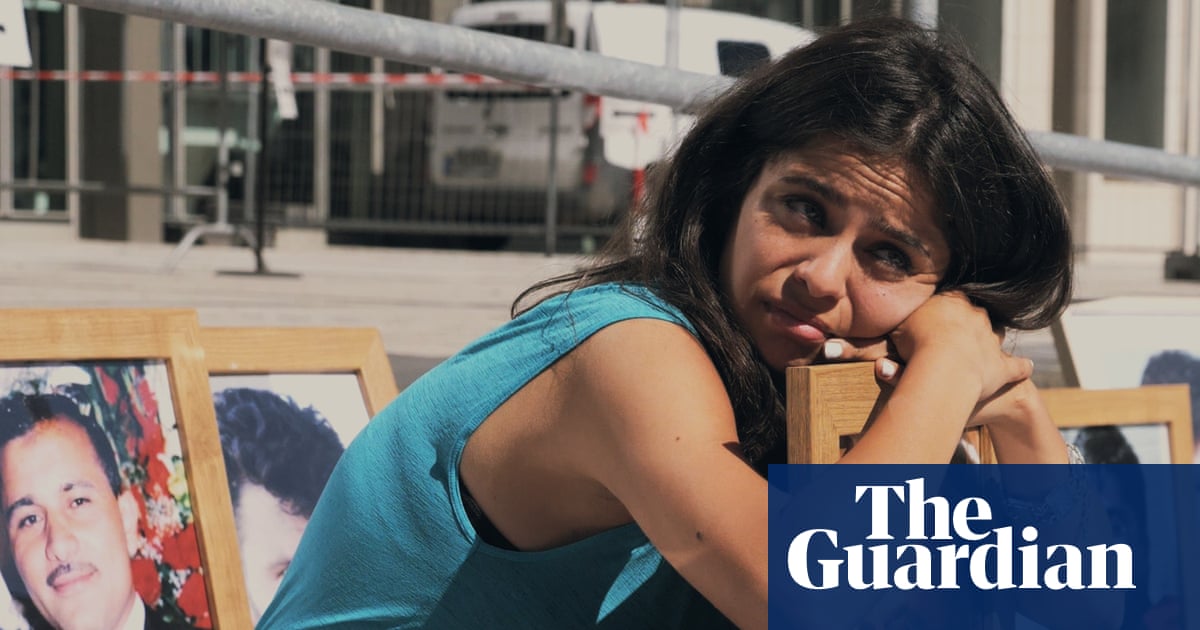
In 2013, as pro-democracy protests spread on the streets of Syria , Wafa Mustafa’s father, Ali, was abducted in a Damascus apartment by armed men and driven away. It was the last time he was seen or heard from. Mustafa was 23. Since then, she’s been waiting for a tomorrow in which she can see her father again, or at least find out what happened to him.

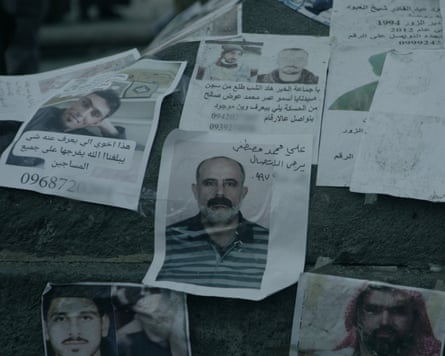
Mustafa’s case is far from unique in Syria. According to the Syrian Network for Human Rights , more than 177,000 people were forcibly disappeared between 2011 and 2025 in Syria, most of them arbitrarily detained and taken into notorious prisons by Bashar al-Assad regime forces or other armed groups, where they were tortured and often killed, during a conflict that broke much of Syria’s estimated 25 million population.

Now, a year and six months after the fall of the Assad regime , under new ruler Ahmad al-Sharaa, the mission remains the same for Mustafa: to fight for truth and justice for Syria’s forcibly disappeared, and to ensure they are not forgotten.

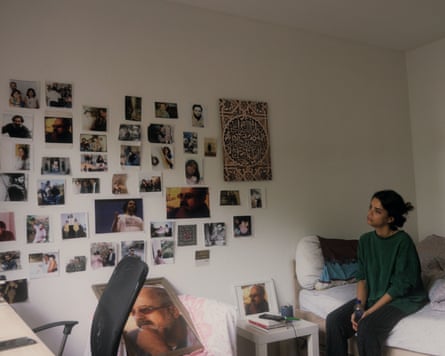
Mustafa has joined up with her childhood friend, documentary film-maker Waad Al-Kateab, who co-directed the Bafta-winning For Sama , to make a new documentary short, Maybe Tomorrow – in reference to the Umm Kulthum song that plays in the film and, according to Al-Kateab, “reflects the film and the experience for Wafa and other people in Syria.” The film, which premieres this evening at the Sheffield DocFest, is an intimate look at what Mustafa calls “the violence of waiting.” It follows her first in Berlin, where she is now based, and then in Syria after the fall of Assad, in her desperate search for information on what happened to her father.

“Millions of people [in the world] are disappeared,” says Mustafa. “But I only had this father, and he’s gone. And I cannot let him go.”

The film starts in 2020, at the start of Mustafa’s years-long campaign to raise international awareness for Syria’s disappeared. Mustafa was then already speaking about these issues at United Nations meetings, and had organised a one-woman vigil outside a courtroom in Koblenz, Germany, where two former Syrian intelligence officers were on trial for state-sponsored torture.

Like the Oscar-nominated For Sama, which was co-directed with Edward Watts, Al-Kateab wanted this project to be collaborative, but this time with the main protagonist as co-director. While promoting For Sama in Tunisia, Al-Kateab had a realisation.

“I saw the power of what we can do when we own our stories,” she says. “For me, that moment was so big, and I realised Wafa has to do her own film.” She told her friend: “I want you to find your way of how you want to tell this story.”

Mustafa, who has been very active on social media since she was young and has tens of thousands of followers, said the film serves as a condensed “memoir” of her daily life in the past six years, capturing the toll that forced disappearances have on families, especially those exiled in different countries.

She hopes that through this film, audiences can get a glimpse of “what it means to have your father disappeared and not know what happened – to just be told he’s dead, but not being able to accept it. And not being able to because there is nothing to accept.”

The documentary also evokes the impact that such traumatic cases have on individual and collective memories. “Sometimes we forget things, or our memory blocks things out,” Mustafa’s mum tells Wafa in the film, “I always remember your father telling you … ‘My daughters, you must write things down … document things.’” And so, Mustafa does so, often filming herself, or with another cinematographer when Al-Kateab wasn’t able to join and film her.

“Hope is a very, very dangerous thing,” Al-Kateab said, cautioning that Mustafa and the film’s journey do not promise happy endings. “This film is, at the end of the day, a tool,” she said. “For Wafa, the impact [it can have] is the goal.”

“The fight today is not just for the truth, accountability or even fighting for your loved ones to be alive, but also to prove that they existed,” says Mustafa. This is particularly important in a context in which the crimes and human rights violations committed in Syria have tried to be erased by authorities, leaving few ways to learn about what really happened.

Enforced disappearances “cannot be normalised,” Mustafa insisted, highlighting that this is “not just a Syrian story, but a global story of love but also of violence, especially on younger women.”

Amnesty International notes that “globally, the vast majority of victims of enforced disappearance are men. However, it is women who most often lead the struggle to find out what happened in the minutes, days and years since the disappearance.”

“All of these crimes did not end with Assad fleeing the country and with the downfall of the Assad regime,” says Mustafa, citing that massacres and enforced disappearances have continued under Syria’s new leader. “I don’t want other young women in Syria today to lose their fathers and live their lives in guilt, in the responsibility to save their fathers from authorities.”

Although it remains difficult for Mustafa to even talk about her father, her love seeps though in her actions. “My father was the first comrade I had,” she said.

“Even if Ali Mustafa was not my father, I would have definitely done everything I’ve done for him, because he is worth it. He deserves the world, and he deserves to be remembered.”

US military says it downed Iranian attack drones – as it happened | US-Israel war on Iran | The Guardian

Keyword – World news
Trefwoorden – US-Israel war on Iran, Israel, Iran, Trump administration, Donald Trump, Strait of Hormuz, Lebanon, Hezbollah, US foreign policy, Middle East and north Africa
Title – Middle East crisis live: Trump says Iran’s version of peace deal has ‘no relation to the truth’ | US-Israel war on Iran | The Guardian
Author – https://www.theguardian.com/profile/tom-ambrose,https://www.theguardian.com/profile/taz-ali,https://www.theguardian.com/profile/jillian-ambrose
Link – Middle East crisis live: Trump says Iran’s version of peace deal has ‘no relation to the truth’ | US-Israel war on Iran | The Guardian
Publish date – 2026-06-12T14:03:03.000Z
Category – News
URL – https://www.theguardian.com/world/live/2026/jun/12/middle-east-crisis-live-us-iran-israel-lebanon-trump-hormuz-oil-peace-deal-doubt-latest-news-updates

Trump lashes out at ‘dishonourable’ Iran over terms of deal reported in state media

Donald Trump has dismissed Iranian media reports on an imminent deal with the US as “fake news” , saying they were not the terms Washington agreed to.

Several Iranian media outlets have been reporting what they described as details of a draft proposal being reviewed by Iran’s leadership. Some of the terms of the agreement, according to the reports, include Iran’s control of the strait of Hormuz and postponed discussions on its nuclear programme (see posts at 12:49 and 09:32 ).

Trump said the reports were inaccurate and lashed out at Iran .

He wrote on Truth Social:

The terms that Iran leaked out to the Fake News have NOTHING to do with the terms that were agreed to, in writing. What they said, including their weak and pathetic statement on having a deal, bears no relation to the truth. Very dishonorable people to deal with. With them, there is no such thing as dealing in good faith. AMAZING! Also, their totally rebuffed Drone attack last night against Indian Ships leaving the Hormuz Strait is TOTALLY UNACCEPTABLE. They better get their act together, and FAST!”

Here are the latest images from southern Lebanon , showing the aftermath of Israeli strikes in the ancient coastal city of Tyre:

Reports of Iran signing an agreement with the US on Sunday in Geneva are false, the country’s Fars news agency has reported.

It cites a source close to Iran’s negotiating team.

Hezbollah is confident that Iran will insist on Lebanon being included in a deal with the United States, a leading Hezbollah politician said on Friday, as hopes grew for an agreement between Tehran and Washington.

Hezbollah, founded by Iran’s Revolutionary Guards in 1982, entered the regional conflict in support of Tehran on 2 March, opening fire at Israel and prompting an Israeli offensive that has killed thousands of people in Lebanon .

Iranian officials have repeatedly insisted on an end to fighting in Lebanon as part of any wider agreement.

“If the agreement happens, we have complete confidence in the Islamic Republic … we have confidence that it will insist on any agreement including the file of Lebanon,” Hassan Fadlallah, a Hezbollah politician, said in an excerpt of a speech broadcast by the group’s al-Manar TV.

Netanyahu says he is ‘in full agreement’ with Trump on Iran nuclear issue

The prime minister of Israel, Benjamin Netanyahu, said he is “in full agreement” with Donald Trump to keep Iran from obtaining nuclear weapons.

In a statement on X, he said:

As long as I am prime minister of Israel-Iran will not have nuclear weapons.

There is full agreement between me and President Trump on this issue.

For over 30 years, I have been at the forefront of the international campaign against Iran’s nuclear program.

Had it not been for this campaign, Iran would long ago have had atomic bombs to destroy Israel.

Iran is working to destroy the Jewish state, and I dedicate my life to preventing them from doing so.

As long as I am prime minister of Israel, this will not happen.”

There were no further comments from the Israeli prime minister on other aspects of a potential deal between the US and Iran, including the situation in southern Lebanon where the Israeli military continues its bombing campaign.

Iranian state media reported any nuclear negotiations will be held within 60 days after the signing of a memorandum of understanding “within the framework of its fundamental principles”, including its right to enrich uranium.

Tehran would not cede control of Hormuz in deal with US, Iran state media report

Iran’s official Islamic Republic News Agency (IRNA) has cautioned against media speculation about a potential memorandum of understanding to end the war, particularly on claims regarding the strait of Hormuz.

IRNA reported that Iran will not surrender its control of the strategic waterway and the US will have no role in its future management.

Here is a translation of the report (originally in Persian):

Contrary to some bizarre claims in the media, Iran in no way makes a commitment in this text to hand over its management or to restore the strait of Hormuz to the state before the military aggression of the US and Israel. The only point mentioned is the normalisation of transit through the strait of Hormuz upon the end of the war, the establishment of maritime security by the coastal states, the end of the illegal blockade, and the removal of threats to commercial shipping by the US and Israel. At Iran’s request, the US will have no role whatsoever in the future management of the strait of Hormuz. It has been made clear that the future administration of the strait will be based on an Iranian initiative and proposal, within the framework of a matter pertaining to the countries of the region. In this framework, discussions about the future of the strait of Hormuz will not take place even in negotiations after the signing of the agreement, and Tehran will directly resolve this issue in talks with Oman .”

Global oil prices fell on Friday to lows not seen since the first week of the Iran crisis after Donald Trump claimed he was close to reaching a peace deal with Tehran.

The price of Brent crude began to tumble from about $93 a barrel in overnight trade after the US president called off further military strikes against Iran which were scheduled for the evening.

It traded briefly below $85 a barrel on Friday morning in fresh hope that a deal between the US and Iran could mean a reopening of the strait of Hormuz over the weekend, and was later trading at about $87.50, a 3% fall on the day.

“Headlines are driving the market once again, as confidence grows that an eventual deal will be struck and the strait reopens,” said Tamas Varga, an analyst at PVM Oil Associates.

Read more:

The Pakistani foreign minister, Ishaq Daar, has welcomed the “progress” made between the US and Iran , signalling that a deal between the warring parties is materialising.

Daar discussed the recent developments “regarding United States-Iran understanding” with the EU foreign policy chief, Kaja Kallas, in a phone call this morning, according to a statement on X.

Both sides welcomed the progress achieved through sustained diplomatic engagement and expressed hope that these efforts will soon lead to a durable understanding and peaceful resolution.

They reaffirmed that dialogue and diplomacy remain the only viable means to resolve conflicts and advance lasting peace and stability.”

Pakistan has positioned itself as a mediator between the US and Iran, with reports suggesting that a possible initial agreement would be named the “Islamabad declaration” in recognition of its role.

The Israeli military continued to strike southern Lebanon this morning, according to the Lebanese National News Agency, amid reports the US and Iran are nearing a deal to cease hostilities. It is unclear whether the deal would include Lebanon, where the Israeli military has been fighting the Iran-backed Hezbollah group, but American and Iranian media reports seem to suggest it will. Israel is not directly involved in the US-Iran talks and there has been no indication on whether it would agree to halt its military campaign in Lebanon.

US and Iran preparing for potential agreement ahead of G7, reports say

There’s been a flurry of reports in the US media of a potential signing ceremony for a memorandum of understanding in Geneva, Switzerland. Axios, CNN and Bloomberg have cited sources saying the signing ceremony may happen ahead of (or during) the G7 summit that begins in France on Monday

Reports say the delegations of the world’s largest economic powers are expected to land at Geneva airport for the summit in Evian-les-Bains, near the Swiss border.

The Israeli military said it struck 310 Hezbollah targets in southern Lebanon in the past week , as it claimed to have killed “80 terrorists”.

The Israel Defense Forces (IDF) also revealed it conducted a raid in the southern Lebanese village Dibbine several weeks ago. The village is located north of the IDF’s so-called “yellow line” (an area carved out and occupied by the military) and is about 12km (7.5 miles) from the Israeli border. The IDF said its troops located “significant” weapon depots during the raid.

Donald Trump has claimed that the US has been conducting a “secret mission” in the strait of Hormuz to help Gulf petrostates bypass Iran’s chokehold on oil flows – which has roiled global energy markets for months.

The US president claimed Iran was unaware that dozens of tankers had been escorted out of the blockaded channel at night with their transmitters off.

He wrote in a post on his Truth Social platform that 200 vessels had got out this way, transporting more than 100m barrels of oil to global buyers.

So what is actually going on? Jillian Ambrose and Joanna Partridge explains here:

US-Iran memorandum of understanding includes end to war in Lebanon – report

Iran’s semi-official Mehr news agency has published a list of terms that are reportedly in the draft memorandum of understanding with the US. It cites a source close to the Iranian negotiating team, but the details have not been confirmed publicly by either Tehran or Washington. The report says the text is yet to be finalised by the Iranian leadership.

According to the report, the draft includes 14 points:

Permanent and immediate cessation of war on all fronts, including Lebanon .

The US’s “commitment to non-interference in Iran’s internal affairs” and respect for its sovereignty.

Lifting of US naval blockade within 30 days.

Withdrawal of US forces from around Iran.

Reopening the strait of Hormuz within 30 days “with Iranian arrangements”.

Suspension of US sanctions on Iranian oil.

US and allies to draw up reconstruction plans for Iran “worth at least $300bn”.

Sixty days of negotiations to reach a final agreement “based on nuclear issues and the complete lifting of” sanctions.

Reiterating Iran’s commitment not to produce nuclear weapons.

During the negotiations, the US will not increase its forces in the region or impose new sanctions.

Release $24bn in blocked Iranian funds.

Establishing a monitoring mechanism to implement the agreement.

Final agreement to be approved by a UN security council resolution.

The final negotiations will not begin before the release of half of Iran’s frozen funds, the suspension of oil sanctions and the lifting of the naval blockade. “Discussions about Iran’s missile programme and support for resistance groups have been definitively removed from the agenda.”

Israel has previously said it would continue its ground operation in southern Lebanon despite a ceasefire agreed in April which has all but collapsed. The Israeli military has taken over swathes of the country as it attempts to dismantle Hezbollah , Iran’s most powerful armed proxy in the region. Reports on the ongoing discussions to end the war suggest a potential deal between the US and Iran hinges on what happens with Israel’s war in Lebanon, with Hezbollah demanding the withdrawal of Israeli troops from the country.

American news outlet Axios reported that four US air force planes departed for Europe to prepare for a possible signing ceremony between the US and Iran on a deal to end the war.

The planes are reportedly heading to Geneva where US vice-president JD Vance is expected to sign on Washington’s behalf, according to Axios, citing sources familiar with the preparations.

While Donald Trump claimed a deal could be signed as soon as this weekend, Iran said it has not yet made a final decision.

Summary: Iran contradicts Trump claim to be on verge of peace deal

Hello and welcome to the Guardian’s continuing coverage of the crisis in the Middle East.

Iran’s foreign ministry has contradicted claims from Donald Trump that a peace deal between Washington and Tehran could be signed as soon as this weekend.

The deal, if confirmed, would be the most significant diplomatic breakthrough yet to end the three-month-old war, which has killed thousands and sent global energy prices sharply higher. But Iran’s foreign ministry spokesperson, Esmaeil Baghaei, has said that while large parts of the text under negotiation have been finalised, “a final conclusion” has not been reached.

“This is a very important issue that is currently being reviewed by the relevant decision-making bodies,” Baghaei said, adding that Tehran would not compromise on its red lines.

Trump told reporters at the White House: “We just made a great settlement of the war with Iran.

“The strait will officially open as soon as we sign, which could be soon, very soon, maybe over the weekend in Europe,” he said, adding that vice-president JD Vance could sign for the US.

Since mid-March, Trump has repeatedly claimed a deal with Iran to end the war was close, but no agreement has materialised.

In other key developments:

Trump said he was cancelling a third day of US airstrikes and bombings that he had earlier said would happen because “discussions” with Iran “have been brought to the highest level of Iranian leadership and approved”. He also said on social media: “Discussions and final points have been, in both concept and great detail, approved by all parties involved, including the United States, Israel , Saudi Arabia, UAE, Qatar, Turkey, Pakistan, Bahrain, Kuwait, Jordan, Egypt, and others.”

Israel, however, said it was “ not a party to” what prime minister Benjamin Netanyahu’s office described as an emerging memorandum of understanding between the US and Iran . But the office said Netanyahu had spoken with Trump and that the final agreement at the conclusion of negotiations would include the removal of enriched material, the dismantling of enrichment infrastructure, limits on missile production, and the cessation of Iran’s support for its terrorist proxies in the region – measures that have been red lines for Iran in the past.

The strait of Hormuz would open “as soon as we sign” the documents of the “great settlement” reached with Iran , Trump said. “The whole Middle East is happy.”

Iranian media said the country’s forces had stopped a “violating tanker” from entering the strait of Hormuz. The report from the Fars news agency – closely linked to Iran’s Revolutionary Guards – came shortly after the sound of explosions were reportedly heard near the port city of Bandar Abbas.

Trump had earlier posted on social media that the US would seize Iran’s Kharg Island “in the not too distant future” , but later said the seizure would be off the table “if we sign this agreement”.

The price of oil rose after Trump threatened a “very hard” attack on Iran, but plunged hours later after he said he was cancelling the strikes. US West Texas Intermediate crude futures fell 1.9% to $86.08 a barrel, on top of a 2.6% drop overnight, and Brent dropped 1.5% to $89.08 a barrel, having fallen nearly 3% overnight. Asian stocks joined a global rally, with South Korea’s Kospi surging 7.4% and Japan’s Nikkei up 2.7%.

A strike wounded 10 staff members of a hospital in the Lebanese city of Tyre on Thursday , the facility’s director told the AFP news agency, as Israeli raids continued in the country’s south. All three of the historic city’s hospitals have been hit since the start of the latest war between Iran-backed militant group Hezbollah and Israel in early March.

India’s government voiced a “strong protest” after three Indian seafarers were killed in US military strikes against oil tankers travelling through the strait of Hormuz.

Spain’s former PM faces tax fraud inquiry as police find €1.3m of jewellery | Spain | The Guardian

Keyword – World news
Trefwoorden – Spain, José Luis Zapatero, Europe, World news
Title – Spain’s former PM faces tax fraud inquiry as police find €1.3m of jewellery | Spain | The Guardian
Author – https://www.theguardian.com/profile/samjones
Link – Spain’s former PM faces tax fraud inquiry as police find €1.3m of jewellery | Spain | The Guardian
Publish date – 2026-06-12T14:12:46.000Z
Category – News
URL – https://www.theguardian.com/world/2026/jun/12/former-spain-pm-zapatero-faces-tax-fraud-inquiry

The former Spanish prime minister José Luis Rodríguez Zapatero is being investigated for possible tax fraud and smuggling after police discovered jewellery valued at more than €1.3m (£1.1m) while searching his office safe as part of a separate inquiry.

Zapatero, who led two socialist governments between 2004 and 2011, is already under investigation for alleged influence-peddling and other offences relating to the state bailout of the Spanish Plus Ultra airline during the Covid pandemic. He is alleged to have overseen “a hierarchical structure of influence-peddling”, whose purpose was “to obtain economic benefits through intermediation and the exercise of influence before public bodies in favour of third parties, mainly Plus Ultra”.

On Friday, the investigating judge at Spain’s highest criminal court, the Audiencia Nacional, said a new investigation had been launched after an expert assessment put the value of the jewellery, which includes necklaces, bracelets, rings and watches, at €1,323,915.

In a ruling explaining his decision, Judge José Luis Calama said the apparent absence of the necessary tax paperwork concerning the jewellery, which was found on 19 May, had led him to open a new investigation.

“The possession of high-value luxury goods, coupled with the lack of tax traceability regarding their acquisition, constitutes an objective and rational indication of the possible existence of significant tax fraud, since the acquisition of jewellery of the indicated value necessarily generates tax obligations, whether in terms of VAT, property transfer tax, inheritance and gift tax, or personal income tax, depending on the nature of the legal transaction,” he said.

A spokesperson for Zapatero said some of the jewellery had been inherited by the former prime minister and his wife, while other pieces had been picked up on trips. The spokesperson – who had originally claimed the jewellery was worth €30,000 to €50,000 – apologised on Friday for unintentionally misleading people and said that he and the former prime minister would both provide Calama with an explanation.

Zapatero, who is due to appear before the judge next week, has denied any wrongdoing.

After the opening of the investigation into his role in the Plus Ultra bailout, Zapatero released a video in which he insisted on his innocence and stated his willingness to cooperate with the investigation. “I’d like to reaffirm that all my public and private activity has always been conducted with absolute respect for the law,” he said, adding he had never carried out “any action” relating to the airline’s rescue.

Zapatero’s socialist successor, Pedro Sánchez, is facing a slew of corruption cases involving his wife, his brother, his party and his administration.

China arrests US academic at conference for ‘espionage activities’ | China | The Guardian

Keyword – World news
Trefwoorden – China, US news, Myanmar, Thinktanks, Universities, World news, South and central Asia, Asia Pacific
Title – China arrests US academic at conference for ‘espionage activities’ | China | The Guardian
Author – Associated Press in Bangkok
Link – China arrests US academic at conference for ‘espionage activities’ | China | The Guardian
Publish date – 2026-06-12T10:27:08.000Z
Category – News
URL – https://www.theguardian.com/world/2026/jun/12/china-arrests-us-academic-min-zin-espionage

China has arrested a US scholar who writes about Myanmar and Chinese foreign policy on suspicion of spying.

Min Zin was suspected of “engaging in espionage activities that endanger China’s national security,” China’s ministry of foreign affairs spokesperson, Lin Jian, said on Friday.

It is uncommon for Beijing to arrest a US citizen on national security allegations, and the case comes just a month after Donald Trump met the Chinese president, Xi Jinping , in Beijing as the two countries aim to reset their tumultuous relationship.

A Burmese activist said Min Zin disappeared on 3 June after going to Kunming, in China’s Yunnan province, for a conference. The activist, who spoke on the condition of anonymity for fear of arrest, said Min Zin had visited China many times before.

Min Zin was a student activist in Myanmar’s 1988 uprising , a student-led movement the then-government reacted to with military force; he later sought asylum in the US. He was not currently involved in any direct activism work, the activist said.

Min Zin founded a thinktank called ISP Myanmar, which in recent years has been writing about Chinese foreign policy and trade with Myanmar, located on China’s south-west border. The thinktank exchanged ideas with Chinese thinktanks, and had published reports on issues such as Myanmar’s rare-earth exports to China.

He is also a PhD candidate at the University of California, Berkeley.

Can you really travel the world for free? A travel points expert shares her secrets | US personal finance | The Guardian

Keyword – Life and style
Trefwoorden – US personal finance, Credit card fees, Business, Money, Life and style, Travel
Title – Can you really travel the world for free? A travel points expert shares her secrets | US personal finance | The Guardian
Author – https://www.theguardian.com/profile/danielle-renwick
Link – Can you really travel the world for free? A travel points expert shares her secrets | US personal finance | The Guardian
Publish date – 2026-06-12T11:00:42.000Z
Category – Lifestyle
URL – https://www.theguardian.com/lifeandstyle/2026/jun/12/travel-credit-card-points-secrets

S tacy Roberts likes to tell her 321,000 followers that her family is rich – in credit card points, that is. Last year alone, she, her husband and their three kids traveled to Spain, Denmark, Austria, Italy, California, Utah and Hawaii all for around $4,300, she says.

How does she do it? Roberts says she opens a new credit card each month, allowing her to accumulate around 1m points a year.

Though the thought of opening 12 credit cards a year would make most people shudder, Roberts insists it can be done safely: “Every card goes on autopay,” she says, adding that her advice is not for everyone. “Half of the US is in credit card debt, and half is not. [My advice] is for the half that are not.”

Roberts is part of a growing cohort of travel points influencers who say anyone can travel the world – sometimes even flying first class – for less than the cost of a nice dinner out. So what’s the catch?

The Guardian spoke with Roberts about her credit score, why she never signs up for store credit cards – and what she hopes her children will learn from traveling the world.

A typical credit card point is usually worth between half a cent and two cents. But you say you have found ways to maximize your points, taking $83,000 worth of vacations one year for just more than $4,000 out of pocket. How did you pull that off?

It’s a question of dedicating the time to doing it. When I got into this, I didn’t have the money to take these trips but I had some time. We open a new card almost monthly. In the last four years, [my husband and I] have earned a [combined] million points at least every year from opening around 12 credit cards a year.

At least $30,000 of that [$83,000] value was in two round-trip, business-class flights to Japan with my daughter. We traveled off-season, I took her out of school and we booked last minute. A lot of that value comes from using points at hotels that cost up to $3,000 a night.

Typically we travel only on school holidays, but I don’t mind if [my kids] miss one or two days of school so that I can catch a cheaper flight.

How much do you have to spend to amass that many points?

If the average card requires you to spend $4,000 over three months, and we’re doing 12 cards a year, [that would be] $48,000. We don’t actually spend $4,000 a month; we probably average between $2,500 to $3,000. However, the last few years, we’ve had fun surprises: $20,000 worth of ice damage [to our home] that our insurance reimbursed us for. I put it on my credit card, and they gave me a check. Another year we had to replace our car’s transmission – twice.

Last year, we decided to pay our taxes – we owed about $20,000 – on a credit card. You’re paying a fee of nearly 3%, but I calculated it was worth it for the number of miles I was able to get for doing it.

Some research suggests people spend more money when using plastic compared with cash, and critics argue that trying to earn a reward can result in consumers justifying unnecessary purchases.

Maybe.

I personally have always understood if I don’t have the money, I don’t spend it. Usually, if I want something, I either put it on a list of things to buy one day when I have more money, or I tell myself, If you’re still really thinking about that thing in two weeks, maybe we can justify it .

I would not say that we spend more, we are just spending smarter. I have to get a root canal next week, and my daughter just got some dental work. It’s very expensive, and I’m putting them on brand-new cards to get signup bonuses, so those are things that we have to spend on, and I’m going to earn a vacation from them.

How many credit cards do you have?

16.

Doesn’t that make you nervous? Americans have about $1.3tn in credit card debt , according to federal statistics. Whenever I hear someone say they opened a bunch of credit cards, it’s usually the beginning of a story about how they amassed mountains of debt.

Half of the US is in credit card debt, and half is not. [My advice] is for the half that are not.

I have never carried a balance on a credit card in 25 years of having credit cards. All of my cards are on autopay. I’m only using one card at a time. I maybe carry three on me because there are different rewards for different expenses, such as dining out.

What’s your credit score?

832. When I started doing this, it was in the high 700s. I always pay on time. [Editor’s note: according to FICO, the most widely used personal credit score firm, anything above 800 is considered “exceptional”.]

However, you don’t want to apply for credit cards for six months before applying for a mortgage, because if the bank sees a bunch of credit card requests they’re going to wonder.

How did you get into using points to travel?

I’m the youngest of 12, and [my parents] were pretty frugal people. We’d always stay in hostels and use credit card points for flights. When I turned 18, my dad opened my first credit card. [My parents] taught me to pay them off, so I’ve never had credit card debt.

I got married when I was almost 30; we had kids and then we weren’t traveling that much.

I wanted to go to Europe, I wanted to go to Peru. I wanted to go around the world. I realized credit cards were the way to do it because it’s not like our salaries – I was a social worker at the time – were increasing to make that a lifestyle.

We don’t have fun money or extra travel money. What I can do is give a couple hours a week to learning something new and figuring this out, and then staying organized and on top of it.

What’s the catch? What’s in it for credit cards?

The banks that issue the credit cards make money every time you swipe your card. Businesses are probably passing the extra cost from credit cards along to [consumers], and raising their prices. Then there are people who don’t pay off their credit cards who have super-high interest rates, so [credit card companies] are also making money on that. For us, we’re paying on time, so we’re benefiting while credit card companies are still benefiting.

More from Money whisperers :

An adviser on the estate documents that matter more than a will

A finance podcaster on how she plans to make her daughter a millionaire

A former union organizer on how to negotiate your debts down

You advise your followers to open business cards in addition to personal cards. Who can open a business card and why should they?

If you’re only opening personal cards, you are going to be limited by how often and how many you can open. I recommend [opening a personal card] every 90 days. Every once in a while you can open them closer together, but banks start to get picky about how frequently you’re opening cards.

This is why I personally usually open two to three business cards between every personal card. That way I’m still getting a lot more points, but I’m not putting the pressure on the personal credit side of things.

If you have a side hustle that makes money – such as selling your kids’ used clothes or old bikes on Facebook marketplace, photography, lemonade stand – that’s a business. Business cards usually, not always, offer more points, and there are just a lot more of them.

It seems like the big rewards come when you first open the cards. Do you close cards after you get the signing bonus? Doesn’t that affect your credit score?

I’ll close most business cards after a year if they don’t have ongoing value. If a card gives me a free night at a hotel and that’s valued at more than what I’m paying in an annual fee, then I might keep it open.

Closing personal cards does affect your credit score, which is why I try not to close them. I may downgrade to no-annual-fee cards, and if that’s not possible and I’m planning to open the card again, I will close it.

What do you pay in annual fees?

Last year we probably paid close to $3,000 in annual fees. A lot of our cards have no annual fee.

How long can you keep opening new cards? Will you not eventually run out of new cards you can sign up for?

I’ve never run out of cards. I think they introduced six brand-new cards to the market last year.

I am also more extreme than most people. Most people can’t take 11 vacations a year, but at the end of the day, three vacations is a normal expectation that people could do completely on points. A lot of people might [open] three cards a year, and with those three cards, see what kinds of vacation they can take – or take one trip to Disneyland and cover everything.

What kinds of cards should people avoid?

I never sign up for store cards. You want travel. The points value is more lucrative than, like, a 10% discount at Home Depot.

Have you made any mistakes with credit cards?

When I was in my teens and 20s, I would get a new card every two to four years. [I always] closed the old one before getting a new one, which I shouldn’t have – if I’d kept them open I would have a 20-year credit history.

Your kids are seven, nine and 11. Why is it important to you to travel with them?

What I like for them is what you learn when you travel: things don’t go your way often. These are not lessons unique to travel, but I think travel can accelerate the learning curve. Things go wrong, and it’s still OK. You learn to adapt. It’s always challenging your brain to adjust to languages.

There’s that Mark Twain quote: “Travel is fatal to prejudice, bigotry and narrow-mindedness.” Ultimately, what I really want for them is to not to be ethnocentric, where my way of life, the world I live in and my worldview is the way everyone should live. I want them to see that there’s not one best way to live. I want them to be open-minded and curious about the world.

‘Anger burns off every bit of it’: the furious guerrilla-art response to the Epstein files | Stage | The Guardian

Keyword – Stage
Trefwoorden – Stage, Culture, Jeffrey Epstein
Title – ‘Anger burns off every bit of it’: the furious guerrilla-art response to the Epstein files | Stage | The Guardian
Author – https://www.theguardian.com/profile/arifa-akbar
Link – ‘Anger burns off every bit of it’: the furious guerrilla-art response to the Epstein files | Stage | The Guardian
Publish date – 2026-06-12T13:39:45.000Z
Category – Culture
URL – https://www.theguardian.com/stage/2026/jun/12/anger-burns-off-every-bit-of-it-the-furious-guerrilla-art-response-to-the-epstein-files

C an social media bring on the revolution? Maybe not, but it was vital for the collective action behind this theatrical event, conceived on a WhatsApp group for playwrights shortly after the release of the Epstein files. Members of the group were angry that the world was not talking nearly enough about the impact of Jeffrey Epstein’s actions on the girls and women he abused. They were also concerned that America’s war with Iran was serving as a distraction from the violence that lay festering in these files on the paedophile-financier. So when British playwright Rebecca Lenkiewicz sent out a prompt, scores of writers responded.

That was four months ago. This week, more than 80 of those writers have mobilised a creative response under the lead direction of Lucy Morrison along with Hannah Hauer-King, Madeleine Kludge and Tessa Walker. It takes place across 15 spaces, cupboards as well as open plan areas, on the upper storey of an office in London, currently occupied by Theatre Deli, a company that takes over empty locations.

You see the graffiti as you enter. It’s emblazoned on the walls and floors. Almost every patch is covered by writing: poems, essays, theatrical scenes. Anger burns off them all. You could call this project a guerrilla-art response to the files, with material ranging from live performances of short plays (with actors often doubling up), to installations. Co-producer Anoushka Warden describes it as “art exhibition meets theatre meets activism” and it feels just like that combination as you walk around.

There is no official way in or out and the interplay of sometimes simultaneously performed work is initially overwhelming. Perhaps that is the point. There is a lot this production wants to say and its material gathers a concentrated power, room by room, distilling not only anger but shock and disbelief through story after story about Epstein but also, more broadly, unaccounted male abuse. There are two main performances in the central space, the longest a composite play called All the Rage, made up from the lines written by all the writers involved in the show.

Despite having had only four days on site and in rehearsals, this female/non-binary collective has brought an extraordinary attention to detail. Among the most striking art works is a row of clothes, embroidered with statements (“she felt her mind separate from her body” written on the crotch of a pink leotard). Created by Jenifer Toksvig, the clothing contains some pages from the Epstein files tucked into pockets, as well as other accounts of abuse, and is truly horrifying.

Prince Andrew is name-checked repeatedly, each reference more bilious: Timberlake Wertenbaker’s two-hander describes a photograph of him on all-fours over a woman. In a dualogue by Ellen Bannerman, Sadie Pearson, Laurie Ogden and Bex Bowsher, there’s a remembered account by a woman who becomes trapped in Epstein’s mansion and speaks of vacating her body as she is abused (“I was told it was only dancing, only massage”).

Witch Room by Naomi Westerman and Poppy Corbett is, as the title suggests, a room featuring pages from the files that contain the word “witch” – mostly in the context of a “witch-hunt” in the legal case, as a form of defence.

“I thought it would be interesting to see how many times ‘witch’ was mentioned and it was hundreds of times,” says Westerman. The room reclaims the power of the word through spells and potions (which the audience can make with materials provided).

There are more immersive elements here, such as a perfectly reconstructed teenage bedroom by Julie Tsang and Kerry Fitzgerald, along with Georgia Fitch and Joy Lynch. It captures the cusp of childhood and adulthood for a girl/woman and is as intricate as any Punchdrunk setup (maybe Viola’s Room?), creating a composite version of a girl in Epstein’s orbit, with drawers that contain letters, a diary and a pregnancy test.

It seems, in its cumulative power, as if we are back in the era of #MeToo, at its advent, in fact. Wertenbaker’s piece talks about a well-known director who becomes obsessed with female actors and another who asks female performers for hugs, getting angry if they say “No”. There are accounts of rape, sexual assault – its normalisation or denial. One playwright overtly makes a comparison between this moment and the year when Harvey Weinstein’s arrest blew the door off institutional complicity with abuse and misogyny. AJ Baker’s audio piece, Avalanche, voiced by Lilly Driscoll, speaks of an older male family friend who keeps his hand on the lap of a 15-year-old girl for too long. “This is not new. It’s centuries old,” we hear.

It makes you think, “So what’s changed?” and there is something deeply depressing in its implicit answer that there has been too little transformation since that watershed.

But there is hope in the raised voices, the courage in testimonies of lived trauma, and the collective speaking up. “Craft your stories,” is a refrain in the collective play and this could serve as a call to arms.

At Theatre Deli, London , until 13 June

Information and support for anyone affected by rape or sexual abuse issues is available from the following organisations. In the UK, Rape Crisis offers support on 0808 500 2222 in England and Wales, 0808 801 0302 in Scotland, or 0800 0246 991 in Northern Ireland. In the US, Rainn offers support on 800-656-4673. In Australia, support is available at 1800Respect (1800 737 732). Other international helplines can be found at ibiblio.org/rcip/internl.html

Has the US really carried out a secret mission to get oil through Hormuz? | Strait of Hormuz | The Guardian

Keyword – World news
Trefwoorden – Strait of Hormuz, Shipping industry, Business, World news, US-Israel war on Iran, Oil, Gas, Donald Trump, US news
Title – Has the US really carried out a secret mission to get oil through Hormuz? | Strait of Hormuz | The Guardian
Author – https://www.theguardian.com/profile/jillian-ambrose,https://www.theguardian.com/profile/joanna-partridge,https://www.theguardian.com/profile/tural-ahmedzade
Link – Has the US really carried out a secret mission to get oil through Hormuz? | Strait of Hormuz | The Guardian
Publish date – 2026-06-12T07:00:39.000Z
Category – News
URL – https://www.theguardian.com/world/2026/jun/12/us-secret-mission-oil-hormuz-trump-iran-blockade

Donald Trump has claimed that the US has been conducting a “secret mission” in the strait of Hormuz to help Gulf petrostates bypass Iran’s chokehold on oil flows – which has roiled global energy markets for months.

In televised comments from the Oval Office on Wednesday, the president claimed Iran was unaware that dozens of tankers had been escorted out of the blockaded channel at night with their transmitters off.

He later wrote in a post on his Truth Social platform that 200 vessels had got out this way, transporting more than 100m barrels of oil to global buyers.

So what is actually going on?

Is the ‘secret mission’ real?

Trump’s energy secretary, Chris Wright, told a congressional hearing after the comments that he was unaware of the US having helped get millions of barrels out, but earlier in the hearing he did say the US military had helped get some oil out of the strait.

It seems hard to believe this development was a secret to Iran, given recent reporting in multiple news outlets about a rising number of tankers being shepherded out of the waterway at night with their Automatic Identification System (AIS) transmitters switched off to avoid detection.

According to Lloyd’s List, a leading provider of maritime intelligence, the US has been helping some of these “shadow transits” by running “overwatch operations”, using autonomous vehicles, aircraft and drones to escort them through the southern part of the strait, close to the coast of Oman and out of the line of fire from Iranian territory.

Once vessels are out they transfer their cargoes to other waiting tankers undetected before returning to the Gulf to reload more oil and gas.

Richard Meade, the editor-in-chief of Lloyd’s List, said: “Tankers are exiting the Gulf, they’re then conducting ship-to-ship transfers to other tankers in the Gulf of Oman.

“Those empty tankers which ran the strait with their AIS off, run back through the strait and pick up new loads of oil from the UAE, Saudi, Bahrain, Qatar and Iraq. And this operation is happening in the dark.”

How many ships are making the journey?

The number of oil and gas tankers transiting is nowhere near pre-crisis levels, but there is evidence that more are making their way back to the global market.

Before the crisis 138 ships a day were transiting the waterway on average, according to the Joint Maritime Information Center.

But once the war began about this same number of vessels were estimated to have made the journey in the whole month of March, according to Lloyd’s List intelligence.

Today, about 25% of the tankers present in the Gulf at the start of the crisis have managed to leave the region since the conflict began, according to Lloyd’s List. These have included ships carrying oil and gas to buyers in the global market.

However, the amount of oil and gas getting out could be much higher than this figure suggests. This is because turning AIS off makes the exact movement of tankers hard to track, and some are believed to be going back and forth through the strait to ferry fossil fuels to vessels waiting in the Gulf of Oman.

Satellite images show these “dark tankers” loading at Gulf ports before undertaking shadow transits and ship-to-ship transfers. Analysts at Lloyd’s List were able to record 36 transits through the strait between 1 and 7 June, or which 17 were “dark” and 19 were traceable.

However, they caution that they sometimes only see with a week’s delay that a ship has previously transited the strait, when it switches its transmitter back on in a different location, often far from the strait, making the exact number of dark transits difficult to gauge.

So how much oil is reaching the market?

Given the difficulty of counting dark transits, Trump’s 100m barrel figure cannot be fully factchecked, but according to market analysts at data firm Kpler it could be broadly consistent with the crude flows it has observed from Gulf producers, excluding Iran. Even if accurate, it only equates to the volume that would have passed through in five days in normal times.

Nevertheless, market observers believe much more oil could be leaving the Gulf than previously thought as clandestine flows via dark transits and shuttle tankers may have picked up in recent weeks.

Ship-to-ship transfers may have helped an average of about 1.9m barrels of oil a day to move through the strait of Hormuz to the Gulf of Oman since the start of April, according to Kpler.

The figure may have reached highs of 2.1m barrels a day in late May, according to estimates from JP Morgan, or even as high as 2.9m barrels per day, according to investment bank Piper Sandler. However, that represents just a fraction of the 15.6m barrels that flowed through the strait per day before the war.

Will it bring the oil price down?

In recent weeks the price of Brent crude has tumbled from over $110 a barrel at the start of last month to about $93 a barrel this week, even as global oil inventories continue to fall, and some of this may be down to tankers beating the blockade.

JP Morgan noted this week that “surprising volumes of crude and petroleum products still appear to be transiting the strait” despite the ongoing naval blockade, thanks to the clandestine shipments.

In addition, Saudi Arabia and the United Arab Emirates are continuing to reroute a total of 4.5m barrels a day out of the Gulf via pipelines. At the same time, China has slowed its imports in favour of drawing on its record high stockpiles.

However, without a return to normal oil flows, rising prices are expected to return.

“Things are going to get worse,” according to Jan Stuart, global energy economist and strategist at Piper Sandler. He expects the price of Brent crude to average $130 a barrel in July and August as global oil inventories continue to sink and demand for fuels during the summer driving season rises.