Keyword – Film Trefwoorden – Film, James Bond, Culture, Idris Elba Title – Idris Elba says audiences would never accept a black actor playing James Bond: ‘That’s not what they like in their culture’ Author – https://www.theguardian.com/profile/catherineshoard Link – Idris Elba says audiences would never accept a black actor playing James Bond: ‘That’s not what they like in their culture’ Publish date – 2026-06-08T11:27:51.000Z Category – Culture URL – https://www.theguardian.com/film/2026/jun/08/idris-elba-audiences-would-not-accept-black-actor-james-bond
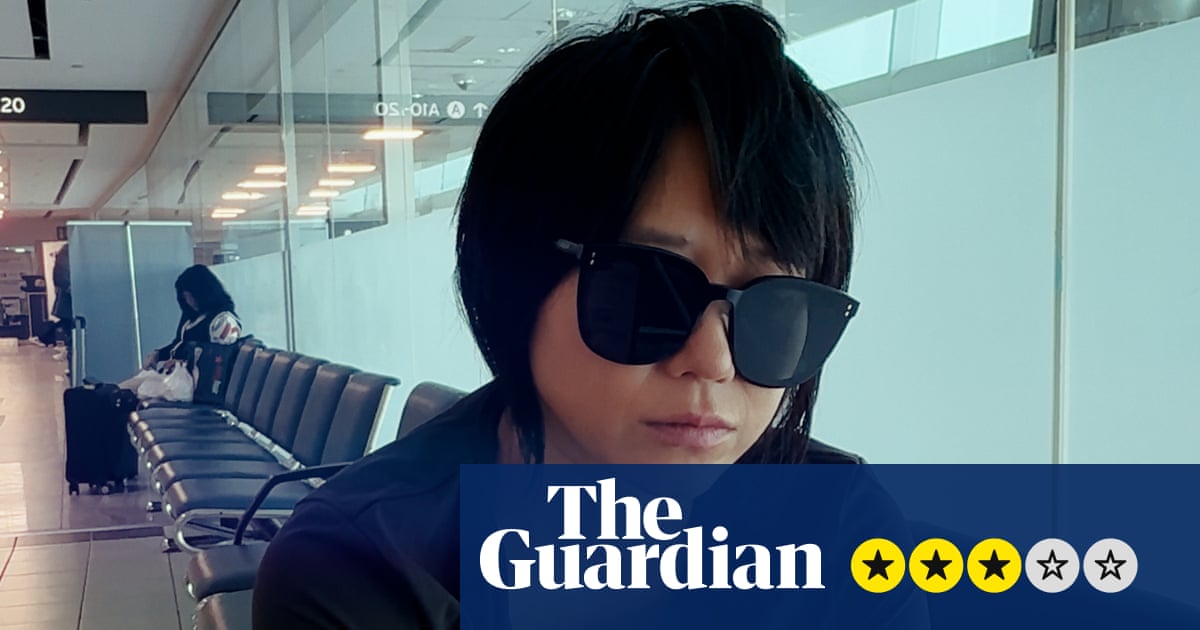
Idris Elba has refuted rumours that he was seriously in contention to play James Bond after Daniel Craig’s departure in 2021.
The actor, 53, who is currently promoting new film Masters of the Universe, told British GQ the conversation linking him to the role was “never legit”.
“I’ve always felt that it’s not a realistic thing,” he said. “James Bond was written how he was written for a reason. But I was complimented by it. And also, I think, in realistic terms, some markets just don’t go for that. Bond is big all over the world. And [audiences] won’t [all] go for a black male, an African male, playing Bond. That’s not what they like in their culture. Period.”
Elba also said he believed that the character should not evolve too dramatically from Ian Fleming’s original creation. “Bond is so unrealistic, so a hint of reality is good, but let’s not try and make it woke,” he said. “I think you’ve got to be pure to what it is: escapism. Don’t try and answer the world’s taste. Just be Bond.”
Last month, veteran casting director Nina Gold was brought on board for Amazon MGM’s reboot of the franchise, joining director Denis Villeneuve and screenwriter Steven Knight.
A source told Variety that 26-year-old Tom Francis has already auditioned, while Aaron Taylor-Johnson, Jacob Elordi and Callum Turner are all also apparently in the frame.
Keyword – Music Trefwoorden – The Beatles, Paul McCartney, John Lennon, Ringo Starr, George Harrison, Pop and rock, Music, Photography, Art and design, Culture Title – Hello, goodbye: the Beatles’ chaotic, controversial final tour – as never seen before Author – https://www.theguardian.com/profile/ianleslie Link – Hello, goodbye: the Beatles’ chaotic, controversial final tour – as never seen before Publish date – 2026-06-07T05:00:24.000Z Category – Culture URL – https://www.theguardian.com/music/2026/jun/07/the-beatles-unseen-photographs-chaotic-controversial-final-tour-jim-marshall
The Beatles played their last official concert on 29 August 1966, at Candlestick Park in San Francisco. Jim Marshall’s pictures capture the group at a pivotal moment, when they are already feeling nostalgia for what they are leaving behind.
Two months earlier, the Beatles had finished precording Revolver, a glittering collection of pop gems. The next day they boarded a plane to begin a global tour during which they would play nothing from it. They were not being perverse; it was simply that none of the songs lent themselves to live performance. On stage, they were a four-piece band. They could hardly play anything as complex as Eleanor Rigby or Tomorrow Never Knows to tens of thousands of fans.
Three years after their first No 1, the Beatles’ artistic development had split into two branches, one of which was withering. Until they came along, a recording was literally a record of a live performance. Please Please Me, the Beatles’ first album, was a collection of performances honed on stage in Hamburg and Liverpool. But the Beatles had come to see the studio as a creative platform in its own right; a place where they could experiment with different sounds and do things nobody else had done. That excited them in a way that live shows did not any more.
While artists like Bob Dylan and the Rolling Stones were inventing what we would now recognise as the modern rock gig, the Beatles’ minds were elsewhere. Consequently, even as their records raced into the future, their shows remained stuck in the past. The format of a Beatles concert in 1966 was still a kind of package-tour variety show, comprising five or six acts. The Beatles would come on last, play a breathless half‑hour set, and say goodnight.
After the first giddy flush of global success, touring had lost its lustre. When they weren’t performing, the Beatles were confined to planes, cars and hotel rooms. On stage, fans pelted them with jelly beans – not as much fun as it might sound – or whatever came to hand, including bottles and shoes. In a 1965 show at the Cow Palace in California a crowd of fans surged past police; in the resulting crush, 30 people were injured, mostly teenage girls. (Joan Baez, who, along with Dylan, had grown friendly with the Beatles, was present. She was seen pulling kids out of the crowd and taking them to safety.) On more than one occasion the Beatles received death threats before a show.
When George Harrison said the Beatles swapped fame and money for their nervous systems, this is what he was talking about. Meanwhile, in every city they landed in, the band had to answer asinine questions at press conferences with whatever reserves of charm they could muster. They felt trapped inside public personas that were an increasingly uncomfortable fit. As John Lennon put it, “We have been Beatles as best we ever will be – those four jolly lads. But we’re not those people any more. We are old men .”
Still, it was not easy to stop touring. A pop group that didn’t perform live was almost inconceivable. Touring was lucrative for the Beatles and for the corporate machine of agents, promoters and merchandise sellers that had sprung up around them. But as they set off in 1966, they were asking themselves if it was worth it. The tour made up their minds.
After desultory gigs in West Germany, they set off for Tokyo, where protesters who viewed the group as a mortal threat to Japanese values marched in the streets, with banners reading GO HOME BEATLES. In the Philippines, they unwittingly triggered a political incident by refusing to attend a reception hosted by the first lady, Imelda Marcos. At the airport on the way out they were abused and jostled by a seething crowd. They were terrified.
In America, DJs in the deep south picked up on a stray remark by Lennon , about the Beatles being more popular than Jesus, and stoked a hate campaign, involving ritual burnings of Beatles records. At one point, it seemed as if their entire career was in jeopardy. The Beatles, used to sellout shows, played to stadiums with thousands of empty seats.
The tour was the most stressful and harrowing episode of their career to date. By the time they got to Candlestick Park for the last show, they had regained their equilibrium. Their fans were already turning the backlash campaign into a defiant joke (“Lennon Saves”). The Beatles had informed their manager, Brian Epstein, they were done. Having supported each other through all the controversies, they were closer than ever, and more sure of their creative purpose. In these photos they look weary but determined to enjoy this final concert as best they can. McCartney asked an aide to tape their performance as a memento.
That night they closed with Long Tall Sally by their hero Little Richard. After taking a bow, they were hustled into an armoured truck and driven away. A new phase would soon begin. Following a break, the Beatles gathered at Abbey Road in November to work on a new song from John, to be called Strawberry Fields Forever
The Beatles: Live at Candlestick Park 1966 by Jim Marshall, curated by Amelia Davis, is published by Chronicle Books at £30 on 11 June. To support the Guardian, order your copy at guardianbookshop.com . Delivery charges may apply.
Ian Leslie is the author of John and Paul: A Love Story in Songs
Charming then terrifying … Javier Bardem as Max Cady in Cape Fear. Photograph: Apple TV
“Ever look around and wonder if we deserve all this?” a woman asks, standing by their sprawling mansion’s swimming pool with her handsome, ripped, fellow lawyer husband.
“No,” he replies.
Ah me. Ah my. Welcome to the latest screen incarnation of John D MacDonald’s taut psychological thriller, published in 1957 as The Executioners and now adapted for the third time under the title Cape Fear. Robert Mitchum and Gregory Peck starred in the first, in 1962 – the former as the villain Max Cady, nursing an incandescent rage and obsessive desire for vengeance against the latter, as lawyer Sam Bowden, for successfully prosecuting him for rape. Martin Scorsese directed a remake that had Nick Nolte as Bowden and a truly terrifying Robert De Niro as Cady in 1991. It introduced a few more moral grey areas but the battle remained between good and very, very evil as Cady sought to destroy Bowden’s life and family in every conceivable way.
But we have all got a lot more complex since then and here to match our new sophistications and probe every single modern weakness, fear and pressure point is Nick Antosca’s 10-part series of the same name. It is a wild ride. The new Cape Fear stars Amy Adams and Patrick Wilson as lawyers Anna and Tom Bowden and Javier Bardem having the absolute time of his life as Max Cady. Bardem turns in what will surely become the definitive take on the role; genuinely charming, convincing, momentarily even sympathetic and then terrifying, in a way that makes De Niro look like Danny DeVito but somehow never quite becomes pantomimic or preposterous.
This Cady was jailed for life for killing his wife after his lawyer Anna advised him to plead guilty in the hope of getting a lighter sentence. The gambit didn’t work. Afterwards, Anna got married to Cady’s prosecutor – Tom. In the intervening 17 years, Cady has had plenty of time to think about this and their claims that the relationship didn’t begin until after the trial and he is not happy.
He is, however, now free – exonerated by new evidence that has come to light. Anna remains convinced that he is guilty. Whether she is so convinced that she – or she and Tom? – did something to ensure he was convicted becomes the question. Their coded conversations – one overheard by their daughter Natalie (Lily Collias), with whom Anna was pregnant during the trial (which will become, like every other tiny detail, an awful part of the intricate web of horrors woven with unflagging glee by its creator over the increasingly dread-filled hours) – suggest much darker secrets in the mix (Tom’s microdosing habit likely a mere bagatelle) than anyone knows.
Meanwhile, the destruction of the Bowdens begins. Gently, at first – a family of skunks drowned in the pool, shots of their cat wandering around looking increasingly vulnerable, the intruder alarms going off at all hours of the night – but soon the stakes are raised. The Bowdens’ son Zach (Joe Anders) proves as vulnerable as the cat looks. Anna’s previous charity client and his mother are found dead. Natalie becomes best friends and more with a girl she meets at a party whose ability to terrify her own mother to tears makes you wonder just how many twists and turns this new version can support … And there’s more, much more, including a fine extension to the tradition of using actors from earlier versions in unexpected ways, much as it uses iconic scenes from 1962 and 1991 in ways that add to the growing feeling of disorientation and sense that anything could happen – usually right before it does.
The direction is immaculate, and Antosca has been vocal with praise and gratitude for Scorsese’s contribution (an executive producer, along with Steven Spielberg) to the process and execution of the story as a whole.
It is, to be sure, a masterclass in tension, in taking things right to the edge of credulity but never over and it never forgets the power of the jump scare. Dear God, does it never forget the power of the jump scare. The new Cape Fear also manages to work in, in superbly seamless fashion, just about every hot button issue the modern age offers. The plot uses the possibilities offered by AI, by the phenomenon of catfishing, of cancel culture, of online rumours, by our deepening mistrust in all the systems we once thought would protect us, our growing distance from reality itself and what happens when our last remaining redoubt – the sanctity and safety of the family unit – is threatened. If you don’t need your own microdosing habit by the third episode, you are Max Cady and I am running far, far away.