Tim Dowling: I’m all for ‘letting the outdoors in’ – but I draw the line at pigeons | Family | The Guardian

Keyword – Life and style
Trefwoorden – Family, Life and style
Title – Tim Dowling: I’m all for ‘letting the outdoors in’ – but I draw the line at pigeons | Family | The Guardian
Author – https://www.theguardian.com/profile/timdowling
Link – Tim Dowling: I’m all for ‘letting the outdoors in’ – but I draw the line at pigeons | Family | The Guardian
Publish date – 2026-06-13T05:00:07.000Z
Category – Lifestyle
URL – https://www.theguardian.com/lifeandstyle/2026/jun/13/tim-dowling-letting-the-outdoors-in-birds

O ur kitchen extension is typical of the area: a single-storey box with a big skylight, a picture window and glass double doors leading to the garden. It’s the sort of arrangement that advocates say brings the outdoors indoors. What they don’t say is: birds will get in.

It’s largely a summer problem, when the double doors are flung open and the sunlight through the glass creates the illusion that kitchen and garden are one. Sometimes a magpie will stroll in off the lawn, glance around in confusion and walk back out, as if he were looking for sporting equipment and mistakenly found himself in housewares. But it’s not usually that straightforward.

My wife posts a picture of a goldfinch sitting on top of the cupboards to the family WhatsApp, captioned “kitchen visitor”.

“Did he get out?” asks the oldest one.

“Yes, I threw a tea towel over him,” my wife writes. “Dad was hiding due to his bird phobia.”

“I do not have a bird phobia,” I say, posting my own picture of the goldfinch to prove I was very much in the room.

It’s true that I draw no pleasure from sharing indoor space with birds, but I’m perfectly capable of making them leave as long as I’m alone and can therefore act without dignity or grace. If my wife is there, I’m happy to let her wield the tea towel.

A few days later I’m sitting in my office shed on a hot afternoon, on the verge of dozing off, when my wife rings.

“Will you help me?” she says. This means she’s back from the shop and wants me to carry the shopping in from the car.

“Yeah, just a sec,” I say, trying to sound interrupted. I stand, cross the lawn and step into the kitchen, where a hysterical pigeon is flying back and forth between the window and the skylight, repeatedly battering itself against the glass of both.

I take a few steps back and think for a minute, my heart racing. Then I open both doors as wide as they will go before crossing the kitchen bent double, a terrible flapping sound just above my head, and shutting the far door tight.

When I open the front door, my wife is already piling the shopping on the step.

“You took your time,” she says.

“Just to warn you,” I say, picking up two bags, “there’s a pigeon the size of a jack russell in the kitchen.”

“And you’ve been waiting for me to come back and deal with it?” she says.

“No,” I say. “I only saw it just now, as I came through.”

“You won’t have liked that,” she says, “with your bird phobia.”

“Neither of us was delighted,” I say, walking back into the house. “Just mind yourself as you …”

I nudge the kitchen door open with my toe and lean in. The room is silent and completely still.

“Huh,” I say.

“No pigeon,” my wife says. “Did you imagine it?”

“He must have got out himself,” I say, “through the door I left open for him. Problem solved.”

“I hope you’re going to help me put all this away,” she says.

Over the next hour my office becomes unbearably hot. I can see my wife in the kitchen, trimming the stems of cut flowers. I drag the hammock into some shade and climb in with my laptop. Almost immediately, my eyelids begin to droop.

I am woken by a chilling scream – a difficult-to-interpret mixture of terror and fury. In the silence that follows I begin to think I may have dreamed the sound, until I hear it again.

My sense of urgency would not be apparent to anyone watching me exit the hammock – I’m holding a laptop, and it turns out the dog is asleep on the grass beneath me. It takes a long time to get to my feet.

In the kitchen I find my wife holding a tablecloth against the window, while something behind it tries to escape. Later I will learn that she lifted a vase off the windowsill to find the pigeon cowering behind it, and they both reacted badly.

“Stop moving!” she yells. Evidently the pigeon had gorged itself on some kind of dark blue berry just prior to entering the kitchen, a meal it was now expelling with propulsive force in every direction.

The dog becomes unhelpfully involved, barking and leaping. Other vases on the sill overturn, spilling water. Everything – windows, woodwork, sofa – is sprayed with blue-black shit.

Eventually my wife manages to fold the bird up into the tablecloth. She carries it to the door, where she tosses it into the air and it takes flight.

“Christ,” she says.

“I told you there was a pigeon,” I say.

Court denies emergency appeal to retain Trump’s name on Kennedy Center | Washington DC | The Guardian

Keyword – US news
Trefwoorden – Washington DC, Donald Trump, Trump administration, Law (US), Culture, US politics, US news
Title – Court denies emergency appeal to retain Trump’s name on Kennedy Center | Washington DC | The Guardian
Author – https://www.theguardian.com/profile/davidsmith,https://www.theguardian.com/profile/lauren-gambino
Link – Court denies emergency appeal to retain Trump’s name on Kennedy Center | Washington DC | The Guardian
Publish date – 2026-06-13T00:07:55.000Z
Category – News
URL – https://www.theguardian.com/us-news/2026/jun/12/judge-denies-pause-trump-name-removal-kennedy-center

An appeals court in Washington DC rejected an emergency appeal seeking to pause the removal of Donald Trump’s name from the facade of the Kennedy Center on Friday.

Justice department lawyers for Donald Trump and his hand-picked Kennedy Center board filed the emergency appeal earlier on Friday, asking the court to stay a judge’s order that his name be removed from the facade of Washington ’s leading performing arts venue.

The Kennedy Center filed its appeal shortly before the Friday evening deadline set by US district judge Christopher Cooper.

Earlier on Friday, Cooper denied a last-minute bid by the center to keep his name on the building.

As crews returned on Friday evening, onlookers gathered once again at the center to cheer on workers in hard hats and yellow vests gathering at the building, apparently ready to pry the president’s name from its marbled exterior. “Take it down!” they chanted.

Hours earlier, the crew had erected scaffolding around the section of the building where Trump’s name had been affixed. But as a thunderstorm rolled through the nation’s capital, the workers paused their efforts, leaving the lettering in place. It was unclear what prompted the stoppage.

Cooper had ruled last month that the president’s name had been illegally added to the iconic center, and gave the institution officials two weeks to remove his name from its building and branding.

“Congress gave the Kennedy Center its name,” Cooper wrote in his 94-page opinion in May, “and only Congress can change it.”

In a 4 June memo, reported by the Washington Post, the center’s general counsel referred to Cooper’s order, directing staff to remove all references to a “Trump Kennedy Center”.

“To comply with this order, you must immediately change email signatures, letterheads, and other documents to reflect the name such as ‘The John F Kennedy Center for the Performing Arts,’ or ‘Kennedy Center.’

“Other changes, such as to templates and forms, signage, brochures and website pages, must be completed no later than Friday, June 12, 2026,” the memo added.

Earlier this week, the Kennedy Center removed Trump’s name from its website, in compliance with the order. According to the Associated Press, an email earlier this week sent to members offering ticket packages for the 28 June Mark Twain Award for American Humor ceremony came from “the Kennedy Center” – without including Trump’s name.

Cooper’s order also temporarily blocked the performing arts facility from closing down this summer for renovations. The Kennedy Center’s leadership had previously approved a $257m “revitalization project” that would have closed the building for two years.

The decision stemmed from a legal challenge brought by Joyce Beatty, a Democratic representative of Ohio, who was an ex-officio member of the Kennedy Center’s board. Earlier on Friday, she made a filing opposing the request to pause the judge’s ruling. The congresswoman also made an appearance outside the venue, where a crowd had gathered on the steamy summer’s afternoon to cheer about 15 workers as they built scaffolding around a section of the marble wall where the president’s name was affixed.

For those working in the local special events industry, the takeover was deeply insulting. Bonnie Berry, a 68-year-old retired higher education and events worker, refused to work on the Kennedy Center Honors last year. Asked how she was feeling now, she said: “Oh, lovely, because I can’t say his name. He’s Orange Man 47 to me.”

As the sound of hammering echoed from the scaffold, Berry reflected: “It’s a bittersweet day because I want to make certain it goes down. I haven’t walked on this site for over a year since he put the sign up. I think they should actually auction off T-R-U-M-P and we’ll donate it back to the Kennedy Center to get the opera back and to pay the symphony and the people who got fired. I’d be all in favor of that.”

A Washington bus arrived at the campus and tooted its horn in apparent solidarity. The crowd roared its approval. But just after 4pm, amid thunder and heavy rain, the workers paused their efforts and many spectators took shelter beside an entrance.

In December, the Kennedy Center’s board of trustees, handpicked by Trump, voted unanimously to rename the center, a living memorial dedicated by Congress to the 35th president of the United States, a Democrat, “The Donald J Trump and the John F Kennedy Memorial Center for the Performing Arts”.

During Trump’s first term, he ignored the proudly non-partisan complex and did not attend the annual Kennedy Center honors.

But since his return to the White House, the US president has exerted enormous influence over the venue, starting with the termination of its board of trustees “who do not share our vision for a Golden Age in Arts and Culture”.

He initially installed Ric Grenell , a staunch ally with no prior experience in arts administration. Grenell departed earlier this year after overseeing far-reaching changes at the center, which prompted many artists to abandon the venue. He was replaced by Matt Floca, vice-president of operations at the center.

Many residents of the capital have viewed the rebranding of the Kennedy Center, and Trump’s other architectural ambitions, as narcissistic and anti-democratic. Carolyn, a 50-year-old retired government worker who did not wish to give her surname, said: “Putting his name on everything is right out of the dictator playbook .”

Carolyn said she had been coming to the centre for a long time and noted it is a memorial to former president John F Kennedy, whose birthday she shares. “Of course it’s just a symbol – there’s so many other things that the president does that I disagree with – but I’m happy to be here and have this little splash of hope in the rain.”

Workers begin to remove Trump’s name from Kennedy Center after court rulings | Donald Trump | The Guardian

Keyword – US news
Trefwoorden – Donald Trump, Washington DC, US news, Trump administration, World news, John F Kennedy, US politics, Law (US)
Title – Workers begin to remove Trump’s name from Kennedy Center after court rulings | Donald Trump | The Guardian
Author – https://www.theguardian.com/profile/donna-ferguson
Link – Workers begin to remove Trump’s name from Kennedy Center after court rulings | Donald Trump | The Guardian
Publish date – 2026-06-13T11:30:23.000Z
Category – News
URL – https://www.theguardian.com/us-news/2026/jun/13/trump-name-removed-kennedy-center-facade

A crew of workers spent the night removing Donald Trump’s name from the facade of the Kennedy Center in Washington DC , hours after a judge rejected an emergency appeal to block the removal of the former president’s name.

Work began in the early hours of Saturday, shortly after the performing arts venue missed a federal judge’s two-week deadline to excise the words ‘The Donald J Trump and’ from its exterior by Friday at 11.59pm.

The extra words were added last December after Trump’s hand-picked board of trustees voted unanimously to rename the venue, which was designated as a living memorial to the 35th US president John F Kennedy by Congress in 1964 and opened in 1971.

After erecting scaffolding on Friday evening, workers in hard hats and hi-viz vests draped tarpaulin over the temporary structure at 2am to block public views of their progress but were seen, through a small opening in the scaffolding covering, to be removing the letters at about 3am.

A crowd had gathered in the front of the centre to cheer on the workers and witness the moment the words would be restored to The John F Kennedy Memorial Center for the Performing Arts. People chanted “Shame!” and “Take it down.”.

US district judge Christopher Cooper ruled last month that Trump’s name had been illegally added and ordered its removal this week, after a legal challenge brought by Joyce Beatty, a Democratic representative of Ohio, who is an ex-officio member of the Kennedy Center’s board.

“Congress gave the Kennedy Center its name,” the judge wrote in his 94-page opinion, “and only Congress can change it.”

Cooper also issued a temporary block on Trump’s demand to close the Kennedy Center for two years of renovations, which was due to start in July.

Trump reacted by saying he was giving up control of the venue, which he seized in February by removing the 18 trustees appointed to its board by former president Joe Biden, handpicking new ones and naming himself chair.

Yet less than 36 hours before the deadline, lawyers acting for Trump and the Kennedy Center board mounted a last-minute attempt to keep his name on the building.

By then, the venue had already removed Trump’s name from its website and had reportedly sent out emails offering tickets to an event at “the Kennedy Center” – without including the 47th president’s name.

At 1pm on Friday, Cooper ruled that the centre’s lawyers had failed to demonstrate they were likely to win their appeal or that the centre would suffer “irreparable harm” if Trump’s name were purged.

Lawyers for the Department of Justice (DOJ), representing the centre, then appealed Cooper’s denial at 3.46pm. In urging the appeals court to pause the order, the DOJ said: “It does not make sense to alter the centre’s name and signage now, only to potentially revert the name again after what should be a successful appeal.“

But shortly after 7pm, this second attempt was denied , causing the crowd of more than 100 people at the Hands Off the Arts rally in front of the centre to erupt in cheers and demand the immediate removal of Trump’s name.

Late on Friday, the Department of Justice said in a court filing it would miss the deadline because of thunderstorms that could pose safety risks for the workers, seeking a 12-hour extension. Beatty called that request “inexcusable” and part of “a pattern of non-compliance”, according to the DOJ filing.

‘Loneliness influencers’ are racking up views. After a breakup, I see the appeal | Dave Schilling | The Guardian

Keyword – Opinion
Trefwoorden – Relationships, Loneliness, Life and style, Society, TikTok, Technology
Title – ‘Loneliness influencers’ are racking up views. After a breakup, I see the appeal | Dave Schilling | The Guardian
Author – https://www.theguardian.com/profile/dave-schilling
Link – ‘Loneliness influencers’ are racking up views. After a breakup, I see the appeal | Dave Schilling | The Guardian
Publish date – 2026-06-13T11:00:12.000Z
Category – Opinion
URL – https://www.theguardian.com/commentisfree/2026/jun/13/loneliness-influencers-breakups

M y birthday is coming up next month. I will be, by my count, even more ancient than I was last year. I’ll be far enough from 40 to make it irrational to lie and say I’m actually in my late 30s. I’m solidly, unequivocally in middle age.

And when you’re in middle age, you do a lot of looking back, soul-searching and other highly unproductive activities. I’ve been doing that even more thanks to being dumped by my girlfriend a month before my birthday. Yes, I am a 41-year-old man who uses the term “girlfriend”, a word that infantilizes me just typing it. What am I, a teenager sobbing to a Smiths song? In spirit, yes. I am.

At this age, I have a litany of failed relationships behind me, including a failed marriage that produced my eight-year-old son. I’ve had two breakups just in the last 365 days. And these were not flights of fancy. These were serious, with various “I love yous” and plans made and trips taken. I’m the king of serial monogamy, a sensitive nerve ending that sincerely tries to make it work even if it definitely isn’t.

The women I date are not that. They’re reserved, strong, and maybe a little bit unwilling to open up at first. Then there’s me crying over a sporting event or a perceived social slight or career stumbles. I think, what’s my problem ? Why am I blubbering in front of this person who just wants to get on with life with a minimum of whin ing ? If I had the answers, I wouldn’t be spending thousands of dollars a year on therapy. But at least I’m asking the questions.

In light of my latest “intimacy fail” and my looming birthday, I’m finding myself wondering if maybe solitude is the solution for all this personal chaos. Yet another obnoxious social media trend catching our idle attention is “loneliness influencing”. That means TikTokers posting videos of themselves drinking Diet Coke at home alone on a Friday night, telling the world that actually, this is great.

A recent article in the Atlantic shed some light on the phenomenon, describing videos where people take walks, stare out the window, or back a frozen pizza alone. If none of that sounds exciting, that’s because that’s the point. It’s supposed to appeal to viewers who aspire to such heights of banality, while not feeling guilty about it. Thankfully, lonelinessmaxxing videos only show the positive parts of being by yourself. I haven’t personally found any TikToks of people clipping their toenails or drooling after falling asleep at 8.30. Part of why these videos are circulating so much is, I think, because culture has enforced the idea that being by yourself is socially maladjusted behavior, that you are a bad day away from becoming the Unabomber and fleeing to a cabin in Montana. The videos offer an alternative view: it’s OK to be alone.

I see the appeal in embracing solitary life, especially past 40. How many more times can you open yourself up to another person before the inevitable crash, the painful separation, and the necessity of starting over again becomes too overwhelming? Maybe some of us are nostalgic for Covid lockdowns, when the anxieties of other people were a distant memory. Plus, we now have all these tools for interaction that don’t require us to actually try to love and be loved. We can just post a video of resolute and admirable aloneness and be rewarded for how little we need other people. Of course, by reaching out digitally, we’re reaffirming that we do actually need validation. It’s just that it’s easier if the need only goes one way.

I’m not here to tell anyone what they actually require to function. I have no idea what goes on in anyone else’s head. If I did, I think that might be a tad overwhelming, like Superman when he flies up into orbit to listen to the agonized screams of global victims of injustice with his hypersensitive ears. In fact, I applaud anyone who feels like they need to be by themselves. I think that’s really wonderful, especially because if they stay home, that’s one less person on the road at rush hour or trying to get a table at the trendy restaurant I want to go to. Thank you for your service.

But for me, that’s not what life is about. It’s about being stuck in traffic, going to the busy restaurant, and sharing feelings that are uncomfortable.

I could sit behind my phone and soak up praise. I could work myself to the bone, then celebrate with a bad movie I pass out to on the couch. I could force myself not to cry. But then I’m not me anymore. I’m someone I think I’m supposed to be. I’m “fixing” myself by being shut off.

I don’t want that. I want to be appreciated for the things I do well, but I also want to be understood for the things I don’t. It’s fine to need, normal to want. I want to be loved for the entire human being I am, not the show I put on for the world. Maybe that’s too much to ask for in a society that prioritizes aesthetics over honesty. Still, no matter how old I am, how many times I fail, I remain hopeful that I can accept and give actual affection.

If I die tomorrow, please be sure to inscribe this on my tombstone:

“Here Lies Dave Schilling. He Had Unreasonable Expectations About Life.”

I can’t think of a better way to be remembered than that.

Dave Schilling is a Los Angeles-based writer and humorist

US-Iran peace deal remains elusive as Trump and Tehran trade conflicting claims | US-Israel war on Iran | The Guardian

Keyword – World news
Trefwoorden – US-Israel war on Iran, World news, Iran, Donald Trump, Middle East and north Africa, US news, Lebanon, Hezbollah, Trump administration, US politics, US foreign policy, Israel
Title – US-Iran peace deal remains elusive as Trump and Tehran trade conflicting claims | US-Israel war on Iran | The Guardian
Author – https://www.theguardian.com/profile/jasonburke,https://www.theguardian.com/profile/joseph-gedeon
Link – US-Iran peace deal remains elusive as Trump and Tehran trade conflicting claims | US-Israel war on Iran | The Guardian
Publish date – 2026-06-12T18:23:58.000Z
Category – News
URL – https://www.theguardian.com/world/2026/jun/12/us-iran-peace-deal-remains-elusive-as-trump-and-tehran-trade-conflicting-claims

Prospects for an immediate end to the war between Iran and the US remained uncertain on Friday amid a chaotic series of conflicting claims and counter-claims by US and Iranian officials about ongoing negotiations.

Donald Trump seemed to distance himself from his earlier comments that suggested a preliminary agreement could be signed as soon as this weekend, with a series of angry social media posts describing the Iranians as “very dishonorable people to deal with”.

“With them, there is no such thing as dealing in good faith …. They better get their act together, and FAST! ” the US president wrote on Friday.

The outburst came after Iranian news agencies close to the regime denied that the terms of any deal had been fully agreed, and published a supposed draft of a finalised deal.

Adding to the confusion, Pakistan’s prime minister, Shehbaz Sharif, on Friday claimed, in a post on social media, that a final text of a peace deal between the US and Iran had been agreed, without providing any further information.

Neither Tehran nor Washington has confirmed that a final version has been agreed upon, though one senior US official separately suggested there was an “80 to 85%” likelihood of an agreement being signed within days.

“Most of the people that we’ve been speaking to, and most of the people who have authority within their system, want to sign this deal, but not everybody,” the senior official said. “And those internal fractures are sort of working themselves out as they continue to try to get to a point where they can say yes to the deal.”

The senior official added that Iran would “get rewarded economically for complying with their obligations under the deal”.

“I think that both of us [the US and Iran] feel frankly pretty good about where there’s a meeting of the minds here, there’s going to be a significant relief of economic sanctions,” the official said.

The Iranian foreign minister, Abbas Araghchi, said on Friday that an “Islamabad memorandum of understanding” for addressing the US-Israeli war against Iran had “never been closer”, but urged media outlets to refrain from speculating about its contents until it was finalised.

Araghchi said Iran would share all details with the public in due course, in what he called Tehran’s responsible and transparent approach.

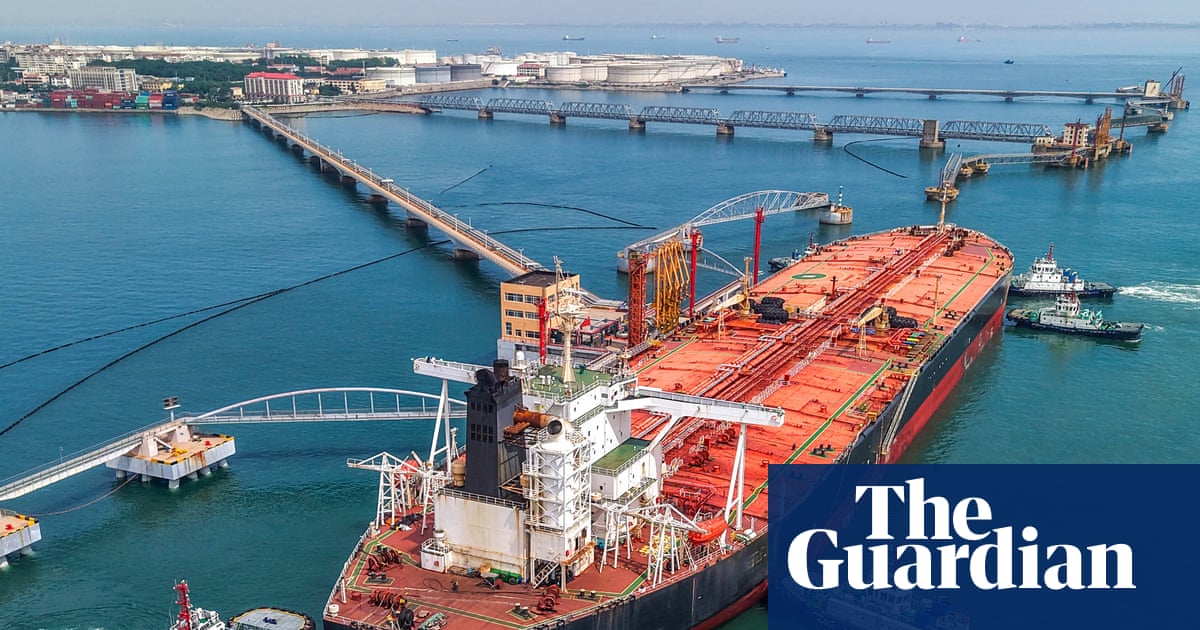
IRNA, Iran’s state news agency, confirmed that “the broad outlines” of a deal were being finalised, but sowed further confusion when it said Iran would not give up its control of the strait of Hormuz, which carries a fifth of the world’s oil and liquefied gas supplies and has been shut to most shipping by Tehran since shortly after the war began in February.

The US has insisted that Tehran, which wants to levy lucrative tolls on ships passing through the strait, must restore freedom of shipping in the crucial waterway.

A US official on Friday said the strait would open and the US would lift its blockade on Iranian ports as a part of the terms that Washington and Tehran have agreed.

Since a ceasefire came into effect in April , Trump has repeatedly claimed a deal was on the point of completion, only to then revert to threatening Iran with new attacks.

Recent days have seen the most intense clashes between Iran, Israel and the US since the ceasefire. Trump on Thursday threatened to seize Iran’s oil export terminal of Kharg Island and launch a new wave of attacks, then suddenly claimed a diplomatic breakthrough, saying a draft deal had been “approved” by “the highest level of Iranian leadership”.

Details of the supposed deal leaked or briefed by each side included a series of major concessions by the other, suggesting big gaps remain.

On Friday, Trump said a report of the text of the draft deal published by Iran’s Mehr news agency, which quoted a source close to Iran’s negotiating team, bore “no relation to the truth”.

The draft would end conflict on all fronts, including Lebanon, where Israel has launched an offensive against Hezbollah , and ensure the release of $24bn of Iran’s frozen assets, the semi-official agency claimed.

It would also set a 60-day period for negotiations on Tehran’s nuclear programme, offer the suspension of sanctions on the sale of Iran’s oil and petrochemical products, bring generous reparations to be paid by the US, and lift the US naval blockade on Iranian ports, which has been in place since 13 April.

The claims contrasted dramatically with statements from Washington, where officials said the agreement stipulated that Iran’s nuclear material would be destroyed, and its nuclear programme dismantled, none of its frozen money would be released until it met certain demands, and Iran would stop supporting allied militant movements around the Middle East.

Underlining the ongoing tensions over the strait of Hormuz, US forces on Thursday shot down two Iranian one-way attack drones after Tehran attempted to strike commercial ships passing through the waterway, according to US officials.

Iran’s military stopped a tanker from transiting the strait, Iranian state media said, reporting the sound of explosions early on Friday.

Early on Saturday US Central Command said Iran had again launched one-way attack drones – this time multiple – in order to strike commercial ships passing the strait and that US forces had downed them all. “The international trade corridor remains open for transit,” it added.

Trump is under domestic political pressure to end the war, with polls showing his approval ratings sinking as fuel prices rise. Some Republicans have openly worried that the war’s unpopularity could cost them control of Congress in November’s midterm elections.

Iran’s regime also faces serious challenges, with its oil exports restricted and inflation soaring.

“We are currently under sanctions, and our routes have been blocked. We face a difficult test,” Masoud Pezeshkian, Iran’s president, said in a live televised address on Wednesday. “Governing the country is not an easy task under the current circumstances, given the shortages we face, the unrest we have experienced and the problems that remain.”

US officials have suggested that regional allies have agreed to the terms of a deal, but curbs on fighting in Lebanon could be difficult to accept for Israel, which started the war alongside the US in February but has not been included in peace negotiations.

Benjamin Netanyahu, Israel’s prime minister, said on Friday that he and Trump were in “full agreement” to keep Iran from acquiring nuclear weapons.

On Thursday, Netanyahu said he had spoken to Trump and “expressed his appreciation” for the president’s commitment that any final deal would involve limits on Tehran’s missile production, and the cessation of Iran’s support for its “terrorist proxies”, which include Hezbollah.

Diplomats and analysts in the Middle East said Iran’s still potent ballistic missile capabilities and support for militant movements were not part of current negotiations.

A leading Hezbollah politician expressed confidence on Friday that Iran would insist on Lebanon being included in a deal.

Hassan Fadlallah said in an excerpt of a speech broadcast by Hezbollah’s al-Manar TV: “If the agreement happens, we have complete confidence in the Islamic Republic … [and] that it will insist on any agreement, including the file of Lebanon.”

Hezbollah opened fire on Israel on 2 March in response to its attack on Iran, leading to an Israeli offensive that has killed thousands of people in Lebanon.

Last weekend, Israeli strikes on Beirut prompted Tehran to launch waves of ballistic missiles aimed at central Israel.

Israeli forces have occupied swathes of southern Lebanon, where Lebanon’s national news agency reported fresh Israeli airstrikes in several towns and villages on Friday.

Last week, Mohsen Rezaee, an adviser to Iran’s supreme leader, said Hezbollah had “made great sacrifices” in the war and that Lebanon “will be an inseparable part of any agreement and any ceasefire”, in comments reported by the Mehr news agency.

The war in Lebanon has continued despite several ceasefires announced by the US, which has been mediating talks between the Lebanese and Israeli governments. Hezbollah is not a party to these talks and rejected a US-backed plan declared last week that called for the group to withdraw its fighters from southern Lebanon.

Drug diversion schemes cut reoffending rates more than prosecution, study says | Police | The Guardian

Keyword – UK news
Trefwoorden – Police, UK criminal justice, Drugs, Drugs policy, Society, England, UK news
Title – Drug diversion schemes cut reoffending rates more than prosecution, study says | Police | The Guardian
Author – https://www.theguardian.com/profile/mattha-busby
Link – Drug diversion schemes cut reoffending rates more than prosecution, study says | Police | The Guardian
Publish date – 2026-06-13T08:00:09.000Z
Category – News
URL – https://www.theguardian.com/uk-news/2026/jun/13/drug-diversion-schemes-reoffending-rates-police

Drug diversion schemes led by police that steer people away from the criminal justice system and into treatment and education services are significantly more effective in reducing reoffending than prosecution, according to a new analysis.

Researchers examined outcomes across 13 English police forces and more than 62,000 criminal incidents over the past four years, finding that people whose cases were dealt with through decriminalisation-style diversion schemes were a third less likely to reoffend than similar individuals prosecuted for drug possession.

A number of police forces in England use formal diversion schemes for people caught in possession of drugs, notably Durham, the West Midlands and Thames Valley. But many forces, even if would-be offenders are not often sent to prison for simple possession offences today, still officially take a law-and-order approach towards illegal drug use.

Prof Alex Stevens , the acting director of the University of Sheffield’s Centre for Criminological Research, who led the research, said: “The evidence is now strong enough that all police forces can be confident in adopting and expanding diversion schemes for people caught in possession of drugs.”

The researchers who conducted the four-year, first-of-its-kind study, funded by the Cabinet Office’s evaluation accelerator fund, are working with the National Police Chiefs’ Council (NPCC) and the College of Policing to help police forces countrywide to adopt police-led drug diversion.

Quantitative data was collected over four years on a cohort of people who were contacted by police forces between October 2021 and September 2022.

Commander Alison Heydari, the NPCC lead for out-of-court resolutions (OOCRs), said the study highlighted the effectiveness of diversion. “Through the ‘national OOCR strategy’, there is a clear commitment to ensuring that eligible individuals are consistently offered appropriate alternatives to prosecution, helping to prevent reoffending while also addressing disparities in outcomes,” she said.

The researchers, however, found that diversion was being used far less than it could be, even in police forces with established diversion schemes, with only a minority of eligible cases diverted as officers chose not to divert eligible offenders. “Police forces now have an opportunity to reduce their costs – and pressure on the courts – by making more use of diversion,” said Stevens, who quit the government’s expert advisory council on drugs in 2019 over the “political vetting” of candidates. “This will require clear leadership, proper training, and a shift in culture at street level.”

Jason Kew, a former DCI at Thames Valley police who led the development of its pre-arrest drug diversion scheme, said forces that embedded diversion schemes could go further still and develop specialist pathways for women.

“Getting this right means fewer women in custody, fewer children lost to the system – and stronger, healthier communities,” said Kew, now a senior practice specialist at the Centre for Justice Innovation. “The question is no longer whether diversion works. It is how boldly we choose to build on it.”

The report also said that people in the most deprived neighbourhoods were most heavily policed and least likely to be diverted, and that black people were less likely to be diverted than white people for similar offences.

Prof Kojo Koram, from Loughborough University’s law school and the author of The Next Fix: The Winners and Losers in the Future of Drugs , said: “For every stage of the drug policing process, from stop and search, to arrest, to sentencing, statistics show that black and minority ethnic people are punished at a much higher rate than white people despite similar rates of use.

“Diversion schemes are a first step towards moving people away from criminalisation, and clearly needed when we look at our overcrowded prisons, but they are still quite a tame policy initiative when compared to full decriminalisation and legal regulation policies being passed across Europe and North America. Britain remains desperately behind the curve on drug policy.”

In 2017, around the time when diversion schemes were first being formally adopted, a Home Office report acknowledged: “There is, in general, a lack of robust evidence as to whether capture and punishment serves as a deterrent for drug use.”

Steve Rolles, the senior policy analyst at Transform Drug Policy Foundation, said: “Diversion still feels like the government wanting to have the benefits of decriminalisation without having to say the word. Despite the obvious benefits of decriminalisation, it does nothing to deal with the harms of the illegal trade. The choice is between putting the government in charge, or leaving organised crime in control.”

The Knicks’ hedonistic NBA finals run has been a relief from the exhaustion of US politics | New York Knicks | The Guardian

Keyword – Sport
Trefwoorden – New York Knicks, NBA finals, Basketball, NBA, US sports, Sport
Title – The Knicks’ hedonistic NBA finals run has been a relief from the exhaustion of US politics | New York Knicks | The Guardian
Author – https://www.theguardian.com/profile/ankita-rao
Link – The Knicks’ hedonistic NBA finals run has been a relief from the exhaustion of US politics | New York Knicks | The Guardian
Publish date – 2026-06-13T10:00:12.000Z
Category – Sport
URL – https://www.theguardian.com/sport/2026/jun/13/the-knicks-hedonistic-nba-finals-run-has-been-a-relief-from-the-exhaustion-of-us-politics

When it comes to the length of my relationship with the New York Knicks , I’m more Taylor Swift than Timothée Chalamet.

But it was inevitable. For months, Knicks fever was slowly drawing me in. A close friend said the team was singularly healing her from a breakup. Another from depression. I had inadvertently been subjected to playoff games through friends, or the daily turmoil of them, through colleagues.

From the vantage point of Washington DC, where I oversee our politics coverage, we deal with the national guard at Sweetgreen and sports bars turned into Maga havens. So New York during this particular time in sports and cultural history has seemed like a downright Mamdani Mardi Gras, just a few hours out of reach.

As midterm primary season wears on, with emotionally taxing late-night election returns, and a White House that has us scrambling all day and most nights, I need the Knicks. Sports are politicized, as we all know, and the president turning up to watch the NBA finals at Madison Square Garden, or the World Cup referee barred from the US are proof. But they are not as political as, well, politics.

I deal with a nearly constant flow of news, often just steps away from their origin. There is no comfort in the rare moments of quiet – it almost certainly means something worse is coming.

Many people in America, including my friends and family, have tried to tune out from politics in the past couple of years. Other members of the media know this from peering under the hood at our audience. People engage wildly during the moments they feel they can’t ignore: an ICE takeover in Minnesota, the onset of a new war, or the Democratic party dealing with a Nazi tattoo. But otherwise, they’re looking for an escape and it comes in the form of many things: sports, shows, BookTok, watercolor classes, mahjong.

For me and my team at work, that’s not an option. (I have no one to blame – I chose this job and happen to love it.) But the brain was never built for this much information all at once, nor was our society built for this much disruption, and so my need for the occasional detour has become more urgent.

As someone with a 24/7 job and two young kids, the options are limited. There is the gym, required to survive. And then, in the past year and a half there has been: the World Cup, the Knicks, Off Campus, Heated Rivalry, March Madness, various tennis tournaments, The Summer I Turned Pretty, Emily in Paris, and an unhinged real estate novel.

With few hours of free time, choices are made carefully. When friends tell me about a new show I first have to check: is it sad? Is it serious? And if so, I immediately say no. I’m not looking for depth, or something that requires commitment. I’m looking for a quick and easy emotional high. Belly in Cousins. The Gators winning (and then losing). The look on Garrett’s face when Hannah does karaoke .

I’m not alone in this. Some of my most high-intensity friends oscillate between human rights and Conrad Fisher with ease. Group chats range from Epstein to Wemby. My husband, who spends his days treating sick kids and writing public policy, makes Kir Royals while we watch Emily refusing to leave Paris.

It’s become important not just as an emotional salve, but as a means of remaining alert to the world as it burns. I have always feared collective apathy, a hardening to suffering. But this light hedonism, this brief escape, it hasn’t numbed most people I know, and certainly not me.

Instead, watching the Knicks rise has provided a counterpoint – an optimism, a sense that thousands can be healed just for a second by an underdog, or a couple of gay hockey players, or the perfect book at the perfect time. It gives you a society that you want to fight to preserve, where so many people different from you can come together to enjoy just a brief moment in time.

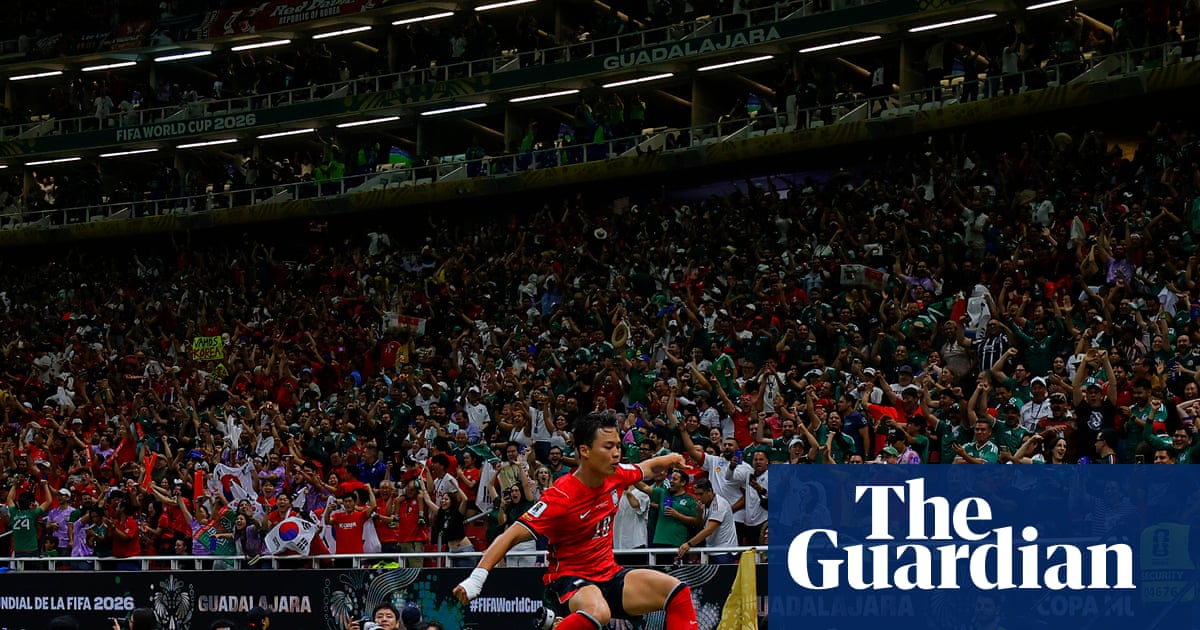
In a world where the forces that divide are carefully manufactured by a few powerful people, the Knicks v Spurs in Game 5 takes on a whole new weight.

Sam Lau on the lottery of summer air travel – cartoon | Sam Lau | The Guardian

Keyword – None
Trefwoorden – None
Title – Sam Lau on the lottery of summer air travel – cartoon | Sam Lau | The Guardian
Author – Sam Lau
Link – Sam Lau on the lottery of summer air travel – cartoon | Sam Lau | The Guardian
Publish date – Sat 13 Jun 2026 12.00 CESTLast modified on Sat 13 Jun 2026 12.17 CEST
Category – Opinion
URL – https://www.theguardian.com/commentisfree/picture/2026/jun/13/sam-lau-lottery-summer-air-travel-cartoon-holiday-flight

Freedivers, leftover cables and bits of clay: Cuba gets inventive to save its pristine reefs amid US blockade | Marine life | The Guardian

Keyword – Global development
Trefwoorden – Marine life, Global development, Coral, Cuba, Caribbean, Environment, Pollution, US foreign policy, Trump administration, Americas, World news
Title – Freedivers, leftover cables and bits of clay: Cuba gets inventive to save its pristine reefs amid US blockade | Marine life | The Guardian
Author – Natalia Torres Garzón in Zapata, Cuba. Photographs by Antonio Cascio
Link – Freedivers, leftover cables and bits of clay: Cuba gets inventive to save its pristine reefs amid US blockade | Marine life | The Guardian
Publish date – 2026-06-13T11:00:13.000Z
Category – News
URL – https://www.theguardian.com/global-development/2026/jun/13/freedivers-leftover-cables-and-bits-of-clay-cuba-gets-inventive-to-save-its-pristine-reefs-amid-us-blockade

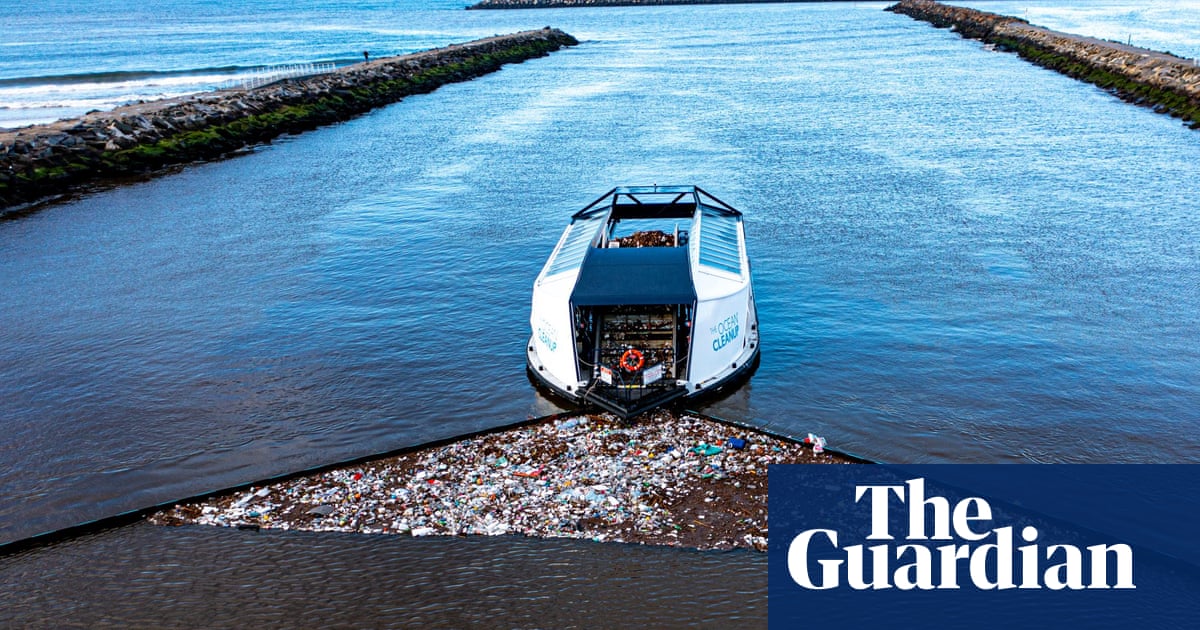
A t 8am, scuba divers gather to collect plastic and drinks cans from the sea at Cuba’s Ciénaga de Zapata national park . Amid a power crisis that has virtually paralysed the country’s economy, they use an electric trailer to move to a designated spot. In only a few hours, they have collected five sacks of cans and waste.

Lack of environmental awareness, invasive species and the climate crisis have long threatened the island’s pristine marine ecosystem but as US sanctions and economic scarcity take their toll on the country, scientists and community conservationists are working with even scarcer resources to protect a vital ecosystem for the Caribbean and the world.

Coral cover in the Caribbean has decreased by 48% since 1980, according to a recent report by the Global Coral Reef Monitoring Network, making joint action between countries essential. Yet deteriorating relations between the US and Cuba are hindering conservation efforts in the Gulf of Mexico.

Ciénaga de Zapata in the south-east of the country is a good example. The national park , a world-renowned site for marine conservation, is recognised as a biosphere reserve and a Ramsar site for its biodiversity and geodiversity.

“Compared with other places, we don’t have major polluting sources,” says Marileidy Albertus, a specialist in exotic and wild species at the National Aquarium in Havana. “We don’t have big industries, oil spills are almost nonexistent, maritime transport is also limited, and for many years, agroecological practices have been implemented.”

Although the global use of inorganic fertilisers has grown rapidly, Cuba’s limited use of chemicals in farming has reduced the impact on its reefs. Likewise, the island has been slower than other Caribbean regions to experience coral diseases such as stony coral tissue loss disease (SCTLD), which is spread by international shipping – an activity that also causes pollution and harms corals through anchoring and grounding.

“Coral restoration was not even a topic of discussion in Cuba. We could observe small reductions due to climate change, but not drastically,” says Albertus.

All that changed in 2023, when SCTLD and an intense bleaching event damaged the reefs , prompting the Cuban government to adopt a new policy to protect them.

Although relations between Cuba and the US improved during the Obama years , leading to a bilateral agreement on marine conservation, the current crisis and the climate-sceptic Trump administration have hampered on-the-ground projects.

The situation has worsened since the oil blockade imposed by the US. Petrol is essential for scientists to carry out and monitor existing projects, for transporting volunteers over long distances, and for the government to control illegal fishing.

“The US administration’s decision to underinvest in the environment is extremely misguided and self-defeating,” says Daniel Whittle, an expert in US and Cuban environmental law and policy and director of the Resilient Caribbean initiative .

“Cuba contributes very little to climate pollution and has been very proactive since 1992 in having a climate strategy … They understand, as an island nation, how without these common resources everyone loses.”

A t the National Aquarium in Havana, scientists have to deal with scarcity every day. They must manually provide oxygen to the fish tanks housing fragile species during power cuts, struggle to acquire equipment made in the US or sourced from companies there or have access to scientific journals and magazines associated with the US. Also, NGOs have difficulty providing funding and getting Cuban scientists to international events.

Luis Mesa, a conservationist scuba diver in Ciénaga de Zapata, compares the restrictions on their work with freediving. “With scuba diving gear there are so many possibilities: you can go deeper and stay underneath the water for longer. But to protect the ecosystem, our resources are limited,” he says.

Scientists increasingly have been relying on a network of local conservationists, who monitor the area and report changes to experts. “After I changed from military to recreational scuba diving, I realised that protecting marine life is important,” says Jorge Sánchez, who has learned about conservation and marine life through local institutions.

With the help of volunteers such as Mesa and Sánchez, marine biologists at the National Aquarium are using freediving techniques to conduct experiments at a depth of 17 metres in a spot accessible by swimming from their workplace – a way to reduce fuel use and address scarcity.

They are also developing their own substrates for coral restoration, and use recycled materials, such as broken clay and leftover cables from the national telecoms company.

Since 2019, they have been experimenting with coral farming through fragmentation and the assisted reproduction cycle (IVF). Now they are innovating by combining the two techniques, an expensive, time-consuming practice not used elsewhere due to its logistical complexity.

“Most organisations depend on financing, and working on long-term projects like this is not easy,” says Albertus.

While overtourism causes environmental problems elsewhere, in Cuba the decline in the tourism industry due to the pandemic and the tightening of the blockade, including a lack of fuel for commercial airlines, has also threatened conservation gains.

Many people who were making a living from renting out houses are returning to their original activities, such as illegal fishing and other practices that damage the ecosystem. “If there aren’t any tourists, they will go back to fishing because that’s what they know,” says Mesa.

Eduardo Abrego, a biologist with years of experience in Ciénaga de Zapata, adds: “The worst enemy of conservation is necessity. Humans always try to find a solution to their hardship in nature.”

Philippines picks up the pieces after strongest earthquake in decades | Philippines | The Guardian

Keyword – World news
Trefwoorden – Philippines, Natural disasters, Asia Pacific
Title – Philippines picks up the pieces after strongest earthquake in decades | Philippines | The Guardian
Author – https://www.theguardian.com/profile/natasha-may,https://www.theguardian.com/profile/carmela-fonbuena
Link – Philippines picks up the pieces after strongest earthquake in decades | Philippines | The Guardian
Publish date – 2026-06-12T23:01:00.000Z
Category – News
URL – https://www.theguardian.com/world/2026/jun/13/philippines-earthquake-cleanup-mindanao

I t was just before midnight when the rescue team pulled the body from the rubble of a grocery store destroyed by the most powerful quake to hit the Philippines in half a century. The family wailed at the sight.

“While tragic, it offered the family a painful consolation,” said Rene Baliong, the head of the search and rescue team. “They have a body to bury.”

For days rescuers have trawled through the wreckage in General Santos City on the nation’s second-most populous island of Mindanao after a 7.8-magnitude earthquake shook the region, triggered a tsunami warning and killed at least 55 people.

Baliong’s team worked non-stop for days searching for bodies under the collapsed grocery store, their spirits buoyed after they pulled out a victim still alive on Tuesday. Dozens remained missing while at least 1,120 were injured. More than 45,000 were displaced, mostly those who fled after the tsunami alert was sent in Mindanao in the country’s south.

Triggered by movement in the Cotabato Trench, Monday’s earthquake was the strongest since the same undersea depression triggered an 8.1-magnitude quake that whipped up tsunami waves on 17 August 1976, according to Teresito Bacolcol, the director of the Philippine institute of volcanology and seismology.

The quake left a trail of destruction including a landslide that buried houses and killed 18 people in the mountainside town of Glan. In nearby General Santos City, at least 13 people were killed when buildings collapsed.

At least 19 major commercial buildings in the city were damaged, including a mall and hotel, while more than 19,000 homes were damaged.

In the immediate aftermath, the government was working to provide food and water filtration mechanisms after the city’s pipes burst during the quake, said Rodrigo Sosmeña, regional director for the office of civil defence.

Rufa Cagoco Guiam, a university professor and resident of General Santos, said it has not been easy to buy basic necessities because the big malls were closed. “I’m going around the city now looking for a supermarket to buy food and water,” Guiam said.

Beyond the physical damage, local residents also grappled with the emotional shock, with the earthquake striking just as students were returning to school after the two-month summer holiday break.

“I think we underestimate the mental health toll that an earthquake like this can take on people, especially children,” said Drew Strobel, from the International Federation of Red Cross. “We’re already seeing that people are really traumatised by the event.”

The earthquake hit before classes began, but many students saw their school buildings wobble as they gathered in the fields to sing the national anthem, he said.

Ten schools were damaged and 6,000 remained closed for safety assessments.

The Red Cross was providing mental health support, offering hot meals, assisting in rescue operations and assessing the impact on people’s livelihoods, with jobs affected and tourism likely to decline, Strobel added.

The recovery challenges could also be exacerbated by the weather. The predicted El Niño phenomenon could be complicated for the region by the south-west monsoon, potentially bringing both flooding and a severe dry spell, according to Sosmeña.

The big concern was agricultural production, he said, as the region is considered one of the top rice producing areas in the Philippines, while coconut production supports the economy in some areas of Sarangania.

“These are the main source of livelihood of the people, and with these abnormal weather conditions, coupled with some vulnerability brought about by damaged infrastructure caused by this earthquake … we are bracing ourselves,” Sosmeña said.

Picking up the pieces after the earthquake, he said, “is not an easy job”.

With Associated Press