Scotland v Ireland: Women’s T20 World Cup – live | Women's T20 World Cup 2026 | The Guardian

Keyword – Sport
Trefwoorden – Women’s T20 World Cup 2026, Ireland women’s cricket team, Women’s T20 World Cup, Women’s cricket, Cricket, Sport
Title – Scotland v Ireland: Women’s T20 World Cup – live | Women's T20 World Cup 2026 | The Guardian
Author – https://www.theguardian.com/profile/timdelisle
Link – Scotland v Ireland: Women’s T20 World Cup – live | Women's T20 World Cup 2026 | The Guardian
Publish date – 2026-06-13T12:28:54.000Z
Category – Sport
URL – https://www.theguardian.com/sport/live/2026/jun/13/scotland-v-ireland-womens-t20-world-cup-live

Wicket! Murray c & b Fraser 0 (Ireland 113-9)

Another one! Another one for the Scottish spinners! And another caught-and-bowled!

Wicket! Kelly run out (Fraser) 15 (Ireland 112-8)

After running Prendergast out, poor Kelly has run herself out too.

17th over: Ireland 109-7 (Kelly 14, Canning 1) To make matters worse, Prendergast had just found top gear, swinging Slater’s slower ball for six. The first six today by someone not called Bryce.

Wicket! Prendergast run out (Carter/S Bryce) 33 (Ireland 108-7)

Ah no! Ireland’s only hope has perished in a needless mix-up. Prendergast was happy with a single but Kelly wanted two, and it’s the one in the right who has to go. Shapr work from Darcey Carter, firing the ball in to the keeper.

16th over: Ireland 96-6 (Prendergast 22, Kelly 13) Kathryn Bryce tries her seventh bowler, Priyanaz Chatterji, right-arm medium. Arlene Kelly comes to the party with a cut for four and a lofted square drive for four more. She takes 11 off the over, but still the rate climbs.

15th over: Ireland 85-6 (Prendergast 22, Kelly 2) Gordon starts this over on a hat-trick and she deserves one as she produces a ripper, turning the ball from off stump, beating Prendergast’s prod. When Gordon drops short, Prendergast manages to swing her away for four and two. She’s showing some fight, but the required rate is still not on Ireland’s side: it rises to 15 as they need 77 from the last five over. It’s almost impossible.

14th over: Ireland 77-6 (Prendergast 15, Kelly 1) Prendergast begins the over with a four, driven through the covers, but these Scottish spinners are made of stern stuff and Fraser fights back, conceding only three off the last five balls. the rate climbs to 14. Scotland have only to hold their nerve to complete their first T20 World Cup win.

13th over: Ireland 70-6 (Prendergast 9) Orla Prendergast must be wondering what she is witnessing. Not only have Ireland collapsed, but the required rate has rocketed to 13. They need 92 and Prendergast is going to have get most of them herself.

Wicket! Tector b Gordon 0 (Ireland 70-6)

Bad to worse! Tector can’t detect the line or protect her stumps. Gordon has two in two and three in the over!

Wicket! Paul c & b Gordon 0 (Ireland 70-5)

Paul can only chip back to the bowler. Ireland are falling apart!

Wicket! Stokell b Gordon 2 (Ireland 70-4)

And another! Stokell, looking to steer the ball behind square, misses a straight one and Ireland are in a bad way here.

12th over: Ireland 69-3 (Prendergast 8, Stokell 1) Katherine Fraser is threatening to keep the Player of the Match award out of the hands of the Bryce family: she has 2-0-8-2.

Wicket! Hunter b Fraser 39 (Ireland 67-3)

Big moment! The only Irish batter to look comfortable today has gone, missing a reverse sweep as Fraser strikes again.

11th over: Ireland 66-2 (Hunter 39, Prendergast 7) Kathryn Bryce takes Abel off and trusts herself to restore order. It half-works: she goes for eight runs, two or three below the asking rate, but Hunter maintains her momentum with a slog for four.

“Afternoon Tim,” says Simon McMahon. “Scotland’s women cricketers showing the male footballers the way, though if anyone can snatch defeat from the jaws of victory, it’s Scotland. In any sport. Maybe today will be different…”

10th over: Ireland 58-2 (Hunter 32, Prendergast 6) Kathryn Bryce brings on her sixth bowler, Chloe Abel, a right-arm medium-pacer who is being watched today by her grandmother. Hunter, seeing the chance to lift the run rate, greets her with a nice controlled pull for four and follows up with a ramp for four more. That’s 14 off the over, so at the halfway stage Ireland are coming back to life.

9th over: Ireland 44-2 (Hunter 21, Prendergast 5) Kirstie Gordon, who conceded only three singles off her first over, repeats the trick with her second. Amy Hunter is going at a reasonable pace with 21 off 25 balls, but still the asking rate climbs – it’s now 10.72 an over.

8th over: Ireland 41-2 (Hunter 19, Prendergast 4) Orla Prendergast, impressive but empty-handed with the ball, gets off the mark with a commanding cut for four.

Wicket! Lewis st K Bryce b Fraser 11 (ireland 37-2)

The big one! After playing herself in, Lewis gets herself out. She goes down the track to the off-spinner but Katherine Fraser sees her coming, releases the ball early and fires it down the off side. Sarah Bryce makes a sharp stumping and Lewis has to go for a stodgy 11 off 19.

7th over: Ireland 35-1 (Hunter 18, Lewis 10) Kathryn Bryce, ringing the changes, brings herself back for a second over. Only four from it as Lewis is still playing herself in. When Hunter plays a punch for two, one of the commentators mentions that Scotland ran no fewer than 23 twos. The running was relentless, especially from the Bryce sisters: as Sarah drily remarked afterwards, “Me and Kathryn know each other pretty well.”

6th over: Ireland 31-1 (Hunter 15, Lewis 9) Bryce turns to spin for the first time, bringing on Kirstie Gordon, the Scot who used to play for England. She keeps up the good work with her slow left-arm, going for only three singles. So the powerplay ends with Scotland in the driving seat: of Ireland’s 31 runs so far, 15 came off one over. The required rate is already over 9, but Hunter and Lewis are still there.

5th over: Ireland 28-1 (Hunter 14, Lewis 8) No sooner has the plug come out than Rachel Slater shoves it back in. This over goes for just a single, and even that is a win for Scotland as Darcey Carter makes a fine diving stop at midwicket to deny Hunter another four. Slater has 2-0-3-0. Wind, what wind?

“Morning from a breezy Old Trafford,” says Guy Hornsby. “It’s the World Cup! Scotland have been really impressive since the Powerplay, with the Bryce sisters giving all the Irish bowlers problems. I think 170+ would have been a stretch today for Gaby Lewis’s team, but after that finish this is still very much gettable. And with the quality of Orla Prendergast and Lewis, Ireland will still feel they have a good shot here.”

4th over: Ireland 27-1 (Hunter 12, Lewis 8) Ireland need a big over and the batters know it. As Fontenla goes too full, she concedes three fours: a straight drive from Lewis, a jammy slice from Hunter, and a much better stroke from Hunter – a cover drive that rings out like a rifle shot. Game on!

3rd over: Ireland 12-1 (Hunter 3, Lewis 3) After making the breakthrough, Kathryn Bryce promptly takes herself off. She wants a different angle, so here is Rachel Slater with her left-arm medium pace, showing good control and a bit of swing, and restricting each batter to a single.

2nd over: Ireland 10-1 (Hunter 2, Lewis 2) The silver lining for Ireland is that Gaby Lewis, their main woman, is in early. She takes a crisp two off Gabriella Fontenla, whose first over is pretty cool for an 18-year-old.

1st over: Ireland 7-1 (Hunter 1) Bryce strikes just as Ireland were thinking they’d got off to a good start.

Wicket! Dalzell c & b K Bryce 6 (Ireland 7-1)

She makes runs, she opens the bowling, she takes sharp catches! Kathryn Bryce sticks out a hand and Alana Dalzell has to go.

1st five balls: Ireland 7-0 (Hunter 1, Dalzell 6) Kathryn Bryce, not content with making 60, opens the bowling. She starts with a ring of five on the off side, surprisingly for an inswing bowler. Amy Hunter goes back and across to nudge the first ball to leg. Alana Dalzell, taking the hint, glances for two. And then she sees a full-length inswinger and drills it for a handsome straight four. And then …

That was an innings of three thirds. Ireland won the powerplay, even though their fielding wasn’t great. Scotland ruled the middle overs as the Bryce sisters built Scotland’s first fifty partnership in a T20 World Cup and then added another 56 for good measure. And Ireland fought back magnificently at the death, with Ava Canning producing the 19th over of her dreams. So we’ve had plenty of ebb-and-flow already. and an uneducated guess says that Ireland are now slight favourites, for two reasons. They’ve got the momentum, and the wind is now on their side, ready to mess with the bowlers’ rhythm and the fielders’ radar.

Scotland set Ireland 162 to win

20th over: Scotland 161-5 (McColl 1, Chatterji 6) It’s another good over for Ireland as Prendergast concedes only five, one of them a leg-bye. Priyanaz Chatterji manages a slog for two, but when she shapes for a switch hit off the last ball, she ends up playing tip and run. Prendergast finishes with 4-0-28-1, which, on merit, could easily have been 4-0-20-2.

19th over: Scotland 156-5 (McColl 1, Chatterji 1) That was the perfect penultimate over: two wickets, including the big one of Kathryn Bryce, and only two runs. Ava Canning finishes with 4-0-27-3 and she may have made all the difference.

Gene Shalit, longtime Today show movie critic, dies at 100 | US news | The Guardian

Keyword – US news
Trefwoorden – US news, NBC, Film, Culture, Television industry, US television industry
Title – Gene Shalit, longtime Today show movie critic, dies at 100 | US news | The Guardian
Author – Associated Press
Link – Gene Shalit, longtime Today show movie critic, dies at 100 | US news | The Guardian
Publish date – 2026-06-13T00:25:21.000Z
Category – News
URL – https://www.theguardian.com/us-news/2026/jun/12/gene-shalit-dies-aged-100

Gene Shalit, a movie critic and arts reporter for the Today show over four decades who was known for his puffy hair, oversized handlebar mustache and affection for groan-inducing puns, has died. He was 100.

Shalit’s family announced the death Friday to NBC News, saying in a statement that he “passed away peacefully today after 100 years of an amazing life”.

Shalit joined Today as a contributor in 1970 and became arts editor in 1973, later settling in for his segment, Critic’s Corner. When he left the show in 2010, he was one of the last high-profile film critics on a major network.

“What resonated above his unusual appearance was his incredible wit, his remarkable intelligence. But he didn’t pound you over the head with it. He amused you. He enlightened and amused whatever subject he was on,” Guy Ludwig, Shalit’s producer for more than 20 years, wrote in an essay.

It was no coincidence that Chicago critics Roger Ebert and Gene Siskel’s local “thumbs-up, thumbs-down” movie-review program, Sneak Previews, went national on PBS in the late 1970s and that Today show’s ABC rival, Good Morning America, hired Joel Siegel to be its movie critic in 1981.

“Shalit was instrumental in changing the balance of critical power in America. When he began his ‘Today’ tenure, newspapers and magazines were the primary sources for movie reviews. That’s where cinematic opinion was sparked and shaped,” the Plain Dealer wrote in 2010, calling Shalit “Daniel Boone in a bow tie and Groucho glasses”.

Shalit started as an entertainment columnist for McCall’s magazine, eventually becoming senior film critic for Look magazine in 1968 and writing for Ladies’ Home Journal. His popularity in magazines led to an offer from NBC.

“No one at NBC had seen him. They’d only read his stuff. So he walked into this executive’s office and the executive took one look at him and said, ‘Mr Shalit, have you ever thought of radio?’” wrote Ludwig. “They didn’t know how the public would react to someone who looked so different from people who were typically on TV in 1967.”

On the air, Shalit was a middle-of-the-road critic. Of 1986’s classic Stand By Me, he said it was different from other movies about youth “because of instead of grossing you out, Stand by You is engrossing”.

“Many critics will give so much of the plot of a movie away that they destroy the movie for the viewer … I just don’t give away the story,” he told the Associated Press in 1993.

He liked Defiance starring Daniel Craig and Jude Law, calling it “a vivid dramatization of one of history’s titanic turning points”. But he called Brokeback Mountain “wildly overpraised, but not by me” and drew condemnation from Glaad for calling Jake Gyllenhaal’s character, Jack, a “sexual predator”. Shalit apologized.

He called Frozen “very cool.” He said the oddball title of The Men Who Stare at Goats was “heard to bleat,” and his review of The Lovely Bones read in part: “There’s no bones about it.”

He called a remake of King Kong” so “gargantuan that I must create new words to describe it: fabularious … a brilliantological humongousness of marvelosity”. His take on Steven Spielberg’s adaptation of Alice Walker’s The Color Purple: “It should be against the law not to see it.”

During his tenure, he traded quips with anchors ranging from Edwin Newman, Barbara Walters and Jane Pauley to Tom Brokaw, Bryant Gumbel, Katie Couric, Jane Pauley, Al Roker and Meredith Vieira.

Gumbel was not always a fan, once saying Shalit’s reviews “are often late and his interviews aren’t very good”. The critique came in what was supposed to be a confidential memo to Marty Ryan, the show’s executive producer at the time.

He was born in New York and grew up in Morristown, New Jersey, starting his grammar school’s first newspaper before writing a humor column for the newspaper while a student at Morristown high school. He graduated from the University of Illinois in 1949.

In 1987, he edited a book called Laughing Matters: a Celebration of American Humor, saying he wanted to introduce and reintroduce such old and new masters of American humor as Mark Twain, James Thurber and Russell Baker.

Shalit was regularly mocked on Saturday Night Live by cast member Horatio Sanz, who would appear on the Weekend Update desk dressed as Shalit and go on an extended, barely coherent rants that punned the title of every movie he reviewed. Shalit also made cameos on Sesame Street, Family Guy and Spongebob Squarepants.

He is survived by a daughter, Willa Shalit.

Kane Williamson retires from New Zealand duty and ends involvement in England Test series | New Zealand cricket team | The Guardian

Keyword – Sport
Trefwoorden – New Zealand cricket team, Cricket, Sport
Title – Kane Williamson retires from New Zealand duty and ends involvement in England Test series | New Zealand cricket team | The Guardian
Author – https://www.theguardian.com/profile/taha-hashim
Link – Kane Williamson retires from New Zealand duty and ends involvement in England Test series | New Zealand cricket team | The Guardian
Publish date – 2026-06-12T10:45:47.000Z
Category – Sport
URL – https://www.theguardian.com/sport/2026/jun/12/new-zealand-great-kane-williamson-announces-international-retirement-cricket

Kane Williamson has announced his retirement from international cricket with immediate effect, ­ending a record-breaking 16-year career midway through New Zealand’s Test series against England.

Williamson returned scores of 0 and 18 in his final Test at Lord’s last week, a poor surface ruining what turned out to be his farewell appearance. The 35-year-old finishes as New Zealand’s leading run-scorer in international cricket with 19,346 runs in 378 appearances, including 48 centuries.

His Test record is the standout – 110 appearances producing a batting average of 54 – but Williamson found his way against the white ball, too. He captained New Zealand at Lord’s in the 2019 World Cup final, boundary count denying his side the title ; Williamson was named player of the tournament for his 578 runs at 83.

“I’ve thought about it for a while, but over the last few days it’s become clear now is the right time,” ­Williamson said. “I’ve always felt a strong drive and hunger for international cricket and I take pride in knowing I’ve given it my all in every match I’ve played for New Zealand.

“Continuing with anything less wouldn’t be right and I feel fortunate to step away on my own terms. I leave feeling optimistic about where this group is heading.

“There’s a huge amount of talent, and a real desire to do something special with this New Zealand team. It’s a team I love and I feel incredibly fortunate to have been part of it for so long. It will continue to be dear to my heart.”

The right-hander began his Test career in 2010 with a debut ­hundred in Ahmedabad, his early feats ­commanding the respect of the former New Zealand captain Martin Crowe. In a 2014 article for ESPNcricinfo, Crowe placed Williamson in the “Fab Four” alongside Virat Kohli, Joe Root and Steve Smith, up-and-comers he predicted would captain their countries and take turns as the No 1-ranked Test batter in the world. The late Crowe was right on both counts.

Williamson topped the Test ­rankings for the first time in 2015, finishing that calendar year with 1,172 runs at 90 and hundreds in England and Australia, and he was soon named a Wisden Cricketer of the Year. He is the first of Crowe’s quartet to depart international cricket ­completely and the second to leave Tests after Kohli’s retirement last year .

He captained his country in 40 Tests, leading them to victory in the inaugural World Test ­Championship final in 2021 . Williamson’s usual poker face broke in the middle as Ross Taylor hit the winning runs in Southampton, the pair helming New Zealand’s chase of 139 against Kohli’s India. New Zealand reached the final of the T20 World Cup later that year as well, but Williamson’s 48-ball 85 was not enough to defeat Australia in Dubai.

The enduring image he leaves is of those soft hands guiding the ball to third man. With modern batting turning more muscular, he was the arm-guard purist who kept up with the rest, ­having his fun in the franchise circus. As captain of Sunrisers Hyderabad, Williamson took the team to the final of the 2018 Indian Premier League, finishing as the tournament’s leading runscorer. Arguably his finest stroke was a six: a nerveless, match-ending blow off Pat Cummins, down the ground, in a World Cup classic against Australia in 2015 .

While a mid-series retirement is a shock, the end has been coming for a while. Williamson declined a New Zealand central contract in 2024, reducing his international ­commitments, and joined Lucknow Super Giants in the IPL last year as a “strategic advisor”.

“Anyone who’s had the privilege of working with Kane understands he is a very special player and ­person,” said Rob Walter, New Zealand’s head coach. “His numbers and batting skills speak for themselves, but it’s what he means to this Black Caps team, as well as world cricket – that will be his legacy. His impact on the culture and standards of this team will remain embedded in its DNA.

“Kane’s always put the team first and although we’re disappointed to see him go, we’re happy to know he’s content and at peace with his decision. An incredible player, awesome teammate, a wonderful leader and a fantastic ambassador for our sport.”

Now Walter’s team will head to the Oval for the second Test against England 1-0 down in the series and without one of their greatest players. Throw in Ben Stokes’s absence and the series has quickly lost a couple of modern heroes.

Pipers and dreams: World Cup fever grips Scotland again after 28 years | Scotland | The Guardian

Keyword – Football
Trefwoorden – Scotland, World Cup 2026, World Cup, UK news, Sport, Football
Title – Pipers and dreams: World Cup fever grips Scotland again after 28 years | Scotland | The Guardian
Author – https://www.theguardian.com/profile/severincarrell
Link – Pipers and dreams: World Cup fever grips Scotland again after 28 years | Scotland | The Guardian
Publish date – 2026-06-13T10:00:11.000Z
Category – Sport
URL – https://www.theguardian.com/football/2026/jun/13/pipers-and-dreams-world-cup-fever-grips-scotland-again-after-28-years

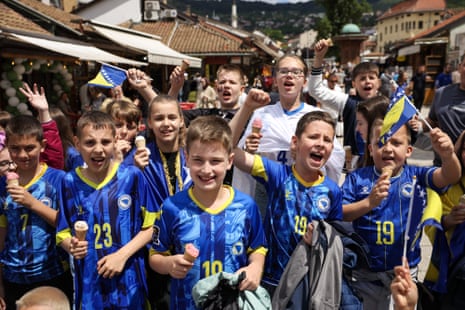
Scotland is leaning into one its most treasured traditions: embracing the hope and anxiety of a football World Cup , with a healthy dose of self-deprecating style.

There are brash new tartans, an Edinburgh bar offering free Irn-Bru-infused “fiery ginger” beers for patrons with red hair, a collaboration between Scottish whisky firms and a Brazilian distiller, and all-night parties in nightclubs repurposed as fanzones.

Supporters flying off to the US at Edinburgh and Glasgow airports were serenaded by pipers in the check-in halls; at Edinburgh it was the full military tattoo marching band, with a troupe of Highland dancers.

Sprinkle all that in with a traditional row with the English – this time over disparaging remarks on Good Morning Britain by Ed Balls, Susanna Reid and the pundit Kevin Maguire about the extra bank holiday for Scotland sanctioned by the king – and the scene is perfectly set.

It has taken Scotland 28 years to qualify for a World Cup, nearly three decades of grinding defeats and disillusionment, all while enduring its bitterest rival, England’s, repeated qualification for the tournament.

The wait will end at 2am UK time on Sunday, when the team play underdogs Haiti in Boston. And despite the hour, perhaps a million or more Scots will be awake, watching at home, at friend’s houses, in bars and at fanzones dotted around the country.

The first minister, John Swinney, will be at the game – a guest of the Scottish Football Association. He is mixing sport with opportunistic Brand Scotland trade, and cultural meetings at Harvard University and with local political leaders.

The fanzone at one of Scotland’s cooler venues, SWG3 in the post-industrial west of Glasgow, has already sold out for that match and the following ties against two challengers for the trophy, Brazil and Morocco, with 1,300 people to gather for each of those two overnight games.

“The venue’s certainly no stranger to a party atmosphere at 2am,” said its operations director, Bob Javaheri. “However, we’re usually looking to start winding down by that time, not ramping up.

“I have a few friends that are heading Stateside for the tournament and, as disappointed as I am to not be joining them on the road, I’ve absolutely no doubt they’ll be keeping me well posted about their time away, so I’ll be living it all through them.

“The last time Scotland were in the World Cup I watched the Scotland v Brazil game with my mum at home. I think I’ll have to get her in so we can relive that magic here on the big screen this time.”

The anticipation has been amplified by the drama of Scotland’s final qualifying game against Denmark at Hampden Park, where two stunning goals that book-ended the game sent fans into raptures.

It was a must-win match for Scotland. Within three minutes of kick-off, their talismanic midfielder Scott McTominay scored a remarkable overhead goal and then, after Denmark were reduced to 10 men yet levelled twice, Scotland’s 4-2 victory was capped off by an audacious goal from the halfway line.

As Kenny McLean looked up from his own half in the dying seconds of extra time, teeing up his shot, the loud shouts of “shoot, shoot” from the stands were audible on television. The goal landed, and Hampden erupted .

Those four goals enjoy iconic status in Scotland. McTominay’s overhead kick is immortalised by a vast gable-end mural near Hampden stadium; there were posters, hoodies, mugs and T-shirts printed with all four scorers in action.

Yet for older fans, that game is a reminder of other times when the nation was aroused by naive dreams of success. The most famous was Archie Gemmill’s solo goal against the Netherlands in Argentina in 1978, where he dribbled balletically past three defenders. Scotland won that game 3-2 but failed to progress, while the Dutch reached the final.

The team then was managed by Ally MacLeod, who told the world Scotland would win the tournament. The country called his team “Ally’s Tartan Army”; the team’s song, written by Andy Cameron and performed on Top of the Pops , is still sung by fans who lived through that time.

Hamish Husband, a lifelong Scotland fan and spokesperson for the Association of Tartan Army Clubs, remembered the “mass over-confidence generated by the over-exuberant, quite naive, manager, Ally MacLeod. And the nation bought into it.”

The country was more measured now, said Husband, who flew out to join Scotland’s fans in Boston on Thursday, but fatalism was now part of the collective memory: “There is still the sense there’s something going to go wrong.”

Gerry Hassan, a political commentator and academic who has studied Scottish football, said he was singing Ally’s Tartan Army to himself during a walk last week, and was looking forward to watching the game at a friend’s house in Kirkcudbright, a small market town in Dumfries and Galloway.

“That sense of what happened there, the whole sense of hope and then disappointment, disaster, near redemption – near redemption is possibly more poignant than actual redemption,” Hassan said.

Given the extremely volatile world, the financial pressures and political upheaval the country is living through, this World Cup was a moment of collective celebration and community for fans.

“It is a bit of a scarce commodity in modern life, that you are part of something bigger than yourself, that you’re connected to other people, that we’re not just atomised human beings. There’s a community here, there’s friendship, there are collective memories, and some of that we have agency in.”

‘We can’t give up on Afghans’: Lyse Doucet on the remarkable ‘people’s history’ that won her the Women’s prize | Women's prize for nonfiction | The Guardian

Keyword – Books
Trefwoorden – Women’s prize for nonfiction, Taliban, Books, Culture, Afghanistan, History books
Title – ‘We can’t give up on Afghans’: Lyse Doucet on the remarkable ‘people’s history’ that won her the Women’s prize | Women's prize for nonfiction | The Guardian
Author – https://www.theguardian.com/profile/emma-loffhagen
Link – ‘We can’t give up on Afghans’: Lyse Doucet on the remarkable ‘people’s history’ that won her the Women’s prize | Women's prize for nonfiction | The Guardian
Publish date – 2026-06-12T15:59:34.000Z
Category – Culture
URL – https://www.theguardian.com/books/2026/jun/12/lyse-doucet-womens-prize-for-non-fiction-the-finest-hotel-in-kabul-afghanistan

L yse Doucet first checked into Kabul’s Intercontinental Hotel on Christmas Day 1988, as Soviet troops were withdrawing from Afghanistan at the end of a decade-long occupation. She expected to stay briefly. Instead, she remained for almost a year, and the hotel became her first Afghan home.

More than three decades later, it became the subject of her first book, The Finest Hotel in Kabul , which has now won the Women’s prize for nonfiction . But while the prize recognises a remarkable work of reportage and history, the BBC’s chief international correspondent is more interested in what it might do for the country that inspired it.

“Afghanistan has largely slipped from the headlines,” Doucet says. “Perhaps this win will bring some attention to the country. None of us should be ready to accept a situation in which we live in a world where there is a country where girls cannot be educated after they’re 16, where women cannot go to university, where women are barred from so many jobs. This is something we should all be angry about.”

Afghanistan was not ever thus. After nearly four decades reporting from the country, primarily for the BBC, Doucet, 67, has watched it pass through almost every political experiment of the modern era: Soviet-backed communism, civil war, Taliban rule, western-backed democracy, and now the Taliban again.

“I was conscious that Afghanistan has a very difficult and violent history,” Doucet says. “I needed to find something that would draw people in rather than push them away. I didn’t want people to close the book and say: ‘It’s too dark. It’s too bloody.’ So a hotel was a device to tell the story in a way people could recognise.”

The Intercontinental Hotel – known simply as the Intercon – offered the perfect lens to tell a people’s history of the country. Built by the British in the late 1960s, it was once a symbol of a different Afghanistan. In the 1960s and 70s, Kabul was known as the “Paris of the east”, a vibrant hub of fashion, jazz, miniskirts and apres-ski resorts. Afghan pop star Ahmad Zahir – known as the “Elvis of Afghanistan” – performed at the hotel; Gloria Gaynor was a guest. Foreign travellers passed through on the hippy trail.

As the following decades saw immense political upheaval, the Intercon remained open. “Politics, like hotel guests, checked in and out,” Doucet writes. “As Afghanistan lurched through decades of trial and terror, laced with bright but brief beginnings, the Intercon was an unbreakable constant.”

The hotel staff who remained through those changes are at the heart of her story: Hazrat, the housekeeper who worked there from the hotel’s opening; Abida, the hotel’s first female chef; Amanullah, the engineer; and Malalai, one of the first female waiters.

“I have to pay tribute to the Afghans who helped me and spoke to me for the book, because in Afghanistan even sharing stories can have risks,” Doucet says.

Doucet began her career in journalism as a freelance reporter in west Africa for the BBC. She went on to cover conflicts across the world, eventually becoming chief international correspondent in 2012. Her book opens with the fall of Kabul in August 2021, and the disastrous American withdrawal, which remains one of the defining moments of Doucet’s career. She recalls watching the evacuation from the airport: military transport planes, helicopters and Afghans carrying only one bag as they fled.

“There was this fear at the end. People kept talking about Vietnam – that image of the people clinging to the last helicopter rising from the roof of the embassy in Saigon,” she says. “In fact, it was a hundred times worse – Afghans racing to the airport, clinging to the underbelly of planes. It’s been a really traumatising experience.”

Since returning to power, the Taliban have systematically erased women from public life through a series of draconian measures. Girls have been entirely banned from secondary education and university, women have been forced out of many workplaces and banned from public spaces, and strict adherence to the burqa is required. Last month, an official decree was passed effectively legally recognising child marriage. And just this week, a rare protest that erupted in the western city of Herat against arrests of women accused of violating hijab rules ended with two people killed, including a child.

“Five years in and it is getting worse. It is a stain on our world,” Doucet says. “But the courage of Afghan women is extraordinary.”

Doucet is also frustrated that the barriers facing Afghan women go beyond those inside the country. “There are Afghan women getting scholarships, but there are no visas now to allow Afghan women to come and study in Britain and in many other places,” she says. “They are meeting obstacles everywhere. We live very privileged lives here, and it’s not our privilege to give up on Afghans.

“People who were somebody in Afghanistan – activists, world-class journalists – find themselves having to start again from scratch,” she continues. “It’s something none of us would want to do.”

Doucet believes, though, that the world must be careful not to dismiss the achievements of the post-2001 period. “People often say: what did 20 years of international engagement achieve? Was it all for nothing? I always say it wasn’t for nothing. There were many mistakes, but that period helped create the most educated, the most connected generation in Afghan history,” she says. “When you see girls saying: ‘I want to get online, can you help me get a scholarship, can you help me get some kind of education?’ … They know their rights now.”

This month, for the first time, the EU is preparing talks with Taliban representatives in Brussels , despite concerns that engagement risks legitimising a bloody and despotic regime. Doucet is cautious about prescribing a solution.

“I’m a BBC journalist,” Doucet says. “My job is to explain, not advocate. But [some] mediators would say that it’s better to negotiate than isolate. The only change is going to have to come from within the Taliban.”

For now, there is little sign of change in the country. But Doucet is reluctant to surrender the quality Afghans themselves prize above all others.

“Afghans always used to say: the last to die is hope,” she says. “Afghanistan has possibly lived through every political system the world has tried – the thread through Afghan history is that nothing lasts for ever.”

‘He outlived four of his doctors’: David Hockney’s lifelong love of smoking – and the 2,000 cigarettes he kept at home ‘for emergencies’ | David Hockney | The Guardian

Keyword – Art and design
Trefwoorden – David Hockney, Art and design, Culture, Smoking, Painting, Art
Title – ‘He outlived four of his doctors’: David Hockney’s lifelong love of smoking – and the 2,000 cigarettes he kept at home ‘for emergencies’ | David Hockney | The Guardian
Author – https://www.theguardian.com/profile/zoewilliams
Link – ‘He outlived four of his doctors’: David Hockney’s lifelong love of smoking – and the 2,000 cigarettes he kept at home ‘for emergencies’ | David Hockney | The Guardian
Publish date – 2026-06-13T06:13:30.000Z
Category – Culture
URL – https://www.theguardian.com/artanddesign/2026/jun/13/david-hockney-smoking-paris-metro-freudian

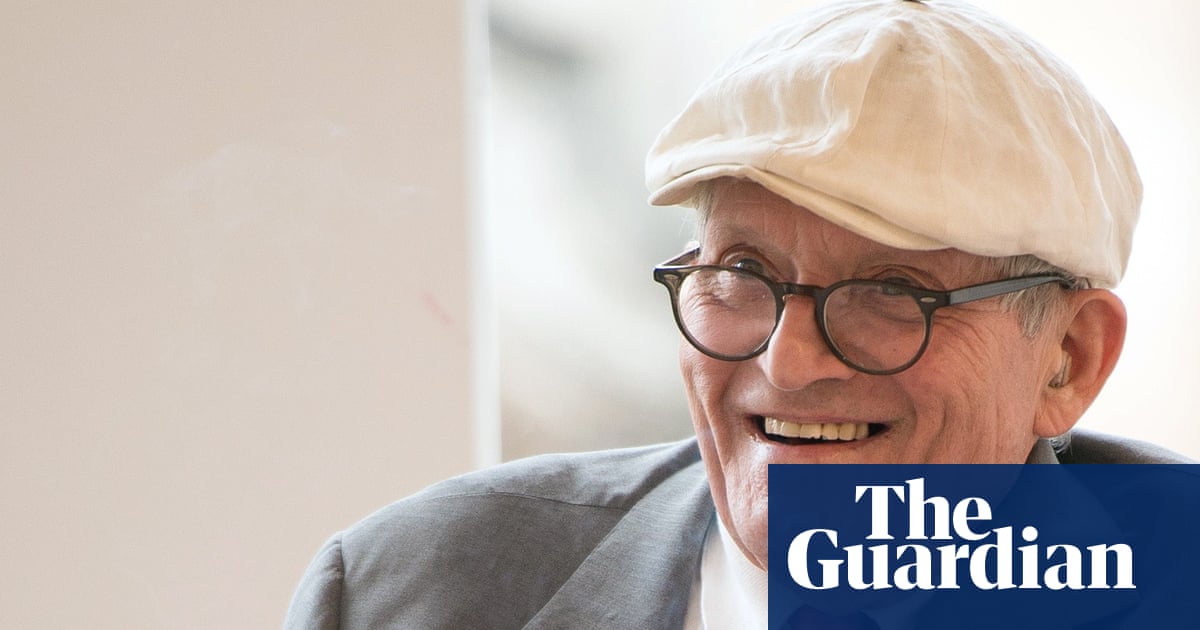
D avid Hockney’s last self-portrait that went on show while he lived, in 2025’s Paris retrospective, has a Droste effect: the figure holds a picture in which the figure holds a picture. Between the fingers of one hand, a paintbrush; of the other, a cigarette. He could have been smoking and smoking and smoking into infinity. That’s the elemental truth of the work, and even while that turned out not to be literally true – he died this week, aged 88 – he gave it his best shot.

The painting is titled Play within a Play within a Play and Me with a Cigarette, and it got him into a scrap with the authorities of the Paris Metro, who said a photo of it couldn’t be used to advertise the show, since it contravened regulations – it is a pretty common rule that you’re not allowed to glamorise smoking lest you influence the young. “The bossiness of those in charge of our lives knows no limits,” he said at the time. “Art has always been a path to free expression and this is a dismal [decision].”

Bossiness was his bête noir – he often wore a badge that said: “End bossiness soon.” Whether or not the work really did glamorise the habit is an open question since, although nattily dressed in houndstooth, Hockney didn’t exactly look in rude health.

There is a wonderful photo of him at the Royal College of Art in 1962, thick set, dressed in a shirt and tie like a kid just arrived at grammar school, covered in paint, deep in concentration, smoking. He didn’t have a great time at the RCA, where peers mocked his Bradford accent. “I’d look at their artworks,” he said later, “and I’d think, well, if I drew like that, I’d keep my mouth shut.”

Arguably, if you looked at smoking as a social crutch, you could trace his lifelong addiction to this early alienation. Freud might say it was a reaction against Hockney’s father, who loathed the habit years before medical science supported him. Hockney Snr died of a heart attack and, although the two were terribly close, David Hockney often mentioned the chocolate biscuits that apparently killed him.

The smoking could have been an act of artistic self-fashioning, to join the ranks of other celebrated smokers – Picasso, Monet – to whom Hockney paid homage as fag forebears. But if you saw it as he did, you wouldn’t be looking for reasons. He smoked because he really loved smoking, and he did it all the time.

For most of his smoking life, his only foes were doctors, telling him to stop: he loved to outlive them (he saw off four). He came out in the 1950s, after seeing an exhibition by the Russian ballet impresario Diaghilev, of which he said later, “he was homosexual and absolutely accepted it, and I thought, that’s what I will do, just accept it.” He reflected later on our increasingly tolerant attitudes towards diverse sexualities, but mainly to contrast them with the oppression of smokers. “I’ve always known I was gay, but I know it’s a minority. Most men want to fuck women, it’s all they think about. So if it’s a minority, you’ve got to be tolerant. You shouldn’t go on about smoking because it’s a bit intolerant. To tolerate something, it means you may not like it.” He famously kept 2,000 snouts at home “for emergencies”.

It wasn’t until the early 2000s, when the campaign started to ban smoking in pubs, that Hockney really started putting his shoulder behind it as an inalienable right. He staged a protest at the Labour conference circa 2005, flanked by posters saying “Death comes to us all” (this was at the high point of clashes over the Iraq war, so Tony Blair arrived with more or less the same message, albeit from a different direction).

Hockney wrote to the Guardian constantly, always with the same message. In 2004, he was querying the medical certainty around this very certain thing: “Could the medical profession give an explanation for Mrs Thatcher’s life? Her husband puffed away on Senior Service, and she must have had some of it second-hand. He dies at 86, and she is still going. Please explain.” In 2007, by which time the ban had come into force, he lamented the “mean and unpleasant land” England was becoming, comparing it unfavourably if a bit randomly to “the Festspeilhaus in Baden Baden, during the intervals of Tristan and Isolde, [where] I found a smoking lounge”.

The following year, he complained about the BBC and its “ smoke-free agenda ”, Polly Toynbee, who had critiqued the Beeb but failed to mention this signal persecution, and Dawn Primarolo, then health minister, regrettably “as naive as the Women’s Christian Temperance Union.” It was ironic and perhaps typical of the single-issue campaigner that he wound up finding enemies where there were none, as Toynbee herself had until the 90s been a champion smoker.

It scarcely needs pointing out that smoking is not big or clever, and Hockney’s long life would definitely have been easier towards the end had he not had a mini-stroke in 2012. Yet his last run of paintings featured one of his carer, Thomas Mupfupi, a portrait of such warmth and dignity that it’s impossible to imagine David Hockney unhappy with his choices. It was his lifelong joy and, he’d have argued, there would have been no fire without smoke.

Riots and racism: why is the UK burning? | Immigration and asylum | The Guardian

Keyword – News
Trefwoorden – Immigration and asylum, Race, Police, Northern Ireland, Southampton, England, UK news
Title – Riots and racism: why is the UK burning? | Immigration and asylum | The Guardian
Author – Daniel Boffey
Link – Riots and racism: why is the UK burning? | Immigration and asylum | The Guardian
Publish date – 2026-06-13T05:00:04.000Z
Category – News
URL – https://www.theguardian.com/news/ng-interactive/2026/jun/13/belfast-southampton-riots-racism-why-is-the-uk-burning

As the people of Glengormley, on the northern edge of Belfast, tidied up and prepared for more violence in the midst of what has been described as a modern-day pogrom, a court 500 miles away in Southampton , on the south coast of England, started to deal with its own outbreak of thuggery.

The trigger for this week’s riots in the Northern Irish capital had been the image of a black assailant who appeared to be stabbing and slashing his supine white victim in the face and neck while shouting in Arabic. The suspect was later revealed to be a refugee from Sudan.

In Southampton, the courts were dealing with the aftermath of separate violent demonstrations. The prosecutor Siobhan Linsley told a hearing that 1,000 people had massed outside the city’s central police station on 2 June.

They had gathered after the release of police bodycam footage showing the last moments of Henry Nowak, a white 18-year-old student erroneously arrested and handcuffed over false racism claims while dying from stab wounds inflicted on him by Vickrum Digwa, a British Sikh. Digwa, 23, who had made the false racism allegations, had just been jailed for murder.

A quarter of those who gathered outside the police station in Southampton over the Nowak case appeared to be drinking alcohol, Linsley told the court, and masks were worn. One speaker had shouted out: “Do you want the house, the Digwa house?” the court heard. Hundreds of protesters then moved towards an incorrect address for the Digwa family in the St Denys area.

Protesters threw bricks, chairs and bins at police. People streamed through gardens and driveways. A trapped group of officers were “surrounded by a baying mob throwing projectiles” and a police car was attacked. The disorder lasted for about two and a half hours, with police “coming under almost constant assaults”.

The demonstrators were said to have come from near and far and included members of far-right groups calling themselves the Southampton Patriots, White Vanguard and the Portsmouth branch of the National Rebirth Party.

The fancy names struck a somewhat pitiful note as the court dealt with a number of those offering guilty pleas. Taylor Grundy, 22, who had pushed a commercial bin on fire at officers and thrown a plank of wood, cried throughout the hearing. He was sentenced to two and a half years. A second defendant, Dillon Crawford, 29, a father of two with another child on the way, was given a three-year jail sentence for throwing a bin and a metal chair at officers. He told the court he had been “angry in the moment” and lost himself.

Crawford, 29, had 19 convictions for 33 offences including battery, robbery, burglary and shoplifting. On one occasion, he had broken a partner’s front teeth and punched her unconscious, after which he had bleached her hair, the court heard.

Do these cases in Belfast and Southampton tell us anything about the United Kingdom today?

For Nigel Farage, the leader of Reform UK, the anti-immigration party riding high in the polls, the decisions made by the police officers at the time of Nowak’s murder offered evidence that “the rights and privileges of white people matter less than ethnic minorities”.

As for the violence in Belfast, in which homes were burned and women and children were forced to flee from masked men shouting “foreigners out”, Farage said it showed that while there were bad actors, the “vast majority are fearful … [they] want action, they actually want something done to make their streets safer”. He said: “I think the worry is, over the course of the summer … unless you give people hope, this stuff will get worse.”

For Farage’s critics, this sounded like a threat rather than a warning; another way for he and his party to stoke division for political ends. Establishment voices echoed the claim that these disturbances were either an ugly symptom of the failures of the state to secure the country’s borders or, in the case of Nowak, proof that equality policies within the UK’s public institutions had gone too far and warped the priorities of public servants.

An editorial in the Times, headlined “Burning resentment in Belfast fuelled by inaction on immigration”, argued that a “bemused and drifting government has done nothing to tackle the root cause” of the violence. That original seed, it claimed, was illegal immigration.

Yet, when these arguments are unpicked, the picture is more complex, and the facts arguably do not support the populist narratives.

Migration of any kind to Northern Ireland is low. In the 2021 census, almost 97% of people described their ethnicity as white. Just 2,248 asylum seekers, in a total population of 1.93 million people, were in receipt of government support in Northern Ireland as of 31 March 2024.

Just 200 people are estimated to have been involved in this week’s unrest.

There was also marvelment in some quarters at the claim that the UK has “two-tier”” policing that discriminates against white people. For decades, Britain has grappled with how to deal with racism in policing. Official report after official report has demanded that forces across the UK need to do more, much more, to tackle the problem.

The police officers’ response to Nowak is under investigation, but that single case has been used by Farage and the even more extreme party Restore Britain to flip on its head widespread concerns about the disproportionate criminalisation of minority ethnic people.

The analysis offered by Farage and others about what the recent riots say about the UK in 2026 is, then, keenly contested.

Prof Tim Newburn, who was behind a landmark study into the August 2011 England riots – at the time, the largest wave of civil unrest in a generation – said such outbreaks of mass violence were “quite unusual” in the UK.

“It actually takes something quite special to make them go and that is maybe some combination of, on the one hand, the degree of whatever stress or anger that people feel, and on the other, a lack of control by the police,” he said.

There were signs in both riots that the police found themselves understaffed. The National Police Chiefs’ Council, which represents senior officers, has repeatedly said law enforcement in the UK is chronically underfunded.

Jon Boutcher, the chief constable of the Police Service of Northern Ireland, which is well acquainted with violent outbreaks between loyalist and nationalist communities, was forced to activate a “mutual aid” mechanism this week, asking other forces in the UK to provide officers. Twelve of his officers were injured on Wednesday night.

The police and crime commissioner for the Hampshire police force, which serves Southampton, complained recently that it was one of the lowest-funded forces in England and Wales. Eleven police officers and a police dog were injured in Southampton when they were overrun.

That does not mean such riots do not say something important about the “zeitgeist” of the country, said Newburn, a professor of criminology and social policy at the London School of Economics.

The UK has endured a cost of living crisis, with prices rising in the shops and energy costs being some of the highest in Europe. Yet the riots of recent years have predominantly been attached to issues relating to race and migration rather than those more traditionally linked to leftwing causes.

“It tells us a lot about the current preoccupations of our politics at the moment,” Newburn said. “Notwithstanding that a lot of people are hurting in all sorts of different ways, the most obvious kind of points of contest at the moment seem to be around nationhood, race, borders and so forth.”

John Drury, a professor of social psychology at the University of Sussex, was a co-author of an analysis of the 2024 riots that followed the murder of three girls in Southport, Merseyside, by a perpetrator who was falsely claimed to be an asylum seeker in the immediate aftermath.

“These are collective racist attacks,” Drury said of the scenes in Belfast and Southampton. “White victimhood is a massively powerful mobilising grievance. It’s an empirical question how many of those participants, you know, really believe there is this white victimhood. Some of them are using that as an excuse, but some of them honestly do believe that it’s part of their ideology. It’s called modern racism.”

Drury said there had been a normalisation of toxic anti-immigrant rhetoric in recent years, accelerated by people online who were able to initially push their ideas anonymously but now felt empowered, not just by voices on the periphery but by the established media and politicians.

“If you look at what happened with Brexit, there was a well-known association of meaning associated with the Brexit vote: that it was a xenophobic referendum,” Drury said. “We had an immediate spike, a spike in hate attacks around race and ethnicity immediately afterwards, because people felt they were not alone – ‘Many people in the country think like me’ – which is what these people are thinking now. So, yes, we’ve got a problem of racism, but it’s more than that. It’s the problem of racists becoming empowered.”

The disturbances in Belfast continued for two nights, ending with a peaceful protest on Thursday evening. They did not spread elsewhere, despite the best efforts of antagonists such as the far-right activist Tommy Robinson, whose real name is Stephen Yaxley-Lennon. While on a trip to Moscow, he called for all of the UK to rise up.

His posts on X were reshared and amplified by the tech trillionaire Elon Musk to his 240m followers, but to little effect. “It is difficult to predict a riot,” said Keith Flett, a historian and the editor of A History of Riots.

Meanwhile, in Southampton on Friday, Judge Mousley KC continued to sentence the perpetrators of the violence. It had been, he said, a “hate crime, born out of a hatred of the police and in some cases racist views”.

“The impact on the community was profound,” the judge said. “Local residents were subjected to fear, distress and a genuine sense of danger.”

Tropical heron spotted in UK for first time as more exotic birds arrive to thrill birdwatchers | Birds | The Guardian

Keyword – Environment
Trefwoorden – Birds, Wales, UK news, Climate crisis, Wildlife, Conservation, Environment, Animals, World news, Biodiversity
Title – Tropical heron spotted in UK for first time as more exotic birds arrive to thrill birdwatchers | Birds | The Guardian
Author – https://www.theguardian.com/profile/matthew-pearce
Link – Tropical heron spotted in UK for first time as more exotic birds arrive to thrill birdwatchers | Birds | The Guardian
Publish date – 2026-06-13T07:00:08.000Z
Category – News
URL – https://www.theguardian.com/environment/2026/jun/13/tropical-heron-spotted-first-time-uk-aoe

It is a tropical bird typically encountered between west Africa and India, but last week a western reef heron arrived in north Wales in what is believed to be the first ever sighting in the UK.

The heron was first spotted in Foryd Bay at the weekend before flying to nearby Caernarfon harbour where it fed among the boats.

While the sighting has excited birdwatchers nationwide, experts said it also demonstrated how changing climate conditions have altered the bird’s range.

“The fact that they are getting here in the first place, and then surviving, is likely to be because of increasingly mild winters,” said Nick Moran, training manager at the British Trust for Ornithology (BTO).

“It’s much easier to survive in the winter now than it was 50 years ago because we don’t see shallow water bodies freezing over with any regularity. These herons and egrets typically feed in relatively shallow water.”

A squacco heron, another rare tropical bird typically found in southern Europe and north Africa, was also drawing birdwatchers to Lincolnshire this week. According to the BTO, the bird is only seen in the UK a few times a year.

Alexander Lees, reader in biodiversity at Manchester Metropolitan University and chair of the British Ornithologists’ Union records committee, said the herons were the latest of “what were formerly largely tropical species whose distributions are shifting north with climate change”.

“We are seeing a shift and a readjustment for biodiversity,” he said. “For instance, last year we had the first breeding record of zitting cisticola . It’s a Mediterranean small warbler, and that bird has moved north with climate change. The reason that species didn’t historically breed here is because it’s very sensitive to harsh winters. It couldn’t survive because if we had a prolonged cold spell, they all die. But we no longer get those prolonged cold spells.”

Other notable tropical sightings in the UK over the last few years include the black-winged kite, which first visited in 2023 and has been delighting birdwatchers in Norfolk this year , the brown booby in 2019 and the white-rumped swift , which first colonised Spain from north Africa in the 1960s, spotted in Britain for the first time in 2018.

In 2022, the RSPB said that sightings of European bee-eaters, commonly seen in Africa and southern Europe, were an “unmissable sign” that the nature and climate emergency had reached Britain.

Western reef herons have increasingly been recorded in southern Europe, including Spain and France, and had been expected to be sighted in the UK, Lees said.

Simon Hugheston-Roberts, who first spotted the bird in Wales, told the BBC he was on a walk when he “was lucky to see a small dark heron flying over me on the shore”.

He added: “I’ve spent time birdwatching in Africa and the Middle East, so I’m familiar with a variety of different types of herons, as well as this species.

“So, I applied my knowledge and years of experience of observing birds to inform a process of identification.”

Ian Lycett, who travelled to north Wales to see the bird, told BirdGuides : “That I would be watching a stunning new species for Britain, with the imposing Caernarfon Castle as a backdrop, was not what I initially expected to be doing at the weekend.

“It was a long drive up from London on Sunday morning, but well worth the effort, as the heron offered fantastic views as it fed in the harbour at close range.”

While the western reef heron is similar in size and structure to the common little egret, its blue-grey plumage sets it apart. “They’re very striking,” said Moran. “Unlike anything else we have here in the UK.”

The bird seen in Wales is an adult and likely to have arrived from Europe rather than directly from Africa, although it was impossible to say without tracking the bird’s route. “It could even be a bird that hatched in Europe,” Moran said.

While Moran cautioned against expecting a sudden influx of the species, he said more sightings were likely. “I don’t expect we’ll have dozens of records by this time next year, but I strongly suspect we’ll get more.”

Find more age of extinction coverage here , and follow the biodiversity reporters Phoebe Weston and Patrick Greenfield in the Guardian app for more nature coverage

Scotland bid to exorcise World Cup ghosts by breaking group stage barrier | Scotland | The Guardian

Keyword – Football
Trefwoorden – Scotland, World Cup 2026, World Cup, Football, Sport
Title – Scotland bid to exorcise World Cup ghosts by breaking group stage barrier | Scotland | The Guardian
Author – https://www.theguardian.com/profile/ewanmurray
Link – Scotland bid to exorcise World Cup ghosts by breaking group stage barrier | Scotland | The Guardian
Publish date – 2026-06-12T21:00:55.000Z
Category – Sport
URL – https://www.theguardian.com/football/2026/jun/12/scotland-world-cup-football-haiti-steve-clarke

I t is not only ghosts from Costa Rica, Peru, Iran or Zaire that haunt Scotland as they prepare for a long-awaited World Cup return. Instead, there is a broader pattern of failure that Steve Clarke and his class of 2026 need to extricate the nation from. From 23 games on football’s biggest stage, the Scots have won only four times. The expansion of the World Cup should assist them, a team who now and correctly regard merely qualifying for major tournaments as insufficient.

Scotland were unbeaten in 1974 yet took an early path home from West Germany. More than 50 years later, a comfortable win over Haiti should be enough to seal progression to the last 32. It is impossible to shake the notion that Scotland’s World Cup fate is dependent on game one in Boston against a side who lack nothing in national cause. Haiti’s pace and physicality will cause some tartan tremors. Nonetheless, taking on the 83rd-ranked team in the world with history-making on the line is an appetising deal.

The past is significant in assessing how Scotland might handle the future. It will barely matter to Andy Robertson, John McGinn and Scott McTominay that 16 June 1990 and a 2-1 success over Sweden marks the last time Scotland tasted World Cup victory, but scars from Euro 2024 are still visible. Scotland landed in Germany adamant lessons had been learned from the previous tournament staging, when tanks were emptied during a draw at Wembley and not replenished by the time Croatia swaggered towards a win at Hampden Park. Rather than display progression, Scotland froze; an opening game thrashing by Germany preceded a decent draw against Switzerland before Clarke and his team exited in meek fashion at the hands of Hungary.

In recent days Clarke has dropped his stoical approach. He pined for the World Cup as a player but never took the call. Clarke encountered stress as the European Championships of 2021 and 2024 proved anticlimactic. The manager’s sunny disposition will remain if Haiti are vanquished. Falling short, in what would deliver a grim glance at World Cups of old, will unleash ferocious criticism of Scotland’s manager from way beyond Massachusetts. Now is the time for Scotland to meet huge expectation and move discussion on from the spine-tingling November occasion when qualification was sealed with the 4-2 dismissal of Denmark.

“We had that amazing night six months ago but that is gone,” says Kenny McLean, who scored Scotland’s fourth goal from the halfway line. “We are here now and we need to focus on the here and now. We know how special this can be for us. We know we are in a good place to create more memories for us and for the country and our families.

“We know it is all about what we do and we think we have everything in place to be as good as we can be and create history. We know that fans are flooding into the country and we know the excitement is there.” Or as a Boston radio station put it on Friday morning: Scots have flooded their city with smiles, kilts and bagpipes. Grim results from the past should not disguise the fact any World Cup is a better place with Scotland in it. Scots are, however, expected to be outnumbered by fans of all three of their Group C opponents. Morocco and Brazil lie in wait post-Haiti.

Scotland’s relationship with the World Cup requires counselling. The country opted not to feature in the 1950 edition, when apparently in a huff over losing a home international to England. In 1954 Scotland arrived in Switzerland with only 13 players and little by way of organisation. “We didn’t even have Scotland tracksuits,” said Willie Fernie, part of that squad, afterwards. “We had to bring our own training gear. And what a peculiar lot we looked among the world’s best, with the green of Celtic and the white of Preston and the blue of Dundee contrasting with the beautifully turned out teams of Europe and South America. We looked like liquorice allsorts.” Uruguay duly trounced Scotland 7-0.

There was ignorance and arrogance among Scots back then. The same applied in 1990, when Scotland fell to an embarrassing defeat to Costa Rica. Eight years later Scotland slumped to defeat by Morocco in Saint-Étienne and departed the World Cup scene for almost three decades.

There is cause for optimism now. Scotland have enjoyed five-star facilities at their training base in North Carolina. They will be armed with information on Haiti, a dangerous but hardly elite opponent. Scotland’s players speak regularly of lingering anger from Germany two years ago, which, it is reasonable to think, will incentivise them in the United States. “There are no excuses,” says McGinn. “We have to give everyone involved huge credit. They’ve put a lot of effort in. We’ve had the luxury of not having a playoff and had time to analyse where is best for us to be successful. We have come to a world-class facility and we have so much to help make us better. Credit has got to go to the manager and the staff. It’s a very professional environment.” It is also one including match winners, McTominay chief among them, with his post-Manchester United career ascent such that a prominent World Cup role feels appropriate.

Scotland should not be expected to beat Morocco. Brazil are, well, Brazil. The mission for Clarke is to ensure Scotland are playing with house money after game one. They have to break their own tournament mould and relish the position of favourites. The reward for that is bigger than ever.

Woman in critical condition after shark attack at Coogee beach | Sydney | The Guardian

Keyword – Australia news
Trefwoorden – Sydney, Sharks, New South Wales, Oceans, Surfing, Australia news, Animals, Marine life
Title – Woman in critical condition after shark attack at Coogee beach | Sydney | The Guardian
Author – https://www.theguardian.com/profile/lisa-cox
Link – Woman in critical condition after shark attack at Coogee beach | Sydney | The Guardian
Publish date – 2026-06-13T02:03:52.000Z
Category – News
URL – https://www.theguardian.com/australia-news/2026/jun/13/woman-in-critical-condition-after-shark-attack-at-coogee-beach

A woman in her 30s is in a critical condition after being bitten by a large shark at Coogee beach on Saturday, with a witness describing the scene at the popular Sydney beach as “shocking”.

A spokesperson for New South Wales Ambulance said the woman suffered arm and leg injuries and had been taken by road to St Vincent’s hospital.

They said multiple crews had treated the woman on the beach after the attack, which occurred just after 11am.

Surf Life Saving NSW (SLSNSW) said the woman had been taken to hospital “semi-conscious and breathing”.

A spokesperson for NSW police said the woman was pulled from the water by members of the public who began first aid until emergency services arrived.

“Police rendered first aid to the woman, believed to be aged in her 30s, who has suffered serious arm and leg injuries, before NSW Ambulance paramedics attended,” they said.

Police cleared nearby Coogee Oval to facilitate the landing of the Careflight helicopter to potentially airlift the woman to hospital.

A regular swimmer at Coogee who was at the beach when the attack occurred said a member of their group heard a scream before the shark alarm sounded.

The group walked closer and saw something had happened about 30 metres away.

“It was a perfect day, really clear and still in the water,” the swimmer said.

“There was a light blue surf ski and something going on. A life saver ran out, grabbed a surfboard and headed out to the surf ski.

“You could see they were trying to paddle in and the victim was holding to the back of the surf ski.”

The swimmer said blood was visible in the water at the site of the attack.

“They brought the shark victim in. As they got to the edge of the water people gathered around and carried her in,” they said.

The swimmer, who spoke to Guardian Australia anonymously, said the woman appeared to have a bite high on her leg.

They said the woman was carried to shore and life-savers arrived with medical equipment. The swimmer said their group saw the shark swimming “not quite in the shallows but not too far out, in that yellow green water”.

While authorities have not yet confirmed the species of shark involved, Randwick council said the shark was believed to be 3-4 metres in size.

“The thing [we were thinking] was, do we know this person or know someone who knows [them] … because it feels like that could be possible,” the witness said.

“It’s shocking. People are in shock about it [because] it feels like a local city beach.”

NSW Ambulance said a command post had been set up on the beach with police and ambulance chaplains available to support people who witnessed the attack.

At Tamarama beach to Coogee’s north, surf life-savers cleared the water a short time later, telling swimmers and surfers the beach was being closed because of the incident.

A SLSNSW spokesperson said council lifeguards, off duty life-savers and the Westpac Lifesaver Rescue Helicopter were among the responding services, with the chopper conducting surveillance of the area.

The spokesperson said all beaches from Bondi to Maroubra had been closed and would remain closed for at least 24 hours.

Chief executive Steve Pearce said it was the fourth serious shark incident in Sydney since September 2025.

“We are sending our best wishes to the woman involved and her family at this time, after another terrible shark incident on our coastline,” he said.

He said while the volunteer patrol season had ended, there were still lifesaving services including drone surveillances providing safety measures within coastal communities.

Drones were in use at 14 locations around the state on Saturday but not at Coogee. SLSNSW said additional drone surveillance had been organised for Bondi and Bronte beaches on Saturday and Sunday, with further flights in the area to be assessed.

Coogee beach, known for its relatively gentle surf, is popular with locals and tourists and draws thousands of visitors on summer days.

Earlier this year, three people were attacked – one fatally – by sharks at Sydney beaches in a period of 48 hours. More recently, there have been two fatal attacks on spearfishers in Western Australia .