Keyword – Music
Trefwoorden – Taylor Swift, Music, Culture, NFL, Travis Kelce, Sport, Country, Pop and rock, Life and style, Fashion, Music industry
Title – 20 ways Taylor Swift remade pop culture in her image | Taylor Swift | The Guardian
Author – Shaad D’Souza
Link – 20 ways Taylor Swift remade pop culture in her image | Taylor Swift | The Guardian
Publish date – 2026-06-12T06:00:38.000Z
Category – Culture
URL – https://www.theguardian.com/music/ng-interactive/2026/jun/12/taylor-swift-20-years-pop-culture-star-debut
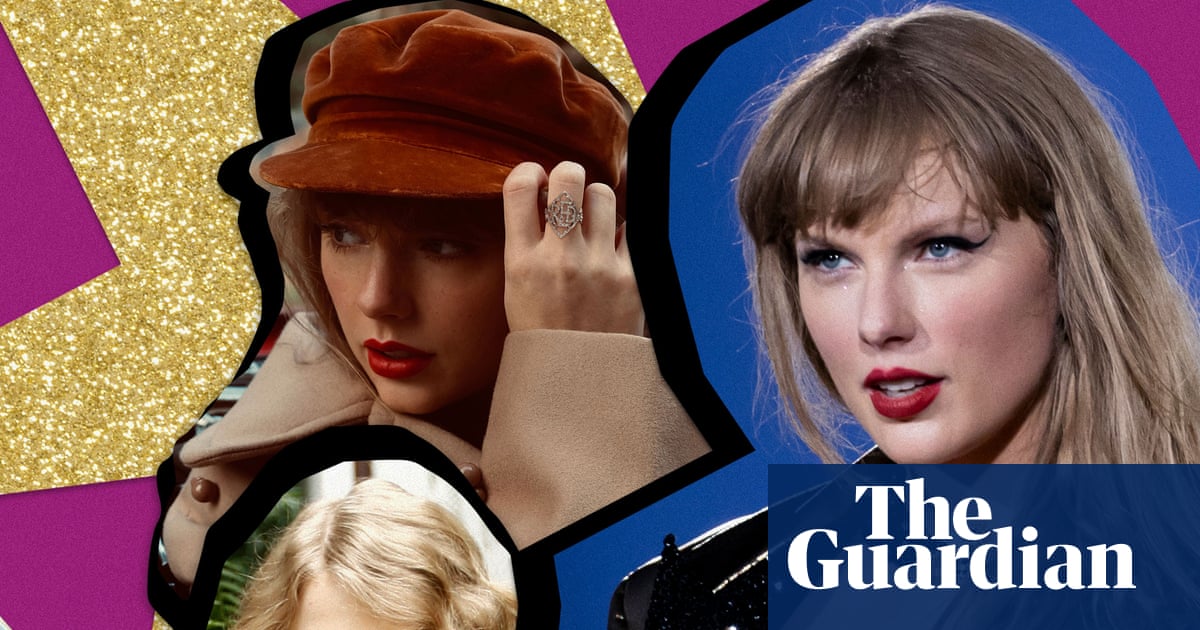
Where it all began
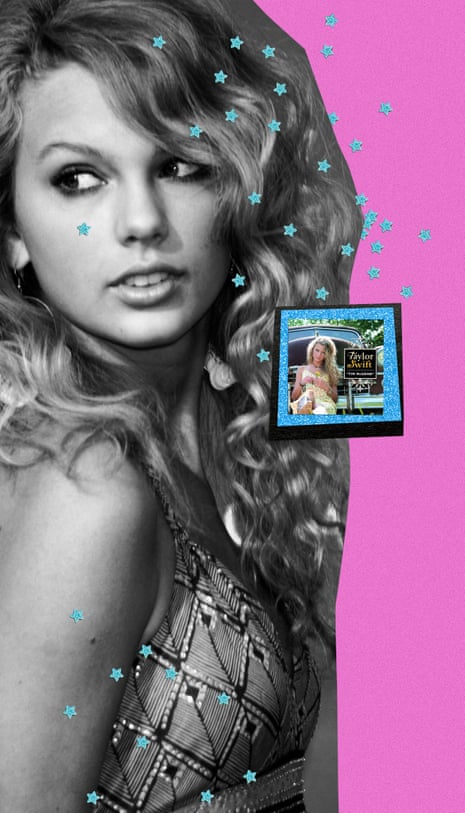
Released 20 years ago, Taylor Swift’s debut single is, on the surface, a tribute to the power of music, and about how hearing a song by your favourite artist can send you back to the memories associated with first hearing it. She named Tim McGraw after one of her favourite country singers, with a sentiment aimed at a former boyfriend who had left her behind: “When you think Tim McGraw,” she sang, “I hope you think of me.” The power of Swift’s songwriting and the immediate force of her presence as a pop star mean that that is what most of us think when we think Tim McGraw. From day one, we could see Swift’s power to remake culture in her own image, a talent that has – two decades on – made her one of history’s biggest pop stars.
The sleek 36-year-old showgirl we know today may seem a million miles from that country teen with her corkscrew curls and cowboy boots. But if you look past the slightly hokey southern twang on her debut single, that song contains almost everything we know about Swift as an artist today. The fundamentals are there: no 21st-century pop star has written about romance better, and she conjures her setting with what would become her trademark intimate detail – the “little black dress” that would make way for that scarf she left at an ex’s sister’s house; the moon on the lake that foreshadowed all the kissing in the rain; the cars parked down back roads where the young couple had secret trysts lit the way for hitting the brakes too soon. But we can also see her assured sense of rewriting tired narratives. From the first line, when she recalls her lover telling her “the way my blue eyes shined put those Georgia stars to shame”, she tells him: “That’s a lie.”
Swift knows she tells better stories than everyone else. From day one, she also knew the power of being the person who gets to tell the story. Here she rewrote small-town southern romance; years later she undid the man-eater archetype on Blank Space and gave life to the spectre of the “mad” woman on The Last Great American Dynasty. In Tim McGraw, once the guy has left, she writes him a letter that tells him how he should think about their time together, and leaves it on his doorstep – the bold author of her own fate. He may have gone, but in extremely Swiftian form, it’s her who is having the last word: the foes who would later inspire songs such as Mean, Bad Blood and Look What You Made Me Do never stood a chance. She also knows how to make time work for her, backflipping around the chronology of their relationship – from past memories to present pain to future nostalgia – to take complete narrative control of a situation. You might hear a song from your past and get a vague warm, fuzzy feeling. Swift is a beautiful freak who remembers it from every angle, all too well.
From the beginning, Swift showed us exactly who she was, revealing the innate focus that helped create the defining pop songs of our time – as well as a career that wrote her into legend, making her the lens through which we understand so much of pop, pop culture, womanhood, the music industry, and much, much more. Here are the 20 ways she remade the world in her own image. Laura Snapes Image credits: Jeff Kravitz/FilmMagic; Big Machine Records
She escaped growing pains
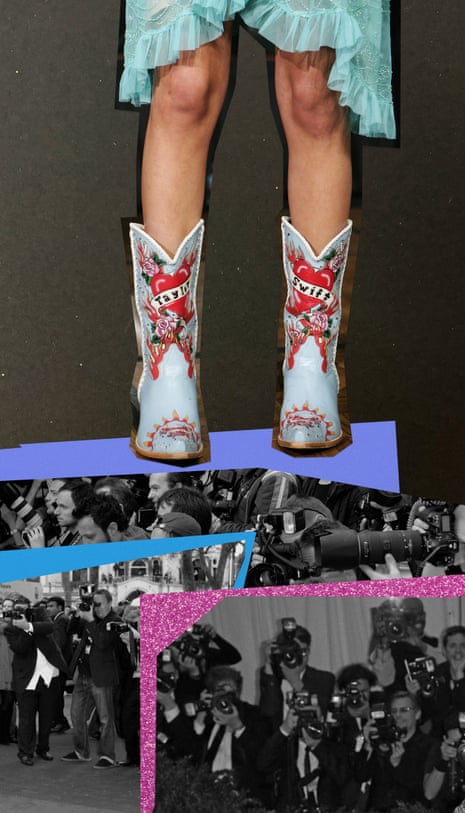
Growing pains have always been a rite of passage for teen-girl pop stars – as much as the No 1 singles and big-budget videos. In a more manufactured era, obsolescence was built in: inevitably you would rebel against the system that controlled you, and, inevitably, it would spit you out.
Swift understood that maintaining control would protect her. She knew that writing her own songs would create an authentic personal relationship with fans – one that she assiduously deepened IRL – that no label would dare mess with. From 2008, when she released her second album, Fearless, her management became a family business. Being the flagship success of a small label, Big Machine, also gave her the agency to grow on her own terms; label head Scott Borchetta even encouraged it, suggesting that 2010’s biting Speak Now shouldn’t be named Enchanted, after a lovestruck song of the same name, because she was no longer writing about “fairytales and high school”. Every corkscrew curl, princess dress and bowler hat was her own choice; she marked her growth in her genre evolution, from country to emo to sleek pop. As she said in 2015: “As far as the need to rebel against the idea of you, or the image of you: like, I feel no need to burn down the house I built by hand. I can make additions to it. I can redecorate. But I built this.”
You could argue it came at a cost. Interviews with the teenage Swift reveal someone acutely aware of the price of stepping out of line: in high school, she characterised her refusal to party as a choice “between being popular or not messing my life up”; she didn’t drink until she turned 21 (“I knew I couldn’t get away with it until then”) and knew that after you mess up once, “people are going to be waiting for you to mess up again”. In 2009, one profile writer noted: “Self-preservation is one of Swift’s favourite phrases.” Several of the older, unreleased songs she resurfaced as the bonus “From the Vault” tracks on her Taylor’s Version re-recordings dwelled on her anxiety about being replaced by younger models. That level of control and perfection is just as unsustainable as, say, pretences over Britney’s virginity; you could see how it may have contributed to the disordered eating Swift experienced in the mid-2010s, and how unbearable it would have been when she lost control of the narrative for a few years around then.
Yet, Swift made it to young adulthood without directly creating scandal or revolt. You suspect her unmatched polish may have sent the press, as her ingenue status faded, searching for any stick to beat her with and coming up with … her very normal boyfriend count. The pathetic nature of those charges underscored a rigged game no amount of perfection could beat – but Swift got further than most, and opened up a slipstream for her successors to self-define. LS Image credits: Ethan Miller/Getty Images
She made the traditional vanguard
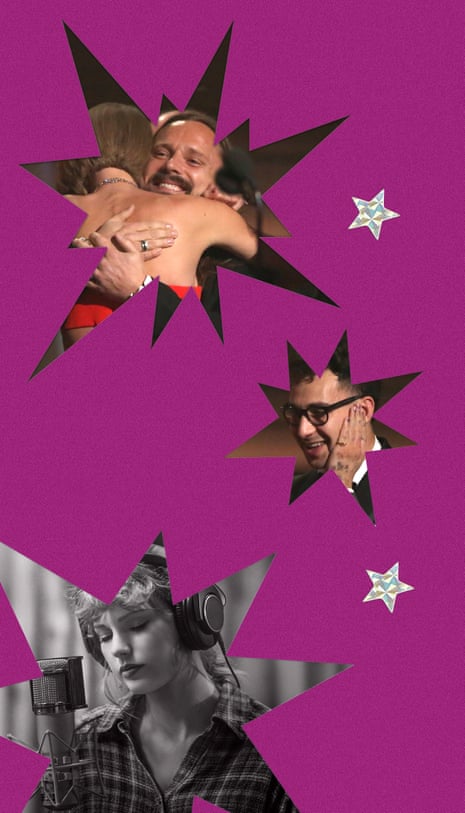
If you want to understand Swift, just think about Apple – yes, the computer company. Apple, famously, has rarely invented anything. Its reputation for quality, intuitive products has almost made it anti-innovation; when gizmos such as touchscreen smartphones or tablets were first introduced to the market, Apple didn’t rush to release its own competitor. Instead, it waited until said products were familiar, and then released best-in-class versions.
Swift works in a similar fashion. She tends to change slowly. When it comes to producers, she started out working with Nashville stalwart Nathan Chapman before making a few songs on her 2012 album, Red, with Max Martin and Shellback, two of the era’s super-producers: together they incorporated tinny synths and light dubstep drops, the sound du jour of a few years earlier. On 2014’s 1989, she worked mostly with Martin and Shellback, but made a few songs with Jack Antonoff, a then-unknown who had notched a megahit, We Are Young, with his band Fun a few years earlier. In 2017, Reputation was another Antonoff/Martin and Shellback split, but on songs such as Ready for It and I Did Something Bad, she essentially presented a more mainstream-friendly version of the harsh electro sound that her then-nemesis Kanye West, now Ye, had worked with on his culture-shifting 2013 record Yeezus.
Versions of this story recur throughout Swift’s career. With each record, she almost always inches her sound forward, but she’s rarely, if ever, the first to work with a new face or a new style. This is, in many ways, an inversion of how pop stars as big as Swift used to work. Madonna and Michael Jackson – two of the only musicians who have ever achieved the same level of cultural saturation and interest – tended to look to the underground for inspiration, in terms of music, fashion and aesthetics, and make those underground styles commercially viable. (Think Madonna turning the ballroom culture that her backing dancers came from into Vogue, one of her most indelible hits.) Swift’s strategy is deeply reflective of her time: one in which it pays to be risk-averse and give the people exactly what they want, when they want it. Shaad D’Souza Image credits: Matt Sayles, Invision/AP
She reclaimed cringe
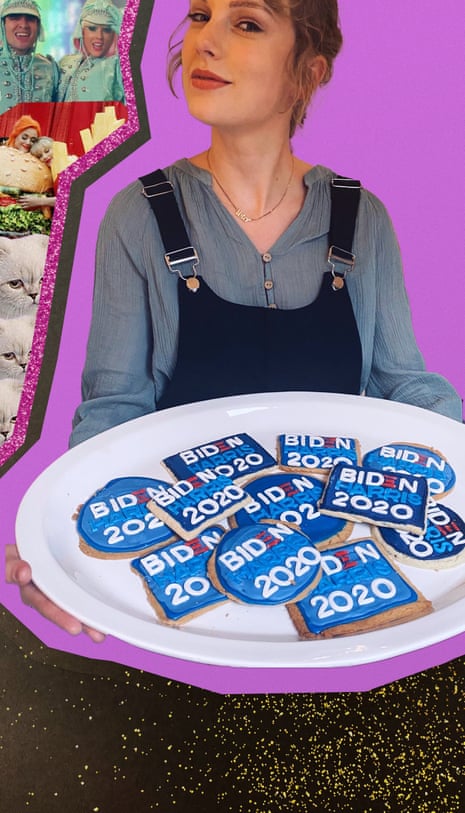
In the run-up to the 2020 US election, an entire news cycle was dedicated to speculating on whether Swift would endorse a presidential candidate. She confirmed her support of Joe Biden and Kamala Harris in the cutesiest way possible: with a tray of homemade cookies. Swift is cringe, but she is free: self-directing corny videos, selling references from her own songs – cardigans and red scarves – as merch, hosting fan parties at her house and writing the worst Instagram captions known to mankind. (She saved one of the most groan-inducing for her engagement announcement, writing: “Your English teacher and your gym teacher are getting married.”) And while it feels incongruous for Swift, a noted fan of a sourdough starter, to make “wine moms” the butt of the joke in songs, perhaps it only adds to her bona fides: there’s nothing cringier than a lack of self-awareness. Owen Myers Image credits: Instagram/taylorswift; Startraks/REX/Shutterstock
She made competency a flex
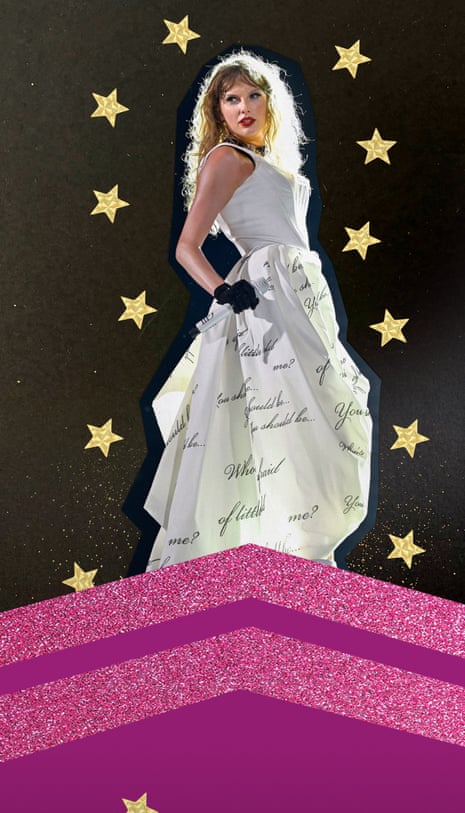
While Swift’s songs are full of wayward emotions, she runs her career with military precision. As a kid, when her friends were watching the Disney Channel, she studied episodes of VH1’s Behind the Music and deduced that artists went off the rails when “they lost their level of self-awareness”. It made her hawkish about ambition and execution: as a teenager, she outwitted Nashville stalwarts, challenging them on industry norms and understanding exactly how to play the game to get ahead. When she was criticised for her singing or dancing, she skilled up. When foes came for her, she wised up: “I got smarter, I got harder in the nick of time,” as she sang on Look What You Made Me Do. From big-picture concepts to the finest details, Swift is a one-woman panopticon on her own career. Of course, all-encompassing professional excellence is also a very Beyoncé trait – but she doesn’t show her hand the same way. Swift wrote the 21st-century playbook on elite pop stardom, and she wants us to know it. LS Image credits: Gareth Cattermole/TAS24/Getty Images for TAS Rights Management
She bent formats to her will
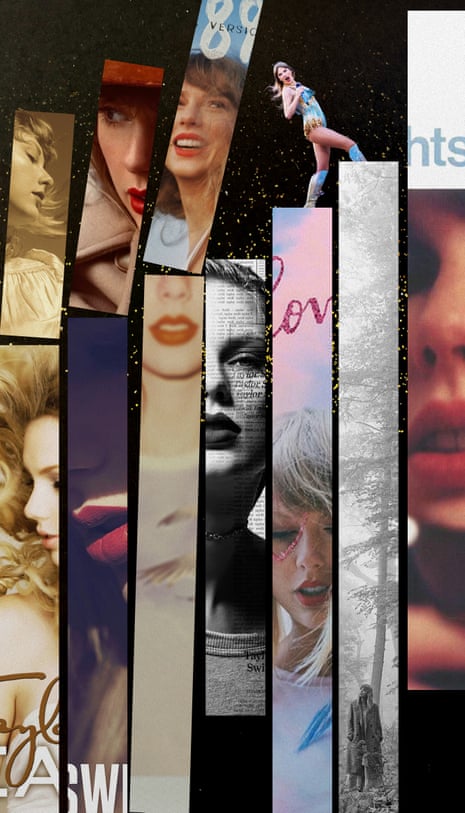
Swift understands streaming better than almost any of her contemporaries. Although she was late to warm to the format, in the 2020s she has proved herself a master of the form: deluxe editions of 2022’s Midnights and 2024’s The Tortured Poets Department, each essentially doubling their length, were released mere hours after the originals. Streaming is a volume game when it comes to breaking records; adding tracks in this way encourages repeat listens, without the threat of fans getting tired or bored. And it’s an extremely linear medium: Tortured Poets and The Life of a Showgirl each had their single placed as track one, so that it would notch up the most consumption and become the default hit.
When it comes to understanding format – and how format relates to commercial dominance – Swift has long been ahead of the curve. Among pop stars, she popularised the practice of selling vinyl records with exclusive covers in order to boost chart positions, previously only the purview of superstar rappers. CD copies of her 2019 album Lover came with an exclusive notebook containing snippets of her own personal diaries – but fans had to buy four copies in order to read all the pages. (Similarly, Reputation’s CDs came with one of two exclusive magazines, and 1989’s deluxe edition came with a randomised set of Polaroid-style photos.)
Swift was savvy with format early in her career, too. In seeming acknowledgment of the fact that country has a far bigger audience in the US than overseas, she bundled international editions of her 2008 breakthrough album Fearless with singles from her debut, while certain songs from 2010’s Speak Now were redone with pop mixes for the international market. She also seemingly took to heart the advertising industry adage to meet your customer where they are, selling copies of her fourth album Red at Papa John’s pizzerias.
Of course, all of this paled in comparison to Taylor’s Versions, her monumental album re-recording project, which allowed her to reactivate older music in her catalogue and re-market it to new fans. The re-recorded albums also included new, previously unreleased songs, doubly incentivising existing fans to repurchase copies of albums they already owned. In the years since Swift began releasing the Taylor’s Versions, other artists in dire contract situations, such as JoJo, have followed suit, while some have simply done it for fun: Hilary Duff packaged her new album with new recordings of hits such as Come Clean. In essence, Swift turned what was once seen as a desperate business move into a shrewd marketing play. SDS Image credits: Jane Barlow/PA
She set new melodic standards
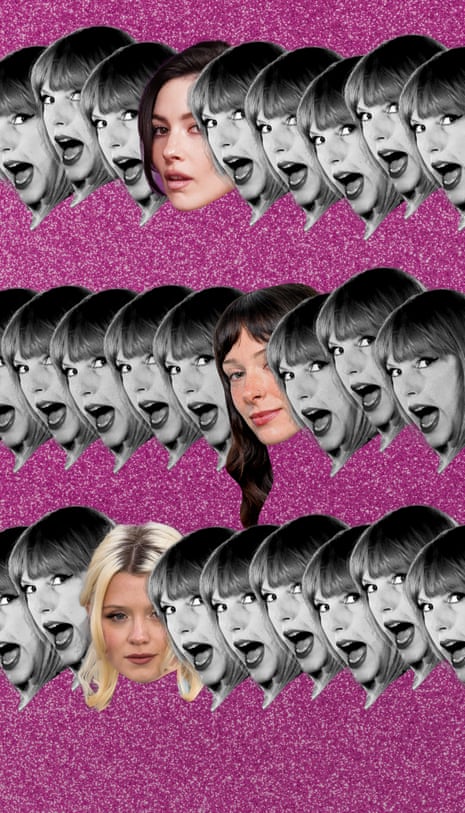
Once you know about the T-Drop , you’ll start noticing it everywhere. The Switched on Pop podcast hosts coined this term to describe Swift’s penchant for dropping into her lower register without warning to give a sly sting in the tail to her melodies, particularly when they are already dripping with sarcasm. See her deliciously drawn-out delivery of “drunk and grumbling on about how I … can’t … sing ” in Mean .
Her acolytes love to use the T-drop as a vehicle for their ultra-specific, highly Swiftian imagery, and drippy recent hits from Gracie Abrams, Maisie Peters and Holly Humberstone (pictured) hinge on the device. These singers get Swift’s emotion but not her knack for goofy – instantly memorable – imagery that is a little odd, or downright off: “Sexy baby”, “grinning like a devil”, hell, even “this sick beat”. OM Image credits: Ian West/PA; Roy Rochlin; Viktor Szymanowicz/Anadolu via Getty Images
She made game day for the girls
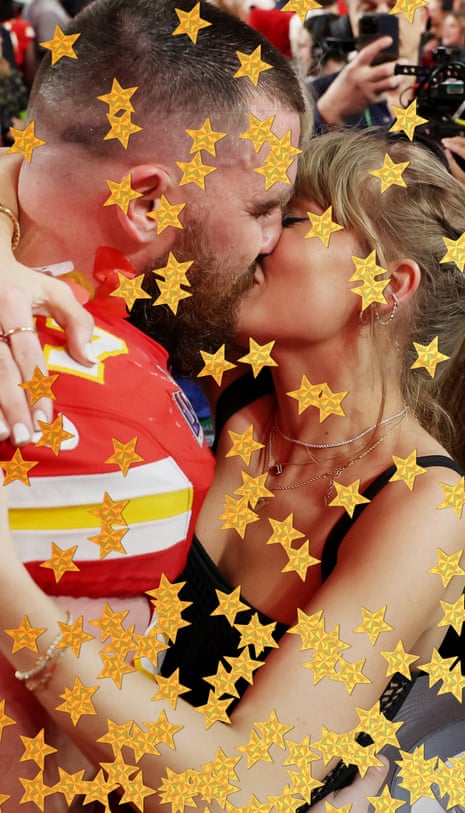
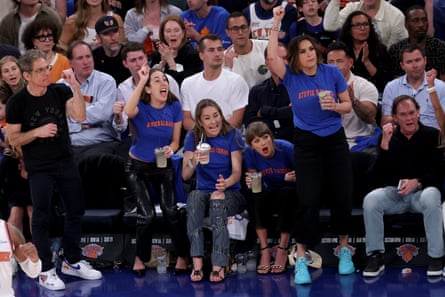
On 24 September 2023, Swift attended her first ever Kansas City Chiefs game in support of her beau, star tight end Travis Kelce . “It’s like these two cultural titans – the NFL and Taylor Swift – were coming together,” says Bryan Graham, the Guardian’s deputy US sports editor. Swift was no longer on the bleachers, but firmly in the executive suite of stadiums, marking what Ella Brockway, assistant US sports editor, calls “a different level of celebrity in sports to what we’ve seen before”. Swift’s entry into the NFL world may have been due to love, but it also didn’t hurt that it came with the opportunity for personal brand expansion. OM
What does Taylor Swift mean to the NFL ? BG For years, the NFL has been desperately courting women, back to 2009 when they started celebrating breast cancer awareness month and selling pink merchandise. So when they embraced her with a lot of cutaways to her during games, especially in the 2023-24 season, it made a lot of sense. It felt like manna from heaven for the NFL. EB The first day [she came to a game] was the most fun. I had a lot of Swift update accounts on my timeline that were sharing things like football explainers for the confused. But the second game was when I realised that this narrative was going to change the NFL season. It was a Monday night game playing the New York Jets, and she brought Blake Lively and Ryan Reynolds. ESPN was tweeting out highlights of Swift walking through the tunnel at MetLife Stadium. BG This is the American equivalent of the royal family. I mean, the idea of “the cheerleader and the quarterback” fits into the mythology of her music going back to You Belong With Me. Her relationship with Kelce felt like a real-life actualisation of that fantasy.
Were more female fans tuning in to watch the Chiefs when Swift was at the game? BG There was a huge lift in female viewership. EB The NFL has had a few years of controversy with domestic violence issues among players, and [Swift] helped them to attract a female audience. Swift was wearing all this vintage Chiefs merch to the games, and then the NFL was changing all of its merch and doing partnerships with designers. So if you wanted a Chiefs shirt it could be something that twentysomething women were actually interested in wearing versus like, a Chiefs logo in pink.
Swift’s romance with Kelce coincided with her reaching a new peak of superstardom with the Eras tour . EB She was sly enough to figure out how to own this other world at the same time and penetrate into a new market. There were still some “Brads and Chads”, as she put it, who were mad about her being there. But I think the longer she stayed around, the more it was like: “OK, this girl can hang.”
Why do you think she chose Travis and Jason Kelce’s podcast New Heights to announce The Life of a Showgirl? BG It’s kind of a flex. It’s couple goals: lifting each other up and mutually pointing to each other’s projects. I think that was probably the easiest decision of the rollout. It’s like: “I have this property in the family already. Why would I go to someone else?” A huge part of American sports business in the last 15 years has been about athletes bypassing traditional media channels and owning their own story.
Will she ever do the Super Bowl half-time show? BG Well, artists don’t get paid to perform, and they generally do it to promote a tour. And she didn’t need a lot of help selling tickets for the Eras tour. The NFL absolutely would need her more than she needed it.
The Eras tour was also a showcase of her own athleticism. EB Travis has said that they were attracted to each other in part because they’re both athletes in a sense, and she talked in Time magazine about doing the whole set while running on a treadmill. I don’t think she saw herself as an athlete around the time of the Fearless tour, but that’s certainly changed as stadium shows have become part of her thing. Image Credits:Ezra Shaw, Getty Images
She exposed the music biz
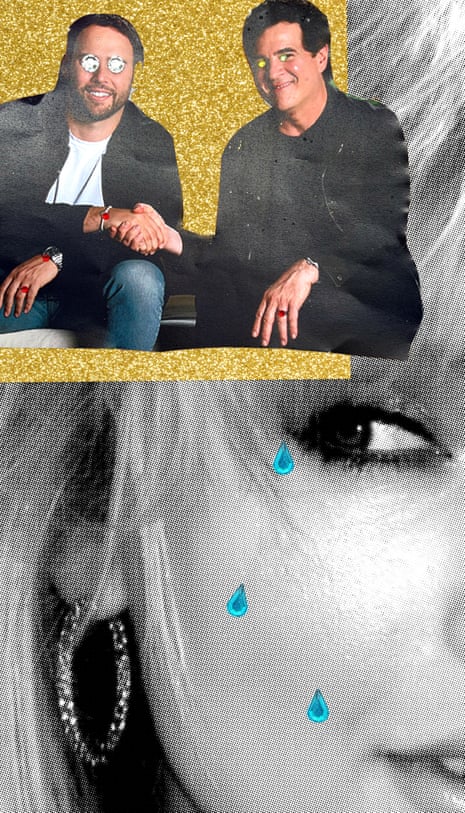
As a young pop fan in the late 90s, my knowledge of the music industry extended to: Virgin Records (the Spice Girls’ record label) and Simon Fuller (the Spice Girls’ manager). That is literally child’s play compared with the advanced industry knowhow any tween Swiftie has today thanks to her very public stance on artist rights – particularly her own.
In 2014, Swift removed her back catalogue from Spotify in protest at the idea that music should be free. (She put it back in 2017.) A year later, she was credited with getting Apple Music to back down from declining to pay royalties on music listened to during its free three-month introductory trial period – although independent record labels and trade bodies had also refused to work with Apple’s terms, they received no such public credit for their lobbying.
In 2018, Swift left Big Machine, the label she had signed to as a teenager, for Universal Music Group (UMG). The deal allowed her to own the rights to her master recordings; she also demanded that if UMG sold their Spotify shares, the money would be distributed to its acts on a non-recoupable basis – ie not to settle outstanding debts. (As of April, artists are benefiting from that deal.)
In 2019, Big Machine sold the master recording rights to Swift’s first six albums to industry executive Scooter Braun. Swift called it her “worst case scenario”, claiming that Braun had bullied Swift alongside his clients Ye and Justin Bieber. Soon after, Swift said in a TV interview that she intended to re-record those first six albums to reclaim ownership over them. I confess, when I interviewed her just after this, I didn’t ask her about it because it seemed like such a deranged idea. What an idiot.
With note-for-note likenesses, the Taylor’s Version re-recordings were blockbuster successes, often charting higher than the original albums (despite generally sounding worse) and inspiring the billion-dollar-grossing Eras tour. They utterly torpedoed Braun’s investment – as songwriter on those master recordings, Swift could deny their use in soundtracks and insist that directors use her new versions, and encourage streaming platforms to prioritise them – and they inspired mass awareness of granular music-industry machinations. Thereafter many young female artists signed almost unprecedented debut-album deals that let them own their masters, including Olivia Rodrigo, Ice Spice and Maggie Rogers; Zara Larsson bought hers off her old label to start her own.
But this heightened awareness led to some fans misinterpreting the idea of labels owning master recordings as universally shady, rather than standard practice in exchange for monetary advances. It also gave some artists misaligned expectations, including Rina Sawayama, a British-Japanese pop star, who protested against her label Dirty Hit owning her masters after her label mate (and former label director) Matty Healy of the 1975 laughed as others mocked Asian accents on a 2023 podcast. His comments were widely criticised, but there was also nothing nefarious about a label owning a young artist’s music. Swift has exceptional bargaining power: most artists do not make enough money to have that sort of leverage, but may now expect it.
Masters hadn’t had so much publicity since Prince protested against Warner Bros owning his in 1995. Swift created the most business-literate group of fans and artists in history, and in turn a bulwark against exploitation. Headlines once confined to music trade publications are now mainstream news. The popularisation of licensing deals means many artists have their rights revert after a certain period. And last May, Swift got her masters back: Braun had sold them to a private equity firm, which sold them to her. Revealing the news, Swift framed the saga as a kind of fateful crusade: “Every time a new artist tells me they negotiated to own their master recordings in their record contract because of this fight, I’m reminded of how important it was for all of this to happen.” LS Image Credits: Kevin Mazur/Getty Images for Ithaca Holdings
She redefined album ‘eras’
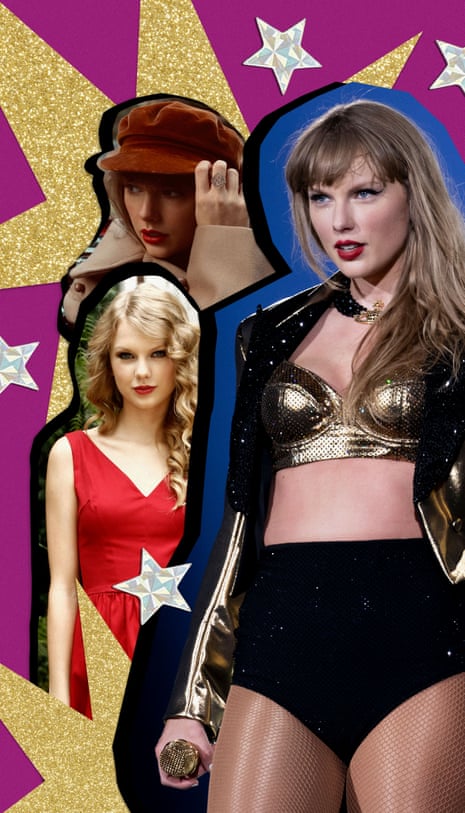
Swift was hardly the first pop star to reinvent herself with each album, but she was arguably the first to turn the idea of discrete “eras” into a marketing tool. With her Eras tour, she merchandised a concept previously owned by fans and made it a pillar of her business model. Now, she sells the same cardigan in a new colour scheme alongside each new album and reissues old merch with new photos. She even revamped the Eras tour halfway through its run to include a new Era (naturally, the Disney+ film of the tour was also revamped). The concept has since been adopted by countless other artists – turning the dreaded “greatest hits” tour, once a signal an artist was over the hill culturally, into a sign of strength. SDS Image credits: Matt Sayles/AP; Beth Garrabrant; Xavi Torrent/TAS24/Getty Images for TAS Rights Management
She turned fans into detectives
Since he r 2006 debut, Swift, inspir e d by the (then Dixie) Chicks, l eft secret cod e d messages about her songs’ subjects in the liner notes to her a lbums. It primed Swiftie s to approach h e r work like the Rosetta stone, and sto k ed the intim a cy between them. F r om 2017’s Reputation, Swift swapped the trick from liner notes to the visual real m , peppering her videos, outfits, soci a l media posts, tours and interviews with clues about her plans. Although articles decoding Swiftian Easter eggs are now prett y much a cornerst o ne of entertainment media – the world’s biggest ongoing treas u re hunt – they have still retained that sense of intima c y on a mass level. As fans wh o crack the codes feel w ildly valid a ted for the depth of thei r understanding, the endless speculation is free press out of any marketer’s wildest d reams. LS
Image credits: Jeff Kravitz/FilmMagic
She rewired pop criticism
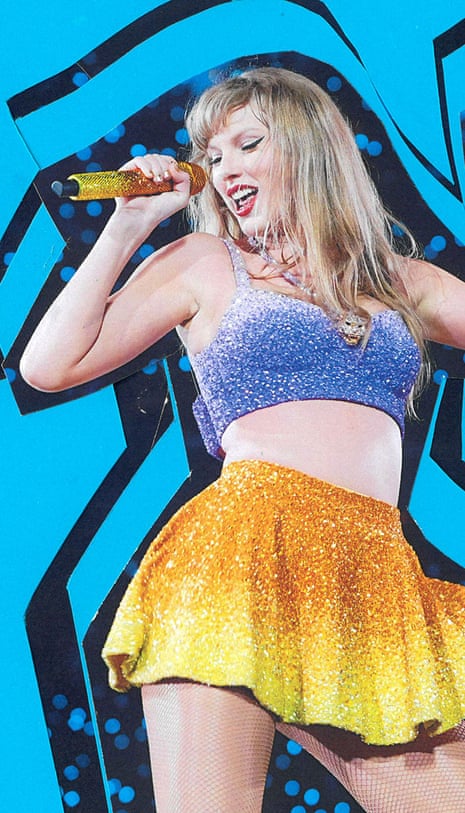
In many ways, 2015 doesn’t seem that long ago – until you think about how that year, US indie bible Pitchfork decided to review now-disgraced rock star Ryan Adams’ full-album cover of Swift’s 2014 album 1989, having not reviewed the original . The concept of poptimism – that pop is as worthy of critical consideration as rock – was a decade old, but the old snobberies were still hanging around. Swift’s crossover from country to pop made her unignorable and exposed the unfailing integrity of her songwriting to a mass audience. Emerging young female critics – such as Tavi Gevinson, the founder of Rookie magazine – knew the emotional and technical acuity of Swift’s work meant it should be treated like scripture. As her star rose and her fanbase became more vociferous, jaundiced critics knew they had to take Swift seriously if they wanted to be taken seriously.
The bottoming-out of web traffic quickly made Swift coverage a reliable banker for online publications, and amid the frothy celebrity-angled coverage, any negative reviews made targets of their authors. This reached fever pitch when Pitchfork gave Swift’s 2020 album Folklore a very high 8.0, which nonetheless brought down the record’s otherwise perfect score on reviews aggregator Metacritic. The critic got doxed, creating a culture of fear that prompted US publication Paste to publish their spicily negative review of 2024’s The Tortured Poets Department with no byline, citing concern for the writer’s safety.
Recently, some high-profile critics have declared all this has made criticism toothless. Frankly, I don’t know what they’re reading – and speaking from personal experience, I think the Swifties have calmed down – but the idea has caught on: that once critics wouldn’t write about her, but now they can’t. LS Image credits: Erika Goldring/TAS24/Getty Images for TAS Rights Management
She made pop star style normie
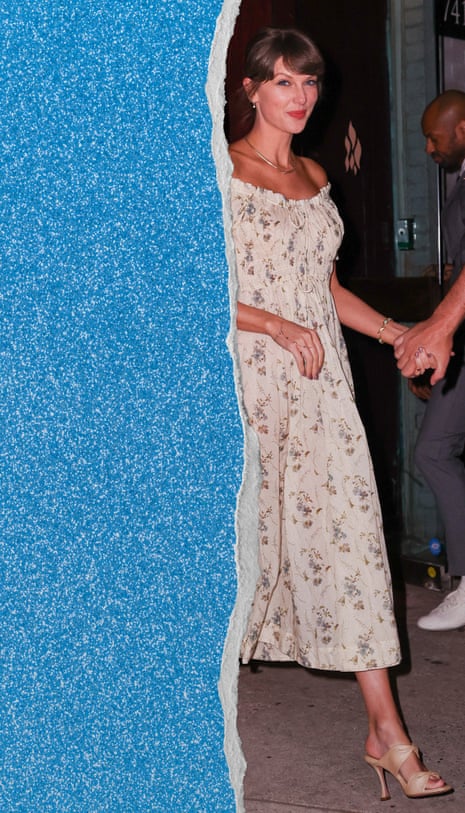
In the celebrity world where A-listers are constantly trying to outdo each other with headline-grabbing outfits and museum-worthy archival pulls, Swift’s style is an anomaly. Aside from a few memorable blunders (a “This is my fight song” tee paired with leather harness; the Sesame Street palette of ME!), her style is remarkable for its sheer inoffensiveness and apparent lack of consistent taste, as well as her ability to make the most expensive couture looks feel as if they were bought at the mall. Has she ever truly slayed? It’s debatable. That’s precisely what fascinates Lauren Sherman, a Puck fashion reporter. OM
You once referred to Taylor Swift’s style as “ Anthropologie girl gone wild ”. How come? Taylor Swift didn’t have a traditional college experience, and even though she’s in her mid-30s she’s still wearing what a popular girl in college would wear. Recently she’s been wearing more polished clothes and designer brands, but they still feel like a costume. I never really like what she’s wearing, even when it’s nice.
She wore a couture Schiaparelli gown to accept her album of the year Grammy for Midnights. It looked far less “designer ” than it did on the runway. She’s very polished, but she’s not sophisticated.
When she announced her engagement she wore a very feminine Ralph Lauren dress . It was $400 and instantly sold out. Why did she choose something so down-home for that moment? There’s been a lot of talk about her not wearing expensive clothes on purpose to communicate that to her fans. I don’t know if it’s that. I think she might be like: “I wanna buy what I like and I don’t care how much it costs because I’m a normal person.” I thought that dress was one of the best things she’s ever worn.
What are her iconic looks? Does she have a “Rihanna in Guo Pei at the Met ” moment? Certainly not. I think the closest she came was when she wore a red sweater and her hair curly at a Kelce football game. Or when she wore the Area crystal jeans . But she’s not a fashion person. I think her clothes brand her in the same way her writing brands her: as a normal girl that you can relate to.
Are there any style risks you would like to see her take? I would love for her to look a little less costume-y, but I don’t know how that happens. I think that’s just who she is. She was really deep on SSENSE for a couple of weeks and wore that Jean Paul Gaultier top . That felt like a fashion risk without leaving her comfort zone.
Image Credits: Jason Howard/Bauer-Griffin/GC Images
She thrived on negativity
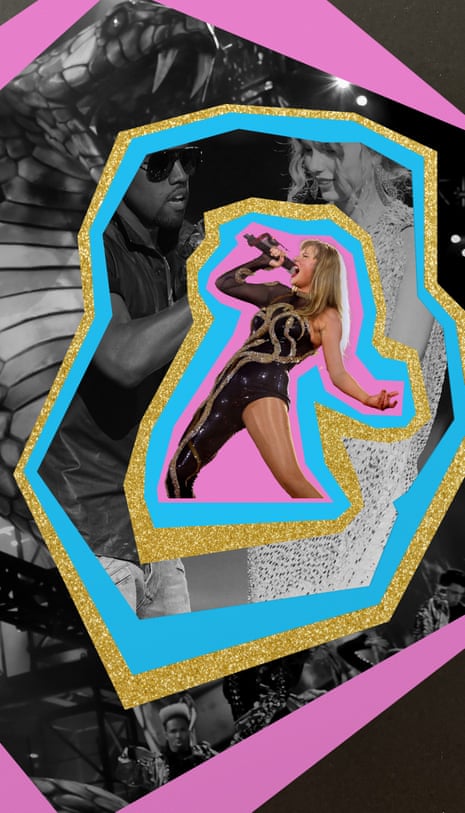
Other than maybe Drake, no pop star has got richer off making lemons into lemonade. When critics said the teenage Swift didn’t write her own songs, she wrote 2010’s sublime Speak Now entirely alone. Ye invading her MTV awards acceptance speech made her a household name. The media ragging on her for having too many boyfriends gave us Blank Space. Losing out to West in the public relations game inspired Reputation , her best album. Her industry nemesis buying the rights to her first six albums inspired the Taylor’s Versions coup de grace, and in turn the Eras tour, which grossed more than $1bn – affording her to buy the masters herself. I would love to know whether she’s ultimately grateful for any of these misfortunes. At any rate, last year she said it outright when critics gave her album The Life of a Showgirl middling reviews : “The rule of show business is if it’s the first week of my album release, and you are saying either my name or my album title, you’re helping.” More recently, she revealed that she tells young songwriters that criticism is a gift: “Make art about it.” LS
Image Credits: Kevin Winter/TAS24/Getty Images for TAS Rights Management; Christopher Polk/Getty Images
She made her publicist a star
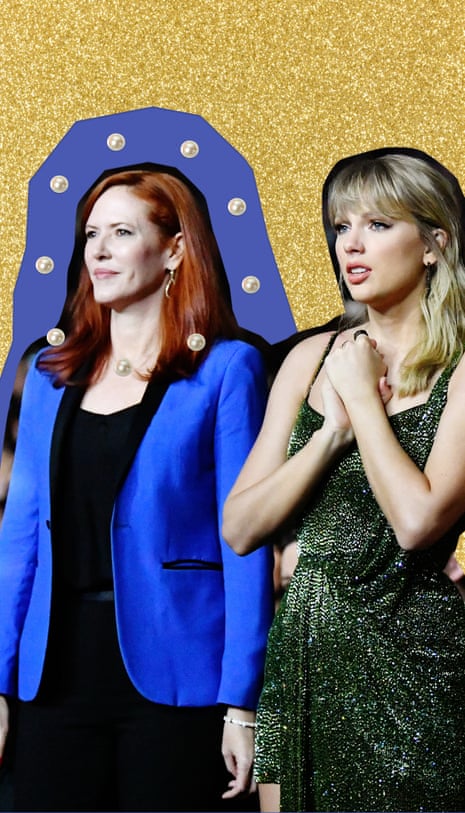
In October 2023, Swift was on a red carpet for the premiere of The Eras Tour film. In response to the hordes of photographers clamouring for her attention, she took a beat and pointed to her publicist , Tree Paine. “You see that redhead? She’ll tell me what to do.”
The idea that any one person could truly control pop’s ultimate Machiavelli feels faintly ludicrous. But Paine is the bad cop who lets her employer play at being sunshine and rainbows. For all her open-hearted songwriting, Swift is a fortress with Paine the sole keyholder, and she can pull up the drawbridge at will.
Since Swift hired her in 2014, Paine has emerged as a mastermind behind the mastermind. As well as only granting very selective Swift interviews to the media, Paine is acutely tapped into internet chatter. She played a key part in the Taylor v Kim v Ye feud, but no crumb of gossip is too small for Paine to go to war over: she didn’t just clap back at DeuxMoi for posting rumours that Swift and her ex Joe Alwyn, an actor, were secretly married, she accused them of causing “pain and trauma” . When Swift seemed to ignore Céline Dion on stage at the 2024 Grammys, Paine and team reportedly “scrambled” to snap a picture of the singers together, smoothing over controversy. At the Eras tour, she was in the pit every night telling photographers how to shoot the singer: over-the-shoulder.
Along with Beyoncé’s omnipresent longtime publicist, Yvette Noel-Schure, Paine has become a star in her own right, reflecting a time where fans are increasingly aware of those who help to craft the image of their favourite celebrities (see Law Roach, Terrence O’Connor, Aidan Zamiri). Fans gag at Paine’s designer outfits, no-nonsense attitude and assured composure; a picture of Paine fetching Swift water has nearly a million views, while the Wall Street Journal has dedicated more than 2,000 words to analysing her strategic genius. She has a good claim to being pop’s biggest power publicist since Liz Rosenberg simultaneously represented the diva trifecta of Madonna, Cher and Stevie Nicks in the 80s and 90s. The difference is that Paine’s eyes are trained on just one. OM
Image credits: Emma McIntyre/AMA2019/Getty Images for dcp
She co-signed the competition
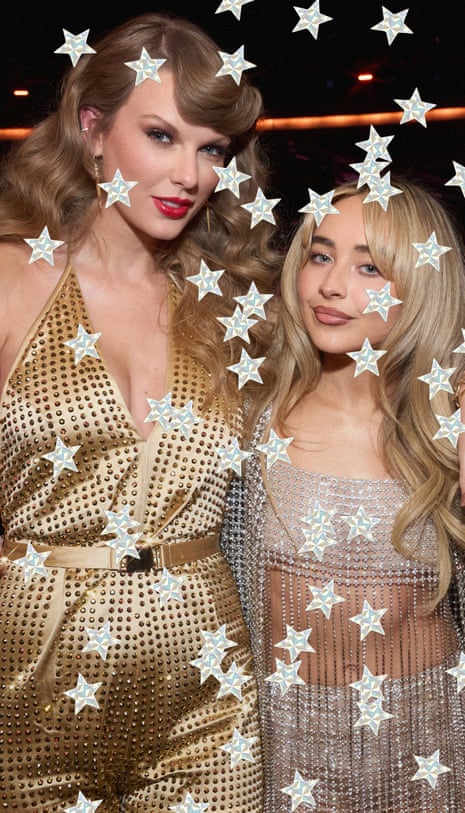
Some time around 2014 – when her 1989 album made her the biggest pop star in the world for the first time – Swift stopped being pop’s favourite ingenue and was finally acknowledged as the artistic and commercial titan she had been for years. With that shift, Swift accepted her role as someone who could boost careers: she big-upped fledgling pop stars such as Troye Sivan and took Charli xcx and Camila Cabello on her Reputation tour, performing Shake It Off with them each night. Call it a magnanimous version of the infamous “Drake co-sign” – wherein, during the 2010s, the rapper would remix songs by unknown artists and make them hits, thereby giving him the ability to take some credit for the artist’s success. Swift’s Midas touch might be a little more beneficial in the long-run, and is therefore hugely coveted: many of the artists who opened the Eras tour, such as Sabrina Carpenter and Gracie Abrams, now sell out arenas themselves. SDS
Image credits: Emma McIntyre/Getty Images for dcp
She canonised millennial dating
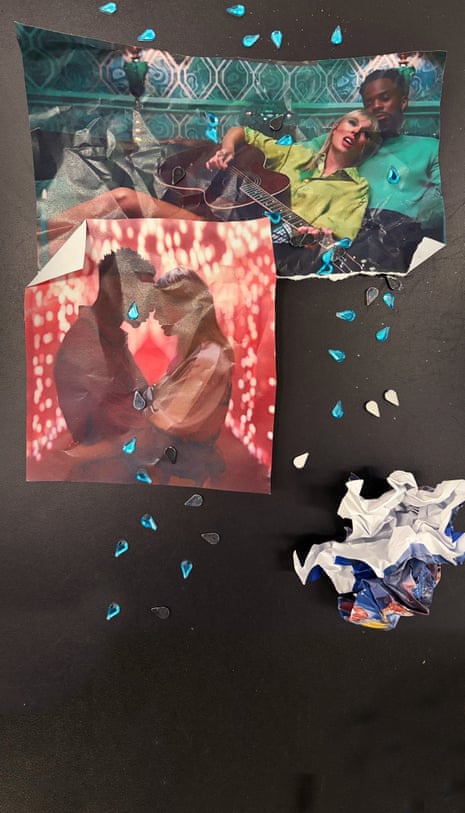
For years, Swift was known as pop’s card-carrying romantic, a woman who would be so audacious as to re-write Romeo & Juliet with a happy ending, or write an entire song of Kennedy family fanfic (Starlight) while dating a Kennedy and then perform it for the Kennedys. As time went on, her relationship with love in her music became more complicated: although she sang of new love on 2017’s Reputation, she also wrote about feeling doomed to single life forever because of impediments she couldn’t control, and on 2020’s Folklore wrote about missed connections with exes who she still thought about.
By 2022’s Midnights, Swift seemed ambivalent towards the traditional ideas of “settling down” she had once aspired to in song. On multiple songs from that record, she expressed uneasiness about the idea of getting married at, potentially, the expense of her own autonomy. And she bemoaned the idea that the cultural idea of womanhood was still so narrow: “All they keep askin’ me / Is if I’m gonna be your bride,” she sang on Lavender Haze. “The only kind of girl they see / Is a one-night or a wife.”
This arc – from one-true-love fairytales to wondering if marriage is even in the cards at all – mirrors that of a lot of women I know who are roughly Swift’s age. Although Swift has almost certainly never been on a dating app, the bleakness of Midnights – and its follow-up, The Tortured Poets Department, which came after the end of her longest relationship, and on which Swift confesses she’s “down bad crying at the gym” – feels of a piece of the grim way in which many of my single female friends speak about their romantic lives. For many years, Swift’s was pop’s ultimate heteropessimist, putting a pin in romantic ideals she had helped create.
In a sense, the romantic crash outs of Tortured Poets created a new facet of relatability in Swift’s work, which had become increasingly insular over the preceding years – suddenly, she was a romantic newbie just like many of her fans, trying to work out why what felt like true love had curdled so quickly. And then she took another step that reminded me of my mid-30s friends. In what felt like the blink of an eye, she found a new jock dreamboat in American football player Kelce, to fulfil the romantic fantasies that seemed so out of reach a few years earlier. Swift’s romantic path is one fairly specific to millennial womanhood, in that she could have chosen a marriage-less path but ultimately decided not to; in capturing that path in song, she essentially memorialised the millennial dating experience on a mass scale. SDS
Image credits: YouTube/Taylor Swift
She spiced up the charts
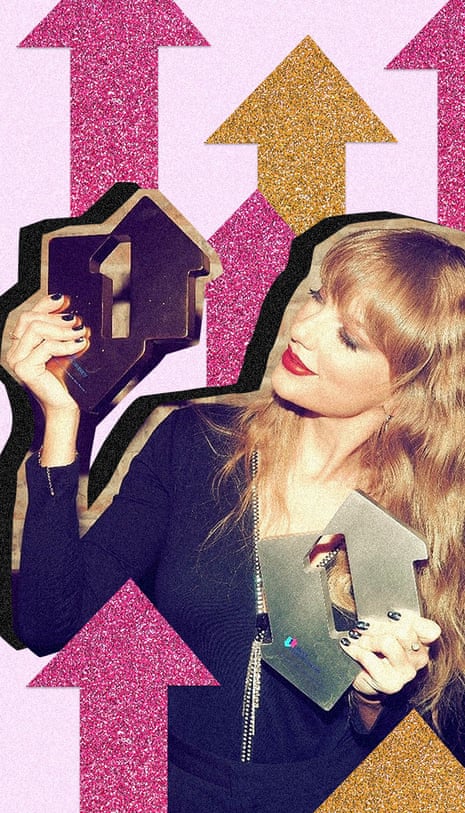
Every new Swift release arrives alongside a swathe of CD, vinyl, cassette and digital variants, all of which help her maintain her career-long chart dominance. Many artists do this, of course, but Swift, who drops limited releases through a complex system of timed windows and exclusive retailers – itself a bugbear to many devoted fans – has mastered the art of gaming the charts, often to others’ detriment. When it looked like Billie Eilish might unseat Swift’s The Tortured Poets Department in 2024, Swift released three digital variants to hold the top spot; Charli xcx’s Brat nearly did the same in the UK, so Swift released six UK-only album variants within the last few hours of chart eligibility and stayed at No 1. Lana Del Rey has said that Swift once told her she “wants [success] more than anyone” – and it’s clear she knows how to get it. SDS
Image credits: OfficialCharts.com/PA
She broke the indie/pop binary
Swift has always been as mainstream as they came. Her earliest records were big, bright pop-country smashes that referenced blue-chip stars (Tim McGraw) and the literary canon (Romeo & Juliet, on Love Story). The first signs of experimentation in her career came on 2012’s Red, when she began incorporating synths into her music – and even that record included a dig at an ex who liked listening to indie music. Centrism was her brand; when she wrote an album about her glamorous new life in New York City, 2014’s 1989, she made sure to root her pop sound in the music of the 80s, as if to keep less adventurous listeners onside.
But 1989 had an unlikely effect. Its monumental success forced basically everyone to pay attention to Swift, even alternative music fans who weren’t used to keeping up with the Billboard charts. As Swift got older, her own hang-ups around alternative music seemed to fade too – slowly at first, then all at once. In 2019, Lover featured nods to Mazzy Star’s Fade Into You, Chromatics, Lana Del Rey and Blood Orange.
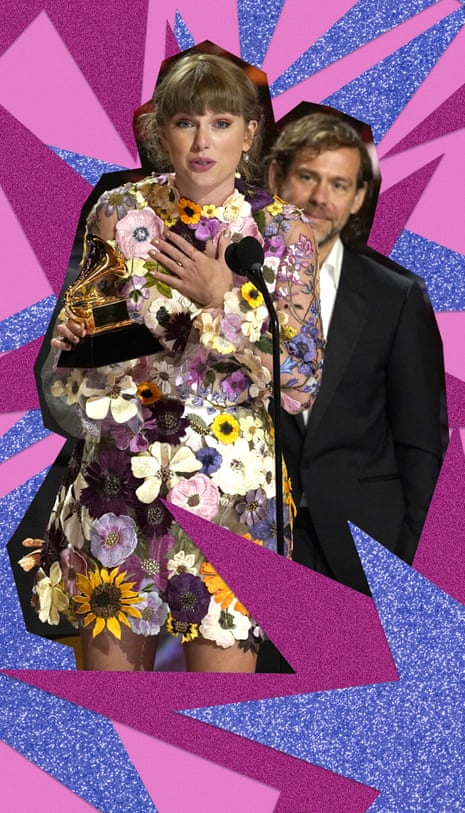
Then, during the pandemic, came indie Swift. Her 2020 records Folklore and Evermore, produced by the National’s Aaron Dessner, received rave reviews and fully legitimised Swift as a songwriter in the eyes of more highbrow fans. It made Dessner an A-list producer overnight: he’s since produced music by a new generation of pop stars including Gracie Abrams, Laufey and Noah Kahan, as well as established musicians such as Ed Sheeran and Florence + the Machine; meanwhile Swift made music with the National, Phoebe Bridgers and Hayley Williams of Paramore. Swift stopped positioning herself in opposition to the indie world and found a way to absorb it into her own universe – opening up an entirely new market for herself in the process. SDS Image credits: Chris Pizzello/Invision/AP
She set the narrative
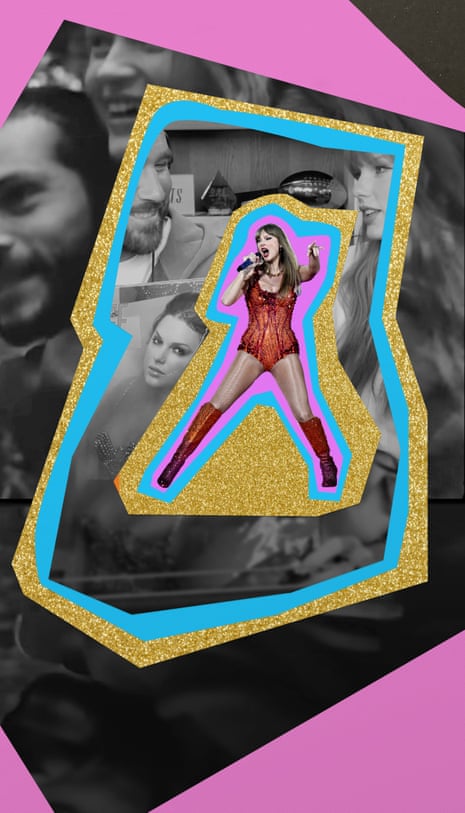
Like many other stars of her ilk, Swift rarely does traditional interviews any more. Almost all information about her life and career released into the world comes through Swift’s official channels, and she’s trained fans to understand that her word is gospel. When she does make media appearances, it’s calculated: she spoke to Variety, a Hollywood trade magazine, about her ambition to become a director; she announced last year’s The Life of a Showgirl on New Heights, a podcast hosted by her fiance Kelce. In each interview, Swift doled out information specifically designed to position herself and her career at that point in time.
Sometimes, what she shares is contradictory: when Swift released a 10-minute version of her 2012 song All Too Well in 2021, she told fans it originated from a jam session with her band where she basically ad-libbed the song on the spot, even though the song’s co-writer Liz Rose had said there was never officially a 10-minute version; instead, she and Swift had pared the song down from an abundance of ideas Swift brought to her. Plus, ATW10 bears the clear marks of Swift’s post-Folklore songwriting style, as well as a mention of a keychain bearing the phrase “Fuck the patriarchy”, hardly common in 2010. But it’s tricky to argue the narrative when Swift keeps things so tightly bound. Call it Public Relations (Taylor’s Version). SDS
Image credits: Julien de Rosa/AFP/Getty Images; YouTube/New Heights
She resuscitated monoculture
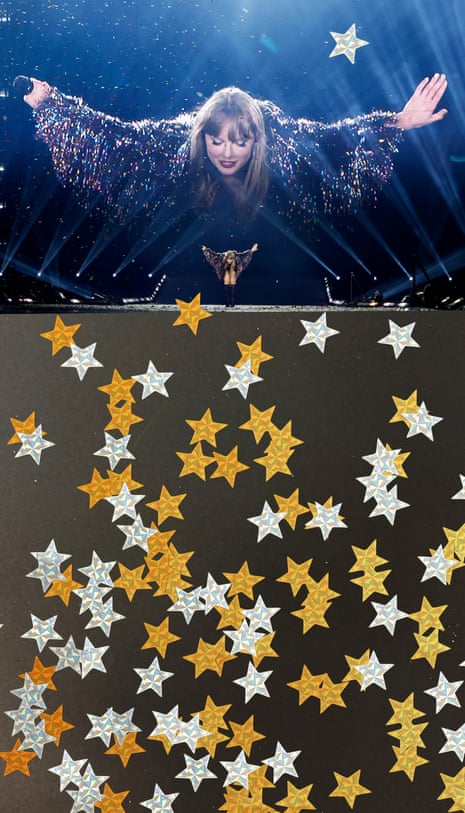
Streaming and social media have siloed the watercooler entertainment age. What seems like the biggest thing in the world to you – Marvel movies, Joe Rogan – might mean nothing to the person next to you on the bus scrolling K-pop fan cams. Swift has transcended mass fragmentation to become the default pop star.
You could argue that’s because her career predates this new cultural reality, but plenty of old-school pop stars failed to leap that Rubicon. Swift’s enduring song craft, strategy and gossip factor kept her star bright. She is maturing on her own terms, but remains relevant to new, young fans: the Taylor’s Version re-recordings let Swifties who were too little to remember their original releases feel a sense of participation and ownership. The ensuing Eras tour, showcasing (almost) every Swift album, innately reflected the poignancy of how many generations of fans had grown up alongside her work. Her music is universally accessible (and, crucially, approved by parents). Infants can bop to it. It’s a ready-made belief system for young fans discovering themselves. It’s so detailed it commands Zapruder-level analysis from hardcore stans; so well-crafted that even old, classic rock dudes respect her. I am often stunned at how casual music fans who otherwise don’t participate in fandom culture refer to themselves as Swifties.
Her presence and influence have made her so powerful that streaming platforms and international governments alike have to kiss the ring. It means she can set the terms of engagement. To see the music video for last year’s The Fate of Ophelia on its weekend of release, you had to shell out for a cinema ticket, making Swift a Disney-like conglomerate unto herself. It is Swift’s world, and we’re very much living in it. LS Image credits: Emma McIntyre/TAS24/Getty Images for TAS Rights Management
The next 20 years?
Few A-list female pop stars have sustained an A-list pop career for as long as Swift has, and far fewer have made it beyond that point. (Even Madonna’s imperial period faltered just over 20 years in.) So what do the next 20 years look like? Swift’s nuptials to Kelce are, as they say, impending. Maybe her song for the Toy Story 5 soundtrack suggests a hankering for an Oscar – or tees up her fans’ hankering for her to return to country music. She’s not likely to mount an Eras-scale tour again any time soon – but maybe that creates opportunities for looser, more intimate live showcases. Our critics look at what they think Swift will do next – and what they want her to. Image credits: Roslan Rahman/AFP/Getty Images