World Cup 2026: guide to all 1,248 players | World Cup 2026 | The Guardian

Keyword – Football
Trefwoorden – World Cup 2026, World Cup, Football, Sport, France, Argentina, Spain, Brazil, England, Czechia, Mexico, South Africa football team, South Korea, Bosnia and Herzegovina, Canada, Qatar, Switzerland, Haiti football team, Morocco football team, Scotland, Australia, Paraguay, Turkey, USA, Curaçao, Ecuador, Germany, Côte d’Ivoire football team, Japan, Netherlands, Sweden, Tunisia football team, Belgium, Egypt football team, Iran, New Zealand, Cape Verde, Saudi Arabia, Uruguay, Iraq, Norway, Senegal football team, Algeria football team, Austria, Jordan, Colombia, Democratic Republic of the Congo football team, Portugal, Uzbekistan, Croatia, Panama, Ghana football team, US sports, Australia sport
Title – World Cup 2026: guide to all 1,248 players | World Cup 2026 | The Guardian
Author – Marcus Christenson
Link – World Cup 2026: guide to all 1,248 players | World Cup 2026 | The Guardian
Publish date – 2026-06-04T08:55:49.000Z
Category – Sport
URL – https://www.theguardian.com/football/ng-interactive/2026/jun/04/world-cup-2026-complete-player-guide

Fuelling up: the best foods to eat before a workout | Food | The Guardian

Keyword – Food
Trefwoorden – Food, Breakfast
Title – Fuelling up: the best foods to eat before a workout | Food | The Guardian
Author – https://www.theguardian.com/profile/georgina-hayden
Link – Fuelling up: the best foods to eat before a workout | Food | The Guardian
Publish date – 2026-06-18T12:00:03.000Z
Category – Lifestyle
URL – https://www.theguardian.com/food/2026/jun/17/fuelling-up-the-best-foods-to-eat-before-a-workout

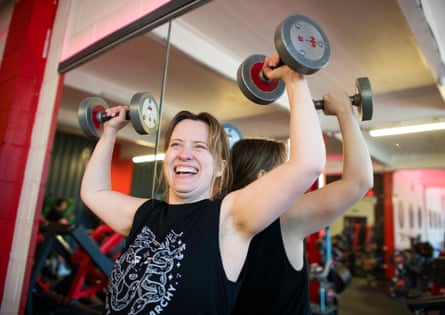
W hile I adore almost everything about June, there is a brief window, round about now, where I get flashbacks to my childhood PE lessons. That’s right, folks: it is sports day season. And while I love cheering on my own kids (and trying to calm my inner Julia from Motherland ), as a kid I hated it with a passion. I was not remotely sporty, but I have tried to quieten those hangups and encourage my girls as best I can. And the one thing I can do, confidently, is give them a nutritious breakfast.

Which leads me on to one of the big food topics on everyone’s lips, whatever your age: what are we eating before we work out? If social media is anything to go by (and it really shouldn’t be, or with caution at least), we should all max out on protein. But what’s the workout rule of thumb: carbs before and protein after? And what is high-energy food anyway?

In a nutshell, the best foods to eat before any form of exercise are those that are easy to digest and provide a steady source of energy – we’re looking for slow-releasing carbohydrates, essentially. And, after exercise, a hit of protein helps to rebuild muscle. But the distinction isn’t absolute: both snacks and full meals will benefit from a blend of both. Essentially, eat something balanced and nutritious, and you’ll be fine.

One of the most popular slow-releasing breakfast carbs has to be porridge , as indeed is any oaty start to the day. I’m a big fan of using a combination of pinhead oats and rolled oats for porridge, and cooking it low and slow, just like Felicity Cloake : it gives you an intensely creamy porridge with a wonderful texture. Add a little chopped banana, and you have a breakfast of champions. If time isn’t on your side, a quicker porridge, such as Anna Jones’s chocolate rye porridge with quick honey pears , would be glorious, as would Clare Thomson’s super-simple, kid-friendly apple and cinnamon porridge . Now that I think of it, that would be a great sports day breakfast.

If you’re not a sweet breakfast person, Nigel Slater’s baked croissants with ham and cheese are excellent, plus you could prep them the night before and bake in the morning; and maybe even throw some dark, leafy greens in there for good measure. If you’re in a rush, Victor Liong’s omelette-roti hybrid pancakes are a revelation – they’re so good, in fact, that I rarely save them just for breakfast, and they’re a go-to at any time of day whenever I need a quick flavour-packed meal. For the ultimate savoury, slow-releasing carb fix, though, you can’t get much more nutritious than ful medames , the classic Egyptian breakfast that is completely plant-based. My recipe of choice uses tinned British fava beans for a speedy but nutrient-rich start to the day – switch to wholemeal pitta on the side, and perhaps a soft-boiled egg or a little crumbled feta on top, if you want a hit of protein. Another great plant-based option before a workout is scrambled tofu and, as always, Felicity Cloake has the best method for this.

If you’re a breakfast avoider, but still want to give your workout your all, you could always go for a smoothie – before, after or both. That way, you’re in complete control of what you add: I love a banana, oat, date and cinnamon number before I work out, or something along the lines of Anna Jones’s “friendly” green smoothie . And remember, stay hydrated throughout, line up that protein for afterwards, and don’t be that parent on the playing field.

My week in food

Sweet reads | Chocolat , by Joanne Harris, made a huge impact on me when it was first published in 1999. I loved the book, then the film, and have read it again and again. So I was thrilled when I discovered that Harris has a prequel, Vianne , about how she became the woman she is: a chocolatier, a free spirit, a mother. And I am captivated.

Bag a biscuit | As a huge fan of the Marshmallowist , I was giddy when I found out they had collaborated with Fortnum & Mason in London to create a huge, wagon wheel-style biscuit called the Whoppalossus . You can find these mammoth biscuits-in-a-tin at the new Biscuitorium on Fortnum’s famous ground floor. There is a biscuit counter, biscuits to dip in wine and even a biscuit library, where you can select from 12 different flavour profiles. They only release a small amount of Whoppalossuses each day, however, so get there early if you want to bag one.

A Mediterranean moment | Zylia , the new Greek and Cypriot restaurant from Nick Molyviatis and Barry Karacostas. While Greece is definitely having a moment on the restaurant, cookbook and general food scene, it’s wonderful to see Cyprus represented there, too. To think that the two countries’ food is the same would be doing both cultures a disservice. There are countless similarities and crossovers, but we each have our own specific recipes, and Zylia celebrates those. Sheftalia (a fat, plump, sausage-like grill made with cinnamon-laced pork mince wrapped in caul fat and cooked over charcoal), whole grilled halloumi and tsakistes are classic Cypriot dishes that make me think of my yiayia’s kitchen.

If you want to read the complete version of this newsletter please subscribe to receive Feast in your inbox every Thursday.

The Uses of Utopia by Joad Raymond Wren review – can the ideal society ever exist? | Literary criticism | The Guardian

Keyword – Books
Trefwoorden – Literary criticism, Books, Culture
Title – The Uses of Utopia by Joad Raymond Wren review – can the ideal society ever exist? | Literary criticism | The Guardian
Author – https://www.theguardian.com/profile/stevenpoole
Link – The Uses of Utopia by Joad Raymond Wren review – can the ideal society ever exist? | Literary criticism | The Guardian
Publish date – 2026-06-16T08:00:49.000Z
Category – Culture
URL – https://www.theguardian.com/books/2026/jun/16/the-uses-of-utopia-by-joad-raymond-wren-review-can-the-ideal-society-ever-exist

B y definition, utopia cannot exist. In 1516, educated readers of Thomas More’s Utopia would have appreciated a tension between two possible derivations of this novel word: the Greek “eu-topos”, meaning good place, and “ou-topos”, meaning not a place at all. It might have been a compact warning that one should never attempt to turn utopias into reality. Those who have tried usually witnessed the model societies they founded devolving into grungily dysfunctional communes, weird sex cults, or both.

In this richly diverting intellectual history of the idea, we begin, as we must, with Plato, and the zany prescriptions of his Republic (“we should neutralise the poets’ influence on mothers”). Passing in silence over the potentially utopian aspects of Jesus’s thinking, we arrive at More’s utopia, where “nothing is private”, and so “the common affairs be earnestly looked upon”. The great Renaissance scientist Francis Bacon’s New Atlantis portrays a utopia of rational scientific experimentation – which, Wren suggests ingeniously, might have inspired Wakanda in the Marvel Black Panther films. The 17th-century duchess Margaret Cavendish’s The Blazing World imagines the author as a goddess elected by a world of human-animal hybrids who like science. In the 18th century, Sarah Scott’s Millenium [sic] Hall imagined an ideal society of women without men, as did Charlotte Perkins Gilman’s Herland during the first world war.

Some patterns emerge: many utopias employ a framing device in which the narrator is accidentally or fantastically transported to a new land, and then subjected to reams of expository monologue about how it all works. Families are often abolished, with children raised in common. And in Edward Bellamy’s 1888 fantasy Looking Backward, Wren explains straightfacedly, “there are no law schools or lawyers, abolished here as in most utopias”.

Families are allowed, though, in Voyage en Icarie, by the 19th-century French socialist Étienne Cabet, which envisions a sternly regimented communism. In 1849 Cabet founded his own model society, Icaria, in Illinois. Alas, after a few years, “Cabet’s citizens were hoarding possessions; they indulged in vices including hunting and fishing, swearing, tobacco and alcohol; the women wore makeup, jewellery and perfume.” Cabet’s solution to this disgraceful state of affairs was to insist on even stricter rules, and to make himself president “for four years instead of one”. Just so does utopia always threaten to turn into dictatorship.

It is odd, then, that Wren never mentions a famous reckoning with the concept of utopia. In 1974, the American political philosopher Robert Nozick published Anarchy, State, and Utopia, which argues that the only morally permissible state is a “minimal” one that guarantees property rights and security, and enforces contracts. People should be free to build whatever forms of association they like on top of that, as long as membership is never coerced. But for Nozick utopias are always coercive because not everyone will agree freely with their values. “It is helpful to imagine cavemen sitting together to think up what, for all time, will be the best possible society and then setting out to institute it,” Nozick writes. “Do none of the reasons that make you smile at this apply to us?”

Many features of the utopias in Wren’s splendid catalogue, after all, are rather sad. In Gilman’s Moving the Mountain, “There are almost no pets, as they’re wasteful.” In Voyage en Icarie, “The decorative prints are full of useful information, as opposed to pointless landscape paintings.” The Victorian artist William Morris, in News from Nowhere, describes an elite “samurai” class, his society’s natural nobility, who “must not act or sing … they can’t play or watch competitive sport.” But inasmuch as utopias are primarily “organic machines for thinking about the premises of our thought”, Wren argues, they are more like science fiction – and some indeed have been science fiction. He mentions here the 1970s “anarchist utopia” of Ursula K Le Guin’s The Dispossessed, but probably the most popular strain of utopian fiction over the last few decades has been the epic series of Culture novels by Iain M Banks, which posits fully automated luxury communism in space among a pan-galactic society of augmented humans.

Still, things regularly go awry in this ideal society, from attack by intolerant fanatics, to rogue AI utilitarianism, or unfeasibly ancient alien artefacts. The best utopian fiction therefore ends up implicitly anti-utopian as well; at its highest level of practise, perhaps, utopia vanishes into the great flow of literature itself.

The Uses of Utopia by Joad Raymond Wren is published by Allen Lane (£25). To support the Guardian, order your copy at guardianbookshop.com . Delivery charges may apply.

All-time greatest: who is the highest goalscorer in World Cup history? | World Cup | The Guardian

Keyword – Football
Trefwoorden – World Cup, Sport, Football, Lionel Messi, Kylian Mbappé
Title – All-time greatest: who is the highest goalscorer in World Cup history? | World Cup | The Guardian
Author – Seán Clarke
Link – All-time greatest: who is the highest goalscorer in World Cup history? | World Cup | The Guardian
Publish date – 2026-06-17T21:28:21.000Z
Category – Sport
URL – https://www.theguardian.com/football/ng-interactive/2026/jun/17/who-is-highest-goalscorer-world-cup-history-messi-mbappe

Lionel Messi started his 2026 World Cup campaign with a hat-trick in a 3-0 win over Algeria .

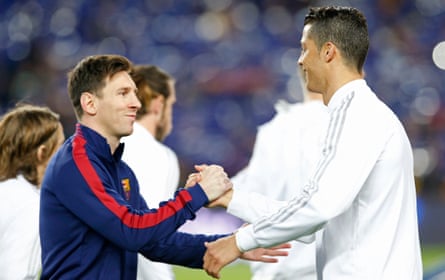
The trio of strikes gave him a career total of 16 World Cup goals, equalling the existing record held by Miroslav Klose. It’s reasonable to expect the Inter Miami player to set a new mark this summer but he is being chased hard by Kylian Mbappé. He scored twice in France’s opening match victory against Senegal , giving him a total of 14 goals since his competition debut eight years ago.

The list shows the top 20 World Cup goalscorers of all time, from data provided by Transfermarkt. If two players are tied, advantage is given to the man who made fewer appearances.

England’s second-half forward surge against Croatia fails to mask defensive frailties | World Cup 2026 | The Guardian

Keyword – Football
Trefwoorden – World Cup 2026, England, Croatia, Thomas Tuchel, World Cup, Football, Sport
Title – England’s second-half forward surge against Croatia fails to mask defensive frailties | World Cup 2026 | The Guardian
Author – https://www.theguardian.com/profile/jacob-steinberg
Link – England’s second-half forward surge against Croatia fails to mask defensive frailties | World Cup 2026 | The Guardian
Publish date – 2026-06-17T23:08:03.000Z
Category – Sport
URL – https://www.theguardian.com/football/2026/jun/18/england-second-half-forward-surge-fails-mask-defensive-frailties-world-cup-croatia

When Thomas Tuchel won the Champions League with Chelsea in 2021 the success was built on unflinching defensive rigour and midfield discipline. Five years on, though, Tuchel’s England displayed neither of those qualities during a dreadful first half in Dallas. They kept losing the ball in dangerous areas, struggled to maintain their shape without the ball and were rocking when Croatia stung them with a second equaliser just before half-time.

The vibe could hardly have been less convincing. Anthony Barry, Tuchel’s No 2, let rip in an interview with ITV, accusing England of doing all the wrong things, of playing with “a nervous energy”, of making everything “confused and complicated” against opponents well versed in making their craft and experience in midfield count.

Of course, England got away with it in the end, the response in the second half astonishing, Barry’s words no doubt delivered in even stronger terms by Tuchel in the dressing room. Yet while they won their opening game in Group L thanks to a moment of breathtaking power from Jude Bellingham and a late breakaway goal from Marcus Rashford, the overall display was far from good enough.

The attack spluttered in open play during those first 45 minutes and the press malfunctioned. The spaces between Elliot Anderson and Declan Rice in midfield were too big and although it was better after the break, the main takeaway is that England have no chance of winning the World Cup if they defend this badly in a potential quarter-final against Brazil.

It has been easy to fall into the trap of dwelling on the big forwards during the tournament’s opening week. After blistering bursts from Erling Haaland, Lionel Messi and Kylian Mbappé, the stage was set for Harry Kane to step up on Wednesday. Inevitably he delivered, scoring twice, first with a retaken penalty and then with a header from a corner. Even so England’s set-piece prowess could not detract from the structural flaws, for it was Croatia who played the silkier football during the first half and capitalised on poor defending to score two exceptional goals from open play.

The jitters at the back had set in early, England’s attempt to pass their way out ending with Nico O’Reilly and John Stones conceding a corner on the right. They were thrown by Croatia’s pressing and took a while to respond. There were constant turnovers of possession, exposing the back four, and it was from a ball lost by Bellingham in midfield that Martin Baturina was able to hammer in Croatia’s first goal.

The concern for Tuchel is that tournaments are rarely won without a solid defence. England can go blow for blow against some sides, but would they get away it against the very best? It feels unlikely on this evidence, meaning Tuchel’s biggest focus before facing Ghana next week has to be on tightening up at the back. Do not be fooled by the result: England were lucky. There was a stunning surge after Bellingham made it 3-2, Dominik Livakovic forced into a series of saves, but Croatia had chances to score another before Rashford killed them off.

In fairness, Croatia have some dangerous forwards and are an excellent tournament team. Beating them is no mean feat and it goes without saying that Tuchel is too smart to look past the defensive frailties. They will also hope that some of the problems in midfield were down to Rice, who joined up with the squad late after the Champions League, tiring before going off midway through the second half. Yet building up Rice’s fitness will be easier than justifying Tuchel’s faith in Stones. The former Manchester City defender barely played last season, was rusty on and off the ball during his 87 minutes on the pitch and was turned too easily by Petar Sucic before the midfielder teed up Baturina to whip a shot past Jordan Pickford from 20 yards.

This is not a vintage England defence. O’Reilly made his debut at this level and was targeted at left-back. Reece James had issues on the other side and Ezri Konsa wobbled next to Stones. Croatia’s second goal, made by Ivan Perisic and swept in by Petar Musa, found James and Konsa positionally wanting.

No doubt Harry Maguire will have something to say on his next podcast appearance. In terms of the options available to Tuchel, though, it might be wise to bring Marc Guéhi in for Stones against Ghana. These lapses are not surprising. Stones has been an incredible servant for England but his minutes have to be managed and he was turned inside out by Ollie Watkins when City lost to Aston Villa last month .

A win’s a win, then? Not quite. The format means England are all but guaranteed a place in the last 32 now but Messi, Mbappé and Haaland will be licking their lips when they look at Tuchel’s defence.

‘The sea took everything away’: how Nigeria’s ‘Happy City’ is disappearing beneath the waves | Endangered habitats | The Guardian

Keyword – Environment
Trefwoorden – Endangered habitats, Climate crisis, Environment, Nigeria, Africa, Flooding, Coastlines, Sea level
Title – ‘The sea took everything away’: how Nigeria’s ‘Happy City’ is disappearing beneath the waves | Endangered habitats | The Guardian
Author – https://www.theguardian.com/profile/valentine-benjamin
Link – ‘The sea took everything away’: how Nigeria’s ‘Happy City’ is disappearing beneath the waves | Endangered habitats | The Guardian
Publish date – 2026-06-18T08:00:01.000Z
Category – News
URL – https://www.theguardian.com/environment/2026/jun/18/the-sea-took-everything-away-how-nigerias-happy-city-is-disappearing-beneath-the-waves

I n the early hours of 15 February 2019, the Atlantic Ocean came for Arowo Victoria’s livelihood. The 60-year-old retired midwife was asleep when neighbours began banging on her door, shouting that the sea had started covering buildings along the nearby coastline.

By the time she got to her small shop, she discovered that the Atlantic had already swept it away, destroying the business she had built with borrowed money after retirement.

“There was nothing I could save,” she says, staring at the shoreline where her shop once stood. “The sea took everything away.”

After retiring from decades of helping women give birth, Victoria had taken out a loan to start a business that she had hoped would see her through retirement. Instead, the sea has left her with mounting debts and no business to help her repay it.

“I am paying for something that doesn’t exist any more,” she says. “They come to collect their money every month.”

Ayetoro was once known as Nigeria’s “Happy City ” after it was founded by a Christian group in the 1940s who wanted it to operate on the basis of a communist-style society. Now, the historic coastal settlement, located in Nigeria’s south-western Ondo state, is gradually being eroded by tidal surges that people say have grown more severe over the past decade.

The Atlantic Ocean, according to people living there, has already swallowed more than half of the community, washing away hundreds of homes and other buildings, including schools and churches, over the past two decades.

While big cities such as Lagos are often in the headlines as some of the world’s most vulnerable coastal places, small settlements like Ayetoro are already vanishing. Those who live here can’t rely on money for infrastructure such as sea walls – they simply rebuild each time they are flooded.

“My uncle’s house is very close to the water now,” says 35-year-old Emmanuel Aralu. “Each time the sea rises, it gets closer. We already know it may not survive another big tide.”

As a child, Aralu remembers large stretches of empty land where children would play football. “All that space is gone now,” he says. “At times, it feels like the entire community is being erased.”

Across the town, Motunrayo Asakasiki, 28, still remembers the day her mother lost her grocery store to floods driven by the encroaching sea. “The water came very fast,” she says. “People were screaming and trying to save what they could, but some things had already been washed away.”

After the destruction, the family moved the business to Alaba Street, which they considered safer. However, even there, the sea has continued to advance. “The ocean is still threatening this new place,” she says. “My mother always wonders how many times she should start over.”

The destruction has hit home hard for 79-year-old Lawrence Lemanu, who lost his 10-room house to the sea in 2023 after working on it all his life.

“I raised my children there,” he says. “Everything I’ve laboured for was inside.” He describes watching helplessly as the waves ripped through the building. “You cannot fight the sea,” he says. “You just watch it take everything.”

Fishing, once the lifeblood of Ayetoro’s economy, has become more dangerous and unpredictable. As local fisher Egba Taiwo puts it, the water no longer behaves as it used to.

“Now the tides are very rough,” he says. “There are times you fear going out fishing because the sea has become so dangerous.” Even when fishers return safely, their hauls are smaller, he says.

The crisis is also threatening the buildings that house vital public institutions.

Hannah Olanrewaju, the officer in charge of the Ayetoro primary health centre (PHC), describes how dangerously close the sea has come to the facility.

“When you open the back door, you see the sea directly,” she says. “When I came here in 2016, it was never like this. Now we struggle to carry out immunisation and malaria tests because it is so difficult to walk on the community’s wooden bridges.”

Health workers fear continued erosion may soon cut off the community’s access to essential health services.

At Ayetoro College, school administrators say students and teachers work under the constant fear that the sea could one day submerge the entire building.

“It breaks my heart watching our young people trying to plan their future in a town that is steadily losing land to the sea,” says Ogungbure Isaac, principal of Happy City College. “The situation is taking a psychological toll, which is affecting the children’s academic performance due to the fear of the incursions.”

Environmental experts say Ayetoro represents one of Nigeria’s starkest examples of climate vulnerability. Dr Nnimmo Bassey of the Health of Mother Earth Foundation describes the situation as a “profound injustice”.

“When global discussions on climate change are held, and people talk about loss and damage, there are communities that are already almost totally lost and damaged,” he says. “The interests of communities like Ayetoro should be central to these discussions.”

Dr Joseph Onoja of the Nigeria Conservation Foundation says weak environmental protections have accelerated the destruction.

“What is happening in Ayetoro is a warning sign for many coastal communities across Nigeria ,” he says. “Major [human] interventions have reshaped the behaviour of the Atlantic along the coast.”

He names the construction of the Commodore Channel, a 3km waterway built from the sea into Lagos’s major ports as an example of this. Human interference disrupts the natural eastward currents of the Atlantic, he says, intensifying wave action and increasing damage in unprotected communities such as Ayetoro.

Despite the threat of rising tides, for many people leaving Ayetoro is not a simple option.

“This is our home,” Aralu says. “Where do we go?”

Inspired by Ukraine, and worried by China: Taiwan teaches its citizens how to fly drones | Taiwan | The Guardian

Keyword – World news
Trefwoorden – Taiwan, Asia Pacific, Drones (military), Technology, China
Title – Inspired by Ukraine, and worried by China: Taiwan teaches its citizens how to fly drones | Taiwan | The Guardian
Author – https://www.theguardian.com/profile/yu-chen-li
Link – Inspired by Ukraine, and worried by China: Taiwan teaches its citizens how to fly drones | Taiwan | The Guardian
Publish date – 2026-06-18T01:14:15.000Z
Category – News
URL – https://www.theguardian.com/world/2026/jun/18/taiwan-citizens-learn-fly-pilot-drones-courses-china

I n a small, crowded room in Taipei, Pan Chien-chin is trying to keep a drone hovering steadily. Imagining himself flying a plane, he gently nudges controller joysticks to guide the insect-like device as it hums through the air.

Cheers break out as Pan, who has never flown a drone before, steers it around a rectangular course marked by traffic cones without crashing. Around him are about two dozen fellow trainees, all signed up for the same course: Taiwan’s first civil defence drone training programme.

“The war in Ukraine has really changed how drones are used,” says Pan, 48, a food company worker. “It’s like giving myself another skill, something I can use if it’s ever needed one day,” he adds.

The pioneering programme, launched in May, is another sign of Taiwan’s civil defence movement drawing lessons from Ukraine, where drones have played an increasingly critical role in pushing back the Russian invasion since 2022.

Taiwan has seen an island-wide boom in emergency rescue and first aid training in recent years, with more than 30 local, volunteer-led civil defence groups now active.

Tang Tsung-yi, a spokesperson at Kuma Academy, the civil defence NGO that runs the training, says the course helps beginner drone pilots understand the capabilities of drones on the battlefield.

The course has emerged as part of a broader effort to improve drone literacy among the public in Taiwan, a self-ruled democracy that faces a growing military threat from China .

The number of registered drones in Taiwan surpassed 39,000 in December, according to Taiwan’s Civil Aviation Administration, which lowered the minimum age for drone registration to 14 in 2024. Some high schools in Taipei have started holding summer camps to teach students how to assemble drones from scratch and use them for search-and-rescue operations.

Sessions at Kuma Academy’s drone piloting course have sold out through August; about 75 people can be trained each month.

On the Saturday afternoon Pan attended his first class, he was joined by a diverse group: two teenagers, and adults ranging from their 30s to their 60s. More than half were women.

Karren Wang, a 65-year-old retiree, says that flying drones could be one of her best ways to contribute in a crisis given her age. Speaking after the class, she rated her first attempt at drone piloting “not too bad”, thanks to a supportive atmosphere in the group.

“Even if you crashed terribly, they would still say: ‘Great job’,” she says.

The five participants who spoke to the Guardian had all taken part in other training run by local civil defence groups, including first aid and casualty evacuation.

With drone training added to the toolkit, civil defence groups are moving into a field seen as increasingly important to Taiwan’s security. In a Chinese invasion scenario, unmanned systems could be particularly useful for frontline surveillance across the island’s mountainous terrain.

In Ukraine, drone pilots fly thousands of attack missions each day. Military officials estimate drones account for 60% of Russians killed and wounded .

The main goal of the course is not to arm civilians, Tang says, but people can “move from passive defence like sheltering to a more active role in observing risks and sharing information”.

“I may not be a soldier, but if [a China invasion] ever happened here, as a citizen, I’d like to have the ability to help in some way,” says one participant, who asked to remain anonymous because they work at a defence company with links to the government.

Lighter than 100 grams, the drones in the class are entirely Taiwanese-made, with no GPS or self-driving technology.

The reason is simple: operators need to learn how to fly by sight and manual reflexes in modern warfare, as automated commercial drones may fail due to electronic jamming.

The choice also aligns with Taiwan’s recent efforts to build a “China-free” global supply chain for unmanned aerial vehicles. However, a special defence budget recently passed by the opposition-dominated legislature stripped out funding for domestic drone production.

Taiwan produces some weapons domestically but remains heavily reliant on US arms sales for major defence systems. Donald Trump has yet to sign a $14bn arms package for the island after meeting Chinese leader Xi Jinping in Beijing last month.

For Taiwanese citizens like Pan, domestic political divisions and growing uncertainty over US-Taiwan relations reinforce their desire to take part in civil defence activities.

“We can’t change the broader environment, so the only thing we can do is prepare ourselves as best we can,” Pan says.

Choppy waters ahead as Iceland gets ready for its own EU referendum | World news | The Guardian

Keyword – World news
Trefwoorden – World news, Europe
Title – Choppy waters ahead as Iceland gets ready for its own EU referendum | World news | The Guardian
Author – https://www.theguardian.com/profile/miranda-bryant
Link – Choppy waters ahead as Iceland gets ready for its own EU referendum | World news | The Guardian
Publish date – 2026-06-18T11:30:01.000Z
Category – News
URL – https://www.theguardian.com/world/2026/jun/17/choppy-waters-ahead-as-iceland-gets-ready-for-eu-referendum

As the UK marks the tenth anniversary of its fateful Brexit referendum next Tuesday, Iceland is fast approaching its moment of truth about the EU – albeit from the opposite direction.

On 29 August, Icelanders will be asked whether or not to they want to come back to the table with Brussels for negotiations about joining the EU. Iceland originally applied in 2009 after the financial crash, but pulled out of talks in 2013 saying it couldn’t go any further without a referendum.

Now, after more than a decade on hold, membership talks are back on the agenda. When I met Iceland’s youngest ever prime minister, Kristrún Frostadóttir, last year she said she expected a referendum in 2027 as a “ necessary step forward ”.

But that was before Donald Trump’s threats to invade Iceland’s closest neighbour Greenland. Iceland’s government, no doubt driven by the sudden geopolitical focus on the Arctic, announced that the referendum would be brought forward.

While fear of invasion by a US president who appears to have difficulties distinguishing between Iceland and Greenland, has convinced some Icelanders of the need to join the EU, the island is divided. And on both sides of the debate, Brexit has become a watchword.

For the pro-EU camp, British Leave campaign misinformation and the sense that the UK hasn’t exactly flourished since its exit from the EU are evidence for why the Nordic country should do the opposite. “I am fearing that we will face a Brexit moment,” Iceland’s pro-European foreign minister, Þorgerður Katrín Gunnarsdóttir, told me recently, referring to the disputed claims used by the leave campaign in Britain for how much money the UK sent to the EU. Brexit, she said, “should be an example of how not to run a campaign.”

In the Eurosceptic camp the UK’s struggles to leave on its terms are presented as very good reasons not to join. “The EU wanted to make Britain’s departure as painful as possible,” Haraldur Ólafsson, from anti-EU group Heimssýn, told the Reykjavík Grapevine . “What is lost in one day can take many hundreds of years to get back.”

‘The loudest voices are probably the most extreme’

While public debate over the issue is starting to gather momentum, polls show that the pro-EU campaign has a lot of work to do to convince voters. Iceland, like Norway, is already a member of the European Economic Area (EEA) as well as the Schengen passport-free travel area. But a recent Gallup poll found 54% opposed joining the EU and 46% in favour. Another poll found that 53% would vote yes to resuming talks and 47% said no.

Even if Icelanders vote yes they will, in contrast to the UK experience, be given a second referendum on whether or not to accept any terms of entry negotiators return with.

“Of course the biggest question is always about the fisheries, but the EU has hinted that there could be an exemption for Iceland in that regard,” Freyja Steingrímsdóttir, executive director of the Association of Icelandic Journalists told me. Fishing is of phenomenal value to Iceland: the total value of fisheries assets for 2023 were put at 1,059 bn Icelandic Króna (about €7.3bn).

The other big discussion point is the euro, Steingrímsdóttir stressed. “Iceland has a history of high inflation and high interest rates and a very unpredictable economy and probably more Icelanders would like to join the eurozone than actually the EU.”

While the question in August’s referendum is in some ways hypothetical, the financial and emotional cost of voting in favour is very real.

Hulda Þórisdóttir, a politics professor at the University of Iceland, says this is already shaping up to be a very contentious referendum that is far more complicated than a left v right divide. There is, she says, support for the EU on both sides of the political spectrum. “The loudest voices are probably the most extreme voices,” she tells me. “The vast majority of ordinary people who are trying to weigh the pros and cons may be feeling a little bit lacking in good information.”

And then there are the domestic and international forces at play – in tandem with the election-altering potential of AI tools. As experts have warned , Iceland may struggle to ensure that voters have clear and correct information about the vote.

In addition to fishing, the arguments against joining the EU include agriculture, fears about maintaining the high living standards of a progressive country – a world leader on equality – and Iceland’s relationship with the US.

‘This idea of a hard fought independence is very much still alive’

The most emotive argument however, is arguably that of sovereignty, which is baked into the Icelandic sense of self. Recent events in Greenland have only reminded Icelanders of their potential vulnerability.

“This idea of a hard fought independence is very much still alive with the Icelandic national soul,” says Hulda Þórisdóttir. Iceland only gained full independence from Denmark in 1944.

But the argument works both ways. Pro-EU campaigners argue that only a strong alliance with like-minded European nations can strengthen Iceland’s sovereignty. A sense, says Þórisdóttir, that “we are alone at sea” if not inside the EU.

Flying between Reykjavík and the Greenlandic capital Nuuk on a tiny plane being tossed around by the elements in January, it was difficult to think about anything other than quite how alone and at sea both islands are. Whether or not Icelanders vote to restart EU negotiations this summer, Brussels and continental Europe will remain – geographically at least – very far away.

To receive the complete version of This Is Europe in your inbox every Wednesday, please subscribe here .

‘If you hate it after 15 minutes, it’s OK to go home’ – your running questions answered by our experts | Running | The Guardian

Keyword – The Filter
Trefwoorden – Running, Fitness, Life and style
Title – ‘If you hate it after 15 minutes, it’s OK to go home’ – your running questions answered by our experts | Running | The Guardian
Author – https://www.theguardian.com/profile/kieran-alger,https://www.theguardian.com/profile/sarah-marsh
Link – ‘If you hate it after 15 minutes, it’s OK to go home’ – your running questions answered by our experts | Running | The Guardian
Publish date – 2026-06-18T13:48:09.000Z
Category – Lifestyle
URL – https://www.theguardian.com/thefilter/live/2026/jun/18/the-filter-qa-ask-our-running-experts-anything

We’re signing off now. Thank you so much for all your great questions. We hope they help get you out on the road/track.

What’s the point of running?

Pbendall asks: What’s the point of it? Newton didn’t go running and he lived to the age of 88.

Sarah: For me, running is the only thing I’ve ever found that consistently helps me stay calm, happy, and sane. Of course, there are well-known health benefits, and running may help me live longer. But that’s not the main reason I do it. I don’t run just for a long life. I run for a happy life.

Kieran: Running is my place to disconnect, I love being in the bubble with space to think (or not think). A 20-minute run can flip a bad day into a better day. But above all, it’s taught me things like patience, perseverance and perspective. I can be sat in a two-hour traffic jam and be happy that my bum is on a seat and I’m warm and not 65 miles into a 100-mile ultra halfway up a mountain.

Sore legs – am I doing it ‘wrong’?

MealsMason asks: I recently started doing Couch to 5K after doing a year with a personal trainer to start improving my overall fitness. I’m pleased that my cardio seems to be holding up well but my legs really hurt during the running sections. I’ve bought some new cushioned running trainers which have helped a bit but my shins still seem to scream at me. Is this just because I am new to running or am I doing something wrong?

Sarah: First of all I’d say it is always a good idea to get any injury checked with a professional or physiotherapist to see exactly what is going on as it could be shin splints or another running-related issue. For problems created by sport, physios are generally better as they deal with this stuff daily. The fact that your cardio is coping well but your legs are struggling is actually very common when people start running. Your heart and lungs can adapt faster than the muscles, tendons and bones in your lower legs.

New trainers may help if your old shoes were worn out, but cushioning alone doesn’t usually solve shin pain.

After getting some physio advice it can also help to slow the progression down slightly, make sure you’re taking the walk recoveries seriously, and give your legs time to adapt. I’d also look at some strength work for the glutes, calves, and around the hips and knees, as weakness higher up the chain can sometimes increase the load on the shins. Calf raises, split squats, step-ups, and single-leg balance work can all be useful.

Is it all about chasing personal bests?

comradest asks: Do you think of a personal best as a feeling or an actual time? You might have had an awful race but you gave it your all, you tried your best. Is chasing personal bests only going to lead to disappointment?

Sarah: I always think that you give what you have on the day and sometimes I can have a great run and feel amazing while other days I find every step incredibly challenging. Focusing too much on PBs can mean you forget that actually you’re always coming at a race with a different starting point – so, for example, maybe less sleep or a tough week behind you. I like the idea of a PB being less about a time and more about a feeling. I think that if you find this a better way of looking at it then that’s great.

Having said that, I don’t think chasing PBs always leads to disappointment but I think whether you want to focus on it depends on what motivates you. For some people focusing on a time is what gets them running but for others it can ruin it and make it less fun.

How do I get motivated again after a spell of not running?

Sunshinelondon84 asks: I go through spells of running and not – but haven’t been running much since having my son (five years ago!) What motivates you to get out of the house again (and keep it up) after a long spell of not running?

Sarah: After having my children it took longer than I expected to get some routine back in my training. Having young children can be exhausting so finding the motivation for running is not always easy. But motivation isn’t always what you need when you’re coming back to sport. In fact, I think discipline is more important at the start, because motivation often comes after you’ve pushed through that difficult first phase where you have to drag yourself out the door. Showing up consistently is what builds motivation.

In terms of keeping yourself accountable I would say get a coach: there are lots of online coaches now who offer guidance and make sure that you stick to a programme. This is slightly different to a personal trainer and involves someone checking in with you weekly, so it’s also a lot less expensive. If you don’t like the idea of a coach then find motivation through friends: maybe set a date to run with someone once a week. You’re less likely to scrap that plan if you’ve committed and also you’ll find motivation through them, especially if they are very committed.

How do I increase my strength without lifting dumbbells?

SophiaC asks I find the gym and lifting weights pretty boring and exercise classes too hectic (I’m dyspraxic and get mixed up with left and right). What (if any) strength training exercises would you recommend to help a middle-aged park runner avoid injuries?

Sarah: For a middle-aged recreational runner, I’d opt for exercises that protect against common injuries. So focus on calves, glutes, hips, core and balance. Calf raises are going to be a high priority to protect the achilles tendon, ankles and plantar fascia. Step ups and deadlifts will be good for the glutes and posterior chain.

Single leg exercises will also help protect against injuries as they often come from one leg being stronger than the other. Balance might be harder if you are dyspraxic so make sure you take it slow and don’t put too much pressure on yourself. You could try one leg stands, as well as single leg deadlifts using a support if you need it. Lateral band walks can help with pelvic stability.

Finally, never ignore your core – so many people do. This is the foundation of the body and a strong core protects against a range of injuries. Side planks are good, as well as planks, deadbugs and hollow holds (when you’ve built up a bit of strength) as this focuses on the deep core. Work on your balance too, and make sure that you incorporate exercises that challenge this into your routine.

Best shorts for a trail runner?

Redstar1000 asks: What are the best running shorts for a middle-aged man, size M/L who loves trail-running?

Kieran: I really like the HOKA Aero.

What should I be drinking?

Mogie asks: What’s your go to recipe for a home made energy/electrolyte drink? Those tabs and powders are way too expensive.

Kieran: I sometimes just eat honey or maple syrup and add some regular salt. You can dilute it with water if you want to drink as you run.

What’s your most unforgettable run?

NotsoSpeedyBecs asks: Hello you two, if there was one run (not race) you could do again, what would it be?

Sarah: I had an ex-boyfriend who lived in Germany and we used to do long runs in Mülheim an der Ruhr. It was just the most beautiful open expanse of green and trails.

Kieran: A few years back I did a solo lap of Lake Garda, 100 miles in three days carrying all my own kit and ending each day with delicious Italian pasta. It was a stunning (and cheap) way to see Garda.

How do I break a 20-minute 5k?

JonCClements : If I want to break 20 minutes for a 5k – current personal best 20:00. What’s the single best training I can do to achieve this?

Sarah: I love this question because I am currently trying to break 19 minutes for my 5k time again. So my advice would be to see running as a holistic thing and don’t forget to strength train, because that will give you the power to push in those hard moments of a 5k.

I’d also make sure that you are doing some speed work: a good drill for a 5k is 1k repeats at faster than race pace for around five or six efforts, with a rest in between each set. Lastly, keep your running volume high so mix it up with some longer distances and slower pace running to build your aerobic engine.

But really, if I could give one piece of advice it’s keep showing up. Consistency is the only way to get the times you want because your body adapts the more training you give it. Week in, week out it’s not about being the best but chipping away at your goals until three months later you get to where you want to be. Make the runs where you are pushing yourself challenging, you don’t want them to be too easy. Also, get plenty of rest in between hard sessions. Nutrition is also important, as will be sleep and hydration.

Kieran: I turned 48 this year and ran my fastest ever 5km about six months ago. Sometimes it’s tempting to think that to run faster we need to do lots of fast running but I got there by building consistent volume in my training. For me that was moving from 30-mile weeks, steadily up to 50-mile weeks (though your numbers may be different).

I put a big focus on the easy miles, lower heart rate runs below 130BPM heart rate. A lot of what I call “gumping”, just running easy for fun. I mixed in one targeted speedier session each week, an interval run or a fast parkrun but I made sure I came to those sessions fresh, so I’d hit my targets. And also one longer run up to 90 minutes or so.

What’s best, jogging or fast walking?

Redstar1000 asks: Is light jogging really better from a cardio and fitness point of view than fast walking?

Sarah: Interesting question – I’d caveat this by saying it depends how fast you are walking but generally jogging is going to elevate your heart rate a lot more and increase your vo2 (the maximum amount of oxygen your body can use during intense exercise). If you struggle with running though, I’d say walking is a fantastic alternative and a great option if you’re older and want to keep active. If you want to get more out of it then walk up hills or push the pace.

Which treadmill-friendly shoes do you recommend?

Chopwoodlookgood asks: Would you recommend a specific shoe or type of shoe for treadmill running? I’m doing 5 to 10km distance three times a week.

Kieran: You don’t necessarily need a different shoe for the road and the treadmill. But there has been a growing trend for shoes with big stacks of soft and bouncy midsole foam. They soften the impact of road running and help propel you round your next parkrun, but they don’t always feel as stable and reliable as you might want, on already-bouncy treadmill belts. In response, some brands have released treadmill specific shoes, like the Adidas Treadflow . They pack a firmer, more traditional midsole but my suggestion would be to look at regular shoes that use less energetic foams, like EVA or EVA blends. The good news is they can be cheaper. Shoes like a HOKA Mach 6 or Puma Velocity Nitro 4 could be good options.

Fashion goes pop! How Yves Saint Laurent created photography magic – in pictures | Yves Saint Laurent | The Guardian

Keyword – Fashion
Trefwoorden – Yves Saint Laurent, Fashion, Life and style, Photography, Art and design, Exhibitions, Museums, New York, Culture, Irving Penn
Title – Fashion goes pop! How Yves Saint Laurent created photography magic – in pictures | Yves Saint Laurent | The Guardian
Author – https://www.theguardian.com/profile/briana-ellis-gibbs
Link – Fashion goes pop! How Yves Saint Laurent created photography magic – in pictures | Yves Saint Laurent | The Guardian
Publish date – 2026-06-17T09:00:27.000Z
Category – Lifestyle
URL – https://www.theguardian.com/fashion/gallery/2026/jun/17/yves-saint-laurent-created-photography-magic