What is the ‘Deeply read’ list? | Information | The Guardian

Keyword – Info
Trefwoorden – Information
Title – What is the ‘Deeply read’ list? | Information | The Guardian
Author – Guardian staff
Link – What is the ‘Deeply read’ list? | Information | The Guardian
Publish date – 2024-02-28T09:45:16.000Z
Category – News
URL – https://www.theguardian.com/info/2024/feb/28/what-is-the-deeply-read-list

For many years at the Guardian we have been looking at how long our readers spend with our journalism. While the number of clicks on an article can help us understand the possible importance or popularity of an article on a given topic, it’s just as important for us to get a sense of the quality of a piece and the time readers spend with it can help us gauge that.

Along with many other sites, the Guardian has for a long time shown readers the pieces other people are clicking on in the form of a “Most viewed” list. But these lists often don’t include wonderful journalism on topics more off the beaten track. The “Deeply read” list uses attention time to surface a wider range of journalism that other readers are spending more time with. It appears on our regionalised home pages and reflects the interests of the region’s audience.

Not all of these pieces are long. To power the list we created a metric that looks at the attention time from readers compared with the length of the piece. This means that the list is diverse in terms of topic, length and format.

We hope you enjoy the increased variety and depth of the pieces you find here.

US Open second round: Wyndham Clark holds four-shot lead – as it happened | US Open | The Guardian

Keyword – Sport
Trefwoorden – US Open, PGA Tour, European Tour, Golf, US sports, Sport
Title – US Open second round: Wyndham Clark holds four-shot lead – as it happened | US Open | The Guardian
Author – https://www.theguardian.com/profile/david-tindall,https://www.theguardian.com/profile/cooper-matt
Link – US Open second round: Wyndham Clark holds four-shot lead – as it happened | US Open | The Guardian
Publish date – 2026-06-20T00:20:46.000Z
Category – Sport
URL – https://www.theguardian.com/sport/live/2026/jun/19/us-open-2026-golf-updates-on-day-two-live

Here’s Bryan Armen Graham’s report from day two at Shinnecock Hills.

Wyndham Clark leads the US Open by four shots

This would one heck of a leaderboard if Clark had not stretched out his lead. Will he use that significant advantage to plot his way to victory? Or maybe he will maintain his pace and outwit all rivals? And then there’s the possibility that he folds and the chasers catch him. And what of Shinnecock Hills and the USGA set up – will it become a fearsome weekend test?

So many questions and Scott Murray will guide you through the weekend action. Thanks for all the interaction and for reading. Enjoy the final 36 holes!

-7: Clark (F) -3: M. Fitzpatrick (F), Schauffele (F*), Stevens (F), T. Kim (F) -2: Morikawa (F) -1: Thomas (F*), Higgs (F), Burns (F), Theegala (F*) E: Mouw (F), Cowan (F) Hisatsune (F*), Woodland (F), Bhatia (F), Mitchell (F), McIlroy (F), McNealy (F), Harman (F), Scheffler (F*), A. Fitzpatrick (F)

The cut is +4. Among the big names who will miss the weekend are: +5 Bryson DeChambeau, Viktor Hovland, Rickie Fowler, Patrick Reed; +6 Shane Lowry, Jon Rahm, Patrick Cantlay; +7 Sepp Straka, +8 Adam Scott, JJ Spaun; +10 Brooks Koepka

A reminder of a stat we mentioned earlier: 28 of the last 30 winners of the US Open were within three shots of the lead at halfway. And Wyndham Clark, of course, leads by four shots.

But we also noted that Clark led by four at the 2024 Players Championship and couldn’t convert. Mixed messages and, from our (that is a spectator’s) point of view, we’d quite like it not to be a cakewalk for Clark.

To Tom Kim on 18. The last man with the potential to change everything at the top. He has a sliding 35 feet putt down the slope. It’s never quite high enough and finds late pace to slip away from the hole. A nasty 5 foot par putt to come … and he makes it. Rounds of 70-67 for him and he’ll have a very late tee time tomorrow.

Playing partner Alex Fitzpatrick completes a par to hit the weekend on level-par.

Rounds of 77-71 for JJ Spaun. His defence of the title is over, but the pride surely lingers and the memories will take a long time to fade. In its own way, this week must have felt very special.

Scottie Scheffler can’t find any late magic. A regulation par at the 9th and he completes rounds of 72-68. Like Harman he needs help from Clark from here on in, but he is more likely to have a dart at the lead at some stage over the weekend. He’ll need a spark though – it’s all been a little like a barbecue that doesn’t want to light so far.

2023 Open champion Brian Harman completes scores of 69-71 to sit level-par. A solid effort, but, like so many, he’ll need help from Wyndham Clark to be involved late on Sunday.

It’s not been the 100th consecutive major championship appearance that Adam Scott would have hoped for. He misses a birdie chance on his final hole and will be leaving early because of his +8 36 hole total. On to Royal Birkdale for the popular Aussie.

It’s going to be a heck of a weekend for Mr and Mrs Fitzpatrick. Elder son Matt is tied for second and younger son Alex Fitzpatrick is T10 as he prepares to play the 18th hole.

Tom Kim bolts a 10 foot birdie putt at 16 and he’s now -3 for the day and the week. When he turned pro he thrilled crowds with his personality but has struggled badly over the last year. It would be great to see a sustained return to his best golf.

Rory McIlroy on his round: “I just kept hitting it long. It was tough. But I hung in there. Level-par is not bad. Just three shots off second, it’s just that Wyndham has gone clear. The draw bias will even itself out over the weekend. I just need to keep the bogey runs off the card. I feel I still have a good chance.”

Talking of Scottie Scheffler, he leaves a birdie putt in the jaws on the 7th (his 16th). He has two par-4s to come. Play them in -1 and he’ll sneak inside the top 10.

It has to be said that, just like last night, there are not many spectators out on the course. It looks beautiful out there, but oddly unpopulated. The World No. 1 is out there!

The last of the starters have five holes to play in the dying sun.

Rory McIlroy hits halfway on level-par

The Northern Irishman tickles his lag putt down to the hole side and completes par, but he’s seven shots back of the lead with 36 holes to play. Tommy Fleetwood’s birdie effort pulls up short. He’s +1 through 36 holes. And Ludvig Aberg’s par breaker hangs high. He also hits the weekend on +1.

Only 11 men are under-par as it stands:

-7: Clark (F) -3: M. Fitzpatrick (F), Schauffele (F*), Stevens (F) -2: Morikawa (F), T. Kim (15) -1: Thomas (F*), Higgs (F), Burns (F), McNealy (17), Harman (15)

To the 18th green. Ludvig Aberg has about 15 feet for birdie coming up after his approach. Tommy Fleetwood will show him the line from double that distance. And Rory McIlroy? 45 feet away. He’ll be wanting to save par rather than try to better it from there.

Sam Burns is quite the curio. From May 2021 to March 2023 he landed five PGA Tour victories and yet, throughout that period, he was consistently poor in the majors.

He’s not added to his win tally since the end of that period, but he has become a regular contender in the majors – in the 2024 Open, in last year’s US Open , briefly in this year’s Masters, and now this week.

A three-putt at 18 has marred his day. 71-68 leaves him -1 for the week.

Rory McIlroy saves another par at 17. A birdie at 18 would get him to -1 for the tournament and within six of the lead – but within two of second.

Tom Kim is sneaking up the leaderboard on -2 through 14 holes and -2 for the week. He was T23 on his US Open debut in 2022, T8 in 2023, T26 (when top 10 through 36 and 54 holes) in 2024 and T33 last year. And, after some wretched long term form, he was T6 in early May, tied the first round lead in his penultimate start and T15 in last week’s Canadian Open.

At the 593-yard par-5 5th Scottie Scheffler gave himself a 25 foot look at eagle. Given his week it’s not exactly surprising that it pulls up short and low, but the birdie gets him to level-par for the week. He’s grinding.

The par-5 16th is eating up the European super group. Tommy Fleetwood has found the putting surface in three blows but nearly ran to his ball to mark it before came back to him. His birdie putt is tentative and short but he’ll take the par. Ludvig Aberg hit a duck hook second into the face of a bunker and could only nudge it into rough like a bored builder of a sand castle. He hacked it out from there, pitched to around 8 feet and makes bogey. McIlroy pulled his second into thick grass, the ball nestled against a stick. He half-knifed it out and through the green. But his fourth shot is delicate enough to guarantee his par.

16 very hard won shots between them.

The two-shot penalty handed to Joaquin Niemann yesterday has caused a fair amount of furore on social media. Here’s what he had to say: “I hit it two times out of bounds on the right, two bad swings. Then got pretty frustrated. I’m not someone that like to be in that behavior. I’m the first one to judge myself when I don’t behave on the golf course.

“That was a misbehave from my part. I felt like a little bit extra penalized with two-shot penalty, but I think it is what it is. I think I’m going to learn from it. It definitely kind of helped me a little bit to have a better round today.

“I was looking around. There was no people, obviously. No one there. I’m not proud of it, but yeah, I mean, sometimes, you know, all the expectation of trying to play well and things doesn’t go your way, you get frustrated, and that was me there.”

“Scheffler is starting to look better and better,” says Paul McGinley as he look as a 20 foot birdie putt to get him to level-par for the week. Commentator’s curse. Scheffler stands up on it almost immediately and it never nears the hole. It is a fact, however, that the World No. 1 could make two birdies and be a feature this weekend.

Harry Higgs, who has just made his first PGA Tour cut of the year, has just made a big reveal on TV: “I very nearly quit the game in the qualifier for this event.” He’s a great personality. Fun and honest. Here’s hoping for a great weekend for him.

Rory McIlroy is not finding momentum. He’s discovering flux. His back nine now reads: 3 x bogey, 2 x birdie, 1 x double bogey. The 15th kicks him in the guts. He finds rough from the tee but not the long grass. The green is fiendish to hold and he doesn’t. His pitch runs through the green into sand. He splashes out and two putts. Ouch.

Sam Stevens is nearing the end of his round. He opened his lap with a birdie, but then quickly gave two shots back to the card. Since the 5th, however, he’s added 11 pars and two birdies. He’s got 6 feet for par at 18 and makes it. He hits the weekend at -3.

Time for a leaderboard update – Rory McIlroy is back on the first page.

-7: Clark (F) -3: M. Fitzpatrick (F), Schauffele (F*), Stevens (17) -2: Morikawa (F), Burns (14), McIlroy (14)

Robert MacIntyre is hovering on the cut line right now. He’s +4 but probably watching the football. Unfortunately, Scotland have conceded in the 2nd minute.

Meanwhile, Rory McIlroy has drained his birdie putt at 14, which he was trying to lag, from 42 feet. Ridiculous. He laughs at the absurdity of it. Since the turn he has gone bogey-bogey-bogey-birdie-birdie.

Harry Higgs hits the clubhouse on -1 for the week. His 68 was a really good effort and he’s the kind of player for whom a top 20 will have a big impact on his year and, potentially, career.

A good break for Rory McIlroy on the par-4 14th. His drive is wild but find the edge of the gallery walkway. He then pops his approach on the green. Nothing special, but nothing daft.

Scottie Scheffler update: He’s -1 for the day and +1 for the week. Every time we see him on TV it seems that he is frustrated. Yet, as TV point out, he’s only four back of second place. Wyndham Clark has been an outlier through 36 holes. The rest of the field are finding this tough going. Not as tough as we might have expected, but tough all the same.

‘How am I supposed to know if it’s cute on me?’ The strange death of the changing room | Fashion | The Guardian

Keyword – Fashion
Trefwoorden – Fashion, Life and style, Retail industry, Business
Title – ‘How am I supposed to know if it’s cute on me?’ The strange death of the changing room | Fashion | The Guardian
Author – https://www.theguardian.com/profile/chloe-mac-donnell
Link – ‘How am I supposed to know if it’s cute on me?’ The strange death of the changing room | Fashion | The Guardian
Publish date – 2026-06-19T09:06:36.000Z
Category – Lifestyle
URL – https://www.theguardian.com/fashion/2026/jun/19/changing-rooms-high-street-shops

I s the changing room dead? According to the teenage fashion mecca, Brandy Melville, it is. The brand has closed all its fitting rooms across stores in the UK, US and Canada, with shoppers taking to social media lamenting the change.

“Why does Brandy hate [its] customers?” one TikTok user questioned. “How am I supposed to know if it’s cute on me???!” another exclaimed.

The closure follows similar moves by retailers, including Sainsbury’s in the UK, which permanently closed all of its changing rooms in 2025, and the charity shop chain Goodwill in the US that shuttered its rooms in 2023.

While Sainsbury’s said the decision was motivated by the need to “simplify tasks in stores”and Goodwill cited unmanageable staffing expenses, Brandy Melville has yet to confirm its rationale. Online, there are reports of employees blaming an uptick in shoplifting, while others credit “the gum issue” – a well-documented trend on TikTok of customers using chewing gum to hold its flimsy changing room curtains together for privacy. Genius but grim.

The decision to remove the option of trying clothes on instore comes at a time when the British high street is in crisis. Everything from inflation and geopolitical events to online shopping has left many shops struggling. In April British retailers reported the highest year-on-year decline in sales in more than 40 years. Boarded up buildings have quickly become commonplace in towns and cities, while shoplifting figures in the UK are at an all-time high . Removing a changing room often means brands can reduce the number of staff they need, including security, while also increasing the availability of floor space to flog stock.

The surge in online shopping but also secondhand platforms such as Vinted also means we have become more accustomed to buying without trying, in the latter case, sometimes without even the hope/expectation of sending back if something doesn’t fit. Technology is also a factor. Retailers such as Uniqlo offer tools that let you input your measurements to determine what size you are in each garment, while AI-driven 3D body scans and virtual try-on services are also being deployed by the likes of Asos .

The retail consultant Catherine Shuttleworth credits the decline to the changing behaviour of consumers. Traditionally a user would try on a piece in a changing room and then buy it in-store. But now Shuttleworth points out shoppers are using changing rooms with a sort of try now, buy online later approach, a method some brands are not keen to indulge.

Then there’s also the experience of the actual room/cubby hole, many of which are so small you can barely outstretch your arms. Add to the mix glaring overhead lights that seem designed to highlight every insecurity, plus the fact you often have to get redressed to fetch an alternative size yourself – it’s enough to leave you wishing you’d just splurged on next day delivery instead. “Why squeeze into a hot and sweaty space when you can try on in the comfort of your own room?” asks Shuttleworth.

But while Brandy Melville fans bid farewell to the changing room, some stores are championing them. While designer stores have always made changing rooms part of the luxury journey – on London’s Bond Street complimentary flutes of champagne and tiny biscuits are regularly doled out – more mid-tier brands are now following suit. At Rixo’s flagship store in west London, you’ll find a coffee kiosk and cocktail bar. Plus, individual pods feature lots of flattering natural light. Elevated changing rooms are also part of Zara’s plan as it attempts to shift its image from fast-fashion brand to a more premium destination. At its new revamped store on Oxford Street the changing room section has been widened and features individual wood panelled rooms while sensory tags alert staff to what items are being tried on, meaning they can aid shoppers and replenish stock quicker.

After-all, a changing room isn’t just about seeing how an item of clothing fits. The fictional world has regularly riffed on this. In Pretty Woman, after originally being snubbed by a luxury store’s sales assistants, Vivian (Julia Roberts) returns laden down with designer bags to deliver the memorable line “You work on commission, right? Big mistake. Big. Huge!” In Sex and The City, Carrie emerges from a changing room in her underwear to ask for a different size only to be greeted by Natasha who has just married Carrie’s ex Mr Big. Plus, who doesn’t have that scene from Bridesmaids burned into their memory.

As anyone who has ever grappled with an insubstantial curtain will tell you, it’s a space to experiment with your style, to try on something you can’t even afford “just for fun” and most of importantly, especially for teenagers, an excuse to hang out with friends in front of a mirror rather than behind a screen.

To read the complete version of this newsletter – complete with this week’s trending topics in The Measure and your wardrobe dilemmas solved – subscribe to receive Fashion Statement in your inbox every Thursday.

How Refugee Week film festival brings migrants’ experience home | Film | The Guardian

Keyword – Film
Trefwoorden – Film, Culture, Refugees, World news, Documentary films, Drama films
Title – How Refugee Week film festival brings migrants’ experience home | Film | The Guardian
Author – https://www.theguardian.com/profile/yassin-el-moudden
Link – How Refugee Week film festival brings migrants’ experience home | Film | The Guardian
Publish date – 2026-06-19T14:07:07.000Z
Category – Culture
URL – https://www.theguardian.com/film/2026/jun/19/how-refugee-week-film-festival-brings-migrants-experience-home

A s World Refugee Day approaches on Saturday, this year’s Refugee Week offers a multitude of events taking place across the UK, including a film festival that takes audiences from Ain el-Helweh – Lebanon’s largest refugee camp for Palestinians – in Mahdi Fleifel’s A World Not Ours and to an immigration removal centre in Dreamers , directed by Joy Gharoro-Akpojotor.

The UK’s asylum system is the focus of Allies in Exile, a first-person documentary from Syrian film-makers Hasan Kattan and Fadi al-Halabi that premiered on Tuesday at the BFI Southbank, which explores the labyrinth facing asylum seekers. Meanwhile, refugee charity Choose Love, in partnership with Tarot productions, curated a selection of four short films that together chronicle different stages in the search for asylum, from the difficulties of everyday life in a person’s home country through the perilous journeys made over land and sea, and arrival in a hostile environment marked by ostracism and ongoing trauma.The event, which took place on Thursday at Picturehouse Central, London, was entitled Fearless Stories and showcased films that “challenge division”.Josie Fernandez-Marelli, chief executive of Choose Love, says: “The UK wouldn’t be what it is today without all the incredible people and cultures that make it up. As division is growing, it’s more important than ever to work together to make sure that refugees are seen as human beings, with hopes, dreams and ambitions.”

Fearless Stories’ short films include The Long Spring, which was inspired by Olly Ginelli’s time volunteering in the refugee camps of Dunkirk and meeting an Iraqi Kurdish asylum seeker named Saady, who fled his homeland – where he had himself supported displaced people – during Islamic State’s advance. After his arrival in the UK, Saady gained refugee status, reconnected with Ginelli and shared his experiences. The film is mostly set inside the back of a lorry as hours stretch into days and a group of people seek to evade capture by border forces. Saady himself described it as a “very difficult” watch, akin to “see[ing] your nightmare” on screen. Ginelli says: “There’s a heated temperament at the moment about people coming over here, but what they don’t realise is that a lot of people are being forced into jobs where they’re working 80 hours a week and living with 30 people in a two-bedroom house.”

Some of the outcomes of that heated temperament are the antics of a trio of would-be vigilantes in Max Fisher’s Rule, Britannia . Rob and his friend Walshy, with young son in tow, are halfway across the Channel on a nautical mission to “stop the boats”. Yet their own boat soon sinks and gives way to a moral dilemma as an overcrowded refugee boat appears as saviour. The film’s sense of farce has been compounded by the news that a boat belonging to Danny Thomas – an associate of Tommy Robinson – used to facilitate excursions similar to Rob and Walshy’s itself sank. To Fisher, such an instance of life imitating art “seemed inconceivable at the time we wrote the film”. He added: “If we don’t, as a society, get a hold of what is going on, we are going to sleepwalk into not Nigel Farage [being] our PM. We are going to sleepwalk into something much worse than we have now.”

With its focus on the plight of women in Taliban-controlled Afghanistan, Elham Ehsas’s Bafta-nominated film Yellow looks at the otherwise mundane act of shopping for clothes – which essentially means the full-cover chadaree. Ehsas says the film is a reminder to those who have looked away from the country since the Taliban’s return in 2021 and seeks to “show Afghan girls and Afghan women in a different light … they’re funny, they’re brave, they’re intelligent”. Yet it remains the case that “their fundamental rights have been rescinded and this is a society that is almost an apartheid state between two genders”.

Set on a London housing estate, Alexandra Wain’s In the Clouds observes the refugee experience through the eyes of six-year-old Sara. An atmosphere of claustrophobia abounds, with Wain’s use of colour reinforcing the sense of loss that permeates the film. What counts, for Wain, is the ability to form “a connection and empathy to these characters”. She has received messages from people who have seen the film and related to the experience, including recently arrived Hongkongers who speak of their alienation.

“As people,” Wain says, “we need to feed our inquisitive minds, and Refugee Week allows us to engage with arts, culture and stories from people we may never have a chance to engage with.”

Refugee Week film festival runs until 21 June

The peptide boom: how the US got hooked on unregulated ‘miracle’ drugs | On the Ground | US news | The Guardian

Keyword – US news
Trefwoorden – US news, Health & wellbeing, US healthcare, Health, Pharmaceuticals industry, Drugs
Title – The peptide boom: how the US got hooked on unregulated ‘miracle’ drugs | On the Ground | US news | The Guardian
Author – Adam Gabbatt
Link – The peptide boom: how the US got hooked on unregulated ‘miracle’ drugs | On the Ground | US news | The Guardian
Publish date – 2026-06-16T09:16:37.000Z
Category – News
URL – https://www.theguardian.com/us-news/video/2026/jun/16/the-peptide-boom-how-the-us-got-hooked-on-unregulated-miracle-drugs-on-the-ground

‘It’s Russian roulette’: alarm as Europe backs critical minerals mines in water-stressed regions | Mining | The Guardian

Keyword – Environment
Trefwoorden – Mining, Water, Drought, European Commission, European Union, Environment, Business, Europe, World news
Title – ‘It’s Russian roulette’: alarm as Europe backs critical minerals mines in water-stressed regions | Mining | The Guardian
Author – https://www.theguardian.com/profile/rachel-salvidge
Link – ‘It’s Russian roulette’: alarm as Europe backs critical minerals mines in water-stressed regions | Mining | The Guardian
Publish date – 2026-06-20T06:00:03.000Z
Category – News
URL – https://www.theguardian.com/environment/2026/jun/20/europe-backs-critical-minerals-mines-water-stressed-regions

The European Commission plans to rewrite the EU’s flagship water protection law to speed up the development of critical minerals mines, despite many being located in drying and water-stressed regions, analysis has found.

Mining is a water-intensive industry, requiring large volumes of water for ore processing, dust suppression, waste management and mine dewatering. While modern projects recycle water, they still require significant amounts, and in water-stressed regions those demands can add to pressure on already stretched rivers, aquifers and water supplies.

Analysis and mapping by Watershed Investigations, shared with the Guardian, found that more than half of the 33 planned new or expanded mines designated as “strategic projects” under the EU’s Critical Raw Materials Act are located in areas that have been drying over the past two decades, according to Nasa satellite data.

Nearly half are in zones that experienced drought conditions in the past three months, according to EU data, and a quarter are in regions deemed water-stressed.

Six of the strategic mines are planned for highly water-stressed areas in Spain, with others in Portugal and Greece. All three countries rank among the top 10 EU nations with the worst water scarcity, according to the European Environment Agency.

In 2024, the Spanish region of Catalonia declared a state of emergency over its worst ever drought, and water-use restrictions were imposed in Andalucía. In 2022, 96% of Portugal was experiencing “extreme” or “severe” drought conditions, according to the EU’s Earth observation programme.

Some projects have already sparked fierce opposition. The environmental organisation Ecologistas en Acción is challenging the European Commission’s decision to grant strategic project status to all six Spanish mines, arguing that it failed to properly consider risks to water resources, biodiversity and protected areas.

Global demand for critical minerals has tripled since 2010 as countries race to build artificial intelligence infrastructure, electric vehicles, renewable energy technologies and defence systems. It is expected to more than double again by 2030, with graphite, lithium and cobalt need projected to rise nearly 500% by 2050 from 2020 levels.

Concerned about its dependence on imports, the EU designated 47 mining, processing and recycling projects as “strategic projects”, including 33 mines. The designation puts projects within the EU on a fast track through permitting processes and is designed to accelerate development. Those located outside the bloc will gain political backing and potential access to EU funding.

In a move that has alarmed environmental groups, Brussels is also preparing to revise the water framework directive (WFD), the EU’s key law protecting rivers, groundwater and wetlands, with the stated aim of removing permitting bottlenecks and improving access to strategic minerals.

Euromines, the trade association for Europe’s mining and metals industry, has been pushing for these changes. It wants longer deadlines for countries to meet water quality targets, amendments to how the WFD’s “no deterioration” rule is applied to water bodies, and greater legal certainty for mining and other industrial projects.

Environmental groups fear the proposed changes could weaken protections but the industry body rejects this suggestion and insists it is “not a licence to pollute”.

A Euromines spokesperson said: “Our overarching priority remains constructive engagement with policymakers to ensure strong environmental safeguards alongside legal clarity and predictability for permitting authorities.”

The European Commission defended its choice of mines, saying the strategic projects were assessed by independent experts and must comply with EU environmental law. A spokesperson said the WFD review would consider ways to improve access to critical raw materials while protecting the environment and human health, with environmental and water impact assessments carried out by national authorities.

But Sara Johansson, a water policy manager at the European Environmental Bureau, called the plans reckless. She said the mining industry had “not presented a shred of evidence” that the WFD was creating bottlenecks for mining projects.

“Dismantling those protections undermines Europe’s water resilience and leaves taxpayers, farmers and communities to pay – both with their health and their wallets,” Johansson said.

Prof Kaveh Madani, the director of the United Nations University Institute for Water , Environment and Health, also warned against removing protections. “The safeguards now being portrayed as obstacles are already fragile and full of gaps. Removing them may be celebrated as efficiency today, but history may judge it as recklessness tomorrow,” he said.

He added: “Fast-tracking mining in water-stressed regions by weakening safeguards is a form of Russian roulette. It may look like an economic booster in the short term, but one serious failure in the wrong location can neutralise many of the promised gains – especially when the damage to people, rivers, aquifers and ecosystems is long-lasting or irreversible.”

Several companies contacted disputed suggestions their projects would place undue pressure on water resources. They pointed to environmental assessments, closed-loop water recycling systems, monitoring programmes and regulatory oversight designed to minimise risks.

Ralph Lauren bridges generations with menswear tie-up in Milan | Milan fashion week | The Guardian

Keyword – Fashion
Trefwoorden – Milan fashion week, Fashion, Fashion weeks, Life and style
Title – Ralph Lauren bridges generations with menswear tie-up in Milan | Milan fashion week | The Guardian
Author – https://www.theguardian.com/profile/chloe-mac-donnell
Link – Ralph Lauren bridges generations with menswear tie-up in Milan | Milan fashion week | The Guardian
Publish date – 2026-06-20T11:21:21.000Z
Category – Lifestyle
URL – https://www.theguardian.com/fashion/2026/jun/20/ralph-lauren-milan-fashion-week-menswear-ties

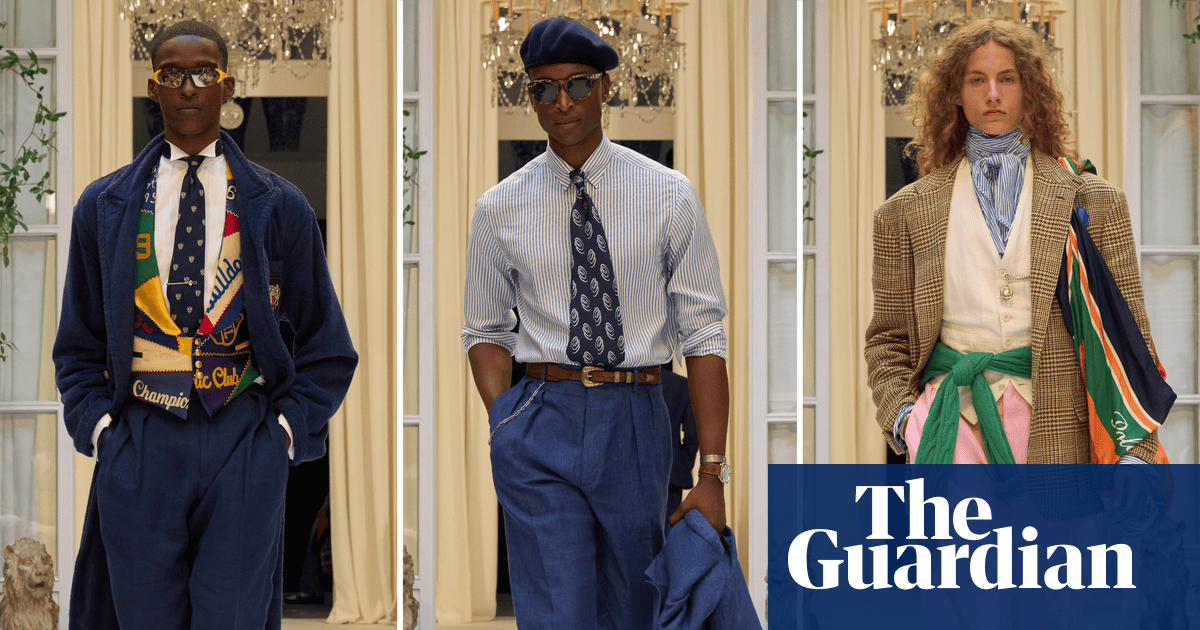
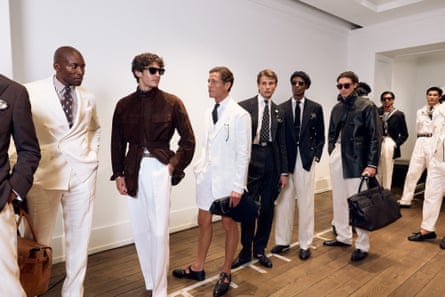
For his second standalone menswear show in Milan, Ralph Lauren reverted to the accessory that launched his empire in 1967 – ties.

Skinny silk ties featuring subtle swirly prints were neatly knotted and used as the finishing touch to elegant pinstripe suits, while more brightly printed or striped cravats were whirled and worn like ties peeking out from under knitwear and rugby shirts.

Elsewhere, ties were used in place of belts; others came wrapped around bags, and even footwear came tied up, with the uppers of espadrille shoes formed of ties that had been spliced together.

For the American fashion house that has become catnip to gen Z, the focus on ties in Friday night’s show was a slick way of appealing to this younger cohort, who have recently discovered both the brand and the accessory for the first time, but without alienating its existing older customers, many of whom are octogenarians like Lauren himself and have been wearing ties since day dot.

While other key players in the fashion industry continue to grapple with a widespread luxury slowdown, Ralph Lauren is enjoying a renaissance. In May, its CEO, Patrice Louvet, announced that sales for the last fiscal year had increased by 15%, with revenue exceeding the $8bn (£6bn) mark for the first time in the company’s history.

While womenswear has been a key focus of this growth, the decision by the brand to join the men’s fashion week schedule in Milan suggests there is further momentum to be found in menswear too. The show that kicked off Milan fashion week on Friday night combined its dapper-driven label Purple with its more accessible Polo brand, which focuses on collegiate style classics.

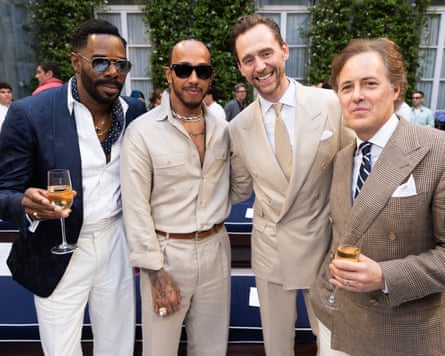
Part of Lauren’s magic is worldbuilding and this time around he transported guests to the golden age of Italian sport. A gleaming 1920s mahogany speedboat plonked in the courtyard of his Milan headquarters – a sprawling palazzo in the capital that Lauren bought in 1999 – greeted guests including the actors Tom Hiddleston and Colman Domingo and the grand prix record-breaker Lewis Hamilton.

Textured knitwear in sea-salt whites, striped shirting in nautical blues along with reversible butter-soft leather jackets lined with cashmere captured a fantasy mood of zipping around Lake Como. Reflective racer sunglasses, deck shoes and squashy tote bags that could be easily stowed onboard added a purposeful touch.

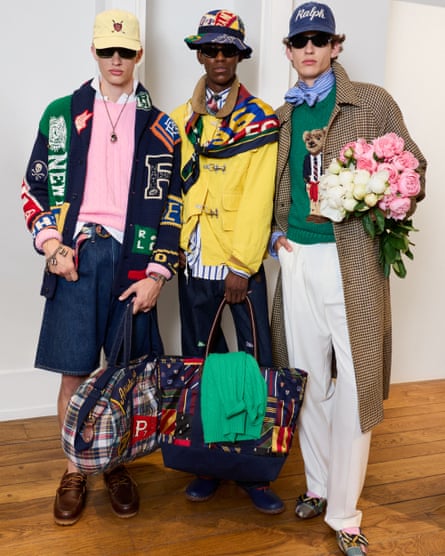
Later came the Polo collection, which Lauren in his show notes described as the “next-generation vision of American prep”. This was luxury through the lens of TikTok fashion fans. For them, much of its aspirational appeal lies in the styling that can be easily riffed on as they rummage around secondhand platforms and shops.

Camo trousers were worn loose and baggy; colourful checked shirts were styled untucked; rugby shirts were patchworked together featuring motifs of flowers and crossbones, while neat blazers clashed with denim speckled with paint or visible mending created by using sashiko embroidery.

‘It’s time for it to end’: Ebon Moss-Bachrach on the final, delicious season of The Bear | The Bear | The Guardian

Keyword – Television & radio
Trefwoorden – The Bear, Ebon Moss-Bachrach, Television, Television & radio, Culture
Title – ‘It’s time for it to end’: Ebon Moss-Bachrach on the final, delicious season of The Bear | The Bear | The Guardian
Author – https://www.theguardian.com/profile/michael-hogan
Link – ‘It’s time for it to end’: Ebon Moss-Bachrach on the final, delicious season of The Bear | The Bear | The Guardian
Publish date – 2026-06-19T12:00:31.000Z
Category – Culture
URL – https://www.theguardian.com/tv-and-radio/2026/jun/19/ebon-moss-bachrach-final-season-the-bear

E bon Moss-Bachrach is currently starring in an acclaimed Broadway production of Dog Day Afternoon, but after he takes his bow, there’s only one thing audience members want to talk about. “Every time I leave through the stage door, there’s a couple of hundred people yelling ‘Cousin!’” he laughs.

That’s his catchphrase as cranky maître d’ Richie Jerimovich in The Bear , of course. And now the culinary comedy-drama is back on the menu. One of the decade’s most influential TV shows is about to return for its fifth and final season. It seems the right time to reflect on how this scrappy creation became a surprise smash hit and cultural sensation.

Saucepan-rattling and speed-chopping on to our screens in 2022, The Bear followed acclaimed haute cuisine chef Carmen “Carmy” Berzatto (Jeremy Allen White) who left behind his career in Michelin-starred restaurants and returned to his home city of Chicago to run his recently deceased brother’s failing sandwich shop, The Original Beef of Chicagoland. Saddled with Mikey’s debts, a chaotic kitchen and sceptical staff, while grappling with his own trauma, Carmy miraculously managed to reverse the family business’s fortunes.

Mikey’s best friend, pugnacious front-of-house manager Richie, was initially resistant but was soon won around. Carmy hired sous chef Sydney (Ayo Edebiri), who was dependable, deadpan and full of thwarted talent. Together they transformed the sandwich joint into a fine-dining destination called The Bear (Carmy’s nickname, short for Berzatto), only for disaster to strike. Throughout it all, perfectionist Carmy vibrated with stress and battled his own demons.

Moss-Bachrach has said he expected The Bear to “slip through the cracks because it’s such a strange, soft-boiled, red-headed stepchild of a show”. When it outperformed Marvel and Star Wars blockbusters on Disney+, White said: “It was just so cool that we could stand alongside these massive TV shows about superpowers and lightsabers. And then there’s us – a show about people trying to make sandwiches together.”

They reckoned without the magical alchemy that saw The Bear catch fire like an unsupervised grill pan. Its script was a symphony of swearing, with naturalistic dialogue delivered by a cracking cast. The fight to keep the eatery afloat gave the plot bingeable momentum. It arrived fully realised, as flavoursome and expertly assembled as a gourmet sandwich.

The Bear felt like an indie movie – which is what creator Christopher Storer originally intended it to be. This newspaper hailed it as “the best workplace drama since Mad Men”, crowning it TV show of the year for two years running. It has scooped more than 100 major awards, including 21 Emmys.

One of those Emmy winners, Moss-Bachrach, was on holiday in Europe when the show launched. He realised The Bear was a hit when it melted the stereotypical French froideur . “I was in Paris and suddenly started getting recognised a lot,” he says. “People were coming up and talking about what they pronounced as ‘Le Beer’. The show is a love letter to Chicago but one of the unexpected beauties is its international appeal. On top of a mountain outside Kyoto, this Korean couple told me how much they love The Bear. It connects through languages, through ages.”

What do fans tend to talk about? “Richie, grief and hotdogs. Most conversations immediately get quite personal. The episode Forks, where Richie rediscovers his sense of purpose, had a powerful effect. I’ve met several people with fork tattoos. I’m less cynical now than I was before The Bear. That’s largely due to strangers sharing so much with me.”

A key ingredient of The Bear is sumptuous cinematography, worthy of Chef’s Table – all high-speed slicing, sizzling pans, basting meat and painstaking plating-up. Jimi Famurewa – the restaurant critic, MasterChef regular and author of award-winning food memoir Picky – wanted to “lick the screen”.

“Like The Pitt, it’s got an element of what’s called ‘competence porn’,” he says. “The Bear is a credible depiction of a particular world where people are brilliant at their jobs. Characters are committed to being great at their chosen vocation, which is hugely appealing. The other similarity to The Pitt, of course, is that it’s an adrenaline-pumping thrill ride. You’re watching people under unbearable stress and feeling that stress yourself. The Bear is masterly at that.”

The show’s impact has been felt in unexpected ways. Storer loosely based it on real-life Chicago eatery Mr Beef, where he’s a regular (and an old schoolmate of owner Christopher Zucchero). Business has been booming since The Bear took TV by storm. Zucchero now sells more than 800 sandwiches daily, triple the previous number. Indeed, sales of Italian beef have soared across the country.

The Bear even enhanced the flavour of our wardrobes. “Chefcore” became a cult fashion trend. Carmy’s signature look sparked style columns about the perfect white T-shirt and saw White become the face of Calvin Klein. “Carmy or Richie became an easy last-minute Halloween costume, too,” laughs Moss-Bachrach. “Throw on an apron, grab a cigarette and you’re good to go.”

An omelette Syd made for Carmy’s pregnant sister Natalie (Abby Elliott) – with Boursin cheese and crumbled ridge-cut crisps – went viral and was widely imitated. The rugged backdrop of Chicago’s River North neighbourhood became a foodie hotspot. “People who care about this stuff have made pilgrimages to the original Mr Beef,” says Famurewa. “They’ve developed strong opinions about Italian deli sandwiches, which are enjoying a period of real popularity.”

The show introduced a whole vocabulary of kitchen lingo. There were shouts of “Yes, chef!” and “Heard!”. Warnings of “Hands!” “Behind!” and “Corner!”. We were instructed to “fire” dishes fast and reminded that “every second counts”. Busy chefs were “in the weeds” due to too many “chits”. Staff sat down to “family meals”, Carmy talked about “non-negotiables”, Mikey (Jon Bernthal) advised him to “let it rip” and Richie called everybody “cousin”, blood relation or not.

It all helped The Bear become a bona fide phenomenon. “Food culture is so pervasive nowadays,” says Famurewa. “Post-Anthony Bourdain, there’s an obsessiveness about finding off-grid recommendations, making your own pasta, doing your own fermentation. The Bear caught that brilliantly. It became shorthand for a particular seriousness about food and a type of gastro-cool. It depicted tortured, tattooed chefs in expensive white T-shirts, keeping their vintage denim in the unused ovens of their homes, having breakdowns under the pressure of producing beautiful food.”

Culinary professionals have praised The Bear for its realistic depiction of the demands of restaurant life. Storer’s sister Courtney, affectionately known on-set as “Coco”, is a chef who serves as executive producer. She’s joined as a culinary consultant by chef turned content creator Matty Matheson, who also plays endearingly eccentric handyman Neil Fak. “I do think The Bear is fairly accurate,” says Moss-Bachrach. “I hear a lot of people say: ‘My wife can’t watch because she’s a chef and finds it too triggering!’ It was important to Chris and Coco to make it authentic, rather than some Hollywood imitation of a restaurant. They wanted to honour people in the service community and the restaurant world.”

White, Edebiri, Lionel Boyce (who plays pastry chef Marcus) and Liza Colón-Zayash (line cook Tina) trained for their roles with crash courses at culinary institutes. “I haven’t learned anything,” says Moss-Bachrach. “The extent of my culinary experience is being a caterer for two months until I got fired for dropping the salad on a woman. All I got on The Bear was strong fingers from polishing forks.”

Packed with star-making performances, The Bear propelled everyone’s careers to another level. White became “the internet’s boyfriend” and landed his first leading film role in Springsteen biopic Deliver Me from Nowhere. He’s about to star in The Social Reckoning, Aaron Sorkin’s sequel to The Social Network. Boyce recently went stellar in Project Hail Mary. Edebiri is also in hot Hollywood demand, while Moss-Bachrach has played The Thing in three Marvel movies. “The Bear has been a game-changer for me, without doubt,” he says.

These regulars have been bolstered by guest stars of the calibre of Jamie Lee Curtis, Bob Odenkirk, Sarah Paulson, John Mulaney, Josh Hartnett, John Cena, Molly Ringwald and Brie Larson. British presence is added by Will Poulter and Olivia Colman.

As its four seasons progressed, The Bear ventured beyond the kitchen. Characters’ backstories were traced through bottle episodes and flashbacks. There was a near-wordless instalment and an intense one-shot episode where a rave review sent takeaway orders into overdrive and sparked a staff meltdown. “You didn’t draw breath for the whole 21 minutes,” says Famurewa. “That was the moment when I was like: ‘Oh my God, this show is incredible.’”

As episodes grew longer, some accused The Bear of losing its bite. Given its chewy themes of death and workplace dysfunction, it became hotly debated whether it was comedy or drama. It’s arguably best categorised as a genre-bender in the vein of Donald Glover’s Atlanta or Lena Dunham’s Girls – in which Moss-Bachrach also appeared as hipster musician Desi. “There’s creative freedom in both shows,” he says. “They play with form and subvert expectations. I also think both are very funny. The Bear makes me laugh a lot.”

The farewell season was teased by a standalone special , released without warning last month, written by Moss-Bachrach and Bernthal, and focusing solely on their characters. The prequel, named Gary, followed Richie and Mikey on an eventful road trip across state lines to Indiana. “We wanted to see the love between these two grown men and feel the joy of their bond,” says Moss-Bachrach. “I’m always interested in male friendship, partly to repair some of the weird masculinity that’s become so pervasive.”

As The Bear packs away its Japanese knives, hangs up its chef’s whites and prepares for its final sitting, it closes a five-year chapter for Moss-Bachrach. “I care about Richie a lot,” he says wistfully. “He’s a big, loud cocktail of a person. He’s ridiculous and frustrating, sure, but I also think he’s misunderstood and right a lot of the time. It’s truly been the time of my life getting to play this guy. I’ll miss walking in those Adidas high tops.”

The eight-part swansong picks up the morning after Richie, Syd and Nat made the shock discovery that Carmy has quit the food industry, leaving the restaurant to them. With debts spiralling, suppliers cutting off deliveries, the building being sold and a torrential storm flooding the kitchen, the new partners must unite to pull off one last service, hoping to earn a coveted Michelin star at last. In the process, they learn that restaurants aren’t about the food but the people. As Richie says: “We have no money but we have each other and nothing left to lose.”

The signs are that The Bear is back to its delicious best. Now it needs to stick the landing. “As much as I’ve loved making the show, it’s time for it to end,” says Moss-Bachrach. “It finishes on its own terms in a strong, in-character way. Everybody is taken care of story-wise. I’m dumbly proud of it. I hope viewers feel the same satisfaction I do.” Yes, chef. Heard.

The Bear season five is on Disney+ from 26 June .

A losing streak? Makerfield shows mounting dangers for Nigel Farage | Makerfield byelection | The Guardian

Keyword – Politics
Trefwoorden – Makerfield byelection, Nigel Farage, Reform UK, Restore Britain, Politics, UK news
Title – A losing streak? Makerfield shows mounting dangers for Nigel Farage | Makerfield byelection | The Guardian
Author – https://www.theguardian.com/profile/peterwalker
Link – A losing streak? Makerfield shows mounting dangers for Nigel Farage | Makerfield byelection | The Guardian
Publish date – 2026-06-19T16:13:42.000Z
Category – News
URL – https://www.theguardian.com/politics/2026/jun/19/nigel-farage-reform-makerfield-byelection

As those around Nigel Farage are fond of pointing out, Reform UK has now led in more than 300 consecutive national polls. When it comes to byelections, though, it is fair to say the party’s results are more mixed.

Yes, Robert Kenyon came second in Makerfield to a popular regional mayor backed by a Labour campaign so relentless that the main risk was annoying voters by knocking too often on their doors. Kenyon also increased his and Reform’s share of the vote from the 2024 general election.

This, though, was a seat so demographically Reform-friendly that some pundits warned Andy Burnham was taking a big risk using it as his vehicle for a return to Westminster. In that context, as Farage himself said on Friday morning, Makerfield was a disappointment.

The larger danger is that it could become a trend. Of the five byelections held since the general election in 2024, Reform has only won a single seat, last year in Runcorn and Helsby – and that by precisely six votes.

The two byelections held in Scotland on Thursday were never on Farage’s agenda. But Makerfield comes four months after Reform also came a distant second in Gorton and Denton , that time to the Greens.

Both seats are in Greater Manchester, if politically and demographically very different. But they arguably contain some of the same lessons for Reform, including the importance of selecting the right candidate.

In Gorton and Denton, the party put its faith in Matthew Goodwin, a former academic who is very popular in hard-right social media circles but whose often peevish and prickly demeanour and St Albans vowels contrasted with the cheery positivity of the Green candidate – now MP – Hannah Spencer, a local plumber.

For Makerfield, the choice seemed easy. Kenyon is also a plumber, also local, and had even been an army reservist. The problem for Reform was that he had also been a hugely prolific online poster .

Journalists and activists for other parties pored over his X accounts, plus comments on a now-defunct rugby league message board, finding scepticism for vaccines, strong support for Donald Trump and – most damaging of all – some excruciatingly crude comments about women.

As well as openly saying he was a sexist and calling abortion “cowardly”, Kenyon was very publicly called out by Carol Vorderman after it emerged he had emphatically endorsed another poster’s lewd remarks about her, an incident Reform insiders acknowledged had put off a number of female voters.

Another lesson is how Reform is vulnerable to tactical voting. In Makerfield and Gorton and Denton, the parties seen as not in the race were squeezed massively, with anecdotal canvassing evidence suggesting many of these votes were going to whoever was seen as more likely to wipe the grin off Farage’s face.

Makerfield also had a message of its own for Reform: that it now faces a competitor on its right flank. Rupert Lowe’s Restore Britain , not even registered as a party by the time of the Gorton and Denton byelection, took 7% of the vote, less than Restore supporters had predicted but enough, if replicated nationally in a general election, to cost Farage dozens of seats.

For all that it disparages Lowe, Reform is spooked by its former MP’s rise as an openly far-right largely online phenomenon. The valuable support he gets from Elon Musk, X’s owner and the curator of what millions of Britons see in their social media feeds, only makes it more worrying.

The result has been apparent in a notable shift by Farage and his colleagues to the nativist right, particularly the decision to use the case of Henry Nowak to argue that the UK is now institutionally biased against white people.

With this comes danger. Farage has for years maintained what he describes as a firewall between his parties and thuggish far-right types such as Tommy Robinson. Every speech about “two-tier Britain” or “British workers first” risks undermining this.

If Restore threatens to do to Reform what Farage’s various parties have done over the years to the Conservatives – shift them on to his turf – he has been hampered in his ability to fight back in recent weeks.

Farage’s previously regular press conferences have all but dried up since news emerged about the £5m gift he received before the general election. He has appeared to avoid answering questions about a subject that some people in Makerfield said had made them think twice about voting Reform.

Some pundits believe Reform’s message, even now, could have a national ceiling of about 30%. A confirmed shift towards Lowe or Robinson territory might see that drop. Farage is experienced enough a politician to not panic. He will need all that experience now.

Reform investigates whether Makerfield candidate’s sexist posts were costly | Makerfield byelection | The Guardian

Keyword – Politics
Trefwoorden – Makerfield byelection, Nigel Farage, Reform UK, Restore Britain, Far right, Andy Burnham, Greater Manchester, Byelections, Politics, North of England, UK news
Title – Reform investigates whether Makerfield candidate’s sexist posts were costly | Makerfield byelection | The Guardian
Author – https://www.theguardian.com/profile/peterwalker,https://www.theguardian.com/profile/benquinn
Link – Reform investigates whether Makerfield candidate’s sexist posts were costly | Makerfield byelection | The Guardian
Publish date – 2026-06-19T15:07:21.000Z
Category – News
URL – https://www.theguardian.com/politics/2026/jun/19/nigel-farage-urges-restore-voters-to-back-reform-after-disappointing-night-in-makerfield

Reform UK is examining whether sexist comments by its candidate in the Makerfield byelection may have harmed the party’s chances, after Nigel Farage accepted the result had disappointed him.

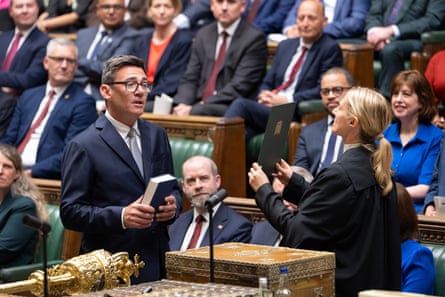
The party’s examination of its defeat comes after Andy Burnham won 55% of the vote share in a poll that Reform hoped would be a tightly fought battle between the Labour leadership hopeful and its own candidate, Robert Kenyon, a local plumber.

Canvassers from different parties reported that voters highlighted sexist and lewd social media posts by Kenyon, which emerged during the campaign, with women in particular saying they were put off by them.

After Kenyon came more than 9,000 votes behind Burnham in Thursday’s vote , one Reform activist said the party had advised the candidate not to apologise for the comments. “That’s something that was not his fault, it was how he was advised,” they said.

The issue rose to prominence when the TV presenter Carol Vorderman used a video posted online to demand an apology from Kenyon, after it emerged he had joined in a graphic discussion about her, in since-deleted posts.

“I will admit that the Vorderman stuff did not help us,” another Reform source said.

Farage’s party has pointed to the scale of the task it faced taking on as well-known a figure as Burnham, even in a seat demographically more favourable to Reform than Labour, saying Kenyon performed well to increase his share of the vote from 2024, even by just 2.7 percentage points.

The party was also slightly buoyed by Rupert Lowe’s far-right Restore UK taking just under 7% of the vote, less than some forecasts had predicted.

In a video message posted on X on Friday morning, Farage urged people who voted for Restore to back Reform instead, saying it was the only viable contender on the right of UK politics.

The result had been “a dramatic, emphatic win for Andy Burnham”, Farage said in the message.

Reform had hoped to win at least 18,000 votes, against the 15,696 it achieved, Farage said, arguing that his party had been “slightly hoist with our own petard” in taking on a Labour challenger whose implicit message had been that a vote for him was a vote to remove Keir Starmer, which was Reform’s slogan in May’s local election.

Burnham’s personal standing in Greater Manchester , where he has been mayor since 2017, appeared to be more of a factor, as well as the comments by Kenyon, who did not apologise but sought to present them as showing he was an ordinary person rather than a professional politician.

Despite Restore’s modest showing, Farage will be concerned to have lost some votes to a party whose talk of mass deportations and at times openly racist rhetoric has seemingly nudged Reform into taking a more hard-right and nativist approach in recent weeks.

Farage addressed those who voted Restore in his message: “I would say directly to them: what do you want? We are the challenger party to the left in this country, and I would urge you to think again, I really, really would.”

Reform was, he insisted, “still the big national party on the centre right”, saying that despite the Conservative win in the Aberdeen South byelection , also held on Thursday, Kemi Badenoch’s party remained uncompetitive in large parts of the UK.

He ended his message: “A disappointing morning, but we keep going.”

Faced with the threat from Restore Britain , a predominantly online phenomenon, where Lowe’s anti-immigrant messages have been amplified by Elon Musk, the owner of X, who supports Restore, Farage has started pushing Reform on to more hard-right turf.

In the wake of the case of Henry Nowak, the student who was handcuffed by police as he lay dying from a stab wound after his killer told officers Nowak had assaulted him in a racist attack, Farage has argued repeatedly that white people in the UK face the most racism in what he calls a “two-tier state”.

Reform’s migration policy has also become more hardline, and now also targets EU nationals with settled status, some of whom have lived in the UK for decades.

Under planned Reform policies, EU nationals would be among people barred from living in social housing, and employing them would become notably more expensive for companies.