USA go supersonic in Seattle and Morocco squeeze past Scotland – World Cup Daily | Football | The Guardian

Keyword – Football
Trefwoorden – Football, World Cup 2026, World Cup, Sport
Title – USA go supersonic in Seattle and Morocco squeeze past Scotland – World Cup Daily | Football | The Guardian
Author – Max Rushden
Link – USA go supersonic in Seattle and Morocco squeeze past Scotland – World Cup Daily | Football | The Guardian
Publish date – 2026-06-20T07:40:20.000Z
Category – Sport
URL – https://www.theguardian.com/football/audio/2026/jun/20/usa-supersonic-seattle-morocco-squeeze-past-scotland-world-cup-daily-podcast

Rate, review, share on Apple Podcasts and join the conversation on email .

On the podcast today: Morocco scored a very early, very brilliant goal against Scotland and for the first 20 minutes it looked like they may blow them away. But an improved second-half performance, and with a bit of luck, they could have nicked a point at the end. Calculators out as we try to figure out the results they need to still make the knockouts.

Elsewhere; another excellent performance from the US, this time beating Australia 2-0. It’s the first time they’ve won their opening two games at a men’s World Cup . They stormed out of the blocks and the Aussies couldn’t cope, even with Christian Pulisic sidelined. The panel ponder whether they the real deal.

Plus Brazil make relatively light work of Haiti, who put up a spirited performance but become the first side to be eliminated. Tomorrow’s games are previewed and your questions answered.

Support the Guardian here .

You can also find Football Weekly on Instagram , TikTok, and YouTube .

The Guardian view on John Williams and Steven Spielberg: a partnership that changed cinema | Editorial | The Guardian

Keyword – Opinion
Trefwoorden – Film, Culture, Steven Spielberg, John Williams, Music, Oscars, Awards and prizes
Title – The Guardian view on John Williams and Steven Spielberg: a partnership that changed cinema | Editorial | The Guardian
Author – https://www.theguardian.com/profile/editorial
Link – The Guardian view on John Williams and Steven Spielberg: a partnership that changed cinema | Editorial | The Guardian
Publish date – 2026-06-19T16:56:18.000Z
Category – Opinion
URL – https://www.theguardian.com/commentisfree/2026/jun/19/the-guardian-view-on-john-williams-and-steven-spielberg-a-partnership-that-changed-cinema

W hich living artist has been nominated most times for an Oscar? The answer isn’t Steven Spielberg (with 24 nominations), but his long-term collaborator composer John Williams, with a record 54. The Fabelmans , Spielberg’s most personal film, seemed a fitting finale for the duo in 2022. But Spielberg persuaded Williams, now 94, to write the music for his latest sci-fi blockbuster Disclosure Day , their 30th film together.

Williams has worked with other directors, creating scores for era-defining franchises from George Lucas’s Star Wars (who would Darth Vader be without The Imperial March ?) to Harry Potter. But it is his partnership of more than 50 years with Spielberg that has changed cinema history, with hits including Jaws, E.T., Raiders of the Lost Ark, Jurassic Park and Schindler’s List. “John Williams has been the single most significant contributor to my success as a film‑maker,” Spielberg has said .

Jedi, dinosaurs, wizards and now extraterrestrials in the form of animals – Williams has spent decades making alien worlds believable, while the haunting melodies for Spielberg’s Schindler’s List and Saving Private Ryan make history devastatingly personal. From the two-note ostinato of Jaws to the operatic flute solo in Harry Potter and the Prisoner of Azkaban – so difficult that it is used in orchestra auditions – his work is as far‑ranging technically as thematically.

His music has been performed everywhere from Glastonbury to the Proms, and played by leading orchestras around the world. But the composer is dismissive of his work as high art. “I never liked film music very much,” he told his biographer Tim Greiving last year, calling the idea that it should be performed in concert halls alongside classical masterpieces “a mistaken notion”.

In the golden age of Hollywood, composers such as Prokofiev, Shostakovich and Britten were as revered as the directors. Eisenstein edited sequences to suit Prokofiev’s score. Today they have to compete for the audience’s attention. “The music has to cut through this noise of effects,” Williams has said . “The tunes need to speak probably in a matter of seconds.” The first few bars of his scores are instantly recognisable, yet he is not a household name as Spielberg is.

No one understands the relationship between images and sound better than Williams. His music can provoke a visceral response from a clear blue sea. His scores provided a soundtrack for a generation. He taught us what terror sounds like (two repeating notes – E and F). Whose heart didn’t thump before the shark appears, or soar as the BMXs take flight in E.T ., or break from the first violin strains of the Schindler’s List theme (Spielberg’s favourite in Williams’s oeuvre)?

In Disclosure Day, CGI has replaced the mechanical puppet of Jaws. But no technology can replicate the creative force of two extraordinary talents coming together. For three decades, Spielberg and Williams have urged us to consider the possibility that there might be something bigger than us out there. They have inspired fear and joy. Together, they have allowed us to believe the impossible, to make a leap of imagination and empathy. Disclosure Day might be their last film together. At a time when both film and music are under threat from artificial intelligence, their legacy is a reminder of the magic of collaboration. As one of the characters in The Fabelmans says: “Movies are dreams that you never forget.”

Do you have an opinion on the issues raised in this article? If you would like to submit a response of up to 300 words by email to be considered for publication in our letters section, please click here .

Starmer has ‘absolutely no authority’, says Labour peer as pressure grows on PM to step aside for Burnham – UK politics live | Politics | The Guardian

Keyword – Politics
Trefwoorden – Politics, UK news, Labour, Andy Burnham, Keir Starmer, Makerfield byelection, Labour party leadership
Title – Starmer has ‘absolutely no authority’, says Labour peer as pressure grows on PM to step aside for Burnham – UK politics live | Politics | The Guardian
Author – https://www.theguardian.com/profile/taz-ali,https://www.theguardian.com/profile/gabyhinsliff,https://www.theguardian.com/profile/jessica-elgot,https://www.theguardian.com/profile/peterwalker,https://www.theguardian.com/profile/morwennaferrier,https://www.theguardian.com/profile/kiran-stacey
Link – Starmer has ‘absolutely no authority’, says Labour peer as pressure grows on PM to step aside for Burnham – UK politics live | Politics | The Guardian
Publish date – 2026-06-20T11:10:21.000Z
Category – News
URL – https://www.theguardian.com/politics/live/2026/jun/20/keir-starmer-andy-burnham-labour-leadership-makerfield-byelection-uk-politics-latest-news

Starmer has ‘absolutely no authority,’ says Labour peer

Labour peer Charlie Falconer said Keir Starmer has “absolutely no authority” because “everybody assumes” Andy Burnham will challenge for the leadership and is likely to win.

Falconer, who served in the cabinet under Tony Blair, told BBC Radio 4’s Today programme that Starmer could have “at most weeks to go”, leaving him unable to effectively control his cabinet, command the Commons or deal with allies or opponents.

Comment: Burnham has shown that he can win. But can he govern?

Having literally campaigned in poetry, the new Makerfield MP needs a summer of knuckling down to the small print, writes Gaby Hinsliff:

By the end, it had become less a byelection, more a mythical quest. Whoever could draw the sword from Makerfield’s stone – or more prosaically, beat Reform in a seat where it practically swept the board in last month’s local elections – would claim the divine right to rule the Labour party. And lo, on Friday morning, Andy Burnham became the chosen one.

He carries the magic shield of not being from Westminster – though that won’t last, obviously – plus the easy warmth with people that Keir Starmer lacks, and the rare ability to generate excitement in politics. Reform is beatable, and the sun shines brighter for knowing that. A third successive defeat for Nigel Farage in a winnable byelection, after losing Caerphilly to Plaid Cymru and Gorton and Denton to the Greens, suggests a trend, not a fluke.

Less obviously, Burnham’s good-natured campaign also helped the country see another side of places like Makerfield, beyond the day drinkers furnishing visiting journalists with blood-curdling quotes; a side where the Reform candidate’s sexist comments still hurt him and people with tough lives might still give a mainstream politician a chance. Another future is still possible. But only if Burnham shows he can genuinely govern as well as win.

For Starmer was a winner two summers ago, swept to victory on similarly heady but vague promises of change – and look at him now. The last loyalists began peeling away shortly after John Healey’s shock resignation as defence secretary, over yet another prime ministerial failure to take a decision. It’s over for Starmer, essentially. Barring a currently unlikely rush among Labour MPs to embrace Wes Streeting, the question now is how to bridge the gap until Burnham is ready. For turning the kind of post-industrial, leftwing populism that worked in Makerfield into a coherent national project will take some work.

Read on here:

A losing streak? Makerfield shows mounting dangers for Nigel Farage

From Restore and tactical voting to questions over that £5m gift, the Reform leader faces challenges on several fronts, writes senior political correspondent Peter Walker.

As those around Nigel Farage are fond of pointing out, Reform UK has now led in more than 300 consecutive national polls. When it comes to byelections, though, it is fair to say the party’s results are more mixed.

Yes, Robert Kenyon came second in Makerfield to a popular regional mayor backed by a Labour campaign so relentless that the main risk was annoying voters by knocking too often on their doors. Kenyon also increased his and Reform’s share of the vote from the 2024 general election.

This, though, was a seat so demographically Reform-friendly that some pundits warned Andy Burnham was taking a big risk using it as his vehicle for a return to Westminster. In that context, as Farage himself said on Friday morning, Makerfield was a disappointment.

The larger danger is that it could become a trend. Of the five byelections held since the general election in 2024, Reform has only won a single seat, last year in Runcorn and Helsby – and that by precisely six votes.

Read more of Peter’s analysis here:

A pro-Starmer memo circulating among loyalist MPs shows the attack arguments the prime minister and his team would be likely to make in a leadership campaign.

The memo, seen by the Guardian, says: “[Burnham] hasn’t faced any real scrutiny yet. A true contest would expose him to questions that he hasn’t ever before had to answer and likely see his support wane as a result.”

It argues that in polling terms “the trajectory for AB has not been positive”, with his favourability dropping, and “the membership can change their view”.

The existence of a memo drafted by allies of Keir Starmer reveals that his preparations for a contest are under way but also underlines the risks of a wounding civil war within the party with each side trying to expose the other.

Read more:

Reform UK is examining whether sexist comments by its candidate in the Makerfield byelection may have harmed the party’s chances, after Nigel Farage accepted the result had disappointed him.

The party’s examination of its defeat comes after Andy Burnham won 55% of the vote share in a poll that Reform hoped would be a tightly fought battle between the Labour leadership hopeful and its own candidate, Robert Kenyon, a local plumber.

Canvassers from different parties reported that voters highlighted sexist and lewd social media posts by Kenyon, which emerged during the campaign, with women in particular saying they were put off by them.

After Kenyon came more than 9,000 votes behind Burnham in Thursday’s vote , one Reform activist said the party had advised the candidate not to apologise for the comments. “That’s something that was not his fault, it was how he was advised,” they said.

Read more:

When asked whether Starmer should compete in a leadership competition, Falconer said: “My advice, sadly, would be: don’t stand.

“The reason it would be ‘don’t stand’ is because if you stand, it is likely there would then be a difficult leadership battle in which the two leadership candidates would try to undermine each other.

“That would be bad for the country.”

Starmer has ‘absolutely no authority,’ says Labour peer

Labour peer Charlie Falconer said Keir Starmer has “absolutely no authority” because “everybody assumes” Andy Burnham will challenge for the leadership and is likely to win.

Falconer, who served in the cabinet under Tony Blair, told BBC Radio 4’s Today programme that Starmer could have “at most weeks to go”, leaving him unable to effectively control his cabinet, command the Commons or deal with allies or opponents.

Beccy Cooper, Labour MP for Worthing West backing Andy Burnham , said he is “not the messiah” and insisted that “this doesn’t rest just on one person”.

Speaking to Times Radio, she argued that a Burnham-led government would “still be a Labour government” and would stick to the party’s manifesto because “that’s what people voted for”.

She said a leadership contest involving Keir Starmer “is not actually going to benefit our country or the party in the long term”, while adding that she does not “necessarily want a coronation” for Burnham and would like a new leader in place before the Labour conference in September.

Burnham has shown he can beat Reform and deserves chance to make his case for leadership, says Phillips

Jess Phillips, who quit as safeguarding minister last month , said Andy Burnham has “proved his hypothesis” that he could beat Reform in a constituency where many expected Reform to do very well.

“He beat off Reform absolutely soundly in an area that absolutely should have been delivered to Reform and if anyone else had stood there, we would not be having this conversation now,” she told BBC Radio 4’s Today programme.

“I think he has earned the right to come and make his case to the parliamentary Labour party.”

Birmingham Yardley MP, who previously backed Wes Streeting for the leadership position, said she was looking forward to Burnham arriving in Westminster on Monday and seeing prospective candidates of a leadership contest “setting out their stall”.

But she added: “It would be much better if this wasn’t protracted and didn’t go on for a long time.”

‘Within 10 mins, Andy had nicked it’: illustrator on his ubiquitous image of Andy Burnham

It was shortly after Andy Burnham’s famously rousing speech outside the Manchester Central Library in October 2020 that Stanley Chow decided to draw him. Or rather his wife did.

“It was the pandemic and we were all so down in the dumps at that point,” says the illustrator, speaking from his home in the city this week. But I remember looking around and he had just moved everyone.

“He was already a good mayor, but at that point we all thought: ‘Oh shit, he’s really good.’ And then my wife goes: you should draw Andy.”

So he did, using his preferred medium, Adobe Illustrator. “I put it on Twitter and within 10 mins, Andy had nicked it.”

Burnham initially used the image for his Twitter handle, but it has since appeared on billboards, beer mats, mugs, aprons and record inlays, becoming a visual proxy for both his mayoral campaigns and more recent campaigning in Makerfield.

With his spot-on light scowl and navy/black attire, the image has become shorthand for Burnham’s anti-establishment sentiment. “There is no tie, no,” says Chow, 51.

After its initial use, Burnham said he was “grateful to Stan for making me look cooler than I am”.

Read more:

What will ‘change’ look like if Andy Burnham becomes prime minister?

Andy Burnham’s victory in Makerfield sets up a battle for Downing Street. Allies of the outgoing Greater Manchester mayor want him to be installed as prime minister as quickly and painlessly as possible, while those close to Keir Starmer want the Labour leader to fight on.

If he does become prime minister, Burnham will be expected to deliver on the “change” he promised after his win on Thursday night. But what would that look like, and what policies would his government be likely to pursue?

The Guardian’s policy editor, Kiran Stacey, explains:

Starmer under pressure to agree to a timetable to relinquish power

Keir Starmer is facing growing pressure from cabinet ministers and MPs to avoid a bruising leadership battle and instead set a timetable to hand power to Andy Burnham, who won a resounding majority in the Makerfield byelection .

The prime minister pledged to fight to keep his job, but ministers loyal to Starmer have urged him to set out plans to step down over the weekend.

Weakened by collapsing poll numbers and a string of local election losses, one cabinet minister – who has not previously told the prime minister to go – said Starmer’s departure was now inevitable.

A leadership challenge requires the formal backing of at least 81 Labour MPs, but, as my colleagues Jessica Elgot and Rowena Mason write in their report, one MP said they believed there were about 200 Labour MPs prepared, if necessary, to sign Burnham’s nomination papers.

Jessica and Rowena wrote:

Starmer called members of the cabinet on Friday afternoon to set out his determination to fight on. The transport secretary, Heidi Alexander, is said by sources to be among those who expressed concerns in a call on Friday.

At least two ministers, Ed Miliband and Shabana Mahmood, have previously suggested to Starmer that he should set out a timetable for his departure.

Other ministers are expected to press Starmer on whether fighting a leadership contest would be wise. Another cabinet source said: “Everyone thinks it is over and everyone wants it to be a dignified, orderly exit.”

Supporters of Wes Streeting, the former health secretary, who has said it is also his intention to challenge Starmer, are being urged by Burnham allies not to launch a competing bid and for the party to unite behind a single successor.

Read the full report here:

We’ll bring you the latest political updates throughout the day…

Elliot Anderson is England’s spirit animal – and is now indispensable | England | The Guardian

Keyword – Football
Trefwoorden – England, World Cup 2026, World Cup, Football, Sport
Title – Elliot Anderson is England’s spirit animal – and is now indispensable | England | The Guardian
Author – https://www.theguardian.com/profile/jonathan-liew
Link – Elliot Anderson is England’s spirit animal – and is now indispensable | England | The Guardian
Publish date – 2026-06-19T18:00:38.000Z
Category – Sport
URL – https://www.theguardian.com/football/2026/jun/19/elliot-anderson-is-englands-spirit-animal-and-is-now-indispensable

E lliot Anderson is running. It’s the 88th minute against Croatia, and the game is won, and the game is done, and this is the 60th game of his season and there are deeper challenges to come. But as long as the ball is loose, he’s going to chase it down: first Josip Sutalo and then Josko Gvardiol, a simple recycling of defensive possession rapidly mutating into an unpleasant ordeal. As the ball is worked across defence, Anderson single-handedly follows it all the way across the pitch, over to the far touchline, where he eventually forces a rushed pass and a turnover of possession.

And in an opening win defined by mood swings and tectonic shifts, in a team savouring the wealth of options and contingencies at its disposal, it’s worth dwelling on just how quickly Anderson has become indispensable. Declan Rice is carrying a knock and looks a little short of gas . Harry Kane will almost certainly not have the legs to play eight full games plus extra time. The wingers, the centre-half pairing, the full-backs are not yet set in stone. Beyond Jordan Pickford, virtually every area of this team is operating in a kind of managed flux.

In the midst of which Anderson has assumed the role of its spirit animal, its mathematical constant, its barometer, the reliable rock to which – for better and worse – England’s fate over the coming weeks will be inescapably yoked. In short, if you want to know how England are doing in the coming weeks, you basically just need to watch him. Central to Anderson’s role, paradoxically, is the fact that it is not always a central role. Indeed, if you look at his heat map from the Croatia game the most striking element was how much of it he spent in wide areas: linking play with the full-backs, creating overloads and triangles, playing the first-time long ball over the top that appears to be a specific and very deliberate tactic.

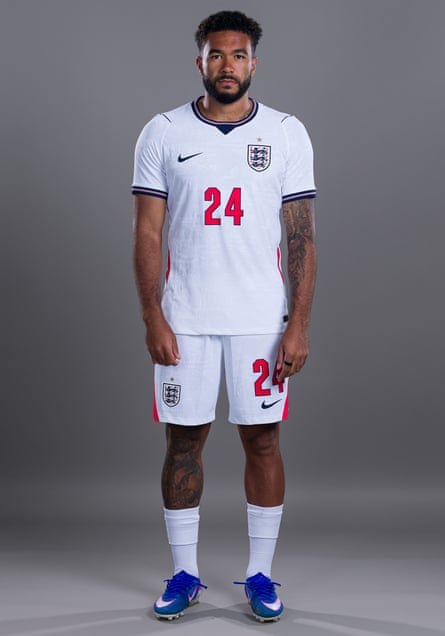
In essence, it works like this: Reece James gets the ball on the right touchline. Draws the pressure from the opposing winger. Retreats towards his own goal, waits for Anderson to run towards him, and then plays a little sideways pass inside. Anderson then launches it first touch, rugby-style, into the right channel for one of the forward runners to chase. A simple move, but one that requires coordination, the physical strength to hold off the challenge, and a clean ball contact. Done right, it successfully provokes the opposition press, drags them out of position, forces them to turn and run.

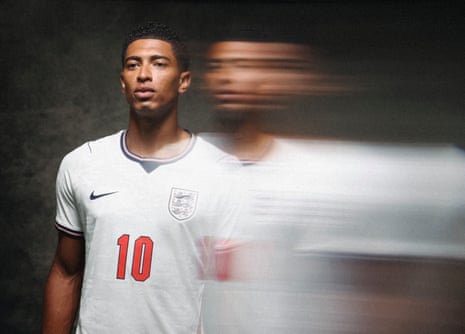
In the 36th minute, we got a glimpse of what happens when it’s not done right. Anderson fluffed his lofted pass, Croatia won back possession and a few seconds later Martin Baturina had equalised. But then, shortly after half-time, the same move worked to perfection: James inside to Anderson, Anderson first-time up the touchline, and with the Croatia defence scrambling Jude Bellingham converted beautifully.

Even here there are caveats to offer. Anderson’s pass was almost intercepted by Gvardiol, and probably intended for Noni Madueke rather than Bellingham in any case. Clearly, Thomas Tuchel has drilled this move in advance against teams enterprising enough to press England high. But what happens against opponents who either do not press, or press better than Croatia, or who are wise to the tactic and lurk in ambush?


And really, these are questions that strike at the broader theme of what Anderson’s function in this team should really be, how best to use a player who in terms of skill set may well be one of the complete young midfielders English football has ever seen at his age. Anderson can genuinely do it all: pass, tackle, screen, jockey, cross, shoot. He’s good in the air, strong in duels, delivers a mean set piece, will quite literally run all day. Is there a realistic role in this team that does not, in some way, sell him short?

Curiously, as the game opened out in the second half we got an answer of sorts. Rice went off; first Bellingham and then James slotted in to replace him; Anderson moved over from the right side of midfield to the left. As a right-footer, the first-time ball over the top from Nico O’Reilly was no longer an option. But instead, he offered much more of an individual threat. He bombed on into the area. He pressed much higher than in the first half. Partly, of course, this was a shift dictated by the momentum of the game. But it was a reminder, if anyone ever needed it, that this is a midfielder with so many different tools to his game.
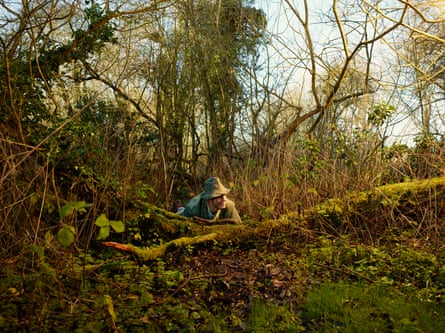
It was interesting to watch an interview Anderson did with the BBC last month, in which he explained how his role has evolved since his days as a winger or No 10 at the Newcastle academy, and how he sees his role on the pitch now. “Six or eight, I really don’t care,” he said. “Getting on the ball and finding the attacking players, getting them the ball early in the pockets and letting them do their stuff.”

This is, of course, why Tuchel adores him: the ability to take the ball, ride the challenge, move it on early and forwards. All the same, it is worth asking whether punting long balls up the channels is in fact the best use of him. In hotter conditions, against the weaker opponents who will sit back, and the stronger opponents who will try to dominate midfield, where poise and control of the ball will be critical, England will need to show different sides to their game, measure the risk and reward a little more judiciously.

Ultimately, this comes down to an assertion of principle. Do you want to keep the ball in midfield, or get it out of there as quickly as possible? And in the deployment of Bellingham and James to replace Rice in the second half, the decision to leave Kobbie Mainoo on the bench and Adam Wharton at home, Tuchel has made his priorities subtly clear. He appears less concerned with midfield control than midfield mobility, as preoccupied with physical resilience as technical ability.

Anderson can do it all. But sometimes being able to do it all can be a double-edged sword. The roads are littered with prodigious young midfielders who seemed destined to rule the world and eventually had to settle for being quite good: Eduardo Camavinga, Saúl Ñíguez, Rúben Neves. Even Gavi and Warren Zaïre-Emery, now 21 and 20, have already lived through at least one cycle of boom and bust, struggled to reconcile their developing game with the explosion of teenage hype they inspired.

Anderson is 23, but a comparatively late developer with just two seasons of regular top-flight football and one major tournament game behind him. Already, Manchester City are circling and a nine-figure transfer feels inevitable. This is a player about to arrive in a very big way . And perhaps this is what makes him so compelling to watch right now. You know that on some level he must still be raw and fragile, and yet he never really looks it. You know that his importance is colossal, and yet he never seems fazed by it. You know at some point he will have to stop running. And yet, what if he never does?

ITV wins World Cup ratings battle with BBC in tournament’s first week | World Cup 2026 | The Guardian

Keyword – Football
Trefwoorden – World Cup 2026, ITV, BBC, Football, Media, Sport, World Cup, Sports rights, Sport TV, Television, Television & radio, Culture
Title – ITV wins World Cup ratings battle with BBC in tournament’s first week | World Cup 2026 | The Guardian
Author – https://www.theguardian.com/profile/matthughes
Link – ITV wins World Cup ratings battle with BBC in tournament’s first week | World Cup 2026 | The Guardian
Publish date – 2026-06-19T10:53:56.000Z
Category – Sport
URL – https://www.theguardian.com/football/2026/jun/19/itv-wins-world-cup-ratings-battle-bbc-first-week-england-croatia

ITV is winning the UK television ratings battle after the first week of the World Cup. Viewing figures from Barb (the Broadcasters’ Audience Research Board) show the channel had four of the five highest TV audiences, topped by England’s 4-2 win over Croatia on Wednesday.

England’s victory in Dallas attracted a peak audience of 15.4 million on ITV and an average of more than 10 million, the highest UK TV viewing figures of the year.

ITV also had the second-highest viewing figures on TV of the first round of group games, with the opening match between Mexico and South Africa attracting a peak audience of 7.7 million and a match average of 6.6 million.

BBC’s live coverage of France v Senegal on Tuesday had a peak audience of 6.7 million and match average of 5.9 million. ITV’s coverage of Spain v Cape Verde and the Netherlands v Japan completed the top five, with peak audiences of 6.1 million and 6 million respectively.

The Barb figures include those watching on main channels and streaming services through a television, but not those watching on a laptop or a mobile phone. When viewers watching the BBC stream on laptops and mobiles are added, its peak viewing figures for France v Senegal increased to 7.6 million and it enjoyed peak audiences of 6.7 million and 6.5 million for Portugal v the Democratic Republic of the Congo and Belgium v Egypt respectively.

BBC traditionally attracts better viewing figures for live sport than ITV and is likely to have a higher audience when the channels go head-to-head with the World Cup final next month.

The initial match selections have been the key to ITV’s success in the opening week. BBC gambled in pre-tournament negotiations with ITV by opting to have more first-pick games in the knockout stages. It will have the first choice of fixtures in the last 32, last 16 and semi-finals, as well as England’s second group game against Ghana on Tuesday.

BBC showed Scotland’s first World Cup game in 28 years, against Haiti , which attracted a peak audience of 2.8 million despite a kick-off time of 2am in the UK. The audience watching live on BBC One comprised 78% of UK TV viewers at the time, rising to 92% in Scotland.

Most of ITV’s biggest games come at the start of the tournament, though it also has England’s third group game, against Panama, and any England quarter-final. That could be against Brazil on a Saturday night.

ITV’s World Cup coverage has been well-received critically, largely owing to its stunning studio in Brooklyn with views of the Manhattan skyline. BBC has been criticised for basing its presentation from its studios in Salford , although it has sound financial reasons for doing so.

The new BBC director general, Matt Brittin, this week announced significant efficiency savings that could lead to the loss of up to 2,000 jobs at the corporation as it attempts to reduce its budget by £500m over the next three years.

BBC has been criticised for not offering a daily highlights programme on television, but its digital highlights are proving popular and have been streamed 11.6m times on the BBC iPlayer this week, an increase of 197% from the first week of Euro 2024.

‘A kind of massive rave’: Paris braces for 2m revellers as Fête de la Musique returns amid heatwave warnings | Paris | The Guardian

Keyword – World news
Trefwoorden – Paris, France, Festivals, Europe, World news, Music, Culture
Title – ‘A kind of massive rave’: Paris braces for 2m revellers as Fête de la Musique returns amid heatwave warnings | Paris | The Guardian
Author – https://www.theguardian.com/profile/angeliquechrisafis
Link – ‘A kind of massive rave’: Paris braces for 2m revellers as Fête de la Musique returns amid heatwave warnings | Paris | The Guardian
Publish date – 2026-06-20T07:00:02.000Z
Category – News
URL – https://www.theguardian.com/world/2026/jun/20/paris-braces-tourist-influx-street-festival-fete-de-la-musique

Paris is preparing for a street party of unprecedented scale on Sunday, as more than 2 million people are expected to gather for the Fête de la Musique amid a huge influx of music fans from the UK and warnings of record temperatures.

France’s annual free street music festival, which has been running for more than 40 years, has grown into the country’s largest cultural event. What was previously a nationwide showcase for local and amateur talent – from village choirs to classical ensembles and techno acts in the capital – has evolved into a vast international open-air celebration.

Last year, Paris welcomed a sudden and unexpected rush of music fans from the UK and other neighbouring countries after word spread on social media, creating an impromptu festival attended by about 2 million people.

Lamia El Aaraje, Paris’s deputy mayor, said “calls to all of Europe’s youth to come and party” in the city had transformed the event into “a kind of massive rave”.

She added: “Last year there was an impact on the public space, there were excesses, incidents, lots of sexual violence. We had a large clean-up issue afterwards so this year we wanted to mobilise ahead of time to secure the event.”

After reports of sexual violence last year – including some women and men who reported being pricked with syringes – authorities have adopted a zero-tolerance approach. Special cordoned-off safe spaces for women and disabled people will operate in key locations, including near city hall and Bastille, staffed by specialist support teams trained to deal with sexual violence complaints.

Paris city hall also warned international visitors about the dangers of canals and waterways. Last month, during celebrations after Paris Saint-Germain’s Champions League final victory over Arsenal, two people died in the Seine. One had a cardiac arrest after jumping in the river, while another was later found dead.

The city is also bracing for the practical consequences of hosting such vast crowds. Last year’s event generated so much litter that refuse teams needed two weeks to clear it. Thousands of additional bins and recycling points have been installed across Paris this weekend, while officials have urged visitors to use the city’s 600 round-the-clock public toilets rather than urinate in the street. About 1,400 water fountains will be available as Paris contends with heatwave conditions.

Pierre Rabadan, the city hall official responsible for tourism and nightlife, said: “The DNA of Fête de la Musique is kindness and lots of people. It’s a party that is responsible, joyous, happy and cosmopolitan. That’s all we want in Paris.”

Ten years on, has the Brexit vote helped or hindered the EU? | Brexit | The Guardian

Keyword – Politics
Trefwoorden – Brexit, European Union, Europe, Politics, Foreign policy
Title – Ten years on, has the Brexit vote helped or hindered the EU? | Brexit | The Guardian
Author – https://www.theguardian.com/profile/jennifer-rankin
Link – Ten years on, has the Brexit vote helped or hindered the EU? | Brexit | The Guardian
Publish date – 2026-06-20T11:00:04.000Z
Category – News
URL – https://www.theguardian.com/politics/2026/jun/20/ten-years-later-has-brexit-benefited-europe-more-than-uk

O n the night of 23 June 2016, a storm broke out over Brussels. Rain poured and lightning flashed over the European Union headquarters. The next day dawned grey and calm, but the political weather was raging. Britain had voted to leave the EU.

Nigel Farage, then leader of the UK Independence party (Ukip), declared the EU “finished” and “dead”. France’s Marine Le Pen, the Netherlands’ Geert Wilders and Italy’s Matteo Salvini were among the far-right leaders who called for their countries to have a referendum.

“Only Bulgaria, Romania and Greece will remain when the domino effect is set off,” declared Bulgaria’s then prime minister, Boyko Borissov.

Despite heated talk of Frexit, Nexit and Swexit, however, not a single country followed the UK. “Brexit changed the EU in one fundamental way,” Michael Roth, Germany’s former Europe minister, told the Guardian. “Leaving the club is no longer seen as a solution. It’s seen as a warning.

“The Brexit experience was so damaging, so costly, so complicated, so complex, that the appetite for that across the EU is very, very, very, very, very, very little.”

Instead countries are queueing to join, impelled by Russia’s full-scale invasion of Ukraine and Donald Trump’s threats to seize Greenland. The EU started detailed membership talks with Moldova and Ukraine this month, while accession prospects for western Balkan countries look more promising than at any time over the last decade.

Iceland plans a referendum on resuming EU accession talks, and support for membership is growing in Norway, though it remains a minority view there. “The UK [is] one of many countries seeking a closer relationship,” said Heather Grabbe, a former adviser to the European Commission.

As a result, she added: “The UK has slid down the list of priorities,” as the EU confronts Russia’s war, Chinese economic competition and “whatever crazy thing Trump has done today”.

After the storm

Charles Michel, the former Belgian prime minister who was leader of the European Council from 2019 to 2024, still feels sadness at the British decision, but concluded: “Brexit made decisions easier … no doubt.”

He told the Guardian the Brexit vote made it easier for the EU to “be more engaged” in defence and security policy, which was “useful preparation” for Russia’s full-scale invasion. For example, in March 2021, the EU created the European Peace Facility to fund military equipment and operations abroad. Originally worth €5bn, the pot has grown to €17bn (£15bn) and has been supplemented by far greater financing to rearm the continent and support Ukraine.

When Russia launched its full-scale attack on Ukraine in February 2022, Michel recalled, the EU and UK were united on support for Ukraine and sanctions against Russia. “We were systematically, spontaneously, very close to each other, without the need for complicated preparatory tools,” he said.

However, Michel also said he missed British influence on economic policy and regulation of technology, such as AI.

Some Eurosceptics also regret Brexit. Nicola Procaccini, co-leader of the European Conservatives and Reformists, the Eurosceptic faction in the European parliament, said: “We miss them, but at the same time we respect the decision of the British people.”

Procaccini, a member of the nationalist Brothers of Italy, said he had “no lessons to take” from the Brexit experience. Italy, he noted, was a founder of the European project and “we can’t imagine Italy out of Europe”.

His party leader, Giorgia Meloni, once called for Italy to leave the euro, which Procaccini claimed was “fake news”. Now, as Italy’s prime minister, Meloni has long since changed tack to work with EU centre-right leaders, such as Ursula von der Leyen, on support for Ukraine, migration and deregulation.

One decade after Brexit, Procaccini believes Conservative forces have the momentum, citing the EU’s tough new law on deportations, which he attributes to “the Giorgia majority” – a big-tent coalition spanning liberals, traditional conservatives and the far right.

But many of the EU’s key figures are in relatively weak positions, making it hard to claim any firm ideological shift.

The German chancellor, Friedrich Merz, has seen his support fall to historic lows one year after taking office. The French president, Emmanuel Macron, has been in domestic political stasis after a snap election in 2024 yielded a French parliament with no majority . Spain’s prime minister, Pedro Sánchez, has won plaudits over his foreign policy stances, but his minority government is mired in corruption scandals.

In Poland, a president opposed to the agenda of the prime minister, Donald Tusk , has made it hard to fulfil campaign promises, while in Italy, even Meloni, who leads one of the EU’s most stable governments, has been damaged by losing a referendum on judicial reform .

Ready to reset?

For a long time, the EU’s vulnerabilities were exposed by Hungary, as its leader, Viktor Orbán, served as disruptor-in-chief, exercising vetoes over big decisions. With Orbán now defeated at the ballot box, the bloc’s officials are considering contingency plans to prevent future vetoes by new joiners who turn rogue.

Grabbe, now based at the Bruegel economic thinktank, has long argued that authoritarian insiders pose a bigger threat to the EU than Brexit . “The UK was an awkward partner, but it was a reliable partner,” she said, contrasting British implementation of EU decisions with Orbán’s broken promise to back a €90bn loan for Ukraine.

Now, after a stormy period, EU-UK relations are fairly calm. The two sides will hold a “reset” summit on 22 July, with the aims of striking a veterinary deal to ease checks on food and drink, linking emissions trading schemes and forging a youth mobility programme.

Roth, a self-described “Brexit hawk”, said EU-UK relations were “quite OK – actually better than many expected”, because the EU “no longer has to deal with British exceptionalism” inside its institutions.

Michel said he expected the EU would react with “a positive spirit” should the UK ever seek to rejoin – “if and when there is there is the readiness for a serious domestic debate”.

He said it was for the UK to decide whether “global Britain” had made the country more influential, though his personal belief was that the UK was “weaker” than when it was a member of the EU.

For now, no one sees the UK rejoining as a serious prospect. One senior EU diplomat told the Guardian: “On many issues, when the Brits were a part of the EU, we were very like-minded – on the internal market, on free trade, on the transatlantic relationship – and there we miss the UK.

“But it is a fact of life, so there is no nostalgia.”

You can handle the truth! Why cinema suddenly loves conspiracy theories | Disclosure Day | The Guardian

Keyword – Film
Trefwoorden – Disclosure Day, Backrooms, Film, Steven Spielberg, Culture, Film industry
Title – You can handle the truth! Why cinema suddenly loves conspiracy theories | Disclosure Day | The Guardian
Author – https://www.theguardian.com/profile/xanbrooks
Link – You can handle the truth! Why cinema suddenly loves conspiracy theories | Disclosure Day | The Guardian
Publish date – 2026-06-19T07:00:27.000Z
Category – Culture
URL – https://www.theguardian.com/film/2026/jun/19/you-can-handle-the-truth-why-cinema-suddenly-loves-conspiracy-theories

T hank heavens for cinema, that light in the darkness and the source of all shocking scoops. It tells us to wake up and take action before it’s too late. That we live in the Matrix. That the CIA killed JFK. That our spouse is a robot and our boss an Andromedan. Also that there is an Escher-style staircase beneath the Tokyo subway and a disembodied zombie leg stalking the hook-up parks of Brazil.

How might we react if a trusted friend said all this? Would we be entertained or appalled, enlightened or freaked out? Would we even regard them as a trusted friend any more?

“People have a right to know the truth,” declares the young whistleblower in Steven Spielberg’s Disclosure Day , a line that echoes a thousand other whistleblowers. As played by Josh O’Connor, heroic Daniel Kellner has a backpack of state secrets that incontrovertibly prove the existence of aliens and points to a sinister government cover-up. Disclosure Day is fiction, but it hints at insider knowledge. The 79-year-old director – the most trusted brand in Hollywood – even appears in the trailer to vouch for the film’s authenticity. He splices himself amid the crop circles and spacecraft, commenting on the action like an authoritative news anchor. He says: “Wouldn’t it be wonderful for people to know that all of this is true?”

We are not alone, Spielberg tells us – and neither, for that matter, is his film. Disclosure Day is merely the biggest and splashiest in a wave of paranoid conspiracy tales that recall the 1970s heyday of The Parallax View, Soylent Green, Capricorn One and The Conversation. These modern-day descendants tell different stories and wander down different rabbit holes. But they all speak the language of alienation and mistrust and seem to be groping towards a revelatory final truth.

In Yorgos Lanthimos’s Bugonia, it’s the conviction that the world’s millionaire elite are literal aliens in disguise. In Olivia Wilde’s The Invite , it’s the fevered speculation over the sexual kinks of the neighbours. In the forthcoming Wild Horse Nine, it’s the dark buried treasure of the US’s cold war past. Martin McDonagh’s comedy-thriller casts Sam Rockwell and John Malkovich as a pair of CIA veterans, spinning their wheels on Easter Island as they prepare for their next super-secret assignment. “Do you ever get paranoid that you’re not being paranoid enough?” asks Malkovich at one point. It’s a rhetorical question. Metaphorically or otherwise, everyone is wearing tinfoil hats.

Is this a trend? Are all these pictures related? Common sense, our trusted friend, tells us that life is random and arbitrary and that we’re mostly making it up as we go along. But the conspiracy theory is like a seductive interloper, sidling up to assure us that, actually, that’s not true at all. Everything is connected, part of a grand design. “There are no coincidences, honey,” explains the wild-eyed dad in the new Netflix thriller The Truthers . These bizarre productions, therefore, are all here for a reason. They have a message for us, if we would only shut up and listen.

“I found a place,” whispers Chiwetel Ejiofor, who plays the furniture salesman in the mesmerising Backrooms . He can’t be more specific, because the place is a mystery and doesn’t appear on any map. It’s a system of corridors and office spaces, simultaneously sterile and sickly, that has been hiding in plain sight. If you believe the credits, Backrooms was directed by the then 20-year-old Kane Parsons, who road-tested the concept as a popular web series . If you believe wilder sections of the fanbase, it was shadow-directed by Osgood Perkins, its 52-year-old producer. The film is a locked-box mystery, a teasing riddle to solve. Therefore, it must be keeping at least one secret of its own.

Backrooms is the best kind of paranoid conspiracy tale, because it never feels the need to fill in all the blanks. It’s scary, strange and unashamedly confounding. It’s also purely cinematic, a ready-made metaphor. The backrooms sit behind an illuminated window or a screen. They might be the movies, or TikTok, or the internet’s darker corners. “It’s like a maze,” marvels Ejiofor, after he has pushed at the hinge and made his first foray inside. “It just goes on and on.”

No one ever went broke underestimating the public’s intelligence, HL Mencken used to say. But they also rarely lost money underestimating its capacity for wonder. Cinema audiences crave magic and spectacle, information and comfort. A 2024 poll suggested that 61% of Americans believe in ghosts , 57% in aliens and 70% in the devil. A sizeable minority also believes that it has been lied to by a shadowy unaccountable elite. According to a YouGov survey, 18% think the 1969 moon landing was faked, 20% that Covid vaccines contain microchips and 29% that voting machines were programmed to switch ballots in the 2020 US elections. Put enough of these niche interests together, of course, and they will eventually tip the scale. According to a 2024 study by the CHIP50 project, 78.6% of US citizens agree with at least one conspiracy theory. That’s a big, booming market for tall tales and snake oil.

Set during Covid, Ari Aster’s Eddington casts Joaquin Phoenix as a small-town sheriff who runs to be mayor. He’s an anti-mask libertarian who loves his country, hates Black Lives Matter and sports a banner on his car that reads, “YOUR [sic] BEING MANIPULATED”. As such, he’s emblematic of a conspiracy culture that has come in from the cold – that has been mainstreamed by social media and weaponised by the far right. Eddington satirises that world, but it is a symptom of it as well.

The films of the 70s effectively formed the resistance. They were an outright rejection of tired government messaging, built in fiery opposition to failed and shonky institutions. I’m not sure the same can be said for the films of today. The culture is too cloudy and the news too full of flak. No modern-day film-maker, perhaps, speaks the language of the conspiracy thriller better and louder than the White House itself. Donald Trump rails against the deep state from behind the Resolute desk and affects common cause with a dispossessed public. These people are right to demand vengeance on the establishment crooks who oppress them. But they can trust no one but him, their protector, the conspiracy-theorist-in-chief.

“Flood the zone with shit,” says Steve Bannon, the president’s sometime strategist and svengali . Stage-managed intrigue can serve as a welcome distraction, or a cover for incompetence. Disinformation keeps voters befuddled and exhausted.

The best conspiracy tales point the way to the exit door, which means freedom, which is good. But the genre’s thunder has been stolen and the way ahead isn’t clear. Bugonia is a fine film and Backrooms is better still. Both, though, feel like offshoots of the Trump Cinematic Universe, substantively not so different from the lurid fan theories that claim that Jim Carrey sent his clone to the César awards and that Eyes Wide Shut was a warning about Jeffrey Epstein.

In the US, Disclosure Day dovetailed with the White House’s nothingburger dump of declassified UFO files (“extremely interesting and important,” Trump said ). This led to online speculation that the release dates had been coordinated as part of the same mutually beneficial campaign. Not true, Spielberg said; just more wild theorising. His film was emphatically not in cahoots with the Trump administration.

Are all of these red-pill productions connected? Tangentially, of course, yes. Is there a grand design? Almost certainly not. Films are kneejerk responses to the outside world. They pick up on its tensions and pander to public interest, like the medicine shows that once roamed the backwoods in search of fresh business. Conspiracy theories provide the illusion of order and control. They offer the reassurance of a story; the sense that life makes sense. This is another way of saying that they are a fabrication, a lie. What’s more upsetting: to think that the government is hiding aliens or to accept that they’re not? What’s scarier: to believe that aliens want to talk to us or to imagine that they never will?

Are we being paranoid enough? Thomas Pynchon – the unofficial laureate of the conspiracy genre – identifies a condition that is still worse than paranoia: an anti-paranoiac state in which nothing connects to anything else, where there is no lock to unpick or shining truth to uncover. It is a condition, he says, “not many of us can bear for too long”. People need plot twists and cliffhangers, teases and reveals. Spielberg is a past master and surely knows this already. So do Lanthimos and Aster and the 20-year-old director of Backrooms. So, too, does Trump.

Collapse by Édouard Louis review – coming to terms with a brother’s death | Fiction in translation | The Guardian

Keyword – Books
Trefwoorden – Fiction in translation, Books, Culture, Fiction
Title – Collapse by Édouard Louis review – coming to terms with a brother’s death | Fiction in translation | The Guardian
Author – Charles Arrowsmith
Link – Collapse by Édouard Louis review – coming to terms with a brother’s death | Fiction in translation | The Guardian
Publish date – 2026-06-17T08:00:26.000Z
Category – Culture
URL – https://www.theguardian.com/books/2026/jun/17/collapse-by-edouard-louis-review-coming-to-terms-with-a-brothers-death

A t 33, the French writer Édouard Louis has already seen all seven of his slim novels translated into English. In his breakout debut, The End of Eddy (2017), and again in Change (2024), he wrote about being the promising child of a poor family, the bullied gay son who became a bestselling author. Several of his other books have offered sympathetic sociological portraits of his parents: a father destroyed by physical labour, a victim of French healthcare and housing subsidy cutbacks, and a mother who, after raising numerous children in poverty, fled first Louis’s father and then, in Monique Escapes, published earlier this year, his abusive successor. Now, in Collapse, translated by novelist Tash Aw, Louis describes his eldest brother’s death, at 38, from complications relating to alcoholism.

“I felt nothing at the announcement of the death of my brother,” he begins; “not sadness or despair or joy or pleasure.” The reasons for his coldness soon become clear. His brother was violently homophobic. His drinking at one point prevented Louis from sleeping ahead of a crucial exam. After The End of Eddy came out, his brother went looking for him with a baseball bat. So when Louis talks with his mother and sister about how to pay for his brother’s funeral and admits, “yes, I would have let him be buried like a dog”, we understand why.

Collapse takes the form of a metaphysical inquest into the brother’s decline. Louis has said that the book was in various drafts a play, a diary and a manifesto – experiments that can all be glimpsed in the final product, which is a self-conscious hodgepodge of forms including witness testimony, a scripted dialogue between the author and his brother’s ghost and key scenes presented as numbered facts.

Long-term readers of Louis will be familiar with his tentative political diagnosis. His brother, ensnared in a vortex of negative social forces, stood no chance. “Your brother was above all else a victim of alcoholism,” a friend tells him. “It’s the narrative of a class destiny that you’re telling before anything else,” suggests another. But these conclusions are too pat for Louis. “My friends have clear ideas yet I don’t know, I don’t know,” he writes.

Reaching for fresh perspectives, he turns to literature: Catullus, Freud, Foucault, Joan Didion. His reading helps Louis find the distance he needs to think of his brother in new ways, and over the course of Collapse he gradually re-emerges as a kind of tragically ennobled figure. Louis describes his life in terms of “Destiny” and “Injustice” and writes of his brother’s “Wound”, a word that evokes not just the psychoanalytic work he cites but the incurable injury of Amfortas, pierced by the Holy Spear, in Wagner’s Parsifal. Though more mundane in provenance, Louis’s brother’s Wound is equally insurmountable.

The Wound is triggered by the divorce of the boy’s parents – he and Louis share a mother but have different fathers – and intensified by his father’s rejection and early death, also from alcoholism. Louis’s mother remembers a drawing his brother made as a child of “a river of blood, she never forgot the bodies or coffins that floated on the surface of an imaginary river”. The hurt never leaves. He distrusts the women he’s with; he blames his drinking on his humiliations. The Wound is a tragic flaw, an unconquerable inhibitor. “My brother’s life resembled the infinitely repeating image of a body struggling in quicksand,” Louis writes. At his death, his mother physically collapses – an operatic gesture entirely congruent with the emerging tragic scene.

Read in tandem with Monique Escapes, Louis’s latest reveals itself as the dark half of an equation that also has a more hopeful side. While his brother was unable to escape the cycle in which he was ensnared and it took his death to make a kind of redemptive sense of his life, Louis’s mother Monique has proved capable of forgiveness and growth. She sees in her son’s work how literature can be not just a form of revenge, indicting a person at their worst, but also liberating. Indeed, her escapes, as chronicled by her son, are enabled in part by his literary success – it’s to his Parisian apartment she flees; it’s the money from his writing that sets her up in her own house.

But most importantly, she retains a sense of her own destiny. “Through her, I’ve discovered the pleasure of writing in the service of someone else,” Louis remarks at the end of Monique Escapes. “I’ve become acquainted with the delight that accompanies disappearance, self-effacement, becoming just a glimpse into the story of a destiny other than my own … Nothing in literature has ever given me so much joy.” Though Louis has said that Collapse marks a close to writing his family saga, it’s hard to believe we’ve seen the end of Monique.

Collapse by Édouard Louis, translated by Tash Aw, is published by Harvill (£18.99). To support the Guardian, order your copy at guardianbookshop.com . Delivery charges may apply.

Would You Rather: Decide to Survive – Romesh Ranganathan’s gameshow is so low-effort it’s almost avant garde | Television | The Guardian

Keyword – Television & radio
Trefwoorden – Television, Television & radio, Culture
Title – Would You Rather: Decide to Survive – Romesh Ranganathan’s gameshow is so low-effort it’s almost avant garde | Television | The Guardian
Author – https://www.theguardian.com/profile/rhik-samadder
Link – Would You Rather: Decide to Survive – Romesh Ranganathan’s gameshow is so low-effort it’s almost avant garde | Television | The Guardian
Publish date – 2026-06-20T06:00:01.000Z
Category – Culture
URL – https://www.theguardian.com/tv-and-radio/2026/jun/20/would-you-rather-decide-to-survive-romesh-ranganathans-gameshow-is-so-low-effort-its-almost-avant-garde

I felt 100 years old this week, watching a new gameshow on Prime Video which features 10 famous online stars, zero of whom I’ve heard of. To me, YouTubers always have names that sound like MSN Messenger handles, stuff like Fruit-Nut and Palzone and Kevin the Rotator. Anyway, lining up to compete in Would You Rather we have King Kenny, Bambino Becky, Stephen Tries, Elz the Witch and Chunkz, as well as some others I didn’t write down because I had to lie down.

The show’s full name is Would You Rather: Decide to Survive (Prime Video, from 26 June), which is misleadingly hardcore. I assumed it would be an offshoot of SAS: Who Dares Wins. I expected scaffolders shimmying down gym ropes, enhanced interrogation, people getting dysentery after drinking from rivers. And, well, it is a mostly physical elimination contest, hosted by Romesh Ranganathan. Two teams face off, but in ludicrous challenges inspired by a staple of leisurely conversation: Would you rather X or Y?

You’ve played this at school, in the pub, on a country walk. In its pure form, it’s a provocative barrage of thought experiments: would you rather fight a man-sized horse or a horse-sized man? Would you rather have glass hands or concrete feet? Would you rather sweat milk or poo seashells? Banter-wise, it’s closely related to “Would you do X for £1m?”. Except there’s often no good option, no cool million at the end. Only trenchfoot and a raw anus.

The game designers have enjoyed realising the absurd. One dilemma – would you rather be slippery or sticky? – leads to an obstacle course that must be conquered, with one team coated head to toe in lube and the other stuck to the track with Velcro bodysuits. There are giant inflatables. Disgusting fluids are gargled. Nostalgic, adult sports day-coded horseplay is a core part of human expression. This show was once Gladiators, Get Your Own Back with Dave Benson Phillips, or It’s a Knockout. Every generation walks the path. Sometimes in foam hooves.

Would You Rather is almost designed to be double-screened. Even better, talked through. The parallel game, naturally, is viewers asking themselves what they would choose. How would you sort tiddlywinks by colour while wearing a kaleidoscopic fly-mask? If the dilemmas were broadcast live on terrestrial TV, this would be a definite “press the red or yellow button on your remote” situation. Thanks to the rise of on-demand streamers such as Amazon, that technology was short-lived. But you know what? The YouTubers are likable, particularly Chunkz. That guy is funny.

Contestants are split into Team This and Team That – which is so low-effort it’s almost avant garde. They seem to be filming outside tin shacks in the desert, but it could also be a disused quarry in Penrhyn. The whole show looks like it cost £420. After an apparently innocuous round of starter questions, contestants have to live with their hard choices – choosing exclusively between a mattress or duvet, a toothbrush or toothpaste. That’s another thing about getting older: if I was on this show I’d actively be trying to get eliminated, to get a decent night’s sleep.

Ranganathan is always great value, dry and sharp as a cactus, even though there’s the sense here he’s on autopilot. With this and The Weakest Link, he has extended a bulging CV of standup, travelogues, books, rapping and podcasts. I wonder if his auto email responder is a copy-paste of the word YES. Still, don’t knock the hustle.

If we’re making IP based off idle chit-chat, I want to be in the conversation. How about The Icks Factor – a show in which people confess their list of turn-offs, then have to do those exact things in public? Or Blindfold I Spy, where both players guess what things are by feel? No, I’ve got it. An undercover reality show, in which married people unexpectedly meet a celebrity on their “free pass” shag list? And their partner gets to watch them flirt on a hidden camera? That’s gold. Don’t do it without me, TV producers! Would you rather make a million together, or drag this thing through the courts?