Spaceship stadiums and Ronaldo-mania: Guardian writers’ first impressions of the World Cup | World Cup 2026 | The Guardian

Keyword – Football
Trefwoorden – World Cup 2026, World Cup, Football, Sport, US sports
Title – Spaceship stadiums and Ronaldo-mania: Guardian writers’ first impressions of the World Cup | World Cup 2026 | The Guardian
Author – https://www.theguardian.com/profile/guardian-sport
Link – Spaceship stadiums and Ronaldo-mania: Guardian writers’ first impressions of the World Cup | World Cup 2026 | The Guardian
Publish date – 2026-06-20T07:00:02.000Z
Category – Sport
URL – https://www.theguardian.com/football/2026/jun/20/spaceship-stadiums-and-ronaldo-mania-guardian-writers-first-impressions-of-the-world-cup

I t was quite a contrast touching down in sleepy Kansas City hours after having witnessed the bedlam on the streets of New York when the Knicks won the NBA Finals and Brazil drew with Morocco . But this is a World Cup full of contrasts, from Fifa’s never-ending quest to make a quick buck ($5 a pop for a bottle of water in the media centre) to the warmth shown by locals I’ve encountered in the Big Apple, Kansas City and Dallas. Then there’s the football. It’s been hard to keep up with the volume of matches, but the opening round served up some classics, with DR Congo’s draw against Portugal on the same day as England beat Croatia capping a thrilling first week of action. Let’s hope it continues. Ed Aarons

It took nearly the full opening round, but a US scene that is usually focused on other sports has fully turned its eyes to socc– sorry, I mean football, forgot to code-switch. Fitting, actually, because at times this state of affairs has been awkward, like when the standard “loud men yelling” sports talk shows are forced to reckon with international football being the No 1 talking point and employing nobody that knows the scene. But these are growing pains. The sport is on at bars and delis, it is being discussed at school pickups and on the rides home. It’s beautiful and exactly what so many of us here in the States have been fighting for. Alexander Abnos

In Texas, I have found a state, and perhaps country, where the World Cup means everything and absolutely nothing. I have seen Mexico, Brazil and Colombia followers pack out the bars in Houston’s East Downtown district; I have sat in a stadium in Dallas with more “Ronaldo 7” shirt wearers with local accents than anyone could possibly count. But I have also visited a 5,000-strong (plus elephant) Republican party convention where the tournament had simply not registered, spoken to numerous Uber drivers blissfully unaware of how a soccer competition works and travelled to a town 100 miles from the big city where the World Cup may as well be being contested on another planet. This country is big enough to host a vibrant and fulfilling World Cup; it is simultaneously capable of hosting one that passes entirely unnoticed. Nick Ames

A few days in eternally gridlocked Los Angeles serve as a reminder of the sheer scale of this World Cup . The city spans 44 miles from north to south, eclipsing the distance between the two stadiums furthest apart in Qatar four years ago. Talking of grounds, it is impossible not be impressed by the huge SoFi/Los Angeles Stadium, a spaceship-like arena fit with a teardrop-shaped 1m sq ft canopy designed by American architects. The co-hosts have not hit every note in recent weeks and months, but they sure know how to build best-in-class stadiums. Ben Fisher

Donald Trump’s absence from the US’s opening 4-1 win over Paraguay in LA last week was a surprise, if a pleasant one for Fifa, which feared the inevitable circus surrounding the president would overshadow the launch of the tournament in the US. Trump has kept a low profile throughout the World Cup and it’s been indicated that the catcalls and boos he received when attending game three of the NBA Finals in New York last week may have dissuaded him from attending. If so, then Knicks fans may have done Fifa a favour, although Trump is sure to attend the final in New Jersey, where he is expected to hand over the trophy. Matt Hughes

This ought not to have come as any great surprise and yet the sheer scale of the US has left me open-mouthed. It has mainly been the freeways – miles and miles of them. Also, how the downtown districts of some of the cities I have visited – Tampa, Orlando and Dallas – are a lot of concrete and not a lot of character. There isn’t really any popping out for things on foot. On the subject of size, the mega screen at the visual overload that is the stadium in Dallas, just wow. An immersive cinematic experience as an elite-level football match plays out below. Craziest moment? The tornado warning in Kansas City last Saturday night, which was accompanied by a high-pitched tone from speakers on the streets. For about an hour. Yes, we are going indoors. David Hytner

My first impression of the World Cup? That all you lot showing off because you were at the Azteca can do one. Not that I’m jealous or anything. I’ve been in Atlanta (and Chattanooga). There’s free ice-cream with sprinkles, cookies and/or (let’s face it, and) M&Ms in the press area at the stadium in Atlanta. After South Africa drew with Czechia, their manager, Hugo Broos, complained that this isn’t a football stadium . It seemed to me he had chosen the wrong target: it is. It is also pretty brilliant: a downtown ground you can walk to, not some horrible out-of-town place on a giant, boiling car park and that makes the atmosphere so much better. Oh, and people are lovely. Sid Lowe

Strikers, can’t get enough of these strikers. The first game that got me excited, both for the match and the tournament, was Sweden’s demolition of Tunisia , and the Alexander Isak and Viktor Gyökeres combo. There was just something timeless about it, a new partnership coming together and hitting the ground running on the biggest stage. Two days later and we had that incredible sequence – first Kylian Mbappé, then Erling Haaland, then Lionel Messi – then Harry Kane the following day. After a run of tournaments where the focus was on creative forwards, the big goalgetters are turning up here (sorry, Cristiano) and I love it. Paul MacInnes

The standard of international football has never been higher. Whisper it, but this almost provides justification for expanding the World Cup to its present size. Curaçao caught Germany on the wrong day – just as Scotland did at the last Euros – but otherwise, even supposed minnows are well coached, well prepared and physically impressive. Cape Verde are the obvious example of this. Haiti were hugely competitive against Scotland while Norway’s win over Iraq was closer than the score suggested. Saudi Arabia looked strong too . The level of elite teams against the best World Cup sides of old is open to debate, but the bar has undeniably been raised among the lowest ranked sides in the tournament. No game is a gimme. Ewan Murray

In New York/New Jersey and Philadelphia, where I have covered games, there is no ambience outside the stadiums indicating there is a World Cup going on. On the day South Africa were playing Czechia in Atlanta, what mattered to New Yorkers was the ticker-tape parade of the Knicks after winning their first NBA title in 53 years. New York is truly Knicks country. But the fact that Ecuador, a relatively small country of 18 million people, had more than 60,000 supporters at Philadelphia Stadium for their 1-0 defeat at the hands of Côte d’Ivoire surprised me. It was as if they were playing at home. Osasu Obayiuwana
Following this World Cup has been like cramming a vast multi-layered hyper-textured glisteningly mayonnaised super-sandwich into your mouth with one hand, while a troupe of high speed sous chefs keep adding more and more super-sandwich to the end of it so you never reach or even see the end or imagine it can even exist. We knew it would be relentless in terms of travel and heat, which it turns out are factors in a very hot, very big country. But it has been relentless in other ways too, mainly in the constant and very American assault on the senses. The number of games has been dizzying and utterly moreish. The stadiums have been very good, SoFi the best of its type in the world. The big surprise of America at this World Cup is a good surprise, although less so if you know the place well. Lots of people here also feel enraged by Donald Trump, or want to apologise for the way he acts in office. For all its flaws America remains the most thrillingly omni-cultured nation of immigrants on earth. Even a bloated and compromised Fifa World Cup night just end up showing the best of this place. Barney Ronay
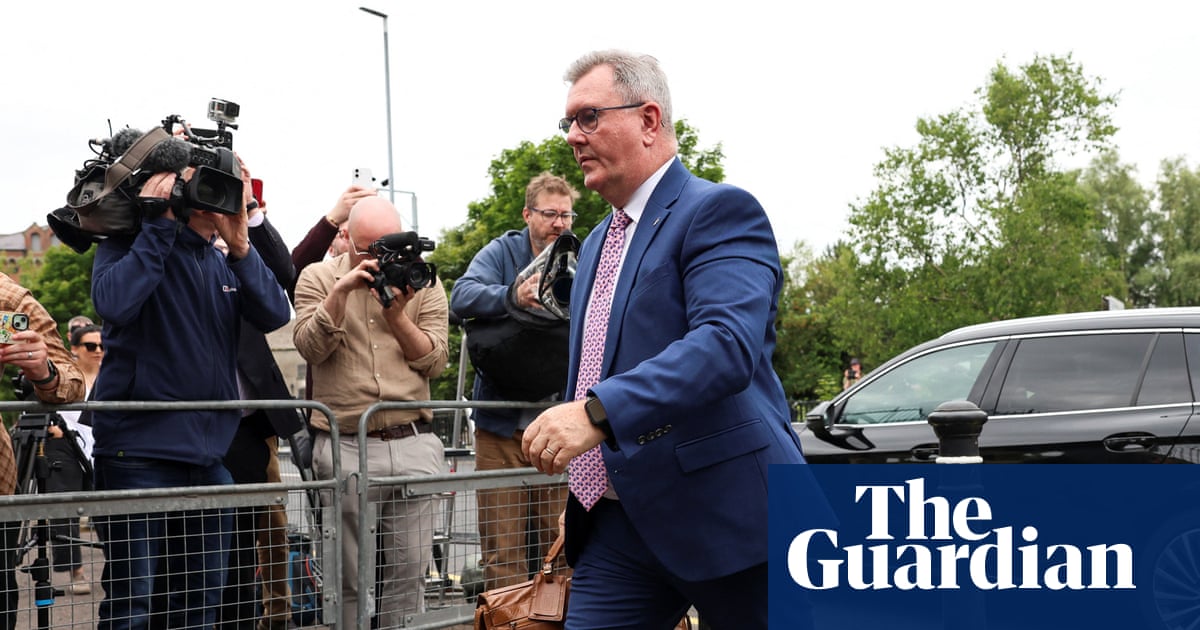
It turns out there were more than 32 worthy qualifiers for each World Cup, though 48 may narrowly be stretching it. Unsurprising how much more enjoyable the idea of the World Cup is when it is almost exclusively a soccer tournament and not being held in capitalistic purgatory. I still can’t work out how to salvage the flow of games and credibility of the matches vis-a-vis past World Cups that did not heave a three-minute pause in each half. Seems like every time a match is hitting its stride, there is a whetting of whistles. Should not become a four-quarter sport. Jeff Rueter
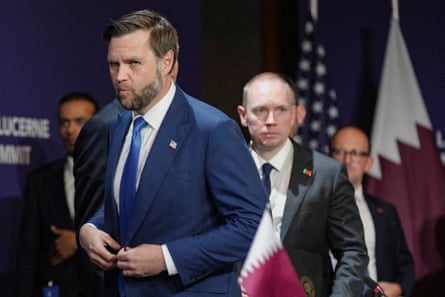
The expanded format has sucked all jeopardy from the opening group games, given third place in eight of the 12 groups goes through to the knockout rounds. Additionally, the uncertainty around the progression threshold – will it be four points and decent goal difference or will three points be enough? – has disempowered the grand tradition of World Cup prognostication. Is that a fair sacrifice to make, if it means fewer dead rubbers at the end of the group stage? Ask again in a week. Jack Snape

The mid-west charm in Kansas City is a reminder that the US is more than what you see on the news. The extreme weather’s tough, though. Last Saturday brought heat and high levels of humidity in the afternoon, then tornado warnings in the evening. It’s quite hard not to eat meat here. It feels like chicken is the vegetarian option. Are people interested in the football? It’s mixed. The USMNT’s opening game was on in our hotel lobby. A group of Americans were watching baseball on another TV and occasionally came over to check the score. But then I’ve just met a Chelsea fan during the Mexico v South Korea game . He knew his football. Jacob Steinberg

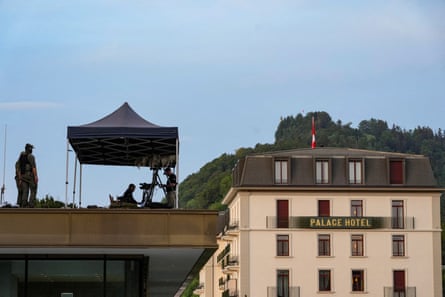
The football has been great, far more open than I had feared (although we will see if that endures into the knockout stages), with big performances from big players and big teams, but also enough surprises to offer intrigue. Off the pitch, it has been chaotic. It feels at times as if Mexico has been slightly overwhelmed by how big the World Cup is, having to impose work-from-home mandates to ease traffic on matchdays while the wifi and media facilities at the stadiums have been shambolic. Food is great, coffee mediocre. Jet lag is a right bastard and the weather is significantly wetter than I had been anticipating. Jonathan Wilson

Tim Dowling: Help! I’m being held hostage by a car salesman | Family | The Guardian

Keyword – Life and style
Trefwoorden – Family, Life and style
Title – Tim Dowling: Help! I’m being held hostage by a car salesman | Family | The Guardian
Author – https://www.theguardian.com/profile/timdowling
Link – Tim Dowling: Help! I’m being held hostage by a car salesman | Family | The Guardian
Publish date – 2026-06-20T05:00:54.000Z
Category – Lifestyle
URL – https://www.theguardian.com/lifeandstyle/2026/jun/20/tim-dowling-help-im-being-held-hostage-by-a-car-salesman

It is a rainy Monday morning and my wife and I are in a car dealership about a mile from home, walking around a shiny new vehicle and peering into its windows.

“It looks bigger than our car,” she says.

“That’s probably because it’s indoors,” I say. “Imagine how much bigger our car would look if we parked it in the kitchen.”

I keep glancing at the time on my phone – we’ve already been here for over an hour, and all because six months ago I casually suggested we should probably consider getting an electric car at some point. I still find it difficult to comprehend the extent to which this is my fault.

The last time we bought a car – in Exeter, where our previous car had chosen to die – the man at the dealership refused to believe we were serious buyers. He suspected we were holidaymakers killing time on a rainy Saturday by test driving Skodas.

“I am deadly serious, Alan,” my wife told him.

Years later, I still can’t believe anyone would do this sort of thing for fun. Standing by while the trade-in value of your present vehicle is assessed is not my idea of a good time. And test driving is like taking a driving test – piloting an unfamiliar vehicle through wet streets while someone tells you where to go next.

“You might want to use your windscreen wipers,” my wife said.

“I don’t know where they are on this,” I said.

“You’ll want to go left here,” said Max, the salesperson, from the back. I thought: I know which way, Max. This isn’t my first time in Brentford.

We head back to the dealership.

“So, are you still working?” said Max.

“Yes,” I said. “I am.”

“Great!” said Max. “What sort of thing do you do?” I told him.

“Cool,” he said. “I’ll just go and give the keys back, and I’ll be right with you guys.”

We are still circling the showroom car when Max returns.

“Is this car longer than our car?” my wife says.

“That car is 12cm shorter than your car,” Max says. “But it’s 5cm wider.”

“Huh,” I say.

Max sits us down to talk about trade-in value. It’s not good news.

“My manager is being a little bit mean,” Max says. “I think I can get him to do better, but I just wanted to go through some things first.”

Max reads out a long list of optional extras. My wife declines all of them. Then he leaves us again.

“Do you really think he’s talking to his manager?” my wife says.

“There is no manager,” I say. “He just sets an egg timer for 15 minutes, and has a latte.”

We sit in silence for a moment.

“So,” my wife says. “Are you still working?”

“I should be working now,” I say.

“Do try to cheer up,” she says.

“I can’t,” I say. “I feel like I’m being held hostage.”

Max returns with news from his pretend manager – better news, though not as good as he, Max, had hoped. There is, finally, the matter of the deposit to secure an interest in a secondhand car we’ve so far only seen on the website. I feel I ought to question this arrangement, but by this point the deposit seems a reasonable enough ransom. I’d happily pay double just to be allowed to leave.

Except: my bank declines the transaction. Max, by this point, has disappeared again.

“It says I need to ring the bank,” I say.

“So ring them,” my wife says.

“Are you kidding?” I say. “We’ll be here for hours,” I say.

“What do you want me to do?” she says.

“Right now, I just want you to pay this deposit for me,” I say.

“Fine,” she says. “Text me the link.”

Back at home, I ring the bank as instructed. The helpline transfers me to the fraud department, and the fraud department hangs up on me. When I get them back, a man asks me a load of questions before apologising and unblocking my card. I ask him why the transaction was first flagged as potential fraud.

“It was just because it’s from a different internet address than the one it’s usually from,” he says.

“You mean it was considered suspicious that I’d left the house to pay for something?” I say.

“Is there anything else I can help you with today?” he says.

It seems that no one, not even my bank, is prepared to view me as a serious buyer.

Janse van Rensburg fluffs chance on England debut in defeat against France | Rugby union | The Guardian

Keyword – Sport
Trefwoorden – Rugby union, England rugby union team, France rugby union team, Sport
Title – Janse van Rensburg fluffs chance on England debut in defeat against France | Rugby union | The Guardian
Author – PA Media
Link – Janse van Rensburg fluffs chance on England debut in defeat against France | Rugby union | The Guardian
Publish date – 2026-06-19T20:10:21.000Z
Category – Sport
URL – https://www.theguardian.com/sport/2026/jun/19/janse-van-rensburg-fluffs-chance-on-england-debut-in-defeat-against-france

Benhard Janse van Rensburg’s hopes of a try-scoring England debut were dashed by fumbling hands as France emerged conclusive 35-19 winners in their non-cap international in Vannes.

The South Africa-born Janse van Rensburg was brought on in the 52nd minute and shortly after he was presented with a routine run-in, only for the ball to slip from his hands. The opportunity was England’s last chance to start reeling in a 28-12 deficit and otherwise the Bristol centre’s involvement was limited.

Tom Curry and George Martin each banked 51 minutes before their likely involvement in the Nations Championship opener against South Africa on 4 July. There was an encouraging display from prolific teenage wing Noah Caluori, who did his prospects of being named in Steve Borthwick’s tour squad no harm while Cadan Murley also made an impact on the other flank.

But overall a scratch team full of unfamiliar combinations fired only briefly with Murley, Marcus Smith and Max Ojomoh touching down in a game that served as the curtain-raiser to next month’s Tests.

Murley’s early strike got England off to a flying start, but in the ninth minute their defence was overstretched by the hosts’ passing game with Nicolas Depoortère touching down. Both sides were looking to capitalise on glorious conditions, with Caluori gifted some early touches under pressure and Smith enduring mixed fortunes with the boot, but France were proving deadly in possession.

Grégoire Arfeuil glided over as France’s attack clicked once again, while England were struggling to make any impression on the home defence with Caluori unable to capitalise on a hanging kick by George Ford. Attempts to get Caluori involved were frustrated as he charged into a blue wall and time and again play broke down because of England mistakes. Just before half-time their backs finally connected with Caluori offloading to Smith, who finished with a flourish.

England’s momentum continued into the second half with their scrum in the ascendancy, but they were unlocked from long range when Nolann Le Garrec completed a sweeping move. Antoine Hastoy was the next to cross and hopes of a fightback dimmed when Caluori had a try disallowed for a knock-on earlier in the move.

Janse van Rensburg shook his head in frustration after butchering his chance under the posts and with cohesion ebbing due to sweeping changes for both sides, the next try did not arrive until the 80th minute when Fabien Brau-Boirie sealed a deserved France win. Ojomoh then touched down in overtime.

Salerno: the charming and affordable gateway to Italy’s Amalfi coast | Amalfi coast holidays | The Guardian

Keyword – Travel
Trefwoorden – Amalfi coast holidays, Public transport trips, Travel, Italy holidays, Europe holidays
Title – Salerno: the charming and affordable gateway to Italy’s Amalfi coast | Amalfi coast holidays | The Guardian
Author – https://www.theguardian.com/profile/jessica-furseth
Link – Salerno: the charming and affordable gateway to Italy’s Amalfi coast | Amalfi coast holidays | The Guardian
Publish date – 2026-06-20T06:00:02.000Z
Category – Lifestyle
URL – https://www.theguardian.com/travel/2026/jun/20/italy-salerno-affordable-budget-amalfi-coast-train-ferry

T he ferry from Salerno to Amalfi town was set to take about 35 minutes, and we were debating whether to risk the windswept top deck, fearful our packed lunches might fly into the Tyrrhenian Sea. (My father and I were taking a pragmatic approach on our Italian holiday, opting for light midday meals to save space for the primo and secondo courses at dinner, and ample lemony desserts.)

As our ferry sped across glittering water, we admired the views as the Amalfi coast unfolded, incandescent with charm. But we could also see the crawling traffic on the narrow roads that cling to the cliffs. That could have been us, up there in one of those toy-sized rental cars, squeezed between a tourist coach and a fed-up local leaning on their horn. Thankfully, we were on a boat instead, sea breeze in hair and coffee in hand.

The Amalfi coast has a reputation that draws tourists from all over the world. It seems everybody wants to see this string of sorbet-coloured towns, to wander the narrow streets where houses climb the hills like stacked blocks, and to sip limoncello while gazing out across the impossibly bright, blue waters. But as eager as I had been to experience these famous graces, the idea of white-knuckling it on hairpin turns in a Fiat 500, inches from certain ruin, didn’t seem like my idea of fun. That’s when an Italian friend gave me some priceless advice: stay in Salerno – it’s a nice town with good restaurants, and you can do all your excursions via public transport from there.

Salerno is tucked just under the Sorrentine peninsula and about half an hour south of Naples on the fast train. It’s an ideal base for jumping on trains to inland attractions such as Pompeii and Paestum, but also for catching ferries to every destination along the Amalfi coast, as well as Capri and Sicily. What’s more, Salerno is a more affordable base than the honeypot towns of Positano or Ravello, where accommodation and restaurant prices are around double what you’d pay here.

Originally a Roman colony, Salerno was reshaped by the Normans in the 11th century. It’s a pleasant and relaxed town to wander, its wide and luxurious promenade dotted with palm trees, benches and street performers. What it lacks in Amalfi glamour, it makes up for with a more authentic tableau of local Italian life. (After a day of eating overpriced ice-cream from hollowed-out Amalfi lemons, we found Salerno’s lack of performance refreshing.)

Dad and I got a holiday rental on the edge of the historic centre, near Salerno Cathedral , which houses the relics of Saint Matthew. We wandered in one morning and were surprised to find that although the duomo is on the modest side, the crypt is a real showstopper, with intricate marble details from top to bottom. The town is also home to the Schola Medica Salernitana , which dates back to the 9th century and was the pre-eminent source of medical knowledge in its heyday, before closing in 1811. Today, the adjacent Garden of Minerva botanical terrace is the city’s most picturesque attraction. Its organising principle is the four humours of man (the Ancient Greeks theorised that our temperament and health are dictated by a balance of blood, phlegm, black bile and yellow bile). That’s certainly something to think about while wandering the gardens, where the plants are labelled according to which “mood” they affect.

But Salerno is all about the food for me, most notably the glistening, black squid ink pasta dish I ate at La Botte Pazza and still salivate over months later. The menu, scribbled on a tiled wall, described the dish simply as spaghetti mare . The wine came out of taps in the wall, and the buzzy atmosphere only got louder as the evening progressed. The bonhomie was all the more welcome after spending the day wandering among the ghosts of Pompeii (40 minutes up the coast by train), which was buried in ash when Mount Vesuvius erupted nearly 2,000 years ago.

Another worthwhile rail excursion is to Vietri sul Mare – the first town in the string of pearls that make up the Amalfi coast, and the only one that can be reached by train. We hopped on an eight-minute service out of Salerno for a wander through the town famous for its colourful ceramics, but also because I wanted to swim – Salerno’s seafront has a nice promenade, but beach lovers are left wanting.

You can swim in Amalfi town too, but the beach in this more famous spot was already getting busy when we visited in late March. As much as I enjoyed Amalfi, I felt relieved to be there early in the season – its narrow streets weren’t built for crowds.

Vietri sul Mare is sleepy in comparison, and I was thrilled to find a peaceful stretch of sand, where I changed quickly under the arches before running in for a bracing dip in the turquoise water.

For Dad, who takes a dim view of anyone who goes in the sea in March, Paestum was more of a highlight. After speeding south for about half an hour, the train dropped us off in the middle of nowhere, by a gravel road that promised a 10-minute walk to the ruins of the once-great Greek city. We were in our element now – at Paestum, visitors can wander about freely as the approximately 27-hectare (66 acre) site unfolds, with the occasional noticeboard sharing a story of what used to be here, but mostly leaving it to your imagination.

Paestum’s crown jewels are the three temples looming large and golden in the landscape; they are about 2,500 years old yet very well preserved. Dad was pleased to find a working model of Archimedes’ screw, an ancient hydraulic tool for elevating water, while I was tickled by the Tomb of the Diver, with its fresco of a gentleman diving into a pool, starkers.

Osteria Canali gave us our last meal in Salerno, and again we had the pleasure of being surrounded by local people in an inviting neighbourhood taverna. The regional menu was rich with aubergine and mozzarella, and then came the main course of baccalà – a piece of white fish with figs, wrapped in paper and simmering in its own juices. More creamy Amalfi lemon desserts to finish, of course, and we figured we should try the limoncello as well – when south of Rome, right? But as much as I like a citrus tang, this was finally too much lemon for me.

Choosing Salerno as our base opened up a different side of the Amalfi coast, allowing us to come and go by boat and train without the stress of traffic jams and impossible parking situations. We only missed a train once, but another came along half an hour later, and while we waited there was nothing to worry about except where to go for ice-cream.

Intercity trains run from Naples Central to Salerno and take about 35 minutes (€9.50). Regional trains from Salerno central take about 40 minutes to Pompeii ( €2.80); 30 minutes to Paestum ( €3.40); and eight minutes to Vietri sul Mare (€1.40). Timetables at trenitalia.com . Several ferry companies run year-round services from Salerno to the towns along the Amalfi coast. The Travelmar passenger ferry sails direct to Amalfi town from Salerno’s Concordia terminal ( 35 minutes , €26 return) . Plan your journey with FerryHopper

‘You don’t have to go to special places to find beauty’: Takeshi Aruga’s best phone picture | Photography | The Guardian

Keyword – Life and style
Trefwoorden – Photography, Life and style, Art, Art and design, Culture
Title – ‘You don’t have to go to special places to find beauty’: Takeshi Aruga’s best phone picture | Photography | The Guardian
Author – https://www.theguardian.com/profile/grace-holliday
Link – ‘You don’t have to go to special places to find beauty’: Takeshi Aruga’s best phone picture | Photography | The Guardian
Publish date – 2026-06-20T10:00:01.000Z
Category – Lifestyle
URL – https://www.theguardian.com/lifeandstyle/2026/jun/20/takeshi-aruga-best-phone-picture

T akeshi Aruga was en route from hospital back to his home in Okegawa, Japan, when he took this photograph. He’d had a consultation with a dermatologist, and while his house was a couple of miles away, good weather encouraged him to walk. Along the way, he passed PAPA Ageo, a sizeable shopping centre popular with locals. This blue sign board outside the multistorey car park caught his eye.

“On the side visible to drivers coming down, it usually displays a message like ‘Thank you for visiting’ along with directions for turning left or right to avoid traffic congestion,” Aruga says. “Just behind is a red box, likely for a fire extinguisher.”

He credits his work as a furniture designer and maker for the sense of geometric composition in his photography. “I also liked how the various colours created a striking contrast and balance,” he adds. He used Lightroom and Snapseed apps to apply minor edits.

“Due to various circumstances, I’ve not been able to create minimalist furniture, lighting, or three-dimensional sculptures recently, so have used photography as an alternative creative outlet,” Aruga says. “Sometimes people ask me where the shot was taken, or how I came upon such a beautiful place. I’m keen to let them know that it was on an ordinary street corner. We all tend to think we can’t enjoy wonderful experiences or happiness unless we go to special places, but in reality, these things exist in the spaces we pass through every day.”

From camel coats to guochao: Max Mara woos China’s luxury brand consumers | Max Mara | The Guardian

Keyword – Fashion
Trefwoorden – Max Mara, UK news, Fashion, Life and style, China, World news, Asia Pacific
Title – From camel coats to guochao: Max Mara woos China’s luxury brand consumers | Max Mara | The Guardian
Author – https://www.theguardian.com/profile/jesscartnermorley
Link – From camel coats to guochao: Max Mara woos China’s luxury brand consumers | Max Mara | The Guardian
Publish date – 2026-06-16T17:15:13.000Z
Category – Lifestyle
URL – https://www.theguardian.com/fashion/2026/jun/16/max-mara-woos-china-luxury-brand-consumers

“New York may be the city that never sleeps, but Shanghai doesn’t even sit down.” For the British designer Ian Griffiths, who encountered this line in the New Yorker, it summed up why China’s biggest city was the right place to celebrate Max Mara’s 75th anniversary.

“Max Mara is a product for metropolitan women, and it would be patronising to assume that a metropolitan wardrobe should be western-centric,” Griffiths said.

Knotted silk pankou buttons, cheongsam dresses and side-fastening jackets with standing collars translated Chinese aesthetic codes into the language of Max Mara on a catwalk in Shanghai’s Long Museum.

Such tributes are fraught with difficulty, as nods to cultural heritage can quickly tip into cliche or appropriation.

“We know that it isn’t good enough just to say that we didn’t intend to cause offence, so we had lots of conversations and consultations in advance about the designs,” said Griffiths, who hopes the homages will be viewed in the context of Max Mara’s long relationship with China .

As one of the first western brands to take China seriously, with stores in the country for 33 years – there are eight boutiques in Shanghai alone – Max Mara has come to symbolise social status and professional success in the minds of Chinese women.

Navigating this delicate territory with grace is big business. With Chinese luxury consumption rallying from its post-Covid slump on the back of a rising stock market, European luxury brands are on a charm offensive. Chinese consumers account for about a quarter of the world’s luxury spending.

But the era of the Chinese consumer as a grateful recipient of western luxury is over, and brands who treat the country’s appetite for fashion as an ATM find themselves out of favour.

The most significant trend in Chinese fashion is guochao – “national wave” – a new appetite for style with local resonance. Guochao is not nostalgic patriotism, but a fashion-forward shift towards a consumerism closely linked to cultural identity, and which reflects the instinct of gen Z everywhere to centre their own experience.

Max Mara, which has aligned itself with the rise of Chinese female ambition, hopes to channel the spirit of self-confidence that is at the core of guochao. The show’s casting was almost exclusively made up of local models.

Star of the front row was the Chinese-American Olympic skier Eileen Gu. The cheongsam came stripped of decorative detailing, floral silk swapped out for pale stretch wool, a sophisticated riff on the office staple that is the sleek, body-skimming shift dress.

Max Mara recently provided wardrobing for a Chinese production of Prima Facie, positioning the brand’s visual language alongside the global cultural phenomenon of Suzie Miller’s one woman play, and in support of the story’s exploration of gender and empowerment.

Recent Max Mara catwalk shows made up an esoteric feminist history syllabus, with muses for recent collections including 18th century mathematician and physicist Émilie du Châtelet, medieval military strategist Matilde di Canossa, and Selma Lagerlöf, the first woman to win the Nobel prize for Literature.

“There was a moment when people might have said Max Mara is safe and dependable, but maybe a bit dusty and boring. But hopefully we’ve left that behind,” Griffiths said.

Between the camel coats with which the brand is associated, the catwalk was spiked with red, which in China represents joy and luck. “There is something so primal about red. I think of it as the pre-eminent non-neutral colour. It is such a colour that it’s almost not a colour at all – almost a neutral, really,” the designer said backstage.

But he was not proposing red as the colour of the season. “There are no trends any more,” he said. “Fashion doesn’t dictate any more. Everyone chooses their own look.”

This article was amended on 19 June 2026. An earlier version said that there were 27 Max Mara boutiques in Shanghai; there are eight.

Can we electrify the world? Ambition moves from nerdish backwater to centre stage | Cop31 | The Guardian

Keyword – Environment
Trefwoorden – Cop31, Germany, Electric, hybrid and low-emission cars, Fossil fuels, Energy, Environment, Europe, World news, Technology
Title – Can we electrify the world? Ambition moves from nerdish backwater to centre stage | Cop31 | The Guardian
Author – https://www.theguardian.com/profile/fiona-harvey
Link – Can we electrify the world? Ambition moves from nerdish backwater to centre stage | Cop31 | The Guardian
Publish date – 2026-06-20T04:00:51.000Z
Category – News
URL – https://www.theguardian.com/environment/2026/jun/20/electrification-takes-centre-stage-bonn-climate-talks

E lectrifying the world – with electric vehicles , electric heating and cooling, and modernised heavy industry – could be the next biggest step towards phasing out fossil fuels, replacing the 80% of global energy that still comes from hydrocarbons. As using electrical energy is much more efficient than combustion, the move would save billions of dollars for consumers and businesses – global energy demand could be halved, according to one estimate.

For decades, electrification has been a nerdish backwater of global climate action. But in the last two weeks, at preparatory talks in Bonn before the forthcoming UN Cop31 climate summit , the subject finally took centre stage.

Murat Kurum, Turkey’s environment minister, who will co-host the Cop31 summit this November, told the Guardian last week: “Without electrification, we won’t be able to reach any of the targets [of the Paris agreement], so we must go through this transformation. Whether you call it the missing piece of the puzzle or the most important tool that we have in our toolkit, this is the case.”

Turkey, with the support of Australia, which is co-president of Cop31 , has proposed setting a target of 35% of final energy to come from electricity by 2035. “This is the most important pillar in reducing emissions – you need to increase electrification in cities, in manufacturing, in [all aspects of life], and will serve us in the bigger picture, the bigger targets [of the Paris agreement],” he said.

The push to electrify was the highlight of two weeks of talks in Bonn that otherwise offered little to cheer. After a cordial start to the annual meeting, held roughly at the halfway point between annual climate “conference of the party” (Cop) summits, by the final days the negotiations descended into near-farce, with some countries refusing to agree wording that would base decisions on “the best available science”, despite this being a cornerstone of climate agreements for more than 30 years. The talks, which were supposed to lay the groundwork for Cop31 , finished on Thursday evening with many issues unresolved.

“We have seen side-stepping and stalling,” said the UN climate chief, Simon Stiell, admonishing countries as two weeks of talks slid to a conclusion on Thursday night. “We’ve seen geopolitical tensions wash through these halls. We simply cannot afford to reopen previous decisions, to renegotiate existing targets, or to backslide. It’s cooperation, not fierce competition, that we need.”

The biggest rows were over climate science, and the 1.5C goal. In a strand of the talks known as “research and systematic observations”, some countries – led by Saudi Arabia and the Arab group of nations, but also including India – objected to language reaffirming climate science, and argued that research by scientists in rich countries dominated submissions to the Intergovernmental Panel on Climate Change.

But other countries said the aim was clearly to delay and derail. Sivendra Michael, speaking on behalf of the Pacific Island nations, said: “We are hearing voices in these rooms that are doing their best to undermine science. Anyone blocking references to science, they are not our friends.”

He added: “There are powerful interests desperate to protect their wealth and influence. We are seeing certain countries holding the [UN] process hostage as vulnerable people suffer heat stress and storms, droughts and famine.”

There were also questions raised by many of the same countries over the inclusion of the global target of limiting temperatures to 1.5C in several places in the negotiating texts, but they faced furious opposition.

Surangel Whipps, the president of the Pacific nation of Palau, told a separate conference in Germany: “We know we won’t make the 1.5C target, but what we need to do is not give up.”

Greater harmony was on show over the “just transition”, a key issue for campaigners which refers to the need to ensure that workers affected by the move to a low-carbon economy are supported, and protected from exploitation.

Camila Mercure, the climate policy coordinator at Fundación Ambiente y Recursos Naturales, said the discussions had been constructive. “While [the talks] exposed significant differences among parties, they also showed there is a pathway to a meaningful outcome [on a just transition] at Cop31. Governments must now engage constructively to make that happen.”

But climate finance remains a huge stumbling block as developed countries continue to cut overseas aid and prioritise military spending. Poor countries were furious that rich nations were dragging their feet on fulfilling a previously set goal to triple the funding they provide for adaptation to the impacts of the climate crisis. Pooja Dave, the adaptation policy coordinator at Climate Action Network International, said: “What we saw was clear bad faith and unwillingness by developed countries to make progress on the global goal on adaptation. You cannot implement the GGA without finance.”

At last year’s Cop30 summit in Brazil , attempts to get countries to restate their commitment to “transition away from fossil fuels” were stymied, but more than 50 countries held their own conference in April to discuss such a phaseout .

But the electrification target marked a step change, after years with little mention at Cops, in part because the technology for electrification lagged behind that for renewable generation. But now China has moved to mass manufacture of electric vehicles, bringing prices down, while heat pumps have also come down in price, though less dramatically, and can save consumers hundreds of pounds on their energy bills. Industrial processes are also increasingly switching to cheap renewable energy.

Electric technology, according to Prof Jan Rosenow from Oxford University, is now ready for widespread takeup and offers efficiencies three to five times greater than their fossil fuel counterparts. “I call it electro-efficiency,” he said. “It’s the inbuilt efficiency of electric technology compared with fossil fuels.”

Rosenow has estimated, in a forthcoming paper, that a global switch to electrification would halve energy demand. That would produce savings that would quickly reach trillions of dollars globally, freeing up cash for governments, businesses and consumers to spend on better ends, from health and education to defence.

Some countries are way ahead. Japan, for instance, has nearly reached the target of 35% of energy to come from electricity that the Cop31 presidency is proposing. China is nearly at 30%, but the US lags at 22%, India and Brazil are about 20% and globally the figure is 21%.

But even the Cop measures on electrification, though widely accepted as necessary to meet scientific advice to reduce emissions to net zero by mid-century, face an uphill struggle to gain acceptance within the byzantine processes of the Cop.

While the US is the only major country absent from the UN talks, the influence of Donald Trump’s presidency was felt within the negotiating halls. “Saudi Arabia has taken more of an obvious role [in disrupting progress], and part of that is because the US used to play a role in holding them back,” one negotiator said. Saudi is not alone: it has allies among the Gulf states, which work together as the Arab group, and has been joined by India on some issues, Russia on several, and even by Kenya, usually a strong supporter of climate action. “People feel they can do this because of what they see coming from the US now,” the negotiator said.

Granta stops publishing short story award winners over AI controversy | Granta | The Guardian

Keyword – Books
Trefwoorden – Granta, Magazines, Short stories, Books, Culture, Awards and prizes, Fiction, AI (artificial intelligence), Technology
Title – Granta stops publishing short story award winners over AI controversy | Granta | The Guardian
Author – https://www.theguardian.com/profile/ella-creamer
Link – Granta stops publishing short story award winners over AI controversy | Granta | The Guardian
Publish date – 2026-06-20T09:00:04.000Z
Category – Culture
URL – https://www.theguardian.com/books/2026/jun/20/granta-magazine-commonwealth-short-story-prize-ai

The prominent literary magazine Granta will no longer publish the winning entries of the annual Commonwealth short story prize after one of this year’s winners drew widespread accusations of AI use.

The magazine said it would no longer be involved in “external publishing partnerships” in which it had no editorial control.

In a statement to the Guardian, Granta said: “The 2026 selection of the regional winners of the Commonwealth prize caused a great deal of controversy, based on the speculation that one or more of the stories may have been at least partially AI-generated, accusations that were strongly rejected by the authors.

“For the sake of our own editorial integrity, the Granta Trust board has now taken the decision that we will no longer engage in external publishing partnerships. We will keep the Commonwealth prize shortlisted stories on our website in the public interest, and wish our former partner, the Commonwealth Foundation, all the best in its work.”

This year’s winning story from the Caribbean region, The Serpent in the Grove by Jamir Nazir, began to draw attention on X and Bluesky in mid-May, when critics claimed the story had “obvious markers” of AI-generated writing.

The story features items arranged in threes and “not x, but y” constructions, which some regard as a sign of AI use. Critics also highlighted phrases such as “Sun on galvanise is a cruel instrument” and “She had the kind of walking that made benches become men”.

“My writing process is unusual”, Nazir told the Observer via email in late May. “It is conducted entirely on an Android phone. This is a necessity driven by chronic health conditions which make sustained, desk-bound typing physically impossible. That is why I rely on speech-to-text to do my writing, followed by minimal keyboard editing, along with the same process of speech-to-text. I have used this in my professional life and also to produce my story for the Commonwealth competition.”

The Granta publisher and philanthropist Sigrid Rausing released a statement on 19 May in response to the controversy: “It may be that the judges have now awarded a prize to an instance of AI plagiarism – we don’t yet know, and perhaps we never will know.”

The same day, the Commonwealth Foundation director general, Razmi Farook, said: “All shortlisted writers have personally stated that no AI was used and, upon further consultation, the foundation has confirmed this.”

The prize awards £5,000 to an overall winner and £2,500 to regional winners. According to the Sigrid Rausing Trust website, the trust awarded £30,000 to the Commonwealth short story prize between 2014 and 2016 .

The Commonwealth prize did not respond to a request for comment.

Wyndham Clark carries four-shot US Open lead as big names gather in chasing pack | US Open | The Guardian

Keyword – Sport
Trefwoorden – US Open, Golf, PGA Tour, Sport, US sports, European Tour
Title – Wyndham Clark carries four-shot US Open lead as big names gather in chasing pack | US Open | The Guardian
Author – https://www.theguardian.com/profile/bryan-armen-graham
Link – Wyndham Clark carries four-shot US Open lead as big names gather in chasing pack | US Open | The Guardian
Publish date – 2026-06-20T01:53:58.000Z
Category – Sport
URL – https://www.theguardian.com/sport/2026/jun/20/wyndham-clark-four-shot-lead-us-open-second-round-golf

Everyone was chasing one man on a windswept Friday in the Hamptons as Wyndham Clark continued his extraordinary revival, posting the lowest 36-hole score ever recorded in a US Open at Shinnecock and carrying a four-shot lead into the weekend.

The 2023 champion backed up his opening-round 64 with a one-under 69 to reach seven under par, breaking the previous halfway record of six under set by Phil Mickelson and Shigeki Maruyama in 2004. Clark’s total left him four strokes clear of Matt Fitzpatrick, Xander Schauffele, Sam Stevens and Tom Kim at three under, while Collin Morikawa hurled himself into contention with the day’s low score of 65 to sit alone at two under on a sun-splashed but blustery afternoon in Southampton.

Clark’s overnight advantage, built in a flash during unexpectedly benign conditions on Thursday evening before play was suspended for darkness, looked far less secure early on Friday morning. After returning to complete the final two holes of his opening round, the 32-year-old American saw his four-shot lead halved before reasserting himself. He survived a cold spell on the greens, missing a makeable par on the ninth and birdie chances at the 10th and 11th, but responded with a 29-foot birdie at the 13th before curling in another from 33 feet down the slope at the last to restore the cushion.

Only four players have carried a larger 36-hole lead at America’s national championship – Willie Anderson in 1903, Tiger Woods in 2000, Rory McIlroy in 2011 and Martin Kaymer in 2014 – and all four went on to lift the trophy.

“I really felt like I could be in double digits,” Clark said. “I turned not my best golf into a good day.”

Clark said he did not get to bed until nearly 11pm after Thursday’s late finish and was awake again at 4am to complete his first round before almost immediately going out for his second. By 1.20pm on Friday his work was done for the day, leaving him with an unusually long wait before Saturday’s scheduled 3.45pm tee time. On the agenda: “watching the USA win” against Australia at the World Cup, followed by dinner and a few rounds of gin rummy with longtime caddie John Ellis.

Twelve months ago Clark left Oakmont engulfed in controversy after damaging a locker following a missed cut, an incident that later resulted in the club banning him from its property unless he fulfilled a series of conditions that included paying for repairs and completing counselling or anger-management sessions. The episode came only weeks after Clark damaged signage by throwing a club during the PGA Championship.

“I’ve gotten a lot of grief since last year, rightfully so,” Clark said. “The thing that’s unfortunate is that’s not who I am, what happened last year. I’m hoping I can win back the fans that I had or some new fans because it was a terrible incident. I really feel like I can show people that I’m fun and outgoing, I’m fierce, competitive, love the game, respect the game, and I just had a bad moment.”

His form and confidence had also deteriorated. After emerging as one of the game’s most promising stars with victories at the US Open and Wells Fargo Championship in 2023 and another win at Pebble Beach the following year, the Denver native arrived at Shinnecock in search of consistency and desperately needing a result to revive his Ryder Cup hopes. Now he is 36 holes away from a second US Open title and a clean redemption arc.

Among Clark’s closest pursuers is Fitzpatrick, the 2022 champion at Brookline, who remained in the mix despite surrendering ground late and carding a second-round 70, while Schauffele surged into contention with five birdies and one bogey for 66. Morikawa’s sparkling 65 was equally significant, lifting the two-time major winner to two under after he began Friday nine shots adrift of Clark. That matched the largest first-round deficit ever overcome by a US Open champion, a record set by Jack Fleck at Olympic Club in 1955.

McIlroy, the Masters champion and world No 2, briefly climbed into a share of second place with birdies at the 5th and 8th. But he gave it all back and more immediately after the turn with three bogeys in succession, followed by a double-bogey on the 15th that left him at even-par for the championship and seven shots off the leader.

“The back nine was a bit of a battle,” McIlroy said. “I think [the afternoon starters] will feel like they got the rough end of the draw [with the conditions], but still feel like I’m in the tournament and in with a decent chance.”

Few players felt Shinnecock’s notorious volatility more brutally than Dustin Johnson. Competing on the final year of the exemption he earned by winning the 2016 US Open at Oakmont, the 41-year-old American was four under through 28 holes and one off the lead before a double bogey, two straight bogeys and a quadruple-bogey eight at the 15th – equalling his highest score on a single hole in a major championship – sent him crashing out of the picture.

Also out was Bryson DeChambeau, the 2020 and 2024 champion, after rounds of 70 and 75 left him outside the cut line of four-over, marking the first time in his career that he has failed to reach the weekend in three consecutive majors. JJ Spaun’s second ragged round in as many days left him eight over for the week, ensuring the tournament’s two most recent winners were both gone by Friday evening.

Joaquin Niemann sprang perhaps the day’s most improbable turnaround. The Chilean incurred a two-shot unsportsmanlike-conduct penalty for throwing a club during an opening-round 11 on the 6th hole, a calamity that included two lost balls and threatened to derail his championship. He answered with a second-round 65 featuring five birdies in six holes to reach the weekend at three over, becoming the first player in 97 years to make a US Open cut after recording a score of 10 or worse in one of the opening two rounds.

Meanwhile, McIlroy was joined at even par by the world No 1, Scottie Scheffler, who pieced together a resilient two-under 68 to stay on the periphery of contention. The game’s two biggest names arrived at Shinnecock among the pre-tournament favorites and both are keenly aware that protecting a lead here can be every bit as difficult as building one. That history also suggests Clark’s work is far from done.

“If there’s a course where you feel like you still have a chance if you’re seven back going into the weekend like I am, it’s definitely this one,” McIlroy said.

Only 10 players reached the halfway mark under par, but the grudging reprieve from Shinnecock’s harsher tendencies may prove temporary. The course’s poa annua greens are expected to firm up and become increasingly capricious over the weekend, while winds exceeding 30mph could further complicate proceedings on the treeless Long Island layout. The USGA spent much of the opening two rounds carefully managing conditions, watering and misting surfaces to ensure the setup remained a fair test. Over the final 36 holes, Shinnecock may begin managing the players instead.

Skeleton of the world’s rarest marine mammal preserved by digital imaging | Porpoises | The Guardian

Keyword – Environment
Trefwoorden – Porpoises, Endangered species, Conservation, Cetaceans, 3D, Technology, Marine life, Environment, Wildlife, Zoology, Science
Title – Skeleton of the world’s rarest marine mammal preserved by digital imaging | Porpoises | The Guardian
Author – https://www.theguardian.com/profile/matthew-pearce
Link – Skeleton of the world’s rarest marine mammal preserved by digital imaging | Porpoises | The Guardian
Publish date – 2026-06-20T11:00:02.000Z
Category – News
URL – https://www.theguardian.com/environment/2026/jun/20/vaquita-porpoise-worlds-rarest-skeleton-preserved-digital-imaging-aoe

Scientists have created a digital reconstruction of the world’s most endangered marine mammal, preserving its anatomy in three dimensions to aid research and conservation efforts as the species teeters on the brink of extinction.

The project digitised the skeleton of a female vaquita, a small porpoise found only in Mexico’s northern Gulf of California, using a combination of medical imaging, ultra-high-resolution micro CT scans and photography.

Researchers have made the imaging freely available online to ensure that the complete skeleton – of which only a few are thought to exist – can be studied by scientists around the world without risking damage to the rare and fragile physical specimens.

Jamie Knaub, the study’s lead author and a doctoral researcher at Florida Atlantic University, said: “We want to influence conservation and awareness of the vaquita, but what it boils down to is open access datasets for biodiversity.

“There’s this whole web [of information] that can be shared to study biodiversity, conservation, evolution – there’s so many things that can come from one dataset.”

A 1997 survey reported about 600 vaquitas in the wild. Today, the WWF estimates there are between seven and 10 , making it the rarest marine mammal on Earth.

Its decline has been driven by bycatch in gillnets used by illegal fisheries targeting totoaba, a large fish whose bladder commands high prices on international hidden markets.

The research team, led by Florida Atlantic University, San Diego Natural History Museum, SeaWorld California and Noaa Fisheries, based the project on a complete female skeleton collected in 1966.

The study, published in the journal Marine Mammal Science , combined hospital-grade CT scanning with microscopic CT imaging capable of revealing structures smaller than the width of a human hair. Thousands of scan slices were then assembled into three-dimensional models of every bone.

The techniques allowed researchers to create a highly detailed model, from the overall skeleton down to microscopic bone structures.

Because vaquita skeletons are so rare, access to them is limited. Knaub said the imaging could be used to produce accurate replicas for museum exhibits and classrooms, helping introduce more people to the species.

Advances in imaging technology over the past decade have increased efforts to digitise museum collections. Digitised projects such as oVert in the US and Ozboneviz in Australia aim to make rare specimens accessible to researchers worldwide, removing the need to rely on photographs or gain permission to examine delicate originals.

“There’s a lot of people who don’t have access to museum specimens, or museums are wary of loaning out specimens because of how fragile or rare they are,” Knaub said.

The vaquita was only recognised as a species in 1958 . Growing to about 5ft in length, it is the smallest member of the whale, dolphin and porpoise family and is distinguished by dark markings around its eyes and mouth.

Find more age of extinction coverage here , and follow the biodiversity reporters Phoebe Weston and Patrick Greenfield in the Guardian app for more nature coverage