Top officer says anti-racism guidance has fuelled myth of two-tier policing | Police | The Guardian

Keyword – UK news
Trefwoorden – Police, Race, Greater Manchester, UK news
Title – Top officer says anti-racism guidance has fuelled myth of two-tier policing | Police | The Guardian
Author – https://www.theguardian.com/profile/josh-halliday
Link – Top officer says anti-racism guidance has fuelled myth of two-tier policing | Police | The Guardian
Publish date – 2026-06-22T05:00:50.000Z
Category – News
URL – https://www.theguardian.com/uk-news/2026/jun/22/top-officer-says-anti-racism-guidance-has-fuelled-myth-of-two-tier-policing

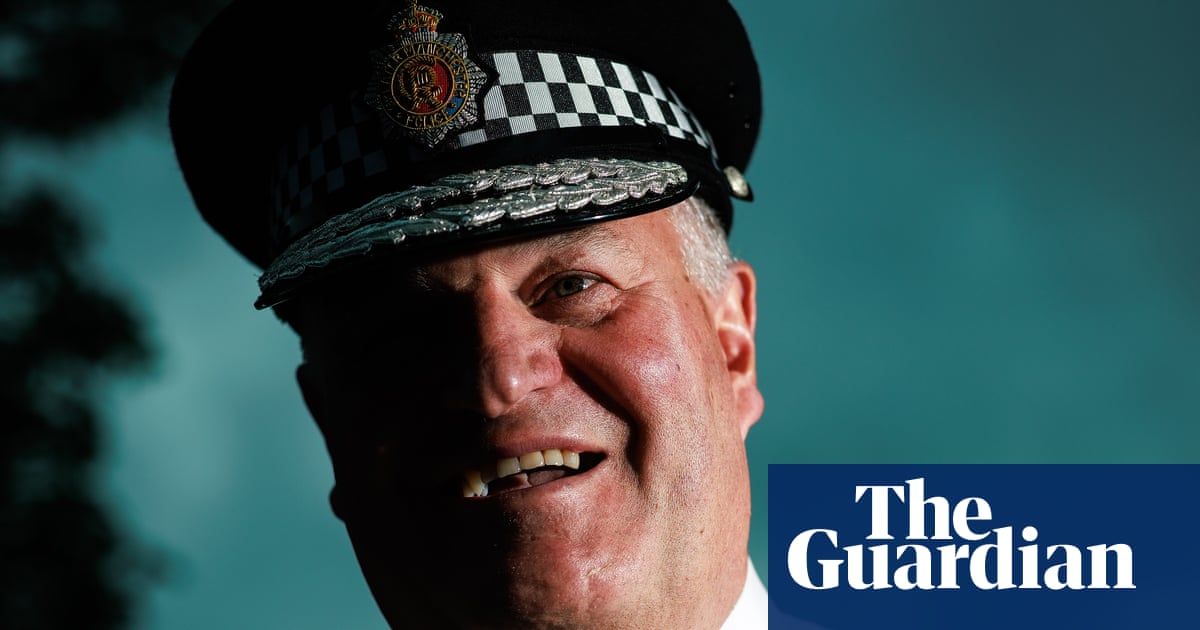
Policing in Britain has “adopted the language of activism” and official guidance has “over-corrected” to combat accusations of racism, one of the UK’s most senior officers has said.

Sir Stephen Watson, the chief constable of Greater Manchester police, said he did not believe that “two-tier policing” existed or that forces were biased against white people.

Police had, however, allowed that perception to take hold in part as a result of anti-racism guidance that advised officers to treat suspects differently depending on their ethnicity.

Watson said the official guidance, produced by the National Police Chiefs’ Council (NPCC) in 2025, should be reviewed after the murder of Henry Nowak , whose treatment by officers prompted riots in Southampton and accusations of two-tier policing from Nigel Farage and the Trump administration.

“Particularly in the light of the tragic murder of Henry Nowak, I do understand that this idea that two-tier policing takes place is now widespread,” he said. “I don’t think it’s justified, but I can understand where it’s coming from.”

Watson, who is tipped as the potential successor to Sir Mark Rowley as the head of the Metropolitan police, said forces must be “a little less timid about making sure we emphasise our impartiality”.

He said policing had “in some cases over-corrected” in official guidance which has “allowed the impression to take hold that we’re not policing without fear or favour”.

“I think we have some lessons to learn … Perhaps we have been uncritical in adopting certain elements of language. We’ve adopted the language of activism,” he said.

“We’ve sometimes taken on board what are challenged concepts and we’ve written those into policy and intent – all with the best of reasons – but these issues then get held up almost as exhibit X, as the proof that we do not treat people equally.”

After criticism in the wake of Nowak’s murder, the NPCC is reviewing its 2025 “anti-racism commitment”, which states that officers should “respond to individuals and communities according to their specific needs, circumstances and experiences, with understanding that these will be racialised and with the aim of reducing harm. It does not mean treating everyone ‘the same’ or being ‘colour blind’ (racial equality)”.

The policing minister, Sarah Jones, said earlier this month it was important to be “mindful of the fact that there has been a history of racism in policing” but called the guidance wrong.

Watson has been called Britain’s “anti-woke” police chief after he instructed officers not to take the knee during Black Lives Matters protests in 2021 because it would undermine impartiality. He said he would “probably kneel before the queen, God and Mrs Watson, that’s it”.

Speaking to reporters in Stockport, Watson said forces should not “use the language of being anti-racist” because it implies officers have “some activist role”.

“Of course we’re fiercely opposed to racism but we’re the police,” he said. “We are not activists. If we overstep … this is what then informs the public perception of two-tier policing.”

Watson was appointed chief constable of England’s second largest police force in 2021 after Greater Manchester police was put into special measures over a series of scandals in which a fifth of crimes went unrecorded.

The force has since more than doubled its number of arrests, and offences including theft, shoplifting and criminal damage fell faster than the national average in 2025, according to official crime figures .

Watson said British policing faced a bigger challenge than at any point in his near-40 year career because “distrust, disorder and division” was more obvious across society than it has been at any time” since the 1980s.

He said it would not be surprising if widespread disorder erupted across England again this summer “given the temperature of contemporary events”, with social media amplifying inflammatory rhetoric from high-profile figures.

He said how public figures conducted themselves was “a matter for them and their conscience” and that it was vital that police “don’t do anything to fuel the fire”.

Marius Borg Høiby rape conviction renews focus in Norway on consent in digital age | Norway | The Guardian

Keyword – World news
Trefwoorden – Norway, Sexual violence, World news, Europe
Title – Marius Borg Høiby rape conviction renews focus in Norway on consent in digital age | Norway | The Guardian
Author – https://www.theguardian.com/profile/miranda-bryant
Link – Marius Borg Høiby rape conviction renews focus in Norway on consent in digital age | Norway | The Guardian
Publish date – 2026-06-22T10:39:21.000Z
Category – News
URL – https://www.theguardian.com/world/2026/jun/22/marius-borg-hiby-rape-conviction-case-norway-consent-digital-age-sexual-violence

I n many ways, the case of Marius Borg Høiby, who was sentenced to four years in prison last week after being found guilty of offences including domestic violence and two counts of rape, was exceptional.

The king’s 29-year-old step-grandson grew up in the public eye alongside the royal family, mixing in Oslo’s wealthiest circles, partying at exclusive nightclubs and having afterparties at his family’s official royal residence.

But at its core the case also highlights a dark universal truth, one that has resonated with Norwegians and people around the world: the prevalence of violence, particularly sexual violence, in daily life, even in one of the world’s supposedly most gender equal countries, and how it has been exacerbated by the digital age. It has also exposed, despite important changes to Norway’s consent law last year, a severe lack of understanding of the issue across Norwegian society, experts say, from children to teenagers to prosecutors.

“The verdict has been on everyone’s lips, both in my personal world with my friends, but also here at the office we have discussed this quite a bit,” said Åsne Solberg, a legal adviser at JURK, which provides free advice to women at their offices in Oslo.

Like many other Norwegian women, Solberg has been personally shaken by the combination of the trial, and the publication of the Epstein files, which revealed details of the years-long friendship between Høiby’s mother, Crown Princess Mette-Marit, and the late US sex offender.

“You really get a glimpse of how some of these men resonate, or don’t resonate, with their own actions,” she said. “And how, deep down on the inside, they perceive women and the worth of women and what they can do to women. I think it’s just very dark, honestly.”

She also knows from professional experience that the Høiby case is not unique.

Despite Norway’s reputation as a global leader on gender equality, one in five women have been raped at least once, and one in 10 have experienced serious partner violence. “We call it the Nordic paradox,” said Solberg. “That on paper we are very equal but when it comes to our violence statistics it is quite dire still.”

Norway’s new consent laws, which came into effect last year, criminalise sex without explicit consent, meaning prosecutors don’t need to prove violence or threats or the incapacity of the victim to resist to get a rape conviction. The charges against Høiby related to incidents that took place from before the new laws came into effect.

Sweden, Denmark, Finland and Iceland have also introduced consent-based rape laws. Officials in Sweden said changing the legal definition of rape to sex without consent led to a 75% increase in convictions.

Solberg, who has campaigned for years for the law change, said she thinks it would have made a difference in the Høiby case. “This whole case and the proceedings illustrate why we needed the change in the penal code,” she said.

It was especially apparent, she said, in the focus on whether or not victims were asleep during the rapes. Under the new law, this would not have been necessary, she believes. “The most relevant theme of evidence would be whether she consented or not, not whether she was actually asleep or not.”

Nok Norge (Enough Norway) is an umbrella organisation for government-funded centres that provide support to sexual abuse victims around the country, including in some schools. It says behaviour demonstrated in the Høiby trial was representative of a broader culture around sex and explicit image sharing.

Ingvild Hestad Torkelsen, the organisation’s leader, said: “Porn is getting into bedrooms very early … We have a lot of girls that come to our centres that say the first time they had sex the boys wanted to strangle them because they’ve seen that done in porn … It’s more brutal or aggressive very early.”

Increased screen time has also left gaps in knowledge about how to communicate and read body language effectively, she said. While schools teach sex education, it is more about the “mechanics” of sex than feelings, boundaries or communication.

Kari Helene Partapuoli, the secretary general of the Norwegian women’s public health association Sanitetskvinnene , said the issue of intimate photos and videos – including those taken with consent – are an added concern for children and young people.

“There are a lot of closed groups,” she said. “It’s something that keeps coming up. And I think everyone who is a parent today has those discussions with their children, teenagers especially, boys or girls.”

Before the start of the trial, Sanitetskvinnene reported a rise in the number of women reporting abuse and sexual assault at the hands of their partners.

Partapuoli hopes the verdicts, some of which have been appealed by Høiby, will have a much wider impact on Norwegian society: “All of history shows that you have to speak up. Unfortunately, often an individual has to go through that kind of public scrutiny, like these women have done in this court case, and also in rape cases.”

But, she added, there is some way to go. “We have to keep talking about it, learning, changing attitudes and taking it through court cases. This does not have an easy fix, but you have to keep working.”

Marco Bezzecchi banned from Czech MotoGP race after slapping track marshal | MotoGP | The Guardian

Keyword – Sport
Trefwoorden – MotoGP, Motor sport, Motorcycling, Sport
Title – Marco Bezzecchi banned from Czech MotoGP race after slapping track marshal | MotoGP | The Guardian
Author – AFP
Link – Marco Bezzecchi banned from Czech MotoGP race after slapping track marshal | MotoGP | The Guardian
Publish date – 2026-06-21T14:52:11.000Z
Category – Sport
URL – https://www.theguardian.com/sport/2026/jun/21/motogp-marco-bezzecchi-czech-grand-prix-slap-steward

The MotoGP championship leader, Marco Bezzecchi, was banned from Sunday’s Czech GP after slapping a track marshal in the face after a crash in Saturday’s sprint, MotoGP said.

The 27-year-old Italian Aprilia Racing rider crashed out of the sprint with two laps to go. Footage on TNT Sports showed Bezzecchi running towards a marshal, pushing him and then slapping him in the face as the marshal was standing over his bike in the gravel.

“Bezzecchi will not take part in the Czech GP,” MotoGP said on its website .

A document published by the FIM MotoGP Stewards association told Bezzecchi that “following a crash you pushed and struck circuit marshals who were trying to recover your machine … That is an infringement of Article 3.3.2.2, an action ‘prejudicial to the interests of the sport.”

Aprilia appealed against the stewards’ decision on Saturday, but the appeal stewards upheld the original verdict, and Aprilia said it would not protest any further.

It is another blow to Bezzecchi’s hopes of a maiden MotoGP title after he failed to finish the Hungarian GP two weeks ago, when his teammate Jorge Martín took him out in turn one. Adding to Aprilia’s woes, Martín will have to serve two long-lap penalties for causing that crash.

Bezzecchi apologised “to everyone, Aprilia Racing and my fans” in a statement. He continued: “I would like to apologise to the entire MotoGP community for my behaviour toward the trackside marshal.

“I’m also sorry because I know how much effort and sacrifice marshals make to ensure our safety. This behaviour shouldn’t happen and there is no justification for it.” On Sunday, MotoGP posted a video of Bezzecchi apologising to the marshal and embracing him.

Marc Márquez won Sunday’s race on a scorching day in Brno, scoring a second straight win after dominating in Hungary two weeks ago.

The pole sitter, Japan’s Ai Ogura, finished second ahead of Márquez’s factory Ducati teammate, Francesco Bagnaia. Both riders quickly overtook Ogura, Bagnaia striking on the first lap and Márquez following seconds later.

Márquez, a seven-time MotoGP world champion, then circled patiently behind his teammate, narrowing his gap on his teammate to a tenth of a second by the 11th lap. Five laps later, the Spaniard swept past Bagnaia and raced away to earn his fifth MotoGP victory on the Brno circuit.

Bezzecchi still leads the overall standings with 180 points, ahead of Martín with 172, Ducati’s Fabio Di Giannantonio on 157 and Marc Márquez with 140.

The headline and text of this article were amended on 21 June 2026. Marco Bezzecchi slapped a track marshal, not a steward as an earlier version said.

The rise and fall of Keir Starmer: where did it all go wrong? | Keir Starmer | The Guardian

Keyword – Politics
Trefwoorden – Keir Starmer, Politics, Labour, Labour party leadership, UK news
Title – The rise and fall of Keir Starmer: where did it all go wrong? | Keir Starmer | The Guardian
Author – Jonathan Freedland
Link – The rise and fall of Keir Starmer: where did it all go wrong? | Keir Starmer | The Guardian
Publish date – 2026-06-22T15:24:34.000Z
Category – News
URL – https://www.theguardian.com/politics/ng-interactive/2026/jun/22/the-rise-and-fall-of-keir-starmer-where-did-it-all-go-wrong

Historians will puzzle over this one. Of the six prime ministers that have led Britain over the last decade, with a seventh now on the way, it will be the fall of Keir Starmer that will most perplex the political analysts of the future.

They will ponder a man who won a landslide victory in July 2024 only to be pushed out less than two years later , having started no illegal wars, having triggered no grave economic crises, having been accused of no scandalous act of corruption.

They will scratch their heads at a PM who paid the ultimate political price, even though few could point to the single, obvious political crime he had committed.

So what did for Starmer – and what legacy, if any – does he leave behind? Perhaps most important, what does the fleeting premiership of the outgoing Labour leader portend for whoever takes his place?

Start with his undoing, which was a function of both the man and his times. Plenty will say, and have said in recent days, that Starmer’s failure was pre-ordained, for the simple reason that he was not a politician and had no aptitude for politics. At face value, that statement is obviously absurd. No one rises to the top of a major political party and then wins a 174-seat parliamentary majority by accident.

Nor will it do to suggest that Starmer’s success came solely from being in the right place at the right time, a lucky player of political pass-the-parcel who had an election victory land in his lap when it was Labour’s turn.

Of course, it’s fair to describe the 2024 result as a national repudiation of the Conservatives rather than an embrace of Labour, but merely to have turned the party into an acceptable receptacle for that deep well of anti-Tory feeling was itself a significant achievement.

Five years earlier, voters had handed Labour their biggest drubbing since 1935. But Starmer’s tacit promise of calm, technocratic competence – after the Boris Johnson and Liz Truss years of florid Tory scandal and chaos – the sense that he was a decent, if unexciting, man, was enough to reassure voters that Labour could be trusted with power.

No one should fool themselves that such a process is automatic. Recall how few leaders in Labour’s entire history had ever won a parliamentary majority at a general election. Until Starmer, the grand total was three.

And yet, even a biographer as admiring of Starmer as Tom Baldwin was tempted to describe his subject as an “unpolitician”.

Baldwin meant that largely as a compliment, but the word also nodded to the fact that Starmer lacked several of the skills of the top-flight politician – and those deficiencies cost him very dear.

First, and most well-documented, was his weakness as a communicator. It was more than a mere absence of charisma. It was the inability to make a clear, compelling argument. A curious failing in a prosecutor, though perhaps not such a surprise when you recall that Starmer was rarely a courtroom, jury-facing advocate.

But Starmer could not seem to make a case, still less tell a story. He needed to construct a narrative for his government and he never did. Even his resignation speech on the steps of Downing Street felt more like a recitation, a list, than an argument. Perhaps the only moment of connection came when he spoke of his wife and children, and the crack in his voice spoke more eloquently than his words ever had.

Communication is not some kind of presentational add-on; it is essential to the task of political leadership. It enables a leader to retain the support of an anxious public when times get tough or during the inevitable delay between action and results.

Margaret Thatcher kept Britons with her when she explained that the strong economic medicine she had administered to the country might be hard to swallow, but it would eventually bring a recovery. It made even the pain seem like part of the plan.

Starmer was unable to craft a similar account of himself and his government. Few voters could tell you what the Starmer plan for Britain was; the truth is, few Labour MPs could tell you that either.

And that failing could not be ascribed solely to Starmer’s limitations as a speaker. It flowed from the fact that Starmer did not, in fact, have a plan, at least not one that could be easily summarised and expressed, a project that might enable everyone in government to know what it was they were expected to achieve.

It needn’t have been anything as grand as an intellectual vision; it is not compulsory for a prime minister to double as a political theorist. But for Starmer to have arrived in office without a blueprint, or even a to-do list for each department, meant valuable time was lost in those precious first months when a government’s stock of political capital is at its highest.

It was in that same early period that Starmer made a crucial error that, again, betrayed a lack of an essential political instinct: the ability to read the (national) room.

The electorate had handed Labour a resounding mandate; they had been desperate to see the back of the Tories. After austerity, the divisions of Brexit and the deprivations of Covid, Britons wanted at least to hope that things might get better. But Starmer moved fast to trample on any green shoot of optimism, warning instead that life was about to get worse.

That didn’t just kill the mood. It had an economic effect, creating a feelbad factor at the very moment when consumer confidence might have taken off. He could have left the gloomcasting to his chancellor, while he spoke of the sunshine that was to come. Instead, he sounded as downbeat as his No 11 neighbour: it was bad cop, bad cop. A mood of sullen dissatisfaction set in and never shifted.

Beyond that, you can point to failings of both strategy and tactics. He got the big picture wrong, sticking with a chief adviser in Morgan McSweeney who had been a brilliant factional streetfighter, wresting control of Labour from the Corbynites. But McSweeney was so fixated on wooing the Farage-curious “hero voters” of the party’s former heartlands, that Starmer soon angered and alienated the urban, professional liberals and middle-class progressives who in the mid-2020s constitute much of Labour’s core vote. Only an unpolitician with no feel for his own party could have given a speech that channelled the spirit of Enoch Powell as it warned of Britain becoming an “island of strangers.”

Starmer walked that phrase back, saying he hadn’t known of its Powellite origins. That was one of a long list of U-turns – each one a tactical misstep that revealed either a muddled or entirely absent strategy. Whether it was the move to restrict winter fuel payments, a welfare reform bill or digital ID, Starmer made a habit of proposing a change only to abandon it. Each time he did, his authority shrank – and the sense grew of an administration that didn’t know where it was going or how to get there.

Observers of Whitehall testified to another gap in Starmer’s skillset, an inability, even an unwillingness, to do one of the defining aspects of the job of prime minister, namely to adjudicate disputes between departments and colleagues. That, they suggested, was one explanation for the multiple decisions that were unmade or reversed. Starmer’s defenders say that, while it was true that he believed in empowering his secretaries of state, and that he sought to delegate much conflict resolution to the newly-created role of chief secretary to the PM, he made the tough calls when he had to. Inevitably, some ministers didn’t like those calls when they came, with John Healey’s resignation over defence spending the most recent example.

But that approach, delegating tasks that his predecessors might have, even somewhat control-freakishly, kept for themselves, also exacted a heavy price. Not only was he swayed, chiefly by McSweeney, to send Peter Mandelson to Washington as UK ambassador, but he was happy to hand over the whole matter to others. A more political PM would have known that Mandelson was a byword for risk and would have kept a vigilant eye on the process. Starmer did not and the Guardian revelation that the former grandee had, in effect, failed security vetting did him enormous damage.

What’s more, when trouble came, as it always does for a prime minister, Starmer had too few supporters to draw on. He had not courted individual MPs, inviting them in for a chat, showing them love, persuading them that their opinion mattered – the basic, human stuff of politics at any level, the means by which you build up a reserve of loyalty that you can draw on when the weather turns. Labour has a huge majority in the Commons – but few of those 400-plus MPs felt much allegiance, or debt, to Starmer.

Still, the fault lay not only in the man. The historians of the future will also note the structural disadvantages that made Starmer’s position so perilous. He arrived in July 2024 with a desperate inheritance: public services starved of cash and an anemic economy no longer generating the resources required to pay for everything Britons wanted and needed. Life has remained stubbornly hard for millions, which accounts for much of the anger that has infused British politics for over a decade.

Within weeks of his taking office, that discontent was directed at Starmer. One cabinet minister would describe the PM as suffering the fate of “the third plumber”. The homeowner feels their greatest fury not for the first plumber who fails to repair a leak, nor even the second plumber who botches the job and makes the problem worse, but for the one who comes after that. It’s that third plumber who cops all the rage that’s been building up. After austerity and Brexit and the Truss fiasco, the wrath landed on Starmer.

And he had little room for manoeuvre. Hemmed in by manifesto commitments that sharply limited the government’s revenue-raising options, it would have taken an outrageously gifted political communicator to persuade the country why Labour had to break its pre-election promises – and though there were hints he might do just that on income tax rates, he pulled back (again).

Perhaps there was a time when voters would have given a newly elected PM a few years to turn things around, but those days are long gone. The electorate is impatient now, demanding almost instant results. That process has been intensified and accelerated by social media, which does not merely put the worst possible gloss on the actions and motives of those in its sights, but distorts public figures out of all recognition. Labour canvassers for the May elections were shocked to find voters who were not just disappointed in Starmer but harboured a visceral loathing for him – who saw him in almost demonic terms. They were reacting to an invention untethered to reality, but one pushed and promoted by Elon Musk and his X platform especially.

Given all that he faced, historians might be impressed with what Starmer achieved. In his resignation speech, he highlighted his transformation of the Labour party, the fall in NHS waiting lists and the lifting of half a million children out of poverty, along with a raft of workers’ and renters’ rights that, say Starmer’s advocates, sits at the centre of a record of progressive accomplishment that bears comparison to the first two years of the 1945 government. They also credit Starmer with boosting Britain’s standing on the world stage, the canny statecraft that kept Donald Trump’s US engaged on Ukraine and which kept the UK out of Trump’s doomed war with Iran – a decision that takes its place alongside that of Starmer’s hero, Harold Wilson, to abstain from the war in Vietnam. At all this, say Starmer’s friends, he was brilliantly adept. But, sighs one, “This is not an age of substance, it’s an age of sheen – and he was just not very good at that.”

All of which amounts to a cautionary tale for Andy Burnham, or whoever steps next into No 10. He will be the fifth prime minister in four years and, as such, will overnight become the object of all the frustrations that only grow greater with each successive failure. Burnham has many of the skills that Starmer lacked – he is a politician to his fingertips – but he will face the same country. One whose economy has been struggling and institutions are creaking, one that has become volatile and unsteady in the decade since the Brexit vote that marks its 10th anniversary on Tuesday – one whose impatience is growing. Keir Starmer is the latest victim of that impatience. Few would bet on him being the last.

M John Harrison: ‘If we met a real alien we’d have no clue what they thought’ | Books | The Guardian

Keyword – Books
Trefwoorden – Books, Science fiction books, Culture, Fiction
Title – M John Harrison: ‘If we met a real alien we’d have no clue what they thought’ | Books | The Guardian
Author – https://www.theguardian.com/profile/chrispower
Link – M John Harrison: ‘If we met a real alien we’d have no clue what they thought’ | Books | The Guardian
Publish date – 2026-06-21T11:00:29.000Z
Category – Culture
URL – https://www.theguardian.com/books/2026/jun/21/m-john-harrison-if-we-met-a-real-alien-wed-have-no-clue-what-they-thought

T hree years ago, in a greasy spoon on the fringes of the City of London, M John Harrison – Mike to his friends – told me about the novel he was working on. Rather than describing its plot or characters, he spoke purely about the challenge the book presented to him as a writer. With this one, he said, he wanted to push things as far as they could go.

Now that book, The End of Everything – his 13th novel – is about to be published. It describes a disintegrating Britain in which the iGhetti – monstrously sized, extremely powerful and strange lifeforms that look like powdery, slow-motion explosions – rule the country and possibly the world. Or do they? In its unwillingness to divulge any more than its characters know, which isn’t much, the novel is more alien evasion than invasion.

No one knows where the iGhetti came from. Maybe the astral plane, or “out of the internet”. Their purpose is similarly obscure. What remains of the authorities treat them as hostile, sending ineffectual waves of bombers and attack helicopters, but the incomers might equally well be engaging in “spiritual tourism and gentrification” as in colonisation. “If we were to meet a real alien,” Harrison says, sitting on the sunny terrace of a riverside pub in Barnes, south-west London, where he used to live, “we would have no clue whatsoever what they ‘thought’, or why they did anything, or if they thought they were doing something.” Science fiction often pays lip service to that idea, he says, but “never passes that feeling on to the reader”.

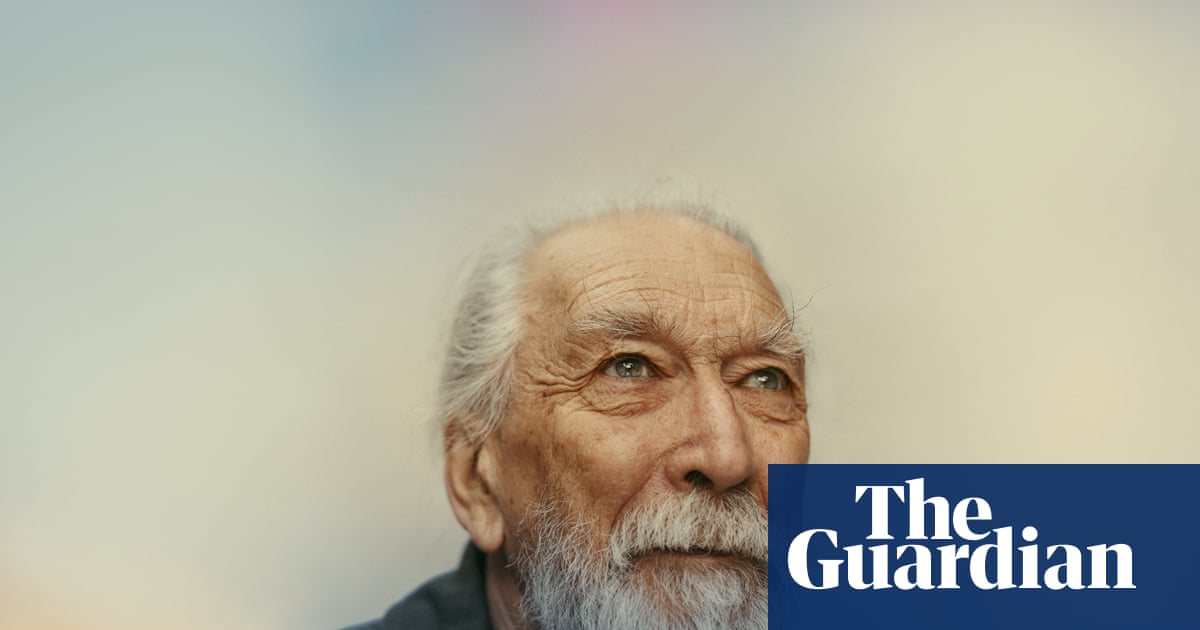
Harrison is a slim, nimble 80-year-old, his full beard and long hair glowingly white. His skin has the nutty tone – unusual in writers – of someone who has spent plenty of their life outdoors. The planes of his face look austere in photographs but in person he is often laughing, and the eagerness with which he talks about meeting the demands of the new book underlines how much he’s enjoying himself.

This wasn’t always the case. In 1998, a year after Harrison published the bleak toxic waste-themed dystopia Signs of Life, Iain Banks took him out for a night of drinking in Soho with the aim of persuading him to return to the purer sci-fi realms where his career began. “I always keep in mind what Iain said to me,” Harrison admits, “which is that I don’t have enough fun on the page. That was hurtful.” The next day, he started writing the notes for Light, the first volume in his Kefahuchi Tract trilogy. Not the space opera Banks suggested but a parody of one, because nothing with Harrison is straightforward. “Nothing at all,” he happily agrees.

Harrison was born in Rugby, Warwickshire, in 1945. He had a difficult relationship with his father, an engineer, who died when Harrison was 13. He truanted a lot from school, spending part of each day in the local library. “The great thing about libraries then was there weren’t so many dust jackets about,” he tells me. “I would pick a book up, read the first two pages, think, ‘Oh wow, that’s weird’, and it would turn out to be a Robbe-Grillet, and it would open a door to the anti-novel. Or it would be Ballard, or another sci-fi book. You never knew what you were going to get.”

When Harrison began writing as a teenager in the 1950s, the genres of fantasy and sci-fi were supported by numerous monthly magazines. In 1966, one of them accepted a story of his. He moved to London and began writing obsessively through the night. He met Michael Moorcock, then the editor of New Worlds magazine, and became a regular contributor. “I had to be in New Worlds,” he says, “because it was Ballard’s main medium for short stories at that time. It was at the height of my interest in him as a kind of combination of a surrealist and an imagist. Especially in the short story form. And I wanted to be that. I really wanted to be that.”

On his blog, Harrison has described The End of Everything as the kind of book that might have been serialised in New Worlds circa 1967. I’m not so sure they would have accepted it. “I think it might have been too much even for them,” he agrees. “I wanted it to have the flavour of the novel that I would have submitted then if I’d had any technique, skill or talent, a book that on the surface looks like sci-fi but then, as you read it, gets depthier and depthier. That was what I wanted. My heroes could do that. And now, 60 years later, so can I.”

He laughs as he says this, but it’s taken Harrison a long time to arrive at a place where he’s happy both with his work and its reception. The 1970s saw him strain against the genre conventions of sci-fi and fantasy, which he tried to undermine in The Centauri Device (a book he now disparages) and his Viriconium sequence. A breakthrough occurred when he resolved to write a short story without allowing himself to plan it out beforehand or keep notes. The New Rays is “about Katherine Mansfield. And it’s for Katherine Mansfield.” He admired what she and Virginia Woolf had done with fragmented narrative back in the 1910s and 20s (Eliot’s The Waste Land was also formational) but didn’t know how to approach that way of working himself. “The only techniques I had were almost exactly opposite to what I needed. They were the techniques of genre fiction: making a narrative, making a synopsis, following the synopsis, making the causalities plain, following the causalities. And none of that would do.”

By the time The New Rays was published in 1982, Harrison had left London for “the boondocks outside Huddersfield” to pursue an obsessive interest in rock climbing. The next two decades, which saw the publication of the novels Climbers (1989), The Course of the Heart (1992) and Signs of Life (1997), were the most intensely creative of his life. “I let it take over,” he says now of writing. “And I produced, as a result, several short stories and three novels that had real depth and density of observation, and a deep, dense sense of place.”

This is an understatement when it comes to Climbers, which isn’t just one of Harrison’s masterpieces but one of the best English novels of the last 50 years. The book follows a group of climbing junkies around the Peak District, men and women who, like many of Harrison’s protagonists, are out of joint with the wider world. It is still criminally obscure despite the loud enthusiasm of, among others, Robert Macfarlane and Olivia Laing.

As we quit one pub for another, walking through the quiet Barnes streets, Harrison recalls the moment the book became possible. Leaving a quarry outside Sheffield at sundown one day, “I noticed that the way the sun related to the jagged top of the quarry, from my viewpoint, meant the shadows looked like the turned-down pages of a book. I stopped and scribbled that in one of my notebooks. I suddenly thought, I can do this. I’m the person to do this. It was really weird. What had stopped me from writing fiction about my own experience, or even nonfiction, was that I didn’t really feel I was the person to do it. I didn’t feel I had the authority. And then I wrote that sentence down, looked at it and thought, ‘Yeah, I can do this.’ It was amazing,” he says, still sounding as surprised as he was in that shadowed Yorkshire quarry decades ago. “You hunt for that your whole life.”

Harrison, “utterly determined to stop apologising for not being an SF writer”, now began producing work he fully believed in. But he had – and still has – an uneasy relationship with his creativity. “It was like discovering a different voice inside you,” he explains. “And it was better than me. I’m going to tell you this,” he says, lowering his voice as if this other presence might hear us. “He knows more than I do, he’s more mature than I am, he’s a better writer than I am, and he has very considerable contempt for me. But every so often he’ll look at something and think, yeah, that’s OK, and he’ll step in and take over and produce something like Climbers.”

At times, Harrison says, he feels he is the impostor. “There are two of us and one of us knows he’s the real me, and it isn’t me.” Then, thankfully, he laughs, dispelling the eerie sense of having slipped into one of his own fictions, where terrible things are revealed in the most pedestrian surroundings: a Pizza Express, a drab provincial courtroom, or a pub in Barnes after the lunchtime rush.

Having moved back to London after realising he was too old to continue climbing (and perhaps because some in that community “were offended by the clarity of the portrait”), in 2012 Harrison found himself suddenly overcome with anger at a publishing party in Covent Garden. “I got outside,” he says, “and the rain was pissing down and I flashed back to 1968: same street, same rain, same sense of failure, same sense of not getting on with the industry.” He remembers thinking: “I’ve wasted 30 years of my life in London and I’m no further forward. I’ve learned all this stuff and I can do all these things and it’s still not been recognised.” The solution, he thought, was to “be even more uncompromising in the provinces”.

He moved to Shropshire with his partner, the editor and writer Cath Phillips, and started to write The Sunken Land Begins to Rise Again. That book won the Goldsmiths prize in 2020. Frances Wilson, the chair of judges (of which I was one), called it “a literary masterpiece”. Harrison remembers the ceremony, an online affair due to Covid restrictions. “I felt so relieved. I had a drink or two and fell asleep. I relaxed for the first time in about 40 years. I thought: ‘I won a proper prize. I can go to sleep now.’”

The work of most writers who publish into their 70s and 80s tends to decline in quality. With Sunken Land and The End of Everything, and his “anti-memoir” Wish I Was Here, Harrison has produced some of his best work. One reason climbing was such a perfect subject is that he is motivated by problems, and climbers view a rock face as a sequence of problems.

The problem presented by The End of Everything, the one he talked about in that greasy spoon in 2023, was how to leave so much out while still exploring how “human beings are working with broken epistemologies to try and understand the world that we’ve made. The enigmas of reality,” he explains, “as in, say, quantum mechanics, aren’t the real mysteries any more. The real mysteries are what the fuck we’ve done to the world, why we did it, and what epistemology we used to perform this act of vandalism.”

Conveying bafflement without sacrificing readability is Harrison’s recurring problem, one he’s faced “for 30 or 40 years. You’ve got to be so careful with explanation,” he says, sounding almost pained. “If you help the reader too much, you lose that inexplicability. You’ve got to commit.” The End of Everything is the result of that commitment, thrilling to experience because, not in spite of, its resistance to disclosure.

The book is dizzying in its invention – not only in Harrison’s creation of a post-invasion world of semi-abandoned seaside towns, crashed airliners and repurposed polytunnels, but also at the granular level of moments you want to return to, sometimes for the sake of comprehension, sometimes just to re-experience their strange power: the “clean arch of brand new stars” revealed after the iGhetti’s arrival; the “rich surf of objects” – alien detritus – his characters scavenge from the sea. It is also a continuation of that late-night Soho conversation from nearly 30 years ago. “I thought: OK, here you go, Iain,” says Harrison. “I’m having fun but I’m also gonna commit. This is gonna be the one that is written without any compromise.”

And if the title sounds ominously final, we shouldn’t read into it. “I’ve got two or three short stories which,” he says with relish, “are being very intractable.” On to the next problem then? He laughs. “Yeah, what’s the next problem? What impossible thing can I try and do now?”

The End of Everything by M John Harrison is published by Serpent’s Tail. To support the Guardian order your copy from guardianbookshop.com . Delivery charges may apply.

Superfood or sweet treat? 17 delicious ways with popcorn – from snack bars and choux buns to salads and soups | Food | The Guardian

Keyword – Food
Trefwoorden – Food, Snacks, Film, Life and style
Title – Superfood or sweet treat? 17 delicious ways with popcorn – from snack bars and choux buns to salads and soups | Food | The Guardian
Author – https://www.theguardian.com/profile/timdowling
Link – Superfood or sweet treat? 17 delicious ways with popcorn – from snack bars and choux buns to salads and soups | Food | The Guardian
Publish date – 2026-06-21T09:00:26.000Z
Category – Lifestyle
URL – https://www.theguardian.com/food/2026/jun/21/superfood-or-sweet-treat-17-delicious-ways-with-popcorn-from-snack-bars-and-choux-buns-to-salads-and-soups

P opcorn became indelibly associated with cinema-going during the Great Depression (it was cheap and hugely profitable), but it also has an established reputation as a superfood – recently given a boost by longevity expert Dan Buettner, who described popcorn as the best snack to eat if you want to live to 100. “It’s very high in fibre, it’s very high in complex carbohydrates, and it even has more polyphenols than a lot of vegetables,” he said.

Popping corn has been consumed by humans for at least 4,000 years, but its widespread popularity as a snack probably dates to a single event : the Columbian Exposition of 1893, also known as the World’s Fair, held in Chicago.

It was there that inventor Charles Cretors introduced the first mobile, steam-powered popcorn machine, which enabled street vendors to travel to fairgrounds, baseball games and political rallies. At this same exposition, two brothers started selling their own proprietary mix of sweet molasses-coated popcorn and peanuts. Later packaged and sold under the name Cracker Jack, it is often considered to be America’s first junk food.

So popcorn can be good for you or bad for you, depending on how much salt, sugar and fat you add to it. Here are 17 recipes running the entire spectrum, from healthy to indulgent to potentially life-threatening – offered without prejudice.

First up, a spiced popcorn brought to you by the British Heart Foundation. It requires nothing more than a half-teaspoon of smoked paprika and a quarter-teaspoon of ground cumin per 50g of popcorn kernels (this doesn’t seem like enough to me; I’ve never used a quarter-teaspoon of anything). Put everything into a pan with a tight-fitting lid, along with a couple of teaspoons of sunflower oil, and pop.

For a slightly more complex – and saltier – variation, Guardian reader Rachel Kelly offers popcorn with a spiced salt that includes chilli and lime as well as paprika and cumin. Nigel Slater suggests fennel seed and pancetta popcorn in which the corn is popped in a mixture of butter and bacon fat.

The choice between salted and sweetened popcorn divides opinion, although I generally reserve my ire for people who mix the two. It requires no small leap of faith, then, for me to recommend Yotam Ottolenghi’s spicy popcorn , which features a caramel made from butter, sugar, salt, chilli and dried shrimp. The coated popcorn is baked for an hour until it loses its stickiness, then mixed in a two-to-one ratio with plain popcorn.

For a more straightforward toffee popcorn , you can’t go far wrong with a recipe containing only butter and muscovado sugar. Susanna Booth, meanwhile, has a dairy-free toffee popcorn that can be adapted to produce two flavours: margarita (lime and salt) and coffee .

Liam Charles’s honey-caramel popcorn is closer to the traditional American Cracker Jack, although he claims it’s the result of a serendipitous cinema collision between toffee popcorn and honey-roasted nuts. If you’re after a more dedicated recreation of the original, this homemade cracker jack from Brown Eyed Baker is a decent approximation, and even a possible improvement.

Popcorn granola snack bars come with the imprimatur of the Popcorn Board, an awareness-raising nonprofit funded by US popcorn processors, which collectively might be referred to as Big Popcorn. They would like you to eat way more popcorn, and their snack bars are an amalgam of popcorn, peanuts, granola, honey and peanut butter. For a slightly less-stuck-together version of the same idea, try Bombay popcorn mix : peanuts, popcorn, sultanas and crispy chickpeas. For an even more stuck-together version, Tom Kerridge’s popcorn bars are fused with chocolate and marshmallows.

Salted caramel and popcorn crumble choux buns , which include three kinds of sugar and a filling of toffee popcorn cream, bring us quite a long way from superfood territory. If this isn’t the Snack Least Likely to Help You Live to 100, it must surely be on the shortlist.

Popcorn’s status as a whole grain sometimes allows it to make an appearance in bread recipes. In this popcorn bread recipe from Australian Better Homes and Gardens, the popcorn is first reduced to a powder in a blender before being combined with less unusual bread ingredients, such as flour and yeast. Likewise popcorn can be deployed as part of a coating prior to frying fish, as with popcorn and mushroom-crusted tilapia (another idea from Big Popcorn).

From the wilder shores of popcorn-based culinary innovation come not one but two recipes for popcorn salad. The first is a strange but apparently quite traditional picnic dish familiar to residents of the American heartland. This popcorn salad recipe from The Kitchn combines freshly popped popcorn, grated carrots, celery, spring onions, tinned water chestnuts, grated cheddar, bacon, mayonnaise and ranch dressing. Suffice to say it’s not just the popcorn that makes it weird.

The other one – from Three Many Cooks – is a simple rocket and onion salad with a classic vinaigrette dressing, and popcorn . The idea is easier to get your head round if you think of the popcorn as a crouton alternative. Pretend you’re out of croutons.

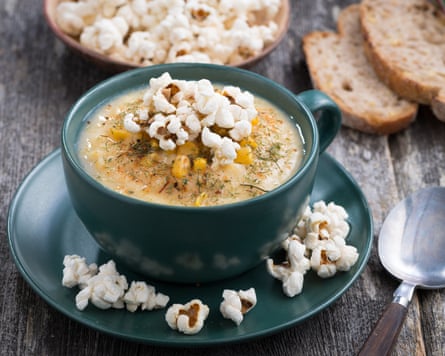
Finally, popcorn soup. Almost all the recipes I found tell you to whiz and sieve the soup before serving – often several times – so the popcorn element is not textural, except for the few pieces sprinkled on top as a garnish. This popcorn soup recipe from A Food Lover’s Kitchen, modelled on a dish from a Seattle restaurant, also uses fresh corn on the cob. The kernels are first stripped off, and the denuded cobs used to make corn stock. Otherwise it’s popcorn, celery, carrot, onion and cream, resulting in a smooth chowder with a delicious buttery corn taste. Just don’t try to take it to the cinema with you.

‘Absolute nightmare’: Brexit bellwether constituencies revisited 10 years on | Brexit | The Guardian

Keyword – UK news
Trefwoorden – Brexit, European Union, UK news, England, Scotland, Wales, Devon, London, Northamptonshire, Politics
Title – ‘Absolute nightmare’: Brexit bellwether constituencies revisited 10 years on | Brexit | The Guardian
Author – https://www.theguardian.com/profile/daniel-boffey,https://www.theguardian.com/profile/bethan-mckernan,https://www.theguardian.com/profile/sammy-gecsoyler,https://www.theguardian.com/profile/severincarrell
Link – ‘Absolute nightmare’: Brexit bellwether constituencies revisited 10 years on | Brexit | The Guardian
Publish date – 2026-06-22T11:06:35.000Z
Category – News
URL – https://www.theguardian.com/uk-news/2026/jun/22/brexit-bellwether-constituencies-revisited-10-years-eu-referendum
T he Guardian has revisited five bellwether constituencies we reported on during the 2016 EU referendum campaign, and asked those we spoke to at the time how they now feel about Brexit a decade on from the vote.

Torridge and West Devon. Voted leave by 57.0%

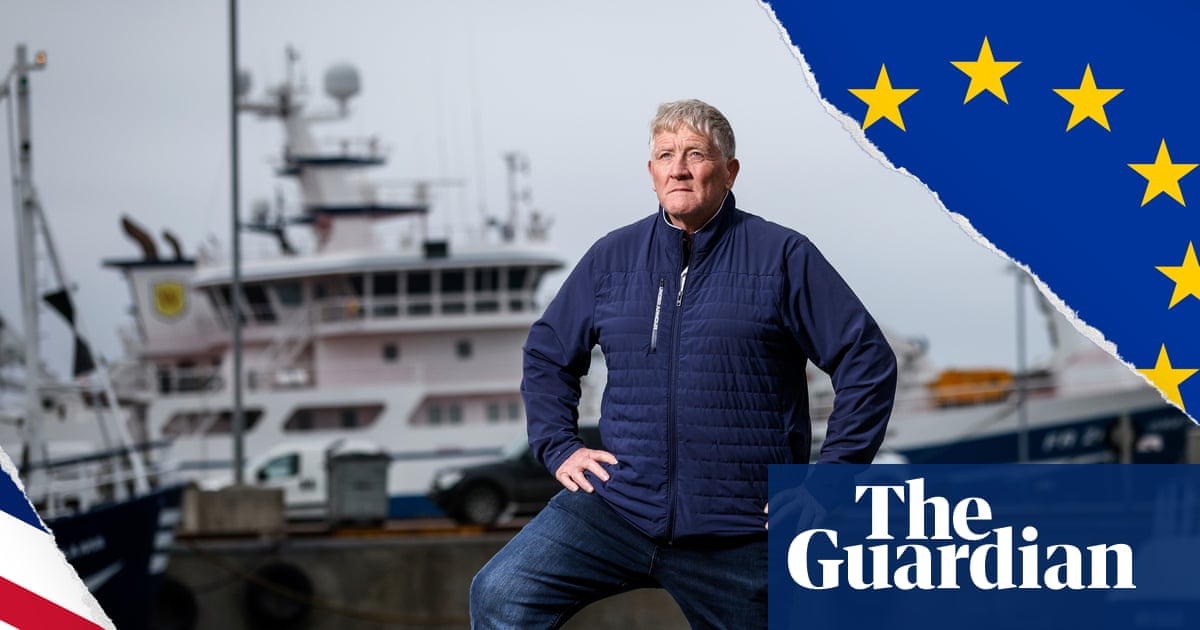
“Absolute nightmare, shambles, and still is to this day,” says Tony Rutherford a decade after he voted leave to save the British fishing industry.

Rutherford, who since 1979 has run a business in Appledore, north-west Devon, buying from fishers and selling on to wholesalers, even featured on a Ukip poster. “Nobody is listening. They might listen in June,” he said in 2016.

Now he says that Brexit has been a disaster from day one. Under Johnson’s deal, the UK fishing fleet with which Rutherford works achieved barely any increase in fishing opportunities, he says. “Sold down the river,” is how Rutherford puts it.

Then there were the huge additional export costs from 1 January 2021. He had “folders after folders” of information about what he needed to do ahead of time, but it all proved to be “useless”.

“I believe it was 4 January we shipped £47,000 worth of our first shipment of largely ray and dover sole,” he says. “The first thing you have to do is be VAT registered in France. You cannot export into France without that. You’ve got to employ a French accountant to do that for you. The cost of that is £2,000 a month. That first load was held up for five days.”

It was ruined. Under a compensation scheme set up by the government as the disaster unfolded, Rutherford got £11,000 back.

“That was our first encounter,” he says. “You have got other costs: you need a health certificate that costs £85 a go. You need a transport company to do the import documents: £245 a go. So every shipment is an extra £330.

“If you ship three times a week it is a thousand quid. There are other costs. Bearing in mind we are really a husband-and-wife team, it is £70,000 right out of my back pocket. It is horrendous.”

Then there is French customs. “On a health certificate, which is 16 sheets long, you have got eight sheets in English and eight sheets in French,” Rutherford says.

“If you miss one digit of a 10-digit code, your whole shipment is condemned the other side. Since Brexit we have lost about eight loads – anything from £15,000 to £50,000.”

He adds: “A lot of merchants in the south-west of England say: ‘I just can’t do it – it is not worth exporting.’ I’ll be exporting this Friday and I will have all the costs and all the worries until I get an email on Saturday saying customs cleared.” Does he regret his vote? “One hundred per cent – anybody would.” Daniel Boffey

Ceredigion. Voted remain by 54.6%

In 2016, the then Liberal Democrat MP for Ceredigion, Mark Williams, said he was very confident campaigning for remain in the referendum: a YouGov poll at the time suggested his former constituency was the most pro-EU area in the UK.

Not only was the area’s rural economy “heavily dependent” on EU funding, the universities in Aberystwyth and Lampeter meant “we have been an enriched, cosmopolitan community for a very long time”, he said 10 years ago .

Much has changed since. University of Wales , Lampeter has closed; the constituency is now part of Ceredigion Preseli, which includes parts of north Pembrokeshire; and Williams was replaced by Plaid Cymru’s Ben Lake in the 2017 general election.

“The tide had already turned against the remaining Liberal Democrats in office by then but I have no doubt that the Brexit result contributed to me losing my seat,” Williams says today.

He and Lake say the local agricultural sector has suffered from leaving the EU.

Lake says: “Our upland sheep farmers are more dependent on subsidies than arable farms. The funding cycles used to run in five- to seven-year cycles, and now two years is a luxury. Most lamb exports still go to the EU, but now farmers have to get health and sanitary certificates and checks.”

While remain won in Ceredigion, Wales as a whole – unlike Scotland and Northern Ireland – voted leave, possibly because of large numbers of retired English people living there.

Support for Plaid Cymru has soared since. The Welsh nationalist party had its best general election result in 2024, and now leads Wales after sweeping Labour from office in May’s historic Senedd election .

According to Lake, Brexit “drew attention to constitutional matters”.

“It’s obvious that the current setup with a heavily centralised government in Westminster doesn’t work for Wales … or north-east England or Cornwall for that matter,” he says. “Since Brexit people have realised that it is Plaid Cymru that will stand up for Wales.” Bethan McKernan

Banff and Buchan. Voted remain by 54.0%

In May 2016, David Milne, the chair of the Scottish White Fish Producers Association, leaned against an EU funding sign on the quayside of Fraserburgh harbour and said he hoped Brexit would allow his industry to “manage our own destiny”, but he now feels their livelihoods were “bartered away”.

For Milne, “control” was the main appeal of Brexit. “We are bitter about it because we haven’t gained any,” he now says.

“Near 99% of fishermen voted for Brexit because we wanted more control. We wanted to manage the quotas and effort and have more say as to what happened in our waters.

“We was promised that, but that hasn’t happened. So that’s the thing, it was just lies that was told to us again.”

Scottish fishers have continued to voluntarily close spawning grounds in Scottish waters to rejuvenate cod stocks. But Milne says EU boats now sail north to exploit those waters.

“We designed the areas where we knew the time of year the cod was spawning in them. These are things that was taken onboard ourselves, as fishermen, to manage the cod stocks.

“And now we’re seeing EU vessels from Holland coming all the way to Fair Isle and Shetlands to catch cod. It’s a bitter pill to swallow.”

Boundary changes in 2024 mean the constituency of Banff and Buchan no longer exists. Severin Carrell

Romford. Voted leave by 69.2%

A decade ago, Sue Connelly did not mince her words on Brexit. “We want our country back,” she said in the heat of the EU referendum campaign outside Margaret Thatcher House, the headquarters of Romford’s Conservative Association.

In the years since, the party’s fortunes locally have changed massively. At last month’s local elections, Reform UK took control of Havering council, where the east London town is situated, and completely wiped out the Tories in the process.

But some things have stayed the same. “Romford is very rightwing,” says Michael White, a former Conservative leader of Havering council.

Neither Connelly, who served as the constituency secretary, nor Osman Dervish, the former chair of the Conservative Association, who spoke to the Guardian in Romford during the 2016 campaign, responded to requests to reflect on the result a decade on.

White and Dilip Patel, the deputy leader of the Romford Conservative group, who also campaigned locally for the leave vote, now have “mixed feelings” about Brexit.

Patel says his choice was influenced by his role as a school governor where he could “see the pressure schools were under to accommodate children” who emigrated from Bulgaria and Romania after both countries joined the EU.

He also mentions pressures on the NHS and housing. “I felt that we needed to stop the influx of free movement until we got ourselves sorted,” he says.

White says he voted for Brexit because he “wanted policies for British people to be made in Britain and not in Brussels” and a hope that “the amount of money we were supposed to save could be better used on the NHS”.

But he is sceptical that the health service has seen any money promised as a benefit of Brexit. “In fact, the NHS has gotten worse,” says White.

Patel and White lost their seats as councillors to Reform UK last month, which they believe was partly influenced by Brexit. “I think it’s split the party,” White says.

They were both approached by Reform to switch party allegiances but declined, unlike some Tories. “Was I annoyed?” asks White. “Yes. Lots of people that I’ve counted as colleagues for a number of years decided to cross the floor.”

Among them was Andrew Rosindell, Romford’s MP for 25 years, who defected to the Farage-led party in January. The move has led to a bitter rift between the local Conservative Association and Rosindell, who was locked out of his constituency office located inside Margaret Thatcher House. He launched a high court action in an attempt to be let back in but lost. His name still appears on the door.

White says he was “saddened and disappointed” by Rosindell’s defection. “I’ve known Andrew since 1982 and we’ve been the best of friends. I think I was probably one of the first people he phoned to say he was defecting,” he says.

But party loyalty comes first and he is prepared to campaign against Rosindell. “It’s quite a perdition to go out there and campaign against somebody who’s been a friend for a long time but that’s what I need to do,” White says. “I‘m very unhappy I have to face that choice.” Sammy Gecsoyler

Kettering. Voted leave by 61.0%

Ten years ago, the then Conservative MP Philip Hollobone – resplendent in a union flag coat – predicted that places such as Rothwell, Northamptonshire , would have a critical say in Britain’s future.

“This is middle England,” he said at the time, as he led his pro-leave canvassers through the town. “This referendum is going to be decided in market towns like this.”

His side won the Brexit campaign – but Hollobone went on to lose his parliamentary seat in Kettering in 2024 to Labour. He believes this was a result of Nigel Farage’s Reform UK eating into his votes.

“The big Reform message in 2024 was real anger about immigration,” Hollobone says. The Conservatives failed to deliver on the promise of tightening migration when outside of the EU, he claims.

“The negotiations were handled really badly and the Brexit deal when it was achieved was suboptimal,” Hollobone says. “The tragedy is that over the last 10 years, the potential for Brexit has not been realised. That doesn’t mean it can’t be. But putting Brexit into practice hasn’t gone nearly as well as it should have done.

“That isn’t the fault of Brexit. That’s the fault of the politicians who are in charge of the process. The big letdown has been over immigration. We had the opportunity to really tighten up our immigration controls but in fact it went the other way.”

Hollobone supported Boris Johnson for Tory leader in 2019 after the fall of Theresa May’s government because of the dissatisfaction with her Brexit proposals. Johnson let him down, Hollobone says.

“Boris Johnson didn’t believe in the tough controls that many others did. Ukip stood down in the 2019 election believing Conservative promises that we would get tough on immigration. And when we didn’t, Reform took revenge in 2024.” Daniel Boffey

US firm goes public with £4.7bn proposal to buy easyJet after earlier bids rejected | easyJet | The Guardian

Keyword – Business
Trefwoorden – easyJet, Airline industry, Business, Mergers and acquisitions, US economy, Economics, Air transport, World news, UK news
Title – US firm goes public with £4.7bn proposal to buy easyJet after earlier bids rejected | easyJet | The Guardian
Author – https://www.theguardian.com/profile/marksweney
Link – US firm goes public with £4.7bn proposal to buy easyJet after earlier bids rejected | easyJet | The Guardian
Publish date – 2026-06-22T11:10:47.000Z
Category – News
URL – https://www.theguardian.com/business/2026/jun/22/castlelake-public-proposal-buy-easyjet

The US investment firm trying to buy easyJet has gone public with its latest £4.7bn takeover proposal for the budget airline, its third and latest offer to be rejected.

Castlelake said on Monday that an all-cash offer of 625p a share, valuing easyJet at just over £4.7bn, had been rejected by the airline’s board on Sunday, after previous offers at 560p and 600p.

Castlelake said it had now decided to make the bid public so that easyJet shareholders could evaluate it before a takeover deadline on Friday.

“Castlelake expected that the third proposal would elicit prompt engagement from the easyJet board,” the company said. “Following the rejection of three proposals by the easyJet Board, and given its unwillingness to engage meaningfully, Castlelake is announcing this third proposal to enable easyJet shareholders to consider its merits and provide their views on the third proposal to the easyJet board.”

Under City takeover rules, Castlelake, which is headquartered in Minneapolis and manages $36bn (£27bn) in assets, has until 5pm on 26 June to announce whether it intends to make an offer for easyJet.

Castlelake also said it has partnered with two investors to meet EU regulations whereby European airlines must be majority-owned by investors within the region. This rule still applies to easyJet, even after Brexit.

The company said it had partnered with Peter Bellew, a former chief operating officer at Riyadh Air, easyJet and Ryanair, and the former chief executive of Malaysia Airlines. Bellew runs Dooks Capital, a seed investment and advisory firm focused on AI in aviation, which he founded last September and operates out of Saudi Arabia.

The second partner is Mark Breen, the chief executive of Dublin-based Oneiros Aerospace, whose previous experience includes working for Oman Air.

“The third proposal includes these EU national partners investing and participating in the proposed acquisition of the company through their ownership and control of an EU company,” said Castlelake. “This EU partner will hold a controlling shareholding in the overall structure. The EU partner will at all times be owned and controlled by EU nationals.

“This proposed structure is consistent with structures adopted by a number of other European airlines that are subject to the same EU ownership rules as the company. Castlelake is confident that this is a clear, deliverable solution to ensure compliance with all applicable regulatory requirements.”

Castlelake made its first approach earlier this month , saying it intended to make an offer of at least 403p, which valued easyJet at £3bn.

On Monday, easyJet said Castlelake is trying to buy the airline “on the cheap”, and said that its proposed ownership structure of the carrier is “opaque”.

“The board believes that the third proposal represents an opportunistic attempt to acquire easyJet ‘on the cheap’ and that it is therefore not in the best interests of easyJet shareholders,” the company said.

“The board of easyJet carefully considered the third proposal with its advisers and concluded that it is highly opportunistic, delivered against the backdrop of easyJet’s temporarily depressed share price, and still fundamentally undervalues easyJet and its prospects.

“The premium, multiple and future share price analyses presented by Castlelake are based primarily on Middle East conflict-affected share prices, short-term earnings and analyst reports.”

Should Castlelake’s bid be successful, it could prove an interesting return to easyJet for Bellew, after a chequered tenure as chief operating officer from 2019 to 2022. His initial appointment, after being poached from Ryanair, prompted legal action from the Irish carrier.

The following year, the easyJet pilots’ union passed an overwhelming vote of no confidence in Bellew owing to his handling of staff and layoffs during the Covid pandemic – which notoriously included addressing pilots with a motivational speech plagiarised from the Irish taoiseach . Bellew quit in 2022 after easyJet suffered weeks of operational issues and flight cancellations.

Before news of takeover interest emerged, shares in easyJet had lost about a fifth of their value since the start of the year.

The airline’s share price has risen by 40% over the past month amid prospects of a takeover. Shares were up 3.4% at 521p by early afternoon on Monday, making easyJet one of the top risers on the FTSE 250.

In October, reports emerged that the Swiss-headquartered shipping company MSC was considering a takeover of the business . In 2021, easyJet rejected an approach from the rival airline Wizz Air.

EasyJet, which is headquartered in Luton, England, and employs more than 16,000 people around the world, is one of Europe’s three biggest low-cost airlines, behind Ryanair, with Wizz Air in third place.

Castlelake is led by its executive chair and founder, Rory O’Neill. It entered talks in January with the bankrupt US carrier Spirit Airlines over a possible takeover.

Castlelake previously bailed out collapsed Scandinavian Airlines (SAS) and then sold on its shares to Air France-KLM.

Improved performance, freedom of movement and less pain: how to start a mobility practice | Well actually | The Guardian

Keyword – Wellness
Trefwoorden – Well actually, Fitness, Life and style
Title – Improved performance, freedom of movement and less pain: how to start a mobility practice | Well actually | The Guardian
Author – https://www.theguardian.com/profile/madeleine-aggeler
Link – Improved performance, freedom of movement and less pain: how to start a mobility practice | Well actually | The Guardian
Publish date – 2026-06-22T16:00:18.000Z
Category – Lifestyle
URL – https://www.theguardian.com/wellness/2026/jun/22/how-to-start-mobility-practice

Fitness is often measured through numbers: how much weight a person can lift, or how fast or far they can run. But one important metric is harder to quantify: mobility.

Mobility gets overlooked, because the relevant exercises do not “have the instant visual appeal of traditional workouts”, says Tyler McDonald, certified personal trainer and senior brand manager for the National Academy of Sports Medicine.

Mobility can’t be tracked on a leaderboard, and won’t significantly change how your body looks. But it will help you feel better and do better at just about everything else. As McDonald puts it: “It doesn’t matter how much you can bench-press if your shoulders hurt too much to put a carry-on bag in the overhead bin.”

So what is mobility and how does one start incorporating it into a fitness routine? We asked experts.

What is mobility?

Although “mobility” and “flexibility” are often used interchangeably, they don’t mean the same thing, says Dr Andrew Jagim, a sports medicine expert at the Mayo Clinic Health System.

Flexibility refers to the passive ability of a muscle or joint to move through a range of motion, Jagim explains. Mobility, on the other hand, is more active and incorporates strength, motor control, coordination and stability.

How deep you can sink into a forward fold, for example, is a matter of flexibility. But being able to move from a forward fold into a squat and back again requires mobility.

Why is mobility important?

“The biggest benefit of good mobility is freedom of movement,” says McDonald.

When your body moves in the way it is supposed to, the basic tasks of life feel easier – you can squat down to pick up keys you dropped, reach into the back seat of your car, or run around without your body feeling stiff and painful.

Movement requires a series of complex and overlapping systems in the body to work in sync: joints for bending, hinging and pivoting; muscles for moving the joints; and the brain and nervous system for balance and coordination.

Without good mobility, your body may still be able to accomplish daily tasks, but it will look for shortcuts, enlisting the help of joints and muscles that probably shouldn’t be involved.

“If your hips are locked up from sitting at a desk all day, your body still needs to find a way to let you bend over,” McDonald says. Often, it does so by “borrowing” some of that movement from your lower back. Over time, McDonald explains, this compensation can lead to chronic aches, premature joint wear, and a much higher risk of injury during sudden or heavy movements.

Being able to move efficiently is also essential to ageing independently, and fall risk is a major issue as people age. A 2023 paper in the International Journal of Environmental Research and Public Health found that many elderly adults who fall are not injured, but must call emergency services for help because they lack the hip and knee mobility required to get up.

“Those left lying on the floor for over an hour, even without injury, are more likely to die within six months,” the paper read.

Even for those in the bloom of youth, for whom healthy ageing seems like a distant concern, mobility has lots of immediate benefits, including improved athletic performance, says Dr Kelly Starrett, physiotherapist and co-author of the book Built to Move.

“When we have tissues that are more compliant, joints that work better, more efficiency, better recovery, power goes up,” Starrett says. This allows an athlete with better mobility to work harder than their competition, because their body is moving more efficiently and not using energy on wasteful movement.

More from How to start:

How to start meditating

How to start weightlifting

How to start budgeting

How to start running

How do you incorporate mobility exercises into your routine?

Sit on the ground. It’s as simple as it sounds: sit on the ground for 20-30 minutes a day. You can do it while you watch TV in the evening, and move between as few or as many positions as you want. “Sit side-saddle, hurdler, on your knees, cross-legged, it doesn’t matter,” Starrett says. Over time, what starts to happen is “we start to spend time in very fundamental shapes”, he says.

Try soft tissue work . Although not the same as regular mobility work, Starrett says that short sessions of compressing soft tissue (like muscles, tendons, fat and skin) can have huge benefits, including improved blood flow and a greater range of tissue movement.

To do this, place a foam roller or tennis ball on the floor, and simply … roll around on it for a while. Starrett suggests committing to 10 minutes a day.

“Ask yourself: What’s sore? What hurts? What feels stiff?” he says. Then roll on that area. As you do so, make sure you can breathe; if the sensation is too intense and you can’t breathe, back off a bit by putting less weight on the roller or ball. If that’s still too intense, you can also practice in a chair or against a wall.

Compression should be limited to soft tissue, meaning you shouldn’t roll directly on a joint, as this can cause the joint to overextend. Roll above or below the knee, for example, but not on the knee itself. If you have a torn muscle or broken bone, speak to a doctor before doing any soft tissue work.

Integrate “mobility snacks ”. “You don’t need to commit to an hour of painful contortions each day,” in order to improve your mobility, says McDonald. Instead, he suggests aiming for 10-15 minutes of mobility work three to four times a week. This can be done as a dynamic warm-up before a workout, or while winding down at night. He suggests prioritizing three foundational movements:

90/90 hip switches : Sit on the floor with the front leg bent at a 90-degree angle (thigh out in front of you and calf perpendicular to you) and the back leg bent at a 90-degree angle (thigh out to the side, calf roughly parallel to you). Slowly rotate your knees to the opposite side without lifting your feet off the floor. “This is fantastic for opening tight hips,” McDonald says.

Cat-cow stretch . With your hands and knees on the ground, arch your back towards the ceiling, dropping your head between your arms. Then, slowly drop your back and raise your head and glutes towards the ceiling. This helps with spine mobility.

World’s greatest stretch. Yes, this stretch has quite the name, but for good reason. Start in a plank. Bring the right leg forward into a low lunge position. Stretch the right arm overhead towards the ceiling, twisting the upper body. Then, bring the right hand behind the head and attempt to touch the ground with the right elbow. “It hits your hips, hamstrings and upper back all at once, making it incredibly efficient,” says McDonald.

‘I’ll be able to take it with me wherever I live’: the best graduation gifts, chosen by graduates | Graduation | The Guardian

Keyword – The Filter
Trefwoorden – Graduation, Students, Family, Life and style
Title – ‘I’ll be able to take it with me wherever I live’: the best graduation gifts, chosen by graduates | Graduation | The Guardian
Author – https://www.theguardian.com/profile/rhiannon-evans
Link – ‘I’ll be able to take it with me wherever I live’: the best graduation gifts, chosen by graduates | Graduation | The Guardian
Publish date – 2026-06-22T14:00:25.000Z
Category – Lifestyle
URL – https://www.theguardian.com/thefilter/2026/jun/19/best-graduation-gifts-uk

T here’s considerable pride to be taken from graduating, and it’s a moment friends and family are often eager to mark with a gift. But what presents best cement this major milestone? As leaving celebrations of all stripes approach, we asked recent graduates to tell us about what they loved receiving, from the sentimental to the practical.

“When I graduated from York, my parents treated me to a meal at a restaurant I’d had my eye on since starting my course,” says reader Toby Beer , a biology graduate. “It was a brilliant send-off to celebrate my time in Yorkshire.”

Alternatively, buy them a voucher for their favourite restaurant, or one that covers various restaurants, such as Squaremeal .

“I was given a Canon G7 X [digital camera] ,” says fashion graduate Kayleigh McKenna . “I had wanted a camera for as long as I could remember and was able to capture the whole day in gorgeous photos.”

A reusable point-and-shoot film camera is a more affordable option for an analogue-loving gen Zer. Kodak’s Ektar H35 is a half-frame model, so the recipient can get twice as many shots from each roll of film.

For Mia , who graduated with an early childhood education degree, a thoughtfully chosen piece of art made the perfect gift: “My parents gave me a painting by Kimi Zoet that features all of my favourite spots in the city where I went to university, along with the houses I lived in. I’ll be able to take it with me wherever I live in the future.” Or try Artfinder for original art from independent artists.

Poppy Park was thrilled to get a pair of gold hoop earrings from her mum: “Every time I wear them, I’m reminded of the hard work that got me through my degree,” she says. We love these from Monica Vinader.

Amy Klaire was given a Coach handbag : “It’s stylish and practical, symbolising a step into adulthood,” she says.

If leather goods are out of budget, a small sentimental gift can be just as nice: “My sister gave me a Jellycat egg wearing a mortarboard,” says sports coaching graduate Cerys Yardley-Turpin . A Star Wars fan in your life? We love this Grogu plush in a full graduation outfit .

Beyond the ceremony

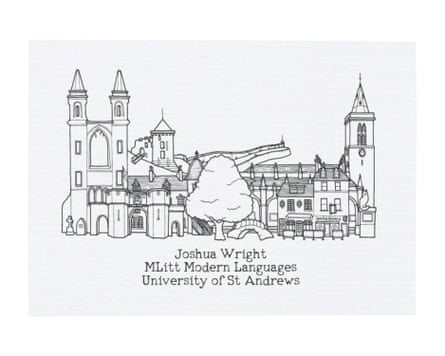
Otherwise, say it with words. “I received cards from my friends and family – some were handmade – and I’ve kept them all,” says Rowan , a history of art graduate. These personalised cards featuring the city they’ve graduated from are a thoughtful option they can keep.

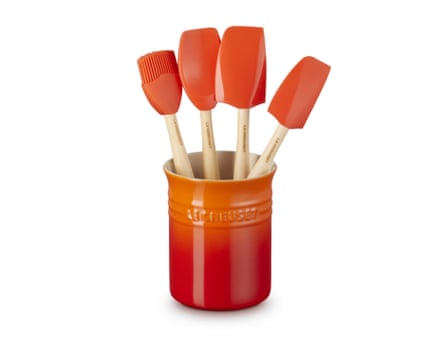
Or what about some homewares for post-grad life? Bethany Love got some “nice rose-shaped gin glasses”. We love these coupes from Our Place, or try platters for dinner parties , or even a posh Le Creuset utensil set .

You could also help continue their broader education: “Each time I use the Art Fund life membership given to me by my uncle – which is often – I remember our shared love of art,” says Julia Marlow .

Art Fund’s National Art Pass includes free entry to 250 museums, galleries and historic houses and 50% off some exhibitions, and is available for three months upwards.

For Sinead Campbell , a grownup leather wallet was the perfect gift from her parents. “I lost my wallet while studying abroad during my second year, and for the following year, tied my cards together with a hairband. When I graduated, my parents bought me a vintage leather wallet. It was a practical present, and also a mark of maturity, symbolising the potential for prosperity. I still carry it around with me every day. ”