Keyword – Football
Trefwoorden – World Cup 2026, World Cup, Football, Sport
Title – World Cup 2026: Bellingham playing with ‘chip on shoulder’, Côte d’Ivoire’s Wahi barred over alleged fixing – live | World Cup 2026 | The Guardian
Author – https://www.theguardian.com/profile/billy-munday,https://www.theguardian.com/profile/luke-mclaughlin,https://www.theguardian.com/profile/martin-belam,https://www.theguardian.com/profile/graham-ruthven,https://www.theguardian.com/profile/emmabrockes,https://www.theguardian.com/profile/will-unwin,https://www.theguardian.com/profile/jeff-rueter,https://www.theguardian.com/profile/jonathan-liew,https://www.theguardian.com/profile/jacob-steinberg
Link – World Cup 2026: Bellingham playing with ‘chip on shoulder’, Côte d’Ivoire’s Wahi barred over alleged fixing – live | World Cup 2026 | The Guardian
Publish date – 2026-06-18T14:30:38.000Z
Category – Sport
URL – https://www.theguardian.com/football/live/2026/jun/18/world-cup-2026-england-croatia-fans-czechia-south-africa-switzerland-bosnia-and-herzegovina-canada-qatar-mexico-south-korea-live
This, for me , is the clear winner in BTL comment of the day.
Hot off the press (OK, comments section) from Smolgrad.

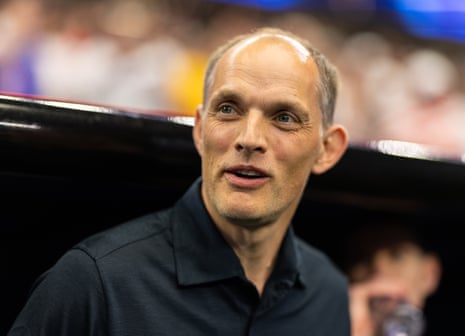
So far I’m liking this Tuchel fella. He’s honest, direct, but also empathetic. Of course if England draw once I’ll completely turn against him and a couple of the players.
Meanwhile , Peter sends a message entitled “In defence of Southgate”
“Quite a few people are contrasting last night’s performance with the Southgate era, which they seem to remember as eight years of utter tedium. But England played some great attacking football under Southgate at the last World Cup: 6-2 v Iran, 3-0 v Wales, 3-0 v Senegal, and toe-to-toe with an excellent France. Southgate’s first World Cup in 2018 was obviously fun too – the football wasn’t particularly sophisticated, but it felt good. The last Euros was mostly dreadful, of course, but there was much more to the Southgate era than that. Let’s not let lazy narratives or hazy memories rewrite history and traduce a man who did so much for England!”
I couldn’t agree more. Southgate transformed the team on the pitch, and its ethos off it, both in wholly positive terms. That was no mean feat.
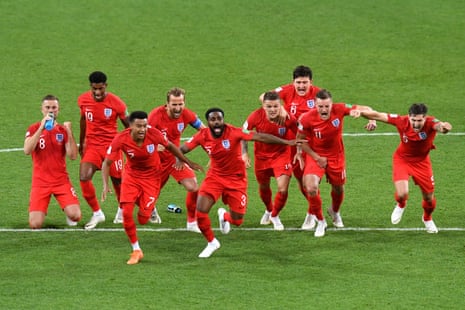
“ My 19-year-old old student son was determined to watch every match, perhaps realising that the end of his first year at university is probably the sweet spot for such an insane undertaking,” emails Richey.
“He even hung in the for the Australia v Turkey game with a 7am finish here in Blighty. Sadly he was undone when he realised that Austria v Jordan kicking off at 3am on Wednesday would likely impinge on his ability to be awake and ready for the first ball of the second Test a handful of hours later. Even sports fans have to make compromises sometimes!”
I firmly support prioritising cricket over football in the summer. Thanks for the email!
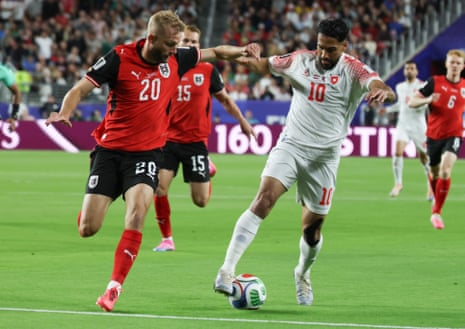
Are you ready for Czechia v South Africa , the first of four matches on the menu on day eight?
Ready or not, this match is happening at Mercedes Benz Stadium in Atlanta, at 12pm local/2am AEST/5pm BST/12pm EDT.
Daniel Harris is currently warming up the dance floor here:
On the subject of trying to watch all 1,453 matches at this tournament, krishnamoorthy writes:
“It will be insane even if you are a retired person who can just flip day and night (assuming one is in Europe) and watch all the games. It is impossible when you have a job and other obligations like shopping, gardening etc.
“Speaking for myself I will TRY to catch all the games from quarter-finals onwards.”
Spooky, because shopping and gardening are two things that will assuredly interfere with my World Cup watching. Especially watering, what with this looming heatwave. Thanks for your email.

“ Jacob Steinberg in today’s edition is absolutely correct,” emails Jeff Sax. “If the defence does not improve, England will struggle to progress.
“However, I enjoyed their second half play – finally they showed their attacking potential.”
Here’s Jacob’s piece about the frailties that were perhaps masked by England’s second-half recovery against Croatia.
Now that the first round of fixtures of the 2026 World Cup is in the books, it’s time to go around the houses again, starting with Group A and B, which include co-hosts Canada and Mexico.
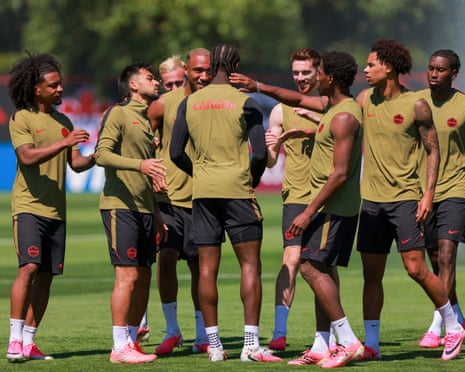
After their opening draw with Bosnia and Herzegovina , Canada face Qatar in Vancouver. Three points would significantly boost the co-hosts’ chances of making it out of a men’s World Cup group for the first time in their history.
Meanwhile, Mexico are already well on their way to the last 32 after their 2-0 win over South Africa. A victory against South Korea would allow Javier Aguirre and his players to focus on the next round.
Here is your complete guide on how to watch today’s World Cup games, including kick-off times, broadcast networks, and online streaming options.
A little earlier, Sky Sports News were talking to the sleep expert James Wilson, regarding the challenges for fans in staying up all night/most of the night to watch World Cup games from across the pond.
“If you try and watch every game … you have to be a bit careful,” Wilson said. “Because sleep deprivation can be detrimental to health and safety.”
Thankfully, speaking for myself, I am absolutely not going to try and watch every game.
Is anyone? If you are going to try and watch every game … email us with your story.

There was a moment on Sunday morning when, scrolling through pages of content celebrating the New York Knicks’ spectacular NBA championship win in the city – videos in which it seemed people of every age, race, background and zip code put aside their differences to hug and scream – I wondered how far the principle of sport-as-the-ultimate-leveller might stretch.

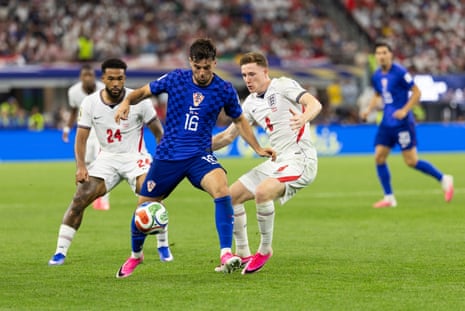
Good performance by England last night. Especially in the second half the sharp and accurate passing, the work rate across the midfield and attack but most impressive was the energy in the press snuffing out Croatia’s ability to settle and create. As someone else said, I’d doubt they could sustain that level of energy in the oppressive heat conditions but last night was an excellent start to the competition… btw, a special mention for MOTM Harry Kane, a truly magnificent performance. The man seems to be going from strength to strength since his move to Bayern.
England and pressing is an interesting issue … in his press conference [pardon the pun] before the New Zealand friendly, Tuchel said he wanted his players to try and win the ball back high up the pitch at this tournament – but also that not chasing too much would be important.
It seemed a contradiction in terms, unless of course, he is planning to ask his players to switch between an intense pressing game and a more “economic” style. For sure, on the hotter days and deeper into the tournament, a relentless pressing game will very difficult, and in fact, almost certainly impossible.
Thanks Martin , hi everyone.
That is me done for the day. I might as well embarrass myself again, I am expecting wins for Czechia and Mexico , and I am expected Group B to be all draws again. I’ll see you tomorrow when we can discuss how terrible my hunches are. In the meantime, over to Luke McLaughlin .
Incoming celebrity cameo alert – Spain ’s King Felipe VI will be at his country’s next match, which is in Guadalajara against Uruguay . It is quite a significant diplomatic move, as relations between Mexico and Spain have been strained in recent years over their shared colonial legacy. The king will visit Mexico’s president during the trip, where no doubt cameras will cut to a close-up of him at the match and someone on co-comms will be baffled as to who he is.
In non-World Cup news, Celtic have been having a moan up about the opening fixture of their title defence this year. AP reports that the unlikely combination of Calvin Harris concerts and Commonwealth Games events is pushing Celtic’s first home match to a Monday night.
Instead of being played on the Saturday or Sunday, Celtic’s home meeting with Dundee will be on Monday 3 August.
“We have been told that there is no choice owing to Police Scotland being unable to support the fixture on a weekend which coincides with other events,” Celtic said. Referring to a tradition of raising a flag in the middle of the pitch at the start of a title defence, Celtic said “Clearly, our priority will always be our supporters and, against any measure, staging the Champions Flag Day on a Monday evening is disappointing.”
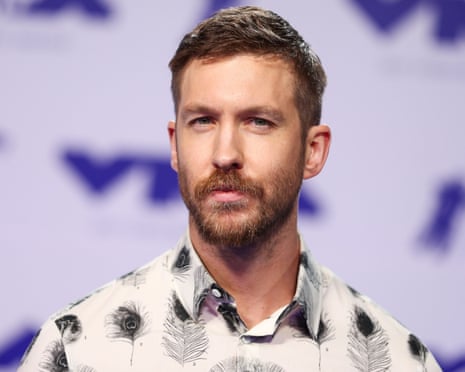
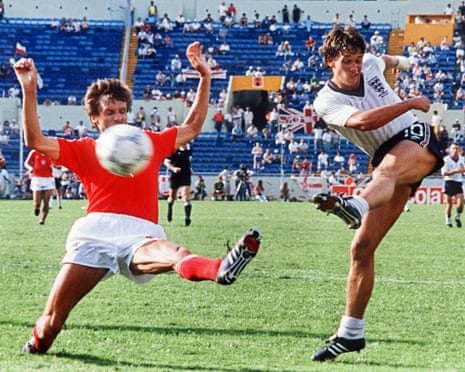
I don’t want to write exclusively about England all day, but there are some quotes from Gary Lineker about Harry Kane I thought I would share. Kane moved level with Lineker on 10 World Cup goals for his country with last night’s efforts.
I’m absolutely delighted that Kane equalled my record. Welcome to the double-figures club. It’s great. I mean, it may have taken him a World Cup more. In all seriousness, Harry Kane is, I think, the greatest English striker we’ve ever had. I genuinely think that now. His all-round game is, for me, what separates him from all the others.
The day so far …
Fifa has played down reports that ticketless England supporters were able to gain entry for the World Cup opener against Croatia after evading security checks at the Dallas Stadium.
England head coach Thomas Tuchel has complained he could not see his players singing the national anthem because of a scrum of photographers blocking his view – and has urged Fifa to intervene.
Mexican military forces intercepted and brought down a drone that flew near the South Korea team’s training camp ahead of its World Cup match against Mexico, a federal official told the Associated Press.
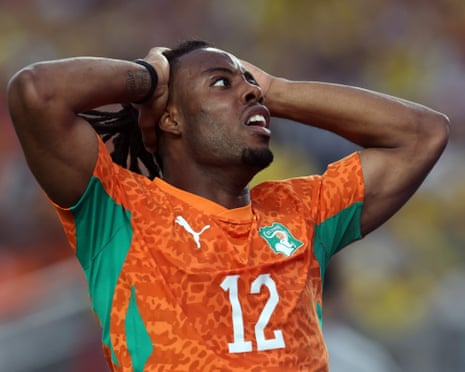
The Côte d’Ivoire striker Elye Wahi has not been authorised to travel to Canada for his team’s next World Cup match against Germany. He is currently being investigated for alleged match-fixing.
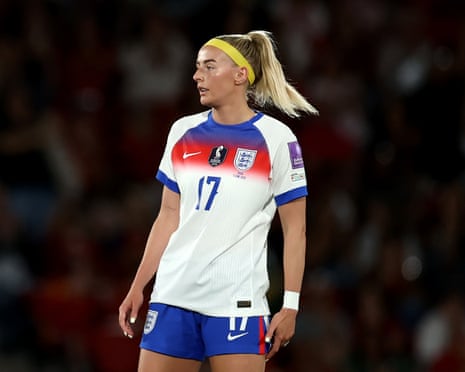
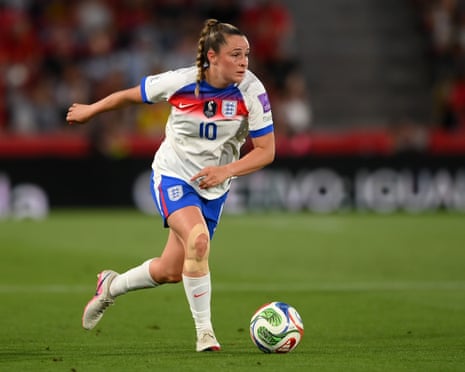
England’s women will need to overcome Greece and either Slovakia or Ukraine to qualify for the 2027 World Cup. Wales have drawn Albania, Scotland face Czechia, and Northern Ireland have Portugal in the first round of the play-offs.
Osasuna winger Víctor Muñoz will become the first signing of Andoni Iraola’s reign at Liverpool after the club triggered a £34.5m release clause, beating Newcastle to his signature.
Real Madrid have signed Ibrahima Konaté. The France defender leaves Liverpool when his contract expires on 30 June and has agreed a four-year deal at the Bernabéu.
Todays matches at the World Cup are in Group A and Group B, featuring Czechia v South Africa (Noon ET, 5pm BST), Switzerland v Bosnia and Herzegovina (3pm ET, 8pm BST), Canada v Qatar (6pm ET, 11pm BST) and Mexico v South Korea (9pm ET, 2am Friday BST).
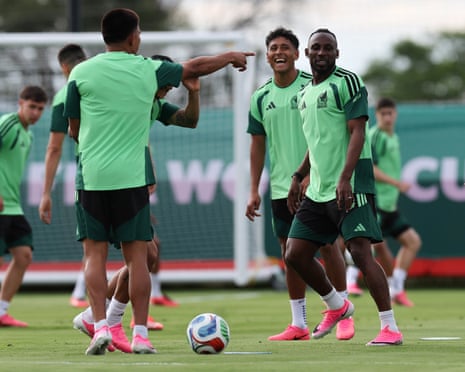
Four matches today, and you might even be able to start pencilling things into your wall chart for the knockout stages. If one of Mexico or South Korea wins that game, they will have guaranteed themselves progress. Defeat for Czechia or South Africa could be costly though, as depending on the Mexico v South Korea result, one of those nations might find themselves locked into bottom place in Group A, regardless of what they do in their final game.
Everything is up for grabs in Group B, where thanks to two 1-1 draws in the opening games, the teams are currently being separated in the table on fair play points.
British nations discover play-off opponents for 2027 women’s World Cup qualification
In Nyon, Uefa have been shuffling some balls again to do the play-off draw for the 2027 Fifa Women’s World Cup qualification, which you need a degree in astrophysics to understand.
In Path 1, England face Greece . In Path 2, Wales have drawn Albania , Scotland face Czechia , and Northern Ireland have Portugal . Those two-legged matches happen in October.
There is then a second round of two-legged matches in November and December, with the draw for that being:
Slovakia / Ukraine v Greece / ENGLAND Finland / Serbia v Belarus / Italy NORTHERN IRELAND / Portugal v Croatia / Iceland Albania / WALES v Romania / Norway Israel /Switzerland v Kosovo / Austria Czechia / SCOTLAND v Lithuania / Sweden Belgium / Poland v Kazakhstan / Ireland Turkey / Slovenia v Hungary / Netherlands
And then finally you have qualified – except for the lowest ranked team to win their play-off tie, who have to go to the intercontinental play-offs. It is all quite the head-scratcher to be honest.
Good morning/evening/afternoon etc, the last thing I said to you in the comments yesterday was I expected a laboured Portugal victory and a low-intensity 0-0 between Croatia and England so feel free to ignore my opinions for the rest of the tournament I guess?
That’s all from me. Martin Belam is here for the next couple of hours.
Côte d’Ivoire striker Wahi barred from World Cup match in Canada amid fixing probe
The Côte d’Ivoire striker Elye Wahi, who is being investigated for alleged match-fixing, has not been authorised to travel to Canada for his team’s next World Cup match against Germany, the Ivorian football federation have said. Côte d’Ivoire face Germany on Saturday in Toronto.
The federation said Wahi will not be able to travel with the squad because “the necessary administrative authorisations for his entry into Canadian territory could not be obtained at this stage.”
Wahi started in attack when Côte d’Ivoire beat Ecuador 1-0 in its opening game in Philadelphia on Monday. He will remain in the United States pending the team’s return, the federation said.
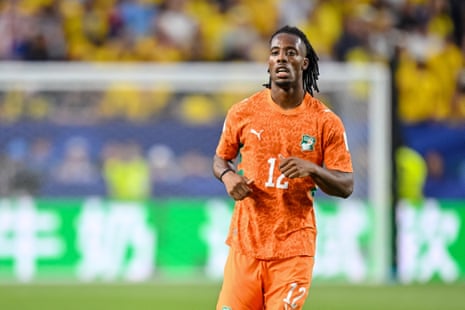
The French football league said on Wednesday that an “unusual amount of bets” were placed internationally on Wahi receiving a yellow card during a Ligue 1 game with Nice in May.
The French league was alerted by partners monitoring betting markets about suspicious betting activity at international level concerning Nice’s home game against Metz on 17 May, which ended 0-0, and in which Wahi was shown a yellow card.
The French league said it passed this information to relevant police and gambling authorities, as well as the French football federation.
Asked whether Wahi was questioned by police, the Marseille prosecutor’s office told the Associated Press that “a 23-year-old professional football player, competing in France’s Ligue 1 championship, was arrested on May 29, 2026, as part of their investigation.”
The office added “the investigation concerns alleged offences of organised fraud, organised sports corruption, receiving stolen goods, and money laundering.” The player was questioned while in police custody and was released without being detained. The office added the investigation was ongoing.
Wahi’s representatives did not immediately respond to requests for comment.
The Ivorian football federation (FIF) said it has not been officially notified “of any judicial or administrative proceedings” concerning Wahi.
“During this particularly delicate period, the FIF offers its full support to the player and reaffirms its confidence in him,” it said. “Elye Wahi remains an important member of the Ivory Coast national team.” Associated Press
Group K: The final match of the first round of fixtures returned to the scene of the opener as Colombia ran out 3-1 winners against Uzbekistan in Mexico City. The competition debutants levelled things in the second half after Daniel Muñoz’s opener before Luis Díaz and Jaminton Campaz sealed three points for Los Cafeteros .
As you can imagine, the Azteca was very well populated by yellow Colombia shirts.
“It is a beautiful energy, but emotionally it weighed on some of the players,” admitted Colombia’s manager, Néstor Lorenzo . “I think it had to do with the emotional burden of the first game and also with the responsibility of being favourites.”
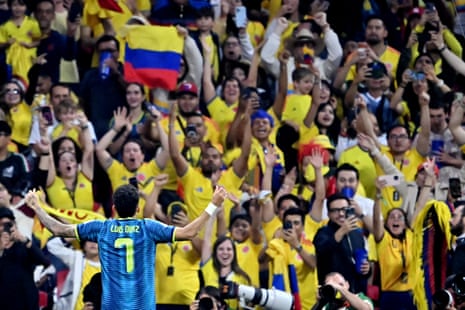
Uzbekistan are led by Fabio Cannavaro and can take pride in going to toe to toe with Colombia for the majority of the game, equalising through Abbosbek Fayzullayev after an hour.
“When a small team like ours works the way it did today, it’s clear that losing 3-1 is too much,” said Cannavaro.
“We have to grow. I always tell them to stay in the match. It’s not easy to play against a team like Colombia or Portugal … Today the team understood when we had to suffer, when we had to control the ball, when we had to switch from one side to the other. I think the second half was very good. But at this level, when you make mistakes, you pay heavily.”
A first World Cup game at the Azteca is pretty special, though. “Playing here is something wonderful. It’s something you will remember your whole life. It’s the first time my players have played in this stadium, and they will remember it for ever,” Cannavaro said.
Ibrahima Konaté to join Real Madrid
Real Madrid have wrapped up another big-name free transfer with Ibrahima Konaté joining Bernardo Silva through the door. The France defender leaves Liverpool when his contract expires on 30 June and has agreed a four-year deal at the Bernabéu.
Konaté, 27, won the Premier League, FA Cup and two League Cups during his five years at Anfield and started the 2022 Champions League final defeat to his new club. He revealed a couple of weeks ago how the deaths of Diogo Jota and his father in the last year have led to him living with depression.

Battle of the confederations after round 1:
Europe P16 W7 D6 L3 (This includes Eng v Cro)
South America P6 W2 D2 L2
Africa P10 W2 D4 L4
Asia P9 W2 D4 L3
Concacaf P6 W2 D1 L3
Oceania (NZ) P1 D1
Straight match-ups (W-D-L):
Europe 0-0-0 South America Europe 2-3-0 Africa Europe 2-2-2 Asia Europe 0-0-0 Concacaf South America 1-1-1 Africa South America 1-1-0 Asia South America 0-0-1 Concacaf Africa 0-0-0 Asia Africa 1-0-1 Concacaf Asia 0-0-0 Concacaf Asia 0-1-0 Oceania
(This was compiled using ol’ pen and paper, so sorry if there are any mistakes)
Muchímas gracias for this, Rogorn – I’m not sure what conclusions to draw from it other than that Oceania are the only unbeaten confederation after round one. New Zealand just don’t lose World Cup games …
The Asian teams had been doing very well until Iraq, Jordan and Uzbekistan were overpowered in the last couple of days.
Thanks Luke. Let’s take a look at the other game in Group L yesterday as a pretty uninspiring Ghana snuck past Panama 1-0 thanks to Caleb Yirenkyi’s late, late winner. There were more boos when the game was stopped for the drinks break in the first half – it was tipping it down in Toronto.
“I am tired,” said Ghana’s manager, Carlos Queiroz – and with good reason. The 73-year-old sprinted towards the Ghana fans at full time, fists punching the air.
“This was a really intensive game,” he said. “The wins in this World Cup are very expensive. Our players have shown they are ready to pay high prices for the win.
“With the football we played today we can count on Ghana to do something.”
With games against Croatia and England to come, it’s looking bleak for Panama in their first World Cup since 2018. “The result is painful, but that is because we deserved better,” said their manager, Thomas Christiansen . “We controlled the first half, but in the second half, we played their game a bit more. That’s not how we wanted to play, but now is not the time for regrets.”
It’s instructive to look back to the early days of Tuchel’s reign, last year, when he told his players (having mapped out the schedule before this World Cup) that England had 24 days to pull everything together.
Based on last night’s performance the signs are that Tuchel hasn’t wasted that time: and England are going to enjoy a decent tournament. But let’s not forget there is a looooooooooong way to go.
That’s all from me for now, Billy Munday is taking you through the next hour.
The question of whether or not Thomas Tuchel would sing England’s national anthem was pondered in the early days of his tenure.
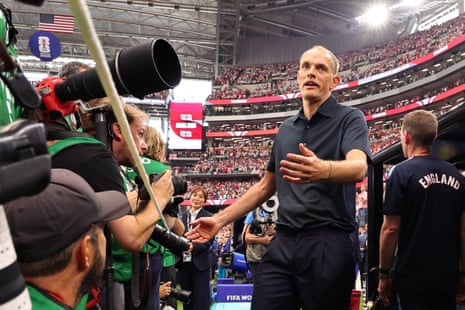
When it came to his first major tournament game with England, though, it turned out the German manager had the experience “ruined” by the massive scrum of photographers blocking his view of his players singing.
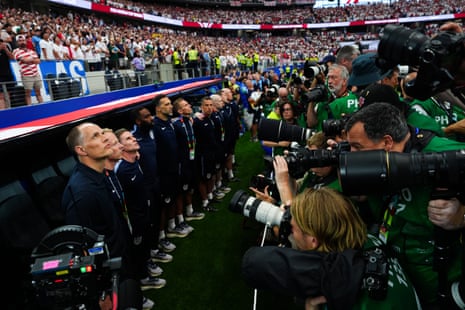
“I am begging Fifa to change the position of the photographers in the national anthem because I could not see my team in the national anthem,” Tuchel said.
“I was waiting for this moment. It was a very, very special moment today and I was standing in front of a wall of 50 photographers, half a metre away, and I could not see one single player. It ruined a little bit my experience.”
According to a headline on Sky Sports News earlier, England’s 4-2 win against Croatia constituted a “STATEMENT VICTORY”. The hype train has long since left the station.
Some may say it was even a statement of intent : an intent to win football matches, and lots of them.
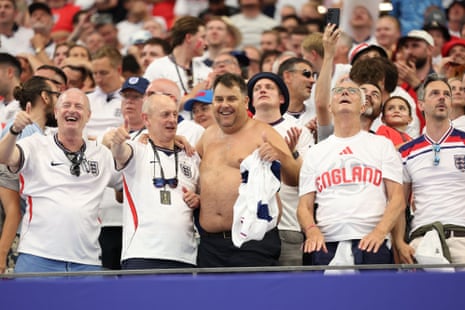
It’s never too late to have a bash at Bracketology, our game-by-game World Cup predictor. At my first attempt I came up with the Netherlands as winners, which some may find surprising.
Australia take on the USA in Seattle tomorrow .
Alexander Abnos and Jack Snape preview a blockbuster Group D showdown in the north-eastern United States.
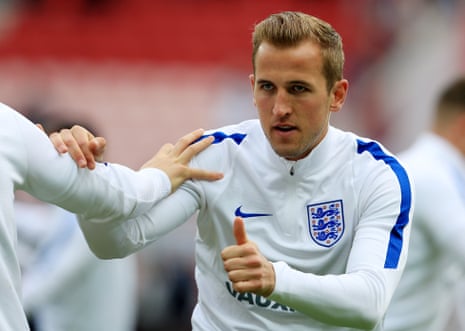
“ Never seen Kane so fit, ” (below) is quite a telling remark.
You know I’m not one to cling on to resentments – but he quite clearly wasn’t fit in 2024, and I wonder if he was even economical with the truth about the extent of whatever injury he was carrying then.
It’s great to see him fit and playing well, needless to say.
Back for some more BTL comments :

I’m delighted with the win and I loved the way England tried to play – runners from midfield, the courage to play through the middle, a pleasing intensity and pace, subs (some of them) having an impact . Tuchel has settled on a good side and a style that looks really promising for the challenges ahead. There’s loads to praise the side for.
But…
I don’t think it’s negative to talk about some obvious shortcomings last night. Nothing of major concern yet, and all things that ought to improve through the tournament. Losing the ball in midfield. Poor marking at the back. Lack of protection for the back four. The whole back line lacking familiarity – Stones and James looked rusty, O’Reilly not sure about coming into midfield, Konsa uncertain. Missing another tournament penalty Pickford punching when he should be catching Too little danger off the left
As I say, not so fair to focus on the negatives but these problems, especially the midfield protection and the shaky back five, need to and surely will get ironed out as the World Cup progresses. Almost all successful sides grow into the tournament.
Overall – good start, long way to go.

Surprised at so many nonplussed comments here last night. This was not the normal lifeless straightjacket performance from England, getting results through competence but no real guts or class. Some real verve and incisive purposeful attack interplay was on show last night. And regardless of age Croatia are a big scalp with a wily proven squad over the years. Never seen Kane so fit or as deadly serious. Feels different this England

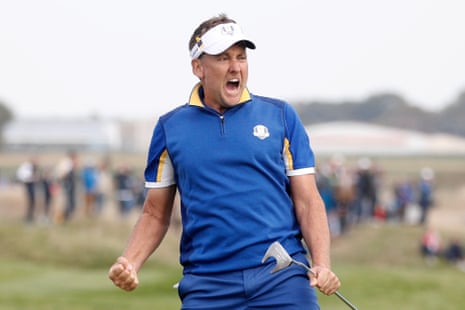
Well done on England winning against a top 15 ranked team at the World Cup for the first time since 2002. It seems a more united bunch of players and less of the inter team rivalry that dogged teams of the past. More of a Ryder Cup team feel. Maybe that was the secret sauce.
A Ryder Cup feel? That, surely, is the last thing we need.
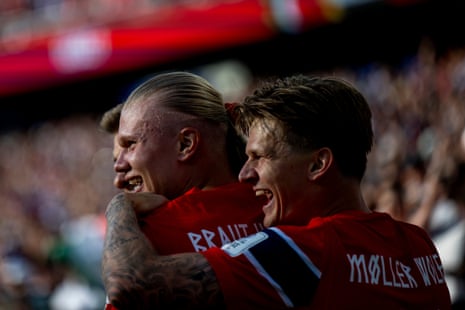
Folarin Balogun (USA) , Kai Havertz (Germany), Yasin Ayari (Sweden), Eli Just (New Zealand), Harry Kane (England), Erling Haaland (Norway) and Kylian Mbappé (France) all have two goals in this World Cup .
But who has three?
YOU CAN FIND OUT HERE:
Liverpool trigger release clause for Osasuna’s Muñoz
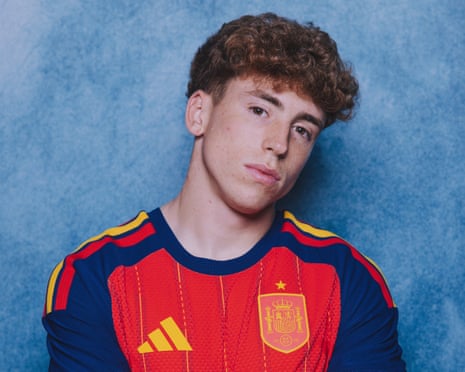
The Osasuna winger Víctor Muñoz will become the first signing of Andoni Iraola’s reign at Liverpool after the club triggered a £34.5m release clause, beating Newcastle to his signature. Muñoz will sign a six-year contract after having a medical on Wednesday in Atlanta, where he is part of the Spain squad at the World Cup.
Liverpool have been following Muñoz’s progress for an extensive period and sped up the deal after Iraola’s appointment because the head coach was eager to add his compatriot. Iraola spent most of his playing career at Athletic Bilbao, continues to closely monitor La Liga, and Muñoz has impressed him.
We interrupt our regular World Cup programming to bring you some hot Premier League transfer news …
Mauricio Pochettino now has the privilege of giving the new World Cup format a practical test.
The Argentinian wisely played it safe at half-time of the United States’ 4-1 thrashing of Paraguay, pulling Christian Pulisic before his calf could be kicked any more. The attacking midfielder said after the match that he had taken similar punishment before, and he was optimistic he would be fit for the next match. As of Wednesday, he was still training away from his teammates and wearing a sleeve on his left calf.
And so, Pochettino must weigh a question many have wondered since Fifa announced this would be the first World Cup with 48 teams. How much will teams gamble with players’ fitness after securing the three points many expect should be enough to ensure safe passage to the round of 32?
Next up a piece on the USA, the USMNT, the US – call them what you like. From Jeff Rueter again.
Who is the most prolific goal-scorer in the history of the World Cup ?
You can see the details here – with a mention of course for the World Cup legend Just Fontaine of France – who is currently sixth on the list.
Asked how he’s handling the scrutiny of coaching a World Cup co-host – where even apparently insignificant comments can end up in the headlines – Jesse Marsch was quick to flash a grin.
“Maybe we’ll get through this one without creating news cycles,” Marsch quipped a day before his Canada team welcome Qatar to Vancouver for a pivotal Group B clash. The teams are level on one point each after the first round of games, leaving the group wide open.
“ I don’t know anything about club football,” emails Mariana “… But I do enjoy watching the international competitions because of all the reasons you and your colleagues have written about in the last few days … I can’t listen to the German commentators at all, which is why I have been LOVING The Guardian’s MBM on the games for quite some years now, so thank you!
“I do have to nag about something: I – like many non-club-level-watchers – enjoy watching the underdogs play ( loved Cup Verde against Spain! ), mainly because of the fun, and spirit, and sometimes even humility they bring. Which is why it’s really difficult for me to watch the superstars go down at every touch, as the English players did yesterday. (I’m looking at you, Bellingham.)
“I just don’t enjoy it. What’s that all about? It completely disrupts the flow of the game, and is embarrassing to watch … I would even argue that the Croatian players seem to be able to get off their bottoms without making a fuss every time. And I’m not just saying that because they have been my team since 2006, I swear (watching Japan v Croatia at 16, in my home country, simply was a blast).
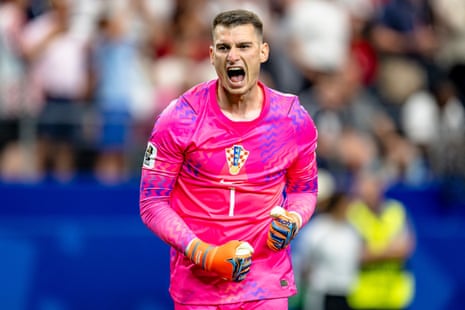
“Anyway, congratulations on your team’s success yesterday. Even though Kane had fumbled the penalty, and the incomparable pink kraken Livakovic should have been player of the match, and Bellingham went down every chance he got.”
Thanks for the email, Mariana. All sounds reasonable.
What sort of thing is happening later?
There are three matches – and all the following times are UK:
Czechia v South Africa (17.00) Switzerland v Bosnia & Herzegovina (20.00) Canada v Qatar (23.00)
Tuchel urges Fifa to intervene after photographers ‘ruin’ anthems
And in yet more Tuchel news …
England head coach Thomas Tuchel has complained he could not see his players singing the national anthem because of a scrum of photographers blocking his view – and has urged Fifa to intervene.
Tuchel led England to a 4-2 win over Croatia in their opening World Cup game at the AT+T Stadium in Arlington on Wednesday, with Harry Kane scoring twice and Jude Bellingham and Marcus Rashford scoring the third and fourth goals respectively.
He was unhappy that for his first tournament finals match in charge of England, he could not see his players during the rendition of God Save The King.
“I have to tell you something, I am begging Fifa to change the position of the photographers in the national anthem because I could not see my team in the national anthem,” he said.
“I was waiting for this moment. It was a very, very special moment today and I was standing in front of a wall of 50 photographers, half a metre away, and I could not see one single player. It ruined a little bit my experience.
“It is very emotional. When I was young and when I started coaching, this was too big to dream of this kind of occasion.”
“ They swarmed all over Croatia and gave a glimpse not so much of patterns of play, but of a willingness to actually do this, of the muscle, speed and ruthlessness that are undeniably there in this team.”
Barney Ronay is here to explain what happened in Dallas. It’s a piece about Jude Bellingham – but also about Thomas Tuchel.
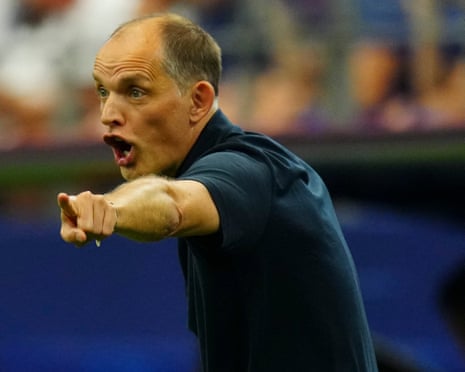
“Tuchel was present here in all black, with that familiar look of some founding American settler, a goggle-eyed Dutch farmer in a straw hat out there tilling the lands. He must take credit if not for the start, then for the way England altered the energy here.”
Shall we dip into the BTL comments … Well, why not? The first and third of these are about England: apologies in advance.

The defence is getting a lot of stick for those two goals, but in truth it was the failure of the midfield to get control that led to them. There were too many occasions when there were wide open spaces, loose passes, possession lost in dangerous areas. But the worst aspect was the passivity, the lack of serious pressing. England haven’t got great central defenders so midfield protection is vital.

One of the positive things about the first round of matches has been the refereeing, they’ve clearly decided to officiate with a light touch and it’s so much better for the game when they don’t blow up for every little bit of contact. Players have already realised they’re not getting free kicks by exaggerating every touch and they’re getting short shrift if they’re rolling about on the floor for no reason. Add in the fact that VAR isn’t trying to re-referee every game and I think they’ve got it pretty much spot on so far with their approach. Let’s hope it continues.

For a first game I thought England were fine. The fact we had some gears we could go through and some real power to bring off the bench bodes well. And it’s nice to see a bit of oomph after the years of Southgate tedium. Not sure Stones as first choice centrehalf is sustainable though – he’s not played all season and for all his silkiness I think will just be phased out for the more mobile Guehi.
Good too to see England’s two best players (Kane and Bellingham) actually looking fit and sharp. They were both shadows of themselves in the last tournament and if we’re going to do anything here we’ll need both with energy at the sharp end of the knock-outs.
There was more than a touch of “jibbing in” for England’s opener, if eyewitness reports of lax security and ticket checks are to be believed. And why shouldn’t they be?
Fifa has played down reports that ticketless England supporters were able to gain entry for the World Cup opener against Croatia after evading security checks at the Dallas Stadium.
An unspecified number of fans without tickets are said to have made their way into the ground despite a huge security operation being put in place at the home of the Dallas Cowboys in Arlington. Officials said that snipers were in place inside the stadium, with the Arlington police department deploying “highly trained personnel and specialised resources” at the venue.
But despite those measures and some fans having paid thousands of pounds for tickets, there were widespread reports of supporters without tickets gaining access.
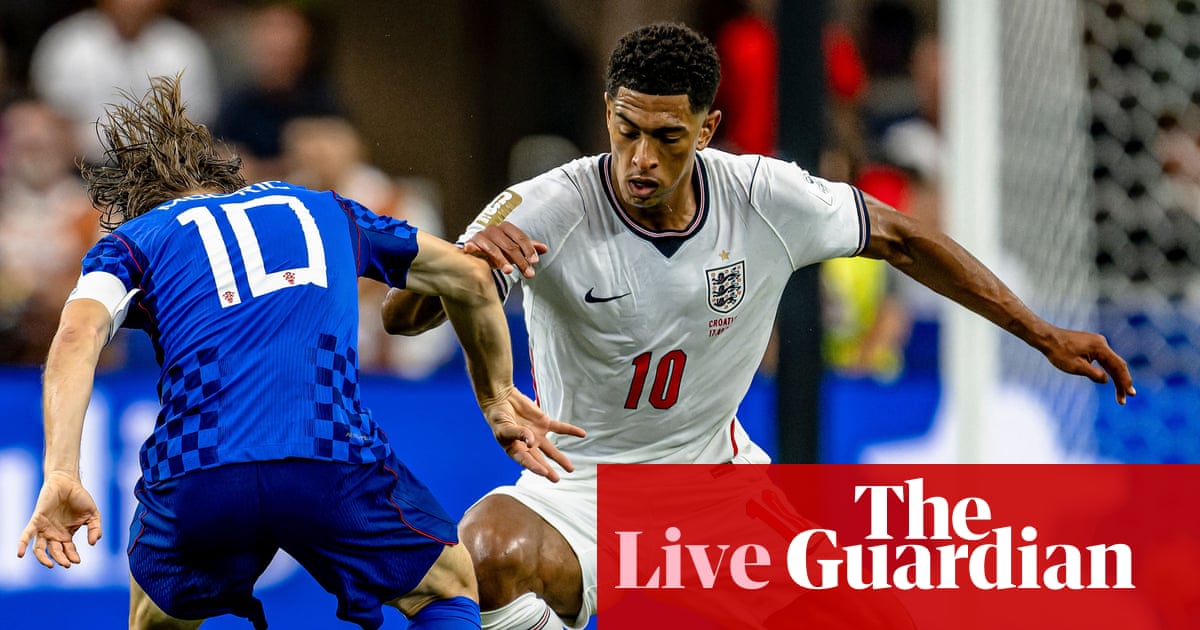
Bellingham playing with ‘a chip on my shoulder’
The England midfielder Jude Bellingham believes playing with a “chip on my shoulder” will bring the best out of him at the World Cup .
Bellingham scored the vital third goal as Thomas Tuchel’s side opened their campaign with a 4-2 win over Croatia in the Group L clash in Dallas.
There were uncertainty surrounding Bellingham’s inclusion in Tuchel’s squad for the tournament in North America after missing the September and October camps through injury.
That followed last summer’s international window which ended in Tuchel saying his mother found Bellingham’s behaviour “repulsive” , while his ability (or perceived lack thereof) to buy into Tuchel’s “brotherhood” has also come under scrutiny.
Bellingham was chosen ahead of his friend Morgan Rogers in the No 10 position, before switching to a deeper role, and made an early mark in the tournament.
“For me personally, it was nice to put some of the noise aside and just show my country and my teammates how committed I am to help us try to win football matches,” he told BBC Sport.
“It was a great team performance. Second half, we got things right, first half we got the intensity right, but not quite with the ball and second half we put it all together nicely.
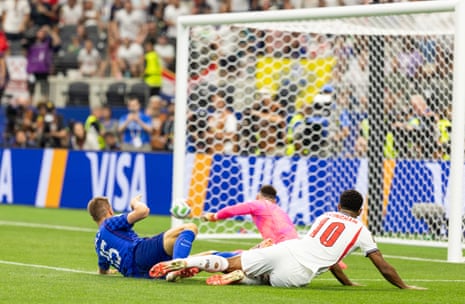
“To contribute, to help my team and help my country is one of the biggest honours and regardless of the noise outside, that honour doesn’t change for me at all.
“It has been a tough season for me but I am feeling fresh and sharp and stronger.
“I have got a little bit of a chip on my shoulder. That helps me a lot to find that focus early in the game and to find that intensity.
“I know that it’s part of being a footballer and I don’t hold a grudge against anyone who says bad things about me because sometimes I do deserve it.
“Today, it was nice to try to show people and remind people what I’m about.” PA Media
A fresh England line hot off the wires coming right up …
If by some bizarre chance you missed it, here’s a gallery of some of the best images from England 4-2 Croatia:
And here is reaction from Harry Kane, Jude Bellingham and Tommy Tuchel:
I fell asleep at some point during the Netherlands v Japan game. It had been a hot and drowsy day by the shores of Lake Annecy, a square and heavy heat, where the sun and the driving and the food and the boxed wine gently squeeze all the life from your body, like air being pressed out of a juice carton.
I remember Virgil van Dijk angling a header into the far corner, and when I came to it was 2-1, and everyone was heading to bed, drunk on tiredness, drunk on life, drunk on drink.
Not all of my friends care for football in any case, and so the World Cup had become a kind of mood music, something to fill the silences in conversation. Through the long and meandering chat about home renovations and Andy Burnham, an indistinct French voice occasionally cut through from a different universe. Maeda. Gravenberch. The Low Countries tempted to attain the final for the first time since 2010. My French isn’t great. Someone prised open a bottle of Heineken. Bodies draped themselves over the couch, fingers scrolled through phones, the immaculate decadence of boredom.
When Thomas Tuchel won the Champions League with Chelsea in 2021 the success was built on unflinching defensive rigour and midfield discipline. Five years on, though, Tuchel’s England displayed neither of those qualities during a dreadful first half in Dallas. They kept losing the ball in dangerous areas, struggled to maintain their shape without the ball and were rocking when Croatia stung them with a second equaliser just before half-time.
The vibe could hardly have been less convincing. Anthony Barry, Tuchel’s No 2, let rip in an interview with ITV, accusing England of doing all the wrong things, of playing with “a nervous energy”, of making everything “confused and complicated” against opponents well versed in making their craft and experience in midfield count.
Of course, England got away with it in the end, the response in the second half astonishing, Barry’s words no doubt delivered in even stronger terms by Tuchel in the dressing room. Yet while they won their opening game in Group L thanks to a moment of breathtaking power from Jude Bellingham and a late breakaway goal from Marcus Rashford, the overall display was far from good enough.
If you think everything in England’s garden is rosy after banging in four goals against Croatia, Jacob Steinberg has some news for you …
There really is quite a lot of football occurring .
Ghana celebrated a 1-0 win against Panama in Toronto, joining England atop Group L:
And in Group K, Jonathan Wilson witnessed Colombia beating Uzbekistan 3-1, down in Mexico City:
“ Let’s have it off ,” one excited England fan told Sky Sports News outside the stadium after England’s victory.
Doesn’t he mean “Let’s have it”?
I wish I could say I will be speaking from a position of authority on England’s win against Croatia, but I was on a plane, coming home from Spain.
Therefore, your emails, in which you tell me what happened, and offer your first-class analysis, are going to be particularly important this morning . Get involved.
Mexican military forces intercepted and brought down a drone that flew near the South Korea team’s training camp ahead of its World Cup match against Mexico, a federal official told the Associated Press.
Military forces used specialised equipment to detect an “unregistered drone” near the South Korean camp, prompting them to “neutralise” it, the Mexican federal agent said.
Preamble
England are quite good, it would seem, after their opening Group L 4-2 win against Croatia:
While the rest of the world waits for England to be bad – or at least suffer a heartbreaking penalty shootout defeat against Argentina, or someone – their fans are certainly going to enjoy the next few weeks …
Let’s all talk about the World Cup!