Class acts: the maths teacher who taught Argentina’s Álvarez and Fernández | World Cup 2026 | The Guardian

Keyword – Football
Trefwoorden – World Cup 2026, Argentina, World Cup, River Plate, Football, Sport
Title – Class acts: the maths teacher who taught Argentina’s Álvarez and Fernández | World Cup 2026 | The Guardian
Author – https://www.theguardian.com/profile/jonathanwilson
Link – Class acts: the maths teacher who taught Argentina’s Álvarez and Fernández | World Cup 2026 | The Guardian
Publish date – 2026-06-16T11:00:07.000Z
Category – Sport
URL – https://www.theguardian.com/football/2026/jun/16/enzo-fernandez-julian-alvarez-argentina-river-plate-teacher-world-cup-2026

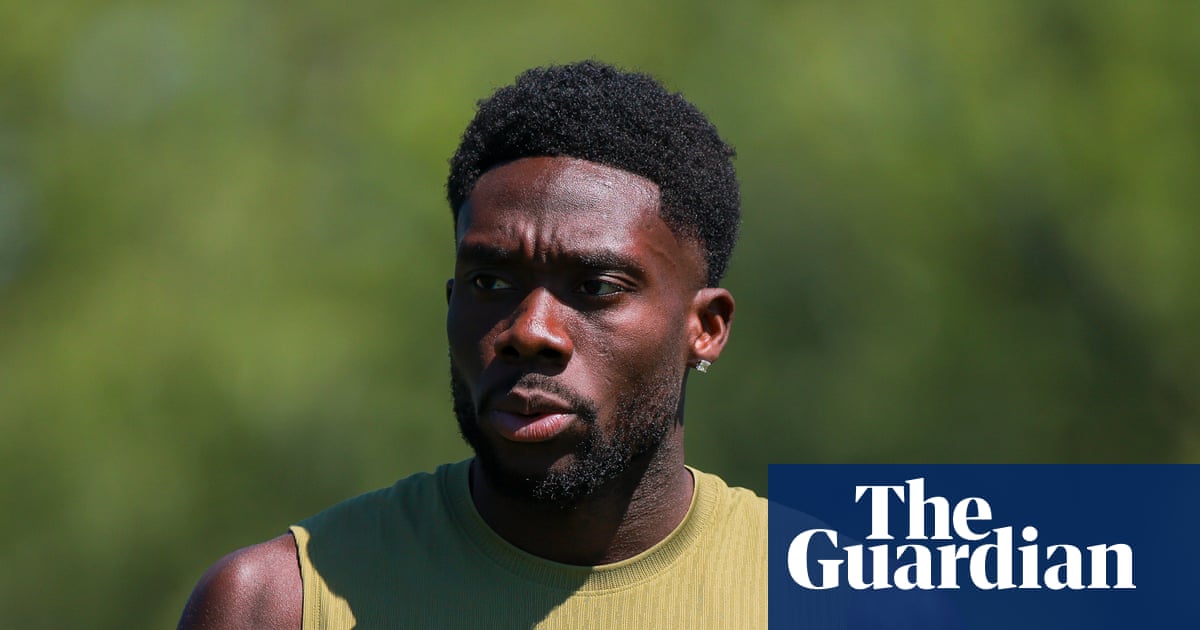
F or all Argentinians, sitting down to watch the 2022 World Cup final was special – but for Luciana Alvarengue there was additional emotion. In the Argentina side were not one but two players to whom she had taught maths at school: Enzo Fernández and Julián Álvarez.

“They are still my students, even if they are no longer in the classroom,” she says. “To see it with my son telling me: ‘Mamá, there are your students’ … that’s really nice.”

Alvarengue was 26 when, in 2012, she took a job at the school run by River Plate . The school was housed at Estadio Monumental, which meant lessons would be cancelled if River had a midweek game. Now, though, they have moved to a purpose-built facility a few minutes’ walk from the stadium. The school hall is dominated by six photographs – lvarez, Fernández, Gonzalo Montiel, Exequiel Palacios, Germán Pezzella and Guido Rodríguez: the players who attended the school who were in the 2022 World Cup squad.

The school is not just for footballers, or even for sportspeople (River also run teams in a wide variety of other sports, from hockey to chess), but Alvarengue soon realised the role was quite different from anything she had done before. Many of the pupils live in club accommodation, away from their families, and that meant they tended to form closer bonds with their teachers. “The boys would come and give you a kiss when they came to greet you,” she says. “‘Good morning, teacher, good afternoon.’”

That was particularly true of Álvarez, who is from Calchín, in the province of Córdoba, seven hours’ drive north-west of Buenos Aires. Away from his family, he needed more emotional support and would regularly give Alvarengue a hug. Álvarez was 12 when she started teaching him, Fernández 11; she taught both up to the age of 14. They were in different school years and very different personalities.

“You either love maths or you hate it,” Alvarengue says. “There are no grey areas. Julián was very good at maths. He had a very good way of working in the classroom in general. Enzo was a little more difficult to deal with. There are days when you would say he was more focused on a game, on whether he was going to be selected or not.

“When he came into the classroom, Enzo liked to make sounds, banging his pencil case on the table. I remember entering the classroom, and on the left side was Enzo’s place, and he was with his back against the wall, his feet on the other bench, and there were days when he was like: ‘Today I’m going to stay like this.’ Julián was calmer, much more respectful.

“In Enzo’s case, he was always thinking about football, what he wanted to do, who they were playing. And about what game was coming next, how he saw it, if they needed to make any changes, if they had to travel – it was 100% football all the time.

“I couldn’t start any class without asking him how the weekend went. Julián in the school environment was more focused on saying: ‘I’m at school, I’m going to study.’ But the two were always very positive leaders in the classroom. It was very nice to talk to them because it seemed that you were talking to adults, not children.”

That maturity, Alvarengue says, is characteristic of the best players. “It’s their teammates who notice there’s something special about them,” she says. “It’s not that they’re leaders of the group and always end up being captain, but they would tell others that they don’t know how to play. You can see a different discipline in football players. I always say that goalkeepers are extremely disciplined.”

That means sacrifice. Alvarengue remembers Álvarez once being upset because he could not go on a camping trip because of his footballing commitments. Athletes were banned from PE lessons at school, but teachers would find themselves constantly having to intervene as impromptu games broke out using a scrunched-up ball of paper or a can as a ball. “We were terrified they would get injured,” Alvarengue says.

Fitting education around pupils’ sporting commitments was never easy, which is one of the reasons the school was set up. It is common for pupils to be away for a fortnight or more on tours or for tournaments, but teachers are used to preparing work for them to take with them, and coaches then to supporting them in completing the prescribed exercises. The key is persuading students that education is part of their development as an athlete.

“Their head really says: ‘I want to do this, I want to succeed in sport,’” Alvarengue says. “And they don’t understand that education is part of being able to react quickly to a stimulus, to understand a word, to improve their speed to obtain certain things. So we always try to orient the academic part to something that they can see reflected in their training,.In mathematics, for example, we often work on statistics. So: ‘What were your stats? How many games did you play? How many goals did you score?’ They need to see that what we are teaching them really is useful for their sports career.”

Fernández in effect quit school at 14 but, acknowledging the importance of education, completed his studies remotely in his late teens while playing for River’s first team.

What would the pair have done if they had not made it as footballers? Alvarengue is reluctant to answer, saying she cannot conceive of them doing anything else, but eventually agrees that Álvarez could have done something that required a university education, and been a lawyer or an accountant. And Fernández? “He really liked hitting things,” she says uncertainly. “So, a drummer?”

Players are never formed by a single club or one coach, but by a range of influences. As she watched Argentina beat France in the final in Lusail, Alvarengue could reflect that she had played some small part in their triumph. “I can always think that they passed through our classrooms. I hope they took something away.”

Spanish households save €10 a month thanks to renewables expansion, report finds | Spain | The Guardian

Keyword – World news
Trefwoorden – Spain, Renewable energy, Wind power, Solar power, Gas, Oil, Energy, Environment, Energy industry, US-Israel war on Iran, Europe, World news
Title – Spanish households save €10 a month thanks to renewables expansion, report finds | Spain | The Guardian
Author – https://www.theguardian.com/profile/ajit-niranjan
Link – Spanish households save €10 a month thanks to renewables expansion, report finds | Spain | The Guardian
Publish date – 2026-06-16T07:00:47.000Z
Category – News
URL – https://www.theguardian.com/world/2026/jun/16/spanish-households-save-renewables-expansion-electricity-gas-prices-iran-war

Spanish households save €10 a month on electricity bills because of wind turbines and solar panels installed in the last five years, a report has found.

Typical energy bills would be 19% more expensive if electricity costs were still as tightly coupled to gas prices as in 2021, according to Ember, a climate thinktank. It found Spain’s “strategic” expansion of renewables since Russia invaded Ukraine in 2022 has shielded Spanish households from the latest rises in fossil fuel prices caused by the Iran war.

“We just had a 60% rise in gas prices and electricity bills in Spain basically haven’t reacted – they actually got a bit cheaper in April,” said Chris Rosslowe, an analyst at Ember and the lead author of the report. “That’s a clear and obvious contrast to the previous gas crisis, when electricity bills were climbing immediately.”

Burning fossil gas is one of the most expensive ways to generate electricity in Europe , even before considering the health costs of the carbon emissions. The influence of gas on electricity prices in Spain fell from 52% of hours in 2021 to 9% of hours in the first five months of 2026, according to the analysis. In Italy, which has the highest wholesale electricity prices in Europe, gas influences the price 75% of the time.

The report found electricity prices in Spain rose by about 50% in the first half of 2021 – in line with European gas prices – but remained “largely unaffected” by higher gas prices in 2026. The effects of volatility in the wholesale gas markets was seen only as higher price peaks during the dwindling periods when large volumes of gas had to be burned.

Mar Reguant, an energy economist at Northwestern University, who was not involved in the report but whose research findings painted “the same picture”, said ambitious policy helped Spain make the most of favourable conditions. Compared with the rest of Europe, these include decent wind, “unbeatable solar” and pre-existing pumped hydropower storage.

“There is no question that Spain and Portugal are greatly benefiting from their early transition,” she said. “The Iberian peninsula has a privileged position and has acted smartly.”

Wind and solar generated 33% of Spain’s electricity in 2021. By 2025, the share had risen to 42%.

In other European countries that also expanded renewables at great speed – such as Germany, which increased its share of wind and solar in power generation from 28% to 45% in the last five years – the consumer benefits have been more muted as they have displaced other forms of energy, such as coal and nuclear.

The analysis, which used data from March and April 2026, took a regulated electricity tariff paid by about one-third of Spanish households and modelled the size of the bill under a scenario in which renewables added in the last five years had not been installed.

It accounted for balancing costs paid during periods when renewables generate too much or too little but did not consider the hidden costs society pays for different forms of power generation, such as increased health costs that fossil fuel pollution brings.

Dr Diego García Gusano, a senior energy planning researcher at Tecnalia, a Basque technology centre, who was not involved in the analysis, said Spain’s gas-fired power plants still set the price during key hours and that frequent periods of very low prices were weakening the investment signal for further renewables.

The slow deployment of storage and limited flexibility in electricity demand had “intensified” the situation, he added, preventing the system from efficiently absorbing excess renewable generation.

“Spain is less exposed to gas shocks than other countries, but it is not immune,” Gusano said. “The bet on renewables is very sound, but much more is needed to make that bet structural and not circumstantial.”

Eight presumed dead after B-52 bomber crashes at California air force base | California | The Guardian

Keyword – US news
Trefwoorden – California, US military, Plane crashes, West Coast, US news, World news
Title – Eight presumed dead after B-52 bomber crashes at California air force base | California | The Guardian
Author – Guardian staff and agencies
Link – Eight presumed dead after B-52 bomber crashes at California air force base | California | The Guardian
Publish date – 2026-06-16T00:59:42.000Z
Category – News
URL – https://www.theguardian.com/us-news/2026/jun/15/b52-bomber-crash-california-military-base

Eight people are presumed dead after a B-52 bomber crashed shortly after takeoff on Monday morning at a US air force base in California ’s Mojave Desert, officials said.

“An Air Force B-52 Stratofortress carrying eight people on a routine test mission crashed today shortly after take-off at 11:20 a.m,” Edwards air force base said in a statement Monday afternoon. “Initial indications are that the crash was not survivable. Emergency response personnel are on scene, and officials are working to account for all personnel.”

Those who died comprised military members, government employees and civilian contractors, according to James Hayes, the deputy commander at Edwards air force base. Officials do not plan to release the names of those who died in the crash until after next of kin are notified, he said.

“Right now our thoughts and prayers are with the families of those that lost their loved ones,” Hayes said at a news conference.

Aerial footage showed virtually nothing left of an aircraft. Black smoke rose from a large swath of charred desert at Edwards air force base near what appeared to be a runway, with emergency vehicles nearby. The military hasn’t said whether the bomber was armed.

The Boeing B-52 Stratofortress, typically crewed by five people, is a long-range bomber that entered service in 1955. Designed to carry both conventional and nuclear weapons, it has been used in conflicts ranging from the Vietnam war to recent operations in the Middle East.

The plane was being flown on a test mission as part of a program to modernize its radar from analog to digital, according to ABC News 7. The program aims to keep planes like the one that crashed in service until the year 2050, or about a century of total use.

Officials said they could not provide details about how the crash occurred. Officials have begun to collect information for a safety review that will then be submitted to an accident investigation board that will then determine how much of its findings to make public, Hayes said. The process may take up to six months.

The airfield remained closed Monday afternoon and all inbound aircraft were being diverted. Non-commercial visitor passes for the base were suspended “to allow the installation to focus entirely on emergency response operations”, officials said in a statement.

Edwards, the vast desert base where Chuck Yeager broke the speed of sound in 1947, is about 100 miles (161km) north of Los Angeles.

Jeff Guzzetti, an aviation safety expert, says he suspects there was some kind of flight control malfunction given how the B-52 crashed so quickly after takeoff without getting very high or going far. But it’s too soon to say what might have caused the control problem.

It’s possible the controls were rigged wrong after maintenance, he said, or there was a catastrophic engine problem or a failure of a piece of equipment that was being tested.

“I think it was definitely a controllability issue. Now, whether that was tied to an engine failure, a flight control failure or some new testing device failure, I’m not sure,” said Guzzetti, who used to investigate crashes for the Federal Aviation Administration and the National Transportation Safety Board.

Although the air force has been flying B-52 bombers for more than 70 years, testing out new equipment on a plane can create new challenges.

“A flight test is always riskier than normal operations, so that’s why you have specially trained test pilots, and you should have other safety protocols,” Guzzetti said.

UK ministers lobby Trump to avert backlash against social media ban | Social media ban | The Guardian

Keyword – UK news
Trefwoorden – Social media ban, Social media, Digital media, Social networking, Internet safety, Young people, Children, Keir Starmer, Labour, Politics, Media, Trump administration, Society, UK news, Technology
Title – UK ministers lobby Trump to avert backlash against social media ban | Social media ban | The Guardian
Author – https://www.theguardian.com/profile/kiran-stacey,https://www.theguardian.com/profile/danmilmo,https://www.theguardian.com/profile/aisha-down
Link – UK ministers lobby Trump to avert backlash against social media ban | Social media ban | The Guardian
Publish date – 2026-06-16T08:05:09.000Z
Category – News
URL – https://www.theguardian.com/media/2026/jun/15/uk-ministers-lobby-trump-backlash-social-media-ban

Ministers have embarked on a concerted lobbying operation to prevent a backlash from the Trump administration to the under-16s social media ban announced by Keir Starmer.

Officials said they had spent weeks trying to reassure senior Trump officials and the US president himself that the restrictions were not specifically aimed at US technology companies.

The ban on platforms including X, Facebook, YouTube, Snapchat and TikTok makes the UK one of the first countries in the world to put sweeping limits on social media for children, after Australia did the same earlier this year.

But British officials are aware of the risk of retaliation from Trump, whom Starmer will meet at the G7 summit in Évian-les-Bains this week and who has previously threatened the UK with “a big tariff” if the government does not drop its digital services tax.

One person involved in the effort said ministers had taken a three-pronged approach to “engage the companies, pre-brief the administration and mythbust in the media”. They added: “This is about protecting children in Britain, not taking on US tech.”

Asked about the possibility of sparking a fresh row with Washington, Starmer said: “I honestly think that across world leaders there has always been a recognition that leaders have to take steps to protect children.”

He added: “In relation to President Trump, I spoke to him on Saturday, I’ll see him again this afternoon and, yes, of course, we’ll discuss this and many other issues, and lots of other leaders are very interested in it.”

By Monday evening, the US president had not commented on the plans. However, his ally Elon Musk, who owns X, posted : “This censorship law is a wolf in sheep’s clothing. The real goal is to enable the UK government to track everyone.”

The plans involve a wider set of restrictions than have been applied in Australia. As well as setting age limits for many social media platforms, the government will prevent under-16s from livestreaming themselves, will ban adults from making unsolicited contact with children on gaming sites and will ban children under 18 from engaging with “romantic” chatbots.

Certain services have been specifically excluded, including YouTube Kids, Lego Play and Google Classroom.

Ministers are working on further limits to be unveiled next month, including late-night social media curfews for 16- and 17-year-olds.

Officials suggested on Monday that there could be additional regulations for virtual private networks (VPNs), which allow users to circumvent geographical internet controls.

Daniel Berntsson, the chief executive of Mullvad VPN, said he thought the government would probably require companies like his to demand users provide identification to prove their age.

The move could have a huge impact on the lives of young people. Among 13- to 15-year-olds, nine out of 10 have a social media account and say their main sources of news are YouTube, TikTok, Facebook and Instagram.

Starmer told a press conference in Downing Street: “Social media is making children unhappy, it’s making it easier for bullies to harass and abuse them, and it could even be harming their mental health.”

The prime minister once opposed such a move but said he had been persuaded by the evidence that had been gathered during the government’s 12-week consultation.

He denied rushing his announcement in an attempt to cement his legacy should he be ousted as prime minister in the coming weeks.

On Tuesday the technology secretary, Liz Kendall, said she had no doubt many teenagers would get around the ban but that it would still prompt a culture change.

“I have no doubt children who are currently on social media, for whom it’s an integral part of their lives, will try and get around the ban, and many will succeed,” she said. “But we do think we need to draw this line in the sand, give greater clarity to parents and greater protections for children.”

Kendall said the restrictions would not be foolproof but that the move was about “resetting expectations” for teens and even younger children over what they had access to.

“I’ve never thought that the ban will be a complete silver bullet … It will be as much about resetting expectations and social norms for children who are seven, eight, nine, 10, now that they won’t be going on social media until they’re 16,” she told the BBC.

Andy Burnham, the Greater Manchester mayor, is hoping to win the Makerfield byelection later this week and has promised to challenge the prime minister if he does so.

Starmer said: “This is a huge statement of our values, who we are as a country. And it’s a way of actually bringing our country together.”

The announcement was welcomed by the Conservatives – who called for a ban several months ago – Labour backbenchers and several campaign groups.

Esther Ghey, the mother of the murdered teenager Brianna Ghey, said she was happy about the ban and it could “save so many children’s lives”.

But it has encountered scepticism from some experts, including an independent expert panel convened by the government, which found the impact of social media was “nuanced” and did bring some benefits to teenagers.

The world’s largest technology companies have warned that the move would push teenagers towards more dangerous parts of the internet, but they are not thought to be preparing legal action to block it.

A spokesperson for Meta, which owns Facebook and Instagram, said: “As we’ve seen in Australia, bans risk isolating teens from online communities and information, and driving them to unregulated alternatives that lack built-in protections and parental controls.”

YouTube said: “Blanket bans push kids out of such curated, supervised, beneficial experiences and towards anonymous, less-safe services.”

Ministers have asked the media regulator, Ofcom, to come up with detailed proposals for how to enforce the ban. Companies could be asked to take into account written forms of identification, the number of years spent on a platform and facial recognition tools when deciding whether people should be allowed to use their services.

Ofcom will make its recommendations in the autumn, while Kendall said on Monday she wanted to see a ban in place “as early as possible … first couple of months of 2027 ”.

This article was amended on 16 June 2026. An earlier version incorrectly said the UK would be the second country to introduce social media limits for children.

EV prices in UK and EU not likely to dive due to Chinese rivalry, says Xpeng boss | Automotive industry | The Guardian

Keyword – Business
Trefwoorden – Automotive industry, Business, Electric, hybrid and low-emission cars, Ethical and green living, Environment, UK news, European Union, Europe, China, World news
Title – EV prices in UK and EU not likely to dive due to Chinese rivalry, says Xpeng boss | Automotive industry | The Guardian
Author – https://www.theguardian.com/profile/jasper-jolly
Link – EV prices in UK and EU not likely to dive due to Chinese rivalry, says Xpeng boss | Automotive industry | The Guardian
Publish date – 2026-06-16T05:00:45.000Z
Category – News
URL – https://www.theguardian.com/business/2026/jun/16/ev-prices-uk-eu-chinese-car-firm-xpeng

Motorists in the UK and EU should not expect a sharp drop in the cost of electric vehicles despite increased competition among Chinese manufacturers, one of the country’s biggest electric carmakers has said.

Brian Gu, the vice-chair of the manufacturer Xpeng, said that Chinese carmakers could compete on quality to win customers in the EU and UK, rather than unleashing a brutal price war as they have in China .

Chinese carmakers have rapidly risen to dominate the global EV industry , helped by massive government subsidies and lower labour costs than the US, Europe, Japan and Korea.

The huge number of competitors in China – 129 last year according to the consultancy AlixPartners – prompted carmakers to slash prices in their home market. China’s president, Xi Jinping, intervened last year to tell provincial governments to rein back subsidies in an effort to stem the harm. Faced with such pressure at home, the better-funded Chinese manufacturers, including Xpeng, have turned to Europe to try to make profits.

Xpeng, named after its founder, He Xiaopeng, is still loss-making as it spends heavily on research and on expanding sales of its vehicles in Europe, starting with the £39,990 electric G6. It only sold 7,300 cars in Europe in the first three months of 2026, according to the analyst Matthias Schmidt. However, it is hoping to pick up the pace, and compete against other Chinese companies such as the world’s biggest seller of electric cars, BYD , Chery (owner of the Chery, Jaecoo and Omoda brands ), Changan, Geely and the MG owner SAIC.

Asked about the possibility of a price war in Europe to match that of China, Gu said: “I don’t see it coming.”

Speaking at an event in London earlier this month, he said that, while some Chinese rivals are “pouring a lot of products” into the UK and Europe, there would not be a race to push down prices. By contrast, Chinese brands in south-east Asia or emerging markets had focused on “just being cheaper”.

“I think the customer in Europe, especially customers in the developed markets, I think the focus is on quality and differentiation more than cost,” he said.

Xpeng has drawn comparisons to Elon Musk’s US electric carmaker, Tesla, because of similar minimalist designs and its ambitions to sell humanoid robots. The Chinese company is also developing flying taxis.

For its cars, Xpeng is aiming to differentiate itself with more hi-tech features in its cars, notably on autonomous driving capabilities. The company’s driver assistance features are already widely available, and it is planning to start rolling out robotaxis in its home city of Guangzhou. It could roll out more driverless technology to Europe in the first half of next year if the EU adopts new UN standards.

Gu, a former JP Morgan banker who oversaw Xpeng’s 2020 listing on the New York Stock Exchange, said Xpeng would be able to catch up rapidly with companies such as Google’s sister company Waymo, the Chinese tech company Baidu and the British startup Wayve . “We can accelerate much faster than some of the robotaxi companies,” he said, because the company is unusual in developing cars, computer chips and driverless software at the same time.

The company is also evaluating options to build more cars in Europe. It currently has a deal with Magna, an Austrian contract manufacturer, to produce its cars, but it said struggling European carmakers with too much factory space were “coming to us with various projects” to sell plants.

Xpeng had previously revealed that Volkswagen – which partnered with the Chinese company in 2023 – had offered a German plant for sale, but another executive last month said it was “a little bit, I would say, old” .

Critics say Trump’s opening of public lands to off-road vehicles is ‘reckless and nonsensical’ | Trump administration | The Guardian

Keyword – US news
Trefwoorden – Trump administration, National parks, Endangered species, Endangered habitats, Wildlife, Conservation, Environment, US politics, US news
Title – Critics say Trump’s opening of public lands to off-road vehicles is ‘reckless and nonsensical’ | Trump administration | The Guardian
Author – https://www.theguardian.com/profile/tom-perkins
Link – Critics say Trump’s opening of public lands to off-road vehicles is ‘reckless and nonsensical’ | Trump administration | The Guardian
Publish date – 2026-06-15T13:00:26.000Z
Category – News
URL – https://www.theguardian.com/us-news/2026/jun/15/trump-public-lands-wildlife-off-roading

The Trump administration is executing a controversial plan to allow dirt bikes, ATVs, trucks, snowmobiles and other off-road vehicles to drive through tens of millions of acres of public lands and national parks, which environmental groups warn threatens endangered species and the environment.

The plan’s opponents say the impacts will be wide-ranging and that the vehicles will likely destroy sensitive habitats, harm waterways, drive large predators like grizzly bears into contact with humans, and otherwise damage pristine public lands and parks.

The Nixon administration more than 50 years ago issued an executive order that limited off-road vehicles’ access with the aim of protecting wildlife and preventing disputes on federal land. The Carter administration issued a second order providing similar environmental protections.

Since then, the popularity of off-road sports has exploded, and the vehicles are far more powerful than they once were, which advocates say makes the restrictions even more necessary today.

Donald Trump rescinded the Nixon-Carter executive orders and directed agency leaders to draft new rules to open lands to off-road vehicles.

Opponents warn that desert tortoises, western snowy plovers, lynxes, grizzly bears and sage-grouse are especially at risk from increased off-road vehicle activity. Trump’s move is “reckless and nonsensical”, said Vera Smith, director of national forests and public lands for Defenders of Wildlife .

“This rescission is yet another loss for wildlife and natural places,” Smith added.

The move is part of a broader Trump effort to open public lands to industry and other uses that threaten endangered wildlife and sensitive ecosystems. The administration has attempted to gut the Endangered Species Act, opened public lands to grazing, expanded logging access on public lands, opened protected waters to fishing, boosted oil exploration in protected waters and attacked other rules that limit the exploitation of natural resources.

“What’s so frustrating here is that the Trump administration is taking a very systematic approach to dismantling protections for public lands,” said Randi Spivak, director of public lands for the Center for Biological Diversity. “Public lands are already so stilted to extraction that we need more protections.”

In a fact sheet posted with the orders, Trump labeled the off-road vehicle limits “outdated and burdensome”.

“President Trump believes the American people should be able to access and enjoy their public lands without being burdened by unnecessary and outdated regulations,” the fact sheet states.

The Nixon-Carter executive orders required off-road vehicles to use roads or trails that the federal agencies established to minimize ecological harm. The Bureau of Land Management and National Park Service already have more than 500,000 miles (800,000km) of roads available for use between public lands and parks. The National Park Service also allows limited snowmobile use in Yellowstone national park.

However, the Nixon-Carter restrictions prevented the vehicles from going everywhere in a park, which they will now be able to do.

That is a problem because the vehicles’ routes carve up wildlife habitat, fragmenting it into smaller and less functional tracts that are not suitable for many animals. The damage further stresses species that are already endangered or threatened, and the habitat loss can lead to species loss.

The roads and snowmobiles also present a problem for grizzly bears and other predators. Research shows bears begin to leave habitat regions when there is at least one mile of road per square mile. The new rules will force them into closer contact with humans. State and federal agents kill hundreds of thousands of predators annually because they come into contact with humans, a practice that some advocates have previously characterized as a “bloodbath” .

“This will end badly for the bears,” Spivak said.

Aquatic life also does not do well near off-road vehicle tracks because vehicles damage the plant life around streams’ edges that keep the water cool and habitable, or send sediment into the streams.

“Even when the first executive orders were put in place, the science was clear that there needed to be regulations, and there were way fewer … and they were smaller,” Spivak said. “They’re needed even more today.”

Spivak said environmental groups cannot sue over the rescission of the executive orders, but they will watch the new rule-making process closely and take action if needed.

Already, the US Forest Service is preparing to open 5m acres (2m hectares) of parkland to vehicles, mostly in Idaho and Montana, according to the New York Times .

“As the United States marks 250 years of independence in 2026, we must shine a light on our nation’s greatest natural treasures and ensure every American can recreate on these majestic lands,” a Forest service spokesperson said in a memo announcing the opening.

A day in the life of a dancer who went viral for pretending to be a parakeet | Well actually | The Guardian

Keyword – Life and style
Trefwoorden – Well actually, Life and style, Social media, Internet
Title – A day in the life of a dancer who went viral for pretending to be a parakeet | Well actually | The Guardian
Author – Jaya Saxena
Link – A day in the life of a dancer who went viral for pretending to be a parakeet | Well actually | The Guardian
Publish date – 2026-06-14T16:00:47.000Z
Category – Lifestyle
URL – https://www.theguardian.com/global/2026/jun/14/smac-mccreanor-parakeet-dancer

H ave you seen the video of Smac McCreanor pretending to be a parakeet ? Dressed in green, she gracefully slides and sidesteps, occasionally lifting her arms – or wings? – mimicking the movements of a bird who went viral for his dance moves .

McCreanor, 33, translates the internet’s obsessions through her body, whether a green bird, emoji or objects being destroyed by a hydraulic press . A multi-genre dancer with 1 million Instagram followers , she has performed on So You Think You Can Dance and choreographed for the online video game Fortnite.

McCreanor told us what a day in her life is like – including being woken up by bunnies.

This interview has been edited and condensed.

What time did you wake up today?

I have two bunnies and they’re free roam, so they jump up and lick my face at 7am every day. While I’m giving them breakfast, I check my emails. If nothing important is happening, I go straight back to bed.

What did you do for breakfast?

I’m not really a big breakfast person. I just snack throughout the day. If I have good groceries, I hang out in the kitchen and shove it all down. Today, I had some toast and fruit. I like English breakfast tea because I’m Australian – I have it with milk and sugar.

What did work look like today?

It’s hard to have any type of structure because I work for myself, and I do so many different little things. Today, I have a meeting to choreograph for Fortnite . Then I have a rehearsal – I’m creative directing a one-person act in Absinthe by Spiegelworld, a circus performance in Vegas. I give opinions on lighting, costuming, music.

I’m usually on my phone a lot. Everything I do is on my phone. All my filming, editing, posting, emails, everything. Any downtime, I’m usually repurposing and editing footage.

What are your plans after work? Do you socialize, or have any hobbies?

I’m getting married in a month, so I have a dress fitting, but my dress is pretty simple! I’m not one for anything flashy or overly feminine and detailed, but I love a classic cut and soft silhouette! I also love doing stuff around the house. My partner works from home as well, so we love interior design. I’m usually crafting, and we always have the TV on some sitcom.

I’m also posting to social media – or responding, interacting, scrolling. I know people try not to do it too much, but I freaking love it. That’s full inspiration for me. It’s how I keep up to date.

What are your dinner plans? Do you like cooking or do you prefer going out?

Tonight we’ll have a barbecue at home of steak and rice and veggies. I do like cooking at home, because I make dinner at 9pm – we’re kind of night owls – and then I eat that until 3 am because I eat small portions every hour.

Anything you’re particularly excited about for today?

The way I create content is completely spontaneous. It happens or it doesn’t. Everything that I’ve ever posted is just like, hey, this is an idea, and then I film and upload it immediately. Maybe tonight I’ll just randomly film a video and upload it at 3am.

What time are you going to go to sleep tonight?

Bunnies are floor animals, so we have a lot of very comfortable areas in our house. (They are fully litter trained, so thankfully no poops around the house!) We’ve got a big beanbag, the couch or a rug. I nap throughout the day. Typically, 2.30am is when my body starts winding down, and I’m probably in bed by 4 at the latest. And then up at 7 with the bunnies.

Jaya Saxena is a co-founder of Ravenous, a worker-owned food and culture site. She lives in Queens, New York.

‘Streaming gave me a space to be myself’: Twitch creators on what it’s like to grow up on the platform | Twitch | The Guardian

Keyword – Games
Trefwoorden – Twitch, Games, Culture, Social media, Digital media, Media, Technology
Title – ‘Streaming gave me a space to be myself’: Twitch creators on what it’s like to grow up on the platform | Twitch | The Guardian
Author – https://www.theguardian.com/profile/keithstuart
Link – ‘Streaming gave me a space to be myself’: Twitch creators on what it’s like to grow up on the platform | Twitch | The Guardian
Publish date – 2026-06-16T08:30:16.000Z
Category – Culture
URL – https://www.theguardian.com/games/2026/jun/16/twitch-gamer-creators-twitchcon-rotterdam

A imee Davies, better known as Aimsey to their fans, is 24 but looks much younger. Sitting in a bland meeting room above the annual TwitchCon event in Rotterdam, they’re a barely contained whirl of energy in a beanie hat and T-shirt, all smiles and lightning-fast chatter. Aimsey (who uses they/them pronouns) is also a Twitch veteran, having started streaming eight years ago at the tender age of 16. A million subscribers tune in every week to see them chaotically play Minecraft and share snippets of their life. They have grown up, from teen to young adult, carrying a vast audience with them into maturity. What is it like to experience that?

“When you’re 16 you want to tell everyone everything about you,” they say as music blares from the event below. “When I came out as a lesbian, I told the world. Every part of my identity, my mental health struggles … I thought if I could help one person feel like they weren’t alone, I wanted to do that.”

For several years Aimsey was in a relationship with another content creator, Guqqie, and it played out in front of their fanbases with very little filtering – until it ended. It’s a situation common to streamers – they’re young and naive, they build an audience through sharing personal details with few boundaries, then the pressures of endless invasive attention take a toll. “Honestly, for a long time, the lines got blurred,” says Aimsey. “Streaming would seep into my real-life friendships, where I thought the only way people would be my friend was if I could give them something – because that’s obviously how it is on a stream.”

Recently however, Aimsey has learned how to step back and be a little more guarded. “I’ve been so open all my life, but I was falling into these cracks where I was like, God, who am I? I felt like I couldn’t figure that out. I think that in the last few months something switched in my brain. I’m living a little bit more of a reserved life. I’m still myself when I stream, but I’m trying my best to keep some things private – at least for now. I surround myself with people who definitely remind me that I’m not just content.”

Fellow Twitch star Sweet Anita is older at 35 years old, but she too is a veteran, having streamed since 2018. As a sufferer of Tourette syndrome, the platform has been a kind of emancipation. “Streaming has changed me a lot,” she says. “I used to be a timid person and quite apologetic – obviously I’d learned to be after a lifetime of dealing with Tourettes. I feel like streaming really gave me a space to be myself without constantly having to apologise to people. I have a lot more fun, I reach out to more people, I’m a lot more sociable now.”

It concerns her that so many children are now listing content creator as their ambition. “When I was a kid, it was astronaut or fireman, but now they desperately want to be in my position,” she says. “But it’s a little bit of a trap because once you’re here, people don’t forget you. You could leave tomorrow and someone might continue stalking you for the next 10 years. Once you’re in, you’re in. The only difference is how much security you can afford.”

For its part Twitch recognises the vulnerability of streamers. It has set up guilds to help specific minority groups navigate the platform and communicate concerns to the executives. It has created an AI-driven AutoMod feature, which polices chat during streams to delete abusive messages. “We’ve invested heavily in moderation tools so streamers can define what safety looks like to them,” says head of community Mary Kish. “It is going to be very important to be familiar with how you can protect yourself. I’m worried about anyone who might think on a whim, I’m going to go live. You need to be prepared – you need to have mods, or at the very least, turn Auto Mod on, you need to set your community up. We have a little work to do to make sure that anyone making their first stream understands what they’re getting into.”

Tellingly, neither Aimsey and Sweet Anita have plans to stop streaming any time soon. “Honestly, my vision is I’m probably always going to be streaming,” says Aimsey. “It’s something that’s been so consistent in my life and I adore it. That could change. But I’ve got so much more stuff I want to do with Minecraft – I want to do events, I want to do more stories and role-play, and there are so many more ideas in my head that there’s no point in even thinking about stopping.”

Sweet Anita has plans to move on from video games, at least some of the time. “I used to do animal rescue before this and I haven’t done enough for animals – that’s what I’d like to do next. I hope I get to go to animal sanctuaries, I hope I get to show people endangered animals. I’d love to do some rehab again, release some wild birds, that was the core of my existence before all of this.”

The maturation of both streamers and stream watchers is certainly something Twitch itself is thinking about. A huge majority of streams used to be about playing and watching video games, but recently categories such as Just Chatting and In Real Life (IRL) have become more popular. Streamers are getting out of their home studios and taking their viewers on days out, to restaurants, on walks, and beyond – top creator IShowSpeed has been streaming while scuba diving. Shayanelhawk literally sent his Twitch chat into space.

“Right now our biggest age group is actually 25-34 because people have aged up while using it and they keep using it,” says CEO Dan Clancy. “We’ve seen this in the growing diversity of content because as creators get older, they have new interests and their community stays with them. So I think we’ll see continued diversification. I’ve often conjectured that when the so-called Twitch generation gets to 60-70, we’ll see all these knitting and crochetting streams. As you get into retirement – the issue of looking for connection that you had as a teenager comes back, because the kids have left home, you’re looking for people, for community – and you have time. As we saw during Covid, Twitch is a platform that explodes when you have time.”

The one massive gamechanger lurking on the horizon is AI. There is already a successful AI avatar streamer, Neuro-sama, a cutesy anime girl with 1 million followers. Will Aimsey be part of the last generation of human teens who’ve had the chance to become, and grow up, as streamers? They think not. “No matter what happens there is always going to be an audience for human-made things. It doesn’t matter what we do, it doesn’t matter how big AI gets, there’s always going to be people who need that human connection to feel real.”

Is it true that … you have five seconds’ grace after dropping food on the floor? | Health & wellbeing | The Guardian

Keyword – Life and style
Trefwoorden – Health & wellbeing, Science, Hygiene, Life and style
Title – Is it true that … you have five seconds’ grace after dropping food on the floor? | Health & wellbeing | The Guardian
Author – https://www.theguardian.com/profile/kate-lloyd
Link – Is it true that … you have five seconds’ grace after dropping food on the floor? | Health & wellbeing | The Guardian
Publish date – 2026-06-15T07:00:05.000Z
Category – Lifestyle
URL – https://www.theguardian.com/lifeandstyle/2026/jun/15/is-it-true-that-you-have-five-seconds-grace-after-you-drop-food-on-the-floor

Y ou drop a piece of cucumber on the floor. Do you immediately throw it in the bin or reassure yourself of the age-old “five-second rule” and reckon it’s fine to pop it in your mouth after a quick rinse?

If you fall into the latter camp, John Tregoning, professor of vaccine immunology at Imperial College London, has some bad news. He refers to three studies into bacteria transfer that all point towards the rule being false.

In the first, scientists looked at what happens when a range of foods (bread, buttered bread, watermelon and gummy bears) were dropped on a range of surfaces (tile, steel, wood, and carpet) that had been coated with bacteria. “They transferred almost immediately,” he says, adding that the worst combination for transfer happened when wet food hit a solid surface (watermelon on tile or steel).

Another study – where cooked sausage was dropped on to surfaces – showed that bacteria transferred on to the meat even if they had been applied to the surface hours earlier. It showed that “if you put a piece of contaminated chicken on to a work surface and then, two hours later, drop your piece of bread on to it, you can still pick up bacteria from it. It’ll be there for about 24 hours,” he says.

The final paper looked at the “five-second rule” for medical objects in the operating room. Perhaps unsurprisingly, it found that if surgeons drop something on the floor, they need to wash that instrument with detergent for it to be safe to use again.

What does all this mean for your fallen cucumber? “I think you have to accept it’s gone,” says Tregoning. Rinsing it with water won’t be enough to guarantee it’s clean. That’s especially the case if you’re particularly susceptible to infections, or if your dog might have walked something terrible through the house (even hours earlier).

World Cup 2026: Iran and New Zealand fight out pulsating draw – in pictures | World Cup 2026 | The Guardian

Keyword – Football
Trefwoorden – World Cup 2026, World Cup, New Zealand, Iran, Football, Sport, Australia sport
Title – World Cup 2026: Iran and New Zealand fight out pulsating draw – in pictures | World Cup 2026 | The Guardian
Author – https://www.theguardian.com/profile/guardian-sport
Link – World Cup 2026: Iran and New Zealand fight out pulsating draw – in pictures | World Cup 2026 | The Guardian
Publish date – 2026-06-16T04:39:36.000Z
Category – Sport
URL – https://www.theguardian.com/football/gallery/2026/jun/16/world-cup-2026-iran-new-zealand-in-pictures