Naked cycling: is it ever acceptable to ride a rental bike in the nude? | Cycling | The Guardian

Keyword – Life and style
Trefwoorden – Cycling, Life and style, London
Title – Naked cycling: is it ever acceptable to ride a rental bike in the nude? | Cycling | The Guardian
Author – Guardian Staff
Link – Naked cycling: is it ever acceptable to ride a rental bike in the nude? | Cycling | The Guardian
Publish date – 2026-06-16T14:51:29.000Z
Category – Lifestyle
URL – https://www.theguardian.com/lifeandstyle/2026/jun/16/naked-cycling-ever-acceptable-rental-bike-nude

Name: World Naked Bike Ride.

Age: 22.

Appearance: A global celebration of potentially crushed genitalia.

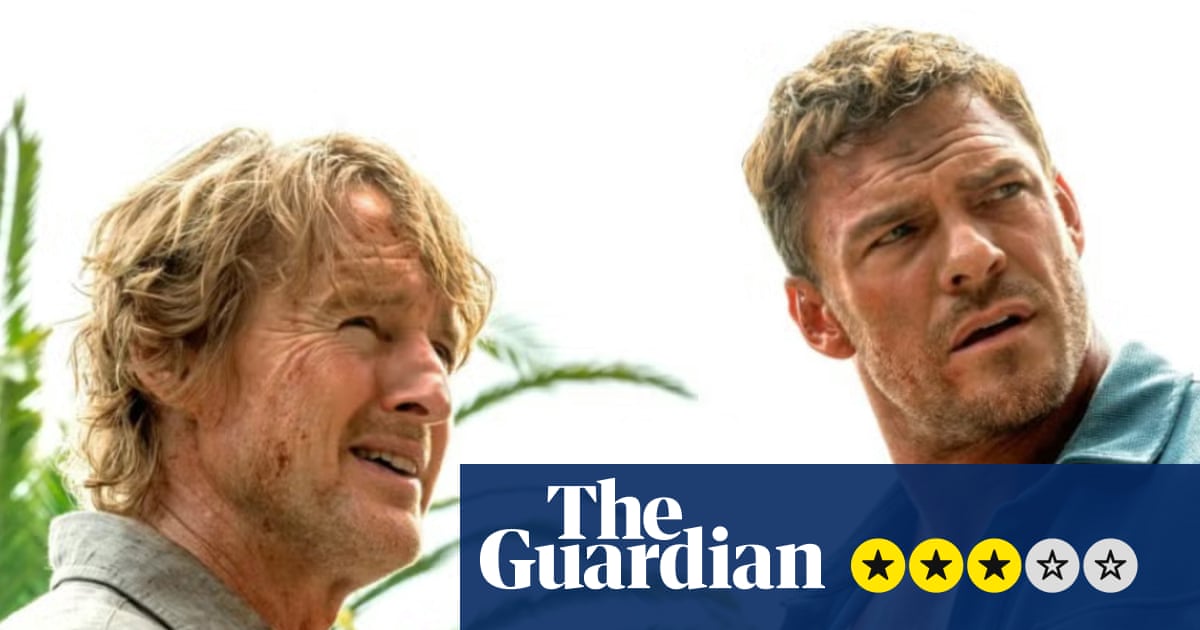
Is it World Naked Bike Ride again already? Where does the time go? Well, the World Naked Bike Ride event in London already happened, last Sunday. I can’t believe you missed it.

Always the naked bridesmaid, never the naked bride. Don’t worry, though, because the repercussions of World Naked Bike Ride will carry on for weeks to come.

Really? Why’s that? Primarily because everyone is freaking out about the, er, let’s call them consequences of sharing a saddle with someone who has ridden it in the buff.

Oh. Oh . Yuck. I’m afraid so. Apparently, of the 1,000 cyclists who rode naked through the streets of London at the weekend, about half of them were using rental bikes. As such, social media is quickly filling up with people hyperventilating about saddle hygiene – issues such as sweat and fungal infections have been mentioned.

Well, World Naked Bike Ride sounds absolutely disgusting. That’s the thing, it really isn’t. This is the 22nd year that it has taken place in London, and nudity is always an optional aspect. People can take part fully dressed if they like.

Ah, World Ride a Bike With All Your Clothes On. That’ll grab the headlines. It’s held for an important reason, too.

Which is? Safety. In big cities that are dominated by cars, cyclists are physically vulnerable. Doing it with all your bits flapping around highlights this vulnerability as strongly as possible.

Why hasn’t there been this much fuss about it before? Oh, there has. Six cyclists were charged with public indecency when the event took place in Chicago in 2005. A man was removed from the event in Canterbury in 2015 after becoming too visibly excited. Last year, the Reform MP Lee Anderson called it a “freak show”.

That sounds like all the excuse I need to support it, then. However, this is the first time that hygiene has been used as a weapon. The rise of cycle hire schemes means that bikes now belong to everyone.

So now cyclists are also vulnerable to catching chlamydia from a saddle? No: from an infection control standpoint, the risk of catching a disease from a bike previously ridden by a naked person is vanishingly small.

Have the rental bike companies said anything? A spokesperson from Lime – one of the biggest e-bike rental companies in London – told the Metro: “As with any ride, we ask that people leave our bikes in the condition they’d want to find them. For safety reasons, we’d always encourage everyone to wear appropriate clothing when cycling.”

Do they at least clean them? According to the Metro, Lime bikes are “regularly” pressure-cleaned with recycled rainwater.

So it’s fine then? No, of course it’s not fine! It’s gross! Next time World Naked Bike Ride happens, bring your own bike. Or pop a shower cap over the saddle.

Do say: “Please leave your bikes in the condition you found them.”

Don’t say: “Drenched in someone else’s sweat.”

Do you have an opinion on the issues raised in this article? If you would like to submit a response of up to 300 words by email to be considered for publication in our letters section, please click here

Trump may survive the humiliation of the Iran deal. Netanyahu will not | Simon Tisdall | The Guardian

Keyword – Opinion
Trefwoorden – Benjamin Netanyahu, US foreign policy, US news, World news, Israel-Gaza war, Iran, Donald Trump
Title – Trump may survive the humiliation of the Iran deal. Netanyahu will not | Simon Tisdall | The Guardian
Author – https://www.theguardian.com/profile/simontisdall
Link – Trump may survive the humiliation of the Iran deal. Netanyahu will not | Simon Tisdall | The Guardian
Publish date – 2026-06-21T06:00:22.000Z
Category – Opinion
URL – https://www.theguardian.com/commentisfree/2026/jun/21/donald-trump-iran-deal-benjamin-netanyahu-israel-pm-iran

B enjamin Netanyahu, the biggest loser in last week’s preliminary deal to halt the US-Israel-Iran war , will be remembered – and reviled – as the man who put the Middle East to the sword. Whether the “problem” was Hamas in Gaza, illegal West Bank land seizures, supposed Israeli-Arab fifth columnists, peace campaigners’ aid flotillas , Hezbollah in Lebanon, hostile militias in Syria, Iraq and Yemen, or Tehran’s hardline Islamic regime, the Israeli leader’s “solution” was always the same: extreme, often lawless violence that invariably made matters worse.

The unprovoked, illegal war against Iran was the ultimate expression of the Netanyahu doctrine – the disproportionate application of brute force. Predictably, it too, has failed. Donald Trump is desperately arguing that the ceasefire memorandum he signed in Versailles (of all places!) is not the lame capitulation it so self-evidently is. But while the US president may survive this humiliation – despite global scepticism and mockery – the likely consequences of the debacle for Netanyahu, his brother-in-harms, are career-ending serious. In many respects , Israel’s longest-serving prime minister is already yesterday’s man.

His political obituary reads like a criminal indictment. For decades, Netanyahu resisted a two-state solution with the Palestinians. He failed to prevent the terrible Hamas atrocities of 7 October 2023, then visited genocidal vengeance on Gaza . He clung to power by giving far-right politicians key government roles, to his country’s lasting chagrin and shame. He undermined the internationally endorsed 2015 nuclear pact with Iran, whose subsequent repudiation by a credulous Trump led directly to this year’s disastrous, self-defeating conflict.

Yet the main reason Netanyahu is now hurtling towards political oblivion, even as autumn elections approach, is none of the above. It’s because he has poisoned and perhaps fatally weakened the vital US-Israel “special relationship”. He and Trump are barely on speaking terms . Fairly or not, the White House, and an American public already shocked and alienated by Israel’s war on Gaza, blame him for drawing the US into an unwinnable fight on the basis of glib predictions of easy victory and regime collapse. And now that peace is at hand, they fear Netanyahu is sabotaging it by continuing the war in Lebanon .

In the decades after Israel’s independence in 1948, the two countries often clashed – over Suez in 1956, over Israel’s Arab wars, peace plans, borders and settlements. But when the cold war ended, and the Soviet threat evaporated, their strategic and security interests, underpinned by shared democratic values, increasingly converged. US military aid to Israel mushroomed, as did the Washington lobbying power of its supporters. The US became Israel’s chief defender and indispensable ally – Israel America’s leading regional partner.

The consensus began to fall apart in 2015 when Netanyahu and pro-Israel organisations in the US mounted a huge campaign to derail Barack Obama’s attempt at a rapprochement with Iran. “The Israel-advocacy complex’s blitz failed to stop the nuclear deal. Instead, it demolished its own vestigial facade of bipartisanship. Pro-Israel groups soon began to function openly as a wing of the Republican party,” wrote Haaretz columnist Joshua Leifer. Trump’s first term deepened the political polarisation. He ghosted the Palestine Liberation Organization, moved the US embassy to Jerusalem and recognised Israeli sovereignty over the Golan Heights. “Trump has arguably done more to push rank-and-file Democrats away from Israel than any pro-Palestinian activist,” Leifer noted .

Netanyahu’s subsequent actions – his calculated embrace of hard-right nationalist-populist politics, support for unchecked territorial expansion and settler land-grabs, and his failed wars in Gaza, Lebanon and now Iran – have further fractured the old consensus. Recent polls indicate a startling turnaround. For the first time, more Americans sympathise with Palestinians than with Israelis. Many question whether the alliance serves US interests and want to halt or limit military aid. Ironically, present-day criticism, like past applause, is bipartisan, coming from both leftwing progressives and Maga supporters.

If reports of Trump’s profanity-laden personal attacks on “crazy” Netanyahu are to believed, then they reflect a broader collapse in mutual trust – and the resulting shock waves may have permanent geopolitical consequences. Having achieved something none of his predecessors achieved – roping the US into an all-out war – Netanyahu is now at the centre of another unprecedented development: a profound US-Israel strategic schism .

Trump’s Iran deal has left many Israelis aghast, and not only those on the right. The war enjoyed strong public support on the basis of Netanyahu’s promises to finally eliminate the Iranian nuclear and ballistic missile threat, degrade Tehran’s regional proxies, principally Hezbollah, and spark regime change. None of these objectives has been achieved. Worse, from Israel’s perspective, Iran’s revamped, Revolutionary Guards-dominated regime is emerging defiant and emboldened: witness its plan to charge transit fees in the strait of Hormuz .

Speaking after the G7 summit last week, Trump eviscerated Netanyahu’s red lines. He said Iran must be allowed to enrich uranium, had a right to ballistic missiles, and should be given back billions of dollars in frozen assets as part of a broader lifting of sanctions. The US also backed Iran’s demand for an immediate, permanent ceasefire in Lebanon – a position angrily underscored by vice-president JD Vance, who ordered Netanyahu to stop fighting and toe the line . The US is “the only powerful ally” Israel has left, Vance warned ominously. By any conventional measure, this open confrontation is catastrophic for Israel.

Netanyahu is cornered. If he tries to demonstrate sovereign freedom of action by defying Trump, he could provoke Iran into restarting the war and wreck the peace deal. After Tehran pulled out of follow-up talks on Friday in Switzerland because of Israeli strikes on Hezbollah, US officials claimed the two sides had agreed to reinstate an earlier ceasefire. Yet if Netanyahu tamely submits to Trump’s diktats, especially over a full Lebanon troop withdrawal, any remaining credibility he has with voters and his far-right allies may be lost. Either way, the “special relationship” is unlikely to recover quickly.

The possible ramifications of this rupture are giddying. It may come to mark the high-point of Israeli exceptionalism, the collapse of Netanyahu’s dream of a greater Israel as the dominant Middle East power – and the end of unquestioning US support and unconditional military aid. It could scupper hopes of extending Trump’s Abraham Accords to Saudi Arabia and other Gulf states that are busy recalibrating postwar loyalties. Trump’s unjust Gaza “peace plan” may deservedly hit the dust. It could be the moment Iran’s isolation finally eases, when Tehran comes in from the cold. Crucially, Israel will be less, not more, secure.

Netanyahu staked everything on a comprehensive, legacy-boosting victory over his Iranian nemesis – and he lost, badly. Now he must reap the whirlwind. Don’t make more trouble or more excuses, Bibi. Don’t wait to be pushed or sacked. Resign.

Simon Tisdall is a Guardian foreign affairs commentator

Do you have an opinion on the issues raised in this article? If you would like to submit a response of up to 300 words by email to be considered for publication in our letters section, please click here .

‘Build Vice City’: the GTA 6 scam that’s hitting gamers worldwide | Scams | The Guardian

Keyword – Money
Trefwoorden – Scams, Grand Theft Auto VI, Games, Grand Theft Auto, Culture, Money, Consumer affairs, UK news, US news, World news
Title – ‘Build Vice City’: the GTA 6 scam that’s hitting gamers worldwide | Scams | The Guardian
Author – https://www.theguardian.com/profile/shane-hickey
Link – ‘Build Vice City’: the GTA 6 scam that’s hitting gamers worldwide | Scams | The Guardian
Publish date – 2026-06-21T06:00:24.000Z
Category – Lifestyle
URL – https://www.theguardian.com/money/2026/jun/21/gta-6-grand-theft-auto-vi-beta-test-pre-release-scams-fake

Like millions of gamers around the world, you have been waiting years for Grand Theft Auto VI to be released. Now you have the opportunity to play the much-anticipated game before everyone else.

An email has arrived inviting you to play a pre-release “beta” version of the game so that you can alert the makers to any bugs before its official release later this year.

But the invitation is a scam, one of many as criminals prey on the anticipation of gamers eager to experience the next chapter in the GTA series. Falling victim to the fraud can result in your personal data being sold or your bank details being stolen.

Gerald Kasulis, the vice-president of global affairs at the cybersecurity company NordVPN, says criminals are seeking to exploit the urgency and curiosity of gamers to play the new game. GTA VI is scheduled to arrive on 19 November after its release was postponed twice.

“You’re a gamer, you’re waiting for the game, and you get an email that looks really official and polished; with the help of AI, scammers can actually mimic official websites really, really well,” says Kasulis. “Then without really checking … they just click on those things, believing they are official beta testing [invitations].”

NordVPN says there are credible fake websites that appear to offer early access to the game. Clicking links and sharing information can result in your login to GTA’s online platform being stolen or malicious software being downloaded on to your computer.

What it looks like

“We need you to help us build Vice City,” says one fraud site, referring to the metropolis in which the games are set. “Before GTA VI launches to the world, we’re inviting a select group of players to experience the game early.”

The emails and fake websites tell players that they are part of an exclusive group who get to play the game early so they can identify any glitches.

Some of the sites provide a code to access the game, called a “beta key”, on Xbox and PlayStation 5 consoles. In some cases, gamers may be told to download a piece of software that purported to be the new game, which in one case was called GTA Mobile 6.

In order to gain access to the game, players may be asked for personal details such as name, address and date of birth or their log in for the existing online game. This information can then be sold on by criminals.

In one case, researchers found that when a gamer had downloaded software it contained malware that allowed the fraudsters to connect to the victim’s computer. This can lead to sensitive information like bank details being stolen, Kasulis says.

Some of the frauds are targeting PC and Android users, even though plans for the game on those platforms have not been announced.

What to do

There is no legitimate beta testing programme for GTA VI announced so treat any offers of early access with scepticism. Only rely on legitimate outlets for announcements, such as through Rockstar games, the creators of GTA, or official stores such as the PlayStation Store or Xbox Marketplace.

Do not let the urge to play the new game cloud your judgment. If you have entered gaming passwords into a suspicious site, change them immediately. If you have handed over your financial details, report it to your bank and Report Fraud .

Rockstar Games did not respond when contacted for comment.

Ibeyi: Offering review – French twin sisters master the balance between mysticism and edge | Pop and rock | The Guardian

Keyword – Music
Trefwoorden – Pop and rock, Music, Culture, R&B
Title – Ibeyi: Offering review – French twin sisters master the balance between mysticism and edge | Pop and rock | The Guardian
Author – https://www.theguardian.com/profile/rachel-aroesti
Link – Ibeyi: Offering review – French twin sisters master the balance between mysticism and edge | Pop and rock | The Guardian
Publish date – 2026-06-19T08:00:26.000Z
Category – Culture
URL – https://www.theguardian.com/music/2026/jun/19/ibeyi-offering-review

H aving ceded creative control to numerous collaborators on 2022’s Spell 31 (veteran pop songwriter Eg White; rappers Pa Salieu and Berwyn), Naomi and Lisa-Kaindé Diaz return to first principles for their fourth album. Written mainly by the sisters themselves, Offering recentres Ibeyi in their own sonic universe: fusing the influences of their Cuban percussionist father and Parisian upbringing, the twins sing in multiple languages, summoning ancient lore over intricate beats, transcendent harmonies and brooding distortion.

Self-sufficiency crops up as a lyrical theme, too: “One thing is for sure, I’m who I was looking for,” goes the refrain of Baba, which matches incantatory vocals with an irresistibly grimy bassline. (Perhaps the fact this is being released on their own label rather than XL, the taste-making British indie they were previously signed to, is also relevant here.)

That said, it would be a contradiction to suggest Ibeyi are going back to basics: there has never been anything straightforward about their sound. It’s a heady brew that can overwhelm in large quantities, but this finely tuned, melodically strong collection provides the perfect dosage. The duo have mastered their Rosalía-like balance between otherworldly mysticism and grinding edge: on opener Olokun, urgent chanting about an ocean deity walks the line between euphoria and doom, while celestial R&B gets a gratifyingly industrial tinge on Moshpit. Yet it’s the truly heavenly vocal interplay on the spine-tingling Good Life that feels like the Diazes’ most impressive accomplishment: an offering you’d be a fool to refuse.

Rashford and Rice give England boost for Ghana with Saka set for bench again | England | The Guardian

Keyword – Football
Trefwoorden – England, World Cup 2026, World Cup, Football, Sport, Marcus Rashford, Bukayo Saka, Jude Bellingham
Title – Rashford and Rice give England boost for Ghana with Saka set for bench again | England | The Guardian
Author – https://www.theguardian.com/profile/jacob-steinberg,https://www.theguardian.com/profile/davidhytner
Link – Rashford and Rice give England boost for Ghana with Saka set for bench again | England | The Guardian
Publish date – 2026-06-20T18:19:07.000Z
Category – Sport
URL – https://www.theguardian.com/football/2026/jun/20/rashford-and-rice-give-england-boost-for-ghana-but-saka-set-for-bench-again

Marcus Rashford and Declan Rice have given England a boost by training in advance of Tuesday’s game against Ghana, but Bukayo Saka looks likely to start on the bench again as he works his way back towards full fitness.

Thomas Tuchel has revealed Saka is managing an achilles problem and is not ready to complete a full 90 minutes yet. The winger came off the bench when England opened their World Cup campaign against Croatia with a 4-2 win in Dallas on Wednesday, but he is still being treated with caution.

Saka stayed indoors to work on an individual programme at England’s training base in Kansas City on Saturday, indicating that Noni Madueke will start again on the right when England face Ghana in Boston in their second game in Group L.

England are top of their group after an impressive second half against Croatia, although they left Dallas with a couple of injury concerns. Rashford, who came on and scored the fourth goal, complained of a minor muscular problem and Rice went off in the 72nd minute after feeling discomfort in his lower back and upper hamstring.

But there was good news for Tuchel when the team returned to training after being given a day off on Friday. Rashford, who is competing with Anthony Gordon for a place on the left flank, looked in good shape and Rice, the vice-captain and a crucial part of England’s midfield , also appeared to be moving freely as Tuchel ran his players through passing drills.

Jude Bellingham, meanwhile, has spoken of how he has grown into playing for his country. In an interview with Fifa, the 22-year-old said: “My responsibility to my team and to my country is to give everything I have. It’s been a gradual process into being where I am with the England squad.

“I wore the captain’s armband for the first time in the friendlies which means I’m on a good path and I know I can contribute whether it be from the starting XI, from the bench, I understand other players deserve to play as well. But I think I’m more than ready to give the team minutes.”

Bellingham, who scored England’s third goal in the win against Croatia, added: “I think it’s always the players who are calmer, more relaxed who understand what they have to do and don’t get carried away with the atmosphere. They are normally the ones who normally seem to look a step above.”

The Real Madrid midfielder also talked about his pride at playing for his country. “When I cross the line, wear that badge on the front, wear the No10 on the back of my shirt, I make sure I give everything that I have,” he said. “It’s every footballer’s dream to play at a World Cup and I’ve been fortunate enough to play in one already and now I’m back with the squad for the second one.”

Talking to BBC Sport, Bellingham said that he used the pre-match national anthem as a chance to draw inspiration from his family. “I think the anthem is the last chance you get to really be mindful of the people who have got you there and what it means to be from England,” he said.

“I think about my grandad, who passed away just before my England debut. He was so patriotic. He was an Englishman through and through. He could give you every fact about every war, every battle, every king, and every queen.”

Bellingham continued: “I also think about the rest of my family and the sacrifices they’ve made to get me to this stage. My mum, my dad and my brother, Jobe, have all been so important for me. My brother has been a constant crutch for me.”

Gorillaz review – a staggering hi-tech mini-festival from the magpie mind of Damon Albarn | Music | The Guardian

Keyword – Music
Trefwoorden – Music, Pop and rock, Gorillaz, Damon Albarn, Culture
Title – Gorillaz review – a staggering hi-tech mini-festival from the magpie mind of Damon Albarn | Music | The Guardian
Author – https://www.theguardian.com/profile/iangittins
Link – Gorillaz review – a staggering hi-tech mini-festival from the magpie mind of Damon Albarn | Music | The Guardian
Publish date – 2026-06-21T10:00:46.000Z
Category – Culture
URL – https://www.theguardian.com/music/2026/jun/21/gorillaz-review-damon-albarn-spurs-stadium

G orillaz’s first stadium show is quite the event. It’s a staggering hi-tech spectacle, a two-and-a-half hour mini-festival with a seemingly endless stream of high-profile guest stars, and its audacious ambition and military precision all stem from the fecund imagination and magpie mind of one man.

Damon Albarn has never come across a genre of music that he doesn’t want to turn inside-out to see how it works. In recent years, he has turned Gorillaz from the mildly gimmicky virtual band he co-conceived with graphic artist Jamie Hewlett into a sprawling expression of his own musical curiosity and rampant eclecticism.

The days of holograms of 2-D, Murdoch, Noodle and Russel being projected on stage are gone. Instead, Hewlett’s striking graphics play on giant screens over a stage on which Albarn, bearded in a combat jacket and beanie hat, plays the grinning ringmaster and MC of this dazzling circus.

There are a stream of virtuoso Indian musicians, reflecting a motif of Gorillaz’s recent, ninth album, The Mountain, from Anoushka Shankar’s fluid sitar patterns to Ajay Prasanna’s skittering flute. Yet Albarn also skilfully infiltrates the falsetto, rococo pop of tonight’s support act, Sparks, into the pulsing, melodic The Happy Dictator.

For The Moon Cave, veteran cosmic-pop diva Asha Puthli, in a silver cape, shimmers alongside The Roots’s loquacious Black Thought. Then Little Dragons singer Yukimi, splendid in a blue ballgown, gives way to twerking, helium-voiced soul star Moonchild Sanelly and, on the thrumming Casablanca, a prowling Johnny Marr and Paul Simonon.

Mortality and loss are major themes of The Mountain, and on Delirium the guttural bark of the late Mark E Smith bounces around a stadium full of both greying first-generation Blur fans and their excited kids. Both generations get off on effervescent Malian singer Fatoumata Diawara’s keening harmonies and gorgeous traditional attire.

There’s a strong rap presence, from the urgent Yasiin Bey (trading rhymes with Syrian icon Omar Souleyman) to Bootie Brown appearing on the verge of self-combustion and Little Simz spitting words like bullets. When the focus shifts back to India, singer Zanai Bhosle fills the shoes of her grandmother, Asha, who recently passed away.

For the encore, Gogglebox’s own Shaun Ryder materialises to growl through Dare before the charismatic Posdnuos from De La Soul ignites the giddy delirium of Feel Good Inc. The night ends as Gorillaz began, 25 years ago, with the sly, loping melodies of their insouciant debut single, Clint Eastwood.

The evening has been an extraordinary triumph and you can be sure that, as soon as he got backstage, Damon Albarn will have been planning what he will do next.

Sign up for The Long Wave newsletter: our weekly Black life and culture email | Newsletter sign-up | The Guardian

Keyword – Global
Trefwoorden – Newsletter sign-up
Title – Sign up for The Long Wave newsletter: our weekly Black life and culture email | Newsletter sign-up | The Guardian
Author – Guardian Staff
Link – Sign up for The Long Wave newsletter: our weekly Black life and culture email | Newsletter sign-up | The Guardian
Publish date – 2024-10-16T12:47:09.000Z
Category – News
URL – https://www.theguardian.com/global/2024/oct/16/sign-up-for-the-long-wave-newsletter-our-weekly-black-life-and-culture-email

Disability by David Turner review – a revelatory new history | Society books | The Guardian

Keyword – Books
Trefwoorden – Society books, Books, Disability, Culture
Title – Disability by David Turner review – a revelatory new history | Society books | The Guardian
Author – https://www.theguardian.com/profile/lucy-webster
Link – Disability by David Turner review – a revelatory new history | Society books | The Guardian
Publish date – 2026-06-19T06:00:25.000Z
Category – Culture
URL – https://www.theguardian.com/books/2026/jun/19/disability-by-david-turner-review-a-revelatory-new-history

Y ou could take two outwardly contradictory lessons from the historian David Turner’s new book on disability in the UK. First, that alarmingly little has changed for disabled people since the beginning of the modern age (the book’s first few stories, of 17th-century men and women having to prove they were disabled enough to receive parish support to avoid starvation, will be familiar to anyone who has tried to claim the personal independence payment). And second, that absolutely everything has changed – from the closing of asylums to the advent of prosthetics to the eventual, belated enshrining of disability rights in law.

But the central argument of Disability helps to reconcile these two narratives into a coherent whole. Turner, a professor at Swansea University, shows that while public and political attitudes to disability have remained poor, disabled people have challenged them at every stage, wresting progress out of even the most unpromising circumstances. This is not a story of rights and dignity bestowed from on high, but of the people and communities clawing them into being.

The sweeping perspective is anchored by incredible personal stories. We meet Duncan Campbell, an aristocrat who, at the turn of the 18th century, became a sensation as a deaf psychic, trading on myth and rumour relating to his disability to boost his fame and credibility at a time when deafness was equated with being childlike and ineducable. Or, two centuries later, May Billinghurst, the infamous “cripple suffragette” who used her bespoke hand-operated tricycle to break through police lines and commit acts of civil disobedience. Or, later still, Megan du Boisson, a 1960s housewife who campaigned for the first disability benefits awarded solely on the basis of impairment, when existing schemes only covered those injured at work or in war, leaving out almost all disabled women.

What they, alongside many others in the book, have in common is that they not only resisted the material limitations society imposed on them, but also rejected the assumptions that went with them. The cumulative picture is therefore not of a downtrodden minority but one defined by ingenuity, determination and grit. This may be a new perspective for many nondisabled readers, but members of the community will find themselves recognising the attributes of they and their friends in people who lived hundreds of years ago. It is welcome to see this understanding of disability so well articulated in a book for a general audience.

One sign of the devaluing of disability activism and history is the fact that none of the personalities in the book are household names. May Billinghurst surely deserves to be mentioned in the same breath as the Pankhursts, and we ought to know that it was Vic Finkelstein, an anti-apartheid activist who applied what he had learned in South Africa to the UK disability rights movement, who first articulated what would become known as the social model of disability in the early 1970s, paving the way for activism that went far beyond calls for better financial support.

We should know, too, the name of 18th-century MP William Hay, whom Turner describes as the first person to write about disability as a personal identity, just as we should know the names of Barbara Lisicki and Alan Holdsworth, the punk couple who kickstarted the successful 1980s and 90s campaign for the UK’s first comprehensive disability rights law. All fought loud battles with governments and societies that wanted them to be quiet. Hopefully this book goes some way to giving them the status – and voice – they deserve.

In showing how disabled people throughout history have rejected the narratives foisted upon them, Turner in turn rejects another false narrative: that disabled people are passive recipients of both discrimination and help. This book tells another, truer story: that we have always resisted and always fought to make things better.

Disability: A History of Resistance by David Turner is published by Bodley Head (£25). To support the Guardian order your copy at guardianbookshop.com . Delivery charges may apply

Dutch children are unusually happy and healthy. Is it because of this walking ritual? | Health & wellbeing | The Guardian

Keyword – Life and style
Trefwoorden – Health & wellbeing, Children, Life and style, Netherlands, Health and fitness holidays, Walking, Fitness, Europe, Family, Schools
Title – Dutch children are unusually happy and healthy. Is it because of this walking ritual? | Health & wellbeing | The Guardian
Author – Hannah Docter-Loeb
Link – Dutch children are unusually happy and healthy. Is it because of this walking ritual? | Health & wellbeing | The Guardian
Publish date – 2026-06-16T04:00:45.000Z
Category – Lifestyle
URL – https://www.theguardian.com/lifeandstyle/2026/jun/16/dutch-children-unusually-happy-healthy-avondvierdaagse-walking-festival

I shouldn’t have been surprised that the rain didn’t stop the Dutch kids. All day it had been thunderstorming, and the forecast didn’t look so great for the evening. And yet at 5pm, hundreds of kids started arriving – many by bike – with their parents to Amsterdam’s Westerpark, a beloved city park that caters to a more residential area of the capital. Today, it functions as a starting point: volunteers coordinate registration, and groups of children gather, decked out in raincoats and eager to embark on either a 5km or a 10km excursion around the surrounding neighbourhoods.

It’s the second night of Avondvierdaagse (which literally means “four-day evening walk”) , organised by a group of neighbourhood volunteers . It’s not a race, but if children complete every night, they get medals, a bouquet of flowers and, if they’re lucky, a lot of sweets. It’s not just Amsterdam; across villages, towns and cities in the Netherlands, hundreds of thousands of Dutch people are doing the same: every year, kids spend four evenings in early summer exploring their neighbourhoods with their school friends and parents as part of the Week van de Avond4daagse . Some places had celebrated earlier; others were walking the following week. A variation of the tradition has even made its way to Suriname, one of the Dutch former colonies. There are also four-day cycling and swimming events. According to the Royal Dutch Walking Association (KWbN), which helps coordinate the events, half a million people take part every year, in 700 locations across the country, powered by tens of thousands of volunteers.

“The event is just so Dutch – they don’t have this really anywhere else,” says fellow volunteer Judith van Oudheusden as we cycle from one checkpoint to another to catch the wave of kids at another part of the route. We are responsible for stamping cards to confirm they have completed this part of today’s 10km walk. A full card means they can get their medal on the last day, a feat many are determined to accomplish. Tonight they’ll be walking along the west boundaries of the neighbourhood, making their way through green city parks such as Erasmuspark and Rembrandtpark, and charming residential streets, catching a glimpse of the historic Molen de Otter windmill on the way back to Westerpark. Van Oudheusden participated in the activity as a child, she says, and then walked with her own children when they were younger. Volunteering is a full circle moment for her.

Avondvierdaagse originated from military ideology, explains Inger Leemans, professor of cultural history at Vrije Universiteit Amsterdam and a researcher at the Royal Netherlands Academy of Arts and Sciences. The first march was held in 1909 in Nijmegen as a military training event. But when the second world war broke out, different towns started to organise their own walks for soldiers. After the war, citizens were invited to walk along with them: the four-day marches in Nijmegen grew into an immensely popular event where tens of thousands of soldiers and citizens walked in solidarity. Aimed at older crowds, this is now the largest walking event in the world, with 45,000 participants from more than 80 countries, walking the same 30km, 40km and 50km routes each year. According to Arno van Gemert, a team leader for programmes and projects at KWbN, the Avondvierdaagse is like the event’s “little brother or sister”, mainly aimed at primary school children and their parents.

“It is interesting that this walk – with its military origins – grew into one of the national identity markers for the Dutch, a country that does not often self-represent as a military nation,” says Leemans, who also participated in the tradition when she was growing up in Leende, a village near the Belgian border. Most people now see it as a national event, comparable to other festivities such as King’s Day , a national holiday to celebrate the Dutch monarch’s birthday, involving street parties, flea markets, and lots of orange apparel. Avondvierdaagse even has its own traditional delicacy: half an orange, topped with a white Wilhelmina peppermint and wrapped in a piece of muslin, for kids to suck on as they walk. Many children were enjoying one along the route.

While the original walks were not necessarily to promote exercise, Avondvierdaagse has become a way to motivate kids to enjoy being outside and moving their bodies. “It’s important that children are physically active and can develop their motor skills from a young age,” explains Sanne de Vries, professor of physical activity in childhood at Leiden University Medical Center. Encouraging children to go through the whole week of walking – rain or shine – and rewarding them at the end can help build a positive association with physical activity. “Positive emotion that sticks is important.”

It also helps build resilience. “It’s been presented to them as a big challenge because it’s 5km and it sounds super hard,” says Fernanda Gomes, 44, who is walking the shorter route with her seven-year-old daughter, Alicia (who is snacking on the traditional orange as we speak). “Even if it’s raining, they do it and the message behind it is very great for the children.”

Dutch kids are consistently judged to be some of the happiest in the world. This year, a Unicef report again ranked them number one out of 44 western countries for overall wellbeing, and for mental health. Rich social relations were cited as a key factor. Research has shown that Dutch children have strong connections with their peers. In addition, many Dutch parents work part-time, so have more time to spend with their children. Children also have increased independence: parents let their kids roam more freely, and many start young, cycling to and from school by themselves.

Those social relations are at play at Avondvierdaagse: the walks are a chance for children to spend time with not only their parents but also their school friends, outside the classroom. Some even have matching shirts to represent their school: one reads “ Ren voor je leven ”, Dutch for “run for your life”. “It’s fun with friends,” says Robin Astill, 10, who is walking with her mum and a friend.

“I like that it’s something that happens each year and you get exercise out of it,” says Ansel Howard, 13. “It’s something that people have been doing for a long time and that you can do with friends and family and just enjoy.”

Parents also enjoy the Avondvierdaagse. Rebecca Astill, 46, participated when she was younger; as a parent, it’s a chance to explore more of her surroundings. She’s walked with her kids 10 times, first with her son and now with Robin. “You get to see more of your neighbourhood and walk through parts you don’t normally walk through,” she says. The organisers specifically pick out routes to expose participants to new places, and it’s a different route every year. “That’s the art and craft of the routemaster,” says organiser Philip Bueters, who walked as a parent with his own children years ago.

Astill also likes that it’s a social opportunity: a sentiment echoed by many other parents. “At school, you usually see other parents for a couple of minutes,” says Joost de Koning, 44, as his five-year-old, Noa, trails behind us at the beginning of a 5km walk. “But this is bringing the school community together.”

Avondvierdaagse is such a positive event, it’s hard to find any downsides to it. Some have questioned whether the walks are inclusive enough – for people with disabilities, for instance, or those from different cultural backgrounds. In Amsterdam, especially, the events’ participants may not necessarily reflect the diversity of the population, appealing more to higher-income parents in the neighbourhood.

Another problem: while the beauty of the event is its volunteer nature, it can be a huge undertaking. “In recent years, some events have had to stop because of a lack of volunteers,” says Bueters, who joined the neighbourhood organising committee when the last round of volunteers retired. “People are willing to chip in every now and then but not four days in a row.”

Avondvierdaagse is very much a communal effort. Locals provide their time, businesses donate food and flowers, and the KWbN supports the local committees (and provides the coveted medals) all because they know the importance of the event for the kids and the surrounding area.

“It has survived for decades because it brings communities together in a very simple, healthy and screen-free way,” says van Gemert of KWbN. As he explains, there is a specific Dutch word for it: Gezelligheid . The word doesn’t have a perfect English translation – perhaps cosiness or togetherness, but you know it when you see it. “It captures the Dutch spirit of being active outdoors regardless of the weather, combined with a highly organised community effort.”

And while Avondvierdaagse is uniquely Dutch, that doesn’t mean it needs to stay that way. “It’s not an invention of the government to make kids do sports; the formula can be copied,” says Bueters. Aicha Lagha, another volunteer, agrees. “I think it can be anywhere there is a community or you want to build a community,” she says.

And in Westerpark, as I wait at the finish line on the last day, when the sun is finally shining, that sense of community is strong. A few hundred metres from the finish line, volunteers hand out flowers, provided by a local florist. Family members wait patiently at the finish to celebrate the achievement: one grandma arrived 20 minutes early to make sure she could catch her seven-year-old grandson, walking with her daughter. “It’s a very special event,” she tells me, reminiscing about walking during her own childhood – “and that’s a long time ago”, she jokes.

As more and more kids pass the finish line, the area turns into a major celebration: children dance to Snollebollekes’ 2015 hit Links Rechts , jumping from left to right in a line during the chorus in what has become a national tradition of sorts. Some kids climb a statue for a photo opportunity. Parents are celebrating too: proudly taking pictures of their kids with their medals.

As I leave, Joost Klein’s 2024 Eurovision entry, Europapa (another local kids’ favourite), is playing for the third time in 20 minutes, and no one seems to care, nor do they mind that the weather seems to be turning overcast and rainy. They are more focused on the party. There are no English words to fully describe the feeling of pure joy that encapsulates the area. It’s just gezellig .

This article was amended on 16 June 2026 to clarify that Inger Leemans is professor of cultural history at Vrije Universiteit Amsterdam and a researcher at the Royal Netherlands Academy of Arts and Sciences.

The peptide boom: how the US got hooked on unregulated ‘miracle’ drugs | On the Ground | US news | The Guardian

Keyword – US news
Trefwoorden – US news, Health & wellbeing, US healthcare, Health, Pharmaceuticals industry, Drugs
Title – The peptide boom: how the US got hooked on unregulated ‘miracle’ drugs | On the Ground | US news | The Guardian
Author – Adam Gabbatt
Link – The peptide boom: how the US got hooked on unregulated ‘miracle’ drugs | On the Ground | US news | The Guardian
Publish date – 2026-06-16T09:16:37.000Z
Category – News
URL – https://www.theguardian.com/us-news/video/2026/jun/16/the-peptide-boom-how-the-us-got-hooked-on-unregulated-miracle-drugs-on-the-ground