House Republicans canceled a scheduled Thursday vote on a war powers resolution aimed at ending the US war with Iran, a measure that likely would have advanced had the vote been held.
The cancellation, which avoided political embarrassment for Donald Trump, is the latest signal that congressional support for the US president’s war is diminishing.
The three top House Democrats, Hakeem Jeffries, Katherine Clark and Pete Aguilar, called Republican leadership “cowardly” for cancelling the vote.
“For nearly three months, Donald Trump has forced America and our men and women in uniform into a reckless and costly war of choice in Iran. Donald Trump and Pete Hegseth took us to war without clear objectives, an exit strategy, public support or the authorization required by the United States Congress,” the Democrats said in a statement.
“The Republican-controlled House continues to behave like a wholly-owned subsidiary of the Trump administration. Republicans cowardly pulled a scheduled vote on a War Powers Resolution – legislation that would have passed with bipartisan support and required the President to end the conflict in the Middle East,” they added.
The vote has been postponed until lawmakers return from a recess in June, but it appears likely that the resolution could pass then.
According to Politico , Brian Fitzpatrick, a Philadelphia-area Republican representative who broke with his party last week to vote for the last Iran war powers resolution, and was attacked by Donald Trump on Wednesday, said the delay would not stop the resolution from passing soon. “The next time they bring it, it’s passing,” he said.
Among the Republican House members absent on Thursday but expected to be present when the resolution is put to a vote in June was Thomas Massie, the Kentucky representative who has been a critic of the joint US-Israeli war on Iran. Massie lost a primary election this week to a Trump-backed candidate who was encouraged to run after the president was angered by Massie’s role in forcing the Department of Justice to release investigative files on Jeffrey Epstein , the late child sex offender Trump socialized with for nearly two decades.
Earlier this week in the Senate, four Republicans joined Democrats in advancing the war powers resolution. It was the eighth time the chamber had attempted to move the bill forward.
Amber heat health alerts have been issued for the bank holiday weekend as record-breaking May temperatures as high as 33C (91F) are expected in parts of the UK.
The alerts – which indicate a possible risk to life as well as potential damage to properties, significant travel delays and power cuts – were announced for the East Midlands, West Midlands, the east of England , London and the south-east, and will be in effect from 2pm on Friday until 5pm on Wednesday.
Yellow alerts were also issued for the north-east and north-west of England, Yorkshire and Humber, and south-west England, indicating potentially significant impacts on health and social services as well as risk of life to anyone who is over the age of 75 or has existing health conditions.
The UK is forecast to have its hottest ever day in May over the long weekend, marginally exceeding the 32.8C recorded around parts of London, West Sussex and Kent more than 80 years ago, on 29 May 1944. Friday marked the hottest day of the year so far, as temperatures reached 26.9C at Heathrow in the early afternoon, the Met Office said.
The hotter weather is being attributed to a change in wind direction, with strong jet-stream winds shifting north and bringing warmer air from hotter places. It follows one of central and southern England’s driest Aprils on record , which left river levels below normal.
The peak temperature in the UK, which is predicted to occur in southern England or the Midlands on Monday, is likely to be hotter than many parts of the Mediterranean, including Rome, Athens and Barcelona.
The Met Office deputy chief forecaster, Steve Kocher, said: “Temperatures will climb through the weekend, especially in the south, where 30C is likely to be recorded on Saturday and 32C on Sunday. Temperatures are forecast to peak on Monday, when we could see 33C recorded in southern England and the Midlands.
“It is likely that the May and spring UK temperature records will be broken over the bank holiday weekend, with forecast temperatures surpassing the existing record of 32.8C. As well as it being hot, there will be lots of dry and sunny weather for much of the UK. There will, however, be more cloud and some showers in Northern Ireland and western Scotland through the weekend. With relatively low sea surface temperatures, there is also likely to be some low cloud and sea fog clinging closely to western coasts.”
The public are advised to stay hydrated; not spend too much time in direct sunlight, especially between 11am and 3pm; wear sunglasses, and avoid alcohol, caffeine and hot drinks where possible. Windows should be closed during the day and opened at night in order to let cooler air in.
Mikel Arteta has said he could not bear to watch Manchester City’s draw at Bournemouth and was building a fire in his garden when Arsenal’s first title in 22 years was confirmed. The manager also admitted his relief at being crowned champions after three successive runners-up finishes and revealed he had questioned whether he was good enough to help his team make the final step.
Arteta had gone to the training ground to watch the City match with the squad on Tuesday, having previously said he planned to stay at home. But 20 minutes before kick-off he decided he could not bear the tension and went back to be with his family.
“I was supposed to be here with the players, and certain staff, because that’s what they wanted,” he said. “But I couldn’t. I had to leave. I couldn’t bring the energy that I wanted.
“It was their moment to be together, watch it themselves and just see what the outcome would be. I went home, went outside to the garden, started to build a fire and started to do some barbecue. I didn’t watch any of it. I was just hearing noises in the background and the living room. Then the magic happened.
“My oldest son [Gabriel, who plays for Arsenal’s under-18s] opened the garden door, ran towards me, started to cry, gave me a hug and said: ‘We’re champions Daddy.’ My other two boys and my wife came over and it was beautiful to see the joy in them – they are always with me.
“It was magical. A minute later Martin Ødegaard was with the video: ‘Where are you? Come over.’ I said: ‘Enjoy it. See you in a few hours, somewhere in London.’”
Asked whether he regretted not being there to celebrate with his players, Arteta added: “It was a moment and they have to be themselves in that moment and if I’m there, I think it was not going to be the same. And yes, I’m glad they did it that way, they enjoyed it so much and the staff was all over the place and then we had our moment together a few hours later.”
Arteta was pictured in a West End nightclub with most of the Arsenal squad, leading chants of “Champions of England”. It has been a personal triumph for the 44-year-old, who phoned Andoni Iraola – the Bournemouth manager and his childhood friend from the Antiguoko youth team in northern Spain – to thank him for his role in helping them become champions. Arteta said it had been “one of the best feelings of his life” but that there had been times when he doubted himself.
“We won the league, but I’m most proud of how we won it,” he said. “Because we showed a very important value not only in sport but in life as well, which is perseverance. That is to be resilient, to be composed in moments when people are doubting, to be vulnerable, because I’ve asked that question to myself: am I good enough to lead this team, this club, these players to win a major trophy? Until you do it, you cannot validate yourself.
“And I thought about many ways. What is the best way to do it? We have to bring people from outside and speakers to inspire them. And then you have to find your own way. But the big lesson here is stay humble, stay curious and focus on the point and what you want to achieve.”
Arteta pointed to a meeting, a few days before Arsenal’s first match of the season, around an olive tree he had planted at the club’s training ground after he was appointed in December 2019.
He said: “I got all the players together and I told them: ‘Look at each other, look at the squad that we built over the summer and that we are capable of everything, that we can be very, very good. It only depends on us and on our behaviours and everybody understanding the role I’m going to have daily or on the day, to give the best for the team.’ And once they realised that, I think we went to a different level.”
Arsenal are understood to be hopeful that Jurriën Timber may be fit to face Paris Saint-Germain in next Saturday’s Champions League final and have Mikel Merino back in training. “Now, of course, you want more,” Arteta said, “and we have the biggest one to play in Budapest in a few days.”
Thomas Tuchel has named his England squad for this summer’s World Cup, handing a shock call-up to Ivan Toney, picking Djed Spence over the exiled Trent Alexander-Arnold and, as expected, finding no space for Harry Maguire, Cole Palmer and Phil Foden.
Tuchel, charged with leading England to glory in Canada, Mexico and the US, called players about his plans on Wednesday and Thursday and confirmed his selection on Friday.
The German has gone against the public mood with some calls, not least with the decision to bring in Toney from the cold. The Al-Ahli striker has not played for England since June 2025 but has scored 42 goals for the Saudi Pro League side this season and was part of Gareth Southgate’s squad at Euro 2024.
Tuchel admitted even he did not expect to pick Toney and said he had consulted the striker’s club manager, Matthias Jaissle. “A bit of a surprise to us but when it came down to all different kinds of scenarios he was back in the picture. I had fantastic feedback from his club coach, who was my player. He still collects the numbers. I think he has very special skills, meaning the scenario where we are chasing a result he can be a presence in the box when we are pushing for a goal. He can take attention off other strikers. He has a natural presence, he is a natural finisher. He is very strong in the air and he is a world-class penalty taker.”
Tuchel, perhaps surprisingly, has picked two strikers to provide cover for Harry Kane, with Aston Villa’s Ollie Watkins also included. That meant the available slots in the No 10 position went to Jude Bellingham, Morgan Rogers and Eberechi Eze, leaving no room for Palmer and Foden after disappointing seasons for Chelsea and Manchester City respectively. Palmer has struggled for form and fitness, and Tuchel is thought to have reservations over whether the 24-year-old has the personality for a camp that could last seven weeks.
Tuchel believes Bellingham and Rogers can bring the best out of each other. “They can play together,” he said. “If they compete for one position it is possible to compete as accomplices, not enemies. Jude and Morgan are friends anyway. It is possible to fight but still support your friend. We took a lot of care about that – that this energy is right.”
Creating the right environment in the camp was a huge priority for Tuchel, who did not hesitate to leave out some of the country’s biggest talents. “I think from day one we were very clear we were trying to select and build the best possible team,” he said. “It is not necessarily to select the most talented 26 players. Teams win championships.”
With Morgan Gibbs-White also excluded, Tuchel has not been afraid to make some unpopular decisions. There will be many England fans wondering why Alexander-Arnold has not made the cut. The Real Madrid right-back has not been in a squad since last June, though, and Tuchel has gone on the record to say he does not trust him defensively.
Alexander-Arnold was so low down the pecking order that the last name to be confirmed in the squad was Spence, who has been in and out of the Tottenham side this season. Spence also sustained a broken jaw after being fouled by Chelsea’s Liam Delap on Tuesday.
The other full-backs are Reece James, Tino Livramento and Nico O’Reilly. Luke Shaw and Myles Lewis-Skelly can consider themselves unfortunate not to be included. Maguire, who has 66 caps, was less than impressed to be left out. The United centre-back said he was “shocked and gutted” on Thursday evening and there were angry social media posts from some members of his family.
Maguire’s reaction did not go down well with Tuchel. “I was a bit surprised but I respect his personality a lot, I respect his quality a lot,” he said. “He had an outstanding season. I can see the reason behind his disappointment. Still I was surprised as we had a private conversation.”
With Maguire excluded Tuchel’s centre-backs are John Stones, Dan Burn, Ezri Konsa, Marc Guéhi and Jarrel Quansah. Konsa and Quansah can cover at right-back and Burn can play on the left.
There was an insistence that it was not a risk to take Stones. “Otherwise I would not have picked him,” Tuchel said. “He is a world-class player. He knows how to adapt to a winning culture.”
Declan Rice, Elliot Anderson and Jordan Henderson were guaranteed picks in midfield, while Kobbie Mainoo’s fine form for United since the turn of the year meant he edged out Adam Wharton, Alex Scott and James Garner.
Bukayo Saka and Noni Madueke were chosen over Jarrod Bowen on the right wing; Marcus Rashford and Anthony Gordon will compete for a spot on the left. The goalkeepers are Jordan Pickford, Dean Henderson and James Trafford, with Nick Pope and Aaron Ramsdale overlooked. Jason Steele will go as a fourth training goalkeeper.
Scott, Rio Ngumoha and Josh King will go to Florida with England for the buildup next month to cover for the Arsenal players at the Champions League final.
Tuchel is hungry for success and said winning the World Cup would require nerves of steel. “I am a competitor,” he said. “I arrive in the US with hunger.”
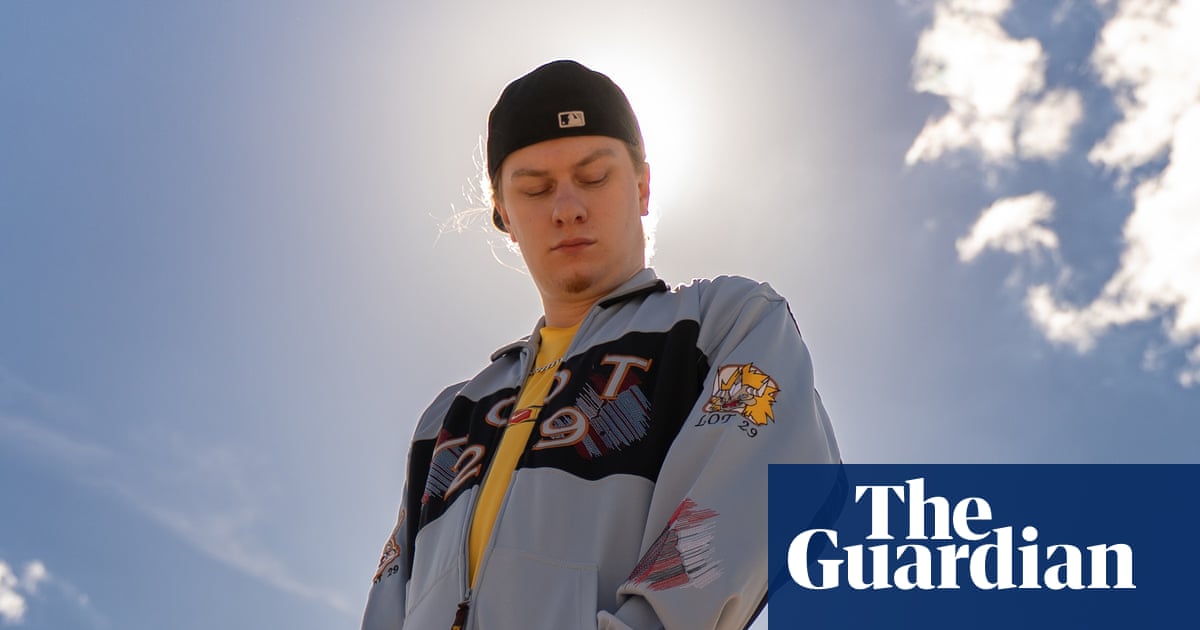
From João Pessoa, Brazil Recommended if you like Hermeto Pascoal, Mr Bungle, King Crimson Up next Celestial album released 7 August, touring the UK and Europe from 15 August
Thanks in part to its famed music department at the local Federal University of Paraíba, João Pessoa – the easternmost city in South America – is a hotbed of artists playing different folk styles from all over the continent. Papangu sound like all of them at the same time. The five-piece blend a long list of genres: bossa nova, the circle-dance song ciranda and forró , with its dry-tuned accordion and pulsing rhythm section, plus the more ubiquitous progressive rock and extreme metal. The band’s virtuoso chops and intensity keep their songs from buckling under the weight of those ideas, from Vitor Silva’s hurried drums to the mountains of synthesisers and pianos.
For their upcoming third album, Celestial, the band recorded everything live in just nine days and refused to use any kind of computer in order to make a statement against AI music. After all, what program designed to scrape existing ideas from the internet could produce something as genre-splicing and organic as this ?
Papangu broke through in Brazil when they played to more than 50,000 people at Slipknot’s festival, Knotfest, in 2024. Now they’re focused on Europe, scheduled to tour the UK for the second time in two years, and they play Bristol’s experimental festival Arctangent this August. If Angine de Poitrine have set a precedent for proudly technical, outsider music finding a mass audience, then who’s to say these maestros can’t repeat that trick? It would be another nice break from the AI slop filling up most people’s feeds, at least. Matt Mills
This week’s best new tracks
Stormzy and Odeal – 24 Hours “Nobu or Lebanese Grill?” For his first single in a couple of years, Stormzy plays generous first-date organiser, with British R&B star Odeal singing a chorus resplendent with romance and summer sunshine. BBT
Lido Pimienta – Tóxica “You always want more!” the Colombian singer chants (in Spanish) over stark cumbia , an incantation to cast out draining spirits – and the first taste of an album called Caribenya, celebrating Indigenous Caribbeans and, natch, Enya. LS
Helena Gao – Lao Shi 老师 After cowriting Zara Larsson’s Midnight Sun, the Chinese-Danish pop star takes the spotlight with this cheeky plea to learn how to please a lover: her vocals Caroline Polachek-worthy, her 2-step glimmering like fireflies. LS
Arab Strap – You You You Over muscular synthpop, Aidan Moffat recites his middle-aged health woes in a droll laundry list, but as it spools out he works himself into a rage at demagogues, the UK government and Spotify’s founder. BBT
Mary in the Junkyard – New Muscles In singing about her newfound strength, are Clari Freeman-Taylor’s lyrics about being ready to fight? Or satirising self-improvement culture? Either way, the London band’s incantation shivers with traces of Wild Beasts’ clattering menace. LS
Moriah Mensah – Hero A 19-year-old rapper and producer of Nigerian-Ghanaian heritage from Peckham, Mensah debuts with a two and half minute epic, as she hypes herself up over towering synths and earth-scorching bass. BBT
Play Time – Open the Door, Joey There’s as much steady krautrock as there is exploratory Alice Coltrane styling to this captivatingly wibbly, six-minute tonal workout from musicians including percussionist Booker Stardrum. LS
Subscribe to the Guardian’s rolling Add to Playlist selections on Spotify – or transfer it to Apple , Tidal or other services
A large swathe of western Europe is bracing for the first significant heat event of the summer, with temperatures forecast to rise to more than 10C above the norm and new monthly records for May expected to be set in possibly hundreds of places.
Temperatures across Portugal , Spain, France and the UK were expected to exceed 30C (86F) on Friday and into next week, reaching 32C in Paris and London and 35C in south-west France, with highs of up to 38C in the Guadiana and Guadalquivir regions of Spain.
“Both maximum and minimum temperatures are likely to reach unprecedented levels for the season in multiple regions, particularly the south-west, during a premature heat event that will be intense and last several days,” said Météo-France .
The French national weather forecaster said records were almost certain to be set for the highest May temperature recorded in France (30.5C in 2025), and the highest average temperature across the country on a day in May (22.8C in 2017).
It said the exceptional temperatures, likely to exceed previous records by three or four degrees in some cities such as Nantes and Brest, were caused by a heat dome, with hot air from Morocco trapped under the high pressure of a powerful anticyclone.
Météo-France said the temperatures expected in Brittany in particular were “quite remarkable so early in the pre-summer season”, and likely to exceed existing records by as many as three or more degrees.
It said climate breakdown meant that Europe, the world’s fastest-warming continent, could expect such exceptional heat events “more and more often and more and more prematurely, and to be more and more intense”.
The Met Office said temperatures in the UK, where “extraordinary” heat health alerts have been issued for the weekend, could reach 33C locally on Monday, exceeding the current highest temperature recorded in May of 32.8C, set in 1944.
Parts of the UK could also enter a heatwave, with temperatures exceeding 26C to 28C – depending on the location – for three days. That is unlikely in France, where night-time temperatures must also stay above a certain level for an official heatwave to be declared, or Spain , where temperatures would have to reach high summer levels.
In Spain, where temperatures already reached 38C on Thursday, a two-year-old girl died in the north-west region of Galicia after accidentally being left in her father’s car for hours.
The state meteorological office, Aemet, said the hot spell was expected to stretch well into next week and could bring record May temperatures. “Full-on summer heat is the phrase that best describes the weather we’ll see across most of Spain over the coming days,” said Aemet spokesperson Rubén del Campo.
“Temperatures will be between 5C and 10C above the seasonal average – and 10C above average for the time of year in northern regions. These are the kind of temperatures we normally see in July and August.”
A group of “accidental activist” families have succeeded in their efforts to secure the future of their adult children’s care home after uncovering serious alleged management failures that took the charity to the brink of bankruptcy.
The families launched a campaign after discovering that William Blake House, a residential learning disability care home charity in Northamptonshire, owed £1.5m in unpaid taxes, had paid its former chair £1m in fees, and was close to bankruptcy.
Their campaigning prompted a rare Charity Commission inquiry into alleged financial irregularities at the charity, helped underpin a detailed rescue plan, and outflanked potential takeover bids from private sector rivals.
Administrators confirmed the services will be run by Camphill MK Communities , a learning disability residential care charity that shares a common care ethos with William Blake House and has the backing of the families.
“We are overjoyed and so relieved to have learned today that this lovely charity is going to take over the care of our vulnerable children and provide them with a home for life,” the families said in a statement.
The administrators said that pending regulatory approval, the move signalled “a significant and positive step forward in securing a stable future for the residents staff and wider community connected to William Blake House”.
Funded mainly by local authorities, William Blake House is home to 22 adults with learning disabilities, autism and complex care needs who require support throughout the day and night. Many residents are non-verbal.
The families said: “Our months of determined effort to find out the truth, to confront the authorities and to be heard have finally paid off. Now that we have Camphill with their integrity and expertise, we can sleep at night.”
Camphill MK’s chief executive, Tim Davies, said: “This is about more than organisational change. It is a long-term commitment to people, to community and to the belief that people with learning disabilities deserve lives filled with meaning, security, friendship and belonging.”
The families’ victory is a rare good news story from a care sector in crisis as a result of shrinking care fees, staff shortages and rising wage costs. Several learning disability care providers have shut, merged or cut back on services in the past 18 months.
The story of a group of passionate, well-organised parents determined not to put up with sub-standard care for their disabled children has historical echoes. Many learning disability charities were set up the 1960s and 1970s by families appalled by the dismal services offered by state institutions.
The leader of the Liberal Democrats, Ed Davey, who highlighted the campaign in the Commons in March, praised the families: “As the father of a disabled son, the situation they have been put through is one of my worst nightmares, and I commend their courage in fighting for their loved ones to get the best possible care.”
The saga began in autumn when a handful of families realised that serious failings in the management, finances and governance of the charity threatened the future of its care services and put their childrens’ “home for life” in jeopardy.
Facing a race against time, they spent thousands of hours piecing together the charity’s complex finances and tangled interests, getting fellow families on board, interviewing former trustees and pleading with regulators to intervene.
For weeks the families waited to hear whether charity and care watchdogs would act. In February, acting on information from the families, the Charity Commission opened an inquiry into William Blake House’s finances over concerns the charity’s resources had been used for unauthorised personal benefit. The inquiry continues.
In March, the commission took over the running of the charity on an interim basis. The appointment of an interim manager over the heads of the existing board happens when the commission considers the consequences of not acting would be a major risk of harm to the charity’s finances, assets, services, beneficiaries or reputation.
The families lobbied to prevent the insolvency courts simply winding up the charity, before facing an anxious wait to discover who would take over the charity’s services.
The headline of this article was amended on 22 May 2026. An earlier version said that William Blake House was a children’s care home. It provides care for adults with disabilities.
What is the code of practice about and who does it apply to?
The updated code of practice is written by the UK equalities watchdog, the Equality and Human Rights Commission, and offers guidance to service providers, associations and those delivering public functions about how to apply all aspects of the Equality Act.
The code covers all nine protected characteristics, such as disability, race and sexual orientation, but there is especial focus on this update because it also includes practical guidance on how to apply last year’s supreme court ruling about single-sex spaces.
Speaking as the draft code was published, chair of the EHRC, Mary-Ann Stephenson, was keen to clarify what the code does and does not do: “We are not deciding what the law should be. Parliament does that. The supreme court clarified what it is. We are just providing guidance for service providers on how they can best follow the law.”
Why was this update necessary?
This was the first update to the code in more than 10 years and was well under way before last April, when the supreme court ruled on a long-running case against the Scottish government brought by gender critical campaigners For Women Scotland (FWS).
The landmark judgment said that, for the purposes of the Equality Act, the legal definition of a woman was based on biological sex . This has had significant ramifications for who can now access women-only services and spaces, such as refuges or toilets.
Immediately after the ruling, a few companies moved quickly to bar transgender people from using facilities of their lived gender, but most remained in limbo, concerned about the costs and practicalities of providing extra gender neutral toilets, for example, and awaiting further guidance from the EHRC. Those businesses that want to remain trans inclusive have highlighted a “minefield” of competing legal rights and staff concerns about being forced to police toilets.
The EHRC first submitted it’s draft code to the UK government last September, and there has been ongoing criticism of ministerial delays from gender critical campaigners and businesses awaiting clarity.
What does the new code of practice say about the supreme court judgment?
The new code reinforces last April’s ruling, and gives a wide variety of practical examples showing how service providers might apply it.
The code is clear that if a service provider admits a trans person to a service that aligns to their lived gender, that service can no longer be described as single sex and the provider is “very likely” to be at risk of legal challenge.
It is also clear that it is not unlawful to exclude a trans person from a single-sex service of their own biological sex “as long as doing so is a proportionate means of achieving a legitimate aim”, for example to prevent a male-presenting trans man attending a group counselling session provided for female survivors of domestic violence.
But it also states that if service providers don’t offer alternative facilities for transgender individuals, such as gender neutral toilets, this is may also amount to discrimination on the basis of gender reassignment.
What else does the updated code say?
Although the focus of interest is what the code says about single-sex provision, it includes a range of new protections for people across the country, including for women whose menopause has a significant impact on their everyday life, updates to reflect the legalisation of same-sex marriage, and clarification that women who breastfeed are protected from harassment.
What happens to the code now?
It will be laid before parliament for 40 days, as a formality, after which the equalities minister, Bridget Phillipson, issues a statutory instrument and it comes into force and is then subject to the EHRC’s enforcement powers.