W hen Miles Davis was dying in September 1991, an invisible, neighbouring trumpet player, who this writer would frequently hear practising graceful classical phrases, began playing homages to Miles’ voice-like, blues-inflected melodies instead. It was a poignant personal tribute to a unique instrumental sound, and a unique imagination, that had profoundly enriched 20th-century music.
This month marks Miles’s centenary, and a clamour of celebrations of a musical life that led him to be dubbed (by Duke Ellington, allegedly) the “Picasso of jazz” for the many styles he explored. A standout this month is his 1957 movie soundtrack Ascenseur pour l’Échafaud – now repackaged on vinyl and CD with restored audio, beautiful photographs and revealing essays.
Composed by Davis from little more than a handful of chords, this music was mostly improvised straight to a screen showing budding New Wave director Louis Malle’s crime thriller Ascenseur pour l’Échafaud (Lift to the Scaffold), over one long night in a Paris studio in December 1957. His fine local quartet included expat New York bebop drummer Kenny Clarke, and their harmonic openness created a spacey, ethereal soundworld (a method that within little more than a year would also colour the landscape of Miles’s classic Kind of Blue) for a story following two lovers who think they’ve committed the perfect murder of an inconvenient husband, and the mishaps, farces, ecstasies and fears that populate the long night of their undoing.
Dreamily sensual sounds mirror misplaced hopes; there are car-chase scurries (Miles’s fast-bop horn virtuosity was formidable in this period), desolately bluesy accompaniments to actor Jeanne Moreau’s confused wandering in search of her partner, bar-room clamour in the trumpet/tenor-sax counterpoint between Miles and saxist Barney Wilen – but all the music stands alone, without images. A quiet slow-burn, but simmering with all of Miles Davis’s timelessly extraordinary light and heat.
Also out this week
Norwegian guitarist, composer and singer Hedvig Mollestad’s power-trio Weejuns nods to Miles Davis’ 1969 Bitches Brew with Bitches Blues (Rune Grammofon). Partnered by Supersilent keyboardist Ståle Storløkken and drummer Ole Mofjell, Mollestad edges and elbows her way into raw atonalities and spacey sci-fi shimmers through the group’s unique and strangely rapturous take on 1970s jazz-fusion. A very different and much-overlooked guitarist, Jeff Parker (also of indie rockers Tortoise and Chicago’s Association for the Advancement of Creative Musicians), unveils fascinating ways of emerging patiently from minimalism to captivating lyricism with his long-running quartet on Happy Today (International Anthem/Nonesuch). And Jason Miles , a former Miles Davis keyboardist from the albums TuTu, Amandla and Music From Siesta, revisits that groove-centric era in his own personal way, highlighting Miles’s admiration for Prince, and his own creative synth empathy in a like-minded band including trumpeter Randy Brecker and saxist Ada Rovatti on 100 Miles for Miles Davis (Lightyear).
W hen Disney bought Lucasfilm for roughly $4bn in 2012, it must have felt like an obvious piece of business: who wouldn’t throw wads of cash at a saga boasting an entire galaxy in a box? For a while, it seemed too good to be true. The Force Awakens made more than $2bn worldwide. Rogue One did more than $1bn. The Last Jedi conjured up more than $1.3bn, even while triggering a culture war so radioactive it could power the Death Star. Most of the fandom hated The Rise of Skywalker, but that most execrable of movies still earned Disney more than $1bn.
Then came Disney+, the perfect delivery system. No more waiting years between films: just hang around for a few months and something else would pop up on the conveyor belt. Andor, The Book of Boba Fett, Obi-Wan Kenobi, Ahsoka, The Mandalorian. Plot holes were filled, animated side characters got their magnum opus, and we all learned far more about the middle-management structure of galactic fascism than we had ever imagined possible. So why are we, almost 14 years on from that monumental shift in the Star Wars power structure, reading yet another slew of critical notices declaring that the saga has run its course? The Mandalorian and Grogu, at time of writing, has a rating of 61% on Rotten Tomatoes , pushing it just into the “fresh” category. The positives, broadly speaking, are that it is charming, brisk, visually polished and has Baby Yoda, a character precision-engineered for adorability. On the negative side, critics have complained the film feels thin, formulaic and weirdly televisual, less a grand restoration of Star Wars on the big screen than three Disney+ episodes.
Is Star Wars now the impossible franchise, at least on the big screen? Because actually, Jon Favreau’s film is perfectly fine. Without giving too much away, there are callbacks to villains from decent TV episodes, Mando processes hapless stormtroopers into white-armoured landfill more efficiently than ever, and Grogu shimmies down all-new rabbit holes of cuteness. So what is the problem? It can’t simply be that Disney has not tried. If anything, the company has tried almost everything. It soft-rebooted the original trilogy with The Force Awakens, giving fans the old shapes in shiny new wrapping. It worked commercially, but also set a trap. Fans had asked for the old magic, and Disney gave them it, literally. Then came Rian Johnson’s The Last Jedi, which did what people often say they want franchise films to do: challenge the mythology, complicate the heroes – burn down the museum. It also revealed the true horror of modern blockbuster cinema in the era of social media: audiences all want completely incompatible things, and are perfectly prepared to declare so at light speed while accusing everyone else of personally murdering their childhood. The Rise of Skywalker then tried to solve this by reversing the previous film into a ditch. The result pleased almost nobody.
And so back to Mando: characters Star Wars fans actually like; no major revelations about the Force, or the complicated lineage of our key players. Mando has no genetic connection to Boba Fett, and Grogu is not the son of Yoda and Yaddle. Just an entertaining, old-fashioned matinee adventure set between the fall of the Galactic Empire and the rise of the nefarious First Order. For fans of the TV show, this will probably be fine. But if it’s not what people expect from Star Wars on the big screen, this rather begs the question: did Lucas know what he was doing when he took the cash and walked off? After all, Star Wars has always been hard to get right. The prequels were hugely divisive. The Ewoks were not everyone’s cup of tea. Let’s not even discuss the 1978 Star Wars Holiday Special .
Maybe we all missed one vital point about the original trilogy: it had the unfair advantage of actually ending. Lucas’s fantasy triptych told a simple, mythic story. Farm boy discovers destiny. Princess leads rebellion. Scoundrel finds a cause. Father is redeemed. Empire falls. It worked because it felt complete, yet every attempt to continue it since has reopened the wound. The Empire did not really fall. The Jedi did not really return. Luke did not rebuild the order. Palpatine did not stay dead. The victory at Endor was not the end of tyranny, but a temporary administrative reshuffle. Once you accept all that, the whole thing curdles. If every happy ending must be undone so that something else can emerge, the myth becomes less moving each time. Star Wars begins to feel like a galaxy where no one is ever allowed to retire, heal, learn or complete an emotional arc.
Even The Mandalorian , which began brilliantly as a lean western about a bounty hunter and his tiny frog-gobbling ward, ends up dragged into the franchise tractor beam of helmets, bloodlines, clones, councils, darksabers and legacy cameos. It starts to resemble the inevitable endpoint of the Disney bargain: a galaxy in a box, a myth on a conveyor belt, trying to sell us back exactly what we bought last time – just in slightly shinier packaging.
Israel’s far-right national security minister, Itamar Ben-Gvir, has made abuse of detained Palestinians something of a macabre calling card, celebrating cruelty publicly and often on video.
During his time in office, violence including rape , extreme hunger and humiliation have been normalised in Israeli jails. Rights groups say detention centres have become “ torture camps ” for Palestinians.
Ben-Gvir boasts of presiding over a “prison revolution”, telling lawmakers in 2024: “I am proud that we have changed all of the conditions”. He has repeatedly shared footage of visits where he showcases or participates in abuse.
These displays have become normalised in Israel and were largely ignored internationally until this week, when he extended the template of televised mistreatment to foreign activists.
More than 400 men and women from 44 countries were intercepted by the Israeli military in international waters as they tried to sail to Gaza with aid supplies.
The next day Ben-Gvir posted a video of security forces abusing detainees. It included footage of him waving an Israeli flag and taunting rows of activists who had been forced to kneel with their hands bound and foreheads to the ground.
Captioned “Welcome to Israel”, it prompted an immediate and overwhelming flood of condemnation from around the world, including from the leaders of Italy and Canada, foreign ministers across Europe and – perhaps most unusually – the US ambassador to Israel, Mike Huckabee.
The scale of global outrage pushed the Israeli prime minister, Benjamin Netanyahu , to issue a public rebuke. Ben-Gvir’s behaviour was “not in line with Israel’s values and norms”, Netanyahu said – although it fits the well-documented track record of his nearly four years in office.
Yara Hawari, a co-director of Al-Shabaka, the Palestinian Policy Network, said on social media: “Ben-Gvir’s video publicising the abuse of captured flotilla activists in Israeli detention should surprise no one – not if you’ve listened to Palestinians for even a fraction of a minute.”
Israeli data shows at least 98 Palestinians have died in custody since October 2023, including a 17-year-old probably killed by starvation . Israel’s supreme court has repeatedly ordered the government to end food deprivation.
Documented abuse of detainees includes an assault and rape filmed on security cameras and reported to police by Israeli medics. Netanyahu described the alleged perpetrators as “heroic” and a failed attempt to prosecute them as “criminal”.
The “harrowing and unjustifiable” forms of abuse captured in Ben-Gvir’s video are routinely used against Palestinian prisoners in Israel, from the stress positions to the derogatory filming, said Tal Steiner, the executive director of the Jerusalem-based human rights group HaMoked.
“We welcome the international attention to [the abuse of activists] and to Ben-Gvir’s punitive policies generally but must not forget that this is what happens to Palestinians, as well as much worse forms of torture and abuse.”
Netanyahu has never criticised extreme abuse of Palestinian detainees and denounced a recent New York Times investigation into rape of Palestinians , including in prisons, as a “blood libel” and threatened to sue the newspaper.
His attempt to distance himself from Ben-Gvir’s video appeared designed to deflect global outrage by framing the abuse as an extremist aberration, said Guy Shalev, the executive director of Physicians for Human Rights–Israel.
“Crimes are framed as the actions of rogue settlers, abusive prison guards, or soldiers acting outside orders. Systematic violations are thus detached from policymakers and from the Israeli state itself,” Shalev said.
“Israel’s legitimacy remains intact, while performative condemnations allow the ‘international community’ to preserve its moral self-image without confronting the structural nature of the violence.”
Many countries responded to the mistreatment of their citizens by summoning Israeli ambassadors for a formal dressing down. That measure is unlikely to worry Ben-Gvir, given that he is already embroiled in a public slanging match with the Israeli diplomats’ ultimate boss, Saar.
Israel’s foreign minister, Gideon Saar, described the video as a “disgraceful display” that harmed the country. Ben-Gvir hit back by accusing Saar of being soft on “supporters of terror”, adding that Israel had “stopped being a pushover”.
There have also been international calls for sanctions against Ben-Gvir over the video. Several countries had already targeted him in this way last year, including the UK, Canada and Australia, citing incitement to violence against Palestinians.
Since then surging attacks in the occupied West Bank have prompted the former Israeli prime minister Ehud Olmert to call for the international criminal court to intervene “to save the Palestinians and us [Israelis]” from state-backed settler violence.
As Israel prepares for elections this autumn, many see Ben-Gvir’s video as early campaign material, designed to appeal to the type of far-right voters who share grim jokes on social media about illegal starvation rations for prisoners, calling them the “Ben-Gvir weight-loss plan”.
As polling day approaches, racist rhetoric and actions from Ben-Gvir and other extremist politicians are likely to escalate. Their more mainstream rivals rarely discuss Palestinian rights or the occupation of Palestine .
Israel’s closest allies and trading partners have political and financial leverage that can exert real pressure for change inside the country.
When Israeli soldiers vandalised a crucifix and desecrated a statue of the Virgin Mary in Lebanon, the international community mobilised. Four soldiers responsible for the incidents were jailed for several weeks, and Israel apologised.
State-sanctioned abuse of Palestinians has not produced equivalent demands for action. The EU, Israel’s biggest trading partner, has spent over a year considering proposals to suspend parts of its free trade agreement over violence in occupied Palestine, without progress.
“It is deeply telling that strong international condemnations only came after Israeli officials publicly boasted about this abuse,” said Suhad Bishara, the legal director of Adalah, the rights group which represented the flotilla activists.
“Statements are not enough: as long as Israel faces no concrete consequences for crossing one red line after another, abuses against Palestinians and international civilians alike will continue to escalate.”
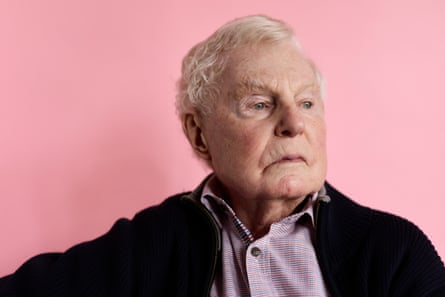
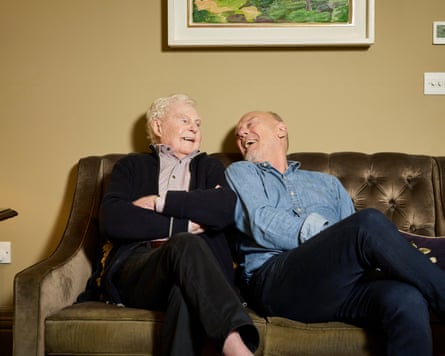
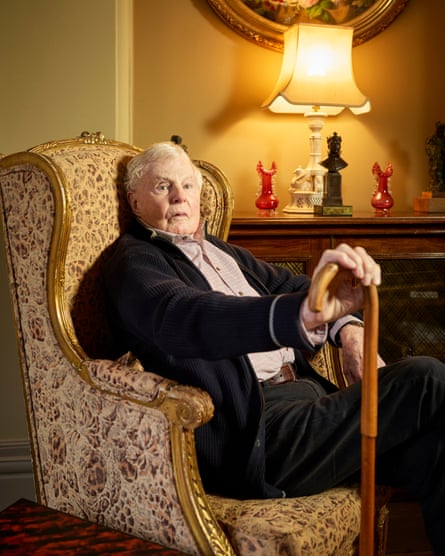
D erek Jacobi is chatting to the photographer in the living room. His voice is unmistakeable – rich, buttered, every sentence beautifully parsed and phrased. I’m in the kitchen with his husband, Richard Clifford, who is making coffee. He tells me they have been together 47 years. “We met when I was 22 and he was 39.”
“I’m a child snatcher,” guffaws Jacobi from the lounge.
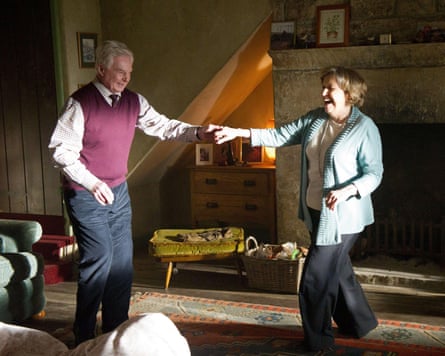
While Clifford is an actor and director who has enjoyed some success, Jacobi is a giant of stage and screen, famous for his Hamlets and Lears. Perhaps he is still best known for I, Claudius, the brilliant 1970s TV series in which he played the stammering, disabled Roman emperor with astonishing empathy and sensuality. It was all in the voice. Jacobi could seduce the world with his, as he did with a sublime Cyrano de Bergerac for the Royal Shakespeare Company in the 1980s. Then there are the TV joys of more recent years. In the comedy Vicious, he and Ian McKellen play a savagely barbed but devoted couple, while in the hugely popular Last Tango in Halifax, he enjoys a more tender romance with Anne Reid.
Clifford brings in the coffee. He’s talking about Trump, Iran and how the world is going to pot. I ask Jacobi if he shares his concerns. “I’m too old and ugly to worry.” Look, I say, this is not the first time I’ve heard you talk about being ugly, you don’t really think that do you?
“Ooh yeassssss ,” he says fiercely. “Oh, as a kid, yes. A ginger-haired, freckled-faced …” “Acne-ridden,” Clifford adds for good measure.
“Acne-ridden, east London kid,” Jacobi continues, grateful for the reminder. “Yes, absolutely. I can’t look in the mirror.” He says he won’t watch himself on screen. Is that because of the acting or how he looks? “It’s both. If I were honest, I’d have liked to have been a movie star. I think I can act. But I didn’t have the looks to go with my acting. If I had had the looks as well as my acting ability I think my world would have turned out differently. But I didn’t. And I never wanted to look at myself because I didn’t like what I saw.” Who did he want to look like? “Ooh, Rock Hudson.”
Clifford hoots with laughter.
“When I was growing up he was the film star,” Jacobi says.
But that may just be a case of wishing for what you haven’t got, I say. He has often said that film work is unchallenging compared with the stage. “Yes, absolutely,” he says when I remind him. I think you would have been bored senseless as a movie star, I say. “Probably, but I would have been rich. And, for an East End kid, that matters.”
Could we take a photo of both of you together, I ask. “No,” snaps Jacobi. “ Me , me , me , me , me, ” he says like a greedy child.
“Me, Myself and I should have been the title of your biography,” Clifford says laconically.
“Wasn’t it?” Jacobi rat-a-tat-tats with practised ease.
Their house is magnificent – Edward Beale swirling impasto peonies on the wall, toy chimps belonging to Daisy the Irish terrier on the settee, trompe l’oeil wallpaper disguising a toilet, a summer house in the garden that serves as a cinema and a beautifully carved table that opens up into a couple of boxes. If homes can have a sense of humour, this has got a great one. Clifford unfastens the boxes. One for him, and one for Jacobi. It sums up their different characters, he says. “One says: ‘The art in my life, Richard Clifford’. The other says: ‘My life in art, Derek Jacobi.’”
Well, I say, maybe it’s time to focus on Clifford rather than his more celebrated husband. After all, he’s directed Jacobi in plays, has worked with the Old Vic, designed their home, is their social secretary and pretty much runs Jacobi’s life.
“Bye, Del,” Clifford says, waving him off. His voice is even richer than Jacobi’s – crystalline, booming, 101% thesp. They make for a fabulous couple – funny, garrulous, warm, generous, with a hint of claws.
Has he always been Del to you? “Oh, yes. Maggie Smith always called him Del. Or Del Boy. This was before Only Fools and Horses. I only call him Derek when I’m cross.”
“Del is an east London thing,” says London’s unlikeliest cockney. Jacobi grew up in Leytonstone, the only child of Alfred, who ran a tobacconists-cum-sweet shop, and Daisy, who worked in haberdashery. He was a bright boy, exiled to bed for 18 months when he contracted rheumatic fever at nine. That’s when working-class Derek turned posh. They moved the bedroom to the living room, and he spent all day long listening to radio and watching TV. He returned to school with a new accent and ambition. He wanted to be an actor. Jacobi went on to study history at the University of Cambridge, where he spent much of his time performing the classics.
By his mid-20s, he was working for the newly created National Theatre at the Old Vic, directed by Laurence Olivier, whom he adored. What was he like? “Oh, God. God . He loved the young actors and he nurtured us. Wonderful. Wonderful .” What did he learn most from Olivier? “Humility.”
That’s surprising, I say. It’s not a quality associated with him.
“Not particularly, no,” Clifford says.
“Well, certainly with the young members of the company. There was nothing starry about him at all. He would say, ‘Call me Larry.’” He pauses. “No way could we call him Larry.” He yelps in horror at the idea. “He was Sir Laurence.”
So should I call you Sir Derek? “ No !” Another horrified yelp. “ Sir Del Boy . Good heavens, no.” I tell him Ben Kingsley insisted I called him Sir Ben. “Oh God .”
“I called him Sir Ken Bingsley once,” Clifford chimes in. On purpose? “Yes. It’s shaming. Shaming . You shouldn’t behave like that.”
Has Jacobi worked with Kingsley? “No. No, I don’t think I have. If I have, I’ve mercifully forgotten.” That silver tongue can be razor-sharp.
Has he always got on with people he’s worked with? “Mercifully, I have forgotten the bad times. Genuinely. I must have had them, but too infrequently for them to be in the front of my memory.”
“You’ve had difficult directors,” Clifford says, gently nudging him. “John Dexter.” In his autobiography, The Honourable Beast, Dexter wrote of his ‘fury for perfection’.
“John Dexter was hateful,” Jacobi says . “ His method was to bludgeon a performance out of an actor. He directed me in lots of things at the National. I was terrified of Dexter. I don’t think he would have got away with it today.”
Was he the only one who terrified performances out of you? “Bill [William] Gaskill, who was also at the National, was slightly cleverer, but just as nasty.”
Jacobi also tried his hand at directing. But, as he’s quick to admit, he wasn’t a natural. “The best part was showing them what I thought they should do, and getting up and doing it. So, no. I suppose I’m not a director.” He directed Kenneth Branagh in Hamlet. “Every time I gave Ken a note I demonstrated it.” Was he good at taking notes from you? “Yes, he was very generous with me. He said: ‘Tell me what you want and I’ll try to do it.’ But I think Ken might have gone away and stuck pins in effigies of me.”
“Del hasn’t directed since then,” Clifford says, grinning.
Jacobi’s memoir is called As Luck Would Have It, and he repeatedly tells me how lucky he has been in life – his job, his success, Clifford, his parents. “My life has been full of fortunate incidents. I had the most glorious parents who gave me everything they could.” He starts to weep. “And now I’m going to burst out crying,” he says apologetically.
Does he cry a lot? “Actors’ gift,” he says with a smile. Humans cry a lot too, I say. “Actors are humans,” he shoots back.
“I know. Miaowwww ,” Clifford says.
At the age of 21, Jacobi told his mother he was gay. It was an unusual and brave move at the time. His mother said she knew, and insisted it was a stage he was going through.
Clifford had a small part in Russell T Davies’s devastating Aids drama It’s A Sin, set in the 1980s. I ask them what life was like in that decade. “We lost so many friends. It was terrifying,” Clifford says. “When young people die it’s so shocking. And you think of your own mortality.”
“It was a terrible plague time we lived through,” Jacobi says. “It was like we were being punished for some reason.”
Clifford: “Well, only that we were told it was a gay thing, but of course it wasn’t.”
Jacobi: “Gay plague, yes.”
Was he frightened that he might get infected? “No. I don’t know why, but I wasn’t,” Jacobi says. “I think that’s because we didn’t play around. That was safe,” Clifford says.
Jacobi, who had a near-photographic memory, announced in 2022 he was retiring from live theatre because he was struggling to remember lines. But he’s not entirely quit the stage. He and Clifford now do a two-man show in which Clifford quizzes him about his life, and fills in the gaps when they appear. As for TV and movies, he’s still very much available for work.
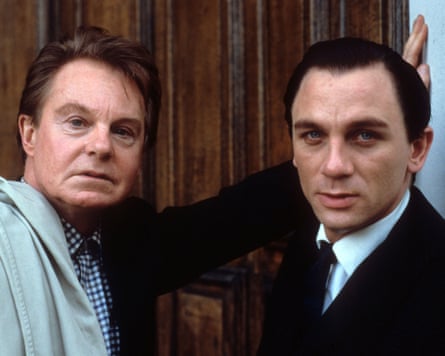
One of his best roles was as artist Francis Bacon in the 1998 John Maybury biopic Love is the Devil. Jacobi’s Bacon is masochistic (his lover George Dyer, played by Daniel Craig, whips him and stubs cigarettes out on him), cruel, permanently pissed, supremely sardonic and cursed with self-loathing.
At the time of filming, Jacobi was pushing 60 and Craig was 30. Jacobi tells me that he and Reid, who was also cast as an older lover of a character played by Craig in the 2003 film The Mother, compete about how many times they have slept with the actor who went on to be James Bond. “Annie says, I went to bed with Daniel Craig. And I say, I went to bed with him twice. ”
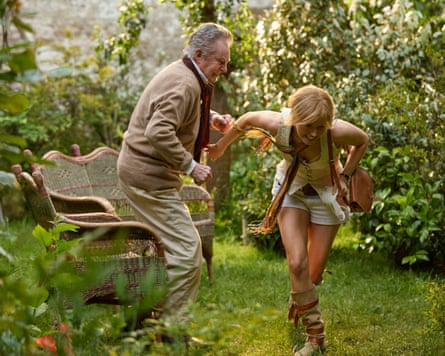
In his latest film, Moss and Freud , Jacobi plays Bacon’s contemporary Lucian Freud, a man just as solipsistic. The movie is about the unlikely friendship between Kate Moss and the painter, who can transform from tender to tempestuous in seconds.
Who did he feel closer to, Freud or Bacon? “I probably admire Lucian Freud more. But I knew I’d feel more comfortable with and get on better with Frankie Bacon.” I’m surprised, not least because he has described him as a monster. He smiles. “Yes, but in my head he wasn’t. It probably says a lot about me, but I felt more comfortable with him.”
Jacobi and Freud strike me as two men who have similar attitudes to their work. While Jacobi has called acting “a compulsion, an obsession, a vocation”, Freud described himself as “completely selfish” and said: “The man is nothing; the work is everything.”
Does Jacobi think he has been selfish in prioritising his work to the extent he has? “Perhaps when I was younger, but no longer.” He says acting has been his way of dealing with the world. “Dedicating your life to imagination and pretence is an escape, I suppose. Choosing to create a world that is actually in your head in which you feel well and safe and well and able. It’s safety.”
Does he think his absorption in his work has been at the expense of life? “They’re the same thing for me. I don’t weigh one against the other. I’m often conscious of the onus I put on him” – he looks at Clifford affectionately – “with all the things that require sustenance of a daily existence. Richard provides it.”
Can Jacobi cook? “Oh, no. I can’t boil an egg. Genuinely can’t.”
Clifford laughs. “It’s true. I had leukaemia and was going through chemotherapy, and one day I came downstairs. I said, ‘Oh, I’d love a boiled egg.’ And Derek said, ‘D’you put it in boiling water or cold water?’, which is a sensible question actually, ‘and how long d’you put it in for?’” How did it come out? “Hard-boiled,” Clifford says.
Jacobi says Clifford has always been the grownup in the relationship, despite him being 17 years younger. Clifford learned to be self-sufficient when he was sent to boarding school at the age of six. Jacobi never did. “In our relationship he has stayed the child,” Clifford says. “I’m social secretary and cook and bottle washer.”
Has that been difficult for Clifford? “Sometimes I think I’m underwater because I’m doing all that and acting and directing as well. But, look – when you’re busy, you’re busy. You just fit it in, don’t you?”
“He’s much better at life than me,” Jacobi says. Is that true? “Oh, yes, absolutely.” Clifford says. The thing is, Jacobi says, even though he’s not so good at life, he loves it and is determined to tot up a century. “I want to experience what it will be like to be 100. I want to find out what state I’m in.”
As for Clifford, he’s not wedded to longevity. “When we’ve been together 50 years and Del will be 90, we’re going to sell the house, have a big party and then drive off Beachy Head.”
But Jacobi’s determined to get to 100, I say. “Well, I won’t be around. I’ll get in the car and go off Beachy Head by myself,” Clifford says.
Jacobi counts up and looks a little alarmed. “I’m only two years off 90.”
“No, you’re not,” Clifford tells him. “You’re only 87.” He turns to me. “He always talks about when he was working with Clint Eastwood and asked him about how he copes with ageing, and Clint said, ‘I don’t let the old man in.’ So Derek has told this story for a long time about not letting the old man in. And now he has let the old man in. And I think, why?” How long has he let the old man in for? “For about the last two years.”
“Well, he’s hanging around,” Jacobi concedes. “And I am married to somebody who is considerably younger than me, so the old man hovers. That’s all. There’s no great problem.”
Does Clifford get upset that Jacobi has let the old man in? “I do, because I think it’s giving up, and I don’t think one should ever give up!”
Does Jacobi see himself as giving up? “No way. No. No . I just see the inevitability that there is a big disparity in our ages.”
“No, it’s not to do with age,” Clifford says. “I don’t want to fall out with you, but if you say, ‘I don’t let the old man in’, you don’t keep thinking about it. If you let the old man in, all you think about is being old.” “I don’t,” Jacobi says. “Only when you bring it up. I want a divorce . Hahahha.”
Clifford: “I keep the house. You can go and live in the cinema room. There’s no lavatory in there, though.” Jacobi: “You see that’s what’s saved us. The sense of ridicule. You’ve got to be able to take the piss out of each other.”
I’ve been here two hours. The interview was only supposed to last an hour, and they must have had more than their fill. I say it’s been great to meet them.
They look at each other. “We’ve exhausted you,’ Clifford says. “We’ve run the gamut from A to B, haven’t we?”
As I get up to leave, Jacobi struggles to his feet. ‘ Ooh . Ooooh . Ooooooh .” He looks up at Clifford. “We used to be the same height. Look at us now.” I ask if he’s got osteoporosis. “No. I’ve got a bad right leg,” he says.
“But that’s not why you’re shrinking,” Clifford says. “It’s too much alcohol.”
Which of the two drinks more? Clifford points at Jacobi. “You should have seen him last night,” Clifford says. What’s your favourite tipple, I ask Jacobi. “White wine.” What type? “ White .” He giggles. “I have two glasses of wine for lunch and then a little siesta. And I think I’m of an age that I’ve earned that.”
On my way out, I ask about forthcoming plans. Clifford mentions the two-man show. Does the audience ever ask about Clifford’s career? “No, because it’s a show about him,” he says. “Don’t put that in his head,” Jacobi bellows. “You’ve ruined the show now.”
Jacobi sneezes. One, two, three. “ Achhhhoooo. Achooooooooo. Acheeeeeeh . ” And now he can’t stop. “A cchoooooo . Hooo . God . A-tsschh. Ah-wuphh . ”
“It’s because I’m talking,” Clifford says. “He does this. There’ll be 20 of them. He goes on and on and on, I can’t tell you. Oh. Shut. The. Fuck. Up.”
Now Jacobi’s crying with laughter. They wave me off at the front door, cackling like schoolboys.
Ukrainian drones hit the Syzran oil refinery more than 800km (500 miles) inside Russia , setting it on fire, Volodymyr Zelenskyy said on Thursday. The Ukrainian president posted a video of the aftermath. Russia’s independent Astra news outlet said Ukrainian drones struck the Syzran refinery owned by oil and gas company Rosneft. The governor of Russia’s Samara region, Vyacheslav Fedorishchev, said two people were killed by Ukrainian drones in Syzran , but he did not mention the refinery.
Ukrainian drones hit another refinery the previous day, Zelenskyy said. “Overall, our long-range plan for May is being carried out largely in full . The key targets are Russian oil refineries, storage facilities and other infrastructure tied to these oil revenues.” The escalating attacks have hurt Moscow’s revenue at the same time as the economic pinch of international sanctions. With some attacks reaching more than 1,500km (900 miles) into Russia, the strikes have contributed to some Russians feeling unsafe and heaped pressure on the Russian president, Vladimir Putin.
Ukrainian forces have pushed back Russian troops along parts of the frontline , making their most significant battlefield gains since 2024, according to the Institute for the Study of War. Ukraine’s “intensified midrange strike campaign” since early 2026 “has also degraded Russian forces’ ability to conduct offensive operations across the theatre and has also likely supported recent Ukrainian advances”, the US thinktank said in an assessment on Wednesday.
Ukraine has slowed Russia’s battlefield advance and is gradually regaining the initiative along the frontline , said Mykhailo Fedorov, the defence minister, partly due to Russian forces being denied access to Starlink satellite services to steer drones towards targets. “Russia has since not been able to find a full replacement [for Starlink], giving Ukraine a critical battlefield advantage.”
Russia and neighbouring Belarus held the final stage of their joint nuclear drills . Russia’s defence ministry said on Thursday that its forces launched a Yars ballistic missile and a Zircon hypersonic missile as part of missile tests. As part of the exercises, trucks carrying intercontinental ballistic missiles rumbled over forest roads, atomic-powered submarines set sail from Arctic and Pacific ports, and crews scrambled into warplanes.
The German chancellor, Friedrich Merz, wants the EU to consider “associate membership” for Ukraine and revive talks aimed at ending the war, according to a letter he wrote to top EU officials that was seen by the Associated Press. Under Merz’s proposals, Ukraine would take part in EU meetings, but without voting rights, and would also have non-voting “associate members” of the bloc’s powerful executive branch, the European Commission, and the European parliament.
On Wednesday, Zelenskyy welcomed signs of possible progress in the membership negotiations, saying in an address that it was “very important for us. Ukraine has fulfilled everything necessary for this progress.” On the war, Merz wrote that his proposal “will help facilitate the ongoing peace talks as part of a negotiated peace solution. This is essential not only for Ukraine’s but for the entire continent’s security.”
The former Estonian president Kersti Kaljulaid on Wednesday offered a clear take on the EU membership question. “Question is: Ukraine is a military power with huge military production capability. Whose hands must it be in? In Russian hands [or] western hands? End of story. This is our question. This is our objective. Have Ukrainians with us, because imagine they started, like in Soviet Union times, to build all these things for Russia , not for us. And that gives you your answer. It’s very simple.”
The EU can freeze assets linked to sanctioned Russians even if those assets are held by a trust and there is no direct legal link to the persons involved, the EU’s court of justice ruled on Thursday. The court said assets can also be frozen if they are only indirectly linked to the person on the sanctions list. The ruling related to the seizure by Italian authorities of companies and a yacht held through complex ownership structures by trusts. The companies had challenged the freezing of those assets, but the EU court dismissed their claim, and said indications of ownership or control could also be inferred from circumstances or from “needlessly complex legal structures” .
Lost in Music, He’s the Greatest Dancer, Thinking of You and We Are Family – many artists would long for just one of these songs at any time in their career, but for Sister Sledge they all appeared on a single side of one of their albums. As she brings these and the rest of the disco group’s still-sensational catalogue to the Electric Paradise festival this summer, Kathy Sledge will be joining us to answer your questions.
Kathy is one of four Sledge sisters along with Debbie, Joni and Kim, who formed the group as children in the mid-1960s, picking up gigs at churches and local events in their home city of Philadelphia as the Sledge Sisters. After flipping the name around, they got a record deal and their first chart success came in the UK in 1973, with the Top 20 hit Mama Never Told Me.
Further commercial success eluded them for a few years – though that’s no reflection on the quality of early disco material such as Pain Reliever – until their label paired them with Chic’s Nile Rodgers and Bernard Edwards. Sister Sledge’s poise and charisma shone from the aforementioned hits the pair wrote for them, collected on the album We Are Family. The title track reached No 2 in the US and it, along with the others, endure as pinnacles of the disco era.
Remixed versions of those songs came back around in 1984 and 1993, each to great success particularly in the UK, though the group’s only UK No 1 single was in a very different style in 1985, with the swaying neo-60s pop of Frankie.
Kathy took the lead vocal on some of their biggest hits, and after Sister Sledge went on hiatus in 1987, she had a solo career interspersed with occasional Sister Sledge reunions, and later – amid some legal wrangles with her sisters – solo tours of Sister Sledge material. Next up she’ll perform at Electric Paradise in Milton Keynes, on 8 August, alongside other legends of the era such as Grace Jones, Candi Staton, Kool and the Gang and more.
Now 67, Kathy has been in countless nightclubs and recording studios around the world across her multi-decade career, so there’s plenty to ask her. Post your questions in the comments below before 6pm GMT on Wednesday, and we’ll publish her answers later in the week.
This week’s puzzle is a chance to enter an annual national competition in which Guardian readers traditionally perform well and in considerable numbers. White in the diagram, playing as usual up the board, is to play and checkmate in two moves, against any black defence.
The puzzle is the first stage of the annual Winton British Solving Championship, organised by the British Chess Problem Society and sponsored by the investment managers Winton. This competition is only open to British residents and entry is free. To take part, simply send White’s first move by post to Nigel Dennis, Boundary House, 230 Greys Road, Henley-on-Thames, Oxon RG9 1QY, or by email to winton@theproblemist.org.
All entries must be postmarked or emailed no later than 31 July 2026, and provide the entrant’s name and home address. Juniors under 18 on 31 August 2025 must also give their date of birth. Please mark your entry “Guardian”. Receipt of the solution will be acknowledged after the closing date, when all competitors will receive the answer. Those who get it right will also be sent the postal round of eight harder problems, with plenty of time for solving.
The best 15-20 players from the postal round, plus the best juniors, will be invited to the final at Harrow school on Saturday 13 February 2027, where the prize money is expected to be at least £1,600. The winner of the final will have the right to represent Great Britain at the 2027 world solving championships, an event where GB are often medal contenders. In 2024 the GB team of John Nunn (individual silver medal), David Hodge (2024 British Solving Champion) and Jonathan Mestel won the team gold for the first time since 2007.
The starter problem is tricky, with some near misses to avoid. Obvious first move choices may not work. It is easy to make an error, so double- and treble-check your answer before sending it. Good luck to all Guardian entrants.
Harry Grieve became England’s latest grandmaster on Tuesday when the 25-year-old, who was British champion in 2022 and helped CSC/Kingston finish second in this season’s UK 4NCL League, won first prize in Budapest with a 7/9 total.
Grieve got his first GM norm along with his British title at Torquay 2022, and his second in 2023 when playing for The Sharks in the 4NCL, but the third norm proved elusive despite several near misses. Last summer he achieved a 2500 rating, which is a mandatory requirement for grandmasters, and he finally reached his target on Tuesday. There was a moment of doubt because of a round seven loss but Grieve then rose to the occasion, defeating a Ukrainian GM in fine style with the decisive tactic 32 Rxf6+!
Back in the 1950s most top English players were amateurs, often civil servants or teachers, who competed in tournaments during their vacations. After the 1970s Fischer boom and English successes brought an influx of sponsors, chess professionals could earn a decent living, but the tide turned again during the 1990s. The breakup of the Soviet Union brought harder international competition, while Nigel Short’s world title defeat and the move to screen rather than print marketing drove sponsors away.
Now the trend has come full circle. It is understood that Grieve and his Cambridge colleague Matthew Wadsworth will follow other 2500-rated GMs who combine chess with a full-time career in banking, investment, artificial intelligence, or other major professions.
The Democratic Republic of the Congo (DRC) have cancelled their three-day World Cup preparation training camp and a planned farewell to fans in the capital, Kinshasa, because of an outbreak of Ebola in the east of the country.
Preparations will take place elsewhere after an outbreak of a rare type of Ebola known as Bundibugyo, which is thought to have killed more than 130 people and caused nearly 600 suspected cases. The World Health Organization has declared it a public health emergency of international concern.
The DRC team are scheduled to play World Cup warm-up games against Denmark in Liège, Belgium on 3 June and Chile in southern Spain on 9 June. Both matches are going ahead as planned, the team spokesman Jerry Kalemo has said. The DRC will face Portugal in their opening World Cup match in Houston on 17 June.
“There were three stages of preparation: in Kinshasa to say goodbye to the public, Belgium and Spain with two friendly matches … and the third stage from 11 June in Houston. Only one stage was cancelled – the one in Kinshasa,” Kalemo said.
All the DRC’s players and the team’s French coach, Sébastien Desabre, are based outside the central African country, with most of them playing in France. Some team staff who are based in the DRC “are leaving in the next hours”, Kalemo said.
Fifa issued a statement saying it “is aware of and monitoring the situation regarding an Ebola outbreak and is in close communication with the DRC football association [Fecofa] to ensure that the team are made aware of all medical and security guidance.”
The Centers for Disease Control and Prevention (CDC) said this week that the United States would ban entry for all foreign nationals who had been in the DRC, Uganda or South Sudan within the past three weeks. The ban lasts for 30 days.
A US official said the DRC’s football team would not be affected by the CDC entry ban because they had been training in Europe for the past several weeks. That means team members, coaches and other officials who have not visited the country in the past three weeks would not be subject to the entry ban.
Those members of the country’s World Cup delegation who did return to the DRC during the 21-day period will be subject to the same quarantine requirements as US citizens seeking to return from affected countries, according to the official. That exception will not apply to fans who want to attend the World Cup, the official said.
The White House World Cup taskforce, housed under the Department of Homeland Security, stressed that it is “coordinating closely” with various agencies on health and security matters and that the government is “closely monitoring” the outbreak.
The DRC qualified for the World Cup by beating Jamaica in their playoff game in Mexico, and have been drawn in Group K. After playing Portugal, the Leopards then face Colombia in Guadalajara on 23 June before playing Uzbekistan in Atlanta on 27 June.
The national team are playing at their first World Cup finals since 1974, when it was known as Zaïre. The Newcastle forward Yoane Wissa, Sunderland midfielder Noah Sadiki and West Ham full-back Aaron Wan-Bissaka have all been included in Desabre’s 26-man squad.
The Hibernian centre-back Rocky Bushiri was initially named in the DRC squad but has pulled out with a suspected achilles injury. Bushiri has been replaced by another Scottish Premiership player, Kilmarnock’s Aaron Tshibola.
Mosengo-Omba elected as head of DRC’s FA
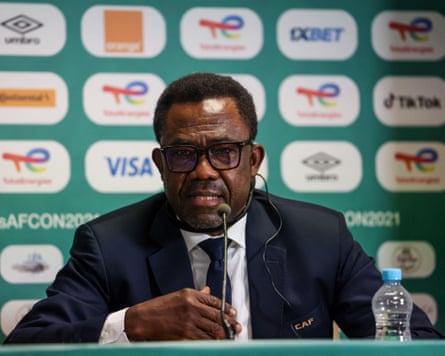
Véron Mosengo-Omba, the former general secretary of the Confederation of African Football (Caf), has been elected president of Fecofa, the DRC’s football federation.
Mosengo-Omba, who was unopposed, received 60 votes from a possible 65 to take over the position, having stepped down as Caf general secretary in March after five years. He is a university friend of the Fifa president, Gianni Infantino, and followed him from Uefa to Fifa in 2016, before moving to Caf in 2021.
Fecofa’s new chief has faced allegations of bullying and intimidation by members of Caf’s audit and compliance committee (AACC), which centre on a meeting held in October 2024 to discuss a governance, risk and compliance report. Mosengo-Omba has denied the claims and insisted he “acted with full integrity”. Reuters and Guardian sport
I n the summer of 2000, I could never have imagined becoming a father. I was 34, living in New York City, with a good job in social care, but still in a tiny apartment. I had been with my partner, Pete, for just over three years; we were serious, but we didn’t live together. Becoming a parent was not on my radar.
One August evening, I had finished work late and was hurrying to a dinner reservation I had with Pete. I was rushing towards the turnstile at Union Square station when I noticed a bundle of clothes in a corner. I saw it move and stopped in my tracks. I walked over, peeled back a dark sweatshirt, and saw him: a newborn baby, with the umbilical cord still attached.
I was in shock. I sprinted up to the street and found a payphone to call 911. “I found a baby,” I blurted out. I rushed back to the platform and crouched down next to the baby. I stroked his head to comfort him but he pulled a face. “OK, you don’t like that,” I said. We stared at each other. My heart was racing.
It felt like hours, but it was probably only a few minutes before the police arrived. I had to give a statement, and went home for a large drink. Pete and I talked all night; why would the mother have left the baby, why had she chosen to leave him here, in the centre of gay New York?
After a short period of media interest, life returned to normal, until 12 weeks later, when I was asked to testify at a court hearing as the mother could not be found. To my surprise, the judge asked if I had any interest in adopting the baby. The idea hadn’t even entered my head, but instantly, I desperately wanted to say yes. I told her I needed to talk to my partner but, in my own mind, I had decided that was what I wanted to do.
Pete was furious. We had never talked about starting a family. We were in debt – there were a hundred reasons why bringing a child into our lives did not seem sensible. But I was convinced.
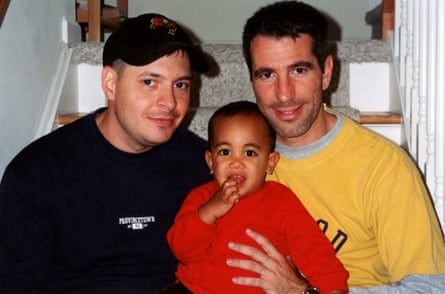
Pete agreed to visit the baby in foster care with me. As soon as I saw him, I took him in my arms. “Remember me?” I said. Pete says when he held the baby, every morsel of resistance instantly evaporated. We left that house united.
We were called back to court on 20 December, and granted custody. “How would you like him for the holidays?” the judge asked. We bought parenting books and read them cover to cover in 24 hours, and I moved into Pete’s flat.
We named him Kevin. Pete had an older brother named Kevin who had died before he was born, and his parents always said he had a guardian angel named Kevin watching over him.
Taking baby Kevin home was incredible but terrifying, as it is for any new parent; but, unlike them, we’d had just a day to prepare. For weeks, we took it in turns to sit up round the clock with him to make sure he was still breathing.
We wanted to make sure Kevin knew he was wanted and loved, so we wrote a story for him about how we became a family. He made us read it over and over, and took it to school.
When Kevin was 11, New York legalised same-sex marriage, and we told Kevin we would like to get married. He said, “Don’t judges marry people?”, and suggested the judge who asked us if we wanted to adopt him. We were delighted when she agreed to do so.
Not everything has been easy. When he was a teenager, he had a lot of questions about his birth mother. He wanted to put up posters in the subway, and we would notice him looking at strangers’ faces to see if they looked like him. He’s made peace with the situation now, though.
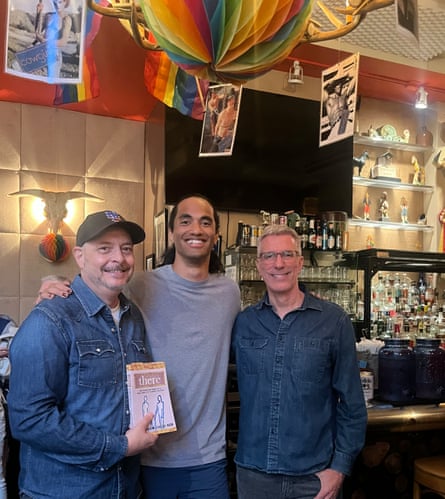
Pete’s written a memoir, and we also turned the story we wrote for Kevin into a children’s book and had a short animation made. We want other children to understand there are lots of ways to become a family.
Now, Kevin is an incredible young man and we are tremendously proud of him. He works out of state as a software developer but, fortunately, he is still happy to spend time with his dads.
Even 26 years later, we can’t quite believe that, by some miracle, it was us who were given the privilege of being part of Kevin’s life. How lucky we are.
As told to Heather Main
Do you have an experience to share? Email experience@theguardian.com
B ritish flower farmers have long resembled David faced with their own particular Goliath – the imported flower industry. More than 80% of cut flowers bought by UK consumers are shipped or flown in. However, recent figures show domestic growers are expanding their market share.
Chloë Dunnett, the founder of Sitopia Farm, a London-based organic farm growing food and flowers, says: “Our flower sales are up 65% for the year and turnover is increasing year on year as the public and florists look for flowers that are seasonal, environmentally friendly and hyperlocal – consumer power can be very effective.”
Output is rising across the whole sector. The latest survey by Flowers from the Farm, the trade body for more than 1,000 mostly small-scale British growers, shows that production increased 55% in 2025, to an average of 32,500 stems per member, and revenues were up 12%.
The government has now awarded the sector official recognition, in the form of dedicated standard industrial classification (SIC) codes for Flowers from the Farm.
“Securing a SIC code means their contribution can finally be measured, supported and championed,” says the Liberal Democrat MP Sarah Dyke, who backed the industry’s push for this status. “These are businesses that not only create jobs and drive local growth but also enhance biodiversity and support more sustainable land use.”
In contrast to a burgeoning domestic sector, the value of imported flowers dropped 8.2% over five years to 2024, according to the Department for Environment Food and Rural Affairs. One factor cited by growers and florists is an emerging awareness that flower imports come with downsides.
Cissy Bullock, the founder of the Cambridgeshire floral design studio Wild Stems, says: “Most imported flowers are factory-farmed and bred to be standardised so they can be priced, graded and transported as efficiently as possible. The supply chains are completely opaque so people know nothing about how their flowers are grown, chemicals used, labour conditions or distance travelled.”
Bullock acknowledges some growers overseas are embracing sustainability, and not all British growers use organic techniques, but she adds: “Buying locally means their provenance is more transparent.” This is one reason why the General Synod of the Church of England backed a motion this February encouraging churches to use locally sourced flowers and foliage.
Lucy Copeman, the founder of Howbury Farm Flowers near Bedford, believes growth within the sector is here to stay. “My turnover was up 40% in 2025 and we’re selling out every week – growers in this area are finding it hard to keep up with demand,” she says. “When we first started 10 years ago, ours was one of the only flower farms in this area – there are at least 15 now. British flowers are fashionable, but they’re definitely not just a fleeting trend.”
Shane Connolly, a floral designer who has long championed the use of British flowers and last year was awarded an MBE for his services to sustainable floristry, agrees. He describes a noticeable shift in taste among clients.
“Buyers want something different to what they see in shops and supermarkets. They want flowers they see in nature or in gardens and they’re looking for airier, looser styles,” he says. “It’s not just individuals. We’re finding more flower markets, restaurants and gastro pubs want to get their hands on British flowers and this is starting to filter through.”
Connolly hopes to see future generations of florists given more opportunities to learn sustainable techniques and work with British flowers. A handful of schools already offer this but traditional training still relies heavily on imported flowers and non-biodegradable floral foam.
Connolly currently holds the royal warrant of appointment for Charles and Camilla – after overseeing the floral arrangements for the king and queen’s coronation – and was previously royal warrant holder for Queen Elizabeth.
“For the coronation we used all British flowers from different growers. I didn’t know what I was getting until they arrived, but that’s exactly how it should work when flowers are seasonal,” he says. “Not knowing what’s coming leads to the joy of creating something unexpected, instead of just getting hundreds of hydrangeas in the wrong season.”
For many florists, however, getting access to fresh British flowers is not always simple. The small scale of many growers and lack of established supply chains represent a logistical challenge. To address this, some growers are joining together to create wholesale flower hubs. These online marketplaces allow florists to place orders with a network of suppliers and then pick up from one collection point. Stem Union went live in March with hubs in Cambridge and London’s New Covent Garden. Flower Grower Collective and The Flower Hub Pauntley take a similar approach. Others are expected to emerge.
If demand continues to grow there are signs the supply side will follow. “We see many people interested in setting up a farm and I always recommend growing flowers as well as food for diversification,” says Dunnett from Sitopia. “Metre for metre it’s more profitable than food and it attracts all the beneficial pollinators and predators.”
Georgie Newbery, external chair at Flowers from the Farm, agrees, and says flower farming works the land and sustains employment: “The socioeconomic benefits ride high alongside the biodiversity possibilities.”