R egular readers might remember me having a wobbly time in the garden last year. Life was lifing (as the kids say) and with that came many hiccups and failures. The veg patch had a wanton disregard for my hopes during growing season, which taught me the importance of finding value and beauty in what was growing, instead of lamenting all that was not.
This season, I’ve found myself approaching the veg patch with a more determined attitude. It’s been six years since my partner and I cleared the couch grass and nettles from the parcel of earth at the bottom of our garden, moved a ton or so of compost on to it to create vegetable beds, and grew the first crops in our new home. And now feels like the right time to take a look at our growing space with fresh eyes. It’s not a blank space, of course, but I’ve been asking myself how I’d grow here if I’d just adopted this patch.
First I assessed the perennial area. By taking a step back, I realised that when our new neighbours cut down their massive cherry tree, a previously shady corner became flooded with light and would be a perfect place for a new raspberry patch. After doing the dull but necessary eviction of perennial weeds and then mulching aggressively, I relocated the volunteer raspberry canes that had popped up everywhere. I gave their former home the same treatment and planted tayberries (raspberry/blackberry hybrids) in their place.
With my partner’s woodworking support, we have replaced all the wobbly or rotten infrastructure – the fence posts, chickenwire boundary and support structures – instead of spending another summer fixing breakages and patching up holes. It’s a relief to have everything feeling sturdy again.
I also took a critical look at my seed box and checked-in with my annual urge to grow more plants than I have room for, as well as exciting varieties that don’t work in my space. In a bid to have a more fruitful year, I decided to grow only the plants I know well and have had success with here: lettuce, kale, beetroot, rocket and parsley, alongside tomatoes, courgettes and cucumbers, which are all in the ground and now finding their feet. There’s nothing super fancy, just grow-your-own staples that I have space for in my garden and time for in my schedule.
In starting as though it’s all new, I’m trying to stop thinking that because I’ve grown for years things should all go to plan, and then kicking myself when they don’t. Sometimes you just need to go back to basics and keep it simple. So if you’re feeling a bit lost – like I was – why not try giving yourself permission to start from scratch.
Manchester City have confirmed Pep Guardiola is leaving at the end of the season. The manager is to step away after Sunday’s match at home to Aston Villa with one year on his contract, and City have lined up Enzo Maresca to replace him.
“What a time we have had together,” Guardiola said. “Don’t ask me the reasons I’m leaving. There is no reason, but deep inside I know it’s my time. Nothing is eternal. If it was, I would be here. Eternal will be the feeling, the people, the memories, the love I have for my Manchester City .”
City said the Etihad Stadium’s expanded North Stand would be named the Pep Guardiola Stand and that a statue of him would be commissioned to feature on the approach. They also announced Guardiola would take a role as a global ambassador for City Football Group, which would involve “giving technical advice to the clubs in the group” and “working on specific projects and collaborations”.
Guardiola told his squad on Monday night that he was leaving. He has been City’s manager for 10 years, winning 17 major trophies, including this season’s Carabao Cup and FA Cup. Hopes of a domestic treble ended on Tuesday when City’s 1-1 draw at Bournemouth made Arsenal the Premier League champions .
Maresca has agreed in principle a three-year deal to succeed Guardiola, whose assistant he was at City in 2022-23. Maresca has been out of work since leaving Chelsea on New Year’s Day. Chelsea are in line for sizable compensation for the Italian, who departed with three and a half years on his deal, plus the club option of an extra year.
Guardiola said with a nod to Manchester’s history: “This is a city built from work. From graft. You see it in the colour of the bricks. From people who clocked in early, stayed late. The factories. The Pankhursts. The unions. The music. Simply the industrial revolution and how this changed the world. And I think I grew to understand that, and my teams did too. We worked. We suffered. We fought. And we did things our own way. Our way.”
The 55-year-old made further reference to the city’s music by mentioning Noel Gallagher of Oasis. “When I arrived, my first interview was with Noel Gallagher,” he said. “I walked out thinking: ‘OK … Noel is here? This will be fun.’”
City’s chair, Khaldoon al-Mubarak, said: “There have been points along the way when he could have stopped, and it would have been enough. Somehow, Pep always found new energy and pushed on, finding different and innovative ways to continue winning and delivering success.”
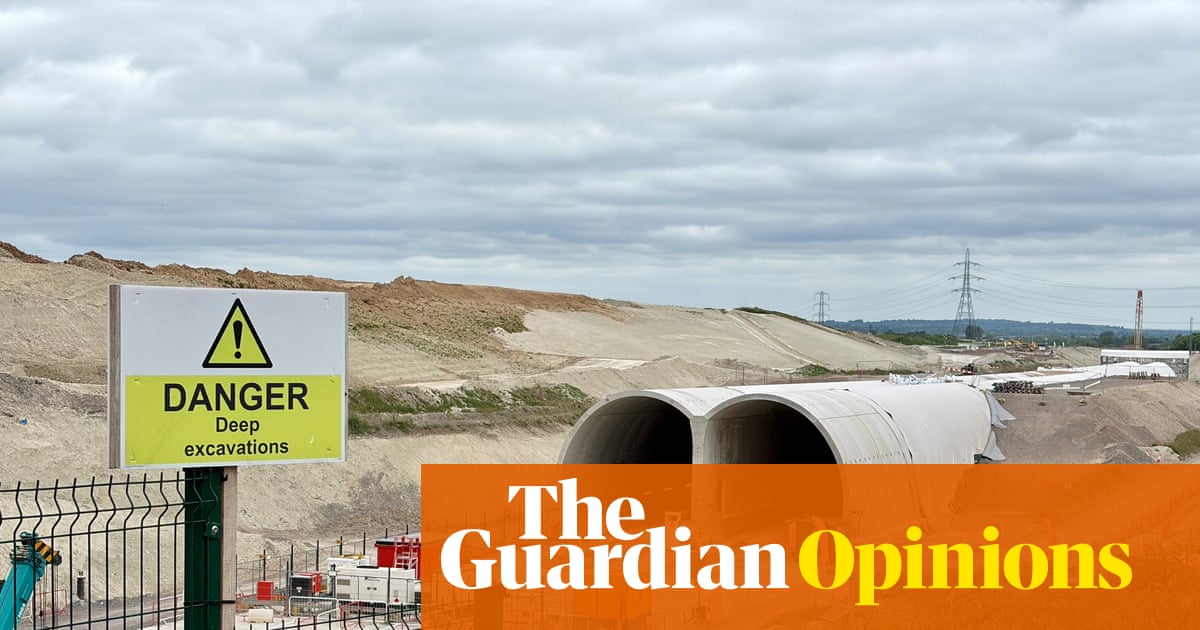
S o it is official, as if that makes a difference. After a 15-month review by the new chief executive, the transport secretary, Heidi Alexander, has revealed that HS2 will now cost up to £102.7bn and trains may not start until 2039. Alexander called the original design a “massively over-specced folly” and called the increase in time and costs “obscene”. Indeed it possibly ranks as the wildest white elephant in British history. In comparison, Donald Trump’s White House ballroom is a garden shed, and Dubai’s Burj Khalifa a mere sandcastle.
This week, Alexander, the ninth transport secretary since HS2 was proposed, admitted the project made her angry. As she dusted off her department’s latest defence of its appalling conduct of this fiasco, she tried to feign surprise. She has been in office 18 months. Don’t tell us she did not know.
We thus got the usual promise of a clear-out, of a new page turned and a talented new management team bringing the project at last under control. Alexander should not have recited this familiar speech to the Commons. She should make it in public outside every hospital in the land, every one that has spent the past decade unmodernised, every school unrepaired, every care home unbuilt and every prison overcrowded.
The HS2 project remains what it always was, a total dud. It is a superfluous railway that has simply run wild. There are plenty of fast trains to Birmingham and other ways of running more. This was always a vanity project of the David Cameron coalition. As the former Downing Street in-house HS2 expert, Andrew Gilligan, admitted to the Sunday Times 18 months ago, “HS2 was certain to fail from the start”, with the wrong route, wrong speed and wrong termini. It was ludicrous not to link up with HS1.
The trouble is the usual one, that projects on this scale, once begun, offer huge scope for contractual cost escalation. They arm themselves with consultants and accountants and soon outgun and outsmart those who must find them money. They exploit the biggest cult in modern politics, that every brick laid or inch of concrete mixed is “investment” and therefore must be “pro-growth”.
Those who care about railways and have followed this tragedy over the years have no doubt who was to blame. It was successive prime ministers who, when presented with the bare facts, lacked the courage to call a halt. Cameron refused to take heed. Boris Johnson funked cancellation (which he favoured) and Rishi Sunak scrapped the Manchester leg , making it even worse value for money.
Civil servants and advisers were overwhelmed by the 30,000-strong HS2 army. The National Audit Office pulled its punches. The mayor of Greater Manchester, Andy Burnham, supported HS2 when he should have lobbied to kill it in favour of local rail links. Rail services across the Pennines are now dire.
The answer is the one decision dodged for 10 years. It is to stop HS2 now, instantly. The project’s defenders will shift their case. We should treat the £44bn spent thus far as “sunk costs”, and concentrate on the wonders that will come from continued spending. As John Maynard Keynes said, someone at least benefits from being paid just to dig holes and fill them in.
The weakest line in Alexander’s Commons statement was that rehearsed gleefully by the HS2 company itself, that cancellation almost costs more than finishing. Or at least they will make sure it does, what with horrendous compensation and so on. This has to be rubbish. There is no way compensation could equal the £60bn or more still planned to be spent. Above all, there is no conceivable way proceeding would be better value for money than spending such a sum elsewhere.
At present not a metre of HS2 track has been laid; indeed, its boss, Mark Wild, admits that none will be laid before 2029, if then. Robert Stephenson took less than five years to complete his London to Birmingham railway. As yet only two viaducts have reportedly been finished out of 52 , and only 11% of the 169 bridges. Cancellation would also liberate multibillion pound sites for urban development around London Euston and Birmingham’s Curzon Street, which looks like a giant bomb has hit it. It would free space for a new town on the site of the vast shambles that is HS2’s Coleshill interchange.
The sole reason for not stopping is that it takes political guts, now in desperately short supply. Alexander could stand up tomorrow and do the deed. She could announce other far more needed rail investments, from re-signalling and electrification to urban transit of all sorts. Britain has just nine tram networks or metros, against France’s 30 and Germany’s 60. At least let Leeds have one. Or Reeves could declare HS2’s annual £7bn budget available for new hospitals, schools, care centres, youth clubs and courtrooms. It is absurd to pretend that these are less worthy uses.
Yet this government really feels a higher priority lies in getting a few of the richer citizens of Birmingham to London a few minutes faster – perhaps one day.
Simon Jenkins is a Guardian columnist
Do you have an opinion on the issues raised in this article? If you would like to submit a response of up to 300 words by email to be considered for publication in our letters section, please click here .
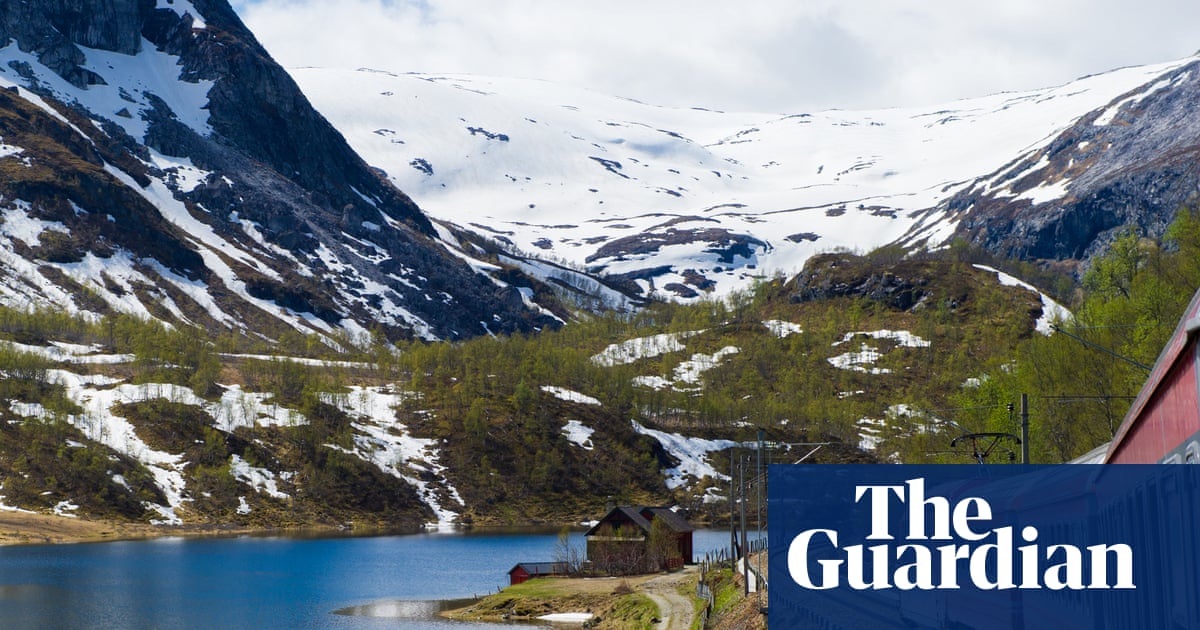
I travelled across Norway by rail on the spectacular Bergensbanen , running between Oslo and Bergen, and the unforgettable Flåmsbana branch line . The Bergensbanen crosses the high mountain plateau of Hardangervidda, passing lakes, forests and snow‑covered peaks before descending toward the fjords of western Norway. At Myrdal, I transferred on to the steep Flåmsbana, which drops dramatically to Flåm on the Aurlandsfjord, with waterfalls and sheer-sided valleys at every turn. Daniel
Charmed by the Vienna to Zagreb train
The journey from Vienna to Zagreb saw mountainous central Europe relax into Balkan charm. Stunning Alpine scenery melted into forest, settling down into rolling hills as we passed through Graz and reached the Slovene border, stopping for an hour’s changeover at the tiny Zidani Most station, where we enjoyed afternoon beers gazing over lush Slovenian countryside. The connection to Zagreb boasted dramatic lake scenery that gave way to farm land, golden in evening light, as we passed into Croatia, soon rattling into its underrated capital. We booked this through Omio , which came in relatively cheaply at £41. Matt
Vintage locomotives in Tuscany
We took the Treno Natura from Siena last May for a whole day out in the beautiful Tuscan countryside. It’s a real steam engine with classic coaches. Most passengers were friendly locals: we only encountered two other foreign tourists, a Swiss couple. A band came aboard to entertain us, and an optional walk through vineyards was also available. Fabulous value at only €42 each. Nigel Gould
Historic gem in Brandenburg, Germany
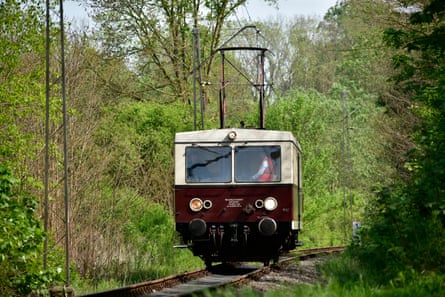
I took the RB26 train from Berlin-Lichtenberg to Müncheberg (45 mins) and changed for the Buckower Kleinbahn historic narrow-gauge train that runs from April to October. Opened in 1930 as an early electric railway, it closed as a regular service in the late 1990s. It is now volunteers who run the line that takes you through the rolling hills of the Märkische Schweiz in Brandenburg to the pretty spa town of Buckow. Here, I visited the residence of Bertolt Brecht and Helene Weigel on the peaceful reedy shores of Lake Schermützel, and then relaxed on the beach after a hike through the woodlands. I returned refreshed to the Berlin bustle. Rachael
Alpine beauty on the Montreux to Interlaken line
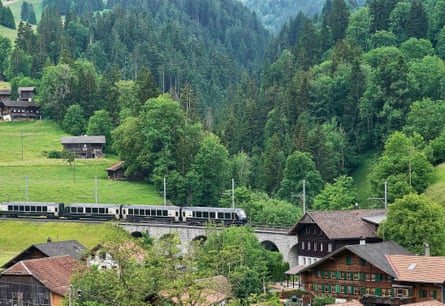
From Montreux station I took the MOB railway to Interlaken . Weaving up through vineyards, Lac Léman shimmers below as the panorama broadens. Suddenly, you’re in pine forests and glimpsing jagged mountain crests. Bridges straddle rushing white water. The clanging and hooting warnings for road crossings. A long tunnel. Then burst into alpine pastures peppered with chalets. Le Pays d’Enhaut. Valleys filled with crisp air, summer cowbells, flowers and crickets – perfect for long walks. Or winter-snow-muffled land, all skis and fondues. Arriving in Château-d’Œx feels like discovering a new world. Christian Vassie
Slow travel at its best: Belgrade to Bar
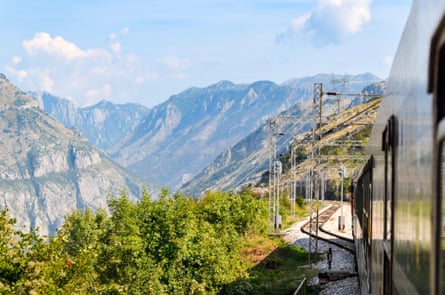
The train trip from Belgrade to Bar must be one of the slowest in Europe, taking 11 hours to cover 296 miles. At €23, it was probably the best-value travel money I’ve ever spent. In fact, the train trip was about the only time in my life when I longed for a journey to go slower rather than faster. It took me through some of the most dramatic scenery I’ve ever seen. Passing through deep gorges, canyons and mountain peaks, the train crossed more than 400 bridges and seemed to stop at every village. The Mala Rijeka viaduct was a highlight. The route took in spectacular dams, ancient monasteries and stone houses where old black-clad women waved at us from open kitchen windows. At one point, the passengers got out to feed a herd of goats and once we were overtaken by a mountain cowboy on a galloping horse. For the last part, you can see swimmers and sunbathers on Adriatic beaches. Peter
Through Italy’s Apennines to Rome from the Adriatic
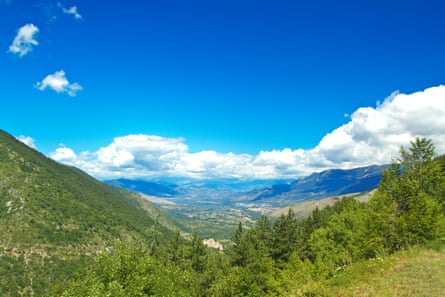
The cross-country east-west train trip from Pescara on the Adriatic to Rome is magnificent. It traverses the spine of Italy, single track all the way across the Apennines, stopping at towns such as Sulmona and Avezzano. The scenery changes as the route traverses mountain passes and ridiculous gradients before descending to plains over a period of 3 to 4 hours. Stephen
The watchmakers’ railway in France and Switzerland
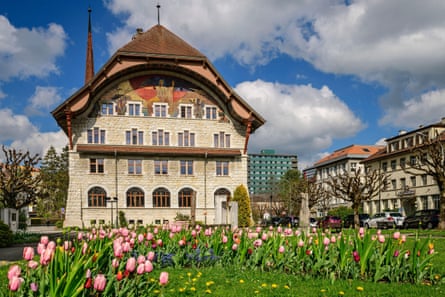
When time is not important, a little-known French railway line allows you to enter Switzerland through the valley of the watchmakers. The line from Besançon in France drifts through the beautiful Jura foothills, and on to Le Locle, a town at the centre of the Swiss watchmaking industry since the 1600s, terminating at La-Chaux-de-Fonds. No one got on or off at L’Hôpital-du-Grosbois, a byway station named after a leprosy hospital. At Morteau, the French border station, the douanes (customs officials) seemingly left a long time ago. A line that Dr Beeching would have closed still delivers you into Switzerland “on time”. Martin
Best way to see the Pyrenees? On a little yellow train
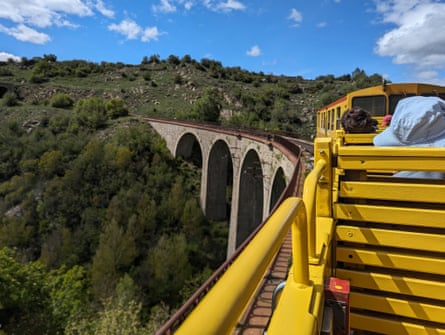
Le Train Jaune runs between Villefranche-de-Conflent and Latour-de-Carol in France. Le Canari, as it’s known locally, climbs to 1,595 metres at Bolquère-Eyne during its spectacular 40-mile (63km) route. Fresh mountain air, breathtaking views and valley-crossing suspension bridges can all be experienced either from the train’s bright yellow open-air wagons or from within the cosy comfort of its carriages. It is the best way to discover the wonders of the Pyrenees. My wife and I went for our honeymoon and fell in love with the little yellow train. Joe Brownen
Winning tip: urban drama on the Porto metro
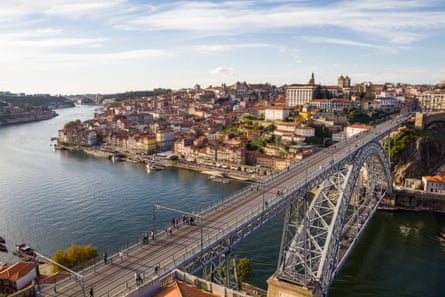
A controversial choice, perhaps, but I love the surprise of urban rail. Porto’s metro D line heading south probably tops the list for the fact it emerges dramatically from the darkness of the underground to suddenly skim rooftops and then rattles across the fantastic Eiffel-inspired Dom Luís I bridge (it was completed in 1886 by Théophile Seyrig, a former partner of Gustave Eiffel). Choosing to walk back across the metal deck is a completely different experience. Amy
T ensions in France over how to respond to a rise in antisemitism have been running high. A government-backed bill that aimed to deal with the problem was rightly denounced as an attack on freedom of expression before being quietly shelved by the government last month.
Introduced in 2024 by Caroline Yadan , a member of the national assembly, the draft legislation was intended to counter “new forms of antisemitism”. But while its explanatory memorandum raised legitimate concerns about the sharp rise in incidents of antisemitism recorded since the Hamas massacres in Israel on 7 October 2023, its wording quickly veered toward a different objective: curbing the ability to criticise Israel.
It must be possible to denounce the many crimes – extensively documented – committed by Israel , and to do so repeatedly without risking sanctions. Freedom of expression in France allows individuals to voice any form of sentiment towards any country as long as there is no incitement to violence.
But the purpose of Yadan’s bill seemed clear. It proposed widening the existing offence of “glorifying terrorism” so that “indirect incitement” could be punished. The draft introduced a new offence penalising the act of “inciting the destruction or denial of a state”.
Originally elected for Emmanuel Macron’s party to represent French citizens abroad, including in Israel and Palestine, Yadan distanced herself from the president’s political movement last year when he announced France’s recognition of Palestinian statehood.
Her draft legislation raised concerns on several levels. First, the creation of “indirect” or “insidious” – and therefore implicit – offences of glorifying terrorism would effectively force courts to infer a person’s intent. This is an impossible task. It would, as the former anti-terrorism investigating judge Marc Trévidic warned, lead to “ total arbitrariness ”. How can one prove what a person is implicitly suggesting?
Similarly, a prohibition on “inciting the destruction or denial of a state” would run counter to the fundamental right to decolonisation. How, then, would challenges to the expansion of illegal Israeli settlements – or calls for a single “binational” state – be treated?
Under the proposed legal framework, what would become of the right to question France’s own borders? France’s overseas departments are former colonies in the Caribbean, the Pacific and the Indian Ocean. Independence movements in these territories have not disappeared.
A petition opposing the bill filed on the Assemblée nationale website gathered a record 700,000 signatures. Rights bodies warned of the dangerously illiberal trajectory of the proposal. The Ligue des droits de l’homme saw in the text a troubling attempt to “shield the state of Israel from criticism linked to its grave and repeated violations of international law”.
Five special UN rapporteurs issued an open letter expressing concern that the bill threatened “the exercise of protected rights, in particular the right to freedom of expression and opinion, including media freedom”.
The bureau of the Commission nationale consultative des droits de l’homme warned members of parliament of “the risks these provisions pose to freedom of expression and academic freedom, due to their vague and imprecise nature”. Despite refusing to consider the public petition, the government suddenly withdrew the Yadan bill at the eleventh hour. Instead, it is signalling it will bring forward broader legislation against racism. The prime minister, Sébastien Lecornu, argued in a recent speech that anti-Zionism had become “the mask of an old antisemitism.”
Clearly there should be no tolerance for antisemitism, wherever in society, or on the political spectrum, it manifests. But the Yadan proposals should be seen as part of a broader pattern of structural criminalisation of pro-Palestinian activism.
In the aftermath of the 7 October attacks, the French interior minister attempted to ban Palestinian solidarity demonstrations on the grounds that they are “likely to generate public disorder”. This failed after the Conseil d’État rejected a blanket prohibition . But that ruling did not stop the drive to suppress the movement.
University students who mobilised against the Yadan bill faced violent police repression . The International Federation for Human Rights and the World Organisation Against Torture condemned the police conduct as “a further worrying step in the restriction of freedom of expression and peaceful assembly in France”.
Prosecutions for alleged cases of glorifying terrorism have multiplied since 2023 , targeting a wide range of individuals, from influencers to athletes to trade union activists – and even members of parliament. The media outlet Orient XXI noted that while some of those prosecuted had described the attacks by Hamas and Islamic Jihad as acts of resistance, “few explicitly glorified the 7 October 2023 massacres or rejoiced in the deaths of Israeli civilians”.
High-profile figures, including the academic François Burgat , were charged with “apology for terrorism” before ultimately being acquitted.
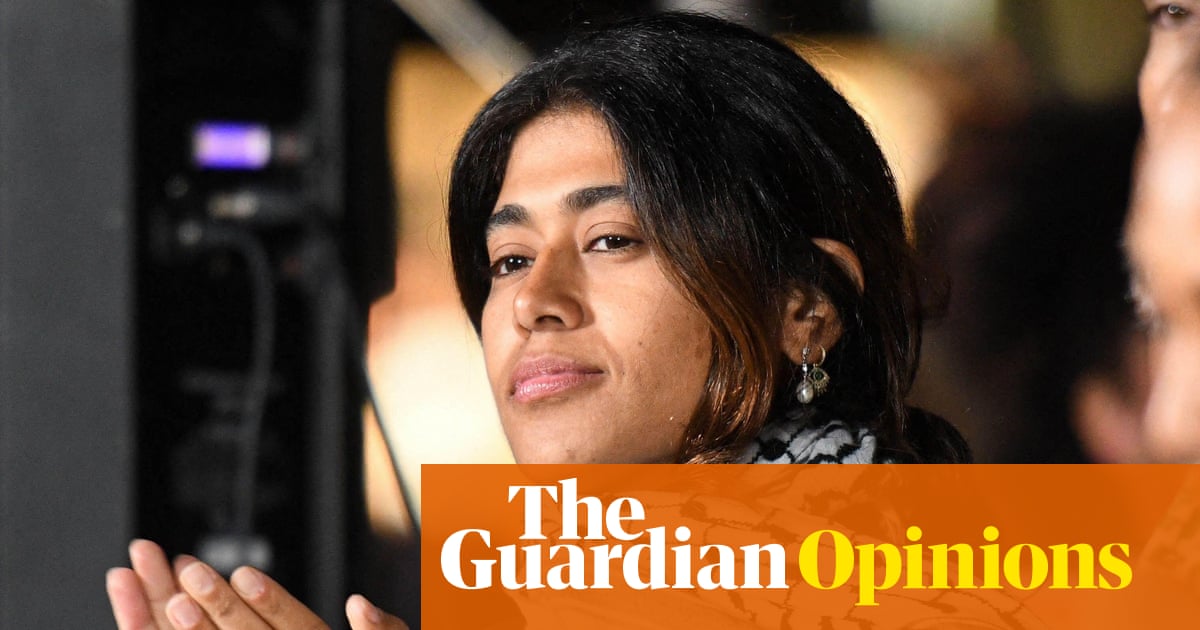
The French-Palestinian MEP Rima Hassan of the radical left La France Insoumise party, a prominent voice for Palestinian liberation, was arrested last month, taken into police custody and questioned for “glorifying terrorism” . Her alleged offence was an X post (since deleted) quoting Kozo Okamoto, a Japanese terrorist convicted of a 1972 attack at Ben-Gurion airport in Tel Aviv that killed 26 people.
In a sign of the pressure Hassan is being made to face, news of her detention leaked as she was being questioned, appearing in Le Parisien alongside bogus claims that synthetic drugs had been found among her personal effects. The drug probe was dropped, but only after days of negative media coverage . Le Parisien later published an acknowledgement that it had jumped the gun and that the drug claims were entirely baseless. But it then emerged, via a Mediapart investigation, that Hassan’s phone had been under police surveillance from the start of the year, without her knowledge. Hassan, a lawyer and a former Palestinian refugee who will be tried in July on charges of online “apology for terrorism”, says she intends to refer the matter to an independent UN rapporteur and to the European parliament.
The disproportionate response to pro-Palestinian activism over what human rights groups have called a genocide raises questions about the lengths deployed, apparently to restrict a form of expression that is essential in a democracy.
The Yadan bill is dead, but that such provisions were ever considered should be seen within a broader dynamic – one that seeks systematically to conflate anti-Zionism with antisemitism and narrow the space for, if not undermine, the legitimacy of any pro-Palestinian discourse.
Rokhaya Diallo is a writer, journalist, film director, activist and Guardian Europe columnist.
Do you have an opinion on the issues raised in this article? If you would like to submit a response of up to 300 words by email to be considered for publication in our letters section, please click here .
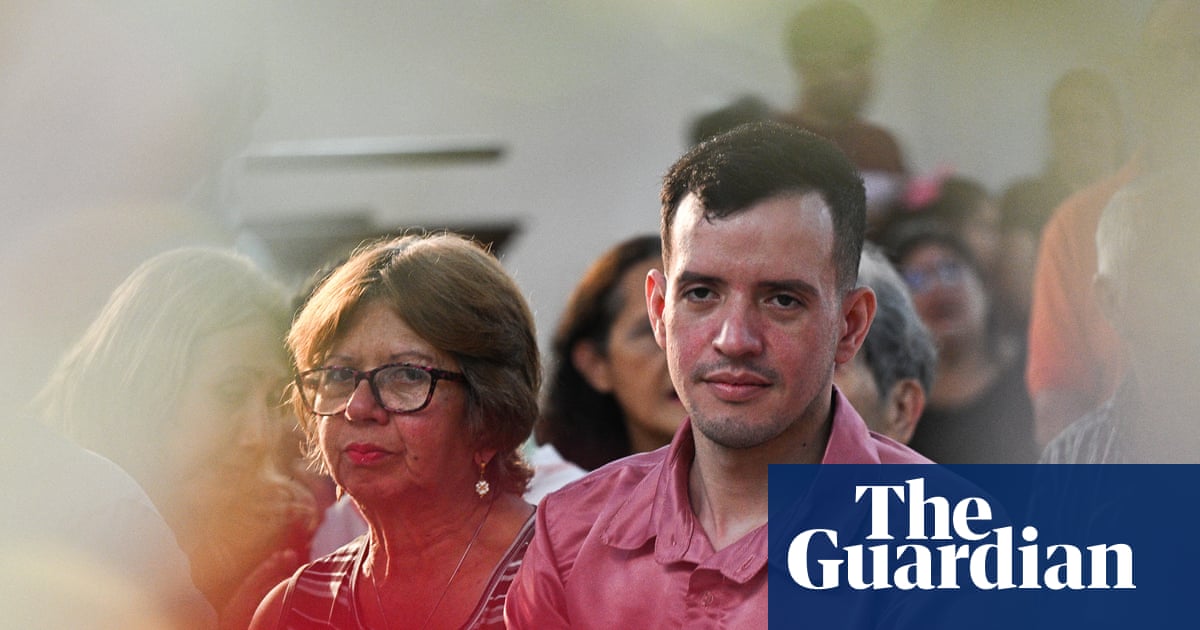
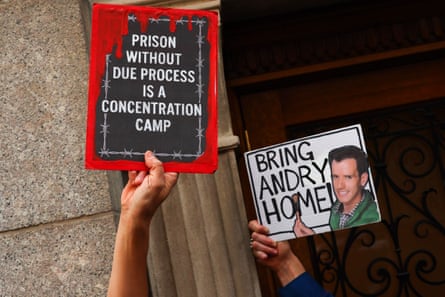
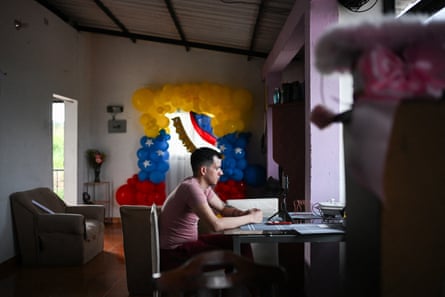
One of the Venezuelan men sent from the US to El Salvador’s most notorious prison by Donald Trump has moved to Spain to request asylum after concluding that he did not feel safe back home and did not trust US authorities sufficiently to return to fight his legal case.
Andry José Hernández Romero left Venezuela for Spain in early February and is due for his first asylum hearing in court there in a few days, hoping that the country’s liberal approach to immigration will afford him kinder treatment than the US or his own country had provided him, he revealed to the Guardian in his first interview since leaving for Europe.
The 33-year-old hairstylist and makeup artist originally came to the US from his home in western Venezuela to escape persecution as a gay man and the risks of opposing the government of its then president Nicolás Maduro .
Speaking in a video call from southern Spain, Hernández is still recovering from the trauma of his experiences in Venezuela, the US and El Salvador , but expressed optimism about his new surroundings.
“I can say I feel safe here, this is a place where I can be reborn, heal my mental health, let people know about my abilities as a makeup artist and find the happiness they took away from me more than a year ago,” he said in the interview conducted in Spanish.
Hernández gained global attention last year when he and 252 other Venezuelan migrants were abruptly deported from the US without due process or any word to their families, and in defiance of a judge , and flown by the Trump administration to the brutal mega-prison for alleged terrorists in El Salvador known as Cecot .
Images of the bewildered and terrified group being roughed up and having their heads shaved, and then lined up on the ground with bowed heads, flashed around the world, a new symbol of the returning US president’s harsh anti-immigration agenda . They were held incommunicado for months in cages and initially given no prospect of release under allegations of having ties to a Venezuelan gang, which Hernández and the others vehemently denied.
International human rights groups found Hernández and the other detainees faced psychological and physical abuse, including cases of sexual violence, before they were suddenly released in a prisoner swap last summer and returned home.
Hernández received a jubilant reception. He began trying to rebuild his life , and he told the Guardian he initially promised his family he would never leave Venezuela again.
However, after a few weeks he began fearing for his life once more after a knock on his family’s door in Táchira.
“I had received a call from the vice-president’s office and I was offered a job, which I declined, and then they came to my house and my family had to tell them I wasn’t there,” Hernández said. He had actually hidden during the visit.
He explained that before the vice-president’s office could even specify the kind of job it wanted him to do, he refused it. It was August 2025 and Delcy Rodríguez ran the office. He didn’t want to have ties to a government that had persecuted him as a gay man, he said, and having officials coming to the house just made him convinced he was going to be surveilled by the authorities.
He was back home, surrounded by his family, feeling protected during a time that he had expected to be a rough transition into society, back at work and even making new friends.
Months later, Rodríguez was sworn in as the acting president of Venezuela following the capture of Maduro by the US military. Around the same time, Hernández made up his mind.
“That’s when I made the decision to come to Spain ,” he said.
He has some relatives there and Venezuelans do not require a visa to enter Spain, while those fleeing persecution are allowed to request asylum.
“I have heard that Spain is a country with open policies towards immigrants and the LGBTQ+ communities and that they don’t experience discrimination,” said Hernández. He feels secure and optimistic about making another fresh start.
In March 2025, the Trump administration controversially invoked the Alien Enemies Act of 1798 to order the expulsion of Hernández and 136 other men who ended up in Cecot. Hernández was accused of being a member of the Venezuelan gang Tren de Aragua , which Trump designated a terrorist group and bizarrely accused of staging an invasion of the US.
It didn’t matter that Hernández had explained to immigration officials that he had fled Venezuela due to persecution stemming from his sexual orientation. His crown tattoos above the names of his parents were deemed proof of gang affiliation. He has denied the charge throughout his ordeal and his attorneys noted he has no criminal record.
Lindsay Toczylowski, co-founder of the Immigrant Defenders Law Center (ImmDef), who is acting as Hernández’s lawyer, said that in nearly two decades of helping asylum seekers from around the world fleeing violence, she had “never been in a situation where it was not safe for a client to seek protection in the US”.
The US federal judge James Boasberg ordered the Trump administration to facilitate the return of the men deported under the Alien Enemies Act to El Salvador and allow them to receive the due process that he ruled they had been denied. But most recently, a court of appeals blocked Boasberg from investigating whether the Trump administration knowingly defied his order from March 2025 to return the planes carrying Hernández and the other Venezuelan deportees.
“From a legal perspective, we believe that it’s important for him to clear his name if he wants to travel to the US in the future. But from a moral perspective, he was accused with absolutely no evidence of being part of something that he has never had anything to do with. No one should be accused of something like that without any option to refute the allegations,” said Toczylowski.
“There are no immediate options available for him [and the others] to finally have their day in court and be able to clear” their names, she added.
In Spain, where Hernández now waits for his first asylum interview, scheduled for the end of this month, officials have defied the increasingly harsh immigration policies being embraced in Europe and the US. Earlier this year, the Spanish prime minister, Pedro Sánchez, announced that Spain would grant legal status to roughly 500,000 migrant workers, most from Latin America.
Spain has a strong record of taking in immigrants, especially Venezuelans seeking international protection, like Hernández.
According to numbers shared by the Spanish government with the Guardian, Venezuelans made up the highest number of requests for international protection there in 2025. And up to 30 April this year, more than 25,000 Venezuelans have sought asylum in Spain.
Hernández said he is still marked by the trauma he endured during his time at Cecot. For example, when someone approaches him and simply taps him on the shoulder, his mind jumps back to the prison. He still wants to clear his name, though, but doesn’t know how to do so at the moment.
Remarkably, he said: “I don’t hold a grudge against the US. I can’t judge an entire country based on the actions of a group of people like Donald Trump [or] Kristi Noem, but entering the US at this time doesn’t guarantee I will keep my freedom and that is why I will continue to fight my case from Spain.
“Recovering my happiness will only be possible at the right place with the right people.”
Ban Ban’s Bakery by Elena Hiroko Magee, Do Re Mi, £12.99 Ban Ban the bunny loves baking with Grandma – but will she be able to turn Dusty Cottage into a bakery of her very own? A cute, enticing picture book full of mouthwatering, pastel-hued treats.
Daddy Is Cleaning by Angel Dike , illustrated by Ebony Glenn, Nosy Crow, £12.99 Baby is helping with laundry, cooking and planting – so Daddy is cleaning, a lot! This tender picture book perfectly evokes the love, humour and exhaustion of managing a day’s chores with an enthusiastic toddler.
Home Is a Hug by Cindy Wume, Post Wave, £12.99 Cut-out, peek-through pages and fun lift-the-flaps combine with sweetly coloured illustrations in this gentle, playful picture book about the warmth and reassurance of home.
Jolly Monster Town: The Party Pickle by Rong Rong, Nosy Crow , £7.99 In Jolly Monster Town, Twiggy the Log Monster is planning her first sleepover, and everything must be perfect. When things start to go awry, Twiggy doesn’t need anyone’s help – or does she? A full-colour, chapter-book romp for 5+ readers, crammed with delightfully offbeat humour.
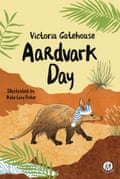
Aardvark Day by Victoria Gatehouse, illustrated by Kate Lucy Foster, Emma Press , £9.99 As well as aardvarks, this wonder-filled poetry collection from zoologist Gatehouse features the needs of weeds, the two modes of lizards, octopuses’ colour-changing beauty and otters’ pebble pockets, all complemented by Foster’s energetic line drawings.
What Makes a Bird? by Nadeem Perera, illustrated by Montse Galbany, Flying Eye, £14.99 For ornithologists of 6 or 7+, this gorgeous, brightly graphic guide to bird essentials features an array of beaks, birdsong, habitats and nests, described in absorbing and accessible language by a popular wildlife presenter.
The Ministry of Manners by David Solomons, illustrated by Hazem Asif, Picadilly, £7.99 The Ministry of Manners’ laws demand constant, unrelenting politeness – no problem for Alfie, but his sister Margot is an outspoken firebrand. When Margot is taken for re‑education, Alfie teams up with the rebellious Unsilenced in an effort to rescue her, only to uncover the Ministry’s plans to make rebellion impossible. This compelling, thought-provoking dystopian novel will prompt 8+ readers to consider the possible costs of acquiescence and collusion.
Witch Light by Zohra Nabi, S&S, £7.99 Dispatched to a bleak boarding school by her uncle, Cassia Thorne soon detects sinister undercurrents at Ravening Hall. Why are the prefects so unnaturally perfect – and is there any truth to local stories about a witch who eats children’s hearts? Teaming up with misfit Martha Torrent, Cassia must investigate another supernatural conspiracy in this superb 9+ sequel to Deep Dark, rooted in the history of the Pendle witch trials.
Tadpole Summer by Catherine Bruton, Nosy Crow, £7.99 Frog has been Frog since her baby brother Tad was born, smaller and weaker than his sister, but indomitable. As summer begins and Tad’s illness progresses, though, Frog must contemplate an unthinkable future. With Tad in hospital, Frog begins camping in the garden – but how long can she stay there? A beautiful, poignant, magical book for 9+, filled with love, grief and the natural world’s power to nurture hope.
Bím Blake’s Hot Takes – My Pencil Case Doesn’t Define Me by Tolá Okogwu, illustrated by Ariyana Taylor, Puffin, £8.99 Bím Blake has just started high school, but between her annoying older brothers, a regrettable pencil case, mortifying bra-shopping and the impossibly cute new boy, it’s proving an ordeal. And why has her dad started acting so weirdly? A lively, warm, highly illustrated new 9+ diary series, ideal for fans of Geek Girl and Lottie Brook.
Wonderland by Patience Agbabi, Firefly, £9.99 In 1980, when 16-year-old Londoner Tamilola moves to Colwyn Bay, she’s the only one who doesn’t belong – until she discovers the end-of-pier Northern soul club called Wonderland. A gutsy, joyous, effortlessly atmospheric YA verse novel about finding yourself and your people on the dancefloor.
Seyoon and Dean, Unscripted by Sujin Witherspoon, Hot Key, £8.99 Seyoon Shin and Dean Parker both have compelling reasons to sign up for the reboot of Forest Feud, a 20-year-old cult reality TV show featuring wilderness games and a huge cash prize. Despite despising each other, they’re pushed to pretend their strategic alliance is also a romantic one – but surely that’s just for the cameras? A light, swoony, escapist YA romcom, ideal for Jenny Han fans.
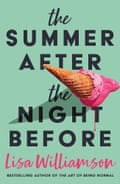
The Summer After the Night Before by Lisa Williamson, DFB, £8.99 After a few too many drinks at a party, Molly wakes up in a strange bed. It belongs to Ben, her best friend Rhiannon’s twin brother, who’s always had a crush on her. Molly remembers kissing Ben, but not what happened next. Weaving together the perspectives of Molly, Ben and Rhiannon, Williamson dives deep into ideas of consent, trauma and healthy relationships in this gripping, hard-hitting 14+ novel.
This Boy I Hardly Know by Lisa Heathfield , Andersen, £8.99 Sixteen-year-old Dusty and her little sister Poppy have been through multiple foster placements. Now they’ve been separated, and no one will tell them when – or if – they’ll be reunited. When Dusty meets charismatic Cooper in the children’s home where she’s been dumped, the two of them, determined to find Poppy, decide to run away. Chronicling the pain of being disbelieved, uprooted and silenced, this powerful, moving contemporary YA novel is also a defiant celebration of love.
“I ’m having a flare-up’, is a really common phrase that you hear in the ‘crip’ community,” says Mariana Lemos, the co-curator of Flare Up, a group exhibition focused on art powered by illness, chronic conditions, disability, neurodivergence and deafness. The show includes artists who do and don’t identify as ‘crip’ (a defiant reclaiming of derogatory slang) and underlines the ebb and flow of symptoms to explore illness as anything but static. A flare, adds Lemos’s collaborator Natasha Hoare, “brings light to things that have been kept in the dark, ignored or invisible-ised. There’s a sense of celebration to it, perhaps.”
This would seem to be the case for French artist Benoît Piéron, a leading figure among artists addressing illness and who now also has a big solo show at Paris’s edgiest art space, Palais de Tokyo. In Flare Up, his pastel bunting crisscrosses a ceiling, before pooling on the floor in a heap, its energy apparently drained. Cut from hospital sheets, the party flags defy the infantilised days of the bedbound. The fabric, in its typically soothing nursery colours, has also soaked up the seeping life of the bodies it hides: be that fever sweats or sex. Piéron’s subtle, poetic reminder of the physical reality of an ill person, as well as the ups and downs of a chronic condition, is typical across the exhibition’s witty, ever-surprising artworks.
The subject matter includes near-death experiences, religion’s obsession with purity, “crip” memes and the tyranny of government paperwork that those unable to work must navigate. Water is a recurring motif, from healing baths to marine ecology and pollution, something that’s grittily brought home in Avril Corroon’s creation exploring how poverty impacts health. The water dripping on to a deep shag rug in the artist’s work was gathered from dehumidifiers in damp, mould-blighted homes in Dublin and south-east London.
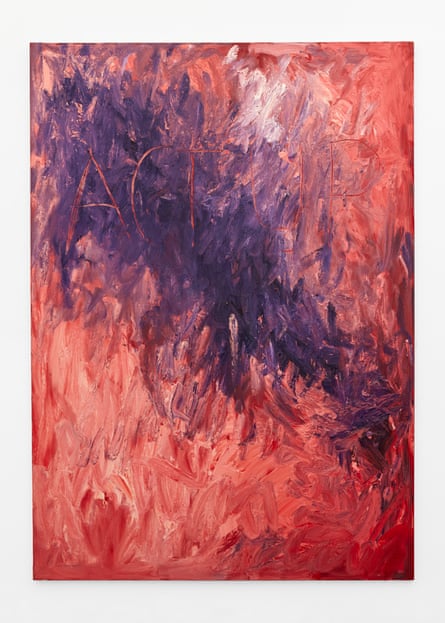
One of the exhibition’s earliest works is Derek Jarman’s huge 1992 painting Act Up, a call to arms against the prejudice he witnessed around Aids. In Jarman’s lifetime, activist art of this kind struggled for exposure and it is notable that the show’s younger cohort includes those whose creative achievements have been recognised within major institutions. Last year, New York’s Whitney museum surveyed Christine Sun Kim’s work exploring deaf experience; Jesse Darling, whose sculpture probing bodily fragility draws on his experiences of temporary paralysis after a serious neurological condition, won the UK’s Turner prize in 2023.
The curators say that the pandemic has been a powerful driver of interest in, and understanding of, living with illness or disability. “We’ve all realised our vulnerability, and it’s really highlighted that pressure in capitalist society to have a productive body and be constantly working,” says Hoare.
At the same time, attacks on disabled people are increasing, from government cuts to essential benefits to the growing verbal abuse of disabled drivers recently highlighted in the Guardian. “We’re mindful of the burgeoning language around disability, being part of a national narrative,” Hoare says. “We need to challenge the pejorative idea of disabled communities as not being productive, therefore having no value socially, which is complete fallacy.”
This is poignantly brought home in a 40-minute video by Freestylers, a collective of disabled and neurodivergent performance artists. In a mashup of the group’s activities across dance, satirical skits and revelatory monologues, the challenges its artists have faced become drivers of creativity. The title sums it up: Honey, You Are Art .
Flare-Up is at CCA Goldsmiths, London, to 16 August .
‘There’s a sense of celebration, perhaps’: five highlights of Flare-Up
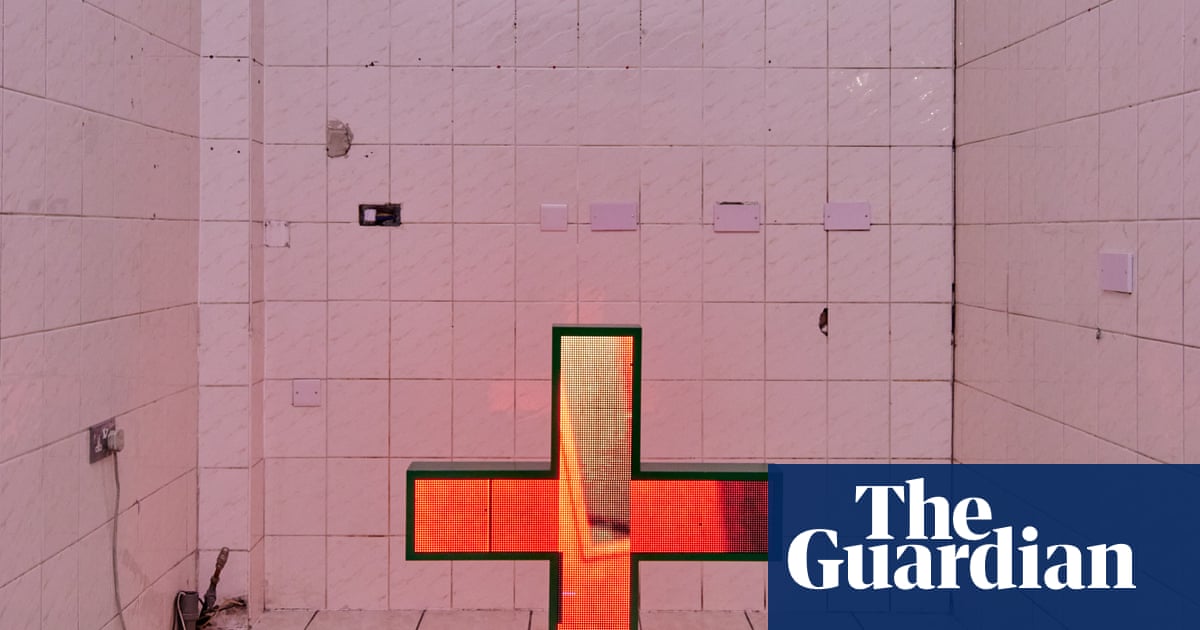
Main image : Racheal Crowther – Qualified to Care (2022) Crowther found this discarded beacon of care, an LED pharmacy sign in Lewisham, south-east London, and hacked its software to display her own video footage of a Peckham day care centre for adults with learning disabilities, which was set for demolition.
Derek Jarman – Act Up (1992) The great experimental film-maker scored the name of the campaign group Act Up (Aids Coalition to Unleash Power), in angry capitals into thick expressive paint, a marker of the fierce energy he poured into Aids awareness and activism. Jarman’s piece is on display in the show, and the artist Benoît Piéron homages him in a sculpture using seed samples from Jarman’s Dungeness garden.
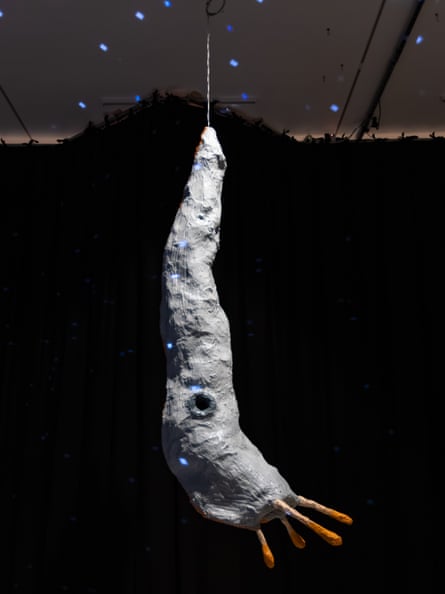
Abi Palmer – Slime Mother (2024) Palmer turns a slug, a creature that usually gives people the ick, into an object of worship in this droll sculpture. In its shimmering alien wetness, it becomes a celebration of bodies that defy the norm, be that in terms of queer desire, or accepting the slimy emissions of illness.
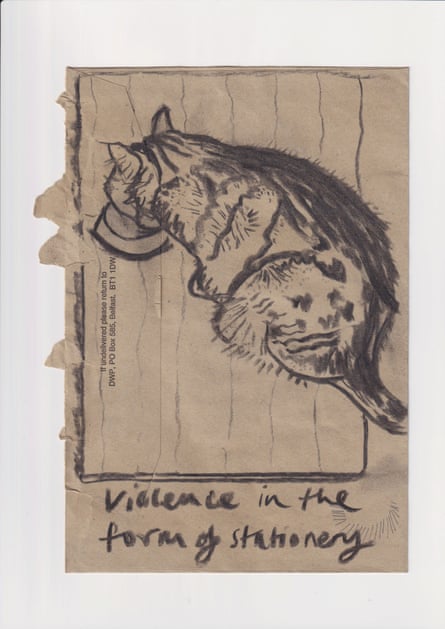
Bella Milroy – Violence in the Form Of Stationery (2018) Bella Millroy’s drawings and text works capture their everyday world at home including their animal companions. But there’s a steely edge to these domestic observations, drawn as they are on the brown A5 envelopes from the Department for Work and Pensions, whose approvals or denials of payments for those unable to work are life-altering.
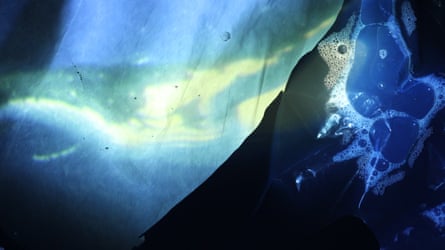
Lizzy Rose – Sick, Blue Sea (2018) The late artist Lizzy Rose turned the real-life case of a whale that died on the coast near Margate into video art that is as oddly funny as it is touching. It’s told from the whale’s perspective, and we watch as she tries to seek solace in online communities, looking for answers to an illness we know was caused by swallowing plastic, but that tragically, she can’t understand.
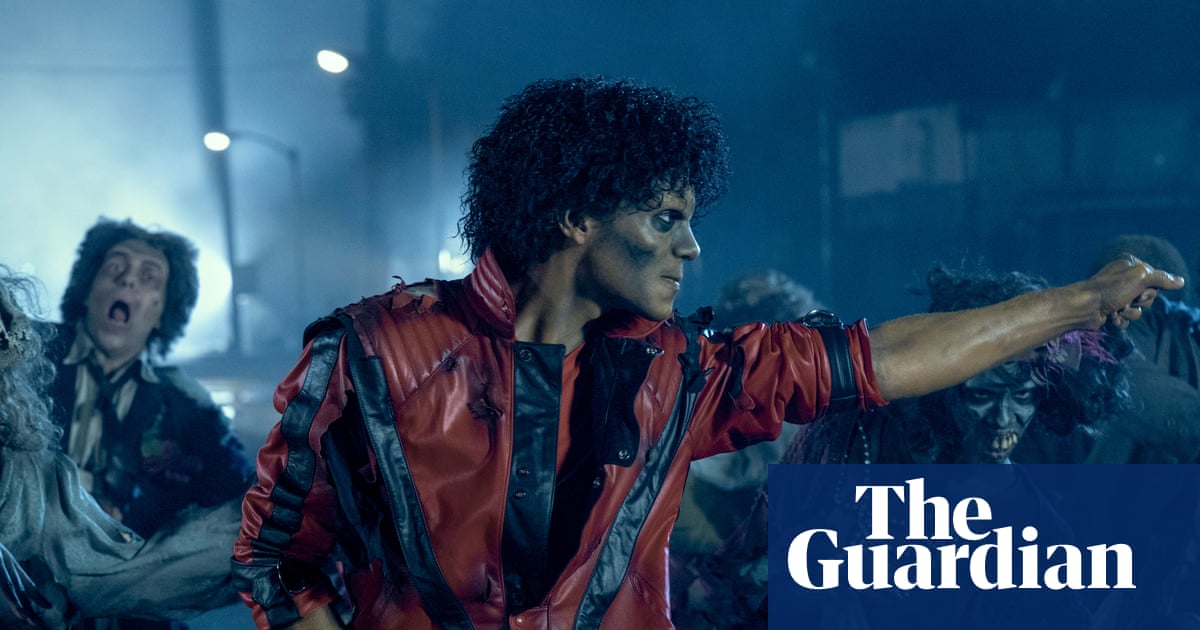
The studio behind hit Michael Jackson biopic Michael has revealed plans for a sequel despite the controversy that surrounded the original .
Speaking in a quarterly earnings call reported by Variety , Lionsgate motion picture chair Adam Fogelson said that preparations for a projected sequel “continue to go exceptionally well”.
Fogelson added: “I would say that there is a ton of incredibly entertaining Michael Jackson story, and much of the biggest and most popular parts of his music catalogue that were not touched upon in the first film. There are so many other events that happened, even in the time frame of the original movie that weren’t touched upon, so we’re very, very confident that we’ve got an incredibly entertaining movie that will appeal once again to a global audience.”
Michael delivered record breaking box office figures in both the US and UK on its release in April, with its current revenue standing at $715.8m (£533.2m) worldwide. The film ends with Jackson’s 1988 performance at Wembley Stadium in London, as part of his Bad tour.
However Michael’s production was dogged by issues surrounding allegations of child sex abuse against Jackson, with much of the original footage being scrapped after producers belatedly realised that the settlement between Jackson and one of his accusers, Jordan Chandler, meant that Chandler could not appear as a character or be mentioned in the film.
It is not clear how or even if a sequel will deal with child sex abuse allegations against Jackson, which first emerged in 1993 . However, Fogelson suggested that the sequel may not follow chronologically, saying: “We can go forwards and backwards in telling this story.” He also suggested that some of the previously shot footage could be utilised for the sequel which would help lower the sequel’s production costs, saying: “We think we’ve got 25 to 30% of a second movie already shot from the prior production activity, and so obviously that will have some [financial] benefit ultimately.”
From the outside, the small gathering of young girls looked like an ordinary playdate. They chatted giddily, practised pilates and twirled around in their new outfits to the music of Harry Styles.
But on the sidelines, some of the parents were in tears. The last time these girls shared a room was on 29 July 2024. That day, they fled in fear as a hooded teenager turned a Taylor Swift-themed holiday club in Southport into one of the most horrific attacks on children in modern British history.
Three girls – Elsie Dot Stancombe, aged seven, Bebe King, six, and Alice da Silva Aguiar, nine – were murdered and eight other children and two adults were stabbed repeatedly, some critically injured.
The idea that any of the surviving children would feel able to meet again seemed impossible until recently. Only now, nearly two years on, the parents of five of those girls are ready to speak.
Over nearly four hours of interviews, they told the Guardian of their daughters’ heroism that day, when girls of primary school age saved lives by shielding others from the attacker, and how they feel their courage risks being forgotten.
None of the families can be identified so their names have been changed in this article.
Daisy was seven when she and her best friend went to the Hart Space for what should have been a highlight of their summer. Many of the girls were making bracelets, minutes away from being picked up by their parents, when an older boy walked in carrying a 20cm knife. At first, some thought it was a prank.
She put her arms around the girls as he started to attack them. As they fled, some falling over, Daisy helped one girl down the stairs and shielded another by crouching over her as the attack continued.
CCTV footage showed Daisy staggering outside, only to be grabbed by the killer and dragged back inside. She was stabbed 33 times and lost her entire blood volume, leaving her in a coma for five days.
In the many stories of heroism that day, the bravery of those girls had been lost, said Daisy’s mother. “I felt so devastated for her, that we’re at home building up this recovery for her, saying: ‘You saved yourself,’ when the world has no idea what she’s done.”
When she woke from her coma, Daisy was reunited with Amber, eight, whom she had shielded and helped to escape. They had been placed on the same ward at Alder Hey children’s hospital in Liverpool and, one morning, her parents pulled back the curtain and “their faces lit up”.
“They were wearing the same Lilo & Stitch nightie,” said Daisy’s mother. “They didn’t know each other’s name at that point, they just knew they were together. They were really happy to see each other and they’ve formed a really special bond.”
Amber had been desperate to go to the Hart Space event with her 10-year-old sister, Bethany. It was fully booked within days of being advertised, with 26 children in the room that day. Bella, also 10, messaged her friends excitedly that morning.
Bella was one of the last to be attacked when Axel Rudakubana arrived at 11.45am. She was stabbed three times to the back with enough force to penetrate her chest wall, but still she managed to escape. She was minutes from death on the street when paramedics arrived from a Midlands air ambulance, which was only in the region by coincidence as it returned from an abandoned job elsewhere.
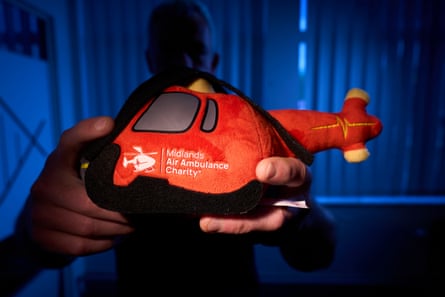
“She had finished bleeding out – she had no blood pressure or anything – and would have died on the scene [if it wasn’t for that],” said Bella’s mother, holding a stuffed toy air ambulance she now cherishes. The sheer luck of the Midlands crew flying nearby has made her believe in a “higher power”, she said. “You couldn’t have planned that divine timing.”
As the horror unfolded, Bethany shielded Amber from the blows, suffering several wounds herself. When the older sister woke up in hospital, her first thoughts were about Amber. “Is she OK?” she asked.
“[Bethany] saved her sister’s life that day,” said her mother. “The word ‘heroes’ is thrown about and people are heroes for what they did on that day. They saved themselves, they got themselves out of this building, they ran [and] they did their absolute best when many of them were critically injured.”
One of the first to escape that day was Charlotte, then nine. She was stabbed three times to the back as she ran, fracturing her shoulder blade and vertebrae. Despite her ordeal, she had “no self-pity” and wore her scars with “dignity and defiance”, her mother said, describing her as “immensely brave, extremely vulnerable and alone”.
“Our daughter made the split-second decision to get out of that building whilst suffering incomprehensible injuries,” she said. “She fled out of instinct – not direction or shielding. There is never a single story. Our daughter is our hero and her own hero.”
The days after the attack are a complete blur for many of the families. Many of them spent more than a week in hospital not knowing whether their girls would pull through or, if they did, what lasting damage had been done. Outside, rioters torched asylum hotels, police vans and libraries in a frenzy of race-fuelled violence across England .
Most of the families were in the dark about the riots and are wary of speaking about it now. However, Bella’s mother said how one of the police officers who helped their daughter was attacked the following night by rioters in Southport. “They still had our daughter’s blood on them and they were getting bricks thrown at them,” she said.
There is no magic formula to recovering from childhood trauma, let alone an experience so viscerally shocking. Many of the girls and their parents receive support from psychologists and counsellors but the memory of that day is raw and triggers are everywhere: a song on the radio, a man walking alone, even other children.
Amber is “constantly on alert of anyone, her trust is completely gone”, her mother said. After dropping Bethany at school one morning, they saw an old man walking his dog nearby as they drove away. Amber insisted her mother call the school to check Bethany was OK.
The two sisters, now 10 and 12, refuse to shower alone because they don’t want to be by themselves. For their mother, this presents another trigger: “I have to sit on the toilet [while they shower] and I see their scars all the time. As a parent it’s traumatising because it’s a constant reminder of what they have and still are going through.”
The parents worry that as their girls become teenagers they will be more conscious about their scars. When Bella, now 12, started secondary school last year, her parents told her not to tell other children she was caught up in the attack. “Don’t make that who you are,” they told her. She has to wear pressure garments 23 hours a day and sleeps in a splint to help her scars heal.
On her first day at the new school, an older boy had found out and asked her: “Why aren’t you dead?”
“She was sobbing on her first day of school,” said Bella’s mother. Before the attack she threw herself into hobbies, such as drama. Now she won’t go: “She doesn’t like being with other kids she doesn’t know.” At Christmas, they took her to a pantomime where children were invited to go on stage. She refused, telling her father: “The last time I went out with a load of kids I got stabbed.”
Many of the parents have become friends, sharing these difficult conversations together.
Daisy, now nine, is still processing her memories of that day and the weeks before it. She had forgotten about a trip to London a month earlier to see her idol Swift in concert, and shopping with her friends the day before. Earlier this month, she recalled for the first time a particularly harrowing scene from the attack – the moment she was dragged back in the building.
“When it first happened we were like: ‘OK, imagine your brain is a bookshelf. What happened to you has basically tipped all of your books on the floor and all the books are memories, they will be jumbled up now,’” her mother said.
They told her that some of the books might be scary and she could put them back on the shelf in her own time. “For a little while now, she’s been saying: ‘There’s two books on the floor and they’re really scary and I don’t want to pick them up.’
“And so we’ve said: ‘OK, we’re just going to tuck them under the bookshelf for now.’ Last week, she decided that was the time to tell us about one of the books and it was her experience of being taken back in. So she’s still processing moments of that day that she hasn’t verbalised before, and we’re nearly two years on.”
Many of the parents have had difficulty accessing their own psychological support. Some have post-traumatic stress disorder, suffering flashbacks and night terrors, having rushed into the building searching for their children and later finding them gravely injured nearby.
Yet many were only entitled to 12 sessions with a counsellor provided by the charity Victim Support, rather than a specialist psychiatrist. Daisy’s parents said they were effectively forced to “ration” this support, saving some counselling sessions for the criminal trial and public inquiry, rather than access it immediately.
Daisy’s father was refused more than 12 sessions because there was no funding for it. “Our experience has been more frustrating than we would have liked,” said Daisy’s mother. “It’s hard to have to justify why you’re traumatised [and] really quickly we realised the basic counselling offer was not fit for purpose for what we had gone through.”
The Southport inquiry was devastating in its findings about the missed opportunities to prevent the attack. Many of the parents knew about the systemic failings – multiple authorities passing the buck for nearly five years – but it was the errors of individuals, particularly the killer’s parents and some officials, they found most shocking. Bella’s father said “there’s got to be accountability” on the part of the attacker’s parents: “If I had a dog and it killed a kid, who’s getting done for it?”
Merseyside police had investigated whether the parents could be held criminally responsible for their teenage son’s actions, given they knew he posed a risk to others and had amassed weapons in their home. However, there is no duty on parents under UK law to warn or report criminality, so detectives felt they were unable to prosecute.
“Clearly there were masses of opportunities for them to stop their own child,” said Charlotte’s father. “I can understand the conflict in their own mind about doing that but at the same time there were plenty of opportunities.”
In the Easter holidays, six of the girls met again for the first time. The playdate was made as relaxed and fun as possible and they did pilates, shared cupcakes and wore yoga outfits specially made for those who wanted to hide their scars.
As they watched, some of the parents were in tears. “I’m happy, I’m relieved, it’s OK to see me cry,” Daisy’s mother said, as her daughter comforted her that day.
Afterwards, the families went for pizza because the girls did not want to leave one another. Daisy told her mother: “It was like having big sisters”. They plan to meet up again – this time with 17 of the girls – at the end of May.
When they got home, Bella told her parents it was the “happiest she’d been in a long time”. The girls had not spoken about what happened, she said: “We all just knew.”