The New York Knicks have stopped believing in impossible. They may be a team of destiny | New York Knicks | The Guardian

Keyword – Sport
Trefwoorden – New York Knicks, NBA finals, San Antonio Spurs, Victor Wembanyama, Basketball, NBA, Sport, US sports
Title – The New York Knicks have stopped believing in impossible. They may be a team of destiny | New York Knicks | The Guardian
Author – https://www.theguardian.com/profile/claire-de-lune
Link – The New York Knicks have stopped believing in impossible. They may be a team of destiny | New York Knicks | The Guardian
Publish date – 2026-06-11T11:32:05.000Z
Category – Sport
URL – https://www.theguardian.com/sport/2026/jun/11/new-york-knicks-comeback-nba-finals-team-of-destiny

W hat does a team of destiny look like? You know it when you see it. The evidence has been mounting for weeks – months, even – that this year, despite decades of precedent to the contrary, that team is the New York Knicks .

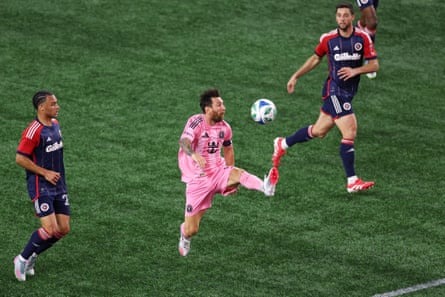
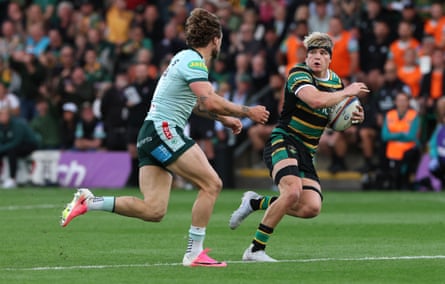
On Wednesday night, the proof overflowed in the hallowed halls of the Mecca. One of the most improbable comebacks in NBA history – and the largest ever in an NBA finals game – saw New York erase a 29-point deficit to beat the San Antonio Spurs in Game 4, leaving Taylor Swift and members of Haim leaping for joy courtside and the 58-year-old building shaking like a bounce house.

The irony, of course, is that these same Knicks have so often found themselves on the wrong end of heartbreak in those very halls. As recently as last year, the Indiana Pacers reminded them of the sport’s cruelest lesson: no game is over until the clock hits zero. In some ways, those Pacers were the last team to carry the sense of inevitability that seems to surround this Knicks squad. Their run, however, ended in crushing fashion with a Game 7 defeat. The Knicks appear mindful of that history. “It’s still 0-0” and “still a long way to go” were common refrains throughout their post-game press conferences on Wednesday night. Some, including head coach Mike Brown and players Jose Alvarado and Karl-Anthony Towns, showed visible emotion.

“I’m not going to sugarcoat this,” Alvarado said. “I was about to cry. I’m at Madison Square Garden, end of the fourth quarter, playing with these guys, and we’re playing for something special.”

Others, such as team captain Jalen Brunson and game-winning playmaker OG Anunoby , were more stoic. But the message was unanimous: as extraordinary as this victory was, there is still one more game left to win.

The Knicks have become something of comeback specialists in recent years. There have been multiple double-digit rallies during this 2026 playoff run alone, after a handful of stunning recoveries against the favored Boston Celtics last postseason. So they certainly have some experience in the art of the improbable. But perhaps the real preparation for nights like this comes from the heartbreak. Being on the receiving end of an unlikely comeback teaches you, in unforgettable fashion, that no lead is safe and no game is ever truly over. The scar tissue of past playoff disappointments, the callouses left after having a win ripped out of your fingertips – those can be life’s greatest teachers.

And beyond the wins and losses (and Knicks fans will be the first to tell you there have been plenty of losses), this is, in many ways, a team of castoffs. The Dallas Mavericks let Jalen Brunson walk, and that was after he was passed over in the first round of the NBA draft as a two-time national champion at Villanova. Karl-Anthony Towns was abruptly moved by the Minnesota Timberwolves after years as the face of the franchise. Josh Hart bounced around the league. Alvarado went undrafted. Even Brown was dismissed as coach of the Sacramento Kings not long after helping them “light the beam” .

“I think everybody, to a certain degree, at some point in life is overlooked,” Brown said late Wednesday night. “Just to have the ability to stay with it, stay with it, stay with it, stay with it, especially when you get knocked down, to me, that defines who you are. Even if you don’t have the quote-unquote ‘ultimate success’ that you think you deserve, if you get knocked down in life and you’re able to get back up and keep fighting, that’s a freaking win.”

The idea of a team of destiny raises an interesting question: how much control do we really have over our own fate? Is destiny a path laid out before us, something inevitable and immutable? Or is it something we create ourselves? Maybe it’s a bit of both. The Knicks found themselves pondering those questions after their historic victory.

“You’ve got to have a little luck in sports,” Brown said. “But you can also make your luck, too.”

Towns echoed the sentiment.

“Sometimes you get lucky. Sometimes you make your luck,” he said. “We made our luck today.”

For most of Wednesday night, it seemed as though New York’s luck had finally run dry. Team owner James Dolan had spent the previous few days making himself the center of attention on a decidedly ill-advised media tour, while some fans half-jokingly wondered whether the bad vibes lingering from the Commander in Chief’s controversial – and sleepy – appearance at Game 3 had cursed the Knicks’ title hopes. The Spurs certainly played as if they believed it. Victor Wembanyama even went so far as to proclaim “I’m in your head” to the Knicks during the first half, and he may not have been wrong. Until he was.

Because that’s the thing about a resilient group like this one. That’s the thing about a team of destiny: however unconventional the path, however theatrical the punctuations along the way, it somehow arrives where it’s meant to. And for the 2026 New York Knicks, that journey is now just one win away from an NBA championship.

The 7th Guest Remake Review – a spirited reboot of a ghost story classic | Games | The Guardian

Keyword – Games
Trefwoorden – Games, Culture, Adventure games, Puzzle games, PC, Nintendo Switch, PlayStation 5, Xbox
Title – The 7th Guest Remake Review – a spirited reboot of a ghost story classic | Games | The Guardian
Author – https://www.theguardian.com/profile/sarah-thwaites
Link – The 7th Guest Remake Review – a spirited reboot of a ghost story classic | Games | The Guardian
Publish date – 2026-06-11T12:00:22.000Z
Category – Culture
URL – https://www.theguardian.com/games/2026/jun/11/the-7th-guest-remake-review

T he 90s were a gold rush for adventure games. LucasArts kicked off the decade with its legendarily irreverent Monkey Island games. Then, Cyan Worlds materialised to deliver a series of atmospheric and boundary-pushing odysseys with Myst and Riven . Nestled between these primary genre texts is The 7th Guest, a lesser-known but still notorious adventure that earned plaudits for its unique FMV visual style, blending live-action filmed footage with pre-rendered 3D backgrounds. It was remade originally for VR, and now has been reconfigured into something playable on PC and consoles, its digital cobwebs cleared and tricky puzzles tinkered with for a fresh (or nostalgic) audience.

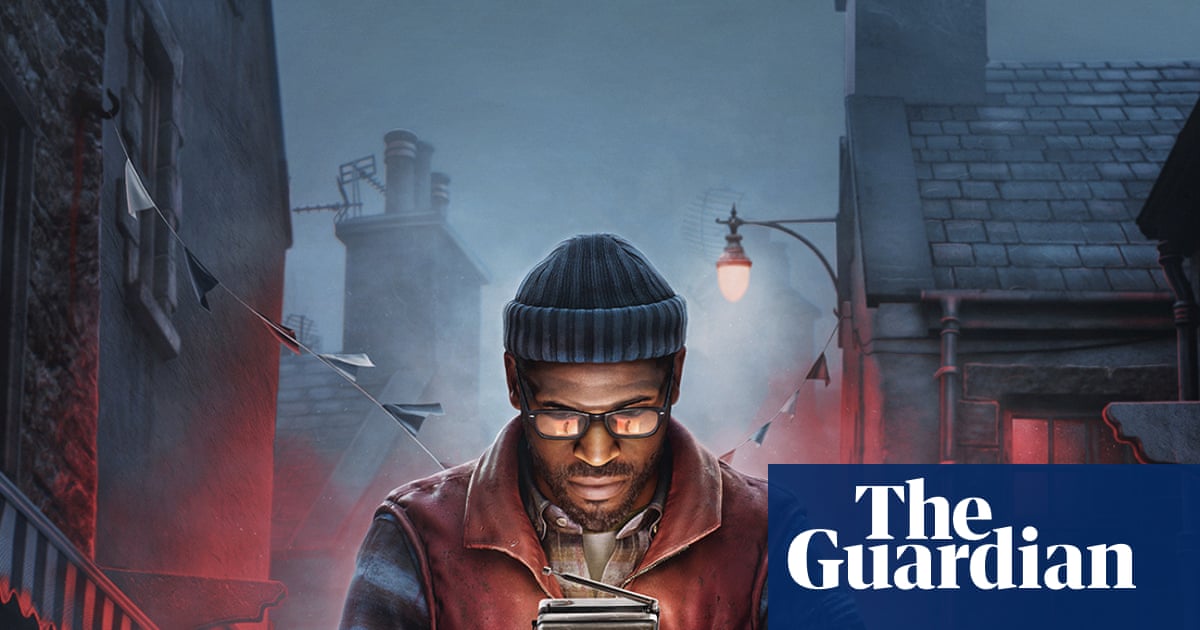
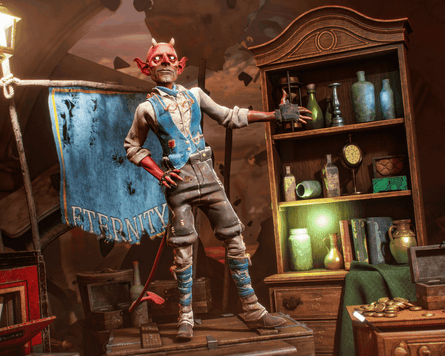
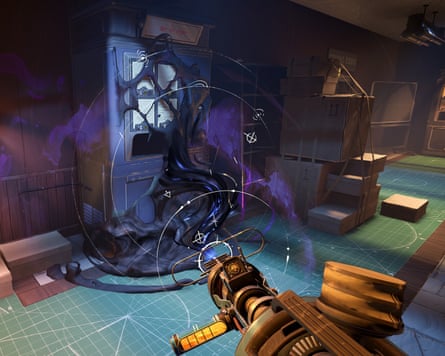
We are dropped into the ectoplasmic shoes of an amnesiac apparition, arriving at the gloomy haunted home of a toy-maker. Armed with a time-bending lantern and a Ouija board-shaped map, your job is to solve a historical whodunnit by literally illuminating events from the past. It’s a melodramatic, surprisingly campy adventure that effectively evokes the overzealous CD-Rom horror of its original era.

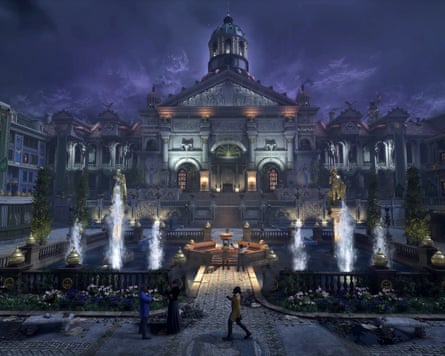
The dilapidated design of the manor can take some of the credit here, with its dusty ornate chandeliers and garish framed portraits lining the halls. But it’s the haunting spectres that make the most impact as you work through the story. To capture the original games’ full-motion storytelling, this rendition uses volumetric video capture on 3D models, creating an uncanny visual effect. This anachronistic look bolsters the game’s unnerving atmosphere, and I quickly became obsessed with stalking the figures and watching the polygons pop and bounce as if in response to the flamboyant performances of the game’s cast.

Set dressing aside, the real meat of The 7th Guest Remake is its puzzles, which scale from approachable to migraine-inducing. You’ll find yourself rerouting a model train to attach cabooses, playing a theremin to explode runic vases and restructuring the squares of a musty quilt to re-create the cycle of life. Because the answer to each puzzle is crystallised in the past, you’ll need to use your mystic light to explore and scour each area for clues. This could have easily become tiresome over the game’s six-hour runtime, but the well-executed visual trickery and careful theming of each bedroom and rumpus room keep it from feeling like work.

The only problem with this spirited remake is that controlling it can be a nightmare. While you can move around the manor freely, shining your light on whatever you please, when you want to interact with something, you’re back to a finicky point-and-click system. You have to wait for a skeleton hand icon to appear on an item before you can engage with it, and the tracking of your inputs isn’t reliable at all, leaving you stuck nudging your mouse around a millimetre at a time to try to pick something up or press an intriguing button. This may be a result of the transition from VR, but given that The 7th Guest was a point-and-click game in the first place, the controls feel egregious.

It’s easy to see why The 7th Guest was so beloved in the first place. Vertigo Games has given this classic a well-deserved facelift, ratcheting up the impact of its theatrical story and unique historical atmosphere. Frustrating mechanical woes aside, it still feels like essential reading for puzzle-lovers who wish to experience one of the classics that shaped the adventure game genre.

The 7th Guest Remake is out now; £17.99/$19.99/€19.99

‘Highway of death’: the Ukrainian drone campaign menacing Russian logistics | Ukraine | The Guardian

Keyword – World news
Trefwoorden – Ukraine, Russia, Europe, World news
Title – ‘Highway of death’: the Ukrainian drone campaign menacing Russian logistics | Ukraine | The Guardian
Author – https://www.theguardian.com/profile/peterbeaumont
Link – ‘Highway of death’: the Ukrainian drone campaign menacing Russian logistics | Ukraine | The Guardian
Publish date – 2026-06-11T04:00:06.000Z
Category – News
URL – https://www.theguardian.com/world/2026/jun/11/highway-of-death-the-ukrainian-drone-campaign-menacing-russian-logistics

R ussian forces call it the “Novorossiya” route, the crucial main supply line that snakes through the Ukrainian territories under Moscow’s occupation, linking Rostov-on-Don in Russia to Melitopol, Mariupol and Crimea via the Sea of Azov coastline.

In recent months, however, Ukrainian forces have given the R-280 a new name – “the highway of death” – in reference to the Ukrainian drones that dominate the airspace above the road, hunting down convoys of Russian military traffic.

The road, which has been almost completely closed to civilian traffic since late May, is particularly important to Moscow because it constitutes the main land corridor for supplying Russian forces in the south that avoid the exposed Kerch Bridge to Crimea.

Drivers have recorded video footage that not only shows burnt-out trucks on the side of the road, but in some instances captures the drone attacks themselves.

Traffic was suspended this week on the Chonhar Bridge – a key section of the road connecting Russia-occupied Kherson province to Crimea – after a series of Ukrainian drone strikes. Ukraine’s 1st Separate Assault Regiment said on Tuesday: “We see all movements and totally control the enemy’s repair works. We are ready to make our long-range adjustments at any moment.”

Ukrainian drone operators, including those of 412th “Nemesis” brigade, say dozens of trucks and tankers have been destroyed as part of an intensified effort known as the “middle strike campaign”.

The campaign is aimed at Russian targets located between 20km and 200km behind the frontline, with a focus on logistics and supply lines. Last month, the Ukrainian president, Volodymyr Zelenskyy said such strikes had quadrupled since February.

“There are now twice as many strikes at distances of 20km-plus compared with March,” Zelenskyy said on 5 May, “and four times as many compared with February. And there will be even more. This is a priority area.”

Three weeks later, Ukraine’s defence minister, Mykhailo Fedorov, was more explicit. The intention, he said, was a “logistics lockdown”, and extra funds and drones were being funnelled to the most effective units.

“Our task now, as directed by the president, is to maximise the middle strike and, in coordination with the military, create a complete logistics lockdown for the enemy,” Fedorov said. His formula is simple: the enemy “will no longer feel safe even at a great distance from the frontline”.

The impact on the Russian supply line has been remarkable. On Tuesday, Robert Brovdi, the commander of Ukraine’s Unmanned Systems Forces, said military cargo traffic along the highway had fallen by 71% over the past two weeks.

Ukrainian drone units are coy about the precise details of the new tactics, but a central component of the effort appears to be the use of swarms of drones to attack logistics routes including roads, railways and bridges in numbers that seem to have caught Russian forces by surprise.

US-produced Hornet drones have reportedly featured heavily in the Ukrainian attacks, their operators assisted by AI to identify truck traffic.

The winged drones, which are the size of a large surf board and have a range of about 150km, have been used to patrol and bomb Russian convoys almost continuously. One immediate impact has been fuel shortages in Crimea.

Ukrainian forces also appear to have been utilising a new, locally produced 2 metre-long lightweight fixed-wing drone, known as the Morrigan, which can be launched from a sling shot or a rail, removing the need for a road or airfield.

A Russian official quoted on the Meduza independent news site also suggests that airdropped mines are being used.

Yevgeny Balitsky, the Kremlin-installed head of the occupied part of Ukraine’s Zaporizhzhia region, described a “comprehensive remote mining system” that detonated on movement, warning drivers to “limit trips unless absolutely necessary”.

The end result has been roads littered with the charred hulks of destroyed Russian trucks, as convoys have tried to move off the main roads to avoid detection.

The new Ukrainian tactic has been noted by independent analysts, including the US-based Institute for the Study of War thinktank. In a recent update, it said: “Ukrainian intermediate-range strikes are already achieving notable operational effects, including degrading Russia’s ability to use the key Russian highway connecting Russia to occupied Crimea and GLOCs [ground lines of communication] around Donetsk City.”

On 21 May, Vladimir Saldo, the Kremlin-appointed governor of Russian-occupied Kherson region, signed a decree introducing restrictions on civilian truck movements on the R-280 where it runs along the Sea of Azov.

In an indication of the Ukrainian success, Saldo compared the strikes to the siege of Leningrad: “This is cynical barbarism. In its cruelty, these actions are reminiscent of the fascist blockade of Leningrad, when the enemy tried to intimidate people, sever connections between territories and break the will of the civilian population.”

Pope Leo rails against migrant deaths on visit to Spain’s ‘dock of shame’ | Pope Leo XIV | The Guardian

Keyword – World news
Trefwoorden – Pope Leo XIV, Migration, Spain, The papacy, Catholicism, Christianity, Europe, World news
Title – Pope Leo rails against migrant deaths on visit to Spain’s ‘dock of shame’ | Pope Leo XIV | The Guardian
Author – https://www.theguardian.com/profile/ashifa-kassam
Link – Pope Leo rails against migrant deaths on visit to Spain’s ‘dock of shame’ | Pope Leo XIV | The Guardian
Publish date – 2026-06-11T16:47:55.000Z
Category – News
URL – https://www.theguardian.com/world/2026/jun/11/pope-leo-migrant-deaths-spain-dock-of-shame

The constant flow of people embarking in small, rickety boats to migrate abroad should force a reckoning as to why we have built a world where so many “must risk death to seek life”, Pope Leo has said as he warned: “We cannot grow accustomed to counting the dead.”

Thursday’s speech in the Canary Islands, on the final leg of the pontiff’s week-long tour of Spain, contained Leo’s most pointed comments to date on migration.

Standing near a memorial to the many who had braved the fierce swells of the Atlantic in the hope of carving out a better life in Europe , the pope railed against the world’s “indifference” and called on leaders to treat migrants more humanely.

“Even today, monsters lurk in these seas: mafias that traffic in despair, traffickers who enslave women and children, and those whose indifference allows the poor to be swallowed up by exploitation or oblivion,” he said.

Last year, an estimated 1,906 people died attempting to cross into Europe along the perilous Atlantic route.

Flanked by rescue ships and a simple wooden cross cobbled together from the wreckage of migrant boats, the US-born pope said it went against Christian values to “regard as foreign the cry of those who shout from the night”, and he warned that history would condemn those who did so.

“May history not accuse us of turning the pain of those who suffer into a common sight along our shores,” he said. “Today, here by the sea, every individual that arrives asks us what remains of our humanity. Sooner or later, it will be known whether we protected life or whether we yielded to indifference.”

The event was held at the dock of Arguineguín in Gran Canaria, which burst into the spotlight in 2020 after arrivals along the Atlantic route swelled. As Spanish media showed migrants left to sleep on the rat-infested dock and others who had gone weeks without blankets or showers, the wooden jetty became known across the country as the “dock of shame”.

After hitting a peak of more than 46,000 arrivals in 2024, the number of people crossing via the Atlantic route has dropped sharply. Rights groups have said EU cooperation with countries across Africa appears to be emphasising deterrence while turning a blind eye to the risk of rights abuses.

In his speech, the pope singled out Europe, urging people to see the tragedy of migration as a “call to conscience” for all of those involved. “Europe cannot claim to uphold human dignity while growing accustomed to the Mediterranean and Atlantic becoming graveyards without headstones,” he said.

The comments come as the EU pursues an increasingly hardline on irregular migration, from Italy’s escalating crackdown on the NGO rescue ships that ply the Mediterranean to a new bloc-wide law that critics say mimics the US administration’s ICE system.

In recent years, Spain’s Socialist-led government has sought to position itself as a notable exception, including by championing its efforts to regularise more than half a million undocumented people.

On Thursday, the pope expanded on this to call for “legal and safe pathways” for immigration, international cooperation to fight human trafficking, and funding to rescue migrants in distress at sea.

“Human dignity has no passport and does not lose its value when crossing a border,” he said. “Every boat that arrives does not bring only migrants, it brings with it a question: what kind of world have we built, if so many brothers and sisters must risk death in search of life?”

He capped off his speech by casting a wreath of flowers into the sea, accompanied by a moment of silence, to mourn those who had lost their lives while in transit.

It was an echo of a gesture made by Leo’s predecessor, Pope Francis, who visited the Italian island of Lampedusa in 2013 and denounced the “globalisation of indifference” towards migrants.

Thursday’s event also featured testimony of first responders, humanitarian workers and migrants, including that of a Nigerian woman who had risked all to enter Europe. “I had to choose: live in suffering, or cross and risk it all. Die trying, or stay and not have anything,” said the woman, whose journey led to her being trafficked into prostitution and led to her baby being snatched from her.

Leo responded by telling her she was a blessing from God and deserved happiness.

Later, he said: “Dear migrants, before saying anything else to you, I want to bow before your dignity,” inclining his head slightly. “You are not just numbers or files. You are people who have left behind families and homes. You have dreams that no one has the right to despise.”

The Twitnam Summer by Hester Grant review – Swift, Gay and Pope’s season in the sun | Biography books | The Guardian

Keyword – Books
Trefwoorden – Biography books, Jonathan Swift, Books, Culture
Title – The Twitnam Summer by Hester Grant review – Swift, Gay and Pope’s season in the sun | Biography books | The Guardian
Author – https://www.theguardian.com/profile/kathrynhughes
Link – The Twitnam Summer by Hester Grant review – Swift, Gay and Pope’s season in the sun | Biography books | The Guardian
Publish date – 2026-06-12T06:00:37.000Z
Category – Culture
URL – https://www.theguardian.com/books/2026/jun/12/the-twitnam-summer-by-hester-grant-review-swift-gay-and-popes-season-in-the-sun

I n 1726 Jonathan Swift , dean of Saint Patrick’s Cathedral in Dublin, crossed the Irish sea with the manuscript of Gulliver’s Travels in his luggage. Beneath the child-friendly chatter about a sailor marooned on an island full of tiny Lilliputians, the book was a scabrous satire on the corruption of public life under the politically ascendant Whigs, whom Swift regarded as a pack of moral pygmies.

Swift’s ultimate destination, though, was not Whitehall but rather the idyllic Twickenham – “Twitnam”, as they knew it – home of his old friend, the poet Alexander Pope. Here he intended to work out a plan for anonymous publication of his sulphurous masterpiece, one that would not land him in legal trouble. In Pope he could be sure of a sympathetic co‑conspirator. Both men were members of the Scriblerus Club, an unofficial association of dissident wits who nonetheless set great store by literary collaboration. Pope was equally disaffected with the state of the nation, although his loathing was directed towards the philistine Hanoverians, who had arrived from Germany in 1714 to take up the British throne. Pope, whose Catholicism disqualified him from royal patronage, made a big point of not having to scramble for favours from the court. Instead, he emphasised the superiority of his life of suburban independence on the banks of the Thames.

The third hero of Hester Grant’s enjoyable dip into the world of early Georgian satire is John Gay, author of The Beggar’s Opera. The musical comedy comprised a savage takedown of Robert Walpole, leader of the all-conquering Whigs, whom Gay regarded as no better than a highwayman and a thief. Unlike Swift and Pope, though, Gay reserved his invective solely for his writing. The rest of the time he was a sunshiny soul, fond of a drink and hopeless with money, forever scrounging a bed for the night. In the summer of 1726 he fetched up at Twitnam to stay at Pope’s exquisitely designed villa, which came complete with an underground grotto furnished with flints, shells and glittering glass.

It wasn’t all lovely. Grant is very good on the less salubrious aspects of life in the 18th century. Take Swift’s regular trundle between Dublin and London. An expensive carriage ride meant sealing yourself into a fetid, jiggery box with five strangers while trying hard not to vomit into their laps (Swift was vulnerable here thanks to Ménière’s disease, which played havoc with his balance). Then there was the endless lying around in grubby lodgings in a small port such as Holyhead while you waited for the tide and weather to turn in your favour. Factor in luggage that travelled separately and was virtually bound to go astray, and it is no wonder Swift got the reputation for being a misanthrope.

Less successful perhaps is Grant’s decision to organise this group biography around the proposition that these few weeks in 1726 were some of “the most consequential in English literary history”, marking a “pivotal moment” in each man’s career. The stubborn fact remains that  Swift had already written Gulliver’s Travels by the time he turned up at Twitnam, while Pope was still labouring on a tedious translation of Homer, which he was doing for the money (he was never quite the free spirit he liked to suggest). His masterpiece, The Dunciad, about the stupidity of the Hanoverian court, would not see the light of day for another two years. John Gay, meanwhile, spent the high summer of 1726 doing his usual shilly-shallying: it would be 1727 before he got down to writing The Beggar’s Opera.

There is, of course, a case to be made that these summer weeks were a kind of creative laboratory, which produced several proofs of concept that would ultimately bear fruit in literary masterpieces. But Grant has to work very hard to convince the reader that these three clever men were doing anything different from what clever people always do when they get together: gossiping, chatting and going off on a hundred different tangents. In her previous book, which concerned a largely unknown set of siblings, the Sharps, who rose to social and political prominence in the 1780s, Grant did an excellent job of maintaining a sense of cohesion. Here she writes as beautifully as before, yet fails to make a persuasive case for braiding together three already very famous literary lives.

The Twitnam Summer: Friendship, Satire and the Writing of Gulliver’s Travels by Hester Grant is published by William Collins (£25). To support the Guardian, order your copy at guardianbookshop.com . Delivery charges may apply.

David Hockney, revolutionary British artist famed for his pools and portraits, dies aged 88 | David Hockney | The Guardian

Keyword – Art and design
Trefwoorden – David Hockney, Art, Photography, Art and design, Culture, Yorkshire, Painting, Bradford, UK news, Los Angeles, Sexuality, Society, Polaroid, Older people, iPad, Tablet computers, Technology
Title – David Hockney, revolutionary British artist famed for his pools and portraits, dies aged 88 | David Hockney | The Guardian
Author – https://www.theguardian.com/profile/timjonze,https://www.theguardian.com/profile/donna-ferguson
Link – David Hockney, revolutionary British artist famed for his pools and portraits, dies aged 88 | David Hockney | The Guardian
Publish date – 2026-06-12T12:14:15.000Z
Category – Culture
URL – https://www.theguardian.com/artanddesign/2026/jun/12/artist-david-hockney-dies

David Hockney, the iconic British painter who cast a revolutionary gaze across 20th-century art, has died aged 88.

He made his name as a pop artist during the swinging 60s and was perhaps best known for his paintings of swimming pools that helped define the Los Angeles aesthetic. Works such as A Bigger Splash and Portrait of an Artist (Pool With Two Figures) depicted hedonistic scenes of love, lust and loss taking place below the city’s sun-soaked skies.

But Hockney’s six-decade career cannot be defined by a single era. He produced perspective-shifting portraits using photo-collage, experimented with abstract landscape painting and, in later life, investigated the possibilities of creating artworks out of emerging 3D technology.

The UK prime minister Keir Starmer was among the first to pay tribute to Hockney. “The prime minister is saddened to hear of the death of David Hockney, one of Britain’s most celebrated artists,” a spokesperson said.

“His vivid, instantly recognisable work influenced generations of artists, and the prime minister’s thoughts are with his friends and family.”

A statement from Hockney’s representatives said: “The celebrated British artist David Hockney, one of the most important figures in contemporary art in both the 20th and 21st centuries, passed away peacefully at home on 11 June 2026, one month short of his 89th birthday.”
It added: “David Hockney’s enduring legacy reflects his underlying enthusiasm for life, his outstanding sense of humour, his immense generosity and his investigative curiosity encapsulated by his signature phrase: Love Life.
“Details of memorials will follow in due course.”

Director of London’s Tate Britain art gallery Alex Farquharson described Hockney as an“immensely important figure”.

“David was an endlessly inventive artist, with a unique vision of the world,” Farquharson told the BBC.

“He was always completely and courageously himself, both in his work and in life. He taught us about the joy of looking, seeing things the rest of us failed to notice – his witty and sharp observations a constant presence within his work and in person.

“The loss to the art world is immense: David’s passing brings to a close an extraordinary body of work characterised by reinvention.”

The Tate is planning to stage a major exhibition of his work at Tate Britain next year, as well as a multimedia installation in the Turbine Hall of Tate Modern, and said it would continue to work with Hockney’s team to ensure both would go ahead.

The Pompidou Centre in Paris, with which Hockney collaborated for two landmark exhibitions, described him as “unquestionably one of the major figures of contemporary art”.

It added that the works he leaves behind remain “dazzling, alive and eternal”.

Born in Bradford, West Yorkshire , in 1937, Hockney was the fourth of five children in what he described as a “radical working-class family”. His parents encouraged their son’s early artistic promise. He studied art at Bradford College and sold his first painting – a portrait of his father – for £10 at the Yorkshire Artists Exhibition in 1957.

As a conscientious objector, he completed his two years of national service as a hospital orderly before enrolling at London’s Royal College of Art in 1959. He swiftly gained a reputation as a unique talent, albeit one with a rebellious streak. His refusal to paint a life drawing of a female model almost stopped him from graduating – pointedly, he submitted Life Drawing for a Diploma, which depicted a muscular male figure from an American physique magazine. Hockney also declined to write an essay required for the final examination, believing he should be assessed solely on his artworks. The RCA, aware of the talent it was fostering, bent its rules so it could award him the diploma.

It was the start of a career in which Hockney had no qualms about challenging conservative society. His 1961 painting We Two Boys Together Clinging, named after a Walt Whitman poem, was an early indicator of that. Works that followed, such as 1962’s Cleaning Teeth, Early Evening (10pm) W11, with its phallic Colgate tubes and chains, would depict gay life with an honesty and openness that was almost completely at odds with a Britain in which homosexuality remained a criminal offence until 1967.

With his signature bleach-blond hair, round, thick-rimmed spectacles and cigarette dangling from his lip, Hockney became a figure on the 60s party circuit in London and the US. He partied with Andy Warhol, Ossie Clark and Dennis Hopper, earning himself a reputation as a playboy and a flâneur. Yet while he indulged in the pleasure-filled life of a drug-taking bohemian, he never lost sight of his strong Yorkshire work ethic. Even after a stroke in 2012, which temporarily impaired his speech, he continued working.

After moving to LA in the mid-60s, his more mature and restrained works garnered acclaim for their ability to transport deep and complex emotions on to the canvas. Man in Shower in Beverly Hills (1964) found the artist hitting his stride as he developed towards a more realist style. In November 2018, Hockney’s 1972 masterpiece, Portrait of an Artist (Pool With Two Figures), sold for $90.3m (£70.2m) at Christie’s, a world record for a living artist at the time. The work, inspired by Hockney’s breakup with his lover, enraptured critics, including the Guardian’s Jonathan Jones, who described it that same year as “a calm distillation of love and sorrow” .

While working on one of his LA paintings, Hockney took a series of reference photographs on a Polaroid camera and accidentally stumbled upon the next stage of his career: photocollage, or “joiners” as he would term them. Through assembling multiple photographs together, Hockney could explore his fascination with perspective. The portraits he created of his mother and the British art dealer John Kasmin exhibited a strong cubist influence that drew comparisons with his idol, Picasso.

In later years, Hockney experimented in many new areas including set and costume design for operas and ballets. Developing technology fascinated the artist: as his career evolved, his art made use of the photocopier, the fax machine, the printer and the iPad – the latter allowing him to create reams of digital paintings that he would excitedly email friends and acquaintances. But his technological interests always came back to one thing: “I’m really only interested in technology that is about pictures,” he told Interview magazine in 2013. “I’m interested in anything that makes a picture.”

An avid smoker all his life, Hockney maintained that cigarettes had been beneficial to his mental health. Writing in the Guardian in 2007 he called the UK’s imminent smoking ban “the most grotesque piece of social engineering”.

He had moved back to Yorkshire from Los Angeles in 2005, but in 2013 tragedy struck when his 23-year-old assistant Dominic Elliott was found dead at his Bridlington home. Elliott had been found to have consumed household drain cleaner after taking a range of recreational drugs including ecstasy and cocaine. A coroner ruled that Elliott had died as a result of misadventure. Hockney said that for a period he had considered giving up art altogether, as he was unable to draw in the wake of Elliott’s death.

Hockney is believed to have turned down a knighthood on several occasions and once declined an invitation to paint a portrait of the queen. His iconoclasm found its way into the 2001 book Secret Knowledge: Rediscovering the Lost Techniques of the Old Masters , in which he challenged much established thinking regarding how the great paintings of the past may have been created. It managed to both enrage and enrapture critics and art historians.

“Teaching people to draw is teaching people to look,” he told the Yorkshire Post in 2018. And his art undeniably had a profound effect on the way we viewed the 20th century – not that he would necessarily have seen it that way.

“I don’t reflect too much,” he told the Guardian’s Simon Hattenstone in 2015 . “I live now. It’s always now.”

Sign up for the First Edition newsletter: our free daily news email | Newsletter sign-up | The Guardian

Keyword – Global
Trefwoorden – Newsletter sign-up
Title – Sign up for the First Edition newsletter: our free daily news email | Newsletter sign-up | The Guardian
Author – Guardian Staff
Link – Sign up for the First Edition newsletter: our free daily news email | Newsletter sign-up | The Guardian
Publish date – 2022-09-20T10:16:38.000Z
Category – News
URL – https://www.theguardian.com/global/2022/sep/20/sign-up-for-the-first-edition-newsletter-our-free-news-email

The UN has shamed Israel over sexual violence in conflict. Now there must be accountability | Janine di Giovanni | The Guardian

Keyword – Opinion
Trefwoorden – Israel, Sexual violence, Human rights, World news, Russia, Ukraine, War crimes, Gaza, West Bank, United Nations, Hamas, Palestine, Law
Title – The UN has shamed Israel over sexual violence in conflict. Now there must be accountability | Janine di Giovanni | The Guardian
Author – https://www.theguardian.com/profile/janinedigiovanni
Link – The UN has shamed Israel over sexual violence in conflict. Now there must be accountability | Janine di Giovanni | The Guardian
Publish date – 2026-06-12T12:00:44.000Z
Category – Opinion
URL – https://www.theguardian.com/commentisfree/2026/jun/12/un-blacklist-israel-sexual-violence-conflict-accountability-russia

Y ousef, a Palestinian journalist, and I stood on a beach in Gaza during the first intifada – the uprising that began in 1987, defined by popular resistance and young men throwing stones. He was in his early 20s at the time, but he had already spent time in Ansar III, the dreaded Israeli prison in the Negev desert. He had recently been released.

This was before post-traumatic stress disorder (PTSD) was widely understood, but I knew my friend was deeply traumatised. Staring at the sea, his hands shook as we spoke. Even though he was free, he doubted he would ever feel safe again. Prison had meant beatings, torture, sleep deprivation. “The soldiers kept asking me if I wanted to be a woman,” he said. “That is the worst thing – to threaten to destroy your manhood.”

Every year, the UN releases an annexe to the secretary general’s report on conflict-related sexual violence . It names parties that are credibly suspected of perpetrating rape and sexual abuse in armed conflict. For years, the usual suspects appeared: the Democratic Republic of the Congo, South Sudan, Syria, Iraq, Myanmar. This year, two new names appeared: Israel and Russia .

Russia’s inclusion was unsurprising. My organisation, The Reckoning Project, is well aware of the reports of sexual violence from our work. Russia is also an outlier in the international order, widely criticised by other states. But seeing Israel listed was a shock given the existing support for the nation by many actors in the international community, such as the US and the EU. The UN is a cautious institution and this listing was not made on a whim.

The evidence is meticulous. Between 2023 and 2025, UN investigators verified sexual abuse inflicted on 31 Palestinian detainees – 14 men, seven women, nine boys and one girl – held in Israeli military bases, prisons and detention centres. The violations included rape, gang-rape, genital violence inflicted as torture, forced nudity, abusive strip-searches and repeated threats of rape. Some victims endured multiple assaults, continued humiliation and pain. Perpetrators included the Israel Defense Forces and Israel Prison Service.

The report documents a systemic lack of accountability, “perpetuating a climate of impunity”. The most well-known case is that of five soldiers who were indicted for alleged physical assault. Despite apparent medical and video evidence of a sexual assault, charges of sexual assault or rape were not included in the indictment. After much public outcry in defence of the soldiers, the charges were eventually dropped.

These findings build on years of work by courageous Israeli and international human rights organisations. B’Tselem exposed systemic cruelty in Israeli prisons long before the UN acted. A recent report , Welcome to hell: the Israeli prison system as a network of torture camps, documents the experiences of 55 Palestinians held after 7 October and released without charge. B’Tselem calls the prisons “a network of camps dedicated to the abuse of inmates as a matter of policy”.

In response to the report , Danny Danon, Israel’s UN ambassador – a hardline former Israel Defense Forces officer and one-time Likud MP – said: “The secretary general and his team continue to spread lies against Israel. To put us and Hamas terrorists on the same list, that’s unacceptable.” (Hamas rightly appears in the report for sexual violence during 7 October.) Danon announced that Israel would cut ties with António Guterres until the UN secretary general leaves office in December.

What next for Israel? States that appear repeatedly on the blacklist are barred from UN peacekeeping missions, but enforcement rarely extends beyond that. The UN requests that investigators access detention facilities, but unless the accused state is cooperative, they are unable to arrange access. Perpetrators repeat their crimes, unpunished. The systems that enable them continue, unhindered.

Real accountability would mean bringing Israel before the international criminal court for the use of rape as a war crime. This is difficult when Israel is not a signatory to the organisation, and as we have seen, Benjamin Netanyahu has already been indicted for starvation as a weapon of war and crimes against humanity in Gaza to no avail. (He denies wrongdoing.)

However, international pressure could come in other forms. Russia denies investigators access to detention facilities, yet still faces enormous pressure from economic and diplomatic sanctions as the aggressor in Ukraine . Israel still benefits from trade with other nations and participates in western institutions in ways Russia cannot – the OECD, the World Economic Forum, the Olympics – but could be expelled until it acts to end sexual violence.

There should be compensation from the Israeli state for survivors through reparations and legal aid for those seeking justice elsewhere, but most fundamentally, the Israeli state must acknowledge that these crimes occurred and will not recur.

There is form for this. Human rights monitors in Ukraine documented 31 cases of sexual violence by Ukrainian forces – beatings of genitals, electric shocks, forced nudity. After these allegations, Ukraine continued to allow UN monitors access, is facing up to its crimes and has acted to strengthen its laws and institutions. If Israel has nothing to hide – as it insists – it should grant investigators unrestricted access to prisons.

I wonder if Yousef, with whom I lost touch many years ago, would see this documented record of his pain as a victory. For survivors such as him, this means there is now an official archive preserved, waiting for the day when the world has the political will to act on it. I imagine he would wish for more action.

For those of us working in accountability, the blacklist signals that there are witnesses. The world is watching, the world does know. The question now is whether the world will ever do more than merely stand by and watch.

Janine di Giovanni is a war correspondent and the executive director of The Reckoning Project, a war crimes unit in Ukraine, Sudan and Palestine . She is the author of The Morning They Came for Us: Dispatches from Syria

Do you have an opinion on the issues raised in this article? If you would like to submit a response of up to 300 words by email to be considered for publication in our letters section, please click here .

John Healey quitting defence puts a time bomb under No 10. He is a loyalist: this is no ordinary departure | Gaby Hinsliff | The Guardian

Keyword – Opinion
Trefwoorden – John Healey, Defence policy, Labour party leadership, Keir Starmer, Andy Burnham, Nato, Russia, US foreign policy, Labour, Politics, UK news, World news
Title – John Healey quitting defence puts a time bomb under No 10. He is a loyalist: this is no ordinary departure | Gaby Hinsliff | The Guardian
Author – https://www.theguardian.com/profile/gabyhinsliff
Link – John Healey quitting defence puts a time bomb under No 10. He is a loyalist: this is no ordinary departure | Gaby Hinsliff | The Guardian
Publish date – 2026-06-11T17:08:49.000Z
Category – Opinion
URL – https://www.theguardian.com/commentisfree/2026/jun/11/john-healey-quits-defence-secretary

J ohn Healey is not a rash man. Slow to anger, calm in a crisis, loyal and yet beneath it all, formidably determined. He stuck at it through the Jeremy Corbyn years, much as he privately despaired of where the party was heading, keeping his thoughts to himself because all he wanted was for Labour to win again. When it did, under Keir Starmer , he became the understated anchor to a frequently gale-tossed ship of government; the solid citizen everybody liked and nobody distrusted, a natural choice for caretaker leader had Starmer ever fallen under a bus.

Or, perhaps, been pushed under a tank.

For a defence secretary to resign weeks before a critical Nato summit, in the middle of conflict in the Gulf and on the eve of a domestic byelection which will determine his party’s future, is extraordinary in itself. But it’s that bayonet of a resignation letter – painting the prime minister as weak and impotent, incapable even of finding the money to keep the nation safe – that now threatens to finish off an already badly wounded premiership.

Despite accepting the case for more defence spending, Healey wrote to Starmer , “you have been unable, and the Treasury has been unwilling” to find the money to keep the nation safe. That “unable” is the key, reflecting what is said freely behind closed doors: that a prime minister who always hated settling cabinet disputes even at his peak is now a lame duck, drained of all authority over ministers who don’t expect him to survive the summer. The inference is that if the chancellor, Rachel Reeves – sceptical of the Ministry of Defence’s numbers, and hemmed in by her own tax promises – says no, then her nominal boss is too weak either to override her or to force cuts on any other cabinet ministers to get the money. So what, exactly, is the point of him?

In failing to find the cash, Healey added, Starmer and Reeves between them were forcing him to take decisions that “increase the risk to personnel on operations” – words liable to be taken particularly seriously by military families given the loss of four serving personnel in training accidents this month. The last straw seems to have been a settlement that would see Britain spending barely any more in 2030, the point at which Nato member countries calculate that Russia might have rearmed sufficiently to mount a significant attack, than it’s already budgeting for the coming year. But as with Jess Phillips’s resignation letter , lambasting the prime minister’s failure to legislate on measures she believed could save children from abuse, what’s striking is the sense of someone coming to the very end of their tether.

Healey has been at this game long enough to know how his words will reverberate, not just around Westminster but in Washington and Moscow, Beijing and Kyiv. But they’re unlikely to come as much of a surprise in any of those capitals, given that this government has been visibly struggling for over a year now with the conclusions of its own defence spending review. Venting his frustration out loud may, perhaps, be seen as the last best hope of forcing something to change.

Ominously for Starmer, ministers did not exactly rush to close ranks. The former Royal Marine turned junior defence minister Al Carns tweeted defiantly that his boss had given the country “serious service at a serious time” and that “there are issues facing this department that do not lend themselves to easy answers”. Soon, he too was gone from government . The Plymouth Moor View MP, Fred Thomas, another ex-Marine and member of the defence select committee, called openly ( not for the first time ) on Starmer to resign . Yet if this is a humiliating moment for the prime minister, it’s not exactly a vote of confidence for the heir apparent either.

Why didn’t Healey wait a week, until after Andy Burnham had had his shot at returning to parliament as MP for Makerfield? In part, perhaps, because Britain’s allies can’t wait. Nato members are preparing for a critical July summit to discuss the two existential security threats they face – one from an increasingly aggressive Russia, the other from Donald Trump’s desire to pull US troops and assets out of Europe. They need to know exactly where Britain is capable of plugging the gaps, and how fast it can move towards its target of spending at least 3.5% of GDP on defence (plus another 1.5% on resilience) by 2035.

Forcing the issue now may also be an attempt to lock in money for defence ahead of a summer leadership contest in which contenders will face pressure from Labour party members to commit billions for almost everything but a war. (Already this month, Burnham has suggested he would bring forward potentially expensive social care reforms and argued that the Waspi female pensioners – who say they missed out because they didn’t realise that the pension age was changing – deserve compensation, before hastily backtracking on the latter ).

What some will be wondering, however, despite his friends’ insistence to the contrary, is whether Healey’s ambitions are solely for his country. Starmer has insisted he would fight Burnham for the leadership , pitching himself as an experienced pair of hands in a crisis. But many more days like this and that claim will ring very hollow. If drafted, would Healey himself ever agree to serve?

The rocket is launched. The only thing we don’t know yet is where exactly it might be heading.

Gaby Hinsliff is a Guardian columnist

Do you have an opinion on the issues raised in this article? If you would like to submit a response of up to 300 words by email to be considered for publication in our letters section, please click here .

The future starts with us: Gordon Brown in conversation . On Thursday 10 September, join Hugh Muir and Gordon Brown to discuss the intricate connections between global instability and civic decline, as explored in Brown’s new book, The Future Starts With Us. Book tickets here or at guardian.live

Starmer defends investment on defence as he vows to fight any leadership challenge – UK politics live | Politics | The Guardian

Keyword – Politics
Trefwoorden – Politics, UK news, Labour, Keir Starmer, Defence policy, John Healey, Labour party leadership, Military, Dan Jarvis, Northern Ireland, Northern Irish politics, Palestine, Gaza
Title – Starmer defends investment on defence as he vows to fight any leadership challenge – UK politics live | Politics | The Guardian
Author – https://www.theguardian.com/profile/andrewsparrow
Link – Starmer defends investment on defence as he vows to fight any leadership challenge – UK politics live | Politics | The Guardian
Publish date – 2026-06-12T14:15:56.000Z
Category – News
URL – https://www.theguardian.com/politics/live/2026/jun/12/keir-starmer-defence-investment-plan-spending-dan-jarvis-al-cairns-john-healey-latest-news-updates

Starmer said he ‘will fight’ any leadership challenge, not out of ‘stubbornness’ but from ‘deep sense of duty’

Keir Starmer has said that he will fight to keep his job if he faces a leadership challenge.

In an interview with Chris Mason, the BBC’s political editor, Starmer also defended his proposals for the defence investment plan (Dip) saying that he did not accept it was underfunded.

On the leadership, he said:

I want to complete the work I was elected into government to do. And therefore that’s why I’ve always said I’m not going to walk away from the commitment that I made in 2024 to serve my country and the mandate that I won from the British public in order to do so.

That was a mandate we won in 2024 with me then leading my party and me now as prime minister.

I’m not going to walk away from that because I think it’s very important that we carry on ensuring that we do the right thing.

Starmer said he thought it would be a mistake for Labour to “plunge the country into the chaos of a leadership election”.

But, if there is a leadership challenge, “I will fight,” he said.

That’s not about personal vanity, it’s not about stubbornness, it’s out of a very deep sense of duty.

I will post more quotes from the interview shortly.

Starmer suggests Dip funding that led to Healey quitting only 1st instalment, and more likely in next spending review

Keir Starmer has said that every single government department had had to make cuts to fund the defence investment plan (Dip).

In his interview with the BBC’s Chris Mason , he also argued that the plans for extra spending in the Dip – which triggered John Healey’s resignation because he thought they were too low – were in effect only a first instalment.

In his resignation letter yesterday, Healey said that under the plans in the draft of the Dip he saw this week defence spending would only rise to 2.68% of GDP by 2030, when it was due to reach 2.6% next year anyway. Mason told Starmer this meant the Dip increase was worth just 0.08 percentage points.

Starmer said that it was important to understand that the Dip was being announced outside the spending review process. That meant multi-year departmental budgets were already set, and the government could not find more money for defence without taking it from other departments.

Starmer said that he had tackled this “head on” by reallocating money from other departments, which was “not easy”.

He went on:

Everybody is contributing to this, every single [government department]. It’s very important that they do.

What I’m not doing is taking out day-to-day spending because I’m not prepared to cut our public services. But every department is contributing to this. It is a collective effort, if you like, towards a really important priority of the government.

Not cutting day-to-day spending means capital spending will be cut.

Asked about the increase being worth just 0.08 percentage points, Starmer said:

There will be another spending review before the end of this parliament and I’ll be very clear with you, and through you to your viewers, defence will be the number one priority in that spending review and spending reviews beyond that, because it’s important to this government and it’s important to me.

On the general claim that he was not spending enough on defence, Starmer said the government had already announced “the biggest sustained increase in defence spending since the 1980s”. He said defence of the country was his “number one priority”.

Starmer suggests Burnham must explain what ‘trade-offs’ he would make if he were PM faced with hard choices

In his interview Chris Mason for the BBC, Keir Starmer in effect challenged Andy Burnham to explain what trade-offs he would accept in government.

When Mason put it to him that the government under his leadership had become chaotic, Starmer said he did not accept this. He pointed to stabilising the economy, increasing investment in public services and higher defence spending as examples of how he was governing effectively.

He went on:

[These] are the basics of government, just to borrow your phrase. And we have made significant progress on all three of those. And I would just gently say this, that whoever is prime minister is going to face the same prevailing winds as I am facing. None of that is going to change.

When Mason suggested he was talking about Burnham, Starmer did not challenge that and instead went on:

None of those things are going to change. And for every answer that is being suggested, the question has to be when you’re in government, which is about trade-offs, what is it then that you wouldn’t do?

Because easy answers are by their nature easy. Decisions in government involve trade-offs, so they always have to come with that second question; well, if you’re going to do that, what is it you wouldn’t do?

On the subject of a leadership election, Starmer said he thought the “chaos” it would bring would be bad for the country. But he went on:

If [there is a contest], then I will fight. And let me just be clear with you. That’s not about personal vanity. It’s not about stubbornness. It’s out of a very deep sense of duty.

I was elected to serve this country. Notwithstanding the difficult circumstances that is what I am doing.

And in the last few weeks others have made their own case. I’ve been concentrating on the job I was elected to do which is to deliver for this country.

This is about a sense of service and duty. It is not vanity, not stubbornness.

Asked if he would lead Labour into the next election, Starmer replied:

That’s what I want to do. I recognise that, you know, I’ve got to turn things around. We had a very bad set of elections.

When asked if he was saying he accepted he was in jeopardy, Starmer replied:

I’ve always been clear that that’s what I want to do. But look, I recognise that given where we are, I need to turn that around and that’s what I intend to do.

Starmer’s final comments sound like a concession that, if he were still PM this time next year and Labour’s polling had not recovered, he would have to stand aside.

While many or most Labour MPs expect Starmer to be replaced before the next election, it is understood that Starmer is very resistant to the idea that he should have to stand down this summer. Hence his comments about fighting a leadership election.

However, some MPs also believe that, if it became clear to him that an overwhelming majority of people in the parliamentary party wanted a new leader, Starmer would announce a date for his departure instead of fighting a leadership contest – regardless of what he is saying now.

US under secretary of defence backs John Healey’s call for higher UK defence spending

Elbridge Colby , the US under secretary of defence for policy, has posted a message on social media reposting John Healey’s resignation letter and suggesting that he agrees with Healey’s call for the UK to spend more on defence. Colby says :

The United Kingdom has an extraordinarily proud military history. It commands our respect. There is again a great need for more British military strength in this critical time. We urge the UK to meet that need with urgency, scale, and determination. 1/

Donald Trump, the US president, has long been calling for all Nato members to spend more on defence.

Starmer rejects claim Dip funding inadequate, and says defence will be ‘a number one priority’ in next spending review

Keir Starmer has rejected claims that he is not ploughing enough money into the defence investment plan.

This is the claim that led John Healey to resign as defence secretary yesterday. But, in his interview with the BBC’s Chris Mason, Starmer said he was putting “considerable” money into defence.

Asked about claims from generals like Sir Richard Barrons about the Dip being under-funded, Starmer replied:

I have the highest respect for the individuals that you have quoted, but I don’t agree. These are hard-edged decisions and we are seen as a leading member of Nato.

Starmer also said defence would be his “number one priority” at the next spending review. He said:

We have another spending review coming up and before the end of this parliament, and defence will be a number one priority in that space.

Starmer said he ‘will fight’ any leadership challenge, not out of ‘stubbornness’ but from ‘deep sense of duty’

Keir Starmer has said that he will fight to keep his job if he faces a leadership challenge.

In an interview with Chris Mason, the BBC’s political editor, Starmer also defended his proposals for the defence investment plan (Dip) saying that he did not accept it was underfunded.

On the leadership, he said:

I want to complete the work I was elected into government to do. And therefore that’s why I’ve always said I’m not going to walk away from the commitment that I made in 2024 to serve my country and the mandate that I won from the British public in order to do so.

That was a mandate we won in 2024 with me then leading my party and me now as prime minister.

I’m not going to walk away from that because I think it’s very important that we carry on ensuring that we do the right thing.

Starmer said he thought it would be a mistake for Labour to “plunge the country into the chaos of a leadership election”.

But, if there is a leadership challenge, “I will fight,” he said.

That’s not about personal vanity, it’s not about stubbornness, it’s out of a very deep sense of duty.

I will post more quotes from the interview shortly.

No 10 says there’s no ‘zero sum choice’ between welfare and defence spending

At the Downing Street lobby briefing the No 10 spokesperson rejected claims that the government faces a “zero sum choice” between defence funding and welfare spending.

She said:

There isn’t a zero sum choice here. Over the spending review and before the Dip [defence investment plan], the defence budget has been growing faster than any other major government department.

We are investing in defence and reforming the welfare system and I would point out that the last government did neither.

The Conservative party and Reform UK claim that higher defence spending (indeed, almost any prospective extra government spending if you listen to some of their rhetoric) could be funded by benefit cuts. (Previous governments has found slashing welfare is not as easy as it sounds.)

In an interview on the Today programme this morning, Al Carns , who resigned as armed forces minister last night, hinted he had some sympathy with calls for lower welfare spending. He said

There is an argument around welfare. I’m a firm believer that it’s about hands up, not hand out.

But we need to help the people who need the most help within the nation, but also get the balance right across defence. That’s a difficult circle to square, as we’re finding.

But government ministers also insist that the welfare system should be about helping people to go back to work if they can.

Dan Jarvis , the new defence secretary, is in Swindon for the opening of the new drone testing facility, No 10 has confirmed. (See 12.36pm .)

No 10 says Dip still being finalised – but won’t reveal if Jarvis insisted on more funding before taking defence secretary job

Downing Street has confirmed that the defence investment plan (Dip) is still being finalised – but refused to say whether Dan Jarvis insisted on more money being allocated for it as a condition for taking over as defence secretary last night.

In his resignation letter, John Healey said the funding set aside for the Dip was “well short” of what was needed and he suggested Keir Starmer had given up trying to get more money out of the Treasury to fund it.

At the Downing Street lobby briefing, a No 10 spokesperson said the plan was still being finalised – implying final spending totals are still up for negotation.

She said:

Work to finalise the defence investment plan continues at pace with the new defence secretary and the prime minister has been clear that he is determined to publish it before the Nato summit in July.

Asked whether the numbers given to John Healey on Monday were “set in stone”, the spokesperson repeated her answer.

Asked whether Starmer and Jarvis were agreed on the amount of funding the plan needed, she said:

The prime minister has been working with his team on this plan for months … No one’s shying away from the fact that this is about hard decisions, and we’re looking at a 10-year period ahead, and we must take the time to get that right, and that is what we are doing.

The spokesperson also rejected claims the government had been putting off tough decisions on defence by “backloading” commitments on spending (a claim made by Healey in his resignation letter). Asked if this was the case, the spokesperson replied

No, I reject that.

And I would just remind you of what our commitments are on defence spending: increasing defence spending to 2.6% next year, with the aim of increasing it to 3% in the next parliament when fiscal conditions allow.

So we have committed to that and we’re also committed to the Nato target of reaching 3.5% of GDP by 2035.

Originally the defence secretary was meant to be in Swindon today for a media event at a new drone testing centre. But the event was planned on the understanding that John Healey would still be in office. After he resigned, the media were un-invited.

Some sort of event is still taking place, but we’re rather short on details. Deborah Haynes , Sky News’s defence and security editor, has been in Swindon this morning, but was stuck outside the gates and did not sound very happy about it . The Swindon Advertiser is running a live blog , but without media access it’s a bit short on updates.

This is awkward because this was meant to be a big investment story. The new drone testing centre is described as the largest of its kind in Europe .

If you are curious as to why Swindon has emerged as a centre for drone expertise, the Economist explained why in this recent article . Here’s an excerpt.

The town of 230,000 people has already attracted Tekever, a Portuguese dronemaker, which is investing £400m there and will start producing advanced surveillance drones later this year. Stark, a German startup, is assembling loitering munitions capable of carrying a 5kg payload. Smaller firms, including Flyby Technology and Munin Dynamics, are moving in. Empty aircraft hangars ten miles south at a former air-force base are being prepped for testing drones. An MoD facility will lend a military cachet to the embryonic cluster …

Industrial decline has its benefits. Empty warehouses have dragged industrial rents down. Drone firms, keen to move fast, prize brownfield sites, those setting up locally say. Workers left adrift by the closure of a Honda factory following Brexit offer a pool of manufacturing know-how. Housing is relatively cheap. Firms also credit a YIMBY-minded local council with speedily stamping planning permits, and an energetic MP for courting defence firms.

Yet Swindon’s greatest asset may be its location. Mike Armstrong, who runs Stark’s British arm, says the town sits at the heart of Britain’s defence-aerospace corridor. London lies one way, Bristol the other, with a chain of military institutions dotted across the region.

Dan Jarvis has been tweeting about his new job. He says :

The defence of our nation is the first duty of government.

Our Armed Forces carry out that duty every day with professionalism, courage, and extraordinary skill.

It is a huge honour and a privilege to serve alongside them again.

Pro-Palestine activists believe ‘sea change’ coming in Labour’s approach to Middle East

Pro-Palestine activists believe there could be a “sea change” in the Labour party’s approach to the crisis in the Middle East which could result in the government taking a tougher stance on Israel, Patrick Wintour reports.

Earlier this week the Palestine Solidarity Campaign published polling showing that half of former Labour voters who are now backing another progressive party cite Gaza as a factor in their switch. In its write-up , the PSC says:

53% of voters who have switched from Labour to the Greens, the Liberal Democrats, the SNP, Plaid Cymru, and independents say Labour’s policy on Gaza was either a factor or a major factor in their decision to switch.

Green voters were the most likely to say Labour’s policy on Gaza was a factor, with over two-thirds (67%) saying it was a factor, including 30% who said it was a major factor …

Nearly three quarters (74%) of voters who have switched from Labour to other centre or centre-left parties since the 2024 general election say their opinion of Labour would improve if the next leader were to adopt a strong position on Palestine, such as imposing sanctions on Israel.

Tories praise Carns for condemning Northern Ireland Troubles bill as ‘unfit for purpose’

In his resignation letter Al Carns , the former armed forces minister, said the government’s Northern Ireland Troubles bill was “unfit for purpose”.

He explained:

The same instinct, that serious problems can be managed rather than faced, runs through the Northern Ireland legacy bill.

I have worked to fix the bill from the inside, but it remains unfit for purpose. It risks failing the very veterans it claims to protect. Men and women I served with, those I buried friends alongside, people who did their duty under conditions most individuals in Westminster will never have to imagine.

I set out the changes I believed were necessary, and the lines which I could not in good conscience go beyond. Those lines have not been accepted. I have run out of room to argue this case honourably from inside government. A serving minister cannot ask fellow veterans to trust a process he no longer trusts himself.

The bill will replace the Northern Ireland Troubles (Legacy and Reconciliation) Act passed by the last government. The Tory legislation gave an effective immunity to members of the armed forces and members of terrorist organisations facing prosecution over Troubles-era allegations, provided that they gave information about those incidents to a new reconciliation commission.

The act was welcomed by former members of the armed forces, but opposed by all the main parties in Northern Ireland. In broad terms, nationalists were unhappy about former soldiers being exempt from prosecution, and unionists were unhappy about the same protection being extended to former terrorists.

Labour says it is replacing the Tory law because it was not fair to victims and survivors and because it is potentially unlawful.

Carns always made it clear he was unhappy about the bill. But he did not resign when it was published last year. It passed its second reading last November, and is one of the bills carried over from the old session of parliament into the new one.

Carns’ comment about the bill echoes what the Conservative party has been saying about it. Last night James Cartlidge , the shadow defence secretary, praised Carns for resigning over this issue. He said:

Huge respect for Al Carns and the manner of his resignation – giving such a passionate and principled excoriation of Labour’s deeply damning NI Troubles Bill.

As he says, the Bill is “not fit for purpose” and betrays our veterans.

Up to 90% of Ireland’s asylum seekers may have entered from Northern Ireland, data shows

Up to 90% of asylum seekers in Ireland may have entered the country via the Northern Ireland land border in the last three years, figures suggest. Lisa O’Carroll has the story.