Jamaica’s beach access crisis: ‘We shouldn’t be forced to fight for what is already ours’ | Jamaica | The Guardian

Keyword – News
Trefwoorden – Jamaica, Caribbean, Americas, World news, Access to green space, Environment
Title – Jamaica’s beach access crisis: ‘We shouldn’t be forced to fight for what is already ours’ | Jamaica | The Guardian
Author – https://www.theguardian.com/profile/natricia-duncan,https://www.theguardian.com/profile/anthony-lugg
Link – Jamaica’s beach access crisis: ‘We shouldn’t be forced to fight for what is already ours’ | Jamaica | The Guardian
Publish date – 2026-06-14T11:00:41.000Z
Category – SpecialReportAlt
URL – https://www.theguardian.com/news/2026/jun/14/jamaica-beach-access-crisis-plantation-tourism

D evon Taylor remembers when the Mammee Bay shoreline in St Ann, Jamaica , was filled with children frolicking in the ocean after school, fishers haggling with locals over the price of their daily catch and craft vendors carving souvenirs under almond trees.

“I grew up on Mammee Bay,” Taylor says. He recalls fetching seawater in bottles for his grandmother when she was no longer able to go to the beach, learning to swim in the shallows, and watching generations of fishers cast their nets. “That beach raised us. It fed us.”

Today, Mammee Bay is ground zero in his war against a multibillion-dollar all-inclusive tourism model that the government says is the backbone of the country’s economy, but that he and other activists argue is “plantation tourism”, designed to benefit rich visitors and the elite and disadvantage most Jamaicans.

In 2019, locals were locked out of the beach by a fence and armed state and private security guards hired by investors building all-inclusive luxury hotels, Taylor says.

“In protest, the community ripped down the fence and reoccupied the beach, but because of the restrictions on movement in Covid, you could not be there at certain times, and when they came back they met concrete walls,” he says.

This escalated into a “violent displacement”, says Taylor, the founder of the Jamaica Beach Birthright Environmental Movement (Jabbem). “Gunshots were fired to disperse the protest.”

For the people, it was a fight for survival, Taylor adds. “When you cut us off from the sea … you are actually setting us up to starve.”

Mammee Bay and Little Dunn’s River in the northern parish of St Ann, the Blue Lagoon in the north-east, Bob Marley beach in St Andrews and Flankers/Providence beach in Montego Bay are the subject of five court cases, with the first trial scheduled for later this month.

Each beach has its own story, Taylor says, but what they all have in common is communities that are being denied access to spaces that have social, economical and even spiritual significance, because successive governments have failed to address inequities inherited from colonial times when beaches and other land were owned by the British monarch.

Still referred to as “crown land”, these were handed over to the Jamaican state when the country gained its independence in 1962, but much of the legal systems managing these lands, including the 1956 Beach Control Act, were retained.

The law, which gave the state ownership of the island’s foreshore and seabed, meaning anyone wanting to use or develop on the beach needed government permission, is at the core of the all-inclusive tourism model that Taylor views as discriminatory.

“We call it plantation tourism because it has all the characteristics of a plantation – exploitation of a poorly treated labour force, and wealth that either does not stay in our country or is only in the hands of the elite.”

In the parish of Portland, campaigners say they were misled and betrayed by local authorities who closed the Blue Lagoon in 2022 with a promise to reopen in 90 days with improved facilities and more opportunities for local guides and vendors.

They claim it was later discovered that the intention was to permanently close public access roads to the lagoon to facilitate the building of private villas, which they describe as an infringement on their rights.

The 55-metre-deep (180ft) lagoon, hugged by lush, green vegetation and renowned for its mystical, fluid colour palette that is turquoise, sapphire or azure depending on how the sun hits it, is a treasure that they refuse to surrender.

“For generations this beach has sustained all the communities around it,” says Colin Beckford, the president of the Blue Lagoon Alliance.

Wilbourn Carr, 73, who has been going to the lagoon to swim since he was 14, says: “This space is not just for recreation, food and vending, it is also where our elderly come for the healing properties of the mineral spring from the mountain that feeds the lagoon.”

More than 100 miles away in Flankers, fellow campaigners have filed an injunction to block developers from building in the sea and are fighting for the beach, which has been neglected by the state for decades, to be restored.

“Our foreparents shed blood for this land. We shouldn’t be forced to fight for what is already ours,” says one campaigner, Olando Brown. “Being a Rastafarian, I meditate a lot, and this provides a space for me to do that. Why take away this beautiful gem from the people instead of trying to develop it with us?”

“The fisher folk need this space,” says Jabbem’s community coordinator for western Jamaica, Monique Christie, adding that it is important for local families who cannot afford expensive holidays. “You can pack some food, freeze some juice, walk to the beach and enjoy some of the natural resources of your country without it being a massive expense for the family.”

In Little Dunn’s River, Jabbem’s director of community engagement, Damion Coombs, echoes Taylor’s concerns. “We are generating the revenue but we’re not gaining from it,” he says.

Speaking above the acoustic rush of the cascading waterfall, he compares the justification that beach access protects the tourism industry from crime to the colonial logic of “keeping out the savages”, with the local people considered unworthy of enjoying their coastlines.

Matthew Samuda, Jamaica’s minister of environment and climate change, said his government was committed to ensuring “that its natural assets also benefit its citizens”.

“It’s why we built the Harmony beach park in Montego Bay. It’s why we will build the Success beach park on the eastern side of St James,” he said.

He added that recent approvals for new development, “especially where public land was involved in the development, have insisted that developers carve out what you call corridors to the sea”.

Jamaica’s geography made beach access a complex issue, Samuda said. “Jamaica is not blessed quite with a total surrounding of our coastline by beach. We have a lot of rocky areas … [and] areas that are inaccessible because of wetlands and biodiversity reserves that you simply can’t get through to get to.”

In March, the prime minister, Andrew Holness, proposed a beach access and management policy , which promises to modernise the legislation and increase access . Campaigners say the policy still allows unacceptable restrictions.

Coombs says: “We are still talking about ‘qualified rights’, meaning somebody can decide if you come in – and maybe charge a fee. What we are fighting for is free, legal, unfettered, forever rights.”

Jabbem is also concerned that the National Reconstruction and Resilience Authority (Narra) Act, passed in March to fast‑track the country’s post‑Hurricane Melissa rebuilding, will have a negative impact on current and future court cases.

Campaigners say the act is designed to weaken the older Prescription Act , which they say protects the legal right to land or pathways that have been continuously used as a public access route for at least 20 years.

Taylor says Narra lacks checks and balances and concentrates power in the office of the prime minister.

But Samuda defended the act, insisting that it facilitated the “large-scale, urgent procurement … required to build in resilience before the next storm”.

“There’s no weakening of oversight,” he said. “You still have to come to the parliament. You still require the necessary permits. What it does is it guarantees a timely response to delivery of projects.”

Jabbem has stressed it is not partisan and that administrations from both the ruling Jamaica Labour party and the opposition People’s National party (PNP) created the beach access crisis. “The government’s power … also comes from the opposition’s complicity when they formed the government,” Coombs says.

The shadow environment minister, Omar Newell, said he recognised the “significant value” of the beaches to local communities and his party was listening to the concerns of beach access activists. “Yes, successive administrations have presided over the privatisation of our beaches. It needs to stop,” he said.

Taylor, an immunologist who has a PhD in biochemistry, says the battle for beach access has made him an “anti-colonial fighter”.

“I am a Rastafarian and a son of Jamaica,” he says, “and so this movement has driven me to become an environmental defender, but also an anti-colonial fighter, fighting against the vestiges of colonialism and the colonial logic of land dispossession, exploitation of people and the degradation of the natural environment.”

The Guardian’s connections to enslavement: can an institution atone for its history?

On Thursday 2 July, join Maya Wolfe-Robinson, Ebony Riddell Bamber, Prof Verene A Shepherd and Ahmad Ward in this free event for a wide-ranging discussion on the Guardian’s Legacies of Enslavement programme. Book tickets here or at guardian.live

‘He is him’: indomitable Jalen Brunson quiets doubters as Knicks end 53-year wait | NBA finals | The Guardian

Keyword – Sport
Trefwoorden – NBA finals, New York Knicks, San Antonio Spurs, Basketball, NBA, Sport, US sports
Title – ‘He is him’: indomitable Jalen Brunson quiets doubters as Knicks end 53-year wait | NBA finals | The Guardian
Author – https://www.theguardian.com/profile/bryan-armen-graham
Link – ‘He is him’: indomitable Jalen Brunson quiets doubters as Knicks end 53-year wait | NBA finals | The Guardian
Publish date – 2026-06-14T07:00:37.000Z
Category – Sport
URL – https://www.theguardian.com/sport/2026/jun/14/jalen-brunson-knicks-championship-reaction-finals-mvp-spurs

The New York Knicks spent decades searching for the player who could carry them back to the top of the NBA. On Saturday night, Jalen Brunson removed any remaining doubt that they had found him.

With Karl-Anthony Towns limited to two points and New York struggling offensively for much of the evening, the Knicks’ 6ft 2in floor general erupted for 45 points in a 94-90 victory over the Spurs that delivered the team’s first championship in 53 years and earned him Most Valuable Player honors.

The performance lifted Brunson into rare company. He became only the third player 6ft 3in or shorter to lead a championship team in scoring and win NBA finals MVP, joining Isiah Thomas and Stephen Curry. For years, conventional wisdom held that smaller guards needed a larger superstar beside them for a team to win basketball’s biggest prize. Brunson spent this postseason dismantling that notion one game at a time, never more so than in Saturday’s pièce de résistance .

“That was unreal, just literally unreal,” Knicks center Mitchell Robinson said afterward. “I’m speechless. I’ve seen it a couple times here and there, but to do it in a closeout game against a good team like that, it’s different.”

Brunson averaged 32.6 points, 4.2 rebounds and 4.6 assists in five games against San Antonio, but his teammates seemed almost as impressed by the manner in which he delivered the championship as the numbers themselves.

“We owe him,” guard Landry Shamet said. “We weren’t great offensively tonight, but he is generationally great offensively.

“There’s really not a whole lot to say. We all saw it. He carried us in a lot of different ways. What he does, it’s not really a surprise to us anymore, being his teammate. But nights like tonight, you’ve got to look at it and really appreciate it.”

Knicks coach Mike Brown used the occasion to make a larger point about Brunson’s place among the league’s elite.

“I’ve said it, and I hope you guys will listen to me, but he’s a top-three MVP candidate,” Brown said. “Everybody kind of mentions his name in passing. They don’t do it seriously enough. People say he’s too small. People say he’s a 1B or a 2B or whatever. He is a freaking 1A. He is an MVP candidate.”

Brown then offered the simplest possible assessment.

“He is him.”

Brunson has never seemed particularly interested in debates about where he ranks among the league’s stars. Asked after the game about the pressure that came with becoming the face of the Knicks franchise, he offered a different definition.

“No pressure whatsoever,” Brunson said. “My dad [Rick Brunson] being on eight or nine unguaranteed contracts throughout his career and not knowing when you’re going to get cut, while your family is on the east coast and you are wherever you are in the country, that’s pressure.”

Brunson said watching his father, now an assistant coach with the Knicks, fight for roster spots throughout his NBA career shaped his perspective.

“I’m just never afraid to fail,” he said.

For Brunson’s oldest brothers-in-arms, the performance felt like the culmination of years of work.

Mikal Bridges first met Brunson as a teenager at Villanova, the small Catholic school on Philadelphia’s Main Line that’s always punched above its weight . A decade after winning national titles together under Jay Wright in 2016 and 2018, the pair are champions again on an even bigger stage.

“I’ve known him for so long,” Bridges said. “I know how much he works, how good of a person he is, how good of a basketball player he is. I’m just grateful to be on his side again.”

Bridges said Brunson’s influence extends far beyond the box score.

“We follow him,” Bridges said. “It makes it easy for us. Very grateful to have Jalen be that guy, and we just follow his lead.”

For Josh Hart, one of Brunson’s closest friends and a member of the 2016 title team at Villanova, none of it came as a surprise.

“Nah,” Hart said when asked if he was still shocked by Brunson’s brilliance. “We’ve been built for this moment. We’ve been forged in fire. We’ve had a lot of long moments and times and days at ‘Nova and we just continued to build and build and build. I feel like definitely Coach Wright helped us be cut from a different cloth. No matter what the moment is, it’s never too big for us.”

Hart described Brunson and Bridges as “brothers for life” and said winning an NBA title together surpassed their college exploits. The achievement completed a journey that began at Villanova and made the trio the first teammates in basketball history to win both an NCAA title and an NBA championship together.

“This one takes the cake,” Hart said.

Robinson, the longest-tenured Knicks player, credited Brunson with changing the culture of the organization after arriving as a free agent in 2022 .

“His mindset, his work ethic, his energy that he just brings,” Robinson said. “When stuff gets rough, we have a little sit-down talk and he gets us back on track, like a leader, like a captain.”

Brown argued that impact was visible long before Brunson ever stepped onto the court.

“I’ve got to give his mom credit, and I hate to say this but I’m going to give his dad credit, too. He understands what winning is about,” Brown said. “He set the bar before he even stepped on the floor.”

For Brunson, the emotions finally bubbled over after the final buzzer as he spent most of the post-game celebrations fighting back tears with occasional success.

“I walked right to half-court, shook [Spurs coach] Mitch Johnson’s hand, and then turned around and my dad was there,” Brunson said. “Then I just remember Josh talking into my ear and him just saying, ‘We did it. We did it.’”

Asked what it took to score 45 points and carry the Knicks to a long-sought championship, Brunson gave a one-word answer.

“Everything.”

On the biggest night in franchise history, that’s all it took.

‘It’s shaped who we are now’: young people affected by Grenfell fire fight for justice and healing | Grenfell Tower fire | The Guardian

Keyword – UK news
Trefwoorden – Grenfell Tower fire, London, UK news
Title – ‘It’s shaped who we are now’: young people affected by Grenfell fire fight for justice and healing | Grenfell Tower fire | The Guardian
Author – https://www.theguardian.com/profile/jessica-murray
Link – ‘It’s shaped who we are now’: young people affected by Grenfell fire fight for justice and healing | Grenfell Tower fire | The Guardian
Publish date – 2026-06-14T11:00:41.000Z
Category – News
URL – https://www.theguardian.com/uk-news/2026/jun/14/young-people-affected-grenfell-fire-fight-justice-healing

Y ousra Cherbika was 12 when the Grenfell fire broke out, a stone’s throw from her home. She and her family were evacuated that night and spent over a year living in a hotel, where she had to continue studying and revising for her exams.

At school, she faced empty chairs for classmates who hadn’t returned after the fire – for weeks, no one knew if they were dead or alive. One of her friends never came back.

“We grew up with Grenfell; it was a huge part of our childhoods,” she said. “We were forced to grow up really quickly – we were still sitting the same GCSE exams as everyone else, but we were dealing with this at the same time.

“For many of us this was our first experience with death, and for it to be so traumatic, it’s completely shaped who we are now.”

Cherbika, now 21, is one of a growing number of young people affected by the Grenfell fire stepping up to fight for justice, and for a better understanding of how the trauma of the fatal fire affected young people who lived through it.

Through the local community hub The Space, they have created a youth-led support service to allow people to share their experiences and trauma without judgement. They have also launched a campaign – Hear Their Healing – calling for a parliamentary inquiry into the impact the fire had on children’s mental health.

A number of young people said the mental health support they had been given in the aftermath of the fire was woefully lacking, and mainly consisted of art therapy sessions, while some children were simply “written off” and excluded from school for bad behaviour.

“How can you exclude someone after they’ve gone through that?” said Cherbika. “There was this perception at the time that we were too young to understand, so let’s just put them in art therapy. I didn’t even know what therapy was.

“I’m sure for some kids it worked, but they never gave us any choice and they didn’t understand the context of where we live. I’m Muslim and one of the ways I healed was through a religious pathway but that was never an option, it wasn’t even spoken about.”

Rabab Chentouf, 20, who attended school underneath the tower, said she didn’t understand the full scale of the disaster at the time, or how it had been caused by huge systemic failures. The mental health toll came later, as she slowly realised the scale of negligence.

“Obviously at the age of 11, I’m not going to understand death as much adults, and our parents tried to protect us,” she said. “As I got older, I began to see how deep it actually was, how the government and council were at fault. I’ve become more exposed to the truth of everything and it has started to impact me more.”

Chentouf added that bringing in people from outside the area to run therapy sessions had created backlash when emotions were running high, and when trust in authorities had been lost.

“Personally, I don’t think those in power care about us. We don’t really trust them or have respect towards them because of what happened,” she said.

Samia Badani, the chief executive of The Space, which she set up in the aftermath of the fire, said: “We need to learn from what happened after Grenfell, the fact there was no safe space for children and young people to even start expressing themselves.

“The government failed to do an impact assessment on the mental health of young people, and they consistently fail to include young people’s voices in policies or services.”

Joe Powell, the Labour MP for Kensington and Bayswater, where the tower sits, said young people across the area had been “profoundly affected” by the fire and “it’s right we listen to their voices on what they need.”

“Our community has some of the largest health inequalities in the country, so I expect the NHS and the government to take seriously the call for further investigation into what young people need to heal and thrive,” he said.

Nine years on from the fire, and still awaiting charges from the police investigation into the cause of the blaze that killed 72 people, young people are keen to take on the burden from older, longstanding campaigners who have been fighting for justice for years. Some of the oldest residents fear they may not see justice in their lifetime.

“We feel a sense of responsibility to carry on the legacy that older people started,” Cherbika said.

On the eve of the anniversary they run a Young People’s Remembrance Day to allow the younger generation to grieve and pay respects on their own terms, as well as running a wellbeing hub with qualified therapists on the day of the anniversary itself.

“Being 12 when the fire happened, I feel a sense of responsibility to give people who are 12 now the voice we weren’t given when we were younger,” said Cherbika.

Badani said she was proud to have watched young people in the area flourish and embrace new opportunities, despite the trauma they had lived through.

Cherbika is about to start working as a primary school teacher, hoping to pass on everything she has learned from her own experience to help the next cohort of young people.

“We realised on the night of the fire the authorities weren’t around, we couldn’t wait for someone to help, we needed to create the change. And young people are doing it even better than us,” said Badani. “Their energy has been really uplifting in the community.”

‘A huge spectrum of people coming together’: how parkrun made it to its millionth event | Running | The Guardian

Keyword – Life and style
Trefwoorden – Running, UK news, Health, Life and style, Society, London, Kelly Holmes
Title – ‘A huge spectrum of people coming together’: how parkrun made it to its millionth event | Running | The Guardian
Author – https://www.theguardian.com/profile/aneesa-ahmed,https://www.theguardian.com/profile/sundus-abdi
Link – ‘A huge spectrum of people coming together’: how parkrun made it to its millionth event | Running | The Guardian
Publish date – 2026-06-14T08:00:37.000Z
Category – Lifestyle
URL – https://www.theguardian.com/lifeandstyle/2026/jun/14/a-huge-spectrum-of-people-coming-together-how-parkrun-made-it-to-its-millionth-event

The millionth parkrun took place on Saturday, acting as a celebration of the community cohesion and public health benefit that the charity has been aiming to achieve across the past two decades.

Those in attendance at the event in Bushy Park in west London included former Olympic champion Dame Kelly Holmes , as well as thousands of locals and parkrun fanatics alike.

“Parkrun is one of those rare successful social movements that have happened organically,” said parkrun’s global chief executive, Elizabeth Duggan. “It’s not that we’ve had to pay vast amounts of money to grow the brand and ethos, it just happened from one person to another.”

The free weekly 5km event, founded by Paul-Sinton Hewitt, began in Bushy Park, Teddington, in October 2004 with five volunteers and a small group of 13 runners. It has since grown into a global fixture of weekend life, taking place in parks, fields, seafronts and even prisons.

Initially a single timed run, the event now operates at 2,800 locations worldwide, with more than 12 million people registered to take part.

Every Saturday morning, tens of thousands of runners and walkers turn up to jog, push prams or simply complete the course at their own pace.

These events, which are entirely volunteer-run at a local level, have seen bridal showers in matching headdresses, milestone birthday parties, and even engagements at the finish line.

But beyond giving people the opportunity to run and have a controlled space to move their bodies in for free, Duggan argues that one of the greatest successes of parkrun has been its ability to bring people together from across neighbourhoods – and into a shared green space.

“There’s a huge spectrum of people coming together at the parkruns, and there’s something so lovely about young and old, fast and slow, children and octogenarians all doing something together,” she said.

Whether volunteering or running, she has seen many cases of the local parkrun giving people a sense of purpose. People, she says, are always looking to be a part of something bigger than themselves – and the charity is proud to continue to provide the space.

“It is like a spiritual home for some people, some have likened it to a church,” she says. “It’s somewhere that you go, you know people, it calms and connects. It plays a role in community, and people are keen to support and protect it.”

The appeal lies less in competition than routine. Finish times vary widely, and organisers say the average is now the slowest in parkrun’s history, which may reflect a growing number of beginners and walkers taking part for health, rather than speed.

That shift is echoed in the people it attracts. About one in five participants describe themselves as inactive when they first sign up, while almost a third come from lower socioeconomic groups, suggesting the weekly run is reaching people who might not otherwise engage in organised sport.

However, there is still space for performance. The fastest recorded times stand at 13 minutes 44 seconds for men and 15 minutes 13 seconds for women, both set in Belfast. But for most participants, the focus is simply on finishing.

The movement has also become part of public health policy. More than 2,100 GP surgeries in the UK now “prescribe” parkrun to patients as part of social prescribing schemes, encouraging activity to support physical and mental health.

Sport England research has linked participation to reductions in conditions such as depression and diabetes, as well as fewer GP and hospital visits.

At a community-level, parkruns have given groups the space to share their history and cultures with other people in their areas – for example when Burgess Park parkrun hosted a celebration of Ugandan independence day in 2022.

It also connects people with their natural environment, something that has double the benefit to exercising indoors, Duggan says.

Its reach extends far beyond parks – about 25 prisons and young offender institutions now host parkruns, involving more than 12,000 people in custody, in programmes designed to support rehabilitation.

Duggan describes a case of a grandmother who was incarcerated, who would run the parkrun in the prison while her grandson would run it in his local park. When they would phone during the week, the pair would discuss their parkruns and compare stories from the weekend. “It was something that united them even if they couldn’t be together,” she said.

The charity is positive that they will be able to grow and reach even more people. Over the years it has drawn in everyone from Olympic champions to politicians, including Alistair Brownlee, Ed Miliband, and the late Keith Flint of the Prodigy, alongside thousands of first-timers.

“Parkrun is a piece of me,” says Holmes, who took part in the millionth parkrun on Saturday.

“I love the social interaction of it. I’ve spoken to so many people at parkrun over the years and so many people have told me how parkrun has saved their life.

“That’s everyone, from people who have come back from surgery … [and] women who have given birth and are getting back into activity. It’s for everyone really.”

Moving forward, parkrun is hoping to get even more people from a diverse range of communities participating in physical exercise, especially those from a lower socioeconomic background.

“Lower socioeconomic groups and ethnic minorities are statistically more likely to be inactive,” Duggan says.

“So by expressly targeting them we know that we’ll be having a bigger impact on the health of everyone in the nation.”

Trial of 12mph bike lane speed limit grinds gears of Dutch cyclists | Netherlands | The Guardian

Keyword – World news
Trefwoorden – Netherlands, Cycling, World news, Road transport, Europe, Health
Title – Trial of 12mph bike lane speed limit grinds gears of Dutch cyclists | Netherlands | The Guardian
Author – https://www.theguardian.com/profile/senay-boztas
Link – Trial of 12mph bike lane speed limit grinds gears of Dutch cyclists | Netherlands | The Guardian
Publish date – 2026-06-14T06:00:36.000Z
Category – News
URL – https://www.theguardian.com/world/2026/jun/14/trial-of-12mph-bike-lane-speed-limit-grinds-gears-of-dutch-cyclists

As road deaths increase and cycle lanes overflow with e-bikes, the Netherlands is considering a cycling speed limit of 12mph (20km/h).

The government has started a two-week trial in Houten, near Utrecht, to gauge whether freedom-loving Dutch cyclists are willing to slow down – and whether they have any idea how fast they are going in the first place.

Last year, an estimated 80,900 cyclists ended up in A&E departments after accidents, and cyclist deaths rose 14% to 281 .

“Traffic safety is ever more important because more and more different types of road users are on the bike paths,” said Houten’s transport chief, Wouter van den Berg. “ Speed pedelecs , fat bikes, racers, golf carts with children in them – you name it. So when the government suggested this pilot, Houten stuck up its hand.”

Cameras were installed last week to measure the normal situation on Fossa Iberica, a 130-metre road that includes a low-visibility crossroads where 3,000 people a day travel in one direction and 1,000 travel in the other. Speed limit signs were installed on Monday and next week a research team will measure the results.

The Netherlands may have excellent cycling infrastructure, with bikes used for 27% of all journeys , but Van den Berg said it was difficult to retrofit the urban environment. “It all starts with how you organise public space, the roads and the streets – especially in new developments – so that the slowest traffic gets priority,” he added. “But here, you can’t widen the cycle lane, otherwise you’d be in people’s living rooms.”

JanPeter Westein, 80, of the cycling association Fietsersbond Houten, said the group was glad the council was taking its concerns seriously. “I avoid the busy times because I’m an older chap. But pretty much all of the primary schools in Houten are on the bike paths … and you don’t want parents to say they will take their children by car because it’s not safe.”

Some cyclists were unenthusiastic, even before anyone proposed handing out fines. One man told the current affairs programme EenVandaag that he probably cycled at about 14mph. “But how am I supposed to know?” he said. “I just have a normal bike.”

A woman told the programme: “This is all about cyclists on motorised bicycles, so I should think you would do something about motorised cyclists. Make a rule for them and not for all cyclists.”

The speed limit trial is just one of a number of measures to address increasing road accidents. Amsterdam and Enschede are banning wide-tyre fat bikes from some central locations or parks and – to the anger of many cycling advocates – the government plans to introduce helmets for under-18s on electric vehicles.

Marcel Aries, of the Doctors for Safe Cycling group, said behaviour and the environment needed to change. “Safer cycling requires a package of measures, including a minimum age of 16 for e-bike riders, e-bike registration and licensing, better infrastructure and greater use of cycle helmets,” he said.

But, added Anke Huss, an associate professor at Utrecht University, any cycling was better than none – even accounting for air pollution and accident risk . “The public health case should focus on that: keep people cycling, and keep cycling safe for everyone.”

Polite but deadly: John Healey skewers Keir Starmer as he heads for the door | John Crace | The Guardian

Keyword – Politics
Trefwoorden – John Healey, Keir Starmer, Labour, Defence policy, UK news, Politics
Title – Polite but deadly: John Healey skewers Keir Starmer as he heads for the door | John Crace | The Guardian
Author – https://www.theguardian.com/profile/johncrace
Link – Polite but deadly: John Healey skewers Keir Starmer as he heads for the door | John Crace | The Guardian
Publish date – 2026-06-11T16:00:28.000Z
Category – Opinion
URL – https://www.theguardian.com/politics/2026/jun/11/john-healey-resignation-worst-possible-time-keir-starmer

D uring Wednesday’s prime minister’s questions, the defence secretary was standing at the other end of the Commons, away from other cabinet members on the government frontbench. His expression gave nothing away as Keir Starmer and Kemi Badenoch blamed one another for spending too much on welfare and not enough on defence. In hindsight, he was possibly thinking “to hell with both of them”. Most defence secretaries go native sooner or later, imagining themselves to be embedded officers serving on the frontline. Tory Ben Wallace appeared to hate most of his cabinet colleagues by the time he resigned in 2023.

Less than 24 hours after PMQs, Healey had also resigned , his departure being all the more powerful for being so unexpected. This exit seemed to come out of a clear blue sky. There had been no briefings to the media in the preceding days. No threats to stand down if his demands were not met. All the arguments had taken place behind closed doors. A determination to do the right thing throughout.

His resignation letter to Starmer was polite but deadly . Amid the standard pleasantries in which he said what an honour it had been to do the job and listing the Labour government’s achievements came the killer lines. Rachel Reeves had failed in her duty to give the armed forces the bare minimum to safeguard the defence of the country. And the prime minister had been too weak to overrule his chancellor. Keir had always talked the talk about the security of the country being his prime priority but when push came to shove he hadn’t walked the walk. So Healey had been left with no choice but to act according to his conscience.

For Starmer, this was devastating. The wrong resignation at the worst possible time. He could brush off the departure of a health secretary. Wes had just been Wes. Always on manoeuvres. No one would really miss him. But Healey was in a different league. There wasn’t anyone who thought he had resigned as part of a self-promotion strategy. This was a resignation of a man who felt he had been left with no other choice.

The defence investment plan had been meant to be Starmer’s legacy. Not that anyone was allowed to mention the L word. Within earshot of the prime minister, everyone in No 10 is obliged to act as if he will lead Labour into the next election and a dreamland beyond. But Keir must know the game is almost up. Surely his family have had a quiet word. The drum beats from Makerfield are getting ever louder. This time next week Andy Burnham is odds-on to be an MP. After that it’s only a matter of when.

Now it looks like the Dip will struggle to see the light of day before Makerfield. Far from positioning himself as the prime minister who ringfenced the security of the country, Keir might end up being remembered as the man who put it at risk. By mid-afternoon on Wednesday, the wagons were circling. Kemi Badenoch and other opposition MPs were wasting no time in putting the boot in. Praising Healey to the heights – no flattery is more insincere than a politician pursuing their own advantage – while accusing Starmer of epic levels of betrayal. No one will care or remember it was the Tories who did most to hollow out defence spending.

The danger was not just coming from just the opposition. Tan Dhesi, the Labour chair of the defence select committee, spoke out against the apparent shortfalls in the Dip budget. As did the junior defence minister Al Carns. He described the Dip as not fit for purpose and Healey as a man who had given serious service.

Starmer appeared trapped. Unless he could squeeze at least £15bn more out of the chancellor, he would struggle to appoint a new defence secretary. Because who would want a job the previous incumbent had said was untenable from a lame duck prime minister? And Keir would be equally damned if Reeves did find the money. Because why had it taken the resignation of one of his most able ministers to do it? He was screwed either way.

Still, at least Healey’s departure was a distraction from the riots in Belfast that had spilled over into a second night on Wednesday with 12 police officers injured in the violence. No one seems to be listening to the wishes of Stephen Ogilvie’s parents as they appeal for calm. Then no one listened to Mark Nowak either. People now think they have a right to act on their anger. No one in Northern Ireland batted an eyelid when dozens of white women were killed by white men. Not worth getting out of bed for. But when a black man attacks a white man …

At times like this, the world seems to be tilting ever further to the right. Kemi tries to make the Tories ever more like Reform. First by promising to abolish the public sector equality duty and then telling the Spectator she would be happy to put Nigel Farage into No 10.

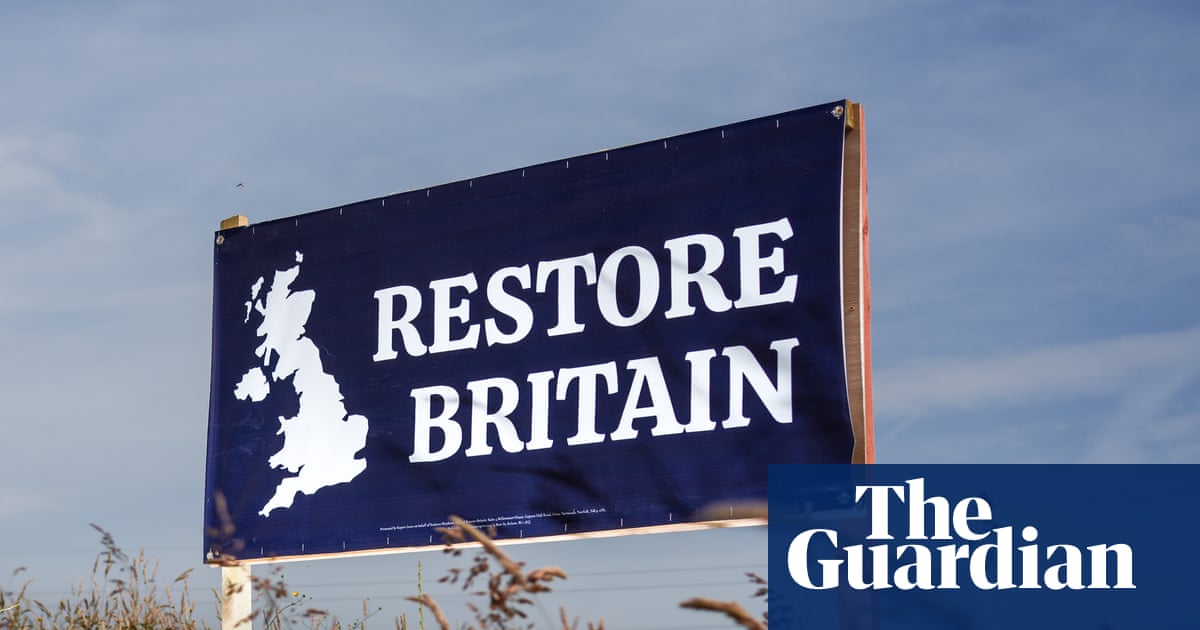
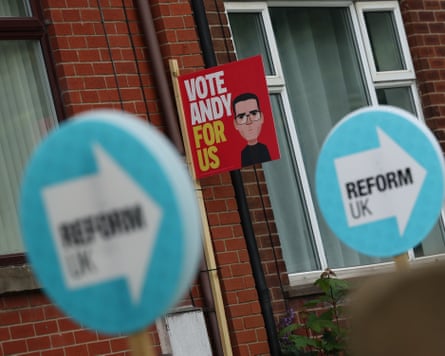
Reform meanwhile become ever more like Restore with Nige calling for “pure, cold rage” and then feigning amazement when he gets it. Restore now spend their time chasing Tommy Robinson as he makes helpful suggestions about areas with immigrant populations where it might be fun to riot. And Robinson has the endorsement of Elon Musk. Musk now has so many personalities, he isn’t quite sure who he is at any one time so sends avatars of himself out to chase the others to the extreme right. All the time sitting in his bedroom by himself as he becomes the world’s first trillionaire. Maybe you can call this following the money.

It was left to the Northern Ireland secretary, Hilary Benn, to try to make some kind of sense of this on the morning media round. Was the violence racially motivated, he was asked on the Today programme. Er, hello? When a mob of white people attack black people, what else are you going to call it.

He then tried to dial things down. “This isn’t who the people of Northern Ireland are,” he insisted. Except it clearly is who some of the people of Northern Ireland are. Because they are doing it. The attacks are happening. And older members of the country can clearly remember a time when violence was an almost daily occurrence with the police in the frontline. Most had hoped that was a thing of the past. But for some it has moved on from religion to race.

The Guardian view on the analogue resurgence: the shock of the old | Editorial | The Guardian

Keyword – Opinion
Trefwoorden – Digital music and audio, Film, Music, Vinyl, Cassette tape, Media, Technology, Culture
Title – The Guardian view on the analogue resurgence: the shock of the old | Editorial | The Guardian
Author – https://www.theguardian.com/profile/editorial
Link – The Guardian view on the analogue resurgence: the shock of the old | Editorial | The Guardian
Publish date – 2026-06-11T18:02:58.000Z
Category – Opinion
URL – https://www.theguardian.com/commentisfree/2026/jun/11/the-guardian-view-on-the-analogue-resurgence-the-shock-of-the-old

T en years after the last video recorder manufacturer ceased production, the first straight-to-video movie for two decades – This Is How the World Ends – was released this month. The resurgence of vinyl began long ago; sales are at their highest level for over 30 years . But record buyers enthuse about the warmth of their sound and the generous visual expanse of album covers. In contrast, the new movie is shot in HD; the director acknowledges that those watching it on video will see a cropped, fuzzier image. The point of the exercise – beyond creating a buzz – lies not in the inherent qualities of VHS, but the effect of its rarity on the viewer.

When everything is available in high definition with one swipe of your screen, cumbersome physical formats that must be hunted down appear both nostalgically inviting and strikingly fresh. Last year, Taylor Swift’s The Life of a Showgirl was released in multiple physical formats , including cassette and CD – technically digital, but also enjoying a revival thanks to its retro feel. The title track of her previous album, The Tortured Poets Department, mocked a lover’s attachment to his typewriter, notoriously favoured by hipsters.

Older adults may yearn for their past (as in last year’s BBC drama Mix Tape ). Younger consumers are seizing on formats that are new to them and the novel allure of an offline world. These media are often “presented as the remedy for our digital ailment” – in contrast to new technologies depicted as “addictive, unnatural, unhealthy and harmful” – writes the communications lecturer ARE Taylor in The Analogue Idyll , a new book that he has edited. This year’s vogue for the “ analogue bag ”, containing items such as physical books and craft materials, is all about cutting screen time. Weekends away are marketed as digital detoxes. In the US, parenting influencers have boasted of turning back to VHS , not only to avoid inappropriate algorithmic recommendations, but also to teach patience.

In the age of AI, the yearning for the tangible, the imperfect and the human is especially potent. Unease at big tech’s exploitation of consumers is evident not only in the desire to own rather than lease songs, movies and books, but also the broader revolt against relentless optimisation and convenience. Vinyl “was more fun precisely because it was less efficient”, says David Sax in his 2016 book The Revenge of Analog. Listeners must cherish the easily damaged format and can’t skip or rearrange tracks without hovering over the record player. The music commands attention instead of fading into the background.

Yet businesses have found fresh opportunities in the backlash to the new and shiny. In 2023, Kodak released its first Super 8 camera for over three decades – with an LCD display and SD card. Apps make iPhone photos resemble old Polaroids. And This Is How the World Ends will ultimately be streamed.

The remark by the film’s director, Robert dos Santos, that for now “you need to be part of the club to watch this” will suggest to some a refreshing willingness to make demands on the audience and embrace the weird – rejecting the beigification of culture. Others will hear the old desire to distinguish oneself with rarefied consumption. There is plenty to enjoy in the analogue. But as Dr Taylor’s new book reminds us, old-fashioned formats are no more “authentic” than the digital ones – and individual consumer choices to retreat from the online world won’t fix its problems.

What would Jesus drink? Welcome to the age of Christian energy beverages | Food & drink industry | The Guardian

Keyword – Business
Trefwoorden – Food & drink industry, Christianity, Religion, Business
Title – What would Jesus drink? Welcome to the age of Christian energy beverages | Food & drink industry | The Guardian
Author – Lydia Bugg
Link – What would Jesus drink? Welcome to the age of Christian energy beverages | Food & drink industry | The Guardian
Publish date – 2026-06-04T11:00:04.000Z
Category – News
URL – https://www.theguardian.com/business/2026/jun/04/jesus-christian-energy-drink

By now, you’ve probably noticed the trend: every celebrity and influencer appears to be chasing the same prize. We’re deep in the era of the celebrity beverage.

Kim Kardashian has Update energy drinks. John and Hank Green have the Awesome Coffee Club. Blake Lively sells sparkling grapefruit juice. Even Danny DeVito, somehow perfectly cast for the role, is the face of a limoncello.

Why are beverages so endorsable? Maybe we’re not willing to trust Hulk Hogan with our dinner plans, but for a quick boost during a long workday? Sure – why not slam a can of Hogan Energy. Drinks tend to be profitable, relatively low-risk and especially ripe for celebrity endorsements. So it’s become one of the easiest, most popular markets for influencers and celebrities to dip into.

Now, another mega-celeb has entered the beverage game. Or rather, beverage companies have enlisted him in an effort to spread the good word about their product.

Jesus, it turns out, has a branding problem – at least according to the makers of these drinks. Too many people simply haven’t heard the message. “ God put it on our hearts to specifically preach the gospel through an energy drink ,” the creator of Yahweh says in an Instagram video defending the company against accusations that it exists mainly to turn a profit.

It is notable that while Christ has apparently been putting energy drinks on people’s hearts lately, he has not been putting it on many of their hearts to donate part of the proceeds to feeding the poor. Apparently, the main mission here is brand awareness.

Unfortunately, after trying the Yahweh energy drink, I don’t feel especially compelled to convert. If the goal is evangelism, Blessed Berry, with its heavy, medicinal notes, may not be the strongest missionary. In fact, the aftertaste lingered with some insistence, like Jehovah’s Witnesses evangelizing at your door even after you told them you were agnostic.

If you want a better-tasting first Christian energy drink, I recommend Preachin’ Peach from Agape.

The depiction of Jesus is less thirsty, but the peach flavoring is right on target: it tastes almost exactly like a peach lollipop. It’s not quite as aggressively peachy as a peach Nehi, but fans of that drink would probably enjoy this. Or, you know, fans of Christ dying for our sins.

Yahweh has zero calories, while Agape clocks in at 10, and, somehow, those 10 calories seem to matter.

Not all Agape flavors are quite as divine as Preachin’ Peach, however. “It’s really good. Berry isn’t my favorite flavor, right, so probably not the best one to start off with, but it’s kind of like the Welch’s Grape but like less heavy,” one Instagram reviewer said of Agape’s Blessed Berry flavor.

In later videos, however, he can be seen drinking a Monster.

Each case of Agape comes with a single sleeve cardboard gift box designed to be used directly for evangelism. Whether that’s evangelism for Christ or evangelism for Agape, you get to decide. Agape costs $40 for a 20-pack, so one can is roughly $3.30 for a 12oz energy drink. That evangelism tax is a little pricey.

The real standout in flavor, if not in branding, is 4gvn (as in forgiven, what Jesus does with our sins filtered through tech bro speak).

There’s no depiction of Jesus on the can, but the flavor Gospel Gummy tastes exactly like a gummy worm. I don’t know how they did that with only the 10 load-bearing calories needed. If you told me Jesus turned water into a gummy worm-flavored energy drink, I would have to believe you.

4gvn is hardly alone in the Christian energy drink ecosystem. There’s Praise Energy, whose mascot, Zion the Lion, is a cartoon lion sporting an “I ♡ Jesus” T-shirt and high-top sneakers. Then there’s Heir Lion, whose mascot feels like it should be a cartoon lion in an “I ♡ Jesus” T-shirt and high-top sneakers – but, confusingly, is not.

Are these brands helping raise awareness for Christianity , or are they just treating Jesus like an uncopyrighted Mickey Mouse?

After all, he already enjoys near-universal brand recognition. So perhaps the real question is not whether these drinks are good for Christianity, but whether Christianity is very good for energy drink sales.

Tell us: which Steven Spielberg movie means the most to you? | Steven Spielberg | The Guardian

Keyword – Film
Trefwoorden – Steven Spielberg, Film, Culture
Title – Tell us: which Steven Spielberg movie means the most to you? | Steven Spielberg | The Guardian
Author – https://www.theguardian.com/profile/guardian-community-team
Link – Tell us: which Steven Spielberg movie means the most to you? | Steven Spielberg | The Guardian
Publish date – 2026-06-08T14:05:12.000Z
Category – Culture
URL – https://www.theguardian.com/film/2026/jun/08/tell-us-which-steven-spielberg-movie-means-the-most-to-you

On Sunday we published the best Steven Spielberg films chosen by directors, critics and super fans. Now we’d like to hear from our readers – what is missing from our list and which Spielberg movie means the most to you?

If you’re having trouble using the form click here . Read terms of service here and privacy policy here .

Want to bring summer joy to your garden? It’s not too late to sow nasturtiums | Gardening advice | The Guardian

Keyword – Life and style
Trefwoorden – Gardening advice, Gardens, Plants, Life and style
Title – Want to bring summer joy to your garden? It’s not too late to sow nasturtiums | Gardening advice | The Guardian
Author – https://www.theguardian.com/profile/alice-vincent
Link – Want to bring summer joy to your garden? It’s not too late to sow nasturtiums | Gardening advice | The Guardian
Publish date – 2026-06-12T10:00:42.000Z
Category – Lifestyle
URL – https://www.theguardian.com/lifeandstyle/2026/jun/12/not-too-late-to-sow-nasturtiums-in-garden-summer

E very time I’ve moved into a place with a garden, I’ve arrived at the wrong time of year. There’s a huge privilege to gaining access to land that you can actually grow in, of course, so it’s a minor grumble, but we arrived at our last house in the dying days of a July heatwave, and this one in early August last year.

I’ve now seen three seasons unfold here, accidentally following the old adage to wait a year and see what comes up – in this case, mostly green alkanet and a rainbow of spring-flowering trees in the neighbouring gardens – and I’m finally feeling green fingered. But, as any experienced gardener will tell you, it’s a bit late, really.

Most fair-weather gardeners emerge around the late May bank holiday, dust the cobwebs off the furniture and descend on the garden centre, but I prefer to plant things between September and April. And yet, here I am again, frenziedly checking the weather forecast to see when it might rain so I can bed in my latest haul from the local community greenhouses.

I’ve felt late to everything this year, which, if I’m honest, is how things tend to go in my gardens. I nearly always plant bulbs in December, take cuttings into October and, this year, was scattering annual seed mix in May. This causes me the same kind of stress as trying to persuade my three-year-old to put his shoes on when we have six minutes to catch a train, but history would attest that things generally turn out all right. The things that want to grow, grow. The train is held at the previous station. Life moves on.

With that spirit in mind, I’ll be sowing nasturtiums in my very sad containers. Sad because anything halfway decent has been transferred to the garden (in autumn and winter, and nearly everything has settled in nicely, aside from the Emily Brontë rose, which is broodily sulking, as one might expect) and I haven’t had the mental space or depth of pocket to fill them up again. Hungry for a bit of joy and colour, and refusing to go to the garden centre, I’m going to be scattering nasturtiums over the lot.

I love nasturtiums. Astonishingly quick and easy to get going, they actively prefer poor soil (so leftover, nutrient-low pot compost is fine) and they seed so prolifically they’ll keep popping up for years. You can also eat the entire plant – leaves, petals and seeds – in salads or pickled.

Sown now, they can flower until November. Don’t dismiss them as just being orange: I’ve got some older packets of the dirty pink ‘Ladybird Rose’ ( pictured ) and scarlet ‘Red Troika’, while ‘Milkmaid’ and ‘Tip Top Pink Blush’ offer pretty pale yellow, and ‘Black Velvet’ reads aubergine.