China has long sought to control women’s bodies. Increasingly, they’re making their own choices | China | The Guardian

Keyword – World news
Trefwoorden – China, China’s one-child policy, Asia Pacific, Women
Title – China has long sought to control women’s bodies. Increasingly, they’re making their own choices | China | The Guardian
Author – https://www.theguardian.com/profile/amy-hawkins,https://www.theguardian.com/profile/lillian-yang,https://www.theguardian.com/profile/yu-chen-li
Link – China has long sought to control women’s bodies. Increasingly, they’re making their own choices | China | The Guardian
Publish date – 2026-06-11T23:05:28.000Z
Category – News
URL – https://www.theguardian.com/world/2026/jun/12/china-has-long-sought-to-control-womens-bodies-increasingly-theyre-making-their-own-choices

E ver since the founding of the People’s Republic of China in 1949, women’s bodies have been the business of the state. In the 1950s, labour for state-controlled work units was organised according to women’s menstrual cycles. Then for decades, there was the one-child policy.

Across vast swathes of the country the policy was enforced with a brutal severity. As well as fines for additional children, women were forced to have abortions and subjected to forced sterilisations.

Now, women in China are facing new forms of pressure from the government as China battles a fresh challenge – a falling birth rate. Women are under pressure to devote their bodies to childbearing as the government tries to encourage more pregnancies. Increasingly, women are pushing back in ways that weren’t possible in the past, while the painful legacy of the one-child policy continues to echo and reshape expectations around family today.

“For people of my generation, born at the end of the 1980s, everyone is from a one-child family,” says Guligo Jia, 36-year-old filmmaker based in Beijing. “Nowadays, Chinese women have more control over their bodies because they can decide to get an abortion or have babies, they have more freedom.”

In a four-part series, the Guardian analysed the changing status of women across Chinese society. The series examines how women are responding to government restrictions and shifting social and economic conditions, in different aspects of their lives.

Echoes of ‘childless 100 days’

Between 1980 and 2016, the state worried about overpopulation, and banned most couples from having more than one child. The one-child policy was abandoned a decade ago but for many women, the scars of that time live on.

In Shen county, a small, poor town on the fringes of Liaocheng, a city in north-east China’s Shandong province, it is not hard to find them.

Standing in Shen’s central plaza, Ms Li*, now in her 60s, pulls up her top to reveal her dimpled belly. In 1991, she was forced to have a tubal ligation , a procedure she describes as “agonising”.

Li was sterilised because she had given birth during a period which experts say represents one of the worst excesses of the one-child policy.

Dubbed the “childless 100 days”, it was a policy enforced in Shen which dictated that from 1 May 1991, no child should be born for 100 days. Because 1991 was the year of the sheep in the zodiac calendar, locals called it “the slaughtering of the lambs”. As with other parts of China, women were often sterilised after giving birth to ensure that they couldn’t have more children.

Shandong, China’s second most populous province, has a reputation for enforcing central government directives with particular vigour. “People in Shandong, especially the officials, always take policies and orders from above more seriously than other provinces,” says Yang Jianli, a human rights activist from Shandong, who describes the childless 100 days as “among the most extreme cases” of the one-child policy that he has encountered.

The childless 100 days did not have a 100% hit rate. In the summer of 1991, Li was heavily pregnant when local officials rounded her up along with other women from her village and loaded them onto trucks to be taken for forced abortions at the local hospital. A doctor was due to see her at 2pm to terminate her pregnancy but she went into labour early and gave birth to a baby boy in the hospital’s boiler room.

“They tried to stop people from giving birth, but once the baby was actually born, they wouldn’t go as far as to kill him,” Li said. She was ordered to pay a 6,500 yuan fine – the equivalent of several years of income for the farmer – and to be sterilised.

But her son survived. Everywhere around her, infants died, Li recalls. “Infants from the forced inductions were all dead, there were a lot of them, they were burned and thrown in the trash,” she said. “Those women were all crying.”

The Guardian was not able to independently verify the details of Li’s story but her experience tallies with the limited other accounts that are available from that period.

Another woman from Shen, now in her 70s, said that she was one month shy of giving birth to a baby boy in 1991 when she was given an injection to induce labour, killing the foetus.

“If you refused the injection, they would tear down your house, break into your home to arrest you, and bar you from going to work,” she said. “So many women were dragged away”.

Although official censorship has limited wider knowledge of the violent 100 days, locally, it is notorious. The local official in charge of the policy was known as “the slaughterer of the lambs”.

The Shandong local government did not respond to a request for comment.

‘We failed the women of China’

In 2013, Zhang Erli, a retired official from the National Family Planning Commission, said that the one-child policy had gone too far. “Looking back, I feel we really failed the women of China; to be honest, I feel a deep sense of guilt,” he said, in a documentary that aired on Chinese state television.

“Chinese women made an enormous sacrifice. As a responsible government, we ought to repay them, right?” The programme was later removed from public platforms.

There are no reliable estimates of how many women were affected by the 100 days policy. But analysis by Yi Fuxian – senior scientist at the University of Wisconsin-Madison and vocal critic of the one-child policy, who tracks China’s population data – shows that in Shen and Guan, a neighbouring county that was also reported to enforce a “childless 100 days policy”, there seem to have been drastically fewer births that year.

China is now battling the opposite problem: its birth rate is plummeting. Last year the birth rate fell to 5.63 per 1,000 people, a record low.

For most women of childbearing age today, the traumas of the previous generation do not play a conscious role in family planning decisions. But research suggests that the decades of the one-child policy profoundly reshaped people’s family expectations, reducing the desire to have bigger families. A study published last year found that for a generation of people, growing up as an only child “led to a significant decrease in the ideal family size”.

The cost and competitiveness of child-rearing in modern China are the biggest deterrents, despite the government’s offers of subsidies and tax breaks for having more children.

Wang Yixuan, a 26-year-old traditional Chinese medicine practitioner, says that “people now don’t care as much” about having bigger families. “I don’t particularly want to have children,” she says. “I need to be financially independent first.”

Jia, the filmmaker, who has made a documentary about women turning to AI boyfriends, says: “Women don’t feel obligated to have a baby any more.”

Another recent study found that nearly 50% of 18- to 24-year-old women said they don’t want children, up from 6% in 2012. The share of men who don’t want children has also increased, but only to nearly 20%.

“In the past, people were fined for having second children,” says Chen Ying, a 40-year-old restaurant worker in Shen. Nowadays, people “simply can’t afford it”.

Yun Zhou, a social demographer at the University of Michigan, says that the one-child policy created a “general sense that reproductive rights are not something that has ever been inalienable”.

And in very real terms, the consequences of that period are evident in playgrounds across the country. In Shen, Li is playing with her two-year-old grandson, one of China’s much-needed new babies. His father is the lucky boy who survived in 1991.

*Name has been changed

Additional research by Lillian Yang and Yu-chen Li

Hairpin bends and bears on the highway: readers’ favourite European road trips | Road trips | The Guardian

Keyword – Travel
Trefwoorden – Road trips, Travel, Top 10s
Title – Hairpin bends and bears on the highway: readers’ favourite European road trips | Road trips | The Guardian
Author – https://www.theguardian.com/profile/guardian-readers
Link – Hairpin bends and bears on the highway: readers’ favourite European road trips | Road trips | The Guardian
Publish date – 2026-06-12T06:00:38.000Z
Category – Lifestyle
URL – https://www.theguardian.com/travel/2026/jun/12/readers-favourite-european-road-trips

Bear right in Romania

Jeremy Clarkson described Romania’s Transfăgărășan Highway as “one unbroken grey ribbon of motoring perfection”. The route (the second highest in Romania after the Transalpina) with its hairpin bends and climbs over the mountain was thrilling. Although we’d been told bear sightings were possible, we didn’t anticipate spotting them literally on the roadside, with one hanging over a stone wall posing for photographs, taken through the car window. Because of the harsh winters in the southern Carpathian Mountains, the section of the road to Bâlea Lake is open only for a few summer months – it proved particularly beautiful. Helen Jackson

Highlights of Ireland

In 2022 my wife and I set off on a 1,000-mile road trip around the island of Ireland after taking the overnight ferry from Liverpool to Belfast. After exploring Belfast, we stopped in Dublin, Kilkenny, Waterford, Cork, Dingle, Ennis, Galway, Castlebar, Sligo, Donegal, Derry and back to Belfast. We stayed in youth hostels, B&Bs, spare rooms, hotels (the Ellison Hotel in Castlebar was our favourite) and holiday lets. The scenery was incredibly varied, with the peninsula drive on the Ring of Kerry and the karst landscape of the Burren in Co Clare being particularly memorable. There were beautiful beaches (the wild sands of Glassilaun in Co Galway was our favourite), rich history and culture, superb food, characterful towns and cities, and, of course, the best pubs, and such friendly, warm people. Joe

Around the fjords of Norway

My wife and I drove from Bergen to Vossevangen along the Hardangerfjord (the second-longest fjord in Norway), with a diversion to Flåm for a sauna and dip. Then we took the Myrkdalen road, which includes hairpin bends, waterfalls and an exciting descent into Vikøyri. We visited Nese, a secluded village on the western shore of the Arnafjorden . Then we took the car ferry over to Dragsvik, on to the village of Rysjedalsvika, then along the northern shore of the Sognefjord (Norway’s longest and deepest fjord) for another car ferry over to stay in Dingja on the coast, to do some fishing. Then all the way back to Bergen. Nick Martin

Geothermal bliss on Iceland’s ring road

We started from Reykjavík and drove around the whole country on the ring road. We have done a few road trip holidays – this one was the most interesting. Every day we saw multiple dramatic landscapes and weather conditions, as well as very few other cars (we went in May). Iceland is an expensive country but being able to whale-watch and swim in geothermal pools made it worth it. Jess

The road to Orkney

We drove up to Orkney, taking our time, stopping in Glasgow, Falkirk, Perth and Tain. As lovers of history and design, we stopped at the Falkirk Wheel and the Kelpies , as well as Scone Palace just outside Perth and Dunrobin Castle in Sutherland, the most northerly of Scotland’s great houses. But, really, you’re spoilt for choice with castles, brochs and standing stones. For us, the spectacular Caithness coastline was the main attraction – not least Dunnet Head, mainland Britain’s most northerly point. There are oodles of excellent eateries along the way – we loved the River Bothy in Berriedale and Paesano Pizza in Glasgow. Tania

Romance in Bavaria

The Romantische Strasse (Romantic Road) was an early postwar successful example of a themed tourist route. It covers 286 miles through Bavaria from Würzburg to Schwangau. We drove the entire route, diligently following the tourist signs. On the way, we visited picturesque medieval towns, climbed the clock tower at the medieval walled town of Nördlingen – built entirely inside a meteor crater – and ended at the fairytale castle of Schloss Neuschwanstein . We sampled the hearty Bavarian cuisine, firmly centred on pork and sausages, enjoyed the local beer, and stayed in simple local hotels. Marilyn

Winning tip: traversing Italy’s Abruzzo Apennines

Abruzzo’s Valle del Sagittario snakes between narrow limestone cliffs, giving a peek into Italy’s wild heart. From vertiginous Anversa degli Abruzzi, head south to Scanno, pausing to solve its riddle of stone stairways and cobbled alleys, made famous by photographers and artists (including Maurits Cornelis Escher ). Continue through mountain pastures, still traversed by shepherds and flocks and the region’s endangered brown bear population. Take a deep breath at the Godi mountain pass (1,630 metres) and relish the sparkling turquoise of Lago di Barrea below. As you begin the beech-clad descent into the national park, look out for the aptly named roadside hotel: Paradiso. Emma de Heveningham

Trump keeps insulting female journalists. It’s time for the press to stop tolerating it | Margaret Sullivan | The Guardian
Keyword – Opinion
Trefwoorden – US press and publishing, Donald Trump, US news, Media, Newspapers & magazines, Women, US politics
Title – Trump keeps insulting female journalists. It’s time for the press to stop tolerating it | Margaret Sullivan | The Guardian

Author – https://www.theguardian.com/profile/margaret-sullivan
Link – Trump keeps insulting female journalists. It’s time for the press to stop tolerating it | Margaret Sullivan | The Guardian
Publish date – 2026-06-12T10:00:41.000Z
Category – Opinion
URL – https://www.theguardian.com/commentisfree/2026/jun/12/trump-insults-female-journalists

For many years now, Donald Trump has been saying awful things to – or about – the female media figures who have the nerve to ask him questions and challenge his falsehoods.

“Quiet, Piggy,” he ordered a Bloomberg reporter, Catherine Lucey, last year in a press gaggle when she pushed him about the release of the Epstein files.

“A corrupt reporter,” he called Kaitlan Collins of CNN, claiming that she had “hatred in her eyes”.

“You’re either crooked or stupid,” he lashed out at Kristen Welker last weekend on NBC’s Meet the Press, before he stormed off in a huff.

Way back in 2015, he even said publicly that the then Fox News host Megyn Kelly, who assertively questioned him during the first Republican debate, had “blood coming out of her eyes, blood coming out of her wherever”.

Trump is often insulting to male journalists, too, of course, but he seems to have a next-level hatred for women, especially those with a regular on-air presence. (He’s also insulting to print-based female journalists, though it can be less visible; he has frequently, for example, referred on social media to New York Times star reporter Maggie Haberman as “maggot”. She’s been undaunted, but that doesn’t make it anywhere close to acceptable.)

Whether the reason is straight-up misogyny, performative defensiveness, more of his usual distract-and-deny method, or something else, it doesn’t matter.

What matters is that the insults and the lies keep happening and must stop.

And yet, the female journalists who cover him – and their bosses – seem to have no answer for this except to tolerate it and keep coming back for more. All in the name of professionalism.

Surely, there must be a better approach, not only for the journalists who withstand this abuse but also for the American public, which deserves to get straight answers.

Welker, for example, ticked off Trump – who abruptly walked off the interview set, dismissively calling her “darling” – because she kept pressing him for any evidence for his claims about supposedly rigged elections and other settled points of fact.

She earned praise for her persistence, but it was still painful to see her repeatedly imploring Trump, calling him “sir”. while he boorishly talked over her and lied.

I suggest these elements of a possibly better approach.

First, have the “receipts” handy. If journalists can immediately confront Trump with audio or video of his past statements, it’s harder for him to bluster – and it gives the power in the interview back to the journalist.

For example, Trump lied when Welker brought up his frequent statements during and just after the 2024 presidential campaign that he wouldn’t start any wars.

Obviously, his misguided war with Iran proves that wrong, but Trump claimed in the interview that he never made such a promise.

This would have been a great moment for Welker to produce the receipts and demonstrate that he did. Go to the tape. (Granted, this interview, which took place in a Wisconsin barn during a rainstorm, might have presented some logistical challenges, but the principle remains the same.)

Second, use more direct confrontation about the lies. Stop normalizing Trump, as if he’s a regular politician who made a chance misstatement or is spinning the facts a little.

How about something like this:

“Why do you keep lying about rigged elections when there’s absolutely no evidence?”

Or this: “You keep lying about what happened on January 6 when we all know exactly what happened.”

That surely will mean more attacks about “fake news” and supposed media corruption, but it is a stronger approach, nonetheless.

Third, make it a practice to cut off the interview if he keeps lying or begins using insults. And be as transparent as possible: tell the public and the president why that’s happening or could happen, like this:

“We’re going to end this interview rather than let you continue to make false statements to the public.”

Of course, for journalists and their media bosses, there’s a downside to these tougher approaches: less access.

A particular journalist or news outlet could be barred from interviewing Trump again, or even allowed into various gatherings – briefing rooms, press gaggles.

In today’s competitive and largely corporate media environment, access to powerful government officials is prized.

So much is driven by ratings and the bottom line. That’s, in part, why reporters rarely stick up for each other in a show of journalistic solidarity – another effort that might make a difference over time.

There’s a perceived advantage, if not a real one, in being the reporter who politely continues, and keeps up the barrage of “but, sir” protests.

But this does no good. Trump doesn’t stop lying or admit he’s wrong.

And, undeterred, he also doesn’t stop insulting and disparaging.

Piggy. Darling. Fake. Corrupt.

It’s past time that journalists and their bosses decide that this is unacceptable. And do something about it.

Margaret Sullivan is a Guardian US columnist writing on media, politics and culture

Can we separate the art from the person who made it? Not in the case of a monster like Rolf Harris | Paul Daley | The Guardian

Keyword – Opinion
Trefwoorden – Rolf Harris, Celebrity
Title – Can we separate the art from the person who made it? Not in the case of a monster like Rolf Harris | Paul Daley | The Guardian
Author – https://www.theguardian.com/profile/paul-daley
Link – Can we separate the art from the person who made it? Not in the case of a monster like Rolf Harris | Paul Daley | The Guardian
Publish date – 2026-06-11T15:00:18.000Z
Category – Opinion
URL – https://www.theguardian.com/commentisfree/2026/jun/12/rolf-harris-can-we-separate-the-art-from-the-person

I’m not convinced by the old adage that we should never meet our idols because they are bound to disappoint us. I’ve never wanted to approach human exceptionalism quite so cynically.

Yes, I’m acutely, painfully conscious that the world is replete with terrible events and bad people. But I’m counting myself fortunate that purely by dint of birth I live somewhere (and I don’t just mean my neighbourhood) where human capacity for kindness, generosity and, yes, civility, are not the exception.

Journalism gives otherwise pretty regular people unique access to fame and celebrity. And across four decades in journalism I’ve had the privilege, one not afforded to so many others, to meet some of the people I’ve most admired. And I’ve got to say that probably eight out of 10 times I haven’t been disappointed. Maybe I’m lucky to have struck such odds!

Actors and musicians. Former and serving prime ministers and senior government members. Sports people. Visual artists. Australia’s most celebrated novelists, playwrights, and film and theatre directors. Other people who are simply famous for being famous. For the most part they have lived up to my expectations.

There have been let downs of course.

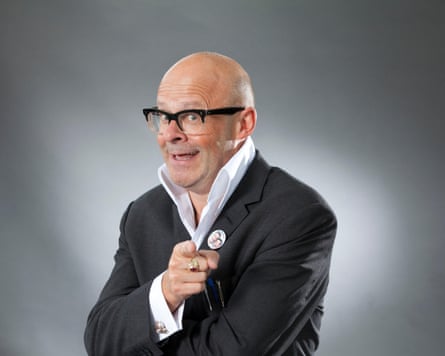
But the biggest, most disappointing, and the most striking personal experience of where an entertainer’s carefully cultivated public image was so evidently at odds with their actual persona, came 20-something years ago when I met Rolf Harris in London.

This was at least a decade before Harris was exposed as an alleged, later convicted, paedophile – a serial groper of women and girls – who shamefully abused his stratospheric fame as a children’s performer to access and groom victims.

There was nothing in our fleeting crossing of paths at a London event attended by many Australians that hinted at his to-be-exposed sinister side, although as the two-part ABC documentary Rolf Harris: Primetime Predator discloses, rumours about the entertainer’s sleaze around women and girls were legion.

It was simply one of those personal moments that made you check your childhood memories, and how they can hold fast into adulthood.

I grew up (figuratively) with Harris as a central figure in my childhood cultural world, along with Play School and Mr Squiggle . His wizardry on TV as Jake the Peg (with the extra leg), his infectious songs, his magic with the wobble board and skill as a visual art caricaturist, were totally mesmerising. He seemed the perfect childhood entertainer for his epoch.

I’ve previously recounted how one of my warmest memories as a kid was of sitting in a stall with my elder sister, between Mum and Dad, in one of Melbourne’s grand old Victorian-era theatres. I was perhaps four or five. Spot-lit on the stage singing Tie Me Kangaroo Down, Sport , was Rolf Harris – my idol from (black and white, late 1960s) TV.

Together with my first day at school, it had long been an enduringly comforting adult memory of my very distant childhood, one full of warmth for all of its laughter, applause and, not least, family togetherness.

I couldn’t help but take my fondness for Harris into adulthood. He was the Australian who’d made it big in London. He’d painted a portrait of the queen. He’d even made a daggy rendition of Led Zep’s Stairway to Heaven kind of cool.

I wasn’t alone. A generation of Australian (and British kids) loved Harris. He seemed (most deceptively) safe and trustworthy, his humour clean – the entire package wholesome. He was riotously successful in the UK; given the British-antipodean colonial cringe, that was a reason for Australia to celebrate Harris for decades. Until for all the worst reasons possible, it wasn’t.

At that long ago social event in London I wanted to tell him, to thank him for bringing such joy to my childhood. It felt like something I owed him, the debt of happiness he had brought to my childhood. “Oh yes,” he said, arrogantly, with a studied, cold diffidence before turning away.

Maybe I shouldn’t have been so saddened and shocked. Perhaps he was just weary of the fame that others wore with so much grace – tired of Aussie expats stopping him on the cocktail circuit to say what a delightful part of their childhoods he’d been?

In light of the shocking Primetime Predator documentary (which illustrates, among other things, just how much social leeway fame afforded Harris and how cynically, how hideously, he abused it), I’ve shared this anecdote with others who’d met the bloke. It seems I was not alone in my drastically changed impression of him. So many talked about his imperious don’t-you-know-who-I-am?-style of fame, his overt entitlement and hyper-indulged arrogance.

A journalist friend who also met him in London around the same time described him as “a totally obnoxious, up-himself arsehole”. This was kind, given the rest of it. Just the social tip of a predatory iceberg.

The growing list of traumatised women and girls that Harris abused (because they trusted him due to his fame and when he abused it in the worst way possible, felt entrapped because of it) should be celebrated for their courage in coming forward.

Meanwhile, those of us who had fleeting if memorable interactions with him are left to ponder the social and emotional prudence of meeting our idols – and if we can truly separate the art from the artist.

Sometimes, perhaps, we can and we should. But not in the case of a monster like Rolf Harris, who turned fond memories into dust, fame into infamy and trust into abuse.

Paul Daley is a Guardian Australia columnist

‘It’s massive destruction’: outcry in Texas over waivers to allow border wall in Big Bend national park | Texas | The Guardian

Keyword – US news
Trefwoorden – Texas, National parks, Trump administration, US-Mexico border, US immigration, US news, Donald Trump, US politics, US domestic policy, Environment
Title – ‘It’s massive destruction’: outcry in Texas over waivers to allow border wall in Big Bend national park | Texas | The Guardian
Author – https://www.theguardian.com/profile/roque-planas
Link – ‘It’s massive destruction’: outcry in Texas over waivers to allow border wall in Big Bend national park | Texas | The Guardian
Publish date – 2026-06-12T14:00:46.000Z
Category – News
URL – https://www.theguardian.com/us-news/2026/jun/13/texas-border-wall-big-bend-national-park

T he Trump administration has waived a slew of environmental and historical preservation laws that would allow it to build a towering border wall that cuts through Big Bend national park, a vast protected wilderness in south Texas.

Congress poured a whopping $46.5bn for border wall construction into the “Big, Beautiful” bill last year, supercharging Donald Trump ’s ambition to wall off the southern border with Mexico. The longest unwalled stretches lie along a roughly 500-mile (800km) section of west Texas that Customs and Border Protection calls the “Big Bend sector”.

That corridor includes some of the largest chunks of protected land in a state that is 95% privately owned, including Big Bend national park, Big Bend Ranch state park and Black Gap wildlife management area .

The prospect of marring those landscapes in the name of border security at a time of plummeting unauthorized immigrant crossings has drawn fierce backlash from a bipartisan group of local leaders and protest from public land users. The notion of walling off Big Bend national park has sparked the most fury . The 800,000-acre (325,000-hectare) expanse of Chihuahuan desert punctuated by the Chisos mountain range draws half-a-million visitors annually to hike, camp, stargaze and float the Rio Grande.

For months, CBP has sent mixed signals about its intentions for Big Bend national park , while limiting its comments about its plans to vague and infrequent statements. CBP updated an interactive map on its website in February to indicate that the agency planned to erect a steel bollard wall along the park’s river frontage, sparking an outcry from public land advocates, local business owners and elected officials.

CBP later changed the map to show that it only intended to use detection technology along the length of the park’s border. The current iteration shows that the agency plans to build new roads along the length of the park’s southern border, along with four separate 4-6ft-tall barriers intended to stop incoming vehicles. CBP officials have rarely discussed their plans for the wall publicly.

The park’s advocates worry that an opaque agency with a massive war chest could still wreak severe damage on the most beloved park in Texas . The waiver that the Department of Homeland Security (DHS) published on Tuesday in the Federal Register empowers CBP to build seemingly whatever security infrastructure it wants in the park – from 30ft steel bollard fencing to unpaved roads.

The waiver casts aside protections outlined in major laws including the National Environmental Policy Act, the Endangered Species Act, the Clean Water Act, the Native American Graves Protection and Repatriation Act and many others. The Big Bend area is home to several endangered species , a struggling population of bighorn sheep and a large concentration of Native rock art and petroglyphs .

The US representative Lloyd Doggett, a Texas Democrat, criticised the move as ludicrous in a region where illegal border crossings are already rare. “Billions of taxpayer dollars are being wasted on this unnecessary project, as Big Bend’s rugged mountains make illegal crossings nearly impossible, with crossings in the area accounting for under half a percentage point of all illegal border crossings nationwide last year,” Doggett said in a statement.

Vehicle barriers and surveillance

The only infrastructure project formally proposed within the park itself so far is a 17-mile, non-contiguous “vehicle barrier system” in four separate locations, composed of steel rails and posts measuring 4-6ft tall, along with 205 miles of roads up to 24ft wide equipped with detection technology. The project also envisions the erection of utility poles, lighting and surveillance cameras. Two of the proposed vehicle barriers are located in the middle of the park’s river frontage, along with one on each end.

The vehicle barriers are enough to dramatically alter an otherwise wild landscape, according to Bob Krumenaker, former Big Bend national park superintendent.

“It’s massive impact, massive destruction,” said Krumenaker, who now heads a nonpartisan advocacy group called Keep Big Bend Wild. “You’re looking at some of the most remote parts of a remote national park.”

DHS has signed off on border wall-related waivers for other federally protected lands in the past, including Organ Pipe Cactus national monument, Buenos Aires national wildlife refuge and Coronado national memorial, all in Arizona. But Tuesday’s waivers marks the first time the agency has used that authority to install border security infrastructure in a national park, Krumenaker said.

Like many other public land advocates, Krumenaker is concerned that CBP’s infrastructure development won’t stop with the vehicle barriers. Though he viewed a 30ft steel bollard wall as an unlikely “worst-case scenario”, the waiver’s broad authority makes it possible for the agency to add virtually any security infrastructure it wants in an area prized for its scenic beauty and wildness.

“Waiving the law undermines all credibility and makes them completely unaccountable to anyone,” Krumenaker said. “They don’t care about the impact on the environment. If they have, say, a fuel spill, they’re not subject to any laws – they’ve just waived the Clean Water Act and the Clean Air Act.”

“Their words, whether intended to be truthful or not, mean nothing,” he added.

In a statement, a CBP spokesperson said its border security infrastructure plans in “the areas adjacent to the Big Bend National Park and State Park are still in the planning stages, while CBP focuses on other higher priority locations”.

“CBP continues to coordinate with the National Park Service, Texas Parks and Wildlife Department, and other federal and state agencies, throughout the planning of border barrier and technology deployments, in order to achieve Border Patrol’s operational priorities,” the statement said.

Border crossings remain low

The Big Bend sector of west Texas contains some of the longest stretch of terrain on the US-Mexico border that remain untouched by significant border wall and fencing. It is also one of the most remote, with steep cliffs and vast stretches of Chihuahuan desert on both sides of the border that make it unattractive as a crossing point.

DHS justified the waiver as an emergency measure necessary to contain illegal crossings in the area. But the area was always among the least-trafficked corridors of the southern border, and unauthorized immigrant crossings have plummeted since Trump re-took office in 2025. His administration has largely dismantled humanitarian protections that allowed some immigrants to gain entrance to the United States, while the Republican-backed Congress has heaped tens of billions of new dollars into border security and mass deportation.

Within Big Bend national park itself, border patrol made only 100 arrests in 2023, and 125 in 2024, according to data obtained by Krumenaker and shared with Public Domain . Those numbers likely continued to drop last year, after Trump took office and unauthorized crossings plummeted.

CBP commissioner Rodney Scott told the Washington Examiner last month that it would be “kind of silly to put like a 30-foot border wall on top of a 90-foot granite cliff”.

Big Bend national park’s scenic Santa Elena canyon cliffs, which are composed of limestone , in fact reach heights of 1,500ft .

Democrats in Congress have attempted to block DHS from using its funds from the “Big, Beautiful” bill to build barriers through Big Bend national park. But the measure, proposed by the representative Henry Cuellar of Texas, failed in an appropriations committee vote on Tuesday in the face of Republican opposition, according to the Texas Tribune .

The waiver has already prompted a legal challenge. The Friends of the Ruidosa Church, river guide Billy Miller and the Center for Biological Diversity updated an existing lawsuit on Thursday that challenges DHS border wall-related waivers of environmental laws in the Big Bend sector, arguing that they violate due process and other constitutional rights

“This is an attack on the integrity of the National Park Service itself,” said Laiken Jordahl, a national public lands advocate with the Center for Biological Diversity. “They have never waived these laws on a national park itself. If they’re willing to do this in a national park, where virtually no one is crossing the border, where won’t they?”

The story is co-published with Public Domain , an investigative newsroom co-founded by Roque Planas that covers public lands, wildlife and government

Knicks fans target Victor Wembanyama with jeers, thrown egg after Game 4 | NBA finals | The Guardian

Keyword – Sport
Trefwoorden – NBA finals, Victor Wembanyama, Basketball, NBA, Sport, US sports, New York Knicks, San Antonio Spurs
Title – Knicks fans target Victor Wembanyama with jeers, thrown egg after Game 4 | NBA finals | The Guardian
Author – https://www.theguardian.com/profile/guardian-sport
Link – Knicks fans target Victor Wembanyama with jeers, thrown egg after Game 4 | NBA finals | The Guardian
Publish date – 2026-06-11T19:30:06.000Z
Category – Sport
URL – https://www.theguardian.com/sport/2026/jun/11/victor-wembanyama-knicks-fans-jeers-thrown-egg

A brutal night for Victor Wembanyama continued even after he returned to his New York hotel on Wednesday, as he was pelted with boos from jeering Knicks fans and nearly struck by a flying egg.

A video shared online showed at least one egg tossed in the direction of the San Antonio Spurs superstar as he entered his hotel, flanked by security, after the team’s Game 4 loss to the Knicks.

It was not clear who threw the egg. The video showed taunting fans swarming the hotel, a few blocks south of Madison Square Garden.

A few seconds after the egg cracks on a street sign, Wembanyama turns around and confronts a person standing near the hotel’s entrance, before continuing inside.

The Spurs did not immediately respond to a request seeking clarity on whether the object struck Wembanyama.

The confrontation followed a historic collapse by the Spurs, who now find themselves on the brink of elimination after blowing a 29-point lead to the Knicks. Wembanyama missed two key free throws in the game’s final minutes.

The Knicks’ victory prompted scenes of bedlam and jubilation across New York City, as ecstatic fans packed the streets, set off fireworks, scaled lamp-posts and at times clashed with police. According to the New York police department, 56 people were taken into custody for charges that ranged from assault to disorderly conduct.

“Once again, there were large crowds of people who engaged in incredibly reckless and dangerous behavior last night both during and after the game,” the police department said in a statement.

An NYPD spokesperson said they had nothing on file about the egg incident.

Earlier this week, players from both teams condemned apparent attacks on Spurs fans by supporters of the Knicks. Video had circulated showing San Antonio fans having their jerseys ripped off in the streets of New York after the Spurs’ win in Game 3 on Monday.

“My thoughts of course [are] that we can’t forget it’s a game,” Spurs star Victor Wembanyama said about the incidents. “We’re just playing a game out there. I am all for passion, but [with] the respect of each other. It’s unacceptable.”

Added Knicks center Karl-Anthony Towns: “The game is built off of respect and passion. We want everyone to respect each other. We want everyone to enjoy basketball at its purest state. It’s the NBA finals. There’s no better place to watch basketball. Leave the physicality to everyone on the court.”

What is the ‘Deeply read’ list? | Information | The Guardian

Keyword – Info
Trefwoorden – Information
Title – What is the ‘Deeply read’ list? | Information | The Guardian
Author – Guardian staff
Link – What is the ‘Deeply read’ list? | Information | The Guardian
Publish date – 2024-02-28T09:45:16.000Z
Category – News
URL – https://www.theguardian.com/info/2024/feb/28/what-is-the-deeply-read-list

For many years at the Guardian we have been looking at how long our readers spend with our journalism. While the number of clicks on an article can help us understand the possible importance or popularity of an article on a given topic, it’s just as important for us to get a sense of the quality of a piece and the time readers spend with it can help us gauge that.

Along with many other sites, the Guardian has for a long time shown readers the pieces other people are clicking on in the form of a “Most viewed” list. But these lists often don’t include wonderful journalism on topics more off the beaten track. The “Deeply read” list uses attention time to surface a wider range of journalism that other readers are spending more time with. It appears on our regionalised home pages and reflects the interests of the region’s audience.

Not all of these pieces are long. To power the list we created a metric that looks at the attention time from readers compared with the length of the piece. This means that the list is diverse in terms of topic, length and format.

We hope you enjoy the increased variety and depth of the pieces you find here.

Bracketology: predict a path to World Cup victory | World Cup 2026 | The Guardian

Keyword – Football
Trefwoorden – World Cup 2026, World Cup, Football, Spain, France, Argentina, Brazil, England, Sport, Scotland, South Korea, Mexico, Czechia, South Africa football team, Canada, Qatar, Bosnia and Herzegovina, Morocco football team, Haiti football team, USA, Turkey, Australia, Paraguay, Germany, Ecuador, Côte d’Ivoire football team, Curaçao, Netherlands, Japan, Sweden, Tunisia football team, Belgium, Iran, Egypt football team, New Zealand, Uruguay, Saudi Arabia, Cape Verde, Senegal football team, Norway, Iraq, Austria, Algeria football team, Jordan, Portugal, Colombia, Democratic Republic of the Congo football team, Uzbekistan, Croatia, Panama, Ghana football team, US sports, Australia sport, Switzerland
Title – Bracketology: predict a path to World Cup victory | World Cup 2026 | The Guardian
Author –
Link – Bracketology: predict a path to World Cup victory | World Cup 2026 | The Guardian
Publish date – 2026-06-04T10:00:48.000Z
Category – Sport
URL – https://www.theguardian.com/football/ng-interactive/2026/jun/04/bracketology-predict-a-path-to-world-cup-victory

Groups Touch and drag teams into predicted finish order

Third-place teams Pick eight sides to advance to the last 32

Knockouts Tap a winner from each match to plan your route to the final

The progress of the World Cup from match to match is determined from
the beginning: there are no further draws to decide who plays whom in
subsequent rounds.

To maximise the spectacle, the competition is structured, broadly, to
ensure that the “bigger” teams don’t face each other (and knock each
other out) too early in the competition, and to ensure that all 48
teams have an incentive to field their strongest side for every
fixture.

The top two teams from each group automatically qualify to the next
round. Because the winner of a group will face a second- or
third-placed team from another group, the hope is that France, for
instance, will not rest on their laurels once they have enough points
to qualify for the knockouts but will try to win their last game to
get what in principle are easier opponents in the next round, the last
32.

At the other end of the table, a team who know they will come at best
third in their group still have an incentive to give their all in that
last group game because the eight best-performing of the 12
third-placed teams also go into the last 32.

Let’s take the example of England, wholly arbitrarily. If England top
their group, they will face a third-placed team in the first knockout
round (technically any one of 20 other teams, but plausibly a team
such as Côte d’Ivoire or Algeria). If they come second, they will play
the runners-up from Group K, plausibly Colombia. And if they come
third but have a better points total or goal difference than four of
the other third-placed teams, they get a tougher fixture, against the
winners of Group K, possibly Portugal. The simulator includes the
predetermined routes for all 495 possible combinations of groups
yielding the eight best third-placed teams.

This simulator allows you to change the outcome of each group and see
the effect that those changes have on the last 32, and then to imagine
the winner of each knockout game to plot each team’s possible route to
the final.

Editorial: James Dart, Marcus Christenson and Philip Cornwall

Design and development: Barry Ainslie, Georges Lebreton,
Seán Clarke, Harry Fischer, Petter Nitter and Freddie Preece

Groups Touch and drag teams into predicted finish order

Third-place teams Pick eight sides to advance to the last 32

Knockouts Tap a winner from each match to plan your route to the final

Your winner

The progress of the World Cup from match to match is determined from
the beginning: there are no further draws to decide who plays whom in
subsequent rounds.

To maximise the spectacle, the competition is structured, broadly, to
ensure that the “bigger” teams don’t face each other (and knock each
other out) too early in the competition, and to ensure that all 48
teams have an incentive to field their strongest side for every
fixture.

The top two teams from each group automatically qualify to the next
round. Because the winner of a group will face a second- or
third-placed team from another group, the hope is that France, for
instance, will not rest on their laurels once they have enough points
to qualify for the knockouts but will try to win their last game to
get what in principle are easier opponents in the next round, the last
32.

At the other end of the table, a team who know they will come at best
third in their group still have an incentive to give their all in that
last group game because the eight best-performing of the 12
third-placed teams also go into the last 32.

Let’s take the example of England, wholly arbitrarily. If England top
their group, they will face a third-placed team in the first knockout
round (technically any one of 20 other teams, but plausibly a team
such as Côte d’Ivoire or Algeria). If they come second, they will play
the runners-up from Group K, plausibly Colombia. And if they come
third but have a better points total or goal difference than four of
the other third-placed teams, they get a tougher fixture, against the
winners of Group K, possibly Portugal. The simulator includes the
predetermined routes for all 495 possible combinations of groups
yielding the eight best third-placed teams.

This simulator allows you to change the outcome of each group and see
the effect that those changes have on the last 32, and then to imagine
the winner of each knockout game to plot each team’s possible route to
the final.

Editorial: James Dart, Marcus Christenson and Philip
Cornwall

Design and development: Barry Ainslie, Georges Lebreton,
Seán Clarke, Harry Fischer, Petter Nitter and Freddie Preece

Protesting steelworkers and a robo-soldier: photos of the day – Friday | UK news | The Guardian

Keyword – News
Trefwoorden – UK news, World news, Photography
Title – Protesting steelworkers and a robo-soldier: photos of the day – Friday | UK news | The Guardian
Author – https://www.theguardian.com/profile/natasha-rees-bloor
Link – Protesting steelworkers and a robo-soldier: photos of the day – Friday | UK news | The Guardian
Publish date – 2026-06-12T12:10:40.000Z
Category – News
URL – https://www.theguardian.com/news/gallery/2026/jun/12/protesting-steelworkers-robo-soldier-photos-of-the-day-friday

Pussy Riot: CYKA review – debut album from iconic Russian agitators is let down by blunt-force EDM | Music | The Guardian

Keyword – Music
Trefwoorden – Music, Pussy Riot, Punk, Electronic music, Dance music, Culture, Russia
Title – Pussy Riot: CYKA review – debut album from iconic Russian agitators is let down by blunt-force EDM | Music | The Guardian
Author – https://www.theguardian.com/profile/katie-hawthorne
Link – Pussy Riot: CYKA review – debut album from iconic Russian agitators is let down by blunt-force EDM | Music | The Guardian
Publish date – 2026-06-12T08:00:39.000Z
Category – Culture
URL – https://www.theguardian.com/music/2026/jun/12/pussy-riot-cyka-review

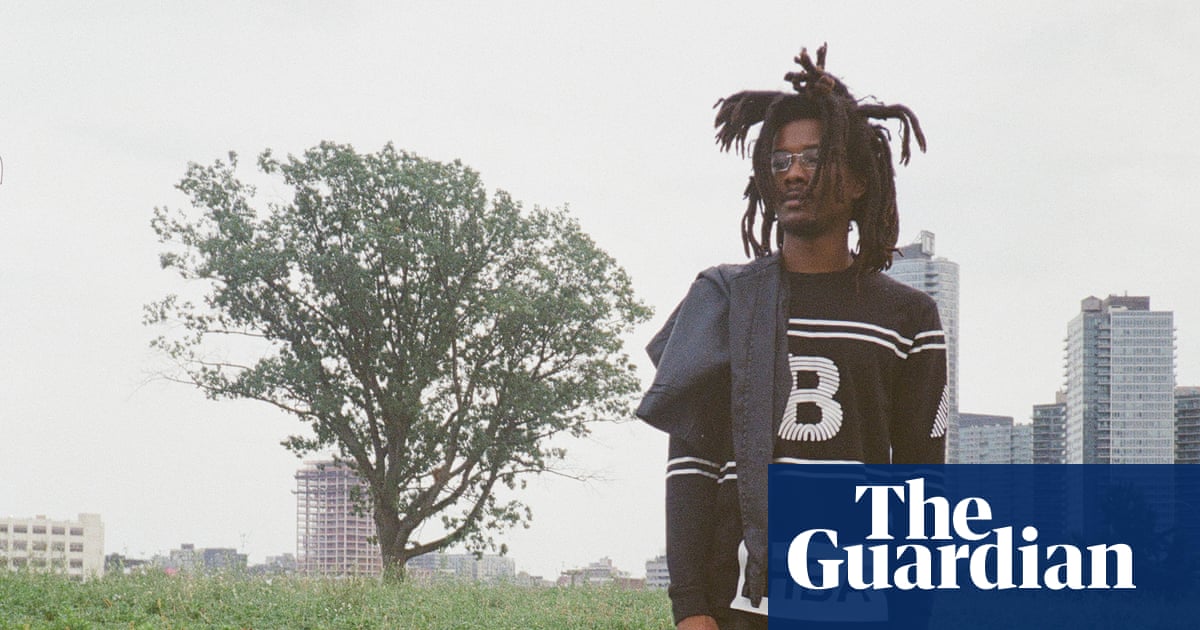
G reat music rarely makes for great activism, and the reverse is true on Pussy Riot’s official debut album. A scattergun mix of icy electronics, pumping EDM and whispered rap, CYKA (“bitch” in Russian) follows a decade of musical protest performances from the activist collective. Made by co-founder Nadya Tolokonnikova (she and Maria Alyokhina were imprisoned in separate penal colonies between 2012 and 2013), CYKA’s powerful point of view is diluted by weak delivery.

Lead single Candy Dopamine, with metal band Avenged Sevenfold, disguises its critique of big pharma with cutesy lyrics, corny electric guitar and inconsequential key changes. Generically moody synths and cliched siren sounds run through much of the record, as does blunt-force EDM: Nothing to Lose is both a cluttered trance track, and about being hated by Russia’s “liberal intelligentsia” for supporting Ukraine.

The strongest tracks are made for angry crowds. Gore (with Cypress Hill’s B-Real) is a furious dispatch from LA’s anti-ICE protests, while Disobey soundtracked Pussy Riot’s action against the Russian pavilion at the Venice Biennale. Using raw-throated, bare-bones punk, the purpose is not musical invention but to seize headlines. Likewise with CYKA’s Putin-trolling title track, which samples Vladimir as a gimmick to talk about Russian censorship.

Alyokhina once told me that attention from the west is vital protection for Pussy Riot members from being “disappeared”. In that sense, CYKA’s messy EDM matters less than any conversation it sparks about their urgent cause and impossibly difficult circumstances – not least as the poignant hyperpop closer Outro reveals the human cost of Tolokonnikova’s life in exile.