Trump says Iran ‘will never have a nuclear weapon’ and that deal is ‘going to second stage’ – Middle East crisis live | Iran | The Guardian

Keyword – World news
Trefwoorden – Iran, Israel, Middle East and north Africa, Donald Trump, Trump administration, Strait of Hormuz, US foreign policy, US-Israel war on Iran, World news, US news
Title – Trump says Iran ‘will never have a nuclear weapon’ and that deal is ‘going to second stage’ – Middle East crisis live | Iran | The Guardian
Author – https://www.theguardian.com/profile/tom-ambrose,https://www.theguardian.com/profile/yohannes-lowe
Link – Trump says Iran ‘will never have a nuclear weapon’ and that deal is ‘going to second stage’ – Middle East crisis live | Iran | The Guardian
Publish date – 2026-06-16T12:59:57.000Z
Category – News
URL – https://www.theguardian.com/world/live/2026/jun/16/iran-us-deal-trump-vance-strait-hormuz-israel-lebanon-middle-east-latest-news-updates

Iran ‘will never have a nuclear weapon’ and ‘all hell will rain down’ if ​it tries to get them, Trump says

In his comments to reporters, Donald Trump also warned that “all hell will rain down” on Iran if it tries to get a nuclear weapon.

“The only ⁠thing that ​really ‌matters to ‌me is Iran ‌will never have a nuclear weapon, and it says it loud and ‌clear,” he said, referring to the agreement with Tehran.

As my colleague Graham Russell notes in this useful explainer , Iran has long maintained its nuclear program is peaceful and has not publicly committed to giving up the enriched uranium, which is believed to be buried under three nuclear sites that were badly damaged by US strikes last year.

Trump faces significant political pressure to secure a better deal on this issue than the one he scuppered during his first term. He withdrew the US from a 2015 multilateral Iran deal, negotiated by Barack Obama, that lifted sanctions on Tehran in exchange for limits on its nuclear program, including international inspections.

Iran responded by ramping up its enrichment of uranium, producing more than 400kg of material at close to bomb-grade purity. The eventual fate of that uranium is likely to be a key negotiating point during ⁠the upcoming broader talks.

“I ‌think it’s going to go pretty quickly,” Trump told reporters about the next phase of ​negotiations with Iran , stipulated with a 60-day deadline.

“Iran wants to get it done. They have to get back to business, and the relationship is now normalised, so I think ⁠it’s going to go pretty quickly,” Trump told reporters ​during his ​meeting with Mohamed bin Zayed ​Al Nahyan, the president of the United ​Arab Emirates, on ‌the sidelines ​of the ​G7.

“Could go faster, could take longer too, but it could go fast.“

Speaking at the G7, US president Donald Trump has said the strait of Hormuz will be open by Friday and that the full text of the peace deal will be released in a “formal setting”.

Trump also said he expects the “second stage” of the deal “to go quickly”.

He added that the main outcome from the MOU is that Iran will “never have a nucelar weapon” and that he will go over the deal with the media “in a couple of days”.

Iran state media says Iranian oil tankers resumed shipping after US deal

Iranian state television said that Iranian oil tankers and other vessels had resumed shipping following a deal with Washington, in what appeared to be an easing of a US naval blockade.

“Three Iranian oil tankers are currently sailing in the northern Indian Ocean, and two others carrying essential goods and livestock feed are en route and sailing towards southern ports,” said a state television reporter from a site in the strait of Hormuz.

He added that “the operation to lift the naval blockade has been implemented”, in reference to the US measure in place since April.

Here are some of the latest images being sent to us over the newswires from Lebanon, where some people displaced by the Israeli assault on the country are cautiously making their way home after news of the initial US-Iran deal:

Qatar, a key mediator between the US and Iran , said it believed the framework peace agreement could deliver security to the Middle East.

“We are cautiously optimistic that the signing of the memorandum of understanding will lead to the next phase of regional security through the talks that will take place on the nuclear programme and on other issues,” foreign ministry spokesperson Majed Al Ansari told reporters in Doha, as he praised Pakistan’s mediation efforts.

“We are on the right track now towards regional security. Obviously, there are a lot of challenges coming ahead, but let’s take this as a moment to enjoy some optimism ,” he said.

“We are talking about various issues: the strait of Hormuz, regional security and non-aggression, and good neighbourly relations between this region and Iran,” he added.

“We’re talking about, of course, the nuclear program but also other issues regarding proxies and missiles and other issues that have played prominent in the region for decades . These will not be resolved in mere days .”

According to Lebanon’s state-run National News Agency (NNA), Lebanon’s president, Joseph Aoun, and the country’s prime minister, Nawaf Salam, stressed the need for a permanent ceasefire in Lebanon, the full withdrawal of Israeli troops from territory in the south, the return of Lebanese prisoners and the deployment of the Lebanese army to “internationally recognised borders”.

Aoun and Salam described the US–Iran memorandum of understanding as a “positive step” toward de-escalation across the region.

Their meeting, at Baabda Palace, also focused on “preparations” for the next round of talks between Israel and Lebanon due to take place in Washington next week, according to NNA. Hezbollah is not party to these negotiations.

The militant group, which has been funded and supported by Iran for decades, has welcomed the US-Iran agreement but warned that it ‌would not accept any attacks ​that violated Lebanon’s sovereignty or targeted its ⁠people.

Trump says that Iran has “rational” leadership now because of the US-Israeli attacks on the country that killed senior Iranian figures. This is untrue because Iran’s powerful hardliners are now energised by a three-month confrontation they feel Tehran has won.

Despite his obvious irritation with Netanyahu, Trump said his relationship with the Israeli leader is a “very effective” one. He said their relationship is “unbelievable” – but made a point of saying that Israel would not exist without his support.

The US president said Lebanon has been “treated the worst” out of “all countries” as they “can’t defend themselves” and they are having to deal with Hezbollah, which he said is a “problem for them”.

Trump told reporters:

No, I am not happy with the way Israel has handled themselves with Lebanon and with Hezbollah . They should have been able to do the job faster. It just goes on forever and when that happens it throws a negative light on the big deal – and that is the deal with Iran .

Trump thinks Syria will do a ‘better job’ of ‘taking care of Hezbollah’ than Israel

In unusually frank remarks, Trump seems to acknowledge the fact that Israel has been killing many civilians in its attacks on Lebanon that it claims are only targeting Hezbollah. He told reporters:

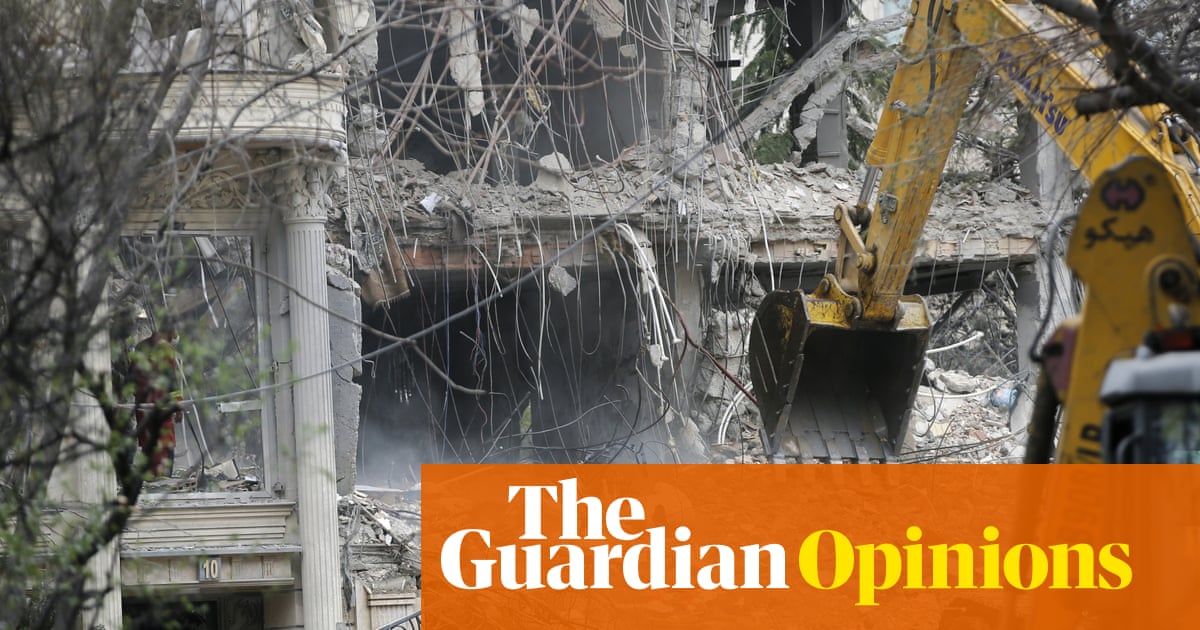
Israel’s fighting Hezbollah too long and too many people are being killed . And you don’t have to knock down an apartment house every time you are looking for somebody, because there are a lot of people in those apartment houses and they are not all Hezbollah , that I can tell you.

And I suggested to Israel to let Syria take care of Hezbollah because to be honest with you I think they will do a better job of doing it .

Trump said he didn’t “like” that Israel attacked the Lebanese capital of Beirut – not the “southern side” – shortly before the deal with Iran was signed. “I let them know that. I didn’t like it – not at all,” Trump said.

“If Israel can’t do the job, without killing everyone else, he’ll do the job, Syria will do the job,’ Trump said, referring to Syrian president, Ahmed al Sharaa, whom he has good relations with.

During Syria’s civil war that broke out in 2011, Hezbollah sent thousands of fighters to help Bashar al-Assad stay in power. They remained until Sharaa’s Islamist rebel forces toppled the longtime ruler in December 2024. Sharaa is the former leader of Hayat Tahrir al-Sham (HTS), the rebel group that led the military operation to topple Assad.

Trump said Sharaa “is very good with Hezbollah” and “does not like them”. “He’s been very good for me. He’s protected everything that I have asked for,” he said, referring to Sharaa.

Netanyahu has to be ‘more responsible with respect to Lebanon’, Trump says

Trump also said he had a “great relationship” with Israeli prime minister, Benjamin Netanyahu, but said he “has to be more responsible with respect to Lebanon”.

“Without me there would be no Israel, because no other president was willing to do what I did,” he told reporters.

Trump says he considers Israel’s war in Lebanon a ‘minor’ one

Donald Trump also said he considers Israel’s war on Lebanon a “minor” one and believes his deal with Iran can survive even if Israeli attacks continue.

“I consider that the minor war,” Trump said. “Iran’s the big one, but we have that little pinprick out there that constantly rears its head and that’s Hezbollah”.

Iran does not agree with Trump’s assessment as it is increasingly asserting that continued Israeli attacks in Lebanon will violate its agreement with the US, and has sought to characterise the US and Israel as one entity in this respect.

Iran ‘will never have a nuclear weapon’ and ‘all hell will rain down’ if ​it tries to get them, Trump says

In his comments to reporters, Donald Trump also warned that “all hell will rain down” on Iran if it tries to get a nuclear weapon.

“The only ⁠thing that ​really ‌matters to ‌me is Iran ‌will never have a nuclear weapon, and it says it loud and ‌clear,” he said, referring to the agreement with Tehran.

As my colleague Graham Russell notes in this useful explainer , Iran has long maintained its nuclear program is peaceful and has not publicly committed to giving up the enriched uranium, which is believed to be buried under three nuclear sites that were badly damaged by US strikes last year.

Trump faces significant political pressure to secure a better deal on this issue than the one he scuppered during his first term. He withdrew the US from a 2015 multilateral Iran deal, negotiated by Barack Obama, that lifted sanctions on Tehran in exchange for limits on its nuclear program, including international inspections.

Iran responded by ramping up its enrichment of uranium, producing more than 400kg of material at close to bomb-grade purity. The eventual fate of that uranium is likely to be a key negotiating point during ⁠the upcoming broader talks.

Trump says US-Iran deal going to a ‘second stage’

We have some comments from Donald Trump who has been speaking to reporters at the G7 summit.

According to the Reuters news agency, the US president said the deal with Iran was ⁠going to a “second stage” and said Washington was not investing any money in Iran as part of the agreement.

“We have our deal done with Iran, and it ‌should be successful, it goes to ​a second stage, which I think would ⁠be actually easier,” he told journalists.

Tell us your favourite album of 2026 so far | Music | The Guardian

Keyword – Music
Trefwoorden – Music, Culture
Title – Tell us your favourite album of 2026 so far | Music | The Guardian
Author – https://www.theguardian.com/profile/guardian-community-team
Link – Tell us your favourite album of 2026 so far | Music | The Guardian
Publish date – 2026-06-11T13:22:46.000Z
Category – Culture
URL – https://www.theguardian.com/music/2026/jun/11/tell-us-your-favourite-album-of-2026-so-far

The Guardian’s music writers have compiled their favourite albums of the year so far – and we’d like to hear about yours, too.

Have you listened to a new album that has had you hooked? Or one you’d recommend? Tell us your nomination and why you like it below.

If you’re having trouble using the form click here . Read terms of service here and privacy policy here .

Trump declares US-Iran peace deal ‘all signed’ as G7 leaders battle to tie up loose ends | US-Israel war on Iran | The Guardian

Keyword – World news
Trefwoorden – US-Israel war on Iran, Strait of Hormuz, G7, Oman, Lebanon, Israel, France, Europe, World news, Donald Trump, Iran, US news, Switzerland, Middle East and north Africa, Iran nuclear programme, Iran nuclear deal
Title – Trump declares US-Iran peace deal ‘all signed’ as G7 leaders battle to tie up loose ends | US-Israel war on Iran | The Guardian
Author – https://www.theguardian.com/profile/roth-andrew,https://www.theguardian.com/profile/patrickwintour,https://www.theguardian.com/profile/jasonburke
Link – Trump declares US-Iran peace deal ‘all signed’ as G7 leaders battle to tie up loose ends | US-Israel war on Iran | The Guardian
Publish date – 2026-06-15T19:08:15.000Z
Category – News
URL – https://www.theguardian.com/world/2026/jun/15/trump-declares-us-iran-peace-deal-all-signed-g7

Donald Trump has declared that the strait of Hormuz will be “completely open” from Friday, as western leaders gathering at the G7 summit in Évian-les-Bains battled to prevent the fragile US deal with Iran from almost immediately unravelling.

“The deal’s all signed. And the strait ⁠is already partially opened,” Trump said as he arrived at the summit in France, but Israeli breaches of the ceasefire in Lebanon and Iran’s claims about its right to charge fees in the crucial waterway revealed the agreement’s many loose ends .

Speaking at the start of bilateral talks with the French president, Emmanuel Macron, on Monday, Trump rejected a proposed UK-France joint naval mission in the strait, saying “I don’t think we will need much help” keeping it open.

“I think a lot of great things are going to happen in the Middle East right now. And very importantly, the oil is plummeting down and the stock market is shooting up like a rocket today,” Trump said.

“The main thing is that Iran will not have a nuclear weapon. They fully agreed to that with strong policing powers, and they won’t have a nuclear weapon, which is what it was all about.”

The memorandum of understanding (MOU) – which US officials said would open the strait of Hormuz in exchange for a lifting of a US naval blockade on Iran – is set to be formally signed at a ceremony in Geneva on Friday attended by the US vice-president, JD Vance, and the chief Iranian negotiator, Mohammad-Bagher Ghalibaf.

White House officials said the full details of the agreement would be published in the next 24 to 48 hours.

But the G7 leaders gathering for three days of talks found themselves already trying to shore up the agreement that the US had signed.

Technical discussions led by Vance from the US side will begin later this week, including the more thorny issues of the fate of Iran’s nuclear programme, which Trump has declared must never be able to produce a nuclear weapon.

It would also include provisions to lift sanctions and unfreeze billions of dollars in frozen assets, but US officials said that would be tied to “Iran meeting their commitments”.

They insisted no Gulf country was cutting a side deal to unfreeze Iran’s assets, but suggested the US was “prepared to release frozen funds, and we are prepared to relieve sanctions”.

“We’ll do some small gestures of that in the beginning, if they make some small gestures to us that show that they’re willing to meet their commitments,” another official added.

They declined to provide specifics on what that “small gesture” would be, but the first official later clarified that as of now, “$0 of unfrozen assets have been released by the United States or any other country”.

The administration officials also said that there would not be an immediate drawdown of US forces near Iran upon the signing of the MOU.

“The plan is to keep the current force posture during the … negotiations in force,” the official said. “We hope to draw them down. We’re not doing that yet. We want to see the Iranians do what they promise.”

Friedrich Merz, the German chancellor, said the deal could stabilise the world economy, but warned Israel that the ceasefire agreement must apply to Lebanon . He spoke after an Israeli drone targeted a vehicle in southern Lebanon killing one person, the second death since the 60-day ceasefire was agreed.

Ursula von der Leyen, the European Commission president, warned: “There can be no lasting peace whilst Lebanon remains in flames.”

In Israel , concern and anger deepened during the day, directed at both Trump and Benjamin Netanyahu, the Israeli prime minister. Analysts and commenters quickly pointed out that none of Netanyahu’s promises at the beginning of the war in February – which included regime change in Tehran and the destruction of Iran’s nuclear programme – had been fulfilled.

Israel has also launched a wide-ranging offensive into Lebanon after Hezbollah, which has close links to Iran, fired missiles at northern Israeli towns during the first week of the war, suffering new casualties against an enemy that had been previously dismissed by officials as no longer posing a serious threat.

In his first remarks on the agreement, Netanyahu did not denounce the deal but did distance himself from the negotiations, saying that it was “[Trump’s] decision”, adding: “We have our own interests.”

He also said Israel would not leave the territory it was occupying in Lebanon despite the ceasefire agreement and it would be ready to strike Iran if it deemed it was moving toward making a nuclear weapon.

“With an agreement or without an agreement, Iran will not have nuclear weapons – not today and not tomorrow,” he said.

Opposition politicians were quick to capitalise on what some local media described as an “abject failure”. Far-right members of Netanyahu’s ruling coalition called for Israel to ignore the agreement , saying it had not been party to negotiations.

The national security minister, Itamar Ben-Gvir, said of the memorandum: “ Trump’s agreement does not bind us … we must not settle for anything less than the dismantling of Hezbollah. We must not withdraw from a single inch of territory that our soldiers have captured and cleared.” The Iranian foreign ministry spokesperson, Esmail Baghaei, insisted the US had to ensure Israel abided by the ceasefire, warning that the whole deal was contingent on its application to Lebanon.

Trump was set to be quizzed by other world leaders whether he had signed an agreement that gave Iran a right to charge for maritime services in the strait of Hormuz.

Such a formulation could prove in effect to be a tolling system that European leaders, committed to freedom of navigation, have fiercely opposed. In Evián, Trump insisted that would not be the case, saying: “because we have an agreement where it’s going to be open, and it’s toll-free”.

The uncertainty meant plans to deploy a Franco-British maritime taskforce within days to clear mines and escort ships through the strait remained in doubt.

Iranian officials have rejected what they see as foreign interference in the strait, and have insisted last-minute negotiated changes to the agreement have given Iran the right to charge fees for maritime services.

Macron earlier declared the taskforce could help “ensure the reopening of the strait is peaceful” and France could send its Charles de Gaulle aircraft carrier, frigates, mine search boats and aircraft to the region within days.

But the taskforce plan, partly conceived to soothe Trump’s anger over a European refusal to join a more aggressive US plan to open the strait earlier in the war, looks at best uncertain since all the contributor countries have insisted the taskforce cannot operate in the face of Iranian military resistance.

Macron claimed Oman , on the southern waterways of the strait, did not object to the convoy. Trump also appeared to suggest the waterway was operating without need for a European escort mission.

“Ships are starting to move many loaded up with oil, out of the strait of Hormuz, They are going along the southern highway which is totally safe secure and pristine. There are other areas of travel also,” he posted to social media.

But with shipping companies warning it will take months for trade to return to normal, the European Central Bank governor, Christine Lagarde, said the impact of the war on oil prices meant inflation was now spreading across the European economy, with a secondary effect on wages.

Trump faces a broader uphill task persuading his sceptical fellow G7 leaders that he was right to ignore their advice since the war had secured objectives the west backed, including taming Iran and destroying its nuclear programme.

Many G7 leaders refused to let Trump use US bases in Europe to mount attacks on Iran, and believe the whole episode has damaged the US, while weakening western economies in the battle with China.

One western diplomat said: “No one wants a bitter or public inquest, but this has been a crash-and-burn moment for American unilateralism, and perhaps Trump will heed the lessons.”

US officials speaking on Monday claimed the war had left Iran “substantially weakened” and it now had the option to be “invited into the world economy with all the prosperity that comes along with it”, on condition the country provided mechanisms to prove it was not trying to build a nuclear weapon.

Brand Beckham always delivers with a PR opportunity. But Brooklyn’s turned up late, with the wrong order | Marina Hyde | The Guardian

Keyword – Opinion
Trefwoorden – Brooklyn Beckham, David Beckham, Victoria Beckham, Fashion, Life and style, UK news, Celebrity
Title – Brand Beckham always delivers with a PR opportunity. But Brooklyn’s turned up late, with the wrong order | Marina Hyde | The Guardian
Author – https://www.theguardian.com/profile/marinahyde
Link – Brand Beckham always delivers with a PR opportunity. But Brooklyn’s turned up late, with the wrong order | Marina Hyde | The Guardian
Publish date – 2026-06-16T10:30:20.000Z
Category – Opinion
URL – https://www.theguardian.com/commentisfree/2026/jun/16/brooklyn-beckham-family-doordash-ad

I see Brooklyn Beckham is on his DoorDash privacy tour. After Prince Harry and Meghan “stepped away” from royal family duties, they embarked on what South Park famously designated their worldwide privacy tour. When Brooklyn stepped away from Beckham family duties – which oddly appear to involve a regal level of shared mission, public appearances and emotional repression – he declared that he wished only for privacy .

And so to his DoorDash ad , which dropped on Monday. Brooklyn is becoming quite the Greta Garbo of food delivery service ads, having previously done a collaboration with Uber Eats . But this latest one for DoorDash, owner of Deliveroo, is an eyecatcher. “You’re probably wondering,” he begins – and honestly, he’d be amazed at what I’m actually wondering. “You’re probably wondering why I’m watching the Fifa World Cup 2026 at home,” smirks Brooklyn, throwing down several World Cup tickets on a table that also features items including some letters. “It’s a long story,” he chuckles, before viewers are … tantalised, I think it is? … with the caption slogan: “It’s complicated. More soon.”

Well, don’t leave it too long, etc. The timing seems particularly remarkable, given that it was only last Friday that a photographer captured his 14-year-old sister, Harper, outside the LA house owned by Brooklyn and his wife, Nicola Peltz, trying to hand-deliver him a letter. He was in fact in New York at the time – and, indeed, not minded to accept the idea that a pap just happened to be outside the property to chance on the poignant moment. The couple’s representatives immediately issued a statement : “That photographers were in place as the letter was hand delivered says it all – this was choreographed for the cameras.” The Beckham family camp hit straight back , with a source stating that: “[It] is incredibly sad that this horrible accusation is being levelled at an innocent young girl who just desperately misses her brother.”

To be clear, before we go on any further, this is ALL a devastatingly sad situation. I have zero doubt that the Beckhams adore all their children, and can only be utterly heartbroken by this state of affairs. It’s also hard not to sympathise with Brooklyn, who has been commodified since he was in the womb and clearly had longterm issues with it, even before he met his princess. And yet … it is as if none of the parties involved can quite bring themselves to stop doing the things that got them here – certainly the things that can only make it worse.

Absolutely no one is covering themselves in glory, from the Beckhams, to Brooklyn and his wife, to, let’s face it, the ghastly DoorDash creative team who came up with this ad and successfully pitched it to someone not widely believed to be the brightest star in the entertainment firmament. No doubt they will cheekily upend the assumptions from the first ad in the “coming soon” sequel. But if you believe they weren’t intentional, I’ve a leaking milkshake and some cold nuggets to sell you.

Anyway, speaking of stars, the Beckhams were in LA last week because David was being given a star on the Hollywood Walk of Fame (for some reason). It was, of course, a public family occasion, attended dutifully by all the flown-in children bar Brooklyn. And the months leading up to it have involved all the other occasions – fashion shows, some French cultural honour, exhaustively photographed-and-publicised birthday parties, a New York makeup launch, the Chelsea flower show, a football stadium opening in Miami, and so on, and so on … There seems to be a milestone, once-in-a-lifetime event practically every fortnight, for which the entire family are on a three-line whip.

Some of these, surely, must be less important than others, and not worth flying round the world or missing quite a bit of school for? Surely some count as work events, and could be serviced perfectly adequately by Victoria and David, and not require the full Buckingham Palace balcony shot? Unless, like the Windsors, the family brand is the work, and everyone has to show up for it.

As Brooklyn’s lengthily explosive statement back in January put it: “My family values public promotion and endorsements above all else. Brand Beckham comes first. Family ‘love’ is decided by how much you post on social media, or how quickly you drop everything to show up and pose for a family photo opp …” That post was his Spare; the DoorDash ad is his Netflix documentary. Or perhaps he and his wife are very much beginning to think they have a doc in them. No wonder David and Victoria keep offering up self-commissioned and produced documentaries to the streamer – if they don’t, you can bet who will.

Against this backdrop, it did seem genuinely gobsmacking to learn a few months ago that the Beckhams had trademarked Harper Beckham’s name for a beauty enterprise . Yet following a number of media appearances by her mother in which Victoria started laying the backstory to it all, it has emerged that Harper is actually poised to launch a skincare brand. At 14 years old? Really? Genuinely no one wants to be uncharitable here. But what needs to happen to the Beckhams before they consider the wisdom of ploughing on with some of this stuff? How much money is enough – they are said to be worth almost £1.2bn – before taking your foot off the family branding pedal feels like a healthy thing for everyone involved?

To contradict the viral DoorDash ad: it’s not complicated. Family is family, and there are better ways to live than selling it – or selling it out – all the time.

Marina Hyde is a Guardian columnist. Her new book, What a Time to be Alive!, is out in September (Guardian Faber Publishing, £20). To support the Guardian, order your signed copy at guardianbookshop.com . Delivery charges may apply

Do you have an opinion on the issues raised in this article? If you would like to submit a response of up to 300 words by email to be considered for publication in our letters section, please click here .

Iran overcomes its divisions for 90 minutes, then same old problems return | Iran | The Guardian

Keyword – Football
Trefwoorden – Iran, World Cup 2026, World Cup, Football, Sport, New Zealand
Title – Iran overcomes its divisions for 90 minutes, then same old problems return | Iran | The Guardian
Author – https://www.theguardian.com/profile/alexander-abnos
Link – Iran overcomes its divisions for 90 minutes, then same old problems return | Iran | The Guardian
Publish date – 2026-06-16T11:49:29.000Z
Category – Sport
URL – https://www.theguardian.com/football/2026/jun/16/iran-overcomes-its-divisions-for-90-minutes-then-same-old-problems-return

S occer unites. This is what we are told. It swoops in, majestic in the players’ grace, and gives a people – any people – a thing to rally around in good times and bad. It’s true, that does happen on occasion. But other times, as in Monday’s 2-2 draw between Iran and New Zealand here in southern California, the magic of this ridiculously simple game lies in its power to make one, or several, or several thousand, forget.

Before the game, Iranians worldwide had been divided by decades of political and cultural difficulty and the Iran team were hamstrung by interrupted preparations for what should be the pinnacle of any players’ career.

After the final whistle, those same divisions and problems still existed. Perhaps, in some cases, they had become worse. But then there were those glorious intervening minutes, featuring four goals and numerous big chances, crunching tackles and passionate play, in front of a heaving, heavily partisan crowd in the city with the largest Iranian expat population in the United States. You got the sense that most within the stadium’s confines, to say nothing of the millions watching, were given a welcome dose of temporary amnesia.

Several hours before that point, though, those deep and bitter divisions running through the country’s diaspora were obvious around the perimeter of the stadium. In their shirts and accessories, fans heading inside declared which Iran they were there to support.

Did they don the lion and sun flag, closely associated with the shah, or the modern version, with a stylized “Allah” written in script in the middle? Or did they do neither, obscuring the central element one way or another, writing over it, or simply choosing a clothing item that omitted the flag in favour of more neutral imagery? All could be seen in numbers.

A protester with a megaphone outside a western entrance spent hours telling passersby that the team was an instrument of the Iranian Revolutionary Guards, that they represented terrorists. On the east side, a larger group, reportedly numbering about 200 or so, shouted similar slogans at those entering. Behind them flew lion-and-sun Iran flags from pre-revolution times, with one adorned with “MAKE IRAN GREAT AGAIN”. Others nearby flew a combined US/Israel flag. There were arguments and some small scuffles were captured on phones.

That geopolitical conflict made buildup to the match more fraught than perhaps any other in World Cup history. Iran had planned to train for the tournament in Tucson, Arizona before group games in Los Angeles and Seattle. The outbreak of hostilities threw their participation in the tournament into doubt. Iran changed their training plan’s viability once it was determined they would play on.

After a hasty switch to Tijuana, Mexico, 15 members of Iran’s delegation were denied visas to enter the United States . That number was reduced to 11 before their opening game, but still included their entire media relations staff, some analysts and the federation president, Mehdi Taj. US officials said the visas were denied to ensure the Iranian team did not “sneak terrorists into the United States”.

“This kind of tension undermines that joy [of a World Cup],” said the striker and captain Mehdi Taremi. “This World Cup could have provided a better atmosphere than it has.”

But then the stadium filled and soon provided among the best atmospheres of the tournament. While boos and jeers during Iran’s national anthem were loud enough to obscure the audio track as players sang along, there was no such conflict when Ramin Rezaiean scored Iran’s opening goal. It elicited a single cacophonous roar, trailing for several minutes after the strike and raising the intensity level considerably.

It was the first of two huge moments in a man-of-the-match performance for Rezaiean, who can now be considered something of a World Cup hero for the country, having scored the game-sealing goal in 2022’s group-stage win against Wales .

Afterwards, though, the questions were about what came before – the anthem, the booing and how Rezaiean felt. “Everyone in the world now knows about my people,” he said. “If there is any problem between us? This is our business, is none of your business. I respect you, but this is something between us, and we’re going to settle it.”

With a few hours to go before the match, a local court upheld Fifa’s ban on displaying Iran’s pre-revolutionary flag at the game. Videos on social media showed a few instances of stadium security confiscating lion-and-sun insignias, but they remained numerous and obvious. In pockets of the crowd, some were waved after each of New Zealand’s two well-taken goals.

But the vast majority, including some of those same pockets, waved them in the air exuberantly after goals; Mohammad Mohebi’s well-placed header off a pinpoint Rezaiean cross to equalize for the second time in the 64th minute set off wild celebrations on the field.

“We are enjoying [celebrating goals], just like since we were six years old, seven years old, 10 years old,” Taremi said. “We just follow the football and we’re always looking for the football, which is so important for us, more than everything. When you score, when your team scores, you celebrate and it’s a lot of joy, and we want to bring this joy for our supporters too.”

Despite a game that had provided joy for large portions, Taremi’s thoughts were elsewhere. In the locker room was the Fifa president, Gianni Infantino, telling them they had performed well and reminding them that their circumstances had been difficult.

Then another reality check: the team was told that instead of staying in Los Angeles that night, as expected, they would be heading back to Tijuana. “They are making the situation more and more difficult, more hurdles, but we’re not going to let that stop us from doing our best,” the head coach, Amir Ghalenoei said. “Everything is like disaster for us,” said Taremi.

Iran has continued to thrive despite periods of political and cultural unrest at home and sanctions damaging the economy from abroad. They have qualified for four consecutive World Cups, usually with some comfort. But on the big stage they have often wilted, or fallen agonizingly short of a first appearance in the knockout round.

Monday’s game offered the best chance they have had to put that run behind them. Three points would have given them a solid foothold for a spot as one of the eight best third-place teams.

On Monday, Iran indulged in that hope and allowed others to forget anything else.

I spent an evening with fans of Lotus Eaters – the hit podcast shaping Britain’s new far-right culture | Oliver Haynes | The Guardian

Keyword – Opinion
Trefwoorden – Far right, Politics, Rupert Lowe, World news, UK news, Media
Title – I spent an evening with fans of Lotus Eaters – the hit podcast shaping Britain’s new far-right culture | Oliver Haynes | The Guardian
Author – https://www.theguardian.com/profile/oliver-haynes
Link – I spent an evening with fans of Lotus Eaters – the hit podcast shaping Britain’s new far-right culture | Oliver Haynes | The Guardian
Publish date – 2026-06-16T11:35:30.000Z
Category – Opinion
URL – https://www.theguardian.com/commentisfree/2026/jun/16/fans-lotus-eaters-podcast-britain-new-far-right-culture

I f I asked you to name a popular politics podcast, what would you think of? Maybe The Rest Is Politics for centrist dads. Novara Media’s Downstream for young lefties, perhaps, or Triggernometry for conservatives.

While these podcasts have achieved mainstream success and recognition, the contemporary media landscape also allows fringe political shows to gain huge audiences and influence without the mainstream ever acknowledging them.

One such media product is The Podcast of the Lotus Eaters, a collective YouTube channel and website led by the YouTuber Carl Benjamin (AKA Sargon of Akkad) that has advocated for, among other things, “remigration”. Remigration, in the words of co-presenter Luca Johnson , is “not just about [the removal of] the illegals, it’s also about the legals and all those foreign communities that have been forced on us”.

Most podcast platforms are opaque on listener figures. The Rest Is Politics is reported to have more than 700,000 listeners an episode. With several episodes a week, it remains a bigger product than Lotus Eaters, but with almost 600,000 subscribers on YouTube and more than a million weekly views on free YouTube clips alone, Lotus Eaters is also one of the biggest political podcasts in the UK. Apple podcasts currently ranks the audio version at 50th on its news charts, ahead of dozens of podcasts set up by established publications.

I recently attended Lotus Eaters’ live show in Swindon, where the podcast is based. Although they don’t quite have the O2-packing ability of The Rest Is Politics, they managed to fill a 700-capacity venue with tickets starting at £50. The demographic was overwhelmingly male and mostly under 40. It was split largely between suit-wearing, moustachioed elder millennials and metalhead and gamer types, with the occasional couple or father-son duo in the mix.

A speech by Firas Modad, one of the presenters, reflected the worldview of this movement. He had recently returned to his home country of Lebanon to find that in his religiously and ethnically mixed village there were problems with the water supply. He found that this was because there was conflict over water between ethnic groups, and one group had decided to siphon it for themselves.

This encounter, claimed Modad, is a parable for understanding Britain’s future, in which something as simple as water provision collapses due to racial diversity. He also warned that “political entrepreneurs” – individuals who identify a niche market among the citizenry and exploit it for political gain – would use ethnic grievances to advance their own ambitions. The solution, according to Modad? “Deport. Deport. Deport.” The irony of complaining about political entrepreneurs stoking ethnic grievances was lost on the audience.

Aside from Modad’s sincerity and a cringe-inducing debate about whether the Star Wars prequels have any artistic merit, much of the evening was laced with the semi-ironic bombast characteristic of the online wing of hard-right political movements that feel that they are on the up.

One segment was a version of the classic party game Who Am I? in which the audience would ridicule political enemies displayed on a screen behind the podcasters, while the hosts tried to guess who the subjects of the scorn were. The audience was raucous. It was, I’d imagine, a cathartic experience for these political outcasts to hear Rory Stewart described as “Alastair Campbell’s fluffer” in a theatre of like-minded crusaders, all equally convinced they are on the verge of an uprising against a tyrannical government. “It is a moral imperative for the chuds to take over,” Benjamin thundered. (Chuds is a leftist slang term for unthinking rightwingers.) “Get a girlfriend and take over,” he added.

The Lotus Eaters themselves are formerly reluctant supporters of Farage and Reform UK, who they now consider soft. They are supporting Rupert Lowe’s nativist outfit, Restore Britain. Benjamin’s YouTube channel and the Lotus Eaters website carry the disclosure “promoted by Lotus Eater Media Limited … on behalf of Restore Britain” required for campaigning organisations under electoral law.

Lowe’s vehicle has been backed by much of the organised far right. Young alumni of the ethnonationalist Homeland party were in attendance in Swindon, but the wider post-organisational far right – which mobilises through social media rather than traditional means – is also flocking to Restore. You can now expect to find support for Restore in the Patriot movements along the south coast protesting against asylum-seeker hotels, at Tommy Robinson demos and in the audience of the radical-right podcast sphere that extends beyond Lotus Eaters.

Some of the people I spoke to in Swindon were convinced that Lowe will be prime minister in 2029. While this is near-impossible, the beyond-Reform right could play a significant role in further radicalising British politics. Restore can act as flypaper for the kinds of off-putting people who revel in the violent spectacle of deportations – such as the man sat behind me, wearing merch with the words Detain + Deport emblazoned on the chest – allowing Reform to seem like the moderate option in comparison.

This movement can also exert pressure on Reform, and open up space for it to tack to the right by generating so much noise about an issue that Farage is able to pick it up when it feels like it has become part of the conversation.

Politics professor Alan Finlayson has argued that Lotus Eaters is a political education project aimed at constructing the worldview of the contemporary far right through its engagement, however tedious, with culture. Behind the paywall there are series on films, video games, Shakespeare and epic poetry. Viewers can spend time bathing in this worldview and thus engage with politics, without it always having to be about politics proper.

The strength of this movement shouldn’t be overstated, but it commands a substantial following. It could even negatively affect the right if Reform’s vote is split where Restore Britain stands in future elections. It won 10 seats in the recent local elections on Norfolk county council and Great Yarmouth borough council – one seat was in a byelection – via its affiliate Great Yarmouth First. That said, Lowe is the local MP, and the national movement focused on winning that region only.

The podcasters’ popularity and Lowe’s presence in the House of Commons show there is now a nativist movement in this country that has achieved parliamentary representation and can articulate a worldview – and indeed a culture – for its sympathisers. Its presence means British politics is likely to become more turbulent and aggressive, and that the nativist far right will play a larger role than ever.

Oliver Haynes is a journalist and co-host of the Flep24 podcast

The best podcasts of 2026 so far | Podcasts | The Guardian

Keyword – Television & radio
Trefwoorden – Podcasts, Television & radio, Culture, Podcasting, Radio
Title – The best podcasts of 2026 so far | Podcasts | The Guardian
Author – Alexi Duggins
Link – The best podcasts of 2026 so far | Podcasts | The Guardian
Publish date – 2026-06-12T09:00:40.000Z
Category – Culture
URL – https://www.theguardian.com/tv-and-radio/ng-interactive/2026/jun/12/the-best-podcasts-of-2026-so-far

The Harry Hill Show

“What’s going on?” Adam Hills is just one confused guest who, despite having no idea what is happening, is still having a ball in comedy great Harry Hill’s daft new series. Who else would bring out a puppet with a giant tongue that licks guests? Or a viral star called Simon from Morley’s department store in Bexleyheath? Not to mention Sarah the AI bot who likes to give celebrity profiles and dispense chocolate bars. The show is so surreal that it is even better in its video format – and rare is the podcast we say that about.

Off Duty

This true-crime Guardian series drops one bombshell after another as it tells the story of murdered police officer Clifton Lewis and the man who was convicted. In 2011, Lewis was moonlighting as a mini-mart security guard when two men walked in and shot him. The resulting trial saw a man named Alex Villa jailed – despite always denying his guilt. Investigative journalist Melissa Segura hasn’t been able to stop thinking about the case since. In this seven-parter, she looks at the sweeping 12-year legal odyssey that follows, as Villa fights to clear his name, laying bare gaping cracks in the criminal legal system. It’s a compelling listen, delving into misconduct allegations, confessions made and recanted, and what she calls “a system determined to keep [Villa] there at all costs”.

Sisters of Defiance

From Radio 4 Woman’s Hour host Anita Rani, this is a spirited and fascinating new interview series. Rani loves a rebellious woman – just look at last year’s wonderful Sky documentary, Sisters of Disruption, where she celebrated the Brontë sisters for being punks. In each episode, she sits down for deep chats with those who have broken boundaries and expectations, including Bridgerton star Adjoa Andoh, comedian Fatiha El-Ghorri and feminist icon Gisèle Pelicot. Her opening episode with Meera Syal sets the bar high, with a flowing conversation that touches on empty-nest homes, divorce in south Asian communities and, of course, the triumph of Syal’s groundbreaking sitcom Goodness Gracious Me.

A History of the United States in 100 Objects

This winning North American offshoot of A History of the World in 100 Objects, from BBC Studios and SiriusXM, sees Roman Mars of feted design pod 99% Invisible take a look at the minutiae of the modern world. Everything from coins to once-forgotten civil war documents have their rich backstories explored, as a way to tell the tale of the US’s shames and triumphs. Historians such as Jill Lepore (also a Pulitzer-winning writer) give the series historical oomph, while the Avengers-esque slate of podcasters set to appear – among them Missing Richard Simmons’s Dan Taberski and Latif Nasser of Radiolab – makes it one of the year’s most star-stuffed pods.

The Book Club

What happens when an unlikely intergenerational pair team up to make a book club podcast? This lovely, open-minded series from The Rest is History co-host Dominic Sandbrook and his TRIH producer Tabitha Syrett, where brand new novels are just as welcome as the classics. So far they’ve had enlightening chats about everything from Wuthering Heights to A Court of Thorns and Roses, Mrs Dalloway and Normal People. The kind of club bookworms dream of being part of.

Love and Radio: Blood Memory

This intimate 10-episode series introduces us to Michael Thompson – a convicted murderer and one-time leader of the Aryan Brotherhood who turned his back on the white supremacist gang – and it’s a deeply engrossing listen. Is Thompson a misunderstood soul who only chose violence out of necessity and is now fully reformed? Or a pathological liar and manipulator? Built on years of interviews, this often feels like sitting on a psychiatrist’s couch with a man of many contrasts, but it also doubles up as a fascinating study of a lifetime spent in prison.

Foundling

Reporter Lucy Greenwell has never been able to shake a childhood memory of a newborn baby being found on a country lane near where she grew up in Suffolk. Decades later, she tracks down that baby – to find adopted adult Jess – and in doing so opens up an emotionally wrought world of secrets, lies and abandonments. This is a series full of twists, turns and jaw-dropping reveals, but its real success is its tact when exploring such tricky, sensitive and at times traumatic subject matter.

Serial: The Idiot

New York Times columnist M Gessen had always suspected their braggadocious, ostentatious cousin, Allen, was something of a fool – or, in their words, “a pompous ass”. But when Allen is charged with ordering a hit on his ex-wife, Gessen plunges deeper into his story to discover a dark world of abduction and deceit. While technically a true-crime series, this avoids the usual trappings and cliches. Instead, it takes a more subtle and introspective approach when investigating this troubling history – and the knotty dynamics that come with their family being connected to it.

Get Birding With Sean Bean

You wouldn’t think that the most adorable thing about a birdwatching podcast would be the guy who had his head chopped off in Game of Thrones. But Sean Bean is an absolute delight as the host here, as he sweetly enthuses about the wildlife garden he has created at home and offers up lyrical descriptions of the glory of nature. It’s full of expert and celebrity interviews whose descriptions feel like borderline comedy – Johnny Vaughan reminisces about youthful ornithology, Will Young on birdsong – but Bean’s warmth turns them into something utterly lovable. A real, soothing delight.

MF Doom: Long Island to Leeds

When the hugely influential hip-hop artist MF Doom – described here as “your favourite rapper’s favourite rapper” – died in 2020, it came as a shock to many that he passed away in a Leeds hospital. Hip-hop head Adam Batty, along with DJ and broadcaster Afrodeutsche, explore how the permanently masked New York artist, who changed the world of hip-hop, wound up living his final years in West Yorkshire. With numerous guests featured along the way – such as super-fan Romesh Ranganathan – this is as much a passionate ode to a pioneering artist and his legacy as it is a curious quest for unearthing his life’s unique trajectory.

From cool Marseille to a photo-feast in Arles – an art trail through Provence | Cultural trips | The Guardian

Keyword – Travel
Trefwoorden – Cultural trips, France holidays, Marseille holidays, Art, Europe holidays, Art and design, Travel, Culture
Title – From cool Marseille to a photo-feast in Arles – an art trail through Provence | Cultural trips | The Guardian
Author – Jarred McGinnis
Link – From cool Marseille to a photo-feast in Arles – an art trail through Provence | Cultural trips | The Guardian
Publish date – 2026-06-16T06:00:46.000Z
Category – Lifestyle
URL – https://www.theguardian.com/travel/2026/jun/16/art-trail-through-provence-france-marseille-arles-aix-avignon

M y wife and I moved from London to Marseille a little over five years ago when our British passports still conferred “right to reside” in France. That first winter on the beach, in short sleeves, as our daughters played in the topaz-coloured Mediterranean and the sun set across an ever-clear blue sky, I understood why this part of southern France has always been popular with artists.

I was recently speaking about this with the painter Fanny Nushka and her sailor husband, Benoît Bouchet, on the terrace of Café la Muse in Marseille’s “coolest” neighbourhood . She said: “It took a long time to go back to blue. It’s like being in Paris and painting the Eiffel Tower. It’s dangerous to paint the Calanques [limestone coves] as an artist from here.”

We moved to Marseille for the same reason that has attracted countless artists: it’s cheaper to live here. Marseille’s affordability enables Fanny to paint full-time and Benoît to sail without being away from his family for weeks. Benoît runs daily catered cruises on a listed sailing yacht, Le Don du Vent . For €135, you get a taste of Mediterranean luxury with swimming, snorkelling and sunbathing in the unspoiled sea coves around Marseille, pausing briefly for wine and a lunch prepared onboard.

Céline Ghisleri, co-president of Provence Contemporary Art , which represents 62 arts organisations in and around Marseille, tells me the city has always had a dynamic art scene. However, the turning point came when Marseille was named European Capital of Culture in 2013. Since then, large institutions such as Frac Sud , Mac and the Museum of European and Mediterranean Civilisations ( Mucem ) have expanded the city’s offering with bigger exhibitions from more widely recognised artists.

This summer, the Mucem’s exhibitions are Bonnes Mères, a collection of contemporary and historical works on the theme of motherhood, and Clément Cogitore’s fascinating Ferdinandea, l’île éphémère, a body of work centred on the brief existence of a volcanic Mediterranean island. At the end of August, the art fair Art-O-Rama will be hosted at La Friche La Belle de Mai . La Friche (the Wasteland) was a tobacco factory and is now an enormous warren of a multidisciplinary arts centre that is always buzzing, especially in the summer when they set up a movie screen and food trucks on the roof. La Friche is emblematic of the art scene in Marseille: absolute chaos, but somehow it works.

Outside Marseille, Plein Sud , a network of contemporary art organisations between Monaco and Montpellier, produces a guide with travel itineraries. It’s how I discovered the charming Gallifet art centre in nearby Aix-en-Provence, which is only about 40 minutes from Marseille but exists in a completely different universe.

You couldn’t be further away from Marseille’s port city energy than Aix’s daily market at Place Richelme, where you can grab a coffee and, if you are lucky, an outdoor seat at the patisserie and salon de thé Maison Weibel . For lunch, I recommend Drôle d’Endroit (Funny Place). It is tucked down an alley off a sidestreet, but the meals are always pleasing and the atmosphere friendly. Another solid choice is Tita for Levantine street food.

As tiny and quiet as Aix is, it has an abundance of museums, such as the Granet Museum , the Caumont Art Centre and the Vasarely Foundation , but they tend to lean heavily on art that historians have already anointed. For example, it wasn’t until 1984 that the Granet acquired any works by the local boy done good, Cézanne, whose preserved studio is just up the hill.

That’s why it was refreshing to find Gallifet trying something different. The owners, Nicolas Mazet and Kate Davis, have a mission to bring contemporary art to conservative Aix. Located on the ground floor of an 18th-century townhouse, the courtyard’s striking red sculpture of a swimmer mid-stroke, by Diadji Diop , hints that Gallifet is more than just a home (the owners live above the art centre).

This summer’s exhibition features a retrospective of the photographer François Halard , with more than 100 works spanning more than three decades. Until the end of September, Gallifet also hosts a seasonal restaurant and chef’s residency. This year, two Paris-based chefs, Lisa Desforges and Bruno Hammerle, will use Provence’s abundant and delicious ingredients to create menus including entrees such as smoked ricotta gnocchi with peas and a peapod veloute. Gallifet also offers two apartments (from €200 and €160 per night), both decorated with pieces from previous exhibitions and filled with Provençal features such as marble fireplaces and tomette terracotta tiles.

A little further up the Rhône, Avignon nestles against the river, enclosed by preserved medieval walls. The Palais des Papes overlooks the renowned vineyards of Châteauneuf-du-Pape to the north and lavender fields to the south. Each July, the town is taken over by the Avignon festival , one of the oldest performance arts festivals.

After a visit, take a walk along the most picturesque and charming street in Avignon, La Rue Peyrolerie. A winding medieval cobbled alley leads to an equally charming restaurant, L’Épicerie , situated in a square beside a small 14th-century gothic church with an ornately carved walnut-wood door. The cuisine is classic French, served in generous portions by friendly staff. Every time we visit Avignon, we dine here and have never been disappointed, but be warned that the terrace fills up quickly. This is a well-known and well-loved spot among locals. Another safe bet for outdoor courtyard dining is Numéro 75 .

The most notable address for contemporary art in Avignon is the Lambert Collection , housed in two stunning 18th-century townhouses, Hôtel de Caumont and Hôtel de Montfaucon. The collection is the legacy of Yvon Lambert, a celebrated gallerist and collector who made his reputation in the latter half of the 20th century championing American artists such as Nan Goldin, Donald Judd, Lawrence Weiner and Cy Twombly. The collection continues to support up-and-coming local artists in its Antechamber of Summer exhibition. This year’s exhibition is by Melika Sadeghzadeh , an Iranian artist living and working in Montpellier.

Just south of Avignon, Arles has at its centre a nearly 2,000-year-old Roman amphitheatre, which hosts plays and concerts. The Vincent van Gogh Foundation and Luma host several exhibitions throughout the year, but the real treat comes in July during the Rencontres d’Arles . For 50 years, venues across town, from galleries to grocery stores, have showcased a wide range of contemporary and historical photography.

Recently, we went to Arles for its Festival of Drawing . After a wander through the picturesque medieval streets of the Roquette district on the east side of town, popping into venues as we went, we discovered the tiny restaurant Páou in the quaint Place Paul Doumer. The menu promised sharing plates starring local produce and wines. So we sat down for another meal at another terrace table, under another clear blue sky.

Jarred McGinnis ’s latest book is There is No Meant to Be ( Harvill , £ 20 ). To support the Guardian, order your copy at guardianbookshop.com . Delivery charges may apply

The net benefits of net zero: why there’s more to renewables than tackling the climate crisis | The Grid | The Guardian

Keyword – The Grid
Trefwoorden – The Grid
Title – The net benefits of net zero: why there’s more to renewables than tackling the climate crisis | The Grid | The Guardian
Author – https://www.theguardian.com/profile/rhymer-rigby
Link – The net benefits of net zero: why there’s more to renewables than tackling the climate crisis | The Grid | The Guardian
Publish date – 2026-03-23T16:20:02.000Z
Category – Labs
URL – https://www.theguardian.com/the-grid/2026/mar/23/the-benefits-of-net-zero-beyond-climate-change

The environmental benefits of cleaner energy are well known. These range from mitigating climate change to eliminating pollution near generating sources. In the UK, decarbonising the electricity grid is already a big environmental success story. Greenhouse gas emissions attributable to electricity supply fell by more than 50% between 1990 and 2022, faster than any other source. Meanwhile, once widespread problems such as acid rain are a fading memory in many countries, especially in the west.

But there are myriad other benefits to having a clean energy network. Clean power generation and distribution are very much industries of the future and tend to deliver high value jobs. Better still, in countries like the UK and the US, these jobs are likely to be located outside the prosperous cities and are often in the areas that have been hit the hardest by industrial decline.

“The green economy, which is the second fastest growing sector globally, has the capacity to create well-paid jobs, revitalising communities across the country,” says James Alexander, CEO of the UK Sustainable Investment and Finance Association.

Job creation

It is estimated that up to 300,000 more skilled workers are required to build out the network. As well as creating jobs building equipment and making components, these industries also deliver new jobs servicing infrastructure. The biggest ever rewiring of Britain’s electricity grid since electrification is now underway and creating tens of thousands of jobs in energy and its supply chains. ScottishPower’s SP Energy Networks will create 1,400 new jobs and support 11,000 more just in its transmission upgrades alone. It is also true of offshore wind, which requires significant maintenance by highly skilled workers. The number of people working in the offshore wind industry has risen from just over 32,000 in 2023 to almost 40,000 in 2025 – an increase of 24%. Altogether 55,000 people now work in the wind industry. These jobs typically pay well and are predominantly located in places where they often didn’t exist before – for instance in the UK’s coastal towns, particularly in the north-east of Scotland, east of England and the Humber. Decarbonised energy also creates jobs in related areas ranging from green finance to domestic retrofit.

Analysis by the Confederation of British Industry (CBI) last year showed that the UK net zero economy (encompassing renewable energy and related activities such as green finance) grew by 10% in 2024 , far more strongly than the economy as a whole, generating £83bn in gross value added. The CBI further found that net zero businesses employed almost a million people and paid average salaries of £43,000, which is £5,600 higher than the national average. Speaking in January this year, the chancellor, Rachel Reeves, said: “There is no trade-off between economic growth and net zero. Quite the opposite. Net zero is the industrial opportunity of the 21st century.”

Cheaper bills

Green energy also holds out the possibility of significantly cheaper power. While renewables tend to be expensive to build, with high upfront costs, they provide cheaper power once built and aren’t exposed to the volatile global gas markets.

Of course, this isn’t just good for household consumers. Cheaper renewable power benefits existing industries, particularly those that are power intensive. One notable example of this outside the UK is Iceland, which is a major aluminium exporter despite having no bauxite (aluminium ore) mines. Rather, its abundant geothermal energy capacity makes it economical to ship in aluminium ore, smelt it and export low-carbon aluminium.

Although decarbonising the grid is often viewed as being about inputs (such as solar and wind power), the actual grid itself is equally crucial and requires significant investment and upgrading. “An economy powered by renewable energy will require an equally powerful electricity grid,” says Layla Sawyer, secretary general of CurrENT, which represents grid technology providers in Europe. “Investing in new, innovative technologies that can transport enormous quantities of electricity to the places where it is needed will allow Europe to remain an attractive location for industries that rely on cheap energy.”

National security

Another significant benefit of a decarbonised grid is national security. “For decades, the UK’s dependence on imported fossil fuels has left us hugely vulnerable to price shocks, threatening families and businesses,” says Alexander. “We can break this cycle by expanding our use of domestic renewable power.”

Energy security also has a strong geopolitical dimension. A country that is largely self-sufficient in terms of energy has more freedom to act if its interests suddenly diverge from those of major energy suppliers. This issue was thrown into sharp relief in 2022 when Russia invaded Ukraine. Gas prices spiked, and suddenly many European countries found themselves energy dependent on an aggressive neighbour. If that wasn’t enough of a wake-up call, this year’s war in the Middle East has given us the latest geopolitical lesson in the connection between national resilience and energy self-sufficiency.

Finally, there are the economic and geopolitical benefits of being at the forefront of technology in an ever more competitive world. Sawyer says: “We also have the chance to remain a global leader in the development of innovative grid technologies, while decreasing our reliance on imported fossil fuels, and the strings that are attached.”

Alexander adds: “Investors recognise the fundamental opportunities that a cleaner grid has for jobs, growth and our long-term energy security,”

History for Cape Verde as Spain start with a stutter | World Cup Daily | World Cup 2026 | The Guardian

Keyword – Football
Trefwoorden – World Cup 2026, World Cup, Football, Sport
Title – History for Cape Verde as Spain start with a stutter | World Cup Daily | World Cup 2026 | The Guardian
Author – Guardian sport
Link – History for Cape Verde as Spain start with a stutter | World Cup Daily | World Cup 2026 | The Guardian
Publish date – 2026-06-16T07:14:51.000Z
Category – Sport
URL – https://www.theguardian.com/football/video/2026/jun/16/history-for-cape-verde-as-spain-start-with-a-stutter-world-cup-daily