Marsch bullish before Qatar match as Canada prepare to welcome back Alphonso Davies | Canada | The Guardian

Keyword – Football
Trefwoorden – Canada, World Cup 2026, World Cup, Qatar, Football, Sport, US sports
Title – Marsch bullish before Qatar match as Canada prepare to welcome back Alphonso Davies | Canada | The Guardian
Author – https://www.theguardian.com/profile/jeff-rueter
Link – Marsch bullish before Qatar match as Canada prepare to welcome back Alphonso Davies | Canada | The Guardian
Publish date – 2026-06-18T04:02:00.000Z
Category – Sport
URL – https://www.theguardian.com/football/2026/jun/17/canada-qatar-world-cup-team-news-alphonso-davies

Asked how he’s handling the scrutiny of coaching a World Cup co-host – where even apparently insignificant comments can end up in the headlines – Jesse Marsch was quick to flash a grin.

“Maybe we’ll get through this one without creating news cycles,” Marsch quipped a day before his Canada team welcome Qatar to Vancouver for a pivotal Group B clash. The teams are level on one point each after the first round of games, leaving the group wide open.

Marsch and midfielder Ismaël Koné refused to look beyond Thursday’s match though. Koné pushed back against one reporter’s insinuation that the players are more anonymous in Vancouver than in Toronto, the site of their draw against Bosnia and Herzegovina last week. But training in British Columbia since Monday has allowed Marsch and his men to ease the pressure of being co-hosts.

“The bigger the event, there’s going to be more distractions,” Marsch said, “so we’ve tried to minimize that. But at the same time, it’s really difficult to prepare for everything, the madness that surrounds … a World Cup.”

Perhaps one injury update has allowed Marsch to breathe a little easier. Alphonso Davies has trained this week and is available to make his debut at this World Cup, at the stadium where he started his club career. Davies, a regular starter at Bayern Munich when healthy, is Canada’s best player. He is also the face of the program, cropping up (along with Jonathan David) whenever Canadian broadcasts hit a commercial break.

On the field, Davies will help Canada’s build-up play. He offers an outlet out wide, freeing up space for Koné and Stephen Eustáquio to pull the strings in the middle of the park. While that points to a more proactive approach than Canada managed against Bosnia and Herzegovina, Koné emphasized that the result matters far more than the style – especially for a nation still searching for its first men’s World Cup win.

“I think there will be a lot of people who are proud and who will support us,” Koné said. “So we’ll want to make a good game, but first of all, it’s to earn three points. We’re in a tournament, every point is important. So we’re going to go get them. If it goes well, we can try to have fun, but most importantly, for 90 minutes, we will try to make sure we get out of this match with victory.”

While they have never faced Canada, Qatar have become familiar to Concacaf nations after participating in the 2021 and 2023 installments of the Gold Cup. That means they’ll be used to the travel across North America – they played their World Cup opener in the San Francisco Bay Area – and won’t be afraid of the physical style that’s often synonymous with Concacaf soccer.

Marsch offered plenty of respect to Qatar. Perhaps he was mindful of the media storm he set off last week when he remarked on US players’ attitudes to their national anthem.

“Look, whether it’s been coaching in the Premier League, the Champions League, the different countries I’ve worked in, the one thing you get with me is I kind of just answer questions with what I think,” Marsch admitted. “That’s not normal. I understand that in this business, a lot of people watch their words a lot more carefully. I choose to think about the teams that I coach and the players that I work with, and try to represent everything that we want to be at all times.”

In general, Marsch said the atmosphere at camp in Vancouver has been “calmer” than the build-up to Canada’s opener. With a historic first point secured, all focus is now on the team reaching the knockout round for the first time at a men’s World Cup. With Davies back and others like Koné and David proven game-changers at this level, all that’s left is the work on the field – with an assist from tens of thousands of supporters.

“I know this is a football town, Vancouver,” Marsch said. “We’ve seen it many times before, and we expect this place to be rocking, man. I mean, red everywhere, rocking, supporting these guys, supporting their players, their team, their country. These guys will be ready to perform, and we want to make sure that Qatar feels not just the team but the crowd. So show up, be loud, use the echo in the stadium, and make sure that we have a 12th man.”

England surge to thrilling opening win in World Cup cracker with Croatia | World Cup 2026 | The Guardian

Keyword – Football
Trefwoorden – World Cup 2026, World Cup, England, Croatia, Football, Sport
Title – England surge to thrilling opening win in World Cup cracker with Croatia | World Cup 2026 | The Guardian
Author – https://www.theguardian.com/profile/davidhytner
Link – England surge to thrilling opening win in World Cup cracker with Croatia | World Cup 2026 | The Guardian
Publish date – 2026-06-17T22:01:01.000Z
Category – Sport
URL – https://www.theguardian.com/football/2026/jun/17/england-croatia-world-cup-2026-group-l-match-report

Thomas Tuchel made it plain that when the stress came with the serious business of World Cup matches, he believed his England team would thrive. What had gone before, especially in the friendlies, was little more than a distraction. Here in the Lone Star state, which tallies with what England have on their shirts, it was time to make a statement about that second star.

There was a fair helping of stress against Croatia , the 11th best team in the world and the highest ranked pot two nation in the tournament – particularly in the first half. It was down to defending that was simply too open and generous. A seesaw opening 45 minutes ended 2-2, Harry Kane scoring England’s goals, the first from a retaken penalty. Martin Baturina and Petar Musa replied for Croatia. England were powerful on corners. The overall sense in open play was one of confusion.

And yet with the heat on, they responded. Jude Bellingham was in the mood throughout, determined to play without fear and to the point of maximum expression and it was the midfielder that tilted the contest in England’s favour with a storming run and finish.

It was a powerhouse display from England in the second half. They created a fistful of chances, albeit at 3-2 it remained a little too edgy for Tuchel’s liking. Croatia knew they might need only one moment and the substitute Marco Pasalic almost provided one towards the end, Jordan Pickford saving England with a smart block.

England had too much. A pleasing detail was the impact of some of Tuchel’s substitutes. Djed Spence almost made it 4-2 before Marcus Rashford did with a clinical finish – a jink inside and a low shot. The chance was laid on by another replacement, Bukayo Saka. England are up and running.

It was wild at the outset, fast and loose, England guilty of messing about with their buildup play, giving Croatia hope. The pendulum swung with the early England goal and it was sparked by the sharpness and determination of Noni Madueke, whom Tuchel started ahead of Saka.

After Croatia could not properly clear a Declan Rice corner, which Kane won with a deflected shot, Madueke beat Luka Modric to the breaking ball. Modric’s attempted clearance turned into a hack at Madueke and the scene was set for Kane from the penalty spot.

Everybody knew what Kane was thinking about as he went through his pre-penalty routine. The critical miss in the quarter-final loss by France at the last World Cup. Incredibly, Kane was thwarted again, the Croatia goalkeeper, Dominik Livakovic, reading his intentions and going left to save.

This time fortune smiled on the England captain. Livakovic had left his line before Kane struck the ball and, after a video assistant referee review, Clément Turpin ordered a retake. Tuchel once described the referee as “terrible” and a “1/10” performer after Turpin had sent him off in a Champions League game. Tuchel was happier with him here. Kane made the most of the reprieve, going for the same corner and watching Livakovic go the wrong way.

Thank goodness for the house that Jerry Jones built or, more specifically, the roof the Dallas Cowboys owners put on this venue. It was a blazing 32C outside in Arlington but inside the dome the air-conditioning was set to 22C. It made a mockery of the hydration breaks, which were booed by the England supporters.

Zlatko Dalic had preferred Mario Pasalic to Mateo Kovacic in one of the deep midfield roles and Tuchel struggled to adapt England’s press in the first half. Croatia were cohesive on the ball, able to make life hard for England and their first equaliser came as no great surprise.

There was a vulnerability about England at the back and when Croatia won possession on halfway from Bellingham, they dropped a ball up the inside-right channel for Petar Sucic. He jinked inside John Stones, sending him off towards Dallas, and the layoff was whipped by Baturina into the far top corner. Pickford got a hand to it but there was too much power.

Croatia’s second equaliser had a similar feel to it. From an England point of view, it was even more galling. Josip Sutalo flipped a ball over a static England backline – where were Reece James and Ezri Konsa? – and Ivan Perisic was clear and able to direct a header back to the unmarked Musa. His volleyed finish was true. It cancelled out Kane’s second goal, a thumping header from another Rice corner. That time, it was Croatia’s marking that broke down.

Tuchel could not be happy with the first half and his assistant, Anthony Barry, made that clear during a half-time interview. His conclusions? Too much nervous energy from England. Not enough sound decisions with the ball. England needed clarity. They needed a goal upon the restart and they got it from Bellingham. Who else?

Croatia could not live with his surging runs, his desire to get into areas that made life as uncomfortable as possible for them. It was a ball up the inside-right from Elliot Anderson that appeared to be for Madueke only for Bellingham to take over. He did that a lot. He was too quick for the covering Sutalo. The low shot was angled perfectly into the far corner.

It was the prompt for England to turn the screw. For a crazy spell, it felt like a school game, Tuchel’s players too big and too strong for Croatia. There was a flood of chances for them leading up to the hour – clear ones, as well – only for the finish to prove elusive. Nico O’Reilly blew two headers from Rice corners, Anthony Gordon going close on one of the rebounds. Kane had further sightings. Bellingham had another. So did Rice.

It was an entertaining spectacle, much to like in attacking terms from an England point of view. The result was the best bit.

Women’s World Cup playoffs: England land Greece, Scotland get Czechia in first round | Women's World Cup 2027 | The Guardian

Keyword – Football
Trefwoorden – Women’s World Cup 2027, Women’s World Cup, England women’s football team, Scotland women’s football team, Wales women’s football team, Northern Ireland women’s football team, Republic of Ireland women’s football team, Football, Sport, Women’s football
Title – Women’s World Cup playoffs: England land Greece, Scotland get Czechia in first round | Women's World Cup 2027 | The Guardian
Author – https://www.theguardian.com/profile/tom-garry
Link – Women’s World Cup playoffs: England land Greece, Scotland get Czechia in first round | Women's World Cup 2027 | The Guardian
Publish date – 2026-06-18T11:11:37.000Z
Category – Sport
URL – https://www.theguardian.com/football/2026/jun/18/womens-world-cup-playoffs-england-greece-scotland-czechia

England will need to overcome Greece and either Slovakia or Ukraine to qualify for the 2027 Women’s World Cup. Scotland were handed a significantly tougher draw and will probably need to beat Sweden, if they first beat Czechia, to head to Brazil.

Thursday’s playoff draw brought Wales a potential reunion with their former manager Gemma Grainger in a tricky tie against Norway. Northern Ireland’s path to a first World Cup could bring them a game against League A’s Iceland.

The first round of the European playoffs will be held over two legs between 7 and 13 October, with the second round – also over two legs – taking place between 26 November and 5 December. England, who reached 2023 final , but have never won the World Cup, are heavy favourites to defeat Greece and either Ukraine – whom they beat 3-0 in June at Hill Dickinson Stadium during qualifying – or Slovakia. The Lionesses would be at home in the second leg of both rounds.

The draw appeared to be relatively kind to England, who avoided many of the higher-ranked sides from the Fifa rankings such as Belgium, Switzerland or Scotland. In contrast, Scotland, unlike England were not one of the top seeds and would need one of their finest results to get past Sweden, semi-finalists in three of the past four World Cups. Sweden start against Lithuania. Scotland’s only World Cup appearance came in 2019.

Wales, who have never qualified, will face Albania in round one, with the winners playing Romania or Norway.

The Republic of Ireland, who defeated the Netherlands during an impressive qualifying campaign, were seeded and will meet Kazakhstan in round one, before a potential clash with Belgium or Poland. They are chasing a second consecutive World Cup appearance.

England had to settle for place in the playoffs despite taking 15 points from 18 in their qualifying group. They finished second behind Spain by virtue of the defending world champions’ superior head-to-head record.

England beat Spain 1-0 at Wembley in April, but lost June’s reverse fixture in Mallorca 4-0, with those matches being a repeat of last summer’s European Championship final and the last World Cup final.

Europe had nine automatic qualifiers for the last tournament, but only four for 2027’s edition after a major revamp of the format and a large expansion to the playoff process.

Western Europeans believe crime is rising despite fall in overall rates, poll finds | Europe | The Guardian

Keyword – World news
Trefwoorden – Europe, France, Italy, Spain, Denmark, UK news, Crime, Germany, Police, World news
Title – Western Europeans believe crime is rising despite fall in overall rates, poll finds | Europe | The Guardian
Author – https://www.theguardian.com/profile/jonhenley
Link – Western Europeans believe crime is rising despite fall in overall rates, poll finds | Europe | The Guardian
Publish date – 2026-06-18T04:00:02.000Z
Category – News
URL – https://www.theguardian.com/world/2026/jun/18/western-europeans-crime-rising-despite-fall-overall-rates-poll-finds

Western Europeans believe crime is rising in their country, according to a survey, despite long-term overall crime rates falling across the region since the mid-1990s.

The YouGov poll of Britain, Denmark, France, Germany , Italy and Spain found most countries trusted their national police, led by Denmark where 74% of respondents said they had a lot or a fair amount of confidence in police nationally.

Between 57% and 64% of respondents in Spain, France , Germany and Italy also said they felt the same, but Britain was an outlier: only 43% said they had a lot or a fair amount of confidence in the police nationally, compared with 53% who had little.

But while most western Europeans said they trusted their police, often sizeable majorities – ranging from 53% in Denmark to 66% in the UK, 78% in France and 80% in Italy – also said they thought crime was rising in their home countries.

Asked whether they thought violent crime was also increasing, the responses were largely similar: 52% of respondents in Denmark and 59% in Britain said they thought violent crime had gone up a lot or a bit, rising to 76% in Italy and 77% in France.

In fact, despite recent spikes in some violent crimes, often linked to drug trafficking in some countries – notably France and Germany – and a significant increase in online fraud almost everywhere, crime rates generally have been falling since 2000.

Western Europe is much safer today than it was in the late 1980s and 1990s, with murder rates – considered the most reliable metric because homicide is almost always reported – plunging dramatically since 2000, according to Eurostat .

In western European countries such as France, Germany, Italy and Spain , murders have fallen by 30% to more than 50% since the late 1990s. Italy’s annual murder tally has fallen from 1,917 in 1991 to 327 in 2024, giving it one of the lowest rates in the EU.

France’s murder rate, similarly, was roughly 2.3 per 100,000 people in 1995. Even after a string of recent minor increases that have lifted the annual victim tally above 1,000 for the first time in two decades, the per capita rate remains about 1.4 per 100,000.

Experts said France showed why falling overall crime rates remained largely invisible to the public: a rise in gang-related drug violence and increased reporting of sexual and domestic violence have grabbed headlines, eclipsing the long-term general decline.

YouGov’s survey showed more people in France than not (44%) believed crime in their home country was worse than elsewhere, compared with only 27% of Germans and 11% of Danes – 37% of whom felt crime was lower in Denmark than in other countries.

Asked about the prevalence of particular kinds of crime, respondents in Britain (60%) said they thought the UK was unique in suffering from a high rate of knife crime, compared with 40% of Germans and 24%-30% in the other countries surveyed.

A majority of respondents (61%) in France, on the other hand, felt drug trafficking and distribution were more problematic than elsewhere, along with rioting and public disorder (42%, compared with between 7% and 21% in other countries).

Respondents in Spain (56%) and Italy were (46%) were particularly likely to say corruption was more of a problem in their countries than elsewhere, against just 7% in Denmark, where financial and economic crime was seen as the most common.

Italians were also the most likely (41%) to think their country – home to groups including the Neapolitan Camorra and the Calabrian ‘Ndrangheta – had a specific problem with organised crime, compared with 16-32% in other nations. Germans, meanwhile, felt drug trafficking and gang violence (23-25%) were less of a problem for them than elsewhere.

From camel coats to guochao: Max Mara woos China’s luxury brand consumers | Max Mara | The Guardian

Keyword – Fashion
Trefwoorden – Max Mara, UK news, Fashion, Life and style, China, World news, Asia Pacific
Title – From camel coats to guochao: Max Mara woos China’s luxury brand consumers | Max Mara | The Guardian
Author – https://www.theguardian.com/profile/jesscartnermorley
Link – From camel coats to guochao: Max Mara woos China’s luxury brand consumers | Max Mara | The Guardian
Publish date – 2026-06-16T17:15:13.000Z
Category – Lifestyle
URL – https://www.theguardian.com/fashion/2026/jun/16/max-mara-woos-china-luxury-brand-consumers

“New York may be the city that never sleeps, but Shanghai doesn’t even sit down.” For the British designer Ian Griffiths, who encountered this line in the New Yorker, it summed up why China’s biggest city was the right place to celebrate Max Mara’s 75th anniversary.

“Max Mara is a product for metropolitan women, and it would be patronising to assume that a metropolitan wardrobe should be western-centric,” Griffiths said.

Knotted silk pankou buttons, cheongsam dresses and side-fastening jackets with standing collars translated Chinese aesthetic codes into the language of Max Mara on a catwalk in Shanghai’s Long Museum.

Such tributes are fraught with difficulty, as nods to cultural heritage can quickly tip into cliche or appropriation.

“We know that it isn’t good enough just to say that we didn’t intend to cause offence, so we had lots of conversations and consultations in advance about the designs,” said Griffiths, who hopes the homages will be viewed in the context of Max Mara’s long relationship with China .

As one of the first western brands to take China seriously, with stores in the country for 33 years – there are 27 boutiques in Shanghai alone – Max Mara has come to symbolise social status and professional success in the minds of Chinese women.

Navigating this delicate territory with grace is big business. With Chinese luxury consumption rallying from its post-Covid slump on the back of a rising stock market, European luxury brands are on a charm offensive. Chinese consumers account for about a quarter of the world’s luxury spending.

But the era of the Chinese consumer as a grateful recipient of western luxury is over, and brands who treat the country’s appetite for fashion as an ATM find themselves out of favour.

The most significant trend in Chinese fashion is guochao – “national wave” – a new appetite for style with local resonance. Guochao is not nostalgic patriotism, but a fashion-forward shift towards a consumerism closely linked to cultural identity, and which reflects the instinct of gen Z everywhere to centre their own experience.

Max Mara, which has aligned itself with the rise of Chinese female ambition, hopes to channel the spirit of self-confidence that is at the core of guochao. The show’s casting was almost exclusively made up of local models.

Star of the front row was the Chinese-American Olympic skier Eileen Gu. The cheongsam came stripped of decorative detailing, floral silk swapped out for pale stretch wool, a sophisticated riff on the office staple that is the sleek, body-skimming shift dress.

Max Mara recently provided wardrobing for a Chinese production of Prima Facie, positioning the brand’s visual language alongside the global cultural phenomenon of Suzie Miller’s one woman play, and in support of the story’s exploration of gender and empowerment.

Recent Max Mara catwalk shows made up an esoteric feminist history syllabus, with muses for recent collections including 18th century mathematician and physicist Émilie du Châtelet, medieval military strategist Matilde di Canossa, and Selma Lagerlöf, the first woman to win the Nobel prize for Literature.

“There was a moment when people might have said Max Mara is safe and dependable, but maybe a bit dusty and boring. But hopefully we’ve left that behind,” Griffiths said.

Between the camel coats with which the brand is associated, the catwalk was spiked with red, which in China represents joy and luck. “There is something so primal about red. I think of it as the pre-eminent non-neutral colour. It is such a colour that it’s almost not a colour at all – almost a neutral, really,” the designer said backstage.

But he was not proposing red as the colour of the season. “There are no trends any more,” he said. “Fashion doesn’t dictate any more. Everyone chooses their own look.”

‘The night before I dreamt about my ACL’: Everton’s Aurora Galli on the long way back from injury | Everton Women | The Guardian

Keyword – Football
Trefwoorden – Everton Women, Football, Sport, Women’s football, Women’s Super League
Title – ‘The night before I dreamt about my ACL’: Everton’s Aurora Galli on the long way back from injury | Everton Women | The Guardian
Author – https://www.theguardian.com/profile/sophie-downey
Link – ‘The night before I dreamt about my ACL’: Everton’s Aurora Galli on the long way back from injury | Everton Women | The Guardian
Publish date – 2026-06-17T10:40:59.000Z
Category – Sport
URL – https://www.theguardian.com/football/2026/jun/17/the-night-before-i-dreamt-about-my-acl-evertons-aurora-galli-on-the-long-way-back-from-injury

“I t was accepting that I couldn’t play football because it was my life. It was everything that I knew.” For Everton’s Aurora Galli, the past 20 months have been anything but straightforward. Her return from a serious knee injury has been difficult, one beset with obstacles before, ultimately, a long-awaited comeback.

It was September 2024, 83 minutes and three seconds into the first game of the Women’s Super League season to be exact, when Galli went down in agony. Everton were losing 4-0 to Brighton and, in her eagerness to salvage something for her team, the midfielder attempted to challenge for the ball when her standing leg buckled. As expected, it was confirmed that she had ruptured an anterior cruciate ligament.

Sitting at Finch Farm, Everton’s training ground, almost two years on, the rawness of that day clearly lingers. “The night before, I couldn’t sleep very well but I dreamt about my ACL,” she remembers. “I discovered that my sister also had a feeling that something would happen. During the game, I was not thinking about it. But the feeling of the knee that went down, it was like I broke my leg completely. I remember screaming and the doctor was like: ‘Do you want oxygen?’ I said: ‘No. I’m going to walk out of the pitch alone. I don’t want anything,’ because I’m very stubborn … I remember every single thing from that day. I don’t know why.”

The reality soon hit. Galli is a vivacious character but even with her natural exuberance the severity of her injury was difficult to process. “The first day, I was not myself,” she says ruefully. “I’m not a crying person but I was crying so much when everyone couldn’t see me. Football was why I wake up in the morning. All the frustration that you have, I couldn’t just put it away because I didn’t have football. Then you feel your body and your head are not working. It’s really hard.”

The 29-year-old continues: “It’s very mental. Every single step that you do on the pitch, it’s like: ‘Is there any problem?’ Or even if someone just goes down, I feel so worried. You don’t want to think about it but it’s just something that will never go away.”

For Galli, the motivation to return was immediate, with far more than a lost domestic campaign at stake. Italy had cruised through qualifying to book their place at the 2025 European Championship and the idea of missing out was not one she could countenance.

“I had a Euros to go to,” she says. “I was like: ‘In six months, I need to be back playing.’ I think it was actually like seven and a half. I pushed it. I had so many meetings with the physio and doctors to explain my point of view … if I have a goal, I will arrive there no matter what.”

Under the guidance of medical staff, she pushed her recovery and, despite one small setback, made her return on the final day of the 2024-25 season. It was just a four-minute cameo against Tottenham but it was enough to bring her back into the national team conversation. Ultimately, she was not named in Andrea Soncin’s final squad but was there with the group as they reached a historic semi-final.

“I was not in the team but I was part of it, so it was half of the goal,” she says. “I’m very proud of them because they did amazing things. It was nice to be back after such a long time, to see my friends and just enjoy football again.”

In hindsight, however, she had “pushed [her recovery] maybe a little bit too much”. When she returned to Liverpool for pre-season, the cartilage in her knee swelled to the point where she was unable to complete sessions and she was forced to sit things out until January, eventually making a comeback against Manchester City.

“It was a balance I couldn’t handle and the staff had to stop me,” she points to her knee with a smile. “That is what I learned for the second time [needing to take care of her body] because maybe the first was not enough. It gave me more awareness of my body; how I feel it and how it answers me.”

Her return coincided with Everton’s upturn in form after an inauspicious start. After the dismissal of Brian Sørensen in February, the team secured an eighth-place finish under their interim manager, Scott Phelan, with Galli making five starts as she built up her minutes.

For the Italian, Everton have become a family, a home away from home for the past five years. She joined the club at 24, becoming the first Italian to play in the WSL, and quickly became a mainstay of the group. A hard-working, technical and versatile central midfielder, her intense drive to succeed is partnered with her infectious nature, helping her to lead by example.

“I know how to help people to just push them to be the best version of themselves,” she says. “If that means being a leader, yeah. If it’s not, I’m not. I’m just really focusing on what I’m doing because I love it. And if the people that are around me love it like I do, we can work together; otherwise, we can fight with each other and see who wins.”

A timely summer break awaits, one that involves Swedish mid-summer, attending a friend’s wedding and a much-needed holiday with her partner, Chelsea’s Nathalie Björn. With a World Cup on the horizon, the goals are clear and it is a further opportunity to rediscover her best within the new parameters that her body will allow.

“I would say that I still don’t feel myself and I don’t think that I will feel it again like before,” she admits. “I think that an injury, especially the ACL, changes your body. It changes the way you are thinking so it’s more [about] growing and accepting the change.”

Get in touch

If you have any questions or comments about any of our newsletters please email moving.goalposts@theguardian.com .

This is an extract from our free email about women’s football, Moving the Goalposts. To get the full edition, visit this page and follow the instructions . Moving the Goalposts will be sent out once a week, on Wednesdays, in the close season but will be back on Tuesdays and Thursdays from September.

Irish parliament votes to remove three-day abortion wait | Ireland | The Guardian

Keyword – World news
Trefwoorden – Ireland, Abortion, Women’s health, Europe, Health, Women, Society, World news
Title – Irish parliament votes to remove three-day abortion wait | Ireland | The Guardian
Author – https://www.theguardian.com/profile/rorycarroll
Link – Irish parliament votes to remove three-day abortion wait | Ireland | The Guardian
Publish date – 2026-06-18T11:11:14.000Z
Category – News
URL – https://www.theguardian.com/world/2026/jun/18/irish-parliament-votes-to-remove-three-day-abortion-wait

Ireland’s parliament has voted to remove a mandatory three-day wait for abortion during early pregnancy after campaigners said the rule was an unnecessary restriction.

The Dáil passed the bill on Wednesday night, clearing a path for the legislation to go to a parliamentary committee and become law later this, or next, year.

Supporters said it was one of the most significant changes to women’s healthcare since voters ended a constitutional ban on abortion in a 2018 referendum. Opponents said it overturned a safeguard endorsed in the referendum.

Mary Lou McDonald, the leader of Sinn Féin, which sponsored the bill, said: “Women, healthcare providers and campaigners have long called for this unnecessary barrier to be removed.”

Under the current rule there is a compulsory three-day waiting period between when a woman can seek an abortion up to 12 weeks and obtain the necessary medication. It was inserted into draft legislation before the 2018 referendum to clinch support from voters who were unsure about legalising abortion.

The bill passed with 86 deputies in favour and 70 against. The ruling centrist coalition of Fianna Fáil and Fine Gael gave its Dáil deputies a free vote as a matter of conscience.

Most deputies from both parties voted against but a handful of cabinet ministers, including the taoiseach, Micheál Martin, and the tánaiste, Simon Harris, joined other party colleagues in backing the Sinn Féin proposal, which was supported by other leftwing opposition parties.

“You don’t have to think abortion is a good or desirable thing to believe that it is a matter for each individual to make the decision if it is the right thing for them,” said Barry Ward, a Fine Gael deputy who backed the bill. “We have to presume that women will think long and carefully about such an important decision and the presence of a mandatory three-day waiting period assumes the opposite.”

A review of the legislation in 2022 by a barrister, Marie O’Shea, recommended removing the three-day rule and relaxing other restrictions.

Supporters of the three-day rule said it was endorsed in the referendum and gave women an opportunity to reflect on an important decision. They cited official figures that between 2019 and 2024 approximately 10,400 women did not return for a second abortion consultation after the waiting period.

Robert Troy, a Fianna Fáil junior minister, said some voters had backed abortion legalisation on the basis of certain “protections and safeguards”, including the three-day wait. “It doesn’t do politics any justice to row back a short time later and try and change things.”

Peadar Tóibín , the leader of the Aontú party, said there was no public appetite to remove the wait period. “Many people who voted for repeal are angry.”

Natural Disaster by Lisa Owens review – the last day of maternity leave is a comic rollercoaster | Fiction | The Guardian

Keyword – Books
Trefwoorden – Fiction, Books, Culture
Title – Natural Disaster by Lisa Owens review – the last day of maternity leave is a comic rollercoaster | Fiction | The Guardian
Author – https://www.theguardian.com/profile/diana-evans
Link – Natural Disaster by Lisa Owens review – the last day of maternity leave is a comic rollercoaster | Fiction | The Guardian
Publish date – 2026-06-16T06:00:46.000Z
Category – Culture
URL – https://www.theguardian.com/books/2026/jun/16/natural-disaster-by-lisa-owens-review-the-last-day-of-maternity-leave-is-a-comic-rollercoaster

T he last day of maternity leave, and an unnamed mother of two decides to stage a “yes day”, full of treats and good feelings. Of course it does not go according to plan: the treats are deficient, misjudged and underappreciated; the good feelings are fleeting, quickly upstaged by anxiety, guilt or humiliation. This familiar-sounding scenario is the simple yet bracing premise of Lisa Owens’s second novel, following her impressive first comic fiction of female-centred modernity, 2016’s Not Working .

The academic E Ann Kaplan once wrote that “motherhood is the major emotional experience of my adult life” – certainly a relatable observation, and reason enough why some writers may swerve going through the experience altogether. But when using it as narrative material, the aim is to render the cluttered yet lonely planet of motherhood in some new way, drawing on the energies of honesty and idiosyncrasy to frame a common, universal adventure as something singular and memorable.

The day begins at 5am, when Felix is woken by his baby brother Rudy, sending the “Three Musketeers” – mother and her two boys – down to the kitchen for a “special” breakfast. The father and husband, also unnamed, is away at a health-tech conference in Barcelona, and remains a shadowy, loaded presence throughout the novel, the focus of various “differently shaped parcels of resentment” including suspicions of adultery and gaslighting, depending on his wife’s experience at any given moment. To wider society – doctors, cashiers – she does have a name: “Mum”, which is how she is referred to during a sticky moment in a shop where Felix has a violent tantrum, and later during the medical emergency which takes over the second half of the book. This blanketing, anonymous term of address is an example of the achingly exact realism Owens achieves in her account, in which a woman’s identity is usurped by the immediate existential requirements of her children; she becomes “a flat, rudimentary approximation of a person, lacking in nuance or finesse”.

It’s the people closely surrounding “Mum” who embody the bold colours and textures of the novel’s precision. Her retired parents are deftly drawn, at once playful and commanding in a crisis, while the children themselves are full of life and entertainment, springing off the page in their convincing rambunctiousness, and also in how much they are loved. The cruel moments of maternal battering, such as “Felix’s bike pedal brutalising her shins every few metres” as she is pushing the buggy in the rain, sit movingly alongside lasting observational description: the little boy’s equal capacity for rage and forgiveness, “a marshmallow of love in his puffy winter coat”. It’s not easy to get children right in novels, but when it is done well they become a winning literary charm.

As we follow the Three Musketeers through the trials of their day, there are occasions where the minutiae of parenthood become perhaps too precise, too involved, and we are taken too thoroughly into logistics, such as the details of acquiring baby paraphernalia from Gumtree and the exact contents of a fridge. This gives Natural Disaster a slightly plodding effect, but it is also, it could be argued, a feature of its realism: the slowing of time that motherhood can bring about, the yawning length of a day that can in turn slow one’s thoughts to fixate on the mundane and prosaic while the “active” world rolls on outside. “Her whole being is marbled through with guilt of it all,” Owens writes in anticipation of her character going back to work, “but a significant part of her has been hungering to return”, to escape the regular plummet into “a black hole of dead-eyed apathy”, as a “pinched, warped, hollow being”.

Amid the humour and viscera of marital squabbles, accidental texts, a mysterious tampon and breastfeeding on the toilet, serious issues are addressed about the modern woman’s practical and emotional responses to “having it all”, and whether any real contentment might be found down that path. Is it better to focus on your children until they are of school age, or to work all the way through using nannies and nurseries, possibly producing more confident, resilient offspring? Is it possible to maintain a sense of self throughout the wonders and woes of the maternal rollercoaster, or do we change irrevocably and for ever, becoming merely an outline, waiting to be refilled? These are eternal, ever-repeating questions, and Owens does not attempt to answer them, only to reflect on the heightened particulars of a singular, emotionally myriad experience. Both sobering and celebratory, this novel is a powerful addition to the literature of surviving procreation.

Diana Evans is the author of I Want to Talk to You: And Other Conversations and A House for Alice .

Natural Disaster by Lisa Owens is published by Virago (£16.99). To order your copy, go to guardianbookshop.com . Delivery charges may apply.

Blind date: ‘Her one dating request was “no one in finance”. I work in finance’ | Dating | The Guardian

Keyword – Life and style
Trefwoorden – Dating, Relationships, Life and style
Title – Blind date: ‘Her one dating request was “no one in finance”. I work in finance’ | Dating | The Guardian
Author – Guardian Staff
Link – Blind date: ‘Her one dating request was “no one in finance”. I work in finance’ | Dating | The Guardian
Publish date – 2026-06-13T05:00:07.000Z
Category – Lifestyle
URL – https://www.theguardian.com/lifeandstyle/2026/jun/13/blind-date-yusuf-hannah

Yusuf on Hannah

What were you hoping for? Someone interesting, good chat is more important than anything. And a fun story. I like a random side quest.

First impressions? Great smile, really lovely northern accent – she seemed confident and excited.

What did you talk about? Her Hackney half marathon. And her disdain for people in finance. “Not in finance” was her one date request (I work in finance).

Most awkward moment? Hannah said she thought I could be dyslexic five minutes in.

Good table manners? Yep, no notes.

Best thing about Hannah? Her accent, or her brains – she’s studying for a PhD.

Would you introduce Hannah to your friends? My friends get on with most people, and the same is probably true for Hannah.

Describe Hannah in three words Charismatic, clever and confident.

What do you think Hannah made of you? Posh – she said. But hopefully good enough company for a Wednesday night.

Did you go on somewhere? We were in the restaurant for nearly four hours! Late enough for a school night.

And … did you kiss? Negative.

If you could change one thing about the evening, what would it be? Maybe more of a romantic spark.

Marks out of 10? A solid 7 – lovely evening.

Would you meet again? Absolutely, although probably as friends. Sounds like we’d do a cracking yoga class or something.

Hannah on Yusuf

What were you hoping for? Low expectations, to be honest – my sister made me apply. But hopefully to go for a nice meal, meet someone random, and do something different on a Wednesday evening.

First impressions? Really nice and friendly.

What did you talk about? Jobs. Family. Writing these answers. Solo travel. Bank holiday plans.

Most awkward moment? Maybe when he told me he worked in finance. I said I’d explicitly asked for someone who didn’t work in finance.

Good table manners? Yes, although I was so focused on my own I didn’t pay much attention to his.

Best thing about Yusuf? He was easy to chat to, asked questions and I felt comfortable straight away.

Would you introduce Yusuf to your friends? Not sure how much they would have in common.

Describe Yusuf in three words Interesting, friendly and chatty.

What do you think Yusuf made of you? Probably that I talked a lot and was weird for saying I wasn’t a foodie.

Did you go on somewhere? No, it was way past my bedtime.

And … did you kiss? No.

If you could change one thing about the evening, what would it be? I can’t think of anything. I had a really nice time, but it was more as friends.

Marks out of 10? 8.

Would you meet again? Potentially, as friends.

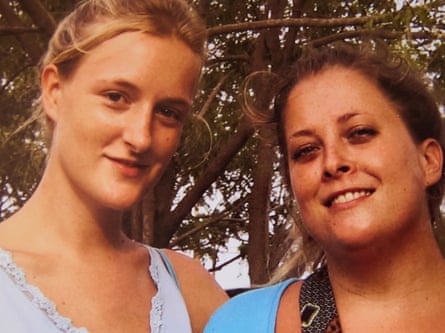
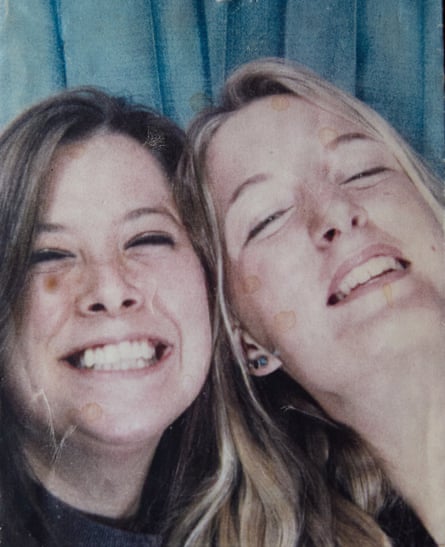
Yusuf and Hannah ate at the Bull & Last , London NW5 . Fancy a blind date? Email blind.date@theguardian.com

They were forced into marriage and abused. Now women facing exploitation in China have a glimmer of hope | China | The Guardian

Keyword – World news
Trefwoorden – China, Asia Pacific, Women, Human trafficking
Title – They were forced into marriage and abused. Now women facing exploitation in China have a glimmer of hope | China | The Guardian
Author – https://www.theguardian.com/profile/amy-hawkins,https://www.theguardian.com/profile/lillian-yang,https://www.theguardian.com/profile/yu-chen-li
Link – They were forced into marriage and abused. Now women facing exploitation in China have a glimmer of hope | China | The Guardian
Publish date – 2026-06-17T04:25:14.000Z
Category – News
URL – https://www.theguardian.com/world/2026/jun/17/forced-marriage-exploitation-women-china

L ast summer, Xiaocao, a softly spoken woman in her 40s, received a tip-off that in Lüliang, a small city in China’s Shanxi province, vulnerable women were being forced into marriages. Along with another volunteer, she wanted to investigate.

After leaving Beijing, the two volunteers travelled south for hours, on trains and in rental cars. A few villages turned out to be dead ends. But on the final day of their trip, the women stopped in a county where they’d heard about a woman with learning disabilities who was “married” to two brothers. Soon, they found her.

“She could see we didn’t mean any harm, so she stopped and chatted with us,” says Xiaocao, who asked to be referred to by her nickname because of the sensitive nature of her work.

The woman ultimately declined their assistance. But her case is just one of possibly thousands across China that activists pursue in an attempt to identify and help vulnerable women who have been either abused or trafficked. Instead of advocating publicly, these activists are working behind the scenes to offer hands-on support to women they fear are being failed by the state.

In a four-part series , the Guardian analysed the changing status of women across Chinese society. The series examines how women are responding to government restrictions and shifting social and economic conditions, in different aspects of their lives.

The ‘chained woman’ incident

The trafficking and exploitation of women in China gained global attention after a case in 2022.

Every detail was shocking: A woman chained by the neck in a filthy shed . The eight children she’d given birth to. Local officials’ initial defence of her marriage to the man who had tied her up.

The case of the “chained woman”, a woman with a mental illness who was later named as Xiao Huamei, quickly went viral after being posted online by a vlogger in 2022. And despite the efforts of the authorities to contain the reaction, the incident inspired a new type of feminism in China, one that operates in the shadows.

The Chinese government says that tackling trafficking is a priority, but activists say that the government’s plans lack transparency.

In 2021, the Chinese government launched a 10-year action anti-trafficking plan that said investigation methods should be “modernised and upgraded”. In April this year, the supreme people’s court claimed the number of trafficking and abduction crimes involving women and children has declined nearly 80% since 2012.

But in recent years, China has dramatically reduced the number of legal judgments that are available online, making it hard to find details about cases or to check the official claims. Traditional social norms in rural areas mean that many cases are never reported in the first place.

A US government report published last year about trafficking in China said: “Some forced marriage cases … were mediated at the village level; these proceedings rarely culminated in a guilty verdict.”

Since Xi Jinping came to power in 2012, he has cracked down on all forms of civil society, including organisations working to eradicate sexual harassment, domestic violence and discrimination.

Despite this, new groups of women across China are taking action.

Since Xiao’s case, more and more privileged women have become willing to speak up for rural women with disabilities, a feminist activist who asked not to be named said.

The activist said that as “ anti-marriage, anti-childbirth ” attitudes become more common among urban women, many have become more sensitive to the idea that in rural areas, women are being forced into marriages and childbearing against their will.

Activists are focused on helping women whom they see as the victims of trafficking, exploitation and abuse. As well as being bought or sold into marriages, some are forced into relationships that they’re unable to consent to.

Celine Liao, a PhD candidate at the University of Washington who studies feminism in China, said that prior to the “chained woman” incident, “trafficking was not at the centre of mainstream feminist discourse” online. But since 2022, “feminists and the broader public have become significantly more sensitive to trafficking-related issues. In subsequent cases … there has been stronger public pressure on prosecutors to examine whether trafficking was involved”.

A world away from the modern, wealthy cities of Beijing and Shanghai, Xiao’s case triggered an outpouring of anger from those who saw another example of a society failing to protect its most vulnerable.

Activists have been spurred on by the sense that Xiao’s story was not unique. In February, news spread of another case. A man in the poor, mountainous region of Guangxi in southern China was discovered with a wife who had learning disabilities, with whom he had had nine children.

“I dare not call this human trafficking. I have no evidence. But I want to ask: how could a woman with intellectual disabilities ‘voluntarily’ have nine children with a man? Could she express consent?” the legal blogger Li Yuchen wrote in an article that was soon censored.

‘An indictment of the society we live in’

Women have responded in a range of different ways.

Some, like Xiaocao, physically travel to places where there are reports of exploitation, to investigate cases. Others use their spare time to monitor national anti-trafficking efforts. Some have lobbied internationally to raise awareness of the issue in China – a highly risky move in today’s climate. Nearly all of them operate under a cloak of anonymity because of the fear of retribution from the authorities, who, despite officially supporting the cause, treat independent activists harshly.

An analysis published by researchers from Renmin University found that of the more than 1,200 female victims of trafficking mentioned in judicial case files between 2017 and 2020, 20% lived with a physical or mental disability. And many cases, like the woman whom Xiaocao discovered in Shanxi, are not reported.

In February, Free Nora, a media collective that was launched in the wake of Xiao’s case, published an article marking the fourth anniversary of the case. It described it as “an indictment of the society and history we live in” and published a lengthy analysis of the government’s progress and shortcomings in protecting the rights of rural women, based on publicly available judicial statistics. It concluded that progress was “insufficient”. The article, and Free Nora’s WeChat account, were later deleted.

Six people, including the husband, were later convicted of crimes relating to Xiao’s case. The authorities launched a special operation to uncover similar incidents which resulted in the discovery of more than 1,000 missing women and children.

But efforts to investigate the problem more deeply have been quashed. Activists have noted that Chinese law criminalises the buying and selling of women, but it does not cover cases in which vulnerable women are forced into marriages.

The Chinese government did not respond to a request for comment.

For now, women like Xiaocao are limited to trying to help women on a case-by-case basis rather than pushing for more wide-ranging reforms. But Xiaocao is studying to be a lawyer to better equip herself to advocate for women and children. She believes the government has failed to take the problem seriously enough, despite the renewed push since Xiao’s case. “I don’t think it’s realistic to rely on the authorities to crack down on this,” she says.

Additional research by Lillian Yang and Yu-chen Li