OL Lyonnes and Scotland’s Caroline Weir: ‘I would love to be competing for the Champions League’ | OL Lyonnes | The Guardian

Keyword – Football
Trefwoorden – OL Lyonnes, Scotland women’s football team, Transfer window, Women’s football, Football, Sport
Title – OL Lyonnes and Scotland’s Caroline Weir: ‘I would love to be competing for the Champions League’ | OL Lyonnes | The Guardian
Author – https://www.theguardian.com/profile/tom-garry
Link – OL Lyonnes and Scotland’s Caroline Weir: ‘I would love to be competing for the Champions League’ | OL Lyonnes | The Guardian
Publish date – 2026-06-18T10:03:48.000Z
Category – Sport
URL – https://www.theguardian.com/football/2026/jun/18/caroline-weir-ol-lyonnes-scotland-interview

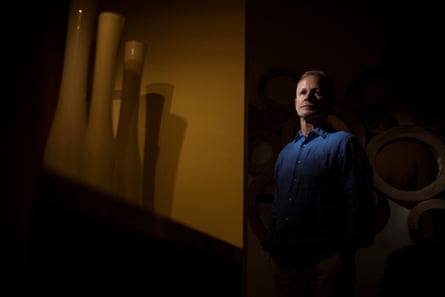
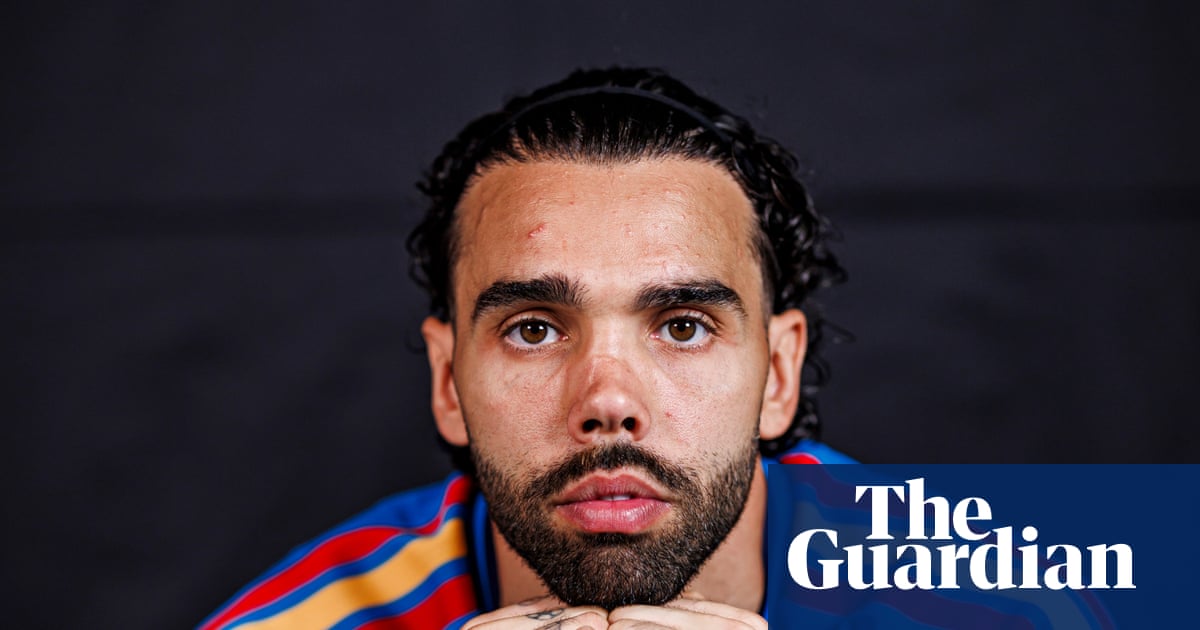
J une 2026 is a month Caroline Weir is unlikely to forget. She scored seven goals in two Scotland games as they clinched top spot in their World Cup qualifying group, watched on with joy at 2am as Scotland’s men secured their first World Cup finals win for 36 years and then her move to OL Lyonnes was confirmed by the eight-time European champions.

The Scotland captain says the lure of playing for Europe’s most decorated women’s club made the transfer an easy decision after four happy years playing for Real Madrid.

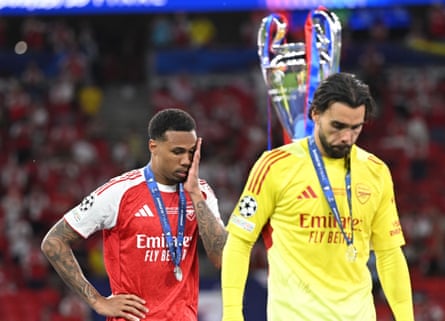
“At this stage in my career, I want to push on,” the 30-year-old says of joining this season’s beaten Champions League finalists . “I want to be competing to win things, I want to be playing with the best players. I would love to be up there competing for the Champions League. The way the competition now is so competitive, there are so many more eyes on it and I want to be in the final stages.

“That’s never a given – it’s really tough to get to semi-finals and finals – but I want to be in the conversation or at least at a club [where] that’s what they prepare to be at. They’re a massive club with a successful history and lots of trophies. I want to challenge myself.”

Weir says conversations with the Lyonnes head coach, Jonatan Giráldez, helped convince her this move was the right choice. The former Barcelona coach outlined how he envisaged her thriving in his tactical plans. “It was interesting speaking to him,” says Weir, who signed a three-year contract. “We spoke about things he thought I was good at. We also spoke about things he thought I could improve, which was good for me to hear, and my style of play, [being] a No 10, being left-footed and how he sees me playing alongside others in that position. We did speak quite in-depth about tactics. That gave me a good idea of what to expect.

“He’s worked with the best players and won everything so there were a number of factors involved, but it was an easy decision in the end.”

Before pre-season training begins in July, Weir has three big things on her to-do list for settling into a new city: finding a good nail salon, finding somewhere to get her eyelashes done and acquainting herself with the best local parks in which to walk her dog – Parc de la Tête d’Or, near the Rhône, should be ideal. Weir, who had never been to Lyon before discussing her transfer, says: “I know it’s the food capital of France; I’ve been hearing the food is amazing. When I went there, it reminded me a little bit of Edinburgh.”

Weir says she and her husband will miss the Madrid lifestyle. She leaves as Real’s all-time record scorer with 63 goals in 125 appearances and will look back fondly on her four years in Spain, where she finished as a league runner-up to Barcelona each season.

“I reflect with very happy memories, on and off the pitch,” says Weir. “My only regret is we didn’t win that first title. But apart from that, how I impacted the team, I’m really proud of those statistics. Me and my husband were very happy there. It’s an amazing lifestyle, an amazing city. But I feel like that chapter came to a natural end and I was ready to move on.”

Bidding farewell to Weir, Real said they wished to “express its gratitude and affection for everything she has contributed to our club, as well as for her professionalism, commitment, and dedication”. She also received a personalised message on a signed shirt from Jude Bellingham. “Jude and I have spoken several times. We’ve always got on well and had nice conversations about the club and Madrid. For him to write that message – I would have been happy with the signed top – just shows how classy a person he is. He’s a great guy and that was a really nice touch.”

They could not meet to say goodbye because Bellingham was training with England for the World Cup, which is whetting Weir’s appetite for next summer’s Women’s World Cup in Brazil. After Weir scored a hat-trick against Israel on 5 June, then backed it up with four goals against the same opponents four days later, Scotland topped their League B group in European qualifying to reach the playoffs. They will find out their playoff opponents on Thursday.

After watching the men beat Haiti as a fan back home in Scotland, Weir, named as the women’s captain in February, says: “I’ve never seen so many Scotland tops. It is amazing. Scotland flags on cars, outside houses. It’s really special. It’s so inspiring.

“Going to Brazil for a World Cup, it’s No 1 on my list of dreams. We were speaking about it a lot recently and because the guys are there, the experiences they’re having and how much the country is supporting them, we would love a bit of that.

“We’ve completed the first step, getting to the playoffs, and then we’ll look forward to the playoffs at the end of the year. We’ll take it step by step.”

‘If Ukraine burns, your Moscow will burn,’ Zelenskyy warns after overnight strikes in Russia – Europe live | World news | The Guardian

Keyword – World news
Trefwoorden – World news, Ukraine, Europe, Russia
Title – ‘If Ukraine burns, your Moscow will burn,’ Zelenskyy warns after overnight strikes in Russia – Europe live | World news | The Guardian
Author – https://www.theguardian.com/profile/jakub-krupa,https://www.theguardian.com/profile/peterbeaumont
Link – ‘If Ukraine burns, your Moscow will burn,’ Zelenskyy warns after overnight strikes in Russia – Europe live | World news | The Guardian
Publish date – 2026-06-18T14:01:00.000Z
Category – News
URL – https://www.theguardian.com/world/live/2026/jun/18/ukraine-russia-moscow-strikes-nato-defence-ministers-hegseth-rutte-latest-news-updates

‘If Ukraine burns, your Moscow will burn,’ Zelenskyy warns after overnight strikes

Meanwhile, Ukraine’s president Volodymyr Zelenskyy warned that “if Ukraine burns, your Moscow will burn” as he ramped up his rhetoric after overnight drone strikes on the Russian capital.

Scores of drones ⁠targeted Moscow overnight, hitting the Russian capital’s oil refinery for the second time this week, Reuters reported.

“ We don’t ⁠want this war, we never did, and everyone ​knows it, and our partners ‌know it,” Zelenskyy ‌said in a voice message sent to reporters on a ‌WhatsApp group, quoted by Reuters.

But if Ukraine burns, your Moscow will burn.

Zelenskyy also called on Europe and ⁠the United States to increase pressure on Russia through ​sanctions on ​Russia’s defence and energy sectors ​and broader economy to force president Vladimir Putin ​into ending ‌the war.

Europe needs to maintain its support for Ukraine, senior US official says

Speaking at the same event, US undersecretary of defence Elbridge A. Colby stressed that the continued support of Nato’s European members for Ukraine will be essential to keeping its fight against Russia alive.

Colby said that the US policy of shifting responsibility for supporting Ukraine onto Europe has worked out well.

“In the past year, European allies have taken the leading role in supporting Ukraine’s defence, assuming the responsibility for the financial support of Ukraine, as well as providing their own arms to Ukraine.

At the same time, we have been prepared to provide weaponry purchased by Europe for Ukraine’s defence through President Trump’s PURL Initiative, which we’ve discussed already today, and allies have contributed significantly to this signature example of practical results-oriented transatlantic cooperation.”

Colby said that “that transition of support to Europe has not only been implemented, it has been correlated with a sustained, effective defence by Ukraine.”

He said “Ukraine’s situation has even improved” as a result.

He said:

“Ukraine has managed to hold the front line and even improve its position in some places, continuing to lay the groundwork for a lasting peace built on Russia’s understanding that perpetuating this war is not only condemnable but also will not pay off for Moscow.”

But Colby stressed that “Ukraine’s defence does hold, but continued and sustained support from allies is essential to maintain it.”

“We in the United States hear time and again how vital Ukraine’s defence is for Europe and for our allies … but our allies must back words with actions.

This is an opportunity for Europe to do precisely that, and in the process help to set and strengthen the conditions for lasting peace in Ukraine.”

Ukraine and Germany sign agreement on anti-ballistic capabilities

Ukraine ⁠and Germany signed an agreement ⁠on anti-ballistic ⁠capabilities, ​president Volodymyr Zelenskyy said , calling on other western ⁠allies to join ​the ‌effort and ‌deliver results by ‌winter.

Speaking at a meeting of the Ukraine Defence Contact ‌Group, Zelenskiy said Ukraine urgently needed long-range artillery and ⁠unmanned vehicles, Reuters reported.

Zelenskyy ​also ​asked to develop ​additional financial ​instruments ‌to finance ​the Ukrainian ​army long-term, Reuters added.

Warsaw says US ‘open’ to permanent military presence in Poland

The US Department ⁠of Defense is open to Poland’s offer to host a ⁠permanent US ⁠military presence ​in Poland, Polish defence minister Władysław Kosiniak-Kamysz said ⁠after meeting US counterpart, Pete Hegseth , in Brussels.

Reuters reported that Poland has been ⁠pushing for a bigger allied ​presence on Nato’s eastern ‌flank after ‌Russia’s invasion of neighbouring Ukraine in 2022.

“The US responded ‌positively to Poland’s proposal to establish a permanent US military ​base in Poland,” Kosiniak-Kamysz told reporters.

But no decision has been taken yet , he added. Poland has so far hosted US troops on ⁠a rotational basis, with a recent controversy over a short-lived decision to pull some troops from the country.

Separately, Lithuania is also hoping to attract more US troops on its territory, with the new ruling coalition adding this into its government programme today.

Russian hardliners call for retaliation after Ukrainian drone attacks

Peter Beaumont in Pavlohrad, Warren Murray and Pjotr Sauer

Russia , the world’s third biggest oil producer and ‌a major oil and fuel exporter, is to import fuel by sea this month as it seeks to manage a shortage after extensive Ukrainian drone attacks on its refineries.

Russian hardliners called for Moscow to retaliate, with some urging the Kremlin to consider using nuclear weapons against Ukraine .

“What else has to happen before we start fighting for real?” wrote the ultraconservative billionaire Konstantin Malofeev on Telegram. “Why aren’t we using the nuclear weapons that our ancestors created and stockpiled through the efforts of the entire country precisely for moments like this?”

Andrey Gurulyov, a retired lieutenant general and state duma deputy, called for Russia to “strike the enemy mercilessly” in response to the attack.

“We need to strengthen our air defence system, but most importantly, we need to hit the enemy,” he told RTVI. “Hit the enemy mercilessly, without overthinking it.”

Rutte needs to ‘take decision whether he wants to play ball or not’

Asked about prospects of making any progress with Russia , Rutte says Putin “one day has got to take a decision whether we wants to play ball or not.”

“In the meantime we have to do everything to make sure Ukraine stays as strong as possible in the fight, so that is what we are working on.”

He says that up to 48% of the Russian state budget is now being spent on defence. “These are crazy numbers,” he says.

“We cannot be naive about Russia,” he stresses, but also says Nato is “very strong” and “we will do everything to make sure that they understand that it will be their biggest mistake if they try” to attack the alliance.

And that ends the press conference.

Rutte gets challenged on the extent of the US commitment given Hegseth left the meeting very early.

He replies by saying he was there for nearly two hours, and listened to contributions from “many allies,” so it’s all fine.

He says he knew Hegseth would have to leave because of other commitments.

Rutte now gets asked about Hegseth’s suggestion that the US could pay less, if other allies don’t meet their targets.

He again says he is “not going to comment on everything that has been said.”

He says that “more generally, … we are working very hard” to meet targets.

“When you look at the individual countries, there are still some who need to do more,” he says.

In contrast, he praises Poland and the Baltic countries for being “really ahead.”

Rutte gets pushed a bit on Hegseth’s comments earlier calling Nato “a paper tiger.”

He essentially says “I’m not going to comment on every word every ally is saying; I never do that.”

Nato in ‘some rough water’ as it faces ‘biggest transformation in history,’ Rutte says

Rutte gets asked about his repeated praise for European allies stepping up and how it compares with Hegseth’s criticism.

He says that the spending increases are “historic,” but there are still some that are “holding back a little bit,” and Hegseth is right to “keep the pressure on.”

He says that Nato “is going through a massive transformation, probably the biggest transfomation in its history.”

“Obviously that means also there are some rough waters, it is a rocky phase. You will have these debates, these discussions, and that’s good.”

Rutte gets asked if there will be “a significantly depleted US presence” after the proposed review, and if countries get punished for their position on Iran.

His answer does not even anywhere get close to the original question.

He eventually says the US review will be “a structured process somewhere over the next six month.”

Rutte gets asked about the changes to the Nato Force Model, the alliance’s readiness force.

He says he cannot confirm anything on what is in the plan and how it’s changing – despite some media reports – as “we do not want to make Russians any wiser.”

He says it’s for planning purposes, but the US can always provide more, too.

He says changes make the plans “more realistic and therefore stronger, because there was an overreliance on the US.”

‘Ukraine is changing dynamic on battlefield,’ Rutte says

Rutte says the ministers will shortly take part in the Ukraine Defence Contact Group, joined by Ukraine’s Zelenskyy.

“ Ukraine is changing the dynamic on the battlefield and inflicting usual huge losses on Russia , but it can only keep doing this if we step up our support,” he says.

Rutte begins by hailing the progress made so far, saying more and more allies are confirming plans to meet their increased defence spending target of 5% GDP by 2035.

“Some allies will already get there this year, way ahead of schedule,” he says.

But he says that while “cash is crucial, you cannot stop a missile or a tank with a dollar or a euro.”

“We need to turn the cash into combat-ready capabilities, and fast.”

He says the priority for next month’s Ankara summit is to get more forces, more resources, and a stronger industrial base.

He says the US “expressed strong commitment to Nato very clear today,” while also expressing the need to achieve “a more equitable distribution of labour” in the alliance.

He acknowledges the US decision to review its troops presence.

He says there is a “broad agreement” among allies to “step up as the US adjusts its pledges to the Nato Force Model.”

Nato’s Rutte speaks to media after alliance’s meeting in Brussels

Rutte is here.

You can watch along below, but I will bring you all the key lines here, too.

Back to Brussels, we are going to hear from Nato’s secretary general, Mark Rutte soon, as he is expected to face the media after today’s Nato ministerial in Brussels.

Expect him to get asked about Hegseth’s comments this morning.

We will bring you his press conference live, obviously.

Meanwhile, local authorities in Moscow said that the supply ⁠of ⁠petroleum ​products to Moscow ⁠and the operation ⁠of ​petrol ‌stations ‌in ‌the Russian capital is “proceeding as normal” ‌after a major ​Ukrainian drone attack, Reuters reported.

Separately, Kremlin aide Yuri Ushakov was quoted by Interfax as saying that the latest strikes set back the prospect of any direct contacts between Russia’s Putin and Ukraine’s Zelenskyy.

Bracketology: predict a path to World Cup victory | World Cup 2026 | The Guardian

Keyword – Football
Trefwoorden – World Cup 2026, World Cup, Football, Spain, France, Argentina, Brazil, England, Sport, Scotland, South Korea, Mexico, Czechia, South Africa football team, Canada, Qatar, Bosnia and Herzegovina, Morocco football team, Haiti football team, USA, Turkey, Australia, Paraguay, Germany, Ecuador, Côte d’Ivoire football team, Curaçao, Netherlands, Japan, Sweden, Tunisia football team, Belgium, Iran, Egypt football team, New Zealand, Uruguay, Saudi Arabia, Cape Verde, Senegal football team, Norway, Iraq, Austria, Algeria football team, Jordan, Portugal, Colombia, Democratic Republic of the Congo football team, Uzbekistan, Croatia, Panama, Ghana football team, US sports, Australia sport, Switzerland
Title – Bracketology: predict a path to World Cup victory | World Cup 2026 | The Guardian
Author –
Link – Bracketology: predict a path to World Cup victory | World Cup 2026 | The Guardian
Publish date – 2026-06-04T10:00:48.000Z
Category – Sport
URL – https://www.theguardian.com/football/ng-interactive/2026/jun/04/bracketology-predict-a-path-to-world-cup-victory

Groups Touch and drag teams into predicted finish order

Third-place teams Pick eight sides to advance to the last 32

Knockouts Tap a winner from each match to plan your route to the final

The progress of the World Cup from match to match is determined from
the beginning: there are no further draws to decide who plays whom in
subsequent rounds.

To maximise the spectacle, the competition is structured, broadly, to
ensure that the “bigger” teams don’t face each other (and knock each
other out) too early in the competition, and to ensure that all 48
teams have an incentive to field their strongest side for every
fixture.

The top two teams from each group automatically qualify to the next
round. Because the winner of a group will face a second- or
third-placed team from another group, the hope is that France, for
instance, will not rest on their laurels once they have enough points
to qualify for the knockouts but will try to win their last game to
get what in principle are easier opponents in the next round, the last
32.

At the other end of the table, a team who know they will come at best
third in their group still have an incentive to give their all in that
last group game because the eight best-performing of the 12
third-placed teams also go into the last 32.

Let’s take the example of England, wholly arbitrarily. If England top
their group, they will face a third-placed team in the first knockout
round (technically any one of 20 other teams, but plausibly a team
such as Côte d’Ivoire or Algeria). If they come second, they will play
the runners-up from Group K, plausibly Colombia. And if they come
third but have a better points total or goal difference than four of
the other third-placed teams, they get a tougher fixture, against the
winners of Group K, possibly Portugal. The simulator includes the
predetermined routes for all 495 possible combinations of groups
yielding the eight best third-placed teams.

This simulator allows you to change the outcome of each group and see
the effect that those changes have on the last 32, and then to imagine
the winner of each knockout game to plot each team’s possible route to
the final.

Editorial: James Dart, Marcus Christenson and Philip Cornwall

Design and development: Barry Ainslie, Georges Lebreton,
Seán Clarke, Harry Fischer, Petter Nitter and Freddie Preece

Groups Touch and drag teams into predicted finish order

Third-place teams Pick eight sides to advance to the last 32

Knockouts Tap a winner from each match to plan your route to the final

Your winner

The progress of the World Cup from match to match is determined from
the beginning: there are no further draws to decide who plays whom in
subsequent rounds.

To maximise the spectacle, the competition is structured, broadly, to
ensure that the “bigger” teams don’t face each other (and knock each
other out) too early in the competition, and to ensure that all 48
teams have an incentive to field their strongest side for every
fixture.

The top two teams from each group automatically qualify to the next
round. Because the winner of a group will face a second- or
third-placed team from another group, the hope is that France, for
instance, will not rest on their laurels once they have enough points
to qualify for the knockouts but will try to win their last game to
get what in principle are easier opponents in the next round, the last
32.

At the other end of the table, a team who know they will come at best
third in their group still have an incentive to give their all in that
last group game because the eight best-performing of the 12
third-placed teams also go into the last 32.

Let’s take the example of England, wholly arbitrarily. If England top
their group, they will face a third-placed team in the first knockout
round (technically any one of 20 other teams, but plausibly a team
such as Côte d’Ivoire or Algeria). If they come second, they will play
the runners-up from Group K, plausibly Colombia. And if they come
third but have a better points total or goal difference than four of
the other third-placed teams, they get a tougher fixture, against the
winners of Group K, possibly Portugal. The simulator includes the
predetermined routes for all 495 possible combinations of groups
yielding the eight best third-placed teams.

This simulator allows you to change the outcome of each group and see
the effect that those changes have on the last 32, and then to imagine
the winner of each knockout game to plot each team’s possible route to
the final.

Editorial: James Dart, Marcus Christenson and Philip
Cornwall

Design and development: Barry Ainslie, Georges Lebreton,
Seán Clarke, Harry Fischer, Petter Nitter and Freddie Preece

Pink flamingos and shimmering lemon groves: exploring Sicily’s Vendicari nature reserve | Sicily holidays | The Guardian

Keyword – Travel
Trefwoorden – Sicily holidays, Italy holidays, Europe holidays, Travel, Birds
Title – Pink flamingos and shimmering lemon groves: exploring Sicily’s Vendicari nature reserve | Sicily holidays | The Guardian
Author – https://www.theguardian.com/profile/alexandermasters
Link – Pink flamingos and shimmering lemon groves: exploring Sicily’s Vendicari nature reserve | Sicily holidays | The Guardian
Publish date – 2026-06-18T06:00:03.000Z
Category – Lifestyle
URL – https://www.theguardian.com/travel/2026/jun/18/sicily-italy-vendicari-nature-reserve-wetland-birds

W e rented Il Nido because we thought other people wouldn’t like it. Small and basic, without internet, the property was supposedly beside a beautiful national park famous for its coastline and migratory birds. The online picture suggested it was pressed up against one of those concrete pillars (common around Sicily) supporting a deserted and rotting motorway flyover. I was writing a thriller with mafia connections. My partner wanted to scrape off six months of fumes from her new job in London. Our daughter needed fun.

“This is a bomb,” said the hostess, opening a cupboard under the sink. “You turn it anticlockwise to go off.”

“Not bomb, bombola ,” whispered my partner. “It’s the gas canister, for the stove.”

From outside in the driving rain came the sounds of traffic and sodden animals – frogs and a goose, always in that order: frog croak, goose quack; frog croak, goose quack.

We woke up on the Saturday to the first sunshine in six months. The roar we had thought was traffic was the crash of waves. The sound of a goose eating a lot of frogs in quick succession turned out, in fact, to be the call of wild flamingos. We were, just as our hostess had promised, in a tumbledown farmstead – what Sicilians call a baglio – among the shimmering lemon groves, on the edge of the Vendicari nature reserve ; and it was glorious.

A baglio is more specifically a fortified group of buildings around a central courtyard, the stone barn equivalent of “circling the wagons” in America. In the 19th century, armed gangs roamed the fields of south-east Sicily. Isolated farms were attractive targets because they stored a whole year’s crop – grain, olives, wine, tools, animals. The two barns opposite our building were caved in, the stone courtyard was more a sunken boulder. In one corner, a vast cluster of poppies and marigolds billowed in merry defiance. On top of a collapsed roof was a starling with 17 voices, including one that sounded like a falling bombola , tossed over the wall by a bandit, and another that suggested a laughing computer.

Vendicari is small, but it is one of the most important wetland nature reserves in Sicily. In the 1970s, the owners of an asphalt and petroleum company wanted to build an oil refinery here . The local officials, looking across the valley from their glorious baroque buildings in Noto, approved the plan. They hadn’t reckoned on the force of Bruno Ragonese , a local eccentric who kept 20 abandoned dogs as pets, and wasn’t even Sicilian: he was an immigrant from Libya. He strode out to the site, gathered evidence on migratory birds, built local environmental groups into a powerful alliance and, brilliantly, argued that since these birds were migrating (as he had done) from Africa to Europe, this was a much bigger issue than a wallet-stuffer for the Noto politicians – it was an international scandal.

Next came the property developers. Again, the Noto councillors patted their pockets. And again the extraordinary young man swung into action. No, replacing the drained wetlands with fake ponds did not constitute “sympathetic, environmental building”. No, migratory birds wouldn’t be perfectly happy on a smaller patch of land in a cheaper sector – they weren’t social housing tenants. Yes, this is the head of Ramsar (the organisation upholding an international environmental treaty protecting wetlands) on the phone wanting to know why you plan to destroy one of Europe’s essential marshlands.

The nature reserve was established in 1984.

For a piffling €7 a day for a whole family or €3.50 for adults, the entire park is yours. After a breakfast of fresh ricotta, honey and local oranges (all from a Coop: these shops look just as plain as the UK Co-ops, but equal the best London delicatessens for good things), we started our visit on Calamosche beach. With juniper bushes, wild irises, tumbling cacti and the lilting flight of hoopoes, it is a blissful stretch of sand sloping into gentle waves. On the left, the rocks lead up to the Grotta di Calamosche, a cave with a tree growing inside. From there, the exquisite view looks almost solid, as if sealed by light.

It is easy to walk the length of Vendicari in two hours, from the ruins of Eloro, a seventh-century BC Greek colony, past the flamingos, to the eerie modern remains of a tuna-canning factory, where the oil refinery was going to be. For hundreds of years, until 1944, tuna were caught here by a brutal method of netting and trapping called mattazana , literally “the slaughter”. Now roofless, with staring windows and only a crowd of thin pillars remaining, this Colosseum for fish feels as ancient as Rome.

“Did you know flamingos are pink because they eat shrimp?” said my daughter, interrupting my pleasantly gloomy mood thinking about time, loss and tins of fish.

I did not, and I don’t believe it. There’s only so much silliness from nature that I’m prepared to accept. “And what colour are flamingos that don’t eat shrimp?” I said, in a superior tone.

“No colour. The world is full of invisible flamingos.”

The two lakes at the heart of the reserve were thick with these fantastical birds, gabbling and scooping at the water, and coming in to land like badly piloted pink planes.
I retorted with science. “Those tiny buildings?” I pointed towards ancient Syracuse, glimmering in the distance. “Birthplace of Archimedes, one of the greatest mathematicians of all time, inventor of … No, don’t look it up on your phone – phones are banned!”

But it was too late. She had captured another flash of internet. “Hey! There’s an H&M in Syracuse. Let’s go!”

The path around the reserve does not entirely encircle it. You set off left, walk for 5 miles (8km), then half a mile before you get to your ruined farmhouse home, your way is blocked by a private lemon grove. You must not go through it. You are not allowed through it.

We went through it. It was lovely.

In this part of Sicily, lemons are so plentiful and the trees so giving, that you feel the fruit is being forced on you by nature, Breughel fashion; it would be rude not to accept. Of course, you must not add theft to trespass. But I thoroughly recommend you buy some from the farmer: they are delicious. Organic, bloated, dazzling growths of oily yellow, I think they are the famous Femminello Siracusano lemons. Because local regulations forbid the use of wax or pesticides, every part is edible.

After the lemon grove came a path of marigolds, as tall as my shoulder, and wild fennel, above my head. We arrived home at sunset, where we cooked tagliatelle al limone rubato on the bits of the stove that did work, and ate it overlooking Syracuse and its H&M, with three invisible flamingos for company. Here’s the recipe:

Pasta al limone rubato

Lardo or bacon , as much as you want 1 lemon , zest and juice S crubland herbs thyme, oregano or whatever you can find. Fennel is good Pasta , perhaps tagliatelle Parmesan cheese , lots

Fry the lardo, add the lemon zest, herbs, a little pasta cooking water, and stir. Add pasta. Mix in grated cheese and lemon juice until it tastes nice. Serve under cover of darkness.

Alexander Masters is the author of Stuart: A Life Backwards and Simon: The Genius in My Basement

Colombia squeeze past dogged Uzbekistan to open World Cup campaign with victory | World Cup 2026 | The Guardian

Keyword – Football
Trefwoorden – World Cup 2026, Uzbekistan, Colombia, World Cup, Football, Sport
Title – Colombia squeeze past dogged Uzbekistan to open World Cup campaign with victory | World Cup 2026 | The Guardian
Author – https://www.theguardian.com/profile/jonathanwilson
Link – Colombia squeeze past dogged Uzbekistan to open World Cup campaign with victory | World Cup 2026 | The Guardian
Publish date – 2026-06-18T04:22:57.000Z
Category – Sport
URL – https://www.theguardian.com/football/2026/jun/18/uzbekistan-colombia-world-cup-2026-group-k-match-report

Some very good things have come from Croydon, the often overlooked town in south London. The film director David Lean was born there, as was Roy Hodgson, the actor Peggy Ashcroft and the sexologist Havelock Ellis. Amy Winehouse studied in Croydon. The Bill and Peep Show were filmed there, as was the title sequence of the 1980s sitcom Terry and June. For a long time it was a centre of brewing and leather production. It was on a suburban driveway there that Pickles found the Jules Rimet trophy after it had been stolen in 1966. And on Wednesday Croydon proved the crucible of Colombia’s victory over Uzbekistan .

Daniel Muñoz’s brilliant strike, created by Luis Díaz, set Colombia on heir way to a win that should never have been as edgy as it ended up being. But his Crystal Palace teammate Jefferson Lerma was a key figure in the centre of midfield, a controlling figure in Colombia’s domination of the majority of the game. “I’m living out my childhood dream of playing in a World Cup for my national team and for my country,” said a delighted Díaz after being named man of the match. “And what could be more beautiful than contributing with a goal and an assist?”

It was, in truth, a game desperately in need of something special. In Lean’s greatest film, Lawrence of Arabia undertook an arduous trek across the Nefud Desert to lead an attack on Aqaba, but even he may have balked at the journey those travelling to the Azteca had to undertake from central Mexico City. Heavy rain led to huge puddles and numerous crashes. The verges alongside the Anillo Periférico were dotted with battered vehicles. For the final two or three miles the roads were lined with a ragged procession of fans who had abandoned their buses and taxis to walk. A trip that should have lasted just over an hour took more than four. Magnificent the Azteca may be, but it is not a modern football ground. Chaos swirls around it; nothing there really works.

For 40 minutes, other than some lusty singing from the stands, there wasn’t much to justify the effort. Reflecting that this was the first game in World Cup finals history to feature a double-landlocked country could only sustain the interest so far, even given the curiosity that they were facing a double-coasted country.

But then came the goal. Uzbekistan’s defensive line seemed deep enough that there was no danger behind it but Díaz measured a precise pass into the space where Muñoz swooped on to it from the right. It was an extremely difficult finish but the full-back, somehow, leaping with right leg fully extended, jabbed a toe at the ball and volleyed it past Utkir Yusupov.

“We knew the first game wasn’t going to be easy,” said the Colombia manager, Néstor Lorenzo. “We could have scored and built a bigger lead, but our opponents played well; they’re a very compact team and it was difficult for us to get through. We need to finish off our moves. We had a lot of possession but didn’t create crosses or shots on goal; we need to improve that.”

This was at least as much of a home match for Colombia as the opening game had been for Mexico. The stadium was a bowl of yellow – although the team themselves wore a greenish turquoise – broken only by a white splodge behind one goal of perhaps 100 white-wigged Uzbekistan fans, whose enthusiastic drummer ensured that they could be heard above the Colombian din.

The game soon settled into a pattern of attack against defence. Uzbekistan had kept seven clean sheets in 10 games in the third round of Asian qualifying, and it was easy to see how, their notional 3-4-2-1 often resembling a 5-4-1 with two banks sitting deep and the centre-forward Eldor Shomurodov doing a lot of chasing.

“We need to improve,” said Uzbekistan manager, Fabio Cannavaro. “Beating Colombia and Portugal will be difficult. But today we stayed in the game until the end and the team knew when to weather the pressure and when to counter them through possession.”

Although Colombia aren’t short of creative talent, this is not the side of 2014. Early on, there was a lot of sideways passing, but they improved after the hydration break to hit the post through Díaz.

The second half was rather livelier, as Uzbekistan found an equaliser just after the hour. The young Istanbul Basaksehir forward Abbosbek Fayzullaev nodded in from close range after Shomurodov’s volley had been deflected onto the post by the thighs of the Colombia goalkeeper, Camilo Vargas. A mood of anxiety settled over the stadium, but it lasted only five minutes before Colombia retook the lead. Shomurodov was dispossessed, Colombia swept forward and Gustavo Puerta laid in Díaz to score with shot that squirmed through Yusupov’s hands. Colombia then dropped deep, though, inviting Uzbekistan on to them and they were under pressure when Jaminton Campaz made the game absolutely safe in injury time, heading in after tenacious work by Juan Camilo Hernández.

With DR Congo holding Portugal to a draw , victory puts Colombia in charge of the group, although a proper assessment of how good they are will have to wait until they play a side prepared to do more than simply absorb pressure.

Ghana grab vital World Cup victory over Panama after Caleb Yirenkyi’s last-gasp goal | World Cup 2026 | The Guardian

Keyword – Football
Trefwoorden – World Cup 2026, World Cup, Sport, Football, Ghana football team, Panama
Title – Ghana grab vital World Cup victory over Panama after Caleb Yirenkyi’s last-gasp goal | World Cup 2026 | The Guardian
Author – PA Media and Reuters
Link – Ghana grab vital World Cup victory over Panama after Caleb Yirenkyi’s last-gasp goal | World Cup 2026 | The Guardian
Publish date – 2026-06-18T01:31:33.000Z
Category – Sport
URL – https://www.theguardian.com/football/2026/jun/18/ghana-panama-world-cup-2026-match-report-group-l

A late goal from Caleb Yirenkyi gave Ghana a 1-0 win over Panama as they joined England at the top of Group L. Yirenkyi steered in Brandon Thomas-Asante’s cross in stoppage time to settle a match of few clear chances.

Cecilio Waterman forced a good save from the Ghana goalkeeper, Lawrence Ati-Zigi, in the second minute as he met a cross from the right, but it was a rare opening in a cagey first half in the Toronto rain.

Panama had the best of the opening period, Cristian Martínez having a penalty appeal waved away as he tried to latch on to a ball over the top and Jiovany Ramos firing high and wide after Ati-Zigi had acrobatically punched into his path.

Manchester City’s Antoine Semenyo moved more centrally as the half wore on, finally making a major impact just before half-time with a through ball which ended with Ghana’s first effort on goal – Marvin Senaya endangering the corner flag more than the net.

Ati-Zigi, who received treatment late in the first half after a collision, was replaced at the interval by Benjamin Asare and Ghana finally carved an attempt of note, Jonas Adjetey heading straight at Orlando Mosquera.

Martínez was unable to steer the ball inside the post at the other end, but Ghana were much brighter after the break with only a last-ditch touch from Ramos preventing Jordan Ayew, who is leaving Leicester this summer, from sliding home.

Ramos curled wide from the edge of the box moments later as the game opened up, an offside flag and Mosquera denying Thomas-Asante a late winner before he was released again moments later to deliver the cross for Yirenkyi.

“With the football we played today we ‌can count on Ghana to do something,” Ghana’s coach, Carlos Queiroz, said. He complained about the rough handling of Ghana players by Panama, and said his team were “naive and not aggressive ⁠in the first half”.

Queiroz also said he was unsure whether Ati-Zigi would be available to face England in Boston on Tuesday.

Describing the defeat as “painful”, Panama’s head coach, Thomas Christiansen, said: “We deserved better. We have lessons to learn. At the World Cup , mistakes are expensive.

“Now is not the time for regrets. We will not be timid against Croatia. We want to show that Panama is difficult to beat and we will fight until the last breath.”

To fridge or not to fridge: tell us your views | Food | The Guardian

Keyword – Food
Trefwoorden – Food, Life and style
Title – To fridge or not to fridge: tell us your views | Food | The Guardian
Author – https://www.theguardian.com/profile/guardian-community-team
Link – To fridge or not to fridge: tell us your views | Food | The Guardian
Publish date – 2026-06-17T11:52:31.000Z
Category – Lifestyle
URL – https://www.theguardian.com/food/2026/jun/17/to-fridge-or-not-to-fridge-tell-us-your-views

What items should or shouldn’t be kept in the fridge can divide opinions but the Guardian has asked some experts – it seems bread and olive oil do not benefit from being in the fridge but red wine can taste great chilled.

Now we want to hear from you. What items do you keep in the fridge? Does this differ from your partner, family or friends? Let us know.

How I Shop with David Gandy: ‘It gets into the male psyche’ | Celebrity | The Guardian

Keyword – The Filter
Trefwoorden – Celebrity, Life and style, Models, Interiors, Fashion, Homes
Title – How I Shop with David Gandy: ‘It gets into the male psyche’ | Celebrity | The Guardian
Author – https://www.theguardian.com/profile/hannahbooth
Link – How I Shop with David Gandy: ‘It gets into the male psyche’ | Celebrity | The Guardian
Publish date – 2026-06-16T14:00:01.000Z
Category – Lifestyle
URL – https://www.theguardian.com/thefilter/2026/jun/16/how-i-shop-with-david-gandy

D avid Gandy is one of the most recognisable faces in fashion, starring in hundreds of campaigns for brands including Dolce & Gabbana, Burberry, Hugo Boss and many more. He was the first man nominated for model of the year by the British Fashion Council.

From 2014 to 2019 he designed a bestselling range for Marks & Spencer featuring underwear, sleepwear and more, and in 2021, he launched his own fashion and lifestyle brand, David Gandy Wellwear. A committed philanthropist, he has worked with several charities, from Save the Children to Battersea Dogs & Cats Home, and backed the Centre for Social Justice’s Lost Boys report on the crisis facing boys and young men in the UK today. The David Gandy Wellwear summer collection is available now.

What was the last treat you bought yourself?

A very fancy electric Cobra Fortis lawnmower last summer. I now have three lawnmowers as I am slightly obsessed with my garden, especially the lawn.

Cobra Fortis 25FTE cordless fine turf cylinder mower 63cm

Where do you buy your food from?

I mix M&S food with daily shopping at Waitrose , as the staff at my East Sheen store are amazing. Next door is Valentina Deli , which I love as I am obsessed with anything Italian when it comes to food, probably a hangover from the many campaigns I have shot in Italy over the years.

What’s the best present you’ve given?

You would have to ask the people I gave them to. There’s a brilliant artist I have worked with called Daisy Simpson who has hand-drawn pencil portraits of my children and pets, and my family love them. I prefer giving gifts that are well thought through and highly personal. I love giving presents, whereas I feel very awkward receiving anything.

… and the best present you’ve received?

A pedal go-kart when I was six years old.

What’s your favourite online store?

I love interiors and am a big fan of anything Andrew Martin does, so I spend a lot of time on his website sourcing things for the house. The wallpaper in our daughters’ playroom is his ark animal motif, and we have a lot of his chairs too.

Andrew Martin ark wallpaper

What’s your favourite bricks-and-mortar shop?

Thom Sweeney on Old Burlington Street in London. It’s more than a menswear store; it’s a townhouse (which recently expanded into the art gallery next door) designed as somewhere its clients can hang out, play pool and have a coffee – rather than just shop. It gets into the male psyche, which is something I love about brands – when they become more than the product itself.

What’s the gadget you use most often?

The SmartLife app on my phone, which allows me to control most things in my home while out and about.

SmartLife app

What’s the purchase you regret the most?

Probably the Fortis lawnmower … I should have gone for one of Allett’s petrol mowers.

What’s the thing(s) you get delivered?

Since we finished renovating our home in London, my attention has turned to the garden, which is my new obsession. So at the moment, flowers, plants and topsoil are the most frequent deliveries to our front door.

Hydrangea arborescens ‘Incrediball’ (Strong Annabelle)

Where do you buy your underwear?

Obviously I wear my own brand’s pants, but I also like Sunspel .

What would you buy with £20 – and £200?

For £20, I would buy my rescue dog Dora some of her favourite fresh lamb chews . With £200, I’d probably treat myself to a plate of spaghetti alle vongole in Italy, and spend some of my British Airways air miles to help get me there.

Perrito lamb dog chews, 100g

What’s your ‘saved search’ on eBay/Vinted?

I don’t have an account for either. But on the Collecting Cars app, there’s a Jaguar XKR-S that’s saved, and I’m following it closely …

What item do you buy on repeat?

Nespresso coffee pods.

Nespresso original coffee pods

How do you make your coffee at home?

With a Nespresso coffee maker.

Nespresso Vertuo Plus

What’s your biggest splurge?

Classic cars. I have bought and restored quite a few now – my favourite being my Jaguar XK120, which I have since raced in the Mille Miglia [a 1,000-mile endurance race through Italy] several times. My career has enabled me to splurge on this particular hobby.

And what everyday item do you scrimp on?

Posh bottles of hand soap that I then refill with cheaper alternatives.

Aesop Resurrection Aromatique hand wash, 500ml

What’s your greatest vintage find?

When I was living in New York about 20 years ago, I loved shopping in vintage stores. One of the best pieces I ever bought was a shearling Burberry aviator jacket – I still have it today.

For more, read How I Shop with Kim Cattrall and Banjo Beale

Don’t buy anything until you’ve read the Filter, the Guardian’s home for truly independent product reviews and recommendations. Whether you’re after rigorous tests or shopping inspo, affordable gifts or advice on how to make your belongings last longer, we’re here to help you make smarter, more sustainable choices.

The Filter is packed with trustworthy buying advice on everything from coffee machines to hiking boots, mascara to secateurs. So visit us today and start buying better and smarter, and wasting less.

The Lonely City by Olivia Laing audiobook review – solitude and creativity in Manhattan | Olivia Laing | The Guardian

Keyword – Books
Trefwoorden – Olivia Laing, Tilda Swinton, Edward Hopper, Autobiography and memoir, Art and design, Mental health
Title – The Lonely City by Olivia Laing audiobook review – solitude and creativity in Manhattan | Olivia Laing | The Guardian
Author – https://www.theguardian.com/profile/fiona-sturges
Link – The Lonely City by Olivia Laing audiobook review – solitude and creativity in Manhattan | Olivia Laing | The Guardian
Publish date – 2026-06-18T14:00:06.000Z
Category – Culture
URL – https://www.theguardian.com/books/2026/jun/19/the-lonely-city-by-olivia-laing-audiobook-review-solitude-and-creativity-in-manhattan

I t is a decade since Olivia Laing published The Lonely City , a blend of memoir and cultural analysis on the isolation of urban living. Laing – who is non-binary – had moved to Manhattan following a love affair that ended abruptly. Once there, they were taken aback at their feelings of isolation. Laing discovered “you can be lonely anywhere, but there is a particular flavour to the loneliness that comes from living in a city, surrounded by millions of people”.

The author’s attempts to navigate these difficult feelings are threaded through a series of artist portraits examining the connection between loneliness and creativity. There is Edward Hopper, famed for his paintings featuring lone figures seated in cafes and diners, and Henry Darger, the janitor and hospital worker who lived alone and achieved posthumous fame through his disturbing and hallucinatory paintings of misfits. Laing also ponders the work of Andy Warhol, who surrounded himself with people while still keeping them at arm’s length, and David Wojnarowicz, the American artist and photographer who documented the devastation caused by the Aids virus. His work, Laing notes, “did more than anything to release me from the burden of feeling that in my solitude I was shamefully alone”.

Actor Tilda Swinton is the narrator for this new recording marking the book’s tenth anniversary. Her reading (her first for an audiobook) is sharp yet reflective, tinged with curiosity and melancholy. Laing, who now lives in Suffolk, reads a new afterword in which she notes how loneliness is “a part of being human: isolated in a body, condemned to live inside time. No one is truly immune to loneliness and what really matters is what we do with it and where it takes us.”

Available via Canongate Books, 9hr 36min

Further listening

Cursed Daughters Oyinkan Braithwaite , W F Howes , 9 hr 24 min Three readers – Weruche Opia, Diana Yekinni and Nnei Opia Clark – tackle this multigenerational novel which tells of a curse passed down through the women in a single family, consigning each to a life of heartbreak and loneliness.

Always Winning Ashley Walters , Transworld Digital , 6 hr 43 min This memoir from the star of Adolescence and Top Boy finds him reflecting on his beginnings on a council estate in Peckham, south-east London; his teenage flirtation with gang violence; his time in UK rap collective So Solid Crew and his flourishing career as an actor and director. Read by the author.

‘We had right of way’: when British fair play met Russian firepower off the Isle of Wight | UK news | The Guardian

Keyword – UK news
Trefwoorden – UK news, Russia, Water transport, Military, Ministry of Defence, Isle of Wight, England
Title – ‘We had right of way’: when British fair play met Russian firepower off the Isle of Wight | UK news | The Guardian
Author – https://www.theguardian.com/profile/emine-sinmaz,https://www.theguardian.com/profile/helena-horton,https://www.theguardian.com/profile/jamie-grierson,https://www.theguardian.com/profile/daniel-boffey
Link – ‘We had right of way’: when British fair play met Russian firepower off the Isle of Wight | UK news | The Guardian
Publish date – 2026-06-17T19:17:00.000Z
Category – News
URL – https://www.theguardian.com/uk-news/2026/jun/17/we-had-right-of-way-when-british-fair-play-met-russian-firepower-off-the-isle-of-wight

“We actually had right of way,” said Jane Kelvey, a little crossly, though keeping it civil. “But we weren’t going to argue with a warship.”

The dramatic standoff in the Channel on Tuesday morning between Admiral Grigorovich, a 125-metre (409ft) battle-hardened Russian frigate, and Bright Future, a 12-metre (40ft) pleasure yacht owned and helmed by Jane, 69, and her husband, Alan, 71, has rather caught the nation’s imagination.

It was a David and Goliath clash on the high seas, and one with some irresistible ingredients: a seemingly savage Russian foe meeting middle England’s implacable conviction in its own common sense – even if the couple ultimately beat a hasty and sensible retreat.

As with so much in the British national story at the moment, it had the advantage for some in the British media that it also ended up making Keir Starmer look a bit bad.

The Ministry of Defence has let it be known that it regards the matter – involving no less than warning shots being fired by the Russian warship just 20 nautical miles from the Isle of Wight – as a mere “nautical incident” for which the fault can most justifiably be said to lie in the foggy weather, and perhaps some dodgy sailing.

The Kelveys are insistent that the government is letting the Kremlin off the hook – not quite getting away with murder, but with a damned cheek. “The British are trying to shut it down by agreeing with the Russian comments on it,” complained Alan, who claimed Starmer’s government wanted to avoid a diplomatic incident.

Quite who has the better arguments is not entirely clear as yet – but the broad-strokes of the matter are at least largely known. And what is certainly evident is that Anglo-Russian relations are at a dangerously tense moment. For all the farce of what occurred in the Channel, these are serious times of genuine peril where minor incidents can turn into major disasters. “We don’t want world war three to start because of this,” Jane told the Guardian .

The Kelveys had set sail from Lymington, Hampshire, at 4am on Tuesday, destined for the French port of Cherbourg. It was to be the happy start to a two-month sailing trip that was a repeat of a dream adventure they undertook in 2024, after retiring from the successful signage business they had built from scratch in Uxbridge, west London.

The couple, who knew their route well, were about halfway across the Channel and going at a leisurely 5 knots (about 5.75 miles per hour) when they spotted a vessel in the distance.

It wasn’t showing on the automatic identification system (AIS) that tracks ships via their transponders. But as Bright Future got a little closer, it became quite clear what was in front of them – and to whom it belonged. “We saw the Cyrillic lettering on the side,” said Jane, describing with admirable reserve what must have been quite a moment.

They heard the warship sound its horn and swiftly changed course. A further five loud blasts were followed by what Jane described as a “whipcrack” sound. “You can tell when a gun’s been fired,” she said. “You know that noise.”

Moscow, of course, has its own account. It says that what the crew of Admiral Grigorovich saw was a vessel proceeding under engine power on a direct course towards them – even after multiple efforts were made to establish radio contact and signal flares were launched.

The horn was sounded to alert the boat to a risk of collision, but when Bright Future, closing in at a distance of 150 metres (500ft), failed to respond, the frigate’s commander ordered warning shots to be fired across its bow using small arms. The sailors, the Russian ministry of defence said, had acted “in strict accordance with international navigation laws” to prevent a maritime incident.

A pack of lies, according to Jane. “They had plenty of opportunity to warn us off, if that’s what they wanted,” she said. “They didn’t fire flares, they didn’t get on the radio to us. They just gave five blasts from their horn to let us know they were there. We acknowledged by changing our course and then they did another five blasts, and then they fired the warning shots … But we weren’t in the way, we were not about to collide with them at all.”

She added that they were also sailing at the time, rather than running on engine power, and their AIS transponder was on.

The shots certainly did the job they were intended to do. Jane cowered down to the floor while Alan put on the engine and steered 90 degrees to port with the intention of getting away as fast as possible. The couple considered calling it in on the VHF maritime radio, but reckoned the Russians would pick it up.

Instead, Jane called 999 and asked for the coastguard. Half an hour later, HMS Tyne, an offshore patrol vessel, came by to see that they were all well. After that, they headed on to Cherbourg for an hour-and-a-half debrief with the French gendarmerie. Next up was a glass of rosé for Jane and a beer for Alan, as they have every intention of carrying on with their holiday. “Too right,” said Alan.

Speaking at the G7 summit in Évian-les-Bains, France, Starmer described the Russian action as “reckless” if not “sinister”.

“What happened in the Channel is obviously deeply concerning, and I obviously feel for the couple on the yacht,” the prime minister said. He also had to address the conviction of two men , seemingly operating under the instruction of an online handler with links to Russia , who had carried out arson attacks on a property and car connected to him.

Starmer told reporters the attacks on him should be seen in the “broader context” of Russia’s war in Ukraine. Deeply concerning all round, then.

Back home in Iver, the Buckinghamshire village that the Kelveys now call home, friends and neighbours’ surprise at seeing the couple in the headlines for tangling with the Russians was tempered by their reputation for having an adventurous spirit.

“I wasn’t surprised to see Jane was drinking rosé after being shot at by the Russians – she’s a hard nut,” said one local resident. “Don’t mess with her.”

Indeed, the incident in the Channel isn’t even the Kelvey’s first walk-on part in great geopolitical matters. In 2022, the then prime minister Boris Johnson visited their business, the day before Russia invaded Ukraine.

“We got a heads up [war] might be coming,” said Daniel Murphy, the production manager at the couple’s sign factory, “because suddenly Boris’s aides surrounded him and got him into a corridor where he took a call from [the then US president] Joe Biden.”

Murphy said it was “typical” of the Kelveys to take their brush with the Russians in their stride. “They have a good way of looking at life,” he said. “They brush off things, they have a stiff upper lip.”

They have, in other words, a wartime spirit.