Post your questions for Martha Reeves of Martha and the Vandellas | Martha and The Vandellas | The Guardian

Keyword – Music
Trefwoorden – Martha and The Vandellas, Pop and rock, Music, R&B, Soul, Culture
Title – Post your questions for Martha Reeves of Martha and the Vandellas | Martha and The Vandellas | The Guardian
Author – https://www.theguardian.com/profile/ben-beaumont-thomas
Link – Post your questions for Martha Reeves of Martha and the Vandellas | Martha and The Vandellas | The Guardian
Publish date – 2026-06-18T14:10:05.000Z
Category – Culture
URL – https://www.theguardian.com/music/2026/jun/18/post-your-questions-for-martha-reeves-of-martha-and-the-vandellas

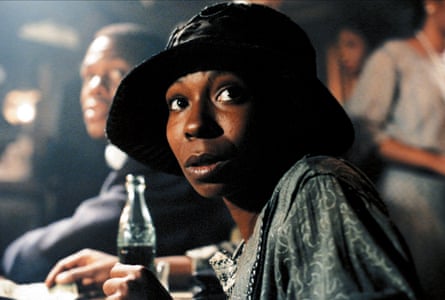
Martha Reeves is one of the defining voices of 1960s pop, someone who embodied the romance and euphoria of Motown Records at its peak. And at the age of 84, she is preparing to release a new album – her first in 22 years. To mark the occasion, she’ll be joining us to answer your questions.

Born in Alabama and raised in Detroit, Reeves started out in the shadows of Motown Records, first doing administrative work, then backing vocals for the likes of Marvin Gaye. But in 1962 she got her shot as a lead artist with Martha and the Vandellas. Their second single, Come and Get These Memories, was a hit – and their third was an absolute smash. Heat Wave featured an astonishing performance from Reeves as she was knocked for six by love and lust. It kicked off a run of similarly lovestruck hits such as Jimmy Mack, I’m Ready for Love and Nowhere to Run. Dancing in the Street, meanwhile, was a euphoric paean to dance which took on a new meaning at the height of the civil rights movement, becoming a rallying call for protesters to unite.

It adds up to one of the most astonishing bodies of work in 60s pop, and while the group may have wound down in 1973, Reeves’s career didn’t end there: she recorded five solo albums, acted on Broadway and continued to perform live.

She has now gone back to the recording studio for new album Searching, a title that “represents hope for the future in all things”, she told Rolling Stone recently. Co-produced by jazz trombonist Delfeayo Marsalis, it has a jazz flavour with standards such as Summertime, but also traverses R&B, gospel, blues and beyond, and includes I’ve Got It Bad, a song Reeves first recorded with the Vandellas but which was never released.

Ahead of the release of this record, Reeves will join us to answer your questions on her career. Post them in the comments below before Tuesday 23 June, and we’ll publish her answers later that week.

Naked cycling: is it ever acceptable to ride a rental bike in the nude? | Cycling | The Guardian

Keyword – Life and style
Trefwoorden – Cycling, Life and style, London
Title – Naked cycling: is it ever acceptable to ride a rental bike in the nude? | Cycling | The Guardian
Author – Guardian Staff
Link – Naked cycling: is it ever acceptable to ride a rental bike in the nude? | Cycling | The Guardian
Publish date – 2026-06-16T14:51:29.000Z
Category – Lifestyle
URL – https://www.theguardian.com/lifeandstyle/2026/jun/16/naked-cycling-ever-acceptable-rental-bike-nude

Name: World Naked Bike Ride.

Age: 22.

Appearance: A global celebration of potentially crushed genitalia.

Is it World Naked Bike Ride again already? Where does the time go? Well, the World Naked Bike Ride event in London already happened, last Sunday. I can’t believe you missed it.

Always the naked bridesmaid, never the naked bride. Don’t worry, though, because the repercussions of World Naked Bike Ride will carry on for weeks to come.

Really? Why’s that? Primarily because everyone is freaking out about the, er, let’s call them consequences of sharing a saddle with someone who has ridden it in the buff.

Oh. Oh . Yuck. I’m afraid so. Apparently, of the 1,000 cyclists who rode naked through the streets of London at the weekend, about half of them were using rental bikes. As such, social media is quickly filling up with people hyperventilating about saddle hygiene – issues such as sweat and fungal infections have been mentioned.

Well, World Naked Bike Ride sounds absolutely disgusting. That’s the thing, it really isn’t. This is the 22nd year that it has taken place in London, and nudity is always an optional aspect. People can take part fully dressed if they like.

Ah, World Ride a Bike With All Your Clothes On. That’ll grab the headlines. It’s held for an important reason, too.

Which is? Safety. In big cities that are dominated by cars, cyclists are physically vulnerable. Doing it with all your bits flapping around highlights this vulnerability as strongly as possible.

Why hasn’t there been this much fuss about it before? Oh, there has. Six cyclists were charged with public indecency when the event took place in Chicago in 2005. A man was removed from the event in Canterbury in 2015 after becoming too visibly excited. Last year, the Reform MP Lee Anderson called it a “freak show”.

That sounds like all the excuse I need to support it, then. However, this is the first time that hygiene has been used as a weapon. The rise of cycle hire schemes means that bikes now belong to everyone.

So now cyclists are also vulnerable to catching chlamydia from a saddle? No: from an infection control standpoint, the risk of catching a disease from a bike previously ridden by a naked person is vanishingly small.

Have the rental bike companies said anything? A spokesperson from Lime – one of the biggest e-bike rental companies in London – told the Metro: “As with any ride, we ask that people leave our bikes in the condition they’d want to find them. For safety reasons, we’d always encourage everyone to wear appropriate clothing when cycling.”

Do they at least clean them? According to the Metro, Lime bikes are “regularly” pressure-cleaned with recycled rainwater.

So it’s fine then? No, of course it’s not fine! It’s gross! Next time World Naked Bike Ride happens, bring your own bike. Or pop a shower cap over the saddle.

Do say: “Please leave your bikes in the condition you found them.”

Don’t say: “Drenched in someone else’s sweat.”

Do you have an opinion on the issues raised in this article? If you would like to submit a response of up to 300 words by email to be considered for publication in our letters section, please click here

Titan sub: design flaws and company groupthink central to catastrophe, report finds | Titanic sub incident | The Guardian

Keyword – World news
Trefwoorden – Titanic sub incident, Canada, World news, Americas
Title – Titan sub: design flaws and company groupthink central to catastrophe, report finds | Titanic sub incident | The Guardian
Author – https://www.theguardian.com/profile/leyland-cecco
Link – Titan sub: design flaws and company groupthink central to catastrophe, report finds | Titanic sub incident | The Guardian
Publish date – 2026-06-17T18:24:06.000Z
Category – News
URL – https://www.theguardian.com/world/2026/jun/17/titan-sub-design-flaws-company-groupthink-report

Canadian safety officials have issued a damning report on the catastrophic final voyage of the Titan submersible, finding that the US company behind the expedition was overcome by “groupthink” and “confirmation bias” and failed to understand the profound risks confronting their largely untested craft.

The 6.7-metre (22ft) carbon fibre submersible dipped below the surface of the Atlantic Ocean in June 2023 en route to the wreckage of the Titanic ocean liner. But nearly two hours after it departed with five passengers, communications went dark. The disappearance prompted a frantic international search, with Canada and the US marshalling all available resources .

OceanGate, the company behind the expedition, operated trips to the final resting place of the Titanic, which struck an iceberg in 1912 and sank, killing more than 1,500 of the 2,200 passengers and crew.

Onboard the submersible were Hamish Harding , 58, a British explorer and pilot; Shahzada Dawood, 48, a British-Pakistani businessman, and his son Suleman, 19; Paul-Henri Nargeolet, a deep diver, submersible pilot, former French navy commander and leading authority on the Titanic wreck site; and Stockton Rush, the founder of OceanGate.

Within days, investigators found the wreck of the vessel nearly 400 miles (640km) off the coast of Newfoundland and concluded all passengers died instantly when the structure imploded near the wreckage of the Titanic.

In its report released on Wednesday , Canada’s transportation and safety board (TSB) said that numerous failures in the submersible’s design and the broader company culture were central factors in the disaster.

OceanGate positioned itself as an ambitious undersea exploration company that had pioneered a carbon fibre submersible to venture deep below the surface.

Inspectors said: “There was no precedent for diving a human-occupied carbon fibre submersible to the deep ocean, and the company acknowledged both internally and publicly that its operations involved risk.”

The Washington state-based company built a pair of 1/3 scale models of the Titan to test how it responded to pressure. Six tests were done on these scale models. Both failed at depths above the resting place of the Titanic.

The company changed the design and manufacturing to mitigate the “ply waviness” of the carbon fibre. Waviness can dramatically weaken the strength of the material.

But unbeknown to the company, the Titan’s carbon fibre cylinder was accumulating damage each time it was exposed to extreme pressures on deep-ocean dives.

“Normal engineering practice would be to expose full-scale models to a very significant number (hundreds, possibly thousands) of test cycles,” inspectors wrote.

OceanGate did relatively little testing of the final craft. While it did conduct tests equivalent to the Titanic depth and deeper, there was no further analysis to understand if and when the hull might fail after repeated use. “The number of cycles at extreme pressure that the full-scale pressure hull could withstand was therefore unknown,” the report said.

The report noted that different materials and shapes were used in conventional submersible design to increase safety when operating at immense depths. It called the design of the Titan “novel” and found “the construction and testing of the Titan did not follow standard engineering practices”. Inspectors were able to examine offcuts of the material used to construct the hull and found structural defects that would weaken the craft’s integrity.

Inspectors also point to a number of instances in which the craft might have sustained damage, including when it collided with the port bow of the Titanic in 2022 and a loud bang when the Titan was surfacing from another dive days later. The craft was also left outside and exposed to the elements for nearly a year between 2022 and 2023.

“Every time a structure is stressed, small damages may accumulate,” the report said. “The higher the imposed stress on the structure, the more quickly these damages will accumulate.”

While the craft successfully completed 13 dives, the accrued weaknesses in the materials meant the 14th trip was fatal. While not all of the debris was recovered, investigators estimate the hull failure happened 5.397 seconds after the submersible crew sent a text message at a depth of more than 3,000 metres.

The acoustic monitoring system used to alert crews of a looming structure failure “had not been tested to demonstrate that it would consistently provide enough advance warning” and when catastrophe struck “it did not function as intended during the occurrence”, according to the report.

While the physical structure of the craft raised concerns with inspectors, they also found the company culture exhibited “closed-mindedness, pressures toward uniformity and overestimation of the group’s power”– traits that amplified the riskiness of the endeavour.

“Over the course of OceanGate’s operating history … employees with expertise in specific areas left the company or were dismissed after raising safety-related concerns or expressing differing perspectives from the CEO,” the report found, adding that confirmation bias was “affecting OceanGate’s decisionmaking and risk management with respect to the structural integrity and lifespan of the Titan pressure hull”.

In July 2023, Oceangate posted a one line statement on its website saying it had stopped “all exploration and commercial operations”.

Inspectors found the world of submersibles was largely unregulated and that there were “no external checks on OceanGate’s risk assessment processes from the regulators” in any of the countries in which it operated, nor was there oversight from a classification society.

Because there was limited information sharing between Transport Canada (TC) and other government departments, TC often lacked key information about the Titan.

In one instance, the department of fisheries and oceans joined an OceanGate mission in 2021 and found the Titan had not been approved or certified by any regulatory body, was constructed from a material not widely used for submersibles that carry people and OceanGate was not carrying insurance.

TC said that without a change to policy “there is a risk that vessels and crews will continue to operate without the minimum defences … leading to unsafe conditions and potentially fatal” accidents.

Yoan Marier, the chair of the TSB, said: “We have been calling for stronger regulatory surveillance in the marine sector for years. Lives are at risk when safety gaps are left unaddressed.”

BBC made second Ashley Cain TV series despite alleged misconduct | BBC | The Guardian

Keyword – Media
Trefwoorden – BBC, Television industry, Media, Sexual harassment, Television & radio, UK news
Title – BBC made second Ashley Cain TV series despite alleged misconduct | BBC | The Guardian
Author – https://www.theguardian.com/profile/sirin-kale
Link – BBC made second Ashley Cain TV series despite alleged misconduct | BBC | The Guardian
Publish date – 2026-06-18T05:00:01.000Z
Category – News
URL – https://www.theguardian.com/media/2026/jun/18/bbc-made-second-ashley-cain-tv-series-despite-alleged-misconduct

The BBC made a second documentary series fronted by the presenter Ashley Cain just months after it was informed about an incident of alleged misconduct on a separate production in Las Vegas, which caused filming to be suspended and another presenter flown out at short notice to replace him.

The BBC’s decision to hire Cain, and promote him as a rare talent who could appeal to young men, is under scrutiny after the Guardian revealed his history of highly offensive and misogynistic social media posts , including jokes about hitting women and degrading sexual practices.

A former professional footballer and MTV reality TV star, Cain had also been publicly accused by a woman of uploading footage of them having sex to Snapchat without her consent – which he denied – before the BBC hired him to present season one of Ashley Cain: Into the Danger Zone, which was first broadcast on BBC Three on 1 April 2025.

Months later, Cain flew to the US to present another BBC production, Sin City: The Real Las Vegas . Filming took place in Las Vegas in June 2025.

On 9 June last year, Cain posted on Instagram to say he was scheduled to “head to Las Vegas this week to film another documentary series”, and posted a video of himself leaving for the airport on 10 June. “Another documentary series pending … see you on the other side,” he wrote.

Multiple sources familiar with the production allege it had to be temporarily suspended after Cain appeared to be drunk during filming on 12 June. Sources said a decision was made to halt filming, before Cain was scheduled to meet vulnerable contributors, including representatives from a sex trafficking charity and a sex worker.

The following day, a BBC commissioner is understood to have been made aware of the concerns raised by the crew on the production. The broadcaster then requested it to be suspended. Cain’s agent was also notified. Statements were subsequently collected from crew members. It is understood those statements were shared with the BBC.

Cain returned to the UK – in effect being pulled from the production – and another presenter, Tir Dhondy, flew out on 14 June to replace him.

By then two interviews had already been filmed with Cain. One, with a gambling addiction survivor, Rob Minnick, was included in the final cut of the programme but edited to remove footage of Cain asking the questions.

Cain did not respond to multiple requests for comment. A BBC spokesperson said: “We are very clear we expect the highest standards of behaviour from everyone who works with or for the BBC. When allegations are brought to our attention we take them seriously. We will consider this information carefully and do not intend to comment further at this stage.”

A source at the BBC said the corporation had been unaware of Cain’s social media posts and had now asked the production companies that hired him to review what checks were undertaken at the time.

The allegations about Cain’s conduct on Sin City: The Real Las Vegas were made two months after the BBC chair, Samir Shah, promised to draw a “line in the sand” concerning unacceptable behaviour from on-screen talent, after an external review of BBC culture and practices.

In the speech, delivered at Broadcasting House on 28 April 2025, Shah responded to a wave of scandals involving prominent BBC presenters, such as the newsreader Huw Edwards and and the MasterChef host Gregg Wallace.

“Frankly, I know it’s not easy to deal with such behaviour [when it] surfaces in the middle of a recording,” said Shah, telling staff he had “an absolute determination to take decisive action and rid the BBC of these behaviours for good.”

Despite the incident in Las Vegas in June 2025, the BBC chose to make a second season of Into the Danger Zone. It is unclear when exactly the second series was commissioned, but production appears to have commenced around November 2025 – six months after the Las Vegas incident.

Last week Cain posted on his Instagram suggesting the second series of his show would be broadcast by the BBC in July. The post has since been deleted. A BBC source said no release date has been announced for the series, which was filmed on location in early 2026.

Details of the Las Vegas incident will add to the growing questions over the BBC’s decision to promote Cain, who executives previously said had an “exceptional” ability to connect with young men and was “what BBC Three is about”. Cain also appeared on the BBC last year as a contestant on Celebrity MasterChef.

Allegations from 2015 that Cain posted footage of a woman he had sex with to Snapchat – which he denied – would have been easily discoverable to BBC vetting staff looking into his background. So too would historical tweets in which he used extremely offensive language toward women, whom he called “slags”, “sluts”, “psychos” and “bitches”.

On Wednesday, following the Guardian’s reporting, two Liberal Democrat MPs, Anna Sabine and Marie Goldman, wrote to the BBC director general, Matt Brittin, urging him to launch an immediate investigation into how Cain was hired by the BBC, and to urgently overhaul vetting processes. “This situation represents a catastrophic failure of the BBC’s vetting procedures,” they wrote, asking: “How did Mr Cain slip through the net?”

The production company Middlechild, which made Sin City: The Real Las Vegas, declined to comment. True North, which produced Ashley Cain: Into the Danger Zone, and Shine TV, the company that makes Celebrity MasterChef, did not respond to requests for comment.

This article was amended on 18 June 2026. An earlier version incorrectly said a second series of Ashley Cain: Into the Danger Zone had been broadcast. This has been corrected.

Ten years on, we’re living with the ghosts of Brexit. Reform and Restore know that – the rest are playing catch-up | Aditya Chakrabortty | The Guardian

Keyword – Opinion
Trefwoorden – Brexit, European Union, Politics, Europe, Foreign policy, UK news, David Cameron, Boris Johnson, Nigel Farage, Reform UK, Rupert Lowe, Conservatives, Labour, Restore Britain
Title – Ten years on, we’re living with the ghosts of Brexit. Reform and Restore know that – the rest are playing catch-up | Aditya Chakrabortty | The Guardian
Author – https://www.theguardian.com/profile/adityachakrabortty
Link – Ten years on, we’re living with the ghosts of Brexit. Reform and Restore know that – the rest are playing catch-up | Aditya Chakrabortty | The Guardian
Publish date – 2026-06-18T05:00:01.000Z
Category – Opinion
URL – https://www.theguardian.com/commentisfree/2026/jun/18/brexit-ten-years-on-reform-restore-labour

W hat story does Britain tell itself about Brexit , 10 years after the vote that transformed the country? Watch TV or read the papers and you find one of two viewpoints: from the common room or the conference room.

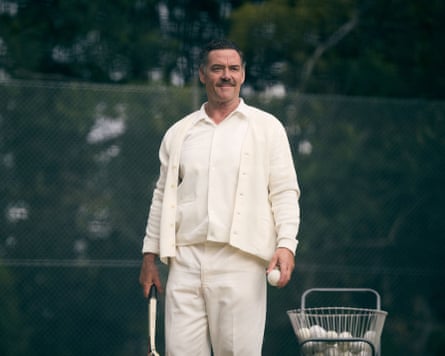
The common room story is about chums and how they fall out. Friendships forged on hallowed playing fields and over Cotswold kitchen suppers, then dashed on the rocks of ambition. The new BBC documentary Brexit: A Very British Civil War is the latest in the genre, recounting what Dave said to Boris said to Michael said to Dom. It oohs at the deals struck over sets of tennis, and aahs at the then prime minister threatening dissenters with: “I will fuck you up for ever.” This is David Cameron as box office: the Scarface of the Bullingdon Club. And Brexit, you understand, was simply an Oxford fracas that got out of hand.

Over in the conference room, the suits bemoan the damage to GDP and whether one day the European club might let us back in. Brexit, you see, is about trade and contracts.

Entirely missing from either story is the streets. Those rainy streets outside polling stations where on 23 June 2016 people queued up, many of them for the first time in years. The slim majority opting to leave did so not necessarily because they cared much about the EU, but as part of a giant vote against the establishment. For months the government, the opposition, the Treasury’s Project Fear department, the Bank of England, the Confederation of British Industry, the Trades Union Congress and individual employers said Britain would be Stronger In – and still the public turned out to give their masters a huge raspberry.

In the weeks and months afterwards, politicians, newspapers and thinktanks constantly tried to show they were in tune with this public anger. “We hear you!” said one politician , a guy called Andy Burnham who had recently lost his second bid to become Labour leader. In response, Boris Johnson later dabbled in something called “levelling up”, which turned out to be a slogan rather than a policy. Ten years later, this revolt has been struck from the official narrative.

Yet it is this Brexit story, the story of the streets, that is easily the most important of the three. It directly shapes our politics today. You can draw a clear line from the mutinous mood of that summer to today’s byelection in Makerfield, Wigan, where in 2016 almost two out of three voters went leave . Ten years ago, voters were learning to voice their distrust of the two-party system. Politicians of both colours had lied to them about the stability of their banks, about austerity ending soon and wages rebounding – and now they wanted revenge. This week in Makerfield, not one candidate on the ballot paper supports the prime minister. Reform UK and Restore Britain, two rightwing parties that didn’t even exist a few years ago, will take a lot of votes.

I remember seeing that anger up close. Some weeks before the actual referendum, when the silverbacks of Westminster were still sure they had it in the bag, I reported around south Wales . What I saw and heard convinced me that this Labour heartland would vote against their party’s advice and for the cause fronted by Nigel Farage, in an act of self-harming nihilism. I remember visiting the village of Llanhilleth, and visiting the Miners Institute that towered like a cathedral over the workers’ cottages. It had been built with miners’ subs and then, in recent years, rescued from dereliction with Brussels money.

Inside was a barrel-chested man called Gareth Meek, who pulsed with anger – whether just towards this Asian lad from a posh newspaper or others, I don’t know. He used to be in carpets, until his back gave out; now he was here in this empty monument of better times. He was voting leave, he said, although his anger wasn’t aimed at the “Eurocrats” but Margaret Thatcher and Tony Blair and Cameron. “They sold the country out.” How would leaving help? He shrugged. “The damage is already done. You ain’t going to pull that back now.”

Not everyone who voted for Brexit was from a dead factory town. I sometimes characterise that vote as two groups – the postindustrial and the retired, both now disconnected from the formal economy. At a fete in east Dorset, a well-to-do pensioner told me all about the migrants overrunning London, before admitting she barely ever visited the place. “I just want my country back,” she said. Again, that twitch of rage.

The politics expressed itself as anti-establishment and anti-immigrant, although it often seemed to me even then that Romanians were merely the proximate target: it was mainly about feeling you and your town had fallen too far down the pecking order. While running a Vote Leave street stall, Callum Vaga told me: “I look out for men, especially from ethnic minorities and most of all if they appear less well-off.” But even in 2016, anti-immigrant feeling could easily turn into violence. The murder of Jo Cox by a neo-Nazi was the most horrific example but a few days after the vote, Polish-origin schoolkids in Huntingdon got cards calling them vermin.

Ten years ago, it was “breaking point” posters ; today, it is “pure cold rage”. The extremism was always there, but Westminster and the information economy has allowed it to become mainstream. In a forthcoming survey for Hope Not Hate, people were asked if “violence can be necessary to defend something you strongly believe in”: 29% agreed.

Rather than tackle the economic and social basis of that disaffection, Westminster left it to Farage to turn it into ethnic resentment. Even today, Starmer’s EU reset is solely aimed at the conference room. For the streets, he took his cue at the outset of his leadership from the branding agency that advised him : “The use of the flag, veterans … give voters a sense of authentic values alignment.” What began 10 years ago as an anti-elite revolt lives on today with a political establishment chasing their voters for fear of being left behind. As the French revolutionist Alexandre Auguste Ledru-Rollin is supposed to have said in the tumult of 1848: “There go the people. I must follow them, for I am their leader.”

Aditya Chakrabortty is a Guardian columnist

Brahms: Violin Sonatas album review – Ehnes and Armstrong’s performances exude an effortless rightness | Classical music | The Guardian

Keyword – Music
Trefwoorden – Classical music, Music, Culture, Johannes Brahms
Title – Brahms: Violin Sonatas album review – Ehnes and Armstrong’s performances exude an effortless rightness | Classical music | The Guardian
Author – https://www.theguardian.com/profile/clive-paget
Link – Brahms: Violin Sonatas album review – Ehnes and Armstrong’s performances exude an effortless rightness | Classical music | The Guardian
Publish date – 2026-06-18T14:00:04.000Z
Category – Culture
URL – https://www.theguardian.com/music/2026/jun/18/brahms-violin-sonatas-album-review

W ritten between 1879 and 1888, Brahms’s three violin sonatas are the work of a man in his creative prime. Between them, they cover a considerable emotional span, from the lyrical, ultimately wistful G major with its rain-dappled finale to the structural complexities of the fiery D minor. The central A major sonata, good natured yet intimate, is one of the composer’s sunniest and most endearing works.

James Ehnes and Andrew Armstrong met in Winnipeg in 1991 when the Canadian violinist was 15 years old and the American pianist was 17. The longevity of their partnership pays dividends here in performances that exude an effortless rightness. In the opening of the G major, Armstrong is the wind beneath Ehnes’s wings, the two musicians in artistic lockstep, even if the recorded sound favours the brightness of the violin. Pacing is assured, phrasing shapely. The gently pattering finale, with Ehnes’s graceful double-stopping, suggests remembrances of times past.

In the A major sonata, the tone is ideally conversational, readily evoking 35 years of friendship. A soaring andante frames a lightly sprung ländler followed by a gently questioning allegretto grazioso. Technical assurance is a hallmark of the impassioned D minor sonata, where Armstrong’s chuntering rhythms are counterpoised with full-blooded acrobatics on violin.

Throughout, Ehnes eschews the leaner, edgier approach of, say Alina Ibragimova or Anthony Marwood. Instead, his seamless partnership with Armstrong bears comparison with the classic accounts of Josef Suk and Julius Katchen.

Listen on Apple Music (above)

There is a path to peace for Starmer and Burnham – even as their backers prepare for battle | Tom Baldwin | The Guardian

Keyword – Opinion
Trefwoorden – Andy Burnham, Makerfield byelection, Labour, Keir Starmer, Wes Streeting, Politics, UK news
Title – There is a path to peace for Starmer and Burnham – even as their backers prepare for battle | Tom Baldwin | The Guardian
Author – https://www.theguardian.com/profile/tom-baldwin
Link – There is a path to peace for Starmer and Burnham – even as their backers prepare for battle | Tom Baldwin | The Guardian
Publish date – 2026-06-18T10:00:03.000Z
Category – Opinion
URL – https://www.theguardian.com/commentisfree/2026/jun/18/keir-starmer-andy-burnham-makerfield-byelection

O ne of the many problems with our politics now is that only the loudest or most discordant voices seem to get heard. And there’s certainly no shortage of people from rival Labour camps mouthing off about what happens next if Andy Burnham wins the Makerfield byelection today. An apparently well-placed source in his team says they are preparing to launch an “ immediate leadership challenge ” against Keir Starmer on Friday morning, while another briefs that Burnham will hold off – but only for 72 hours because they dare not risk losing momentum. At the very least, there will be a steady escalation of threats and ultimatums.

Meanwhile, the prime minister is said to be barricading himself into Downing Street, where he remains determined to contest a challenge and, according to some reports, will insist any member of the cabinet backing his rival must quit . For instance, some of his aides have been operating on the assumption that Ed Miliband, who has done little to conceal his desire for Starmer to go, will resign over the next week. Although this is vigorously denied by the energy secretary, along with claims that he is “ghosting” the prime minister’s calls, it has not stopped some hardline loyalists expressing unnecessary relish at the prospect of a more enforced cabinet departure for Miliband.

All this suggests that the high drama post-Makerfield that most of the media have predicted will be duly delivered. Yet there are also softer, and therefore less often quoted, voices who counsel caution to Starmer and Burnham.

Those helping Burnham prepare for government recognise that, having not been a minister for 16 years or an MP for nine, he could do with a longer run-up before leaping straight into Downing Street. Some have concerns about a policy programme that, vibes aside, seems remarkably similar to that being pursued by the current prime minister. They worry about polls showing the Greater Manchester mayor’s rating with voters has slipped into net negative figures since he made plain his desire to run the entire country. Others know he risks alienating a section of Labour MPs and members who are loyal to Starmer and believe the government is finally beginning to notch up some real achievements. Burnham’s supporters say lessons have to be learned from Wes Streeting’s frantic and ultimately unsuccessful efforts to trigger a leadership contest last month when, as one puts it, he “tried too hard to kick down the door”.

And, on the other side of Number 10’s door, there are signs that good sense can still prevail. Although any minister publicly demanding Starmer’s ousting could obviously not remain in his government, the prime minister realises he cannot present himself as a force for stability by unleashing chaos and sacking everyone who privately wants him out.

Amid all the overheated hyperbole on both sides, perhaps cooler heads can prevent the government sliding into a civil war. After all, neither side can really want a divisive leadership contest when Britain faces such huge challenges at home and abroad. And surely everyone would recognise that if Burnham is to take over as prime minister he needs to be prepared.

Starmer’s closest allies now acknowledge that questions about his continued leadership will have to be resolved at some point over the coming months, but not just yet. There is a surprising amount of enthusiasm for offering Burnham defence and intelligence briefings on privy council terms, or transition talks like those governments give opposition parties before a general election. Starmer said yesterday he wanted Burnham to play “a big role” in government. One proposal under discussion would even see him being invited to join the cabinet , possibly in a new post for constitutional renewal, although others say this would just be seen as a hostile act designed to put him on the back foot.

A temporary truce would allow Starmer to push through his defence investment plan – the kind of thorny issue Burnham definitely does not want to inherit – while potentially exposing the challenger to the kind of policy scrutiny he has not faced before. One of Burnham’s allies says it would work to his advantage by giving “Keir time and space to realise he doesn’t much like the new reality, where he will be constantly questioned by people asking if Andy agrees”.

The biggest stumbling block to negotiations, however, would be over when and how any ceasefire would end. Burnham’s team want him crowned leader by the time of the party conference, which begins on 27 September. They are anxious about what a long delay would mean for an autumn budget for which figures will soon need to be submitted in advance to spending watchdogs – when they are unlikely to want Rachel Reeves to remain in her post to deliver it. But Starmer is not ready to contemplate a leadership fight this autumn – probably not even this year – and nor will he concede that his premiership is over by giving Burnham a timetable for departure.

The prospect of resolving such differences is made more remote because relations between the two men have been in deep frost ever since the last Labour leadership election in 2020, when Starmer had hoped to count on the Manchester mayor’s support and was taken aback by his initial refusal.

Although much depends on what voters do in Makerfield, where a Labour byelection victory – decisive or otherwise – is by no means assured, Starmer says he will speak with Burnham over the next few days. It would help everyone if this dutiful prime minister can find a way to talk honestly, properly and in private to the man who wants to replace him.

Sure, those noisy voices may well prevail in the end. They usually do. But before the carnival of carnage begins – now more than ever – there is a still small voice of calm that needs to be heard.

Tom Baldwin is a former adviser to Ed Miliband and the author of Keir Starmer: The Biography

Bellingham, England’s man for elite moments, kicks over the console table | World Cup 2026 | The Guardian

Keyword – Football
Trefwoorden – World Cup 2026, England, Croatia, Thomas Tuchel, World Cup, Football, Sport
Title – Bellingham, England’s man for elite moments, kicks over the console table | World Cup 2026 | The Guardian
Author – https://www.theguardian.com/profile/barneyronay
Link – Bellingham, England’s man for elite moments, kicks over the console table | World Cup 2026 | The Guardian
Publish date – 2026-06-17T22:56:20.000Z
Category – Sport
URL – https://www.theguardian.com/football/2026/jun/17/jude-bellingham-man-for-elite-moments-england-croatia-world-cup-opener

And breathe again. For the opening 45 minutes under the giant Victorian train station roof at the Dallas Stadium, England produced a performance that was a bit like watching one of those YouTube videos where an awkward and frightening Chinese robot has learned how to dance like Michael Jackson.

Dogged and occasionally convincing, but the kind of spectacle that does generally end with the robot falling off the stage. England didn’t just play like machines in that first half. They played like faulty machines, scared machines, contributing almost zero free-form football to a 2-2 half-time score that included two Harry Kane set-piece goals; the first a set piece from a set piece, a penalty after a corner, set piece squared.

Was this going to be the story here? Is this how we’re going to go down, in a kind of singularity, the death of hope, football as units of action, deathly set moves? Tuchel called it last September. Throw-ins are back. Corners are so hot right now. In that opening half England had those parts, but nothing much else in between.

At which point, the most important thing happened, not just in this game, but in Tuchel’s time with England. Credit must go to the manager for whatever he did to these players at half-time . And also to Jude Bellingham, who scored what would turn out to be not just the decisive goal in this 4-2 win , but also a moment of drive and energy that was completely at odds with everything to that point.

This wasn’t quite an individualist’s goal, a dribble, or a moment of craft. It was an expression of basic sprinting will. It was an angry goal, and in exactly the right way. Bellingham took the ball in the right channel, running on to a simple pass over the top, and just kept going, veering inside, all drive and focus, with a rising sense of inevitability. He had the speed to leave two defenders mooching in his vapour trail, and the skill to produce a fine, cold, guided finish into the far corner at a full sprint.

It wasn’t just that England were 3-2 up in that moment. Or that they looked like a team. More that they looked like they actually wanted to take part in a game of football, that this wasn’t just an activity to be undertaken out of fear and self‑loathing. For the next 10 minutes they swarmed all over Croatia , might have scored four, and gave a glimpse not so much of patterns of play, but of a willingness to actually do this, of the muscle, speed and ruthlessness that are undeniably there in this team.

It felt right that Bellingham should be the man to kick over the console table and bring something ragged and raw to the day. It is easy to criticise him at times, given the level of his fame and status, the slight sense of confusion as to what his attributes really are, whether he has the deeper gears, the super-strengths of an elite player, or just the mannerisms and the profile.

Some have suggested Bellingham is just a player of elite moments, the only answer to which is, well, he’s 22, and elite moments will do just fine thanks. We’ll take those. Not least when, as here, they can change the entire shape of the day, the energy in the room, perhaps even the way England are going to play here. With any luck the team can now breathe around him for the rest of this tournament. Most significant, by the end, with Marcus Rashford adding another, this felt like something entirely new. It was fun, free, a little rough. England can do this. Who knew?

The Dallas Stadium is a genuinely epic arena, rising up out of the dead heat of Texas plain like a crash-landed alien spaceship. Inside, it’s like entering some futuristic microclimate, a place to store your secret island, your ark-full of uber humans for the coming rapture.

Before kick-off the spectacle was almost overwhelming from the sealed press box high up in the gods, the huge glazed canopy roof, the red and white, the 160ft screen picking out the terrifying planetary-scale heads of members of the crowd.

The upper tiers were decked in the well-worn travelling England flags, the roll call of names, Huddersfield, Gillingham, Grimsby, like an alternative shipping forecast.

And the opening 12 minutes were all about Kane, who finally got to become a place kicker in an NFL stadium, scoring from a retaken penalty. A little later Kane got to realise his other childhood dream of scoring an Arsenal goal, heading in direct from Declan Rice’s corner after a Croatia equaliser.

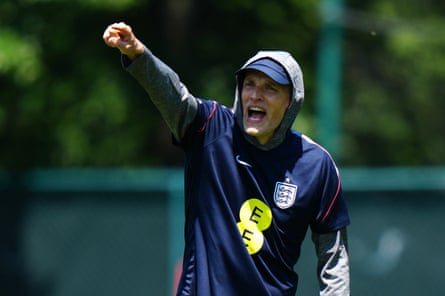
England stalled from there. They began to totter on their feet, circuit boards smoking. Tuchel was present here in all black, with that familiar look of some founding American settler, a goggle-eyed Dutch farmer in a straw hat out there tilling the lands. He must take credit if not for the start, then for the way England altered the energy here.

And also for the balance that became apparent by the end in midfield. Whatever England achieve in the US is likely to centre on how well Rice and Elliot Anderson can drive the game. It seems Tuchel has a type in there: upright, willowy, floppy-haired right-footed Englishmen.

It would be a bit of a stretch to suggest anything that happened in Dallas could amount to an act of vengeance for 2018. But England did finally wrest control here against the deathless Luka Modric, 40 years old and a more gnarled figure, but still the same gliding, bobbing miracle of balance and technique.

Modric left the field soon after England’s surge. Croatia were probably always there for the taking. But there was hope here, and energy, and best of all something a little ragged and human.

Sign up for the First Edition newsletter: our free daily news email | Newsletter sign-up | The Guardian

Keyword – Global
Trefwoorden – Newsletter sign-up
Title – Sign up for the First Edition newsletter: our free daily news email | Newsletter sign-up | The Guardian
Author – Guardian Staff
Link – Sign up for the First Edition newsletter: our free daily news email | Newsletter sign-up | The Guardian
Publish date – 2022-09-20T10:16:38.000Z
Category – News
URL – https://www.theguardian.com/global/2022/sep/20/sign-up-for-the-first-edition-newsletter-our-free-news-email

‘The masturbation scene wasn’t a big deal’: Théodore Pellerin on tackling his new film Nino’s challenges | Film | The Guardian

Keyword – Film
Trefwoorden – Film, Culture, Drama films, HPV vaccine, Health, Cancer
Title – ‘The masturbation scene wasn’t a big deal’: Théodore Pellerin on tackling his new film Nino’s challenges | Film | The Guardian
Author – https://www.theguardian.com/profile/philhoad
Link – ‘The masturbation scene wasn’t a big deal’: Théodore Pellerin on tackling his new film Nino’s challenges | Film | The Guardian
Publish date – 2026-06-18T04:00:03.000Z
Category – Culture
URL – https://www.theguardian.com/film/2026/jun/18/theodore-pellerin-interview-nino-film-challenges-masturbation-scene

J ust six months after the world rallied to defend poor Paul Dano , vulnerability may now be a hot commodity for an actor. What is “weak sauce” for Quentin Tarantino, who attacked Dano, can be mighty savoury for others. So it’s good timing that Théodore Pellerin, with his gangly frame and huge eyes, exudes that quality in the new French character study Nino. Gauche, hesitant and withholding, Pellerin is magnetic as a young Parisian locked out of his apartment for a weekend after a papillomavirus (HPV)-related cancer diagnosis.

Pellerin explains Nino’s predicament, his inability to be candid with his loved ones, almost down to the cellular level. “His throat cancer isn’t insignificant,” he says. “It’s the part that links the head to the body. There’s a dissociation from the body – a distancing of his emotions. And because it comes from a sexually transmitted disease, his sexuality – a strong life force – is stunted too. So his mission is to speak and to ejaculate.” Urgently in the case of the latter: Nino must freeze his sperm as his treatment will make him infertile. His odyssey around Paris is the gen Z answer to French New Wave classic Cléo de 5 à 7 , which also revolved around a cancer diagnosis. Only this time, it’s about the impossibility of finding a good place to masturbate.

Reeling off his character’s diagnosis with cool self-assurance via a Zoom call from his home in Montréal, Canada, Pellerin doesn’t seem vulnerable in real life. Plaid shirt rolled up his forearms, with cropped brown hair and tidy oval glasses, he has the brisk air of a business student between lectures. He is actually between projects, waiting for a new shoot to begin in August having recently finished Tom Ford’s 18th-century drama Cry to Heaven.

His stock is rising fast, thanks not just to Nino but also to last year’s caustic psychological thriller Lurker, in which he played a parasocial LA hipster desperate to ingratiate himself with a pop star. In that film his vulnerability segues into a dangerous neediness, but it always seems to remain Pellerin’s centre of gravity. Even more strident roles – like a loose-cannon apprentice hoodlum in the 2018 Québécois crime film Family First , or the pyramid-scheme proselytiser tutoring Kirsten Dunst in the 2019 TV series On Becoming a God in Central Florida – have a disarming innocence.

Nino director Pauline Loquès, who also co-wrote the script, recognised that Pellerin has a particular quality. “Théodore had this ability to give life to silences,” she says. “They became charged with other dimensions – poetic, mysterious or psychological.” She insists that he understood the character she created better than her – quite a feat considering this was a very personal project, drawn from her outrage at the death from cancer, aged 37, of a family member she will only identify as “Romain”.

Pellerin pointed out that Nino is fundamentally a film about parenthood – which came as news to Loquès, despite the number of parental or quasi-parental encounters (including an aftershave-proffering Mathieu Amalric), and the suddenly accelerated biological clock ticking in the background. Loquès, 39, used to be a journalist. Did Pellerin feel there was any risk in signing up for her first foray into directing? Au contraire: “Plenty of big directors make really bad films. And if you write a magnificent screenplay, the film will be great – because you’re close to your subject, you’ve mastered it.”

He goes on: “I never had the impression of having to force anything, or add a layer of fiction on top of what I was ‘living’ with the other actors.” Maybe this ambience was what allowed him to succeed with the pivotal masturbation scene. It would have been easy to overdo it, or hit an unfortunate comic note, instead of making it a touching moment of liberation.

“It was a bit stressful for Pauline because she didn’t want to sexualise a moment that was really important for the film,” says Pellerin. “She was a bit uncomfortable talking to me about the scene. We just had to stick close to what we were really saying, and what it represented for the character and the film. I’d just played Karl Lagerfeld’s boyfriend Jacques de Bascher in a TV series , with an orgy scene where I masturbate in a T-shirt. So Nino wasn’t really a big deal.”

If Pellerin talks like someone seasoned, it’s because he got off to a quick start, spurred on artistically by both sides of the family. His mother, Marie, is a choreographer; his father, Denis, a painter. After attending a secondary school that specialised in dramatic arts, he starred in his first TV series, the popular school drama 30 Vies, aged 16. “I grew up in theatre dressing rooms, with the dancers from my mum’s troupe. So the theatrical space was one I loved. It was playful, personal. Being an artist wasn’t necessarily what I always wanted to do when I was young – but it’s never been an impossibility from my perspective.”

Pellerin is speaking to me in French, his Québécois twang growing as the interview goes on. He quickly racked up credits in his native tongue, playing a younger version of Vincent Cassel’s character in Xavier Dolan’s It’s Only the End of the World in 2016, and a highly annoying little brother and possibly mentally ill street tough in Family First. But he identified English-language roles as the way forward in his career, and learned the language to appear as a teenager struggling with his sexuality in 2017’s Never Steady, Never Still , opposite Shirley Henderson.

Sidling around the edges of Hollywood, with a brief appearance as one of Joaquin Phoenix’s fantasy sons in Ari Aster’s Beau Is Afraid , Pellerin hit on bigger acclaim with Lurker. His LA drawl in the film is flawless – and the same is likely to be true of the RP he had to master as a castrato music professor in Cry to Heaven. In anglophone roles, he says, it’s all a question of rhythm: “There’s a bit more of an intellectual process to go through with English, because phrases are constructed in such a way that, for them to have the right sense, consciously or unconsciously, you have to hit the right accents. In French, you don’t have to worry about the rhythm. In English, it’s more pap-a-pap-a-pap-pap-pap.” His hand vaults up and down an imaginary score, like a conductor’s.

Pellerin is landing leading roles in both languages now, but he needs time to work his way fully into them – he has spoken in the past of being slow. Loquès elaborates: “He often says, ‘I’m not a great actor but I know how to read a script really well.’ That’s the difference between him and other actors – he’s very strong at doing research upstream. It’s a place of expansion for him. Then he tries to forget it all before coming on set.”

The roles that have stayed with him are the ones he went to town on, unsurprisingly. With Family First, he feared he might remain permanently in a sadistic frame of mind, while Lurker’s milieu of celebrity leeches and hangers-on took its toll too. “It was a kind of cynicism. The feeling of rejection was very strong, because that’s what the character was going through in every scene.” Nino, however, was a character he didn’t want to let go. “It was more of a return to my life, to frivolity. I wasn’t confronting mortality in the same way. I found it hard: it was like a loss of poetry in my life.”

The way Pellerin is going, though, there will soon be other characters to mine. I want to ask if he is already slipping into someone else’s skin, upstream of this August shoot – but we’re out of time. He has already told me he has to go at noon sharp. It turns out he is digging into a character, though: his own. “Er, I’ve got my therapy session on Zoom now, so that’s what I’ll be doing with my psychologist.” And with a wry smile and a “merci”, he’s gone. Being vulnerable is a full-time job.

Nino opens in UK cinemas on 19 June