US and Israel ‘hoped to install Ahmadinejad as Iran’s leader’

Iran
US and Israel ‘hoped to install Ahmadinejad as Iran’s leader’
Patrick Wintour
Wed 20 May 2026 16.40 CESTLast modified on Thu 21 May 2026 06.11 CEST
News
https://www.theguardian.com/world/2026/may/20/us-and-israel-hoped-to-install-ahmadinejad-as-irans-leader

Fresh questions have been raised over the US and Israeli effort to depose the Iranian regime after it was claimed that Israel wanted to put the populist Mahmoud Ahmadinejad in power.

Ahmadinejad’s turbulent presidency, from 2005 to 2013, was marked by incendiary attacks on Israel but he recast himself as a critic of the regime and champion of the poor after falling out with the supreme leader Ali Khamenei.

It is claimed that Israel bombed a security building close to his Tehran home to help him escape house arrest but he became uneasy about the operation.

The plans, reported by the New York Times , were widely seen as implausible or as disinformation put out by Ahmadinejad’s supporters or the Israeli intelligence services.

However, the episode shows that the US and Israel overestimated opposition to the regime and their own ability to bring it down it with airstrikes.

Donald Trump, faced with domestic anger over rising gas prices, has been seeking to extricate himself from the conflict but is considering more airstrikes to force Tehran to meet his terms.

The US president said on Monday that he had delayed a fresh attack after an intervention by Gulf leaders. But on Tuesday he held a lengthy phone call with Israel’s prime minister, Benjamin Netanyahu , which covered the potential resumption of hostilities.

Asked if Israel could be stopped from attacking Iran , Trump told reporters on Wednesday: “Netanyahu will do whatever I want him to do. He’s a great guy, To me he is a great guy.”

Trump said he wanted to see the strait of Hormuz opened but denied he was under pressure, adding: “I am in no hurry. Everyone says ‘oh the midterms’, I am in no hurry. Ideally I would like to see a few people killed as opposed to a lot. We can do it either way.”

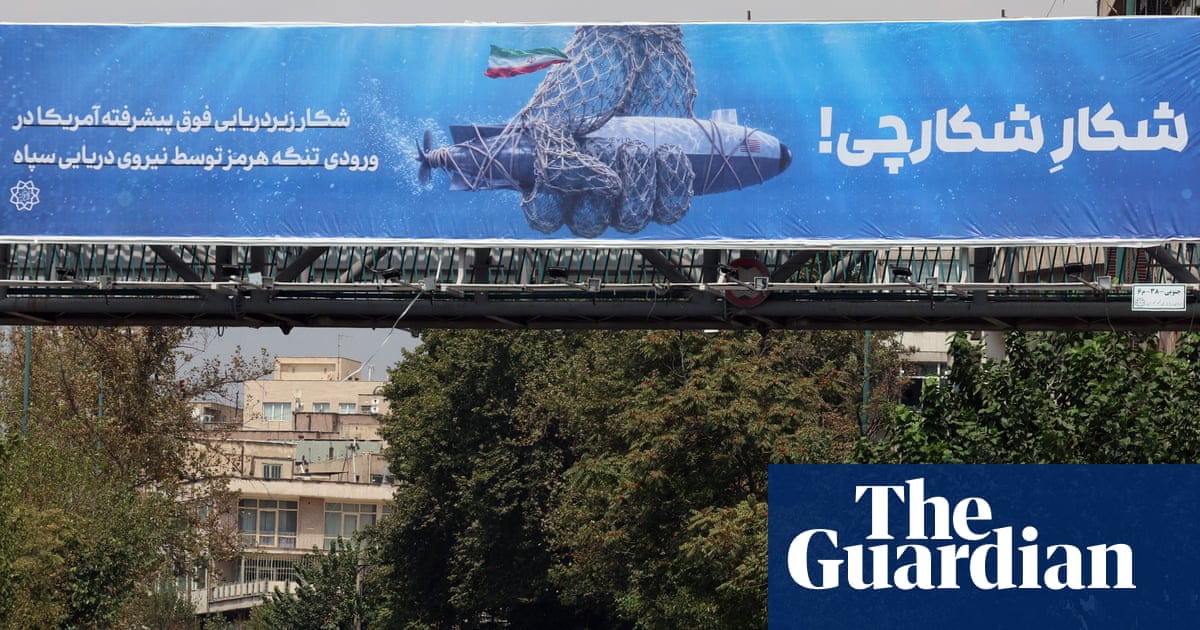
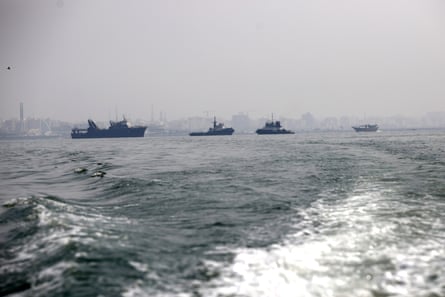
Tehran, which believes its stranglehold on western economies is tightening, refuses to agree to Washington’s demands on domestic uranium enrichment. It wants to delay negotiations on the future of its nuclear programme and instead focus on lifting sanctions in return for the end of its blockade of the strait of Hormuz.

The US has mounted a counter-blockade of Iran’s ports in an attempt to stop its oil shipments, which principally go to China as its single biggest source of export revenue. The Islamic Revolutionary Guard Corps warn they will widen the war beyond the region if Trump resumes his assaults.

Iranian media treated the New York Times report with scepticism, and said the former president had not been under house arrest.

At the time of the initial Israeli attacks on Tehran, on 28 February, there were reports in the Iranian media that Ahmadinejad had been killed in a strike on his home.

It later emerged that a security outpost outside his home in Narmak, north-east Tehran, had been hit – an attack confirmed by satellite images. It was speculated that Ahmadinejad would use the mayhem to make a bid for power.

In the days after the airstrikes, official news agencies reported that he suffered minor injuries but his bodyguards were killed.

Ahmadinejad would be an unlikely ally for Netanyahu because of his Holocaust denial and virulently anti-Israeli policies.

Trump had made it clear at the outset of the attacks on Iran that he wanted to follow the model of Venezuela where US troops captured the country’s leader, Nicolás Maduro, but left the regime in Caracas intact. Maduro’s deputy, Delcy Rodriguez, is largely cooperating with Washington but Ahmadinejad’s fraught relationship with the regime in Tehran makes a similar arrangement in Iran less likely.

Ahmadinejad’s authority declined markedly when he fell out with Khamenei in 2011 and – a year later – his rival, Ali Larijani, was elected parliament’s speaker. Their disputes centred on ministerial appointments and economic policy as well as Ahmadinejad’s nationalism, which included the glorification of ancient Iran.

He was arrested in 2018 after criticising the government led by his successor, Hassan Rouhani. He was reported as saying: “Some of the current leaders live detached from the problems and concerns of the people, and do not know anything about the reality of society.”

Ahmadinejad has been repeatedly blocked from standing again for the presidency, including in 2024. After that, he fell largely silent and issued only the most mild criticism of the Israeli strikes on Iran in 2025.

In a sign of how far his views have changed, he was reported to have visited pro-Israel Hungary to give a talk last June. It was one of the few foreign trips he has made since ending his presidency and the visit would have been sanctioned by the government.

The Man I Love review – Rami Malek needs a lighter touch in Ira Sachs’ 80s Aids drama

Cannes film festival
The Man I Love review – Rami Malek needs a lighter touch in Ira Sachs’ 80s Aids drama
Peter Bradshaw
Thu 21 May 2026 00.05 CESTLast modified on Thu 21 May 2026 00.34 CEST
News
https://www.theguardian.com/film/2026/may/20/the-man-i-love-review-rami-malek-ira-sachs

T his film from writer-director Ira Sachs gives us premium-strength, undiluted Rami Malek – but I have to say that his overripe performance and self-conscious mannerisms here are perhaps even more oppressively insistent for being conveyed relatively quietly in spoken dialogue. And not quietly at all in the singing scenes. Malek is a performer whose style is as distinctive as those of John Malkovich or Jeff Goldblum. But it works best with a light touch in the direction and material. Things never really come together here.

The Man I Love is a film about gay culture in 1980s New York, at the height of the reactionary homophobia of Reagan’s America, with HIV-positive men coming to terms with their condition and with the callous bigotry of the political zeitgeist. In one hospital scene, we see the authorities’ icily unsympathetic attitude. Malek plays Jimmy George, a much admired and charismatic actor and performance artist in New York who has just emerged from a three-week stay in hospital after a life-threatening HIV-related crisis. Now he is starring in a new stage piece based on André Brassard’s 1974 film Once Upon a Time in the East, playing the stormy and defiant Hélène, who sings with a band.

Jimmy lives in an apartment with his partner Dennis (Tom Sturridge), who has the stressful and demanding task of caring for him, and Dennis is instantly suspicious of their hot new British neighbour Vincent (Luther Ford), who appears to be enamoured of Jimmy. A hookup between them, Dennis resentfully fears, would trigger new bouts of compulsive behaviour that would endanger what chance Jimmy has of recovery. Jimmy’s sister Brenda (Rebecca Hall) comes to visit with her son and disapprovingly straitlaced husband Gene (Ebon Moss-Bachrach), and she and their parents are to be the witnesses of Jimmy’s complicated and painful state of health and state of mind.

It is not at all clear that the new stage piece, with Jimmy playing in an exuberant blonde wig – sometimes with the sketchiest idea of what he’s supposed to be doing – will be a new start for him. In fact, it is probably and heartbreakingly to be his swansong; an exhausting final performance that will consume what is left of his health. We see Jimmy perform a strident version of What Have They Done to My Song Ma at a family get-together, not entirely on-key. And then there is the excruciating, chaotic stage show itself.

There are some nice moments here. At a party at Jimmy and Dennis’s apartment, the guests all have to do a turn and Brenda sweetly performs the cod-Irish song How Are Things in Glocca Morra? from Finian’s Rainbow. Malek’s declamation of some of the St Crispin’s Day speech from Henry V towards the end of the film has a lot of spirit, better in many ways than anything else he is seen performing. Sachs creates a lot of madeleine moments to bring back the 80s and it’s impossible to hear Talking Heads’ Crosseyed and Painless without a rush back to that time.

The Man I Love is an honestly intended and conceived movie, but that faintly baffling and strenuous lead performance sits uncomfortably.

The Man I Love screened at the Cannes film festival

Meghan Markle’s anniversary candle: who wouldn’t want to pay $64 to celebrate someone else’s marriage?

Meghan, the Duchess of Sussex
Meghan Markle’s anniversary candle: who wouldn’t want to pay $64 to celebrate someone else’s marriage?

Wed 20 May 2026 19.41 CEST
News
https://www.theguardian.com/uk-news/2026/may/20/meghan-markle-anniversary-candle

Name: Anniversary candle.

Appearance: A “modern and elegant” candle, “housed in a beautiful ceramic vessel”.

Age: Brand new.

Price: Yours for just $64, which is roughly £48.

Sorry, that is objectively too much for a candle. Oh come on, it’s for an anniversary. What better way to mark a special occasion than with a beautiful scented candle?

I suppose when you put it like that. What’s the big occasion? The eighth wedding anniversary of Prince Harry and Meghan Markle.

That’s it? Come on, where’s your sense of romance? Isn’t there a tiny part of you that wants to drop half the cost of a weekly shop on a candle that says “I recognise that Prince Harry and Meghan Markle have now been married for eight years”?

I don’t understand what’s going on . Look, it’s easy. Yesterday, the Instagram account of Markle’s As Ever lifestyle brand featured a post that read: “The feeling of warm sunshine and blue skies, surrounded by love and laughter. Celebrating 8 years of our founder @meghan and Prince Harry’s love story.”

What do blue skies feel like? Can you even feel a colour? The important thing is that the post also linked to a product called Signature Candle No 519 . The website states that the candle is “bright and refreshing, with quietly grounding notes of Moroccan mint, white tea leaves, and a back note of woodsy cardamom”. Supposedly, it “evokes the freshness of a day in the English countryside”.

Good that she remembers, since she hasn’t actually set foot in England since September 2022 (if you don’t count stopovers at Heathrow ). You’re missing the point here. The point is that an eighth wedding anniversary is a very special thing.

The bronze anniversary, isn’t it? Actually, no, I think you’ll find it’s the premium-mint-and-cardamom-scented-candle anniversary.

Did you just make that up? Yes, of course I did! Listen, you try to justify something as bizarre as this. Nobody cares about their eighth anniversary! Why not just wait until your 10th? Honestly, it’s maddening.

Glad we’re agreed. I mean, who is this for? Markle’s jams I understand , because everyone likes jams. I can even understand her other candles, because who doesn’t like a candle?

Sure. But a candle you have made on the assumption that people will want to celebrate an arbitrary wedding anniversary? Come on, Markle, you’re not exactly making it easy to root for you.

Do say: “Darling, let’s commemorate our anniversary traditionally this year.”

Don’t say: “By monetising our relationship with merch for the rich and gullible.”

Do you have an opinion on the issues raised in this article? If you would like to submit a response of up to 300 words by email to be considered for publication in our letters section, please click here .

Pedro Almodóvar says film-makers have a ‘moral duty’ to speak out against the far right

Cannes film festival
Pedro Almodóvar says film-makers have a ‘moral duty’ to speak out against the far right
Philip Oltermann
Wed 20 May 2026 16.34 CESTLast modified on Thu 21 May 2026 06.10 CEST
News
https://www.theguardian.com/film/2026/may/20/pedro-almodovar-cannes-moral-duty-speak-out-far-right

Pedro Almodóvar has argued that film-makers have a “moral duty” to speak up about politics or they will enable the kind of stifling of free speech taking place in the US, warning that “Europe must never be subjected to Trump”.

Speaking at the Cannes premiere of his new film Bitter Christmas , the veteran Spanish director was responding to questions about previous comments in which he had remarked on a lack of protests at the Oscars earlier this year.

“I don’t want to judge anyone, but I think artists have to speak out about the situation in which they live in contemporary society,” the 76-year-old auteur said, wearing a Free Palestine badge on his jacket. “It’s a moral duty.”

With far-right populist parties leading national polls in France, Germany and the UK, there are concerns that the kind of self-censorship decried by Almodóvar could soon become a reality on the continent too.

In the middle of Cannes, reports broke of the head of France’s largest film producer, Canal+, threatening to blacklist actors who signed a petition against its main shareholder, the rightwing businessman Vincent Bolloré.

“Silence and fear is a symptom that things are going badly, it’s a serious sign democracy is crumbling,” the Spanish director said. “In Europe we have laws […] we have to act as a shield against this madness.”

In the run-up to Cannes, he had told the Los Angeles Times that “there were not many protests against the war or against Trump” at this year’s Oscars ceremony. The only note of protest at the Academy Awards, he noted, had been by his friend and fellow Spaniard Javier Bardem, who said “No to war and free Palestine” on stage.

Bitter Christmas, Almodóvar’s first Spanish-language film in five years, is his seventh in the main competition at Cannes. Although he is one of Europe’s most revered directors, the Palme d’Or has so far eluded him, though he won best director for All About My Mother in 1999 and best screenplay for Volver in 2006.

Described by the Guardian’s film critic Peter Bradshaw as a “ movie auto-metafiction ”, Bitter Christmas tells the story of a film director who fears that his well of creative ideas has run dry, and interrogates himself about an artist’s right to vampirise his friends’ troubles.

While reviews have been mixed, the film received a nine-minute standing ovation at its premiere screening on Tuesday.

Full steam ahead: how ‘navy curry’ conquered hearts in Japan

Japan
Full steam ahead: how ‘navy curry’ conquered hearts in Japan
Justin McCurry
Wed 20 May 2026 05.15 CESTLast modified on Wed 20 May 2026 17.26 CEST
News
https://www.theguardian.com/world/2026/may/20/navy-curry-japan-kaigun-kare-obsession

The sailors aboard the navy vessel Hashidate know what’s for lunch long before the telltale aromas escape from the galley.

Yosuke Oyama, the ship’s chef, has been up since dawn, softening onions and occasionally stirring a pot of chicken stock that has been simmering for several hours.

He slices carrots and potatoes, places strips of beef on a tray and performs a quick inventory of the other ingredients – among them a selection of spices, apple puree, ginger and garlic and, for extra umami, a red wine and honey reduction.

After a chorus of “ Itadakimasu ” – bon appétit – the mess deck is silent except for the appreciative noises made by the ravenous men and women of Japan’s maritime self-defence forces (SDF).

“The crew love hamburgers, steak, sushi and ramen … they eat a lot like children,” jokes Oyama, a navy chef for three decades who is more accustomed to cooking for up to 500 sailors at a time. “And curry is always a winner.”

With each spoonful, they are upholding a tradition of eating curry for lunch every Friday – once a way to track the passage of time on long voyages – and keeping rival SDF vessels around Japan on their culinary toes as they continue their search for the perfect curry recipe.

Despite its south Asian origins, it’s no exaggeration to describe curry as Japan’s de facto national dish: a soupy, mild version beloved of schoolchildren and office workers, and generations of SDF personnel for whom kaigun kare – or navy curry – is a source of fierce pride as well as sustenance.

The 10 crew members aboard Hashidate, a special services vessel used to host international VIPs that lies at anchor in Yokosuka, a naval base south of Tokyo, are among thousands of sailors eating their ship’s version of the same dish.

Chef Oyama says variety is the key to keeping his diners interested in their Friday curry week in, week out. “We mix things up, like making keema or seafood curry, or keeping the leftover sauce and serving it with udon noodles the next day. The other day I fried up some apple puree and added it to the curry … it was delicious.”

‘If I don’t eat curry it messes around with my body clock’

Tradition dictates that Yokosuka curry – one of many variations on the navy curry theme – must be accompanied by salad, pickles and a glass of milk for nutritional balance.

As Japan expanded its influence in Asia in the late 1800s, large numbers of soldiers fell ill or died from beriberi, a vitamin B1 deficiency linked to their diet, which largely comprised plain white rice.

The solution came in the form of curry powder thought to have been introduced by Anglo-Indian officers in the Royal Navy who were among the first westerners to come into contact with Japan after Commodore Perry’s “black ships” forced it to end centuries of sakoku “ locked country ” isolation in the 1850s.

Curry powder, it turned out, contained enough vitamin B1 to keep soldiers and sailors healthy. Beriberi cases plummeted, and military personnel quickly developed a taste for anglicised curry and rice, made with meat and vegetables and a flour-thickened sauce that was less likely to splash around in rough seas.

A more romantic explanation claims that a party of British sailors who were shipwrecked off Japan’s coast came ashore with their rations, which included curry powder.

It didn’t take long for curry to establish a loyal following among civilians. The first Japanese recipe for curry was published in 1872, and restaurants began serving it five years later, according to Japanese food writer Makiko Itoh. In 1908, a recipe for curry appeared in the Navy Cooking Reference Book.

When the present-day maritime SDF was formed in 1954 – a postwar replacement for the imperial Japanese navy – the tradition continued, spurring “rival” bases to create their own recipes and lay claim to making Japan’s best navy curry. Together, Japan’s sailors get through 45 tonnes of curry a year – equivalent to 2.25m meals – according to the maritime SDF.

Sailors in Maizuru, on the Japan Sea coast, and in Kure, in the Seto Inland Sea, will disagree, but Yokosuka has a strong case for claiming the title of navy curry capital.

The city’s seagull mascot, Sucurry, greets visitors at the main railway station with a bowl of its signature dish; at Yokosuka Navy Curry Honpo, diners can eat kaigun kare- made according to the 1908 recipe and take home boil-in-the bag versions. Yokosuka’s annual curry festival, held in May, attracts tens of thousands of visitors eager to sample dozens of recipes.

However, the dish has landed some of its fans in hot water. In 2022, six Japanese sailors were suspended from duty after it was found that they had been helping themselves to curry without paying for up to three years at an SDF base. As visiting personnel, they were not entitled to gratis servings.

The previous year, curry was at the centre of diplomatic tensions after media reported on a seafood curry sold in Japan that included mounds of rice shaped to resemble uninhabited islands, which are administered by South Korea, where they are known as Dokdo, but claimed by Japan, where they are known as the Takeshima.

Aboard the Hashidate, Yosuke Ohtsuki, a first lieutenant, admits he rarely eats curry at home. “I’ve heard that some families wait until the sailor in the household is away on a voyage before they eat curry,” he says, adding: “If it’s Friday we know it’s going to be a good day.”

Their bowls empty, the sailors clear up and prepare for a voyage along the coast. “I never tire of eating curry,” says Hideaki Ito, the chief of operations. “In fact, if I don’t eat curry it messes around with my body clock.”

This article was amended on 20 May 2026. An earlier version said that the Takeshima islands were administered by Japan but claimed by South Korea. In fact, the islands are administered by South Korea, where they are known as Dokdo, but are claimed by Japan.

‘If you keep looking we will kill you’: death stalks those searching for Mexico’s disappeared

Mexico
‘If you keep looking we will kill you’: death stalks those searching for Mexico’s disappeared
Thomas Graham
Wed 20 May 2026 19.37 CESTLast modified on Wed 20 May 2026 19.56 CEST
News
https://www.theguardian.com/world/2026/may/20/mexico-disappeared-people

B eneath the cooling towers of Mazatlán’s power plant, in the Mexican state of Sinaloa, a dozen women pick through the marshland, looking for the upturned soil – and the scent – that betrays the location of a buried body.

They are part of Hearts United for One Cause , one of hundreds of collectives scattered across Mexico looking for the members’ missing relatives. But these searchers have been marked out by another layer of tragedy: one of them was murdered in February, and another disappeared in October.

That makes them the starkest example of a grim trend in Mexico , where the number of searchers who are themselves then murdered or disappeared has soared.

“We’ve suffered these two heavy blows,” said Noemí Padilla, the collective’s leader, who has herself been threatened with forced disappearance. “And I don’t know if they were meant as a kind of warning.”

The number of people registered as missing in Mexico has climbed relentlessly for the past two decades, surpassing 130,000 , as warring organised crime groups began both recruiting by force and burying, burning or even dissolving their victims with acid so as to conceal their crimes and sow terror.

Consecutive governments have failed to stop the disappearances. A UN committee recently said there were indications of state security forces themselves being involved in some cases, describing these as crimes against humanity , though the current government rejected its report as “ biased ”.

Now it seems organised crime groups are going a step further and eliminating the only people who truly look for the disappeared: their relatives.

According to Artículo 19, a human rights organisation, at least 44 people, mostly women, have been murdered or disappeared since 2010. But the rate has accelerated dramatically: 18 of those incidents took place under the previous president, Andrés Manuel López Obrador, from 2018 to 2024, while another 15 have happened in the 19 months since the current president, Claudia Sheinbaum, took office.

“2025 was the most deadly year yet, with seven murders and four disappearances,” said Jessica Alcázar from Artículo 19. “It’s a message of terror: ‘If you keep looking, we will kill or disappear you too.’”

Sinaloa is among the worst-hit states. So when Rubí Patricia Gómez missed a meeting at the end of February, the others in the collective were unnerved and went to her home.

“I remember going up the stairs, calling her name,” said Laura Ivonne Valdés, a friend of hers from the collective who is looking for her uncle, Ricardo Ramírez Uribe. “The door was ajar. And that’s how I found her.”

Gómez had been stabbed 14 times. The authorities quickly arrested a man who allegedly knew her and had gone to her home to collect a debt, only to end up killing her.

But there are still many unanswered questions about what happened, said Valdés. Gómez had never mentioned any debts or threats.

This came just months after María de los Ángeles Valenzuela, one of the collective’s founders, was taken from her home and bundled into a car by two armed men.

“Now we’re looking for her too,” said Padilla, whose son, Juan Carlos Rivera Padilla, disappeared in 2019.

The marshland around the power plant, with its spongy soil, has yielded discoveries before. This time someone spotted an arm bone among the mangrove roots.

The women gathered around as Valdés began to swing a pickaxe in brutal arcs.

“Does the soil feel loose?” the women asked. “Does it smell?”

María de los Ángeles Bernal, who is looking for her son, Emanuel Garay Bernal, placed an electric candle with the face of San Judas, the patron saint of lost causes, on the ground by the bone.

Bernal is one of many mothers looking for sons who have disappeared since war broke out between factions of the Sinaloa cartel in September 2024.

“They started disappearing lots of young people then, and it hasn’t stopped,” said Bernal. “At first I refused to believe it, but maybe he was recruited by force.”

The war has left more than 6,000 dead or missing so far.

“We don’t know if our sons are alive, if they’re out there being made to work,” said Padilla. “Whenever we eat, we wonder if they’ve eaten. When it’s hot, we wonder if they have water. When it rains, we wonder if they have shelter.

“Whenever I got out searching I feel like he could be here,” said Padilla, looking around. “But I can’t find him.”

In the field, the searchers are often shadowed by an armed escort of police and soldiers. But it is when they break up and go home, often to the very neighbourhoods where their relatives disappeared, that they are most vulnerable.

After the attacks on the collective, Padilla and Valdés, the most visible members, were given government protection. This meant cameras for their homes and cars, a telephone number for emergencies, and, for a month or two, occasional patrols visiting their homes.

But they both said it was not enough: not for them, and certainly not for the rest of the collective. They at least want every member to be given a panic button to immediately alert authorities if they are in danger.

The other way to protect searchers would be to show that attacks on them are properly investigated and the perpetrators brought to justice.

“But, shamefully, most of the cases we have documented have gone unpunished,” said Alcázar. “There’s a lack of political will to really guarantee their protection or to even recognise what’s happening to them.”

The federal institution responsible for protecting human rights defenders did not respond to a request for an interview.

Before long, Valdés and the others had dug half a metre deep. They found nothing but earth, roots, rocks. Bernal picked up the candle and flicked the light off. The power lines overhead fizzed with electricity.

“Of course we’re afraid. With things how they are in Sinaloa, you can’t trust anyone,” said Bernal. “But if we don’t look for them, who will?”

Blinded and broken, Sunny the owl becomes another casualty of Russia’s war

Birds
Blinded and broken, Sunny the owl becomes another casualty of Russia’s war
Luke Harding
Wed 20 May 2026 12.49 CESTLast modified on Wed 20 May 2026 20.10 CEST
News
https://www.theguardian.com/environment/2026/may/20/owl-casualty-of-russia-war-ukraine-birds

Russia sent kamikaze drones to attack the Ukrainian city of Zaporizhzhia in February. They hit buildings and killed several people. One unreported victim of the bombardment was a male long-eared owl, blinded in one eye and found with a badly broken wing. A passerby scooped up the stunned bird, put him in a box and took him to the city of Dnipro.

The owl – nicknamed Sunny – is now recovering in a cosy room belonging to Veronica Konkova. No longer able to fly or hunt, Sunny instead hops around.

Konkova said: “The fracture was so bad his left wing had to be amputated. The vet diagnosed brain trauma. Sunny doesn’t react normally to light.”

The owl will stay at the volunteer’s home for several weeks before being transferred to a rehabilitation centre in Kyiv.

Konkova, who is a biologist, has been rescuing wounded birds since 2015, a year after the Kremlin launched its then covert war in the eastern Donbas region. Her birds have included a rare imperial eagle, peregrine falcons, buzzards, kestrels, black kites and a variety of owls: little, short-eared and tawny.

Alongside Sunny is a small, wide-eyed screech owl called Plushka, perched at the back of an open cage.

Russia’s aerial war has had a devastating impact on Ukraine’s wildlife, including its birds. Thousands have been caught in nets put up to protect roads near the frontline from marauding enemy drones.

“The birds die from dehydration or from heart attacks if they get stuck upside down for a long time,” Konkova said. Others have been killed as a result of explosions, fires and pollution.

Owls are frequently trapped in nets when they hunt at night. They also become entangled in thin fibre-optic cables from Russian drones; in some parts of the battlefield, the wire can carpet fields hundreds of metres wide.

Konkova said: “Sometimes we can save these birds. Other times they arrive in such bad condition there’s nothing we can do.”

The war has affected nature reserves that are important breeding grounds for migratory species.

Moscow has repeatedly targeted six hydroelectric power stations and reservoirs along the Dnipro river. In 2023, the Russian military blew up the Kakhovka dam at the bottom of a Soviet-built cascade, causing massive flooding and destruction . Since the disaster, Ukrainian engineers have kept reservoir water levels low.

According to the ornithologist Oleksandr Ponomarenko , floodplains have dried up as a result: “We’re losing the birds’ feeding grounds. The area is shrinking. In summer, it gets really hot here, 30 or 35 degrees. And so instead of there being water, there’s just bare mud. It heats up terribly. The molluscs in it die, the algae dies. A huge part of the birds’ food supply is being destroyed. The species that used to fly in don’t visit.”

Ponomarenko reeled off a list of birds that had disappeared from the Dnipro-Oril nature reserve where he is a senior researcher. Among them were two types of teal, ferruginous ducks, goldeneye and white-fronted geese.

He said: “The goose is a very intelligent and cautious bird. They hear shooting, realise what’s going on and simply take a wide detour around the frontline. Now there’s almost no spring migration.”

White storks – a national symbol in Ukraine – have suffered. A third of their nests are empty. “The stork sees its foraging area is dry, with no frogs, no snakes, nothing. So it doesn’t settle,” Ponomarenko said.

The bird has adapted by breeding on landfill sites, feasting on mice and rats. Dozens of storks can be seen in rubbish dumps outside Ukraine’s second biggest city, Kharkiv, and near the riverside town of Samar. Ring ouzels and black storks have returned to Chornobyl .

There is other good news. On a cold and windy day last week, three or four grebes could be seen at the Dnipro-Oril reserve , their numbers increasing. Also visible were yellow-legged gulls, a wood sandpiper and a newly returned swallow, swooping low over the water. “I recently saw about 60 swans. You don’t notice as many geese any more but in the autumn there are plenty of ducks,” said caretaker Mykhailo Petronko.

After Vladimir Putin’s full-scale 2022 invasion, Ukraine’s government banned hunting and gamekeepers released thousands of pheasants. They can now be seen and heard not only in the countryside, calling from yellow feather grass, but in city gardens. Quail and partridge have also benefited from the shooting ban, together with roe deer and badgers.

Dmytro Medovnyk, a soldier and birdwatcher, carried out a scientific study while fighting in a village in the eastern Luhansk oblast in 2024. He found that goldfinches and greenfinches obtained food from destroyed grain warehouses while populations of ravens and robins went down because of reduced food availability and noise pollution. The herons and mallards flew off.

Ponomarenko described the picture for birds living in combat zones as “complicated”. “Different species react differently,” he said. Fires caused by artillery shells have wiped out the habit of many woodpeckers. Swifts and swallows, by contrast, continue to breed in some frontline areas, even nesting in semi-destroyed houses. Inventive species such as jays have started using discarded fibre-optic cables as nest lining, according to Ponomarenko.

Ukraine’s environment ministry was abolished last year and rolled into the ministry of industry and agriculture. Conservationists say protecting nature is regarded as a low priority. “The government doesn’t help. But nor does it create problems for us either,” Konkova said. Birdwatching was popular in Ukraine, she said, citing a livestream of a white stork sitting on a nest in the Poltava region.

Back at her Dnipro home, Konkova showed off Sunny’s dinner: a dead lab rat stored in a downstairs freezer. The rats cost $2 each. Plushka, the other owl, prefers cockroaches, eating 18 to 20 live ones a day. The insects are kept in a plastic box in the kitchen. Neither owl can be returned to the wild but both should survive after treatment, Konkova says. That includes daily anti-worm medicine, administered by syringe into Sunny’s beak.

Originally from occupied Crimea, Konkova said she detested what Russia had done to her country. “They destroy their own environment and our environment as well,” she said, but added: “Overall, I’m an optimist because nature will win anyway. Birds lived for millions of years before people. They will live, I guess, millions of years after people.”

AI will help make a Nobel prize-winning discovery within a year, says Anthropic co-founder

AI (artificial intelligence)
AI will help make a Nobel prize-winning discovery within a year, says Anthropic co-founder
Robert Booth
Thu 21 May 2026 06.01 CESTLast modified on Thu 21 May 2026 06.14 CEST
News
https://www.theguardian.com/technology/2026/may/21/ai-nobel-prize-winning-discovery-robots-jack-clark-anthropic

An AI system will work with humans to make a Nobel prize-winning discovery within 12 months and tradespeople will be helped by bipedal robots in two years, according to the co-founder of Anthropic.

Jack Clark described a “vertiginous sense of progress” in the technology and made a series of predictions, including that companies run solely by AIs would be generating millions of dollars in revenue within 18 months, and that by the end of 2028, AI systems would be able to design their own successors.

In a lecture at Oxford University on Wednesday, he also said there remained plausible scenarios in which the technology had “a non-zero chance of killing everyone on the planet” and that it was “important to clearly state that that risk hasn’t gone away”. Anthropic’s most popular model is called Claude, but it recently launched a version called Mythos that proved alarmingly capable at exploiting cybersecurity weaknesses.

Clark told students it would be better if humans could slow the development of the technology “to give ourselves more time as a species” to deal with the implications of its powers. But he said this wouldn’t happen, in the breakneck development “by a variety of actors and a variety of countries, locked in a competition with one another, where commercial and geopolitical rivalries are often drowning out the larger existential-to-the-species aspects of the technology being built”. This was “not ideal”, he said.

Clark is one of the most senior figures at Anthropic, which was established by AI researchers who quit the rival firm OpenAI over disagreements on safety. The $900bn (£670bn) company has been accused by Donald Trump’s White House and other AI accelerationists of “fear-mongering” to encourage regulation that could cement its competitive position.

Anthropic disputes this, and Clark said many people appeared to be in denial about AI’s progress. He said he wanted to encourage humanity to prepare for a technology that would “soon be more capable than all of us collectively”. Comparing the failure to prepare for AI to the failure to prepare for pandemics such as Covid, he said: “If we stand by and let synthetic intelligence multiply, then we’ll eventually be forced into reactivity.”

Critics of the frontier AI companies such as Anthropic, OpenAI and Google fear over-reliance on their few AI models – which have been backed by huge amounts of profit-seeking capital – could create a “single point of failure” in global systems.

Prof Edward Harcourt , the director of the Institute for Ethics in AI, which co-hosted Clark’s lecture, separately warned that the rise of AIs that did more and more things for humans risked creating “cognitive atrophy” which could weaken humans’ decision-making and powers of judgment. He advocated for alternative AI models that ask humans to do more of the thinking, sometimes called “ Socratic” AI .

Clark said his most conservative prediction was that “vast swathes of the economy and society will go through profound changes” – which could include a machine economy decoupling from the human economy, robots gaining brains, science progressing without humans, and scientific equipment that people hadn’t conceived of but which worked. He admitted some of this sounded “crazy”.

Net migration to UK falls by nearly 50% after Labour’s vow to cut numbers

Immigration and asylum
Net migration to UK falls by nearly 50% after Labour’s vow to cut numbers
Rajeev Syal
Thu 21 May 2026 11.34 CESTLast modified on Thu 21 May 2026 11.36 CEST
News
https://www.theguardian.com/uk-news/2026/may/21/net-migration-uk-falls-labour-vow-cut-numbers

Net migration to the UK fell by nearly 50% to 171,000 last year, according to official figures released on Thursday, in what will be seen as a boost for Keir Starmer’s government.

Data released by the Office for National Statistics (ONS) showed the difference between the number of people moving to the UK and the number of people leaving was at its lowest level since 2021.

The figure was down 48% year on year from 331,000 in 2024, extending a sharp decline from a record peak of 944,000 in 2023.

The figures will encourage government ministers who have promised to drive down the number of people moving to the UK. Migration has become a key political battleground against the rise of Nigel Farage’s Reform UK.

The number of nationals from outside the EU arriving for work-related reasons fell by 47% in 2025, which was the main cause of the continued fall in net migration. Over the same period, overall emigration fell slightly.

An estimated 813,000 people immigrated to the UK while 642,000 emigrated. The continued fall in net migration was being driven by fewer people from outside the EU arriving in the UK for work, the ONS said.

ONS figures cover net migration figures in the 12 months to December 2025.

The Home Office is publishing its own figures on Thursday related to the 12-month period to March 2026.

Many people mistakenly believe net migration is rising in Britain despite figures dropping to their lowest level in years, a thinktank has found . Research from British Future, published ahead of latest government figures on migration, revealed a chasm between reality and public perception of net migration, with a substantial portion of the public believing it had increased.