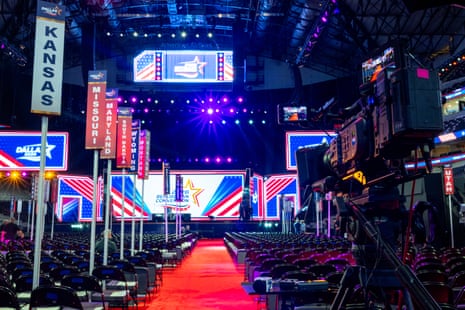
Freiburg 0-3 Aston Villa: Europa League final – as it happened

Europa League
Freiburg 0-3 Aston Villa: Europa League final – as it happened
Scott Murray
Wed 20 May 2026 23.52 CESTFirst published on Wed 20 May 2026 19.00 CEST
News
https://www.theguardian.com/football/live/2026/may/20/freiburg-v-aston-villa-europa-league-final-live

Ben Fisher was at Beşiktaş Park tonight. Here’s his match report. Congratulations to Aston Villa , commiserations to Freiburg, and thank you, dear reader, for sticking with this MBM.

Unai Emery – who has now won the Europa League five times, with three different clubs, records both – talks to TNT Sports. “Good evening … it is fantastic … Europe has given us a lot … and myself … I am always very grateful for Europe … and the clubs I have worked at … Valencia, Sevilla, Villarreal and here with Aston Villa … and of course the players … we played in a very serious way … focus … the players wished … the club is working to extend the stadium by 10,000 people … expanding the training centre …. development with the players … extending contracts … we must be demanding in our process … we are improving … the brand is very important … I am ambitious … but I need support … the players, the owners … clear and realistic … the Premier League is the most difficult league in the world … hopefully we can get closer.”

He also congratulates former club Arsenal for their Premier League title.

McGinn then moves on from the bigger picture to the match itself. “I don’t think we started the game pretty well … but we have a great set piece coach … we set up like the Liverpool corner and tried to deceive them a bit and it worked … after that we relaxed and played our football.”

It really is pelting down in Istanbul, and John McGinn has to wipe the rain from his eyes as he comes over to talk to TNT Sports. “I can’t believe it to be honest … what we’ve been through as a club … this club was close to being in a right bad way seven years ago … [owners Nassef Sawiris and Wes Edens] bought the club … they had one remit, to get the club back to the Premier League … then get it to compete to the levels it had before … tonight was just everything we have built coming together … the pride I felt 3-0 up with ten minutes to go, thinking ‘we’re European champions’ was something I can’t even describe.”

TNT’s Becky Ives finally gets to talk to Ezri Konsa! “I don’t think it’s sunk in yet … seven years at this club … a lot of ups and downs … to finally bring back some silverware for this club and the fans … look what it means to the fans … and the players … the fans have been through thick and thin with us, so this is for them … if you guys [at home in Birmingham] saw my letter [ in the Players’ Tribune ], I said believe … so if you did do that, thank you … this is for you!”

Ezri Konsa talks to TNT – finally, after being pulled away twice for some more team photos! “It’s mental … I don’t know what to say … it’s been a long journey … to finally bring some silverware back home.” Then Unai Emery arrives to join the team photo, and so TNT interviewer Becky Ives thoughtfully – and urgently – cuts short the interview. “Walk with me, walk with me,” she tells Konsa. “Unai Emery has come over! Go back for that photo! Don’t miss it, don’t miss it! Go go go, go go go!” Konsa, who had previously politely apologised for keeping Ives waiting, scampers back to join the mise-en-scene. Now it’s his turn to be front and centre, next to the cup and his delighted manager. That was a heart-warming moment all round.

The Villa players and staff get together for a team photo. The cup front and centre. Actually, more accurately, Emi Martínez front and centre, lying flat on the turf, pretending to be asleep. He’s a wag. Hey, he’s done worse. The rain coming down quite hard. Villa and their fans won’t care. They won’t feel a single drop.

Up come Aston Villa , who first jostle their delighted manager Unai Emery before going up to collect their medals. Then the big moment for John McGinn, who joins Dennis Mortimer and Ken McNaught in lifting a European trophy for the Villa! He collects the cup, kisses it, walks over to the podium, where all his mates wait, performs a little jig and raises the heavy silver vase into the sky with a huge shout of delight! Up goes the cup, down comes the ticker tape, and Villa pass their prize around. Then they wander down to their fans, everyone taking turns to raise the trophy and an even bigger cheer. Joyous scenes.


It’s time for the trophy presentation. Aston Villa form a guard of honour, first for the officials, then for their vanquished opponents. Villa warmly applaud the Freiburg players, Christian Günter leading the way and mouthing a humble but grateful “thank you” to the Villa men. Freiburg join a list of brave minnows who reached the final but couldn’t take the last step: Alavés, Middlesbrough, Fulham, Celtic, Rangers (x2), Dnipro. They’ll be proud of their efforts when the sting of defeat wears off. Like the aforementioned teams, those efforts will be remembered through the ages.

Ollie Watkins has a chat with TNT. “Amazing … to perform like that was unbelievable … we really controlled the game and punished them in the end … I’ve watched many finals and set pieces are crucial … until then it was cagey … we worked an unbelievable set piece … fair play to Austin [McPhee, set-piece coach] … we had the balls to leave four up at a corner … we pulled through in the end … now this, it’s so special … [Unai Emery] was really calm in the build up … that set the tone … Victor [Lindelof] was my man of the match tonight.”

Morgan Rogers talks to TNT. “It’s hard to put into words … we worked so hard for this … we knew we had one more game to give it our all … we all delivered … a great moment for the fans … it will go down in history … it was a great opportunity to win a trophy … we did that … the manager has been banging on about me getting easier goals … happy to get in there and get a toe on it … I’m tired but not that tired!”

A delighted Youri Tielemans talks to TNT. “Feel amazing … my voice is a bit gone … it’s all good … we put in a shift … a great season … to top it off with this, it’s amazing … we only had one day to practice [set-piece routines] … we did it on Monday … it went brilliantly tonight … it’s been a season with a lot of ups and downs … we started so poor … the way we turned things around was great … Champions League and a trophy! … great … UP THE VILLA!!!”

To a man, Aston Villa begin their cavorting around Beşiktaş Park! Emi Martínez – a pre-match injury concern, but no Jimmy Rimmer he – crumples to the floor in delight. John McGinn bouncing. Freed From Desire blaring from the speakers. They’re going to enjoy this, and whyever not, because that was a fitting way to slake their trophy thirst. Seriously impressive. There wasn’t much in it for the first 40 minutes, and if anything Freiburg were slightly the better side. But the Germans didn’t force Martinez into action, and when Villa finally located a higher gear … wow. A wonderful corner-kick routine and volley from Youri Tielemans changed everything. Emi Buendía curled home a worldie. Morgan Rogers made it three with a poacher’s goal, and Villa eased their way home from there. Freiburg utterly outclassed by the end. On this form, Villa will be a serious proposition in next year’s Champions League. But for now, they’re going to live in the moment and get down to some serious celebration. Aston Villa: 2026 Europa League champions!


FULL TIME: Freiburg 0-3 Aston Villa

Aston Villa are the winners of the 2026 Europa League! It’s their first trophy for 30 years, and their first European pot for 43!

90 min: Manzambi whistles a cross in from the right. Luiz flick-heads away from danger with red shirts lurking. There will be one minute of additional time.

89 min: As for that Sancho sequence … “More impressive that he achieved this while his contract was always with a different football club for those three years,” notes Spencer Jones. “Surely a first.”

88 min: Torres and Tielemans are replaced by Mings and Luiz.

87 min: Scherhant gives Konsa a petulant shove. The referee lets him away with it. A little frustration is allowed.

86 min: Günter comes on for Beste.

84 min: The resulting free kick is swung in from the left, finding Manzambi on the right-hand corner of the six-yard box. He heads goalwards from the tight angle, but Martinez, with the ball past him, manages to claw it back under his control. A fine save, and it turns out Manzambi was offside anyway. But the keeper wasn’t to know that.

83 min: McGinn has a little nibble at an in-flight Rosenfelder, and goes into the book. He can have no complaints, and to be fair doesn’t make any.

81 min: Villa send on Sancho and Maatsen in place of Buendia and Digne. Sancho has now played in three European finals in the last three seasons, for three different clubs in three different competitions. He featured for Dortmund in the 2024 Champions League final, then scored for Chelsea in last season’s Conference League final. This sort of carry-on takes some doing.

79 min: Cash delivers long. McGinn, romping in from the other flank, has time to set himself before shooting, but rather scuffs his shot towards the bottom right. Easy for Atubolu.

78 min: Villa certainly want another. Watkins sashays deep into Freiburg territory and wins a corner on the left. Cash to send it in.

77 min: What a miss. Such a shame, because that was a lovely free-flowing move.

75 min: To their great credit, the Freiburg fans are still making plenty of noise, determined to enjoy what’s left of their day. Villa try to get their fans going again, McGinn and Tielemans combining crisply down the inside left to release Buendia, one on one with Atubolu, on the corner of the six-yard box. Buendia tries to wedge over the keeper instead of taking the easier option, going for the far corner, and ripples the side netting.

73 min: Another double change by Freiburg . Grifo and Kübler make way for Scherhant and Makengo.

71 min: Villa look in the mood to set some records. The biggest win in a one-off final is Sevilla’s 4-0 evisceration of Middlesbrough in 2006.

69 min: Watkins advances down the inside-right channel and shoots instead of feeding either Rogers or Buendia to his left. That would have led to a certain goal. But it’s just a corner, sent in from the right. Onana, from a very tight angle beyond the far stick, batters a header onto the upright.

68 min: Onana’s first contribution is to hold off Kübler and draw a free kick. The set piece is worked down the right, where McGinn crosses, looking for Watkins. Atubolu, who has done nothing wrong tonight yet has conceded three times in the biggest match of his life, claims with safe hands. Sport is cruel sometimes.

66 min: Lindelof gets himself out of a tight spot with an elegant drag-back and spin. It’s a fine way for him to exit the stage, his last act before he’s replaced by Onana.

65 min: Treu’s loose backpass nearly allows Watkins in. Atubolu races out of his box to bash clear and save the day. “Cats need relaxing activity toys as well as food,” notes Scott Blair, before offering: “Scratching Pole Calmer.”

Bolivia rocked by protests as US warns of ‘coup d’état’

Bolivia
Bolivia rocked by protests as US warns of ‘coup d’état’
Tiago Rogero
Wed 20 May 2026 22.28 CESTFirst published on Wed 20 May 2026 18.23 CEST
News
https://www.theguardian.com/world/2026/may/20/bolivia-protests-coup-paz-pereira

Protests blocking roads across Bolivia and turning the centre of the capital, La Paz, into a battleground between demonstrators and police have entered a second week.

It is the most turbulent moment of the centre-right president Rodrigo Paz Pereira’s mere six months in office since he ended nearly two decades of rule by the leftwing Movimiento al Socialismo (Mas).

In response to the protests, the president said later on Wednesday that he would carry out a cabinet reshuffle and would not “dialogue with vandals” involved in acts of violence, but would set up a council to allow Indigenous groups, farmers, miners and other workers who have been on the streets “to be part of the decision-making process”.

After taking office in November, one of the former senator’s first moves was to restore relations with the US, which now describes the uprisings as “an ongoing coup d’état” against Paz Pereira.

Alongside the domestic unrest, Bolivia’s president has triggered a diplomatic crisis after ordering the immediate expulsion of Colombia’s ambassador in La Paz on Wednesday, in retaliation for remarks by Colombia’s leftwing president, Gustavo Petro.

On Sunday, Petro reposted a video claiming that Paz Pereira was a “puppet of the US” and commented that Bolivia was experiencing a “popular insurrection” that was “the response to geopolitical arrogance”.

Announcing ambassador Elizabeth García’s expulsion on Wednesday, Bolivia’s foreign ministry said the decision was intended to “preserve the principles of sovereignty and non-interference in internal affairs”. Moments later, Petro told a Colombian radio station that Bolivia was “sliding into extremism”.

Later on Wednesday, Colombia’s foreign ministry said Bolivia’s ambassador would depart Bogota.

The protests have so far caused four deaths – one demonstrator reportedly killed in clashes and three others reportedly because roadblocks prevented them from receiving proper medical treatment – as well as dozens of injuries and more than 40 road blockades across the country on Wednesday.

On Tuesday, the US deputy secretary of state, Christopher Landau, claimed that the protests were “an ongoing coup d’état”. Riot police in La Paz on Monday fought running battles for hours with protesters calling for Paz’s resignation.

Speaking in Washington, Landau said: “Let us not make any mistake about that; it is a coup financed by this perverse alliance between politics and organised crime across the region.”

On Wednesday, the US secretary of state, Marco Rubio, echoed the remarks of his deputy, posting : “Let there be no mistake: the United States stands squarely in support of Bolivia’s legitimate constitutional government. We will not allow criminals and drug traffickers to overthrow democratically elected leaders in our hemisphere.”

Romer Cahuaza, a striking transport worker demanding improved fuel supplies, warned of “bloodshed” if Paz’s government did not step aside.

The foreign minister, Fernando Aramayo, accused the demonstrators of trying to “disrupt the democratic order”.

Bolivia is going through its worst economic crisis in four decades, with shortages of dollars and fuel and rising inflation dating back at least to the final years of the previous president Luis Arce’s term under Mas.

At a press conference on Wednesday at the presidential palace, Paz Pereira said: “We need to reorganise a cabinet that must have the capacity to listen.” Although he has not yet provided details of the changes he plans to make, the president said it would become a “more agile cabinet, closer [to the population]”.

He also announced the creation of an “economic and social council” to form a “joint government” and coordinate decision-making, to which “everyone who wants to participate” would be invited – except “vandals”: “Is vandalism valid? No, and I will not dialogue with vandals.”

Paz Pereira, the son of former president Jaime Paz Zamora, who governed from 1989 to 1993, took office promising an “economic shock therapy”, but conditions have not improved and some of his measures have proved deeply unpopular.

One of his first decisions was to end a two-decade-long fuel subsidy, promising that a free market would bring higher-quality fuel into the country. Instead, shortages continued and, shortly afterwards, the “dirty fuel” crisis erupted, after part of the supply was found to have been adulterated. The president said he had been the victim of an alleged “sabotage” by former officials supposedly linked to Mas.

The historic leader of Mas, the former president Evo Morales , also remains an uncomfortable shadow over the current administration. The country’s first Indigenous president has been entrenched since late 2024 in the coca-growing region of Chapare, where hundreds of farmers prevent police or the military from enforcing an arrest warrant against him for allegedly fathering a child with a 15-year-old girl in 2006.

Morales is currently being tried in another province on human-trafficking charges, linked to alleged political favours granted to the girl’s parents. He failed to appear in court and the judge issued a new arrest warrant.

The presidential spokesperson, José Luis Gálvez, said Morales was fuelling the unrest in order to “evade the trial”.

Morales denies this and said the uprisings were “against the implementation of the neoliberal model”, adding that “it is just and necessary for the thousands of victims of ‘dirty fuel’ to begin a civil action”.

‘I knew everyone here’: the tower block with 164 boarded-up homes – and a few residents who just won’t leave

London
‘I knew everyone here’: the tower block with 164 boarded-up homes – and a few residents who just won’t leave
Sam Wollaston
Thu 21 May 2026 11.00 CESTLast modified on Thu 21 May 2026 11.57 CEST
News
https://www.theguardian.com/lifeandstyle/ng-interactive/2026/may/21/lund-point-tower-block-east-london

Tee Fabikun is sitting in an armchair in her cosy, homely flat, surrounded by her things – papers and letters, family photos, a few Nigerian handicrafts, a forest of houseplants by the window. She is telling me about her neighbours here on the fifth floor of Lund Point, a tower block on the Carpenters estate in Stratford, east London . Next door there’s “a grumpy old man”; well, she thought he was a grumpy old man, but then she saw him in the lift with his granddaughter and he was sweet with her, so maybe he’s not so bad. “There’s always two sides.”

In the next flat along is a young couple who met in the building, maybe in that lift. She was living on a higher floor, but moved down and in with him when they got married, and rented out her place. Then there’s a Bangladeshi family who only speak a little English. Fabikun’s first contact with them was when their daughter knocked on the door holding out an exercise book and just said “homework”; after that Fabikun would often help with her studies. And so on. And it’s not just her immediate neighbours on the fifth floor that Tee knows; she knows pretty much everyone in the 21-storey block.

Correction: make that knew , and ex-neighbours . Because today outside Fabikun’s flat on the landing it is neither cosy nor homely. It is cold, echoey, dirty, the paint is peeling, and the entrances to the seven other flats on the floor have been closed off with steel security doors. Fabikun’s flat is the only occupied one on the fifth floor. And it is the same throughout the building. Of the 168 flats in Lund Point, only four still have residents.

Warren Lubin lives on the 20th floor (one lift is working, thankfully). He says it is a mess at the moment, so he’ll come down to Fabikun’s. They moved into the building around the same time, in 1997, and have been friends ever since.

From outside, it is hard to believe anyone lives in Lund Point. Rubbish-filled supermarket trolleys have been dumped at the entrance. The tower itself is grubby and shabby, some cladding is missing, a couple of windows look broken. There is netting over most of the balconies, to stop the pigeons getting in – though they still do, says Lubin. Rats too. He doesn’t have netting – the council told him it doesn’t do that any more. So he has pigeons nesting on his balcony, and kestrels after the nestlings; he doesn’t mind the kestrels. Nor does he mind the 20-floor views. “It’s one of the reasons I’ve liked living here, the afternoon sun, the view facing westwards of London. Canary Wharf, the City, on a clear day all the way to the Wembley Arch.”

But Lubin isn’t a massive fan of tower block living. He didn’t get to know many people when he moved in, in his 20s, instead keeping to himself. “I don’t know why people think we want to live in towers, or that they make communities. They don’t. It can be quite insular. People talk over the fence – that’s how they get to know their neighbours.” Later he got involved with various residents’ organisations and steering groups (he’s a tenant, Fabikun’s a leaseholder) and through their dealings with Newham council, Lubin became something of a spokesperson for the estate.

Fabikun, on the other hand, has always been happy in Lund Point. “I knew everyone. If you got into the lift with someone you didn’t know, by the time you got out you knew each other.”

Isn’t it scary, and lonely, rattling around in this nearly empty tower? Lubin says at least it means he can blast out his music as loud as he wants. Fabikun says she still feels safe. “It’s been my home for so many years, I love it. And once you’re inside your own flat, you don’t know what’s going on outside.”

It’s true: sitting in Fabikun’s home, watching her watering her plants, you wouldn’t know that we were in a largely empty building. Or at the centre of what Chris Bailey of the campaign organisation Action on Empty Homes describes as “a scandal, an example of everything that’s wrong with estate regeneration”.

In order to understand how Fabikun and Lubin got to this sorry place, it is necessary to look back at the history of the Carpenters estate, which began before Fabikun arrived from Nigeria, and before Lubin was born. Built in 1967-8 by Newham council as part of the postwar expansion of council housing, the 9.3-hectare (23-acre) estate consisted of three tower blocks – Dennison Point, James Riley Point and Lund Point – as well as low-rise housing: 710 homes in all. There was some apprehension about the towers, says Prof Paul Watt, of the London School of Economics and Political Science, and author of Estate Regeneration and Its Discontents: Public Housing, Place and Inequality in London , “particularly after the partial collapse of the Ronan Point tower in the same borough in 1968. But it was better than living in privately rented, overcrowded, slum-like conditions.” Which is what most of the new residents had come from.

Little council housing maintenance was carried out between 1979 and 1997, and the incoming Blair government inherited a £19bn backlog in council housing repairs . At the Carpenters, Watt says, “there was a lot of criticism coming from tenants about the condition of the properties.” That was Lubin’s experience; he moved in around then and found there was no insulation on the outside wall and his flat was freezing.

“From 2004 onwards, the council begins this long-running ‘regeneration’ programme for the Carpenters, which goes through various iterations,” says Watt. It was to be refurbished and redeveloped, then that was going to be too expensive and the towers were to be demolished; the process of emptying them began.

Something else happened in 2005: London was awarded the 2012 Olympics, to be largely held in Stratford. The whole area was going to be developed and this land was suddenly going to be seriously valuable real estate. In 2011, Newham council entered into a deal with University College London (UCL) to build a new campus on the site, which would mean the total demolition of the Carpenters estate. Eighty per cent of the footprint would be used for UCL, the remaining 20% for rehousing the existing population, according to Watt. Understandably, residents wondered how they were going to fit into a fifth of the area they had previously occupied. They formed a campaign group, Carpenters Against Regeneration Plans (CARP) , to push back and fight the demolition of their homes.

It was, says Watt, essentially an attempt at “a form of state-led gentrification, displacing working-class tenants”. And he points out the irony that the term “gentrification” was coined by the sociologist Ruth Glass while working at UCL.

Watt says that while the estate had its issues, including poverty and deprivation, “that’s pretty widespread among social housing in the country. And often the negative reputation of an estate – that it’s this terrible place to live, we’re going to take you out of your misery – doesn’t reflect people’s day-to-day reality.”

“It was a beautiful community,” says Fabikun. “We were our brothers’ keepers.” She tells me about a single mother who had triplets, “and all the grannies came together, made a rota, made sure the lady was supported throughout. It was not a question of: it’s a black woman, a white woman – everyone came together. If someone was ill the people would check on them, take them food. We were very mixed, but we didn’t fight, there were no gangs or gang wars.”

In the beautiful new stadium, a stone’s throw from the Carpenters, the London Olympics opened with a celebration of everything that is great about Britain, including protest and dissent. The BBC set up on Lund Point’s roof for the Games, while beneath it the building – and the surrounding ones – continued to deteriorate and empty. Watt’s 2013 study on the effects of the Olympics on regeneration in east London noted that more than half of the residents had been decanted from the Carpenters estate by September 2012.

“It wasn’t good: friends got separated,” says Fabikun. A lot of the younger people with children were willing to start again somewhere else and moved out. She’s still in touch with some who moved away, including the Bangladeshi family from her floor. The little girl who used to come for homework help is now married.

Fabikun, now 77, said she doesn’t want to start again. “It’s best to be where I feel comfortable and I know people.” They offered to buy her out. “I said, ‘I can’t buy anything in this area for that.’ They said, ‘Go to Southend.’ I don’t know anyone in Southend. If I’d wanted to live in Southend I would have done so when I was young so I could go to the beach.”

“It’s a big area of contention,” adds Lubin. “If you’re decanting people and giving them the right to return, that might be in 10 years, 15 years. They’ll have new lives.”

Managed decline

Watt says estate regeneration involves, in reality, deterioration before anything new is built. “It’s managed decline: existing services go down, neighbours move out, you get empty properties, they become worse-looking. The irony of these long-running regeneration schemes is the estates wind up looking much more like the sink estates they were unjustly accused of being.” At Lund Point you can see what he’s talking about.

UCL pulled out of the deal after the two parties failed to reach a commercial agreement, and Newham started seeking alternatives. The Carpenters hit the headlines in 2014 , when the group Focus E15 occupied a low-rise property on the estate. Twenty-nine homeless single mums had been kicked out of their hostel and told by Newham council they would have to go to Birmingham or Manchester to be rehoused. When they found out there were about 500 empty homes at the Carpenters, they moved in.

“It was outrageous what they were trying to do to vulnerable homeless young women,” says Hannah Caller, who helped organise the occupation and continues to campaign on housing. “This seemed like a good way to show the council up. I think we shone a spotlight on the fact that they were trying to socially cleanse people from Newham – as were boroughs all round London, but Newham had one of the highest rates of chucking people out.”

The occupation certainly got a lot of media attention. Watt says it was “probably the single most catalysing incident in relation to the London housing crisis”. It is a crisis everywhere but it is really bad in the capital. Chris Bailey, director of policy and campaigns at the charity Action on Empty Homes, says that there are more than a million empty homes in England alone, a figure that includes holiday lets, second homes, investment homes etc – a whole other (though connected) issue. The current figure for long-term empty homes in England is 303,185, which is up 51.5% since 2016. In London it’s 47,287, up 138%.

London is the centre of the crisis. “People don’t like talking about it because it’s not fashionable for London to be a place full of poor people,” says Bailey. “Everyone’s always moaning that it gets more transport investment, all that kind of thing, but nearly 60% of homeless families in England are Londoners.”

According to the most recent figures, there are 34,635 empty council homes (long- and short-term) in England, of which nearly 11,000 are in London. Plus another 6,803 housing association homes. In terms of households looking for somewhere to live, there were 1,340,000 for England in 2025 and 341,000 for London. In Newham, incidentally, 41,223 households are looking for somewhere to live. You can see the scale of the crisis.

It is all going to be OK, though, isn’t it, because the government is investing £39bn on building, to boost social and affordable housing? “That’s over 10 years,” Bailey points out. “Shelter says to rebalance our housing economy we need to build 90,000 social homes a year . The government is offering 18,000 a year, so in five years they will have what Shelter says they should have built in the first year, and a four-year shortfall.”

The Carpenters, Bailey says, is one of many examples, “where they decided the time was ready to knock it down and started asking people to leave, finding them new places, offering to buy them out and then it hasn’t happened, because there have been breakdowns in plans, in government funding, inaction by the local authority.”

His assessment of the situation at the Carpenters is blunt: “It’s an awful lot of housing to keep intentionally empty when you’re, frankly, pissing away vast amounts of public money to private landlords on keeping people in really shit accommodation, which is going to diminish the educational achievements of the children and cost us all more as a society in future – as a direct result of the fact that you’re taking social housing out of use.”

A Newham council spokesperson said: “By their nature estate regeneration schemes are long-term and complex. Existing residents rightly feel strongly about the kind of change they want to see in their area, and since 2021 the council has worked closely with them to develop the current masterplan which reflects these aspirations. At the same time, in common with the wider development sector, the programme has faced external shocks and pressures which have impacted on pace of delivery.”

In Newham, nearly 6% of households are in temporary accommodation, a figure that now includes Fabikun and Lubin. In November, residents of Lund Point were given hotel accommodation in a Stratford B&B. “They’re now saying the building is structurally unsafe to get me out,” says Lubin. Which doesn’t make any sense, because if it is, why are they allowed in at all? Anyway, he still stays in Lund Point most of the time and still pays rent – it is still his home. Plus he hates the hotel. “Just looking at the same four walls.”

Fabikun does go to the hotel, not because she wants to – she also doesn’t like it, and is fed up with the same breakfast every day – but because she no longer has hot water in her flat. She comes to Lund Point every day, to be at home, and to work in the food bank she still runs on the estate, but at night she goes to the hotel. She was offered a place on the other side of the high street, “but it had no toilet downstairs. I said: ‘I’m an old woman, I need to go to the loo often, you want me to be going up and down stairs so I could fall and break my neck.’”

We’re outside the building now. Fabikun has to go to the food bank for a delivery. Lubin takes me on a wander, past the pub, now only busy when West Ham play at home. In the central square he points out the building that was occupied by the Focus E15 women. It is currently occupied, he thinks, used as temporary accommodation, but a lot of the other low-rise buildings are boarded up.

Stratford transformed

The estate feels tired, forgotten. More so when you look up at everything that has happened all around it. Since getting the Olympics, Stratford – once partly an area of marshy wasteland – has been transformed beyond recognition. As well as everything connected to the 2012 Games – the London Stadium, Zaha Hadid’s manta ray aquatic centre, Anish Kapoor’s twisty slide – there’s the vast Westfield mall. Fancy the ballet? Sadler’s Wells is just over there. Or something to eat? Try the beef wellington at Gordon Ramsay’s Bread Street, £125 (for two). And don’t forget the excellent high-speed transport links.

The starkest contrast of all is with the six or seven shiny glass and steel towers that surround the estate, pointing skywards menacingly, like a circle of well manicured middle fingers pointing inwards. Screw you, poor people.

There is a plan – a £1.5bn regeneration plan for the Carpenters estate. It’s for Newham-owned Populo Living to create 2,300 new homes – 50% of them at an “affordable” social rent, meaning half of the full rent – through both new buildings and retrofitting existing ones. Two of the towers, including Lund Point, will survive, but will get some serious cosmetic surgery. The difference between this plan and previous ones is that it is under way; James Riley Point, the other tower that will remain standing, has been fenced off and work to strip it down to its bare bones has begun (all residents having been moved out).

I’m looking at a big artist’s impression of how it should turn out with Lubin. It looks pretty good, more in keeping with the surroundings, perhaps. And in 2021, 73% of the (remaining) residents voted in favour of the redevelopment. Not Lubin. “I’ve always objected to it. I don’t like the numbers: 2,300 homes on 23 acres of land. You wouldn’t put that many cattle on 23 acres, there are laws about how many chickens you can put in a cage, but we don’t say how many people you can squeeze into an area. Just because you go up higher and higher doesn’t make it OK.”

He doesn’t know, hasn’t been told, how he fits in the plan. He’ll have to finally move out, but where to, or whether he’ll have the right to return, he doesn’t know. And there’s the uncertainty about the timescale, how long this is all going to take. “Well into the 2030s,” says Populo. Is that 10 years? Fifteen years? Fabikun’s going to be in her 90s.

That’s one of the biggest parts of the scandal Bailey was talking about: that a regeneration that supposedly began around 2004 took 20 years for anything to happen and might go on for another 15 years or more. By which time many of the people waiting won’t be around.

After dark on the Carpenters estate the contrast with the surroundings is even starker. Coming from the station, with all those brightly lit towers, the Carpenters is almost invisible; it’s like approaching a black hole.

A fox dashes across the central square, otherwise there’s no life on the street. But there are lights on in one window. Lubin was right: the house occupied by 29 homeless single mums 14 years ago is occupied again, even if it’s only temporary. James Riley Point, the tower on which work has begun, does have one light on, worryingly, about half way … did someone get left behind?

And finally Lund Point, looming out of the night sky. On Fabikun’s side the staircase lights are on, but nothing else. I didn’t expect her to be in. Going round to the other side, I’m hoping for one light at least, on the 20th floor, loud music blasting out … but again it’s dark, and silent. Shame: maybe Lubin would have tidied up and invited me in, for the night views looking west over London.

I’ll have to make do with my own music. Walking back to the station I put a tune on my headphones, the Specials: This town, is coming like a ghost town ….

Oil prices fall after Trump says Iran negotiations in final stages

Oil
Oil prices fall after Trump says Iran negotiations in final stages

Wed 20 May 2026 20.48 CESTLast modified on Wed 20 May 2026 20.57 CEST
News
https://www.theguardian.com/business/2026/may/20/trump-iran-war-oil-prices

Oil prices fell 6% on Wednesday after Donald Trump said that negotiations with Iran were in the final stages, though investors remain wary about the outcome of peace talks as disruption to Middle Eastern supply continues.

Brent crude futures fell $6.64, or 5.97%, to $104.64 a barrel by 1.45pm ET and US West Texas Intermediate futures were down $6.49, or 6.23%, at $97.66.

The US president said that negotiations with Iran were in the final stages but warned of further attacks unless Iran agrees to a deal. The Iranian foreign ministry spokesperson, Esmaeil Baghaei, said Iran was ready to develop protocols for safe shipping traffic in cooperation with other coastal states, without providing further details.

Despite signs of progress, some market participants and analysts remain wary about the outcome of negotiations and global supply tightness that will probably persist even if the US and Iran reach a deal.

“You’ve got to take all these pronouncements with a grain of salt these days, but the market was also quick to reward it and price in the hope of a resolution,” said John Kilduff, partner at Again Capital. Analysts at Citi said on Tuesday that they expect Brent crude to rise to $120 a barrel in the near term, stating that oil markets were underpricing the risk of prolonged supply disruption, and Wood Mackenzie estimated that it could approach $200 if the strait of Hormuz stays largely shut until the end of the year.

Similarly, PVM analysts said global oil stocks could reach critically low levels. “Yet, as observed lately, market players are comparatively nonchalant (or complacent) about what the conflict might bring,” PVM said.

The premium on Brent contracts for delivery next month over contracts for delivery in six months – an indicator of traders’ views of current supply tightness – is about $20 a barrel, way below last month’s highs above $35.

The Russian deputy prime minister, Alexander Novak, said on Wednesday that some countries were lifting sanctions on Russian oil because global markets cannot function without it, the state Tass news agency reported.

Three supertankers were crossing the strait of Hormuz on Wednesday, carrying oil bound for Asian markets, after waiting in the Gulf for more than two months with 6m barrels of Middle East crude onboard. The number of vessels crossing the strait remains well below the 130 or so ships that crossed daily before the war.

‘If she didn’t have us, she would be toast’: a NZ mother’s fight to free her daughter from ICE detention

New Zealand
‘If she didn’t have us, she would be toast’: a NZ mother’s fight to free her daughter from ICE detention
Eva Corlett
Thu 21 May 2026 02.21 CEST
News
https://www.theguardian.com/world/2026/may/21/everlee-wihongi-new-zealand-woman-ice-us-detention

T here have been numerous disturbing moments during New Zealander Everlee Wihongi’s ongoing detention in US Immigration and Customs Enforcement ( ICE ), but there is one that stands out, her mother says.

When detainees are transferred between facilities they are required to remove their assigned uniforms and put on the clothes they wore the day they were detained, Betty Wihongi, tells the Guardian from Wisconsin, her home of nearly 30 years.

“Everlee says you can tell what people were doing when they were apprehended by ICE. There are nurses in scrubs, road workers, pregnant mothers with children – all shackled,” she says.

“They’re not gangsters, they are not people causing trouble, they are just normal people who want a good life.”

Everlee Wihongi, 37, who moved to the US when she was six and holds a green card, was detained in Los Angeles on 10 April, after a family trip to New Zealand .

After an agonising seven hour wait at the airport, Wihongi called her family saying there had been an issue with a historic conviction and she was being sent to an ICE processing facility in Adelanto, California.

Wihongi had a conviction for possession of marijuana dating back more than a decade and she had travelled in and out of the country several times without issue. She was not asked to declare her conviction on any of those trips, including her attempt to re-enter the US on 10 April, Betty says.

“We felt sick, we were just terrified, because anytime ICE comes on TV here it is never good news.”

The family hoped Wihongi would soon be released. Instead, she is nearly six weeks into her detention.

During her time in the Adelanto facility, Wihongi was housed in a room with 45 people for 22 hours a day, Betty says. The guards would regularly leave lights on during the night and talk and shout outside the room.

Betty claims Everlee saw guards telling a pregnant woman in the facility her baby would be taken away and adopted out after birth, and watched guards yell at detainees who did not speak English.

Wihongi spent a month in Adelanto. On the day she was supposed to have her first video meeting with her lawyer, she was abruptly woken just after midnight and told she was being transferred. Wihongi was not given a reason for her transfer and was unable to meet her lawyer, Betty says.

“We live in America, supposedly the land of the free, but you have no rights, none. If you are not a citizen here, you have zero standing,” she says.

Wihongi called her mother saying she was being transferred to either Texas or Arizona and then she disappeared for three days. Betty had no idea where her daughter was and her profile had vanished from the ICE tracking website.

“We kicked up a big stink,” Betty says. “We were very stubborn, but if she didn’t have us, she would be toast. Anyone in that facility that does not have a family member outside doing leg-work for them, or don’t have money, are screwed.”

Three days later, Wihongi contacted her family from the Eloy detention centre in Arizona, where she is still being held. When she was transferred from California, her original immigration hearing date – 10 June – became redundant, as she is in a new jurisdiction. No new date has been set.

“She’s back to square one,” Betty says.

Some days, Wihongi calls her mother crying.

“I have to be the meanie and tell her to ‘snap out of it, that they want you to break, they want you to lose hope and they want you to cry. Don’t give in to them,’” Betty says.

Wihongi’s lawyer is now hoping to have her original conviction vacated in a court hearing on Thursday, arguing their earlier lawyer had failed in his duties.

Wihongi’s earlier lawyer neglected to tell Wihongi that by pleading guilty to her charge, she could face deportation or the removal of her green card, Betty said. “She would have plead not guilty,” Betty says, adding the lawyer has since been disbarred for lying to clients and forgery of documents.

“Our lawyer wants to have the charges vacated because he says that is what is making her inadmissible to the US.”

The New Zealand consulate in the US has started offering assistance to the family and has met with Wihongi, Betty says, but she wants the New Zealand government to start asking questions.

“We’re not asking them to go in there and rip Everlee out, or to pay for anything,” she says. “We’re asking them to put a little bit of pressure on the government here and ask ‘what are you doing?’, ‘why is one of our nationals being treated like this?’”

The office for the minister of foreign affairs said the ministry was providing consular assistance to the family but that New Zealand was unable to influence the immigration decisions of other governments.

The Guardian has contacted ICE for comment.

From fuel duty to sanctions, Kemi wants to make it clear how little she understands

PMQs
From fuel duty to sanctions, Kemi wants to make it clear how little she understands
John Crace
Wed 20 May 2026 19.08 CESTLast modified on Thu 21 May 2026 06.12 CEST
News
https://www.theguardian.com/politics/2026/may/20/from-fuel-duty-to-sanctions-kemi-wants-to-make-it-clear-how-little-she-understands

B eing assertive and sounding confident is always a good start. No leader of the opposition is going to get far without those qualities. And Kemi Badenoch certainly manages that. But winning at prime minister’s questions requires something more basic than that. Something fundamental. A very basic understanding of the facts.

Not just reading a headline in the papers and a few posts on social media. Not just listening to a junior minister sound a bit confused on the Today programme. You need to put in the hard yards. Or at least do some very elementary research. Otherwise you risk coming badly unstuck.

And on Wednesday, Kemi did just that. Exposing herself as lazy and shallow. So much so, that she didn’t even realise she had just made a fool of herself. But then, neither did any of her MPs. For reasons that aren’t entirely clear, Kemi remains the party darling. The most popular member of the shadow cabinet by a long way.

There again, most of the rest of her team are deadbeats. So maybe she really is the best the Tories have to offer. Maybe they like a leader who responds to the loss of more than 500 councillors by insisting the Tories have suffered no losses. The councillors have just been mislaid. Lost down the back of the sofa.

For Kemi, all preparation is time wasted. Time that could have been better spent picking a fight with someone. So she started with the absurd line that Labour not increasing fuel duty in the autumn was another U-turn. One that had been achieved only through her campaigning.

The reality was that the fuel duty increase was never going to be implemented. Just as it hasn’t been for the past 15 years. And the 5p cut has been maintained since 2022. The Tory leader thought she had delivered a killer line. The reality was that she had just made herself look a bit stupid, trying to con the public that they hadn’t really understood the situation.

But that was only the start. If all Kemi had done was to try to claim the credit for something she hadn’t done, then this could have been a half-decent PMQs for her. At the very least, one that was totally forgettable, where neither she nor Keir Starmer did more than trade words of little importance. Instead, she chose to double down on her ignorance, and let everyone know she really did have only the most slender grasp on the realities of global politics.

Even worse for her: she did it with such certainty. With such aggression. As if she truly believed she had Starmer bang to rights. How was it that the government had relaxed its sanctions on Russian oil? Why were we now allowing oil into the country that had been previously prohibited? This was a betrayal of everything the government had said it stood for. Soon Starmer would be taking down the flag of Ukraine and raising the Russian one.

If this had been true, Kemi would have had a point. The hypocrisy of securing Russian jet fuel so we can all have a summer holiday abroad while publicly claiming the moral high ground would have been overpowering. But it wasn’t. It was just plain wrong.

It wasn’t entirely clear what Starmer had been expecting to come his way at PMQs . It just wasn’t this. He has had a bruising 10 days or so, and must know deep down that the game is up. That he can’t carry on as prime minister for much longer. There were a few signs that reality was breaking through his denial. It was there in the tiredness in his eyes. In the touches of self-deprecation (something you almost never see in him). In the attempt at a jokelet involving Andy Burnham and Pep Guardiola. The laughter was mostly sympathetic. Some MPs appreciate a trier.

Still, Keir wasn’t about to look a gift horse in the mouth. Let me explain, he said. In words of one syllable. The sanctions were not being reduced, they were being increased. There were now more sanctions than there were yesterday. Previously – as under the Tories – Russian oil that was processed in third countries had been freely available in the UK. This was now going to be phased out gradually. So some of the oil would continue to be part of the supply chain for a limited period of time.

At this point, some of us began to wonder if Labour hadn’t deliberately planted the idea that it was reducing sanctions, just to confuse Badenoch and other Tory MPs. And, as it happened, some of their own MPs. But then we gave our heads a wobble. This is a Downing Street where most of the occupants are busy refreshing their LinkedIn pages. They simply aren’t capable of something so subtle. So it was just a common or garden communications screw-up.

Kemi, though, was unable to accept the evidence of her own ears. She still believed Labour was lifting sanctions – and if she believed it, then it must be so. Because she was capable of bending reality to her will. Time and again she repeated her assertion that what she had said was the truth. And time and again, Starmer tried to explain what had happened. Even going so far as to say the Tories had done the same thing when they had been in power.

“Don’t be so pompous and patronising,” Kemi said, in her most patronising tone. Keir shrugged. What else was he supposed to be when the leader of the opposition was so wilfully half witted? He couldn’t really help himself. And with that, their exchanges rather petered out. A strange encounter between a prime minister who was out of time and a leader of the opposition who was out of touch.

Later that afternoon, Wes Streeting – flanked by about 25 of his friends – appeared on the backbenches to deliver his resignation speech. If you can call it that. It wasn’t a patch on his resignation letter. The criticism of Keir was heavily coded: if you blinked, you missed it. Most damning of all, it was just a little dull. This was about ambition, not principle. A leadership campaign speech in which he made no attempt to say what he would do differently. You half wondered if Wes was feeling he had been a little hasty in giving up his cabinet post. Robin Cook or Geoffrey Howe this wasn’t.

EasyJet summer holiday bookings down on last year amid Iran war uncertainty

easyJet
EasyJet summer holiday bookings down on last year amid Iran war uncertainty
Joanna Partridge
Thu 21 May 2026 10.16 CESTLast modified on Thu 21 May 2026 10.46 CEST
News
https://www.theguardian.com/business/2026/may/21/easyjet-summer-holiday-bookings-down-on-last-year-amid-iran-war-uncertainty

The budget airline easyJet has said its summer holiday bookings are lagging behind last year as the Iran war weights on consumer confidence and has left passengers waiting later to book trips.

The carrier said it had to spend an unexpected extra £25m on jet fuel in March after the start of the US and Israel’s war on Iran.

However, easyJet said it was not experiencing any disruption to fuel supplies, adding that it had its usual visibility of supplies over a rolling four-week period. It does not expect to cancel any further flights this summer despite the warning in April by Ryanair’s Michael O’Leary that the UK was the most vulnerable country in Europe to potential jet fuel shortages should the strait of Hormuz remain closed.

The airline said that customers should “book with confidence” amid signs that worries over fuel shortages and resulting flight cancellations were discouraging travellers, echoing comments from rivals including Ryanair .

The airline said customers were still reluctant to book far ahead of time, with many waiting until the month of departure to commit to travelling.

“We continue to see positive late bookings since the conflict began; however, overall bookings for the summer period are behind where they were at this point last year,” it said.

The company has hedged 72% of its fuel needs for the next six months, covering the busy summer period up to the end of September. However, it has temporarily suspended short-term hedging as a result of “elevated near-term fuel prices”.

It came as easyJet reported a £552m pre-tax loss for the six months to 31 March compared with a loss of £394m in the same period a year earlier. The carrier typically makes its money in the second half of the year, which includes the peak summer period.

The airline said it had raised its minimum ticket fare in response to higher fuel costs and was actively reviewing all of its discretionary costs.

Kenton Jarvis, easyJet’s chief executive, said the airline was able to cope with the current situation: “Despite conflict in the Middle East creating near‑term uncertainty, easyJet is well placed to manage the current environment, supported by one of the strongest investment‑grade balance sheets in European aviation.

“EasyJet is not seeing any disruption to fuel supply, we continue to operate normally and our customers should book with confidence.”

The airline said it had reviewed its summer flight schedule in March after the outbreak of the conflict, resulting in a 0.3% net reduction in seats for the summer. However, it now intends to operate its full summer schedule as planned.

The carrier said it continued to experience strong demand for its holiday packages, with customer numbers increasing by 22% in the six months to March compared with a year earlier.

Migratory bird numbers fall in Britain despite last year’s warm spring

Birds
Migratory bird numbers fall in Britain despite last year’s warm spring
Stephen Moss
Thu 21 May 2026 07.00 CEST
News
https://www.theguardian.com/news/2026/may/21/weather-bird-numbers-fall-britain-despite-warm-spring

After a mild, wet and stormy winter in the UK, spring 2025 was one of the warmest and driest ever, while the summer was the hottest since records began, most particularly in England and Wales.

Good news, you might think, for migratory birds – especially for eight species of warblers that travel here from their winter quarters in Africa. Yet according to data from bird ringers , collated by the British Trust for Ornithology (BTO), last year’s breeding season was pretty disastrous.

Four species – willow warbler, blackcap, garden warbler and common whitethroat – showed significant falls. Three others – sedge and reed warblers and lesser whitethroat – also declined, though less seriously. Only the chiffchaff, which winters closer to home in north Africa and Iberia, with some staying put in southern Britain, showed a rise in numbers.

The BTO’s other major annual study, the breeding bird survey , revealed similarly mixed fortunes, notably for pigeons and doves. While woodpigeon and stock dove numbers continued to rise, the two smaller species, collared and turtle doves, continued their rapid decline.

Care needs to be taken when ascribing rises or falls in bird populations to the weather conditions in any particular year, because many other factors, including habitat loss at home and abroad, may be involved. But with the climate crisis leading to more extreme weather events, vigilance is required. Hence the crucial importance of the work of BTO staff and volunteers.

A bride wades through a flood to get married: Aaron Favila’s best photograph

Photography
A bride wades through a flood to get married: Aaron Favila’s best photograph
Chris Broughton
Wed 20 May 2026 15.49 CESTLast modified on Wed 20 May 2026 19.34 CEST
News
https://www.theguardian.com/artanddesign/2026/may/20/bride-flood-philippines-aaron-favilas-best-photograph

I ’ve been working as a photographer for the Associated Press bureau in Metro Manila for nearly 30 years, and in that time floods in the Philippines have become increasingly common. One day last July, I returned to the office after a morning spent in my waders, photographing the after-effects of a monsoon that had flooded much of Manila and the surrounding areas.

While I was having lunch and drying out, I got a message from a photographer friend on assignment in Bulacan, the next province. She’d been shooting at Barásoain Church, a historic building that was flooded, and as she’d made to leave, someone had said: “Don’t you want to wait for the wedding?” It was hard to believe people were getting married in those conditions, but she told me the ceremony was due to start at three, which gave me an hour to get there. Even in ideal conditions it would have taken at least 40 minutes, but I jumped in a car with the AP driver and we made it to within a kilometre or two of the church, by which point the water was too deep to continue.

Luckily I was able to flag down a rescue truck that was heading in the right direction. I was thinking: “A lot of guests will probably be late, they’ll never start at three. I’m bound to at least catch some of the wedding.” But the truck kept stopping to ask people if they wanted a ride. I was helping the rescuers pull people on board, but secretly thinking: “Please go faster!” My forehead was starting to sweat.

There’s a big parking lot in front of the church, so when the truck stopped, I was still about 100 metres away from its front doors. I could see a white figure in front of them. I said: “Damn! That’s the bride about to go in!” and went splashing through the water like a hippopotamus, reaching her moments before the doors opened. The people in the church were about to see the bride in her dress for the first time – I just had time to take a few pictures while still catching my breath and pretending not to be in a panic. It was the perfect time to arrive, actually.

I later learned the bride and groom, Jamaica and Jade, had done a site visit the day before and been briefed that the church was almost certainly going to flood. Both came from areas prone to flooding, so it was a situation they were used to. They’d been a couple for many years already and just wanted to stick to the plan.

I’ve photographed weddings of friends and I’ve photographed floods for work, but never the two subjects together. If you’re shooting for a publication, you usually wait for the peak moment, so in that instance I’d have left as soon as the newlyweds kissed – that would have been the picture. But I stayed for the whole ceremony and worked like a wedding photographer, being careful not to get in the way of the photographer they’d booked.

I wanted to get details like the shoes lined up on a pew to keep them dry, and the groomsmen standing knee-deep in water in their formal barong tagalog shirts. But this image of the bride alone outside the church is my favourite. I love the carvings on the door, the sense of religion and history, and that even though the train of her dress is literally floating, it still looks carefully arranged. All that lace was never meant to be in water.

This was the first time pictures of mine have gone viral. Previously I’d post on Instagram and half the likes would be from my relatives, but the wedding in the flood really seemed to catch people’s imagination. It’s crucial we don’t turn a blind eye to war and devastation, but perhaps these images resonated because they show love and resilience in the face of disaster. During the entire ceremony, I didn’t see a single person who appeared to be sad because of the circumstances. The photographs are filled with joy.

Aaron Favila is a 2026 World Press Photo award winner

Aaron Favila’s CV

Born: 1974, Manila High Point: Winning the World Press Photo 2026, Asia-Pacific and Oceania, Stories. Top tip: Be excited, be patient, know your light, do the grind, search for the different, and enjoy!