A Kristen Stewart heist movie gave me a thirst for adventure – I found it as an engineer on a remote oil rig

Kristen Stewart
A Kristen Stewart heist movie gave me a thirst for adventure – I found it as an engineer on a remote oil rig
Yassmin Abdel-Magied
Sat 23 May 2026 08.00 CEST
News
https://www.theguardian.com/culture/2026/may/23/my-cultural-awakening-kristen-stewart-comedy-catch-that-kid-inspired-me-oil-rig-engineer

T hroughout my early teen years, my family followed a regular Friday routine that, today, feels distinctly ancient. Every week after dinner, my mother, brother and I would dawdle for 20 minutes down quiet suburban streets to the entertainment haven that was thevideo rental store. If we had been well behaved, the ultimate treat: free rein to rent a film of our choice.

My mum rarely vetoed our selection, so we watched a wild range; but it was an unassuming family comedy starring child actors Kristen Stewart and High School Musical’s Corbin Bleu that would change my life for ever.

Released in 2004, Catch That Kid tells the story of three kids who rob a bank to pay for Stewart’s father’s expensive surgery. I often describe the film as “The Italian job, but for preteens”. There are all manner of shenanigans but, most importantly, the heist is successful and the trio escape on go-karts.

It was this element of the film – not the duplicitous declarations of love Stewart makes to both boys to convince them to help, not the love of climbing that caused her father’s injuries in the first place – that really caught my eye. I remember the moment vividly: sandwiched between my distractible brother and bored mother on the couch, in awe at Stewart and her two loverboys screaming away in fast little machines, surrounded by piles of money. I want to do that, I thought. More than anything else in the world, I wanted to drive fast.

With all the self-importance of a 13-year-old making a declaration about the rest of their life, I told my mum: “I am going to become the first black, female, Muslim Formula One driver.” This was pre-Lewis Hamilton, of course. “OK,” she replied. “After you go wash the dishes …” My parents were certain that this was a phase. But somehow, it wasn’t. I read every single book about cars in the local library, I stuck posters up of 1963 Corvette Sting Rays and McLaren F1s on my walls.

We didn’t have the money for me to be an actual driver, so I made the pivot into design . At university I studied mechanical engineering, running the uni race-car team and graduating with first-class honours. I was selected for an exclusive master’s in motorsport at a university that fed straight into the elite teams. A life in F1 was beckoning. It was all systems go!

Except, I had failed to achieve what Stewart had so elegantly accomplished – leaving the scene with a lot of money. Formula One is not for the small bank-accounted. An offer of work experience at Mercedes F1 had to be turned down because I didn’t have the funds to cover months of unpaid work. The fees for the course, plus board, was A$50K. In lieu of robbing a bank, what’s an engineering girly to do?

It was then that I dug out the email address of a man I’d met at a careers fair in my early years of engineering. I’d been attracted at the time by the profession he was advertising: the adventure; the idea of taking a helicopter to work; and the paycheck wasn’t shabby, either. In the interview, the manager seemed nervous. “You know, we don’t have any other women field specialists. Are you going to be OK?” I shrugged, with the arrogance of a 20-year-old who had no idea what she was getting into: “I’ll be fine!” How hard could working on the oil rigs be?

Working on the “patch”, as those in the know refer to the oilfield, is not for the fainthearted. The hours are demanding, and in the roles I was in – a measurement while drilling (MWD) specialist, then drilling engineer – you are on call, expected to drop everything when you’re needed and paid to work for as long as the job requires.

I worked both onshore, in the Australian desert, and offshore, in the Indian Ocean. Hitches – the length of time you’re away from home – could range from a couple of weeks to a couple of months. Shifts were typically 12 hours, but if you’re on a well from hell, as I sometimes was, you’re up and problem solving for up to 20 hours at a time; why worry about something as insignificant as sleep when an idling rig costs a million dollars a day to run, and everyone is waiting on you to solve the problem holding operations up?

But there was something that kept drawing me back. The thrill of a helicopter out to the platform, the technical challenge of hitting a six-and-a-half-inch target thousands of feet underground, the isolation and the pressures and the unfathomable dangers that were part of the day to day. For four or so years, the adventure was intoxicating.

But it was not to last for ever, and I would eventually leave oil rigs for a career as a writer. Still, I will always be grateful to Stewart and her boys for introducing me to a world that I would never have discovered any other way. And while I may never have made it on to the racetrack, I certainly still love being behind the wheel.

‘It’s just not safe. It’s not OK’: can Married at First Sight ever be risk-free?

Reality TV
‘It’s just not safe. It’s not OK’: can Married at First Sight ever be risk-free?
Michael Savage
Sat 23 May 2026 14.00 CESTLast modified on Sat 23 May 2026 14.59 CEST
News
https://www.theguardian.com/tv-and-radio/2026/may/23/married-at-first-sight-can-it-ever-be-risk-free

I t was about 1am. After a day of relentless filming in which he had met and “married” a stranger, the Married at First Sight UK cameras stopped rolling and Adrian Sanderson was left alone with his new TV partner.

“Honestly, I’ll never ever forget that feeling – it was so difficult,” he says. “When those producers leave you and you’re, like: ‘I’m alone – I don’t get this. How is this about to happen?’ It would be daunting for anyone. You’re exhausted by this time.

“You just don’t have a minute to process anything. You don’t have your phone. You don’t know what’s going on. In my opinion, it’s just not safe. It’s not OK.”

At another moment during filming, Sanderson remembers sobbing uncontrollably. One of the show’s experts asked him why he was upset. “I remember thinking: ‘I’ve got no idea. I’ve got no clue.’

“What concerns are you going to raise? I now have my experience in television. But remember, that’s day one. You have no idea.”

Sanderson, who took part in the 2022 edition of the show, is among those who now believe that whatever welfare protocols are in place, the format and pressures involved mean it simply cannot be made completely safe for those taking part.

“It’s unfair on the welfare team [looking after the cast],” he says. “They seem to get a lot of criticism, but it’s not them. It’s the format of the show.

“I couldn’t really get near my friends and family. So I felt so isolated.”

He spoke after a week in which two women, who have not been named, told the BBC’s Panorama they had been raped by their on-screen husbands . A third woman who agreed to be identified, Shona Manderson, accused her on-screen husband of subjecting her to a non-consensual sex act. All the men deny the claims.

Channel 4 has two reviews in place, examining its handling of previous concerns and whether new welfare protocols are needed. CPL, which makes the show, has said its welfare processes are “gold standard”.

Priya Dogra, Channel 4’s chief executive since March, has said she is “deeply sorry” for the distress of the participants who made the allegations, though the channel’s executives have also said they are confident its welfare protocols are robust and were followed. “I do believe that our handling of concerns at the time was appropriate but as I only took this role up recently, I wanted this looked at again,” Dogra said.

There are plenty of contestants from Married at First Sight UK, widely known as MAFS, that report having a positive experience on the show. Many TV insiders believe its welfare protocols are among the most rigorous in the business.

However, a debate is now raging within the industry about whether it is possible to make MAFS and similar reality formats completely safe. Sanderson is not alone in his view that it is not. Others who have worked on the show believe that, at least in its current form, the show puts safety at risk.

“I believe these shows could be produced in a safe way if you replace welfare with genuine mental health experts, psychologists, people that have the background to deal with these complex issues,” says Emma Pringle, a producer who worked on MAFS and other reality dating shows. “However, that would really affect the content … We’re not going to see the same type of shows.

“If you want the current content, then no, I don’t think they can be made safely in a way that protects everybody involved.”

Pringle says she believes legislation is needed to regulate such shows, given welfare protocols are already in place. “It’s not as simple as updating protocols,” she says. “They have done that to death. I have witnessed some real, positive changes happen across the industry. We need legislation. We need the government to regulate this industry more. It’s not working.”

Megan Wolfe, who appeared on the 2021 series, says she believes the format could survive in an adapted form, with the expectations of intimacy lowered.

“Married at First Sight, in particular, would need some adaptations to make it safe,” she says. “Rather than intimacy being considered a given, it should be more of an option. The fact that everything is backwards – you start with a marriage – makes intimacy more of a pressure.”

She says separate bedrooms and bathrooms is an obvious step. “You should opt into intimacy, rather than intimacy being seen as a given and you have to actively opt out,” she says. “People would be much more empowered to outline their boundaries from the outset.”

Mark Stephens, a media lawyer, says the experiment of reality TV has gone too far. “You are removed from normal support networks, you’re placed under constant observation, you’re subject to engineered conflict and encouraged to form intense emotional and physical bonds rapidly and not in a normal way,” he says.

“These shows are not failing despite the pressure, they succeed because of it. Their psychologists are operating within a flawed framework. They’re not designing the format. They are asked to manage harm.”

There is a wider concern, too, that having undergone contraction and crises in recent years , the British television industry has become too reliant on challenging reality TV formats.

“Reality television asks ordinary people to make a bargain: give us your relationships, your vulnerability, your ambition, your body, your private life, and we may give you attention, opportunity and escape,” says Fatima Salaria, an experienced executive producer.

“The question now is whether that bargain is still sustainable. If audiences, regulators or contributors decide it is not, the consequences will not stop with MAFS. They will go to the economics of British television itself.”

Wolfe says she fears shows are constantly pushing the boundaries. “With each new show that pops up, it feels like a competition to be more extreme, to show the most intimate versions of people,” she says.

“If you can’t mitigate risk and you aren’t 100% sure you are mitigating as much risk as you can, you shouldn’t be making the shows.”

India’s government orders handover of exclusive Delhi Gymkhana Club

India
India’s government orders handover of exclusive Delhi Gymkhana Club

Sat 23 May 2026 14.51 CESTLast modified on Sat 23 May 2026 15.25 CEST
News
https://www.theguardian.com/world/2026/may/23/india-government-orders-takeover-exclusive-delhi-gymkhana-club-narendra-modi

The Indian government has ordered one of the country’s most exclusive private clubs to vacate its premises in two weeks, underscoring the long-running push of the prime minister, Narendra Modi , against entrenched elite institutions.

The ministry of housing and urban affairs directed the Delhi Gymkhana Club to hand over its sprawling site in the heart of New Delhi by 5 June, citing urgent public interest requirements, including defence and security infrastructure.

Founded under British colonial rule in 1913 as the Imperial Delhi Gymkhana Club, the institution has long been synonymous with the rich and famous.

Once restricted to colonial elites under discriminatory entry rules that barred Indians, it later evolved into a powerful networking hub for politicians, senior bureaucrats, judges and business figures after independence in 1947.

The ministry said the land, adjacent to the prime minister’s residence, was “critically required for strengthening and securing of defence infrastructure and other vital public security purposes”, the Press Trust of India news agency reported, citing a government letter to the club’s secretary.

The move comes against the backdrop of a broader political shift since Modi first took office in 2014 , positioning himself as a challenger to India’s traditional elites, including those associated with the opposition Congress party led by the Nehru-Gandhi dynasty.

Analysts say the prominence of spaces such as the Delhi Gymkhana Club have been eroded under Modi’s populist politics.

The Hindu-nationalist leader has sought to eliminate remnants of India’s colonial past by reshaping several key British-era relics with his own mega projects.

The club, which includes buildings close to 100 years old, remains one of the most sought after memberships in the capital, with long waiting lists and a reputation as a hub of influence.

However, it has also been dogged by internal disputes and allegations of financial mismanagement in recent years.

Figures linked to Modi’s ruling Bharatiya Janata party have repeatedly accused its leadership of factionalism and poor governance.

Donald Trump’s revenge tour against Republican dissenters is in full swing. Will it backfire?

Donald Trump
Donald Trump’s revenge tour against Republican dissenters is in full swing. Will it backfire?
David Smith
Sat 23 May 2026 12.00 CESTLast modified on Sat 23 May 2026 12.01 CEST
News
https://www.theguardian.com/us-news/2026/may/23/donald-trump-revenge-republicans-thomas-massie

A s Abba’s Dancing Queen played, Donald Trump walked across a lawn featuring cornhole, oversized Connect Four, a ferris wheel and a food tent offering short ribs, mac and cheese and apple pie. Members of Congress and their families had come for the annual White House picnic . But not every member of Congress.

Missing the fun was Thomas Massie, a longtime thorn in the US president’s side. Massie was at home in Kentucky, suffering a primary election defeat that made him the latest victim of Trump’s revenge tour. “We won the Massie thing,” the president told guests at the picnic on Tuesday evening. “He was a bad guy. He deserves to lose.”

It was the latest imperious demonstration of Trump’s enduring stranglehold on the Republican party , and his determination to purify it of dissenters. But at what price? In his quest to consolidate power, critics say , the president could also undermine his own legislative agenda – and his party’s fragile majority on Capitol Hill.

Massie joins a growing list of purged Trump critics who now feel liberated to stir up trouble because they have nothing left to lose. The president also faces opinion polls suggesting that, while his support base remains as fervent as ever, it is losing touch with the middle ground where November’s midterm elections will be won and lost.

Charlie Sykes , a conservative author and broadcaster, said: “He’s tightening his grip on his party, for better or for worse. The problem is that most of his victories are coming at the expense of the Republican party rather than the Democrats at this point , which ought to be something of a warning sign.”

No slight is too small for Trump to wage a vendetta. During his first term, he ousted – or made life intolerable for – Republicans including Liz Cheney , Adam Kinzinger, Justin Amash, Bob Corker, Jeff Flake and Will Hurd. His second term is proving equally unforgiving to those deemed to have failed his loyalty tests.

In Indiana, five state senators lost their seats after resisting Trump’s demands regarding the redrawing of congressional maps. In Louisiana, the US senator Bill Cassidy lost his primary last weekend after voting to convict Trump in 2021, during the second impeachment trial.

In Kentucky, Massie lost the most expensive congressional primary in history against Trump’s handpicked challenger, former Navy Seal Ed Gallrein, after challenging the president on government spending, war powers and files on the convicted sex offender Jeffrey Epstein.

‘I’ve got seven months left’

Tara Setmayer , co-founder and chief executive of the Seneca Project, a women-led political action committee, said: “The fact that Donald Trump and his acolytes poured a record amount of money into the primary to take him out because he wasn’t sufficiently loyal enough to cover for Donald Trump on the Epstein issue tells you everything you need to know about the current state of the Republican party.

“America is watching. The world is watching and people will not forget who protected predators.”

Massie, however, was defiant in defeat. In his concession speech, he implied that he would push back even harder against Trump during his remaining time in office, saying of the Epstein Files Transparency Act : “We’ve taken out two dozen CEOs, an ambassador, a prince, a prime minister, a minister of culture – and that was just six months. I’ve got seven months left in Congress.”

Cassidy, also, could become a thorn in Trump’s side for the rest of the year on Capitol Hill. Less than 72 hours after losing his primary, the US senator abruptly threw his support behind a Democratic war powers resolution to force Trump to end the Iran war, helping push it through the Senate after seven previously failed attempts.

Meanwhile, the US senator Thom Tillis , whom Trump threatened with a primary challenge and who decided not to seek re-election, has broken from the president on various issues. Marjorie Taylor Greene, a one-time Trump ally who clashed with him over the Epstein files and quit Congress, is using her public platform to accuse the president of betraying his “America first” principles.

Yet still Trump is thirsty for vengeance. He has threatened to target Senator Rand Paul of Kentucky and the Colorado representative Lauren Boebert because of their support for Massie, branding Boebert “weak-minded” and “very difficult”. He also lashed out at the representative Brian Fitzpatrick of Pennsylvania for voting “against me all the time”.

‘You’re gonna need their votes’

Setmayer, a former Republican communications director on Capitol Hill, observed: “The irony of the circular firing squad now happening within Maga and the Maga offshoots is totally predictable, because Donald Trump cannot continue to demand blind loyalty from people who believed him and his promises, and then he betrays them and expects them to continue to kiss the ring.

“It doesn’t work like that. And so he is now beginning to reap the consequences of betraying so many leaders in his base. They see the writing on the wall. Donald Trump is a wounded animal and they are looking at their own long-term preservation because at some point there will be a world that doesn’t have Donald Trump in it.”

With razor-thin majorities in both the House and Senate, Trump needs the votes of the very people whose careers he has destroyed. He is already facing a rare rebuke from Republicans over his lavish White House ballroom project and a controversial $1.8bn compensation fund for allies claiming to be victims of “political weaponisation”.

Kurt Bardella , a former Republican congressional aide turned Democrat, predicts that Trump may come to regret burning his bridges with Massie and Cassidy, both of whom have voted with him on the vast majority of issues. “They’re still in office, and if you’re going to want to do anything for the rest of the calendar year, you’re gonna need their votes and you’ve just torched them,” Bardella said.

“Donald Trump may have won the battle, but I’m not sure he’s going to end up winning the war because these very men who have now every reason to stick it to him have the power to stop his agenda for the rest of the year and face no consequences because there’s no election hanging over their head any more. In that way, Donald Trump has empowered them and liberated them to vote their conscience. ”

Trump faces a further, deeper problem in November’s midterm elections. While his crushing of internal dissent has proved he retains intense support within the party, his national approval rating has plunged to a record low of 37%, according to a New York Times newspaper/Siena poll , while Republicans trail Democrats 39% to 50% on the generic congressional ballot.

‘A catch-22 for Republicans’

Larry Jacobs , director of the Center for the Study of Politics and Governance at the University of Minnesota, Twin Cities, said: “Trump is as powerful as ever among the Maga sect within the Republican party, but that’s not going to help him come November.

“Trump’s influence and power in marshalling the Maga voters may well disadvantage Republicans in districts that are going to be competitive in a midterm election that is so clearly going to [be] hostile to Republicans and the president. Independent voters have been tremendously alienated and opposed to Trump and his policies and their effects and, even among Republicans, there are some troubling signs. ”

Republicans are caught in a trap of their own making: Trump is their superpower in a primary, but could be their kryptonite in a general election. Sykes, author of How the Right Lost Its Mind, said: “He’s sending the message that if you cross him he will destroy you, at the very moment when Republicans, in order to survive the midterms, do need to distance themselves from Trump.

“If you’re a Republican, you not only can’t do the right thing, you can’t do the smart thing. You’re facing these massive headwinds, these crashing polls, a surge in the cost of living, and Trump is demanding absolute loyalty and has made it clear that if you try to move away from him, your political career as a Republican is over. It is very much a catch-22 for Republicans.”

Sykes pointed to the example of Trump’s decision this week to endorse the Texas state attorney general, Ken Paxton , who has been both impeached and indicted during a chequered career, in next week’s primary runoff against John Cornyn, the incumbent US senator widely seen as a safer bet against the rising Democratic star James Talarico in November.

Asked how Republicans would react to the decision, Trump told reporters: “They’ll be all right with it. They want to win. I know how to win. Some of them don’t know how to win. I know how to win. I think I’ve proven that, haven’t I?”

In truth, Republicans are mortified. Since Texas is a hugely expensive state in which to run a campaign, the cost of defending a Paxton candidacy would siphon money away from battleground states such as North Carolina, Georgia, Ohio, Michigan and Pennsylvania. Even if Paxton holds on, it would be a pyrrhic victory.

“It’s extraordinary. This is a guy who is absolutely scandal-infested,” Sykes said, of Paxton. “Arguably one of the most corrupt politicians in America, and Donald Trump just endorsed him to defeat a leading Republican incumbent senator. It means that obviously he’s prioritising personal loyalty over the Republican party.

“He’s never cared about the Republican party. But this was a pretty dramatic gesture.”

Pope decries ‘unscrupulous’ polluters at deadly, mafia-linked dumping ground

Italy
Pope decries ‘unscrupulous’ polluters at deadly, mafia-linked dumping ground

Sat 23 May 2026 12.11 CESTLast modified on Sat 23 May 2026 14.45 CEST
News
https://www.theguardian.com/world/2026/may/23/pope-families-children-toxic-waste-italy-land-of-fires-cancer-naples

Pope Leo has met Italian families whose loved ones have died or have cancer as a result of illegal toxic dumping linked to a multi-billion-euro criminal racket run by the mafia.

Leo’s visit to the Terra dei Fuochi , or Land of Fires, near Naples, came on the eve of the 11th anniversary of Pope Francis’ big ecological encyclical, Laudato Si (Praised Be), and indicates Leo’s commitment to carry on his predecessor’s environmental agenda.

“I have come first of all to gather the tears of those who have lost loved ones, killed by environmental pollution caused by unscrupulous people and organisations who for too long were able to act with impunity,” Leo said in remarks to family members and clergy inside Acerra’s cathedral.

The pontiff recalled that the area was once called “ Campania felix ”, Latin for blessed or fruitful countryside, “capable of enchanting for its fertility, its produce and its culture, like a hymn to life. And yet – here is death, of the land and of men.”

The European court of human rights last year validated a generation of residents’ complaints that mafia dumping, burial and burning of toxic waste led to an increased rate of cancer and other ailments in the area of 90 municipalities around Caserta and Naples, encompassing a population of 2.9 million people.

The court found Italian authorities had known since 1988 about the pollution, blamed on the Camorra crime syndicate that controls waste disposal, but failed to take steps to protect the residents. The binding ruling gave Italy two years to set up a database about the toxic waste and the verified health risks associated with living there.

In opening remarks, the local bishop Antonio Di Donna estimated 150 young people had died in the city of about 58,000 over the past three decades – emphasising that the number did not include adults or victims from other municipalities.

He urged the pope to admonish those who continue to pollute, noting that the dumping of tonnes of toxic waste was reported a day earlier near Caserta. Di Donna said Italian officials had identified dozens more similar sites throughout the country, including the Venetian port of Marghera, and the leaching of forever chemicals (Pfas) into groundwater near Vicenza.

“We say to those brothers of ours ensnared in evil and seized by a mirage of fabulous earnings: convert, change your ways, because what you are doing is not only a crime, it is a sin that cries out to God for vengeance,’’ the bishop said.

The pope later greeted the mayors of the 90 communities affected by the toxic dumping, and thousands of people waving yellow flags and chanting “ Papa Leone ” along the route of his popemobile and in a central piazza.

Angelo Venturato, whose daughter Maria died of cancer in 2016 at the age of 25, said the day before the pope’s visit that he hoped to speak to him to explain their reality, “not for me … for the next generation”.

“I’d like to give these young people a future, so I’m asking for the pope’s help with this. I’m making a strong appeal to him to go to those in power and say: ‘Look, let’s heal this land of fires,’” he said.

Inside the cathedral, Filomena Carolla presented the pope with a book containing memories from the life of her daughter, Tina De Angelis, who died of cancer at the age of 24.

“I’m just angry at the people who poisoned the soil, because what did our children have to do with it? What did they have to do with it, so young?” Carolla said on Friday.

Francis’s plans to visit the area in 2020 were cancelled because of the Covid pandemic.

Emma Raducanu ‘feeling a lot better’ for French Open after illness setback

Emma Raducanu
Emma Raducanu ‘feeling a lot better’ for French Open after illness setback

Sat 23 May 2026 15.17 CESTLast modified on Sat 23 May 2026 15.47 CEST
News
https://www.theguardian.com/sport/2026/may/23/emma-raducanu-hopeful-health-problems-over-french-open-tennis

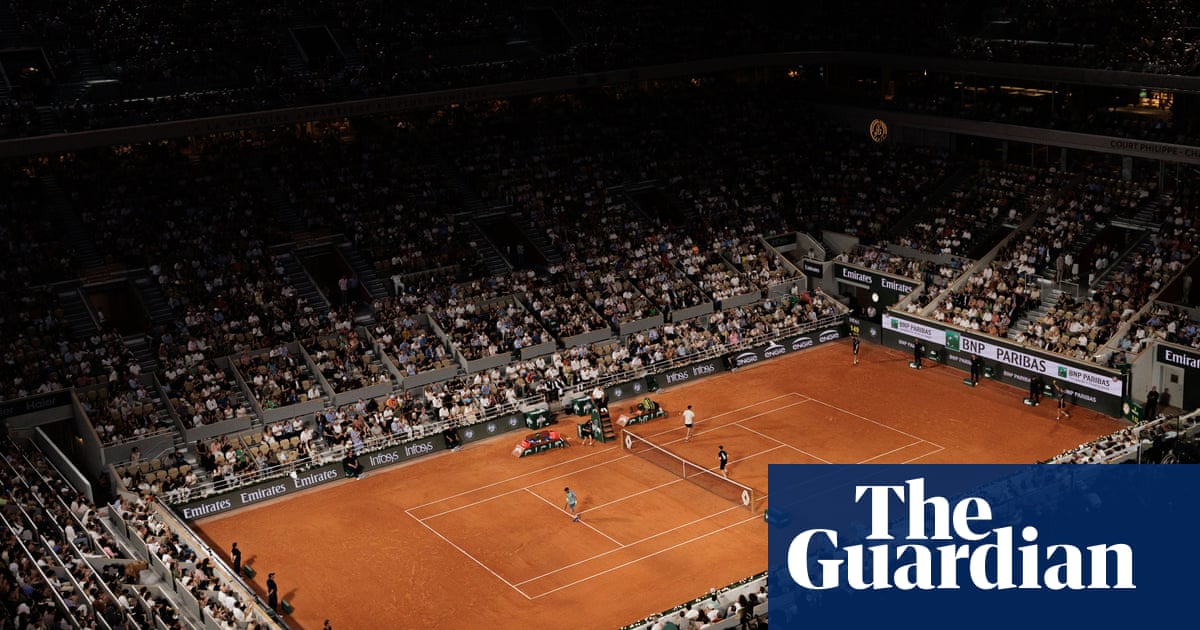
Emma Raducanu is hopeful her health problems are behind her as she prepares for her opening match at the French Open on Sunday. The British No 1 takes on Argentina’s Solana Sierra in the first round for her second match since March after two-and-a-half months out with a post-viral illness.

She lost a close contest with Diane Parry in her opening match in Strasbourg this week, but being healthy again is the most important thing for the 23-year-old. “I feel a lot better,” she said.

“I thought I’d completely flipped it. There’s just been a little bit of a lingering cough. But I feel, health-wise, really good. I played a really positive match in Strasbourg in the sense it was over two hours and physically I pulled up really well.”

Raducanu’s absence meant she dropped out of the top 32 and is therefore unseeded in Paris. She avoided the big names, but the 21-year-old Sierra, who is ranked 64th, is at home on clay, while she made a surprise run to the fourth round of Wimbledon last year.

Raducanu said: “It’s going to be a really tricky first round, especially coming in light on matches, but I’m just proud of how I’m approaching every day, proud of the work I’m putting in.

“I know I’m going to have to play really good tennis and be aggressive. The conditions are pretty lively in the practice days, as the weather is hot, but that could be a good thing.”

With Jack Draper sidelined through injury, Cameron Norrie appeared to be the best hope of a deep British run, but the 20th seed revealed he is struggling with a rib injury. “I haven’t been able to hit since I’ve arrived here, so just been enjoying Paris and resting,” he said. “But I think I needed the rest, so maybe it’s a good thing. I really know I’m feeling the ball well. Luckily, I’m scheduled on Tuesday so I have some time to recover. Hopefully I can be good to play.”

Norrie, who takes on Paraguay’s Adolfo Daniel Vallejo first up, said he may have overtrained, including playing a five-set training match against the American Ben Shelton lasting nearly five hours.

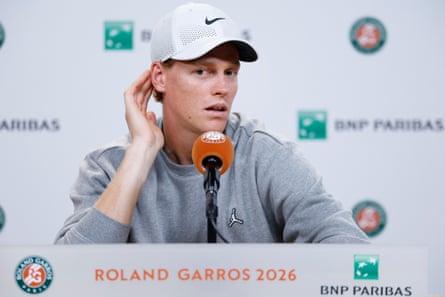
There are six British players in the main draws, with Norrie joined in the men’s singles by Jacob Fearnley and the qualifier Toby Samuel . Fearnley has also been battling a rib problem this season and has struggled to back up his stellar first season on tour, winning seven matches all year. He has the carrot of a second-round match with the world No 1, Jannik Sinner, if he can see off Juan Manuel Cerundolo.

The 24-year-old, who has started working with Andy Murray’s former fitness trainer Matt Little, said: “I did go up the rankings pretty fast and maybe didn’t have the time to really reflect on it and appreciate it for what it was. And maybe got too far ahead of myself. Life in general, there’s ups and downs, and just on a little bit of a down right now, but no reason why I can’t get back up.”

Samuel faces the eighth seed, Australia’s Alex de Minaur, in his first grand slam appearance while in the women’s draw Katie Boulter plays the wild card Akasha Urhobo and Fran Jones meets Beatriz Haddad Maia.

Five toys on sale in Britain found to contain asbestos in tests for Guardian

Retail industry
Five toys on sale in Britain found to contain asbestos in tests for Guardian
Anna Tims
Sat 23 May 2026 07.00 CEST
News
https://www.theguardian.com/business/2026/may/23/toys-on-sale-in-britain-asbestos-found-tests

Five children’s toys on sale in Britain analysed in a Guardian investigation have been found to contain asbestos.

It is illegal to sell products containing any quantity of asbestos fibres in the UK because of the long-term risk of cancer and respiratory problems if they are inhaled.

More than 30 toys have been withdrawn from sale by retailers since the Guardian first reported on asbestos being found in toy sand in January, prompting a wave of testing and recalls .

However, tests commissioned for the investigation suggest there are still products on offer that pose a potential risk to health.

The discovery raises fresh doubts about the UK safety regime’s reliance on self-reporting, and exposes regulatory gaps between different European countries, as similar items had already been recalled in the Netherlands.

The latest round of laboratory analysis looked at six toys similar to those previously recalled for Dutch shoppers but still on sale in Britain. Five were found to contain asbestos fibres, according to scientists at Brunel University’s experimental techniques centre.

“Although the risk to health is small because the quantities of asbestos are small, there is still a risk,” said Brunel’s lead scientific officer, Ashley Howkins. “The younger the child exposed the more chance they have of developing symptoms.”

The five products affected were: Fun Sand, Sand Art Bottle manufactured by the HTI Group and sold by the toy website Curious Minds; Glitter & Glow, Magical Sand Art by KandyToys available on Glowtopia; and three products bought from Amazon – Sand Filled Weirdo, Wordpad Montessori Sand Tray and 4 Pack Stretchy Gorilla Toy.

Amazon has since removed the Weirdo and sand tray from sale and said it was investigating the gorillas. A spokesperson said: “When we identified safety concerns related to sand-based toys, we proactively removed affected products – including play sand and kits – from our European stores, and now require a test from an accredited lab prior to listing.”

Curious Minds issued a recall notice and refunds to customers within an hour of being notified by the Guardian. Glowtopia said it would remove the sand art from its website and contact affected customers while awaiting guidance from the KandyToys on whether a recall would be issued. HTI and KandyToys were contacted for a comment.

Customers are advised to pack the contaminated products in sealed double bags and seek council advice on disposing of them.

The latest recalls lay bare the disjointed nature of safety regulation in post-Brexit Europe. Toys recalled in some EU countries after asbestos traces were discovered remain for sale in others, such as the UK. The European Commission’s centralised product safety website Safety Gate publishes only a partial list of products recalled by different member states.

Richard Clevers, an investigative journalist on the Dutch news platform Algemeen Dagblad, said: “Product warnings are piling up but differ from country to country and the European system intended to provide an overview is failing consumers.

“Anyone wanting to know which toys are affected must monitor the websites of different regulators across the continent.”

Retailers have criticised the UK’s product safety policy, which relies on manufacturers and importers to ensure that products are safe. Post-Brexit health and safety laws have removed powers to ban products thought to pose a health hazard without waiting for scientific evidence. Instead, the onus is on exporters, importers and retailers to test goods and inform regulators if asbestos is found.

Wendy Hamilton, the owner of Curious Minds, said: “There is no requirement for independent verification before products reach the market.

“It’s concerning that no alert was issued to UK retailers when similar products were recalled in the Netherlands. While importers and distributors have a legal duty to notify authorities when they become aware of an unsafe product, there is currently no clear requirement for them to notify retailers.

“As a small independent retailer we only found out because you contacted us.”

The UK minister for product safety, Kate Dearden, said: “It is deeply concerning toys are being sold with asbestos, and I know this is worrying for parents. We are continuing to further investigate how products containing this have entered the UK market.

“We have introduced new powers to ensure product safety is as robust as possible and are consulting on how to strengthen our work on tackling unsafe products online.

“Businesses must ensure they are selling safe products and act when they have failed to do so. We will continue to work closely with the EU and ensure any toys sold in the UK which test positive for asbestos are removed from sale and recalled.”

The European Commission was contacted for comment.

Stephen Hawking’s father worried his son ‘does not study much’, diaries reveal

Stephen Hawking
Stephen Hawking’s father worried his son ‘does not study much’, diaries reveal
Dalya Alberge
Sat 23 May 2026 07.00 CEST
News
https://www.theguardian.com/science/2026/may/23/stephen-hawking-father-worried-son-does-not-study-much-diaries

In exploring the physics and geometry of the universe, Stephen Hawking became a world-renowned pioneer of black hole theory, writing the bestselling book A Brief History of Time, which has sold more than 13m copies, and inspiring people to “look up at the stars and not down at your feet”.

But, during Hawking’s student years and as he approached adulthood, his father was deeply concerned about how his son would turn out. Frank Hawking lamented that “he hangs round the house with little initiative and does not study much”, according to previously unknown diaries that he had written partly in code.

Those diaries are among family papers and photographs to which a Costa award-winning biographer and physicist has been given unprecedented access.

In September, Graham Farmelo will publish the first definitive biography authorised by the Stephen Hawking estate, the publisher John Murray will announce this week. As part of his research, Farmelo has been shown previously unknown material ranging from the diaries of Hawking’s father to the letters and journals of his mother, Isobel. They had been kept until now in the home of Hawking’s sister Mary.

Farmelo said: “It was a wonderful, completely unexpected bonus to be given access to these diaries and papers. They are a 24-carat source of information about Stephen Hawking’s life, especially his formative years and the harrowing months after his diagnosis of motor neurone disease when he was only 21 years old.”

He said it offered a “raw and honest insight” into Hawking’s upbringing and the devastating diagnosis in 1963 of a fatal degenerative disease, which was to leave him almost completely paralysed.

Hawking defied medical expectations that he would die within two years. He died in 2018, at the age of 76, having proved himself as one of the most celebrated minds of our time, carrying out groundbreaking work in cosmology and theoretical physics, exploring the mysteries of space, time and black holes.

His achievements were all the more inspirational after he started using a wheelchair and was only able to communicate through a computer and a voice synthesiser. “Life would be tragic if it weren’t funny,” as Hawking put it. “My expectations were reduced to zero when I was 21. Everything since then has been a bonus.”

He said: “Remember to look up at the stars and not down at your feet. Try to make sense of what you see and wonder about what makes the universe exist. Be curious. And however difficult life may seem, there is always something you can do and succeed at. It matters that you don’t just give up.”

But, in 1961, Hawking’s father, an expert in tropical diseases, could never have imagined his son’s later achievements when he wrote in his diary: “We are a little worried at the way Stephen is turning out. He hangs round the house with little initiative and does not study much.

“[Isobel] says he has an inferiority complex to me (he has no need to) and he has lost faith in physics at Oxford, thinking it is inferior to arts. This is a great pity if so. At his age I had a burning ambition to get on, and if only I had had half his advantages, I should have done much better.”

Frank kept a diary for more than 60 years and wrote many entries in a secret code that Farmelo has managed to crack – translating more than 200,000 words relating to his son’s childhood, his illness, his two marriages and his career as a world-class physicist.

Frank wrote: “This journal was originally written in Greek script to form a simple secret code and so secure greater privacy, which is essential for a journal which may fall into the hands of enemies or easily wounded intimates. Since the Greek alphabet does not contain all of the English letters, the following adaptations have been made …” He added a code for the letters H, V, QU, W and J.

He struggled to come to terms with his son’s failing health, the diaries reveal. In 1967, he wrote: “I find it a slow and ghastly experience with [Stephen]. Everything is so dreadfully slow and long drawn out. And his speech is so slow and difficult to understand that conversation is very difficult. I am very sorry for him and will do all I can for him. But I don’t enjoy being with him.”

Farmelo’s critically acclaimed book The Strangest Man: The Hidden Life of Paul Dirac, Quantum Genius , won the Costa biography prize and LA Times book prize in 2009. The British physicist Dirac was a personal hero of Hawking’s.

For his latest book, Farmelo has interviewed the closest members of Hawking’s family, including his sisters, Mary and Philippa, first wife, Jane, and three children, Robert, Lucy and Tim.

The biography, titled Hawking, will be published on 24 September by John Murray, which describes it as “the definitive portrait of an exceptional life and intellect”.

Wuthering Heights director regrets not showing Margot Robbie’s ‘extremely hairy armpits’

Emerald Fennell
Wuthering Heights director regrets not showing Margot Robbie’s ‘extremely hairy armpits’
Ella Creamer
Fri 22 May 2026 23.10 CESTLast modified on Sat 23 May 2026 06.13 CEST
News
https://www.theguardian.com/film/2026/may/22/wuthering-heights-director-regrets-not-showing-margot-robbies-extremely-hairy-armpits

The Wuthering Heights director Emerald Fennell said it was “unfortunate” that a scene showing Margot Robbie’s hairy armpits did not make the final cut, because women in period adaptations are often shown with clean-shaven underarms.

Robbie’s character, Cathy, had “extremely hairy armpits” in the 2026 adaptation of the novel, but “unfortunately the scene that we see them didn’t make it in there”, said the director.

Cathy having unshaven pits “was so important to me”, she said, adding that she often wonders “where are the razors that these women are using?” when watching Jane Austen adaptations.

“They’re all kind of hairless like eels. I’m like: ‘What’s going on? It’s completely mad.’”

Fennell spoke to an audience at Hay festival in Wales on Friday evening. Her sexed-up adaptation of Emily Brontë’s gothic novel, starring Robbie alongside Jacob Elordi, was released on Valentine’s Day this year.

Fennell described it as a “sister, not a twin” of the book, saying that she “couldn’t make” the original. “It’s so brilliant,” she added.

Asked about the infamous “skin room” – Cathy’s husband, Edgar Linton, gives her bedroom a bespoke design with walls that resemble her skin – Fennell joked that in marketing meetings the team considered asking Farrow & Ball to make a Cathy’s skin themed colour.

They also asked Robbie to send close-up images of the underside of her wrist in order to reproduce her veins on the walls.

Fennell also spoke about the much-discussed “fish scene” , in which Cathy sticks her finger into a dead fish’s mouth.

“I saw a fish in aspic and I thought: ‘I want to stick my finger in its mouth.’ And then I was like, ‘Well, I think if you were trapped, and you were extremely sexually frustrated, the first thing you’d do is …’

“We had all of the different fish, we had fish with lipstick on, we had real fish, fake fish, in the end that was a real fish. But poor Margot. I mean she had to do that. There were 12 of them.”

On her directorial approach, Fennell said that “being embarrassing, being cringe” is a “really big thing” for her.

“Especially now in our culture, we are so phobic and terrified of being cringe, or being earnest, and so we’ve got this deadening ambivalence about everything, and I feel, for me, I want to get in and go for it, and push it off a cliff.”

Fennell said she is taking time off from film-making to make jigsaw puzzles, see her family, disconnect from the internet and read Sarah J Maas novels .

“And I’m coming up secretly with something so depraved, so profoundly evil, that nobody’s going to make it.”

Nadal, Alcaraz and now Jodar: how Spain’s school of ‘suffering’ forges the stars of men’s tennis

Tennis
Nadal, Alcaraz and now Jodar: how Spain’s school of ‘suffering’ forges the stars of men’s tennis
Tim Joyce
Sat 23 May 2026 11.00 CESTLast modified on Sat 23 May 2026 12.11 CEST
News
https://www.theguardian.com/sport/2026/may/23/rafael-jodar-french-open-mens-tennis-rafael-nadal-carlos-alcaraz

Spain is at it again.

A year ago Rafael Jodar, the teenage sensation from Madrid, was ranked around No 700 in the world and completing his freshman year at the University of Virginia. After winning several ATP Challenger titles (the level below regular ATP tournaments) the Spaniard decided to turn pro and forgo his final three years of college eligibility. Jodar won his first main-level ATP match at this year’s Australian Open. And now, stunningly, after a meteoric and nearly unprecedented rise up the rankings, the 19-year-old will be among the 32 seeds when the French Open commences Sunday.

And, in the process, the “new Rafa” – while he has said he was inspired as a child by Nadal, Jodar is named after his father and grandfather – has managed to steal the mantle of the “next future champion” hype away from Brazilian João Fonseca . Ironically Fonseca, also 19, was committed to play college tennis at Virginia with Jodar but instead decided to turn pro, leaving one to wonder if that college team, had it materialized, would have been among the best ever.

To have yet another player thrust into the grand slam-winning-possibility conversation adds to the utter embarrassment of riches Spain has enjoyed for more than three decades. Starting with Sergi Bruguera’s back-to-back French Open titles in 1993 and 1994, the Spanish men have enjoyed a nearly uninterrupted run of dominance with six different players winning grand slams, culminating – at least, one assumed it was culminating – with Rafael Nadal’s 22 major titles. Consider: just three months after Nadal’s final grand slam triumph at the 2022 French Open, Carlos Alcaraz won his first major championship at that year’s US Open. (He has since won six more, but will miss this year’s French Open and Wimbledon with a wrist injury.)

The only Open-era analog that comes to mind is Sweden’s moment in the sport in the 1970s and 80s. Björn Borg, the ultimate tennis icon, put Sweden on the map with 11 grand slam titles in an eight-year span, starting in 1974. After he vanished from the sport following his excruciating defeat to John McEnroe at the 1981 US Open, Mats Wilander took up the cause and won the 1982 French Open , his first of seven grand slams. Stefan Edberg then grabbed six majors between 1985 and 1992. Sweden’s time in the tennis sun also merged with the sudden cultural influence from the Scandinavian country, from Abba’s music to Saab’s turbo cars.

With his ferocious hitting and aggressive posture constructing points, Jodar continues to put a nail in the coffin of the notion that Spanish players are primarily clay-court specialists. Nadal was unfairly burdened with the “he’s great but only on clay” label very early, but his Wimbledon triumph in 2008 proved he could play; Alcaraz burst on to the scene as a fully formed all-court player.

So how did Spain become such a powerhouse in the men’s game? Many trace the origin story back to the early 1970s. The country’s dictator Francisco Franco, inspired by Manolo Santana, the first Spaniard to win a grand slam, ordered the construction of thousands of red clay courts throughout Spain, literally building the infrastructure that laid the groundwork for what was to come.

Though it took a generation, the coaching techniques and training regimens put in place 50 years ago in Spain have now become standard practice for players from around the world.

The two coaches who were the most instrumental in developing the Spanish brand of men’s tennis in the 1980s and early 1990s were Pato Alvarez (now deceased), and Lluis Bruguera (the father of the aforementioned Sergi), who is in his 80s and still coaching.

Both based in Barcelona, they developed a style of coaching that Chris Lewit, author of the book The Secrets of Spanish Tennis , narrowed down to six tenets: movement, footwork and balance; racket speed and weapon building; consistency; defense; physical conditioning; and, finally, the importance of suffering.

It is this act of suffering, of fighting through and retaining a positive mental outlook in the midst of the mini-crises that exist in every match, that is the most significant throughline among all the recent Spanish champions. Nadal famously said that “you have to learn how to live with these kind of moments, and also to enjoy this suffering”. Alcaraz echoed that with his view that “you have to find the joy in suffering”. While Nadal was coached at home in Mallorca with his Uncle Toni and Alcaraz in an academy setting under his former coach Juan Carlos Ferrero, the hallmarks of Spanish tennis seamlessly moved from one generation to the next. This focus on the “suffering” and on the point construction has allowed the transition away from the clay-only successes of Bruguera to the all-court prowess that Alcaraz and now Jodar possess.

It is this generational hand-off of not just the physical attributes and strategies necessary for triumph but the mental fortitude that is apparent with Jodar. Speaking of Nadal, Jodar said, “He was, I think, the best mentality wise. He never gave up in a match. He stayed there for every moment that the match was bringing him and tried to play his best tennis with the things he was doing throughout those days. I think watching him inspired me when I was younger.” Additionally, Jodar, like Nadal and Alcaraz before him, plays the game with a supreme confidence, grounded in an oft-articulated humility that keeps the best players hungry.

If the Spanish method has been such an incredible success then why haven’t more countries followed their lead? Many countries and players already have tried. A teenaged Andy Murray became so inspired by the Spanish style that he spent significant time training in Barcelona under the tutelage of Alvarez, and he has spoken of how huge an impact those years in Spain had on his development into a three-time grand slam champion.

Jose Higueras, a former Spanish pro who was one of the first players to emerge under the new Spanish system in the 1970s, imported much of the program to the United States when he started working with US pros in the 1990s. He wanted to bring that clay-court attitude to the American style of play, which was usually focused on a big serve and forehand. And it yielded immediate results. Higueras coached Michael Chang to his sole grand slam title at the 1989 French Open and then worked with Jim Courier as the coach played a pivotal role in the last golden era of American tennis.

One can implement all the correct protocols and latest methods, but it’s all for naught if the attitude and, more importantly, talent isn’t there. Some is ingrained; some is just luck. Spain has been blessed with Nadal and Alcaraz, two extraordinary athletic specimens with an unusual combination of strength and reflexes. And in addition to Jodar, 20-year-old Martin Landaluce is another Spaniard on the rise making significant noise.

The sport – much to the chagrin of the old-school traditionalists who prefer a serve-and-volley style – has also changed over the last few decades into a slower game with the more homogenous court speeds. Gone are the fast grass courts of years past. Most hard courts have been slowed down, creating the perfect conditions for the Spanish style to thrive.

Whatever the reasons for their dominance, the Spanish conveyor belt of champions shows no sign of slowing down.