Judge dismisses lawsuit brought by author Michael Wolff against Melania Trump

Melania Trump
Judge dismisses lawsuit brought by author Michael Wolff against Melania Trump
Edward Helmore
Sat 23 May 2026 16.27 CESTLast modified on Sat 23 May 2026 16.28 CEST
News
https://www.theguardian.com/us-news/2026/may/23/melania-trump-wins-dismissal-michael-wolff-lawsuit

Melania Trump has won the dismissal of a lawsuit brought by author Michael Wolff designed to head off a billion-dollar defamation action brought by the first lady over statements he made in the media.

The US district judge Mary Kay Vyskocil said that Wolff’s claim against Trump under anti-Slapp statutes, which are designed to allow defendants to quickly dismiss meritless, intimidating lawsuits, was “preemptive” and presented in a “somewhat contorted posture”.

In a 45-page ruling , Vyskocil said the “plaintiff asks for a declaration that, if the first lady sues him, he deserves to win. That is not how the federal courts work.”

Wolff, who has written four books about Donald Trump, filed the lawsuit last year in response to a lawsuit brought by the first lady after she demanded – and failed to receive – an apology for Wolff’s comments on the administration’s handling of files related to the late sex trafficker Jeffrey Epstein .

Vyskocil, who was appointed by Trump, agreed that Wolff and the first lady “have a real dispute”, but said “they must litigate it according to the same procedures as everyone else”.

Wolff sued Melania Trump last October after her lawyer, Alejandro Brito, told him in a letter that she would be “left with no alternative” but to sue him if he didn’t retract statements that the lawyer said had caused her “overwhelming reputational and financial harm”.

Vyskocil ruled that Wolff was seeking special treatment by seeking to litigate out of order and accused him of “textbook bad-faith forum shopping” by filing his claim in New York before Trump had filed her defamation suit in Florida.

In that legal effort to establish his statements as non-defamatory, Wolff had won “the race to the courthouse”, Vyskocil wrote, but said he had exhibited an “inappropriate level of tactical gamesmanship”.

“The outcome is simple,” Vyskocil continued. “The court will not be conscripted to oversee an abusively presented spat and so declines to reach the merits here.”

Wolff, who was revealed in justice department files to have had extensive communications with Epstein on the subject of Donald Trump’s first presidential run, initially sued in New York state court, but the defendant’s attorneys had the case transferred to federal court and later sought to have it dismissed or moved to a federal court in Florida.

Vyskocil said that while federal court does have jurisdiction, she was declining to exercise it and “dismisses this case to be litigated like any other”.

Nick Clemens, a spokesperson for Melania Trump, said the first lady “is proud to continue standing up to, and fighting against, those who spread malicious and defamatory falsehoods as they desperately try to get undeserved attention and money from their unlawful conduct”.

The decision comes after Melania Trump made a statement at the White House denying any affiliation with Epstein and that she and her lawyers would fight back against “unfound and baseless lies” that she had ties to him.

“The lies linking me with the disgraceful Jeffrey Epstein need to end today,” the first lady said. “The individuals lying about me are devoid of ethical standards, humility and respect. I do not object to their ignorance, but rather I reject their mean-spirited attempts to defame my reputation.”

She added: “I have never been friends with Epstein. Donald and I were invited to the same parties as Epstein from time to time, since overlapping in social circles is common in New York City and Palm Beach.”

California: 40,000 people ordered to evacuate over chemical leak fears

California
California: 40,000 people ordered to evacuate over chemical leak fears
Roque Planas
Sat 23 May 2026 08.46 CESTFirst published on Sat 23 May 2026 02.51 CEST
News
https://www.theguardian.com/us-news/2026/may/22/california-orange-county-chemical-tank

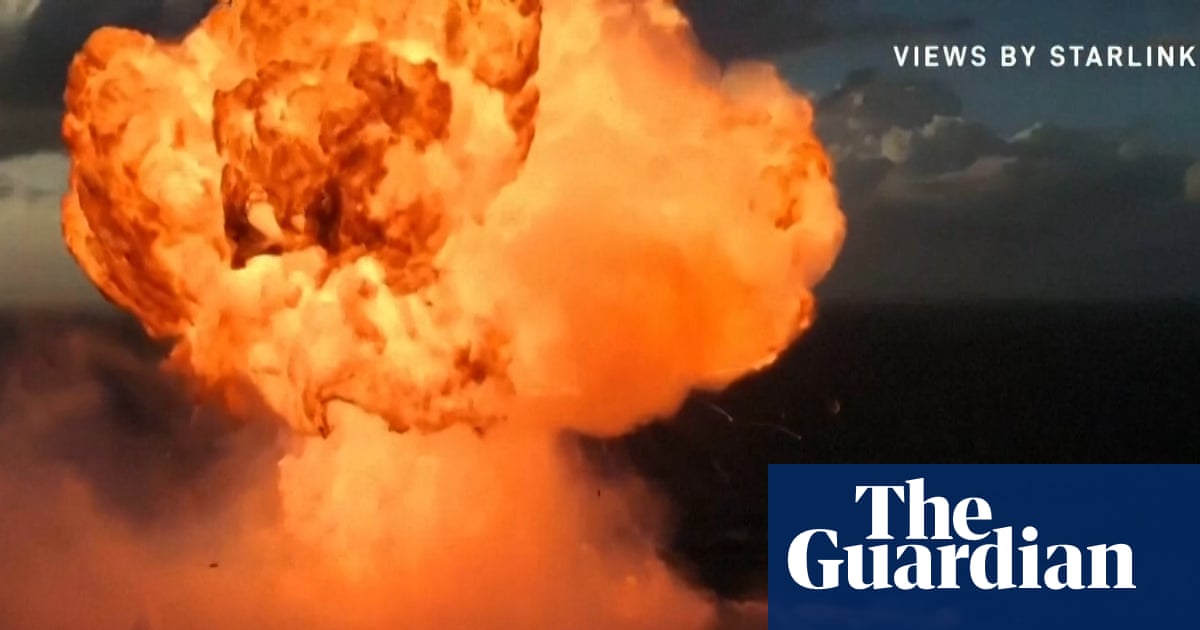
Authorities in Orange county, California have ordered the evacuation of 40,000 people over concerns about a chemical leak that threatened to spill or explode.

The problem arose on Thursday at a facility owned by GKN Aerospace in the town of Garden Grove, where a storage tank holding methyl methacrylate began off-gassing and threatened to fail. The chemical, which is highly flammable , is used to fabricate resins and plastics.

Local authorities originally responded to the incident with a hazmat team on Thursday, ordering local residents to evacuate. They lifted the order later that day, but the problem worsened due to “damage to a valve on the tank” that “created additional operational challenges, preventing complete mitigation”, Garden Grove authorities wrote in an evacuation order.

By Friday, new evacuation orders had expanded to residents in six cities .

“We have a tank that is actively in crisis,” Orange county fire authority division chief Craig Covey told reporters at a news conference .

“There are literally two options left remaining. One: the tank fails and spills a total of about 6-7,000 gallons of very bad chemicals into the parking lot in that area. Or two: the tank goes into a thermal runaway and blows up, affecting the tanks that are around them that have fuel or the chemicals in them as well.”

“This thing is going to fail, and we don’t know when,” Covey said. “We’re doing our best to figure out when or how we can prevent it.”

Crews have created containment barriers with sandbags in case there is a chemical spill from the tank to prevent the toxic chemical from getting into storm drains or reaching creeks or the nearby ocean.

Dr Regina Chinsio-Kwong, the county health officer, said if the chemical heats up, it can release a vapor that is harmful to people’s health. It can cause respiratory issues, itching and burning eyes, nausea and headaches.

Garden Grove police chief Amir El-Farra said some 15% of those facing evacuation orders were refusing to leave, according to the Orange County Register. The city has established at least two shelters for evacuees.

Garden Grove is about 38 miles (61km) south of downtown Los Angeles and less than a mile from Disneyland’s two theme parks, which were not under evacuation orders Friday.

The evacuation orders cover residents of five other Orange County cities — Cypress, Stanton, Anaheim, Buena Park and Westminster.

Covey, the county fire division chief, urged residents to take the order seriously. “We are setting up these evacuations in preparation for these two options: it fails or it blows up,” Covey said. “Please follow our requests and orders for evacuations.”

GKN Aerospace is a division of a British corporation that produces airplane engines and other aircraft parts.

China mine death toll at least 82 after gas blast

China
China mine death toll at least 82 after gas blast
Alastair McCready
Sat 23 May 2026 17.58 CESTFirst published on Sat 23 May 2026 07.58 CEST
News
https://www.theguardian.com/world/2026/may/23/china-mine-explosion-shanxi-deaths-xi-jinping

At least 82 people have been killed in a gas explosion at a coalmine in northern China’s Shanxi province, in the country’s worst mining disaster in 17 years.

The explosion happened on Friday at 7.29pm (12.29 BST) while 247 workers were underground at the Liushenyu coalmine in Qinyuan county, the state media agency Xinhua reported.

The cause of the accident is yet to be confirmed, but according to Xinhua, local authorities were initially alerted after an underground carbon monoxide sensor in the mine – operated by the Tongzhou Group – was triggered. Carbon monoxide is a highly toxic, odourless gas.

Chinese authorities said late on Saturday that preliminary findings showed the coalmine’s company had committed “serious illegal violations”, state media reported.

One injured survivor, Wang Yong, recalled seeing a “puff of smoke”, smelling sulphur and seeing people choking before he lost consciousness.“I laid down for about an hour and woke up by myself. I called the people next to me and we got out of the mine together,” Wang told the state media broadcaster CCTV.

State media reported earlier that the government was launching “a rigorous and uncompromising investigation” and that “those found responsible will be severely punished in accordance with laws and regulations”.

At least 123 people, four in a critical or severe condition, were taken to hospital to receive treatment, according to CCTV. Thirty-three had returned home as of 2pm on Saturday.

Footage published by CCTV showed helmeted rescuers carrying stretchers at the site, with ambulances visible in the background. Rescue efforts are ongoing, with a total of 755 emergency and medical personnel dispatched to the site.

The mining disaster is the deadliest reported in China since 2009, when an explosion at a mine in north-eastern Heilongjiang province killed more than 100.

China has significantly reduced coalmine fatalities – often caused by gas explosions or flooding – since the early 2000s by imposing more stringent regulations and safer practices. But major accidents still occur, including in 2023, when a collapse at an open-pit coalmine in northern Inner Mongolia killed 53 people.

In 2020, 23 people were killed after being trapped in a mine with elevated levels of carbon monoxide in China’s south-western city of Chongqing.

Shanxi, one of China’s poorer provinces, is the centre of the country’s coalmining industry, contributing almost a third of its raw coal output.

The president, Xi Jinping, called for authorities to “spare no effort” in treating the injured and conducting search and rescue operations, while ordering an investigation into the cause of the accident and who was accountable.

Xi also “emphasised that all regions and departments must draw lessons from this accident, remain constantly vigilant regarding workplace safety … and resolutely prevent and curb the occurrence of major and catastrophic accidents”.

The premier, Li Qiang, echoed the instructions, calling for timely and accurate release of information and rigorous accountability.

According to Xinhua, authorities have already placed at least one person “responsible for” the company involved in the explosion “under control in accordance with the law”. The definitive cause of the accident is under investigation, according to Qinyuan’s local emergency management authority.

In 2024, the Liushenyu mine was one of 1,128 cited by China’s national mine safety administration for “severe safety hazards”, with the regulator specifically raising the alarm about the presence of high gas levels.

When publishing its findings, it called on provincial authorities to “urge severely disaster-prone coalmines to implement measures for regional disaster management”.

Agence France-Presse contributed to this report

Keeping my dead wife’s books safe for our son helped me let go of guilt | Ben O’Mara

Books
Keeping my dead wife’s books safe for our son helped me let go of guilt
Ben O’Mara
Fri 22 May 2026 17.00 CESTLast modified on Sat 23 May 2026 08.18 CEST
News
https://www.theguardian.com/commentisfree/2026/may/23/widower-keeping-dead-wifes-books-safe-for-son

As I removed my dead wife’s favourite novels from the bookshelf, a photo of her fell to the ground and a wave of guilt swamped me.

The photo was of my wife with her sister in the 1980s. They were toddlers. My wife’s eyes, wide and bright, and her hair, blond and shaggy, looked just like our four-year-old son. But I felt no joy in seeing her beauty and genes passed on. I felt as though I was suddenly drowning.

I couldn’t breathe. My muscles locked. Nausea from panic rose in my stomach, and I almost vomited. In removing her books and discovering her photo, it was as though her ghost had seen me committing a heinous crime. A simple act that, in my grieving mind, demanded I go on trial. That I be held to account before a jury for the terrible, selfish act of moving her books to the far end of the house to make way for my new ones.

I’ve talked with other widowers and widows about paralysing guilt. It can be the result of doing small, everyday things to better enjoy life after a spouse has died. Some have told me of crying when grocery shopping alone, or when going on beach holidays by themselves. Of being overwhelmed with emotion on tentative first dates, years after the loss. Or still feeling heartbroken in a new home after moving cities for work.

There has been a growing understanding of the ways guilt shapes life after the death of a partner. Studies show that grief is natural and inevitable after significant loss, and it often comes with remorse. Feelings of intense longing for a partner who is gone, a sense of failure, painful emotion and the sense that a part of the bereaved has been lost are common.

The guilt’s intensity can fade over time. It can help to try to work through it by finding ways of practising self-forgiveness and being open to talking with mental health professionals. I’ve found the process is not easy or quick. Navigating guilt is unique to each person, too. I do know, however, that recognising the stress that guilt may create and talking about it has been helpful.

But there was more to me feeling as though I had broken the law in reorganising my wife’s books. Something that felt much bigger. Pulling out her paperbacks and carrying them with me through the house connected me to something weird and cosmic. Something that came with great awe.

I believe the connection was to the fear and wonder from the thousands-year old culture of the printed word: my unexpected, powerful encounter with the endless dance with death on planet Earth through physical books. Because books, in their form as well as focus, foretell with subtle and beautiful skill the death that comes for all humans.

Jeff VanderMeer’s science fiction horror books have well imagined the awe that comes from grief and loss for humans and the natural world they inhabit. VanderMeer was one of my and my wife’s favourite novelists . In Absolution , the latest novel from his Southern Reach series, he tells a creepy yet beautiful story about scientists exploring the wetlands of “Area X”. The scientists are haunted by weird alterations of animals and nature, like they were relics from another civilisation, and by a decaying, terrifying future.

The relics from the marshes of VanderMeer’s novel felt eerily like the photo of my wife that fell from the bookshelf that day, and her books.

I could not stop thinking about Absolution. Not just the way the book explores grief, terror and beauty amid environmental destruction. But also for how his novel suggested to me the degrading physicality of all things and their allure, including stories printed – the fading ink of their pages, the washed-out colours of their images. That despite books degrading, they still fascinated readers, who imbued them with such power over the present. And possible futures.

My son and I read books together often – old and new, torn and well preserved. Most reading we do comes without sadness or guilt from grief as we go on living without his mum. He enjoys books about dinosaurs and monster trucks, but particularly those about Halloween, ghosts and cats and witches like from Meg and Mog.

I like to think we have fun reading this way for the rollercoaster of emotion we go on together: the pleasure from their dark and beautiful colours; the jump scares from funny skeletons and zombies; the humour of ridiculously large pumpkins; and the enchantment of strange potions. It amazes me that I still laugh with him at stories we’ve read time and again.

Reading with my son, I am reminded of the world of books my wife and I shared. I don’t feel overwhelmed by guilt, though. Or as though I’m on trial for enjoying life without her. I’m just amazed that books can be relics that offer such vivid connections between the past and present. Through books, falling apart with time – like us reading them – we find joy, fear, laughter and comfort.

My guilt swells much less now but I suspect it will take time to complete the reorganisation of my book collection. Perhaps some of my books will never find permanent placement. But I was able to store my wife’s books in a safe place at the end of the corridor in our house, along with her photo, not far from my son’s bedroom.

Her books are there for when he is ready, and me too, to discover more about his mum’s story. To learn more of what she loved about the world rendered through literature. Which authors inspired her. The strange horrors of language she encountered. To know better a memory of her brought to life through the fear and wonder of the printed word.

Ben O’Mara is a Canberra-based writer and researcher. He is also an editor and the “chief spooky officer” at Lost Souls Magazine

Israeli bombardment reduces buildings to craters in southern Lebanon

Lebanon
Israeli bombardment reduces buildings to craters in southern Lebanon
William Christou
Sat 23 May 2026 13.11 CESTFirst published on Sat 23 May 2026 05.57 CEST
News
https://www.theguardian.com/world/2026/may/23/israel-lebanon-strikes-deaths-paramedics-health-ministry-says

Israel has carried out overnight strikes on Lebanon’s Bekaa valley and the southern province of Tyre, killing at least four people and reducing buildings to craters.

The strikes on southern Lebanon continued on Saturday morning, hitting close to Lebanese army barracks, killing a man on a motorcycle in the town of Nabatieh, and killing and wounding people in the town of Chehabiyeh, where the death toll is not yet known.

The bombings were the latest in a series of bloody days for Lebanon. Israel killed 10 people on Friday, including a child and six paramedics, one of whom also worked as a photojournalist.

In a video of one of the Israeli strikes on Friday morning released by the Lebanese ministry of health, civil defence workers are seen wearing high-visibility vests standing beside an injured person on a motorcycle in the town of Deir Qanoun en-Nahr. They gesture at an ambulance to come to them, and when it comes closer, it is bombed, killing two paramedics and a child.

Among the dead was Ahmed Hariri, a photojournalist who also worked as a photographer for the civil defence. A second Israeli airstrike on the southern town of Hannaouiyah killed four paramedics from the Islamic Health Association.

In Hannaouiyah and Deir Qanoun en-Nahr, the Israeli military said it was examining claims that “several uninvolved individuals in the area, who were not the targets of the strikes, were harmed”. It said it took steps to mitigate potential civilian harm in part by ordering the population in both areas to leave, and claimed it was targeting Hezbollah fighters it had identified in the area.

In 88% of cases where the Israeli military has said it will investigate allegations of war crimes, they have been closed down or left unresolved.

Israel has continued striking Lebanon regularly, both south and north of the Litani River in south Lebanon, since a US-brokered ceasefire was announced in April . More than 3,111 people have been killed since the latest round of fighting between Hezbollah and Israel started on 2 March. Of these, 817 have either been killed or their bodies found since the ceasefire was established.

Hezbollah has also continued attacking Israeli forces in southern Lebanon since the ceasefire, relying increasingly on low-budget, first-person-view drones which the Israeli military has had difficulty intercepting.

Hezbollah said it targeted a gathering of Israeli soldiers with artillery shells outside the south Lebanese village of Deir Siryan, and attacked an Israeli drone with a surface-to-air missile, on Friday night.

Before the attacks in Tyre on Friday, the Israeli military issued evacuation warnings for two areas in the southern Lebanese city, as well as the village of Burj Rahal to the north-east. Lebanese officials went through the neighbourhoods urging people via loudspeaker to leave before the strikes.

Israel also struck the mountainous area on the outskirts of the town of Brital in the Bekaa valley, later releasing videos showing what it said was its strikes on an underground weapons facility. Over the last three years Israel has repeatedly struck the valley where it is rumoured Hezbollah stores its long-range missiles, exploiting the protection provided by the rugged landscape.

Israeli airstrikes have continually hit health infrastructure and medics since the ceasefire was announced, with Tebnine public hospital heavily damaged by an airstrike on Thursday. Staff in the hospital, one of the last operating in south Lebanon, were injured.

Several hospitals in southern Lebanon have been damaged or put out of service by Israeli strikes, according to the World Health Organization, and 123 medics have been killed by Israel.

The Lebanese and Israeli governments are involved in direct negotiations brokered by Washington, with a temporary ceasefire between the two countries having been extended twice. However, the ceasefire has not stopped fighting, but rather only mostly spared the Lebanese capital of Beirut from strikes.

The Lebanese government is seeking a complete ceasefire in Lebanon as its first priority in negotiations, as well as the complete withdrawal of Israeli forces from Lebanese territory.

The Israeli government is seeking the complete disarmament of Hezbollah and had said it will only withdraw from the 235 sq mile (609 sq km) area it occupies in south Lebanon once the safety of the residents of northern Israel is assured. The Israeli military has demolished or damaged at least 46 villages in the areas under its control, according to an analysis by the research group Bellingcat.

Hezbollah has called for an end to direct negotiations between Israel and Lebanon, framing them as a Lebanese capitulation and surrender of its sovereignty.

The negotiations are linked with ongoing US-Iran talks. If those fail, it is considered likely that a full Israel-Hezbollah war would resume.

The current round of conflict in Lebanon started on 2 March when Hezbollah launched rockets at Israel in retaliation for the killing of the Iranian supreme leader Ayatollah Ali Khamenei , prompting an Israeli bombing campaign and invasion.

Tom Burke: ‘The worst job I’ve done? A movie. Does it have a name? It might do’

Life and style
Tom Burke: ‘The worst job I’ve done? A movie. Does it have a name? It might do’
Rosanna Greenstreet
Sat 23 May 2026 11.00 CEST
News
https://www.theguardian.com/lifeandstyle/2026/may/23/tom-burke-actor-interview-legends

B orn in London, Tom Burke , 44, trained at Rada. In 2008, he won the Ian Charleson award for his role in Creditors at London’s Donmar Warehouse. From 2014 to 2016, he appeared in the BBC series The Musketeers; his other TV work includes War & Peace and Strike, in which he plays the title role. His best-known films are Mank, The Souvenir, The Wonder and Furiosa: A Mad Max Saga. His new Netflix series is Legends. He lives in Kent.

What is your greatest fear? To be stuck in the past.

What is the trait you most deplore in yourself? Rumination.

What is the trait you most deplore in others? Outrage.

What was your most embarrassing moment? Putting chocolate mousse in my agent’s face. Somebody had done it to me – that thing where they go, “Smell this, it smells funny”, and then they put it in your nose. A year later I was in this French restaurant with a very 1980s-style dessert trolley and, before I knew it, I had a bowl of chocolate mousse in front of me. And my agent went, “What’s that smell?”, and it felt impossible not to … I immediately felt awful and tried to apologise. He, of course, said that he found it funny. But I knew he didn’t.

Describe yourself in three words Steady, reaching, bewildered.

What makes you unhappy? The internet.

If you could bring something extinct back to life, what would you choose? The pager.

What is your most unappealing habit? Taking the last thing out of a box of something in the fridge or cupboard, then putting the empty box back.

What scares you about getting older? Having regrets and not knowing what to do about them.

Who is your celebrity crush? Lauren Laverne.

What is your guiltiest pleasure? Buying sunglasses.

Which words or phrases do you most overuse? Incidentally.

What is the worst job you’ve done? A movie. Does it have a name? It might do.

What is the closest you’ve come to death? A running accident when I was 14 or 15. I fainted but I was a bit of a jester and they thought I was taking the piss, so I was left for a bit. I woke up in hospital.

What has been your closest brush with the law? I’ve twice not been able to do jury service. Both times I was doing a fringe play and wrote a letter saying, “You don’t understand, I don’t have an understudy.” And both times I didn’t realise they’d written back saying, “You’ve got to turn up”, because I was so busy getting the play on and didn’t open my mail.

What keeps you awake at night? It’s usually a slight feeling that, having got through the day, I didn’t get any time to do any writing or something creative – it was a lot of admin, exhaustion from that and rumination.

Would you rather have more sex, money or fame? I don’t think I need more of any of those three at the moment.

How would you like to be remembered? I’ve not always been great friend material. I’ve tried to get better at that, so to be remembered as reliable by a few would be great.

What happens when we die? You reach a certain point in life and suddenly know a lot of dead people, and I’ve noticed you don’t stop getting to know people who are dead. Those relationships continue and I like that.

‘I laughed out loud dozens of times’: authors choose books to make you fall back in love with reading

Books
‘I laughed out loud dozens of times’: authors choose books to make you fall back in love with reading

Sat 23 May 2026 10.00 CESTLast modified on Sat 23 May 2026 15.12 CEST
News
https://www.theguardian.com/books/2026/may/23/i-laughed-out-loud-dozens-of-times-authors-choose-books-to-make-you-fall-back-in-love-with-reading


Malala Yousafzai Activist I have loved going to the theatre ever since I saw my first musical (Matilda in London, when I was 15 years old) – and I love reading about it, too. In Enter Ghost by Isabella Hammad, a British-Palestinian actor travels to the West Bank to see family and finds herself pulled into a local production of Hamlet. I was moved by the rehearsal scenes: arguments over translations, personal relationships, the question of whether a performance is even possible under Israeli occupation. To me, Hammad proved that theatre is capable of carrying weight that other art forms cannot hold.

David Miliband CEO of the International Rescue Committee Free: Coming of Age at the End of History , a book about growing up in Albania, the last Stalinist country in Europe, doesn’t sound like a rollicking good read, but Lea Ypi’s book, published in 2021, is at once hilarious and serious, appalling in its description of the lies and tentacles of the regime of Enver Hoxha and touching in its humanity, particular in its focus and universal in its application. I often say about refugees and their contribution to adopted homelands that those who have known the price of oppression don’t need any lessons in the value of freedom. Ypi’s personal story, from “Young Pioneer” in the Albanian Communist party to student in Italy and professor in the UK, is warming but also full of warnings. She has turned her experience into fuel for her political philosophy, and this makes Free more than a work of memory or history. It is also an engagement with the challenges of the present.

Katherine Rundell Author I think we’re often rightly sceptical of reviews that say a book is “laugh-out-loud funny” because, when we read them, they’re often, at best, smile-out-loud or plausibly caustic or flippant or wry. But Luke Kennard’s Black Bag made me laugh aloud dozens and dozens of times. It’s brilliant, a triumph of a book: the story of a young out-of-work actor who takes on a job working for a professor of psychology, who employs him to dress in a black bag during his lectures in order to gauge his students’ changing attitude to strangeness. It’s based on a real-life experiment from 1967. I loved its inventive originality and its ambition: it is very powerfully worth your time.

Jack Thorne Screenwriter I was quite a weird kid. Susan Cooper’s The Dark Is Rising found that weirdness and twisted it. It’s a book I’m holding off sharing with my 10-year-old just yet because I want him to read it at the perfect age and I think that’s 11. It is about the battle between the Dark and the Light, weaving myth and history into a glorious concoction that uses language as a weapon. Complicated and mythic and entirely dangerous, it frequently sits still when other fantasies sprint and it’s all the better for it.

Margaret Busby Publisher and president of English PEN The Black Jacobins : Toussaint L’Ouverture and the San Domingo Revolution by CLR James is an uplifting example of how the personal and political connect. First published in 1938, it puts on record the individual and collective resistance that led to the only successful revolt of the enslaved in history, still relevant as a defiant call to resisting oppression. James was my father’s friend since their schooldays in Trinidad, so when I realised in the 1970s that this masterpiece of historical literature was out of print in the UK, it was a privilege to be able to reissue it at Allison & Busby.

Philippa Perry Psychotherapist In a letter to her niece Anna, Jane Austen wrote: “Three or four families in a country village is the very thing to work on.” She said you don’t need sweeping plots, just close observation, small interactions, and the way people behave with one another day to day. And I think EF Benson may have taken this advice to heart when he wrote his Mapp and Lucia series. Read it and laugh about how absurd we all are. Nothing very much happens, which is the point (unless being washed out to sea on an upturned kitchen table is something happening). It’s all social manoeuvring, tiny slights, inflated egos and people taking themselves too seriously. Read it, and then decide which character most resembles you. I think there’s a bit of me in all of them.

Sajid Javid Politician I first read Freedom at Midnight by Larry Collins and Dominique Lapierre when I was 14. It’s never left me. It tells the story of partition, a period that my father had already brought to life by recounting his own experience, and is written with the pace, colour and dramatic flair of a novel. I have gone back to it many times over the years, and always feel the emotional force that it brings to an important period of history. It’s one of those rare books that you keep an extra copy of to press into the hands of your children and friends.

Tony Robinson Actor and author I’m currently enthralled by a small but exquisite book called The Word hord: Daily Life in Old English . It’s written by Hana Videen and the Old English she refers to isn’t the language of Shakespeare, whose syntax may be unfamiliar but whose words we can understand. This is the tongue of our ninth-century CE ancestors for whom Alfred the Great, fearing the decline of learning following the Viking raids, translated the finest Latin works of his time into the common vernacular. The words on offer are a joy. Dream-cr aeft means music, heafo d-swima is intoxication, a wil-cuma is someone whose arrival is a pleasure. Dipping into this wordhord makes me feel happy.

Sarah Moss Author I find that with passing years I become more insistent on spending time with books (and people) that are kind as well as clever. Shirley Jackson is best known for very dark fiction, but her two memoirs, Life Among the Savages and Raising Demons , are wildly funny and sharp. It’s hard to write loving domestic comedy in the best of circumstances – sarcasm is so tempting – and Jackson’s circumstances were not the best: a novelist raising four children in 1950s America with a professorial husband who was insecure about her success and unprofessionally interested in the undergraduates at his women’s college. The memoirs manage to acknowledge and not minimise the unfairness and banality of her situation and at the same time insist on space for laughter and delight. I read them the first time on a train and giggled so much the people at my table wrote down the title.

Ocean Vuong Poet and author I was lucky enough to discover Let Us Now Praise Famous Men by James Agee and Walker Evans back in community college, early in my life and long before I wrote anything worth reading. This book is, to this day, one of the most innovative, strange and nebulous hybrids of text and images I’ve ever encountered. Written during the Great Depression but published in obscurity during the second world war, it forges a new way to write about suffering, one where the writer is not only a subjective participant in its reality, but perhaps even culpable for the horrors it depicts. It collapses any easy, cathartic answers we might expect nonfiction to provide. But perhaps most vitally, it’s a book that gives unlimited permission to dare, venture and risk in one’s own work and thinking.

Elif Shafak Author “Nothing is harder to do than nothing.” This is the basic premise and the opening line of a deeply thoughtful and thought-provoking book called How to Do Nothing by Jenny Odell. It is a fascinating take on how and why we need to resist the relentless demands of our hyper-information society. It reminds us that our value as human beings is not dependent on our productivity levels or amount of consumption on any given day. It recognises that solitude, compassion, friendship, introspection, contemplation – all these universal and ancient qualities – are inalienable rights. Inviting readers to become better observers, better listeners, it encourages us to slow down. To pay more attention to the seemingly small, “insignificant things”, reconnect with each other, with nature and with ourselves. In a world where there is constant clamour, too much rigidity, polarisation and tribalism, this book shows us that you can be gentle, calm, nuanced and still be political, attending to the local, to the humble, and to what makes us human.

Susie Dent Lexicographer I read Le Grand Meaulnes by Alain-Fournier (The Lost Estate in English) when I was a teenager, and I’m not sure anything has quite matched it since. It is a tale of first love and a young man’s obsessive search for a lost estate and the elusive girl he once encountered there. All of it is caught in that fleeting, half-lit space between childhood and adolescence, when we’re still oblivious to what growing up will cost us. Perfect for a 17-year-old with a head full of daydreams, but even now I fall under its spell the moment I pick it up.

Ruth Ozeki Zen Buddhist priest and author A book I can get lost in, again and again, is Borges: Collected Fictions . It contains some of my favourite short stories – The Aleph, The Library of Babel, The Garden of Forking Paths – as well as shorter works such as Borges and I, and the strange Afterword to the collection The Maker, which resist classification. Whenever I reread these pieces, I can see how deeply they’ve informed my work. I doubt Borges would recognise the influence he’s had on me. I am grateful to him, and I can only hope he would not be offended.

John Lanchester Author Ursula K Le Guin is an exemplary figure in demonstrating the potential of what is still too often and too easily dismissed as “genre” fiction. It’s a toss-up for me between the first Earthsea novel – the original and best book about a school for wizards – and The Left Hand of Darkness , but I’ll go with the latter because of its thematic richness. I love how Le Guin’s work functions on multiple levels: you can read the book purely as an entertainment, but it is also a serious novel about gender, sexuality and negotiating otherness. Hard to believe it came out in 1969; that’s how long it has taken us to catch up with Le Guin.

Karen Hao Journalist I was in a dark place after working on my book Empire of AI , and Rebecca Solnit’s short, beautiful volume Hope in the Dark gave me new life. It’s a powerful meditation on the history of resistance movements, and why it is never time to despair, no matter the obstacles that appear before us. It was the antidote I needed, and one I now carry with me wherever I go – a reminder that yesterday, today and tomorrow was, is and will be a good day to act.

Val McDermid Author I often recommend to people (aged from nine to 90) Robert Louis Stevenson’s Treasure Island . It’s been adapted in so many formats, there’s always an entry level point to engage readers. I first encountered it when I was nine, in the form of a Classic Comic, what we’d now call a graphic novel. I was enthralled by so many elements – the adventure of the story, the settings (on the ship and on the island), the vivid characters (who doesn’t know Long John Silver and his parrot?). I soon discovered the book and was captivated. I reread it annually and the magic still works.

Simon Jenkins Columnist and author The American scholar Daniel Boorstin’s The Discoverers will always be my bible. It is subtitled A History of Man’s Search to Know His World and Himself, but it is actually a lively history of geography. Ever since Ptolomy and the ancient Greeks, geography was the queen of the sciences. It suffered persecution by the medieval church as anti-biblical heresy, which led to its disregard by curriculum snobs ever since. The book sees geography as the key science for history, politics, economics and the environment. Boorstin demands that we use the evidence of the world around us rather than our prejudices and opinions as the fount of all reason.

Matt Haig Author Invisible Cities by Italo Calvino is a slim, easy read, but deep. The premise is simple, if strange. Kublai Khan is given by Marco Polo descriptions of cities the younger explorer has visited. These cities are imaginary and fantastical. And all are revealed to be hallucinogenic versions of Venice. This book is basically a series of meditations. It is a calming book. The pleasure of it – and it really is my most pleasurable reading experience – is the pleasure of imagination. You can pick it up at any page and find a different city, a different imagined memory, a different impossible reality. It’s the joy of reading in its purest form and works for an ADHD mind like mine. No plot to worry about, no information to retain, no real before or after. Just the joy of travelling into a fantasy Venice. A holiday for the mind.

Sarah Hall Author When my dad was dying I read to him from In the Orchard, the Swallows by Peter Hobbs. The story is about a young man imprisoned for love, brutalised, set free and nursed back to health by strangers. It’s a short, luminous, extraordinary novel, infused by a genuine understanding of what it means to suffer; a knowledge that life is sometimes pared to the bone, but endurance and hope still carry us. Dad and I both had Covid; the hospital managed to grant me access to be with him, but we were isolated. To have this book in my hands was like having my friend with me during the most difficult heartbreak. Although he was fading, my dad loved the story, which is truly beautiful and full of positive mortality. It is, to this day, companionable to see the title on my bookshelf.

Marcus du Sautoy Mathematician Labyrinths by Jorge Luis Borges. I’m not usually a fan of short stories but I love the way Borges can so brilliantly conjure up a whole universe in just 10 pages. He was fascinated in the emerging ideas of infinity and multidimensional space but instead of formulas he uses narrative and storytelling to explore these ideas. The Library of Babel is my favourite, about a library that contains every book it’s possible to write. The librarian realises that the library contains nothing because no one has made any choices. The creativity of the writer comes down to choosing which stories to share with readers and, for me, Borges’s choices are ones I return to again and again.

Hay festival runs until 31 May. See hayfestival.com

Relief all round as Bad Bunny brings back regular-length shorts

Men’s fashion
Relief all round as Bad Bunny brings back regular-length shorts
Ellie Violet Bramley
Fri 22 May 2026 16.00 CESTLast modified on Sat 23 May 2026 03.30 CEST
News
https://www.theguardian.com/fashion/2026/may/22/bad-bunny-regular-length-shorts-menswear-zara-collection

Men can breathe a huge sigh of relief this week, thanks to Bad Bunny , whose debut collection for fast fashion company Zara includes a pair of shockingly normal mid-thigh shorts.

While for the last few years, short-shorts have threatened to make every day a leg day, the sight of the Puerto Rican star wearing shorts that come comfortably to within a few inches of the knee will signal a welcome shift for many.

Bad Bunny, or Benito Antonio Martínez Ocasio, is not alone in his relatively modest hemline choice. As Hikmat Mohammed, beauty editor at Vogue Business, points out: “All the tennis players have been wearing longer shorts recently.” Grigor Dimitrov suffered a shock loss at Roland Garros this week wearing shorts a similar length to Ocasio’s.

“I don’t really think anybody should be wearing long shorts,” says Mohammed. “However there does seem to be a natural move for men.” He thinks it has to do with “relaxation, feeling maybe more comfortable in your body; it’s more slouchy.”

A possible push factor emerged last week in the shape of Andy Burnham’s tiny running shorts, barely long enough to cover his tensor fasciae latae. While opinion was divided, and Burnham isn’t known for style that you would necessarily want to distance yourself from, it’s not out of the question that it could have a similar effect to Rishi Sunak’s Adidas Sambas, which many hailed as the final nail in the coffin for the popular trainer.

Longer shorts may also have something to do with the economy. While rarely applied to menswear, according to the hemline index, seams trend upwards during prosperous times.

The trend for short shorts arguably began to gather steam in 2020, when Paul Mescal was photographed wearing quasi hotpants, a hemline preference that apparently dates back to his days playing Gaelic football. During a Saturday Night Live monologue, Mescal once joked: “A lot of people ask if we wear kilts. No, that’s the Scottish. Traditionally, the Irish wear short-shorts.”

What has been the tyranny of tiny shorts to some men has given licence to others. In 2021, US actor and star of This Is Us Milo Ventimiglia went for not much more than a 1in seam . In 2025, actor Alexander Skarsgård appeared on British breakfast TV in a pair of short-shorts , telling host Ranvir Singh: “I wanted to be sexy today.” Even M&S launched a selection of thigh-skimmers last year ; 3in seams had made their way into the mainstream.

But regardless of Bad Bunny wears, there will always be some who champion a tiny short. In a recent campaign for Peloton, Hudson Williams , the star of what this newspaper has called a “horny gay ice hockey drama”, wears a cropped pair for strength training. Harry Styles, a short-shorts stalwart, appeared in tiny track-shorts in his latest video , which opens with a lingering shot of his legs.

But for Mohammed, in 2026, “if you’re doing short-shorts, that can feel quite performative.”

For anyone who hasn’t been following the shorts trends like the FTSE 100, the shorts you have been wearing all along are fine.