Southampton may face legal challenge from own players after being kicked out of playoff final

Southampton
Southampton kicked out of Championship playoff final and docked four points for spying
Louise Taylor
Tue 19 May 2026 19.45 CESTLast modified on Tue 19 May 2026 22.52 CEST
News
https://www.theguardian.com/football/2026/may/19/southampton-kicked-out-of-championship-playoff-final-docked-four-points-for-spying

Southampton have been expelled from the Championship playoff final for spying on training sessions staged by Middlesbrough and two other second-tier rivals.

While Boro, semi-final playoff losers to Tonda Eckert’s team, have been reinstated to Saturday’s Wembley showpiece where they will face Hull, Southampton will also kick off next season’s league campaign with the handicap of a four-point deduction.

The south coast side, who apart from admitting to breaching EFL regulations by spying on Boro before the semi-final first leg, also owned up to the same transgression against Oxford in December and Ipswich in April, have appealed against sanctions imposed by an English Football League independent disciplinary commission.

That appeal will be held in front of an entirely new panel on Wednesday morning with the result due by early evening at the latest. Southampton consider the sanctions to be wholly disproportionate and are confident the decisions will be overturned.

Depending on the outcome of that appeal, the playoff final may need to be postponed until Tuesday or Wednesday of next week but, as things stand, it remains on course to take place on Saturday.

Once the appeal is over Eckert, William Salt, the young intern first-team analyst who was sent to spy on Boro and any other members of Southampton’s staff involved in espionage are likely to face individual Football Association charges for bringing the game into disrepute.

In 2024, Bev Priestman, the County Durham-born former head coach of Canada women and two members of her staff were banned from football for 12 months by Fifa after being found to have been part of an operation designed to spy on New Zealand at the Paris Olympics using a drone.

The Priestman precedent represents a significant problem for Southampton. Their thinking had perhaps been guided by the £200,000 fine imposed on Leeds for spying on Derby in 2019 but a new, much tougher EFL rule has subsequently been imposed and Tuesday’s sanctions fell well within its remit.

Boro caught Salt recording one of their training sessions while lurking between a tree and some bushes. Southampton, though, failed to win any of the games that followed their spying, losing at Oxford and drawing at home to Ipswich and away at Middlesbrough before beating Kim Hellberg’s side 2-1 in the playoff semi-final second leg.

An EFL statement issued early on Tuesday evening read: “An independent disciplinary commission has today expelled Southampton from the playoffs after the club admitted to multiple breaches of EFL regulations related to the unauthorised filming of other club’s training.

“In addition the club have received a four-point deduction that will be applied to the 2026-27 Championship table, alongside a reprimand in respect of all the charges.”

Middlesbrough welcomed that ruling saying, in a statement: “We believe this sends out a clear message for the future of our game regarding sporting integrity and conduct.”

Although Middlesbrough trained on Monday, the uncertainty surrounding the potential outcome meant Hellberg’s players were given a day off on Tuesday. They will however return to the practice pitches on Wednesday and have already organised a flight to London on Friday.

The club’s administrative staff will be equally busy as they face the challenge of selling 35,000 tickets to their fans in time for a final staged on a weekend when the main east coast railway line is closed between Darlington and York. Southampton supporters who had bought Wembley tickets will be given full refunds.
If This Be Magic by Daniel Hahn review – how on earth do you translate Shakespeare?

Literary criticism
If This Be Magic by Daniel Hahn review – how on earth do you translate Shakespeare?
Steven Poole
Tue 19 May 2026 08.01 CEST
News
https://www.theguardian.com/books/2026/may/19/if-this-be-magic-by-daniel-hahn-review-how-on-earth-do-you-translate-shakespeare

T he great Argentine writer Jorge Luis Borges, who translated William Faulkner, André Gide, Franz Kafka and Virginia Woolf into Spanish, drew the line at Shakespeare. Speaking of the moment when Hamlet asks the ghost why it returns to haunt “the glimpses of the moon”, Borges commented: “I don’t think it can be translated. Perhaps the words can be translated. Certainly Shakespeare cannot be translated. ‘The glimpses of the moon’ means exactly ‘the glimpses of the moon’.” All, however, is not lost. “It has been said that Shakespeare cannot be translated into any other language,” Borges added. “But Shakespeare cannot be translated into English, either, since he wrote what [Robert Louis] Stevenson called ‘that amazing dialect, the Shakespeare-ese’.” This might not be entirely true, as the translator Daniel Hahn points out in this superbly diverting book. Recalling a hip-hop production of Romeo and Juliet he once saw, he persuades us instantly that “the phrase ‘Do you kiss your teeth at me, fam?’ proved to be a perfect translation of ‘Do you bite your thumb at us, sir?’”

And if into English, then why not into Portuguese, or French, or Māori? Hahn’s project is to argue that “Shakespeare with every word changed can still be great, and can remain Shakespeare”, and to that end he reproduces chunks of Dutch, Russian, Welsh, Thai, Arabic, Japanese, and a dozen other languages, betting that by simply counting syllables or observing alliteration in a language one doesn’t understand (as he cheerfully admits, he doesn’t understand Danish), one can learn something about the quality of a translation. I wasn’t convinced that wager worked much of the time, but the typesetters, as you can imagine, were certainly getting a decent workout, and the gambit does finally pay off when a long passage from Twelfth Night is annotated by boxes mentioning dozens of different translators’ choices.

What really illuminates the book are Hahn’s conversations with his fellow translators, who can explain their choices directly. In Māori, we learn, Lady Macbeth’s question to her husband, “Are you a man?”, makes no sense at all, so the translator Te Haumihiata Mason renders it as something roughly meaning “Have you got balls?” – “which is,” Hahn notes contentedly, “exactly what Lady M is asking.” Meanwhile, Prince Hal’s name means “fish” in Hungarian, which would be unhelpfully distracting, so it gets changed to Riki, short for Henrik. Hahn also offers many asides about the annoyances and pleasures of translation in general. “The word ‘literal’ is annoyingly overused to suggest a sort of ‘neutral’ translation, which cannot exist,” he complains; and he shows that, in many cases, a non-literal choice would be better. When Mark Antony imagines Caesar’s spirit to “cry ‘Havoc’”, for example, the closest Portuguese word is the rather weak-sounding “ devastação ”; a better choice, Hahn shows, is “ matança ” (killing), because it’s shorter and more easily shoutable. Each chapter addresses a different question translators face, for example whether to translate into verse (careful: as one French translator observes, you risk making “a genius into a talented versifier”), or how to translate jokes: it’s usually best, everyone agrees, to create an entirely new joke – “being faithful to the laugh”, as Hahn calls it. In a German Midsummer Night’s Dream, to preserve the doggerel rhymes, we are promised not that Thisbe will be in “mulberry shade” but that she will be “hiding like a newt”. Translators might even embrace the possibility of a joke where none previously existed – which Hahn illustrates brightly by mentioning that the “sorting hat” in Harry Potter has become, in French, le choixpeau (the chapeau that chooses). Can you even preserve alliteration? Sometimes, if you’re lucky: Love’s Labour’s Lost received the surely unimprovable Greek title of “ Agapēs Agōnas Agonos ” (“the struggles of love are barren”). But when no such fortunate tricks are available, you can simply replace one idiom with another: so, in Spanish, Much Ado About Nothing is often called “A lot of noise, not many nuts”. There are quibbles to be made here and there. Hahn calls a line from Richard III “irregular” after counting syllables, but it’s a perfectly regular line that begins with an anapest (da-da-dum). And when Juliet says to Romeo “You kiss by th’book”, Hahn glosses this as her approvingly noting his “formal courtship”, but she is surely issuing a flirtatious challenge. And – this being the publisher’s rather than the author’s fault – the book has been produced, inexplicably, without an index. All may be forgiven, though, for the delight and endless curiosity displayed in these pages. “In Shakespeare, people get sad with precision ,” Hahn enthuses. And he is cherishably bitchy about certain literary “translators” who somehow produce new English versions of Chekhov or Ibsen without speaking the source language – the process being, as he surmises, “a sort of high-status prettying up of a so-called ‘literal’ translation”. By the end of the book, Hahn has amply demonstrated not only the treasures of other languages, but also the rich and strange inexhaustibility of Shakespeare himself.

If This Be Magic: The Unlikely Art of Shakespeare in Translation by Daniel Hahn is published by Canongate (£25). To support the Guardian, buy a copy at guardianbookshop.com . Delivery charges may apply.

Carters’ cries, lullabies and tales of errant crocodiles: Lero Lero and the battle for Sicily’s soul

Folk music
Carters’ cries, lullabies and tales of errant crocodiles: Lero Lero and the battle for Sicily’s soul

Tue 19 May 2026 06.00 CESTLast modified on Tue 19 May 2026 12.58 CEST
News
https://www.theguardian.com/music/2026/may/19/lero-lero-sicilian-folk-for-the-21st-century

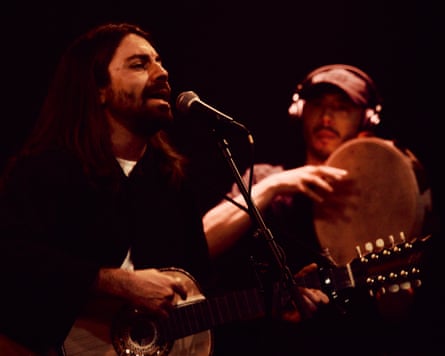
‘W hat do I do now that I no longer have my mother?” Lero Lero sing on Com’haiu a Fari , the opening track of their self-titled debut album. “If I still had my mother, I would not love you.” What may sound like the kind of honest self-reckoning a modern songwriter has dragged out of therapy sessions is actually a traditional Sicilian folk text once sung by a washerwoman, reimagined here through three voices modelled on Sicilian Settimana Santa polyphonies. For this Palermo collective, maternal loss is also metaphor: symbolic of Sicily’s ruptured cultural inheritance, which they recover through archival labour songs, carters’ cries and lullabies, then reshape through electronics and microtonal instrumentation.

In the Italian imagination, Sicily has long been more than the island at the country’s southern edge. It has functioned as a symbolic South, carrying fantasies of archaic beauty and rural authenticity alongside associations with poverty, criminality and backwardness. Its culture is often romanticised and patronised at once.


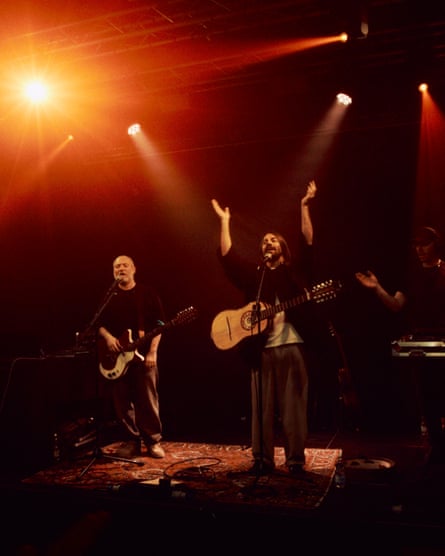
Lero Lero’s debut digs beneath those familiar representations. Formed by singer-songwriter Alessio Bondì, synth player Donato Di Trapani and producer and guitar player Fabio Rizzo, the project grew out of years combing through 20th-century Sicilian field recordings, driven by the sense that the version of Sicilian music handed down was only a fraction of what had once existed. What survived, they found, had often been detached from the social worlds that produced it.

During his research, Di Trapani witnessed that detachment first-hand: older peasant singers were often remembered as rough, out-of-tune figures marked by poverty and shame, while later generations of folklore musicians saw themselves as having “ennobled” those traditions, simplifying them into a version of southern identity they felt could be publicly embraced. By contrast, his own generation had “ennobled” those traditions, simplifying and cleaning them up to better suit the version of southern identity they felt could be publicly embraced: the kind of exportable Sicily later familiar from Dolce & Gabbana ’s black lace or the Inspector Montalbano books and TV series, where crime unfolds amid fictional baroque towns, long lunches and seaside landscapes.

The line between homage and stereotype continues to provoke debate around representations of southern Italy. A recent flashpoint was Al Mio Paese , a wildly successful single by three southern artists – Puglia’s Serena Brancale and Sicily’s Levante and Delia – which wraps pop production around pizzica -inflected rhythms and a vivid montage of familiar southern imagery: women seated outside on plastic chairs, bustling piazzas, white sheets billowing above market stalls. For some listeners, it was an affectionate ode to diasporic longing and homecoming; for others, it crystallised a more uncomfortable pattern, reducing the south to a picturesque, consumable collage of nostalgia.

In contrast, Lero Lero engage with Sicily less as a postcard image than a complex social and sonic inheritance, shaped by a kaleidoscope of different histories and experiences. On Salinai , they rework the surreal rhymes once shouted by salt workers as they counted their salt baskets, where playful, near-nonsensical refrains gradually accumulate until the worker’s hunger, deprivation and misery are revealed: “Last night I went to work for Campanella,” Bondì’s voice strains over a steady beat, “who gave me bread one slice at a time with nothing to eat alongside it but a hazelnut shell, just to keep my belly lean.”


With its light, uplifting atmospheres, the following Cuori ri Canna feels like a sudden release. Built around a canto di sdegno – literally “song of indignation”, an agro-pastoral form ignited by lovers’ betrayal – it transforms bitterness into irony and liberation. Di Trapani recalls playing it in Palermo and watching “people standing up and singing like each one was freeing themselves from their own life’s problems.”

Much of Lero Lero’s process begins with close study of the archival material, with singer Bondì painstakingly decoding lyrics and obscure metaphors. The point is not faithful reproduction, but entering the generative processes of oral tradition itself: the haunting Bedda ca Cantari A Mia Sintisti , for instance, began with a short 1955 vocal and marranzano mouth harp prison recording. Lero Lero expanded its fragments by piecing together other ottave siciliane , Sicily’s traditional oral verse forms, transforming it into a larger lament of love, solitude and lost freedom. For Rizzo, that reconstructive process is entirely faithful to the oral tradition itself: “We don’t submit to a fixed text,” he says. “We shape and modulate different inputs to create something that people in 2026 can connect with.”

Their aim is to forge their own sound from the source, rather than lean on easy external references. “It would be easy to hear a carter’s song and think, we could put some flamenco here because that’s the musical scale,” says Bondí. “But we’re conscious that from this music, from these songs and these melodies, we can make entirely new music.”

Rizzo’s “Palermitan guitar” is central to this project. He modified his own instruments to create a microtonal, double-stringed guitar capable of following the shifting tonalities of Sicilian archival song. On Franculina , its serrated riffs cut through pounding bass-synth and tamburello; on Aieri Ci Passava , it coils around an insistent bassline, sharpening the song’s tension and sarcasm.

The tension between submerged history and disruptive return is captured in artist Giulia Parlato ’s album artwork, which features the mythical crocodile of Palermo’s Vucciria market: a creature said to have reached the city from the Nile through the waters of the Papireto, the now-buried river that once ran through Palermo, hiding beneath the market’s fountains before emerging to terrorise children. Partially glimpsed beneath an otherwise ordinary scene, it lurks as though it has always been there; like the voices Lero Lero pull from Sicily’s sound archives, it feels like a latent presence, poised to rupture the polished image of the present.

Lero Lero is out on Black Sweat Records , Panta Records , and Shhh/Peaceful.

Carlos Alcaraz ruled out of Wimbledon as recovery from wrist injury goes on

Carlos Alcaraz
Carlos Alcaraz ruled out of Wimbledon as recovery from wrist injury goes on
Tumaini Carayol
Tue 19 May 2026 17.07 CESTLast modified on Tue 19 May 2026 22.23 CEST
News
https://www.theguardian.com/sport/2026/may/19/carlos-alcaraz-ruled-out-wimbledon-recovery-wrist-injury-tennis

Carlos Alcaraz has been forced to withdraw from Wimbledon as he continues his recovery from the wrist injury that will force him out of action for at least three months during the most significant part of the tennis season.

Alcaraz has not competed since withdrawing from his second-round match at the Barcelona Open last month after feeling pain in his right wrist in his opening match of the tournament. The 23-year-old had already been forced to withdraw from the rest of the clay-court season , including the French Open, which begins on Sunday.

“My recovery is going well and I’m feeling much better, but unfortunately I’m still not ready to compete, which is why I have to withdraw from the grass-court swing at Queen’s and Wimbledon ,” Alcaraz wrote in a statement on social media. “They are two truly special tournaments for me and I will miss them a lot. We’ll keep working to come back as soon as possible!”

Alcaraz is the reigning champion at Roland Garros, where he defeated Jannik Sinner in one of the greatest grand slam finals . The Spanish player, a two-time champion at Wimbledon, reached the final there last year, losing to Sinner in four sets.

Tennis players have to be particularly careful because of the constant strain their strokes place on their wrists and the risk of developing chronic injuries, meaning Alcaraz’s decision not to compete at Wimbledon is no surprise.

In his absence, the tour remains at the mercy of Sinner, the world No 1, who won his sixth consecutive Masters 1000 title on Sunday with his triumph at the Italian Open and has won 29 matches in a row. Sinner will be the prohibitive favourite for Roland Garros and Wimbledon, which begins on 29 June.

Vladimir Putin arrives in Beijing for state visit hot on heels of Trump

China
Vladimir Putin arrives in Beijing for state visit hot on heels of Trump
Amy Hawkins
Tue 19 May 2026 17.27 CESTFirst published on Tue 19 May 2026 15.24 CEST
News
https://www.theguardian.com/world/2026/may/19/vladimir-putin-beijing-china-state-visit-xi-jinping-russia

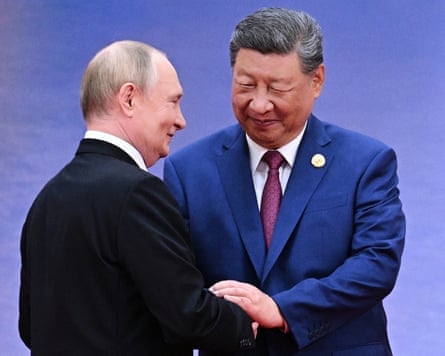
Vladimir Putin has arrived in Beijing for a state visit, four days after Donald Trump left China.

The Russian leader’s visit to China – his 25th, according to Chinese state media – reflects Beijing’s growing confidence on the world stage as a centre of global diplomatic activity.

It also underscores the deep relationship between Putin and China’s leader, Xi Jinping . The two men have met more than 40 times, far outstripping Xi’s encounters with any western leaders.

William Yang, a senior analyst at the International Crisis Group, said: “Hosting two of the most powerful leaders in the world in a matter of days shows China’s growing confidence in its place and standing in the world.”

He said Xi “likely wants to remind Trump that Beijing has other solid and robust relationships that it can count on, so Washington can’t easily isolate or harm Beijing if it tries to”.

Putin’s visit comes as he is entering what may be the most difficult period of his long rule. His strongman image at home is beginning to fray as Russia has made little progress on the battlefield in Ukraine this year. Russia’s growing economic troubles are steadily increasing its dependence on China, turning what the Kremlin frames as a partnership of equals into a far more lopsided relationship.


The Russian leader published a video address to China on the eve of the visit. He said China-Russia relations had reached “an unprecedented level”, pointing to the countries’ soaring bilateral trade, the fact that settlements were conducted nearly entirely in roubles and yuan rather than the US dollar, and mutual visa-free policies for Chinese and Russian travellers.

China’s foreign ministry spokesperson Guo Jiakun said on Tuesday: “The friendship between China and Russia will be further deepened and will be more deeply rooted in people’s hearts” by the strategic guidance from Xi and Putin.

This year marks 30 years since Beijing and Moscow signed a strategic partnership agreement and 25 years since they signed the “treaty of good-neighbourliness and friendly cooperation”.

Putin’s remarks about non-dollar-denominated transactions highlight the extent to which the two countries have been trying to build up their resilience against western sanctions, which rely on the dominance of the US dollar to be effective.

China does not comply with western sanctions on Russia and since the start of the full-scale invasion of Ukraine has bought more than $367bn of Russian fossil fuels, according to data collected by the Centre for Research on Energy and Clean Air.

Analysts will be watching to see if Putin and Xi agree any deals to further deepen energy cooperation. The most high-profile project under discussion is the Power of Siberia 2, a 1,600-mile (2,600km) natural gas pipeline that would add 50bn cubic metres of gas capacity to Russia’s flows to China. The pipeline would run through Mongolia and is viewed by the Kremlin as key to making up for lost European export markets.

An additional overland supply of energy from Russia would reduce China’s reliance on the strait of Hormuz, which has been crippled by the US’s war with Iran. But it could also make China overly dependent on Russia at a time when China wants to boost its energy self-sufficiency.

Putin has been a background figure in Xi’s delicate relationship with the US. As Xi gave Trump a rare tour of his private residence in Beijing last week, the Chinese leader said Putin was one of the few other foreign leaders to have been invited in to the Zhongnanhai compound, sometimes referred to as China’s Kremlin. “Good,” replied Trump.

China has also been hit by western sanctions as a result of the war in Ukraine. This month the Chinese embassy in the UK lodged “stern representations” about the fact that London had added two Chinese entities to its Russian sanctions list.

Western countries have criticised Beijing’s ongoing support for Russia through economic ties and the export of dual-use equipment with military applications.

Ukraine was not mentioned in detail in either the US or the Chinese summaries of the main bilateral meeting between Trump and Xi last week. But the FT later reported that, according to people familiar with the US assessment of the summit, Xi told Trump that Putin may end up regretting the war. China’s foreign ministry has rejected the reports.

If proven accurate, Xi’s comments probably reflect China’s growing awareness of Russia’s difficulties, both on the battlefield and at home. The war in Ukraine has largely ground into a stalemate, while Ukrainian long-range drone and missile strikes have inflicted significant damage on Russian energy infrastructure and military facilities.

On Tuesday, a Russian deputy from Siberia called for the “swift conclusion” of the war, warning that Russia’s economy would “not withstand a prolonged continuation of the special military operation” – a rare public acknowledgment of the strain the conflict is placing on the country.

Additional research by Yu-chen Li

John Healey says Labour infighting puts government’s credibility at risk

Labour
John Healey says Labour infighting puts government’s credibility at risk
Dan Sabbagh
Tue 19 May 2026 20.22 CESTLast modified on Tue 19 May 2026 20.33 CEST
News
https://www.theguardian.com/politics/2026/may/19/john-healey-says-labour-infighting-puts-governments-credibility-at-risk

John Healey has criticised Labour figures jockeying to become prime minister in a politicised speech in which he said the party’s “very credibility“ in government was at stake if the infighting deepened.

The defence secretary, a Keir Starmer loyalist, said the party had turned in on itself since the May elections in what appeared to be direct criticism of Andy Burnham, Wes Streeting and even the junior defence minister Al Carns.

Arguing that “these are serious times”, Healey – who was also a minister under Gordon Brown – said Labour had to demonstrate how it would meet the moment while Russia continued to attack Ukraine and “crisis after crisis” hit British families’ incomes.

“We must not throw away so lightly the power we were given,” he said, contrasting his personal style with those hoping to oust the beleaguered Starmer as prime minister.

“Politics to me is not about the individual. I don’t much care about photo opportunities or PR firms. People will not forgive us if they think we’re more concerned about ourselves than we are about them,” he said at a speech to the Good Growth Foundation.

“Right now, the very credibility of Labour in government is at stake,” he said. “We must get serious. It’s not about us, not about the insiders of politics, it’s about the interests of the country.”

He did not mention others by name, but it was clear whom he was referring to. Allies said his speech was intended to be “a hard message” to the party, which should be seeking to get on with government.

Burnham, the mayor of Greater Manchester, who is standing for the newly vacant seat of Makerfield , has been pictured jogging at least twice since he indicated he wanted to return to Westminster and run to be prime minister.

Streeting resigned as health secretary last week in the hope of sparking a leadership contest, complaining that “where we need vision, we have a vacuum”. His initial bid stalled as it became clear he had little prospect of winning a contest.

Carns, a former special forces soldier, has claimed thousands of pounds of parliamentary expenses to produce promotional videos, including one showing him doing pull-ups at a fire station in competition with a firefighter.

Healey said defence spending had grown under Labour and would rise to 3.5% of GDP by 2035. The Ministry of Defence “estimates this means over half a million Brits will work for a defence firm in a decade’s time”, he said.

Future military spending would need to work “once for national security and once for British industry,” he said, setting a new guideline and arguing that defence jobs were skilled, unionised and offered an average salary of £57,000.

Despite the pledge, however, no date was announced for the publication of the long delayed defence investment plan, which has been the subject of a financial battle with the Treasury. Covering all critical military programmes, it remains up to £18bn overspent.

Healey promised the plan was coming soon, but said it had to be properly budgeted for. “Countries that cannot pay their way, cannot defend themselves,” he said, justifying the need to boost economic growth to pay for new arms.

He also sought to distinguish Labour’s approach from its nearest political rivals. He accused Reform of being supported by “pro-Russian cronies and crypto billionaires”, the latter a reference to Christopher Harborne, who donated £5m to Nigel Farage before he stood at the general election.

At the same time, he accused the Greens, who made sweeping gains from Labour in inner London in the local elections of wanting “to shut down the defence industry”.

Delusional, desperate and mostly called David, Brexiters gather to lament the Great Betrayal | John Crace

Brexit
Delusional, desperate and mostly called David, Brexiters gather to lament the Great Betrayal
John Crace
Tue 19 May 2026 18.59 CESTLast modified on Tue 19 May 2026 22.23 CEST
News
https://www.theguardian.com/politics/2026/may/19/delusional-desperate-and-mostly-called-david-brexiters-gather-to-lament-the-great-betratal

T hose we haven’t loved. It’s been nearly a decade since the Brexit referendum and the main architects seem to have gone quiet. Boris Johnson has retreated into his own world having been rejected by the real one. Still wondering why David Cameron hadn’t left him detailed instructions of what to do if the UK left the EU. Nigel Farage is happy to talk about almost anything but Brexit. And where his money comes from and how it’s spent. The man who can’t be bought but used to do Cameos at £80 a pop for Hugh Janus can’t even admit the Boriswave was a direct result of Brexit.

But there are still a few believers. At least 120 of them. These were the men and women of the Freedom Association who had gathered in Westminster for their Brexit Unleashed conference. The weirdos. The misfits. The losers. The mostly elderly desperados who cling to the certainty they were right all along. Untroubled by all the evidence to the contrary. Unaware that many of their arguments contradict one another. That all that they want to be true cannot all be true. Entwined with one another in a death spiral. This church hall was a place where hope came to die.

The proceedings were opened by David Campbell Bannerman, former MEP and lifelong Brexiter. A man clinging to reality by a gossamer thread. He began by praising the UK for having had the integrity to leave the EU, despite knowing there would be some pain and cost as a result. So that’s what it was. I can’t remember anyone on the leave side talking about pain at the time. Rather it was that everything was going to be great. There was no downside. David Davis had always said the Brexit deal would be the easiest ever. Wrapped up in 24 hours.

Two minutes in and we got the first Brexit betrayal. A theme that was to be repeated every two minutes for the next six hours. Brexit had been a wonderful thing that had been undermined by a political class who had never believed in it. Even the ones who had believed in it, hadn’t believed in it in the right kind of way. “Brexit has not failed,” said Delusional Dave. It wasn’t a catastrophic failure. It was just a failure that had been a catastrophe. We were still waiting for the One True Brexit. And he was the Once and Future King.

Next up was another David. There would turn out to be more Davids than there were women at this conference. Apologies to any readers called David. This wasn’t your namesakes’ finest hour. Step forward Lord Frost. AKA Frosty the No Man. The Brexit negotiator who admitted that the deal he had negotiated had been shit. The man who loved free speech so much he had been an enthusiastic supporter of Viktor Orbán. How are the mighty fallen.

Frosty’s memory isn’t all that it once was. Now he wanted everyone to hold hands and remember that the Brexit deal was the best that had ever been done. The audience needed no second invitation. They were as desperate as he was.

“We need to revive the excitement of the day after the referendum,” he said. Clearly Frosty hadn’t been at the press conference Vote Leave had given on the morning after. Boris and Michael Gove had finally turned up 30 minutes late looking like death warmed up. It was as though they had spent the night tripping on acid and had come down to find they had murdered a friend. Ghosts of their former selves. They had no idea what they had just done. No idea what they were going to do. Both were entirely monosyllabic.

Inevitably it was not long before Frosty also moved on to the Great Betrayal. We were in dangerous territory. Keir Starmer, Wes Streeting and Andy Burnham were all minutes away from getting the UK to rejoin the EU. They had somehow sweet-talked the country into believing Brexit had been a disaster. This was deranged. The idea that the most unpopular prime minister in history had brainwashed the whole country. That people were incapable of reaching the conclusion that the Brexit they had been sold was one of fantasy and lies.

David Two was not finished. People had voted for Brexit because they no longer wanted to be governed by unelected politicians. This was a record level of delusion; Frosty appeared not to realise he was an unelected member of the House of Lords. Yet another addition to the upper chamber as a reward for failure. He ended by admitting that Northern Ireland was still not working properly. For that he put the blame firmly at the door of the EU. For not giving us what we wanted. No one could have expected that the EU wouldn’t give us everything we demanded.

There was just time for a hereditary peer to say how miffed he was at being silenced in the Lords – as with Frosty, accountability is only for the little people: sometimes this sketch writes itself – before we got get another David. David Three turned out to be former Tory minister turned Reform shill David Jones. Someone who is forgettable even round his own breakfast table.

It was hard to know quite what he wanted to say as the entire hall lapsed into a coma not long after he told everyone they needed to be more enthusiastic about Brexit. David Three has the unique gift of being even duller in real life than in your imagination. Mind you, Claire Fox – yet another unelected member of the Lords – declared this was the best Brexit speech she had ever heard. Kudos to her for having stayed awake.

Then the piece de resistance. A rant from John Redwood. Yes, you’ve guessed it, he too is in the Lords. What is it with all these Brexiters that they have no self-awareness? Or are they all just obsessed with their own self-importance and status? Redwood declared that all the economists were wrong. They had got their tables upside down. Far from costing us 4% in the fall of GDP, Brexit had actually been a net benefit. And if we all just encouraged people to buy diesel cars we’d be even richer still.

“Throw off the shackles, Britain can be great again,” he trilled. Streeting and Burnham had been gripped with a delusion. Remainers were part of a religious cult. They had no idea how difficult and expensive it would be to rejoin the EU. Had no idea of what a good deal we had had while we were in the EU. The Thatcher rebate. Other benefits we would never get back. It kind of makes you think Redwood must secretly wonder why we had ever left.

Jon Stewart on Trump’s visit with Xi: ‘All you came back with was his Instagram?’

Late-night TV roundup
Jon Stewart on Trump’s visit with Xi: ‘All you came back with was his Instagram?’

Tue 19 May 2026 16.45 CESTLast modified on Tue 19 May 2026 17.33 CEST
News
https://www.theguardian.com/culture/2026/may/19/jon-stewart-trump-china-visit

Late-night hosts covered Donald Trump ’s recent trip to China and how he headed straight back to a social media posting binge as soon as he returned.

Jon Stewart

On The Daily Show, Jon Stewart said that “nobody is tougher on China than Donald J Trump” before showing a montage of clips in which the president criticised both the country and its leader, Xi Jinping.

He said he would be “like a bull in a china shop” on his visit but the president opted to kill them with kindness instead, with Stewart then showing him fawn over Xi. “Sometimes you get more flies with honey, so what did you get?” he asked.

He played a clip where Trump was asked this very question and his response was a relationship. “So nothing?” Stewart said. “You got nothing!”

He then joked: “All you came back with was his Instagram?”

Trump has claimed that Xi called America the “hottest country” in the world right now. Stewart expressed skepticism, saying “that quote sounds really a lot like you”.

As students across the country graduate, he wondered if “maybe it’s time to stop being exasperated by this” and asked what those heading into the working world could learn from his rise.

“Maybe the advice that we’ve been giving them all along about honesty and hard work and all that other gay shit is completely wrong!” he said.

He added: “Maybe we should all be students of Donald Trump University, which obviously you can’t be because it’s a fraud and got shut down, but metaphorically.”

Stewart played a montage of Trump and his weird handshakes with leaders, saying that one should “set the terms of the battle in the interview”, joking: “I will take your fucking hand!”

He added that “your prospective employer must know you are the captain now”.

He also played footage of Trump saying bizarre things about himself, adding: “I cannot stress this enough, make your answer cocky and super fucking weird.”

Jimmy Kimmel

On Jimmy Kimmel Live!, the host said that Trump was visiting China to see “all the factories where his America First merchandise is made”.

He said that during their initial meet, Trump told Xi “how much he loves Panda Express” before playing the strange footage of children excitedly greeting him. “I think they told them he was SpongeBob,” he said.

Kimmel remarked that “he’s so embarrassing on these trips” and also scoffed at his claim that Xi allegedly called America the hottest country right now. “You should give him all our farmland for that,” he said.

On his return, Trump bragged about a new putdown for the opposition, calling Democrats the Dumb-ocrats. “I can’t believe it only took you 11 years to come up with that one,” Kimmel said.

Trump also poked fun at James Talarico, who is faring well in the Texas Senate race. He decided to take aim at his veganism yet kept mispronouncing the word. “Vegan, it rhymes with Reagan,” Kimmel said.

He also went back to “posting crazy things” online such as an AI-doctored photo of himself walking with a handcuffed extraterrestrial, which led to the Republican senator Mike Lee reposting saying he didn’t understand what it meant but he supported it.

“It means the guy with the nuclear codes is out of his goddamn mind,” Kimmel said.

Trump also shared an image of himself with text claiming he was ageing in reverse. “Wearing diapers does not mean you’re ageing in reverse,” he said.

Another post from the White House had him mocked up as the new James Bond, to which Kimmel joked he would “grab ’em by the Octopussy” before saying that “007 is his approval rating right now”.

Trump also returned to the golf course, with the president having played the game on 111 of his first 484 days in office. “Do you know how hard it is to be a doctor and Jesus at the same time?” he said.

Orcas could be casualty in Carney’s push for pipeline, environmental groups fear

Canada
Orcas could be casualty in Carney’s push for pipeline, environmental groups fear
Leyland Cecco
Tue 19 May 2026 13.00 CESTLast modified on Tue 19 May 2026 22.23 CEST
News
https://www.theguardian.com/world/2026/may/19/canada-orcas-oil-pipeline-mark-carney

Environmental groups in Canada fear endangered orcas could become a casualty of Mark Carney’s push for a new oil pipeline, as the rush to develop fossil fuel infrastructure collides with laws meant to protect threatened species.

The decades-long tragedy of the critically endangered southern resident orcas has become emblematic of an ecosystem in crisis. But fishermen, whale-watching companies and the marine transport industry have long feuded over who bears the most blame.

The southern resident orcas can only survive on a diet of chinook salmon, a species that itself is in steep decline. While there were more than 200 orcas at the beginning of the 20th century, nowadays only about 70 swim the waters between British Columbia and Washington state.

Environmental groups have raised the alarm over increased ship traffic along the south-west coast of British Columbia – the result of a busy Trans Mountain oil pipeline that terminates near Vancouver and a new liquefied natural gas (LNG) terminal further north.

On Friday, Carney announced plans for a new oil pipeline from Alberta to the Pacific coast, with construction expected to begin by fall of 2027.

And a new policy discussion paper has raised fears that in pursuit of the project, the federal government might bypass legal protections for the orca.

The document, titled Getting Major Projects Built in Canada , called the process for building mines, ports, airports, pipelines “slow, expensive, and confusing”, and suggested a number of changes to existing rules to fix this issue.

But one part of the paper, which proposes exempting major projects from the “jeopardy test for species at risk” has caught the eye of environmental advocates.

Part of Canada’s endangered species legislation forces regulators to ask whether a project would jeopardize the survival or recovery of a protected species.

“In practical terms, this provision is intended to prevent projects from pushing endangered species into extinction. Weakening this safeguard has direct implications for southern resident killer whales and their protection under [the Species at Risk Act],” said Misty MacDuffee, a biologist at Raincoast Conservation Foundation. “As the federal government has acknowledged in its imminent threat determination, these whales face extinction under the existing conditions.”

The proposed changes are open to public comment until 9 June.

The development, first reported by the Toronto Star , prompted the federal government to respond that the reporting “could not be further from the truth”.

The transport minister, Steven MacKinnon, pointed to recent investments by his government to protect at-risk whale populations, including C$91.3m to address other threats to the southern resident orca population. The government is also changing the laws around how much distance ships must give the whales, raising it from 200 metres to 1,000 metres to minimize physical and acoustic disturbance from vessel traffic.

“We would not take any actions that would undermine these important strategies and substantial investments. Our approach to assessments isn’t about cutting corners, but improving coordination, efficiency, and long-term planning resulting in faster decisions, without weakening oversight or standards,” he wrote in a statement.

But critics says that while the government has made key promises to protect whales, they also appear to be looking for a carve-out by exempting projects of national interest from stringent reviews where endangered species might be affected.

After the new pipeline deal was confirmed, environmental groups swiftly condemned the agreement.

“Recovery [of the orca population] requires improvements in habitat quality, including reductions in underwater noise and disturbance. Weakening the protective provisions of [endangered species laws] to enable projects that worsen these conditions would push southern residents closer to extinction,” said MacDuffee.

Environmental law charity Ecojustice said the move “jeopardiz[ed]” Canada’s ability to protect whale habitats.

“No project that threatens the extinction of iconic southern resident killer whales and puts communities’ health at risk could be ‘nation building’. Increasing tanker traffic in the already busy Salish Sea ups the risk of small and large oil spills and will also increase ocean noise – pushing the critically endangered southern resident killer whales further towards extinction. Expanding the Trans Mountain pipeline has overwhelmed the modest noise reductions put in place to protect whales from pre-pipeline expansion levels of shipping noise,” director Margot Venton said in a statement.

“Experts have been unable to find a way to offset the noise from increasing tanker traffic. These whales cannot handle any more tankers in their habitat.” In the past, threatened or endangered species have delayed construction of major projects. When the government was trying to build the TransMountain pipeline, a rare species of humming bird temporarily halted work.

But the effectiveness of Canada’s species at risk laws has also been called into question, especially when the requirements clash with lucrative industries.

Successive environment ministers have declined to designate chinook salmon as a species at risk – largely over the implications such a decision would have for the fishing industry.

Nature Canada, one of the country’s oldest conservations groups, said it was calling on supporters to urgently contact lawmakers to vote against any fast-tracked legislation, warning it could lead to zones of “environmental lawlessness”.

“The effort to redefine environmental responsibility as mere ‘red tape’ is dangerously short-sighted,” Akaash Maharaj, director of policy at Nature Canada, said in a statement. “Nature is not an impediment to economic development; environmental assessment is the ‘credit check’ before we write the loan. It is due diligence, fiduciary responsibility, and the only way to build prosperity that endures.”

Houseplant hacks: can a potato help cuttings to grow?

Houseplants
Houseplant hacks: can a potato help cuttings to grow?
Gynelle Leon
Tue 19 May 2026 11.00 CEST
News
https://www.theguardian.com/lifeandstyle/2026/may/19/houseplant-hacks-can-a-potato-help-cuttings-to-grow

The problem Taking cuttings is one of the most satisfying things you can do as a plant owner, but most people lack confidence. Stems sit in water for weeks doing nothing, or collapse in soil before roots appear. So when a hack promises to speed things up using nothing more than a raw potato, news travels fast.

The hack The potato is supposed to keep the cutting hydrated and release nutrients as it breaks down, giving the stem everything it needs to form roots before it has to fend for itself. Some videos claim that potatoes contain salicylic acid, which encourages rooting.

The method Take a fresh stem cutting from a healthy plant, making sure it has at least one node, and trim the lower leaves. Take a raw potato and use a skewer or pencil to make a hole the same width as the stem. Push the cutting firmly into the potato so it sits snugly upright, then plant the whole thing – potato included – into a pot of soil. Water lightly and place in bright, indirect light.

The test I tried this with a rose cutting and a pothos. The pothos produced a small amount of root growth, and the rose cutting collapsed before anything useful happened.

The verdict Potatoes do contain salicylic acid, but research suggests it actually suppresses root formation. A clean cut, fresh water and good light still remain the most reliable route to propagation, no vegetables required.