Let him eat cake! Birthday greetings for President Trump as he turns 80 – from Greta Thunberg, Piers Morgan and more | Donald Trump | The Guardian

Keyword – US news
Trefwoorden – Donald Trump, US politics, Greta Thunberg, Ai Weiwei, Jennifer Egan, Piers Morgan, Siri Hustvedt, Anthony Scaramucci, US news
Title – Let him eat cake! Birthday greetings for President Trump as he turns 80 – from Greta Thunberg, Piers Morgan and more | Donald Trump | The Guardian
Author –
Link – Let him eat cake! Birthday greetings for President Trump as he turns 80 – from Greta Thunberg, Piers Morgan and more | Donald Trump | The Guardian
Publish date – 2026-06-14T05:00:34.000Z
Category – News
URL – https://www.theguardian.com/us-news/ng-interactive/2026/jun/14/80th-birthday-messages-president-trump-greta-thunberg-piers-morgan-

Cory Doctorow

Dear Comrade Trump: On this, the occasion of your 80th birthday, I write to extend my sincere thanks for all the work you have done. After decades of deadlock, you have inspired the world to action! You have done more to de-dollarise the world than any American leader in history. Without you, there would be no way that Ethiopia would be revaluing its national debt in yuan . You have done more to end the global dependence on oil than any leader (except, perhaps, for Comrade Putin). Without you, there would be no way that India would be chucking out its gas hobs and replacing them with induction tops. And, of course, you have done more than any president in history to end American dominance over the internet. Without you, there would be no way the EU would be racing forward with projects such as Eurostack and European Digital Infrastructure Consortium, with whole nations ditching American tech exports like Microsoft Office 365 in favour of free, open, auditable, transparent alternatives running on servers within the EU’s borders. Comrade Trump, you are, at long last, ushering in the post-American world, and a grateful planet salutes you!

Cory Doctorow is a journalist , author and internet activist .

Piers Morgan

Happy 80th, Donald! I think I can be that familiar, Mr President, given we’ve been friends for 20 years.

The world will doubtless mark your big day in myriad good, bad and ugly ways.

But birthdays are celebratory occasions, so I will focus on the one aspect to your character that surely everyone can agree on: your extraordinary resilience.

You’ve been shot, prosecuted, impeached (twice), endured two scandalous divorces, survived a financial crisis that took down many of your friends, bounced back from ignominious political oblivion to dramatically win back the White House and been the subject of more mockery, abuse and vilification than any public figure in modern history.

Yet here you are, alive, surprisingly well (that’s what never touching alcohol, drugs or cigarettes can do for a man), and still bursting with astounding energy for someone entering their ninth decade.

When we spoke a week after you were nearly assassinated, you’d just come off another big rally stage.

“Were you not apprehensive?” I asked.

“I couldn’t let myself think about that,” you replied. “I had to get straight back out there.”

There aren’t many people who would do that a few days after a bullet bloodied their ear.

You may be the most polarising, divisive, controversial and inflammatory president in US history.

But nobody can deny you have the resilient skin of a thousand rhinos.

Piers Morgan is a journalist and broadcaster who grew close to Trump after winning the US celebrity version of The Apprentice in 2008 (Trump called him “ ruthless, arrogant, evil and obnoxious ”). Morgan was granted Trump’s first international broadcast interview after becoming president, and has interviewed him on three subsequent occasions.

Jennifer Egan

Happy birthday, President Trump! By any measure, you have racked up a staggering number of accomplishments in your 80 years. You’ve managed to nullify the bulwark against fascism that our three branches of government were meant to provide. You’ve transformed the presidency into an orgy of corruption and self-dealing that would make last century’s robber barons blush. You’ve erased whatever goodwill and respect America commanded internationally, and ceded our relevance in the realms of science, medicine and climate technology for the foreseeable future. You’ve elevated racism and xenophobia into law, hobbled higher education and gutted women’s rights. The sheer quantity and variety of your assaults has rendered your detractors punch-drunk, faced with a daily choice between trying to confront your lawless Hydra and maintaining some semblance of normal life so that our kids will believe they still have a future.

I like to think that your rampage has exposed areas of weakness in our government that needed exposing – that, when you and your minions are gone, we’ll know what steps to take to ensure that your like will never again be able to hijack and ransack our country. But then, I’m an optimist.

One thing is certain: having been effective beyond anyone’s wildest imaginings, you’ve more than earned an early retirement. Take it! Enjoy your remaining golden years on the golf course, buoyed up by the knowledge that you’ve exceeded the expectations of virtually every person in the world.

Jennifer Egan is a Pulitzer prize-winning author.

Greta Thunberg

My initial thought was to give you a one-way ticket to The Hague as a birthday gift, but that comment would probably go above your head. I will instead give you a can of alphabet soup; the sentences you poop out will be more coherent than anything you have ever said. Now you can finally take part in meaningful public discourse.

Greta Thunberg is a climate activist , about whom Trump tweeted, after she was named Time magazine’s Person of the Year for 2019: “ Greta must work on her Anger Management problem … Chill Greta, Chill! ”

Ai Weiwei

Life in the universe is the most precious common value we share. Anyone who regards it as a tradable commodity is harming the advancement of human civilisation and will be remembered only to be despised.

Ai Weiwei is a Chinese artist , documentarian and activist , and an open critic of the Trump administration.

Jon Sopel

Happy birthday, big man! I wanted to get you something really big – and hugely extravagant – for your special day. I thought about a gold bar, but the Swiss have already given you one. Or a jumbo jet, but the Qataris beat me to it . Then I thought about a gold peace medal, but your mate Gianni from Fifa has done that .

How incredibly thoughtful of your acting attorney general, Todd Blanche (remind me, didn’t he used to be your personal lawyer?), to announce that the tax authorities are “forever barred” and “precluded” from ever looking again at your tax returns. I mean, that’s amazing isn’t it? And it not only applies to you, but the boys as well.

How lucky, given the way the family has gotten so much richer off the back of your return to the presidency. Hope it was lucrative to have Eric accompany you on the state visit to China.

Can you imagine how much every American would love to fill in whatever they wanted on their IRS return in the knowledge that the tax authorities could never so much as arch an eyebrow? You could write: “Income, none. Gifts, none. Tax due, none.” And there’s nothing the auditors could do about it.

I have to say I did think it was kind of unusual when you announced you were suing your own government for $10bn over the leak of your tax returns all those years ago. But you’ve been proved right again .

That said, there’s nothing I can think of to buy you now as you seem to have everything any man could legitimately want. I mean, it is legitimate, isn’t it?

Jon Sopel is a presenter on The News Agents podcast and was formerly North America editor of BBC News.

Siri Hustvedt

Dear Number 47. You’re ageing fast, Mr President, plagued by bruising, memory holes, verbal incoherence and unwelcome fits of sleep. Although plain to many of us who did not vote for you, your age and inevitable death have been invisible in the Magaverse.

Maga magic transformed your real, fat, old man’s body into the spectacular body of fascism, American style: bulletproof, muscle-bound, eternal. The many superhero costumes worn by your 6 January terrorists were testament to that pathetic fantasy of invulnerability, no doubt helped along by the very real carnage of a global pandemic.

“White Americans do not believe in death,” James Baldwin wrote. He understood the belligerent blindness to history, the screeching howls of innocence, the mad belief in “racial” hierarchy as projections of self-hatred on to others. Ignoring the universal reality of death turns human beings into amoral monsters.

And yet, birth is also a problem in the Magaverse. The fact that you were born out of the body of your mother, a bloody, wet, helpless infant still attached to her by a gelatinous umbilical cord, must feel a bit awkward. The realities of gestation and birth are the realities of dependence and interconnectivity, whereas the Maga man is self-made, supposedly dependent on no one, and violently rejects all things coded as feminine – compassion, empathy, negotiation, ecology and democracy itself.

Not such a happy birthday, then. ICE murders, immigrant concentration camps , pregnant women bleeding out in parking lots for want of an abortion, measles outbreaks, huge numbers dead after USAID vanished , broken alliances and a war no one wanted are the veritable consequences of delusion. But time is inexorable, the citizens are restless, and your fantasy body is beginning to crack, just as your real body is showing the infirmities that come with 80 years of age.

Siri Hustvedt is an American novelist and essayist.

Jonathan Freedland

The temptation is strong to discard all convention and do what you would do on the birthday of someone you don’t like – to curse and mock you. Curse you for the poison you’ve injected into the bloodstream of the US and the wider world, for your corruption , for the damage you’ve done to the world’s most powerful democracy , for the tens of thousands of documented lies you’ve told, for the lives you’ve destroyed through your abolition of USAID and your failed fiasco of a war on Iran. And mock you for your absurd vanity, for your statues, ballrooms and arches, so obviously designed to fill a hole in your soul that cannot be filled, to compensate for the gnawing fact that, as Gavin Newsom, a would-be successor of yours, put it to me , “Trump’s not enough. And he knows he’s not enough.” That temptation is strong, not least because we know you care nothing for social convention. I’m thinking of the insults you directed at the beloved film director Rob Reiner, hours after his death, just because he was not a fan of yours. Or your reaction to the passing of the former FBI director Robert Mueller : “I’m glad he’s dead.” And yet, for that very reason, to stand against your erosion of social standards that have value, we should not give in to temptation. So here it is: happy birthday, Mr President.

Jonathan Freedland is a Guardian columnist and host of the Politics Weekly America podcast .

Bill McKibben

On the occasion of your birthday: It was unnecessary to launch a cruel, ridiculous war to convince the world of the benefits of wind energy, solar energy and so on. But you do deserve one small gold trophy as electric vehicle salesman of the quarter. Enjoy.

Bill McKibben is an American environmentalist .

Anthony Scaramucci

I found this birthday message for you outside Trump Tower: “You sold me your soul. You got what you wanted. The tower. The power. The money. The name in gold. But you left a trail behind you, and it leads to the ninth circle. Goethe said any soul, while still living, can be saved. Will yours? Happy Birthday – Mephistopheles.”

Anthony Scaramucci was director of communications at the White House , 21 -31 July 2017 . He will be on tour in the UK with Intelligence Squared, 14-19 September .

Dom Joly

Hey Donald, You locked me out for insulting you on Twitter back in 2014 when it was still Twitter. I was right then and I’m right now: you’re a narcissistic, lying fraud who has somehow convinced a large number of people that you give a flying fuck about them when the only thing you actually care about is yourself. Enjoy your birthday while the world burns.

Dom Joly is a British comedian who was denied entry to the US because of his social media posts.

Afua Hirsch

Dear Donald Trump , You have reached 80, an age at which, in my culture, you should be celebrated as an elder. As an octogenarian, you should sit under the shade of the tree you planted and watch all the children given a chance by your kindness and wisdom flourish into adults who in turn will plant more trees.

But you are a man who has spent your life chopping down trees, figuratively and literally . The milestone you have reached is that of the ultimate anti-elder, a cautionary tale of age without wisdom, of cultivating hate instead of love. Instead of building up the village, you have tried to set it on fire.

This does not mean we don’t value your life. Every age needs its cautionary tale. For our generation, you have helpfully modelled what destruction looks like. You have taken us to rock bottom – rolling back gender equality, racial justice and judicial independence, promoting economic chaos, greed, corruption and even genocide. You have exposed the fragility of your country, a nation whose supposed democracy people once looked up to and admired, waking millions up from their slumber. The crudeness of your project has united once bitter adversaries. It is clear that your legacy must never be repeated. On your birthday, let’s take a moment to recognise that really is quite an achievement.

Afua Hirsch is a writer and broadcaster .

Edel Rodriguez

Edel Rodriguez is a Cuban artist behind satirical anti-Trump covers for Time and Der Spiegel.

Sidney Blumenthal

Donald: After writing nice little thank-you notes to your three wise men – Kash Patel for the bottle inscribed “President Donald J Trump Bourbon ”, Pete Hegseth for the framed copy of the “President Donald J Trump Ten Commandments ” and Bobby Jr for the “President Donald J Trump Cocaine Golden Toilet Seat ” – please consider the practical and forward-looking art of Swedish death cleaning . Decluttering can save your family a world of trouble. In the coming year, the Democrats who assume control in the Congress will subpoena the records of your far and wide business dealings. And don’t forget the suppressed 3m documents in the Epstein files – especially any that have your name redacted. Avoid the chaos, the legal expenses, the accusations from the fake news that you are engaged in a cover-up. Organise your files now to prepare to cooperate. Don’t be a hoarder. Don’t pile boxes of documents in the Mar-a-Lago bathroom again. You can prove your simon-pure innocence, achieve retribution at last and prevent the crown jewel of your new East Wing from being renamed “The 8647 Joseph Robinette Biden Ballroom” through Swedish death cleaning. We know you appreciate neatness. Be best! Four more years!

Sidney Blumenthal is a former senior adviser to president Bill Clinton and Hillary Clinton .

Oliver Bullough

Mr President, Your 80th year has been huge, not least because you’ve made hundreds of millions of dollars from cryptocurrencies. But, since it’s your birthday, I want to give you a little bit of history.

It’s no accident the US currency became central to how the world does business: your predecessors laboured hard to establish a dollar standard and thus to gain an effective veto over who does what. Anyone who wanted to move money had to do so via New York, and thus with the permission of the US authorities. Britain found out in the Suez Crisis, just like Russia is finding out now, that you can’t do much in global finance if the United States doesn’t want you to.

Crypto, however, marks the end of that. Privatised money means a future when the United States has no more power over financial flows than any other country. Washington will be a supplicant for the first time in generations, reduced to begging others for powers it once kept for itself. That’s what the crypto bros are buying with that mo

ney they’re giving you. And once they’ve got those capabilities for themselves, they’re never going to give them back. Is selling a key source of national influence for personal profit really going to Make America Great Again?

Oliver Bullough is an investigative journalist who has written about cryptocurrencies .

Peter Frankopan

On your 80th birthday, your thoughts might well turn to how history will remember your time as president.

Like many people around the world, I have much to be grateful to you for. Perhaps most important is your commitment to renewable energy. Your decision to attack Iran helped accelerate a shift away from hydrocarbons. It turned out that fears of a warming world were not enough to concentrate minds; but the shock that came from the closure of the strait of Hormuz convinced many governments to think a lot harder about energy security and independence.

I’m grateful, too, for the legacy you’ve given to historians. You have been very generous to offer us many gems over the years – from telling the prime minister of Norway you no longer felt compelled to think “ purely of peace ” after not winning the Nobel peace prize, to posting images of yourself as a Jedi, as Jesus Christ and walking hand in hand with a penguin in what was supposed to be Greenland (where the native penguin population is precisely zero).

My favourite among all is the line I’d use at the start of my book if and when I write about this period in history, in a few decades’ time when the dust has settled. “Pope Leo is WEAK on crime, and terrible for Foreign Policy” you posted on Truth Social in April. That’s as good as anything I’ve read for any region, in any period. It is primary source material made of solid gold. Thank you, Mr President.

Peter Frankopan is a professor of global history at the University of Oxford .

Arwa Mahdawi

Judging by the popularity of Mar-a-Lago face , everyone in your orbit is terrified by the ravages of time. But you should remind us that growing old is a privilege. There can’t be too many 80-year-olds trying to eke out an existence in the ruins of Gaza, where life expectancy has been cut in half since October 2023. For men it’s dropped from 73.6 to 35.6 years. Your government’s enablement of Israel’s genocide is to thank for that. Meanwhile, the Trump administration’s gutting of USAID, once the world’s largest provider of humanitarian aid, has led to the deaths of hundreds of thousands of people; an Oxfam analysis further shows that, globally, a child under five could die every 40 seconds by 2030 due to USAID cuts. On your 80th birthday, it looks like your legacy will be mass immiseration and death.

Arwa Mahdawi is a Guardian columnist .

Jason Stanley

President Trump, congratulations on your birthday. You are one of the most consequential presidents in American history. Thanks to the supreme court you have appointed, which will rule for decades to come, you have shut the door on multiracial democracy and given the country’s fortunes over to America’s billionaires (including yourself and your family), ensconcing their power in perpetuity. In true American tradition, you have used racism and xenophobia to draw working-class Americans behind your billionaire agenda. You have taken the most damning propaganda of the Soviet Union about the United States and made it into a proud statement of this America’s values and ideals.

The American people have elected you twice in free and fair elections. More than any other person today, you represent America. Your face adorns government buildings, and you are rightly placing a permanent stamp on the nation’s capital. The next step is to place your visage on Mount Rushmore, as a permanent reminder to the world of what America can be.

Jason Stanley is Bissell-Heyd chair in American studies in the Munk school of global affairs and public policy at the University of Toronto and author of Erasing History: How Fascists Rewrite the Past to Control the Future .

Mick Lynch

Dear Donald Potus on your birthday. Hair is wispy, Skin’s gone crispy, Now you’re 80, Don’t be so hatey.

Mick Lynch is a trade unionist and former general secretary of the National Union of Rail, Maritime and Transport Workers .

Ukraine and Moldova to enter first phase of EU membership negotiations | Europe | The Guardian

Keyword – World news
Trefwoorden – Europe, World news, Ukraine, Russia, Moldova
Title – Ukraine and Moldova to enter first phase of EU membership negotiations | Europe | The Guardian
Author – https://www.theguardian.com/profile/jennifer-rankin
Link – Ukraine and Moldova to enter first phase of EU membership negotiations | Europe | The Guardian
Publish date – 2026-06-14T09:33:32.000Z
Category – News
URL – https://www.theguardian.com/world/2026/jun/14/ukraine-and-moldova-start-first-phase-of-eu-membership-negotiations

Ukraine and Moldova will take a decisive step towards joining the EU on Monday, as they embark on the first phase of membership negotiations.

The start of substantive negotiations, launched by senior EU officials and ministers from both countries in Luxembourg on Monday, will be a highly symbolic moment for the two countries that were both part of the former Soviet Union. It comes after Russia has intensified its bombardment of Ukrainian towns and cities, while sustaining huge losses for little territorial gain.

Ukraine and Moldova were quickly accepted as EU candidate countries in 2022 , having filed applications days after Russia’s full-scale invasion. But despite a symbolic decision to open talks in June 2024, substantive negotiations were blocked by Hungary’s pro-Russian president, Viktor Orbán.

The election of a new Hungarian government in April paved the way for EU member states to agree unanimously last Friday to open “the first cluster”, the chapters of the EU rulebook covering rule of law and democracy. Launching this cluster opens the door to talks on other areas, such as the single market, the environment, economic and social policy.

In a joint statement on Friday, EU leaders Ursula von der Leyen and António Costa praised “the determination, courage and hard work shown by both countries in advancing reforms, even in the face of immense challenges”.

“Enlargement is a strategic choice,” they said .

Ukraine’s president, Volodymyr Zelenskyy, said: “Ukraine is doing what is necessary, and it is important that the EU is also keeping its word. The opening of the first cluster is significant political and moral support for our state and our people.”

Heather Grabbe, a former adviser to the European Commission on enlargement, said the opening of cluster one really mattered. “It’s the start of the process of getting a deal for membership. So it’s very significant.”

Grabbe,who is also a senior fellow at the Bruegel thinktank, said that starting talks would also be a reality check for the Ukrainian side. “You can’t short circuit the adoption and implementation and enforcement of the EU laws on Ukrainian territory. And that is going to take a while to do. And it’s going to cost administratively.”

To join the EU, a country must adopt thousands of European laws and decisions, then gain the unanimous approval of existing members.

EU officials have praised Ukraine and Moldova’s reform efforts. In Ukraine, high-profile arrests, such as Zelenskyy’s chief of staff Andriy Yermak, who was named as a suspect in a big corruption investigation last month, are seen as positive signs that authorities are taking anti-graft inquiries seriously. Yermak has denied all allegations.

Yet praise is tempered with disappointment that Kyiv has not moved faster on 10 priority reforms agreed last December.

EU officials consider Ukraine has only completed 15% of reforms contained in a 10-point plan agreed last December between the EU enlargement commissioner Marta Kos and Ukrainian deputy prime minister, Taras Kachka. The plan includes measures to strengthen the independence of the anti-corruption agencies Nabu and Sapo , the adoption of an anti-corruption strategy and reforms in the appointment processes of judges and prosecutors.

Officials also believe that with sufficient will, Ukraine could complete technical talks in around four years, while acknowledging that membership is ultimately a political decision.

A proposal from the German chancellor, Friedrich Merz, that Ukraine gain “associate membership” – representation in EU institutions without voting rights, as a step to fully joining – has flopped in other national capitals. Ukraine, however, like other EU candidate countries, is already taking part in some EU policies, suggesting that the idea of “staged membership” has gained traction.

Grabbe argued the EU should take a security-first approach to Ukraine, integrating its eastern neighbour into security and defence policy, where EU law is fairly light.

She said: “Given that Ukraine is the most serious security and defence player on the continent, the only one with battle-hardened troops and a serious arsenal of effective weapons on the modern battlefield dominated by drones, the worst thing that could happen for European security is for some future Ukrainian government to turn against the EU and to become Eurosceptic.”

She added: “They’re not going to turn towards Russia, but if they were to become disillusioned with the EU, this would be a disaster for European security. The EU needs Ukraine at least as much as Ukraine needs the EU to assure all of our future security.”

Former NBA MVP James Harden arrested on weapon charge in Houston | NBA | The Guardian

Keyword – Sport
Trefwoorden – NBA, Cleveland Cavaliers, Houston, US news, US sports, Sport, Basketball
Title – Former NBA MVP James Harden arrested on weapon charge in Houston | NBA | The Guardian
Author – Agencies
Link – Former NBA MVP James Harden arrested on weapon charge in Houston | NBA | The Guardian
Publish date – 2026-06-13T17:37:42.000Z
Category – Sport
URL – https://www.theguardian.com/sport/2026/jun/13/james-harden-weapon-charges-arrest-nba

Cleveland Cavaliers guard James Harden was released from a Houston jail after he was arrested early on Saturday morning on a misdemeanor gun violation.

Harden was driving through downtown Houston with four others when he was stopped by police just before 4am. When Harden drove up behind another vehicle, an officer spotted a handgun in the cup holder of his Mercedes, according to court records.

Harden confirmed that the gun was his and was arrested and booked at Harris County Jail, according to court records. He was released on a $100 bond, and he has a court date scheduled for 22 June.

“The Cleveland Cavaliers are aware of the arrest of James Harden this morning and are in the process of gathering additional information,” the Cavaliers said in a statement. “We are in contact with James and his representation and will continue to monitor developments as they become available. At this time, we will have no further comment.”

Harden, an 11-time All-Star and 2017-18 league MVP, is with his sixth NBA team. Cleveland acquired him in a February trade with the Los Angeles Clippers. The 36-year-old is eligible to be a free agent at the end of June, although he is expected to stay with the Cavaliers after helping them to the Eastern Conference finals this season.

He averaged 20.5 points, 7.7 assists and 4.8 rebounds in 26 games with the Cavaliers. On the season, he averaged 23.6 points, 8.0 assists and 4.8 rebounds in 70 games.

Since entering the NBA as the No 3 overall pick in the 2009 draft, Harden has played for the Oklahoma City Thunder, Houston Rockets, Brooklyn Nets, Philadelphia 76ers, Clippers and Cavaliers but is yet to win an NBA championship in a career that will almost certainly result in him being elected to the Hall of Fame.

The moment I knew: When he saw my unkempt hovel, he was so nonjudgmental | Australian lifestyle | The Guardian

Keyword – Life and style
Trefwoorden – Australian lifestyle, Dating, Relationships, Life and style
Title – The moment I knew: When he saw my unkempt hovel, he was so nonjudgmental | Australian lifestyle | The Guardian
Author – https://www.theguardian.com/profile/doosie-morris
Link – The moment I knew: When he saw my unkempt hovel, he was so nonjudgmental | Australian lifestyle | The Guardian
Publish date – 2026-06-13T20:00:23.000Z
Category – Lifestyle
URL – https://www.theguardian.com/lifeandstyle/2026/jun/14/moment-i-knew-unkempt-hovel-nonjudgmental

I ’d had a big, sparkly pop career in my 20s but by 2024 I was beyond my twink era, and getting by hopping from one weird gig to the next. Covid had really done a number on the music industry and, while my friend Paul Mac had kept me making music, I found myself drifting through a strange, boozy few years in Sydney. I’d been single since 2020 and my best friend was my cat.

Throughout that hazy time, I was as terminally online as ever. At 38 I was posting like a 20-year-old. One day, for no particular reason, I posted a track from the Dissociatives’ self-titled album from the mid-noughties. Paul, who I call my gay uncle, and Daniel Johns of Silverchair fame, had made just one LP together, and the obscure track, Thinking in Reverse , was one of my favourites.

To my surprise it earned me a little fire emoji reaction from the drag queen Karen from Finance, who I was vaguely aware of from their time on Drag Race. I didn’t think queens listened to indie music, so I was snobbily impressed and clicked “follow”.

As I looked over their Instagram posts I was intrigued by this self-made character and realised we had crossed paths over the years. It turned out in 2022 at the Gaytimes festival, as I scrambled to deal with a keyboard malfunction, Karen had performed a 15-minute-long Tina Turner medley to tide the crowd over!

Still, we had never spoken and I had never laid eyes on Richard Chadwick, the man behind the makeup. An online connection bubbled between us and occasionally, if I noticed we were in the same city (he lived in Melbourne), I’d suggest we meet up. But the stars never aligned.

As the 2025 Melbourne fringe festival approached, I was staying with a friend in the city. I popped on to Grindr only to be greeted with this familiar, very handsome face at zero metres away.

Richard, it turned out, was my friend’s flatmate. Not wanting to sully our finally meeting face to face by involving the app, I casually kicked open the door of the spare room I was in, hoping to catch him wandering by. When that didn’t work I started marching loudly around the house trying to get his attention. Little did I know Richard was suffering through a severe hangover.

Eventually my antics lured him out of his room and I got my first look at him, all sparkling blue eyes in a black band tee and a pair of basketball shorts. It was the first time I’d seen him out of costume. He had this beautiful warm smile and I threw my arms open at the sight of him. I knew as we were locked in that first firm embrace I was going to fall for him.

He must have felt something too because his hangover magically disappeared and he joined me at my gig. I spent the entire performance catching his eye in the crowd and singing my little heart out as if he was the only one there.

On the drive home we gushed about Silverchair’s highly underrated Diorama album. And put it this way: I didn’t need to make use of the spare room.

I flew home to Sydney the next day feeling elated but not expecting anything more. I was bowled over a few days later when he proposed taking a detour, after a show in Adelaide, through Sydney to visit me.

I hadn’t had a house guest in years and my apartment was a bachelor pad in all the worst ways. I was so embarrassed about it I booked us a hotel, but the room was so bad he insisted we go back to mine. There he got his first glimpse of who I was behind my performer’s facade – dirty dishes, hideous bed linen and all. He was so fine with the state of my house I could hardly believe it. This is a person who will not drink champagne unless everyone’s glasses match, yet my unkempt hovel didn’t receive so much as a side eye.

That is something I adore about Richard. Despite his own exacting standards, he is so nonjudgmental. I am a famously cynical guy. I see the worst in everything, especially myself. But Richard doesn’t; he challenges my negativity without ever making me feel bad about it.

When I get salty about some perceived slight, he asks me gently if it’s really something worth spending my energy on.

I didn’t even have a full-length mirror in my home when Richard started to stay, so he bought me one. Now when I send him my daily fit checks, I make my bed and tidy up before I take the shot. Not because I fear he will judge my slovenly ways but because his love makes me feel like the kind of person who deserves to have six decorative bed pillows and not sleep with their shoes on.

Brendan Maclean performs in the cabaret production Velvet Inferno at the Sydney Opera House, 24 July to 12 September

Tell us the moment you knew

Trump says Iran peace deal could be signed by Sunday, with strait of Hormuz to open shortly after | US-Israel war on Iran | The Guardian

Keyword – World news
Trefwoorden – US-Israel war on Iran, Donald Trump, US foreign policy, US news, Iran, World news, Trump administration, US politics, Middle East and north Africa
Title – Trump says Iran peace deal could be signed by Sunday, with strait of Hormuz to open shortly after | US-Israel war on Iran | The Guardian
Author – https://www.theguardian.com/profile/jasonburke,https://www.theguardian.com/profile/marina-dunbar
Link – Trump says Iran peace deal could be signed by Sunday, with strait of Hormuz to open shortly after | US-Israel war on Iran | The Guardian
Publish date – 2026-06-13T17:50:27.000Z
Category – News
URL – https://www.theguardian.com/world/2026/jun/13/preliminary-peace-deal-could-be-signed-within-days-says-us-iran-and-mediators

Donald Trump said on Saturday that the US is set to sign a new agreement with Iran the following day, claiming that the deal would prevent Tehran from obtaining a nuclear weapon, as well as reopen the strait of Hormuz to international shipping.

In a Truth Social post , Trump said that Iran “no longer want a Nuclear Weapon, nor will they have one, either through purchase, development, or any other form of procurement”.

The statement added: “The Deal is scheduled to get signed tomorrow, and immediately after it is signed, the Hormuz Strait is OPEN TO ALL. Our relationship with Iran is a much different and better one than previous Administrations have had … Hopefully, this process will all work out quickly, easily, and smoothly. If it doesn’t, we have the ultimate alternative, hopefully never to be used again!”

Iran, the US and mediators had suggested earlier on Saturday that a preliminary peace deal could be signed within days to end the three-month war in the Middle East, though they gave differing timelines and versions of its text.

Shehbaz Sharif, Pakistan’s prime minister, said on Saturday that Islamabad was preparing for an electronic signing within 24 hours to be followed by technical-level talks next week.

“We are closer to a peace deal than ever before … We are confident that this historic peace deal will form a strong foundation for lasting peace,” Sharif wrote on social media.

However, Esmaeil Baghaei, an Iranian foreign ministry spokesperson, counselled caution.

“We will have to wait and see about the exact date of the signing of the memorandum of understanding, although it will not be tomorrow,” Baghaei was quoted as saying. “The possibility of this happening in the coming days cannot be ruled out.”

Recent days have seen the most intense clashes between Iran and Israel and the US since a ceasefire came into effect in April .

Donald Trump on Thursday threatened to seize Iran’s oil export terminal of Kharg Island and launch a new wave of attacks, then suddenly claimed a diplomatic breakthrough, saying a draft deal had been “approved” by “the highest level of Iranian leadership”.

During the conflict, the US president has claimed about 40 times that a deal was on the point of completion, only to then revert to threatening Iran with new attacks.

Officials from both the US and Iran are trying to frame the possible deal as a victory, claiming it includes a series of major concessions by their enemies.

Abbas Araghchi , the Iranian foreign minister, said on state television on Friday that the draft agreement showed his country had emerged stronger from the conflict.

“Iran is the winner of the war with the US,” he told viewers.

Hours after those remarks, US forces shot down several Iranian one-way attack drones heading toward the strait of Hormuz, the critical waterway that carried about a fifth of the world’s oil and liquid gas supplies before the conflict but was closed to most shipping by Iran within days of the outbreak of hostilities.

The proposed deal calls for reopening the strait and lifting the US naval blockade on Iranian ports, sources on either side of the talks said. Negotiations over Iran’s nuclear program would take place afterwards.

On Friday, Trump said a report of the text of the draft deal published by Iran’s semi-official Mehr news agency, which quoted a source close to Iran’s negotiating team, bore “no relation to the truth”.

According to Mehr and Iranian officials, the agreement would end conflict on all fronts, including Lebanon, where Israel has launched an offensive against Hezbollah , and ensure the release of $24bn (£18bn) of Iran’s frozen assets.

It would also set a 60-day period for negotiations on Tehran’s nuclear programme, offer the suspension of sanctions on the sale of Iran’s oil and petrochemical products, allow Iran to levy service charges on passage through the strait of Hormuz and lift the US naval blockade on Iranian ports, which has been in place since 13 April.

The claims contrasted dramatically with statements from Washington, where officials said the agreement stipulated that Iran’s nuclear material would be destroyed, and its nuclear programme dismantled, none of its frozen money would be released until it met certain demands, and Iran would stop supporting allied militant movements around the Middle East.

A US official, speaking on condition of anonymity, told reporters on Friday that the deal met Trump’s core objectives and put negotiations “in a very, very good place”.

The apparent deal has prompted consternation in Israel, where the Israeli prime minister, Benjamin Netanyahu , has clashed with Trump over US demands that Israel curb military action in Lebanon to allow Washington to reach a deal with Tehran.

Israeli forces carried out airstrikes in southern Lebanon on Saturday and issued evacuation warnings for the city of Nabatieh and more than 20 other locations ahead of raids.

Everything you need to know about sugar – from how much you should consume, to some of its 50 disguises | Food | The Guardian

Keyword – Food
Trefwoorden – Food, Health & wellbeing, Sugar
Title – Everything you need to know about sugar – from how much you should consume, to some of its 50 disguises | Food | The Guardian
Author – https://www.theguardian.com/profile/racheldixon
Link – Everything you need to know about sugar – from how much you should consume, to some of its 50 disguises | Food | The Guardian
Publish date – 2026-06-14T13:00:45.000Z
Category – Lifestyle
URL – https://www.theguardian.com/food/2026/jun/14/everything-you-need-to-know-about-sugar-from-how-much-you-should-consume-to-some-of-its-50-disguises

M any people try not to eat too much sugar, yet it is added to so much food and drink, it is hard to avoid. It goes by more than 50 different names on labels, is present even in seemingly savoury products and the alternatives are confusing and controversial. So is the sweet stuff addictive – and should you cut it out completely?

What exactly is sugar?

We’re all familiar with the stuff you put in your tea or coffee – table sugar (sucrose), made from refined sugar cane or sugar beet. But sugar is a broader term for a simple carbohydrate found naturally in fruits and some vegetables (fructose, glucose and sucrose), dairy products (lactose) and malted grains (maltose).

Is it bad for me?

Not in whole foods such as fruit, veg, milk and plain yoghurt. “These foods offer so many nutrients that are important for overall health,” says Sammie Gill, a senior scientist at the British Nutrition Foundation (BNF). “Fruit has vitamin C, fibre and phytochemicals and milk contains calcium, protein and vitamin B12. You can’t compare a piece of fruit to a bag of sweets or a glass of milk to a can of cola.” Most of us would benefit from more fruit in our diets, not less.

So what kind of sugar should I limit?

“Free” sugars, which means all sugars added by the manufacturer, the cook or the consumer. The usual suspects are fizzy drinks, biscuits, cakes and chocolate.

That seems pretty obvious.

It also includes alcoholic drinks, fruit juices and smoothies (free sugars are released during the juicing process), many breakfast cereals, flavoured yoghurts, sauces and condiments, and a host of other processed food. Or anything with a label featuring the words syrup, nectar, molasses, treacle, words ending in “ose”, such as dextrose, fruit juice concentrate/puree, honey …

Surely honey is OK?!

“Honey often carries a reputation for being healthier than white sugar – it has a strong health halo,” says Gill. “In reality, while honey contains small amounts of vitamins and minerals, the amount is minimal and too low to provide meaningful health benefits.”

So that “healthy” snack containing honey (or maple syrup, or agave nectar) is no better than a chocolate bar? “Ultimately, sugar is still sugar,” says Gill. “There are more than 50 names for it, and while some may sound more natural or healthier, the body processes them in much the same way.”

Manuka honey has traditionally been used to treat wounds, insect bites, burns and other skin conditions, but studies are inconclusive. Public Health England and the National Institute for Health and Care Excellence recommend the occasional use of honey to treat acute coughs and avoid unnecessary antibiotics, but warn that it is still a sugar and can contribute to tooth decay.

Any other surprising sources of sugar?

The Food Foundation’s annual Broken Plate report , which was published last week, found that 74% of baby and toddler snack products contain high or medium levels of sugar, even those with “no added sugar” claims. This is because many include fruit purees. Last year, a report by Action on Sugar found that 68% of “healthy” snack bars sold in the UK – those marketed as high fibre, high protein and/or low sugar – would carry a “high in sugar” warning label in Chile, which has a mandatory labelling system. It also warns that many milk substitutes, such as rice, almond and soya milks, often contain added sugar.

I’ve got a really sweet tooth. Can’t I have some free sugars?

Of course – it is extremely difficult to eliminate all added sugar, and there is very little evidence to suggest you should. After a 2014 review, the official guidance from the WHO and the American Heart Association is that added sugar should make up no more than 10% of your daily calorie intake (200kcal/50g/12 tsp). The UK goes further: based on a 2015 report by the Scientific Advisory Committee on Nutrition (SACN), the NHS says free sugars should be limited to just 5% of calories (30g/seven cubes). The British Heart Foundation puts that in context: “A standard chocolate bar equals 25g of free sugar and a 330ml can of cola equals 35g of free sugar.”

I’m guessing not many people stick to the 30g limit then?

Nope – Britons eat about twice as much as they should, according to the BNF. That is understandable when 30g of sugar equates to a small glass of fruit juice and a flavoured yoghurt – add in a pastry or a bowl of cereal and breakfast alone could be double your daily limit. Children aged four to 18 consume the most sugar (about 12% of their daily calories), with soft drinks as the main source among over-10s. For adults, the main offenders are soft drinks and alcohol combined. Other major sources include breakfast cereal, confectionery, table sugar, fruit juice, biscuits, buns, cakes and pastries.

In a 2023 review , Australian researchers found that global sugar consumption has gone down a little since the turn of the century, but remains high and well above the recommended limits. For example, daily sugar consumption declined from 96.6g to 72.3g per person in the US between 2001 and 2018, but only among adults under 50.

And all this sugar is rotting our teeth?

Yes – especially sugary soft drinks. “Sugar interacts with certain types of bacteria in the mouth to create acids that weaken tooth enamel. Drinking more sugary drinks is linked with a higher risk of cavities,” says Gill. Conversely, “Consuming dairy products that naturally contain lactose provides protective effects against cavities, largely due to the presence of calcium and phosphate, as well as milk proteins such as casein.”

The British Dietetic Association (BDA) advises against drinking fizzy drinks frequently, and drinking fruit juice and smoothies only in small portions (up to 150ml a day) with a meal, not as a snack. It says that while “diet” soft drinks contain sugar-free sweeteners, “most are still acidic enough to harm your teeth if you drink them too often”.

What are the other health risks?

As well as tooth decay, perhaps unsurprisingly the 2015 SACN report found that high intakes of sugar are associated with greater risk of obesity. In Greece, the Hellenic National Nutritional Health Survey (2013-15) found that children consuming more than 10% of their calories from added sugars were 2.57 times more likely to be overweight or obese than those consuming less than 10%.

Action on Sugar says there is also a possible link between excess sugar and high blood pressure, some cancers and non-alcoholic liver disease.

Why are sugary drinks so bad?

“Sugary drinks are generally more problematic because it’s very easy to consume a large quantity of sugar very quickly,” says Gill. Numerous studies have shown that sugary drinks promote weight gain and are linked with various medical conditions. They include the Framingham Heart Study in Massachusetts, which began in 1948 and is on its third generation of participants, and has found that people who drink lots of sugary drinks have significantly more liver fat, less “good” (HDL) cholesterol, and more “bad” (LDL) cholesterol and triglycerides. Other research has found a positive association between soft drink consumption and the risk of type 2 diabetes.

In 2024, an observational study by Lund University of 70,000 Swedes found that sugary drinks had a stronger link to cardiovascular disease than any other form of sugar. The group that drank the most had a significantly increased risk of ischaemic stroke, heart failure, atrial fibrillation and abdominal aortic aneurysm. The researchers said: “Liquid sugar is likely to be less satiating than sugar that is eaten in solid form. This can potentially lead to overconsumption, increasing calorie intake and blood sugar levels.”

Does sugar also affect my mood?

Quite possibly – perhaps even your cognition. The Australian review found a growing body of research has observed “long-lasting impacts of chronic excessive sugar intake on memory, mood, object recognition and concentration”. Correlations have been found between diets high in sugar and depression, anxiety, stress, hyperactivity and behavioural issues. Some studies have shown that drinking lots of sugary drinks while pregnant or breastfeeding is inversely related to “childhood cognitive performance and social-emotional development”. Finally, the researchers say, “the current evidence strongly indicates a major role for refined sugars in cognitive dysfunction and dementia”.

What does it do to my gut?

This is an emerging area of research, but so far sugar has been associated with dysbiosis (disruption) of the gut microbiome. Dysbiosis in turn has been linked with obesity, insulin resistance and non-alcoholic liver disease.

Is sugar addictive?

Kawther Hashem , a senior lecturer in public health nutrition at Queen Mary University of London and the head of research and impact at Action on Sugar, says it is not an addictive substance as such, like nicotine. However, some people may display addictive behaviour, such as bingeing and withdrawal. “We are habituated to having sugar,” she says. “It is in food we find pleasurable, so it’s difficult to have less.” Sugar can increase dopamine and inhibit ghrelin and leptin , reducing the feeling of being full.

Emotions and culture play their part, too. “Our attachment to sugar starts so early – at any children’s birthday party, people will be confused if you don’t want your child to have a slice of cake,” says Hashem. “In so many cultures, we show love through sugary foods. They are given as treats for good behaviour – not long ago, lollipops were even given to children at the dentist!”

So how can I cut down?

Gradually, says Gill. “Cutting something out completely straight away is often hard to sustain. If you usually have a teaspoon of sugar in your tea or coffee, try half a teaspoon and go from there. Swap fizzy, sugary drinks for fizzy water with fruit or a low-sugar kombucha.”

Some people are more susceptible to sugar than others, but everyone can retrain their palate to some extent. “Your taste for sweetness is influenced by your genetics (non-modifiable) and the environment (modifiable),” says Gill. “Choosing lower-sugar options can help the taste become more acceptable. Adjustment happens with repeated exposure, so it takes a bit of time and persistence.”

There’s nothing wrong with an occasional treat, says Hashem – as long as it genuinely is occasional. Supermarkets and food companies want us to treat ourselves all the time: “Every season, every festival, is a marketing opportunity for sugary foods. Easter food is on the shelves straight after Christmas,” she says.

The BNF suggests some simple swaps: instead of sweet snacks, fresh fruit or savoury snacks such as wholegrain crackers with cheese; natural yoghurt with fruit instead of flavoured ones; sugar-free nut butters instead of jam or chocolate spread. It also advises focusing on what you can eat more of: vegetables, pulses and wholegrains. The FoodSwitch app , available in nine countries, allows you to scan barcodes in supermarkets and recommends lower-sugar alternatives.

Doesn’t the UK have a sugar tax?

Yes, the soft drinks industry levy was implemented in 2018, taxing drinks with added sugars. From 2028, it will cover some sugary milk-based drinks too, which were originally exempt. Drinks manufacturers have since reduced sugar content by an average of 47%. “The levy was a positive step forward, yet the food environment is complex and will require a broader overhaul to drive meaningful change,” says Gill. “There has been a sharp rise in the use of sweeteners and while they are generally considered safe, it’s probably best not to rely on them too heavily, especially as emerging observational data suggests potential links with a range of health conditions and disruptions to the gut microbiome.” For example, a Brazilian study last year found sweeteners may harm cognitive health. Other studies have found links between specific sweeteners and obesity, cardiovascular disease and certain cancers.

So I shouldn’t just switch from sugar to sweeteners?

There are two kinds of sweeteners, explains Action on Sugar . High-intensity sugar replacers have no calories and a very sweet taste, and polyols, which are derived from sugar, have low calories and provide bulk as well as sweetness. In the EU, there are 11 approved sugar replacers, including aspartame, saccharin and sucralose, and seven commonly used polyols, including xylitol, sorbitols and isomalt. They are each classed as safe to consume up to their “acceptable daily limit” – as the BDA points out, this means you could theoretically drink 12 cans of a drink sweetened with aspartame daily without exceeding the limit.

In 2023, the WHO published a guideline on sweeteners based on the latest evidence: “WHO suggests that non-sugar sweeteners not be used as a means of achieving weight control or reducing the risk of noncommunicable diseases.” In the UK, the BDA, BNF and Diabetes UK subsequently updated their joint position . They say that sweeteners can be a useful alternative for people who drink a lot of sugary drinks, especially those at risk of type 2 diabetes, but they are best used to support a gradual transition away from sweet tastes. “Sweeteners are not a standalone solution. A healthy, balanced dietary pattern that is lower in sugars, saturated fats and salt, and high in fibre remains key.” Water, they say, is the ideal drink.

That is so boring …

Maybe, but it would also help the planet. According to a 2023 report by Action on Sugar, the UK uses about 100,000 hectares of land to grow sugar beet – roughly the same amount of land as is used to grow vegetables – which damages topsoil. The UK also imports huge amounts of sugar cane (325,000 tonnes this year), which requires large amounts of water and nitrogen to grow, and is transported vast distances.

‘Labour had their chance – they flopped.’ Two days in Makerfield show me the scale of Burnham’s task | John Harris in Makerfield | The Guardian

Keyword – Opinion
Trefwoorden – Makerfield byelection, Greater Manchester, Andy Burnham, Keir Starmer, Labour, Reform UK, Byelections, Politics, UK news
Title – ‘Labour had their chance – they flopped.’ Two days in Makerfield show me the scale of Burnham’s task | John Harris in Makerfield | The Guardian
Author – https://www.theguardian.com/profile/johnharris
Link – ‘Labour had their chance – they flopped.’ Two days in Makerfield show me the scale of Burnham’s task | John Harris in Makerfield | The Guardian
Publish date – 2026-06-14T10:46:25.000Z
Category – Opinion
URL – https://www.theguardian.com/commentisfree/2026/jun/14/makerfield-labour-andy-burnham-reform

K eir Starmer teeters. The defence secretary exits, and thereby seems to confirm the prime minister’s demise. Andy Burnham scents a final, belated breakthrough, while most of the national talk is of violence, a country in crisis and malaise. And in Platt Bridge, a neighbourhood at the heart of the constituency where the fates of the Labour party, the current government and the country are all about to be decided, life still seems to be locked into an endlessly familiar pattern.

Amid all the redbrick terrace houses, too many shops are shuttered and empty. The latest casualty was a proudly independent baker who had traded for 40 years, apparently to be replaced by another tanning lounge. The main roads are clogged with traffic, while other streets tend to be eerily quiet. People speak of closed-down pubs, impossible private rents, and that ubiquitous British complaint: “There’s nothing for the kids to do.”

There is community spirit aplenty here, and optimism about a £20m “ pride in place ” grant recently confirmed by the government. But amid chatter about who people might vote for in this week’s Makerfield byelection, what you feel most strongly is something that seems to run through this corner of Greater Manchester: the sense of somewhere stoically waiting for something better.

Outside the local bike repair business – whose owner, Paul Bullen , says he makes almost no money, and sees what he does as a community service – I meet Billy, a twentysomething on his way to work as a “mechanical and assembly operative” at a local engineering firm. He says he has never voted before, but is determined to this time. “Come on, Reform,” he says, and then pauses. “I don’t think they’ll be able to fix everything, but they’re a step in the right direction. Definitely.”

What does he think of Burnham?

“He’s done good. I’ll give him that,” he says. “He has done good. But I think Labour’s had their chance. They had 14 years to come up with a plan, and they’ve just … flopped .”

What kind of country does he want to live in?

“A free country. Without two-tier policing. Where the British people are put first. Working-class people, who keep the country running.”

Do the Britons he means include people who are not white? An inevitable tension suddenly intrudes; he steps slightly to one side. “It’s not to do with what colour your skin is,” he says. “Absolutely nothing to do with that. But I stand with Farage: like, if you’re here illegally, you should be deported.”

Ten minutes later, I fall into conversation with Meah. In 2019, she thought she was temporarily relocating from London to the place where she was brought up, but decided to stay put. Platt Bridge, she tells me, “needs a lot of TLC”; she talks animatedly about people still waiting for compensation after the infamous local floods that happened more than a decade ago.

“I like Andy Burnham ,” she says. “Years ago, I started watching him. I just think he’d make a really good PM.” And if Reform won? “I’d die . I was born in the 50s. We fought against racism, and the National Front and the BNP. We marched . So I’d be devastated.”

There it is, instantly crystallised: the clash of morals, priorities and understandings of recent history at the core of this hugely consequential vote. On one side, Burnham’s homely communitarianism, his emphasis on council housing , local high streets and the urgent need to reconnect the political mainstream with everyday life. On the other, Robert Kenyon , the conspicuously out-of-his-depth Reform candidate, whose party nonetheless issues messages that appeal to thousands of voters – about immigration, grooming gangs and such ground-level topics as fly-tipping. And to his right, the apparently lavishly funded campaign launched by Rupert Lowe’s Restore Britain , an attempt to pull the local discourse even further towards the fetid sludge of the far right, which is evidently causing Farage and co no little worry.

Some positives. The bookies make Burnham the favourite: at the time of writing, William Hill had him at 1/5 , with Reform at 4/1. In contrast to the strange, noncommittal mood that defined 2024’s general election, it is not hard to find Labour voters, and enthusiastic ones at that. The idea that a Reform government would cut people’s benefits and privatise the NHS has had clear cut-through. There again, Reform posters and placards seem to outnumber Burnham’s (most of which feature a caricature by the Mancunian artist Stanley Chow, and simply say “ Vote Andy for us ”, with no mention of his party) by a ratio of two to one. At nearby Wigan’s town-centre Premier Inn, whose breakfast room is packed each day with pundits, journalists and pollsters, there is a rough consensus that Burnham will almost certainly win, but some think that it might be a bit closer than the latest predictions suggest.

One feeling in particular seems to sum up the local condition, not least among women, and it centres on a common left-liberal blind spot: an awful anxiety about crime and personal safety. At Tudor House, a community centre down the road from Platt Bridge in Hindley, I spend well over an hour chatting to a dozen or so women who are loyal members of a group called Craft Hive, and out it all comes: “I never, ever go out in the evenings … It’s just not safe … you look over your shoulder all the time … where are the police?”

Up until a year ago, one woman I speak to – who wants to stay anonymous – ran a cafe in the middle of Wigan. She says she is still traumatised by a stabbing that happened nearby, and what ensued: people – including mothers and babies – sprinting inside her premises, as she frantically locked the doors. She recently split from her partner, and is now homeless: “living out of bags” with her daughter, and wondering how she will get through each day. And she says she is drawn to backing Reform.

“I just think we need to give someone else a chance,” she says, “and I like what they say about keeping the streets safe … there needs to be a change.” This is what all the UK’s progressive parties should really worry about: the kind of Reform-leaning voters who know about precarity and worry as a matter of everyday experience, and see the party as a last desperate roll of the dice, for want of anything more worthy of their support.

Recent crime figures show that local knife crime fell by 16% in 2025, with burglaries down 24%, but that doesn’t really get to the heart of what I hear. A lot of it is about the plain facts of women’s lived reality. And what people say about crime of all kinds feels like it is partly bound up with all those eerily silent streets and closed-down pubs, and the stress and anxiety that comes from the belief that no one in power has your back. Put another way, economic gaps and social vacuums abound here, and are sometimes filled, to paraphrase Farage, with pure, cold fear.

Two days spent here fills me with a sense that, as he presumably well knows, all this represents Burnham’s defining challenge. If he makes it to Downing Street, more than anything, his job will be to somehow convince places such as this that the future can feel that bit rosier, and some of that fear can at least recede. If everything works out, he will have a mere three years; possibly even less. Such, for all the local quiet, is the frightening urgency of everything swirling around this coming Thursday.

John Harris is a Guardian columnist

Anthropic to disable its most advanced AI models after US order limiting foreign access | AI (artificial intelligence) | The Guardian

Keyword – Technology
Trefwoorden – AI (artificial intelligence), Trump administration, Technology, US news
Title – Anthropic to disable its most advanced AI models after US order limiting foreign access | AI (artificial intelligence) | The Guardian
Author – Reuters
Link – Anthropic to disable its most advanced AI models after US order limiting foreign access | AI (artificial intelligence) | The Guardian
Publish date – 2026-06-13T12:37:12.000Z
Category – News
URL – https://www.theguardian.com/technology/2026/jun/13/anthropic-disable-advanced-ai-models-us-government-order

Anthropic said it will “abruptly disable” its most advanced AI models for all users after the US government ordered it to suspend access to the models for foreign nationals, citing national security concerns.

The company received the export control directive to suspend access to Fable 5 and Mythos 5 for all foreign nationals, without being given specific details of the national security concern, Anthropic said in a statement.

It is Anthropic’s understanding that the government believes there is a method of bypassing, or “jailbreaking”, a safeguard that would prevent Fable 5 from being used in identifying software vulnerabilities, the company said.

The order comes just as a previous dispute between Trump administration officials and IPO-bound Anthropic showed signs of easing across parts of the US government.

Anthropic’s relationship with the government ruptured this year after it refused to allow the US military to use its AI models for domestic surveillance and fully autonomous weapons systems. The government responded by putting Anthropic on a supply chain blacklist, set to take effect later in the year.

The action also marks a major escalation of US efforts to halt foreign adversaries’ AI capabilities. For years, US export controls have focused on the chips and tools that power AI rather than on restricting foreign access to AI itself.

Anthropic said the government has given it only “verbal evidence of a potential narrow, non-universal jailbreak”.

“We disagree that the finding of a narrow potential jailbreak should be cause for recalling a commercial model deployed to hundreds of millions of people,” the company said.

The government directive and Anthropic’s response highlight growing tension between AI developers and regulators over how to assess risks from so-called “jailbreaks”, or methods used to bypass model safeguards.

As recently as Wednesday, Anthropic had called for greater US oversight of AI, including the ability to block models with unacceptable risks. It said, however, the government action on Friday did not follow principles of fair and fact-based regulation.

The Pentagon’s chief information officer, Kirsten Davies, said in a post on X that the defense department supported prioritizing national security.

“Some things are simply more important than revenue cycles, clickbait and pre-IPO valuation. America First. Always,” Davies said.

Anthropic confidentially filed for a US IPO last month, edging ahead of rival OpenAI in the race to reach public markets.

Earlier this week, Anthropic rolled out an AI model named Claude Fable 5, representing a new tier of capability it calls “Mythos-class”. The model is accompanied by guardrails barring its use in risky areas such as cybersecurity, which some users have complained are “overly broad”, Anthropic said.

Experts have said that Mythos models, in the wrong hands, could dramatically accelerate sophisticated cyber-attacks, particularly in sectors such as banking that rely on complex, interconnected and often decades-old technology systems.

Anthropic said it had worked with the US government, among others, on safety ahead of the Fable launch and that models from rival AI providers showed a similar ability to unearth minor bugs in code.

“The net effect of this order is that we must abruptly disable Fable 5 and Mythos 5 for all our customers to ensure compliance. Access to all other Anthropic models will not be affected,” Anthropic said.

Anthropic said that it believed there was a “misunderstanding” and that it is working to restore access to the models as soon as possible.

A US official confirmed that the commerce department had issued an export control directive to suspend all access to Fable 5 and Mythos 5 by foreign nationals.

‘Have I been influenced, or is this actually me?’ How personal taste fell out of fashion | Social media | The Guardian

Keyword – Media
Trefwoorden – Social media, AI (artificial intelligence), Technology, Digital media, Media, Fashion, Life and style, Society
Title – ‘Have I been influenced, or is this actually me?’ How personal taste fell out of fashion | Social media | The Guardian
Author – https://www.theguardian.com/profile/rachel-aroesti
Link – ‘Have I been influenced, or is this actually me?’ How personal taste fell out of fashion | Social media | The Guardian
Publish date – 2026-06-14T11:00:42.000Z
Category – News
URL – https://www.theguardian.com/media/2026/jun/14/have-i-been-influenced-personal-taste-out-of-fashion-algorithm

W hat are you into? What floats your boat? What music, films, clothes, art, books – anything, really – do you actually like? Do you find these questions more difficult to answer than you would have done 10 years ago? How about 20? You do? You’re not alone.

It has become impossible to ignore: personal taste has been seriously debased – if not completely destroyed – by technological advancement. We know the internet has radically altered the way we form our opinions and beliefs. Now we’re waking up to another sobering truth: it has wrecked our capacity to form our own preferences.

It used to go something like this. We experienced the outside world – including arts, culture and fashion – via a combination of community, geography, mass and specialist media, and serendipitous accidents. Exposed to a range of styles, genres and ideas, we would decide what appealed to us, and then attempt (with varying degrees of success) to consume and engage with those things.

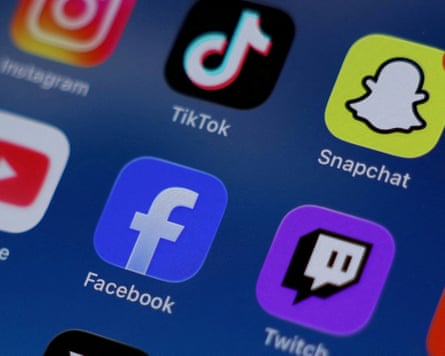
This is no longer the case. We increasingly encounter most aspects of the world through a single aperture: streaming and social media platforms. Or, more specifically, the algorithmic feeds of streaming and social media platforms, plus algorithmically optimised search engines and e-commerce sites, from Amazon to Vinted. In many cases, these are programmed to show each individual specific content based on data gathered from their own activities and those of other users – content that will ideally keep them on the platform for as long as possible. On Spotify, that can mean serving customers songs with superficial similarities to the tracks they didn’t skip last time; on Instagram, it might result in multiple appearances from an influencer whose videos have previously held our attention for a couple of minutes. We now experience reality via a limitless stream of content tailored around previous preferences.

It’s a bewildering paradox: these platforms made personalisation a major part of their business model, then synthesised, commodified and automated individual taste into oblivion. We no longer choose what we want to consume; we take what we’re given. And we are being given it in such overwhelming quantities that we no longer have the mental capacity to properly digest and assess what we have encountered.

It’s not merely the medium; it’s the message, too. In his 2024 book Filterworld, Kyle Chayka explains that because content that is “accessible” and “ambient” is most conducive to uninterrupted scrolling, “the least ambiguous, least disruptive and perhaps least meaningful pieces of culture are promoted the most” by algorithms.

This is not a new phenomenon, but years of living like this have started to take their toll. I began noticing that it was affecting me at some point last year. Scrolling through reams of overtly nostalgic clothes, skipping through playlists of forgettably inoffensive pop and beholding endless promotional campaigns for films and TV shows indebted to existing IP, I felt zero enthusiasm for any of it. Consumer trends – from childlike wall art to splatter ceramics, mesh ballet flats to bandanas, Dubai chocolate to putting cottage cheese in everything – seemed to become inescapable overnight, buoyed by the algorithm and reaching tedious saturation point before I had even had the chance to decide what I thought of them (that said, I did make time to reconfirm my longstanding conviction that cottage cheese tastes like sick). For the first time since childhood, I had the disconcerting sensation of having no clue what it was I really liked.

Perhaps I’m spending too much time on my phone. Perhaps I’m just getting old. To find out, I decide to step back in time and into the real world: to Portobello Road market in west London, to be precise – the place I spent hours and hours honing my own personal taste in the pre-algorithmic age (the mid-to-late 2000s). Alongside my unreasonably stylish school friend Lara, I would hunt for unusual secondhand things nobody else was wearing but that could just about pass for cool in a mainstream way. It was a creative challenge that I generally failed at, and my main hobby for most of my teenage years.

I haven’t been back in a decade, so I’m heartened to discover it all completely unchanged: stalls of antique cameras and chintzy royal ceramics, of faded band T-shirts and cricket jumpers and mountains of tangled silver jewellery, plus a fair few rails of the kind of peculiar vintage items that it turns out still thrill me. It seems like a world immune to the algorithm-abetted taste crisis – until I start talking to stallholders and shoppers, all of whom describe a herd mentality among their customers and peers.

Over the eight years she has had her vintage clothing business, Kerry has noticed a significant uptick in younger generations “wanting to fit in – they want to look like they belong”. It’s a concept she finds strange: she started vintage shopping as a teenager when she “couldn’t bear the thought of stepping out and looking like someone else”. Stephanie, 37, is visiting from California and searching for 1930s slip dresses. She sees her friends at home “wearing the exact same outfit – it’s very interesting to me because it takes away that personal aspect of your dressing”. Even if you do want to plough your own furrow, algorithm-sating fashion fads confuse matters. Helena, a 25-year-old stylist, is bored with the endless parade of microtrends. “They come around all the time and it’s always something that’s been done before. I hate when I see something that’s my vibe being turned into a microtrend – I’m, like, have I been influenced or is this actually me?”

Ione Gamble has spent much of her career thinking about taste. In 2014, she founded Polyester, an alternative fashion and culture publication that uses the John Waters quote “Have faith in your own bad taste” as its tagline. Nowadays, “we’re always being told what to like and what not to like rather than being able to seek it out for ourselves”, she says. “It’s making us all feel powerless – we don’t have the power to train our own taste because there’s not the room in the day any more.” Recently, Gamble invited a selection of writers to muse on the subject for an essay collection titled The Polyester Book of (Bad) Taste . In her chapter, the novelist Nicola Dinan writes about feeling like “a driverless car” when it comes to her cultural consumption in today’s landscape. I can’t think of a better analogy.

This sorry state of affairs has been broadly tolerated. However, this year has provided us with two pop cultural moments that neatly illustrate that the mood could be souring.

First, there’s the ascension of Carolyn Bessette Kennedy – who died alongside her husband, John F Kennedy Jr, in a 1999 plane crash – to 2026’s number one fashion icon. The New Yorker’s neutral, distinctively pared-back, turn-of-the-millennium style has long served as a fount of inspiration online, but when the biopic TV series Love Story aired in February , it catapulted her outfits to ubiquity. Cue blanket media coverage on how to imitate her dress sense in the most literal way imaginable: Marks & Spencer promoted its “90s edit” by dressing a Bessette Kennedy lookalike in small sunglasses and monochrome outfits to recreate paparazzi images. Vogue even provided a checklist: boot-cut jeans, tortoiseshell headband, camel skirt … It reminded me of being 14 and scouring the rails of Topshop for something I could imagine Kate Moss wearing. Except nowadays no scouring or imagination is required; the e-commerce algorithms will sort you out in milliseconds.

“CBK-core” is one of a catalogue of intense crazes fashion revolves around while maintaining a baseline of nondisruptive monotony (see also: the relentless churn of TikTok aesthetics – tomato girl , balletcore , coastal grandmother – that codify taste in a juvenile but also very risk-averse way). Yet the fact this particular trend had an actual person at its centre highlights how far into adolescent copy catting we have drifted – something Bessette Kennedy’s friend Carole Radziwill has pointed out. “She did what felt natural to her,” she told a podcast, claiming the appropriation of her style was “irritating […] The takeaway is not to mimic her style. The takeaway is to do and wear what feels most authentic to you.”

But working out what feels authentic to us has become very difficult since we subcontracted out those instincts – and left them wide open to corporate manipulation.

Last year, a young guitar band began gaining a lot of attention on both sides of the Atlantic. Yet the hype around New York outfit Geese was so extreme and pervasive that some people began to suspect they were a music industry “plant”. Not without justification, it turned out. In March, it was revealed that Geese (alongside acts including Alex Warren, Sombr and Zara Larsson) had made use of the marketing services of a firm called Chaotic Good Projects, whose founders half-jokingly claim to have studied TikTok algorithms at “collegiate level”. To help tracks go viral, Chaotic Good runs a huge number of social media accounts, which post content soundtracked by its clients’ songs in order to synthesise virality – a tactic it calls “trend simulation”.

Of course, cultivated excitement is one of the bedrocks of the music industry; acts don’t usually become popular through a groundswell of organic sentiment. Yet until a couple of months ago, many of us were under the impression that online popularity was at least partly a reflection of genuine interest and enjoyment. Wrong. In May, the New York magazine writer Lane Brown explained the art of “clipping” – stealth advertising campaigns that involve paying members of the public to flood social media with content about a specific musician, say, or TV show. This can trick the algorithm into detecting widespread enthusiasm and therefore promoting the product further (among many others, the writer found evidence for campaigns related to the singer-songwriter Noah Kahan and Netflix thriller The Night Agent). One person in the industry estimated that “90% of what you see on the internet is advertising in disguise”.

The reason Geese’s use of algorithm-gaming marketing garnered so much interest was – I suspect – because for many people becoming a fan of the band had proven they were still able to feel genuine zeal for sophisticated, slightly subversive new music. By which I mean they might have felt tricked into believing they still had good taste.

T his is probably a good moment to define what taste is and explain why it matters. On one level, it is extremely simple: it’s what you like and what you don’t. Taste can be superficial – in fact, it’s often a joyfully frivolous act (preferring one jumper to another, for example) – but it is also right at the core of our identities. Taste isn’t just your takeaway order, the comedy that tickles you or what you call your children; in her seminal 1964 essay Notes on Camp , Susan Sontag sets out taste’s all-encompassing nature. “There’s taste in people, visual taste, taste in emotion […] Intelligence, as well, is really a kind of taste – a taste in ideas.” It is crucial for making art, not just consuming it. Taste, Sontag writes, “governs every free – as opposed to rote – human response”.

Some of these responses will be pre-programmed. Taste is shaped by class and background. There is also a strong social element: buying a specific model of car or going to a particular gig is often nothing more than a way of signifying that you belong – or want to belong – to a certain group. This was the argument put forward by the French sociologist Pierre Bourdieu in his 1979 work Distinction: A Social Critique of the Judgement of Taste – a theory that now seems so obvious it’s barely worth stating. (For an excellent visualisation of interior design taste in the British class system, see Grayson Perry’s 2012 tapestry series The Vanity of Small Differences .)

To flout or subvert stylistic codes you have to be fluent in them – and the higher up the class structure you sit, the more latitude you have to do so. Think of the lord of the manor free to indulge his sartorial eccentricities versus uniformed blue-collar workers. In theory, though, anyone can break the rules; the most experimental dressing in the 20th century came from grassroots subcultures such as punk and the New Romantics.

In an ideal world, personal taste is a privilege and a pleasure we should all have – it is the closest thing most of us get to self-expression or a creative act. At best, we can use it to consolidate our identities. It involves commitment and consistency (the opposite to all those microtrends) and some element of risk: knowing the things you like won’t appeal to everyone. “Taste, when it’s successful, is a tool to make you feel more like yourself,” says Gamble. If you dismiss taste as trivial, or see it as purely imitative, you are dismissing what it is to be a person.

And yet, perplexingly, one of the ways the internet destroyed personal taste was by prioritising it above anything else. By making taste – at least the most passive yet performative version of it – our defining quality, streaming and social media platforms boiled humanity down to data-producing nodes of consumption. Nathalie Olah’s book Bad Taste examines the politics of taste in the 2010s. In it, she writes about how middlebrow millennial “good” taste – muted colours, expensive candles, pot plants, coffee-shop coffees – became an online performance of capability and authority amid post-2008 financial precarity. We had little economic capital, but we had the supposed cultural capital of curating our lives, tastefully, on social media. It was a neoliberal con – and proof that being reduced purely to our tastes is just as dehumanising as having none.

O n that front, it’s bad news: tech bros are the architects of our destinies and they have big taste‑based plans for humanity. In February, OpenAI’s president, Greg Brockman, posted on X that “taste is a new core skill”. He was echoing the sentiments of his former colleague Krithika Shankarraman, who last year told an interviewer that “taste is going to become a distinguishing factor in the age of AI”. Taste, the thinking goes, is the one human quality artificial intelligence will not be able to replicate. The concept of personal taste being a “moat” – a tech‑world term meaning a unique structural advantage that protects a company’s profitability – has taken root across the board.

In fact, Silicon Valley’s sudden interest in taste goes way beyond such pronouncements. Tech companies are increasingly attempting to align themselves with current ideas of good taste: the spy tech firm Palantir released a blue chore jacket; the AI company Anthropic produced caps embroidered with the word “thinking” (in all lowercase); while OpenAI’s merch includes football shirts and hipster-coded graphic hoodies. It is also muscling in on old-school gatekeepers. Exhibit A: Jeff Bezos’s involvement in May’s Met Gala – high fashion’s biggest night of the year – which saw the Amazon boss and his wife pay a reported $10m to serve as “honorary chairs” (and therefore VIP guests). Meta CEO Mark Zuckerberg was also present, fresh from sitting in the front row at Prada’s Milan show in February.

Why is this happening? In a March column for the New Yorker, Chayka referred to this as “taste-washing” – an attempt to make our AI-dominated future more palatable. “To me, Silicon Valley’s use of taste is just PR or a marketing effort that gives them a veneer of humanity to hide automation behind,” he tells me.

It’s no coincidence that this obsession with taste is happening at a time when AI content is dominating our feeds. It is estimated that about 71% of the images shared online are now AI-generated , as are more than a third of podcasts, while last year Spotify removed 75m AI tracks . While such content may seem novel, it will only take us further down the same path. “I see generative AI as a successor to algorithmic sameness,” says Chayka. “Algorithms encouraged humans to produce generic content, while AI just generates the generic content right away. Now we call that kind of generic content ‘slop’. So the patterns are still there, and we often are consuming AI content through the same algorithmic feeds. It remains a vicious cycle.”

That driverless car we’re currently in? The wheels are falling off and it’s heading straight for the nearest AI swamp. Algorithms are dropping the pretence of being digital tastemakers and now often present us with content that appeals insidiously to our “primal instincts”, says Gamble. AI phenomena such as Fruit Love Island (the reality show fictionalised, with fruit) “is really colourful. It uses all the specific plot devices to hook you in. It’s basically content that’s tailored for eyeballs, not even enjoyment.” In The End of Taste, the final chapter of her book, Gamble writes that “we’re entering a new era in which good and bad taste is no longer a barometer worth thinking about”.

But perhaps there’s an off-ramp for this nightmare. Carmen Vicente, a social media strategist in the tech world who writes a newsletter about the internet titled Scroll Sick, thinks the motivation “ultimately underpinning all of this taste-washing is fear – fear of losing power”. Tech bosses are trying to up their cultural capital and convince humans there is still meaning online because they can see a more unwelcome trend on the horizon.

T o reclaim our personal tastes (and cultural standards) we must abandon algorithm-driven platforms. And we kind of already are: the big worry for tech bosses is that social media use is only going in one direction. According to the Financial Times, time spent on social media peaked in 2022; a recent Ofcom survey showed a 12% drop in people posting on platforms in the past year. There are a few reasons for this, but one of them is algorithmic fatigue. “There’s plenty of backlash to algorithmic feeds,” says Chayka. “The active user base of Facebook has begun declining and I think platforms like Instagram and Spotify are now seen as less influential, creative or original than a few years back.”

There are corners of the internet that are delivering on this front. The rise of short-form interview formats such as Dream Baby Press’s Love/Hate Lists and Perfectly Imperfect , which ask celebrities and creative people to name their favourite things – the more random and unpredictable, the better (film-maker Mary Bronstein recommending The Young Ones; music producer Danny L Harle waxing lyrical about tinned fried dace) – tap into a thirst for idiosyncratic, un-optimised, genuinely human preferences. Perfectly Imperfect (tagline: A taste of taste) was founded in 2020 by Tyler Bainbridge, who has said he “was growing frustrated with algorithms starting to define everyone’s tastes”. In 2024, he launched his own algorithm-free social media site, PI.FYI. Advertised as a rejection of “the AI-slop-filled dystopia of today”, it shares users’ recommendations in chronological order; to log on is to be faced with a list of unfiltered and very random cultural endorsements (during a brief browse of the music feed, I saw posts enthusing about tracks by Baha Men, 1990s German rave outfit Dune, and Siouxsie and the Banshees). With only 200,000 customers, PI.FYI is niche in itself – but the film recommendation site Letterboxd, which scratches a similar itch, has about 26 million.

In his book, Chayka predicts a splintering of the internet into smaller independent platforms as this decade’s response to the distortion of algorithmic feeds. Two years on, he thinks “decentralisation is definitely here in the form of newsletter culture and Patreon-style crowdfunding models”.

Newsletters – probably not coincidentally – tend to be centred on human taste: many feature recommendations of clothes, books, journalism, restaurants and other products. But are they really an antidote to algorithm-abetted shilling? In truth, this varies massively, from deeply researched, ad-free examples such as the food publication Vittles and The Browser , which finds the best online articles, to newsletters that publish sponsored posts and make ample use of affiliate links, meaning they get compensated when a reader buys a product they endorse.

“The recommender economy can be great because you can find someone whose taste you really admire or aligns with yours,” says Erin Wylie, who co-founded the cult style newsletter Blackbird Spyplane with her partner, Jonah Weiner, in 2020. “I think the thing you have to remember is that almost all of these people are profiting off of what they’re recommending.” (Blackbird Spyplane doesn’t accept gifts or affiliate links for products, except books and one-off eBay or Etsy finds.)

In a world where “every interaction is monetised” and “our primary function is to be shopping”, says Wylie, the only real way to reclaim taste as a form of identity and individuality is to stop consuming. At the end of last year, Wylie was feeling increasingly disconnected from her own tastes – an experience shared by friends equally fatigued by the “firehose of fashion imagery” emanating from their screens. To revive her enthusiasm, she set herself a challenge: she would spend an entire month wearing only black clothes she already owned. Introducing these limitations forced her to experiment with texture, silhouette and accessories – to treat outfits as a series of brain-teasers. The experiment worked, with Wylie concluding her newsletter on the subject by advising readers to “build yourself some productive constraints, to help focus your attention and clarify your appetites”.

The biggest, most productive constraint we can give ourselves in an era of frictionless material acquisition? Get off the internet entirely. The idea of returning to the real world is something that is clearly appealing to young adults at the moment. “Is 2026 the year of analogue?” asked a Dazed headline in January, referring to the trend for sketchbooks, vinyl and film cameras. Gamble has noticed gen Z “picking up physical media again. I have started rebuying magazines that I had when I was a teenager so I can dig into references that aren’t just on Pinterest.”

Back at Portobello Road market, I ask Helena for her offline fashion inspiration. It turns out to be her dad. “He’s a Tabi, cargos, T-shirt and big sunglasses wearer. It’s totally him – he isn’t online. He actually is that person.” It is hard not to notice that it’s the older clientele who look most distinctive – by a huge margin. I corner Pip, a milliner who is wearing a white coat embroidered with images of Inuit people, a mauve neck scarf and a flat knitted hat in a similar shade. She “hates” social media, and instead has been coming here for the past 20 years to look for items that “jump out”, her instincts having evolved via a deep familiarity with fashion history. “I went through a phase where I was really into 1950s clothing, then I went 40s, 30s, 20s, then Victorian stuff.” Nowadays, she is careful to mix eras but also wears things that make her “happy”, including her “massive collection” of conversation-starting Inuit coats.

Despite the doom and gloom, I feel invigorated by my trip. Shopping is obviously not the answer, but rifling through rails of old clothes clarifies another core tenet of personal taste the latter-day internet has rendered impossible: liking something that isn’t meant for you.

In fact, the more I think about taste, the more I realise it boils down to a leap of imagination: a counterintuitive combination of colours, for instance; or gradually attuning to a piece of music that initially seems alienating. There are no shortcuts or quick fixes: personal taste is something that requires the kind of quiet contemplation and creative thinking big tech is actively discouraging. (“Nobody wants to sit with thoughts. Sitting with thoughts: lame; AI can do that,” jokes Vicente.) When it comes to tuning into your own taste, Gamble’s advice is essentially the same. “Always question yourself. Why do I like that? Do I just like it because I’ve been shown it 100 times – or do I genuinely love it?”

As Donald Trump turns 80, he faces a foe he can never defeat: Father Time. That’s a problem for us all | Donald Trump | The Guardian

Keyword – News
Trefwoorden – Donald Trump, US politics, US news
Title – As Donald Trump turns 80, he faces a foe he can never defeat: Father Time. That’s a problem for us all | Donald Trump | The Guardian
Author – David Smith
Link – As Donald Trump turns 80, he faces a foe he can never defeat: Father Time. That’s a problem for us all | Donald Trump | The Guardian
Publish date – 2026-06-14T05:00:33.000Z
Category – News
URL – https://www.theguardian.com/news/ng-interactive/2026/jun/14/donald-trump-turns-80-faces-foe-father-time

The main Nuremberg trial ended, Winston Churchill warned of an iron curtain descending across Europe, It’s a Wonderful Life received its premiere and, at Jamaica hospital in the borough of Queens, New York, Donald John Trump was born .

It was 1946, also the birth year of George W Bush and Bill Clinton, but on Sunday the current US president celebrates his 80th birthday in a style uniquely his own. Trump will stage a night of cage fighting on the once-pristine White House south lawn as part of events marking the 250th anniversary of US independence.

The blend of visceral bloodsport with political spectacle under metal scaffolding may offer brief respite for a president also consumed with an unpopular war, rising inflation, plunging poll numbers and a foe not even he can bully, bomb or outrun: Father Time.

“Donald Trump has been showing signs of his age for quite some time,” said Tara Setmayer , a former Republican communications director on Capitol Hill. “It’s on display almost daily as he struggles to stay awake during official meetings, he is more irritable and going on rage tangents and throwing temper tantrums when he doesn’t get his way. These are not signs of a well-adjusted adult approaching 80 years old.”

Trump is the oldest US president sworn into office and, some critics say, showing alarming evidence of decline as he becomes an octogenarian, a status that more than half his predecessors never achieved and that found Gerald Ford playing golf, Jimmy Carter immersed in humanitarian work and Ronald Reagan organising his memoirs.

A Reuters/Ipsos poll in February found 61% of Americans thought Trump had become more erratic with age, and another survey in April showed a majority concerned about his temperament and mental sharpness.

The physical evidence is increasingly difficult for his aides to conceal, though they aggressively project a narrative of vigour. The president has been photographed with bruised hands and swollen ankles, ailments his medical staff continually brush off as a “slight” issue. He sees 22 medical specialists, an apparent new bar for presidents .

His public calendar has grown notably sparse, dominated by hours of nebulous “executive time” and behind-closed-doors policy meetings. After a flurry of travel early in the year, he has largely retreated to the cocoons of the White House and his clubs in Florida and New Jersey since launching the Iran war in February.

Then there is the sleeping. Trump has increasingly been caught on camera apparently nodding off at public events, most recently at an NBA basketball finals game at New York’s Madison Square Garden. When clips of his shut eyes go viral, his aides claim he was merely blinking or listening intently.

The White House spokesperson Davis Ingle has insisted that Trump remains “the sharpest and most accessible president in American history”. The president himself frequently boasts of “acing” cognitive tests that would have flummoxed past presidents.

But to observers the spin is not only unconvincing but counterproductive. Kurt Bardella , a political commentator and former congressional aide, said: “It’s not surprising that someone who’s on the doorstep of being octogenarian is showing signs of ageing. Father Time is undefeated: that applies to everybody including Donald Trump and I would have more confidence in him as commander-in chief if he would just admit that rather than try to hide it.”

Bardella added: “Hiding it is a sign of weakness. Being transparent, forthright, honest about it would actually be a sign a strength. The fact the White House seems to be going to all these ridiculous and laughable measures to try to convince us that he’s not actually ageing is insulting to American people, it’s idiotic, it reeks of desperation, and it makes everyone believe that there’s more going on than meets the eye. And what meets the eye isn’t that great. Secrecy breeds mistrust.”

If that complaint sounds familiar it is because Trump’s predecessor, Joe Biden, who was 78 when he took office in 2021, faced similar charges. White House officials were accused of covering up Biden’s failing capacities. Jill Biden, the former first lady, wrote in a new memoir that she feared her husband had had a stroke when he delivered a feeble debate performance that forced him to abandon his campaign for reelection.

Bill Whalen , a policy fellow at the Hoover Institution thinktank in Stanford, California, said: “It’s very difficult, if not a double standard, for every Democrat to criticise Donald Trump as too old and too out of touch, with Democrats having basically zipped their lips in 2024 and not dared say the same about Joe Biden. In this age of whataboutism it is another bad case of whataboutism.”

Trump’s critics, however, reject the comparison, contending that the concerns around him are greater by orders of magnitude.

Setmayer, who now runs the Seneca Project , a female-led political action committee, said: “There is a fair discussion to be had about a president’s physical and emotional condition, no matter what age they are. However, if Joe Biden was exhibiting the same level of cognitive incoherence and physical decline in public the way Donald Trump currently is, the apoplexy on the right would be palpable.”

Such commentators argue that Trump’s already volatile psyche is fraying as his stamina wanes. Even with the nation at war with Iran and citizens strained by the cost of living, he touts a $1.4bn White House ballroom, revamp of the Lincoln Memorial reflecting pool and plans for a huge triumphal arch.

His speeches, which have long been rife with non sequiturs and long stories, increasingly ramble, repeat and take baffling tangents. He is prone to more scattergun statements that give Republican strategists heartburn, such as “I don’t think about Americans’ financial situation”, “I don’t care about the midterms and “I love the inflation” . At dead of night he pushes election conspiracy theories and torrents of AI slop on social media.

Nowhere was this more evident than during an explosive confrontation last week with the journalist Kristen Welker on the NBC show Meet the Press. Factchecked on his false claims of election rigging, Trump flew off the handle and said Welker was either “crooked” or “stupid”, then abruptly ended the interview: “Let’s call it quits because I’ve had enough. Thank you darling. Have a good time.”

Larry Sabato , the director of the Center for Politics at the University of Virginia, watched the broadcast with genuine alarm. “The man was out of control,” he said. “How he kept himself from having a heart attack or stroke, I don’t know. You saw his face. He’s orange at the best of times but he was oscillating between red and orange. I really did think he was going to have a heart attack.”

As for Trump’s penchant for napping, Sabato offers a silver lining of sorts. “You shouldn’t laugh but it’s the only time he looks peaceful,” he quipped. “It’s the only time his mouth is shut and he’s not saying something obnoxious, so I’m always grateful when he nods off.

“But what that proves to me is there’s nobody in his family or his staff that can control him in any way. There’s no way somebody his age should be staying up practically the whole night or intermittently waking up and sending out these crazy memes – dozens of them sometimes. It’s unbelievable.”

The prospect of such a man having access to the nuclear codes would typically prompt discussion of his cabinet invoking the 25th amendment to the constitution to remove him from office. No one expects Trump’s team of loyalists to even remotely consider such an option . Republicans in Congress have shown flickers of dissent lately but preserved a conspiracy of silence around the age issue.

Trump is therefore expected to remain in office for his 81st and 82nd birthdays, potentially as a lame duck president facing political mortality if Democrats win one or both chambers of Congress. For many people such age brings wisdom, wistfulness and a softening of hard edges, but for Trump it seems only to exacerbate his character and make him more truly himself.

Gwenda Blair , a Trump biographer, said: “Any sign of grace? Perspective? Those have not emerged. Those are the kind of rewards of being older that many people experience but not him. Instead he’s doubling down on the exact same behaviour patterns that he has always had: what’s in it for me and how can I get the maximum out of it and then more than that?”

The questions over the judgment and temperament of the world’s most powerful man, and the potential risks to the global order, will only grow louder in the coming years, according to Larry Jacobs , the director of the Center for the Study of Politics and Governance at the University of Minnesota.

“The recklessness of decisions, the failure to think in a logical evidence-based way, the acting on impulse, the losing track of reality versus the talking points – all these things are being accelerated by Trump’s age. Most presidents’ skill set begins to fade as they age; Trump has got such a limited toolkit that it’s putting him over the edge.”

Jacobs warned: “America and the world are in for a frightening two years. Trump has too much power for someone with so little connection to reality. Age is making Trump an even more dangerous president.”