How Brexit has made Britain poorer – in charts | Brexit | The Guardian

Keyword – Politics
Trefwoorden – Brexit, Economic policy, European Union, Politics, Europe, Economics, UK news, Business, International trade, Unemployment, Foreign policy, Global economy, Investing, Productivity, Government borrowing, Economic growth (GDP), Young people, Immigration and asylum
Title – How Brexit has made Britain poorer – in charts | Brexit | The Guardian
Author – https://www.theguardian.com/profile/richard-partington
Link – How Brexit has made Britain poorer – in charts | Brexit | The Guardian
Publish date – 2026-06-14T05:00:34.000Z
Category – News
URL – https://www.theguardian.com/politics/2026/jun/14/how-uk-economy-changed-since-brexit-vote-charts

As the 10th anniversary of the Brexit vote approaches, the verdict on Britain’s economic performance is clear: voting to leave has resulted in severe costs for households and businesses.

The immediate recession predicted in the Treasury forecasts ordered by George Osborne – dubbed “ project fear ” by the Leave campaign – did not happen. The impact from the Covid pandemic, wars in Ukraine and Iran, and Donald Trump’s trade battles also cloud the picture.

But experts agree the long-term forecasters were on the money: the economy is significantly smaller than it would otherwise have been, trade has suffered, business investment and productivity growth have stalled, and families are on average thousands of pounds a year worse off.

Charlie Bean, a former Bank of England deputy governor, who reviewed the Treasury forecasts, said: “Osborne has a lot to answer for when he was basically saying, ‘Treasury analysis shows – look, there is going to be a deep recession tomorrow.’

“That was really misrepresenting what you could take from [it] and overselling it, obviously to try and win the argument politically. In hindsight, we had the vote and the world didn’t fall off the cliff immediately, and so the Brexiters can say [it] wasn’t worth the paper it was written on.

“But the assessment of the broad long-run was in the right ballpark. We’re poorer than we otherwise would have been.”

Here are the charts highlighting the economic consequences.

The pound is below its pre-EU referendum level

The value of the pound swung wildly after the polls closed on 23 June 2016. As Nigel Farage appeared ready to concede defeat , the currency gained. But early leave victories in key locations, including Sunderland , prompted a 10% plunge in the pound on what was its biggest ever one-day fall.

The collapse in the pound drove up the cost of importing goods, triggering an inflation shock that damaged the public finances and inflicted financial pain on households across the country.

Exporters – who typically benefit from a weaker currency because their products become cheaper for overseas buyers – failed to take advantage as uncertainty clouded trade appetite.

A decade later, the pound has never returned above its pre-Brexit level, hitting British holidaymakers in the pocket. From close to $1.50 against the dollar and €1.31 against the euro just after polling closed, the pound stands at $1.34 and €1.15.

UK growth has slowed

There are reasons why the Brexit recession never materialised: mostly because the Treasury forecast assumed an immediate no-deal departure, rather than continued EU membership until 31 January 2020 – before an 11-month transition period and other deals since.

According to the Office for Budget Responsibility , the independent Treasury watchdog, the UK is on track to suffer a 4% hit to national income over a 15-year period.

At the decade mark, analysis by Nick Bloom , a leading British economist at Stanford university in the US, and others in a research paper for the US National Bureau of Economic Research, show that UK GDP per head is between 6% and 8% lower than it would have been without Brexit.

Based on performance relative to 33 other advanced economies, the analysis shows that Britain roughly tracked these countries closely until 2016, before a large gap in output opened up.

“The statistics are really clear: the UK has grown more slowly after Brexit than before,” Bloom said. “Is it because of Brexit? Probably. You can’t be absolutely certain, but I don’t see anything else that would open up this gap with the UK and everyone else.”

Trade has suffered from more border friction

Brexit involved erecting trade barriers, which has hit goods exports. The EU is still the UK’s largest trading partner : in 2025, exports to the bloc were worth £385bn (41% of all UK exports) and imports £474bn (49% of the total).

Since the end of the EU transition period on 31 December 2020, growth in UK goods exports has slowed relative to the G7. But service exports have performed more strongly. The OBR estimates this is because the UK-EU trade and cooperation agreement Boris Johnson agreed with Brussels created more friction for goods than services. Exporters, in particular, face more red tape and border delays.

Bloom compared the situation to a shop moving from the centre of town to the outskirts: “You make it harder to get there and back, and not surprisingly there is less demand. And you add to the uncertainty by opening and closing all the time, and people don’t know if you’re there.”

Uncertainty sapped business investment

After a shock result, no clear plan from the government or leave campaigners led to years of infighting over just what Brexit – never properly defined, and often subjective – should be in practice. Amid that political turmoil businesses froze their investment plans.

As a consequence, investment is estimated to be close to 18% lower than it would have been under remain and productivity up to 4% lower, reflecting reluctance to invest in equipment and projects due to the uncertainty.

John Springford, of the Centre for European Reform, said: “The investment strike started in 2016 and continued through to 2021-22, and then it started to rise again once certainty about the trading relationship had been established.

“That has an impact on productivity. It means workers don’t have the best kit, and existing capital [equipment and buildings] is deteriorating, so you certainly assign some of the GDP losses to that.

“Brexit is more a story of stagnation, and a slow puncture, than of recession and rising unemployment.”

Employment has suffered

Unemployment in the UK fell after the Brexit referendum to among the lowest rates since the 1970s, before rising sharply during the pandemic. However, experts say this obscured underlying challenges.

First, wage growth has stagnated. Average real wages barely grew until picking up strength after the pandemic, and even given recent faster growth are only £43 a week higher on average , after taking inflation into account.

Britain emerged as the worst-performing country in the G7 for the pace of its recovery in workforce participation after the easing of pandemic restrictions, with rising ill-health pushing up economic inactivity – when working-age adults are neither in a job nor looking for one.

Young people have borne the brunt of weaker participation rates, including an increase in the number of 16- to 24-year-olds not in education, employment or training (Neet) to more than a million, the highest level since 2013.

According to Bloom, employment in the UK is between 3% and 4% lower than it would have been under a remain scenario.

Brexit support has faded

Public support for Brexit has steadily fallen since the 52%-48% leave vote. Polling last month by YouGov shows 70% of Britons support a closer relationship with the EU without rejoining the bloc, its single market or customs union.

More than two-thirds think looser ties would be a mistake. A majority – 56% – would back rejoining the bloc outright. Support to rejoin is strongest among Green and Labour voters, and weakest among backers of Nigel Farage’s Reform UK, of whom 83% are opposed.

Net immigration surged, but is now falling

Post-Brexit, despite the promises of the leave campaign and the Conservative government, net migration to the UK rose sharply, reaching a record high of almost 1m in the year to June 2023.

The war in Ukraine and pent-up demand for migration after the easing of Covid restrictions played a contributing role. But changes to migration rules after Brexit also had an impact.

Almost 90% of arrivals have been from outside the EU, while net migration from the 27-country bloc has fallen. Employers have struggled with staff shortages amid the loss of previously readily available EU workers, particularly in construction, hospitality and manufacturing.

Net migration has fallen further – dropping to 171,000 last year – amid tougher controls first introduced under the Conservatives that have since been tightened further under Labour.

Lovers, housewives, deserts and dogs: David Hockney’s greatest works – in pictures | David Hockney | The Guardian

Keyword – Art and design
Trefwoorden- David Hockney, Painting, Culture, Art, Art and design
Title – Lovers, housewives, deserts and dogs: David Hockney’s greatest works – in pictures | David Hockney | The Guardian
Author –
Link – Lovers, housewives, deserts and dogs: David Hockney’s greatest works – in pictures | David Hockney | The Guardian
Publish date – 2026-06-14T12:00:42.000Z
Category – Culture
Hyperlink – Lovers, housewives, deserts and dogs: David Hockney’s greatest works – in pictures | David Hockney | The Guardian

From his taut, sun-kissed portraits of LA to his vast psychedelic Yorkshire landscapes to his 70m iPad Normandy epic – here’s our pick of the artist’s best works

We Two Boys Together Clinging, 1961 One of several homoerotic paintings created by Hockney in 1961, this was inspired by a newspaper story about a mountaineering accident headlined: “Two Boys Cling to Cliff All Night.” Hockney enjoyed the double meaning here, having quite a crush on Cliff Richard. It is also a nod to the Walt Whitman poem of the same name. Photograph: © David Hockney

Peter Getting Out of Nick’s Pool, 1966 Peter is Peter Schlesinger, Hockney’s boyfriend at the time, and Nick is Nick Wilder, an art dealer and gallery owner who lived in Hollywood. Hockney copied the figure of Peter from a Polaroid he had taken of him leaning naked against a car bonnet and used simple wavy white lines to suggest ripples in the pool and bring the focus on Peter. Photograph: © David Hockney

Beverly Hills Housewife, 1966-67 Hockney’s close friend Betty Freeman was an art collector. He came to paint her pool but decided to portray her instead, giving the work its tongue-in-cheek title. Freeman’s striking pink dress instantly draws the eye while other elements – zebra-print Corbusier chair, abstract sculpture and antelope head – add to the opulent, tasteful, mid-century atmosphere. The flattened California light became a staple of the artist’s LA paintings. When Freeman died, the work was auctioned for $7.9m, then a record for a Hockney. Photograph: David Hockney

A Bigger Splash, 1967 Is this the most famous splash in art? In California, it seemed to Hockney, everybody had a swimming pool and from 1964 to 1971, he painted as many as he could, each time taking a different approach to the challenge of capturing the water’s ever-moving surface. Hockney enjoyed California’s laidback, sensual way of life. ‘When I arrived,’ he said, ‘I had no idea if there was any kind of artistic life there and that was the least of my worries.’ Photograph: David Hockney/© David Hockney Collection Tate, UK

Christopher Isherwood and Don Bachardy, 1968 This was a landmark moment in queer art, painted when homosexuality was illegal in California. Novelist and playwright Christopher Isherwood sits on the right, with the painter Don Bachardy on the left, in the living room of the couple’s house in Santa Monica. Hockney took lots of photographs of the couple in preparation. Every time he said ‘Relax’, Isherwood would put his leg over his knee and look at Bachardy, who never returned the gaze, staying facing forward. Hockney said: ‘So I thought, “That’s the pose it should be.” And I began the picture.’ Photograph: © David Hockney

Mr and Mrs Clark and Percy, 1970–71 Percy may now be one of the most famous cats in art but the feline’s actual name was Blanche. The pet belonged to Hockney’s close friends, the fashion designer Ossie Clark and textile designer Celia Birtwell. This was painted in their flat in Notting Hill Gate. Clark and Birtwell were were big names in London fashion and Hockney was best man at their wedding, painting this shortly after. He intentionally swapped wedding portrait conventions, seating the husband while the wife stands upright. Blanche became Percy in the title because Hockney liked the rhythm. Photograph: David Hockney

Portrait of an Artist (Pool With Two Figures), 1972” By the end of the 1960s,” wrote Jonathan Jones in his Guardian tribute to Hockney, “an eerie stillness dominated his paintings as he became more openly the observer, the looker-on. The loneliness of looking is the theme of what may be his greatest painting, Portrait of an Artist (Pool with Two Figures). It’s certainly his most expensive, selling in 2018 for $90.3m. In this huge 1972 canvas, an almost mystically radiant work, a young man in a pink jacket stands by an open air swimming pool watching a swimmer whose pale flesh flickers under translucent turquoise water. To give the kind of gossipy detail Hockney came to loathe, the man by the pool is Peter Schlesinger and the painting captures the end of their affair, a trauma that gives it painful authority.” Photograph: David Hockney

Kerby (After Hogarth) Useful Knowledge, 1975 This painting was a milestone, it being the first time Hockney deliberately experimented with “reverse perspective”, challenging the rigid, fixed point perspective traditional to western art. The work is a parody of Satire on False Perspective, a 1754 engraving by the British satirist William Hogarth for a book by his friend John Joshua Kirby. It was called Dr Brook Taylor’s Method of Perspective Made Easy and Hockney deliberately spelt his name wrong. Photograph: David Hockney

Hockney painting Mulholland Drive: The Road to the Studio, 1980 This famous work, more than 6m wide, captures Hockney’s daily commute from his Hollywood Hills home to his studio on Santa Monica Boulevard. Vividly coloured, it has a dynamic, epic quality, a love letter from the artist to the California landscape, from hillside homes and swimming pools to the Los Angeles sprawl. Photograph: Richard Schmidt/David Hockney

Pearblossom Hwy (Second Version), 1986 Another pioneering work, this photographic collage collapses traditional perspective and thrusts the viewer right into the road trip it conveys. Assembled from hundreds of 6×4 inch photos of Joshua trees, sky, scrub and road signs, all taken from different spots, it is a cubist take on the Mojave Desert in California. Photograph: The J Paul Getty Museum, Los Angeles, CA

Hockney and his dachshunds Stanley and Boodgie in Los Angeles, 1995 Hockney adored his dachshunds Stanley and Boodgie. The playful pups appear in hundreds of pictures across a range of mediums, with Hockney’s loving depictions revealing their personalities. Although the subject may feel light-hearted, Hockney still used these works to explore perspective, colour and composition. Photograph: Richard Schmidt/David Hockney

Bigger Trees near Warter, 2007 More than 12m wide, this is one of Hockney’s largest works. It shows a coppice near Warter in Yorkshire before spring. Although Hockney lived in LA, he returned home to his mother’s in Bridlington for Christmas. After moving back in 2005, he decided to depict Warter trees on a huge scale. Because of studio space considerations, he couldn’t work on a ladder or scaffold. ‘The trouble,’ he said, ‘is that … you need to step back. Artists have been killed stepping back from ladders.’ Instead he used computer technology to see the work emerge. Photograph: © David Hockney Collection Tate, UK

Hockney painting Winter Timber, 2009 This work, full of striking Fauvist hues, marks a triumphal phase of Hockney’s late career as he produced large-scale paintings seeking to capture the dramatic beauty he saw in the Yorkshire landscape. Strong verticals dominate the top of the painting, contrasting with the felled trees beneath and lane sweeping left. “Winter is all about line,” he once said. “People have it all wrong, imagining it to be a time when the world goes all dead. Trees are never more alive than in winter. You can virtually see the life force.” Photograph: Jean-Pierre Gonçalves De Lima/David Hockney

Hockney painting May Blossom on the Roman Road, 2009 Stretching across eight canvases, this lush panorama shows blooming hawthorn bushes near the village of Kilham in the East Riding of Yorkshire. He is now settling into his new environment, clearly finding Yorkshire an endless source of inspiration, taking liberties with colour, in this work using them in ways that aren’t always natural. Photograph: Jean-Pierre Gonçalves De Lima/David Hockney

The Arrival of Spring in Woldgate, East Yorkshire, 2011 This image is from a landmark series of iPad drawings capturing winter turning to spring in the East Yorkshire landscape. Created in 2011, the images burst with colour as they show trees waking from winter and new plants growing, all beneath a brightening light. The series highlights Hockney love of technological innovation as he takes traditional British landscape painting digital. Photograph: David Hockney

A Year in Normandie, 2020-2021 Inspired by the Bayeux Tapestry, this 70m long work, currently on show at the Serpentine in London, was a vast visual journey through the changing seasons. Hockney moved to Normandy in 2018 and worked there intensively during lockdown. A Year in Normandie is a composite work, formed of 100 images completed outdoors on his iPad. Visitors can see the seasons unfold as the walk through the gallery. Photograph: © David Hockney

British armed forces intercept Russian shadow fleet oil tanker in Channel | Ministry of Defence | The Guardian

Keyword – UK news
Trefwoorden – Ministry of Defence, Russia, Vladimir Putin, Military, Keir Starmer, NCA (National Crime Agency), Oil, UK news
Title – British armed forces intercept Russian shadow fleet oil tanker in Channel | Ministry of Defence | The Guardian
Author – https://www.theguardian.com/profile/markbrown,https://www.theguardian.com/profile/jessica-elgot
Link – British armed forces intercept Russian shadow fleet oil tanker in Channel | Ministry of Defence | The Guardian
Publish date – 2026-06-14T10:23:34.000Z
Category – News
URL – https://www.theguardian.com/uk-news/2026/jun/14/british-forces-intercept-russian-shadow-fleet-vessel-english-channel

British armed forces intercepted and boarded a Russian shadow fleet oil tanker in the Channel in the early hours of Sunday, Keir Starmer has confirmed.

In a six-hour operation, the first of its kind to be led by the UK, Royal Marine commandos and officers from the National Crime Agency boarded and took control of the vessel, Smyrtos, which was sailing under a Cameroonian flag.

According to the tracking website Marine Traffic , the vessel is now anchored off the coast of Dorset, near Weymouth. Authorities said it would be monitored for environmental or safety concerns.

British authorities say the Smyrtos is one of 700 vessels in a shadow fleet responsible for carrying 75% of Russia’s oil exports, which are under international sanctions. The fleet provides Russia with what analysts say is a critical lifeline, allowing oil to be sold and funds generated to continue its war against Ukraine.

The operation on Sunday morning was the first time the UK had led on such an endeavour, previously providing support to the French military when it carried out something similar in the Atlantic.

Writing on X, Starmer, said he had directed UK armed forces to intercept the oil tanker as it attempted to sail into the Channel.

“This successful operation delivers yet another blow to Russia and reminds those fuelling [Vladimir] Putin’s war in Ukraine that we will not let them hide,” the prime minister said. “I want to thank those involved, including our armed forces and law enforcement officers who keep this country safe 24 hours a day, 365 days a year.”

Dan Jarvis, who became defence secretary on Thursday after the resignation of John Healey, said: “Operations like this require skill, professionalism and courage. I pay tribute to our armed forces personnel and all those involved.

“Russia relies on its shadow fleet to fund their conflict in Ukraine and our interdiction delivers a blow to Putin’s illegal war.”

The Ministry of Defence said the military operation had been supported by aircraft from the Maritime Air Group (chinooks, Merlin Mk4 and Wildcat), an RAF P-8 aircraft, as well as the navy vessels HMS Sutherland and HMS Ledbury.

Calling it a “blow to Putin’s war chest”, the MoD said the operation had been “conducted in close cooperation with the French”. It said the UK was a leader in tackling the shadow fleet, having already placed sanctions on more than 500 vessels. “These sanctions are working,” the ministry said, with Russia’s oil and gas revenues falling by 24% year-on-year in 2025.

Starmer announced in March he had granted permission for the British military to board ships under sanctions that were passing through UK waters.

Writing on LinkedIn , the attorney general, Richard Hermer, said: “This government made clear that we would pursue Russia’s shadow fleet under the full force of international law.

“Russia relies on their shadow fleet tankers to fund their conflict in Ukraine, and this expertly delivered interdiction strikes another blow at Putin’s war machine. I pay tribute to the extraordinary courage and professional of our armed forces personnel, and everyone else involved.”

Speaking to the BBC, Al Carns, who resigned as armed forces minister on Thursday night, said: “While we were sleeping safely last night, there were marines and navy and air force personnel boarding helicopters, flying low level over the sea, rearing up before the ship, fast roping on to the ship, securing it, and then taking it into our territorial waters. An amazing operation, excellently prosecuted by our Royal Marines and others.”

Asked why action like this had not been taken before, Carns said there had previously been a Russian frigate in the Channel protecting some of those ships coming through. “It was about hitting the right parameters to make sure that everything from legal to the cargo met the requirements for boarding,” he said.

“We’ve actually helped lots of other nations do these boardings – America, France, and others. And I think now that the first one has happened, we’re probably going to see more, should the opportunity to present themselves.”

World Cup 2026: Scotland return to big stage against Haiti – in pictures | Scotland | The Guardian

Keyword – Football
Trefwoorden – Scotland, World Cup 2026, Football, Sport, World Cup, Haiti football team, Photography, Art and design, Culture, Boston
Title – World Cup 2026: Scotland return to big stage against Haiti – in pictures | Scotland | The Guardian
Author – https://www.theguardian.com/profile/guardian-sport
Link – World Cup 2026: Scotland return to big stage against Haiti – in pictures | Scotland | The Guardian
Publish date – 2026-06-14T03:10:28.000Z
Category – Sport
URL – https://www.theguardian.com/football/gallery/2026/jun/14/world-cup-2026-scotland-haiti-in-pictures

Wedding parties, the Hand of God and Lineker – The Big One invades summer like nothing else | World Cup | The Guardian

Keyword – Football
Trefwoorden – World Cup, England, Football, Sport
Title – Wedding parties, the Hand of God and Lineker – The Big One invades summer like nothing else | World Cup | The Guardian
Author – https://www.theguardian.com/profile/matthewengel
Link – Wedding parties, the Hand of God and Lineker – The Big One invades summer like nothing else | World Cup | The Guardian
Publish date – 2026-06-14T07:00:37.000Z
Category – Sport
URL – https://www.theguardian.com/football/2026/jun/14/wedding-parties-hand-of-god-lineker-world-cup

T he connection between King Lear and the 1966 World Cup is little known, mainly because it affected very few people at a now defunct boarding school. I had been a surprise selection to act in the school’s production of Lear (yes, I played the Fool; yes, I was typecast). The day before one of the performances I fell and twisted something and was a doubtful starter for a part that required a lot of dashing about.

Matron prescribed sleeping pills. That night England were playing Mexico in that now-sanctified tournament – almost a must-win after a goalless start against Uruguay. I went to bed early, tucked my transistor under the pillow to hear the commentary, went spark out and only heard the result next morning: England 2 Mexico 0. The rest is national history.

Also, the invalid recovered enough to get a rave review in the Wallingford Herald and embarked on the dream of theatrical stardom which, sadly, had to wait for another 30 years before I made the big time as a Teletubby in the village panto.

The point of the above burble is that the World Cup, more than any other sporting event, is not just global but personal. It invades the English summer like nothing else. Brides with weddings planned for ages suddenly find themselves competing with must-see matches. Pubs empty if they don’t have screens. Wimbledon grumpily finds itself playing second fiddle. Ditto Test matches.

People across the planet remember where they were for their own biggest matches and who was with them. Olympics, forget it. Unless it’s held down the road, it never takes over like The Big One.

And surely every English teenager of that time remembers where they were on the Great Day: the Soviet linesman; Kenneth Wolstenholme: “It is now”; Bobby Moore’s smile. All in black and white. Imprinted in our memories like JFK’s murder and the moon landing. Even now, when we can’t remember where we put our specs, phone or car keys.

We might by now have a more nuanced view of that epic. The ineptitude of allowing the trophy to be stolen, which was followed by Joe Mears, the chair of the Football Association, trying to claim the reward for himself rather than the owner of Pickles, the dog who found it.

But my schoolboy innocence disappeared only when I read the work of the football writer Jonathan Wilson : Argentina and Brazil being given training grounds with no goalposts; the foreign press treated as muck; South Americans being picked on by European referees; Pelé being kicked (literally) out of the tournament. The voyage to Port Stanley had some of its roots at Wembley.

Ah, well. My family was never that football-crazy. But somehow the World Cup infiltrates itself everywhere. In 1970, my brother, Richard, arranged his wedding in a London hotel on the day England played Brazil in Guadalajara : the match when Gordon Banks made that save from Pelé. Barring fire alarms, no wedding party has ever dispersed so quickly. The bride and groom went upstairs to their room, but instead of the customary post-nuptial activity he insisted on watching the match. It still rankles a bit with my sister‑in-law. But they did have their 56th anniversary this week.

England skipped the next two World Cups, after Brian Clough described the Poland goalkeeper, Jan Tomaszewski , on TV as “a clown” at half-time in the crucial qualifying match for 1974. For clown, read genius. Next morning the Sun headline read “THE END OF THE WORLD”.

There followed the fatalistic years when English football – dull, grubby, violent fans – found itself challenged as the nation’s leading sport. When, in 1986, England had a sniff of success they were thwarted by Maradona and the Hand of God . By 1990, with three football tragedies fresh in the memory – the Bradford fire, the Heysel riot and the Hillsborough horror – with Mrs Thatcher trying to make it illegal to attend football without permission – England’s national game was at its nadir. Bobby Robson, the England manager, was being vilified in the pubs and the press in a manner that make Keir Starmer’s travails look like mere flesh wounds.

As in King Lear, I think I played something of a role here. The Guardian sent me to the World Cup in Italy, but gave me a break to cover Wimbledon, which suited me (and saved them money).

England were at first corralled on Sardinia to curtail the movement of their unwelcome supporters – Saint Helena might have been better. From the start, the journalists on the spot were talking about 1990 being the most boring World Cup of all. But stealthily England were worming their way through the ranks.

By the time they beat Belgium to reach the quarter-finals the nation was pricking up its ears. The next match was against the surprise package, Cameroon. I was due to fly back for the semis and final, but that night was watching quietly at home in north London. At half-time I put my dustbin out. A normally busy street was deserted, not a sound; everyone was watching.

Gary Lineker won the game with a penalty. Afterwards, our genteel local was in raptures. When I flew to Milan for the fateful semi in Turin, I was greeted by the verdict formed by my colleagues: “Terrible, terrible tournament”. I had to tell them: “You don’t understand. Back home everyone’s crazy about it.” Modern communications had not yet permeated Fleet Street. Those on the spot hadn’t a clue.

England lost the Gazza’s-tears match and the final – Argentina beating Germany – was indeed complete shite. But that was the real turning point, of (later Sir) Bobby’s reputation and football regaining its status as the unchallenged national preoccupation.

Beware you June and July brides; your big occasion might not be as big as you think.

A year after ICE raids terrorized Los Angeles, a rattled city reaches for resilience: ‘It’s not the same’ | Los Angeles | The Guardian

Keyword – US news
Trefwoorden – Los Angeles, ICE (US Immigration and Customs Enforcement), US immigration, Trump administration, California, West Coast, US news, US politics
Title – A year after ICE raids terrorized Los Angeles, a rattled city reaches for resilience: ‘It’s not the same’ | Los Angeles | The Guardian
Author – https://www.theguardian.com/profile/maanvi-singh
Link – A year after ICE raids terrorized Los Angeles, a rattled city reaches for resilience: ‘It’s not the same’ | Los Angeles | The Guardian
Publish date – 2026-06-14T11:00:43.000Z
Category – News
URL – https://www.theguardian.com/us-news/2026/jun/14/one-year-later-los-angeles-ice-raids

Most people in Brian Gavidia’s life haven’t seemed to notice that a year has passed since armed federal immigration agents descended on their city.

In East Los Angeles , in the neighborhood where he was born and has lived his whole life, the scene this week appeared more or less normal. A family in formalwear settled into the big round table at the torta ahogada restaurant for a post-graduation celebration. The vendors selling fruit or flowers or perfumes were once again lining the streets.

“It makes me happy, to hear music playing, to see that little girl playing,” he said. “But also, it’s not the same.”

His mind still flashes back to the day that agents came to his workplace, pinned him against a gate and refused to accept that he was a US citizen. His skin prickles each time he spots a white van with tinted windows – could it be ICE again?

The raids last summer brought a massive influx of ICE and border patrol agents, as well as an unprecedented incursion of national guard troops, into Los Angeles, which is home to the largest undocumented population of any US city. Angelenos took to the streets in protest. Several immigrants died while being chased down. Lawyers scrambled to locate and help detained people before Immigration and Customs Enforcement swiftly transferred them out of state, or removed them from the country. Mutual aid networks sprang up across the region to help immigrants who were too afraid to leave their homes.

The raids also marked a turning point in the Trump administration ’s immigration crusade. The caravans of agents who swept through LA, seizing workers at car washes and garment warehouses and raiding churches eventually moved on to Chicago, Portland, Washington DC and Minneapolis, escalating their tactics at each stop.

One year later, Los Angeles has been left with some scars, some open wounds. Many Angelenos’ lives have been permanently changed.

Lorena – who stayed indoors for weeks as roving patrols made arrests along her street – is back to selling her tamales in Koreatown.

Yurien, who saw her father outside his workplace in LA’s fashion district handcuffed, chained from the waist and ankles and whisked away by agents, is haunted by the image.

Noemi and her husband used to get ready together before she headed to work at LA international airport; now he calls her on the phone at 8am with a morning greeting – from Mexico, where he was deported last June.

Angelenos have adapted, they have adjusted and they have persevered, said Elizabeth Brennan of the Warehouse Workers Resource Center, a local advocacy group: “But if you start to look close, it’s like we have little missing teeth, everywhere.”

A lmost exactly a year ago – on 12 June – Gavidia was at work in his car lot when immigration agents rushed in, pinned him against the gate and asked him to name the hospital where he was born. His story became part of a class-action lawsuit challenging ICE’s racial profiling of Angelenos.

After that day, everything in his life turned upside down. Federal agents kept coming back to the neighborhood. Business declined, and it felt unsafe to work. He had to close his used-car refurbishing business and dealership. “For the first time in seven years, I had to look for a job, and work for somebody else,” he said.

He saw neighbors and childhood friends targeted by roving patrols, and he had to tell his nine-year-old daughter – who lives with her mother in Portland – she couldn’t come spend the summer with him, as she usually does. “It was painful,” he said. “But it wasn’t safe for her.”

He started to feel heartened in July after a federal court ordered federal agents to halt their indiscriminate raids and the racial profiling. Then, in September, the supreme court overturned the ruling . “I was devastated,” Gavidia said.

The American Civil Liberties Union, alongside a coalition of immigrant rights groups, are still challenging that result and have submitted an amended legal complaint. Gavidia said he wants to keep sharing his story until the racial profiling stops.

“I feel a responsibility,” he said. “I want us all to feel safe again.”

But it’s hard, he said, not knowing when that will be.

In central LA, a few day laborers were standing outside a Home Depot in MacArthur Park, looking to pick up odd jobs installing siding, or painting or landscaping. Some were chatting about how Donald Trump had just signed a $70bn funding package from immigration enforcement.

Immigration agents had targeted dozens of Home Depots across LA last summer – after Stephen Miller, the architect of the administration’s immigration policies – ordered them to sweep up undocumented workers.

On 6 June last year, masked federal agents came to the MacArthur Park Home Depot in a fleet of white vans, ambushed workers and whisked away nearly two dozen people. In August, despite a federal court order halting indiscriminate raids in the region, border patrol agents came back to the same Home Depot – this time, in a yellow rental truck. The driver told workers he had jobs to offer; then, masked agents jumped out of the back and started making arrests.

“Until the mandate of the president ends, we are going to be in danger,” said Frederico, 62, a laborer and security guard who was at the construction store looking for jobs. “It hasn’t been safe since then, and it’s not safe now.”

Frederico came to the US from Guatemala in 1998 and has been living and working in LA ever since. Fewer and fewer workers have been coming here, he said, and there are fewer jobs: “Businesses have closed, people no longer want to build, they no longer want to spend, to invest.”

A couple of miles away, in the fashion district, a few people peruse rolls of colorful fabrics and browse the racks of ready-to-wear apparel. Here, too, the shadow of the raids lingers.

June used to be a busy season here, said Antonio, 52, who co-owns a fabric shop with his wife, Alma: “Especially in this season, people are everywhere shopping. Graduations, graduations, parties, parties, parties.”

But the neighbourhood, which is home to hundreds of fabric shops, ateliers, tailors and clothing factories run by and employing immigrants, was one of the first to be targeted by agents last year.

In a single swoop on 6 June, agents arrested dozens of workers – many of them from the Indigenous Zapotec community – at Ambiance Apparel, a large manufacturer and retailer in the district. Fourteen members of Citlali Fermin’s family were arrested that day.

In the months afterwards, 11 were released after organizers and family members launched a public campaign called Lucha Zapoteca. “One was deported after he was coerced into signing documents under false pretenses.One decided to exit due to the inhumane conditions in detention Lastly, our last relative decided to exit after six months in detention,” said Fermin, who is also an organizer with Trabajadores Unidos Workers United.

Antonio remembers when that raid happened. He was at his store, finalizing a large order: 20 rolls of fabric, each of which cost $200-$300. That’s when news started to spread that federal agents had arrived.

Antonio’s client called him shortly after to cancel the order. Since then, sales have gone down about 85%, he says: “It’s a drastic change.”

It is not only Los Angeles that has changed since the raids – it’s the whole immigration system, said Melissa Shepard, director of legal services at the legal aid non-profit ImmDef.

Though it is uncommon now to see roving caravans of agents patrolling LA, people are still being detained. Often, this is at immigration check-in appointments. But Shepard and other attorneys and advocates said people are still being arrested in targeted raids, or as bystanders at raids.

She has heard of an Amazon driver detained after making a delivery to a military base. Jorge Nicolás, a senior organizer at a day labor center called Central American Resource Center (Carecen), said he recently witnessed agents chasing a laborer into a Home Depot, and taking him away bloodied and in handcuffs.

“The arrests never really stopped,” Nicolás said.

The number of people in immigration detention in the LA area spiked when the raids began last June. Before the raids, fewer than 1,000 people were detained in ICE’s Los Angeles area of responsibility on any given day; since then, the number has doubled.

At the Adelanto detention center, located in the high desert east of Los Angeles, detainees began a hunger strike in May to protest murky drinking water, moldy food and a lack of medical care. Many of those participating in the strike alleged that they were zip-tied, and threatened with teargas and transfers to other ICE facilities, according to ImmDef. The US Department of Homeland Security (DHS) has denied there is a hunger strike.

“The state of dysfunction of the detention centers is alarming,” said Shepard. “They are being used as a deterrent and also as a punishment for immigrants.” Conditions are so bad, she said, that many detainees feel pressured to accept deportation and give up their immigration cases, just so they can leave the detention system.

For immigrants inside detention, it has also become exponentially more difficult to secure a release through bond.

The minimum bond amount is $1,500, but according to Shepard, judges are increasingly requiring bonds that are 10 times higher – at $15,000 or $20,000. Detainees have to pay the full amount in order to be released.

Jennifer Gutierrez, the executive director of Clergy and Laity United for Economic Justice (Clue), a southern California-based non-profit, said her organization raised and spent at least $1.5m to help 150 immigrants pay their bonds. “We’ve got a long list of applicants who are waiting for their bonds to be paid,” she said. The government holds the bond until after immigration cases are closed. But the court system is severely backlogged; of the 150 bonds the group has paid on behalf of individuals, she added, they’ve only gotten three back so far.

Gutierrez and Shepard were among dozens of activists, attorneys and Angelenos who testified at the People’s Hearing on Immigration Enforcement, a public forum led by Rochelle Garza, chair of the US Commission on Civil Rights.

“What we are seeing is a terrorizing of our communities,” said Garza, who held a similar hearing in Minneapolis in March and another in Chicago in May.

Underlying the conversations that day was a big, open question of how and when Angelenos would receive some reprieve or reparations for what they experienced. Gavidia was one of the people who testified. “I do believe a lot in America,” he said. “We’re not done fighting for our rights.”

Afterwards, he shared some good news: he was getting ready to restart his used car business. “I’m excited. We have to keep building.”

The Guardian is using first names in some instances to protect people’s safety and privacy

Door-to-door canvassing can be intimidating – but it’s also a source of hope | Saul Austerlitz | The Guardian

Keyword – Opinion
Trefwoorden – Activism, Donald Trump, US news, Kamala Harris, US elections 2024, Republicans
Title – Door-to-door canvassing can be intimidating – but it’s also a source of hope | Saul Austerlitz | The Guardian
Author – Saul Austerlitz
Link – Door-to-door canvassing can be intimidating – but it’s also a source of hope | Saul Austerlitz | The Guardian
Publish date – 2026-06-14T11:00:42.000Z
Category – Opinion
URL – https://www.theguardian.com/commentisfree/2026/jun/14/canvassing-democrats-voting

I n the fall of 2024, I spotted a middle-aged couple standing on their front lawn in Bucks county, Pennsylvania. I waved and gingerly approached. The woman, whose name appeared in my canvassing app, told me she had never voted in an election before, had never seen politics as relevant to her life. And her husband, she said, was a lifelong Republican. But after the return of Donald Trump as the Republican presidential nominee, it felt like it was time to take a stand. They were both going to vote for Democrats up and down the ballot in November.

On the other side of the street, directly facing their house, were two of the biggest Trump 2024 flags I had ever seen, along with a life-size cutout of Trump on a third lawn.

I have now been canvassing regularly for Democratic candidates for almost 10 years, and I will be honest: that first door still feels intimidating. The thought of knocking on a stranger’s door and asking them to talk politics makes my hands feel clammy and my heart beat erratically.

You arrive with a few dozen names and addresses listed on a bespoke app, a comfortable pair of shoes for walking, and a good lunch. (Canvassing makes you hungry.) Mostly, you leave behind flyers and door-hangers, but every time you canvass, you might connect with someone who had been hoping, whether they knew it or not, to talk with someone just like you.

We show up as canvassers to engage in good-faith dialogue with strangers about what a better tomorrow might look like. It is grounded in the belief that conversation can be powerful, that hearing from a neighbor who has given up their afternoon to show up at your door could prod you into action.

Newcomers on one of my group’s past canvassing trips would get on-the-fly tutorials in passenger seats and on sidewalks, offering hands-on canvassing guidance: don’t put flyers in mailboxes (it’s illegal); skip doors with scary dogs or Maga flags; develop a one-to-two sentence introductory patter, then listen for clues as to what the person at the door might care about. Canvassing could be stressful but was not hard, and newbies could become adepts after two or three Sundays. And our work played a small part in flipping a New York City congressional seat from red to blue in 2018, and winning the gubernatorial and Senate races in Pennsylvania in 2022.

Try as we might, we could not close the deal at every door. I still think regularly about a Bucks County man I met in the fall of 2024 who told me that he could not imagine his state supporting Donald Trump, but he refused to cast a vote for Kamala Harris . I wish I had done more to convince him to hold strong for democracy.

Some of the Democratic party’s collective confidence about the efficacy of canvassing has been shaken after 2024. Does the door-to-door approach still work when Republicans are successfully using digital strategies that seem to bypass the doorbell entirely? Those questions feel valid, particularly in a country where so many have fallen prey to the lures of Trumpian authoritarianism. My hope that a silent majority of Democrats and sensible centrists revolted by Trump, like my Bucks county couple, would carry states like Pennsylvania in 2024 proved illusory.

I believe in canvassing nonetheless because I see it as one of the strongest weapons we have against creeping autocracy. But might I suggest it, too, as a kind of spiritual workout, exorcising the demons of negativity and despair and the misguided belief that all our fellow Americans are beyond redemption, or that the future has already been written?

For those of us who have been feeling unmoored by the state of the country and the future of US democracy, those doors are where our ideals meet unforgiving reality. If we want to build a better future, we will have to do it right here, surrounded by unfriendly dogs and intrusive Ring doorbell cameras. Knocking on someone’s door is not the same as being in community with them, but it is a similar act of optimism, grounded in a belief that there might still be a shared American language not yet corroded by the toxicity of homegrown authoritarianism.

Each time I canvass, about halfway through my designated round of 40 or 50 doors, I start to experience a sense of contentment that I encounter nowhere else. In this moment, at this door, I know where I am supposed to be, and what I am supposed to do. When I hit that last door, I find myself letting out the breath I didn’t know I’d been holding.

What’s giving me hope now

The other night, about 40 people crowded into my living room to listen to some witty, politically-minded country folk songs by the great Oscar Owens of Gangstagrass. Oscar was playing at our fundraiser for Movement Voter Project, an organization that supports grassroots groups in battleground districts and states. Campaigns tend to burn money at staggering rates and leave no usable infrastructure behind. MVP supports the kind of slow, year-round work that actually builds winning coalitions for November and far beyond.

Saul Austerlitz is the author of How to Assemble an Activist

Lydia Lunch: ‘There won’t be a funeral. You’ll never find my body’ | Culture | The Guardian

Keyword – Culture
Trefwoorden – Culture, Music, Pop and rock, Australian music, Punk
Title – Lydia Lunch: ‘There won’t be a funeral. You’ll never find my body’ | Culture | The Guardian
Author – https://www.theguardian.com/profile/andrew-stafford
Link – Lydia Lunch: ‘There won’t be a funeral. You’ll never find my body’ | Culture | The Guardian
Publish date – 2026-06-13T20:00:25.000Z
Category – Culture
URL – https://www.theguardian.com/culture/2026/jun/14/lydia-lunch-interview-10-chaotic-questions

What’s the most chaotic thing that’s ever happened to you on stage?

I’m still waiting for that. Maybe it’s the most chaotic thing I’ve ever put forth from the stage. Once a quite drunken man called out a rather rude remark for me to suck his you-can-imagine-what, so I invited him up to the stage and cracked him in the neck with a blackjack [club]. He fell to his knees and I told him to suck it himself. I’m always prepared!

You’re in Australia to perform the songs of Suicide. Can you tell me about the impact Alan Vega had on you as a performer?

They were one of the first concerts I saw when I arrived in New York at the age of 16. I think it was the mania and musical schizophrenia from one song to another, from Cheree to Dream Baby Dream to Frankie Teardrop. I liked that confusion of emotion. Also, that thousand-yard stare that Alan Vega had, screaming into the void as he did. They sounded like no one else.

You’re also playing a series of shows with [Beasts of Bourbon and the Cruel Sea frontman] Tex Perkins. How did you first connect with him?

I don’t really remember when I met him, but I was always a fan of the Beasts of Bourbon , and when we did the Shotgun Wedding tour [in 1994, with Rowland S Howard] we covered Hard for You, which Tex and I might do on this tour. I just find him adorably funny, sexy, raunchy, everything rock’n’roll should be.

You have a long history with that lineage of Australian rock performers, Rowland most notably . What do you miss most about him?

Look, missing people who have left so much in their wake is just a western form of selfish greed. As opposed to missing, how about celebrating what there was? I’m just glad I got to celebrate his life with him. Most people don’t get that much of an opportunity. We only are greedy for more for ourselves. The dead don’t give a shit.

He has a laneway in St Kilda named after him now, as does another of your Australian associates, Spencer P Jones . What do you think of this trend of posthumously naming places after musicians who may not have received much material reward in their lifetimes?

Well, they might not even receive it postmortem – think of someone like [novelists] Hubert Selby Jr or Henry Miller or any number of dead geniuses. But it’s better than having a fucking hamburger named after you.

OK, since you mention it, if you were to have a sandwich named after you, what would be in it?

Well, first of all I don’t like sandwiches at all, so I would never allow a sandwich to be named after me. I think that bread is a trick on poor people, unless it’s highly nutritious or Danish. So perhaps it would be a sandwich with no bread, but a divine interior. Something meaty, juicy, big and bouncy, just like me.

You’ve built a career on the art of shock and provocation. What’s your most controversial pop culture opinion?

Well, excu-uuse me! I wish you’d rephrase that, because I don’t find anything I’ve done shocking, but I’ve got no opinion about pop culture. It’s an existential vacuum that sucks everything into it that has not a brain cell left for itself. The internet wants other people to air their dirty laundry, as if it was some kind of sacred sacrament? I don’t pay attention to that shit.

One of the early records I owned was Drunk on the Pope’s Blood, your split EP with the Birthday Party. What have you made of Nick Cave’s transformation into the world’s greatest agony uncle via The Red Hand Files?

NO COMMENT!

Could we see Lydia Lunch become the world’s greatest agony aunt? I would pay for this.

I do write a column for the Idler , a British magazine. But back when the internet used to pay for you to write, I had a sex advice column called Tough Love, where I used to write both the questions and the answers. There was one that went: Dear Lydia, I’m making Thanksgiving dinner for friends, and I’m wondering if I could get salmonella if I ejaculated into the turkey. I don’t remember what the answer was, but the question was certainly delightful.

You said before that the dead don’t give a shit but, if you’re going to have one, what song do you want played at your funeral?

There won’t be a funeral. You’ll never find my body. When I’m ready to take myself out, I’ll be gone in a flash. I will not die in my sleep – that’s an absolutely horrible way to go, if you ask me. I’ll just evaporate somewhere, hidden away from all eyes, watching as my body goes back to wherever it once came from, which is the ether.

Lydia Lunch is performing the songs of Suicide and Alan Vega in Melbourne on 17 and 18 June; Brisbane on 20 June; Sydney on 21 June; Adelaide on 24 June; and Perth on 25 June. Lydia Lunch and Tex Perkins are performing at in Melbourne on 19 June; Brisbane on 20 June; and in Parramatta on 27 June

Electric Ben Gannon-Doak heralds return to Scotland’s tradition of tricky wingers | World Cup 2026 | The Guardian

Keyword – Football
Trefwoorden – World Cup 2026, Scotland, Haiti football team, World Cup, Sport, Football
Title – Electric Ben Gannon-Doak heralds return to Scotland’s tradition of tricky wingers | World Cup 2026 | The Guardian
Author – https://www.theguardian.com/profile/paulmacinnes
Link – Electric Ben Gannon-Doak heralds return to Scotland’s tradition of tricky wingers | World Cup 2026 | The Guardian
Publish date – 2026-06-14T04:49:13.000Z
Category – Sport
URL – https://www.theguardian.com/football/2026/jun/14/ben-gannon-doak-scotland-haiti-world-cup-group-c

T he game was about 15 minutes in and a familiar script appeared to be taking shape. After an initial flurry, Scotland were under the pump, struggling to deal with the intensity and physicality of a determined Haiti team. Passes were going astray and tackles were being missed. It seemed only a matter of time before calamity became manifest, but there was one route of escape, summarised eloquently by a cry from the crowd: “Hit it long for the wee man!”

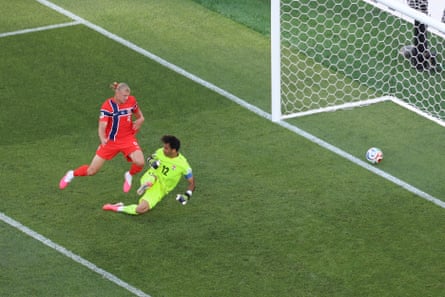
Ben Gannon-Doak, the wee man in question, did what was required of him. The balls did indeed start going long to the Bournemouth winger, and, when they did, he took the fight to the opponent. In the 17th minute he hit the byline to square the ball for a Scott McTominay effort that came back off the post. Twelve minutes later, after great hold up play from Che Adams, he again went deep, then nipped past the full-back Martin Expérience to tee up Adams for a shot that was parried away from close range. That loose ball came to John McGinn, and a deflected effort from Scotland’s No 7 eventually found the back of the net to decide the outcome of the match.

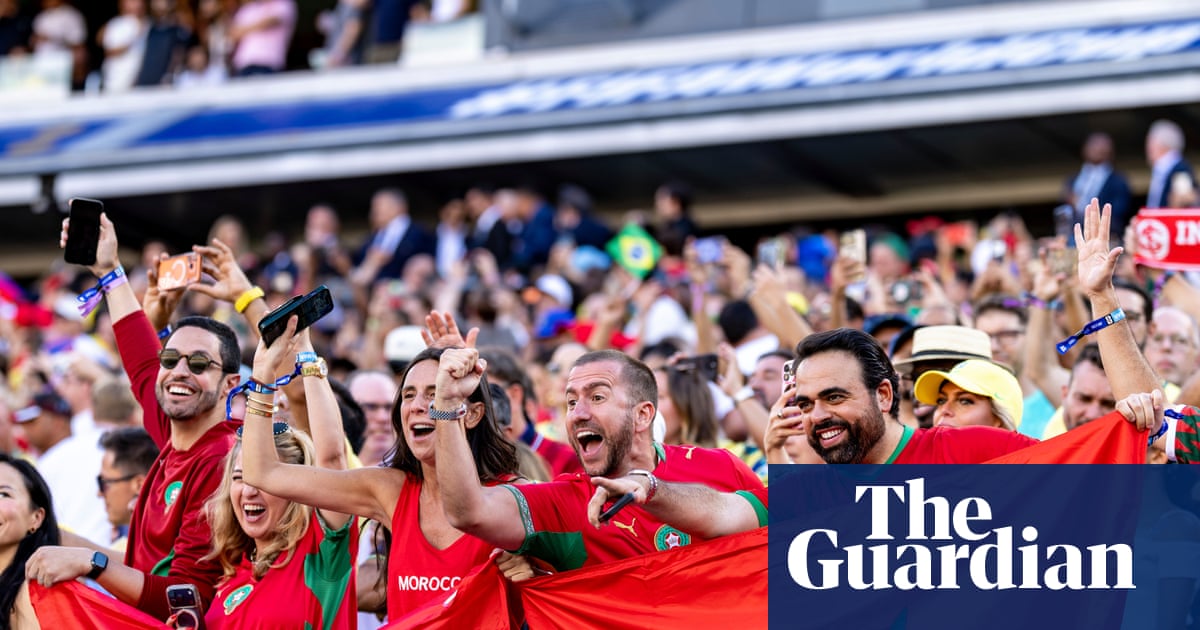
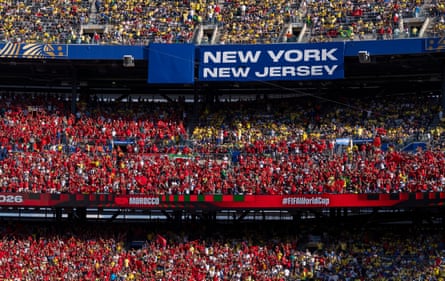
Despite all the Tartan Army battalions that have flooded into Massachusetts over the past few days, despite the sea of salmon pink that filled out the Boston Stadium, giving the impression of a Scotland home game, this match was always going to be a tighter, tenser affair than anyone would have wished for. Had one of a number of Haitian half-chances gone another way it could have been a disaster to rival Peru, Costa Rica, Iran or Zaire. Not scoring any more than a solitary goal, meanwhile, could yet deny Scotland the chance to escape Group C. But they got their first World Cup goal since Craig Burley in 1998 and their first victory since Mo Johnston scored against Sweden in 1990. And in Gannon-Doak’s performance, they also had something to cling onto.

Jimmy Johnstone, John Robertson, Archie Gemmill, Pat Nevin: Scotland have a tradition of tricky wingers which petered out at roughly the same time as their hopes of reaching major championships. At their last World Cup in 1998 there were no wingers, just wingbacks: Christian Dailly and Darren Jackson. The only Gemmill in the team was Scot. It might be simplifying things to suggest that Scotland need someone getting chalk on their boots for the whole thing to click, but sometimes simplicity does work.

Gannon-Doak’s efforts were not complicated, particularly in the first half. When he got possession he looked to attack. When the team were hemmed in, he gave them an out ball. This is not an option Steve Clarke has had at his disposal at his past two tournaments. Perhaps it shouldn’t have proven as important as it did against Haiti, but Gannon-Doak’s pace on the counter will surely be needed in the remaining group games against Morocco and Brazil. The 20-year-old is playing with the confidence of youth, and not cowed by the fear of repeating previous failure, another plus. He wants to take a man on and has the ability to back up his ambitions. He is also a relative unknown and someone opposition coaches will not have much research material to lean on. If you’re Scotland, these are all good things.

The reason for the relative enigma is that Gannon-Doak has cumulatively missed over a year of football through injury since making his debut for Liverpool in the 2022-23 season. He has had surgery on his lateral meniscus and twice on his hamstrings, one of which he described as “hanging on by a thread” after he was withdrawn on a stretcher during the ultimately jubilant qualifying victory over Denmark last November. Gannon-Doak has said he found strength through this adversity, thanks in part through a return to the Catholicism of his youth. A bit of mental steel is not a bad attribute to have in a World Cup either.

What the boy from North Ayrshire can offer off the ball is something we will likely learn more about over the next two weeks as Scotland come up against far tougher challenges than the one presented by Haiti. But one final simple quality that perhaps should not be underestimated is that of the excitement Gannon-Doak, or really any winger with the wind beneath their heels, can bring to a team and their supporters. Scotland’s recent failures have been characterised not only by apparent timidity, but also prevalent dullness: safety-first football that never proved to be enough. Scotland degenerated into such play once again in the final, scratchy minutes of this match. But when Gannon-Doak, substituted with 20 minutes to go, was on the pitch there was always a flickering sense that things could change in a moment. It may well be true that it’s the hope that kills you, but surely better to die in hope than fear.

X accused of giving racists ‘impunity’ after refusing to bar N- and P-word posts | X | The Guardian

Keyword – Technology
Trefwoorden – X, Race, Elon Musk, Kemi Badenoch, Internet, Ofcom, Regulators, Social media, UK news
Title – X accused of giving racists ‘impunity’ after refusing to bar N- and P-word posts | X | The Guardian
Author – https://www.theguardian.com/profile/chris-osuh
Link – X accused of giving racists ‘impunity’ after refusing to bar N- and P-word posts | X | The Guardian
Publish date – 2026-06-14T07:00:36.000Z
Category – News
URL – https://www.theguardian.com/technology/2026/jun/14/x-racists-impunity-hate-posts

X has refused to take down dozens of social media posts reported as “hate, abuse or harassment” in which prominent UK politicians, including Kemi Badenoch , have been racially abused.

In May, researchers from the social inclusion thinktank British Future reported 30 posts from this year in which the Conservative party leader was called the N-word. In each case the researchers used the platform’s “hate, abuse or harassment” reporting option. X refused to act in the majority of cases, despite repeated requests.

The Guardian understands X routinely takes action only when posts are reported to it as illegal under the UK’s Online Safety Act. In those cases, it restricts visibility in the UK, leaving the post unrestricted in other jurisdictions.

Avaes Mohammad, a researcher with British Future’s British South Asian Bridgers cohesion project, said: “Many people will intuitively report racist posts as ‘hate, abuse or harassment’ – but it seems X doesn’t consider it as hate. Our research found that it was only when a post is described as illegal, which they can’t dispute, that they will consider taking it down.”

X eventually restricted visibility for just two of the 30 messages in which Badenoch was called the N-word – and only after Sunder Katwala, the director of British Future, emailed the platform saying he should not be expected to fill out an “onerous” form reporting each one as illegal.

Elon Musk has been using X to amplify far-right narratives since he bought the platform in 2022. Keir Starmer earlier this month accused Musk of trying to “whip up division” with his tweets about the murder of the student Henry Nowak in Southampton.

The Online Safety Act, which is being phased in by the communications regulator, Ofcom , places obligations on platforms to remove illegal content, which can include racially or religiously aggravated offending.

On 15 May – the same day Ofcom announced X had made a voluntary commitment to remove illegal content within a 48-hour window – British Future reported 33 uses of the P-word targeting UK public figures.

Reform UK’s Zia Yusuf was told in one tweet, which used the P-word, to “sod off” to Pakistan. Others who were racially abused included the home secretary, Shabana Mahmood; the former SNP leader, Humza Yousaf; the Reform UK London mayoral candidate, Laila Cunningham; the Advance UK founder, Ben Habib, and the founder of Your Party, Zarah Sultana.

Forty-eight hours later, none of the 33 posts reported had been removed.

When British Future emailed X to ask why, the platform advised it to report the posts using the “UK illegal content” option from the “report post” menu, adding: “Reports made through other channels are handled under our general policies and do not count toward the specific expedited review targets under the Online Safety Act.”

X eventually restricted 20 of the tweets within the UK after being contacted by Ofcom, it is understood, but took no action against the rest. Among messages X left untouched was a picture of a noose tweeted to Sultana, saying “fuck off” and using the P-word.

On 26 May, British Future reported another nine posts that used the P-word against British Asian public figures. In six, X failed to act because the posts were reported as “hate, abuse or harassment”. It was only when posts were reported as illegal, in the remaining three cases, that it acted.

None of the account holders behind any of the offensive tweets have been suspended, including one who used the N-word 45 times in a week.

British Future says the platform’s approach means racists can operate with impunity on X.

“The accounts we are reporting are often replete with mentions of Reform and Restore,” Mohammad added. “In May, the N-word racist slur was used about Kemi Badenoch an average of once a day. But on 2 June, after Badenoch responded to Nigel Farage’s speech about Henry Nowak, there were 16 examples in a day – pointing to how much far-right political sentiment is driving the hate on X.”

Ofcom said it condemned racism “in all its forms”, and its job was to ensure sites had “appropriate measures in place to comply with their duties” rather than telling them what to take down.

The regulator said X had committed “to reviewing and assessing UK suspected illegal terrorist and hate content reported through its dedicated UK illegal content reporting tool” within an average of 24 hours, adding: “We’ll be carrying out quarterly reviews of X’s performance.”

X did not respond to requests for comment.