Doctor reported birthkeeper to police the day Melbourne wellness influencer died following freebirth | Health | The Guardian

Keyword – Australia news
Trefwoorden – Health, Victoria, Australia news
Title – Doctor reported birthkeeper to police the day Melbourne wellness influencer died following freebirth | Health | The Guardian
Author – https://www.theguardian.com/profile/melissa-davey
Link – Doctor reported birthkeeper to police the day Melbourne wellness influencer died following freebirth | Health | The Guardian
Publish date – 2026-06-17T06:20:59.000Z
Category – News
URL – https://www.theguardian.com/australia-news/2026/jun/17/clinician-reported-birthkeeper-to-police-the-day-melbourne-wellness-influencer-died-following-freebirth

A senior clinician reported a birthkeeper to police the same day one of her clients died after giving birth at home – something the senior clinician said he had not done before.

The evidence was heard during the third day of the inquest into the death of 30-year-old wellness influencer Stacey Warnecke, who died on 29 September in Frankston hospital in Melbourne. She had paid Emily Lal $6,000 to support her to have a freebirth at home without any clinically trained staff involved.

Lal described her role at the time as a “birthkeeper”. Birthkeepers have no medical training and operate outside the medical system, and do not believe in the involvement of trained clinical staff throughout pregnancy.

Lal on Tuesday told the inquest that her role was not a medical one, nor was it to keep Warnecke safe.

Rather, she was acting primarily as a friend when she was hired and attended Warnecke’s birth at home, Lal said. She also said it was not her role to call an ambulance unless specifically asked to by any mother she was hired by.

Warnecke gave birth to her son shortly after 3am, and to the placenta about 20-25 minutes after that, when she suffered a bleed. At this point she said she needed to lie down, the court heard earlier.

She became short of breath and panicked, and Lal told her she might be suffering from a panic attack, the inquest heard.

She had in fact suffered a massive postpartum haemorrhage, which Frankston hospital’s director of obstetrics and gynaecology, Nisha Khot, told the inquest on Wednesday was treatable and was “very rare” for women to die from when they give birth in hospital, or with a midwife present at a home birth.

After a period of struggling to breathe, Warnecke told Lal “I’m bleeding”, but Lal looked between her legs and told her she wasn’t bleeding any more, the inquest heard.

Khot described how internal bleeding can occur following a haemorrhage and that visible blood is just one of many signs of haemorrhage clinicians are trained to look for.

The executive director of medical services and clinical governance at Bayside Health Peninsula, associate professor Shyaman Menon, described the efforts of clinical staff as they tried to save Warnecke’s life.

By the time Warnecke arrived at hospital approximately two hours after giving birth, her heart was also struggling and she had suffered from numerous cardiac arrests. Lal had asked Warnecke three times if she wanted an ambulance, but only called the third time after Warnecke said “yes”.

A paramedic who gave a statement to the coroner described how Warnecke was agitated, breathing rapidly and in an altered state of consciousness by the time she arrived.

Surgeons needed to perform both a hysterectomy to stop the bleeding and a procedure to drain the fluid from her heart, Menon said. Lal told the inquest she only attended the hospital because Warnecke’s husband, Nathan, had accidentally taken her phone instead of his own.

Menon said clinical staff were concerned by what Lal told them because, despite presenting herself as a friend, she was using language that indicated she may have been responsible for treatment or care.

“The feeling was the language was used was probably more than what a general public member would actually understand … and which raised a concern whether there was someone who actually had an element of knowledge provided during that care,” he said.

Concerns were raised by staff at a review meeting held in the hours after Warnecke’s death. That prompted him to go on the same day to Frankston police station to make a statement, which he told the coroner he had not done before.

“The basis of why I went to the police on behalf of Bayside Health Peninsula [was] to make a report from a public health and safety perspective.”

Lal was approached by police to give a statement, but told the inquest on Tuesday she did not do so.

“I wasn’t legally required to,” she said.

The inquest continues.

Trump tells G7 summit he hopes Europe ‘finds its way’ on immigration and energy – as it happened | World news | The Guardian

Keyword – World news
Trefwoorden – World news, Ukraine, Europe, G7, Donald Trump, Volodymyr Zelenskyy
Title – Trump tells G7 summit he hopes Europe ‘finds its way’ on immigration and energy – as it happened | World news | The Guardian
Author – https://www.theguardian.com/profile/jakub-krupa,https://www.theguardian.com/profile/angela-giuffrida,https://www.theguardian.com/profile/alexandratopping
Link – Trump tells G7 summit he hopes Europe ‘finds its way’ on immigration and energy – as it happened | World news | The Guardian
Publish date – 2026-06-17T17:20:23.000Z
Category – News
URL – https://www.theguardian.com/world/live/2026/jun/17/g7-leaders-evian-donald-trump-ukraine-russia-war-iran-latest-news-updates

Trump hopes Europe will ‘find its way’ on energy, immigration

Trump says he is looking forward to a “very special” dinner with Macron as he wants to see the Palace of Versailles, because it “has a lot of gold.”

He then says he hopes Europe will “find its way,” as it is “having a lot of hard times” with energy and immigration.

And then he moves to Q&A.

Closing summary

… and on that note, it’s a wrap for today!

US president Donald Trump said he hoped “something will happen” in peace talks with Russia and Ukraine, as he praised “productive” talks with Volodymyr Zelenskyy in France and Vladimir Putin over the phone ( 18:34 ).

His comments come at the end of a two-day G7 summit in France, with Emmanuel Macron ( 17:03 , 17:07 ), Germany’s Friedrich Merz ( 13:32 ) and Italy’s Giorgia Meloni ( 16:34 , 16:36 ) praising progress on getting the US closer to Europe’s position on supporting Ukraine.

Nato’s secretary general Mark Rutte earlier said that the idea of potential talks with Russia was “clearly debated among allies” ( 11:44 ).

If you have any tips, comments or suggestions, email me at jakub.krupa@theguardian.com.

I am also on Bluesky at @jakubkrupa.bsky.social and on X at @jakubkrupa .

Trump will now fly to Paris to attend a formal dinner at the Palace of Versailles, and l et’s just say that not everyone in France is excited about this, as our Paris correspondent Angelique Chrisafis reports.

Trump ends the presser on a slightly random comment saying that if JD Vance goes to sign the deal with Iran, “if it works out, I’m going to take the credit; if it doesn’t work out, I’m blaming JD.”

“You better be careful, JD, he’s going to turn his plane around and get the hell out of here. Yeah, I like that idea. I think it’s a good idea.”

And that’s us done.

Trump is now talking about Brazil, saying it “has become a little rough” and “a little dangerous politically.”

That’s his response to this story I think :

I think we’re essentially going in circles now.

Trump got a question on energy prices going down, and so he goes back to his Iran deal and praises himself for it.

Curiously, Trump also thanks Russia’s Vladimir Putin and China’s Xi Jinping for staying neutral on Iran, saying otherwise “they could have made it much more difficult for us.”

Trump hopes Europe will ‘find its way’ on energy, immigration

Trump says he is looking forward to a “very special” dinner with Macron as he wants to see the Palace of Versailles, because it “has a lot of gold.”

He then says he hopes Europe will “find its way,” as it is “having a lot of hard times” with energy and immigration.

And then he moves to Q&A.

Trump also praises his bilateral talks, including specifically with France’s Macron, which he says was “a very good meeting.”

He doesn’t mention any other European leader here – despite repeated praise for leaders of Qatar, Egypt, India, and UAE.

Earlier, he also spoke about AI, saying “it’s going to be the biggest thing ever,” before adding “we have to be very careful with it: it’s both great and could be bad, we have to be careful with it.”

Trump also says there was “a great deal of unity” on tackling irregular migration and drug trafficking at the G7 summit, with “a beautiful statement” on the latter.

‘I think they both want to do something,’ Trump says after talking to Zelenskyy, Putin

Trump is back to script, and he moves on to Ukraine .

He says he had “a productive conversation” with Ukraine’s Zelenskyy and then Russia’s Putin on the phone.

He suggests “something is going to happen,” as he says Russia – the “offensive” party – is losing more soldiers than Ukraine.

He says he had “a very good conversation” with Putin and “a very, very good conversation with Zelenskyy.

“ I think they both want to do something. They just don’t know how to do it.”

He then swiftly moves on to international aid and the Ebola outbreak in Africa.

Trump also once again mentions Lebanon.

“The Lebanon peace is something we’ll have to work on a little bit. It’s a very small piece of the puzzle, actually, but it still makes a lot of noise.”

He says he hopes the peace agreement with Iran will be the beginning of a larger peace settlement across the Middle East.

Trump says he will work with the Gulf nations on “non-nuclear issues” but claims that maritime traffic through the strait of Hormuz “has already incrased very substantially” as a result of his political deal.

He then goes back to praising himself.

“What I’m doing and what I did should have been done years ago, would have been much easier, much less firepower, but it wasn’t.”

He says no US president in history has ever been tougher on Iran , before mentioning Suleimaini for the umpteenth time, and repeating his warning that if Iran doesn’t honour the deal, “we will probably go back to bombing them.”

Trump is still on Iran.

He says the deal will be signed shortly; maybe tomorrow, maybe Friday.

He is still praising himself for Iran and Suleimani, “one of the biggest event to happen in the Middle East, maybe ever.”

I will pick up any other lines when (if?) he eventually moves on.

But it’s worth noting a slight sense of frustration with Israel’s Benjamin Netanyahu as he says he “gets a little excited sometimes,” and they “have a little dispute over Lebanon.”

“Bibi, you don’t have to knock down a building every time somebody walks into it that’s from Hezbollah,” he says.

Trump swiftly pivots to Iran, saying his deal “achieves everything we set out to accomplish and … much more.”

“If we didn’t do this deal, we could have dropped more bombs for another three weeks, two weeks, four weeks, two years, you years, you would never have the Hormuz strait open, you would never have success,” he says.

He says he “didn’t want to see economic catastrophe. If you kept this going, that could have happened.”

He also pats himself on the back for killing Iranian leader Qassem Suleimani , saying it was pre-requisite for this deal.

He says the G7 summit was “a chance to discuss the details of this historic agreement,” and says he kept getting praise for it from all leaders he met.

Trump briefing press after G7 summit

Oh, Trump is here and speaking now.

He begins with thanks to France’s Macron for a very successful G7 summit.

You can watch along live here:

Ghana to advance reparatory justice at first major gathering since landmark UN resolution | Reparations and reparative justice | The Guardian

Keyword – News
Trefwoorden – Reparations and reparative justice, Africa, Americas, Race, World news
Title – Ghana to advance reparatory justice at first major gathering since landmark UN resolution | Reparations and reparative justice | The Guardian
Author – https://www.theguardian.com/profile/carlos-mureithi
Link – Ghana to advance reparatory justice at first major gathering since landmark UN resolution | Reparations and reparative justice | The Guardian
Publish date – 2026-06-17T05:00:22.000Z
Category – SpecialReportAlt
URL – https://www.theguardian.com/news/2026/jun/17/ghana-to-advance-reparatory-justice-at-first-major-gathering-since-landmark-un-resolution

Ghana is hosting a conference to advance the continent’s push for reparatory justice after the adoption of the landmark United Nations (UN) resolution declaring the trafficking of enslaved Africans as the gravest crime against humanity.

Heads of state and government, ministers, civil society representatives, historians, researchers and legal experts representing more than 80 countries are converging in the capital, Accra, for the three-day event, billed Next Steps , which starts on Wednesday. It is the first major gathering on the issue since the resolution was adopted .

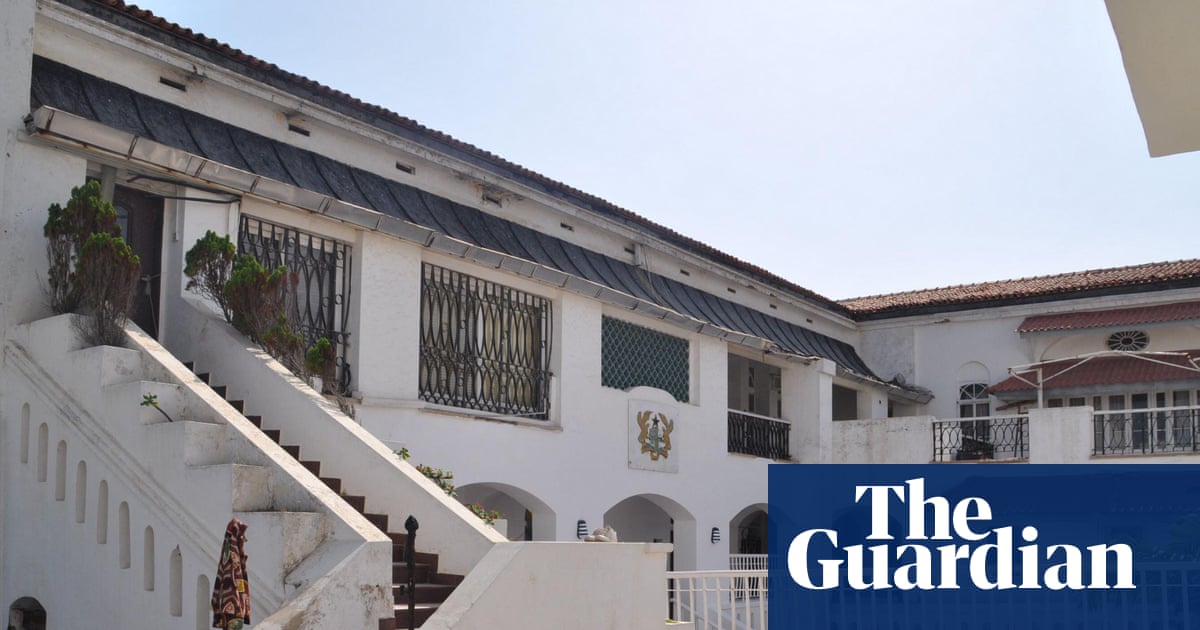
The conference will feature an event on 19 June at Osu Castle – a 17th-century fortress in the capital built by the Danish that served as a hub for the transatlantic slave trade – to honour Juneteenth, which marks the end of slavery in the US.

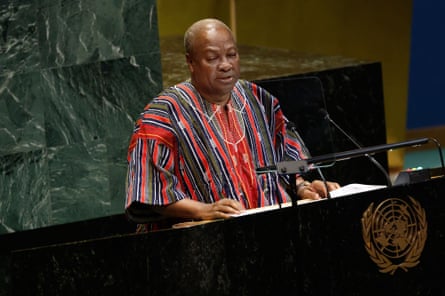
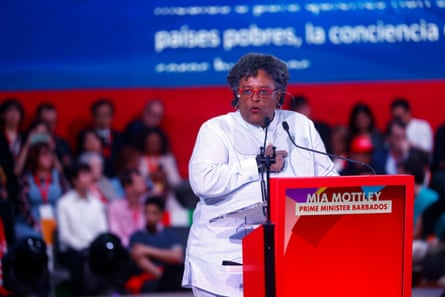
Expected speakers include prime minister Mia Mottley of Barbados and presidents John Mahama, Joseph Boakai Sr, Netumbo Nandi-Ndaitwah and Bassirou Diomaye Faye of Ghana, Liberia, Namibia and Senegal, respectively. The French president, Emmanuel Macron, will give a video address.

Participants are engaging in dialogue around five objectives – including formulating a framework to advance the resolution’s objectives globally and establishing global panels on reparatory justice and restitution – to “transform political momentum into a common concrete institutional commitment for reparatory justice”, organisers say .

The conference comes nearly three months after the UN general assembly voted to adopt a proposal by Ghana on behalf of AU member states to recognise the trafficking of enslaved Africans and the racialised chattel enslavement of people from the continent as the gravest crime against humanity.

A total of 123 states voted in favour of the proposal while three – the US, Israel and Argentina – voted against it and 52, including the UK and all EU member states, abstained.

The transatlantic slave trade lasted about 400 years – from the early 16th century to the late 19th century.

Many previous initiatives by African countries to redress decades of injustices, such as the forced enslavement of their people, had been largely fragmented. The resolution marked a watershed moment for the continent’s campaign for reparative justice, after efforts including the Abuja Proclamation of 1993 that demanded reparations for colonialism and the transatlantic slave trade and helped lay the groundwork for the campaign.

Ghana says in its concept note for the conference: “This [resolution] represents a fundamental departure from the international community’s response to the transatlantic slave trade, replacing commemorative gestures with the pursuit of historical truth and dialogue, aimed at reconciliation and justice.”

The decision recognises that the legacies of enslavement continue today and calls for UN member states to have “inclusive, good-faith dialogue” on reparatory justice and “prompt and unhindered” restitution of cultural and other properties that are of value to their countries of origin.

The Accra conference seeks to expand on the UN success by deliberating on mechanisms to turn the resolution’s potential into actionable commitments.

The decision has had some knock-on effects. Last month, Macron called for France to address its role in the enslavement of Africans, notably using the term “reparations”, which previous French heads of state have avoided. Also last month, Pope Leo XIV made a historic apology for the Vatican’s role in legitimising slavery and for its delay in condemning the practice.

Kyeretwie Osei, the head of programmes at the Economic, Social and Cultural Council, the AU’s civil society policy organ, said the global discourse on reparatory justice was gathering momentum and at its most promising, adding that the conference offered an opportunity “to leverage this particular moment”.

“There is this slow but really substantive movement towards some sort of global reckoning on this issue,” he said. “This conference is really going to allow Africa to ensure that it has the structures that would be necessary [and] the political will that we’ve seen to be properly leveraged and channelled to ensure that we are able to best give practical meaning to this particular point in time.”

The conference has representatives from outside Africa, the Community of Latin American and Caribbean States, the Caricom Reparations Commission, the Congressional Black Caucus and the National Association for the Advancement of Coloured People.

Liliane Umubyeyi , the co-founder and executive director of African Futures Lab, a nonprofit that works to raise awareness of racial injustices, said the event presented an opportunity for the reparative justice movement to become a broader coalition involving other countries outside Africa and the Caribbean, another region with a growing reparations movement .

“This would significantly accelerate the reparations agenda, especially if other international institutions that have previously been hesitant to engage with the issue begin to do so,” she added.

The Guardian’s connections to enslavement: can an institution atone for its history?

On Thursday 2 July, join Maya Wolfe-Robinson, Ebony Riddell Bamber, Prof Verene A Shepherd and Ahmad Ward in this free event for a wide-ranging discussion on the Guardian’s Legacies of Enslavement programme. Book tickets here or at guardian.live

Your Fault: London review – British-set remake of Spanish step-sibling romance lacks passion or fizz | Film | The Guardian

Keyword – Film
Trefwoorden – Film, Romance films, Film adaptations, Books, Culture, Europe, World news
Title – Your Fault: London review – British-set remake of Spanish step-sibling romance lacks passion or fizz | Film | The Guardian
Author – https://www.theguardian.com/profile/cathclarke
Link – Your Fault: London review – British-set remake of Spanish step-sibling romance lacks passion or fizz | Film | The Guardian
Publish date – 2026-06-17T10:00:28.000Z
Category – Culture
URL – https://www.theguardian.com/film/2026/jun/17/your-fault-london-review-british-set-remake-of-spanish-step-sibling-romance-lacks-passion-or-fizz

H ere is Amazon Prime’s sequel to its hit My Fault: London. If you’re new to the franchise back-story, it started with a bestselling trilogy of romance novels by Spanish author Mercedes Ron (who self-published the first one). It’s a tale of the forbidden love between step-siblings Noah and her smouldering bad boy step-brother Nick. The books have been adapted into a trilogy of Spanish-language films , the second of which is remade here with absolutely no sense of fun or humour. A couple of its good-looking actors give performances with frozen, startled expressions, like they’ve been kidnapped from the set of an advert for luxury five-star holidays.

It picks up from the previous movie, with Noah (Asha Banks) and Nick (Matthew Broome) now in a full-blown relationship. Nick insists on keeping it a secret from their parents, who were recently married; he’s worried what his overbearing billionaire dad (Ray Fearon) will say if he finds out. Noah reluctantly agrees, and leaves home to study at Oxford, where she meets nice, sensible second-year student Michael (Joel Nankervis). “We’re just friends,” Noah says. Nick has turned his back on illegal drag-racing and is working for his dad, alongside posh blond tech start-up founder Sophia (Louisa Binder). “Just colleagues,” insists Nick.

We’re here of course for the sex and money, but Your Fault: London fails to deliver on both fronts. The champagne lifestyle of its fabulously wealthy characters is scraped together on a Lidl’s cava budget. So, when billionaire’s son Nick parties in his hotel room after closing a multi-million-pound deal, it looks like he’s staying at a Best Western. The sex is a let-down too. Nick and Noah’s passion is supposed to be for the ages; they can’t keep their hands off each other. But the sex scenes are softcore-lite, avoiding the relevant body parts, as if written and choreographed by people who don’t know which bit goes where.

Your Fault: London is on Prime Video from 17 June.

Campaigner threatened with prosecution by Environment Agency after waterway cleanup | Rivers | The Guardian

Keyword – Environment
Trefwoorden – Rivers, Environment Agency, Thames Water, Pollution, Essex, London, England, UK news, Environment
Title – Campaigner threatened with prosecution by Environment Agency after waterway cleanup | Rivers | The Guardian
Author – https://www.theguardian.com/profile/sandralaville
Link – Campaigner threatened with prosecution by Environment Agency after waterway cleanup | Rivers | The Guardian
Publish date – 2026-06-17T08:00:26.000Z
Category – News
URL – https://www.theguardian.com/environment/2026/jun/17/campaigner-threatened-prosecution-environment-agency-river-roding-cleanup

A river campaigner who organised a cleanup of his local waterway is being threatened with prosecution by the Environment Agency for acting illegally.

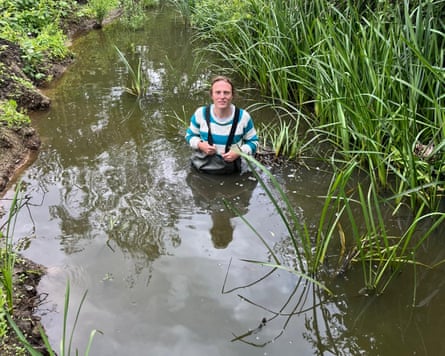
Paul Powlesland, a lawyer and environmental campaigner, organised a team of volunteers to tackle the removal of litter, weed and silt from a section of the River Roding, after repeatedly asking the agency to act.

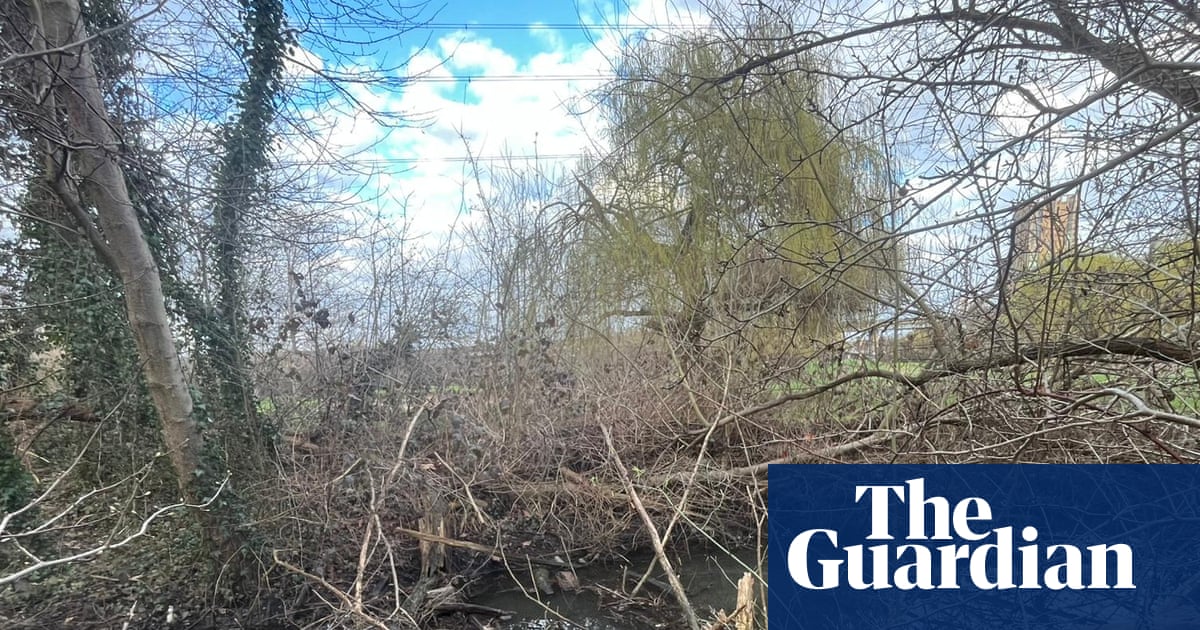
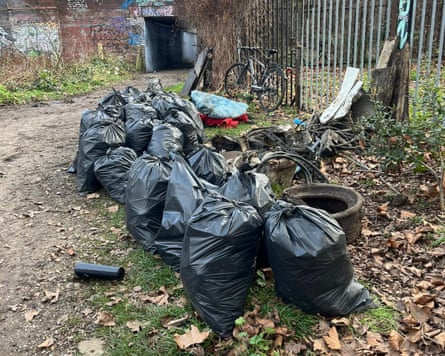
The team of volunteers from the River Roding Trust removed 200 bags of rubbish, branches and silt over 10 days from Alders Brook, a tributary of the river that runs through rural Essex and Barking, earlier this year. But the EA has sent Powlesland a letter saying he is being investigated for illegally intervening without a permit.

“We consider that unpermitted works have taken place … in contravention of the Environmental Permitting (England and Wales) Regulations 2016.” read the letter, seen by the Guardian. It added: “The site is currently under investigation for permitting and waste offences.” .

The EA alleges dredging has been carried out and waste has been left on site within the flood plain, constituting a flood risk activity under the regulations that would have required an environmental permit. Carrying out the work without one is an offence, it states.

The agency said it was carrying out additional investigations to see if further relevant information came to light – including whether Powlesland and volunteers had committed other offences and the environmental impact of the offence.

Powlesland, who lives on a boat on the Roding, said he asked the EA to clean up the river several times over many years, but it had not acted.

“After decades of ignoring rampant environmental crime on the Roding, the Environment Agency has finally decided to act,” he said.

“But it’s not action against Thames Water for dumping billions of litres of sewage in the Roding, or the waste criminals who have dumped thousands of tonnes of rubbish on its banks, but against the River Roding Trust for … restoring a river without a permit.”

Organised criminals have been dumping waste illegally along the Roding, where it is falling into a tributary of the river. The EA has been investigating the dumping near Stapleford Tawney, south-east of Epping.

The nature writer Robert Macfarlane, who has visited the Roding, said on Instagram: “If the Environment Agency do prosecute I guarantee they will meet a tidal wave of objection, ridicule and more.”

Since the cleanup in February, Powlesland said: “The section of the river which was cleared is really coming back beautifully, wildlife is returning, yet we are being threatened with prosecution.

“This seems to get to the nub of the problem with the EA. They do not prosecute things that they should prosecute and all they are doing is going after easy targets.”

Powlesland said he would be happy to liaise with the agency and let it know what the charity was planning so the EA could point to any obvious issues such as water mains or rare habitats along the river. “We have asked them repeatedly to do this clearance work. This 10 days was part of our volunteer work over the last five years cleaning up the river, which is the EA’s job,” he said.

The River Roding is subject to significant raw sewage discharges, which the local MP Jas Athwal raised in the Commons this month.

According to data obtained by the Friends of the Roding, the Cran Brook sewage outflow discharges more than 750,000 litres of raw sewage per year into the Roding, information that has been passed to the agency.

In a statement the EA said: “We deeply care about protecting the River Roding and will work with any partners who want to help improve the local environment.

“However, governance and expert advice is necessary to make sure that work does not cause unintended harm – to flood risk, drainage or the wider environment.

“More broadly, we continue to respond to pollution incidents in the River Roding, including working with our partners to rectify pipe misconnections.”

A Thames Water spokesperson said: “Similarly to the outfalls at our sewage treatment works, Combined Sewer Outfalls (CSOs) on the River Roding operate within limits set by the Environment Agency and are a legally permitted process of the wastewater system.

“These discharges are heavily diluted by rainwater, and the system was originally designed this way to prevent sewage from backing up into people’s homes during periods of intense rainfall.

“We take our responsibility to monitor and maintain our wastewater network seriously and understand the concerns raised by Mr Powlesland and the residents of the area.”

‘It’s more exciting than ketchup!’ How chilli crisp became the hottest condiment – and how to make your own | Chinese food and drink | The Guardian

Keyword – Food
Trefwoorden – Chinese food and drink, Malaysian food and drink, Sri Lankan food and drink, Food, Thai food and drink
Title – ‘It’s more exciting than ketchup!’ How chilli crisp became the hottest condiment – and how to make your own | Chinese food and drink | The Guardian
Author – https://www.theguardian.com/profile/ammar-kalia
Link – ‘It’s more exciting than ketchup!’ How chilli crisp became the hottest condiment – and how to make your own | Chinese food and drink | The Guardian
Publish date – 2026-06-15T13:00:25.000Z
Category – Lifestyle
URL – https://www.theguardian.com/food/2026/jun/15/chilli-crisp-hottest-condiment-how-to-make

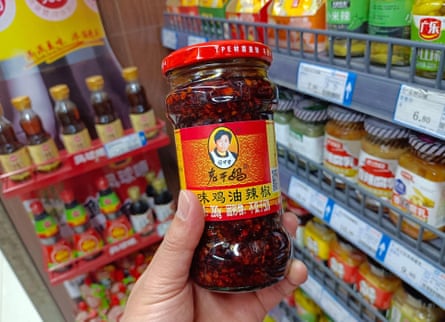
W alk down the specialist aisle in most British supermarkets and you will find a red jar with the kindly face of a middle-aged Chinese woman staring back at you. Branded Lao Gan Ma, meaning “old godmother”, these jars contain chilli crisp – a spicy, crunchy and moreish umami condiment that has made made hundreds of millions for Tao Huabi, the woman on the label. Doused over steaming dumplings, fried eggs, noodles and even ice-cream, Lao Gan Ma’s chilli crisp has become a social media sensation in recent years and has spawned a thriving cottage industry of independent chilli crisp producers in the UK.

“It’s such a convenient shortcut to flavour when you use it as a condiment,” says Fuchsia Dunlop, an expert in Chinese cuisine. “Every Asian cuisine has a form of chilli oil, but China and Lao Gan Ma invented chilli crisp and now the western world is more interested in authentic flavours, thanks partly to social media.” People, she says, want to have their own taste of that authenticity. “It’s far more exciting than a bottle of ketchup!”

While chilli oil involves simply infusing a neutral oil with pepper flakes, a crisp is far more inventive and customisable. Typically made by pouring hot oil over chilli flakes, spice mixes and fresh ingredients such as spring onions, garlic and peanuts, the result can range from a jammy, piquant sludge to a sizzling crunch. It’s a multisensory flavour bomb, one that dozens of independent producers across the UK are putting their own twist on to meet growing demand.

Tom Palmer, the founder of the Sichuan-inspired brand Yep Kitchen , launched his chilli crisp in 2023 and has sold more than 120,000 jars since. “The demand for this category has grown so quickly that manufacturing can’t actually keep up,” he says. “We’ve gone from making batches in my mum’s kitchen to now building our own factory in north London, but we’ve had to import machines from China, since there are none available in Europe that can correctly jar the oil along with the right amount of that crunchy sediment.”

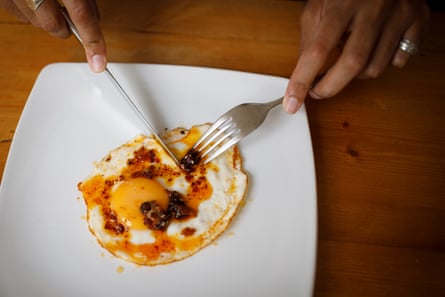
Inspired by a decade spent living in China and the chilli oils he would dot over every meal, Palmer’s version isn’t just spicy, but also coats the palate with the funky hum of a fermented soya bean paste and the numbing floral notes of Sichuan pepper flakes. He likes to swirl it through peanut butter on toast or spoon it over fried eggs.

He’s not alone in trying to find a novel approach. At the small plates restaurant Ardfern in Edinburgh, the head chef, Roberta Hall McCarron, uses shards of chicken skin in her chilli crisp to add a salty crunch to prawn toast, while the London-based Thai restaurant Khao Bird uses a peanut and Thai soya bean version over a vegan tofu dish. The author of the Chilli Crisp cookbook , James Park, has crafted a version to use in desserts.

“Since chilli crisps are balanced, rather than having the one-dimensional vinegar sharpness of hot sauces, they tend to go very well with everything, from curries to dairy products such as yoghurt or cream cheese,” Park says. “I developed a chilli crisp that could be used explicitly with sweet dairy desserts. It involves lots of roasted nuts and fewer savoury elements, and I’ve already found it adds a mouth-watering element to tahini brownies, caramels and lemon pound cakes.”

Park grew up in Alabama and has Korean parents. He struggled to connect with his heritage until he moved to New York for college and discovered Lao Gan Ma. “It became a way to find common ground with other Asian students, since everyone used it,” he says. “Although it used to be only Lao Gan Ma, since Covid hit, I’ve seen so many new products and producers pop up. Each brand expresses a new diaspora identity.”

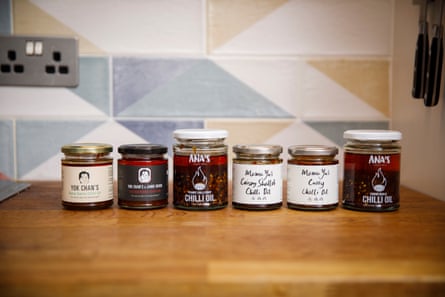
In Britain, chilli crisp products range from Sri Lankan blends to Filipino-Chinese chilli crunch, Taiwanese recipes and Malay versions, often created by cooks from several generations. Xiengni Zhou and her mother, Jolene Yu, run Mama Yu , a typical example of this diaspora heritage. Growing up, Zhou, who is Malaysian-Chinese, was surrounded by her mother’s home-cooked chilli oil at their family’s Sheffield Chinese takeaway, Wok Inn. In 2021, she encouraged her mother to start selling batches of 30 to 50 jars to their local network of customers; in the five years since, they have sold more than 75,000 units. They have both quit their jobs to keep up with the demand: their Instagram “drops” of new batches sell out in minutes.

“In Malaysian cooking, we use a lot of crispy shallots, whether it’s in soups, on noodles or over eggs, and we wanted to pay homage to that with our chilli crisp,” Zhou says. “It lends a natural sweetness to the sauce and it’s become one of our most popular items. The business has been a lovely way to stay close to my mum and also to pay tribute to our heritage.”

A mother-son duo, Michael Perera and Yok Chan have created a curry-scented, jammy-textured condiment that references Perera’s father’s Sri Lankan heritage as much as Chan’s Chinese background. Ana Morales says her shrimp-garlic chilli crisp honours her Filipino background by incorporating bagoong, a fermented shrimp paste that is common across the archipelago. “My mission is to put Filipino food on the map, as I don’t think it’s very well known in the UK,” she says. “The shrimp paste makes our product salty, garlicky and perfect for pizza, soups or basically any dish. It elevates everything.”

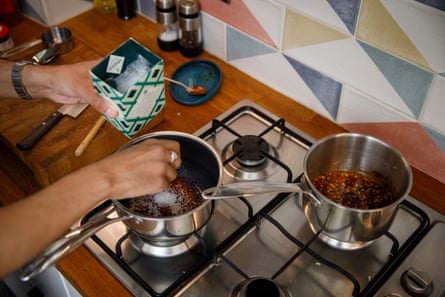
For those wishing to make and personalise their own version at home, the process is surprisingly simple. I follow Park’s recommendation to infuse my oil with flavour before heating it and pouring it over a spice mix. Finely sliced spring onion, garlic and a dollop of Korean gochujang are stirred into a warming pan of vegetable oil and cooked on a low-to-medium heat for about 20 minutes.

Setting the oil mix aside to cool, I add a spice blend of several chilli flakes – Sichuan, Aleppo and gochugaru – as well as MSG, chicken powder, soy sauce, salt, sugar and black vinegar into a heatproof bowl. I mix the cooled oil into the spice blend and in a separate pan begin heating plain oil until it begins to smoke. I carefully pour the hot oil into the fragrant cold blend and it sizzles to deliver a fragrant aroma.

The process takes about 30 minutes and, aside from the crucial detail of remembering to use a heatproof bowl so the scorching oil doesn’t cause it to shatter, the recipe is foolproof. I’m left with a hot, savoury and umami-rich sauce that I spend the next week spooning liberally on to yoghurt and toast (both excellent) and as a base for frying eggs (delicious, if indulgent). I even gingerly spray it over ice-cream (vile, bordering on criminal). Still, the salty, lip-smacking flavour is addictive, although anyone concerned about their spice tolerance might want to try drops rather than a drizzle.

“The British palate is becoming far more adventurous and tolerant to spice, and these chilli crisps are just the start,” says Dunlop. “You can add it to steamed vegetables, pies or a roast dinner. The combinations are endless.”

Do you have an opinion on the issues raised in this article? If you would like to submit a response of up to 300 words by email to be considered for publication in our letters section, please click here .

‘I don’t want Europe to fail the way Turkey did’: Ece Temelkuran on fascism, death threats and life in exile | Turkey | The Guardian

Keyword – Life and style
Trefwoorden – Turkey, The far right, Europe, Life and style, Recep Tayyip Erdoğan
Title – ‘I don’t want Europe to fail the way Turkey did’: Ece Temelkuran on fascism, death threats and life in exile | Turkey | The Guardian
Author – https://www.theguardian.com/profile/aidaedemariam
Link – ‘I don’t want Europe to fail the way Turkey did’: Ece Temelkuran on fascism, death threats and life in exile | Turkey | The Guardian
Publish date – 2026-06-17T11:00:32.000Z
Category – Lifestyle
URL – https://www.theguardian.com/lifeandstyle/2026/jun/17/ece-temelkuran-turkey-fascism-death-threats-exile
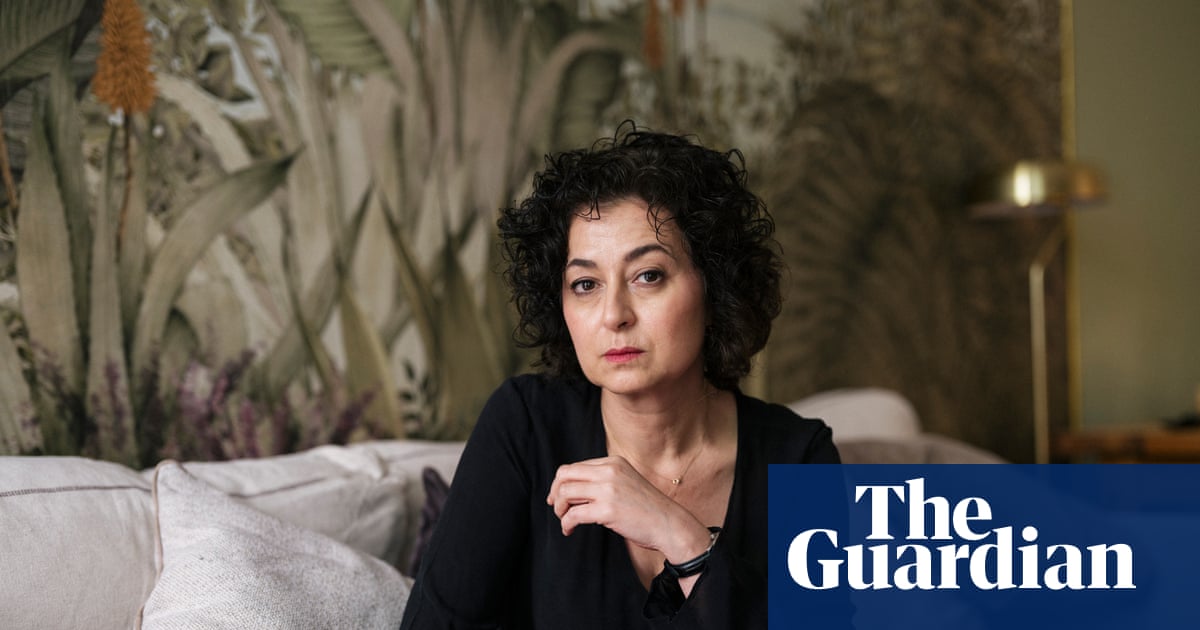
O ne summer’s evening in 2022, the Turkish writer Ece Temelkuran found herself in a doctor’s office in Hamburg, Germany, lying flat on a stretcher with an IV drip in her arm. After six intense years of work and travel, her body was in revolt. “I now know that I need to talk,” she writes in her latest book, Nation of Strangers, which was shortlisted for the 2026 Women’s prize for nonfiction . “I fear that not speaking will make me really sick. And when homeless, you cannot afford to get sick.”

In fact, she had not been silent in the preceding years: she had published two well-received books, How To Lose a Country: The Seven Steps from Democracy to Fascism (2019) and Together: A Manifesto Against a Heartless World (2021). She had spoken her warnings in public, too, on stages all across the west, saying: this is what happened to us in Turkey – make sure it doesn’t happen to you, too. And she is not technically homeless; she lives in Berlin. But by “speaking” and by “home”, Temelkuran means something specific yet vast. Nation of Strangers posits that the idea of home, and the emotions that idea contains, is one of the dominant political forces of our time.

Temelkuran became a journalist at 19, while still in the thick of a law degree; she was a senior reporter for CNN Türk and then a political columnist critical of Recep Tayyip Erdoğan’s government. She has also published several novels and prose poems. For years, she operated successfully in the bruising milieu of male-dominated newsrooms, in a patriarchal, increasingly nationalistic culture. But as Erdoğan tightened his grip, life became increasingly difficult: death threats, rape threats, emails “reporting [my] life minute by minute”, to show her that she was being closely watched.

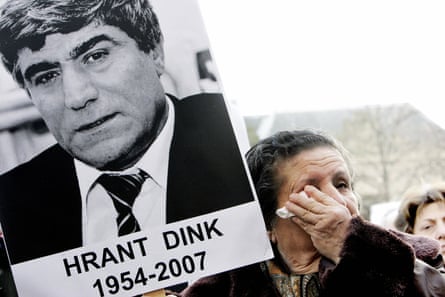
She and her colleagues coped by laughing it off. “And then our friend Hrant Dink was killed [by a Turkish nationalist on 19 January 2007]. One day before that, we were joking – you know, comparing our death threats.”

Her books began to be used as evidence in people’s arrests; soon after, six or seven columns were published calling for her own detention. Then, one night, she woke to find that the iron bars on her windows had been removed and a window left open. Nothing was taken, but, she writes, “I took it as a message saying: ‘We could do it.’” On 6 November 2016, she called her mother from Zagreb, Croatia, to tell her she wasn’t coming back: “A one-minute phone call; half of it was silence. But that’s all it took for me, in the autumn of 2016, to become homeless.” She was 43.
“I despise telling this story,” she writes, seven lines into Nation of Strangers. It makes her “cringe – politically, morally, emotionally”. She fears “appearing as yet another whining exile demanding recognition” and hates the objectification and alienation the label represents. She is alive to how often the word is used as a comforter by the (usually western) user: “they” are exiles who should be grateful; ‘“we” are a civilised haven. The challenge, she writes, is to work out “how to speak like a homeless person yet not sound like a victim or a survivor”.

Her response was to urge caution about the fragility of such havens, writing three books in which novelist, poet, reporter and political columnist merged with a lifetime of travelling and absorbing culture (from the writings of the philosopher Baruch Spinoza and the Sufi mystic Mansur al-Hallaj to French films, Leonard Cohen and Pikachu) to produce a kind of aphoristic, flaying clarity. And to write them all in English.

It wasn’t just that her target audience was different. English was a way of denying her feelings. “It was really complicated, you know, what I went through,” she says, staring out of the window of the rental property in Barcelona where she is staying with her partner, towards a secondary school where the students are being cheerfully harangued via a megaphone. Her cigarette smoke curls across the screen on our video call. When she chose to move to Zagreb, she knew just one person in the city; she had seen a billboard in the airport that read: “Why Zagreb?”

“It was a question people asked me all the time later on when I started living there, meaning: why would anyone like me go to Zagreb?” she says. “As in, instead of London or Berlin. And this is exactly why I stayed there.

“I wanted to be alone and really understand what had happened to me all these years. Why and how people let go of those whom they are supposed to support. I know many people think of fascism as evil guys coming along and taking over, but, no, it doesn’t happen like that. It happens with a million complacencies – and those complacencies, especially if you experience that in your private life and in your public life, break your heart in an impossible way. And I had to deal with that heartbreak, I think. It took me 10 years to call it a heartbreak, by the way.”

She also had to deal with all the things she had seen before leaving. Recently, the writer Pankaj Mishra told her he had noticed that in public she always begins in 2016. “You never tell the other bits,” as she puts it now: reporting on the aftermath of earthquakes; interviewing a mother who had chosen to run over her daughter with a tractor to forestall an even worse “honour” killing (“of course, she lost her mind”); charting “how people kill each other for stories”, usually nationalist narratives. She makes a sound of complete disgust. “And I said [to Mishra]: ‘I wouldn’t tell the westerners, because they’d be traumatised.’”

She laughs. “It’s a line I borrowed from Ziko [an interviewee in Nation of Strangers]. It is traumatising. And when I tell it, it feels unreal. And I don’t like the look in people’s eyes. I become an object to observe.”
Writing in Turkish would be “too emotional”, she felt. She wanted to “be a brain, only a brain” – and the linguistic distance of English allowed that. She refused to listen to Turkish music or meet Turkish people; she wrote and talked and wrote and talked. And then she ended up at the doctor’s. There is a moment in Nation of Strangers, some time after this visit, where she ventures tentatively into the Turkish area of Berlin and finally has a Turkish coffee. The world does not disintegrate; in fact, it becomes a little more whole. And that is her point. National stories urgently need to be told differently. The personal is political. Specifically, emotion is political, especially in a world where, as Temelkuran argues, more and more of us feel unhomed. This may be because we have literally been forced to leave our homes, or because we are at war, or because the political ground has shifted beneath us and we no longer recognise the country we live in; because AI is reshaping work, or the cost of living has ejected us from a life we recognise; because the climate crisis is changing the weather and the face of the Earth. The left ignores this at its peril, she argues, not least because the right certainly hasn’t.

Temelkuran spent much of the past five months on a book tour. In every audience, she says, she met at least one “American exile”. “These people are calling themselves exiles. They say: ‘I came from the United States because I felt under threat. I felt like this wasn’t my country any more.’ And their voices start trembling, because they are new in the game, and I make jokes and make them laugh, like: ‘Welcome to the club.’” Many Germans feel it, too, she says.

“Those who write and think and talk – we have a new moral responsibility, not only to understand and analyse, but to care about how people feel at this point,” she says. “Loneliness, fear, anxiety, uncertainty: all these emotions have political consequences and those consequences today are utilised, weaponised, organised and mobilised by the far right. What they have done, from the very beginning, is a masterclass in emotion management.”

Not only is democracy failing, Temelkuran argues, but also the left has failed to understand how to deal with the results of that failure. She has been thinking a lot about the arrogance of the west, but especially about “our own arrogance as progressives, as intellectuals, as the cultural elite, if we can call it that. We still think somebody will ask us what to do and what we think. But in this new world order that’s been building, in a very speedy way, we don’t count.

“People get angry when I draw parallels between Turkey and European countries. But I am doing it mainly because I don’t want people to fail in the way that we did, to make the same mistakes. We went through that arrogance – and that arrogance cost us our country.”

She is impatient with those who ask her to define fascism, who suggest that what she is speaking of is authoritarianism. She turns the question back on them: “Why don’t you call it fascism?” She believes there are a few reasons. First, many westerners believe “there cannot be fascism in a free-market economy, which was established as a natural fact after the Berlin Wall came down”. Second, there is the search for comfort: a strict historical definition of fascism means it can be put inside the box marked “second world war” and the lid closed. Third is plain fear: “We cannot be one of those crazy countries.”

But mostly it is about responsibility, she says: “Once you call it fascism, you have to do something about it. If you call it authoritarianism, right-wing populism, you can sit back and treat this political phenomenon as a passing fancy: people have gone mad for a while. They’re going to vote for these leaders, they’re going to get their taste and then it will be over.”

This makes it easier to laugh off, she says: “I think the UK has been stuck at the laughter stage for quite a long time. That laughter is very strong. It is inherent to British culture. And it is not easy to separate it from cynicism … But nothing is hilarious at the moment and people should allow themselves to be very serious.

“I’m afraid when Nigel Farage comes to power, if Nigel Farage comes to power, when Trump shows up in London, when Jared Kushner comes with his new PowerPoint plans about, I don’t know, the NHS, they will still feel like they have to laugh about it just to feel safe.”

I mention that I walked alongside a short section of Tommy Robinson’s “Unite the Kingdom” march last month and thought how many of those marching were probably there because of a sense of loss or imminent loss – of a recognisable home, of a possible future. The fact that this was expressed through St George and crusader flags – and read as aggressively exclusionary and threatening to anyone who didn’t look like the marchers – doesn’t erase that. This isn’t mentioned much in her books, which focus on progressive, left-leaning losses.

“I am not one of those liberals who thinks that: ‘Oh, we should always have a dialogue,’” replies Temelkuran. “We should always know fascism when there is fascism. You don’t have a dialogue. You just fight against it. Period. But on the other hand, I think home stands at the heart of the zeitgeist today for several reasons. I lost my home because of fascism – but then those who are afraid of losing their homes are weaponising [loss of home] to build fascism. Home stands at the centre of all this debate.”

Temelkuran is with Iris Murdoch, who in books such as The Sovereignty of Good argued that paying attention was a moral act, that real, humble and open attention is the essence of care. The tough reporter part of her is embarrassed even to say it, she admits, but attention is the essence of human love: “Paying attention is being there, I think, rather than staring at the situation. Being in the reality, not observing it.”

It means paying attention to all-comers, not just to specific political tribes, or differentiating between people within or outside a particular national story; being open to and accepting the messiness of it and making a concerted effort to see how much we have in common, rather than what splits us apart. “Yes, let’s talk about loss of home, but let’s talk about it from the perspective of human love.”

She says she has been struck in recent months that “when I start speaking along those lines and with that particular tone about human love in a political context, people start getting teary eyes. Literally, I’ve seen so many people cry. And it’s not because I had this profound revelation. They are exhausted. They’re exhausted from being in survival mode: ‘I’m not going to feel anything. I’m not going to allow myself to be vulnerable.’”

Temelkuran’s parents got together after Erol, a young lawyer, had Lale, the militant-left woman who would become his wife, released from jail by sending a general photos of his own daughter taking part in a demonstration. (Lale had been locked up for distributing the last letters of three students hanged by the military in the 1971 coup.) For Temelkuran, politics has never been a parlour game, an airing of ideas after which “everyone goes back to their homes”. It is about morality: “Your political choice is also a moral choice. It is this thing that makes you who you are – very bluntly, whether you’re a good person or a bad person.

“I think our political vocabulary will be less soft from now on. I think we will have to talk about sacrifice very soon,” she adds. “Gaza was an experiment, in that sense. Are you going to sacrifice your career, your social environment? That question has been asked to us. Some of us answered correctly, some of us not. But then that question will get wider and more profound. It will absorb all of us.”

Each summer, Temelkuran’s family meets on a Greek island in the Aegean sea. Her brother and his family come from the US, her parents from Turkey. It is not a place, she writes, that will “usually pop up in your email inbox as a destination in travel ads”. It is a village on Lesbos, the island that hosted Moria, the now closed refugee camp that was the largest in Europe. They chose Lesbos because it was easy for her parents to reach. For a week, they make a point of trying not to discuss dark topics – but it is hard when, in clear weather, they can see the Turkish coast from across the bay.

Nation of Strangers: Rebuilding Home in the 21st Century is out now (Canongate, £11.99). To support the Guardian, order your copy at guardianbookshop.com . Delivery charges may apply


France looked a disjointed mess in their World Cup opener. Then came Mbappé | World Cup 2026 | The Guardian

Keyword – Football
Trefwoorden – World Cup 2026, World Cup, Football, Sport, France, Senegal football team, Kylian Mbappé
Title – France looked a disjointed mess in their World Cup opener. Then came Mbappé | World Cup 2026 | The Guardian
Author – https://www.theguardian.com/profile/leanderschaerlaeckens
Link – France looked a disjointed mess in their World Cup opener. Then came Mbappé | World Cup 2026 | The Guardian
Publish date – 2026-06-17T01:00:17.000Z
Category – Sport
URL – https://www.theguardian.com/football/2026/jun/16/france-senegal-world-cup-kylian-mbappe

After the whistle blew for half-time, Kylian Mbappé ran to the player tunnel at a good clip, followed by Ousmane Dembélé. Behind them, the rest of the French team were in no such hurry, sauntering off the pitch. The forward widely considered the best in the world – or at least the most famous in the Non-Ronaldo-and-Messi Division – and the reigning Ballon d’Or winner had much to discuss.

The scoreless first half Tuesday against a Senegal side who had organized and pressed cohesively and forged much the better chances, including a clipped post, was a disjointed mess for the 2018 World Cup champions and the 2022 runners-up. But having the world’s best corps of forwards means getting to comprehensively beat the ( former ) African champions 3-1 despite spending the first hour looking like your front four had never played together before. And possibly didn’t even know one another’s names.

Because France have Mbappé. And Dembélé. And Michael Olise.

It seemed there was little connective tissue holding the French attack together in the first half. Olise roamed every which way from his right flank, once nearly traveling to the other touch line just to get involved in the play, but couldn’t figure out how to affect the game. Désiré Doué hardly factored on the left. And then there was the slapstick series of misunderstandings between Dembélé, playing in the pocket, and Mbappé up front.

The latter was nearly sprung in the fourth minute, served by Adrien Rabiot – French manager Didier Deschamps’ longtime and much-maligned pet playmaker. Mbappé received the ball with his right ass cheek, which evidently lacked the suppleness of his feet. He exchanged several hopeful balls with Dembélé, but their partnership never quite seemed to produce any real peril for the Senegalese defense, which enjoyed a pleasant afternoon of casual work on a sunny day that was neither hot nor humid.

Olise, sticking to the right for once, eviscerated El Hadji Malick Diouf late in the first half and set off into the vacant corridor. He and Mbappé seemed to lock eyes but never entirely worked out who was going where. Nothing was working.

Mbappé and Dembélé, the main protagonists up the middle, were having a very miserable time, gesticulating at one another, willing the other to just read their minds already. The French looked every bit like a team with an innately defensive manager who had set up his attackers in positions or roles they don’t play for their clubs. They were a collective in search of ideas and solutions, aware that they were far too good to look this bad.

And yet. The Senegalese pressed and cut right through the French lines to create several good chances. Nicolas Jackson’s shot off Mike Maignan’s near post followed an Mbappé turnover upfield. When Mbappé lost the ball yet again on a hideous turnover, a French journalist in the press box could no longer contain himself. “Oh la la la la la laaah,” he moaned. Really.

What’s the French word for ennui?

“From time to time, you do have a rough start,” Deschamps said. “It’s quite hard to meet the high expectation at a World Cup .”

Whatever message was delivered at the intermission worked. So too did switching Olise to the middle and Dembélé to the right. Deschamps’ men dialed up their intensity and finally managed to slip the right sprockets into the correct gears around the hour mark.

Olise was denied by Senegal keeper Édouard Mendy. So was Mbappé. And Sadio Mané was spared what seemed a stone-cold penalty kick on Mbappé, when even the assistance of VAR could not convince referee Alireza Faghani to make the right call.

No matter. In the 64th minute, Olise spun into space centrally and rolled a beautiful through ball against the grain for Mbappé, who couldn’t quite get a toe to it. Nonetheless, they had found another at last. Proof of concept.

Two minutes later, the two connected for much the same play. Mbappé made a run across goal and Olise found him with a splendid diagonal pass, paced and placed just so. Mbappé slotted past Mendy. The goal equalled Olivier Giroud’s all-time France scoring record at 57.

After a smashed finish from Jackson was ruled offside, Rabiot scampered into the vacant midfield on a break in the 82nd minute and sent Bradley Barcola, fresh on to the pitch for Dembélé, through on goal and the substitute finished with a delicate chip.

The 18-year-old Ibrahim Mbaye blasted Senegal on to the scoreboard, but Olise and Mbappé had one final treat for the 82,000 congregants in New Jersey. At the death, Olise fought through a Senegalese scrum and fed Mbappé up the middle about 30 yards from goal.

And then Mbappé did the sort of thing that makes a nation pin its hopes on you, that moves children to beg their parents for your jersey, that compels a manager to leave you on the field even when you’ve had an objectively ugly game. He turned and, without any questioning or compunction about the propriety of even trying such a thing, unloosed a shot that swerved past Mendy. Fifty-eight international goals. 3-1.

“He told me that he didn’t want to strike in a friendly match but wanted to score in a real match,” Deschamps joked about Mbappé’s record-setting goals. “He wanted to do it here.”

No Frenchman on the field will remember this game as one of their best. Senegal, meanwhile, were good. Very good at times. And still. Mbappé. And Olise. Also Dembélé. The sorts of players who give their side, and themselves, a vast margin for error.

“Kylian was efficient, ruthlessly efficient,” Deschamps said. “People will still criticize him. He’s an iconic player, I’ve always said that. He can sometimes miss a game but on one action he can really tip the scales.”

There were smiles and hugs now. Mbappé led Les Bleus to the sea of French fans to thank them for their support. The first-half grimaces, all the poor touches, the passes played to the wrong foot, the routes misread, the signals crossed, all of it long forgotten.

The French would be just fine. Because they have, well, all of them.

Olivia Rodrigo: You Seem Pretty Sad for a Girl So in Love review – who’s she singing about? Who cares when the songs are this good | Olivia Rodrigo | The Guardian

Keyword – Music
Trefwoorden – Olivia Rodrigo, Music, Pop and rock, Culture
Title – Olivia Rodrigo: You Seem Pretty Sad for a Girl So in Love review – who’s she singing about? Who cares when the songs are this good | Olivia Rodrigo | The Guardian
Author – https://www.theguardian.com/profile/alexispetridis
Link – Olivia Rodrigo: You Seem Pretty Sad for a Girl So in Love review – who’s she singing about? Who cares when the songs are this good | Olivia Rodrigo | The Guardian
Publish date – 2026-06-12T15:58:26.000Z
Category – Culture
URL – https://www.theguardian.com/music/2026/jun/12/olivia-rodrigo-you-seem-pretty-sad-for-a-girl-so-in-love-album-review

W ith a certain crushing inevitability, the arrival of Olivia Rodrigo’s third album has been accompanied by a lot of frenzied decoding of its lyrics for references to Louis Partridge, the British actor whose relationship with the singer ended late last year. One magazine ran a 1,200 word essay, complete with annotations, panning its songs for nuggets of gossip: the fourth piece they’ve published on the subject in recent months. A British broadsheet plumped for a news story about the fact that Rodrigo had apparently changed the lyrics of a track called Purple, formerly a “very sweet and saccharine” love song, to reflect the end of their relationship. Over in New Delhi, The Hindustan Times was pondering rumours that the couple had actually got back together: “Interest in Partridge has grown after Rodrigo released her new album since fans believe the track Stupid Song has references to the singer’s relationship with him.”

Well, of course it has: for better or for worse, that kind of speculation seems to have become a major part of modern pop, and Oliva Rodrigo in particular has long been a beneficiary of the clickbait publicity it brings. Her breakthrough single Drivers Licence gained traction thanks to the rumour that its lyrics were about her former boyfriend Joshua Bassett’s dalliance with Sabrina Carpenter; Vampire, the lead single from 2023’s Guts invited yet more speculation about whether its subject was another ex or Taylor Swift. Indeed, she actively seems to encourage it: “I never talk about my personal life in interviews or in any public forum, so I guess the music is where people go to deduce things,” she recently told an interviewer, a line that seems to have a distinct hint of “go ahead, fill your boots” about it.

Under the circumstances, it’s perhaps worth noting that the real identity of the subject of You Seem Pretty Sad for a Girl So in Love – a song-cycle that follows a relationship from the first blush of romance to some fabulously bitter post-break-up recriminations – might be the least interesting thing about it. Parsing the songs for clues seems besides the point: it’s a spectacularly accomplished pop album whoever it is about.

It represents a distinct and confident pivot away from the sound of Guts – only My Way, on which an ex-girlfriend incurs Rodrigo’s displeasure by declining to bugger off, leans towards the gleefully bratty pop-punk of its predecessor – replacing it with a take on 80s new wave in which you can variously detect hints of the B-52s, New Order and Devo.

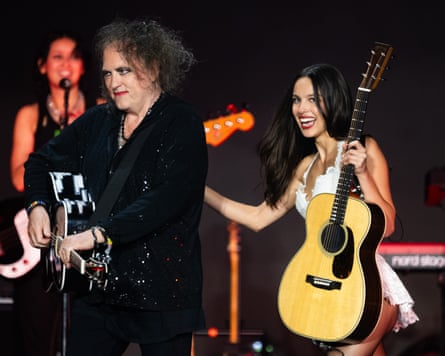
The influence of the Cure figures heavily: a bold move, given the baffled expressions of young fans in the front row when Robert Smith ambled on stage during her Glastonbury headlining set. Smith reappears here, duetting with Rodrigo on What’s Wrong With Me? – his perennially racked voice blends remarkably well with hers – but his presence is felt everywhere, from the lyrical reference to Just Like Heaven in opener Drop Dead, to a song literally called The Cure (Rodrigo has insisted the title isn’t related to the band, but the typeface in which it’s written in the song’s video looks remarkably like their late 80s logo), to Maggots for Brains and U + Me = <3, which – with their flanged basslines and breezy acoustic guitars – are very clearly loving homages to Smith and co in pop mode.

More importantly, from the show tune-like melody of Stupid Song to the affecting emotional shapeshifting of Purple – which starts out lovestruck and gradually grows more anxious – the songs are uniformly well written. The tunes cling, fantastic choruses arrive in profusion, and, moreover, the lyrics are substantially more nuanced and thoughtful than the screw-you recriminations that made Rodrigo famous.

The moment you realise a relationship is doomed but doggedly refuse to act on it is drawn with queasy relatability on Begged; Less depicts said relationship in slow but inexorable decline, packed with wince-inducing recollections: “We tried to recreate our favourite date, but we didn’t laugh much this time.” She’s also exceptionally funny, particularly when letting rip post-breakup. “I met him at a party, I think he was on drugs / He wasn’t smart or funny, I convinced myself he was,” opens Expectations, before throwing in another barbed, eye-rolling detail: “He had a great apartment and a car his parents bought.”

It’s intelligent, witty, complex, occasionally painful listening. It’s also audibly a step on from Rodrigo’s previous work. An artist who first came to attention at 17 and whose debut album was promoted with a concert movie designed to look like a high-school prom was always going to have to grow up in public, something that’s notoriously tricky to pull off: the world is full of pop stars frozen in the collective imagination at the point they arrived. But You Seem Pretty Sad for a Girl So in Love suggests an artist maturing with an impressive ease: nothing about it feels forced or uncomfortable. Olivia Rodrigo, one suspects, is in it for the long haul: she’ll be around long after the gossip is yesterday’s news.

Messi dazzles to equal World Cup scoring record as Argentina breeze past Algeria | World Cup 2026 | The Guardian

Keyword – Football
Trefwoorden – World Cup 2026, Argentina, Lionel Messi, World Cup, Football, Sport, Algeria football team
Title – Messi dazzles to equal World Cup scoring record as Argentina breeze past Algeria | World Cup 2026 | The Guardian
Author – https://www.theguardian.com/profile/pablo-iglesias-maurer
Link – Messi dazzles to equal World Cup scoring record as Argentina breeze past Algeria | World Cup 2026 | The Guardian
Publish date – 2026-06-17T03:08:57.000Z
Category – Sport
URL – https://www.theguardian.com/football/2026/jun/16/argentina-algeria-world-cup-group-j-match-report

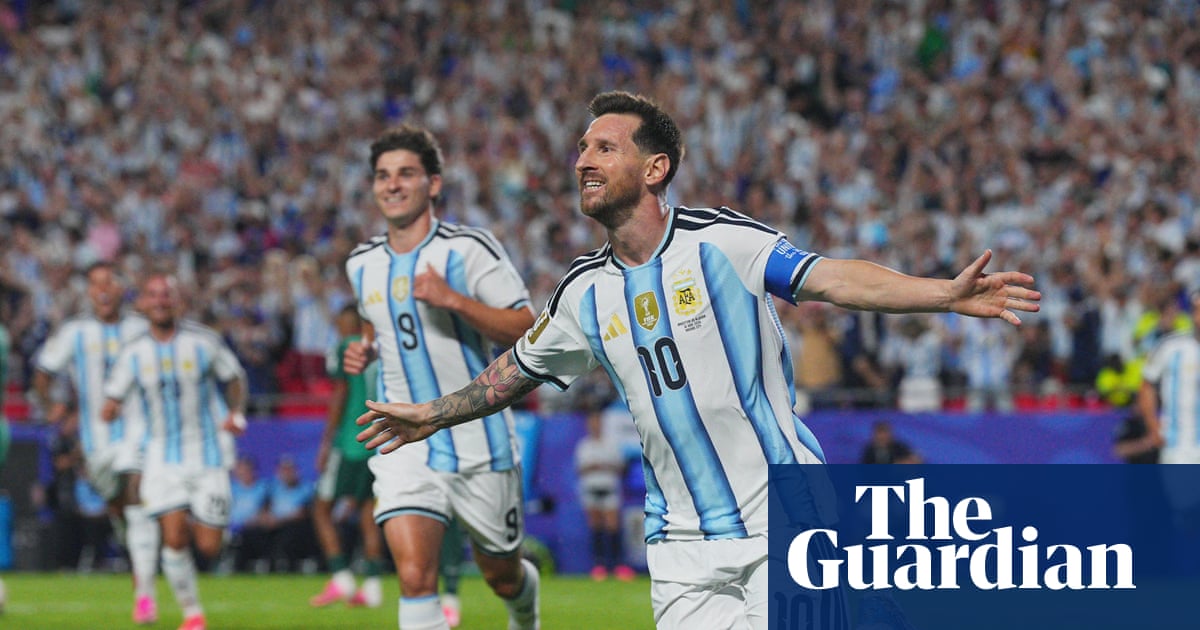
Those in attendance at Argentina’s opening match against Algeria could be forgiven, for a moment, for thinking they were at one of the great Argentinian cathedrals of football – La Bombonera , or maybe the national stadium, El Monumental . Kansas City Stadium, awash in the colors of the Albiceleste, roared with the sound of nearly 70,000 supporters serenading their team, and their hero, in rapturous song. They had plenty to sing about.

Argentina rose to the occasion, and so did Lionel Messi , who on his 200th cap took another step towards solidifying his place as the greatest footballer in history, scoring three splendid goals to draw level with Germany’s Miroslav Klose for the World Cup’s all-time mark on 16 goals. The performance came just hours after France’s Kylian Mbappé had briefly leapfrogged Messi, with 14.

The Inter Miami playmaker also became the first male player to appear at six World Cups, a record that was swiftly equalled by Portugal’s Cristiano Ronaldo at Houston Stadium.

Messi had been recovering from a muscle injury in recent weeks but any doubt surrounding the captain’s status was quickly wiped away when he was named in Lionel Scaloni’s starting XI, and those doubts were ancient history once the match began.

Messi had nearly nabbed Argentina’s opener just five minutes in when a through-ball found him at the near side of the box. His shot was perfectly placed, but assistant referee Tomasz Listkiewicz correctly flagged him offside by the smallest margin. Not two minutes later, the Algeria winger Farès Chaïbi had an equally clinical finish chalked off after finding himself offside by a similarly narrow margin.

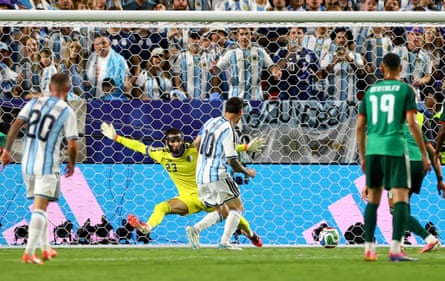
Messi wasted little time putting Argentina ahead, finding the back of the net in the 17th minute. Rodrigo De Paul found Messi 40 yards out, after which the former Barcelona star turned and took three touches towards goal. With no defenders in sight, his driven shot from the edge of the area was too powerful for Luca Zidane, glancing off the goalkeeper’s fingertips and into the goal.

The one negative on an otherwise brilliant performance came in the first half, with Messi fortunate to escape punishment after a rash challenge in which he raked his studs across the back of Aïssa Mandi’s calf. The Argentinian likely deserved a yellow, and potentially even a red. He received neither, and the play was not reviewed on the field.

Messi’s second goal was even more easily taken than his first. Alexis Mac Allister’s speculative effort from 30 yards was pushed away by Zidane directly into the path of Messi, who coolly slotted it home from close range in the 60th minute.

Again, Algeria’s backline was nowhere to be found. Argentina, on the other hand, were excellent defensively throughout the entire match. The 38-year-old completed his hat-trick in the 76th minute with a vintage finish, threading his strike through a trio of defenders and just out of reach of Zidane. He left the match minutes later.

Both fanbases have been well-represented for days in Kansas City and nearby Lawrence, Kansas, where Algeria will be based for the entirety of their tournament.

Thousands of Argentinian supporters packed a local park on Monday night for a banderazo, singing, chanting and dancing into the wee hours. On Tuesday evening, the party moved to the stadium, which was full of noise hours before kickoff.

Algeria’s supporters have been the subject of a remarkable story in Lawrence , where residents have welcomed them with open arms. Though understandably outnumbered by opposing fans, loud, vibrant pockets of green emerged from Argentina’s blue-and-white at times, urging the underdogs on.

The 28th-ranked Algerians will have hoped for a happier return to the World Cup after a 12-year absence, having been revitalized under the head coach Vladimir Petković.

Algeria earned a reputation during qualifying for their high-energy approach, glimpses of which were present, particularly in the closing moments of the first half. Despite some promising exchanges, they were undone by poor finishing and never looked competitive.

Algeria’s encounter with Jordan now has the makings of a must-win; they feel much more evenly matched with Austria.

Scaloni had tempered expectations in the leadup, going as far as saying that a win against the Desert Foxes was far from necessary. Scaloni should know; he was at the helm in 2022 when Argentina narrowly lost in their group stage opener to Saudi Arabia, among the most shocking results in World Cup history.

Expectations aside, Scaloni will surely be pleased with three points, which nudged Argentina towards the last 32. They will meet Austria in Arlington, Texas, on Monday.

Messi, as is his custom, will be expected to make even more history there.