Keyword – Sport
Trefwoorden – Royal Ascot, Ascot, Horse racing, Sport
Title – Royal Ascot 2026: Ombudsman wins Prince of Wales’s Stakes on day two – as it happened | Royal Ascot | The Guardian
Author – https://www.theguardian.com/profile/gregwood,https://www.theguardian.com/profile/tonypaley
Link – Royal Ascot 2026: Ombudsman wins Prince of Wales’s Stakes on day two – as it happened | Royal Ascot | The Guardian
Publish date – 2026-06-17T17:53:07.000Z
Category – Sport
URL – https://www.theguardian.com/sport/live/2026/jun/17/royal-ascot-2026-day-two-horse-racing-updates-live
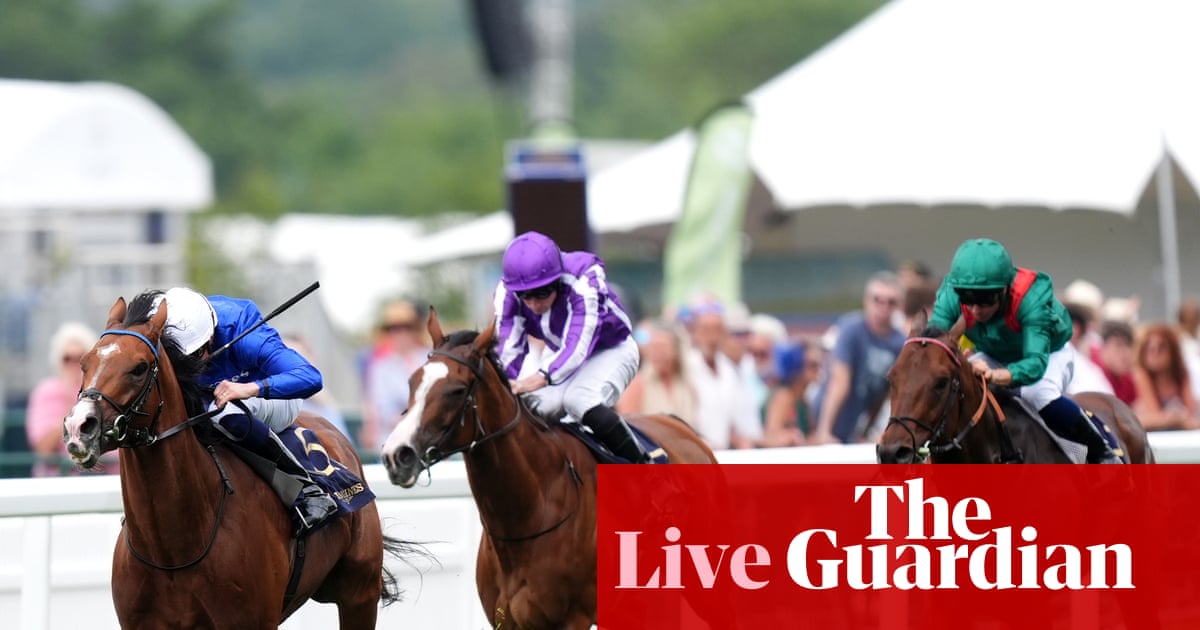
That’s the lot today. Ombudsman was the star on the track, winning a strong Prince of Wales’s Stakes with ease although whether he’ll challenge the incredible sprinter Ka Ying Rising for highest-rated horse in the world is another matter. Meanwhile, off the track Aidan O’Brien came out in defence of his team after two of his riders were banned after the controversial St James’s Palace Stakes on Tuesday when he his jockeys were effectively found guilty of ‘team tactics’. There was plenty of debate on social media and in the racing press and for once most people were unanimous in agreeing that the stewards were right and O’Brien’s Ballydoyle squad were in the wrong. We may not have heard the last of this as his runners are sure to come under close scrutiny in forthcoming races. Meanwhile, we’ll be back tomorrow when it’s Gold Cup day, traditionally the highlight of the week. See you all then.
6.10 WINDSOR CASTLE STAKES result
1 King Of Cloughan (Billy Loughnane) 33-1 2 Moonrise (P J McDonald) 66-1 3 Harlequin Sky (Cieren Fallon) 125-1
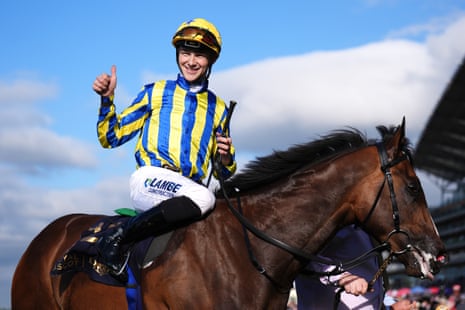
6.10 WINDSOR CASTLE STAKES And they’re off … this will be over with quickly as it’s just five furlongs … Alpe D’Huez has an early lead after bursting out of the stalls … Troublesome Guest leads the pack on the stalls side … Moonrise hit the front but was caught near the post by King Of Cloughan … a 33-1 winner for trainer Joseph O’Brien and Billy Loughnane!
6.10 WINDSOR CASTLE STAKES betting
Controlla – 2/1
Sergei Diaghilev – 4/1
Sale Shark – 6/1
Celeron – 8/1
One Number – 8/1
Dance A Jig – 12/1
Rulers Control – 20/1
Alfred Wallace – 20/1
BAR 20/1
Betting via Oddschecker
6.10 WINDSOR CASTLE STAKES preview
There was a good deal of controversy when the British Horseracing Authority announced some significant changes to the conditions for this race, upping the distance from five to six furlongs and restricting it too to juveniles whose sire won at least once over seven furlongs as a juvenile, or at a mile or further at three. Karl Burke, the leading trainer in the north, suggested that the move – designed to broaden the appeal of middle-distance sires – would simply provide “low-hanging fruit” for racing mega-corps like Coolmore and Godolphin, and change the nature of a race “where the average man in the street has got a chance of buying a relatively cheap horse and having a runner at Royal Ascot.” Year one is not the time to judge, but Burke, at least, does not have a runner in this year’s race, and the closest thing to a “fairytale” runner is probably Celeron, who cost 20k gns as a yearling and runs for Michael O’Callaghan’s Irish stable. Aidan O’Brien fields the well-fancied Sergei Diaghilev, though his draw in stall two is not ideal, and another Irish-trained runner, Robson de Aguiar’s Controlla, makes more appeal from stall 15. She was just behind Victorious, one of the favourites for the opener, on her racecourse debut and will be a big fancy to open her account should that one run well.
Timeform top-rated: Controlla
SELECTION: CONTROLLA
5.35 KENSINGTON PALACE STAKES HANDICAP result
1 Alobayyah (Tom Marquand) 11-4 Fav 2 Miss Nightfall (D Egan) 12-1 3 Seren Star (Harry Davies) 40-1 4 Rhapsody (Cieren Fallon) 12-1
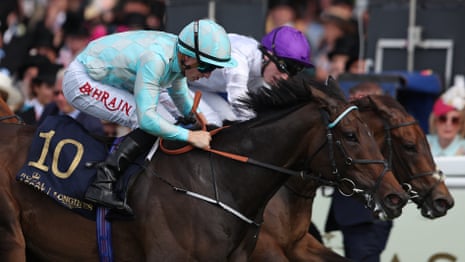
5.35 KENSINGTON PALACE STAKES HANDICAP And they’re off … All Moonshine has the lead on the farside but most runners have come to the nearside and Radiant Beauty leads that pack … Betty Clover is poised … Miss Nightfall kicks for home but Alobayyah gets there late to nab the prize! Trainer William Haggas has had the first, the third and the fourth home!
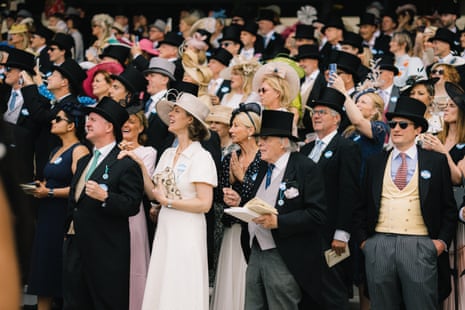
5.35 KENSINGTON PALACE STAKES HANDICAP betting
Alobayyah – 7/2
Radiant Beauty – 5/1
Stateria – 7/1
Gaga Girl – 10/1
Oolong Poobong – 10/1
Miss Nightfall – 12/1
Zgharta – 12/1
Rumba Numba – 14/1
BAR 14/1
Betting via Osddschecker
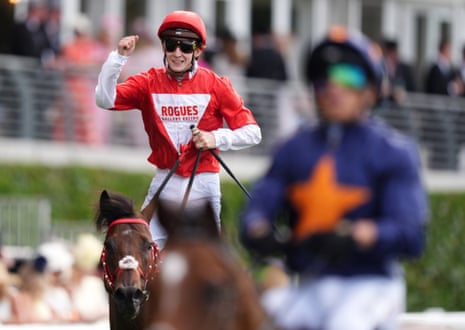
5.35 KENSINGTON PALACE STAKES HANDICAP preview
Something of a Hunt Cup for fillies, over the same track and trip, and a shortish favourite given a 24-runner field in William Haggas’s Alobayyah, 1lb higher in the weights after a promising handicap debut over course and distance behind today’s likely second-favourite, Radiant Beauty. Alobayyah is 5lb better off with that rival having been beaten by around two-and-a-half lengths, and she was also given plenty to do by her rider last time, so must have every chance to reverse that form, at least. The field is full of live rivals, however, including Stateira, third in a Group Two in Ireland last time despite finding some trouble in running, and her stable-companion at the Andrew Balding yard, Zgharta, who had some decent bits of form in good company last season. I’ll be throwing in my lot, though, with James Fanshawe’s Miss Nightfall, who will be finishing late from stall 21in a race that should unfold to suit, and ran better at Yarmouth last time than the bare form might suggest.
Timeform top-rated: Alobayyah
SELECTION: MISS NIGHTFALL
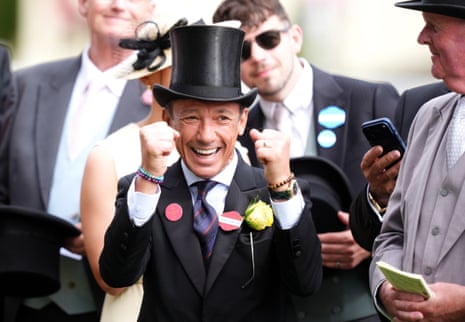
5.00 ROYAL HUNT CUP result
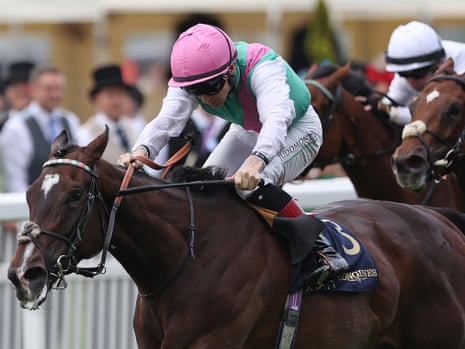
1 Rogue Diplomat (Harry Davies) 28-1 2 Blue Rc (H Crouch) 28-1 3 Indalo (Ray Dawson) 9-1 4 Ebt’s Guard (Lewis Edmunds) 20-1
5.00 ROYAL HUNT CUP And they’re off … Scoville leads on the far side … and they are clear of the horses on the stands side … Alchemist is up there as is La Botte … Jagged Edge coming strongly … Rogue Diplomat getting up on the nearside who now lead and gets there!
5.00 ROYAL HUNT CUP betting
Archivist – 6/1
Jagged Edge – 7/1
Erzindjan – 10/1
La Botte – 11/1
Indalo – 11/1
Fifth Column – 11/1
Shout – 12/1
Classic – 14/1
Chibitty N/R
Linwood N/R
BAR 16/1
Betting via Oddschecker
5.00 ROYAL HUNT CUP preview
Back to the straight course for what can be fairly described as the most famous and historic of Royal Ascot’s handicaps (though Saturday’s Wokingham has asked me to point out that it dates back to 1813, while the Hunt Cup is a relative stripling, having first been run in 1843). Others may differ, but for me the only way to break down a 30-runner field for a contest like this is to start with the draw – high numbers are best – and then look for a runner that can quicken from off the pace at the death, as it is notoriously difficult to make all the running over the straight mile. Archivist, who raced for William Haggas last season before being bought by the Wathnan operation and switched to Hamad al Jehani, had a productive winter in Dubai and has been given a break since March, though Timeform at least suggests he has something to find with quite a few of his rivals. Jagged Edge too has switched stables since last season, joining Stephen Thorne, who has made a strong start to his career after joining the training ranks in 2024. Fifth Column, Classic and Ebt’s Guard – seventh last year and better drawn this time – also fit the bill, but perhaps not so snugly as Terry “TJ” Kent’s eight-year-old Erzindjan. He is one of the most exposed runners in the field but not long with an up-and-coming yard and posted a very useful performance when winning his sixth start for the stable at Newmarket in May. Ryan Moore is booked for his first ever ride for Kent and he has an excellent pitch in stall 24.
Timeform top-rated: Scoville
SELECTION: ERZINDJAN
4.20 PRINCE OF WALES’S STAKES result
1 Ombudsman (W Buick) 11-10 Fav 2 Minnie Hauk (R L Moore) 15-2 3 Daryz (M Barzalona) 2-1
4.20 PRINCE OF WALES’S STAKES And they’re off … in the most anticipated race of the week with two of the world’s best in Daryz and Ombudsman … the expected pacemaker Mississippi River has the early lead … Minnie Hauk is behind the leader and Ombudsman is towards the back … on the turn for home Daryz and Ombudsman are waiting to pounce with the leaders on their own … new leader Devil’s Advocate is going to get caught and Ombudsman has stormed through for a convincing victory.
4.20 PRINCE OF WALES’S STAKES betting
Ombudsman – 5/4
Daryz – 2/1
Almaqam – 6/1
Minnie Hauk – 7/1
See The Fire – 14/1
Dancing Gemini – 33/1
Mississippi River – 100/1
Devils Advocate – 100/1
Betting via Oddschecker
4.20 PRINCE OF WALES’S STAKES preview
The betting suggests that Wednesday’s feature is a head-to-head between Daryz, last year’s Prix de l’Arc de Triomphe winner, and Ombudsman, last year’s winner of this race and a dual winner at the highest level since, at York in August 2025 (with Daryz sixth and last) and then at Meydan in March. In true Royal Ascot style, though, it is more of a head-to-head-plus, as Minnie Hauk, a dual Classic winner and the Arc runner-up in 2025, and the improving five-year-old Almaqam could both have a big say in the proceedings. The tale of the tape has Daryz, successful in two Group Ones already this year in April and May, 2lb in front of Ombudsman on Timeform ratings, while they are tied three-all in terms of victories at the highest level ahead of their second meeting on the track. Ombudsman’s track form may tip the balance for some punters, and he is very much a 10-furlong specialist while Daryz’s famous success at Longchamp in October came at a mile-and-a-half. Francis-Henri Graffard’s runner found a very sharp turn of foot to score over an extended nine furlongs at Longchamp last time, however, and the stiff uphill finish will not go amiss, either. Minnie Hauk needs little introduction after winning the Oaks, Irish Oaks and Yorkshire Oaks before her close second behind Daryz at Longchamp, and her run into fifth behind Almaqam at the Curragh last time is forgiveable as she was found to be slightly lame after the race. Almaqam was the first horse to beat Ombudsman, in the Brigadier Gerard Stakes at Sandown in May 2025, and while Ed Walker, his trainer, insists that the five-year-old needs some cut in the ground to show his best form, it was officially good-to-firm when he broke through at Group One level in the Tattersalls Gold Cup at the Curragh last month. Bay City Roller, the runner-up there, ran away with the Coronation Cup at Epsom on Derby day, and while the rain-softened ground was a significant factor in his win, Almaqam is not lightly dismissed.
Timeform top-rated: Daryz
SELECTION: DARYZ
3.40 DUKE OF CAMBRIDGE STAKES result
1 Blue Bolt (Colin Keane) 5-2 Fav 2 Jancis (S M Levey) 16-1 3 Friendly Soul (Oisin Murphy) 7-2
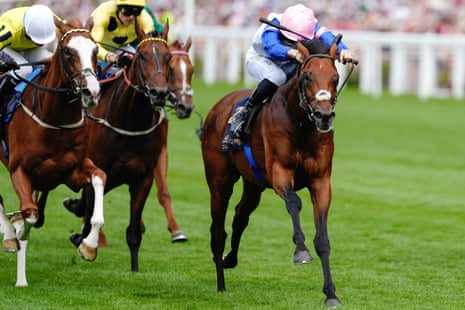
3.40 DUKE OF CAMBRIDGE STAKES
And they’re off … She’s Perfect has the lead in the early stages … Falakeyah had a slow start … Carolina Jetsream joins the leadert and they turn for home … Blue Bolt comes through with a strong run and wins the race!
O’Brien denies ‘team tactics’ claim
Aidan O’Brien has spoken about the controverisal bans received by Christophe Soumillon and Ryan Moore in Tuesday’s St James’s Palace Stakes.
Moore, Gstaad’s jockey, pick up a three-day suspension from the stewards for “careless riding for allowing his mount to edge left-handed without correction” in the race while Soumillon on Gstaad’s front-running stable companion, Puerto Rico, moved left at the top of the straight to allow the second-favourite a clear run up the rail. While it did not affect the result, the manoeuvre did not impress the stewards and the rider picked up an eight-day suspension for “riding his mount in such a way that intended to give an advantage to another horse from the same stable”.
O’Brien told the Racing Post : “The stewards are the ones that make the decision. Rules are rules, the stewards have their job to do and that’s the way it is.
“I thought both horses would be very forward and I thought one could be leading. I thought Christophe might be leading because his horse won making the running twice last year in a Group One and that’s why Christophe was on him. I thought he would lead and I thought Ryan would be sitting second. That’s the way I read it.
“I don’t know what happened. I saw it like everyone else.”
On whether he disagrees with the opinion that team tactics were used, O’Brien added: “There’s no doubt about that. I always say when we put horses in a race, they’re in there for one thing – it’s to make sure there’s an even pace for everybody. That’s the only reason.
“Then you come out of the race and you know what trip your horse wants and whether your horse is good enough to run against those horses or not. If it’s a muddle, you don’t know what’s going to happen and it’s inconclusive for everybody.
“What happened was a mess, wasn’t it?”
3.40 DUKE OF CAMBRIDGE STAKES betting
Blue Bolt – 3/1
Friendly Soul – 6/1
Catalina Delcaprio – 6/1
Cathedral – 6/1
Godspeed – 8/1
Jancis – 11/1
Kon Tiki – 12/1
Falakeyah – 16/1
BAR 16/1
Betting via Oddschecker
3.40 DUKE OF CAMBRIDGE STAKES preview
A race that was run on the straight mile until 2024, and with 15 runners, the second-largest field in its 22-year history, due to go to post, it might make for a fairer race if it were back on its original turf. The round mile it is, though, and that may well favour pacier, low-drawn horses that can sit handy while the runners from outside stalls get in each other’s way. Blue Bolt raced close to the pace when second in the Group One Sun Chariot Stakes at Newmarket last October, but she has also been drawn a little higher than ideal in 10, while Friendly Soul and Catalina Delcarpio, the next two fillies in the betting, have fared better in five and four respectively. Friendly Soul arrives with a “P” against her name, having been the luckless runner that found a hole in the Haydock turf during a race there on 23 May, and she will be a big runner if she is back to her Group One-winning form – albeit over an extra two furlongs – in the Prix de l’Opera at Longchamp in October. The lightly-raced Catalina Delcarpio too deserves close inspection, as she arrives with just five races in the book and was sent off favourite for the 12-furlong Ribblesdale here last summer. She finished third without quite seeing out the trip and has already shown improvement back at a mile this spring. Jancis and Cathedral deserve to be factored in too on their 1-2 in the Dahlia Stakes in May, although Jancis let the form down slightly when only fifth in a Group Two at the Curragh next time up.
Timeform top-rated: Cathedral
SELECTION: CATALINA DELCARPIO
3.05 QUEEN’S VASE result
1 Limestone (Dylan Browne McMonagle) 10-3 2 Del Maro (W Buick) 12-1 3 Ranga Tang (Cieren Fallon) 40-1
3.05 QUEEN’S VASE And they’re off … Mr Colonel was slowly away … Ravenspire leads from Limestone in the early stages of the race … Ranga Tang has taken it up but is pulling very hard and is well clear though she’s surely going to tire herself out very fast … they turn for home and Galiyan makes a move. … Ranga Tang still leads but the others are coming … including Limestone and Del Maro have gone past the post together. Photo finish! LIMESTONE gets the verdict! And that’s naother for son of Aidan, Mr Joseph O’Brien.
Victorious victorious again for O’Brien
Victorious lived up to her name when maintaining her unbeaten record in the Queen Mary Stakes at Royal Ascot , the first race on the Wednesday card. The Wootton Bassett filly was on a hat-trick following successive spring wins at Naas, most recently landing a Group Three at Naas over six furlongs.
“Ryan [Moore] gave her a brilliant ride. She is a filly with one eye so she’s always lacked a bit of confidence but she’s been coming along lovely,” said O’Brien, registering his 99th Royal Ascot winner.
“She’s incredible, we knew she was very classy and we’ve always felt that she’d be very good. Going back to five [furlongs] in this type of race, sometimes you can get lost, but it was lovely how Ryan got her racing in a small group.
“In her left eye she doesn’t have any sight, so he slowly got her out and reassured her all the time. He rode her in Naas and he really loved her. We knew she was very good but sometimes over five they might not get everything together but we were very hopeful.
“The people around her are the ones who are very careful not to frighten her, they’ve taught her everything very slowly.”
Moore said: “She is a gorgeous filly and I think the world of her. She is actually blind in her left eye so she can’t see anything on that side. She is just a sweetheart and has always shown plenty. She is so straightforward and the complete professional.”
The winner was given a 12-1 quote for the 2027 1,000 Guineas by Paddy Power.
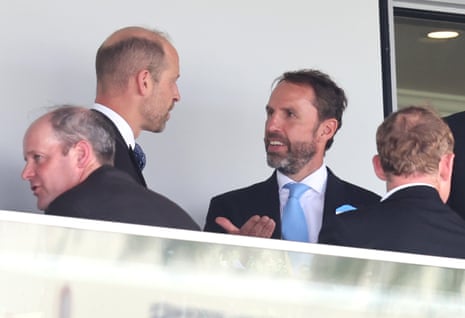
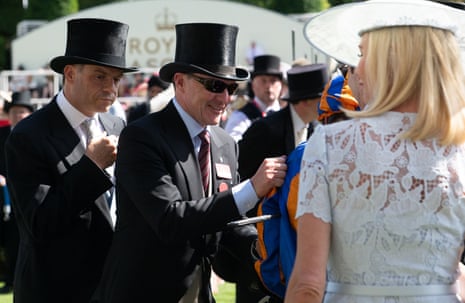
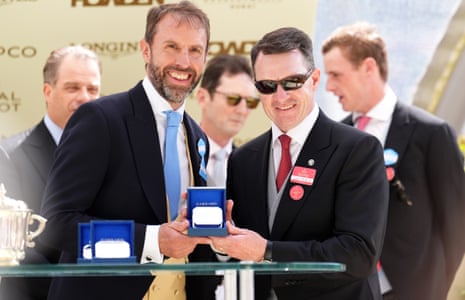
Appropriately, on the day England have their first World Cup group game in Dallas the former manager of the national team, Gareth Southgate, was on hand to present the trophy to the winning connections of Victorious after the first race. A queue of journalists formed to ask him the obvious questions but were briefed by the Ascot PR team that Southgate “was not doing any media today”. Probably wise.
3.05 QUEEN’S VASE betting
Galiyan – 2/1
Limestone – 7/2
Point Of Law – 7/1
Asakir – 9/1
Ravenspire – 10/1
Port Of Spain – 10/1
Del Maro – 12/1
Wareeth – 18/1
BAR 16/1
Betting via Oddschecker
3.05 QUEEN’S VASE preview
The first runner of the week in the royal colours could hardly have been more disappointing – although the very relatable pictures of the King’s grimace as Reaching High dropped away to finish last in the Ascot Stakes will have done no harm at all to his public image. He’s a punter, just like us! But the second runner in scarlet and purple will hopefully fare at least a little better, and Point Of Law looks like a solid 8-1 shot for what, if we’re honest, feels like a slightly sub-par renewal of this Group Two contest. He was a short-priced favourite for his second start, at Newbury in mid-May, and did not need to improve to shed his maiden tag, through a Timeform rating of 109p gives him plenty to find with several of today’s opponents. Galiyan, from the Andrew Balding stable, is probably foremost among those, as the form of his maiden success at Chester looks more robust and is backed up by a strong timefigure. Limestone bids to give Joseph O’Brien a second winner of the meeting after his 1-2 in yesterday’s Ascot Stakes, while his father Aidan’s runner, Port Of Spain, is also impossible to rule out given that the trainer is looking for a record ninth win in the race.
Timeform top-rated: Port Of Spain
SELECTION: GALIYAN
2.30pm QUEEN MARY STAKES result
1 Victorious (R L Moore) 10-3 Fav 2 Senorita Bonita (W Buick) 8-1 3 Ruiva (Juan Hernandez)
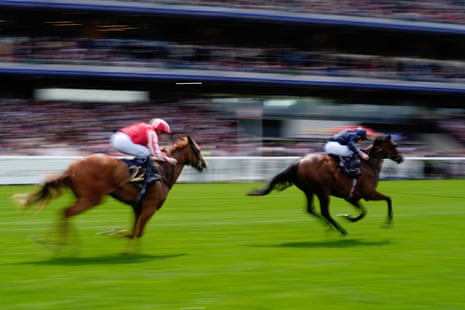
2.30pm QUEEN MARY STAKES And they’re off … this will be very quick given it’s over the minimum trip of five furlongs … Envision has the lead in one group … More Champagne tries to make ground … Senorita Bonita is there … Victorious finishes fast and best of all. Another winner for the unstoppable Aidan O’Brien team!
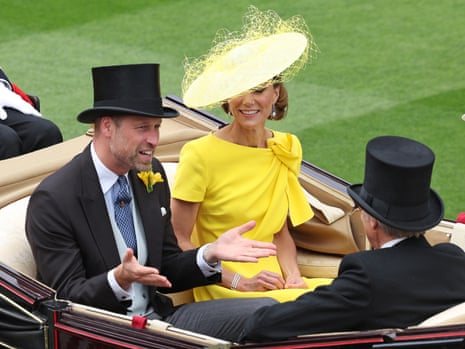
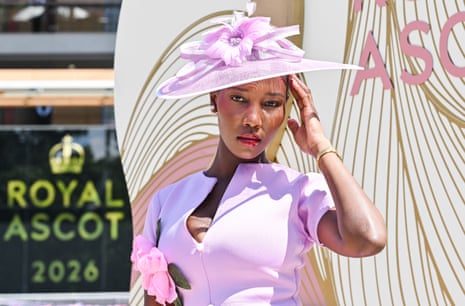
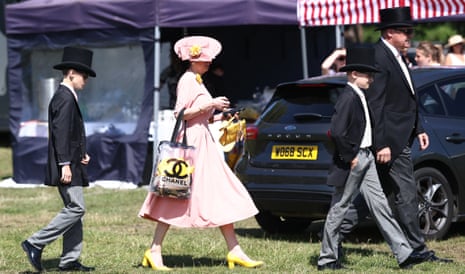
There’s going to be an awful lot of talk and front pages dedicated to the Princess of Wales in tomorrow’s papers given her striking choice of outfit.
2.30pm QUEEN MARY STAKES betting
Victorious – 4/1
Alta Regina – 4/1
Senorita Bonita – 8/1
More Champagne – 9/1
Wild Blossom – 9/1
Ruiva – 12/1
Drazinda – 20/1
Velozee – 22/1
BAR – 22/1
Betting via Oddschecker
2.30pm QUEEN MARY STAKES preview
The biggest field this century for Royal Ascot’s five-furlong dash for juvenile fillies with 27 due to go to post in the absence of Your Song, and Aidan O’Brien’s impeccably-bred Victorious is a narrow favourite to give the trainer only his second win in this race after True Love broke his duck 12 months ago. Victorious is more stoutly-bred than True Love, and on paper would be a more likely candidate for the Albany Stakes later in the week as she has won her two races to date over six furlongs, but perhaps that is just a further tip for Sun Goddess, O’Brien’s sole entry in that contest on Friday. Victorious does have a slightly sub-optimal draw in stall five, however, not least in view of how the races on the straight course panned out yesterday. Senorita Bonita, a narrow winner at Nottingham on debut, is also prominent in the betting, and can be rated much better than that bare form – she ran into traffic problems and still had three lengths to find on the leader with a furlong to run. She was a six-figure purchase at the breeze-up sales in the spring, a comment that also applies to Alta Regina, a four-and-a-quarter length winner at Lingfield 18 days ago, while Wild Blossom was made favourite for this race after a 10-length win at Carlisle in mid-May but has since drifted to around 9-1 as other candidates have staked their claim. That quartet are among nine unbeaten fillies in the field, but it would be surprise if one of the remainder found significant progress to figure and Kentucky Rain, who was snapped up by Amo Racing for £380k at the London Sale earlier this week, is worth a second look at current odds of up to 66-1. She was unfancied on debut in a well-run race at Goodwood but travelled smoothly and looked unlucky not to win after finding trouble in running.
Timeform top-rated: Victorious
SELECTION: SENORITA BONITA
6.10 WINDSOR CASTLE STAKES preview
There was a good deal of controversy when the British Horseracing Authority announced some significant changes to the conditions for this race, upping the distance from five to six furlongs and restricting it too to juveniles whose sire won at least once over seven furlongs as a juvenile, or at a mile or further at three. Karl Burke, the leading trainer in the north, suggested that the move – designed to broaden the appeal of middle-distance sires – would simply provide “low-hanging fruit” for racing mega-corps like Coolmore and Godolphin, and change the nature of a race “where the average man in the street has got a chance of buying a relatively cheap horse and having a runner at Royal Ascot.” Year one is not the time to judge, but Burke, at least, does not have a runner in this year’s race, and the closest thing to a “fairytale” runner is probably Celeron, who cost 20k gns as a yearling and runs for Michael O’Callaghan’s Irish stable. Aidan O’Brien fields the well-fancied Sergei Diaghilev, though his draw in stall two is not ideal, and another Irish-trained runner, Robson de Aguiar’s Controlla, makes more appeal from stall 15. She was just behind Victorious, one of the favourites for the opener, on her racecourse debut and will be a big fancy to open her account should that one run well.
Timeform top-rated: Controlla
SELECTION: CONTROLLA
5.35 KENSINGTON PALACE STAKES, HANDICAP preview
Something of a Hunt Cup for fillies, over the same track and trip, and a shortish favourite given a 24-runner field in William Haggas’s Alobayyah, 1lb higher in the weights after a promising handicap debut over course and distance behind today’s likely second-favourite, Radiant Beauty. Alobayyah is 5lb better off with that rival having been beaten by around two-and-a-half lengths, and she was also given plenty to do by her rider last time, so must have every chance to reverse that form, at least. The field is full of live rivals, however, including Stateira, third in a Group Two in Ireland last time despite finding some trouble in running, and her stable-companion at the Andrew Balding yard, Zgharta, who had some decent bits of form in good company last season. I’ll be throwing in my lot, though, with James Fanshawe’s Miss Nightfall, who will be finishing late from stall 21in a race that should unfold to suit, and ran better at Yarmouth last time than the bare form might suggest.
Timeform top-rated: Alobayyah.
SELECTION: MISS NIGHTFALL
5.00 ROYAL HUNT CUP preview
Back to the straight course for what can be fairly described as the most famous and historic of Royal Ascot’s handicaps (though Saturday’s Wokingham has asked me to point out that it dates back to 1813, while the Hunt Cup is a relative stripling, having first been run in 1843). Others may differ, but for me the only way to break down a 30-runner field for a contest like this is to start with the draw – high numbers are best – and then look for a runner that can quicken from off the pace at the death, as it is notoriously difficult to make all the running over the straight mile. Archivist, who raced for William Haggas last season before being bought by the Wathnan operation and switched to Hamad al Jehani, had a productive winter in Dubai and has been given a break since March, though Timeform at least suggests he has something to find with quite a few of his rivals. Jagged Edge too has switched stables since last season, joining Stephen Thorne, who has made a strong start to his career after joining the training ranks in 2024. Fifth Column, Classic and Ebt’s Guard – seventh last year and better drawn this time – also fit the bill, but perhaps not so snugly as Terry “TJ” Kent’s eight-year-old Erzindjan. He is one of the most exposed runners in the field but not long with an up-and-coming yard and posted a very useful performance when winning his sixth start for the stable at Newmarket in May. Ryan Moore is booked for his first ever ride for Kent and he has an excellent pitch in stall 24.
Timeform top-rated: Scoville
SELECTION: ERZINDJAN
Oddschecker market movers
Alta Regina (2.30pm) – 4/1 from 7/1
Cathedral (3.40pm) – 11/2 from 10/1
Jagged Edge (5.00pm) – 7/1 from 12/1
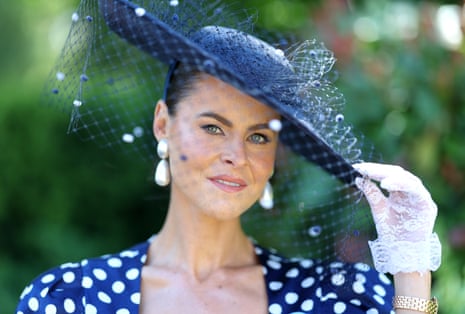
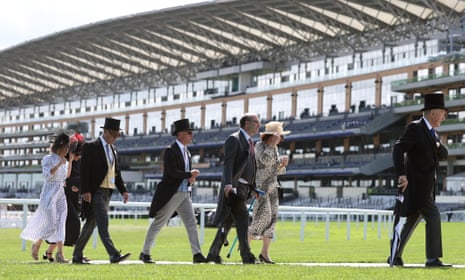
Royal Ascot Procession List 1st Carriage The King The Queen Mr Daniel Chatto The Lady Sarah Chatto
2nd Carriage The Prince of Wales The Princess of Wales The Duke of Richmond and Gordon The Duchess of Richmond and Gordon
3rd Carriage Mr Rory Stewart Mrs Rory Stewart The Lady Sarah Keswick The Marchioness of Lansdowne
4th Carriage Mr William Haggas Mrs William Haggas Mr John Gosden Ms Rachel Hood
Racing fans will be most interested that two of the finest British trainers (John Gosden and William Haggas, both from Newmarket) are in the Royal Procession while the world of politics is represented by Rory Stewart. As is customary the Prince and Princess of Wales are at Royal Ascot on Wednesday when the Prince of Wales’s Stakes is run. The current King and Queen have carried on the late Queen Elizabeth II’s tradition of going to Royal Ascot every day. Some will wonder whether that will be the case when William accedes to the throne.
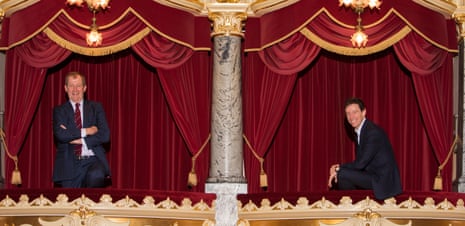
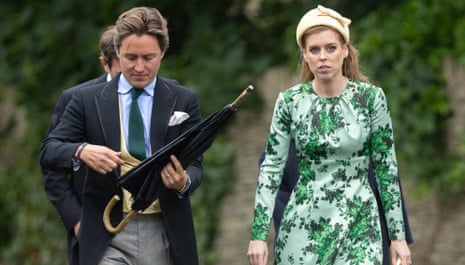
We speculated here yesterday about whether Princesses Beatrice and Eugenie would not be at Royal Ascot amid the continuing fallout of their father’s association with Jeffrey Epstein. No other outlet seems to have picked up on this other than the Sun but they reported that Beatrice and her husband Edoardo Mapelli Mozzi were at the races yesterday but ‘hid from the cameras to prevent stealing the limelight’. A source told the Sun: “Beatrice attended Royal Ascot privately and deliberately avoided then parade ring.”
4.20 PRINCE OF WALES’S STAKES preview
The betting suggests that Wednesday’s feature is a head-to-head between Daryz, last year’s Prix de l’Arc de Triomphe winner, and Ombudsman, last year’s winner of this race and a dual winner at the highest level since, at York in August 2025 (with Daryz sixth and last) and then at Meydan in March. In true Royal Ascot style, though, it is more of a head-to-head-plus, as Minnie Hauk, a dual Classic winner and the Arc runner-up in 2025, and the improving five-year-old Almaqam could both have a big say in the proceedings. The tale of the tape has Daryz, successful in two Group Ones already this year in April and May, 2lb in front of Ombudsman on Timeform ratings, while they are tied three-all in terms of victories at the highest level ahead of their second meeting on the track. Ombudsman’s track form may tip the balance for some punters, and he is very much a 10-furlong specialist while Daryz’s famous success at Longchamp in October came at a mile-and-a-half. Francis-Henri Graffard’s runner found a very sharp turn of foot to score over an extended nine furlongs at Longchamp last time, however, and the stiff uphill finish will not go amiss, either. Minnie Hauk needs little introduction after winning the Oaks, Irish Oaks and Yorkshire Oaks before her close second behind Daryz at Longchamp, and her run into fifth behind Almaqam at the Curragh last time is forgiveable as she was found to be slightly lame after the race. Almaqam was the first horse to beat Ombudsman, in the Brigadier Gerard Stakes at Sandown in May 2025, and while Ed Walker, his trainer, insists that the five-year-old needs some cut in the ground to show his best form, it was officially good-to-firm when he broke through at Group One level in the Tattersalls Gold Cup at the Curragh last month. Bay City Roller, the runner-up there, ran away with the Coronation Cup at Epsom on Derby day, and while the rain-softened ground was a significant factor in his win, Almaqam is not lightly dismissed.
Timeform top-rated: Daryz
SELECTION: DARYZ
3.40 DUKE OF CAMBRIDGE STAKES preview
A race that was run on the straight mile until 2024, and with 15 runners, the second-largest field in its 22-year history, due to go to post, it might make for a fairer race if it were back on its original turf. The round mile it is, though, and that may well favour pacier, low-drawn horses that can sit handy while the runners from outside stalls get in each other’s way. Blue Bolt raced close to the pace when second in the Group One Sun Chariot Stakes at Newmarket last October, but she has also been drawn a little higher than ideal in 10, while Friendly Soul and Catalina Delcarpio, the next two fillies in the betting, have fared better in five and four respectively. Friendly Soul arrives with a “P” against her name, having been the luckless runner that found a hole in the Haydock turf during a race there on 23 May, and she will be a big runner if she is back to her Group One-winning form – albeit over an extra two furlongs – in the Prix de l’Opera at Longchamp in October. The lightly-raced Catalina Delcarpio too deserves close inspection, as she arrives with just five races in the book and was sent off favourite for the 12-furlong Ribblesdale here last summer. She finished third without quite seeing out the trip and has already shown improvement back at a mile this spring. Jancis and Cathedral deserve to be factored in too on their 1-2 in the Dahlia Stakes in May, although Jancis let the form down slightly when only fifth in a Group Two at the Curragh next time up.
Timeform top-rated: Cathedral
SELECTION: CATALINA DELCARPIO
3.05 QUEEN’S VASE preview
The first runner of the week in the royal colours could hardly have been more disappointing – although the very relatable pictures of the King’s grimace as Reaching High dropped away to finish last in the Ascot Stakes will have done no harm at all to his public image. He’s a punter, just like us! But the second runner in scarlet and purple will hopefully fare at least a little better, and Point Of Law looks like a solid 8-1 shot for what, if we’re honest, feels like a slightly sub-par renewal of this Group Two contest. He was a short-priced favourite for his second start, at Newbury in mid-May, and did not need to improve to shed his maiden tag, through a Timeform rating of 109p gives him plenty to find with several of today’s opponents. Galiyan, from the Andrew Balding stable, is probably foremost among those, as the form of his maiden success at Chester looks more robust and is backed up by a strong timefigure. Limestone bids to give Joseph O’Brien a second winner of the meeting after his 1-2 in yesterday’s Ascot Stakes, while his father Aidan’s runner, Port Of Spain, is also impossible to rule out given that the trainer is looking for a record ninth win in the race.
Timeform top-rated: Port Of Spain
SELECTION: GALIYAN
2.30pm QUEEN MARY STAKES preview
The biggest field this century for Royal Ascot’s five-furlong dash for juvenile fillies with 27 due to go to post in the absence of Your Song, and Aidan O’Brien’s impeccably-bred Victorious is a narrow favourite to give the trainer only his second win in this race after True Love broke his duck 12 months ago. Victorious is more stoutly-bred than True Love, and on paper would be a more likely candidate for the Albany Stakes later in the week as she has won her two races to date over six furlongs, but perhaps that is just a further tip for Sun Goddess, O’Brien’s sole entry in that contest on Friday. Victorious does have a slightly sub-optimal draw in stall five, however, not least in view of how the races on the straight course panned out yesterday. Senorita Bonita, a narrow winner at Nottingham on debut, is also prominent in the betting, and can be rated much better than that bare form – she ran into traffic problems and still had three lengths to find on the leader with a furlong to run. She was a six-figure purchase at the breeze-up sales in the spring, a comment that also applies to Alta Regina, a four-and-a-quarter length winner at Lingfield 18 days ago, while Wild Blossom was made favourite for this race after a 10-length win at Carlisle in mid-May but has since drifted to around 9-1 as other candidates have staked their claim. That quartet are among nine unbeaten fillies in the field, but it would be surprise if one of the remainder found significant progress to figure and Kentucky Rain, who was snapped up by Amo Racing for £380k at the London Sale earlier this week, is worth a second look at current odds of up to 66-1. She was unfancied on debut in a well-run race at Goodwood but travelled smoothly and looked unlucky not to win after finding trouble in running.
Timeform top-rated: Victorious
SELECTION: SENORITA BONITA
Going to start putting up some previews of the day’s action from our racing correspondent and tipster Greg Wood, who is currently leading the national press challenge in the Racing Post.
Good morning. It was a bit drizzly this morning at Ascot but it has had minimal impact on the racing surface. The going for day two of Royal Ascot is: Good to Firm and there’s very little between the different sides of the track.
GoingStick at 8.30am: Stands’ side: 8.9 Centre: 8.7 Far side: 8.5 Round course: 7.6
We have two non-runners so far so cross these off your list of possible wagers … 2.30pm Queen Mary Stakes (Group 2) 28 Your Song ( sold at Goffs London Sale on Monday and off to America) 5.35pm Kensington Palace Stakes (Fillies’ Handicap)| 20 Song N Dance (vet’s certificate – infection)

Preamble
Good morning from a somewhat overcast royal racecourse, where France’s racing superstar, Daryz, will attempt to follow up the footballers’ impressive showing against Senegal yesterday evening when he goes to post for the Group One Prince of Wales’s Stakes at 4.20pm.
The feature event is the only Group One on today’s card after the meeting kicked off with three in the first four races on Tuesday, but it is perhaps the week’s most eagerly-awaited race as it pits Daryz , last season’s Arc winner, against Ombudsman , bidding to follow up his win in this race last year, and two more live contenders at each-way prices in Minnie Hauk , the Arc runner-up, and Almaqam , a Group One winner in Ireland last time out.
Arc winners are hardly an unfamiliar sight at Ascot , but they tend to run in the King George, in July, rather than at the Royal meeting, and Daryz is the first reigning Arc winner to run at this meeting since Treve finished third in the Prince of Wales’s Stakes in 2014.
The second day’s card is nothing if not varied, as the five-furlong Queen Mary for juvenile fillies at 2.30 is swiftly followed by the Queen’s Vase , over a mile-and-three-quarters, where Point Of Law, the second royal runner of the week, will set off at around 8-1. The main handicap on the card, meanwhile, offers the unmissable sight of a 30-runner field hammering down the straight mile in pursuit of the Royal Hunt Cup .
It is cloudy but dry at the track and the going is good-to-firm on both the round and straight tracks, after 5mm of water was applied overnight. Picks for the seven races on today’s card are here and the live blog will be here throughout the afternoon and early evening until the last runner in the Windsor Castle Stakes is safely back in its box.