The Guardian view on Donald Trump’s Iran deal: a pause is not a triumph | Editorial | The Guardian

Keyword – Opinion
Trefwoorden – US-Israel war on Iran, Donald Trump, US news, World news, Iran, Lebanon, Israel, Nuclear power, Oil
Title – The Guardian view on Donald Trump’s Iran deal: a pause is not a triumph | Editorial | The Guardian
Author – https://www.theguardian.com/profile/editorial
Link – The Guardian view on Donald Trump’s Iran deal: a pause is not a triumph | Editorial | The Guardian
Publish date – 2026-06-15T17:33:06.000Z
Category – Opinion
URL – https://www.theguardian.com/commentisfree/2026/jun/15/the-guardian-view-on-donald-trumps-iran-deal-a-pause-is-not-a-triumph

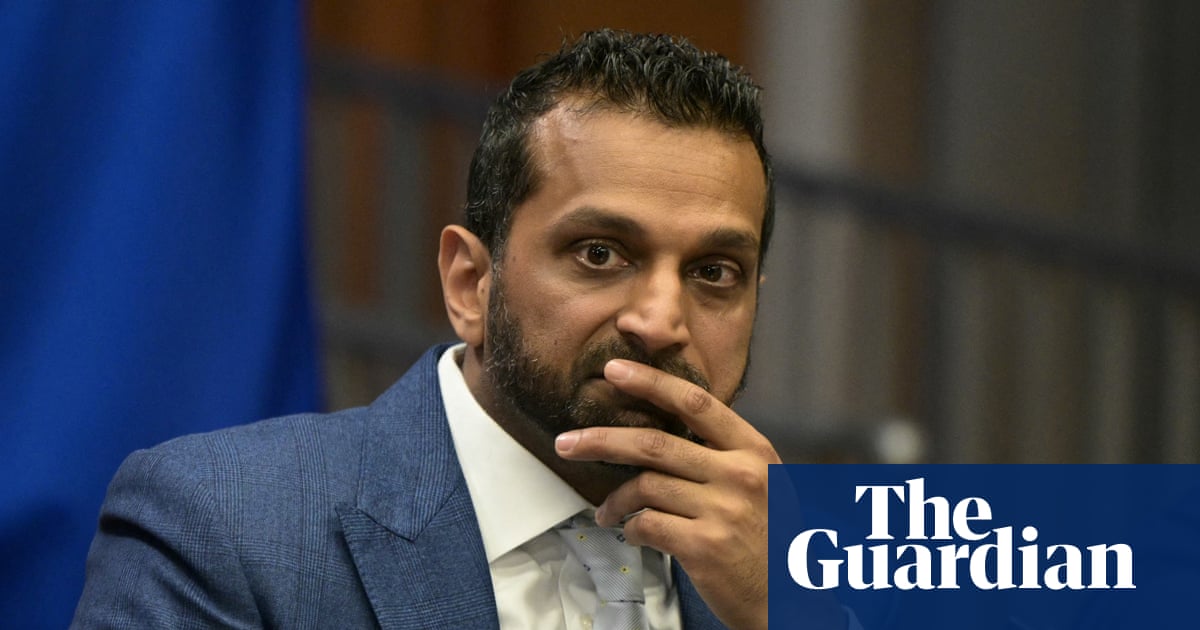
T he US-Iran agreement to halt fighting for 60 days is welcome, because even cynical diplomacy is better than war. But Donald Trump should not be allowed to call this a triumph. He has bought a pause after an illegal war of choice that failed to secure its declared aims, devastated Iran, destabilised Lebanon and sent shocks through energy and fertiliser markets, leaving many people poorer and hungrier . A campaign launched to display US military strength is likely instead to be remembered for demonstrating its limits.

A deal with Iran is better than war with Iran. But the US president is hailing as victory the partial easing of a crisis that he, and Israel’s Benjamin Netanyahu , helped create. The measure of success will not be the reopening of the strait of Hormuz, which war had closed, but whether the next two months produce a verifiable nuclear settlement and put out the flames fanned by the US-Israel attacks.

If that fails, the war will not look like the prelude to peace. It will confirm to every Gulf monarchy, oil trader and military planner that Iran has a chokehold over the global economy. This episode may belong in future histories of US decline because it exposes the gap between American military capability and American strategic control. That is why Mr Trump wants to present Iran’s position as submission . Tehran sees something else: a case for compensation, sanctions relief and leverage over Hormuz. The final agreement, if it happens, will depend on which story wins out.

Leaked drafts revealed competing narratives of what has been agreed. US officials told Reuters that the unfreezing of assets and the lifting of trade restrictions would be conditional on Tehran’s compliance, while Iranian sources say the draft includes oil waivers, the release of frozen funds and a halt to hostilities on all fronts, including Lebanon. The first test of Mr Trump’s Iran deal is not whether he can announce it, but whether he can enforce it on America’s friends as well as its enemies. Defiance from the Israeli cabinet, and reports of lethal drone attacks in Israeli-occupied parts of Lebanon, suggest its leadership is a reluctant participant in peace.

Mr Trump is negotiating over a nuclear programme once contained by the Obama-era deal that he ripped up, while trying to reopen a strait closed by a war he chose to start. The 2015 accord cut Iran’s uranium stockpile by 98%, capped enrichment at 3.67% (significantly below bomb-ready), imposed monitoring and offered sanctions relief – all without war.

Mr Trump now seeks a version of that after a conflict that has killed thousands of civilians and exposed US vulnerability. The irony is that Iran had offered better nuclear terms before 28 February. Mr Trump gambled that decapitating Tehran’s leadership would win him more. Instead , he has ended up with less.

The US president is trying to hide the difference with bluster. In a revealing interview with the New York Times on his 80th birthday, he claims that he has forced Iran into a nuclear climbdown and turned America into the paid guardian of the Gulf. Iran has a very different view, believing that it has proved the price of excluding it from the Middle East’s order, and that reopening the strait of Hormuz is a concession for which Washington must pay. Between those two interpretations lies the next crisis.

Do you have an opinion on the issues raised in this article? If you would like to submit a response of up to 300 words by email to be considered for publication in our letters section, please click here .

World Cup 2026: England’s Livramento ruled out; Iran player’s visa expires after opener; Tunisia hire Renard – live | World Cup 2026 | The Guardian

Keyword – Football
Trefwoorden – World Cup 2026, World Cup, Football, Sport
Title – World Cup 2026: England’s Livramento ruled out; Iran player’s visa expires after opener; Tunisia hire Renard – live | World Cup 2026 | The Guardian
Author – https://www.theguardian.com/profile/sarah-rendell,https://www.theguardian.com/profile/yara-el-shaboury,https://www.theguardian.com/profile/michael-butler,https://www.theguardian.com/profile/jacob-steinberg,https://www.theguardian.com/profile/matthughes,https://www.theguardian.com/profile/seaningle,https://www.theguardian.com/profile/eva-corlett
Link – World Cup 2026: England’s Livramento ruled out; Iran player’s visa expires after opener; Tunisia hire Renard – live | World Cup 2026 | The Guardian
Publish date – 2026-06-16T12:53:07.000Z
Category – Sport
URL – https://www.theguardian.com/football/live/2026/jun/16/world-cup-2026-news-france-enter-fray-iran-feel-oppressed-var-official-cleared-over-gesture-live

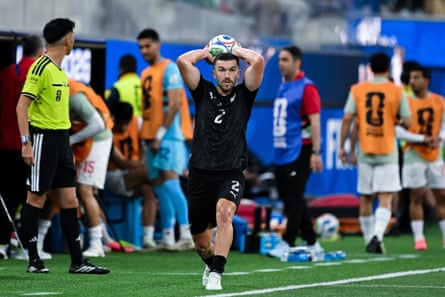
It’s very early days , of course, but you’ll notice that New Zealand’s Elijah Just is joint top of the Golden Boot standings after his two goals against Iran . They really were two expertly taken strikes after some lovely interplay with All Whites captain Chris Wood.

The 26-year-old moved to Motherwell from Danish side Horsens in 2025, and was shortlisted for the PFA Scottish Premiership player of the year award after seven goals and seven assists in his debut season.

Just – now linked with Rangers and Celtic – is under contract with Motherwell for another year and New Zealand head coach Darren Bazeley reckons his World Cup exploits will help him progress his career.

I thought Eli was outstanding,” the Englishman said. “It didn’t surprise me, I’ve known him for a long time and he’s played really well for the All Whites and scored goals and had great performances.

He showed the world how dangerous he can be. He is slight-built but he gets into pockets, gets turned and he’s quick. He’s great with the ball, very intelligent, links with Woodsy (Chris Wood) really well, like for the goal. I think a lot of people are probably watching that and saying he’s a very good player. He’s building his career and this is probably going to help him a lot.

Here are some of those goals and assists for Motherwell, by the way.

Big news from the England camp , then, even if Livramento isn’t regarded as a starter. Tuchel spoke a lot in the lead up to this tournament about having specialists in the squad – Noni Madueke for his one-on-one ability, Ivan Toney for his penalty taking, Djed Spence for his one-on-one defending – but Livramento and his versatility was important balance all of those specialists. He can play off either flank and probably first reserve to replace both starters, Reece James and Nico O’Reilly, should they get injured/fatigued, etc.

I’m not sure that Trevoh Chalobah brings the same energy, despite the Chelsea defender being fairly dependable. England have plenty of centre-backs that can also fill in at full-back if need be – Konsa, Burn, Quansah – and I personally would have gone for a specialist full-back to replace Livramento, rather than Chalobah. Trent Alexander-Arnold, Lewis Hall, even Myles Lewis-Skelly can feel unlucky to miss out again.

England’s Livramento ruled out of World Cup, to be replaced by Chalobah

Update: Tino Livramento is flying home with his injury – England are calling up Chelsea defender Trevoh Chalobah as his replacement. A blow for Thomas Tuchel as he really likes Livramento, who can play on both flanks.

Hi everyone . Let’s start with today’s schedule (all times ET, so add five hours for BST).

First up is France v Senegal, a repeat of the 2002 World Cup opener. Yara has already linked to our piece from today …

… but this from Phillipe Auclair in 2022 is also well worth your time …

I will hand over to Michael now to take you through the next few hours.

Livramento doubt for opener

England full-back Tino Livramento is a doubt for the World Cup after suffering a muscular injury in training. Chelsea’s Trevor Chalobah could be called up in his place.

Luka Modric is one of the most experienced players at the World Cup with his debut in the tournament taking place in 2006. 20 years on he will grace the World Cup stage again and Croatia’s first game is against England:

Let’s have a recap of what has happened so far today , here are the top lines:

Renard has been appointed Tunisia boss

Klopp apologises for Nagelsmann comment

Iran player’s visa expires after opener

VAR official cleared over gesture

Fancy a cartoon? David Squires has you covered:

Fifa’s disciplinary committee has cleared the World Cup video assistant referee Shaun Evans after he was accused of making a hand gesture associated with white supremacists.

An investigation found no evidence that the Australian had breached Fifa’s ethics code and he issued a statement on Monday night claiming he had been unaware of making the controversial hand sign.

Read more:

England’s campaign begins on Wednesday and there are question marks over how much Bukayo Saka will feature. Manager Thomas Tuchel has said his fitness is being monitored but the Arsenal man said he is ready to play. More here:

Erling Haaland is a name well-known in world footbal l but it is one that has never graced the World Cup pitch before. That is until later today when Norway take on Iraq. Here’s a piece on the Manchester City star:

Romelu Lukaku had been facing some criticism for his inclusion in the Belgium squad because of his lack of game time this season. He has only had 69 minutes of club football with Napoli because of injury but he had an instant impact in his side’s game against Egypt:

The eve of Italia 90. Gazza’s tears, England’s heartache, and the cascading emotions of a World Cup that sang and ultimately stung still lie ahead. For now, the sports scientist tasked with acclimatising Bobby Robson’s side to the Italian summer is using cutting-edge technology to assess each player’s fitness: a BBC microcomputer, a dot-matrix printer, and a few clunky Polar heart-rate monitors.

Some in the England setup initially regard Prof John Brewer, the Football Association’s first head of human performance, with suspicion. But after monitoring the squad with a bleep test at Lilleshall before they fly to Italy, again when they arrive, and for a third time after a fortnight’s training in the hottest part of the day, Brewer can prove to the players they have adapted to the heat, and can play their familiar high-tempo game.

Gianni Infantino is planning to attend two World Cup games each day where possible for the rest of the tournament despite the huge distances involved.

The Fifa president has access to a private jet provided by Qatar Airways as a value-in-kind element of its sponsorship deal with the world governing body, which will come in useful as Infantino journeys across the United States, Canada and Mexico.

Read more:

Klopp criticised for Nagelsmann jibe

Jurgen Klopp has been criticised for a comment he made about the Germany manager Julian Nagelsmann.

The former Liverpool manager is a pundit at the World Cup and he was critical of Germany’s starting line-up before their opener.

He said he would have chosen a different XI and added “luckily, Julian Nagelsmann is still picking the team – for now.”

Klopp has been linked to the Germany job since 2024.

Former German players have criticised Klopp, including Lothar Matthaeus who said: “Jurgen should know better. His comments aren’t going to make Nagelsmann’s job any easier. I’d like to see what he would have said if, before an important Champions League match, a pundit had advised him to leave one of his key players on the bench.”

Stefan Effenberg, who played for Germany 35 times, added the comments “unacceptable”.

“You can make a remark like that over a beer at the bar, but certainly not in front of millions of television viewers. It’s a definite ’no go’.”

Klopp has now apologised for the comment: “I could have slapped myself across the face for saying that.

“It just slipped out casually – it has absolutely no significance.”

There will be more reaction from yesterday’s matches throughout today but which fixtures are on today? Here’s a full list:

France v Senegal (8pm BST/3pm ET/12pm PT)

Iraq v Norway (11pm BST/6pm ET/3pm PT)

Argentina v Algeria (2am BST/9pm ET/6pm PT)

On a cold winter afternoon in Wellington , dozens gathered at the Four Kings sports bar to watch New Zealand’s football team, the All Whites, take on Iran.

The politics and hostilities surrounding Iran’s World Cup opener may have dominated attention in the lead up to the match, but in New Zealand, fans on both sides turned out for one reason: the love of the game.

“It’s hugely significant,” said Andy Brown. “It’s all about football, it’s the World Cup and how good is it to see New Zealand there now? I saw them in 82 as a young’n and I can’t believe its happening again.

New Zealand are the lowest ranked team in the competition, sitting at No 85 according to Fifa, compared to world No 21 Iran .

It was an electrifying match – Iran and New Zealand slugged it out under the global spotlight, the match ending in a 2-2 draw that had supporters on both sides coiled with anticipation until the final moments.

The Iran captain Mehdi Taremi, midfielder Mohammad Mohebi, and head coach Amir Ghalenoei hit out at Fifa and hinted at resentment toward the US government after being told they needed to leave Los Angeles immediately after Monday night’s 2-2 draw against New Zealand in the World Cup.

“Everything is like disaster, actually, for us,” said Taremi, who added that Fifa president, Gianni Infantino, visited the team in the dressing room and they expressed their concerns to him directly.

Ghalenoei said the way they have been treated by Fifa makes them “the most oppressed” team at the tournament.

“After the game today they said to us, ‘You have to leave immediately,’” Ghalenoi said. “Whereas today it’s very important for us to have recovery.

“We’ve been asked to get on a plane and return to our camp in Tijuana and we are really troubled by that. They are forcing us to go back early. They are making the situation more and more difficult, more hurdles, but we’re not going to let that stop us from doing our best.”

Iran player’s visa expires after opener

The Iran winger Mehdi Torabi’s US visa has expired after the team’s opening 2-2 draw against New Zealand on Monday, according to state media.

The player only had a single-entry visa instead of a multiple-entry with Iran staying in Mexico and travelling into the US for their matches.

“Following the national team’s trip to Los Angeles for the match against New Zealand and the conclusion of that game, Torabi’s visa has now expired,” the state news agency IRNA reported.

The Iranian Football Federation “has taken steps to obtain a new visa for Torabi, so that he can accompany the national team in its upcoming matches”, it added.

World Cup organisers and the US have not yet commented.

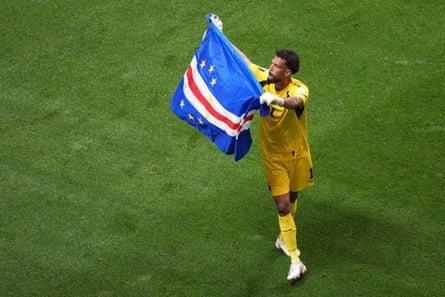
Vozinha, the 40-year-old goalkeeper who was named player of the match after making seven saves in his side’s 0-0 draw against Spain, was in tears at full time. The mother of Cape Verde’s World Cup hero was not there to see history made because she could not afford the visa to the US.

The goalkeeper described the game as the moment he had been working towards his “entire life” and said he wished he could have shared the moment with his late grandparents and his mother.

“I cried because I grew up with my grandparents and unfortunately they were not here; they died a few years ago,” he said. “They were everything for me, for my life. I also cried because my mum didn’t manage to be here because of the visa. Because of the money we had to pay for the visa, we didn’t manage to [get it done] on time. I would like her to be here, but I’m also very happy.”

Thank you Yara and hello everyone. Well yesterday’s action may not have seen any winners with four draws but there was undoutedly drama and history made. The highlight for many would have been Cape Verde’s 0-0 draw to Spain with the African nation winning their first-ever World Cup point. It was the performance of goalkeeper Vozinha which stoodout and first up I will bring you some news on the 40-year-old.

That is all from me today. Here is Sarah Rendell for the next bit.

‘I’m not a model,’ says Bielsa in spiky exchange with reporter

Uruguay: Marcelo Bielsa was involved in an awkward exchange with a reporter after his side’s 1-1 draw with Saudi Arabia which concluded with the Uruguay coach saying: “I’m not a model.”

The 70-year-old Argentine was miffed after a journalist asked him about an official Fifa portrait. The colourful Bielsa – nicknamed El Loco (mad man) – was asked why he was looking downwards in the promotional video rather than straight into the lens. There have been suggestions it might be some kind of protest.

“I don’t have to give any explanation, the picture was taken the way it was taken,” Bielsa said. “I’m not a model.” Rather than leave it there, Bielsa continued: “No, no, I have no answer for that. Should I also explain why I don’t look to the people who are speaking to me at this moment?”

Bielsa was then asked a different question, but he refused to let it go. “There is a limit in terms of what we need to explain,” he told his post-match press conference.

“If I’m wearing glasses, why am I wearing glasses? You look somebody in the eye, why do you do that? There is nothing wrong about wearing glasses or looking into somebody’s eyes or looking down.”

Asia: Jordan are feeling pride not pressure ahead of their debut against ⁠Austria and will fight ⁠to prove their ​worth in a new chapter in the country’s football history, the captain Ehsan Haddad said. Known for their strong counterattacking, Jordan scored ⁠32 goals in qualifying and are seeking to become the first team to reach the knockout stage in a debut appearance since Slovakia’s feat in 2010.

“We are ⁠participating for the first time in our history. It is a great source of pride for us. This ​is pride more than pressure. It was the ‌dream to be here,” Haddad said. “We ‌have self-confidence,” he said. “The pressure that we used to feel got us here. So let us see ‌where it’s going to lead us to.”

Uzbekistan also step on to stage for ⁠the first time when they ⁠face Colombia in ​their Group K opener, a meeting that represents the biggest moment in the country’s football history. After years of near misses in Asian qualifying, they finally secured a place at the ⁠finals by finishing second in their Asian group.

Fabio Cannavaro, Italy’s 2006 ‌World Cup-winning captain and former Ballon d’Or winner, coaches Uzbekistan, bringing an elite tournament pedigree to a squad ‌lacking international experience. Much will depend on defensive organisation, with the Manchester City centre-back Abdukodir Khusanov expected to be a key figure, while the captain Eldor Shomurodov offers experience and threat in attack.

Donald Trump: The US president is in France for the G7 summit where he is meeting with world leaders. The US-Iran agreement will be high on the agenda after Trump clashed with and threatened key allies. Why am I mentioning this in the Geopolitics World Cup blog? Because the German chancellor, Friedrich Merz, took a punt and opted to give Trump a belated 80th birthday gift: a Germany football top with the number 47 on the back and “Trump” written on it. It is quite rare for Trump to endorse anything that is not branded “USA! USA! USA! but he seemed pleased.

Algeria: The Desert Warriors will hope to harness strong backing from local supporters ⁠when they open their campaign ​against the defending champions Argentina. Residents of Lawrence, Kansas have fallen in love ⁠with Algeria, who have made their base camp in the city 40 miles west of Kansas City and Petkovic praised the north African team’s newfound fans for their warm welcome.

Videos of Algeria’s unexpected support ‌in Lawrence have gone viral, showing emotional scenes of fans – many dressed in Algeria scarves, some fighting back tears – embracing the team and the World Cup atmosphere. Here is more from Daniel Sperry in Lawrence:

Lawrence is located a little over 40 miles from Kansas City, a roughly 40-minute drive from the Metropolitan area that is hosting the base camps of Argentina, the Netherlands, and England for the World Cup . All three are staying at boutique hotels around the city. Algeria? Well, they chose the humble Lawrence DoubleTree.

So where did this come from? According to Stan Herd, a local artist, you have to go back to April, when it was officially announced that Lawrence would host Algeria. “I think everybody’s surprised at it,” Herd said. “We’re not.”

Local organisers wanted to make sure that the country felt welcome in their city, according to Herd. So much so, they’ve commissioned artwork, and signs appear on the lamp-posts with the phrase “1,2,3, Viva l’Algérie!” Even McDonald’s drive-thru windows have signs welcoming Algeria and football fans to Lawrence.

Herd says Lawrence is “a blue city in a red state”. The city of nearly 100,000 is home to 27,000 college students from the University of Kansas. Roughly 30% of that student population is minorities or international students.

France: Right, on to what is ahead. France and their potent attack featuring Kylian Mbappé, the former Ballon d’Or winner Ousmane Dembélé and flying winger Michael Olise open their account against Senegal in New Jersey.

The French will be desperate to avoid any repetition of the opening-day defeat by the Senegalese that they suffered at the 2002 World Cup in South Korea, a result which led to the then-reigning champions crashing out in the group stage. Luke Entwistle looks back on that unfortunate loss for Les Bleus and how the relationship between Mbappé and Dembélé must be positive from the off.

Mbappé’s relationship on the pitch with Ousmane Dembélé is perhaps a bigger issue. Dembélé has never delivered his best football for the national team; lest we forget his calamitous performance in the World Cup final four years ago, when he was hooked at half-time. Dembélé’s recent Ballon d’Or win has led to a clamour for him to picked in the No 9 position – where he has thrived since his reconversion at PSG under Luis Enrique – but that spot is occupied by Mbappé at international level.

When asked about Mbappé’s role as centre-forward, Deschamps’ retort is quite simple. Luis Enrique, Carlo Ancelotti, Xabi Alonso and Álvaro Arbeloa have all made the same decision at club level over the last three years. Repositioning him at this late juncture would be illogical. But Dembélé’s struggles on the right of the attack and inability to create a partnership with the France captain are feeding a national debate akin to the one in England in 2006, when there were similar concerns about the ability to fit Steven Gerrard and Frank Lampard into the same team.

And a look back on memory lane for that 2002 match – it truly was global news.

World Cup Daily: Our team with the mics are on the ground giving you a podcast daily. In the latest episode Max Rushden is joined by Barry Glendenning, Barney Ronay, Dan Bardell and Sid Lowe to discuss all those draws. Have a listen.

Saudi Arabia 1-1 Uruguay: Magic City did not have much enthusiasm for this Group H encounter with Matt Hughes reporting:

Miami has more Instagram influencers per capita than Los Angeles and New York, which suggests that Fifa should have recruited some of them to help shift tickets rather than the ubiquitous IShowSpeed, whose hyperactivity has begun to irritate some A-list guests in Fifa’s VVIP areas.

As their city is built on celebrity and glamour Miami residents are not easily impressed, and even sports fans are spoilt for choice. The Hard Rock Stadium has hosted six Super Bowls and is a regular staging post on the Formula One circuit, so a group stage World Cup game featuring two goal-shy sides was never going to be a red letter day.

On to the football: Maximiliano Araújo rescued a point for La Celeste to deny Saudi Arabia another famous World Cup win as the sides drew 1-1 in Miami.

Saudi Arabia, who shocked the eventual winners Argentina in their opener at the last World Cup, went ahead through Abdulelah al-Amri in the first half but came under sustained pressure late on and failed to hold out against the two-time winners.

Uruguay dominated possession after the interval, with Manuel Ugarte hitting the post with a low effort from distance after an hour. The pressure finally told with 10 minutes remaining as Araujo steered home an equaliser from close range after Federico Viñas header had been saved by Mohammed al-Owais.

Belgium 1-1 Egypt: It was another strong result for an African nation though it could have been better had Romelu Lukaku not forced Egypt into an own goal within seconds of entering the game as the favoured Belgium escaped with a draw in at Seattle.

Emam Ashour scored his first international goal with a superb strike from 20 yards out to give Egypt a 1-0 ⁠lead in the 19th minute. The Egypt head coach, ⁠Hossam Hassan, opted to play Mohamed ​Salah centrally on the his 34th birthday and the move worked out well from the outset. After drawing an early yellow card, Salah delivered a clinical pass to a central Ashour. The midfielder used his first touch to ⁠set up the shot with his right foot, which he buried in the lower left corner of the net past the outstretched right arm of Thibaut Courtois.

Lukaku entering in the 66th minute and 23 seconds later the Napoli striker split two defenders off a cross from Thomas Meunier and forced the own goal as the ball deflected off Mohamed Hany’s foot in a pile in front of Mostafa Shobeir. “He’s a target man,” the Belgium midfielder Youri Tielemans said. “He needs ‌to build up his fitness, which is understandable after being out for the season, but he helps us in this way.”

Spain 0-0 Cape Verde: Sid Lowe’s opening words of his match report from the Atlanta Stadium were “Wow, just wow” and that somehow feels like an understatement. After all, the European champions Spain were held to a shock 0-0 draw by tiny World Cup debutants Cape Verde.

Spain, regarded as one of the strong pre-tournament favourites, had been expected to cruise past Cape Verde in their Group H opener but despite enjoying 74% possession and laying siege to the Cape Verde goal, the 2010 world champions were unable to find a breakthrough against the underdogs from the volcanic archipelago of just 525,000 people. Not even the introduction off the bench of Barcelona’s Lamine Yamal could engineer a goal for Luis de la Fuente’s men.

When the final whistle blew, Cape Verde’s players and supporters celebrated wildly after securing an improbable point in their first ever World Cup match. “The dream came true,” the goalkeeper Vozinha told reporters. “We competed against Spain, one of the best teams in the world. We are very happy and proud of all the players and people of Cape Verde.”

Meanwhile, the Spain head coach, De la Fuente, insisted there was no reason to hit the panic button – and still confidently backed his squad to reach the final. “We are completely calm, convinced that there is a long way to go. As we see it, we have seven games left,” he said.

Tunisia replace sacked Lamouchi with Renard

Tunisia have sacked the head coach Sabri Lamouchi and replaced him ⁠with fellow Frenchman Hervé Renard after their 5-1 defeat by Sweden in their World Cup ⁠opener in Monterrey.

Lamouchi, the first coaching casualty of the tournament, was appointed in January on ⁠a contract until 2028. He leaves the post with matches to come against Japan and the Netherlands.

Tunisia won just one of their five games under Lamouchi, beating ​Haiti 1-0 in March, while ‌losing 1-0 to Austria ‌and being thrashed 5-0 by Belgium in a pair of World ‌Cup warm-up matches this month.

The Tunisian Football Federation (FTF) said Renard would take charge until the end of Tunisia’s World Cup campaign. “The agreement also stipulates that negotiations will be opened after the World Cup campaign to consider a long-term partnership based ‌on specific sporting objectives,” their statement said.

The country’s state-owned broadcaster Television Tunisienne reported that Renard would arrive in Monterrey later on ​Tuesday to link up with the squad.

Renard, twice an Africa Cup of Nations winner, coached Saudi Arabia at the 2022 World Cup in Qatar and led them to a famous victory over eventual champions Argentina in the ⁠group stage. He left to coach the French women’s team at ​the World Cup ​in 2023 and the Paris ​Olympics, before returning to Saudi Arabia and helping the ​men’s side qualify ‌for a third ​successive World Cup. He ​was then replaced by Georgios Donis in the buildup to the tournament.

Iran 2-2 New Zealand: It was a heavy match for Iran’s players as they played out a 2-2 draw against New Zealand after a backdrop of strife in the buildup to their tournament. After the match, the Iran head coach Amir Ghalenoei hit out at Fifa and hinted at resentment toward the US government after being told they needed to leave Los Angeles immediately.

We’ve spent so much time commuting in the air. They didn’t even give us time to recover after the game today. They said we had to leave immediately. It’s very important for us to have time for recovery and yet we were asked to return to Tijuana and we are really troubled by that.

We do not know why they are returning us. I think it’s very strange. It seems like others are doing the planning for us, decisions are made elsewhere, we were supposed to arrive two nights before the game and we were not permitted, we were supposed to stay tonight and return tomorrow lunchtime but I have no idea why, and they haven’t told us.

Our team is the most oppressed one in the whole World Cup. The federation is absent here. Our media isn’t here. Our management team, many of them aren’t here. We used to have a part of a coaching team to help with substitutions but we didn’t have that. Many in the technical area had to deal with that.

The Iran captain Mehdi Taremi described their treatment as a “disaster” and revealed the Fifa president Gianni Infantino had been in the dressing room, offering to “help” the team. Footage of Infantino published on X sees him telling the players “you are stronger than everything” adding that the team were “writing history, the whole world is watching you”.

Infantino is also understood to have told the players he would do what he could to ensure more of the Iranian delegation, who did not receive visas, could travel to the USA for their remaining group games.

Preamble

We are officially 2/3 of the way through the first group games of the 2026 World Cup . How are we feeling? Excited, thrilled, enjoying the football? Tired, overwhelmed, exhausted? All of the above? Wherever you fall, strap in because there is so, so much to get to.

Reaction from Spain 0-0 Cape Verde, Belgium 1-1 Egypt, Saudi Arabia 1-1 Uruguay and Iran 2-2 New Zealand ( you get a draw, you get a draw, everyone gets a draw ) before looking ahead to France v Senegal, Iraq v Norway, Argentina v Algeria and Austria v Jordan. How will our 2022 finalists fare? How about the African champions (or are they?) Or the fresh faces from Asia? This World Cup has already had a few surprises and, given the sheer number of games, I expect more to come.

Have any thoughts on the performances we have seen? Or on what is to come? What is your World Cup setup? Are you watching from home or did you manage to nab tickets? Let me know along with any predictions, questions, comments or complaints via email .

From tents to trebles: Edinburgh book festival to set author’s words to music | Edinburgh international book festival | The Guardian

Keyword – Books
Trefwoorden – Edinburgh international book festival, Music, Ali Smith, William Dalrymple, Books, Culture, Edinburgh festival, Festivals, Scotland, Edinburgh, Kathleen Jamie
Title – From tents to trebles: Edinburgh book festival to set author’s words to music | Edinburgh international book festival | The Guardian
Author – https://www.theguardian.com/profile/severincarrell
Link – From tents to trebles: Edinburgh book festival to set author’s words to music | Edinburgh international book festival | The Guardian
Publish date – 2026-06-16T04:00:43.000Z
Category – Culture
URL – https://www.theguardian.com/books/2026/jun/16/edinburgh-book-festival-to-set-authors-words-to-music

This year’s Edinburgh book festival is expanding its slate of genre-busting musical events, including staging Japanese Noh theatre at one of the city’s oldest religious sites, Greyfriars Kirk.

Jenny Niven, the Edinburgh international book festival’s director, said such events broke away from the traditional formula of authors sitting in tents, and aimed to attract new audiences and celebrate literature’s interplay with other art forms.

“Books don’t have to be medicine,” she said.

This year’s programme includes a series of performances featuring, among others, Ali Smith, Kathleen Jamie and William Dalrymple at Greyfriars, which was built in the early 1600s on grounds previously occupied by a 15th-century Franciscan monastery.

As part of the festival’s Scotland to the World strand, Jamie’s wildlife essay On Rona, about the remote, uninhabited Hebridean island North Rona, will be enacted by the minimalist Noh Reimagined theatre company and the Scottish musicians Brìghde Chaimbeul, who plays Scottish smallpipes, and Aidan O’Rourke on fiddle.

A Dutch contemporary classical group, New European Ensemble (NEuE), will play four pieces written for Smith’s work, while she reads from it. In The Golden Road, Dalrymple’s histories of Scottish colonialism in India will accompany the “fusion sounds” of India Alba.

Niven said this approach reflected the fact that fiction and literature were routinely consumed in different ways, including film adaptations, musical interpretations and plays. This year’s festival will also offer live cookery events with food writers, a strand pioneered in 2024.

“It’s a huge programme and there’s absolutely space to play with different art forms,” she said. The impetus also came from efforts to combat declining literacy and reading rates and competition from social media.

Niven has commissioned mixed-genre shows in previous book festival roles, including the poet Benjamin Zephaniah in a hip-hop production in Beijing, China, and putting Michael Palin in a bird house at Australia’s Melbourne zoo.

This year’s event will feature a blockbuster appearance by the thriller writer John Grisham, the author of the Pelican Brief and The Firm who has reputedly sold 500m books, with Ian Rankin at the 1,000-seater McEwan Hall.

Niven said this year’s festival nonetheless had a deliberately serious tone, with “Changing your mind” as its central theme.

“In a world where people are very certain of their positions about all sorts of issues, all kinds of polarised, in all kinds of ways, how do we stay flexible in our thinking? How do we open our minds to new ideas, new ways of thinking?” Niven said at the programme launch.

Afterwards she said the festival was not “deliberately pitting polarised views against each other for spectacle or for a headline”. The aim was to programme authors and speakers with different views that audiences would seek out to challenge themselves.

The UK supreme court ruling on the legal definition of sex, which has led to contested official advice about single-sex toilets from the Equalities and Human Rights Commission, would be debated in an event chaired by Brenda Hale, the former supreme court president.

Her guests will be legal experts on either side of the gender debate: Karon Monaghan KC, who represents gender critical groups, and Keio Yoshida, a barrister who champions trans rights.

The festival will also present the big-tech critic and author of Enshittification, Cory Doctorow, in conversation with the Wikipedia founder, Jimmy Wales; while Steve Crossan, who worked on Google’s DeepMind AI project, will debate with Alan Finkel , the Australian government’s former chief scientist and the creator of the AI-free certification service ProudlyHuman.

Niven said she was excited about competing projects from the Edinburgh fringe festival and Festivals Edinburgh, the sector’s umbrella group, to investigate new digital and data-mining technologies which could lead to a unified festivals box office or app .

She stressed she wanted to protect the book festival’s specific identity, and said she was agnostic about what kind of technology could be introduced. It could mean more tailored ticketing systems for overseas audiences.

“I’m open and I’m genuinely quite excited about the potential for these new tools to make more of what we have,” she said.

The Edinburgh international book festival runs from 15 to 30 August

Midlife is the perfect time to start trail running – here’s how to get into it | Well actually | The Guardian

Keyword – Wellness
Trefwoorden – Well actually, Fitness, Running, Marathon running, Life and style, Health & wellbeing
Title – Midlife is the perfect time to start trail running – here’s how to get into it | Well actually | The Guardian
Author – Sarah Lavender Smith
Link – Midlife is the perfect time to start trail running – here’s how to get into it | Well actually | The Guardian
Publish date – 2026-06-15T16:00:29.000Z
Category – Lifestyle
URL – https://www.theguardian.com/wellness/2026/jun/15/how-to-start-trail-running-ultrarunning

E arlier this year, 62-year-old Karla Wagner placed second in the 100-mile division of the Grandmaster Ultras, an Arizona trail-running event designed for 50-and-over runners in the age group known as “grandmaster”.

For most of her adult life, Wagner, who is from Lander, Wyoming, avoided running because it triggered her asthma. But when asthma meds improved, she added trail running to her fitness mix and became completely hooked in her early fifties.

The elation of running through natural beauty combined with the sport’s supportive community motivated her to build up to 100-mile ultramarathons in her fifties. When she turned 60, she finished the Moab 240-mile ultra, a race through the canyons and deserts of south-east Utah.

“It’s just amazing to me how far you can travel on foot,” says Wagner. “And it’s fun!”

I have been ultrarunning for two decades and professionally coached long-distance runners for eight of those years. Over that time, I witnessed trail running mushroom from a once extreme niche to a more mainstream branch of running.

Here’s what you need to know about the sport – and how to get started in midlife and beyond.

What is trail running, and what’s an ultra?

Trail running takes place on dirt trails as opposed to paved roads or measured flat tracks. Races longer than marathon distance (26.2 miles) are called ultramarathons, or “ultras” for short. While some ultras are held on tracks or paved surfaces, most follow trail routes. Hence, “ultrarunning” typically refers to extra-long-distance trail running.

Trail running, especially at ultra distances, differs significantly in practice and culture from traditional road-and-track running. Trail races tend to be smaller and more intimate than metropolitan road races.

Trails lead runners through less-developed environments, often up mountains or across deserts, where the terrain grows more rugged and hilly. Walking on difficult-to-run stretches of trail is an integral part of trail running, considered a lower gear that sustains longer outings.

According to consumer research from 2025, trail running is growing faster than road running. UltraRunning magazine shows the number of runners who finished an ultra in North America had nearly doubled since 2015, to 102,714 individuals last year.

The appeal of trail running in the second half of life

I increasingly meet other runners in the grandmaster division who, like Wagner, found trail running relatively late in life. They’re reaping the health benefits – including improved cardiovascular health , greater bone density and social connections – along with the enjoyment and variety of running in nature. The slow-and-steady pace makes them feel energetic, strong and accomplished.

Wagner, a retired OBGYN doctor, believes that running and strength workouts have prevented the weakness and arthritis that her mother suffered.

“I’m kind of a poster child for osteoporosis , because I’m small, have a family history and haven’t done hormone replacement, so it’s important to me to get weight-bearing exercise,” she says.

“Trail running in midlife is wonderful,” agrees Dr Howard Luks, a New York-based orthopedic surgeon and trail runner who writes a newsletter about exercise physiology and the science of ageing well, “and the balance and coordination demands [of running trails] are exactly what our ageing neuromuscular systems need”.

At races, grandmasters may be significantly slower than younger frontrunners, but it’s a robust category. In 2025, runners aged 50 to 70+ comprised 22% of the North American ultra finishes, according to UltraRunning .

Trail running – especially on outings that go a half day or longer – rewards character traits developed through life experience, such as patience, adaptability and resiliency.

“You’re going to have to deal with things not going as planned,” says longtime ultrarunner Andy Jones-Wilkins, 58, of Corvallis, Oregon, who coaches several late-blooming midlife athletes. “I see a lot of younger runners who are fast but may not have the tools or experience to manage that kind of disappointment.”

How to safely start running trails

Begin with a base level of fitness: While anyone with full-range mobility can try trail running, it’s advisable to develop fitness at a lower-impact activity such as walking first. You should be able to hike briskly and break a sweat without significant discomfort before attempting to trail run.

Anyone with a history of medical issues, particularly cardiovascular or orthopedic, should check with their doctor first. A recent review of research concluded that extreme distance running can expose some individuals to cardiac risks.

Gradually add slow-pace running: Many would-be runners feel haunted by school coaches who put pressure on them to run a fast mile, or remember hyperventilating when they tried to run too fast, too soon. To avoid a repeat, start by hiking on a relatively flat and gentle route and run segments slowly, for only as long as it feels manageable.

“Try running in tiny little bites, like, ‘I’m going to run to that tree,’” says Jones-Wilkins. “You might go out for an hour and only cover four miles, and that’s fine!”

“Run slowly enough to hold a conversation,” advises Luks. This will keep your heart rate and respiration low enough to establish a sustainable pace. “For many starting in their fifties, that’s barely faster than a walk. Walk-run intervals are the smartest entry point, and trails help naturally because the terrain forces you to slow down.”

Dan Rague, a retired calculus teacher from Phoenix, Arizona, started running a decade ago in his fifties by going on hikes with his dog. “I wanted more of a workout,” he recalls, “so I’d say, ‘I’m going to run 100ft and then walk until I get my wind back.’”

Now 62, Rague runs trails three times a week, with training runs up to about 13 miles.

Start with shorter distances and get to know the community: Dedicated ultrarunner Andre Lee, 55, of Tempe, Arizona, encourages new runners to join a trail-running group, explore their local trails, and volunteer at a trail event.

The next step is to sign up for a shorter-distance trail race, such as a half marathon. “Most events have generous cutoff times, so newbies can enjoy the trails without worry,” he says.

Lee has finished over 200 ultras, some longer than 200 miles. “I’ve learned a lot about myself and gained confidence with each event,” he says.

But Luks cautions new trail runners to “pump the brakes on the ultra goal”, explaining that an extra-long distance goal may sabotage the process of developing consistency and adapting to the sport.

“The risk at any distance is the same: ramping up faster than tissues can adapt. The real danger is that injury or failure takes a runner out of exercising entirely. I’d rather see someone become a lifelong trail runner at comfortable distances than chase an ultra and end up on my surgical schedule or, worse, on the couch.”

Train your body and brain to prevent falls: Tripping and falling on natural hazards such as rocks and tree roots may be the greatest risk, especially for older people. “Falling is a legitimate fear, but you can do a lot about it,” says Jones-Wilkins. Practice carefully on the trail and supplement with exercises to improve balance and proprioception.

Gym workouts to improve agility, responsiveness and power will help your body react and recover quickly if you trip on the trail. These include one-legged poses and lateral hops that develop balance and ankle conditioning, plyometric moves that involve jumping, and lower-body exercises such as squats and lunges. Consult a qualified trainer for assistance with targeted routines.

Lightweight trekking poles can assist on steep technical terrain. While running downhill, you can plant them like ski poles to avoid a fall.

Invest in trail-running shoes and a hydration system: You don’t need trail-specific shoes when you start running, nor do you need pricey carbon-plated shoes (AKA “super shoes”) that marginally boost speed. However, trail-running shoes can provide greater traction and support if you run on a variety of terrain – through mud and scree, for example.

Older feet may feel better in more cushioned trail shoes that absorb impact. Avoid a too-snug fit because feet can swell on arduous outings, triggering blisters and bruised toenails.

Trail running usually takes longer than road running, and takes runners into remote areas, so it’s important to carry what you’ll need. For longer outings, you’ll benefit from a light runner-specific pack or belt that won’t bounce; stock it with hydration, snacks, sun protection, basic first aid, and extra clothing layers in case of inclement weather.

Hydration and fueling needs vary based on body size, sweat rate and climate. A general guideline is about 500ml of water per hour mixed with 500mg sodium (from an electrolyte mix), and about 60 grams of carbohydrate per hour after the first hour of running.

Be mindful and respectful on the trail: Being attuned to the landscape while unplugged from devices heightens the experience of trail running. Keep your ears and eyes open, and minimize amplified music or loud conversations in order to be respectful and hear other trail users approaching. Practice the Leave No Trace principles for trail stewardship.

“There’s something about running in nature that’s kind of primal,” says Rague. “I feel a part of it when I’m out there.”

Sarah Lavender Smith is a Colorado ultrarunner and author of The Trail Runner’s Companion: A Step-by-Step Guide to Trail Running and Racing, from 5Ks to Ultras. She writes Mountain Running & Living , a newsletter aimed at midlife athletes.

Tell us: how are you adjusting your household finances as the Iran war pushes up costs? | Money | The Guardian

Keyword – Money
Trefwoorden – Money, Iran, World news
Title – Tell us: how are you adjusting your household finances as the Iran war pushes up costs? | Money | The Guardian
Author – https://www.theguardian.com/profile/guardian-community-team
Link – Tell us: how are you adjusting your household finances as the Iran war pushes up costs? | Money | The Guardian
Publish date – 2026-04-28T14:12:10.000Z
Category – Lifestyle
URL – https://www.theguardian.com/money/2026/apr/28/tell-us-how-household-finances-costs-iran-war

Rising prices and economic uncertainty linked to the conflict in the Middle East are putting pressure on household budgets across the world.

The International Monetary Fund has warned the conflict is pushing up the cost of energy and food , increasing borrowing costs and weighing on economic growth. Surveys suggest millions of households are already making changes to cope – cutting back, dipping into savings or taking on debt.

We would like to hear how you are adjusting your finances in response.

Have you changed your spending habits? Are you using savings more often, borrowing money or putting off big purchases? Are you making different choices when shopping? You might also have taken practical steps such as switching energy providers, cancelling subscriptions or working extra hours. We’d like to hear about it.

If you’re having trouble using the form click here . Read terms of service here and privacy policy here .

Beyond the classroom: South Carolina educators use food to teach Gullah Geechee culture | Gullah Geechee | The Guardian

Keyword – News
Trefwoorden – Gullah Geechee, Black US culture, South Carolina, Race, US news
Title – Beyond the classroom: South Carolina educators use food to teach Gullah Geechee culture | Gullah Geechee | The Guardian
Author – https://www.theguardian.com/profile/melissa-hellmann
Link – Beyond the classroom: South Carolina educators use food to teach Gullah Geechee culture | Gullah Geechee | The Guardian
Publish date – 2026-06-16T12:00:02.000Z
Category – SpecialReportAlt
URL – https://www.theguardian.com/news/2026/jun/16/south-carolina-educators-food-gullah-geechee-culture

When students from Charleston county school of the arts in South Carolina entered a research institute on the African diaspora, staff greeted them with “welcome home”.

The field trip at the College of Charleston’s Avery Research Center for African American History and Culture was the culmination of a six-week English course about memoir. Students learned about the culture of Gullah Geechee people, the descendants of formerly enslaved West Africans who retained their customs, through the lens of food such as okra, red rice and beans.

The more than 50 high school seniors leafed through pamphlets on local food festivals, advertisements from the 1960s and Gullah Geechee cookbooks spanning more than 30 years. A few Gullah students in the class found information about their families in the center’s archives.

During the visit, a Gullah Geechee chef, Reggie Miller, prepared a meal of Carolina gold rice, broccoli grown on nearby John’s Island and locally sourced chicken for the students. The visit culminated with the students creating a zine about Gullah Geechee foodways that was built on archives from the center, and which showed how family recipes and traditions shape history.

“These cultural foodway legacies have been part of the Charleston and the southern United States culture and even beyond that for hundreds of years and students may have just not learned about it in school,” said Patrick Martin, an English teacher at the school. Martin received a $1,000 memoir grant through the National Council of Teachers of English (NCTE), Penguin Random House and the Anne Frank Fonds to teach the course, which he hopes to repeat every year. “Here’s an opportunity to see the historical value of some of these dishes that students have consumed their entire lives and never had any idea.”

High school and college students throughout South Carolina this past school year have learned about Gullah Geechee history and culture in the context of food. These classes mark a shift in the past decade in which educators are increasingly teaching about Gullah Geechee culture and history in classrooms. Coastal Carolina University students, for instance, created multimedia projects about Gullah foodways through support from the Charles Joyner Institute for Gullah and African Diaspora Studies, and the student-driven publishing lab The Athenaeum Press. Twelve students contributed articles, photography and graphic design to the project, funded by a $150,000 Mellon Foundation pilot grant. Students wrote about the history and cultural significance of rice, hibiscus, peas, watermelon and collard greens within the Gullah Geechee community.

‘Food sticks with you’

Soul food, an umbrella term that emerged in the 1960s to describe Black southern cuisine, includes Gullah Geechee food. But the term “doesn’t really speak to the origins of the people”, said Zenobia Harper, the Joyner Institute director. “Soul food disconnects, and it makes sense when you think about the fact that that’s what the institution of slavery did to enslaved African people, it sought to disconnect them from a history beyond America, place of origin.”

Recently published literature such as Natalie Daise’s Okra Stew: A Gullah Geechee Family Tradition , and Rita Woods’s The Last Dreamwalker serve as new tools for teachers to introduce Gullah Geechee culture to their students, said Dr Tamara Butler, the executive director of the Avery Research Center . Teaching about Gullah Geechee foodways is one way that classrooms can connect to the community’s history and heritage, particularly in the face of environmental changes.

“Gullah Geechee folk’s struggles are included in environmental sciences. We’re expanding beyond the English classroom and social studies classroom and into the science classrooms as well,” Butler said. “Foodways are one of the ways you can get at that: what foods are available to us in the face of climate change? What’s available to us as people are being displaced? What recipes can we still hold on to and adapt, especially now as prices are going up, and fertilizer is not available. How are people still making or still having access to those foods?”

As part of the Coastal Carolina University project, it was important to Harper and Alli Crandell, the director of the Athenaeum Press, to give back to the Gullah Geechee community. The students helped five Gullah makers increase their social media presence and designed packages for their products.

Along with learning about Gullah Geechee culture, Crandell said collaborating with the makers also helped students to unravel the deep history in commonplace items and activities, such as crocheting. Throughout the project, students also ate many Gullah Geechee staples, such as rice and beans or meat. Many West Africans were brought to the area for their skills and expertise in cultivating rice, which was the cash crop of colonial South Carolina.

“In learning about any culture, food is a really important way to do that, and it sticks with you over a long period of time,” Harper said. “It would be hard to forget those lessons because you’ll always be remembering what you ate.”

Eric Trump denies cheating allegations over White House UFC fights | Eric Trump | The Guardian

Keyword – US news
Trefwoorden – Eric Trump, US news, World news, Donald Trump
Title – Eric Trump denies cheating allegations over White House UFC fights | Eric Trump | The Guardian
Author – https://www.theguardian.com/profile/maya-yang
Link – Eric Trump denies cheating allegations over White House UFC fights | Eric Trump | The Guardian
Publish date – 2026-06-15T20:17:10.000Z
Category – News
URL – https://www.theguardian.com/us-news/2026/jun/15/eric-trump-white-house-ufc-fight

Eric Trump has denied cheating allegations after screenshots shared online appeared to show UFC commentator Daniel Cormier receiving a message from an account under Trump’s name asking whether any of the White House’s UFC fights on Sunday would be rigged.

Several screenshots posted – and then later deleted – on Cormier’s X account showed alleged messages from Donald Trump’s 42-year old son that said: “Anything you can tell me about the fighters tomorrow? Who you got winning?”

The messages went on to say, “You placing any bets… Are any of the fights tomorrow rigged? I’ve been eyeing the [Diego] Lopes fight and I think an upset wouldn’t be too unrealistic,” followed by “$$”.

In a since deleted post on the 47-year old retired fighter’s account, a caption accompanying the screenshots said : “Im probably going to get a lot of flak for bringing this to light, however I refuse to stay silent. The UFC is a sport that I am deeply passionate about [sic] I will not tolerate this type of insider behavior. Shame on anyone trying to ruin this behavior.”

Trump quickly denied the allegations, writing on X: “This is completely fake! I have never reached out to Daniel. In fact, this is scary.”

In another post, Trump wrote : “This did not happen. They were AI generated. Please be careful with reporting.”

Cormier also denied the screenshots on X, saying: “Are people really this dumb?” To which Trump replied and tagged Cormier: “Thanks @dc_mma.”

Upon being asked in person by a spectator whether the screenshots were real, Cormier said: “Not real. I can’t believe you guys believe that… I got hacked or something… Who believes stuff like that? That’s crazy… Why would I do that?”

In a separate statement, Trump Organization spokesperson Kimberly Benza also denied the posts, saying: “These screenshots are fake. They were fabricated and do not reflect reality. This is one of the dangers of AI-generated content: false information can spread quickly when people don’t verify what they’re seeing. Please do better before sharing misinformation.”

Sunday’s bloody spectacle – which coincided with Donald Trump’s 80th birthday – has already been marred by controversy, after one UFC fighter, Josh Hokit, repeated the false conspiracy claim: “Michelle Obama is a man.”

The event also drew a high-profile audience, with several major tech moguls in attendance alongside Trump’s family, including David Ellison, CEO of Paramount Skydance, Mark Zuckerberg of Meta and Kris Marszalek of Crypto.com .

The 7th Guest Remake Review – a spirited reboot of a ghost story classic | Games | The Guardian

Keyword – Games
Trefwoorden – Games, Culture, Adventure games, Puzzle games, PC, Nintendo Switch, PlayStation 5, Xbox
Title – The 7th Guest Remake Review – a spirited reboot of a ghost story classic | Games | The Guardian
Author – https://www.theguardian.com/profile/sarah-thwaites
Link – The 7th Guest Remake Review – a spirited reboot of a ghost story classic | Games | The Guardian
Publish date – 2026-06-11T12:00:22.000Z
Category – Culture
URL – https://www.theguardian.com/games/2026/jun/11/the-7th-guest-remake-review

T he 90s were a gold rush for adventure games. LucasArts kicked off the decade with its legendarily irreverent Monkey Island games. Then, Cyan Worlds materialised to deliver a series of atmospheric and boundary-pushing odysseys with Myst and Riven . Nestled between these primary genre texts is The 7th Guest, a lesser-known but still notorious adventure that earned plaudits for its unique FMV visual style, blending live-action filmed footage with pre-rendered 3D backgrounds. It was remade originally for VR, and now has been reconfigured into something playable on PC and consoles, its digital cobwebs cleared and tricky puzzles tinkered with for a fresh (or nostalgic) audience.

We are dropped into the ectoplasmic shoes of an amnesiac apparition, arriving at the gloomy haunted home of a toy-maker. Armed with a time-bending lantern and a Ouija board-shaped map, your job is to solve a historical whodunnit by literally illuminating events from the past. It’s a melodramatic, surprisingly campy adventure that effectively evokes the overzealous CD-Rom horror of its original era.

The dilapidated design of the manor can take some of the credit here, with its dusty ornate chandeliers and garish framed portraits lining the halls. But it’s the haunting spectres that make the most impact as you work through the story. To capture the original games’ full-motion storytelling, this rendition uses volumetric video capture on 3D models, creating an uncanny visual effect. This anachronistic look bolsters the game’s unnerving atmosphere, and I quickly became obsessed with stalking the figures and watching the polygons pop and bounce as if in response to the flamboyant performances of the game’s cast.

Set dressing aside, the real meat of The 7th Guest Remake is its puzzles, which scale from approachable to migraine-inducing. You’ll find yourself rerouting a model train to attach cabooses, playing a theremin to explode runic vases and restructuring the squares of a musty quilt to re-create the cycle of life. Because the answer to each puzzle is crystallised in the past, you’ll need to use your mystic light to explore and scour each area for clues. This could have easily become tiresome over the game’s six-hour runtime, but the well-executed visual trickery and careful theming of each bedroom and rumpus room keep it from feeling like work.

The only problem with this spirited remake is that controlling it can be a nightmare. While you can move around the manor freely, shining your light on whatever you please, when you want to interact with something, you’re back to a finicky point-and-click system. You have to wait for a skeleton hand icon to appear on an item before you can engage with it, and the tracking of your inputs isn’t reliable at all, leaving you stuck nudging your mouse around a millimetre at a time to try to pick something up or press an intriguing button. This may be a result of the transition from VR, but given that The 7th Guest was a point-and-click game in the first place, the controls feel egregious.

It’s easy to see why The 7th Guest was so beloved in the first place. Vertigo Games has given this classic a well-deserved facelift, ratcheting up the impact of its theatrical story and unique historical atmosphere. Frustrating mechanical woes aside, it still feels like essential reading for puzzle-lovers who wish to experience one of the classics that shaped the adventure game genre.

The 7th Guest Remake is out now; £17.99/$19.99/€19.99

‘Unbelievable’ waste and inefficiency at MoD, says ex-defence minister Al Carns | Defence policy | The Guardian

Keyword – Politics
Trefwoorden – Defence policy, Politics, Military, John Healey, Labour party leadership, Keir Starmer, Labour, UK news
Title – ‘Unbelievable’ waste and inefficiency at MoD, says ex-defence minister Al Carns | Defence policy | The Guardian
Author – https://www.theguardian.com/profile/jessica-elgot
Link – ‘Unbelievable’ waste and inefficiency at MoD, says ex-defence minister Al Carns | Defence policy | The Guardian
Publish date – 2026-06-16T05:17:54.000Z
Category – News
URL – https://www.theguardian.com/politics/2026/jun/16/unbelievable-waste-inefficiency-ministry-defence-al-carns

There is “unbelievable” waste and inefficiency at the Ministry of Defence (MoD), the former armed forces minister Al Carns has said, adding that every time he would “turn a stone over” he would get another shock.

Carns said that during his time as a defence minister he had been angered by the unwillingness to confront the sunk costs of legacy programmes – and suggested mismanaged programmes such as tanks investment should be scrapped in favour of new technology.

In an interview with the Guardian, the former special forces soldier said Labour had “one chance” to change and seek new leadership but was scathing about the situation the party found itself in.

“I don’t think we could have got this more wrong – but we’re in it now. My goodness, make the change once if you’re going to, get on with it and get the country back on track,” he said.

Carns, who quit as a defence minister after John Healey resigned as defence secretary last Thursday, has been widely discussed as a potential leadership candidate.

But he said he was more interested in sparking a policy debate than becoming prime minister: “If we get that policy debate wrong, we are not going to win in two-and-a-half years’ time. And we’re going to hand the country to a potentially far-right party that will split the nation apart.”

Carns, 46, said he had fundamentally disagreed with the direction of the defence investment plan (Dip), suggesting he had not quit to support Healey but to make his own public interventions.

Healey said the Treasury was unwilling to adequately fund defence and the prime minister was unable to force through tough decisions.

But Carns said he had some sympathies with the criticisms of the Dip – though he said he had only been allowed sight of the plans a fortnight ago. “I looked at it and I was like, no, no, no, no,” he said. “I ran out of road of where people will either listen to me or enact a change that I need.”

He said despite his time in the MoD before becoming an MP, he had been shocked at the inefficiency. “It is unbelievable. You turn a stone over and get another shock – how has that been allowed to go on?

“And you turn another stone over, and it is just layers of bureaucracy which now cost us more than the product you’re getting itself. I can’t describe the level of inefficiency in the system that we’ve been left with and we’re trying to unpeel. But it’s actually exceptionally difficult to do.”

He said the current investment plan, which the new defence secretary, Dan Jarvis, has said he will publish before July’s Nato summit, was “a typical example of the machine” and that the MoD had continued to spend large amounts of money on legacy programmes that were fast becoming obsolete because of the difficulty of confronting the sunk costs.

“Take tanks for example – 100 to 200 tanks isn’t the most useful way of spending our money,” he said. “They were ordered ages ago, and if you cancel them now, that’s sunk cost … that’s cost us £700m.

“Well, I think these are the difficult discussions we have to make – the cost of running them is in the hundreds of millions, and so I would rather take that chunk of money … and put it into those innovative systems that we need to buy.”

Government sources have indicated Jarvis will be given an opportunity to “reprioritise” aspects of the Dip. But Carns said there needed to be root-and-branch changes. “We have the fifth biggest defence budget in the world. Do you think we get a good bang for buck? We need to completely and utterly overhaul our procurement.

“We need to make sure a large proportion of the resource and money is spent this side of 2030, to make sure that if we get caught in a geographical confrontation, we’re ready.”

Carns said any new leader or party in government would face the same challenges. Asked if there was appetite to change from the current leadership, Carns said: “No.”

He said he understood how difficult the conversation about defence spending would be with the public, who expect a Labour government to invest in the NHS, schools and jobs. “I go back to my constituency and say, what’s the biggest problem you’ve got today? It’s cost of living. They can’t get an appointment with the NHS. They don’t mention security at all.”

He said any new leader had to reframe the conversation around national resilience – alongside policies on improving mental health, youth unemployment and prison reoffending.

“The end state must be a stronger and more effective nation. This is about leadership and prioritisation. At the moment what I see is a lot of money going into unpackaged initiatives, thousands of announcements.”

Carns said he was deeply concerned about how the instability at the top of government and the potential leadership vacuum was being viewed by the UK’s enemies: “Moscow is probably rubbing its belly. I think it looks at the social division that we’re having in the UK and the amplification through social media as success for its propaganda campaign.”

He said he was intending to spark a policy debate, rather than enhance his own leadership credentials. Asked if he wanted to be prime minister, Carns said: “I think anyone who wants to have that job doesn’t understand that job. This isn’t about ego, this is obviously about service.”

However, he said he did not regret swapping his job in the military for frontline politics.

“I did have a bit of a moment the other day when I was walking home from parliament,” he said.

“I loved my job. It was my passion. It was all I wanted to do when I was young. I looked back at it and said, was it worth it leaving the military, a really good career? And have I delivered enough to justify that impact on my life?

“And I came to a conclusion, absolutely. I’ve delivered more change in this job and nudged the system further than I would ever have done within my last job.”

Jo Cox’s murder prompted calls for a ‘kinder, gentler politics’. Why has intolerance prevailed? | Politics | The Guardian

Keyword – Politics
Trefwoorden – Politics, Jo Cox, UK news, House of Commons, Labour, Diane Abbott, Jess Phillips, Jeremy Corbyn
Title – Jo Cox’s murder prompted calls for a ‘kinder, gentler politics’. Why has intolerance prevailed? | Politics | The Guardian
Author – https://www.theguardian.com/profile/chris-osuh
Link – Jo Cox’s murder prompted calls for a ‘kinder, gentler politics’. Why has intolerance prevailed? | Politics | The Guardian
Publish date – 2026-06-16T09:00:19.000Z
Category – News
URL – https://www.theguardian.com/politics/2026/jun/16/things-worse-sister-mp-jo-cox-kim-leadbeater-10-years-after-imurder

Ten years on from Jo Cox’s murder, Kim Leadbeater fears that the consensus around “kinder, gentler politics” in the wake of her sister’s death was short-lived.

“Sadly and regrettably, over the last decade things are worse,” she says. Cox, the Labour MP for Batley and Spen and mother of two young children, was murdered outside a library in West Yorkshire in June 2016 by an English nationalist.

In the aftermath of Cox’s killing, the then Labour leader, Jeremy Corbyn , issued the call for “a kinder and gentler politics”, echoed by then prime minister David Cameron’s call to “drive out” intolerance.

Just hours before Cox was killed, Nigel Farage unveiled the infamous “breaking point” poster – depicting Syrian refugees lining up at a European border, cementing the politics of scapegoating and fear into the Brexit referendum campaign.

A decade on, intolerance appears to have prevailed.

Police are encouraged to disclose ethnicity and nationality of some offenders, and Britain braces for far-right unrest whenever they are not white.

After Henry Nowak was murdered by a Sikh man in Southampton as police dismissed Nowak’s dying plea for help, Farage called for “pure, cold rage”. Rioting followed. Later, racist mobs burned people out of their homes in Belfast .

Last summer, protests outside hotels housing asylum seekers were persistent, while St George’s flags were hoisted from windows, bridges and lamp-posts in what was described by some as a celebration of Britishness, and others as an aggressive symbol of anti-immigration sentiment.

In 2021, the Conservative MP David Amess was murdered by an Islamic State sympathiser. The same year, a teacher from Batley Grammar school – in Cox’s old constituency – went into hiding, amid fears for his life, after showing his pupils a cartoon of the Prophet Mohammed from the French satirical magazine Charlie Hebdo in an RE lesson.

Rob Ford, professor of political science at Manchester University, believes “a kinder, gentler politics” was always a vain hope. He believes Brexit “accelerated rather than created” the deeper forces driving populism.

“There’s no centrist position on prejudice,” he said, arguing that where postwar politics of class and economics allowed for compromise, politics built around identity and values tends toward absolutism.

This produces “increasingly extreme definitions of the in-group” on the right and “purity spirals” on the left, with rivals dehumanised as “embodiments of evil”.

Jeremy Corbyn, for his part, said that instead of a “kinder, gentler” politics, inequality had got worse.

“The various far-right organisations, two of which are represented in Parliament, as well as extra-parliamentary racist organisations have greatly exacerbated a sense of fear and hatred in society,” said Corbyn. “There has also been a marked increase in the authoritarian character of the major parties, which has meant there is greater cynicism to politics as a whole than ever before.”

Ford pinpoints the shift from economic to identity politics as beginning with the 1960s liberation movements – “gay rights, women’s rights, anti-racism” – which were about “something more fundamental” than “how to get half a loaf more of bread”.

As the rise in living standards stalled, the right coalesced around culture rather than tax rates, while deindustrialisation led voters to believe that government “isn’t going to come to the rescue”. This, he adds, encourages tribal allegiance.

Age has also become the strongest predictor of voting preference, and right-populist parties draw heavily on older voters, who Ford calls “the fat kid on the seesaw” thanks to their numerical and turnout advantage.

But he cautions against taking a “sepia-toned” view of the past, describing how the performative has long been a feature of politics – from the “fireside chat” radio broadcasts used by interwar prime minister Stanley Baldwin to connect with the public, to the pipe 1960s and 70s PM Harold Wilson used to project a “man of the people” image.

Nonetheless, social media has supercharged “political entrepreneurs” who perform outrage – “having discovered one of the oldest lessons in politics, that anger is a much easier emotion to excite than hope” – while reducing the control parties have over messaging, Ford says.

The negative impact social media has had on some politicians has been profound.

“We just have a tidal wave of abusive and racist communications online,’ Diane Abbott , MP for Hackney North and Stoke Newington, says. “It’s not the views themselves that are the problem, it’s the way people increasingly frame them abusively.”

Abbott no longer travels on public transport or holds meetings alone – “unthinkable” when she was first elected in 1987.

“You have to be careful you’re not open to physical attacks,” she says. “I’ve had young women come to intern with me and they’ve said at the end: ‘I was thinking of going into politics and when I see the abuse you have to put up with, I’ve changed my mind.’”

Jess Phillips, MP for Birmingham Yardley, says former prime minister Boris Johnson bears some responsibility for normalising “treachery” rhetoric after Brexit.

Phillips says “the left also has its actors,” and criticises Green party leader Zack Polanski and MP Hannah Spencer for framing politicians as “out of touch” and “posh”.

Institutions – police, parliament, intelligence agencies – take threats far more seriously since Cox’s death, though nothing prepared Phillips for the feeling of being “hunted” that it triggered, even though she had been experiencing online “pile-ons”, including rape threats, long before Cox’s murder.

Phillips wants a broader debate about whether social media platforms should be treated as publishers making editorial decisions, which would increase their liability for content that is algorithmically pushed into people’s feeds.

Abbott believes a “less uncivil” US president could shift the tide. Phillips, who has seen colleagues “consumed” by Facebook abuse to the point of mental health crises, is hopeful scrutiny of social media companies is growing – and takes heart that she gets “way more kindness than hate”.

The social media ban for under-16s announced this week, and the Online Safety Act, which requires platforms to take action on content that is illegal or harmful to children, are tangible examples of the government slowly taking a tougher line on big tech. However, MPs have said the government needs to go further to address the algorithmic amplification of “legal but harmful content”.

Ford says what has been lost is the “recognition of the human on the other side of the aisle” – work which Jo Cox’s family and friends have dedicated themselves to, through the community cohesion charities the Jo Cox Foundation and the Together Coalition.

Leadbeater is now MP for Spen Valley, the successor constituency to her sister’s seat. Leadbeater was first elected in a 2021 byelection – after a campaign in which she was chased and heckled for her stance on LGBTQ+ rights – and remains inspired by her sister’s 2015 maiden speech in parliament, in which she said: “We are far more united and have far more in common with each other than things that divide us.”

“You’ve got to listen to people,” Leadbeater says. “And you can’t just label people because they are basing their views on their lived experience, they’re basing their views on, on things they have been told, whether that’s true or not true. But what you can’t do is just dismiss people.”

Jo Cox’s widower, Brendan Cox, argues politics should not be “devoid of passion or even anger” — but needs to ensure discourse stays “decent and honest and constructive”, while tackling social media’s tendency to give “the most extreme voices the most feedback”.

He co-founded the Together Coalition, which has convened the Independent Commission on Community and Cohesion. Last month, the commission launched the National Conversation, inviting the public to share their vision for their community and country via surveys, voice notes and events, using AI to map responses. The project aims to “give the mic back” to the sensible majority.

Cox cites the World Values Survey ranking the UK among the world’s most open and tolerant countries.

“I think the public are sensible,” he says. “I believe in the wisdom of the British public. The second thing that gives me hope is I think that the era of big tech being able to do exactly what they want is over … I think the blinkers have come off.”