‘The best goalscorer in the world’: Erling Haaland primed for World Cup debut | Norway | The Guardian

Keyword – Football
Trefwoorden – Norway, World Cup 2026, World Cup, Football, Sport
Title – ‘The best goalscorer in the world’: Erling Haaland primed for World Cup debut | Norway | The Guardian
Author – https://www.theguardian.com/profile/ewanmurray
Link – ‘The best goalscorer in the world’: Erling Haaland primed for World Cup debut | Norway | The Guardian
Publish date – 2026-06-15T22:44:47.000Z
Category – Sport
URL – https://www.theguardian.com/football/2026/jun/15/erling-haaland-norway-world-cup-debut

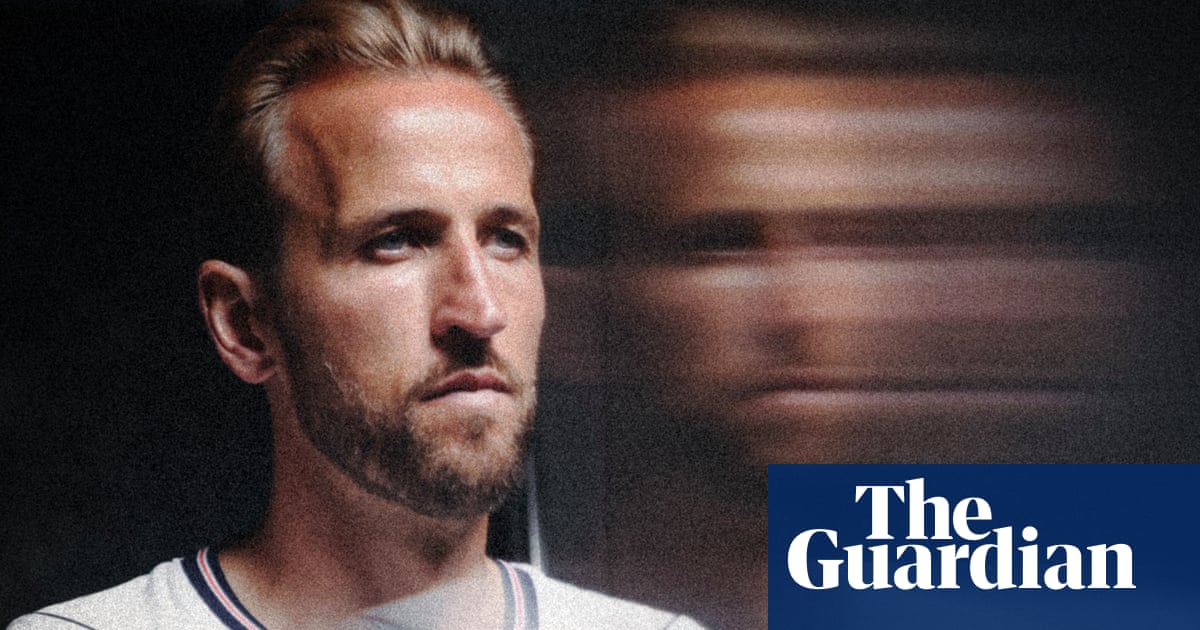
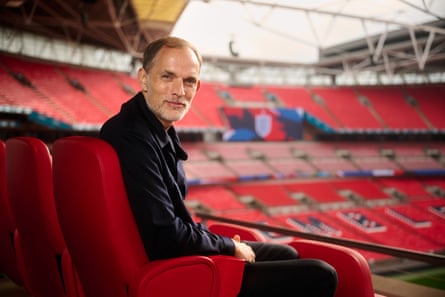
The venue where one footballing great’s World Cup journey ended will witness the beginning for another. Little did anybody know at the time that Diego Maradona’s appearance for Argentina against Nigeria in 1994 would be his last on football’s biggest stage. It was then the Foxboro Stadium. Fast forward 32 years. Same place, different name. At the Boston Stadium, Erling Haaland will play in the World Cup for the first time as Norway face Iraq on Tuesday.

Careers can be defined by this tournament. It is a reference point, for example, that George Best never featured in one. “I think he is the world’s best goalscorer,” said the Norway head coach, Ståle Solbakken. “He is physically fit. I think he has gradually played better and better in training.

“He is where he wants to be and hopefully the team can give him the service he needs to get goals. If you give Erling chances, he has a tendency to score,” Solbakken, who does a decent line in understatement, added.

The 58-year-old gave a short shrift to speculation regarding Real Madrid trying to sign Haaland. “We haven’t talked about it at all,” he said. “It doesn’t interest me and I haven’t heard anything about it.”

Half a mile from the stadium, the global media representation as Norway completed Monday’s training session told a story. Tore André Flo was regarded as an formidable international striker until Haaland burst on to the scene, smashing all records before him. The amiable Flo was smart enough to talk around a question from a member of the French media over who is the better striker, Haaland or Kylian Mbappé.

Flo did, however, assert this is the most talented batch of Norwegian players in history. “I think so, yes,” said the former Chelsea player. “If you look at their abilities with the ball, where they play, we have the top scorer in the Premier League and the captain of the team that won the Premier League. So there are some big superstars in this team. There are now more than two. There are lots of players who can positively decide a result. There are threats on the wings, centrally, the opportunities can come from anywhere. Offensively they are very strong.

“That applies a bit of pressure but at the same time it is 28 years since we have been here so they have already achieved something that the Norwegian people are happy about. Yes, there is some pressure but there are a lot of other teams with more pressure than Norway.”

Flo shrugged off any sense Haaland could wilt under the weight of expectation. “Every year he is going to a new level,” he said. “He has gone from smaller clubs to bigger and huge clubs. He has continued to do well so it doesn’t seem to affect him. I expect he will just keep on going.”

It would be incorrect to regard Martin Ødegaard as a bit-part player in this scene. The Arsenal midfielder is crucial to Norwegian hopes. And, indeed, to chance creation for Haaland. “I am very happy those players are Norwegian,” the Brentford defender Kristoffer Ajer says. “It is a huge advantage for us to have two players who are among the best in the world. They come here with a lot of confidence and hopefully they can produce the goals and assists we need. They will always get the most attention but I feel like focus has shifted towards the team. We are humble but very confident.”

It is only natural to ponder how the extraordinary Haaland – who averages more than a goal per game at international level – will perform at a World Cup. Iraq provide a favourable start in his quest for the Golden Boot. Senegal and France should offer sterner tests.

Solbakken believes he “won’t have to say a lot” to incentivise his team and sought to defuse last week’s row with Scotland, after the cancellation of a training game triggered fury in the Norway camp. “I am finished with that,” Solbakken added. “Now for me it is good luck to Scotland. I have always supported Scotland as a big Liverpool fan; Alan Hansen, Kenny Dalglish, Steve Nicol. I didn’t like what happened there but that has been over for a long time now. No hard feelings.”

Haaland’s World Cup buildup has involved golf with childhood friends in Marbella and taking in game five of the Stanley Cup final during Norway’s training camp in North Carolina. The Manchester City man has confidently predicted his country will get through the group stage. If that happens he would upstage his father.

Alf-Inge Haaland was part of the Norway squad which finished bottom of their group when the tournament was held in the US in 1994. In a documentary released on his YouTube channel this week, Erling tries on Alf-Inge’s strip from that tournament. “‘Haaland 18?’” laughs Erling. “Too high a number, that.” His sense of humour is dry. In the same video, he reads out messages written on City strips from the departing Bernardo Silva and John Stones. “I needed you for the Champions League,” wrote Silva. Haaland nodded. “It’s true they couldn’t win the Champions League until I arrived.”

That quest for City, Silva and Haaland ended in 2023. In Massachusetts, another one will take flight. Norway’s dreams depend on Haaland. The 25-year-old’s already exalted position in this game will be elevated even further if he seizes the moment.

OnlyFans: Inside the Machine review – monumentally grim and unsexy TV | Television | The Guardian

Keyword – Television & radio
Trefwoorden – Television, Television & radio, Culture
Title – OnlyFans: Inside the Machine review – monumentally grim and unsexy TV | Television | The Guardian
Author – https://www.theguardian.com/profile/stuart-heritage
Link – OnlyFans: Inside the Machine review – monumentally grim and unsexy TV | Television | The Guardian
Publish date – 2026-06-15T21:00:35.000Z
Category – Culture
URL – https://www.theguardian.com/tv-and-radio/2026/jun/15/onlyfans-inside-the-machine-review-monumentally-grim-and-unsexy-tv

I n the grounds of a huge house in Manchester, dozens of dejected-looking young men and women – none of them fully dressed – mill around supercars they do not own. Nearby, a young woman with a faraway stare touches her lips in a rough facsimile of sexual availability. Inside, a Twister board lurks next to a pile of discarded clothes.

The whole setup is preposterously depressing, a kind of Requiem for a Dream for the modern-day influencer, but it turns out that the whole thing was designed as a content day for OnlyFans models – a way for them to spiral through outfits and locations and poses at speed for content they can dole out to subscribers over the coming months. Done right, it will make them rich.

But not as rich as their manager, who stands in the background with a rocket lolly in his hand. These are all his clients, and he will take 30% of the income earned by each of them. Little wonder he looks pleased with himself. And yet as monumentally grim as this tableau is – like an art installation designed to be as unsexy as possible – the BBC documentary OnlyFans: Inside the Machine is keen to let you know that this is still the system at its most legitimate.

OnlyFans is, of course, an online subscription platform that has often presented itself as the ethical answer to sex work. The site makes a billion pounds annually, paying out millions to the creators who take photos and videos of themselves in return for cash. Seen through the lens of the platform itself, OnlyFans is an empowering vehicle for the unalloyed wealth generation. But where there is money, exploitation always follows. And if rubbing an ice-cream on your cleavage represents the respectable end of OnlyFans management, the documentary does an incredibly good job of showing how much worse it can get.

Essentially, a horde of young men (it is almost always young men) has entered the OnlyFans management game, often lured in by videos showing the extreme wealth such schemes can generate. The whole thing is transparently an unregulated get-rich-quick scheme, and as we learn, these managers are everywhere. Amber Haque, the film’s presenter, meets with Gia Clarke. Although Clarke is one of the UK’s most successful OnlyFans models, she is overwhelmed with approaches from would-be managers to the extent that she has to sift through them to find messages from paying subscribers. She calls one on camera. He promises to triple her income. She assumes that she’ll have to pay him 50% of it, and in return he’ll run her page into the ground.

How he’ll triple her income is never stated, but the implication is that it won’t be quite as ethical as OnlyFans likes to make out. One woman says her management pressured her into being more explicit on camera than she was comfortable with. Another says she was strangled by masked intruders after denying her manager’s attempts to pressure her into escorting. The film also uncovers an entire Telegram group of OnlyFans managers who teach each other how to coerce their models into doing what they want. The managers in this group sell models to each other without their knowledge. Many change the bank details on the accounts so the models never know how much they’re earning and can’t question when they don’t get enough of it back. The whole thing is resoundingly bleak.

What the film does brilliantly is position all of this in the crosshairs of the wider social moment. Young men commoditising women against their will is a very manosphere way of behaving, but then there’s also the studied impassivity of big tech to contend with. OnlyFans, the film alleges, knowingly turns a blind eye to these abuses to protect the bottom line. When creators write to them complaining about their treatment at the hands of unscrupulous managers, they typically receive in return a standard form letter from OnlyFans washing its hands of the whole mucky business. (The company says the following in response to the film: “OnlyFans take the safety of our users incredibly seriously and invest heavily in measures to protect our community. In addition to our own proactive safety controls, if anyone raises a concern about a creator’s account we will immediately restrict the account, conduct an investigation and take action to ensure the creator is in control of their OnlyFans account. We work closely with law enforcement to support investigations and with charities and expert groups to continuously evolve our safety features.”)

With stuff like this, you have to seize upon the smallest glimmers of hope. And the film presents us with the tiniest glimmer. A lawyer suggests that it is only a matter of time before the platform is sued for negligence given the sheer scale of human trafficking it seems to enable. If and when that happens, change is likely to come. Until then, Inside the Machine leaves you with the impression of a system where everyone takes a cut, but the women at the centre are left to pay the price.

Only Fans: Inside the Machine aired on BBC Three and is on iPlayer now

Russian artist and critic of Putin shot dead in ⁠eastern Poland | Poland | The Guardian

Keyword – World news
Trefwoorden – Poland, Russia, Vladimir Putin, Europe, World news
Title – Russian artist and critic of Putin shot dead in ⁠eastern Poland | Poland | The Guardian
Author – Reuters in Warsaw
Link – Russian artist and critic of Putin shot dead in ⁠eastern Poland | Poland | The Guardian
Publish date – 2026-06-16T11:47:19.000Z
Category – News
URL – https://www.theguardian.com/world/2026/jun/16/russia-artist-putin-critic-robert-kuzovkov-shot-dead-poland

A Russian artist critical of Vladimir Putin was shot and killed in ⁠the eastern Polish town of Biała Podlaska, a Polish prosecutor has said.

Five shots were fired at the ⁠victim, including one ⁠to the head, in the attack on Monday, ​said Marcin Kozak, a spokesperson for the district prosecutor in Lublin.

Two Belarusians ⁠have been detained but not charged in connection with the case, he added.

Local media identified the victim as Robert ⁠Kuzovkov, who was also known by his artistic pseudonym Semyon Skrepetsky, a Russian ​artist and performer known for ‌his criticism of the Russian ‌leader.

Kozak confirmed that the victim, who prosecutors identified as Robert K, ‌had been engaged in artistic activity in which he expressed criticism of the current actions of Russian authorities.

Three days before he was killed, Skrepetsky had travelled to Berlin on Russia Day, a 12 June holiday marking the country’s declaration of sovereignty before the ‌collapse of the Soviet Union, where he staged a protest with an icon-like caricature of Joseph Stalin and Putin, according ​to the Meduza news outlet.

The identity of the victim would be a key element for the investigation, Kozak said.

Poland says its role as a hub for military and other supplies to Ukraine has made ⁠it a target for Russian spies trying to gather information on ​support for Kyiv’s ​effort to repel Russia’s invasion, ​as well as engage in acts of sabotage.

The Russian ​embassy in Warsaw ‌was not ​available for comment. ​Jacek Dobrzyński, a spokesperson for Poland’s special services minister, said the Internal Security Agency had been cooperating closely with police and prosecutors on the matter.

Palestine Action ban will be overturned, group’s co-founder vows | Palestine Action | The Guardian

Keyword – UK news
Trefwoorden – Palestine Action, Protest, Court of appeal, Law, UK security and counter-terrorism, Counter-terrorism policy, Politics, UK news
Title – Palestine Action ban will be overturned, group’s co-founder vows | Palestine Action | The Guardian
Author – https://www.theguardian.com/profile/haroonsiddique
Link – Palestine Action ban will be overturned, group’s co-founder vows | Palestine Action | The Guardian
Publish date – 2026-06-16T12:00:01.000Z
Category – News
URL – https://www.theguardian.com/uk-news/2026/jun/16/palestine-action-ban-will-be-overturned-groups-co-founder-vows

The co-founder of Palestine Action has said the battle to overturn the terrorism ban on the direct action group will be won – in the courts or “on the streets”.

On Monday, five court of appeal judges ruled that a ban on the organisation was lawful, reversing the high court’s February judgment , which they said had wrongly limited the home secretary’s discretion on national security.

Huda Ammori, who as a founder of Palestine Action – the first direct action protest group to be banned under the Terrorism Act – brought the legal challenge, said she was disappointed but remained confident of victory.

“I‘m certain that legally we are correct that this ban is disproportionate to free speech and the right to protest. I think that’s really clear,” she said. “We just need to get to the right court that’s going to recognise that and we’ll take it all the way up to the European court of human rights, if needs be.”

At the same time as the legal challenge has gone through the courts there has been a civil disobedience campaign with more than 3,000 people arrested, mainly for holding placards supporting Palestine Action. Another 117 were arrested outside the court of appeal on Monday as well as two outside the Old Bailey, where a criminal trial involving activists from the group is taking place.

Ammori said such defiance remained key. “This case is completely political, and the way we are going to win this is on the streets,” she said. “Everyone who sacrificed and stood up against this, all of that is bringing us closer and closer to the day when we are victorious. ”

As an illustration of what she termed the politicisation of the case, Ammori highlighted the court of appeal judges’ assertion that “Palestine Action has little or nothing in common with the suffragettes”.

The suffragettes carried out a nationwide bombing campaign while Emily Davison, who is commemorated by two statues, attacked a clergyman with a horse whip after mistaking him for the then chancellor, David Lloyd George. Ammori said of the judges’ comparison: “It just is completely inaccurate and quite crazy that they even felt like they needed to make that comparison.”

Monday’s judgment was the second blow for Palestine Action after Friday’s sentencing of four activists involved in a 2024 raid on an Israeli manufacturer’s arms factory near Bristol.

They were convicted by a jury of criminal damage for smashing up drones and other equipment at the Elbit Systems UK site – having been restricted by the judge in what they could say about their motivations for their acts – and in one case of grievous bodily harm without intent. At the sentencing the judge ruled there was a “terrorist connection” – which had never been put before the jury – to the criminal damage charge.

“It feels like that this whole thing has been orchestrated to ensure convictions and show people can be sentenced as terrorists to then justify the ban on Palestine Action,” said Ammori.

Despite the setbacks, she urged supporters to stay strong. “Remember, who we are acting in solidarity with, which is the Palestinian people, who, despite all of the setbacks and challenges they face, including being labelled as terrorists, are continuing to resist for their freedom,” she said. “And [remember] that we are acting in solidarity with them and we can take strength from the Palestinian people and that whenever there is repression, there is more resistance.

“The way that we respond to this is by fighting even harder, that every struggle has its setbacks. But we are going to win in the end. We can’t give in. We can’t be deterred.”

The home secretary, Shabana Mahmood, said: “The court has found that Palestine Action has carried out acts of terrorism, celebrated those who have taken part in those acts and promoted the use of violence. It is not an ordinary protest or civil disobedience group, and its actions are not consistent with democratic values and the rule of law.

“This decision does not affect lawful protest in support of the Palestinian cause, which remains a fundamental democratic right. There is a difference between supporting Palestine and supporting a proscribed terrorist group.

“We will always take the strongest possible action to protect our national security and keep the public safe.”

The era of trillionaires will be dire for democracy. Here is how we can fight back | Gabriel Zucman | The Guardian

Keyword – Opinion
Trefwoorden – Income inequality, US news, Elon Musk, US politics, SpaceX, US markets, Stock markets, Money
Title – The era of trillionaires will be dire for democracy. Here is how we can fight back | Gabriel Zucman | The Guardian
Author – https://www.theguardian.com/profile/gabriel-zucman
Link – The era of trillionaires will be dire for democracy. Here is how we can fight back | Gabriel Zucman | The Guardian
Publish date – 2026-06-16T10:00:06.000Z
Category – Opinion
URL – https://www.theguardian.com/commentisfree/2026/jun/16/trillionaires-dire-democracy

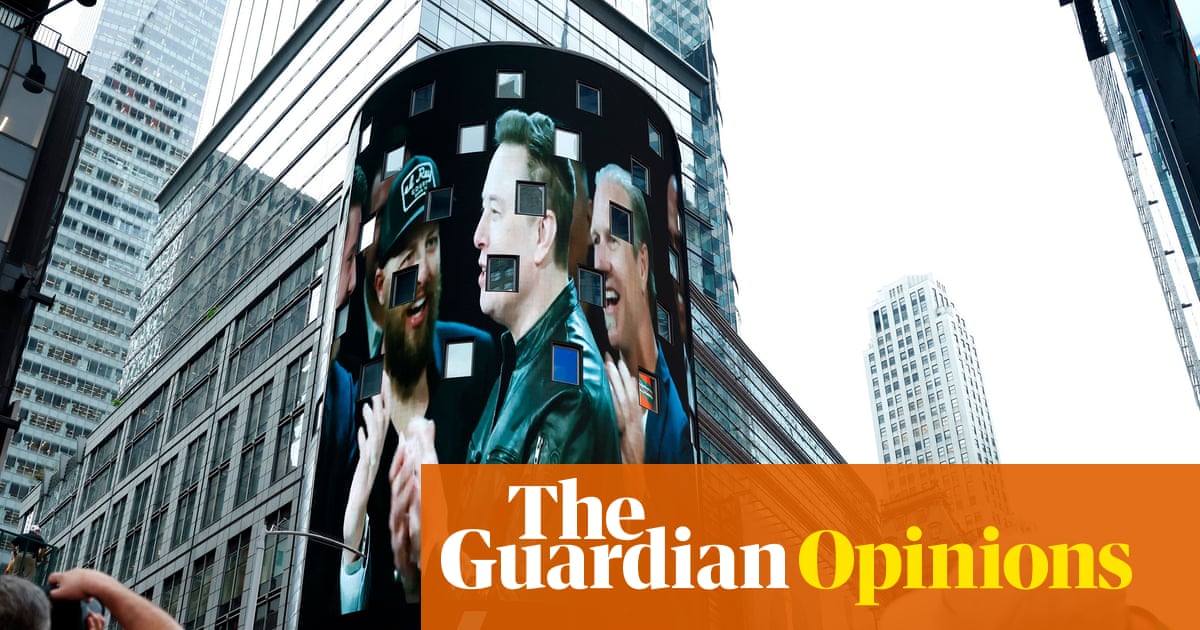
T he stock market listing of SpaceX has led to an outpouring of celebration, from Wall Street to Silicon Valley. Yet those who rejoice in Elon Musk ’s fortune surpassing the $1tn mark need to be reminded of a simple and vital truth: the mere existence of trillionaires is a major political and economic problem, probably the defining issue of our time.

Simply put, there is a fundamental tension between extreme wealth and the very possibility of democracy. Extreme wealth is always an extreme power. It’s the power to stifle competition, the power to shape public discourse, the power to influence policymaking, the power to buy elections, the power to stall social progress.

This problem is not new: all the thinkers of democracy, from Aristotle more than 2,000 years ago to Lea Ypi at the London School of Economics today, have highlighted the corrosive nature of extreme wealth for society.

Even conservative thinkers acknowledge it. James Madison, the father of the US constitution and a hero to today’s conservatives, famously wrote that wealth inequality is as poisonous for democracy as war. “In war, too, the discretionary power of the Executive is extended; its influence in dealing out offices, honors, and emoluments is multiplied … The same malignant aspect in republicanism may be traced in the inequality of fortunes,” he wrote

For some time, after the second world war, it looked like extreme wealth belonged to the past and that we could forget this problem. After the shocks of the wars and the rise of progressive income and inheritance taxation – with top marginal tax rates that reached nearly 100% in both the UK and the US in the postwar decades – extreme wealth had largely disappeared. But it’s now coming back in full force.

In 1989, the first year the Sunday Times Magazine compiled its famous rich list, the 0.001% wealthiest families living in the UK – about 200 families – owned wealth equivalent to 5% of UK GDP. Today that same group of the population owns wealth equivalent to 20% of UK GDP. It means that if they spent all their wealth, these 200 families could buy the equivalent of a fifth of all the goods and services produced in a given year in the UK.

The explosion has been even bigger in the United States, where the wealth of the super-rich now far exceeds its peak of the beginning of the 20th century. At the height of the Gilded Age, around 1910, the four largest American fortunes owned wealth equivalent to 4% of US GDP. Today, that same tiny fraction of the population, the top 0.00001% – which now includes 19 households – could buy 14% of everything produced in a given year in the US.

That’s how Musk could buy Twitter on a whim for $44bn in 2022; that’s how Larry Ellison can buy TikTok, CBS and CNN today; that’s how billionaires could account for 20% of all political donations in the 2024 federal election cycle.

There is sometimes a view that the wealth of these billionaires is somehow “virtual”: it is not like cash at the bank but merely notional. The super-rich would be benign figures, according to this view, less influential than unions or advocacy groups.

But extreme wealth is in fact always very real, and a lot of the problems in today’s world are downstream of the booming influence of the super-rich on policymaking.

The first trillionaire himself couldn’t illustrate it better. Tesla, the company Musk founded in 2003, didn’t turn a profit until 2020. This didn’t prevent him from buying Twitter, and turning the social network into a platform for a variety of political and ideological causes, including getting Donald Trump re-elected. His fealty earned him a quasi-cabinet position, the direction of the so-called “department of government efficiency (Doge), with total freedom to slash government spending not to his liking.

During his tenure, Doge shut down the US Agency for International Development (USAID), leading to the termination of numerous programs tackling malnutrition, HIV and preventable diseases around the world. A study published in the Lancet found that these funding cuts could result in more than 14m deaths, including 4.5m in children younger than age five, by 2030. Great wealth is never “virtual”.

When the power of wealth is wielded by sociopaths, the consequences are a matter of life and death. But the individual merits or kindness of billionaires are in fact irrelevant. No one should want to live in a society where one single individual can be worth $1tn, no matter their personal virtues: such levels invariably skew power, distort marketsand sap our democratic ideals.

So where do we go from there?

While there is an array of policies that can constrain the power of the super-rich, any solution has to involve fixing one of the most grotesque anomalies of our time: that the super-rich often live nearly tax free today.

A recent body of research, summarized in my book We Need to Tax Billionaires , has established that the super-rich pay very little income tax, because they find ways to report very little income. There was even one year when Jeff Bezos pretended he was so poor that he claimed – and received – the child tax credit. All of this may be legal, but it fuels the explosion of wealth and power at the top.

The most effective way to start reining in billionaires is to create an unavoidable minimum tax on their wealth. In a report commissioned from me by the G20 in 2024, I proposed a minimum tax rate equal to 2% of wealth for people with net worth above $100m. This would make it impossible for the super-rich to pay less tax than middle-class workers – a matter of basic equality before the law.

Beyond democracy and fairness, taxing billionaires would now have large budgetary implications. The flipside of the upsurge in their wealth is that the potential revenue gains from a billionaire tax are now large. A minimum tax equal to 2% of wealth for households with net wealth above £100m in the UK would bring in £15bn annually – 0.5% of GDP. £15bn, from just about 1,000 families, each year.

For comparison, the fiscal savings expected from the catastrophic 2024 decision by the UK prime minister, Keir Starmer, to scrap the winter fuel allowance for retirees were estimated at about £1.5bn annually.

It is time to break decisively with the perverse logic in which retirees, the poor or immigrants are expected to balance the budget, while the rich are to be allowed to live tax-free in their own parallel society. There cannot be a law more lenient for the rich and powerful than for the rest of us. If ever there was a time to act, it is now.

Gabriel Zucman is a professor of economics at the Paris School of Economics, a summer research professor at the University of California, Berkeley, and founding director of the International Tax Observatory. He is the author of We Need to Tax Billionaires.

‘I call this dish Frida Kahlo Against the World. It’s hot and horny!’ My thrilling week of Fridamania in Mexico City | Frida Kahlo | The Guardian

Keyword – Art and design
Trefwoorden – Frida Kahlo, Art and design, Culture, Painting, Tate Modern, Art, Exhibitions, Mexico City holidays
Title – ‘I call this dish Frida Kahlo Against the World. It’s hot and horny!’ My thrilling week of Fridamania in Mexico City | Frida Kahlo | The Guardian
Author – https://www.theguardian.com/profile/andrewgilchrist
Link – ‘I call this dish Frida Kahlo Against the World. It’s hot and horny!’ My thrilling week of Fridamania in Mexico City | Frida Kahlo | The Guardian
Publish date – 2026-06-15T12:35:13.000Z
Category – Culture
URL – https://www.theguardian.com/artanddesign/2026/jun/15/frida-kahlo-mexico-city-tate-fridamania

‘T oday you’re going to eat art,” says Federico Valdez, a chef at the School of Mexican Cuisine and a man so passionate about food he has the word Queso (Cheese) tattooed on his forearm. “Today,” continues Valdez, “you’re going to eat history.” What unfolds, in a sun-filled dining room lined with Mexican flowers, books and artefacts, is a three-course feast inspired by Frida Kahlo , her life, her art and her loves, including her first lesbian affair.

The starter, inspired by her childhood fascination with revolution, is a lightly spiced Mexican take on pirozhki, the Russian favourite. The main dish – served with pulque, an agave-derived drink Kahlo loved – taps into her rebellious spirit. “It’s called Frida Against the World,” says Valdez, as we are presented with a giant stuffed chilli that sits amid a nutty, beany sauce similar to the one eaten at Kahlo’s wedding to Diego Rivera, then the most famous artist in the world, now much more in her shadow.

“I wanted this to be hot and horny,” says Valdez, explaining that halved figs were added to reference Kahlo’s sexuality. “Her first love, with a female teacher, happened at a time when Mexico wasn’t so open. I wanted to get in all that spicy gossip. I’m not a big fan of playing it safe.”

I’m in Mexico City with a Tate delegation just as the huge jacaranda trees are blooming purple and violet across its parks and boulevards – to follow in Kahlo’s footsteps ahead of Frida: The Making of an Icon , a show of more than 30 of her works at Tate Modern in London that seems destined to be a summer blockbuster, adding yet more fuel to Fridamania.

One work, Self Portrait With Thorn Necklace and Hummingbird, was painted in 1940 after her painful divorce from Rivera. A spider monkey, similar to the one he gave her as a present, is pulling on her thorn necklace, drawing blood. The two soon remarried, Kahlo inscribing the clocks in their house with the years of their separation and reunion.

“The exhibition is like a movie,” says Tobias Ostrander, its curator. “Frida is the star but it’s also about her life, her people, her impact.” Charting Kahlo’s rise from unknown painter to global phenomenon, the show will also examine merch (expect a Kahlo Barbie) and gauge her influence on later artists.

On display, too, will be many of the artist’s treasured possessions, including her brilliantly patterned tehuana dresses. Graciela Iturbide’s ghostly photographs of her crutches, customised medical corsets and prosthetic leg will also feature. These were taken 50 years after Kahlo’s death, when all her belongings were finally freed from the bathroom in which Rivera had ordered them to be locked away.

This took place at Casa Azul, the house in Coyoacán (The Place of the Coyote Owners) where Kahlo was born and spent most of her 47 years. It’s now a beautiful, beguiling museum with smooth exterior walls painted a gorgeous blue. These border shiny red concrete paths that thread through fountains and lush gardens bursting with palm, yucca, cactus and bougainvillaea. Off in a corner, seen through trees, a maroon pyramid with yellow steps displays on its ledges Rivera and Kahlo’s pre-Hispanic, Aztec and Toltec artefacts.

“We don’t know exactly where the blue came from,” says Perla Labarthe Álvarez, the museum director. “But in her diary, Frida expressed what the colour meant to her: purity, electricity and love. Because of her health – she had surgery all her life, more than 30 operations – she was at home a lot so it had to be a comfortable place where she could rest. Many of her still lifes were done in the garden. She called her home A Place Full of Places.”

It’s a perfect description. For this is a breathtakingly evocative location, even leaving aside the fact that Trotsky lived here for two years with his wife, having a brief affair with Kahlo.

Tours begin in the living room, with its hefty pyramid-style fireplace designed by Rivera and, as an old photo shows, once flanked by two of his macabre Judas dolls, papier-mache devils that are stuffed with fireworks and set alight at festivals. Opposite is Kahlo’s mesmerising portrait of her beloved photographer father, painted 15 years after he died, his eyes as captivating as hers.

On the walls, photos and texts detail the polio Kahlo contracted at the age of six, leaving her with one shorter leg, and the trolley-bus crash at 18 that impaled her on an iron handrail and left her in pain for much of her life, as well as unable to have children.

She could never paint this accident, even though what she did paint was often deeply painful and personal – and these works were largely created at Casa Azul, upstairs in her studio, where visitors can see the easel adapted to allow her to use brushes lying on her back or seated in her wheelchair.

In the next room is the four-poster single bed in which her mother placed an overhead mirror, giving Kahlo, frequently confined there, both a distraction and a subject. “I paint myself,” she once said, “because I am so often alone and I am the subject I know best.”

As well as her corsets, she customised her orthopaedic footwear, turning one stepped-up mid-calf red boot into a work of art. Embroidered with patterns and adorned with a blue ribbon, the chunkily laced boot now proudly stands in its own case, extraordinarily alive, looking like it could take the whole house down with one kick. Meanwhile, on a dresser, Kahlo’s ashes sit in a delightfully playful ancient urn. Boasting cartoon-like arms and legs, it’s shaped like a toad, a nod to her affectionate term for Rivera. “You found me torn apart,” says a sign, “and you took me back full and complete.”

Across the courtyard, you can see Kahlo’s crutches and corsets, one decorated with a hammer and sickle. She painted herself in these corsets, too. In Marxism Will Give Health to the Sick, a 1954 work that hangs close by, the garment has morphed into her skin, her bare breasts. A bald eagle wearing an Uncle Sam hat is being throttled while Marx’s enormous hands reach out to cradle Kahlo. As ever, her penetrating, all-seeing eyes stare out beneath that monobrow.

The most stunning work at Casa Azul, though, is the last one she ever painted, completed eight days before her death in 1954. Called Viva la Vida, or Long Live Life, it portrays several sun-drenched watermelons, the de facto national fruit of Mexico. In some places, their flesh is as red as blood. One has been cut in half in a crisscross pattern, echoing the Vs of the title, which appears in big black letters on another slice. It’s as if the fruit itself, life itself, is talking to you, imploring you. Live, live.

What you take from Casa Azul is an almost overwhelming sense of both Kahlo’s talent and her resilience, especially as you walk the neighbouring streets she skipped along as a child in her sailor’s blouse and hat, on her way to the school where she and her friends would later plant what many like to call a bomb. It was actually a firecracker, albeit one powerful enough to blow out some windows. No one was hurt and, unlike some, Kahlo escaped expulsion.

There’s a park not far off, now named after her, with a pyramid by a fountain and lifesize bronze statues of Rivera and Kahlo. She’s ahead of him, purposeful, her head half-turned, as he follows happily in her wake, smiling gently and clearly in awe of this woman, despite all his affairs. The bar they liked, La Guadalupana, still stands, a shrine to el toreo with the heads of bulls on its walls, as well as paintings and posters of fighters. Perhaps it’s more appealing if you’ve had, as Rivera and Kahlo sometimes did, “a tequila or 10”.

Downtown, we find, the streets are not so tranquil. Some are barricaded and hoarding has been placed around national monuments. These were erected in response to a recent march of 180,000 women, furious at the rates of femicide in Mexico. About 2,500 women are murdered a year , but less than a third are categorised as femicides even though there is evidence they should be. Less than a quarter of femicides are punished.

Would Kahlo have painted this outrage if she were alive today? She already did. In 1935’s Unos Cuantos Piquetitos, or A Few Small Nips, Kahlo recreates a story she read in the paper that left her incensed. A woman lies slashed and naked on a blood-splattered bed, murdered by her husband, who holds a knife and would later dismiss his crime to the police with the words of the title. Initially, she put the children in, as they witnessed the entire horror, but this was just too brutal and they have now gone.

Kahlo also painted in a studio across town, in the bohemian neighbourhood of San Ángel. It’s a beautiful, boxlike, three-storey building painted that signature blue. A rooftop bridge links it to Rivera’s much bigger workplace, a white-and-ochre structure where he would often put in 15-hour days.

Built on modernist Le Corbusier lines and now part of a museum, these studios caused a sensation when they first appeared. Unadorned constructivist creations sitting among the elaborate residences of San Ángel, they’re still ringed by a superb perimeter fence of tall, perfectly placed pole-like cactuses, this being a way for both artists to bring Mexico and nature into their workplaces.

Rivera’s studio is magnificent, overflowing with ceramics and artefacts from his folk-art collection, all arranged alongside paintings and paintpots. There’s an almost party vibe: death masks sit grinning on chairs, those Judas dolls leer conspiratorially around the windows, while chorus lines of strangely joyous skeletal figures dance wildly across the walls above. It feels appropriate: the parties here were legendary, attended by presidents, revolutionaries and exiles alike, as well as Hollywood stars such as Charlie Chaplin.

Over the bridge, above the bath in Kahlo’s studio toilet, you can see a copy of What the Water Gave Me, her 1938 painting of her feet as she bathed, with elements adrift on the water symbolising events in her life, from exotic plants to nude figures on a bed to an erupting volcano. There’s not a whole lot else to see in her studio, Kahlo having packed everything up and left after catching Rivera in bed with her sister. According to the museum guide, she told him: “I am going to get all my furniture and get out of here because I hate you.”

What the Water Gave Me is the favourite Kahlo painting of Helena Chávez Mac Gregor , writer of The Ribbon and the Bomb, a book about the artist’s continuing and even growing relevance. Its title refers to the words French surrealist André Breton used to describe Kahlo’s work – “a ribbon around a bomb” – although Mac Gregor thinks there’s “maybe no ribbon, only bombs” and they’re still exploding through times beyond her own, as new generations of (largely) women see themselves, their bodies, their sexualities and their struggles mirrored in her masterpieces.

“There’s the bomb of her illness,” says Mac Gregor, as she joins us for lunch at the fabulous San Ángel Inn, a former Carmelite monastery opposite the studios famed for its gardens and margaritas. “She’s vulnerable yet she’s strong and erotic, not what you might expect of someone so ill. And she was so ahead of her time, making the personal political, living on her own terms, playing with gender roles and cutting her hair. Then there are the bombs of femicide and abortion, her own.” This was chiefly to safeguard her damaged pelvis. “Frida painted these things people didn’t talk about. Even with this illness – and one year she managed only one work – she created such beauty.”

Clearly delighted, Mac Gregor adds: “Frida is more important than Diego Rivera now, which is weird because she was the artist she was because of him. He was a macho Mexican womaniser but he loved and supported her. And the essays he wrote about her work are amazing, talking about her representations of the interior and the exterior. He said she was going to be the most important artist in Mexico.” Kahlo didn’t stop there. When The Dream (The Bed) fetched $54.7m in 2025, this set a new world record for a female artist.

The Tate has been lucky to get any works at all, given how proud and protective Mexicans are of Kahlo, especially with the World Cup having just kicked off in their country. This was brought home to me at the Museo de Arte Moderno, where you can linger all you want in front of, say, a María Izquierdo – but gaze too long at a Kahlo and you’ll soon start to feel the pressure from other visitors to move on.

This happened to me twice: first in front of The Two Fridas, in which she explores her mixed heritage, dressing one self in European attire, the other in Mexican; and secondly at Self-Portrait with Monkeys (see above), in which Kahlo, faintly moustached, is seen with four of the creatures she kept as pets. They are often seen to represent the four pupils, nicknamed Los Fridos, who stuck with her even as her health made teaching harder and harder. Kahlo would also say that the monkeys in her work symbolised the children she could not have.

No visit to Mexico City is complete without a trip south to the floating gardens and canals of Xochimilco, for a voyage on one of the 500 colourful big gondola-like boats that ply its busy waterways. Kahlo loved to come with her family to these canals, which were created by the Aztecs. There’s a famous photo of her face hovering over the water, looking serene as she dips her arm in up to the elbow.

“Every boat has a female name,” says the captain of our vessel, Rosamaria, “because they are like flowers.” As we set off, smaller, faster boats speed by, bearing vendors of pulque and tacos. Before long, we are being pursued by two very loud mariachi bands, one called the Pintorescos, meaning the Picturesques, the other the Axolotls, named after the tiny, endangered and ridiculously cute species of salamander native to these waters. The Axolotls win, boarding our boat in seconds and performing for £10 a song, first Cielito Lindo (Lovely Sweet One) with its rousing singalong chorus, and then of course La Bamba.

As the Axolotls speed off in a blur of strings, brass and tight trousers, peace returns and we idle along as the afternoon sun beats fiercely down. I dangle my arm into the cool water, just like Kahlo did, and remember something Federico Valdez said as he unveiled the final course of his feast, a rice-pudding-like dish in a watermelon sauce, washed down with a liquor made from Chihuahua apples.

“This dessert is going to blow your mind,” he said, as a picture of Kahlo’s funeral appeared on the screen behind him. “Frida died – but she didn’t pass away. She was like a rocket. She just went up and up.”

Frida: The Making of an Icon is at Tate Modern, London, 25 June to 3 January . This trip was provided by Tate and Journey Latin America .

‘I’m setting myself free from shame’: Laverne Cox on her brutal childhood and life as a trans woman in Trump’s America | Television | The Guardian

Keyword – Life and style
Trefwoorden – Television, Transgender, Orange is the New Black, Culture, Life and style, Society, Television & radio
Title – ‘I’m setting myself free from shame’: Laverne Cox on her brutal childhood and life as a trans woman in Trump’s America | Television | The Guardian
Author – https://www.theguardian.com/profile/zoewilliams
Link – ‘I’m setting myself free from shame’: Laverne Cox on her brutal childhood and life as a trans woman in Trump’s America | Television | The Guardian
Publish date – 2026-06-15T04:00:02.000Z
Category – Lifestyle
URL – https://www.theguardian.com/lifeandstyle/2026/jun/15/free-from-shame-laverne-cox-trans-woman-in-trump-america

T wo days before she spoke to me, Laverne Cox had been at the premiere of a new, animated Animal Farm, in which she voices Snowball. The film is wildly controversial, for its absolutely unOrwellian, childish tone, complete with happy ending, but Cox had bigger things on her mind than film criticism.

“If we don’t wake up and don’t understand, trans people will be exterminated,” she said that day in April. “People’s rights are being taken away, people are losing their jobs, people are losing healthcare, people are being detransitioned in prison, gender-affirming care is being attacked, not just for children but also for adults. It’s never been about protecting women – it’s always been about creating a permission structure to scapegoat trans people, to dehumanise trans people, to take away our rights and to eliminate us from public life.”

This was not the language you’d expect on the red carpet, from an actor, chatshow host and reality TV star whose breakthrough role was in the gritty but emphatically upbeat Orange Is the New Black.

Cox, however, has no time for niceties. Growing up in Mobile, Alabama, in the 70s (she’s 54), she has been at the sharp edge of violent and tacit prejudice one way or another since she was a child. Physically bullied for being effeminate when she was a kid, verbally abused by her mother throughout her childhood, petrified of puberty, sexually abused as a teen, vividly confronted by the silent exclusions of poverty when she went on a scholarship to Alabama School of Fine Arts, and then, in the 90s, transitioning and living as a black trans woman, with all the street harassment that entailed, she has survived the worst of kinder times. No way is she going to keep quiet now.

Transcendent is her first book, a memoir. She was raised, along with her twin, the composer, countertenor and artist M Lamar, by a single mother. Gloria Cox was a member of the conservative African Methodist Episcopal Zion church, with plenty of her own demons to fight, including a violent father. Yet you can’t wave away her maternal cruelty, verbal and physical; a lot of casual, splenetic homophobia; a lot of domestic harshness. At one point in the book, when Lamar accidentally puts a stone through a patio door, Gloria sets off a train of melodramatic abandonment that ends with the twins in a children’s home. But the smaller details are just as hard to read, as every time Cox shows any vulnerability or enthusiasm or joy, it gets shot down. “I suspect I’m not the only one who lived a childhood with a parent who maybe didn’t fully understand them around their transness or being an artist,” she tells me, carefully, on a video call from her home in New York.

“ But I love my mother,” Cox says, “and even my brother loves and respects her. She’s a remarkable woman; she raised two kids, who were remarkable in a lot of ways, by herself. She put herself through graduate school, bought her own home, never with the help of a man. She’s an incredible woman, but there’s just a lot of trauma there.

“Part of talking about my grandfather and his cruelty,” she explains, “is to think about how that cruelty came from the remnants of chattel slavery [he grew up on a plantation], just to try to contextualise my mother’s behaviour.” Cox also subscribes to Dr Joy DeGruy’s theory of “post-traumatic slave syndrome, a set of behaviours that are passed down. The best example I can think of is when black parents say: ‘Oh my child is so lazy – they don’t work hard enough.’” That comes from the plantations, Cox says, where you would downplay your child’s achievements. “It was all about not having your child sold away from you.”

In 1983, Cox was 11, “going to sleep every night praying I would wake up different”. She tried to kill herself before she was 12. “It was literal, physical pain in my body, writing this, trying to excavate it,” she says now. “It was excruciating. It was like vomiting up the pain of that time.” Having lived through that, she decided to embrace flamboyance on a shoestring, slowly starting to dress the way she wanted, experimentally, femme-ly – all from charity shops. She calls this her “Salvation Armani” period.

This isn’t a misery memoir: it doesn’t feel as if it has an unmasking or vengeful subtext. “It’s setting myself free from the shame that festers in secrecy. You think: ‘If people know this thing about me, I will not be lovable.’ ‘There are certain things you should never tell people’ is what my mother would always say. And I lived by that. But that doesn’t work.”

I don’t really hold with talent as innate, and think of it more as a series of happy collisions, but it’s striking how gifted Cox and her twin were, in different, crisscrossing ways. They both, as teenagers, got a fees scholarship to the Alabama School of Fine Arts, “the Fame school, as I thought of it” – she for creative writing and dance, he for visual arts. This period was harder for Lamar, but that’s his story to tell. Cox went on to get a degree in dance from Marymount Manhattan College in New York, and “when you study classical ballet, you understand how hard it is to be good at something, how much you have to train and study, how much discipline, how much dedication, how much sacrifice”. She never had the right body for it, she says, and “there were so many people who were much better than me”.

And besides, this was 1993. “Madonna was going to Sound Factory and found the people for her Vogue video there. Everyone partied together; there was a period in New York where you would want club kids and drag queens and transsexuals at your party, or it wouldn’t be a happy party.”

Cox thrived in this world, partly because it was all ups and no downs. “I made a vow to myself when I was a child that I would never do drugs. And I never did. And that’s good, because I would probably be dead. I don’t think working-class black people can do drugs and be successful.

“A few guys that I dated thought they could pressure me, and I’m like: ‘ Sweetie!’ I don’t know if I’m proud of it; I guess I am, sort of. But I don’t think drugs are bad – some people can do drugs and it’s cool. I don’t have a judgment about any of that.”

The club scene changed a couple of years later with the spread of “bottle service” – shorthand for some incredibly rich guy buying booze by the bottle at a 1,000% markup, because he can. Sex and the City had a very bottle-service vibe: “One of my favourite shows of all time, but I think it shifted the nature of New York. It was capitalism bringing in very conservative people. Everything got commercialised – there wasn’t the space for artists who are broke, who bring this fabulous energy. They can’t afford to live any more and they can’t get into the same clubs.”

Cox started transitioning in 1998. She was doing a lot of off-Broadway theatre, making independent films, reality TV, wondering how she could monetise the condition of being cool, while using whatever platform she had to try to “change the conversation about trans people”. Then Orange Is the New Black came along, “with a surprisingly good budget and these great scripts. The world was so alive.”

Based on the true story of Piper Kerman, the Waspiest woman imaginable, who ended up in prison for money laundering, this was a bold, funny, bracing story about racial dynamics, gay sex, brutality and total institutional irrationality in the US women’s prison estate, in which Cox played Sophia, trans hairstylist to the lags. “What’s wild to me, particularly in Britain, is that all the conversation is about how trans women shouldn’t be in prisons with other women. Orange Is the New Black was based on a 90s memoir. She was incarcerated with a trans woman.” Cox’s is actually the longest running side-character in the series. In one memorable subplot, her pre-transition self is played by Lamar.

It began airing in 2013, when Cox was 41. It made streaming seem like a real thing, and put Netflix on the map. “I didn’t think anybody would go for it; my hope was that casting directors might see it and I could get more work. How can I parlay this into other opportunities? And then it ended up being successful. After a few months, it got crazy walking down the street, so my life changed a lot. When people ran up to me in the past, it was to assault me or call me things.”

Cox had four Emmy nominations during this period, and two Screen Actors Guild awards. Yet there just aren’t that many roles for a trans actor, and she always had other work – as a public speaker in colleges and for businesses, as a brand ambassador – which didn’t fly until 2018, when she started doing a lot of red carpet hosting for awards ceremonies and whatnot. Over the past two years, she has lost 90% of her income, however. Hosting contracts have ended and not been renewed. Corporate speaking engagements have dried up.

She’s clear about who she blames. “This regime has threatened to defund any colleges and universities that promote gender ideology, DEI [Diversity, Equity, and Inclusion].” She doesn’t even get teaching work, because “even though I’d be teaching a graduate acting class, it could be perceived as promoting trans ideology. These are the realities. I’m not complaining – I’m very blessed. I think the important thing to note is that if Laverne Cox’s income has gone down significantly, what about all the other trans people who are not as privileged and as blessed as I am? There are material consequences for this kind of discrimination and scapegoating.”

This isn’t all some bizarre side-effect of addled Trumpism, Cox says. It was all explicit in Project 2025 , the far-right blueprint produced by the Heritage Foundation ahead of Maga’s victory: “All these words had to be taken out of every piece of legislation, policy, government document: gender, gender ideology, gender identity, LGBTQ, DEI, abortion, contraception.”

Cox’s acting career was ignited by studying under Susan Batson, who has been working since the 60s, and told her: “Work is at its highest level when the character’s unfulfilled need is infused into every beat. If you can do that as an actor, it changes people.” That was Cox’s hope for acting, that it would challenge assumptions and deepen empathy. And certainly in Orange Is the New Black that turned out to be true.

She is still approached by trans people whose parents have watched that show and reconciled with them. But her identity itself has become a challenge to the politics around her. Maybe you can have a fundamentalist Christian ethno-nationalist project without subjugating LGBTQI+ people. But Cox points out that when the Nazis began burning books in 1933, Magnus Hirschfeld’s research on trans and gay people was among the first to go up in flames. For her, “we’re in a very similar moment to Germany at that time”.

Transcendent: A Memoir is published by Merky Books (£20) on 25 June

In the UK and Ireland, Samaritans can be contacted on freephone 116 123. In the US, you can call or text the 988 Suicide & Crisis Lifeline at 988 or chat at 988lifeline.org . In Australia, the crisis support service Lifeline is 13 11 14. Other international helplines can be found at befrienders.org

The grid unlocked: how does a greener power network actually work? | The Grid | The Guardian

Keyword – The Grid
Trefwoorden – The Grid
Title – The grid unlocked: how does a greener power network actually work? | The Grid | The Guardian
Author – Helena Pozniak
Link – The grid unlocked: how does a greener power network actually work? | The Grid | The Guardian
Publish date – 2026-03-30T10:14:27.000Z
Category – Labs
URL – https://www.theguardian.com/the-grid/2026/mar/30/how-a-greener-electricity-grid-works

In the 20th century, the UK’s electricity grid was shaped by coal-fired power stations, clustered in the industrial heartlands. The once world-leading system was designed for a one-way energy flow from power plants to consumers – whose use of electricity was modest and predictable.

The shift to cleaner energy and growing electrification of all aspects of life means the grid of 70 years ago is no longer fit for purpose. With power generated from a wider and more disparate range of sources, significant investment and pioneering technology are required to deliver a grid that can match supply with ever-increasing demand.

“It’s way more complicated than energy in equals energy out,” says Robert Friel, member of the Institution of Engineering and Technology’s Sustainability and Net Zero Policy Centre. “We are trying to integrate tens of thousands of energy sources into a grid that was designed to take coal energy mostly from the Midlands and move it around the country. This is a complete transformation. We’ve got to build for the future.”

Increasing demand

For instance, most of the UK’s wind power is generated off Scotland and in the North Sea, where a single turn of a turbine at Dogger Bank wind farm generates enough electricity to power a home for two days . But transporting that electricity to London and the south-east, where demand is higher, requires an overhaul of national transmission and distribution networks to overcome bottlenecks after decades of little expansion.

By 2035, Ofgem forecasts that the UK’s renewable generation capacity will grow from 120GW in 2024 to 300GW, resulting from ambitious targets for wind and solar power, which should largely free the UK from volatile prices of imported fossil fuels.

But the new grid isn’t just about integrating more clean power; it is also about helping the system cope with huge increases in demand.

UK consumers will be using twice as much electricity by 2050, the Climate Change Committee predicts [pdf], as petrol cars and gas-powered heating systems are displaced by electric vehicles (EVs) and heat pumps. As well as transport and heating, households are using electricity more than ever for entertainment, communication and home working, with on average 13 electrical devices per household – although more efficient appliances help keep energy use lower. As reliance upon cloud-based services and artificial intelligence (AI) grows, datacentre usage is expected to more than double by 2030.

To help meet this soaring demand, record levels of investment in the UK’s transmission network were recently announced by Ofgem , the UK’s energy regulator, as part of its framework for ensuring the companies operating the UK’s energy networks have sufficient revenue to invest in and run them. Nicola Connelly, CEO of SP Energy Networks, which plans to invest almost £12bn to 2031 in delivering critical energy infrastructure, noted: “If the UK wants to deliver on its ambition to be a clean energy superpower and capitalise on its natural resources, then it needs the electricity grid to match demand. We are committed to delivering that at pace, combining unprecedented levels of investment with a focus on ensuring fair returns for consumers and investors.”

Changing consumer habits

There’s a cultural change afoot too, as customers move from being passive consumers of energy to generating their own and, in some cases, selling it back to the grid. Faced with the upfront costs of installing EV chargers and solar panels, many hope to reap the benefits.

Aggregators – companies that bring together smaller energy producers – will play an increasing role from a consumer perspective in selling and buying electricity at the best price.

Consumers are also getting smarter at using power when it’s cheaper, aided by growing levels of automation, which will affect demand, habits and usage down the line.

Technological innovation

To cope with increasing demand, technologies are being introduced to increase the capacity of existing infrastructure and reduce the amount of new power lines that are inevitably needed to transmit twice the electricity we use today.

Much of the new infrastructure planned will be offshore and under the sea – which wasn’t an engineering option back in the 1950s when the supergrid’s overhead transmission lines were conceived and built.

However, the infrastructure being built and upgraded needs to be smarter, flexible and more responsive to the flow of energy moving in different directions across the network, and increasingly automated. The continued use of AI will help improve management of supply and demand in real time.

“It’s possible that AI tools could see problems emerging in a system with thousands of generators in a way that a few control engineers just couldn’t,” says Friel.

Friel says there’s also scope to understand far more about household consumption and generation at a granular level and “how potentially thousands of domestic batteries and millions of electric cars will come together. Smart meters are part of [supplying this data] but we need more information to enable a digital system to emerge.”

As well as providing vital data, smart technology is helping give customers more flexibility, says Rozlyn Brennan, smart solutions director at ScottishPower. “Households are now often producers of energy as well as consumers, and smart technology is allowing people to choose when they use their energy, whether it’s smart EV charging, or saving money by using appliances out of peak times.”

Innovations are creeping in. SP Energy Networks, for example, has created a detailed “digital twin” of Britain’s electricity network. Using AI, it allows the modelling and testing of digital solutions to manage increased electricity demand on its real-life counterpart, helping to prevent outages and identify the most efficient way to operate the network.

Other emerging uses of AI include using it to enable individual PV panels on solar farms to dynamically adjust to different lighting conditions and accurately find the optimal operating point.

But to get the benefits of emerging technologies and modernise the grid, the UK needs to get going, says Friel – and this requires vision and commitment of the kind that inspired the first supergrid.

Its successor must be built to meet the needs of a cleaner, more digital and decentralised world. This isn’t just an engineering challenge but a social one, demanding collaboration between grid operators, policymakers and consumers to create a system that’s resilient, efficient and fit for the future. “We’ve come further than we might have imagined in the last 10 years, but we’ve still got a long way to go,” adds Friel. “Transforming the grid [will require] billions of pounds, but the danger is we don’t think big enough.”

What’s the secret to a great TV dinner? | Chefs | The Guardian

Keyword – Food
Trefwoorden – Chefs, Food, Main course, Snacks, Salad, American food and drink, Vietnamese food and drink, Mexican food and drink, Chicken, Meat, Rice, Noodles, Summer food and drink, Herbs and spices, Pasta
Title – What’s the secret to a great TV dinner? | Chefs | The Guardian
Author – https://www.theguardian.com/profile/anna-berrill
Link – What’s the secret to a great TV dinner? | Chefs | The Guardian
Publish date – 2026-06-16T12:00:02.000Z
Category – Lifestyle
URL – https://www.theguardian.com/food/2026/jun/16/great-tv-dinner-summer-kitchen-aide

What are the best summer TV dinners? Mel, by email Few are as committed to teas on knees as Ella Risbridger: “It appals my parents, but I eat on the sofa just about every day,” says the author of The Kitchen Book . The key, she says, is not having to cut anything up: “One-handed cooking is a good way of thinking about it,” which is to say that Mel should be looking for meals that require only a fork, a spoon or chopsticks. “That’s easier to do in winter, because then you’ve got the likes of casseroles, soups and stews, whereas a lot of summer food is based on big sharing platters, which are not ideal, because, while you can put them on the coffee table, there’s lunging involved.” Said movement not only upsets the balance, but often also results in spillages: “I’m currently looking at a lump of bicarb sopping up a turmeric stain on my sofa,” Risbridger adds by way of confirmation.

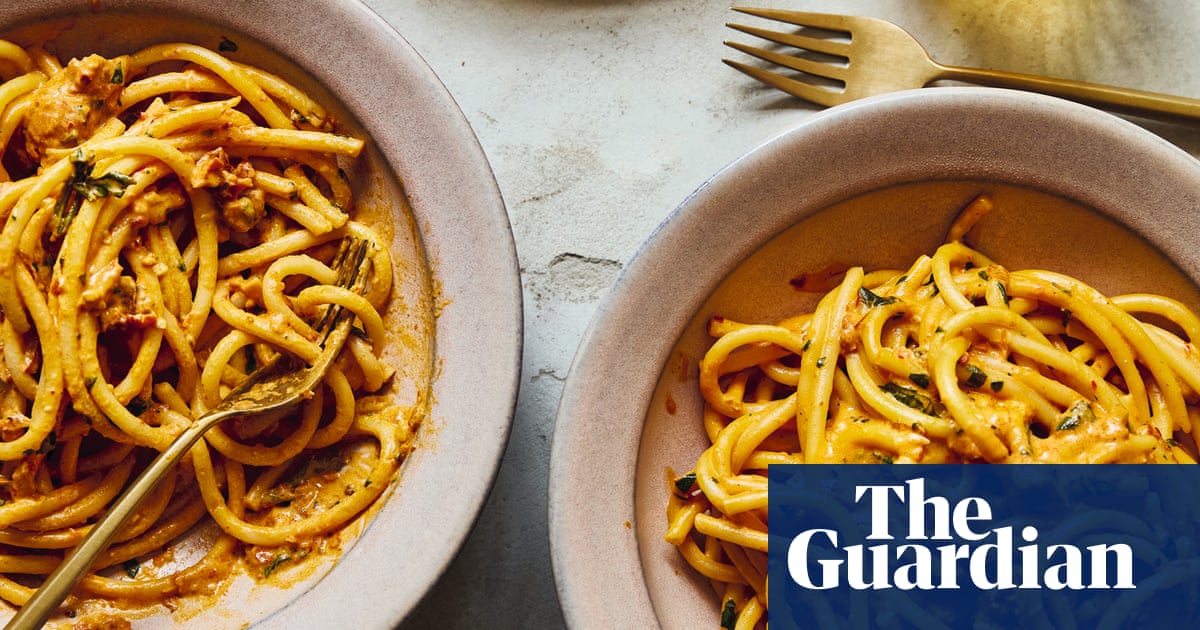
Other considerations of the sofa supper include getting as many textures and flavours as possible into every mouthful. “Wherever you dig, you want to be getting something good,” says Zena Kamgaing, author of Dinner Time . That’s why pasta is a regular go-to: “It’s easy bowl food. On a hot day, say, I’ll do a no-cook sauce by blitzing mascarpone with sun-dried tomatoes, a little harissa and fresh basil.” Risbridger, meanwhile, is partial to US-style chopped salads, although Vietnamese-inspired numbers also feature regularly: “Invest in a julienne peeler, because that can make salad feel fancy, and put any kind of protein in it: salmon, sliced steak.” Add rice – “Cold salad and warm rice is a delight” – or deploy twirlable cold noodles. “If you’re watching telly, curtains drawn, you’re not looking for a beautiful plate,” Risbridger says. “You want the focus to be on the deliciousness, and I cannot stress enough that a Vietnamese salad is the optimum, because it’s beautiful, but not in a way that means you have to concentrate on its beauty.”

Feeding more than one mouth is where sofa meals get more complex, though, Risbridger says: “You’re negotiating the elbows in, elbows out thing, then someone gets up and you all tip.” As a general rule, anything customisable will be welcome. “I’m very committed to the taco bar as a way of life,” she adds, but fajitas work, too. “Cocktail sticks are invaluable here, because you can skewer them closed, which helps with the transition from kitchen to sofa.”

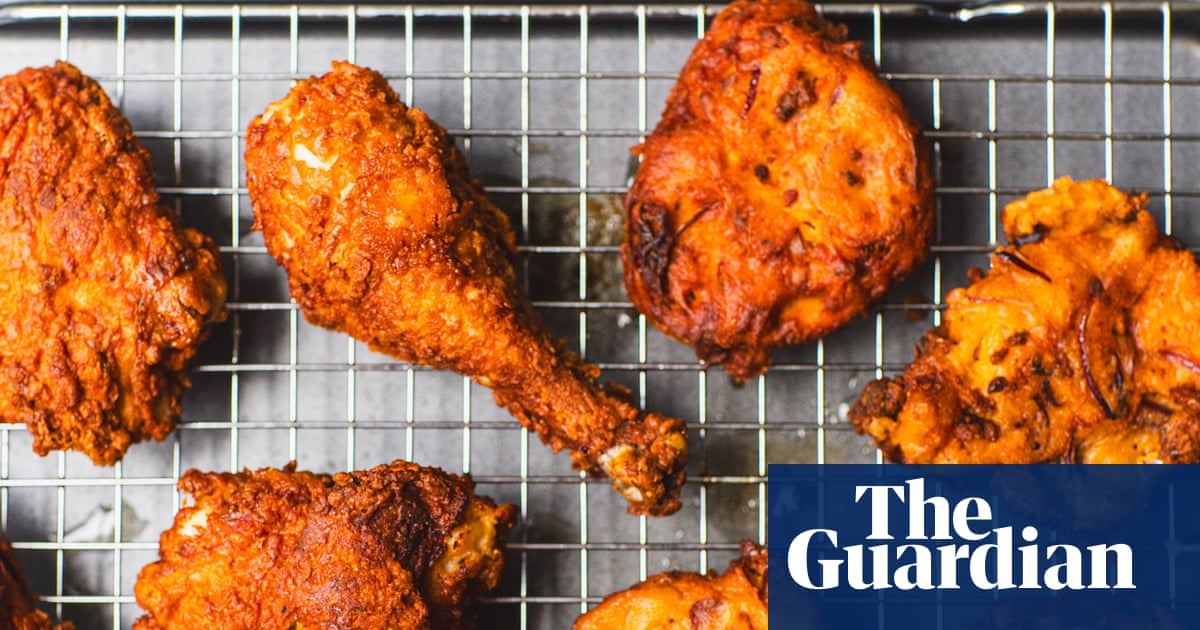
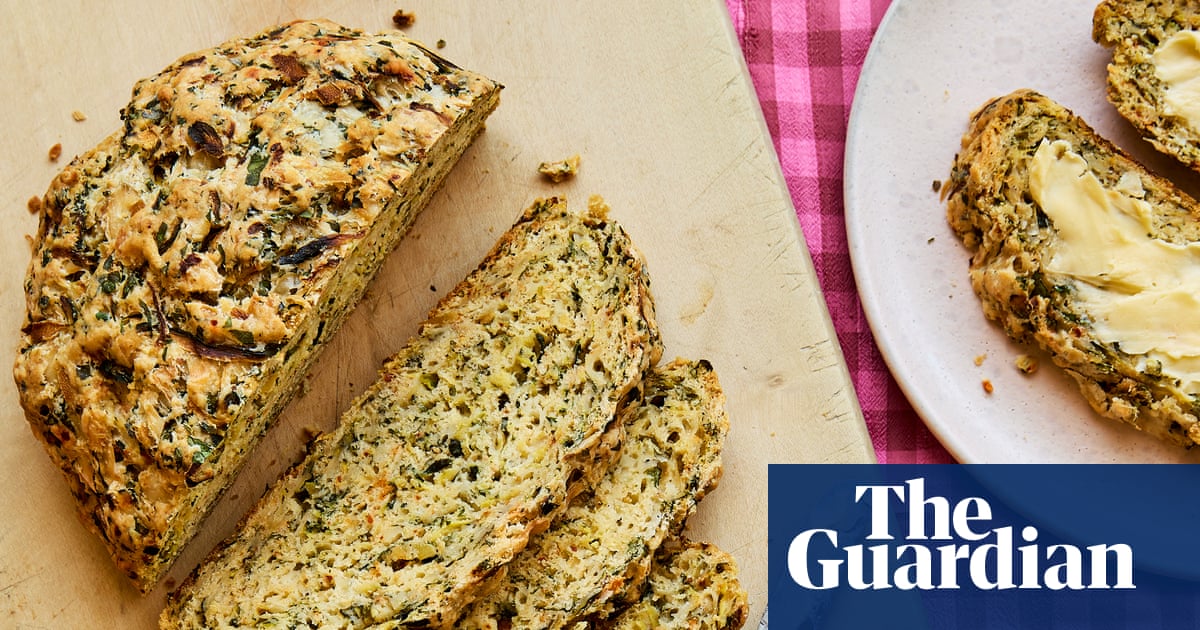
On further consideration, however, Risbridger concludes that perhaps the best answer is actually quesadillas: “There’s a recipe in my book for a herby, spinachy, cheesy, mashed chickpea situation that’s the sweet spot between healthy and pizza.” Alternatively, throw caution to the wind and just embrace the mess, Kamgaing says: “My family are massive chicken wings people, and those are great if you’re watching a movie.”

All that said, Risbridger can’t help but return to Hetty Lui McKinnon’s tomato salad with dumplings : “You can’t believe how good it is – I ate it every day for a month.” Chop a load of tomatoes, fry the same weight of freezer dumplings, then toss the two in a mix of rice-wine vinegar, soy sauce and chilli crisp, as well as grated garlic and fresh basil. “Now that’s truly the perfect summer sofa food.”

Got a culinary dilemma? Email feast@theguardian.com

Experts alarmed as Trump launches broad-front attack on US voting rights | US politics | The Guardian

Keyword – US news
Trefwoorden – US politics, US voting rights, US news
Title – Experts alarmed as Trump launches broad-front attack on US voting rights | US politics | The Guardian
Author – https://www.theguardian.com/profile/peter-stone
Link – Experts alarmed as Trump launches broad-front attack on US voting rights | US politics | The Guardian
Publish date – 2026-06-16T11:00:07.000Z
Category – News
URL – https://www.theguardian.com/us-news/2026/jun/16/trump-voting-rights-elections

The Trump administration is waging war on voting rights using justice department lawsuits, FBI investigations, and an executive order to limit voting by mail, moves mirroring the US president’s false claims he lost the 2020 election due to voting fraud, say election experts and ex-officials.

Since Donald Trump began his second term, numerous 2020 election denialists have been installed in key agencies such as the DoJ, the FBI and elsewhere to pursue widely discredited claims of fraud, which can intimidate election workers and voters in swing states that Trump lost to Joe Biden in 2020.

The justice department has also filed lawsuits seeking sensitive voter data from 30 states – even though, by law, states control elections – and the FBI has launched investigations into debunked allegations of voting fraud in Georgia, Wisconsin and a few other swing states that Trump lost in 2020.

Trump in late March this year issued an executive order sharply tightening mail-in voting rules, which Trump has long claimed without evidence contribute to fraud. The order gives the United States Postal Service unprecedented powers to issue new rules making voting by mail harder.

The administration’s multi-pronged push to change voting rules is under way despite laws that empower states and Congress to set election rules, sparking lawsuits from states and nonpartisan voting rights groups.

In early April, for instance, officials from 23 Democratic states including California and Washington DC filed a lawsuit to block Trump’s executive order to curb voting by mail, arguing that the order was an unconstitutional effort to interfere with states’ administering their elections.

The administration’s aggressive steps to tighten voting rules come as Trump and many Republican allies have voiced strong fears that the November midterm elections are likely to give Democrats control of the House, and possibly the Senate too, limiting Trump’s powers and possibly leading to his impeachment again.

At a Republican House retreat in January, Trump stressed the stakes are high for his future if Democrats win control of the House. “You gotta win the midterms, because if we don’t win the midterms, it’s just gonna be … I mean, they’ll find a reason to impeach me,” Trump told lawmakers.

Former federal officials with voting expertise are sharply critical of the Trump administration’s moves to limit voting rights with phony charges of voting fraud.

“The Department of Justice has no authority to sweep up the voter rolls, which contain private information like drivers’ licenses and social security numbers, from every state in the nation,” Eileen O’Connor, a senior counsel with the Brennan Center who spent eight years in the DoJ’s voting section of the civil rights division, told the Guardian.

“The department has 30 active lawsuits against states and the District of Columbia to force the turnover of these sensitive records. So far, eight courts have issued rulings in these cases, and the DoJ has lost each one.”

O’Connor stressed that “lawsuits against the states are only one part of a broader campaign by the Trump administration to interfere with elections. The administration has targeted election officials, attempted to rewrite election rules, pardoned January 6 rioters, and elevated election deniers.

“It has also raised the prospect of deploying federal immigration agents at polling sites – but federal law explicitly bans federal officers from interfering in elections and prohibits armed federal agents from being deployed anywhere an election is held.”

Other ex-election officials voice alarms about Trump’s moves to revamp voting rules and curb voting rights.

“Trump continues to falsely claim that voting by foreign nationals, which is illegal and rarely occurs, and practices such as mail-in voting resulted in a fraudulent election in 2020 and will result in the 2026 midterm elections being rigged against Republicans,” Larry Noble, a former general counsel at the Federal Election Commission who now teaches law at the American University, told the Guardian. “However, numerous audits and lawsuits have failed to find any meaningful fraud in the 2020 election.”

Noble added: “Trump apparently believes that Democrats winning an election is proof enough that there was fraud because, as Trump has brazenly charged, “[I]f they didn’t cheat, they could not win … ”

Such criticism has not deterred Trump and top officials at the DoJ and other key agencies from claiming the voting changes and investigations they are pursuing are needed to combat what they falsely insist was widespread voting fraud in 2020. Acting attorney general Todd Blanche, for instance, told Fox News last month there was “a ton of evidence that the election was rigged” in 2020.

In a potential harbinger of voting fraud charges ahead in the fall elections if Trump doesn’t like the results, Trump quickly claimed that California’s early June primaries were rigged when Spencer Pratt, a Trump-backed mayoral candidate in Los Angeles, lost an early voting lead in the nation’s largest state, where final results often take longer to tabulate.

Trump wrote on Truth Social that it was “Not possible for Spencer Pratt to have lost the L.A. runoffs after the big lead he had… 3rd World Nation.”

Further soon after the primaries were held Trump claimed without details that they were “under investigation by the US attorney’s office in Los Angeles”. The DoJ also sent a federal prosecutor to observe ballot processing in Los Angeles.

The DoJ’s heavy tilt to election denialism became palpable soon after Trump took office in 2025 as the department’s voting section in the civil rights division was revamped to align with Trump’s election denialist views and its staff was sharply reduced last year from about 30 lawyers to less than half that number, according to a former DoJ lawyer.

To implement Trump-backed changes in voting rules and curb voting rights, the DoJ has recruited a number of new lawyers whose resumes include efforts to fight Trump’s 2020 loss to Joe Biden.

The justice department in April, for instance, tapped ex-Republican congressman Dan Bishop of North Carolina, an avid election denier in 2020 who had been serving as a US attorney in his state for just five months, to lead a national drive to ferret out voting fraud including debunked allegations from 2020.

In related moves, Democracy Docket disclosed in May that William Mohrman, a Minneapolis lawyer who was involved in lawsuits that sought to overturn Biden’s victory, had been hired as a senior counsel by the DoJ’s voting section, according to court filings.

Court documents show that Mohrman entered his first appearance on behalf of the government in a lawsuit seeking Georgia’s unredacted statewide voter registration records from 2020.

Mohrman is one of a growing list of attorneys the section added since 2025 who were involved in 2020 election challenges or who worked with well-known election deniers. Among others, the current acting head of the section, former California prosecutor Eric Neff, reportedly has various links to election-conspiracy promoters.

These new hires coincide with shifts in the DoJ’s voting section away from its traditional priority of voting rights enforcement towards lawsuits seeking sensitive voter records from states and counties nationwide. In another big break from nonpartisan traditions, the DoJ last year backed the legality of a Texas redistricting plan that could help Republicans pick up five House seats in the midterms, while it challenged unsuccessfully a California redistricting plan voters approved that could help Democrats win five seats.

On another election front that tracks Trump’s bogus voting-fraud claims, the FBI has made investigating 2020 voting fraud a growing priority. The FBI has active inquiries into voting fraud in 2020 in Georgia and Wisconsin which critics say perpetuate lies about Trump’s loss and may intimidate election workers and voters.

This year, the FBI raided an election hub in Fulton county, Georgia, seized election data and images of ballots in Arizona, demanded ballots in Michigan, and in May expanded its inquiries to include the Milwaukee, Wisconsin area, according to the Washington Post .

FBI agents, the Post reported, visited homes of former and current Wisconsin election officials as part of an investigation into discredited election conspiracy theories pushed by Trump.

The FBI has tried for months to seize ballots , obtain access to poll workers’ personal information, and talk to election officials in swing states, moves that mirror Trump’s debunked claims that he won the 2020 election.

Elsewhere, Trump’s March 2026 executive order on voting by mail has ignited a firestorm of lawsuits and alarms from voting experts.

The gist of the order charges the USPS with deciding who may vote by mail and authorizes it not to deliver ballots sent by individuals who are not included on newly developed federal mail voter lists. The order, ominously, threatens criminal penalties for election workers, mail carriers and others who deliver or send ballots to people the administration claims are ineligible.

In a related step, the order instructs the Department of Homeland Security to develop lists of citizens in every state using unreliable and incomplete federal data materials. The Brennan Center and other voting rights advocates have warned that if implemented, the order would create chaos and curb voting by eligible US citizens.

The Brennan Center and other groups, both nonpartisan and partisan, as well as states, have challenged the executive order in court, just as they challenged Trump’s March 2025 executive order changing key voting rules.

To date, several federal courts have blocked major parts of Trump’s 2025 order that would require citizens to show a passport or similar document to register to vote, which the administration has appealed.

Notably, some Republican veterans also foresee big risks with Trump’s executive orders on voting.

“These attempts are clearly unconstitutional. States run elections, not the feds. One executive order even directs the US Postal Service to decide which voters can receive mail-in ballots and which not, as if they could manage such an assignment,” said veteran Republican consultant Charlie Black.

Noble warned: “Trump’s executive order requiring the Department of Homeland Security to compile a list of verified US citizens eligible to vote and the Postal Service to limit mail-in voting, could very well disenfranchise millions of voters while doing nothing to eliminate virtually non-existent voter fraud.”

In Noble’s eyes, “Trump is using lies to justify an unprecedented effort to have the federal government take over the administration of elections, despite the constitution giving the states that power.”