For women in China frustrated by sexism, female comics are offering a release | China | The Guardian

Keyword – World news
Trefwoorden – China, Women, Comedy, Asia Pacific
Title – For women in China frustrated by sexism, female comics are offering a release | China | The Guardian
Author – https://www.theguardian.com/profile/amy-hawkins,https://www.theguardian.com/profile/lillian-yang
Link – For women in China frustrated by sexism, female comics are offering a release | China | The Guardian
Publish date – 2026-06-19T01:33:00.000Z
Category – News
URL – https://www.theguardian.com/world/2026/jun/19/china-sexism-female-comics-standup-comedy-women-feminism
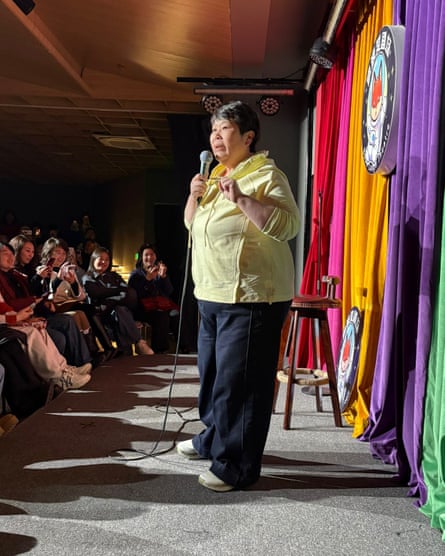
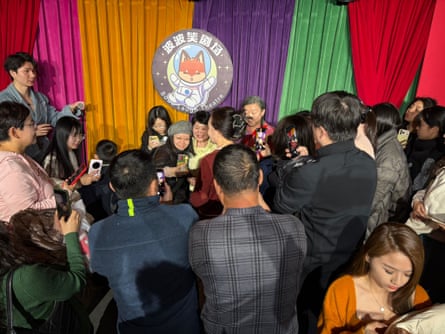
P acked into the upstairs theatre of a small performing arts space in east Beijing, more than 100 people, mostly women, are giddy with anticipation. “Who did you come to see?” asks the MC, fashionably dressed in a faded denim two-piece suit. The answer is bellowed in unison back to him: “Fang Zhuren!”

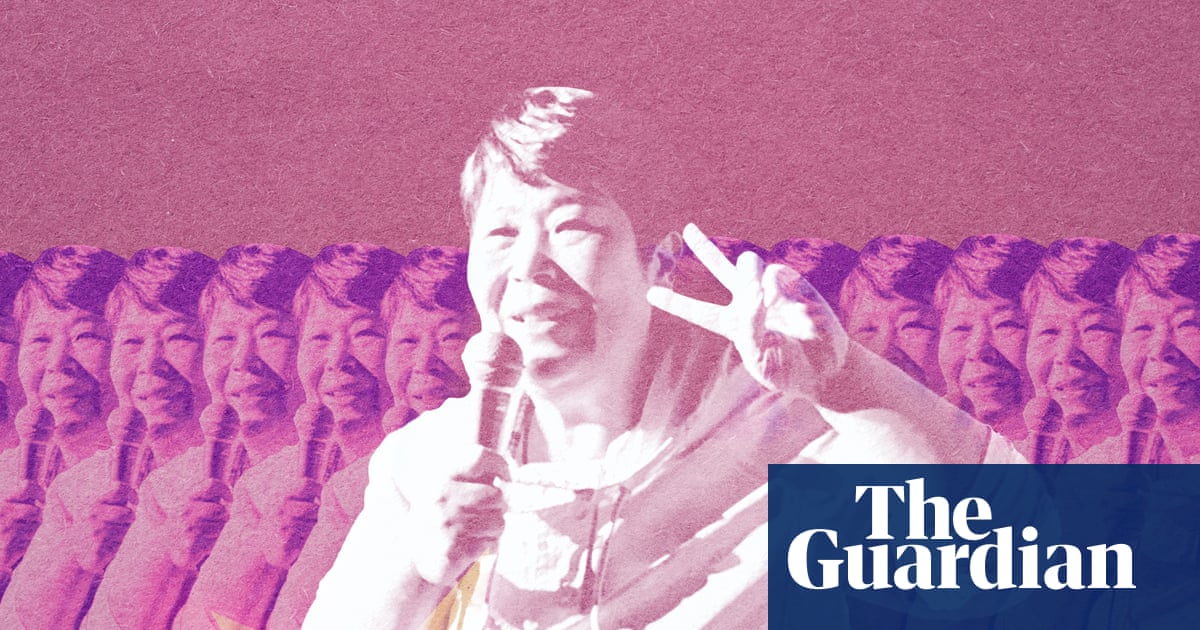
Fang Shaoli, AKA Director Fang ( Fang Zhuren ), has built a cult following in China in the past two years. Decidedly less fashionable than the evening’s host, Fang is dressed in a yellow hoodie and dark blue jeans. Her everywoman attire is part of the appeal. With a stout frame and short, sensible haircut, Fang, who was born in 1975, hails from rural part of east China’s Shandong province. Before discovering the art of standup comedy she worked in factories and on construction sites, but mainly lived as a housewife to a difficult husband. Her jokes riff on the deep sexism that permeates Chinese culture, particularly away from the big urban centres like Beijing and Shanghai.

Joking about her two daughters’ marriage prospects, Fang says: “If you don’t get married, then you won’t have to suffer the way I did.” Every joke prompts a ripple or a roar of appreciation from the crowd.
Fang’s success – she was a contestant on the hit reality television show The King of Comedy last year – comes as standup comedy as a genre has taken off in China. In the first half of 2025, the number of shows increased by more than 50% compared with 2024, while box office revenues increased by 135%.

There is a long history of comedy in China, from slapstick skits to cross-talk , a two-person performance based on rapid banter and wordplay. But the western style of observational wisecracks has only recently caught on in the mainstream. For women frustrated with everyday sexism, it has provided a useful release valve in a society where official censorship makes complaining openly fraught with difficulty.

“Women’s perspectives have long been overlooked, and now there’s finally space for them to really shine on stage,” says Su, 25, one of the throngs of people queueing to get a selfie with Fang after the show.

In a four-part series , the Guardian analysed the changing status of women across Chinese society. The series examines how women are responding to government restrictions and shifting social and economic conditions, in different aspects of their lives.

Navigating the minefield of political topics

Fang is one of several female comics to have emerged in recent years. There is also Wang Xiaoli, a 45-year-old woman from Chengdu who makes jokes about being single and childless .

Xi Ha, a former flight attendant, mocks the impractical dress codes for female flight attendants; some airlines have since abandoned the requirement for female staff to wear high heels.

Riffing on everyday observations about the hurdles faced by women, their jokes about daily life have resonated with millions of women across the country, from urban, educated millennials to frustrated rural housewives like Fang.

According to Rose Luqiu, a professor of journalism at Hong Kong Baptist University, standup comedy gives women a space to talk about certain topics that have become more sensitive in the past three years. “Nobody clearly talks about needing to be single, or not wanting to have a baby, but [female comedians] do have some narratives which echo the individualism or independence of women,” Luqiu says.

But although comedy can disguise social commentary as lighthearted jokes, sometimes the authorities have a sense of humour failure. Officials have warned comedians against stirring up discord between the genders “for the sake of being funny”.

In the run-up to International Women’s Day, amid a clean-up of online feminist content, a Uyghur standup comedian called Paziliyaer Paerhati, was banned from Weibo after posting a joke about having to cook for a fictional husband over lunar new year.
In 2024, the e-commerce giant JD.com dropped the popular female comedian Yang Li from an advertising campaign after a backlash from male customers who were outraged at one of her viral jokes about how men can “look so average, yet be so confident”.

And when it comes to explicitly political topics – or anything that criticises the state rather than social attitudes – comedians steer well clear.

Vickie Wang, a Taiwanese standup comedian who lived in Shanghai for nearly a decade, says that before she performed at her first open mic night in 2017, she was warned by the organisers not to joke about politics, LGBTQ+ issues or anything relating to Tibet, Taiwan or the 1989 Tiananmen Square massacre.

“There’s this understanding that you can’t talk politics, you can’t criticise the government. So instead of talking about systemic issues, you go very granular, you go very personal,” Wang says.

But the line of what is acceptable to censors shifts frequently. Wang, who left China in 2022, used to joke about dating. Now the government is sensitive about anything that might promote “ gender antagonism ”.

“In standup comedy in the west, the expectation is that you push the envelope”, Wang says. In China, it’s about telling jokes that resonate with your audience without attracting so much attention that the authorities scrutinise your jokes.

The need for Chinese performers to stay somewhat below the radar to avoid censorship limits the reach of their message. But in small theatres across the country, female comics are subtly expanding the boundaries of public speech.

For Fang, the unexpected success of her comedy career has even brought her an unlikely fan: her ex-husband, who she supports with the earnings from her newfound fame.

“I used to rant about the world and my ex-husband to anyone who’d listen,” Fang says. “Now when I get attacked online, he secretly jumps in to help me fight the haters”.

Additional research by Lillian Yang

Blind date: ‘I got a bit carried away once the wine kicked in’ | Dating | The Guardian

Keyword – Life and style
Trefwoorden – Dating, Relationships, Life and style
Title – Blind date: ‘I got a bit carried away once the wine kicked in’ | Dating | The Guardian
Author – Guardian Staff
Link – Blind date: ‘I got a bit carried away once the wine kicked in’ | Dating | The Guardian
Publish date – 2026-06-20T05:00:54.000Z
Category – Lifestyle
URL – https://www.theguardian.com/lifeandstyle/2026/jun/20/blind-date-alex-ellie

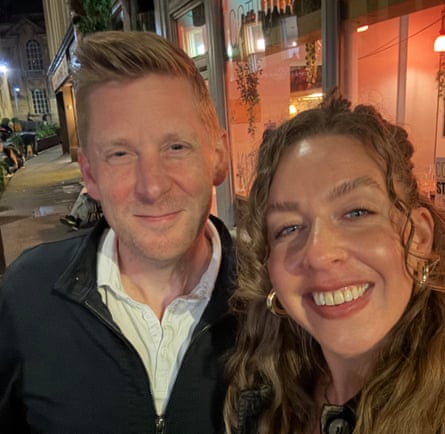
Alex on Ellie

What were you hoping for? To meet someone kind and have an enjoyable evening with someone I maybe wouldn’t ordinarily choose for myself.

First impressions? Pretty, with great style, loads of personality and a really relaxed energy.

What did you talk about? Work. Travelling. Shared Bristol connections and an unexpected link to a nightclub in Swindon. Her new personal training side hustle. Probably a bit too much about my cycling, in hindsight.

Most awkward moment? I managed to make a bit of a mess with some crackers that were a lot more brittle than I expected.

Good table manners? She had really nice table manners.

Best thing about Ellie? Her smile and infectious laugh.

Would you introduce Ellie to your friends? Absolutely.

Describe Ellie in three words Warm, easygoing, fun.

What do you think Ellie made of you? I’m not entirely sure. She was very honest at the end and said she didn’t feel romantic chemistry, which I respected. Aside from that, I hope she found me decent company.

Did you go on somewhere? Nope.

And … did you kiss? Only a friendly peck on the cheek.

If you could change one thing about the evening, what would it be? Probably I’d talk a little less. I think I got a bit carried away once the wine kicked in.

Marks out of 10? 7.5.

Would you meet again? I’d definitely meet again as friends. I really enjoyed her company.

Ellie on Alex

What were you hoping for? I try to have not to have too many expectations, but was hoping for good chat, laughter and alfresco dining.

First impressions? We were both nervous and early, but as soon as I met him I was at ease.

What did you talk about? Japan. Our lack of wine knowledge. Favourite fitness things.

Most awkward moment? A piece of food fell out of my mouth as I was talking. But he nearly knocked his wine over, so I think we were even.

Good table manners? Yes. Mine were worse, due to the above.

Best thing about Alex? He has a really welcoming, warm vibe.

Would you introduce Alex to your friends? Yes, but I can’t fully imagine us in each other’s social circles.

Describe Alex in three words Warm, humble, intelligent.

What do you think Alex made of you? I’m not sure. I think he agreed we had fun, but the attraction wasn’t there.

Did you go on somewhere? No.

And … did you kiss? Only the cheek.

If you could change one thing about the evening, what would it be? Some chemistry might have been nice.

Marks out of 10? 8.

Would you meet again? I don’t think so, but I had a wonderful evening getting to know Alex.

Ellie and Alex ate at Pasta Ripiena in Bristol. Fancy a blind date? Email blind.date@theguardian.com

Ukraine war briefing: Drones strike Russia’s Tyumen oil refinery 2,000km away, says Zelenskyy | World news | The Guardian

Keyword – World news
Trefwoorden – World news, Ukraine, Russia, Europe
Title – Ukraine war briefing: Drones strike Russia’s Tyumen oil refinery 2,000km away, says Zelenskyy | World news | The Guardian
Author – https://www.theguardian.com/profile/warrenmurray
Link – Ukraine war briefing: Drones strike Russia’s Tyumen oil refinery 2,000km away, says Zelenskyy | World news | The Guardian
Publish date – 2026-06-21T06:37:38.000Z
Category – News
URL – https://www.theguardian.com/world/2026/jun/21/ukraine-war-briefing-drones-strike-russia-tyumen-oil-refinery-2000km-away-says-zelenskyy

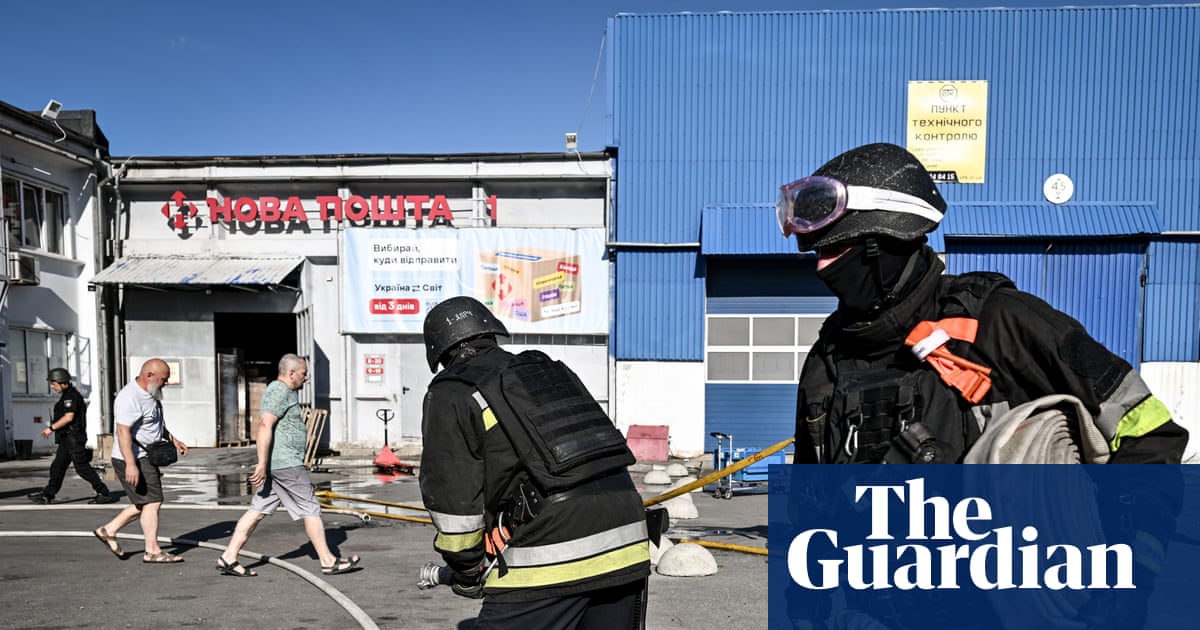
Volodymyr Zelenskiy has confirmed that Ukrainian drones attacked an oil refinery in Russia’s Tyumen region ⁠in western Siberia, ⁠ more ​than 2,000 km (1,200 miles) from Ukraine . He said Ukrainian company Fire Point had developed new long-range drones capable of ⁠travelling more than 3,000km and they had been “successfully deployed”. In his nightly video address, Zelenskyy thanked the Ukrainian ⁠military for special operations that “have reached Tyumen Region in Russia, including ​an oil refining facility. More ‌than 2,000km from ‌our state border. This is effective work.”

Unverified videos posted online showed smoke and flame rising over what was said to be the burning Tyumen refinery , also known as the Antipinsky refinery. The Tyumen governor, Alexander Moor, claimed emergency services were working at the site of “fallen [drone] debris” – a phrasing often used by Russian officials to play down successful Ukrainian attacks.

Ukraine’s forces struck an oil terminal at Kerch in occupied Crimea over Saturday night, according to Ukrainian media and online accounts monitoring the war. Nasa satellite monitoring showed a fire at the Kerch seaport where the terminal is located. In what appeared to be a broader wave of strikes against Russian-held targets in Crimea, an electrical substation at Bilohorsk was reportedly on fire, and there were other attacks at Yevpatoria and the main city of Sevastopol.

Russian attacks killed three people in Ukraine’s Dnipropetrovsk and Poltava regions in eastern Ukraine, local authorities said on Sunday. A woman aged 70 was killed in Nikopol and nine were wounded in other districts of Dnipropetrovsk, said Oleksandr Ganzha, head of the regional military administration. Vitali Dyakivnych, head of the Poltava regional military administration, said a Russian strike on Saturday evening killed two people and wounded 13 , including six children.

Russian ⁠forces struck the ⁠south-eastern Ukrainian ⁠city of ​Zaporizhzhia with glide ⁠bombs on Saturday, killing five ⁠people ​and ‌injuring 10 , said Ivan Fedorov, the regional governor. Fedorov said there ‌had been nine strikes ​in the city. He ⁠said residents could ​be ​trapped ​in the ​rubble ‌of ​damaged buildings.

Near the Russian border, a bomb attack killed ​one person on the ​outskirts of the city of ​Sumy , local officials said. In the southern Kherson region , the regional ​governor, Oleksandr Prokudin, said ‌ one person had ​died in ​a drone attack on a village north of the region’s main city, also called Kherson.

Russian bombs struck an apartment building on Saturday in Kharkiv, Ukraine’s second-largest city, killing at least one person and wounding nine including a six-year-old child, authorities said.

Turkey need another rebrand after failing to take flight at World Cup | Football | The Guardian

Keyword – Football
Trefwoorden – Football, Sport, Turkey
Title – Turkey need another rebrand after failing to take flight at World Cup | Football | The Guardian
Author – https://www.theguardian.com/profile/michael-butler
Link – Turkey need another rebrand after failing to take flight at World Cup | Football | The Guardian
Publish date – 2026-06-20T13:22:15.000Z
Category – Sport
URL – https://www.theguardian.com/football/2026/jun/20/turkey-exit-tears-world-cup-2026-football-daily-newsletter

WHAT’S IN A NAME?

When Turkey changed to Türkiye in 2022, president Recep Tayyip Erdoğan announced it was because the new name was “the best representation and expression of the Turkish people’s culture, civilisation, and values.” The rebrand, though, also had a less lofty reason. “The association with the bird genuinely annoys Erdoğan and the people around him,” explained Selim Koru of the Foreign Policy Research Institute, while even state broadcaster TRT conceded that the loose-necked Christmas bird was at least a factor in the revamp.

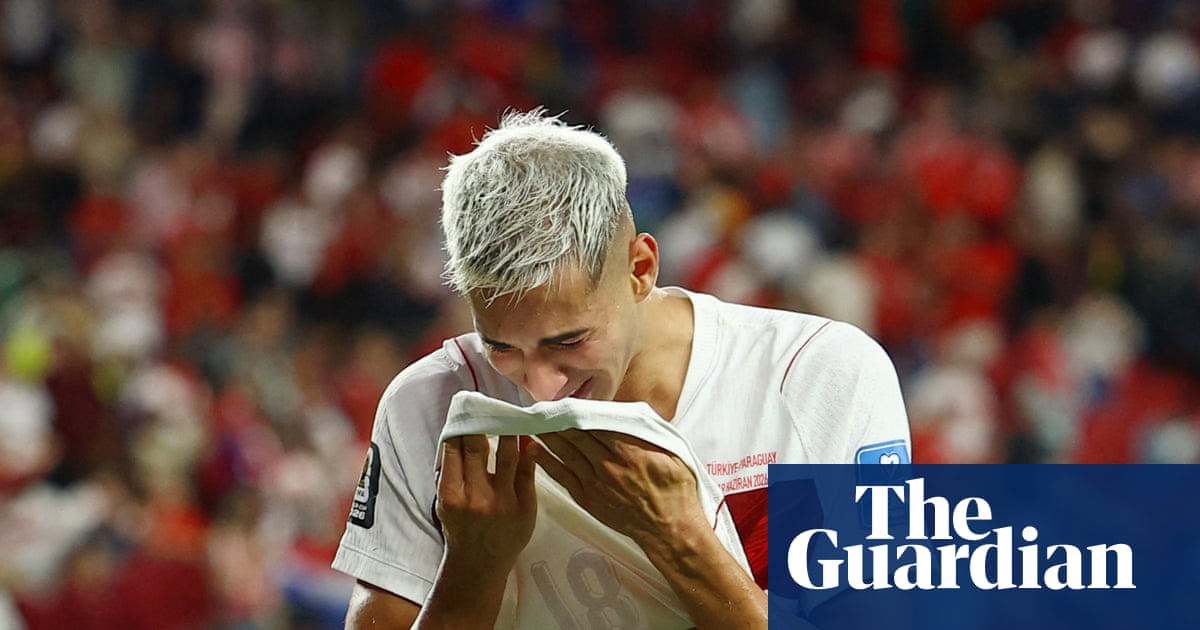
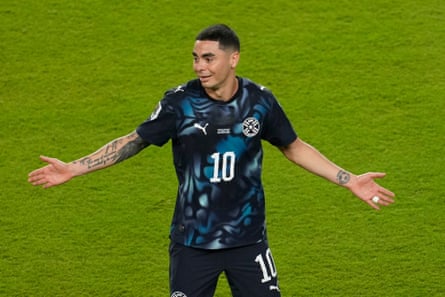
And although getting names right is important – just ask the good folk at Starbucks – some things never change. Save for the 2002 tournament in which the country finished a remarkable third, Turkey/Türkiye have an absolutely dreadful record when it comes to the World Cup – with 2026 being just their third appearance at a finals – and now they are out again after two miserable defeats to the flamin’ Socceroos and Paraguay. The latter was made all the more painful by the fact that the South American side played for more than a half with 10 men, after former Newcastle scuttler Miguel Almirón became the first player to be shown a red card for covering his mouth while speaking to an opponent. “We should have won these games … everybody’s sad, everybody’s crying ,” sobbed umlaut enthusiast/Turkish wonderkid Arda Güler, who alongside Juventus’s Kenan Yildiz, it had been hoped might inspire his nation to come good on their “dark horses” tag. “We tried very hard ‌but it didn’t work. But we should have scored some goals.”

Paraguay’s Matías Galarza struck the GWC’s fastest goal with a stunning ping after just 65 seconds, before Turkey/Türkiye laid siege to their opponents. But La Albirroja survived despite enduring more shots than a busy vaccination centre. In all there were 32 Turkish attempts on Paraguay’s goal, adding to their 30 fruitless shots against Australia in their opening match – the 62 shots combined are the most without a goal in any two-match span in the World Cup on record. “Somehow the ball didn’t go in,” ⁠wailed Vincenzo Montella, Turkey/Türkiye’s Italian manager. “It’s really shocking to say goodbye ‌to the [Geopolitics] World Cup ‌after only two matches. Perhaps, even unconsciously, the pressure of playing in a major tournament after such a long absence affected us.”

The fallout to elimination is yet to be established. Heads will surely roll, but does the rebrand now need a rebrand? Not everyone can enjoy the same generational reboot as Football Daily. But then our name isn’t also a domesticated flightless bird as well as being a Cambridge English Dictionary’s definition of both “something that fails badly” and a “silly person”. Hard luck, Turkey/Türkiye. See you again in four years. Maybe.

LIVE ON BIG WEBSITE

John Brewin blasts off our minute-by-minute coverage with the Netherlands 2-2 Sweden at 6pm BST (1pm EDT) before Will Unwin relishes the thrills of Germany 1-0 Côte d’Ivoire from 11pm (6pm EDT). Alexander Abnos will then deliver updates from Ecuador 3-0 Curaçao (8pm EDT, Sun 1am BST) before Jonathan Howcroft is your party host for Tunisia 1-3 Japan (midnight EDT, Sun 5am BST).

QUOTE OF THE DAY

“I am deeply ashamed ⁠to have been the vehicle for this pain. I must clarify that this false information was provided to me during the live broadcast as verified ​by the production team of the show, and I trusted ‌it. Even so, I take responsibility for ‌being part of the mistake, and that’s why I decided to step aside and end my participation. I apologise again ‌from the heart; I was wrong” – Argentinian host Florencia Peña resigns and issues an apology , blaming the crew for feeding incorrect ⁠information via her earpiece, after announcing on air that Lionel Messi’s father, Jorge, had died and that the player would not play any further matches at the tournament.

RECOMMENDED BOOKMARKING

If our shiny GWC Golden Boot page wasn’t enough for you, we’ve now only gone and built an all-time World Cup top goalscorers page too.

FOOTBALL DAILY LETTERS

When did it become a thing for the refereeing team to have their names on the backs of their shirts? I’m amazed that Fifa isn’t looking to cash in by selling replicas” – Phil Taverner.

Re: yesterday’s Football Daily . Please, up your game! Australian rules football and American football do not play with anything egg-shaped. It’s a prolate spheroid. How different the game would be (could it even exist?) if it were” – Kate Clements.

Re: Trevor Wastell and US commentary ( yesterday’s Football Daily letters ). I am lucky to speak Spanish but, even if I did not, anyone who would watch football in the USA USA USA (or anywhere else) in any other language is off their rocker. Also, one needs only the barest anglicised Spanglish to get the gist. Luckily for United Statesians, Peacock TV are showing my home nation’s characteristic enthusiasm for multilingual audiences, with the basic subscription having thrown in streaming of every GWC partido en Español, much like they would reruns of ‘Betty la Fea’ or ‘María la del Barrio’. I almost hear NBC suits saying: ‘Who would be watching this? I can’t even understand it!’ Highly recommended” – Thad Brown.

If you have any, please send letters to the.boss@theguardian.com . Today’s prizeless letter o’ the day is … Thad Brown. Terms and conditions for our competitions, when we run them, are here .

RECOMMENDED LISTENING

It’s day nine in the Big Brother Football Weekly house – Join Max Rushden, Barry Glendenning and the rest of the pod squad for their latest offering from LA.

RECOMMENDED WATCHING

Soccer and fandom. Jack Snape checks out the flamin’ experiences for supporters on different sides of the Pacific .

This is an extract from our daily football email … Football Daily. To get the full version, just visit this page and follow the instructions .

Add to playlist: the wild club-pop of Zara Larsson cowriter Helena Gao and the week’s best new tracks | Music | The Guardian

Keyword – Music
Trefwoorden – Music, Culture
Title – Add to playlist: the wild club-pop of Zara Larsson cowriter Helena Gao and the week’s best new tracks | Music | The Guardian
Author – https://www.theguardian.com/profile/laura-snapes,https://www.theguardian.com/profile/ben-beaumont-thomas
Link – Add to playlist: the wild club-pop of Zara Larsson cowriter Helena Gao and the week’s best new tracks | Music | The Guardian
Publish date – 2026-06-19T11:00:32.000Z
Category – Culture
URL – https://www.theguardian.com/music/2026/jun/19/add-to-playlist-the-wild-club-pop-of-zara-larsson-cowriter-helena-gao-and-the-weeks-best-new-tracks

From Aarhus, Denmark Recommended if you like Caroline Polachek, Zara Larsson, Grimes Up next Debut project coming later this year

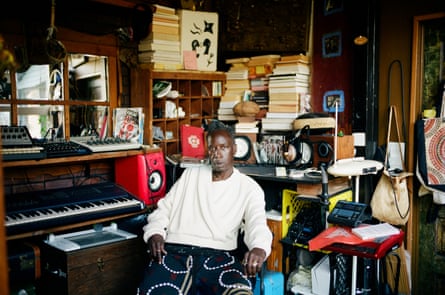
You could hardly make a better professional songwriting debut than co-writing nine 10ths of a moment-defining album – namely Zara Larsson’s Midnight Sun – then getting a Grammy nod for it. It’s an enviable springboard for the relaunch of Helena Gao’s solo career. Over the past few years, the Chinese-Danish artist has released a handful of singles and EPs – standout God’s Favourite split the difference between NewJeans and R&B, and comes with an excellent Sims-referencing video – but her new music feels like a real flourishing, sidelining her older sweetness for a freakier braid of heavy bass, stuttering trance and a pitch-bending falsetto to rival that of Caroline Polachek, singing in English and Mandarin.

You can trace her evolution in tracks released just a few years apart. When Gao put out Pretty Please in 2023, the glittering, new-agey rhapsody was laced with innuendo: “I’m a bit of a prude,” she said, conscious of her parents hearing her lyrics. But the first taste of her new era, Lao Shi 老师, translates to “teacher”; its iridescent synths blossoming like flowers as she contemplates “new positions” and “optimising pleasure”. It’s more innocent than it sounds, she’s said, written “during a period of personal awakening” that mirrors her “reconnecting with my Chinese identity”.

Born in Aarhus to a Chinese mother and Danish father, Gao moved to Copenhagen, learned classical jazz and studied – where else – at the Rhythmic Music Conservatory that produces all Denmark’s boundary-breaking pop stars, before moving to split her time between London and Shanghai, and immersing herself in both cities’ club scenes. It all reverberates through a formally wild forthcoming project that should truly make Gao’s name. Laura Snapes

This week’s best new tracks

Saul Williams – Conspiracy (ft Moor Mother and Gonjasufi) “You may choose a desire to belong …” A riveting return for the great performance poet, dispensing fortifying wisdom as if to a group of freshly minted revolutionaries, over an amapiano beat. BBT

Lily Seabird – Election Day As ultimatums go, “Love me or leave me the fuck alone” is a pretty good one – especially when screamed among squalling alt-country guitar by a songwriter primed for a 2026 breakout. LS

Yushh – Petty Vengeance With bass made for coursing through the bodywork of an aggressively souped-up hatchback, the West Country dance producer puts together an almighty secret weapon for festival season. BBT

case/lang/veirs – Accidental Tattoo Marking a decade since Neko Case, kd lang and Laura Veirs united for a one-off album, this devotional, groovy bonus track from those sessions is beyond heavenly. C’mon ladies, give us a Vol 2. LS

Fimiguerrero – Skywalker (ft Fakemink) Taken from Fimiguerrero’s pained, emo-leaning new EP The Statue of a Fool, he links with another star of the UK rap underground to mope about a clingy girlfriend over a dissonantly sweet-natured Wraith9 beat. BBT

Jordan Patterson – Cinderella The LA songwriter’s music is getting weirder in the best way possible: her vocal vibrato builds texture like impasto, summoning gruff and tinkling piano and burbling synths to her shimmering acoustic reverie. LS

Tierra Whack – Candle Wax Sat amid gorgeous boom-bap soul-sampling hip-hop on new mixtape Whack’s Museum, Whack uses a tight, repeated vocal melody to evoke a downbeat yet tenacious mood: brilliant craft. BBT

Subscribe to the Guardian’s rolling Add to Playlist selections on Spotify – or transfer it to Apple , Tidal or other services

Ghost of far-right paramilitaries hovers over Colombia’s presidential runoff vote | Colombia | The Guardian

Keyword – World news
Trefwoorden – Colombia, Americas, World news
Title – Ghost of far-right paramilitaries hovers over Colombia’s presidential runoff vote | Colombia | The Guardian
Author – https://www.theguardian.com/profile/tiago-rogero
Link – Ghost of far-right paramilitaries hovers over Colombia’s presidential runoff vote | Colombia | The Guardian
Publish date – 2026-06-20T12:00:01.000Z
Category – News
URL – https://www.theguardian.com/world/2026/jun/20/colombia-presidential-election-paramilitary-militia-runoff

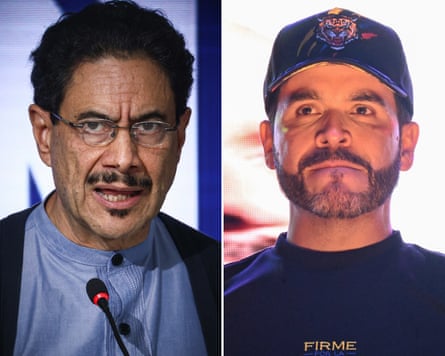
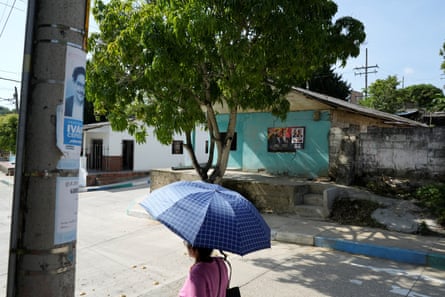
W hoever wins Sunday’s presidential runoff vote in Colombia , the country’s next leader will have a personal history intertwined with one of the criminal forces at the heart of a decades-long armed conflict that claimed nearly half a million lives.

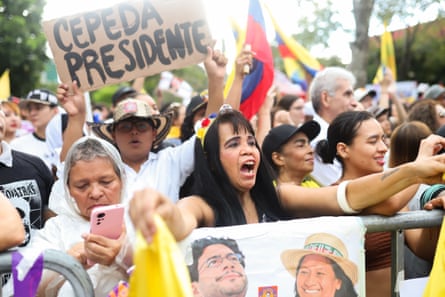
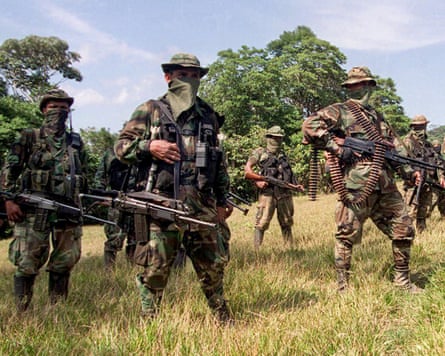
The lives of Iván Cepeda and Abelardo de la Espriella have, in very different ways, been shaped by their relationship with Colombia’s paramilitaries – private armies originally established by rightwing landowners, drug traffickers, businessmen, mining magnates and politicians to fight leftwing guerrilla groups.

De la Espriella, 47, a far-right admirer of Donald Trump and self-styled outsider, launched his legal career defending paramilitary leaders.

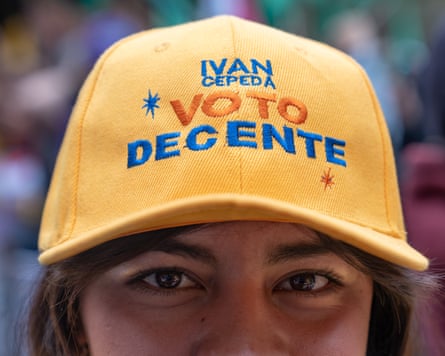
Cepeda’s father was assassinated by army officers linked to a paramilitary group, and the 63-year-old leftwing senator forged his public career as a human rights activist exposing those groups’ crimes.

The winner will take office on 7 August and inherit the country’s worst violence since the landmark 2016 peace agreement between the government and most of the Revolutionary Armed Forces of Colombia.

The two candidates advocate opposing strategies for dealing with the surge in crime.

De la Espriella, who has led the polls since defeating Cepeda in the first round , supports a return to the kind of full-scale military confrontation that has done little to curb violence in the past.

Cepeda, who is backed by the current president, argues for a modified continuation of Gustavo Petro’s strategy of “total peace”. Petro, who is barred by the constitution from running for re-election, has proposed negotiations to dismantle all armed groups, including leftwing rebels, paramilitaries and organised crime factions. Violence has surged, however, and security experts say the strategy has broadly failed .

Sunday’s vote “reflects the reality of a country shaped by drug trafficking,” said Gustavo Duncan, one of Colombia’s leading scholars of paramilitarism.

Paramilitary groups were first formed in the 1960s in response to the emergence of leftwing rebel groups and often operated with the collusion of the Colombian military. By the 1980s, as the cocaine trade grew central to the conflict, the paramilitaries also protected trafficking routes and drug lords such as Pablo Escobar . A major faction later broke with the Medellín cartel leader, helped bring about his downfall and used the resulting power vacuum to expand.

“At its peak, these groups had more than 30,000 members. It was an enormous army spread throughout the country,” Duncan said.

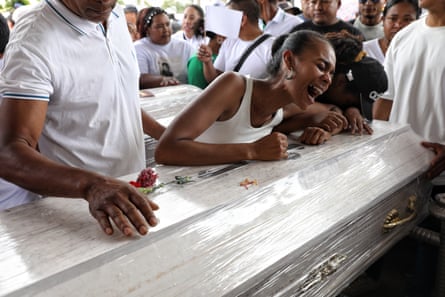
In the 1990s, the paramilitaries “became notorious for massacres” – choreographed displays of extreme violence designed to terrorise entire communities – said María Teresa Ronderos, the author of major investigations on the private militias.

Their fighters would enter towns and rural communities and kill anyone suspected of sympathising with or providing information to the guerrillas, including peasants, Indigenous people and Afro-Colombians. They also carried out what they called social cleansing, targeting people deemed undesirable by paramilitary far-right culture, including LGBTQ+ people, sex workers, homeless people and drug users.

Massacres frequently involved extreme forms of torture, including rape followed by murder, dismemberment of victims with chainsaws while they were still alive and decapitations carried out with axes.

In 1994, paramilitaries and members of the army murdered the senator Manuel Cepeda as part of a campaign against the communist Patriotic Union party. Iván Cepeda, then a university professor, came across his father’s car riddled with bullet holes.

In the early 2000s, the younger Cepeda founded and led a movement representing the death squads’ victims, investigating cases and visiting prisons to collect testimony from former paramilitaries.

At the same time, De la Espriella was rising to prominence as a lawyer defending leaders of the country’s main paramilitary organisation, the United Self-Defence Forces of Colombia (AUC by its Spanish acronym), while the group negotiated its demobilisation.

The AUC no longer exists, but the Gulf Clan, widely regarded as Colombia’s largest and most powerful illegal armed group, was founded by its former members and inherited much of its territory and many of its trafficking routes.

Cepeda filed a criminal complaint against De la Espriella last week, alleging that he had not only represented the AUC in court in the past but had also acted as a “possible recruiter” for the group through a foundation he created.

De la Espriella dismissed the accusations as a “smokescreen” and hit back by claiming that Cepeda maintained a “narco-political” alliance with guerrilla groups in order to secure votes.

Cepeda is regarded as the main architect of Petro’s “total peace” plan. He has repeatedly denied any links to rebel groups, but the fact that Petro was once a guerrilla has been heavily exploited in De la Espriella’s campaign.

After De la Espriella emerged ahead in the first round, Trump announced on social media that he was backing the lawyer, while calling Cepeda a “radical left Marxist”.

Eleven Democratic members of the US Congress sent a letter to the Trump administration last week arguing that “rather than campaigning for [De la Espriella], our government should be examining his ties” to the AUC – which the Washington designated a foreign terrorist organisation in 2001 and which “was responsible for numerous massacres, assassinations and forced disappearances, as well as torture, forced displacement, sexual violence, collusion with state/security and political actors, and large-scale drug trafficking to the US and other countries”.

They said De la Espriella had allegedly “maintained close relations with multiple leaders” of the AUC.

De la Espriella did not respond to requests for comment. He has vehemently denied committing any crime or illegal act in relation to the paramilitaries, insisting that his contact with them was strictly professional in his capacity as a criminal lawyer.

For his supporters, his past seems to matter less than his promises of an iron-fist approach to crime, including building private “mega-prisons” in the Amazon and “wiping out” criminals like “cockroaches and rats” .

The past year has been the most violent since the 2016 peace agreement, with a surge in armed group attacks, homicides, kidnappings, forced displacement and massacres . The rightwing senator and presidential hopeful Miguel Uribe Turbay was shot during a campaign event last year and later died.

Security experts say current indicators are far below the extraordinarily high levels of violence recorded in the decades before the peace deal, but many Colombians feel the country has returned to its “worst moments”.

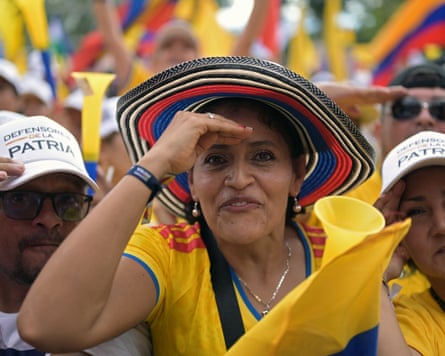
“One reason there is so much criminality in Colombia is that people rob, kill and then a few days later they are back on the streets,” said Lucy Vélez, a 38-year-old graphic designer from the western city of Manizales. “So I do like the idea of being tougher on crime.”

A former businesswoman who now works as a driver in Bogotá and asked to be identified only as Marcela does not see De la Espriella’s alleged associations with the paramilitaries as a problem. “The paramilitaries kept the guerrillas in check,” she said. “When there were too many thieves or too much crime, the paramilitaries would carry out what they called ‘social cleansing’ … Unfortunately, they have served a purpose in some ways.”

An investigation by the Colombian news outlet La Silla Vacía reported that among the minority shareholders of De la Espriella’s businesses – which include rum, wine, clothing and real estate ventures – are relatives of the convicted paramilitary leader Hugues Rodríguez Fuentes, who was known within the AUC as “Comandante Barbie” .

“That does not mean he is personally a criminal [but] De la Espriella comes from the heart of those narco-paramilitary networks,” said Ronderos.

“Colombia has spent years trying to dismantle that terrible war , and he talks about ‘disembowelling’ leftists and killing criminals,” she said. “To return to that after everything it cost us is deeply sad.”

Australia’s Jackson Irvine has no sympathy for Paraguay after historic World Cup red card | World Cup 2026 | The Guardian

Keyword – Football
Trefwoorden – World Cup 2026, World Cup, Australia national football team – Socceroos, Football, Australia sport, Sport
Title – Australia’s Jackson Irvine has no sympathy for Paraguay after historic World Cup red card | World Cup 2026 | The Guardian
Author – https://www.theguardian.com/profile/jack-snape
Link – Australia’s Jackson Irvine has no sympathy for Paraguay after historic World Cup red card | World Cup 2026 | The Guardian
Publish date – 2026-06-21T04:50:24.000Z
Category – Sport
URL – https://www.theguardian.com/football/2026/jun/21/australias-jackson-irvine-has-no-sympathy-for-paraguay-after-historic-world-cup-red-card

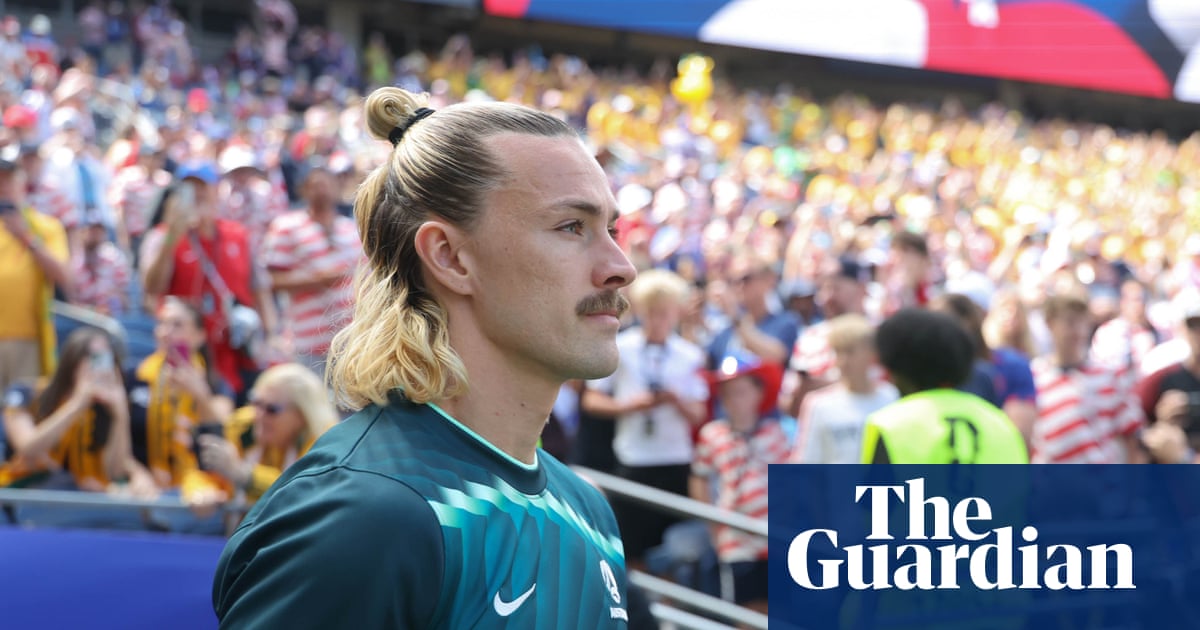
Socceroo Jackson Irvine has backed the decision by Fifa to send players off for covering their mouths when they speak, after Paraguay winger Miguel Almirón was given a historic red card against Turkey.

The Socceroos and Paraguay face a showdown for second place in the group at the San Francisco Bay Area Stadium on Thursday (Friday AEST). If either team lose they will face a torturous wait to find out if they will progress as one of the eight third-placed teams across the 12 groups.

Almirón was the first player sent off under a rule introduced by Fifa for this tournament to address the trend of footballers covering their mouth when confronting opponents. In a boost for the Socceroos, he will be suspended for his team’s final Group D clash.

Irvine, a member of Fifpro’s global player council, said the players had been given fair warning, and the rule was justified. “I know it’s going to be controversial in some ways because we don’t know the nature of what [the comment] was, but when you look at what’s happened in the past, especially around what happened with Vinícius Júnior, I think it takes everything out of the equation.”

The highest profile example of the controversial conduct was earlier this year when Benfica’s Gianluca Prestianni made comments to Real Madrid’s Júnior while covering his mouth with his shirt.

The referee did not send Prestianni off in the Champions League clash, and the on-field behaviour could not be assessed using video evidence, but he was subsequently banned for six matches for using homophobic language .

The body responsible for the laws of the game, the International Football Association Board, approved the introduction of a red card for such conduct in April.

Irvine said Almirón can have no complaints. “If you’re saying something to someone that you don’t want to be seen, then I think it’s safe to say that if you can’t be seen saying it, then it shouldn’t be said,” he said. “For me, it’s a clear line on the rule, and we were all told about it, so it is what it is.”

Despite the absence of Almirón, Paraguay enter the fixture with momentum after their 1-0 victory over Turkey . But they will need to defeat the Socceroos to leapfrog them into second place in Group D. Third place may also scrape into the knockouts depending on results in other groups.

Australia has never beaten a South American side at a World Cup , and Irvine is expecting their opponents to be physical, skilful and unpredictable. He said it will be “just a totally different type of game” compared with their matches against Turkey and the USA, and the Paraguay players have “incredible individual quality”.

“Watching Paraguay against Turkey last night, there was a sequence towards the end of the game that sums up their style of football,” he said. “It was with about five minutes to go, and they had won the ball back high up the pitch, and they had a chance to go to the corner. The guy just whips the cross into the back stick with three guys, and they try and score again with 10 men and they’re 1-0 up. Expect the unexpected. I guess that’s probably the best way to put it.”

Irvine said the Socceroos need to start better against Paraguay than they did against the USA . “The main thing that we have to get better from the first half is just being able to come into the duels and arrive – in the physical side of the game – a little bit better, and ride through those difficult moments,” he said.

“We’re playing against top teams at the highest level, but they’re going to have moments where you’re going to have to defend and we’re going to have to suffer and you’ve got to find ways to get through that.”

The Guardian view on Labour after Makerfield: change must mean more than a new leader | Editorial | The Guardian

Keyword – Opinion
Trefwoorden – Andy Burnham, Labour, Makerfield byelection, Politics, Greater Manchester, UK news, Reform UK
Title – The Guardian view on Labour after Makerfield: change must mean more than a new leader | Editorial | The Guardian
Author – https://www.theguardian.com/profile/editorial
Link – The Guardian view on Labour after Makerfield: change must mean more than a new leader | Editorial | The Guardian
Publish date – 2026-06-19T16:56:23.000Z
Category – Opinion
URL – https://www.theguardian.com/commentisfree/2026/jun/19/the-guardian-view-on-labour-after-makerfield-change-must-mean-more-than-a-new-leader

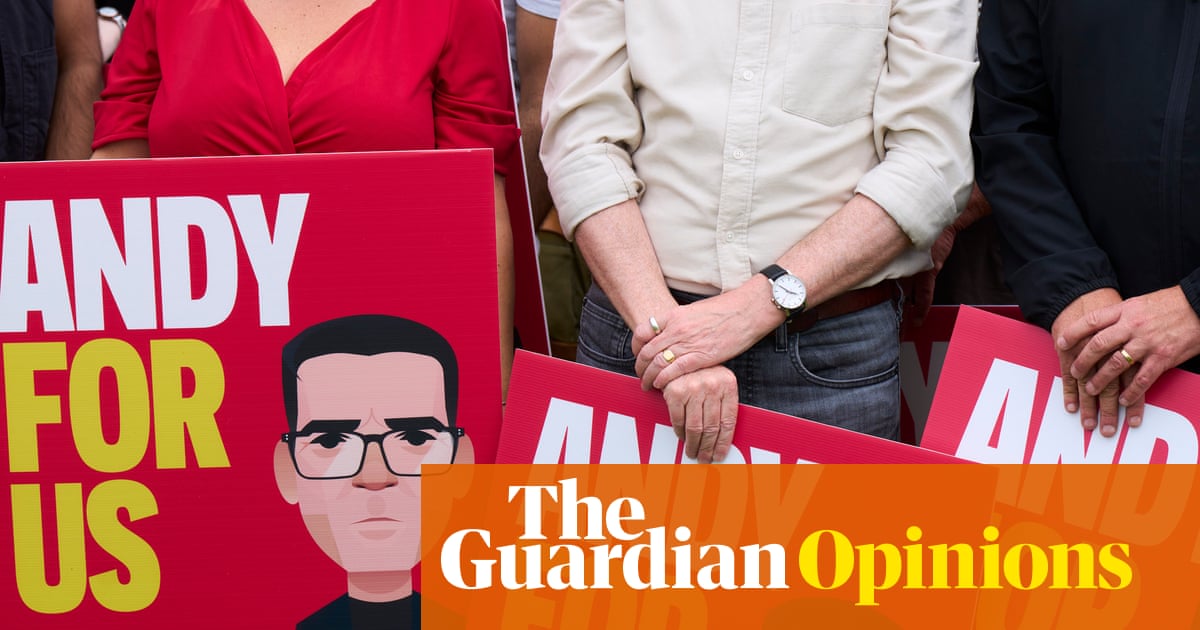
A ndy Burnham’s triumph in the Makerfield byelection leaves the prime minister with only two options : fight openly for the Labour leadership, or leave office cleanly. The former Greater Manchester mayor easily saw off Reform UK’s candidate – winning 55% of the vote to his rightwing rival’s 35%. He won largely because he changed the political meaning of voting Labour in Makerfield. With Mr Burnham, the party went from being the unpopular incumbent to being the vehicle for change.

The prime minister’s implicit claim that it was Starmerism that beat Reform is not credible. The polling by Persuasion UK in Makerfield shows that Labour won because of Mr Burnham’s personal brand, anti-Starmer signalling and leftwing economic message. Significantly, Mr Burnham’s victory rally speech on Friday connects with the data. He was offering, in rhetoric, economic security through a visible state. This is not just redistribution, but the state as buyer, planner and manager. That would be a welcome shift, but how would he deliver cheaper essentials, more public control, fiscal expansion, industrial renewal and fairer rules on housing, work and migration? Mr Burnham’s programme needs to be more than slogans.

It was an unusual byelection: Mr Burnham is a household name in England’s north with a mayoral record, fronting a dramatic Labour leadership subplot. A general election would not be Makerfield. In Scotland, Wales and the south-east, Mr Burnham’s local identity may carry less force. But he cannily fused anti-Starmer and anti-Reform moods by standing both inside and against Labour while selling a more rooted , hopeful politics.

That is why Sir Keir must either force the issue – call a leadership contest, stand in it, and smoke out his rivals – or accept that his authority has drained away and step aside, allowing the party to choose a successor. A Burnham coronation would be tempting, especially with overwhelming parliamentary backing. That would avoid a summer of internal warfare. But it would also risk repeating the original sin of Starmerism : a leader taking power on the promise of “change” without making it clear what the change consists of.

It is ironic that a leadership contest might actually help Mr Burnham. It would force him to turn his Makerfield speech from a mood into a mandate . He might have to say: here is what I would do in the first 100 days; here is what needs legislation; here is what it would cost; here is what can be done through regulation; here is what requires confronting the Treasury; here is where I break with Starmerism; here is where I continue its work.

The strongest argument for avoiding a contest is practical. A long campaign could make Labour look like the Conservatives in 2022 : unstable and riven by infighting. Mr Burnham might avoid a brawl and secure Sir Keir’s quiet retreat by negotiating a clear, short programme , winning support from MPs across the parliamentary party and trade union assent while offering roles to defeated factions.

It looks likely that Sir Keir Starmer’s days are numbered. Whoever replaces him will need a mandate for a fresh agenda. If MPs can unite around such a plan from Mr Burnham, a leadership contest may be unnecessary. If they are just rallying around his poll ratings in the face of Sir Keir’s weakness, then a contest becomes more necessary, not less.

Do you have an opinion on the issues raised in this article? If you would like to submit a response of up to 300 words by email to be considered for publication in our letters section, please click here .

How Europe’s EV makers shrank their product to challenge the bloated SUVs | Electric, hybrid and low-emission cars | The Guardian

Keyword – Environment
Trefwoorden – Electric, hybrid and low-emission cars, Automotive industry, Automotive emissions, Business, Greenhouse gas emissions, Environment, Motoring, Technology, Travel and transport, Renault, Citroën, Renewable energy, Transport, Manufacturing sector, Europe
Title – How Europe’s EV makers shrank their product to challenge the bloated SUVs | Electric, hybrid and low-emission cars | The Guardian
Author – https://www.theguardian.com/profile/jasper-jolly
Link – How Europe’s EV makers shrank their product to challenge the bloated SUVs | Electric, hybrid and low-emission cars | The Guardian
Publish date – 2026-06-21T04:00:20.000Z
Category – News
URL – https://www.theguardian.com/environment/2026/jun/21/europe-ev-shrank-challenge-suv-smaller-china

T he winding backstreets of London, Paris and Rome are a large part of their charm. But they are also a problem for electric carmakers. For a long time, squeezing big batteries into smaller, cheaper cars to fit European streets was too much of a problem, so manufacturers focused on bloated SUVs instead.

But that is finally changing. Battery technology has improved and Europe’s carmakers havecut manufacturing costs enough that they can now sell cars that might have a chance of fitting down a medieval lane or two.

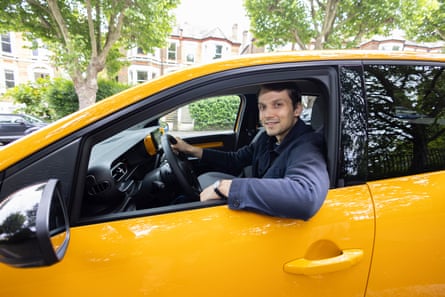
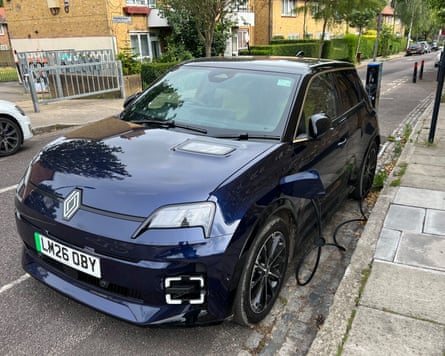
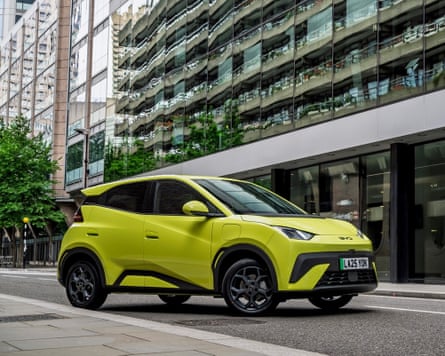
The new Renault Twingo E-Tech is a case in point. Driving the city car through London attracts quizzical looks. Its bulbous headlights live up to the older petrol version’s “frog” nickname, and this particular model has a “mango yellow” paint job.

But small, European electric cars like this will be notable for more than their looks if they can slow the trend towards ever-bigger lumps of metal – and help fend off the challenge from Chinese rivals.

“The world is not going to be saved by big SUVs that are electric,” says Renault’s chief design officer, Laurens van den Acker, who led development on the Twingo. “The world is going to be saved by small electric cars. We need more of them and not less. We need them to become as popular as other cars.”

Car companies are probably not the obvious candidates for saving the world, but they do have a part to play in making vehicles that don’t pump several tonnes of planet-heating carbon dioxide into the atmosphere each year. Road transport currently accounts for about a fifth of EU emissions.

Switching from a small petrol hatchback to an electric SUV represents two steps forward and one step back in environmental terms. The larger car will not produce emissions directly, but more bulk and bigger batteries mean higher emissions associated with manufacturing and more energy needed to move compared to a smaller vehicle – not to mention clogging up streets.

Renault’s Twingo (priced from €19,490 in France and probably selling for about £18,000 when it launches in the UK next year) will go up against an increasing number of rivals in the city car and small car segments of the automotive market. Citroën has the ë-C3 and is planning to revive the venerable 2CV name for a forthcoming small electric model. Peugeot, Citroën’s sister company in the Stellantis group, has the E-208.

Renault and van den Acker have already had a hit with the slightly larger Renault 5 E-Tech, the 2025 winner of Europe’s venerable Car of the Year award . The Mini Cooper Electric and the Fiat 500e have also been on sale for several years, and more are on the way, notably the Volkswagen ID. Polo. There is also the very fun niche of even smaller “ quadricycles” such as the Citroën Ami and the Micro Microlino .

Reversing the trend

The blossoming of smaller cars comes after decades of vehicles getting bigger. At 4.41 metres (14ft 5in) on average, cars manufactured in 2024 were 5% longer than in 2016, according to Dutch government statisticians. They were also nearly 4% wider at 1.82 metres (5ft 10in) – a particular problem for anyone trying to navigate the canal-side streets of Amsterdam.

Smaller cars had started to disappear because it became harder for manufacturers to make money on them. Safety regulations meant extra kit, which was tricky to package into smaller spaces. And when the shift to electric came, batteries were initially too expensive for cars that had traditionally been the most affordable.

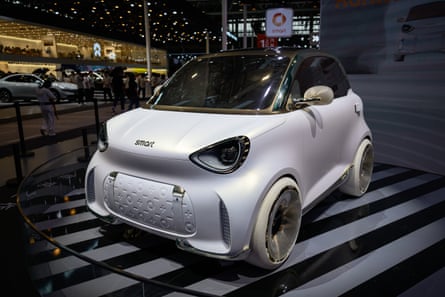
If any brands can claim to be synonymous with small cars, they are Mini and Smart – the latter particularly for its two-seater model, the Fortwo . Smart became a joint venture between Germany’s Mercedes-Benz and China’s Geely in 2019, when it turned its attention to larger electric models, and it is now planning an electric version of the Fortwo, called the #2 (pronounced, awkwardly, as “hashtag two”).

Smart Europe’s boss, Wolfgang Üfer, told an industry conference last month that the #2 was the model everyone, including his own mother, had been asking for. But it has taken longer to develop because of the design challenges of packaging everything into a footprint less than three metres long.

“Making a big car is easy,” says Xuan-Zheng Goh, Smart Europe’s director for product, marketing and communication. “Making a small car is a real big challenge. You need to make some careful decisions.”

Demand for smaller cars has always been there in Europe, he says, but the key to making them financially viable was the falling cost of batteries.

To clamp down further on costs, Renault pushed to design the Twingo in two years rather than four, and did some of the engineering work in China. It also cut the number of parts from between 1,500 and 2,000 found in other cars to only 750.

Within those constraints, van den Acker says, the company sought to make “EVs that you could actually fall in love with”. On the Twingo, that translates to quirky touches such as the headlights and bright colours, a profile in which the windscreen and bonnet form a single line, and sliding back seats to allow for more legroom or boot space.

It is also “French and good taste”, van den Acker adds. ”What you guys in England love.” The trade-off, though, is range: the Twingo has a 27.5kWh battery that gives it a range of 163 miles – easily enough for the school run, but meaning this reporter had to stop to charge for 20 minutes on a weekend return trip from London to Oxford.

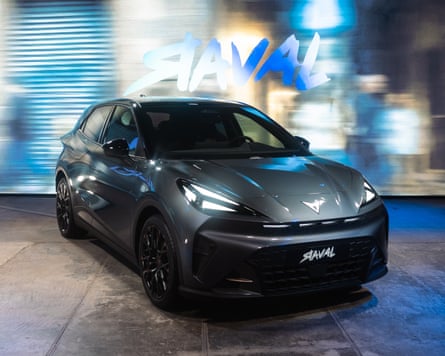
Cupra, owned by Volkswagen, is another manufacturer shrinking its product with the launch of its electric Raval. Starting at £23,785, the car is “a gamechanger” for the company, according to Markus Haupt, the chief executive of Cupra and its Spanish sister brand, Seat.

“We said, OK, now is the moment to bring these cars,” Haupt says, pointing to increased demand for electric vehicles in the UK and Europe. “With this car we have the perfect package to convince [customers] that electro mobility is not the future, it’s the present.”

Getting the cost of production down was a crucial first step, Haupt adds. That required billions of euros of spending across the Volkswagen group to produce a new platform – a shared manufacturing blueprint used as the basis for several cars across different brands. Production costs should be about level with petrol cars “by end of this or beginning of next decade”, says Haupt.

Carmakers have another big reason to try to switch to electric for the millions of small cars in Europe: they need to hit emissions targets in order to avoid fines. That will be impossible without making EVs their top sellers.

However, governments setting the rules – including in the UK – have come under a lot of pressure from the industry to slow the pace of change . Carmakers may be able to sell more hybrids to meet their legal obligations – an option for some small cars such as the Toyota Aygo and the Fiat 500 – albeit at the cost of much higher carbon emissions.

Chinese rivals

But, as ever in the European car industry, there is an elephant in the room: Chinese rivals . China’s relatively new cities and wide roads do not necessarily need smaller cars, but the country’s carmakers know there is a market for them in Europe.

BYD, the world’s largest electric carmaker , has the Dolphin Surf city car, while Stellantis is helping to distribute the Chinese manufacturer Leapmotor’s T03. Smart’s cars, meanwhile, are designed in Europe but engineered and made in China.

Haupt said European manufacturers welcomed the competition, but that China’s manufacturers should be pushed to source components and produce cars in Europe, given the huge government subsidies across Chinese industry that last year prompted the EU to impose tariffs on Chinese cars.

The EU’s new “Made in Europe” rules are expected to go further still, giving a strong incentive to manufacturers to build within the bloc (with the UK at risk of being shut out). That may well mean European buyers will always pay more for small cars, but the upside might be more Chinese carmakers setting up factories there.

“I think for Europe, looking where we are standing now on our industrial basis, it will be super-attractive,” says Haupt. ”This would create employment. This would attract investment to Europe.”

‘A hunting ground for foreign regimes’: why violent attacks on dissidents are on the rise in Britain | Transnational repression | The Guardian

Keyword – Global development
Trefwoorden – Transnational repression, UK news, Iran, China, Russia, Middle East and north Africa, Pakistan
Title – ‘A hunting ground for foreign regimes’: why violent attacks on dissidents are on the rise in Britain | Transnational repression | The Guardian
Author – Geneva Abdul
Link – ‘A hunting ground for foreign regimes’: why violent attacks on dissidents are on the rise in Britain | Transnational repression | The Guardian
Publish date – 2026-06-21T12:00:29.000Z
Category – News
URL – https://www.theguardian.com/global-development/ng-interactive/2026/jun/21/a-hunting-ground-for-foreign-regimes-why-violent-attacks-on-dissidents-are-on-the-rise-in-britain

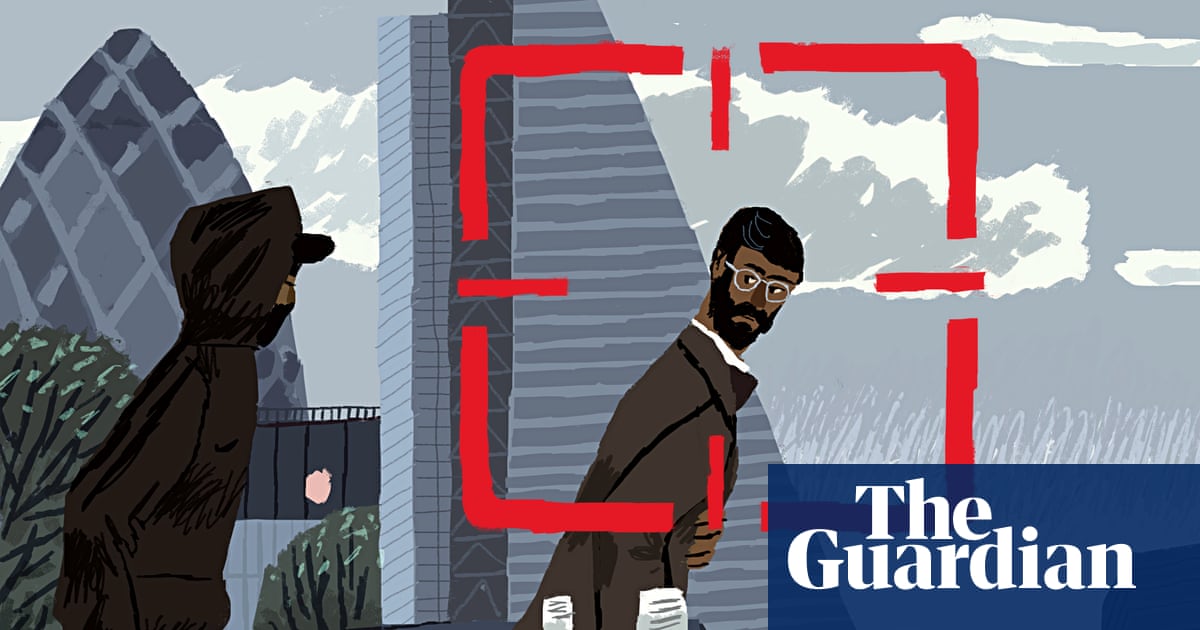
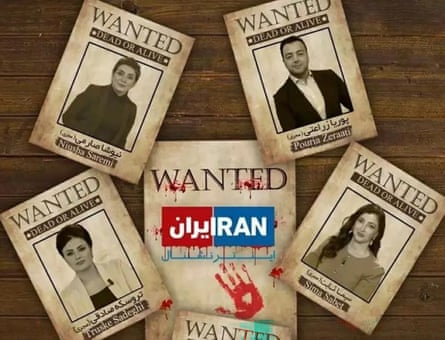
As Pouria Zeraati was crossing the street between his Wimbledon home and his car in south London in March 2024, he was confronted by two men. One held him firmly as the other stabbed him three times in the leg before they both fled.

It was later said to be a targeted attack on behalf of the Iranian regime in Tehran. A punishment for Zeraati’s work as a journalist covering Iran . He survived, but the ambush is one of dozens of violent incidents in recent years linked to foreign states. Russia, China, India, Saudi Arabia and Iran have all been blamed for targeting critics and dissidents living in the UK in the past decade, and linked to incidents involving physical assaults, attempted kidnap, stabbings and an acid attack.

State-threat investigations run by MI5 jumped by 48% in a year , and there have been more than 20 threat-to-life cases relating to Iran since 2022.

This week, arson attacks on properties connected to Keir Starmer in May 2025 were linked to Russia . Two men were also jailed on Thursday for surveilling Hong Kong pro-democracy campaigners living in the UK on behalf of China through a “shadow policing” operation.

Suddenly, say parliamentarians and lawyers, the UK has become a “hunting ground for authoritarian regimes”.

From a topic consigned to spy novels, such state-targeting is becoming commonplace, leaving large numbers of individuals who had sought sanctuary in the UK in fear of their lives .

The former UK security minister Dan Jarvis has said the UK maintains a “hard operating environment” for those states trying to target individuals.

But in recent weeks the Guardian has spoken to various diaspora communities in the UK – Hong Kong, Iran, Pakistan, Saudi Arabia, India and others – who have alleged receiving threats, sexualised harassment , economic coercion , state-linked legal cases and, in some cases, violent attacks.

They described sparse, incoherent and inadequate responses from UK authorities, and spoke of the detrimental impact on their health and safety living in the UK.

“Whereas historically the UK has been less targeted than other places in the world, that position has changed in recent times,” prosecutor Duncan Atkinson KC said in Zeraati’s trial at the Old Bailey last month.

“The UK government is not prepared to stand up to anybody,” says Ben Keith, a barrister specialising in cross-border cases, as other experts say the UK is wedded to ineffective diplomacy that is doing nothing to stop the attacks.

Speaking to the Guardian, Clive Stafford Smith, an American lawyer helping victims of state-led targeting, says: “The FBI have advised victims not to travel to the UK … because the British government does not take meaningful action when dictators go hunting their dissidents.”

The UK overhauled its legislation with the 2023 National Security Act, including further offences around espionage, sabotage and foreign interference, but it still lacks a clear strategy for dealing with the problem, says Lord Alton, chair of the Joint Committee of Human Rights (JCHR). There is also no accurate data on the number of attacks taking place.

Roshaan Khattak, an exiled Pakistani activist and former researcher at Cambridge University, says he has faced intimidation and threats he believes have come from Pakistani-linked state actors as a result of his advocacy on highlighting human rights abuses in Balochistan, a region in south-west Pakistan that has sought independence for decades.

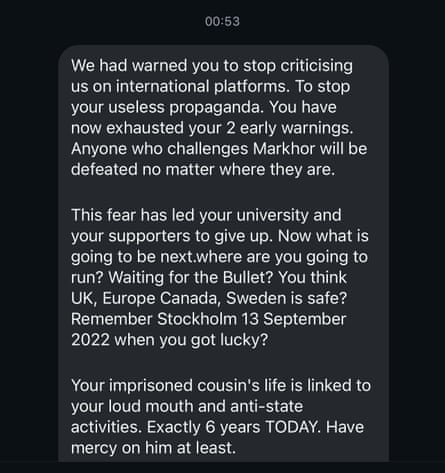
In November 2025, Khattak says he received a message on Instagram saying, “we had warned you to stop criticising us on international platforms” and “stop playing into hands of enemies or else you will be killed no matter where you are”.

The message also included details of Pakistan mobile numbers belonging to him and his father, and his Pakistan passport and ID card. “Where are you going to run?” the message on Instagram said. “Don’t forget even Cambridge and UK is not safe,” it added. “Don’t be stupid.”

Khattack says he always looks over his shoulder when leaving the house to see if he is being followed, or if anyone nearby is acting strangely. “It is next to impossible dealing with the police in the UK … Either they mock you or they’re like, who are you? Or what is Balochistan? Is it in Qatar? They’re sort of turning a blind eye … They don’t want to name Pakistan an offender.”

A spokesperson at the Pakistan high commission said: “Pakistan firmly rejects any malicious suggestions that it engages in transnational repression or unlawful activities anywhere in the world, including the United Kingdom.”

The biggest perpetrator in recent years is Iran, with multiple Iranian activists, journalists, academics and students telling the Guardian they had faced threats, surveillance or intimidation on British soil, which they believed were linked to Iran.

For Nahid Bahmani, a member of the central committee and political bureau of Komala, the Kurdish opposition party, the threat has meant years of forced impermanence. Last year, police informed her husband Abdullah Mohtadi, the party’s secretary general, that they had foiled a terrorist plot against him. They have had to move house every few years.

“This is not simply a physical relocation,” says Bahmani. “It creates a deep psychological insecurity. You never feel that you belong anywhere. You always feel that everything is temporary.”

Although they had gone through greater physical danger in Iran , says Bahmani, insecurity in exile felt different: “In Iran, we could draw on social and emotional networks, while in Britain we were often left with only our homes and the police.”

All those interviewed say they had been in contact with police or counter-terrorism officers and had received safety advice, including installing CCTV, avoiding going out alone at night, not sharing locations on social media, and even changing their car and home.

But Izzy Cutts, policy and parliamentary affairs manager at the Foreign Policy Centre, says there were “big gaps around incidents that fall below the criminal threshold”, which she says was leaving communities and individuals “very scared”.

“I am in a permanent state of anxiety, and anxiety creates paranoia,” says one Iranian activist living in London. “At night, any noise sends me straight to check my CCTV. If a car drives behind me for too long, I think it is following me. I avoid staying out late and often turn down invitations from people I don’t know well. You impose limitations on your normal life so that you can stay safe.”

Alicia Kearns, Conservative MP and former chair of the foreign affairs committee, accuses the Labour government of “rewarding one of the states most responsible” for the issue by granting the Chinese Communist party, a new embassy in London “despite their illegal campaign of repression” on Hongkongers in the UK.

As well as this week’s China spy case, in the past Hong Kong protesters have also allegedly been attacked in the UK by Chinese activists.

“Hostile dictatorships are increasingly seeking to impose their own repression on British shores. There is no acceptable level of transnational repression . Every individual, organisation – and ultimately state – responsible, must be held to account,” says Kearns.

A Home Office spokesperson said attempts by a foreign state to coerce, intimidate, harass, or harm individuals on UK soil are considered a threat to our national security, and will never be tolerated.

“We continually assess potential threats and, whenever they are identified, we will take appropriate measures to mitigate risks to individuals, working closely with the police and intelligence services.”