Can we electrify the world? Ambition moves from nerdish backwater to centre stage | Cop31 | The Guardian

Keyword – Environment
Trefwoorden – Cop31, Germany, Electric, hybrid and low-emission cars, Fossil fuels, Energy, Environment, Europe, World news, Technology
Title – Can we electrify the world? Ambition moves from nerdish backwater to centre stage | Cop31 | The Guardian
Author – https://www.theguardian.com/profile/fiona-harvey
Link – Can we electrify the world? Ambition moves from nerdish backwater to centre stage | Cop31 | The Guardian
Publish date – 2026-06-20T04:00:51.000Z
Category – News
URL – https://www.theguardian.com/environment/2026/jun/20/electrification-takes-centre-stage-bonn-climate-talks

E lectrifying the world – with electric vehicles , electric heating and cooling, and modernised heavy industry – could be the next biggest step towards phasing out fossil fuels, replacing the 80% of global energy that still comes from hydrocarbons. As using electrical energy is much more efficient than combustion, the move would save billions of dollars for consumers and businesses – global energy demand could be halved, according to one estimate.

For decades, electrification has been a nerdish backwater of global climate action. But in the last two weeks, at preparatory talks in Bonn before the forthcoming UN Cop31 climate summit , the subject finally took centre stage.

Murat Kurum, Turkey’s environment minister, who will co-host the Cop31 summit this November, told the Guardian last week: “Without electrification, we won’t be able to reach any of the targets [of the Paris agreement], so we must go through this transformation. Whether you call it the missing piece of the puzzle or the most important tool that we have in our toolkit, this is the case.”

Turkey, with the support of Australia, which is co-president of Cop31 , has proposed setting a target of 35% of final energy to come from electricity by 2035. “This is the most important pillar in reducing emissions – you need to increase electrification in cities, in manufacturing, in [all aspects of life], and will serve us in the bigger picture, the bigger targets [of the Paris agreement],” he said.

The push to electrify was the highlight of two weeks of talks in Bonn that otherwise offered little to cheer. After a cordial start to the annual meeting, held roughly at the halfway point between annual climate “conference of the party” (Cop) summits, by the final days the negotiations descended into near-farce, with some countries refusing to agree wording that would base decisions on “the best available science”, despite this being a cornerstone of climate agreements for more than 30 years. The talks, which were supposed to lay the groundwork for Cop31 , finished on Thursday evening with many issues unresolved.

“We have seen side-stepping and stalling,” said the UN climate chief, Simon Stiell, admonishing countries as two weeks of talks slid to a conclusion on Thursday night. “We’ve seen geopolitical tensions wash through these halls. We simply cannot afford to reopen previous decisions, to renegotiate existing targets, or to backslide. It’s cooperation, not fierce competition, that we need.”

The biggest rows were over climate science, and the 1.5C goal. In a strand of the talks known as “research and systematic observations”, some countries – led by Saudi Arabia and the Arab group of nations, but also including India – objected to language reaffirming climate science, and argued that research by scientists in rich countries dominated submissions to the Intergovernmental Panel on Climate Change.

But other countries said the aim was clearly to delay and derail. Sivendra Michael, speaking on behalf of the Pacific Island nations, said: “We are hearing voices in these rooms that are doing their best to undermine science. Anyone blocking references to science, they are not our friends.”

He added: “There are powerful interests desperate to protect their wealth and influence. We are seeing certain countries holding the [UN] process hostage as vulnerable people suffer heat stress and storms, droughts and famine.”

There were also questions raised by many of the same countries over the inclusion of the global target of limiting temperatures to 1.5C in several places in the negotiating texts, but they faced furious opposition.

Surangel Whipps, the president of the Pacific nation of Palau, told a separate conference in Germany: “We know we won’t make the 1.5C target, but what we need to do is not give up.”

Greater harmony was on show over the “just transition”, a key issue for campaigners which refers to the need to ensure that workers affected by the move to a low-carbon economy are supported, and protected from exploitation.

Camila Mercure, the climate policy coordinator at Fundación Ambiente y Recursos Naturales, said the discussions had been constructive. “While [the talks] exposed significant differences among parties, they also showed there is a pathway to a meaningful outcome [on a just transition] at Cop31. Governments must now engage constructively to make that happen.”

But climate finance remains a huge stumbling block as developed countries continue to cut overseas aid and prioritise military spending. Poor countries were furious that rich nations were dragging their feet on fulfilling a previously set goal to triple the funding they provide for adaptation to the impacts of the climate crisis. Pooja Dave, the adaptation policy coordinator at Climate Action Network International, said: “What we saw was clear bad faith and unwillingness by developed countries to make progress on the global goal on adaptation. You cannot implement the GGA without finance.”

At last year’s Cop30 summit in Brazil , attempts to get countries to restate their commitment to “transition away from fossil fuels” were stymied, but more than 50 countries held their own conference in April to discuss such a phaseout .

But the electrification target marked a step change, after years with little mention at Cops, in part because the technology for electrification lagged behind that for renewable generation. But now China has moved to mass manufacture of electric vehicles, bringing prices down, while heat pumps have also come down in price, though less dramatically, and can save consumers hundreds of pounds on their energy bills. Industrial processes are also increasingly switching to cheap renewable energy.

Electric technology, according to Prof Jan Rosenow from Oxford University, is now ready for widespread takeup and offers efficiencies three to five times greater than their fossil fuel counterparts. “I call it electro-efficiency,” he said. “It’s the inbuilt efficiency of electric technology compared with fossil fuels.”

Rosenow has estimated, in a forthcoming paper, that a global switch to electrification would halve energy demand. That would produce savings that would quickly reach trillions of dollars globally, freeing up cash for governments, businesses and consumers to spend on better ends, from health and education to defence.
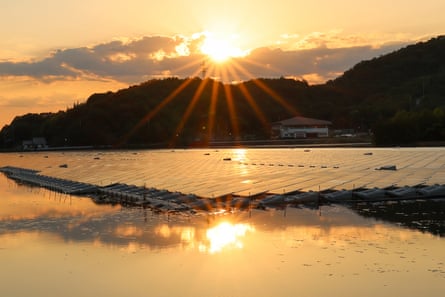
Some countries are way ahead. Japan, for instance, has nearly reached the target of 35% of energy to come from electricity that the Cop31 presidency is proposing. China is nearly at 30%, but the US lags at 22%, India and Brazil are about 20% and globally the figure is 21%.

But even the Cop measures on electrification, though widely accepted as necessary to meet scientific advice to reduce emissions to net zero by mid-century, face an uphill struggle to gain acceptance within the byzantine processes of the Cop.

While the US is the only major country absent from the UN talks, the influence of Donald Trump’s presidency was felt within the negotiating halls. “Saudi Arabia has taken more of an obvious role [in disrupting progress], and part of that is because the US used to play a role in holding them back,” one negotiator said. Saudi is not alone: it has allies among the Gulf states, which work together as the Arab group, and has been joined by India on some issues, Russia on several, and even by Kenya, usually a strong supporter of climate action. “People feel they can do this because of what they see coming from the US now,” the negotiator said.
Chic and cheerful: 15 hotels for affordable European glamour | Europe holidays | The Guardian

Keyword – Travel
Trefwoorden – Europe holidays, Hotels, Travel, France holidays, Spain holidays, Portugal holidays, Greece holidays, Italy holidays
Title – Chic and cheerful: 15 hotels for affordable European glamour | Europe holidays | The Guardian
Author – Fiona Kerr
Link – Chic and cheerful: 15 hotels for affordable European glamour | Europe holidays | The Guardian
Publish date – 2026-06-21T06:00:24.000Z
Category – Lifestyle
URL – https://www.theguardian.com/travel/2026/jun/21/15-hotels-affordable-european-glamour-greece-spain-france-portugal-italy

GREECE

Toes in the sea on Kastellorizo

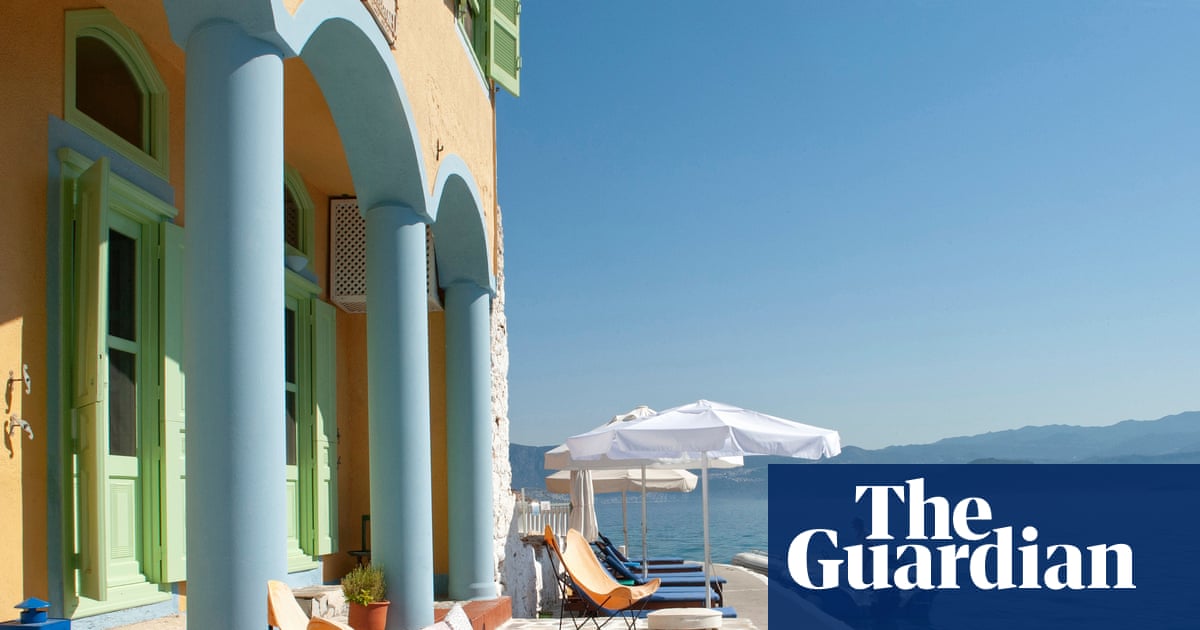
Just 2km from the Lycian coast, Kastellorizo is much closer to Turkey than mainland Greece. Ferries from the Turkish beach town of Kaş, as well as Rhodes and other Dodecanese neighbours, dock at the island’s tiny harbour, lined with colourful neoclassical houses. One of them, an ochre-painted mansion with pistachio green shutters, is Hotel Mediterraneo , which is so close to the water that you can practically roll out of bed and into the sea from the ground floor suite.

Mediterraneo’s owner, Parisian architect Marie Rivalant, is one of many artists and creatives who have fallen for Kastellorizo’s sleepy charms. She took over the quayside pension 25 years ago, painting the seven bedrooms in sunny colours and layering them with rugs, cushions, antiques and artworks (if you like her bohemian style, there is a small shop at the hotel selling her finds). Breakfasts blend influences from her travels too: flaky Turkish börek pastries, Greek yogurt and freshly baked croissants, served on the terrace. Doubles from €170 B&B , mediterraneokastellorizo.com

A shipshape foodie stay in the Dodecanese

In the 19th century, the Greek island of Symi grew wealthy on sponge-diving, shipbuilding and seafaring. This brought merchants, with silver, spices and sponges traded in a neoclassical building on the Kali Strata, a stone stairway that connects the harbour of Gialos with the upper village of Chorio.

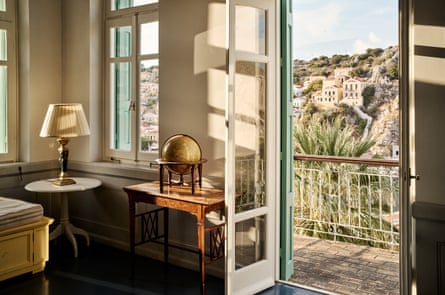
Today that building, with its high-ceilinged historic grandeur, is The Old Markets hotel. In the bedrooms, antique maps, old globes, nautical paintings and silverware nod to its past life. There are only seven rooms and three suites spread between the old market and the neighbouring Captain’s Mansion, but the hotel has an outsized culinary reputation thanks to its rooftop tasting-menu restaurant, Agora, and huge Greek breakfast feasts of Symi orange blossom akoumia (rice doughnuts) and toasted tsoureki (sweet brioche-like bread). Like many islands, Symi is best explored by boat, bobbing from Agios Nikolaos beach to St George Bay and on to the monastery at Panormitis, before heading back to the pretty horseshoe-shaped harbour. Doubles from £150 B&B , theoldmarkets.com

SPAIN

A ducal palace in northern Spain

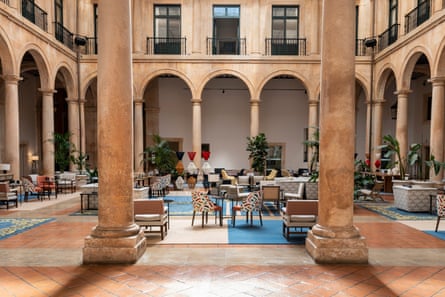
Spain’s paradors – state-run hotels in heritage buildings – are windows into the country’s history, from Moorish castles to medieval monasteries. In the hilltop town of Lerma, in the Castile and León region, the imposing 17th-century Ducal Palace is now Parador de Lerma , a place where royals married, princesses were born and even Napoleon stayed (walk in Bonaparte’s footsteps in room 313).

Several works by the great poet of Spain’s Golden Age, Lope de Vega, were first performed in the central covered courtyard surrounded by colonnaded galleries. The Duke of Lerma was also one of the great collectors of his time, and the parador is lined with moody oil paintings, Flemish tapestries and works by contemporary Spanish artists. The vaulted restaurant dishes up local favourites such as roast suckling lamb and Burgos cheeses. Nearby, the Arlanza wine region turns out muscular reds – try them at Bodega Palacio de Lerma . Doubles from €124 room-only, breakfast €22 , paradores.es

A hillside retreat near Barcelona

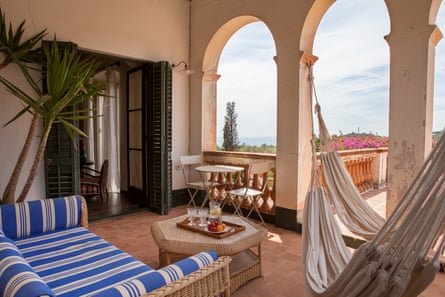
Set above the Costa del Maresme, the romantic manor of Can Casadella is a peaceful escape from Barcelona’s summer throng and just half an hour away. Magda and Josep allow visitors to have the run of antique-filled sitting rooms, cosy library and colonnaded terraces, where a hammock swings in the breeze. Outside, the old pond has been turned into a natural swimming pool, and there are orchards of orange, lemon, fig and almond trees. Freshly squeezed orange juice is served at breakfast, alongside homemade lemon and rosemary marmalade, breads, local cheese and sausages.

The nine large doubles and twins have original tiled floors and wooden beams, some with sea views and their own terraces. It’s enough to check out of the world for a few days, but Magda can also organise cooking workshops and yoga in the garden, and recommend hikes in the Parc de la Serralada Litoral next door or the best beaches a short drive away. Doubles from €132 room-only, breakfast €12 , cancasadella.com

A colourful hideout in Andalu c ía

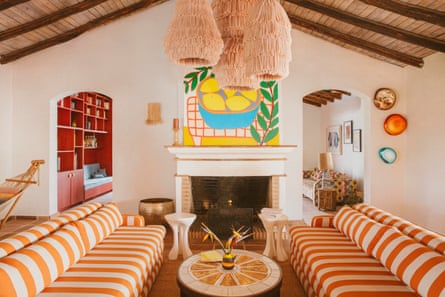
Cortijo Genesis , a reimagined farmhouse, opened its doors last summer outside the whitewashed village of Gaucín, 40 miles west of Marbella. There’s a retro, Palm Springs-esque glamour to the pink scalloped parasols and wrought iron loungers in the garden, and the interior is just as colourful: a rainbow-painted ceiling in the reading room, a yellow-tiled kitchen and five bedrooms inspired by semi-precious stones – citrine, cornaline, morganite, lapis lazuli and aventurine.

Belgian co-owner Valentina Geyer is a reiki practitioner and equine therapist, and there’s a strong wellness focus, with meditation zones, yoga and pilates retreats, reiki healing and equine coaching. Much of the food is homegrown and homemade, with eggs from their hens, honey from their beehives, and herbs, fruit and vegetables from the permaculture plot. Good fuel to explore the hiking and biking routes through the hills nearby, or simply dip in and out of the swimming pool. Doubles from €180 B&B, cortijo-genesis.com

FRANCE

A quieter side of the Côte d’Azur

Halfway between the hip grit of Marseille and the glitz of Saint-Tropez, Hyères is one of the quieter corners of the Côte d’Azur and known as Hyères-les-Palmiers for the thousands of palm trees that grow along boulevards and gardens. Part of its sleepy charm (and why it has stayed that way) is that its old town lies not on the beach, but a couple of miles inland, looking down on the Med from a hilltop perch.

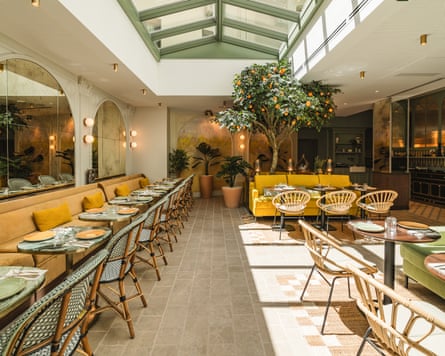
It’s here that the Lilou Hotel opened a couple of summers ago, giving a Haussmann-esque building a fashionable twist, with cream and ochre paintwork, poplar burr wood furniture and rattan touches. There’s a slip of a pool outside and the restaurant dishes up coastal plates of bouillabaisse croquettes, tuna crudo and langoustine risotto. Down on the coast, l’Almanarre beach is a beautiful curve of sand popular with kite- and windsurfers. And just offshore are the islands of Porquerolles (home to a contemporary art institute and white sand beaches) and Port-Cros (a wild and rugged nature reserve) to explore. Doubles from €145 room-only, breakfast €22 , lilouhotel.fr

A seaside spa hotel in Brittany

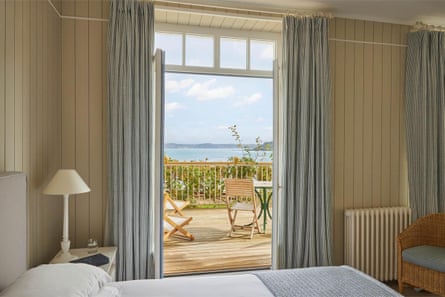
On the blustery Finistère coast, a 45-minute drive east of Roscoff, the Grand Hôtel des Bains in Locquirec has a timeless New England air with its shiplap panelling and jaunty stripes. The chic decor is thanks to late owner Dominique van Lier, who edited a Belgian interiors magazine and tastefully transformed what had been a stuffy spa resort. The Marine Spa is still a huge draw, with massages, magnesium therapies and beauty treatments from Breton skincare brand Thalion. There’s also a sauna, hammam and warm indoor pool with knock-out views over Baie de Morlaix.

Most bedrooms have sea views, and there are beaches to walk to either side of the hotel’s rocky promontory, from tiny coves to the sweeping sands of the Baie de Locquirec. While the look here is East Coast US, the food and service are decidedly French (oysters, roasted lobster with seaweed butter) and the hotel also owns Brasserie de la Plage on the quayside for a change from the white-tablecloth dining room. Doubles from £198 room-only , i-escape.com

An artist ’s resort in Normandy

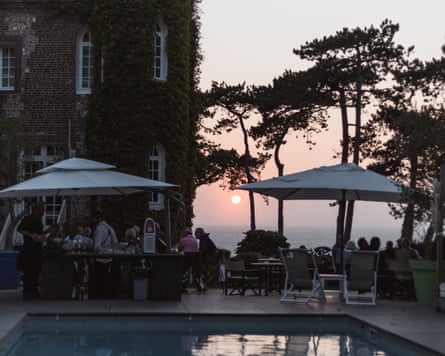
Claude Monet painted the luminous cliffs of Étretat more than 50 times during the 1880s, capturing the ever-shifting light on the white rock faces and dramatic sea arches. There are views of those famous chalk beauties from Le Donjon Domaine Saint Clair , which is set high above the Normandy seaside resort. One of the hotel’s bedrooms is named after Monet, while others honour novelists Guy de Maupassant, who lived in Étretat for part of his childhood, and Gustave Flaubert, a frequent visitor.

Less than three hours’ drive from Paris, Étretat is a popular spot with French tourists in the summer, who flock to the Alabaster Coast for locally caught seafood at waterfront bistros and the pebble beach between the cliffs. Built in 1862, Domaine Saint Clair is an imposing castle-style house with an idiosyncratic charm: bedrooms are tucked up and down little staircases and there is an open-air Jacuzzi atop the tower. There’s also a heated outdoor pool, a petit spa and a cocktail bar, which harks back to the town’s golden age. Doubles from €190 room-only, breakfast €25 , hoteletretat.com

Basque elegance in Biarritz

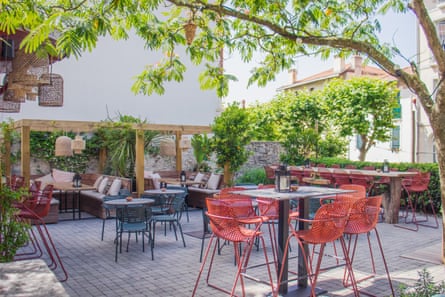
With its imperial palace on the headland overlooking wetsuit-clad surfers catching the waves, Biarritz has a funny duality of belle époque grandeur and salt-crusted beachiness. But it works. A few blocks back from the beach, Hotel Saint-Julien has a similar mix of elegance and ease. The typical 19th-century Basque house, with a whitewashed facade and painted shutters, has good bones – high ceilings and original wooden floors.

More recent updates have given an easy breeziness to the 26 bedrooms, all slightly different but decorated in muted colours with vintage furniture – the top floor has views over the rooftops to the sea. There’s a homely chambre d’hôte simplicity, and the restaurant has a rotating cast of visiting chefs and pop-up residencies. Restaurant Anema (until October) serves a daily changing menu of whatever is freshest from the fish market – on balmy nights bag one of the tables on the terrace. Doubles from €180 room-only , breakfast €19 , hotel-saint-julien-biarritz.fr

Chic Cannes at less haute prices

Cannes turns on the full red-carpet sparkle for the film festival each May, but with its superyacht-filled marina and beach clubs, it is a prime people-watching spot any time of year. The French Riviera town is known for palatial institutions such as the Carlton, Hôtel Martinez and Le Majestic, but a short walk from La Croisette, the newly opened Hôtel Lepoussin gives Haussmann-style glamour at less haute prices. There’s a mid-century feel to bedrooms, with sunny yellow textiles and wide curving wooden headboards; downstairs there’s an honesty bar in the lobby and a dinky plunge pool.

Keep the costs down further by skipping the beach-club fees and head instead to the public Plage Macé or Plage de la Bocca, stocking up on a picnic from the Marché Forville first. Or nip across to the Îles de Lérins on the ferry, exploring quiet coves, coastal walking trails and the fort where the mysterious Man in the Iron Mask was imprisoned. Doubles from €135 room-only, breakfast €19 , lepoussinhotel.com

PORTUGAL

A royal resort on the Portuguese Riviera

In 1870, King Luís I chose Cascais, 20 miles west of Lisbon, as his official summer residence. Aristocrats followed his lead to the Atlantic coast, building Italianate villas and ornate mansions, and turning the former fishing village into a fashionable resort. The Pergola Boutique Hotel was Cascais’s first hotel when it opened in 1985, transforming two chalets into an elegant 15-room retreat, the facade decorated with hand-painted tiles. Rooms are filled with art and antiques, and in the garden is a restaurant run by the team behind Lisbon favourite Café de São Bento .

The hotel is only a two-minute walk from the station, and arriving by train is easily the loveliest approach, with the line hugging the coast all the way from Lisbon. While Cascais still has a refined air, the coast is rugged and breezy – walk the boardwalk by the sea to neighbouring Estoril , catch a wave on the sandy stretch between Estoril and Carcavelos, or hike over cliffs to remote Praia da Ursa. Doubles from £199 B&B , mrandmrssmith.com

Rococo grandeur in the Algarve

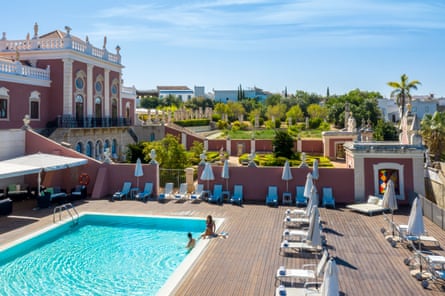
This incredible rose-coloured palace – now Pousada Palácio Estoi – was built in the 19th century by the Viscount of Estoi, with more than a passing nod to Versailles. Outside there are immaculate French-style gardens with clipped parterre hedges, statues and fountains, while inside is full-throttle Louis XV: ceilings frescoed with cherubim, ornate plasterwork, giant gilt mirrors and huge chandeliers. The 63 bedrooms, on the other hand, are a curious minimalist counterpoint, housed in a new wing that flanks the palace – slick and white like a visual palate cleanser from all that bling.

The extension is also home to a spa, with hammam, saunas and treatment rooms, and the restaurant dishes up Portuguese fish stew and Algarve orange tart in the old palace kitchen. From here, it’s a 20-minute drive to Faro, where boat trips depart for the lagoons, pristine beaches, birdlife and barrier islands of the Ria Formosa natural park . Doubles from €122 B&B, pousadas.pt

ITALY

An artist ’s guesthouse in Piemonte

Italian-Canadian artist Bruno Billio knows hotels – he spent 18 years as resident artist at the Gladstone Hotel in Toronto. But now his creativity, which spans installation, sculpture and design, comes to life in a new way at his four-bedroom guesthouse, La Giardi na , which opened this spring in the hills outside Turin.

It’s a handsome conversion of a 12th-century convent, and deeply personal too, with rooms named after family members and a wedding picture of his parents in the sitting room. Billio’s sculptural installations (found objects bound in vibrant thread; porcelain figurines dipped in black rubber) and original paintings by other artists grace the guesthouse. There are views towards the tall peak of Monviso and the Alps, with vineyards and hill towns just beyond the estate’s gates. Doubles from €140 B&B , lagiardina.com

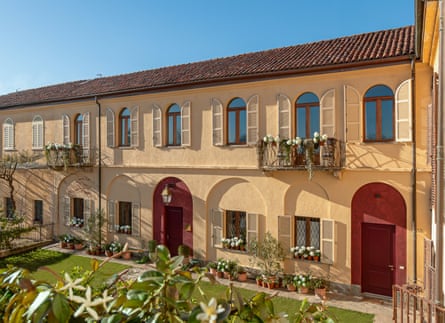
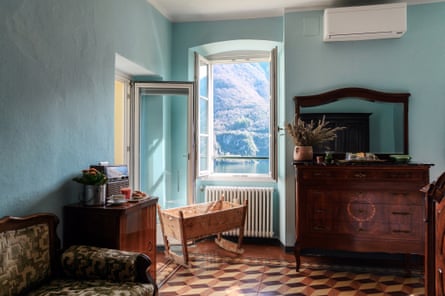
A nonna’s house on Lake Como

Alessandro and Andrea Motti’s grandmother was born in this house in the village of Laglio on Como’s western shore, and when the brothers were little they used to play with the chickens and rabbits in the garden overlooking the water. Now they’ve turned their nonna ’s old home (and the neighbouring one) into a charming bed and breakfast, Cà Spiga . All eight bedrooms have lake views, and a breakfast spread from the family’s deli, Da Luciano , is laid out on the terrace each morning. Recently they have started serving Sunday lunches in the garden too, with dishes from local bistro La Piazzetta in Cernobbio.

Alessandro is full of tips to sidestep the Como crowds. Follow his lead and drive to the beach on the northern part of the lake at Domaso, before lunch at Osteria Aquila d’Oro in the Valle del Dosso del Liro, finishing at his favourite cocktail bar, Lo Scalo in Cremia. Doubles from €225 B&B, caspiga.it

Views to the lighthouse in Puglia

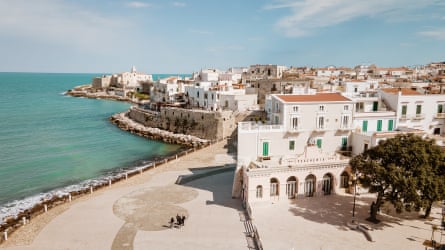
Jutting out into the Adriatic, the Gargano peninsula, the spur to Italy’s boot, is a place of dramatic white limestone cliffs and sandy beaches, rugged mountains and deep forests – a wilder, quieter alternative to southern Puglia. At its very tip, the whitewashed town of Vieste is a place Italians flock to in summer for its clear waters and medieval centre.

In a historic building overlooking the marina, Tra Cielo e Mare has just six rooms, all decked out in white and wood. Three have balconies overlooking the sea, and breakfast is served on the terrace with views towards the lighthouse, which sits on its own little island. Spiaggia del Castello , a sandy stretch framed by the huge Pizzomunno monolith is 15 minutes’ walk from the hotel. And the whole peninsula is part of the Gargano national park , which is crisscrossed with cycling and hiking trails. Doubles from €190 B&B , welcomebeyond.com

Prices are for late June/early July and were correct at the time of going to press

The 2026 World Cup team of the tournament so far (without the superstars) | World Cup 2026 | The Guardian

Keyword – Football
Trefwoorden – World Cup 2026, World Cup, Football, Sport
Title – The 2026 World Cup team of the tournament so far (without the superstars) | World Cup 2026 | The Guardian
Author – https://www.theguardian.com/profile/john-brewin,https://www.theguardian.com/profile/billy-munday,https://www.theguardian.com/profile/marcuschristenson
Link – The 2026 World Cup team of the tournament so far (without the superstars) | World Cup 2026 | The Guardian
Publish date – 2026-06-21T04:00:21.000Z
Category – Sport
URL – https://www.theguardian.com/football/2026/jun/21/the-2026-world-cup-team-of-the-tournament-so-far-without-the-superstars

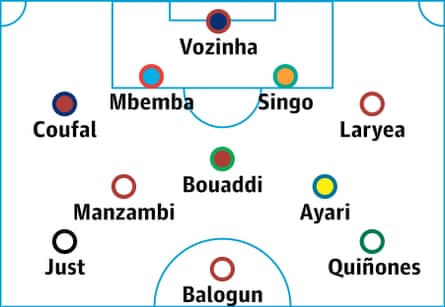
Vozinha (Cape Verde, goalkeeper)

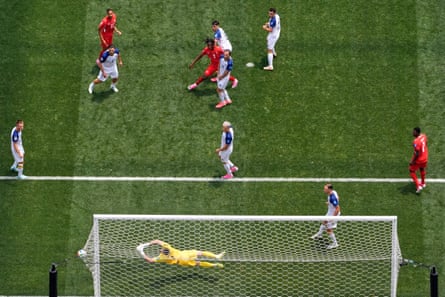
A star was born, at 40, when a player whose highest-profile employers were Portugal’s Gil Vicente, denied Spain’s all-stars in that historic 0-0 draw . His Christian name being Josimar may well have pointed to him being a nascent World Cup cult hero. So huge was his impact that the US authorities, on the orders of House Democratic leader Hakeem Jeffries, waived the visa fee and $15,000 (£11,300) bond for his mother, now able to fly in for her boy’s continuing adventures. Seven saves from Spain have made him a global social media sensation, too.

Vladimir Coufal (Czechia, right-back)

With set-piece football so voguish in the club game, long-throw experts are at a premium. Coufal is 33, and a Hoffenheim player these days, though is widely recalled as a West Ham player. That the Hammers let go the man with the golden arm who created his country’s best chances – and their goal – against South Korea will not have escaped Hammers fans. In North America, he has been employed as a wing-back in a team who have best embodied the physical approach of the European mid-rankers.

Chancel Mbemba (DR Congo, centre-back)

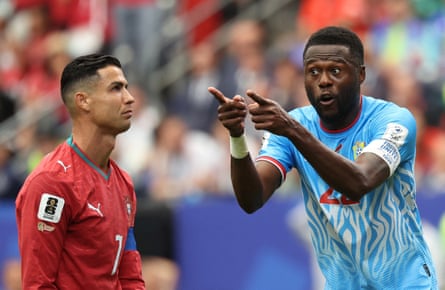
The passage of time means there are now tougher tasks in football than denying Cristiano Ronaldo a goal but Portugal still possess other players of high attacking class. The Democratic Republic of the Congo closed every door down. Mbemba is not an unknown quantity, the Lille defender having been a Newcastle and Marseille player; he is best recalled in England for turning up pre-match at St James’ Park in a tuxedo. As his country secured their first ever World Cup finals point, he led the defensive effort. The stats show that Ronaldo made 47 offers to receive the ball but only got it 10 times, as Mbemba was covering off the space, chopping down a tall tree as he did so.

Wilfried Singo (Côte d’Ivoire, centre-back)

Ecuador took a painful lesson in Philadelphia, John Yeboah and Alan Minda hitting the woodwork before they succumbed to a late goal from Amad Diallo . The architect of the winner was Galatasaray’s Singo, surging forward, his long run from defence taking him beyond tired opponents, and setting up Amad’s finish. Earlier, Singo’s running battle with the Ecuador striker Enner Valencia set the tone for a physical contest. He also caught the eye with an ambitious attempt at a bicycle kick.

Richie Laryea (Canada, left-back)

Canada’s buildup was dominated by the fitness doubts surrounding their captain, Alphonso Davies. Jesse Marsch has not needed to risk his talismanic left-back in the opening two games thanks to the performances of Laryea, who usually plays on the right. The Toronto FC defender is full of running and provides the sort of attacking threat Marsch demands, a real outlet in the 6-0 takedown of Qatar . Davies’ absence need not be such a hindrance.

Ayyoub Bouaddi (Morocco, midfielder)

Only declared for Morocco on 15 May, the France-born Lille midfielder’s performances against Brazil and Scotland have confirmed his reputation as one of the most promising players around. Almost a complete list of elite clubs are linked with an 18-year-old who pairs physical presence with an innate reading of the game. Both Casemiro and Scott McTominay were found wanting by Bouaddi’s presence. “A masterclass,” said Achraf Hakimi, the captain used to playing alongside the very best. These performances will come as no surprise to scouts, who know all about a player who already embodies a new, expansive Moroccan team.

Johan Manzambi (Switzerland, midfielder)

Granit Xhaka was not happy with the contribution of Switzerland’s substitutes in their 1-1 draw with Qatar. Without naming Manzambi, the captain lamented the way the team “no longer had the discipline in certain positions”. The 20-year-old’s impact off the bench against Bosnia and Herzegovina was emphatic. Xhaka denied the Freiburg forward the chance to complete his hat-trick with a late penalty, laying another marker that discipline and the collective remain key.

Yasin Ayari (Sweden, midfielder)

At the heart of Sweden’s commanding opening performance against Tunisia , and scoring two goals, was the Brighton midfielder, replicating early-season club form that fell victim to injury. Ayari, slight and willowy, pairs his creativity with energy and an aggression belying his physique. “That’s why I didn’t celebrate, because I feel a lot for the country,” he explained after scoring against the country of his father’s birth, having also shown why he is the latest Brighton player to be chased in the transfer market. He will cost a significant fee.

Elijah Just (New Zealand, right-winger)

Chris Wood, the striker expected to score his nation’s goals, turned supplier for both goals scored by the Motherwell man against Iran. Just’s first came from neat control of Wood’s flick followed by a thunderous finish, the second involved a run from midfield, another Wood flick, and an even better finish. The North Islander is coming off a fine Scottish Premiership season and had been linked with a move to Celtic but has now alerted suitors far and wide.

Folarin Balogun (USA, forward)

So far for the daddy hosts, Balogun has been the star of the tournament. The native New Yorker – by dint of an airline official – has been at the core of Mauricio Pochettino’s high-transition, speed-demon attack. “The kid’s insane,” said Christian Pulisic, who has been able to take a back seat and was benched against Australia as a precaution, while the Monaco man assumes centre stage and becomes an all-American hero. It was Balogun’s burst of speed and unplayable delivery that caused panic in the Australian ranks for Cameron Burgess’s opening own goal as progress to the last 32 was secured.

Julián Quiñones (Mexico, left-winger)

In Javier Aguirre’s pragmatic, often uninspiring Mexico team, that has still secured top spot in Group A with two wins, Quiñones has been the brightest spark. The 29-year-old, Colombia-born winger set the co-hosts on their way inside 10 minutes of the opener at the Azteca and does not lack for confidence, later trying to lob South Africa’s Ronwen Williams from a very long way out.

Spanish PM’s wife to stand trial on corruption charges and banned from leaving country | Spain | The Guardian

Keyword – World news
Trefwoorden – Spain, Pedro Sánchez
Title – Spanish PM’s wife to stand trial on corruption charges and banned from leaving country | Spain | The Guardian
Author – https://www.theguardian.com/profile/oliver-holmes
Link – Spanish PM’s wife to stand trial on corruption charges and banned from leaving country | Spain | The Guardian
Publish date – 2026-06-20T14:55:18.000Z
Category – News
URL – https://www.theguardian.com/world/2026/jun/20/begona-gomez-pedro-sanchez-spanish-prime-minister-wife-corruption-trial

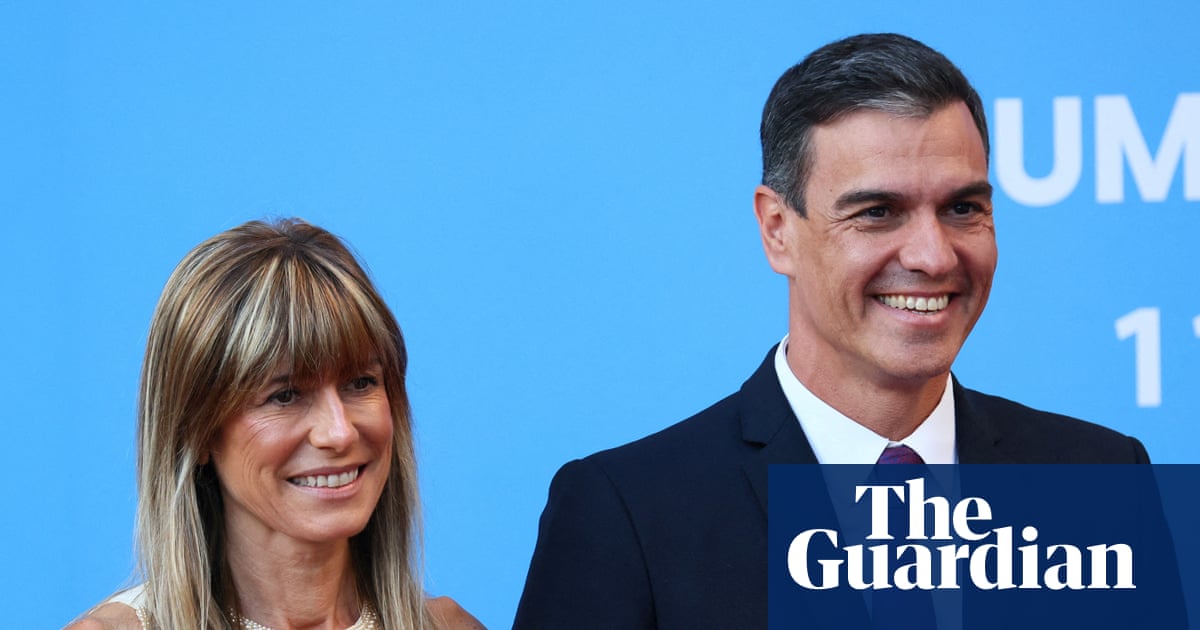
A judge in Spain has ruled that the wife of socialist prime minister Pedro Sánchez must stand trial on corruption charges and has banned her from leaving the country.

Begoña Gómez had previously been charged after a two-year investigation with embezzlement, influence peddling, corruption in business dealings and misappropriation of funds.

Gómez, 55, denies any wrongdoing in the case, which was triggered by a complaint from the group Manos Limpias (Clean Hands), a self-styled trade union with far-right links.

The judge in the case, Juan Carlos Peinado, ordered Gómez to surrender ​her passport, barred her ‌from leaving ‌Spain and required her to report to court twice a ‌month, according to a court order released on Saturday. She will face trial by jury on an unspecified date.

Sánchez had repeatedly dismissed the case against his wife as a baseless and politically motivated smear . The prime minister, an outspoken leftist leader in Europe, has accused his political and media opponents of pursuing his family and has also openly questioned the impartiality of some members of the judiciary .

The Socialist party quickly reacted to the judge’s ruling, posting on X: “(Begoña) has been ​subjected to judicial and political persecution for two years. Today’s development is another step in that process.”

The case is one of a series of corruption investigations that have plagued Sánchez, who came to power in 2018 by promising to end the graft that had mired the ruling conservative People’s party (PP).

Now, several investigations into Sánchez’s family and former top political allies threaten to topple the government.

Sánchez has not been named in any of the ‌cases but his brother, David, is accused of influence peddling while the former transport minister, José Luis Ábalos, is accused of taking kickbacks on public contracts . Both deny the accusations.

One of the most potentially damaging cases is against former socialist prime minister José Luis Rodríguez Zapatero – a titan of the Spanish left – who was placed under investigation last month for alleged influence peddling.

Zapatero, who served as prime minister from 2004 to 2011, defended his innocence during hearings this week.

Reuters and Agence France-Presse contributed to this report

The Guardian view on John Williams and Steven Spielberg: a partnership that changed cinema | Editorial | The Guardian

Keyword – Opinion
Trefwoorden – Film, Culture, Steven Spielberg, John Williams, Music, Oscars, Awards and prizes
Title – The Guardian view on John Williams and Steven Spielberg: a partnership that changed cinema | Editorial | The Guardian
Author – https://www.theguardian.com/profile/editorial
Link – The Guardian view on John Williams and Steven Spielberg: a partnership that changed cinema | Editorial | The Guardian
Publish date – 2026-06-19T16:56:18.000Z
Category – Opinion
URL – https://www.theguardian.com/commentisfree/2026/jun/19/the-guardian-view-on-john-williams-and-steven-spielberg-a-partnership-that-changed-cinema

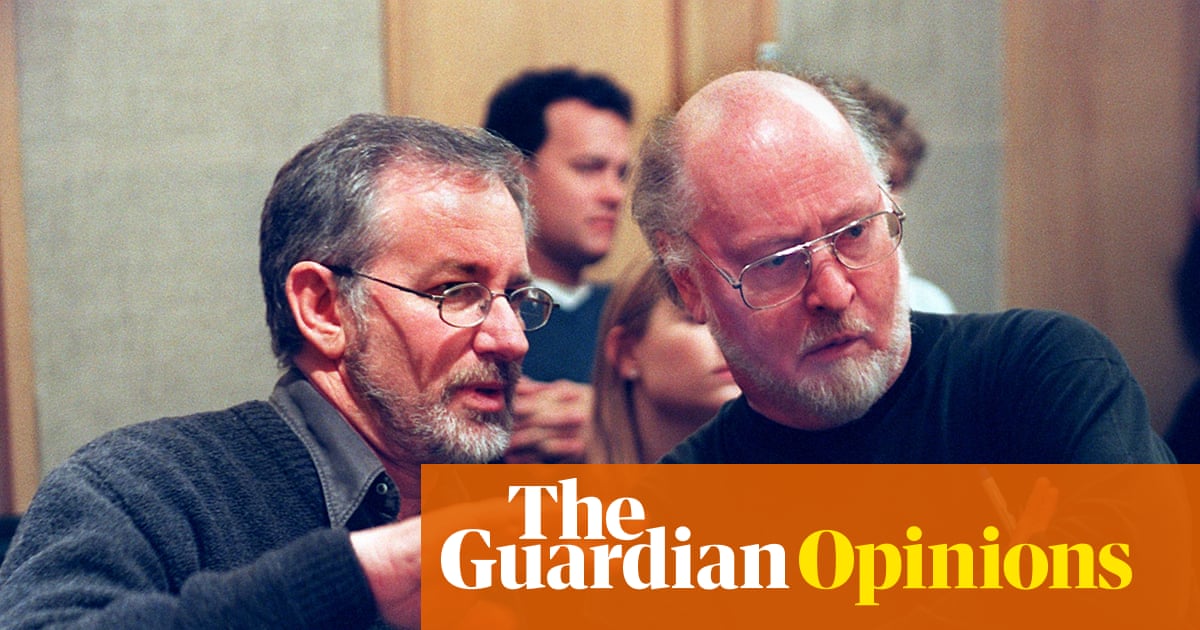
W hich living artist has been nominated most times for an Oscar? The answer isn’t Steven Spielberg (with 24 nominations), but his long-term collaborator composer John Williams, with a record 54. The Fabelmans , Spielberg’s most personal film, seemed a fitting finale for the duo in 2022. But Spielberg persuaded Williams, now 94, to write the music for his latest sci-fi blockbuster Disclosure Day , their 30th film together.

Williams has worked with other directors, creating scores for era-defining franchises from George Lucas’s Star Wars (who would Darth Vader be without The Imperial March ?) to Harry Potter. But it is his partnership of more than 50 years with Spielberg that has changed cinema history, with hits including Jaws, E.T., Raiders of the Lost Ark, Jurassic Park and Schindler’s List. “John Williams has been the single most significant contributor to my success as a film‑maker,” Spielberg has said .

Jedi, dinosaurs, wizards and now extraterrestrials in the form of animals – Williams has spent decades making alien worlds believable, while the haunting melodies for Spielberg’s Schindler’s List and Saving Private Ryan make history devastatingly personal. From the two-note ostinato of Jaws to the operatic flute solo in Harry Potter and the Prisoner of Azkaban – so difficult that it is used in orchestra auditions – his work is as far‑ranging technically as thematically.

His music has been performed everywhere from Glastonbury to the Proms, and played by leading orchestras around the world. But the composer is dismissive of his work as high art. “I never liked film music very much,” he told his biographer Tim Greiving last year, calling the idea that it should be performed in concert halls alongside classical masterpieces “a mistaken notion”.

In the golden age of Hollywood, composers such as Prokofiev, Shostakovich and Britten were as revered as the directors. Eisenstein edited sequences to suit Prokofiev’s score. Today they have to compete for the audience’s attention. “The music has to cut through this noise of effects,” Williams has said . “The tunes need to speak probably in a matter of seconds.” The first few bars of his scores are instantly recognisable, yet he is not a household name as Spielberg is.

No one understands the relationship between images and sound better than Williams. His music can provoke a visceral response from a clear blue sea. His scores provided a soundtrack for a generation. He taught us what terror sounds like (two repeating notes – E and F). Whose heart didn’t thump before the shark appears, or soar as the BMXs take flight in E.T ., or break from the first violin strains of the Schindler’s List theme (Spielberg’s favourite in Williams’s oeuvre)?

In Disclosure Day, CGI has replaced the mechanical puppet of Jaws. But no technology can replicate the creative force of two extraordinary talents coming together. For three decades, Spielberg and Williams have urged us to consider the possibility that there might be something bigger than us out there. They have inspired fear and joy. Together, they have allowed us to believe the impossible, to make a leap of imagination and empathy. Disclosure Day might be their last film together. At a time when both film and music are under threat from artificial intelligence, their legacy is a reminder of the magic of collaboration. As one of the characters in The Fabelmans says: “Movies are dreams that you never forget.”

Do you have an opinion on the issues raised in this article? If you would like to submit a response of up to 300 words by email to be considered for publication in our letters section, please click here .

Trump acknowledges ‘real problems’ at reflecting pool after $14m makeover, blaming ‘vandalism’ | Washington DC | The Guardian

Keyword – US news
Trefwoorden – Washington DC, Donald Trump, Trump administration, US politics, US news
Title – Trump acknowledges ‘real problems’ at reflecting pool after $14m makeover, blaming ‘vandalism’ | Washington DC | The Guardian
Author – https://www.theguardian.com/profile/anna-betts
Link – Trump acknowledges ‘real problems’ at reflecting pool after $14m makeover, blaming ‘vandalism’ | Washington DC | The Guardian
Publish date – 2026-06-20T13:57:54.000Z
Category – News
URL – https://www.theguardian.com/us-news/2026/jun/20/trump-reflecting-pool-renovation-vandalism

Donald Trump has blamed “vandalism” for “real problems” at Washington’s reflecting pool after an algae bloom in the wake of a $14.2m renovation of the site he declared would turn it “American flag” blue. Paint has also been seen peeling off in the water. He also made claims that vandals had been arrested.

Days after his administration claimed the pool was actually “crystal clear”, despite an unmistakably green hue, the US president acknowledged issues – and, without evidence, blamed foul play.

“We’ve cleaned, renovated, and beautified over 45 Monuments and Memorials, 28 Statues, and 22 Fountains in Washington, DC,” Trump wrote in a lengthy post on his Truth Social platform on Friday night. “However, we’ve had some real problems with Vandalism at the beautiful Reflecting Pool, which sits between The Washington Monument and The Lincoln Memorial.”

Trump noted that “86 47” was recently etched onto a vast patch of grass nearby – “86” is frequently used across the restaurant industry to mean “stop” or to get rid of something, while Trump is the 47th president of the US – and claimed some people had “also done everything possible to hurt the inside surface” of the pool painted as part of the recent renovation.

“No different than the chemicals that were used on the National Mall, they used something similar in the Reflecting Pool to try to destroy and demean our beautiful work,” Trump alleged, again without evidence.

In a Truth Social post on Sunday afternoon, Trump claimed, again with no evidence whatsoever, that “multiple individuals” had been arrested by US park police for “vandalizing our Nations magnificent Reflecting Poll”. “Who would do such a thing?” Trump wrote. “These are very serious crimes having to do with the destruction of National Monuments. Years in jail! Work will begin immediately on its repair.”

Trump also claimed in his post that the algae problem was largely under control, suggesting it was “75% gone” and the issue would soon be “completely remedied”.

Law enforcement is “actively investigating this situation”, he claimed, and “will hopefully have it resolved soon”. The Department of the Interior did not immediately respond to a request for comment regarding Trump’s statement.

A three-time US Olympian and canoeist was arrested on Friday after noticing a partly detached piece of the blue liner and reaching into the water to see what it felt like, he said.

“I didn’t vandalize anything,” David Hearn, who had been cycling, told the Washington Post . “I didn’t destroy or break or peel anything. By the time I realized what was going on, I was being put in handcuffs.”

Trump ordered a refurbishment project to turn the pool “American Flag blue” ahead of the country’s 250th birthday celebrations. The site – one of Washington DC’s most historically symbolic attractions – has been one element of his efforts to recondition Washington during his second term.

Just days after the renovation was finished , however, an algae bloom turned the water green . In response, National Park Service employees were deployed and seen using skimmers and adding hydrogen peroxide to the water in an attempt to restore the water quality.

In a statement on social media on Wednesday, the interior department declared that “advanced nanobubbler technology” had “very effectively killed the algae”, adding: “Our National Park Service team is now vacuuming up the dead algae resting on the bottom of some parts of the Reflecting Pool – just like the destroyed Iranian Navy resting on the bottom of the Persian Gulf.”

In reality, however, much of the water remained murky later in the week, with algae still visible in some areas, and large flakes of paint peeling from the basin and floating on the surface.

The Atlantic reported this weekend that laboratory testing it commissioned identified algae in the pool as Scenedesmus , a genus of green algae.

The project has also come under scrutiny over its contracting process. The New York Times reported that the Trump administration had awarded a no-bid contract to a business tied to a longtime supporter of the president to install the water-purification system in the pool.

Tim Walz, the Minnesota governor who ran against Trump and JD Vance as the running mate of Kamala Harris in the 2024 presidential election, wrote on X, formerly Twitter: “Found an imaginary problem, said only they could fix it, didn’t listen to experts, hired buddies who grifted millions, failed miserably, bragged how great it went. The entire Trump presidency in a nutshell.”

You be the judge: should my husband stop letting our kids climb over our neighbour’s fence to get their ball back? | Life and style | The Guardian

Keyword – Life and style
Trefwoorden – Life and style, Family
Title – You be the judge: should my husband stop letting our kids climb over our neighbour’s fence to get their ball back? | Life and style | The Guardian
Author – https://www.theguardian.com/profile/georgina-lawton
Link – You be the judge: should my husband stop letting our kids climb over our neighbour’s fence to get their ball back? | Life and style | The Guardian
Publish date – 2026-06-18T06:00:02.000Z
Category – Lifestyle
URL – https://www.theguardian.com/lifeandstyle/2026/jun/18/should-my-husband-stop-letting-kids-climb-over-neighbours-fence-get-ball-back

The prosecution: Penelope

It doesn’t matter that it only takes five seconds. It’s a flagrant disregard for property rights

My husband, Spencer, and I have two children, Georgia, 12, and Alex, nine. We are usually quite aligned on how we parent, but I recently learned that Spencer is a little more relaxed with our children’s garden activities.

During half-term, Spencer was at home and I was at work. When I got back and asked the kids how their day was, they told me their ball went over the fence and into the neighbour’s garden. I assumed our neighbours hadn’t been in and the ball was still there, but they said “Dad let us hop over the fence to get it.” I was shocked.

When I spoke to Spencer, he just shrugged and said it was fine. These neighbours are a middle-aged couple with no kids. He said getting the ball only took five seconds, and then Alex and Georgia hopped back over. I asked them how many times they’ve done this and they said “four or five”.

This is a flagrant disregard for boundaries and property rights. If we allow our kids to hop over fences into spaces that don’t belong to them, we are encouraging public and private disobedience. It also reflects badly on us if the neighbours happen to be in one day. So far, it’s been OK, as they’ve been at work.

I said to Alex and Georgia that they need to be more careful with their football and tennis balls. We have a large garden and there’s no need for their balls to be going over the fence. It is really Spencer’s fault, though. He should be the disciplinarian.

We have a good relationship with our neighbours, but we haven’t asked their permission to retrieve these balls so if they suddenly see my kids playing in their garden, they would have every right to have a go at us.

I’m annoyed at Spencer for encouraging this. I am the stricter parent, but I thought we had similar styles overall. He thinks it’s funny how annoyed I am over this, but it’s the thought that Alex and Georgia have done this many times without me knowing. Spencer needs to see that he is in the wrong and be stricter when I’m not by his side.

The defence: Spencer

No harm was done to their garden. It’s just a lawn with a few shrubs. I don’t see the problem

The way Penelope goes on, you’d think I was letting the kids roam around the garden naked and screaming. They hopped over our fence to get their ball – it’s happened a few times. It was either let them go and get it, or listen to them complaining because the neighbours weren’t there to pass it over.

I manage my own business from home, so during half-term I had to juggle work and looking after the kids, which I’m happy to do, but some peace and quiet is conducive to a good working day.

The first time Alex’s football went over the fence he asked if he could hop over. I said, “Be quick.” He was very quick and Georgia helped him hop back over. From then on, they just retrieved the ball whenever it flew over.

Alex told his mum they went over the fence a few times. No harm was done to the neighbour’s garden, it’s just a flat lawn with a few shrubs, so I don’t see the problem. I’ve seen him do it – it’s very quick and it is usually just Alex going into the garden. It’s not as if both of the kids are there “trespassing”, as Penelope calls it.

Perhaps I’m used to this sort of thing because I grew up with siblings on a busy road in London. Penelope grew up in the countryside with no neighbours either side of her. I think they take trespassing and boundaries a lot more seriously there. Penelope said, “What if Alex damaged the garden and we had to pay for something?”

She is worried about going to war with our neighbours, but she’s being a bit dramatic. There’s no way for Alex to damage anything. We also share responsibility for the fence.

Penelope is worried about how it makes us look if the neighbours come home and see our children in the garden, but I would explain and say they needed the ball. If I had to apologise, I would. Penelope says I’m not strict, but I know how to discipline the children without her. I just don’t think this is a situation that requires so much emotion.

The jury of Guardian readers

Spencer and the kids should really get permission – asking your neighbours if it’s OK if the kids hop over the fence to get the ball when they accidentally hit it over would only take a moment, and the answer is unlikely to be no. Asking is just good manners. Tammy, 44

The worst thing that can happen is that the neighbours spot the kids and may give them and you a talking to. Everyone learns that way and hopefully it’ll improve communication in the long term, so carry on kids – just don’t smash any windows! Charlie, 33

Penelope is right. Spencer shouldn’t be encouraging the children to jump over the fence into their neighbours’ garden without permission. They either need to ask their neighbours if they mind them jumping the fence, or perhaps just get some more balls. Sarah, 29

I think people should respect their neighbours’ privacy and property, so Spencer is teaching his kids the wrong attitude. The family should apologise for any misdirected balls and maybe the couple will suggest hopping over next time, but it is up to them who they let into their garden. Kelly, 52

Spencer is definitely guilty. It’s an important part of being a kid that you have to wait, bored, until the neighbour comes home and chucks the ball back over. Good luck with teenagers who have been taught other people’s boundaries don’t matter, Spencer. Alicia, 53

Now you be the judge

In our online poll, tell us: is the game up for Spencer?

The poll closes on Wednesday 24 June at 9am BST

Last week’s results

We asked whether Charlene should share a digital calendar with her partner 57% of you said yes – Charlene is guilty 43% of you said no – Charlene is innocent

The moment I knew: At the arrivals hall I was overcome with doubt. Then I saw him waiting, holding a red rose | Australian lifestyle | The Guardian

Keyword – Life and style
Trefwoorden – Australian lifestyle, Relationships, Dating, Poland holidays
Title – The moment I knew: At the arrivals hall I was overcome with doubt. Then I saw him waiting, holding a red rose | Australian lifestyle | The Guardian
Author – Barbara Reszke
Link – The moment I knew: At the arrivals hall I was overcome with doubt. Then I saw him waiting, holding a red rose | Australian lifestyle | The Guardian
Publish date – 2026-06-20T20:00:14.000Z
Category – Lifestyle
URL – https://www.theguardian.com/lifeandstyle/2026/jun/21/moment-i-knew-arrivals-hall-mexico-red-rose

I n 1992, I travelled from Adelaide to Poland to reconnect with my extended family. One afternoon, I came across a newspaper advertisement for the Warsaw Summer Jazz Days festival. On a whim, I decided to go, hoping to see Jack Bruce perform songs from his Cream days.

It was a Sunday afternoon and I arrived early at the concert hall. As I made my way to the bar, I overheard an Englishman struggling to order hamburgers. I stepped in to help, placed the order in Polish, turned to him and said, “She’ll be right, mate. Just pay the money, the food will be ready in 10 minutes.”

That was how I met Dave, the guitar technician for Jack Bruce.

We arranged to meet after the concert. It was not love at first sight – far from it. He reminded me of the mullet-wearing, heavy metal headbangers I had grown up with – not my type at all. But there was kindness in his eyes, a presence of assurance, and he wore his heart on his sleeve. We wandered across the road to the Akwarium jazz club where, over the next few hours, we listened to jam sessions by world-famous musicians while we laughed and drank beers.

He invited me to England, but I was about to go travelling in Mexico. He’d had enough of the music business and England, he said, so announced he would meet me in Mexico. Fifteen hours after we met in that burger line, he boarded a plane home.

Two days later, I called to see if he had been serious about Mexico. To my surprise, he had already set things in motion, and was even looking into an Australian working visa. I was due to leave for Mexico in three weeks, but Dave asked if I would delay my departure so he could raise enough money and secure his visa.

I agreed. However, I couldn’t shake the feeling I might never see him again. The whole situation seemed absurd. Who leaves behind their life to follow someone they’ve only met for a few hours?

My grandparents were sceptical and not happy I was meeting this Englishman in Mexico. My babcia was convinced he would sell me into the slave trade, and she passed those concerns on to my father in Australia who had already made up his mind about Dave.

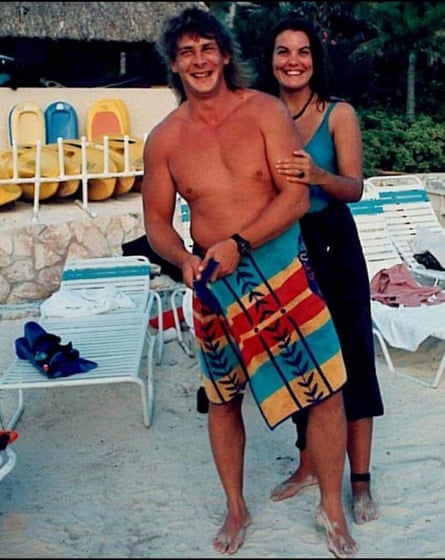
Seven weeks after our meeting at the festival, I arrived late at night into Mexico City. My heart raced as I made my way through the airport. Dave had arrived the day before and promised he would be there waiting for me, but as I approached the arrivals hall, I was overcome with doubt. It was crowded with people — families reuniting, friends embracing, drivers holding signs above their heads. I scanned the sea of faces anxiously, searching for a tall blond Pom, but couldn’t see him anywhere. “I knew it,” I thought.

What I didn’t realise was that he was standing barely a few metres away, looking directly at me, holding a single red rose. Later, Dave admitted that during those few seconds, as I looked right past him, he feared that perhaps I was searching for someone else.

The instant I recognised him, a wave of relief and exhilaration washed over me. After weeks of anticipation, there he was. I walked straight into his arms.

We backpacked for three months and were together 24/7, getting to know each other in the most intense and honest way possible.

Despite our differences (my liberal outlook versus his black-and-white thinking; my penchant for cheap travel as opposed to his preference for five-star hotels; my affectionate Polish nature contrasting his reserved English upbringing), we found a rhythm. He was open to everything and easy with everyone, the kind of person who could strike up a conversation anywhere. My first impression that he was kind, genuine and warm turned out to be true. And he made me laugh – often.

With his money slowly dwindling, Dave flew to Melbourne to stay with friends we had met in Guatemala, while I continued travelling through Argentina and Chile.

After two months, I flew home to Australia, where to my surprise Dave was waiting for me at the airport again, holding a rose.

The next year was complicated as we navigated time together and apart, and my parents’ disapproval, all while I completed my studies. During one of the short, intermittent phone calls we shared while Dave was in England, I received a proposal: “How about it, Sheila?”

It was not exactly romantic, but it did make me laugh.

The day after I submitted my thesis, I flew to London. Once again, Dave was at the arrivals gate, holding a red rose.

Three weeks later, at the end of 1993, we were married in a register office in England, with Bob Marley playing as we said our vows.

In 1994, we returned to Australia, then moved to Queensland to build a life together.

In the 22 years we shared, we built a life full of love, laughter and adventure. We raised our beautiful daughters, travelled the world, and created a home grounded in kindness and respect. My parents’ fears proved unfounded. When my mother needed care, Dave stepped in without hesitation – that was simply who he was. He was a devoted father – the school runs, lunches, after-school activities, coaching football teams – and gave everything to his family.

He left the music industry because he said it was not conducive to a family environment, but music never left him. Our home was filled with it, played loud, through the best sound system he could assemble.

Even now, after his passing in 2014, the music remains. Last year in Brisbane, the girls and I went to a Metallica concert in Dave’s honour. As for the roses, I still have the one he gave me in London – well, two petals. Dried, pressed and a reminder of the life we had together.

Tell us the moment you knew

Cocktail of the week: Osteria Angelina’s riso & rosmarino – recipe | Cocktails | The Guardian

Keyword – Food
Trefwoorden – Cocktails, Spirits, Food, Herbs and spices, Summer food and drink, Japanese food and drink
Title – Cocktail of the week: Osteria Angelina’s riso & rosmarino – recipe | Cocktails | The Guardian
Author – Joshua Owens-Baigler
Link – Cocktail of the week: Osteria Angelina’s riso & rosmarino – recipe | Cocktails | The Guardian
Publish date – 2026-06-19T12:00:32.000Z
Category – Lifestyle
URL – https://www.theguardian.com/food/2026/jun/19/cocktail-of-the-week-riso-rosmarino-recipe-osteria-angelina

This is very light, refreshing and goes down a little too easily, which makes it perfect for early summer.

Riso & rosmarino

Serves 1

50ml sake – a light-bodied honjozo will do here 25ml Cynar 25ml Aperol 25ml fresh lemon juice 12½ml simple sugar syrup Soda water , to top 1 thin slice cucumber , to garnish 1 sprig fresh rosemary , to garnish

Measure the first five liquids into a highball filled with ice, top with soda, garnish and serve.

Joshua Owens-Baigler, co-founder, Osteria Angelina , London E1

Deniz Undav’s double earns Germany dramatic late win against Côte d’Ivoire | World Cup 2026 | The Guardian

Keyword – Football
Trefwoorden – World Cup 2026, Germany, Côte d’Ivoire football team, World Cup, Football, Sport
Title – Deniz Undav’s double earns Germany dramatic late win against Côte d’Ivoire | World Cup 2026 | The Guardian
Author – https://www.theguardian.com/profile/leanderschaerlaeckens
Link – Deniz Undav’s double earns Germany dramatic late win against Côte d’Ivoire | World Cup 2026 | The Guardian
Publish date – 2026-06-20T22:17:44.000Z
Category – Sport
URL – https://www.theguardian.com/football/2026/jun/20/germany-cote-divoire-group-e-match-report

Some footballing stereotypes just will not fade away. Germany may no longer be the mirthless, methodical winning machine who would slowly maul their opponents until they inevitably engineered victory, but, evidently, they still know how to fashion match-winners from final moments.

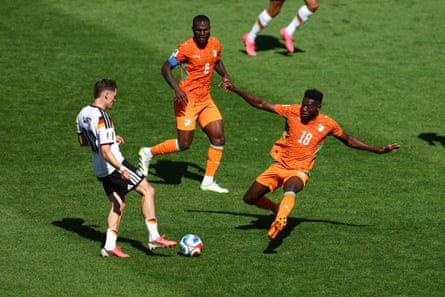
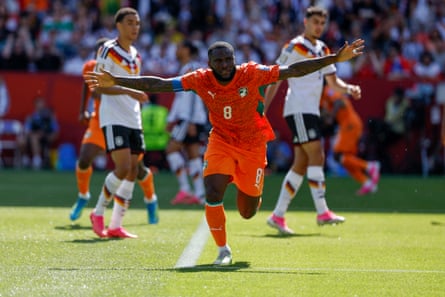
Consequently, the Germans will play in the World Cup knockout stages for the first time in 12 years after another victory at the death. Côte d’Ivoire had gone ahead in a lively encounter on Saturday through Franck Kessié’s 30th-minute goal for Les Éléphants . But it was cancelled out by Deniz Undav’s 68th-minute equaliser and 94th-minute winner for Die Mannschaft .

The victory put the four-time world champions on six points, although the youngest team at this tournament gave the Germans a far tougher test than Curaçao had six days ago in a 7-1 crunching . “We deservedly won it,” said Germany’s manager, Julian Nagelsmann. “The boys invested a lot.”

Before 2018, Germany had never been eliminated in a World Cup group stage. No other nation has reached as many semi-finals, with 13 – only Brazil are close at 11. And yet, they went home after the first round in Russia and again four years later, in Qatar.

An edition expanded to 48 teams, with 32 going through to the knockout stages, never seemed likely to trip them up for a third time running. But then there were also plenty of concerns around this non-vintage edition of a storied side.

Among the issues the Germans fretted about before travelling to the United States were the absence of an obvious choice for striker; the form of Jamal Musiala and Florian Wirtz; injuries to two other creative players in Serge Gnabry and Lennart Karl; a 40-year-old Manuel Neuer, who had to be coaxed back from almost two years of international retirement in order solve the goalkeeper problem; and Nagelsmann, who has never entirely convinced the critics as Germany manager, or indeed as the Bayern Munich head coach before that.

Then there was the concern that Germany have not produced the sort of world-class player who will take a game by the scruff of the neck and bend it to his nation’s will. Oh, and also: the German people just don’t seem terribly bothered about this team or this tournament.

Plainly, an entirely unchanged Germany team had quite enjoyed the sensation of putting seven past an opponent and very nearly got another one just 15 seconds in, when Kai Havertz had a pop that whizzed high. More would follow as Joshua Kimmich swung in a cross for Havertz, whose well-placed header was majestically saved by Yahia Fofana. Musiala, meanwhile, found a crack of space in the tightly packed Ivorian lines at the edge of the box but curled his effort wide.

But no, protested the Paraguayan referee Juan Gabriel Benítez, this was not the appropriate moment for hydration. That would come just a minute or so later when he whistled for the drinks break and the sellout-ish crowd showered the proceedings in well-deserved jeers. This was, after all, a farcical sight on a pleasant lakeside afternoon that was, if anything, a tad brisk – absolutely optimal soccer weather, in other words – screaming at any rate that no special accommodations need be made for player wellbeing.

Once more, the break tilted the momentum of the game. And in the 30th minute, Yan Diomande, the 19-year-old breakout Ivorian star, received the ball up the left. He had been involved frequently to that point, but little had come off. This time, he got himself clear of Kimmich and found Amad Diallo with his low cross. But the Manchester United man struggled to get the ball out of his feet and, when he finally did, saw his effort blocked by the lunging Nathaniel Brown. But Kessié was right there to sweep the rebound home.

If Germany and the estimated 12,000 fans who had joined them here had looked stunned after conceding, a second disallowed goal reanimated them. In the 39th minute, Musiala was found guilty of bundling over Odilon Kossounou before Havertz set off with the ball and beat Fofana. Côte d’Ivoire invited pressure, luring 10 Germans into their third and Neuer almost halfway up the field, and then scampered away on the break. The imprecision of those forays kept the Ivorians from putting the game away.

Nagelsmann finally found solutions through a triple substitution at the hour, which gave the Germans more thrust and bite. “I’m very happy for the whole team because every player who came into the match was important,” he said. “During the second half we were a lot more active and took more risks because we really wanted to win.”

The dam finally broke when one substitute, Nadiem Amiri, found another in the box in Undav, who volleyed home from close range. It was mostly one-way traffic from there on, as Emerse Faé’s men in their luminous orange no longer looked so fit or frightful in the press.

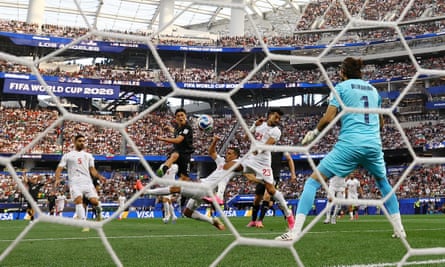
In a frantic, wide-open ending, Côte d’Ivoire very nearly made off with the points on a late breakaway, but Simon Adingra dawdled on the ball. At the other end, Brown and Amiri were denied by Fofana before Undav, fed by Nmecha, spun and fired home the winner.

“There’s some frustration after this defeat,” said Faé. “But with the frustration, there is also a lot of pride in my players and how we played against one of the big favourites for this tournament. I think this defeat will serve us well for the rest of this tournament.” Côte d’Ivoire face Curaçao on Thursday with the chance to advance past the groups for the first time in their history.

Germany, meanwhile, pride themselves on being a “ Turniermannschaft ”. A team that specialise in tournament football. It’s just as well, then, that they have reached the knockout stage of this event for the first time since winning it in 2014.