Rising temperatures may increase flood risk through river ‘whiplash’, study finds | Climate crisis | The Guardian

Keyword – Environment
Trefwoorden – Climate crisis, Rivers, Water, Environment, Flooding, Drought, Extreme weather, World news, UK news
Title – Rising temperatures may increase flood risk through river ‘whiplash’, study finds | Climate crisis | The Guardian
Author – https://www.theguardian.com/profile/pippa-neill
Link – Rising temperatures may increase flood risk through river ‘whiplash’, study finds | Climate crisis | The Guardian
Publish date – 2026-06-17T13:24:00.000Z
Category – News
URL – https://www.theguardian.com/environment/2026/jun/17/rising-temperatures-may-increase-flood-risk-through-river-whiplash-study-finds

Rising temperatures may trigger a dangerous increase in “hydroclimatic whiplash” in rivers that would make traditional approaches to flood and drought planning insufficient, a study has found.

As temperatures rise owing to the worsening climate crisis, rivers will experience increasingly rapid transitions between heavy downpours and long dry spells – called hydroclimatic whiplash events – because a warmer atmosphere holds more moisture, intensifying rainfall extremes.

Sudden swings from dry to wet conditions may increase the risk of flash flooding, the study found, because intense rainfall on dry, hardened soil is less able to infiltrate the ground. Instead, water can rapidly run off the surface leading to local flooding and water quality deterioration, as well as soil erosion because intensive rainfall can flush pollutants into the rivers.

In comparison, wet-to-dry shifts can make drought planning harder because preceding wet conditions may create a false sense of security before a rapid move into drought.

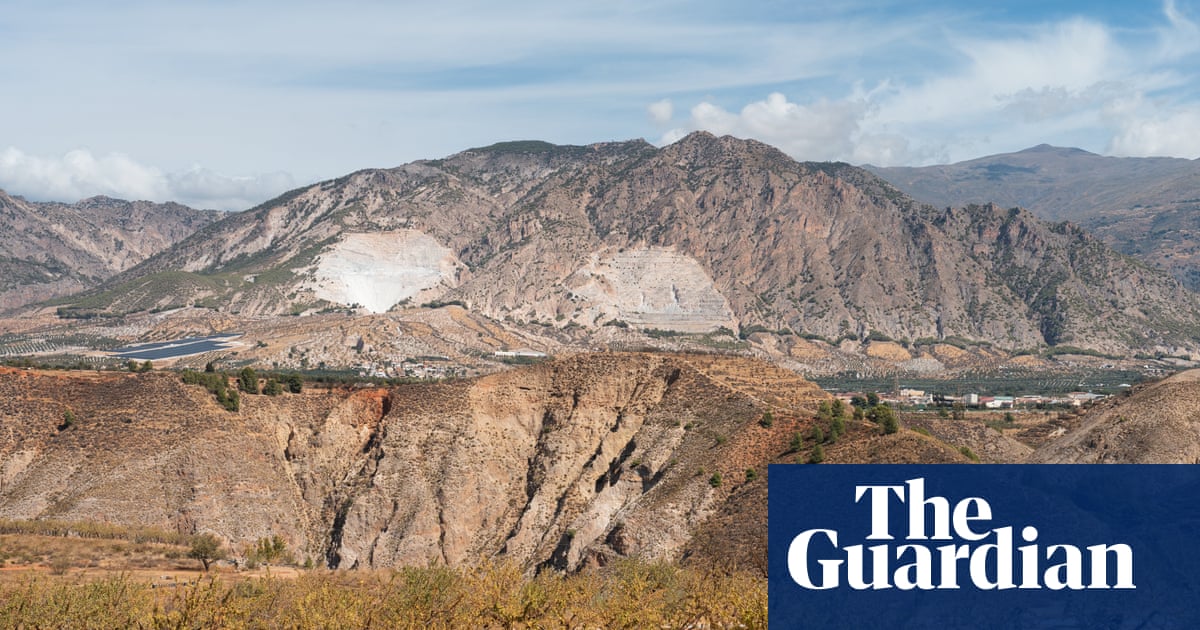
In the study, published on Wednesday in Earth’s Future , researchers used climate projections and a hydrological model to simulate changes to 698 river catchments in the UK under 2C and 4C warming scenarios. Hydroclimatic whiplash was defined in the study as being when monthly riverflow moves from unusually low to unusually high flows, or the reverse.

The lead author, Dr Yi He from the University of East Anglia, said the UK is already experiencing rapid dry-to-wet and wet-to-dry shifts, making hydroclimatic whiplash a significant concern.

The modelling, which provides the most comprehensive national-scale assessments to date of how UK rivers may respond to different levels of global heating, found that in the 2C and 4C warming scenarios, widespread increases in the frequency of both types of whiplash events – wet to dry and dry to wet – are expected.

The researchers found that in some catchments, the number of whiplash events could rise from about four over a 30-year period in the 1981-2010 baseline to up to nine under the 4C warming scenario.

This increase is projected across most of the UK, however, for dry-to-wet whiplash, the greatest increases are likely to occur in south Wales, Northern Ireland, northern and western England and parts of south-east England.

Dr He said these rapid shifts will make water management increasingly difficult by putting pressure on flood defences and drought-response systems at the same time. “As warming increases, traditional approaches to flood and drought planning may no longer be enough,” she said. “We need to plan for sequences of extremes, not just a single event.”

The study authors said the findings underscored the need for regionally tailored adaptation plans, including enhanced flood-risk management and greater capacity to store water during wetter periods.

Dr He said the modelling in the UK was an important test case for temperate regions worldwide, with the findings offering insights into how rising temperatures could alter river flows, flood and drought risks across the globe.

Why is there so much interest in a byelection in north-west England? | Makerfield byelection | The Guardian

Keyword – Politics
Trefwoorden – Makerfield byelection, Byelections, World news, Politics, Keir Starmer, Andy Burnham, Labour, Labour party leadership, Nigel Farage, Reform UK
Title – Why is there so much interest in a byelection in north-west England? | Makerfield byelection | The Guardian
Author – https://www.theguardian.com/profile/peterwalker
Link – Why is there so much interest in a byelection in north-west England? | Makerfield byelection | The Guardian
Publish date – 2026-06-18T04:00:00.000Z
Category – News
URL – https://www.theguardian.com/politics/2026/jun/18/why-is-there-so-much-interest-in-a-byelection-in-north-west-england

An election that could shape the future of UK politics for years to come is taking place on Thursday. But it is only happening in one small part of north-west England, with little more than 70,000 people eligible to vote.

Why? It is a question with a number of answers, some connected to the structure of the British political system, others much more topical.

In brief – what’s happening and why does it matter?

Voters in Makerfield, a largely suburban constituency on the edge of Wigan, Greater Manchester, are choosing a new MP after the incumbent stood down. The candidate for the ruling Labour party and favourite to win, Andy Burnham, is the mayor of Greater Manchester and a former MP.

If Burnham wins, it is widely assumed that he will launch a campaign to unseat Keir Starmer as Labour leader and thus UK prime minister, or persuade Starmer to stand down. If things go as expected, the UK could have its seventh prime minister since 2017 in just a few weeks or months.

How does all this work constitutionally?

The prime minister is, under very strong constitutional convention – there is no written constitution in the UK – always a member of the House of Commons, all 650 of whom represent a specific geographical constituency.

Burnham was from 1997 to 2017 MP for the adjoining seat of Leigh, serving as a government minister and twice standing unsuccessfully for the Labour leadership. But he left Westminster when Labour was in opposition after being elected Greater Manchester mayor.

For him to challenge Starmer, Burnham needs a new seat. After much wrangling one of his allies, Josh Simons, agreed to stand down as the Makerfield MP, triggering what is known as a byelection, a single-seat contest held when there is a vacancy between general elections.

Why does Burnham want Starmer to go?

It’s not just him. About 100 Labour MPs have publicly called on Starmer to quit, with many others privately sharing the sentiment. A lot of it is self-interest – Labour is consistently polling well behind the hard-right populist party Reform UK, and performed terribly in May in elections for the devolved Scottish and Welsh parliaments and local government seats across England.

But many Labour MPs also think Starmer lacks any political vision or much of a plan, and have seen him lurch from U-turn to U-turn . A number are worried that without action, Reform will win the next election.

Will Burnham win the seat?

The short answer is that, yes, most people believe he will, even if it could be a fairly close result. The longer answer is that Makerfield is the sort of seat Labour used to win with ease – the party has held the constituency since it was created in a 1983 reorganisation of parliamentary boundaries – but now struggles with.

With its voters disproportionately being older, less well educated and less likely to come from minority ethnic backgrounds, Makerfield, like dozens of similar post-industrial seats in the north of England, now heavily favours Reform, led by Nigel Farage, the driving force for the UK’s decision in 2016 to leave the EU.

Burnham’s hope is that his charisma, plus his reputation as a generally popular mayor, will get him over the line. He has also been helped by Reform’s slightly misfiring campaign, with the party’s candidate, a local plumber called Robert Kenyon, criticised about past social media posts, including some sexist and otherwise lewd comments.

If Burnham wins, what happens next?

Starmer has repeatedly said that, just two years from a big general election win, he is not going anywhere and will fight any challengers. Nonetheless, Burnham’s allies hope he can be persuaded to set a timetable to leave.

If that happened and no other MP sought the leadership, Burnham could be made prime minister within weeks. But at least one other MP, Wes Streeting, who resigned as health secretary last month, has promised to enter the race.

If there is a contest, how does it work?

An MP needs at least 80 nominations from other Labour MPs to trigger a contest. Any other MP who reaches the same threshold also takes part, as does the sitting leader, if they choose to, by default.

Those names are then put to a vote of Labour party members, a process that would take four or five weeks at least, given the need for hustings events and similar.

Who would win such a contest?

Again, the money is largely on Burnham, although some supporters of Starmer argue he could appeal to the loyalty of Labour members who chose him in 2020.

Streeting is seen as an outsider but is a talented political operator, who is considered to be on the centre-right of the Labour party.

What would a Burnham government look like?

Some cynics say: much like Starmer’s , but with better presentation. And more seriously, many Burnham supporters enjoy his relaxed eloquence, particularly against Starmer’s often pained and stilted approach.

Policy-wise, while once on the centre-right of the party, Burnham has as a mayor developed a more left-leaning philosophy, based on a version of what is almost a European-style corporatism. Awkwardly known as “Manchesterism” , it sets out that while free markets are central, they must be tempered by some state control, even ownership, particularly in necessities of life such as utilities, transport and housing.

Australia superpower v USA pentagon: how each team can win their World Cup clash | World Cup 2026 | The Guardian

Keyword – Football
Trefwoorden – World Cup 2026, Australia, USA, World Cup, Football, Australia sport, Sport, US sports
Title – Australia superpower v USA pentagon: how each team can win their World Cup clash | World Cup 2026 | The Guardian
Author – https://www.theguardian.com/profile/alexander-abnos,https://www.theguardian.com/profile/jack-snape
Link – Australia superpower v USA pentagon: how each team can win their World Cup clash | World Cup 2026 | The Guardian
Publish date – 2026-06-18T06:00:02.000Z
Category – Sport
URL – https://www.theguardian.com/football/2026/jun/18/world-cup-2026-socceroos-australia-usa-which-team-will-win-how

Australia

Back Nestory Irankunda: the 20-year-old was expected to be an impact player at this World Cup, coming on as a substitute to affect matches against tiring opposition. A player of the match performance when starting against Turkey showed how Irankunda has become one of the Socceroos’ most important players. While still learning his wing-craft, his speed and determination without the ball are vital in a Socceroos outfit seemingly happy to give their opponents’ possession, and his ability to make the most of transition and direct opportunities – as seen for his opening goal against Turkey – can be a superpower.

Bring in the reinforcements: Australia used five substitutions against Turkey, including three when it was still 1-0 . In a squad with few standout players, Australia will be wise to spread around the physical load of the tournament with one eye on the knockout rounds. This week’s health concerns for midfielder Aiden O’Neill – only able to walk the day after the Turkey game – and Mo Touré, whose calf keeps Socceroos fans up at night, underscore the need for rotation. The striker in particular is a vital player for the Socceroos , given his anticipation and pace make him the primary outlet when the defence is under pressure with the ball.

Play for the draw: one point will almost certainly secure a place in the round of 32 for the Socceroos ahead of the third pool match against Paraguay, widely seen as the weakest team in Group D and the least equipped to chase a result. Yet it would also leave Australia in the box seat to go through as group winners, as they would just need to eclipse the result recorded by the United States in their final match against a motivated Turkey. Securing top spot in the group means the Socceroos stay in the San Francisco Bay Area for the round of 32 and play one of the third-placed finishers from the other groups. The Socceroos already have a setup to murder a football spectacle, now they also have the motive.

United States

Midfield rotations are key: this is the kind of thing that any USMNT fan would have known before last week’s fantastic opener, but the nature of the US’s play in that game made it especially so. Paraguay head coach Gustavo Alfaro took time in his presser to specifically compliment the starting trio of Weston McKennie, Tyler Adams and Malik Tillman, whom he described as “floating” and a key part of a “pentagon” of play. For as well as Australia played against Turkey, they did not dictate the tempo, conceding more than 70% of possession and getting overrun in the centre of the park. If the US are going to do something with similar levels of possession, they’ll need their midfield to continue rotating effectively to help pull the Socceroos’ back two lines out of shape, manufacturing gaps in what had proven to be an airtight defence.

Don’t get carried away : after the US’s emphatic opening statement , fans were over the moon, and journalists (including us) speculated that it may well have been the team’s best game at a men’s World Cup. That is, of course, those people’s jobs. But so far, US players and head coach Mauricio Pochettino haven’t been buying into it publicly. Immediately after the game, Pochettino stressed that the 4-1 win was just the beginning. All week in training, players have spoken about how they see this Friday’s match as a tough test . Given the degree to which the Socceroos stunned Turkey, the US would do well to keep doing privately what they have done publicly: prepare for what could easily be a very different type of game from the one they enjoyed at Los Angeles Stadium last week.

Score early (if you can): Australia’s calling card is their organised defence, their intensity and the knowledge that they would always be up for a physical battle. Funny thing is, those exact same traits could also have been said about Paraguay, a team who conceded just 10 goals over the 18-game Conmebol qualifying gauntlet and survived because they scored just enough (14 times) to get results when needed. Last week, that plan was dashed with a seventh-minute own goal from Damián Bobadilla. No longer could Paraguay hope to sit back and absorb pressure – they had to press higher, which opened gaps in the midfield. Getting on the scoreboard early will not only ignite what is sure to be a raucous environment in Seattle, it will force Australia to come out of their defensive shell slightly more than they may be comfortable doing.

‘Streaming gave me a space to be myself’: Twitch creators on what it’s like to grow up on the platform | Twitch | The Guardian

Keyword – Games
Trefwoorden – Twitch, Games, Culture, Social media, Digital media, Media, Technology
Title – ‘Streaming gave me a space to be myself’: Twitch creators on what it’s like to grow up on the platform | Twitch | The Guardian
Author – https://www.theguardian.com/profile/keithstuart
Link – ‘Streaming gave me a space to be myself’: Twitch creators on what it’s like to grow up on the platform | Twitch | The Guardian
Publish date – 2026-06-16T08:30:16.000Z
Category – Culture
URL – https://www.theguardian.com/games/2026/jun/16/twitch-gamer-creators-twitchcon-rotterdam

A imee Davies, better known as Aimsey to their fans, is 24 but looks much younger. Sitting in a bland meeting room above the annual TwitchCon event in Rotterdam, they’re a barely contained whirl of energy in a beanie hat and T-shirt, all smiles and lightning-fast chatter. Aimsey (who uses they/them pronouns) is also a Twitch veteran, having started streaming eight years ago at the tender age of 16. A million subscribers tune in every week to see them chaotically play Minecraft and share snippets of their life. They have grown up, from teen to young adult, carrying a vast audience with them into maturity. What is it like to experience that?

“When you’re 16 you want to tell everyone everything about you,” they say as music blares from the event below. “When I came out as a lesbian, I told the world. Every part of my identity, my mental health struggles … I thought if I could help one person feel like they weren’t alone, I wanted to do that.”

For several years Aimsey was in a relationship with another content creator, Guqqie, and it played out in front of their fanbases with very little filtering – until it ended. It’s a situation common to streamers – they’re young and naive, they build an audience through sharing personal details with few boundaries, then the pressures of endless invasive attention take a toll. “Honestly, for a long time, the lines got blurred,” says Aimsey. “Streaming would seep into my real-life friendships, where I thought the only way people would be my friend was if I could give them something – because that’s obviously how it is on a stream.”

Recently however, Aimsey has learned how to step back and be a little more guarded. “I’ve been so open all my life, but I was falling into these cracks where I was like, God, who am I? I felt like I couldn’t figure that out. I think that in the last few months something switched in my brain. I’m living a little bit more of a reserved life. I’m still myself when I stream, but I’m trying my best to keep some things private – at least for now. I surround myself with people who definitely remind me that I’m not just content.”

Fellow Twitch star Sweet Anita is older at 35 years old, but she too is a veteran, having streamed since 2018. As a sufferer of Tourette syndrome, the platform has been a kind of emancipation. “Streaming has changed me a lot,” she says. “I used to be a timid person and quite apologetic – obviously I’d learned to be after a lifetime of dealing with Tourettes. I feel like streaming really gave me a space to be myself without constantly having to apologise to people. I have a lot more fun, I reach out to more people, I’m a lot more sociable now.”

It concerns her that so many children are now listing content creator as their ambition. “When I was a kid, it was astronaut or fireman, but now they desperately want to be in my position,” she says. “But it’s a little bit of a trap because once you’re here, people don’t forget you. You could leave tomorrow and someone might continue stalking you for the next 10 years. Once you’re in, you’re in. The only difference is how much security you can afford.”

For its part Twitch recognises the vulnerability of streamers. It has set up guilds to help specific minority groups navigate the platform and communicate concerns to the executives. It has created an AI-driven AutoMod feature, which polices chat during streams to delete abusive messages. “We’ve invested heavily in moderation tools so streamers can define what safety looks like to them,” says head of community Mary Kish. “It is going to be very important to be familiar with how you can protect yourself. I’m worried about anyone who might think on a whim, I’m going to go live. You need to be prepared – you need to have mods, or at the very least, turn Auto Mod on, you need to set your community up. We have a little work to do to make sure that anyone making their first stream understands what they’re getting into.”

Tellingly, neither Aimsey and Sweet Anita have plans to stop streaming any time soon. “Honestly, my vision is I’m probably always going to be streaming,” says Aimsey. “It’s something that’s been so consistent in my life and I adore it. That could change. But I’ve got so much more stuff I want to do with Minecraft – I want to do events, I want to do more stories and role-play, and there are so many more ideas in my head that there’s no point in even thinking about stopping.”

Sweet Anita has plans to move on from video games, at least some of the time. “I used to do animal rescue before this and I haven’t done enough for animals – that’s what I’d like to do next. I hope I get to go to animal sanctuaries, I hope I get to show people endangered animals. I’d love to do some rehab again, release some wild birds, that was the core of my existence before all of this.”

The maturation of both streamers and stream watchers is certainly something Twitch itself is thinking about. A huge majority of streams used to be about playing and watching video games, but recently categories such as Just Chatting and In Real Life (IRL) have become more popular. Streamers are getting out of their home studios and taking their viewers on days out, to restaurants, on walks, and beyond – top creator IShowSpeed has been streaming while scuba diving. Shayanelhawk literally sent his Twitch chat into space.

“Right now our biggest age group is actually 25-34 because people have aged up while using it and they keep using it,” says CEO Dan Clancy. “We’ve seen this in the growing diversity of content because as creators get older, they have new interests and their community stays with them. So I think we’ll see continued diversification. I’ve often conjectured that when the so-called Twitch generation gets to 60-70, we’ll see all these knitting and crochetting streams. As you get into retirement – the issue of looking for connection that you had as a teenager comes back, because the kids have left home, you’re looking for people, for community – and you have time. As we saw during Covid, Twitch is a platform that explodes when you have time.”

The one massive gamechanger lurking on the horizon is AI. There is already a successful AI avatar streamer, Neuro-sama, a cutesy anime girl with 1 million followers. Will Aimsey be part of the last generation of human teens who’ve had the chance to become, and grow up, as streamers? They think not. “No matter what happens there is always going to be an audience for human-made things. It doesn’t matter what we do, it doesn’t matter how big AI gets, there’s always going to be people who need that human connection to feel real.”

‘You learn how to be idiotic artists’: Gilbert & George on fame, rebellion and their mystery new collaborator | Art and design | The Guardian

Keyword – Art and design
Trefwoorden – Art and design, Gilbert & George, Culture
Title – ‘You learn how to be idiotic artists’: Gilbert & George on fame, rebellion and their mystery new collaborator | Art and design | The Guardian
Author – https://www.theguardian.com/profile/rich-pelley
Link – ‘You learn how to be idiotic artists’: Gilbert & George on fame, rebellion and their mystery new collaborator | Art and design | The Guardian
Publish date – 2026-06-18T07:00:04.000Z
Category – Culture
URL – https://www.theguardian.com/artanddesign/2026/jun/18/gilbert-and-george-endless-interview-our-george-crompton

‘H ello girls,” greets 82-year-old Gilbert Prousch, one half of art duo Gilbert & George, as he shakes my hand when I arrive at his house with a very important guest in tow. He kisses his other guest on the cheek. Gilbert is Italian after all.

“This way,” he says, ushering us into the four-storey, 18th-century Georgian townhouse in Fournier Street, Spitalfields, east London, where he and the other half of his duo, George Passmore, 84, have lived since the late 1960s. Back then, they rented the ground floor for £16 a month. Now, they own the whole house. I bet it costs a bit more now.

I sneak a peek through a door at one of many living rooms crowded with antiques. As I walk further into the house, something feels odd. I realise that there’s no kitchen. Then I remember: Gilbert & George famously have no kitchen. They have long regarded cooking as time wasted when they could be making art – they balk at the idea that the “average housewife spends 27 years in the kitchen”, as they put it – and so eat out or have food brought in every day (more on their favourite haunts later).

We cross the courtyard into an impossibly warm studio to find George, dressed in a brown Irish tweed suit to complement Prousch’s green. The pair switched from Scottish to Irish tweed in 2014 to mark their disapproval of the Scottish independence referendum. Together in their colourful suits, they are unmistakably the Gilbert & George I’ve come to recognise: part artist duo, part double act known for being deadpan, mischievous and defiantly unchanged. The contrast is the point: here are two polite gentlemen in beautiful tailoring, whose art has for decades revelled in sex, bodily fluids, swear words, religion, death, urban grime and (ahem) schoolboy smut.

We sit at the long studio table, which is crowded with works in progress: medicine from the chemist, newspapers (George is reading today’s Telegraph) and cured meat.

“What have you two been doing? Eating sausages?” asks the guest, taking the mick.

“Yes. Sandra brings them in every day,” says George.

Which Sandra he’s talking about is unclear. It could be Sandra, the waitress at the Golden Grill, the local cafe where they used to eat daily as part of their “Living Sculpture” philosophy, which stipulated that even their daily routines became a work of art. But the Golden Grill closed years ago, and I’m not sure there’s a Sandra at their current favourite, east London’s Mangal 1 Turkish grill. Or it might be Sandra Esqulant, landlady of the nearby Golden Heart pub, who has looked after them for decades. Or perhaps everyone who feeds them just becomes a Sandra. At least I recognise the other recent visitor they mention, “Tracey” – as in Emin – who popped round on Monday. Her arrival caused a brief panic because they didn’t know her preferred tea. Earl Grey, it turns out.

“We know her quite well,” says Gilbert. It’s not surprising – Emin also lived nearby in the 90s, when all three were part of the Britart scene.

“This is my friend, Rich,” says the guest. “He’s a writer.”

“You write? Marvellous,” says George. “What sort of thing? Novels?”

“No, for newspapers. Have you got today’s Guardian?” I say, keen to show off my byline.

“Certainly not,” says George, flapping his copy of the Telegraph at me. “What do you think we are?”

I am here at their house as the plus one of the 41-year-old London artist Endless. He was the first street artist to exhibit at the Uffizi Gallery in Florence, an institution better known for Botticellis and Michelangelos than pieces by artists armed with spray cans. That work, which he donated to the museum in 2021, is called ExG&G, and features Endless alongside Gilbert & George in their studio: the duo are shown as living sculptures, while Endless hides behind a magazine.

It’s a sign of the unlikely bond that has formed between them. Endless has become such a part of the furniture at Fournier Street that he can knock on the door more or less whenever he likes (Gilbert & George do not have mobile phones). Their friendship has prompted some rumours in the art world: are the duo quietly handing their expertise – and even legacy – down? This is something I’m keen to find out.

The trio seem unlikely collaborators: tweed-suited conservative mavericks on the one hand, an edgy street artist on the other. How did they meet?

“It has nothing to do with public lavatories,” jokes George.

The truth is that the pair, who like to source subject matter within walking distance of their home, noticed an Endless street piece on a nearby wall and photographed it to feature in a 2015 exhibition in Singapore. When Endless discovered this, he got in touch, both baffled and flattered. They began corresponding by letter; a decade later, Endless now visits them on a weekly basis.

The piece that got Gilbert & George’s attention – entitled Crotch Grab – is a signature of sorts for Endless, and is a reworking of a 90s Calvin Klein advert featuring Mark Wahlberg in his underpants (Endless has also made a new customised version of the artwork for the Guardian). What was it they liked so much about it?

“It’s difficult to explain. It just appealed,” says George. In 2018, Endless depicted Gilbert & George grabbing their crotches in Union Jack boxer shorts.

Conversation turns to the duo’s new exhibition, a reworking of their 1990 London and New York Worlds and Windows exhibition. It is on display at the Gilbert & George Centre, a converted 19th-century brewery that opened in 2023 round the corner from their home. In line with their “Art for All” ethos, the centre offers free admission, and attracts, according to the pair, “a small but serious, or perhaps unserious, crowd”.

Some preliminary prints for the show are hanging on the wall.

“You know George is dead – George Crompton?” says George, pointing to a figure in one of the new artworks. Crompton was a homeless man – a “lost soul”, as they put it – who would turn up most days, and who they’d invite inside to keep warm. “He’d had a lot of bad luck in life, so it should be a lesson to us all,” says George. “We could all be Georges if something had gone a bit wrong.”

Crompton would sit in what Gilbert calls “the relaxing chair” in the corner of the studio, watching the pair at work. “It was intriguing for him,” says George. “He was a harmless, nice person, very calm. He felt part of things.”

“We went to see him when he died in the hospice,” adds Gilbert.

“He wasn’t unhappy,” says George. “I think he knew and accepted that he was going to fade away.”

Crompton now appears, posthumously, in two new works at the duo’s latest show, standing outside their famous front door.

“You’ve immortalised him,” I say.

“I like to think so, as near as we can,” says George.

With a shifting cast of visitors – friends, neighbours, food providers – passing through their home, I wonder how the octogenarians feel about an artist half their age inviting himself round, seemingly any time he likes. “It has worked out well so far,” smiles George.

And how does Endless feel about his place in this revolving cycle? “You learn how to be an artist from people who are greater than you,” he says.

“How to learn to be big-headed, idiotic artists,” George says.

Endless studied Gilbert & George at Cambridge School of Art (“Cambridge? You must be very clever,” pipes in Gilbert). Gilbert studied in Val Gardena, Hallein and Munich; George at Dartington and the Oxford School of Art (“I’m overtrained,” he says). They later met at St Martin’s School of Art on London’s Charing Cross Road in the 60s.

“St Martin’s was extraordinarily famous all over the world at that time,” says Gilbert.

“Charing Cross Road in the late 60s was the centre of the universe for fashion and music,” adds George. “Every minor actor had to be photographed there.” Did St Martin’s make them feel famous? “Yes,” says George.

“But you rebelled against what they were teaching,” says Endless.

“We didn’t accept formalism: shapes and colours,” says Gilbert. “We did our own thing.”

Why did they decide to work as a pair? “For a living sculpture, it was a very good idea to have two people, not one,” says Gilbert.

“Two makes a composition; one doesn’t,” adds George. “The world is twos. In the cities, in the jungle, even in the animal kingdom.”

“Have two now become three?” I ask. “Huh?” “He’s asking if we’re a threesome,” says Endless.

What I want to know is: are you handing down your legacy to Endless?

“I don’t even know what ‘legacy’ means,” counters Endless.

“Leg over-sy,” says George, his schoolboy smut returning.

Gilbert & George are staying put – lunch is due any minute – but there’s just time for Endless to sneak me into the Gilbert & George Centre, where the previous exhibition is being dismantled to make way for the next. On the wall, George Crompton already looms several metres high: the lost soul from their studio chair now getting the full Gilbert & George send-off.

The artists have long planned for their own absence, treating even death as part of their project. The works still in their possession are to be left to the centre, free to the public – a final extension of Art for All. If they are handing anything down to Endless, it may be less about ownership than attitude.

“It’s seeing how they live, hearing their stories from the past, and how they have it in their minds that they’ll always push forward and never stop,” he says. “They’ve got their vision, their focus, and they never veer away from it. Whatever they feel in that moment, they turn into art. That’s inspiring.”

Perhaps that’s how legacies are really passed on: not by inheritance, but by example. Endless has certainly been pushing forward this year: working on a giant mural on the side of Indelible Fine Art Gallery in Brighton; and preparing for exhibitions in London, Milan and Rome.

“You can’t take over what they’ve done,” says Endless. “But you can carry the spirit forward.”

Our George Crompton, Worlds and Windows is at the Gilbert & George Centre, London, to 2027 ; Endless X London is at Cris Contini Contemporary, London, to 25 July.

A mercurial talent to a workhorse: who should replace Christian Pulisic if he misses the Australia game? | Christian Pulisic | The Guardian

Keyword – Football
Trefwoorden – Christian Pulisic, USA, Football, US sports, Sport, World Cup 2026, World Cup
Title – A mercurial talent to a workhorse: who should replace Christian Pulisic if he misses the Australia game? | Christian Pulisic | The Guardian
Author – https://www.theguardian.com/profile/jeff-rueter
Link – A mercurial talent to a workhorse: who should replace Christian Pulisic if he misses the Australia game? | Christian Pulisic | The Guardian
Publish date – 2026-06-17T23:33:32.000Z
Category – Sport
URL – https://www.theguardian.com/football/2026/jun/17/christian-pulisic-fitness-usa-australia-world-cup

Mauricio Pochettino now has the privilege of giving the new World Cup format a practical test.

The Argentinian wisely played it safe at half-time of the United States’ 4-1 thrashing of Paraguay, pulling Christian Pulisic before his calf could be kicked any more. The attacking midfielder said after the match that he had taken similar punishment before, and he was optimistic he would be fit for the next match. As of Wednesday, he was still training away from his teammates and wearing a sleeve on his left calf.

And so, Pochettino must weigh a question many have wondered since Fifa announced this would be the first World Cup with 48 teams. How much will teams gamble with players’ fitness after securing the three points many expect should be enough to ensure safe passage to the round of 32? The team’s strong performance against Paraguay has US fans thinking about the long game. But the Americans could find themselves on the end of some hefty challenges when they face an Australian team who have clearly been irritated by disparaging comments about the Socceroos in the US media. All this with control of Group D on the line too.

All of this could be posturing, of course. Keeping Pulisic off to the side during training could invite the slightest bit of uncertainty into Australia’s preparations after such a decisive first US performance in their opener. It’s the World Cup, where the smallest of advantages must be found.

But even so, such was the emphatic nature of their opening win that the United States may want to protect Pulisic from harm in their remaining group games. But it’s not as simple as that: there’s no like-for-like replacement for Pulisic.

Option 1: The man in form with a point to prove

Gio Reyna last logged a 60-minute shift for club or country on 19 December 2025. But after his incredible late goal against Paraguay , one can’t rule out the possibility of a larger role against Australia.

While he continues to struggle to establish himself at the club level, Reyna’s rare talent kept him in Pochettino’s rotation as the Argentinian tested alternatives in midfield. Reyna would help the US with ball retention – he has proven technical acumen in tight areas – and his incisive passing comes in handy against well-organized defensive structures.

Reyna came off at half-time of the May friendly against Senegal, then entered as a substitute against Germany (30 minutes) and Paraguay (nine minutes). Reyna was originally expected to be a super-sub given his lack of time for his club, Borussia Mönchengladbach. But Pulisic’s injury and Reyna’s own heightened confidence could make him an option to start against Australia.

Option 2: Tucker out the Socceroos from the opening whistle

Pochettino could still unleash Reyna against Australia after they’ve been adequately tired out by the industrious Brenden Aaronson . The 25-year-old was a key figure in Leeds’s return season to the Premier League, bringing tireless off-ball movement and pressing and steadily improving his end product. Still, it’s the stuff away from the box score that has endeared him to the coaches he has played under. Aaronson is the kind of player who makes the team around him a little bit better due to his thankless efforts.

Then again, Aaronson hasn’t been a regular part of Pochettino’s teamsheets. No outfield player earned less time in March camp than Aaronson’s 11 minutes, while he logged just 18 against Germany and didn’t leave the bench against Paraguay. His lack of goals and assists for the US have been an issue, but he could open up more space for Folarin Balogun, Weston McKennie and others while tenderizing Australia’s defense.

Option 3: Introduce some width and shot volume

With Balogun now a priority for opponents to mark, Pulisic has relished having more time and space on the ball over the last three games as opponents drop deeper. Often, he’s now the US’s second-greatest scoring threat when everyone is available: a crucial second proven option to make opponents sweat their rotations in the final third. While Reyna’s worldie against Paraguay showcased his finishing chops, neither he nor Aaronson could replicate Pulisic’s threat in front of goal.

It could be time for Tim Weah to return to the lineup. A versatile option who can play along the right flank, Weah also rose up the youth ranks as a center-forward and can credibly play a slightly wider interpretation of an attacking midfield role. The reality is that the US haven’t played identically in any consecutive games of the Pochettino era, both in terms of style and often of formation. The trick is to combine the right roles to put it all together in a roster with plenty of chemistry and movement.

Weah thrived in a break behind Wales’s backline at the last World Cup, nimbly prodding home his team’s first goal in Qatar. It may require McKennie to shift to the left in that attacking midfield line, but getting Weah on the field adds another capable shooter to the mix.

Option 4: Make the change further back

Pulisic’s presence and McKennie’s impact in a more advanced role has recently shunted Malik Tillman back a line. He’s made an incredible first impression despite little prior experience in central midfield, a key link in the US’s unbalanced midfield. Tillman played the joint second-most progressive passes (eight) and led the US with five balls played into the opponent’s box against Paraguay, per Futi, including his assist on Balogun’s second goal of the night .

When the US last faced Australia, none of the four attacking midfielders listed above had an assist. Instead it was Cristian Roldan who scythed up the channel to provide Haji Wright with a pair of assists. For much of the last year, Pochettino has shown Sebastian Berhalter even greater trust to break lines. Berhalter is also the roster’s dead-ball specialist, another factor to consider, since Pulisic still takes the occasional set-piece.

Tillman and McKennie could then operate in the advanced line in tandem while one of Berhalter or Roldan could help Tyler Adams in the engine room. In a game that could be hard-fought, that extra bit of midfield steel could go a long way toward staying in control of proceedings.

Whole-life order given to UK teacher who sexually abused and murdered adopted baby | Crime | The Guardian

Keyword – UK news
Trefwoorden – Crime, Lancashire, Child protection, England, UK news
Title – Whole-life order given to UK teacher who sexually abused and murdered adopted baby | Crime | The Guardian
Author – https://www.theguardian.com/profile/markbrown
Link – Whole-life order given to UK teacher who sexually abused and murdered adopted baby | Crime | The Guardian
Publish date – 2026-06-18T12:39:14.000Z
Category – News
URL – https://www.theguardian.com/uk-news/2026/jun/18/whole-life-order-given-to-uk-teacher-who-sexually-abused-and-murdered-adopted-baby-jamie-varley-preston-davey

A secondary school teacher has been jailed for life for sexually abusing and murdering the baby boy he was adopting with his partner.

Jamie Varley, 37, was sentenced to a whole-life order on Thursday for abusing and killing 13-month-old Preston Davey. It means he will stay in prison for the rest of his life and never be eligible for parole, the judge Mr Justice Turner said.

His partner, John McGowan-Fazakerley, 32, was jailed for 25 years for sexual abuse, child cruelty and allowing the death of a child.

Preston was taken from his biological mother, a convicted killer, and went to foster parents five days after his birth. He was placed by an adoption agency with Varley and McGowan-Fazakerley at the age of nine months.

The adopting parents treated him as a “plaything”, Preston crown court heard. Over the course of his time at the couple’s home in Staining, near Blackpool, the baby was “routinely ill-treated, sexually abused and physically assaulted”, the prosecutor Peter Wright KC said. Evidence showed the baby had 40 traumatic injuries.

On 27 July 2023, the couple took an unresponsive baby Preston to hospital where medics worked in vain for 50 minutes to try to save his life.

Varley, described in court as overly dramatic by nature, gave a “performance” of a grieving parent that one senior doctor described as unlike anything she had seen before.

Jurors heard that Varley claimed to have left the baby in the bath for a couple of minutes and returned to find him submerged. But there was no medical evidence to support that story. Preston’s hair was dry, he had a nappy in place and he did not appear to have swallowed any water.

Instead, a pathologist gave the cause of death as acute upper airways obstruction by either smothering or an object or objects being inserted into the baby’s mouth.

A long police investigation revealed a number of disturbing images and videos on Varley’s phone, which were used as evidence that he had been physically, psychologically and sexually abusing his child.

The case has raised questions about whether authorities missed opportunities to save Preston. The eight-week trial heard that Preston was seen by a “battery of professionals” in the final weeks of his life. They included social workers, doctors and nurses.

Preston was taken three times to hospital by Varley and McGowan-Fazakerley, once with a broken arm. Each time, the baby returned home in the care of the couple.

No alarms were raised and explanations for the injuries given by Varley, a head of year at a Blackpool secondary school, and McGowan-Fazakerley, a sales manager for an asset finance company, were believed.

A child safeguarding practice review launched by Oldham council after the baby’s death was paused during the criminal proceedings and has now resumed. The independent review will examine the handling of Preston’s safeguarding and the involvement of agencies responsible for his welfare before his death.

Preston was born four weeks early to Sarah Davey, who was on the mother and baby unit at the women’s prison HMP Styal. Davey was jailed when she was 14, along with a teenage friend, for the murder of a pensioner who had befriended them.

The baby’s maternal grandmother, Debbie Davey, from Oldham, said she had wanted to care for Preston but had been unable to do so because she had been diagnosed with breast cancer.

Preston spent his first nine months with Sandra and Paul Cooper, experienced foster parents, where he lived happily.

In a victim impact statement, Sarah Davey said Preston’s death “should never have been allowed to happen” and she carried “grief, guilt and heartbreak” every day.

“He was defenceless,” she said. “He relied entirely on you – the adults responsible for him – to love him, care for him, and keep him safe. Instead, you caused him suffering. You took away his chance to grow up, to go to school, to make friends, to live a full life. You took everything from him.”

Davey, sitting in the public gallery, sobbed uncontrollably as a barrister read her statement.

Preston’s foster parents read impact statements from the witness box. Sandra Cooper said the couple often watched videos they took of Preston when he was with them and he was happy, laughing and giggling.

“Preston’s face would light up when we looked at him,” she said. “He was joyful, so content and happy, with sparkly smiling eyes. That is how we want to remember him.”

The children’s commissioner for England, Rachel De Souza, described Preston’s murder as a “massive safeguarding failure”.

Speaking on BBC Radio 4’s Today programme before the sentencing, she asked whether more attention was not paid because Varley was a teacher.

“Did that evil abuser hoodwink people under that professional guise?” she asked. “The social worker saw [Preston] 20 days before he died. I want to know whether the correct level of professional curiosity was there. I have huge numbers of questions and I’m not going to let go until I have the answers.”

DCI Andy Fallows, of Lancashire police, the senior investigating officer, said Varley and McGowan-Fazakerley had made Preston’s life one of harrowing misery and pain. “It is not often in this job that you encounter pure evil,” he said. “Anybody who has followed this trial will no doubt understand why I place Jamie Varley and John McGowan-Fazakerley in that category.”

Varley and McGowan-Fazakerley had denied all charges.

Karen Tonge, for the Crown Prosecution Service, said: “This has been one of the most shocking and horrific cases I have dealt with in my career. It is difficult to comprehend how the very people who should have loved him could inflict such sickening physical and sexual harm on an innocent child.”

Jess Cartner-Morley on fashion: elegant but practical, capri pants are a perfect summer look | Fashion | The Guardian

Keyword – Fashion
Trefwoorden – Fashion, Life and style, Women, Women’s trousers
Title – Jess Cartner-Morley on fashion: elegant but practical, capri pants are a perfect summer look | Fashion | The Guardian
Author – https://www.theguardian.com/profile/jesscartnermorley
Link – Jess Cartner-Morley on fashion: elegant but practical, capri pants are a perfect summer look | Fashion | The Guardian
Publish date – 2026-06-17T13:00:33.000Z
Category – Lifestyle
URL – https://www.theguardian.com/fashion/2026/jun/17/jess-cartner-morley-fashion-capri-pants-audrey-hepburn-vibes

I think we can probably agree that Audrey Hepburn would not have been seen dead in jorts. The baggy, grunge-adjacent knee-length denims that were everywhere last summer and are creeping back around are definitely cool. Totally a vibe. But elegant they are not.

The capri pant is an undeniably elegant solution to the problem of what to wear when jeans or tailored trousers are too hot and cumbersome, but you don’t want to wear shorts. For instance, when it is sunny while you are getting dressed, but you are going to be out all day and the forecast looks dodgy later on. Or when there is a heatwave but you still have to go to the office, so Daisy Dukes are not going to work.

Capri pants were invented in Munich in the late 1940s. Diminutive German designer Sonja de Lennart was frustrated that the Katharine Hepburn style of blousy trouser didn’t flatter her shape. She came up with a below-the-knee crop, ending with a little kicker of a slit at the hem and elongated at the top with a high waist. Presumably because she recognised that Munich pants was not the most alluring moniker for her new style, particularly in postwar Europe, she named them instead after the Italian island, to capture their sunny sprezzatura . American film costume designer Edith Head was an immediate fan, and dressed Audrey Hepburn in de Lennart’s capris for the 1954 film Sabrina.

Capris kicked happily around the south of France for a couple of decades before fading from vogue, but enjoyed a renaissance in the 2000s, when their retro glamour became a signature look for Carrie Bradshaw in Sex and The City, showing that the capri can work as well on city streets as on the beach.

They haven’t been around for a while, so we need to figure out how they fit into our wardrobes. It’s all about balance. You don’t want to go too literal on the 50s nostalgia, or they can get a bit cutesy. On the other hand, they have a specific set of proportions that need to be considered when putting your look together. You want your capri outfit to look intentional, not like you rolled your trousers up to go paddling.

It works kind of like this. Go sparingly on the milkshake-drinking-bombshell stuff. If you want to wear gingham, I would do a boxy short-sleeve gingham shirt but maybe not a gingham lace-up bodice top. Or you could wear a broderie anglaise top with your capris, but then I’d suggest a casual flip flop or thong sandal rather than kitten heels or mules. Just so that it’s not too cherry-on-top pretty, if you know what I mean.

You might consider a silk scarf, but perhaps tie it around the handle of your bag or in your hair, not jauntily at the neck. If you want a simple starter outfit, you won’t go wrong with head-to-toe black: a cap sleeve T-shirt, your little capris, and ballet flats. (Head and Hepburn knew what they were doing.) But if this all feels a little too midcentury and costumey for you, capris also work well with a bomber jacket or a zip-up windbreaker.

The right shoe is crucial. Anything too heavy throws the silhouette off, and showing some skin below the bend of the ankle makes the line much more graceful. The v-shape of a flip flop works well. For a little more coverage, a slender lace-up jazz shoe beats chunky trainers.

The joy of a capri pant is that it feels kind of snazzy, but is practical at heart. This is a piece that understands summer. You can run for a train. You can sit cross-legged on the grass. You can cycle (they are not also known as pedal pushers for nothing, after all). They may not have the ironic cool of a pair of jorts, but they have a founding myth, a film star and a sun-drenched Italian island behind them. They have summer romance in their DNA. They make life feel slightly cinematic. Jorts may have the edge, but capris have the pedigree.

Styling: Melanie Wilkinson . Model: Maria Diaz at Milk. Hair and makeup: Sophie Higginson using Sam McKnight and Dr Sam’s . Styling assistant: Charlotte Gornall. Earrings , £25.99, Pilgrim. Coat , £395, The Fold. Shirt , £110, With Nothing Underneath. Scarf belt , £22 Next. Trousers , £99, and shoes , £99, both Mint Velvet.

Collapse by Édouard Louis review – coming to terms with a brother’s death | Fiction in translation | The Guardian

Keyword – Books
Trefwoorden – Fiction in translation, Books, Culture, Fiction
Title – Collapse by Édouard Louis review – coming to terms with a brother’s death | Fiction in translation | The Guardian
Author – Charles Arrowsmith
Link – Collapse by Édouard Louis review – coming to terms with a brother’s death | Fiction in translation | The Guardian
Publish date – 2026-06-17T08:00:26.000Z
Category – Culture
URL – https://www.theguardian.com/books/2026/jun/17/collapse-by-edouard-louis-review-coming-to-terms-with-a-brothers-death

A t 33, the French writer Édouard Louis has already seen all seven of his slim novels translated into English. In his breakout debut, The End of Eddy (2017), and again in Change (2024), he wrote about being the promising child of a poor family, the bullied gay son who became a bestselling author. Several of his other books have offered sympathetic sociological portraits of his parents: a father destroyed by physical labour, a victim of French healthcare and housing subsidy cutbacks, and a mother who, after raising numerous children in poverty, fled first Louis’s father and then, in Monique Escapes, published earlier this year, his abusive successor. Now, in Collapse, translated by novelist Tash Aw, Louis describes his eldest brother’s death, at 38, from complications relating to alcoholism.

“I felt nothing at the announcement of the death of my brother,” he begins; “not sadness or despair or joy or pleasure.” The reasons for his coldness soon become clear. His brother was violently homophobic. His drinking at one point prevented Louis from sleeping ahead of a crucial exam. After The End of Eddy came out, his brother went looking for him with a baseball bat. So when Louis talks with his mother and sister about how to pay for his brother’s funeral and admits, “yes, I would have let him be buried like a dog”, we understand why.

Collapse takes the form of a metaphysical inquest into the brother’s decline. Louis has said that the book was in various drafts a play, a diary and a manifesto – experiments that can all be glimpsed in the final product, which is a self-conscious hodgepodge of forms including witness testimony, a scripted dialogue between the author and his brother’s ghost and key scenes presented as numbered facts.

Long-term readers of Louis will be familiar with his tentative political diagnosis. His brother, ensnared in a vortex of negative social forces, stood no chance. “Your brother was above all else a victim of alcoholism,” a friend tells him. “It’s the narrative of a class destiny that you’re telling before anything else,” suggests another. But these conclusions are too pat for Louis. “My friends have clear ideas yet I don’t know, I don’t know,” he writes.

Reaching for fresh perspectives, he turns to literature: Catullus, Freud, Foucault, Joan Didion. His reading helps Louis find the distance he needs to think of his brother in new ways, and over the course of Collapse he gradually re-emerges as a kind of tragically ennobled figure. Louis describes his life in terms of “Destiny” and “Injustice” and writes of his brother’s “Wound”, a word that evokes not just the psychoanalytic work he cites but the incurable injury of Amfortas, pierced by the Holy Spear, in Wagner’s Parsifal. Though more mundane in provenance, Louis’s brother’s Wound is equally insurmountable.

The Wound is triggered by the divorce of the boy’s parents – he and Louis share a mother but have different fathers – and intensified by his father’s rejection and early death, also from alcoholism. Louis’s mother remembers a drawing his brother made as a child of “a river of blood, she never forgot the bodies or coffins that floated on the surface of an imaginary river”. The hurt never leaves. He distrusts the women he’s with; he blames his drinking on his humiliations. The Wound is a tragic flaw, an unconquerable inhibitor. “My brother’s life resembled the infinitely repeating image of a body struggling in quicksand,” Louis writes. At his death, his mother physically collapses – an operatic gesture entirely congruent with the emerging tragic scene.

Read in tandem with Monique Escapes, Louis’s latest reveals itself as the dark half of an equation that also has a more hopeful side. While his brother was unable to escape the cycle in which he was ensnared and it took his death to make a kind of redemptive sense of his life, Louis’s mother Monique has proved capable of forgiveness and growth. She sees in her son’s work how literature can be not just a form of revenge, indicting a person at their worst, but also liberating. Indeed, her escapes, as chronicled by her son, are enabled in part by his literary success – it’s to his Parisian apartment she flees; it’s the money from his writing that sets her up in her own house.

But most importantly, she retains a sense of her own destiny. “Through her, I’ve discovered the pleasure of writing in the service of someone else,” Louis remarks at the end of Monique Escapes. “I’ve become acquainted with the delight that accompanies disappearance, self-effacement, becoming just a glimpse into the story of a destiny other than my own … Nothing in literature has ever given me so much joy.” Though Louis has said that Collapse marks a close to writing his family saga, it’s hard to believe we’ve seen the end of Monique.

Collapse by Édouard Louis, translated by Tash Aw, is published by Harvill (£18.99). To support the Guardian, order your copy at guardianbookshop.com . Delivery charges may apply.

‘The beauty of the useless’: Spain’s super-thin restaurant napkins are throwaway art treasures | Art and design | The Guardian

Keyword – Art and design
Trefwoorden – Art and design, Restaurants, Food and drink, Culture, Spain
Title – ‘The beauty of the useless’: Spain’s super-thin restaurant napkins are throwaway art treasures | Art and design | The Guardian
Author – https://www.theguardian.com/profile/abbas-asaria
Link – ‘The beauty of the useless’: Spain’s super-thin restaurant napkins are throwaway art treasures | Art and design | The Guardian
Publish date – 2026-06-18T04:00:02.000Z
Category – Culture
URL – https://www.theguardian.com/artanddesign/2026/jun/18/the-beauty-of-the-useless-spains-super-thin-restaurant-napkins-are-throwaway-art-treasures

I f you have ever eaten a meal in a bar, cafe or restaurant in Spain and grabbed a napkin from the ubiquitous small metal dispensers, you will be familiar with the most intriguing feature of the wafer-thin servilletas : how utterly functionally useless they are.

Don’t bother using them to mop up spilled liquid, as they are less likely to soak up the spillage than protect it with an impermeable barrier. Never make the mistake of blowing your nose in them when you have a cold or a hay fever attack: they’ll just spread the mess to your hands. Their papery texture – originally meant to keep your hands clean while picking up oily snacks – has somehow endured despite their most common purpose being to clean your fingers and lips. For this, they are far from effective, and you end up flying through half a dozen for every croqueta .

And yet these humble serviettes are a deeply cherished part of the Spanish way of life. Piling scrunched up servilletas on a plate after use may seem the logical choice, yet in some establishments patrons simply chuck them on the ground, along with olive pits and other detritus acquired from snacking. A floor littered with servilletas is a sign that you’ve entered a bar that is humble and authentic . “The servilletas are made of paper,” reads a sign on the wall in my go-to place for callos , Bar Alonso in Madrid’s Prosperidad neighbourhood, “and just like prawn shells, they’re to be thrown on to the floor.” (Don’t mistake it for a universally loved custom, though, other establishments have campaigned against it , and it’s now a less common habit.)

The serviettes’ useless papery texture has one great upshot: they’re easily printable with all kinds of text and monochrome imagery. Even your standard servilleta , which thanks you for your patronage with the phrase “ gracias por su visita ”, can be a source of juvenile amusement: in my university days, most students knew how to fold them so that the text instead read gracias puta .

The real joy, however, lies within the bars and restaurants that choose to pay a little extra to have personalised servilletas . Madrid-based photographer Felipe Hernandez has been collecting these little gastronomical mementoes from down-to-earth restaurants across the country since 2014. By 2017 he’d accumulated more than 150, which was when he decided to start photographing them on a white marble slab he had in his studio, and uploading them to a dedicated Instagram account . Last month he released the book Servilletas , containing 600 of the 1,000-plus in his collection.

Some of them use the Post-It sized space to boast of their prowess in the kitchen: “They say it’s the best roasted lamb and suckling pig in Madrid,” Restaurante El Senador tells us . Others match an illustration with their name, as with the doves on the napkins at Marisquería La Paloma . My favourites are the servilletas in Bilbao’s Melilla y Fez, which carry an illustration of their famed pintxos morunos (grilled lamb skewers), since cleaning your oily fingers with a picture of the dish that caused the mess in the first place is a lovely touch.

Such small visual quirks feel even more special when you consider the growing homogenisation of Spain’s gastronomic sector. “This book captures the resistance of our old-school bars against this trend, and the importance of supporting them given how our city centres are losing their identities,” Hernandez tells me.

“Since the graphic often relates to the food that a place serves, you can even see cultural and regional differences reflected in the serviettes,” he says. Newer restaurants are less likely to have their own personalised servilletas , and a number of the older establishments he visited have since ditched them to cut costs.

Like many local businesses in Spanish cities, some of the places featured in Hernandez’s book have been struggling to deal with the side-effects of gentrification and tourism. Mesón Planeta, a restaurant in Madrid whose serviette used to boast of its Galician meats and octopus, is one such example. It closed down four years ago after failing to keep up with rising rents, and for former regulars, this book would be one of the few physical remnants of the place.

While an individual establishment might perish, the servilleta lives on, with their enduring ineffectiveness a joyful defiance of the relentless “optimisation” that defines our era. What defines the appeal of the servilleta , Hernandez writes in the introduction to his book, is “the beauty of the useless”.

Servilletas: Spanish Napkins is published by Ojos de Buey