Keyword – Art and design
Trefwoorden – Art and design, Restaurants, Food and drink, Culture, Spain
Title – ‘The beauty of the useless’: Spain’s super-thin restaurant napkins are throwaway art treasures | Art and design | The Guardian
Author – https://www.theguardian.com/profile/abbas-asaria
Link – ‘The beauty of the useless’: Spain’s super-thin restaurant napkins are throwaway art treasures | Art and design | The Guardian
Publish date – 2026-06-18T04:00:02.000Z
Category – Culture
URL – https://www.theguardian.com/artanddesign/2026/jun/18/the-beauty-of-the-useless-spains-super-thin-restaurant-napkins-are-throwaway-art-treasures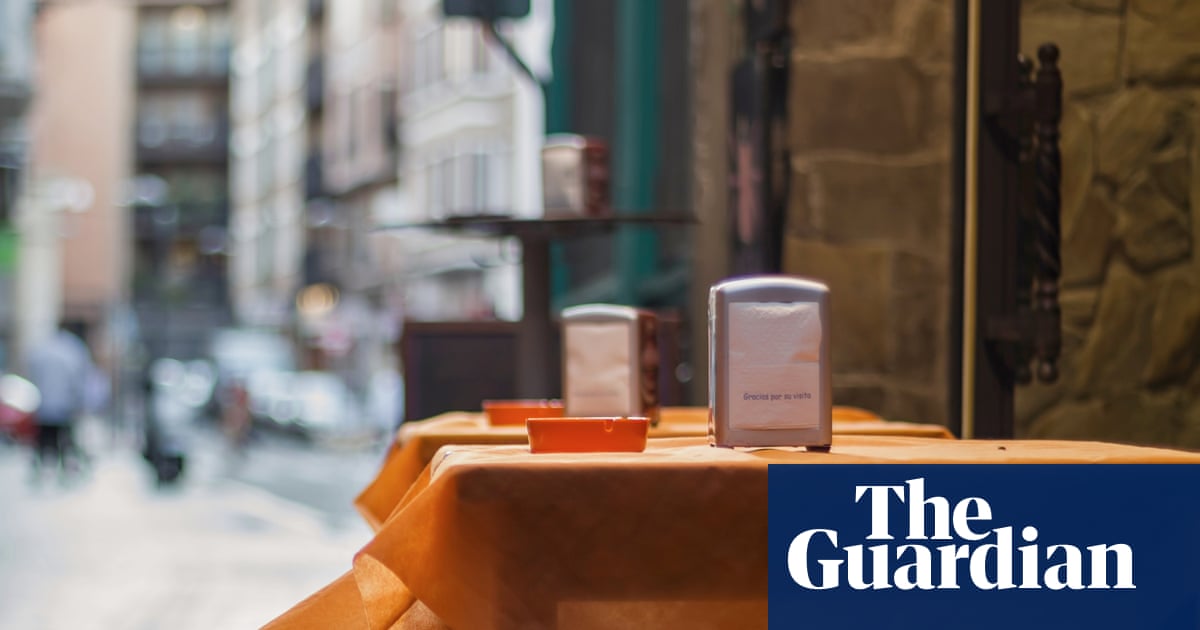
I f you have ever eaten a meal in a bar, cafe or restaurant in Spain and grabbed a napkin from the ubiquitous small metal dispensers, you will be familiar with the most intriguing feature of the wafer-thin servilletas : how utterly functionally useless they are.
Don’t bother using them to mop up spilled liquid, as they are less likely to soak up the spillage than protect it with an impermeable barrier. Never make the mistake of blowing your nose in them when you have a cold or a hay fever attack: they’ll just spread the mess to your hands. Their papery texture – originally meant to keep your hands clean while picking up oily snacks – has somehow endured despite their most common purpose being to clean your fingers and lips. For this, they are far from effective, and you end up flying through half a dozen for every croqueta .
And yet these humble serviettes are a deeply cherished part of the Spanish way of life. Piling scrunched up servilletas on a plate after use may seem the logical choice, yet in some establishments patrons simply chuck them on the ground, along with olive pits and other detritus acquired from snacking. A floor littered with servilletas is a sign that you’ve entered a bar that is humble and authentic . “The servilletas are made of paper,” reads a sign on the wall in my go-to place for callos , Bar Alonso in Madrid’s Prosperidad neighbourhood, “and just like prawn shells, they’re to be thrown on to the floor.” (Don’t mistake it for a universally loved custom, though, other establishments have campaigned against it , and it’s now a less common habit.)
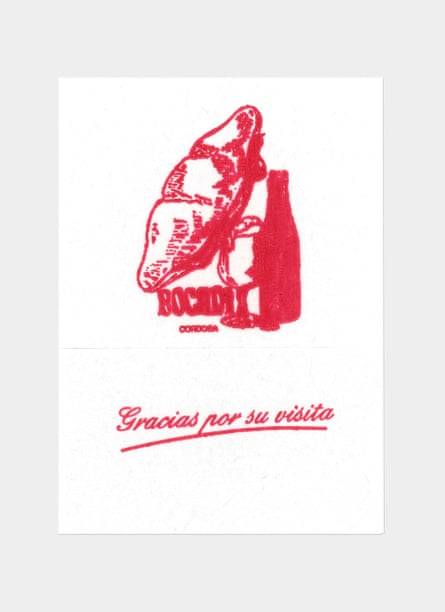
The serviettes’ useless papery texture has one great upshot: they’re easily printable with all kinds of text and monochrome imagery. Even your standard servilleta , which thanks you for your patronage with the phrase “ gracias por su visita ”, can be a source of juvenile amusement: in my university days, most students knew how to fold them so that the text instead read gracias puta .
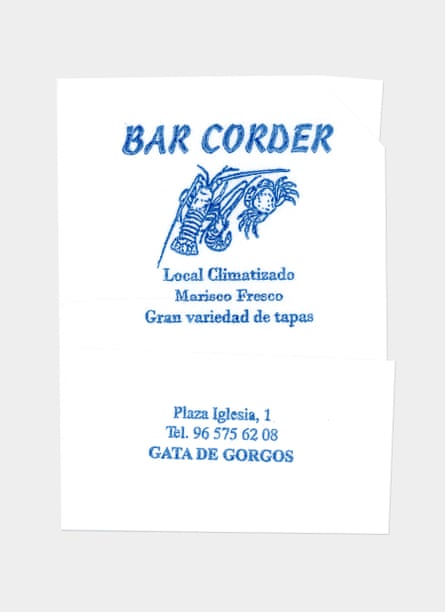
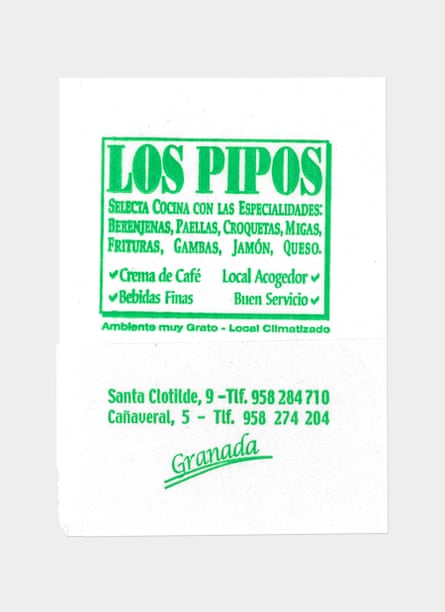
The real joy, however, lies within the bars and restaurants that choose to pay a little extra to have personalised servilletas . Madrid-based photographer Felipe Hernandez has been collecting these little gastronomical mementoes from down-to-earth restaurants across the country since 2014. By 2017 he’d accumulated more than 150, which was when he decided to start photographing them on a white marble slab he had in his studio, and uploading them to a dedicated Instagram account . Last month he released the book Servilletas , containing 600 of the 1,000-plus in his collection.
Some of them use the Post-It sized space to boast of their prowess in the kitchen: “They say it’s the best roasted lamb and suckling pig in Madrid,” Restaurante El Senador tells us . Others match an illustration with their name, as with the doves on the napkins at Marisquería La Paloma . My favourites are the servilletas in Bilbao’s Melilla y Fez, which carry an illustration of their famed pintxos morunos (grilled lamb skewers), since cleaning your oily fingers with a picture of the dish that caused the mess in the first place is a lovely touch.
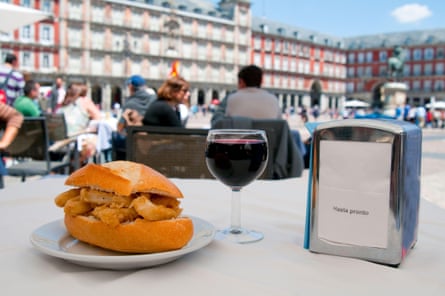
Such small visual quirks feel even more special when you consider the growing homogenisation of Spain’s gastronomic sector. “This book captures the resistance of our old-school bars against this trend, and the importance of supporting them given how our city centres are losing their identities,” Hernandez tells me.
“Since the graphic often relates to the food that a place serves, you can even see cultural and regional differences reflected in the serviettes,” he says. Newer restaurants are less likely to have their own personalised servilletas , and a number of the older establishments he visited have since ditched them to cut costs.
Like many local businesses in Spanish cities, some of the places featured in Hernandez’s book have been struggling to deal with the side-effects of gentrification and tourism. Mesón Planeta, a restaurant in Madrid whose serviette used to boast of its Galician meats and octopus, is one such example. It closed down four years ago after failing to keep up with rising rents, and for former regulars, this book would be one of the few physical remnants of the place.
While an individual establishment might perish, the servilleta lives on, with their enduring ineffectiveness a joyful defiance of the relentless “optimisation” that defines our era. What defines the appeal of the servilleta , Hernandez writes in the introduction to his book, is “the beauty of the useless”.
Servilletas: Spanish Napkins is published by Ojos de Buey