Naked cycling: is it ever acceptable to ride a rental bike in the nude? | Cycling | The Guardian

Keyword – Life and style
Trefwoorden – Cycling, Life and style, London
Title – Naked cycling: is it ever acceptable to ride a rental bike in the nude? | Cycling | The Guardian
Author – Guardian Staff
Link – Naked cycling: is it ever acceptable to ride a rental bike in the nude? | Cycling | The Guardian
Publish date – 2026-06-16T14:51:29.000Z
Category – Lifestyle
URL – https://www.theguardian.com/lifeandstyle/2026/jun/16/naked-cycling-ever-acceptable-rental-bike-nude

Name: World Naked Bike Ride.

Age: 22.

Appearance: A global celebration of potentially crushed genitalia.

Is it World Naked Bike Ride again already? Where does the time go? Well, the World Naked Bike Ride event in London already happened, last Sunday. I can’t believe you missed it.

Always the naked bridesmaid, never the naked bride. Don’t worry, though, because the repercussions of World Naked Bike Ride will carry on for weeks to come.

Really? Why’s that? Primarily because everyone is freaking out about the, er, let’s call them consequences of sharing a saddle with someone who has ridden it in the buff.

Oh. Oh . Yuck. I’m afraid so. Apparently, of the 1,000 cyclists who rode naked through the streets of London at the weekend, about half of them were using rental bikes. As such, social media is quickly filling up with people hyperventilating about saddle hygiene – issues such as sweat and fungal infections have been mentioned.

Well, World Naked Bike Ride sounds absolutely disgusting. That’s the thing, it really isn’t. This is the 22nd year that it has taken place in London, and nudity is always an optional aspect. People can take part fully dressed if they like.

Ah, World Ride a Bike With All Your Clothes On. That’ll grab the headlines. It’s held for an important reason, too.

Which is? Safety. In big cities that are dominated by cars, cyclists are physically vulnerable. Doing it with all your bits flapping around highlights this vulnerability as strongly as possible.

Why hasn’t there been this much fuss about it before? Oh, there has. Six cyclists were charged with public indecency when the event took place in Chicago in 2005. A man was removed from the event in Canterbury in 2015 after becoming too visibly excited. Last year, the Reform MP Lee Anderson called it a “freak show”.

That sounds like all the excuse I need to support it, then. However, this is the first time that hygiene has been used as a weapon. The rise of cycle hire schemes means that bikes now belong to everyone.

So now cyclists are also vulnerable to catching chlamydia from a saddle? No: from an infection control standpoint, the risk of catching a disease from a bike previously ridden by a naked person is vanishingly small.

Have the rental bike companies said anything? A spokesperson from Lime – one of the biggest e-bike rental companies in London – told the Metro: “As with any ride, we ask that people leave our bikes in the condition they’d want to find them. For safety reasons, we’d always encourage everyone to wear appropriate clothing when cycling.”

Do they at least clean them? According to the Metro, Lime bikes are “regularly” pressure-cleaned with recycled rainwater.

So it’s fine then? No, of course it’s not fine! It’s gross! Next time World Naked Bike Ride happens, bring your own bike. Or pop a shower cap over the saddle.

Do say: “Please leave your bikes in the condition you found them.”

Don’t say: “Drenched in someone else’s sweat.”

Do you have an opinion on the issues raised in this article? If you would like to submit a response of up to 300 words by email to be considered for publication in our letters section, please click here

The ‘silent killer’: what you need to know about heatwaves | Climate crisis | The Guardian

Keyword – Environment
Trefwoorden – Climate crisis, Extreme heat, UK weather, UK news, Environment
Title – The ‘silent killer’: what you need to know about heatwaves | Climate crisis | The Guardian
Author – https://www.theguardian.com/profile/ajit-niranjan
Link – The ‘silent killer’: what you need to know about heatwaves | Climate crisis | The Guardian
Publish date – 2026-06-22T15:00:48.000Z
Category – News
URL – https://www.theguardian.com/environment/2025/jun/27/the-silent-killer-what-you-need-to-know-about-heatwaves

Heatwaves have grown hotter and stronger as the planet has warmed, making what doctors call a “silent killer” even more dangerous. How worried should we be about heat – and how can we stay safe as the climate changes?

How many people die from heat?

Hot weather kills an estimated half a million people each year. The average annual death toll is greater than that from wars or terrorism, but smaller than that from cars or air pollution.

Despite this, heat is rarely listed as the cause of death. That’s because extreme temperatures are largely indirect killers. Most heat victims die early from illnesses – such as heart, lung and kidney disease – that are made worse in warm weather.

How does extreme heat hurt your health?

High heat stresses the human body, sending the heart and kidneys into overdrive as they work to keep the body cool. The added strain – particularly for those with chronic illness – can prove fatal even before heatstroke hits.

There are also secondary health effects from high heat. Heatwaves lead to more accidents, dirtier air, bigger wildfires and more frequent power outages, all of which can increase the burden on health systems.

Why do warm nights matter?

When days are too hot to function and nights are not cool enough to recover, the body is unable to rest. This compounds the damage done during scorching days.

In many European countries, meteorologists describe nights with temperature minimums above 20C as “tropical”, while in Spain, which is more familiar with extreme heat, they call nights above 25C “equatorial” or “torrid”. In recent years, they have informally introduced a new category for night-time temperatures above 30C: “hellish”.

Who is most at risk from extreme heat?

People who are forced to be outdoors in scorching weather – builders, farmers, rough sleepers etc – are most likely to suffer from heat exhaustion and the heatstroke that can follow.

But older people, and particularly those with underlying illnesses, make up the bulk of heat-related deaths. Women are more likely to die from heat-related causes than men. Poorer people – who are less likely to have air conditioning, well-insulated homes or access to green spaces – are also at greater risk.

Why does humidity make it feel hotter?

Sweat is the body’s best defence against heat, lowering internal temperatures as it evaporates. But when humidity is high and the air hot and sticky, the body struggles to cool down because sweat clings to the skin. The effect this has on perceived temperatures can be equal to several degrees, enough to spell the difference between life and death.

Why are heatwaves getting hotter?

More than a century’s worth of fossil fuel pollution has clogged the atmosphere, trapping sunlight and heating the whole planet. Average global temperatures have risen by about 1.3C since preindustrial times – and land temperatures by even more – which has pushed the baseline higher and made punishing extremes far more common.

There is also some evidence that the climate crisis is making heatwaves worse by weakening the jet stream. Scientists think this is increasing the occurrence of heat domes, which are areas of high pressure and heat that get stuck over a region for days or even weeks.

Won’t climate change mean fewer people die from cold?

Cold weather kills far more people than hot weather today, even in warm regions such as sub-Saharan Africa and south Asia. But as temperatures rise, the number of deaths from heat is projected to grow much faster than the number of lives saved from milder cold. When scientists modelled this in 854 European cities, they found a net increase in temperature-related deaths under all emissions scenarios, even accounting for how people adapt.

How can we adapt to heatwaves?

Cutting fossil fuel pollution is the biggest step that can be taken to stop heatwaves from getting even hotter, along with protecting forests and wetlands that suck carbon dioxide out of the atmosphere.

Urban planners have called for cities to be redesigned so they have less concrete and fewer cars, and more parks and water. This can negate the urban heat island effect, which makes cities hotter than their rural surroundings.

Buildings with air conditioning or passive cooling can bring down death tolls, as can strong healthcare systems and swift emergency warnings.

Does air conditioning make heat worse overall?

Air-conditioning units increase planet-heating emissions if the power they consume is generated by burning fossil fuels, as it mostly is today, but their pollution is falling as countries clean up their electricity grids. Some experts cite the scale of the heat-related death toll as a worthy reason to use more air conditioning – particularly for the most vulnerable groups – even if it pushes temperatures higher.

This year, the UK’s Climate Change Committee (CCC) recommended that air conditioning be installed in all care homes and hospitals within the next 10 years, and in all schools within 25 years.

How can I stay safe in a heatwave?

The simplest advice is to stay out of the heat: avoid going outside during the hottest parts of the day, and stay in the shade if you have to. To keep your home cool, close windows during the day and open them after dark, when outdoor temperatures fall below inside temperatures. Cover windows with blinds or curtains to block out direct sunlight.

Doctors also recommend drinking water frequently, wearing loose clothing and checking on vulnerable people in your community.

Serena Williams to make Wimbledon singles comeback after being handed wildcard | Serena Williams | The Guardian

Keyword – Sport
Trefwoorden – Serena Williams, Wimbledon 2026, Wimbledon, Tennis, US sports, Sport
Title – Serena Williams to make Wimbledon singles comeback after being handed wildcard | Serena Williams | The Guardian
Author – https://www.theguardian.com/profile/tumaini-carayol
Link – Serena Williams to make Wimbledon singles comeback after being handed wildcard | Serena Williams | The Guardian
Publish date – 2026-06-21T19:11:58.000Z
Category – Sport
URL – https://www.theguardian.com/sport/2026/jun/21/serena-williams-wimbledon-singles-comeback-handed-wildcard-tennis

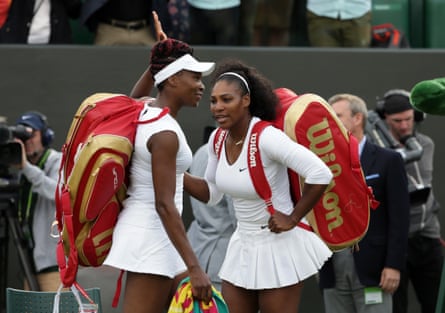
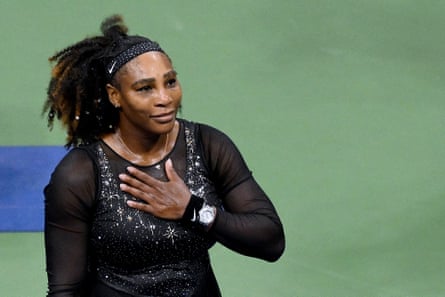
Serena Williams will make a stunning return to singles competition at Wimbledon after being announced as the tournament’s final wildcard on Sunday.

Wimbledon will mark Williams’s first singles appearance in nearly four years after retiring from the sport at the 2022 US Open and it marks a dramatic escalation in her comeback.

Williams, a 23-time grand slam singles champion and seven-time Wimbledon singles champion, resumed her doubles career at the beginning of the grass-court season this month after months of speculation. The 44-year-old had already received a wildcard into the ladies’ doubles draw at Wimbledon alongside her 46-year-old sister, Venus.

However, she had remained coy about whether she planned to return to singles. Asked this past week in Berlin about whether she would take a singles wildcard, Williams responded: “That’s the question of the hour, right? I don’t know. I don’t know. I wonder why there’s … I don’t know,” she said.

She left the announcement to the last moment. The All England Club (AELTC) has spent the week allocating its various wildcards and as of Sunday morning, only one wildcard in either draw remained. The ladies’ qualifying singles draw will be published on Monday, meaning the AELTC had to decide on the recipient of the final wildcard before the draw.

Williams had been victorious in her doubles comeback match alongside Victoria Mboko at the Queen’s Club, but Mboko was forced to withdraw from the tournament due to the significant knee injury she suffered in her singles match. Williams then competed alongside Karolina Muchova in Berlin this week, with the pair losing in their opening match, but she declared herself satisfied with her level. She has spent the rest of this week training on the grass courts of the All England Club in advance of her return.

Although her first career eventually ended on a positive note, with Williams sensationally defeating the then world No 2, Anett Kontaveit, at the US Open before falling in a dramatic three-set battle to Ajla Tomljanovic , her Wimbledon career had ended badly earlier that summer. After suffering a serious hamstring injury by falling on a slippery Centre Court in her first round match in 2021, Williams was defeated in the first round of Wimbledon 2022 by the world No 115 Harmony Tan , a loss that many believe played a part in motivating her to return to Wimbledon. She has not won a singles match at the tournament since 2019.

Williams will now have an opportunity to end her Wimbledon career on a different note, but it remains to be seen what level she will be able to compete at in singles. Singles requires far more movement and physicality than doubles, making it a much more difficult task for a 44-year-old. As has been the case for more than 30 years, the American refuses to shy away from a great challenge.

Spanish PM’s former right-hand man jailed for 24 years for corruption | Spain | The Guardian

Keyword – World news
Trefwoorden – Spain, Pedro Sánchez, Europe, World news
Title – Spanish PM’s former right-hand man jailed for 24 years for corruption | Spain | The Guardian
Author – https://www.theguardian.com/profile/stephen-burgen
Link – Spanish PM’s former right-hand man jailed for 24 years for corruption | Spain | The Guardian
Publish date – 2026-06-22T15:51:50.000Z
Category – News
URL – https://www.theguardian.com/world/2026/jun/22/spanish-pm-pedro-sanchez-former-right-hand-man-jailed-24-years-corruption

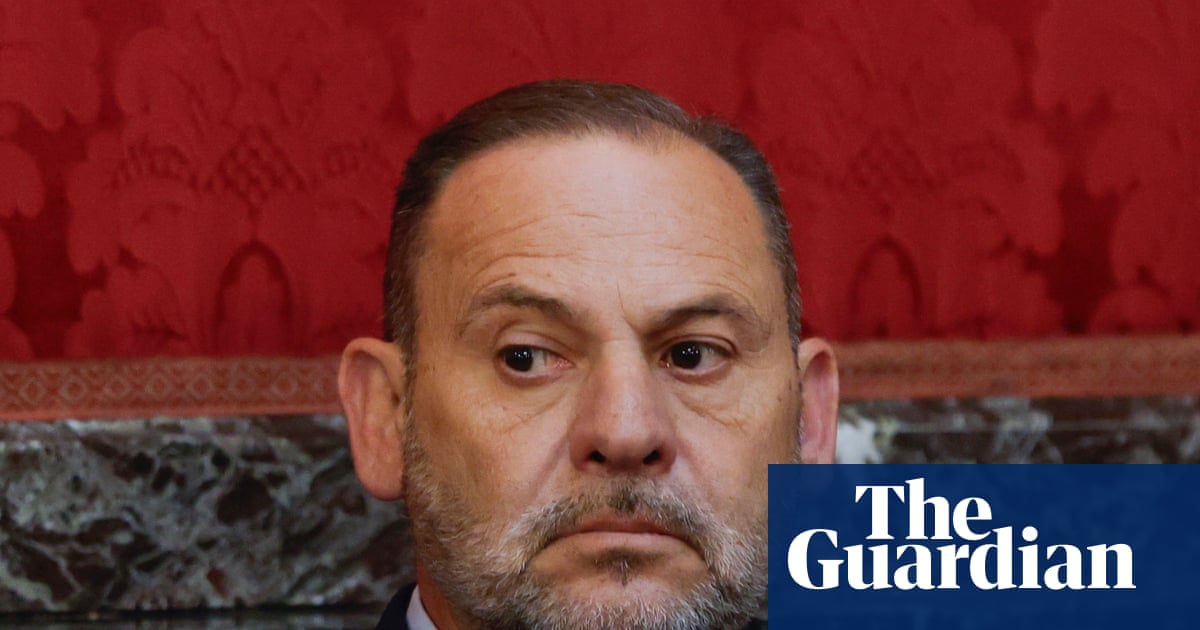
Spain’s supreme court has jailed the former transport minister José Luis Ábalos for 24 years for taking bribes on public contracts for sanitary equipment such as ‌face masks during the Covid pandemic.

Ábalos’s aide, Koldo García, was jailed for 19 years in a trial that is one of several scandals to have enveloped the government of Pedro Sánchez over recent months.

The case is seen as particularly damaging for Sánchez because Ábalos was his trusted right-hand man for many years.

Ábalos and Koldo heard the sentencing via video-conference in the Madrid prison where they have both been held in preventive custody since November.

Presided over by seven judges, the court heard evidence from public officials, civil servants, expert witnesses and police, and found Ábalos and García guilty of being part of a criminal organisation, bribery, misuse of public funds, money laundering and influence peddling.

The court concluded that “the seriousness of the charges derives from the fact that they erode the fundamentals of a democratic state and distort the purpose of public power into an instrument at the service of individual interests”.

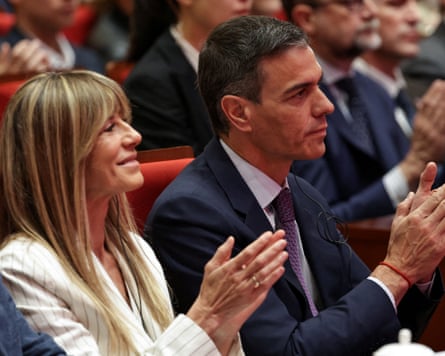
The sentencing comes two days after a separate court ruled that Sánchez’s wife, Begoña Gómez, who faces corruption and influence-peddling charges, is a flight risk and must hand over her passport .

Gómez is awaiting trial over accusations she used her influence as the prime minister’s wife to secure sponsors for a university master’s degree course she ran, and that she used state funds to pay her assistant for help with personal matters. The case was triggered by a complaint from the rightwing pressure group Manos Limpias, which translates as Clean Hands.

Gómez lives in the Moncloa palace, which is the seat of government and probably one of the most secure buildings in Spain, but the judge Juan Carlos Peinado said members of her security detail might help her to escape.

This in turn has led Spain’s judicial watchdog, the General Council for Judicial Power, to take disciplinary action against Peinado for the “serious offence” of impugning the integrity of public servants, in this case, Gómez’s personal protection agents.

Spain’s national police also released a rare statement calling the judge’s reasoning unjustified and stressing the force’s political neutrality.

The government has denounced Peinado for what it described as his obsession with Gómez who, even if found guilty, would apparently have derived no personal benefit from the alleged influence peddling.

Sánchez has not been named in any of the ‌cases, but his brother, David, is on trial over allegations that he was handed a bespoke job by the Socialist-led council of the south-western town of Badajoz in July 2017, when his brother was the national leader of the party but not yet prime minister.

Gómez and David Sánchez have denied any wrongdoing, and the prime minister has said his family have been the victims of a harassment and bullying operation.

The case against David Sánchez was also brought by Manos Limpias, leading many to believe there has been a concerted effort by rightwing forces to damage the Sánchez government.

So-called “lawfare” has become increasingly common in Spain, where the courts are obliged to consider cases brought by private organisations or individuals, however frivolous the charge might initially appear.

During her eight years in office, Barcelona’s leftwing mayor Ada Colau faced 22 legal challenges to her policies, every one of which was eventually dismissed.

Ábalos is the fifth government minister to be jailed since Spain’s transition to democracy in 1978.

Víctor de Aldama, a businessman linked to the scandal was also jailed for four and half years on Monday, but his sentence was suspended because he had cooperated with the court. Nor will he have to hand back the €3.7m (£3.2m) he received in commissions over the procurement of masks.

Tell us your favourite TV shows of 2026 so far | Television | The Guardian

Keyword – Television & radio
Trefwoorden – Television, Culture, Television & radio
Title – Tell us your favourite TV shows of 2026 so far | Television | The Guardian
Author – https://www.theguardian.com/profile/guardian-community-team
Link – Tell us your favourite TV shows of 2026 so far | Television | The Guardian
Publish date – 2026-06-09T15:52:01.000Z
Category – Culture
URL – https://www.theguardian.com/tv-and-radio/2026/jun/09/tell-us-your-favourite-tv-shows-of-2026-so-far

The Guardian’s culture writers have compiled their favourite TV shows of the year so far – and we’d like to hear about yours, too.

Are there any new series that you would recommend watching? What have been best TV shows of the year so far, and why?

If you’re having trouble using the form click here . Read terms of service here and privacy policy here .

Benita review – Alan Berliner puts new spin on late film-maker’s work in entrancing tribute | Film | The Guardian

Keyword – Film
Trefwoorden – Film, Documentary films, New York, Culture, US news, World news
Title – Benita review – Alan Berliner puts new spin on late film-maker’s work in entrancing tribute | Film | The Guardian
Author – https://www.theguardian.com/profile/lesliefelperin
Link – Benita review – Alan Berliner puts new spin on late film-maker’s work in entrancing tribute | Film | The Guardian
Publish date – 2026-06-22T10:00:23.000Z
Category – Culture
URL – https://www.theguardian.com/film/2026/jun/22/benita-review-alan-berliner-puts-new-spin-on-late-film-makers-work-in-entrancing-tribute

T his is a one-of-a-kind documentary that has been coaxed and cut together by veteran film-maker Alan Berliner (Intimate Stranger, First Cousin Once Removed), who also serves as its narrator – but most of its graphics, footage and imagery were made by film-maker Benita Raphan , also the subject of the film. As such, it’s not exactly a collaboration since Raphan took her own life in 2021, for reasons the film gently tries to untangle. Nevertheless, Berliner commits to creating in this film something that limns the fragile spirit, startling originality and dogged, and indeed doggy, kindness of his canine-loving late friend.

In the process, Berliner has completed the unfinished film she was worrying over when she died but at the same time makes something entirely new; it might be called a tribute perhaps, or a bio-pastiche, or maybe a found-footage cinematic seance. Any way you slice and dice it, it’s a strangely entrancing work, an “irregular verb” like its subject, as she was described by her mother Roslyn in her New York Times obituary .

A maker of short, semi-animated experimental documentaries, Raphan wasn’t as well known as Berliner, but she had her niche in New York City’s film world and its adjacent realms, especially in art school academia where the untenured Raphan nurtured young talents, for example at the School of Visual Arts in the Lower East Side. Born in 1962, she was just the right age to enjoy the downtown post-punk scene centred on the Mudd Club and CBGB; she got her first break as a photographer shooting her then-boyfriend’s band. Peregrinations in Europe took her to the Royal College of Art and a spell in Paris where she built up a CV as a graphic designer, working with some big-name brands, though (as one friend recollects) she never managed to hold on to any job for long before being fired. Despite the precariousness of her employment situation, she found some success making intimate, flickering movies about troubled geniuses she clearly felt some kind of kinship with, like mathematician John Nash (also the subject of A Beautiful Mind), poet Emily Dickinson and architect Buckminster Fuller.

Utterly devoted to her rescued dog companions, she planned to make a film about canine cognition that morphed into a portrait of the loneliness and devastation brought about by Covid 19. Berliner and friends speculate that the isolation of that time, coupled with a lifelong struggle with depression and anxiety, are what led her to kill herself. The film is wise to leave some of the questions about Raphan unanswered, and what lingers is a portrait of a complex, creative woman who poured so much of herself into her work and yet who remains in death an evanescent, inscrutable mystery.

Benita is at Bertha DocHouse, London from 24 June.

In the UK and Ireland, Samaritans can be contacted on freephone 116 123. In the US, you can call or text the 988 Suicide & Crisis Lifeline at 988 or chat at 988lifeline.org. In Australia, the crisis support service Lifeline is 13 11 14. Other international helplines can be found at befrienders.org

People in Albania: share your thoughts on the recent ‘not for sale’ protests | Albania | The Guardian

Keyword – World news
Trefwoorden – Albania, Europe, World news
Title – People in Albania: share your thoughts on the recent ‘not for sale’ protests | Albania | The Guardian
Author – https://www.theguardian.com/profile/guardian-community-team
Link – People in Albania: share your thoughts on the recent ‘not for sale’ protests | Albania | The Guardian
Publish date – 2026-06-16T14:13:14.000Z
Category – News
URL – https://www.theguardian.com/world/2026/jun/16/people-in-albania-share-your-thoughts-on-the-recent-not-for-sale-protests

For the last two weeks, Albanians have been protesting against a planned luxury resort backed by a company linked to Jared Kushner , the son-in-law of Donald Trump , near Vlora.

If it goes ahead, the development would occupy parts of an environmentally sensitive area which includes the uninhabited outcrop of Sazan and wetlands and coastal habitats in the surrounding marine national park – home to the Mediterranean monk seal and more than 200 bird species – including flamingos and Dalmatian pelicans, according to BirdLife International .

On Saturday, villagers from Rrjoll, located in an area of sandy beaches and pine forests in north-western Albania , protested against another development project , saying it was being built on their confiscated land.

We would like to hear from Albanians about what they think about the development project.

f you’re having trouble using the form click here . Read terms of service here and privacy policy here .

‘A sinful nature’: how Jeffrey Donaldson was unmasked as a sexual predator | Northern Ireland | The Guardian

Keyword – UK news
Trefwoorden – Northern Ireland, Good Friday agreement, Democratic Unionist party (DUP), UK news, England, Rape and sexual assault
Title – ‘A sinful nature’: how Jeffrey Donaldson was unmasked as a sexual predator | Northern Ireland | The Guardian
Author – https://www.theguardian.com/profile/lisaocarroll,https://www.theguardian.com/profile/rorycarroll
Link – ‘A sinful nature’: how Jeffrey Donaldson was unmasked as a sexual predator | Northern Ireland | The Guardian
Publish date – 2026-06-22T13:32:15.000Z
Category – News
URL – https://www.theguardian.com/uk-news/2026/jun/22/incomprehensible-disbelief-after-jeffrey-donaldson-found-guilty-of-historical-sex-charges

W hile Joe Biden feted Jeffrey Donaldson at the White House during St Patrick’s Day celebrations in March 2024 a handful of detectives back home in Northern Ireland were quietly completing the countdown to his unmasking.

Weeks earlier Donaldson had steered the Democratic Unionist party ( DUP ) back to power-sharing at Stormont, a political feat that rebooted the Good Friday agreement and imbued a statesmanlike aura to his triumphant visit to Washington.

The Lagan Valley MP looked like an accountant and spoke in a passionless monotone – an antithesis to his fire-breathing predecessor Ian Paisley – yet he had brokered a deal with Downing Street over Northern Ireland’s post-Brexit status in the UK and convinced his party to accept it.

But days after his return from the US, on a damp, dark morning, the police swooped on his County Down home and everything Northern Ireland thought it knew about Donaldson imploded.

The Presbyterian family man who wore a fish badge on his lapel to signify his Christian faith was charged with 18 sexual offences – one count of rape plus multiple counts of indecent assault and gross indecency against two young victims – and his wife, Eleanor, was charged with aiding and abetting the abuse.

Two years later, the figure who stood convicted in the dock of courtroom one of Newry crown court appeared unchanged – immaculate suit, a bit jowly, no visible emotion – but was now a pariah.

Four weeks of evidence in the often sweltering chamber uncloaked a previously hidden Donaldson, 63, a predator who abused two girls over two decades while ascending the political ranks to prestige and power.

“It is just incomprehensible, that you have known someone for a lifetime and worked with for a lifetime and this happens,” said Reginald Empey, a unionist grandee who used to work closely with Donaldson. “You’re talking stuff which is off the charts here.”

Lord Empey said he got on well with Donaldson when he was a rising star in the Ulster Unionist party (UUP), before his defection to the DUP. “He was very highly regarded, ticked all the boxes, young, articulate, had a nice way with him. He wasn’t aggressive. He wasn’t a shouter.”

Regardless of the verdict, Donaldson was destroyed as a politician, said Empey. “Nobody can put Humpty Dumpty together again.”

The victims, complainant A and B, told the court that behind the media-savvy sheen – Donaldson projected reasonableness even when adopting hardline positions – lurked a manipulative man who abused them from 1985 to 2008.

Complainant A said she was of primary school age when Donaldson began to be “physical” with her and grope her chest. He used a light to look at her genitals and on another occasion kissed her and put his tongue in her mouth, she said. She recalled having nightmares about “men doing horrible things to children”.

Complainant B said the rape happened while she was of primary school age. “I remember being really still and all I could hear was his breath.” The memory of the assault endures, she told the court. “What happened that night will live with me for ever.”

Complainant B said she was of secondary school age during another incident – he lifted up her top and fondled her breasts – which she said was partly witnessed by his wife before she walked away.

She told police in her interview he “had this terrible breath” and was making a “panting sound”. “He never said anything, just always silence.”

Eleanor Donaldson told police, in an interview played in court, that it was a “massive shock” to see the pair alone in a room but that she had no evidence of wrongdoing. “I didn’t go in, I wasn’t in that room, I just stood in the open doorway.”

The trial judge, Paul Ramsey, judged the 60-year-old unfit to stand trial on mental health grounds so she faced a trial of facts, which tests the evidence but cannot result in a criminal conviction.

Donaldson was born into a middle class family in the shadow of the Mourne mountains in County Down, the oldest of five boys and three girls. The Troubles visited tragedy on the family – two cousins, who served in the security forces, were murdered in IRA attacks.

Donaldson won respect and authority in the UUP and later the DUP for his dogged persistence and tactical nous but he was an aloof figure with few close friendships.

There was almost something “smug” about Donaldson, one former colleague recalled. “He is very manipulative, very controlling and gives off an air that believes he is on a mission from God, someone with a direct instruction from above.” The former colleague could barely bring himself to discuss the abuse. “It disgusts me.”

In the 1990s Donaldson apologised to Complainant B during a meeting at a County Antrim Christian centre and in 2020 wrote a letter to Complainant A expressing regret for causing “hurt, pain and distress” and asking forgiveness for a “sinful nature”.

Under cross-examination Donaldson brazened it out and said those apologies referenced not abuse but unrelated matters and accused his accusers of making up the allegations . His barrister, Kieran Vaughan, questioned the complainants’ credibility and honesty. “We say the evidence shows that nothing happened.”

The jury of five women and seven men decided otherwise. Which means that from 1985, when Donaldson was first elected to a Northern Ireland assembly, the non-smoking, non-drinking, church-going politician began a dual life of secretly inflicting harm on innocents while giving polished public performances as a defender of conservative unionism.

Complainant A said that in her 20s she realised the abuse was not normal and became angry, an anger fuelled by the fact she had spent her life watching him in a public role “getting accolade after accolade”. For years she said nothing until eventually confiding in her husband.

“She was worried if she told me it would change my perspective on her,” the husband, who cannot be named to protect her anonymity, told the court. “She was scared. She told me she had never told anyone this. This was trauma she had for so many years, had boxed off, had tried to put on a smile and pretend that everything was OK.”

Donaldson’s prominence and clout intimidated them, said the husband. “We were both terrified.” The trial heard that Complainant B also kept her “memories locked away inside” and blamed herself for not speaking out in time to protect Complainant A.

Both women reached turning points in their lives which prompted them, in March 2024, to give statements about the Donaldsons to police. “Two voices are better than one,” said the prosecutor, Rosemary Walsh.

Donaldson’s reputation – garlanded with a knighthood – was at its zenith. His deal with Rishi Sunak’s Conservative government had ended a two-year DUP boycott of power-sharing over Northern Ireland’s post-Brexit status. Amid ceremonial pomp beneath Stormont’s ornate ceiling, Donaldson watched the assembly revive, and with it hope of political normality.

Instead, before dawn on 28 March, he and his wife awoke to the sound of police at their door. The couple were questioned at the serious crime suite at Antrim police station, charged and released on bail.

The case flabbergasted Northern Ireland. The DUP suspended Donaldson – who in any case resigned – and erased his name and image from the party’s website. In the July 2024 general election Donaldson did not contest his Lagan Valley seat, which he had held since 1997, and vanished from view.

The pre-trial hearings wrenched him back before the cameras. His wife, separated from him by a court security officer, looked the picture of defeat, gaunt and pale, staring up to the ceiling on occasion while Donaldson sat poker-faced, often arms folded, facing proceedings with the same grim determination he had brought to political battles .

The trial laid bare the history of abuse as well as a troubled marriage: it emerged that Donaldson had an affair with a woman in 2008 and that in 2020 his wife, suspecting another affair, had a listening device planted in his car. Eleanor told police that friends had advised her to “get off the Titanic before it sank”.

Donaldson’s wife was not present during the trial, leaving the former DUP leader a solitary figure in the dock. Flanked by custody officers, he remained impassive throughout.

In her summation, the prosecutor exhorted the jury to deliver justice to two victims whose pain and hurt remained visible. “The sexual abuse they suffered has consequences – consequences that cannot be ignored and brushed under the carpet any longer.”

In the UK, the NSPCC offers support to children on 0800 1111, and adults concerned about a child on 0808 800 5000. The National Association for People Abused in Childhood ( Napac ) offers support for adult survivors on 0808 801 0331. In the US, call or text the Childhelp abuse hotline on 800-422-4453. In Australia, children, young adults, parents and teachers can contact the Kids Helpline on 1800 55 1800, or Bravehearts on 1800 272 831, and adult survivors can contact Blue Knot Foundation on 1300 657 380. Other sources of help can be found at Child Helplines International

Chasing life goals is a recipe for disaster – so try these tiny experiments instead | Life and style | The Guardian

Keyword – Life and style
Trefwoorden – Life and style, Health & wellbeing, Guardian Careers, Relationships, Work & careers
Title – Chasing life goals is a recipe for disaster – so try these tiny experiments instead | Life and style | The Guardian
Author – Anne-Laure Le Cunff
Link – Chasing life goals is a recipe for disaster – so try these tiny experiments instead | Life and style | The Guardian
Publish date – 2026-06-21T05:00:21.000Z
Category – Lifestyle
URL – https://www.theguardian.com/lifeandstyle/2026/jun/21/improve-career-health-relationships-experimental-mindset

E very January, millions of us sit down and write our goals for the year. By March, most of them have been abandoned. So we set new ones in spring, and when September rolls around, we do it again. New season, fresh start, same cycle – and plenty of beating ourselves up along the way. I lived this cycle for years. When I was working at Google as a digital health executive, I was a champion goal-setter with quarterly OKRs (objectives and key results) and a running list of personal goals I would review every week. On paper, it worked. I was successful by most external measures. But I had this persistent feeling that I was running just to stay in the same place, like the Red Queen in Lewis Carroll’s Through the Looking-Glass.

After retraining as a neuroscientist and studying how the brain learns, I started to understand why. Goals work brilliantly under very specific conditions. You want to buy a car that fits three kids and costs under £25,000? Set a goal, do the research, buy the car. The destination is known and the path is clear.

But most of the things we care about don’t work like that. Figuring out what kind of career makes you feel alive. Becoming the kind of parent you didn’t have a model for. Working out what “healthy” looks like for you. The destination keeps shifting as you grow.

That’s why chasing goals doesn’t work for life’s most important questions – career, relationships, health. It’s like locking in your answer before you have understood the question. And when we cling to a destination and try to push through the uncertainty, we set ourselves up for frustration and self-blame.

The experimental mindset

Scientists have a different relationship to uncertainty. They work with it. They wonder whether something will work, then design experiments to find out. Whatever the outcome, their only goal is to learn.

This is what I call the “experimental mindset”. It makes use of your brain’s natural ability to generate predictions about what will happen next, and to learn when those predictions turn out to be wrong. Most of us experience this as failure and try to avoid that feeling – so we stick to the plan, we double down.

The experimental mindset does the opposite. Instead of asking, “Am I there yet?”, you ask, “What can I learn?” This helps you to try new approaches, pay attention to what actually happens, and change direction when the evidence points somewhere new. The life you end up building is yours, not a copy-paste of someone else’s blueprint for success.

So what does this look like when you’re weighing up whether to leave a job, if a relationship has a future, or how to rebuild your social life after a big move? It all starts with designing a tiny experiment.

How to design a tiny experiment

All good experimentation begins with observation. Start by spending a bit of time observing your own life. I like to pretend I’m an anthropologist for 24 hours, taking field notes. What gives me energy? What drains it? Who are the people I love talking to? What are the ideas I can’t stop thinking about? Jot it all down on your phone or in a notebook.

Having coached thousands of people through this process, I can guarantee that you will spot areas of your life that are ripe for experimentation: routines you have been running on autopilot, such as checking your phone before you get out of bed, saying yes to every meeting invite, eating lunch at your desk because that’s what everyone does; commitments you have been accepting as part of the job, or part of the relationship; habits that are sabotaging your health. Those observations become the starting point for your first experiment.

The great news is you don’t need a lab. If you strip an experiment down to its most essential features, it is just two decisions: something to test and a trial period.

In effect, every experiment can be reduced to one line: “I will [action] for [duration].” That’s it. That’s your protocol. You’re not committing to a big goal. You’re running a tiny experiment.

Your career as a laboratory

We spend a huge part of our lives at work, and our career is deeply tied to our sense of identity, which makes it feel like a high-stakes area to experiment with. Add economic uncertainty to the mix and for most of us the instinct is: “I can’t afford to try things.”

But staying stuck in the wrong career is also costly: it costs us time, energy and the chance to figure out what we want. So rather than waiting until you feel ready to make a big change, try something small enough that it doesn’t feel like a risk:

“I will spend 30 minutes a day reading newsletters.”

“For a month, I will block out one afternoon a week for deep creative work.”

“I will have three coffee chats with people in jobs I’m curious about this quarter.”

None of these require overhauling your life, yet they can lead to unexpected opportunities. For instance, I committed to writing a weekly newsletter for 20 weeks. That experiment led to a consulting business and an online community of people interested in those ideas, which led to writing my first book. At no point did I set a goal to become an author, but that experiment opened doors I wouldn’t have known to look for.

Experimenting in relationships

We fall into patterns with the people closest to us – who calls whom, what you talk about, how you spend time together – and those patterns can calcify without anyone intentionally choosing them.

Applying an experimental mindset here is about noticing those defaults and testing whether something different might be better – for example, replacing one weekly catchup call with doing an activity together for six weeks, or contacting one person you’ve lost touch with each week for a month.

You won’t know which of these will help, but that’s the point. Each experiment teaches you something about what helps nurture the relationships that matter most to you and what doesn’t.

The same mindset works for romantic relationships. A friend of mine was single and, instead of setting the goal of finding a partner by the end of the year, he ran a series of experiments: trying singles events; asking friends for introductions; testing different apps. Framing each one as an experiment rather than a pass-or-fail audition gave him a chance to notice what he was drawn to. Instead of asking himself, “Was that person The One?”, he would reflect on what he had enjoyed and what he had learned about himself. It took the pressure off and helped him figure out what he really wanted, which turned out to be less about finding someone impressive and more about finding someone with whom he could talk honestly.

And you don’t have to experiment on your own. Parents can design experiments with their children, such as replacing screentime before bed with reading together for two weeks, or letting a teenager cook dinner once a month. Couples can test new date-night ideas; friends can commit to trying something new at the same time. In fact, some of the most rewarding experiments are the ones you run with someone else.

What does ‘healthy’ look like for you?

Wellness is the area most saturated with one-size-fits-all goals: 10,000 steps, eight glasses of water, lose X pounds by summer. And we either white-knuckle our way through them or feel like failures when we can’t stick to them.

And this is where the gap between generic advice and individual reality is often widest. What works for one person’s body, schedule and stress levels is completely different from what works for another’s. Yet we keep importing other people’s goals as if they were universal prescriptions.

The experimental mindset can help reframe your entire relationship to wellness: instead of adopting someone else’s definition of healthy and forcing yourself to comply, you run experiments to figure out what works for your body, your mind and your life.

Even something that looks like a straightforward goal, such as running a marathon, can benefit from an experimental approach. You don’t know how your body will respond to the training, what nutrition you need on long runs, or how to handle fatigue. The finish line might be fixed, but everything between here and there is experimentation.

Whether you are training for a marathon or just trying to sleep better, the approach is the same: rather than following a formulaic plan with borrowed goals, you design your own:

“I will exercise in the morning instead of the evening for two weeks.”

“I will go to bed at the same time every night for 10 days.”

“I will cut out processed food for a month.”

Each iteration will give you real data about your own body rather than following someone else’s rules. Over time, those experiments will add up to a definition of “healthy” that’s built around you.

Tiny Experiments: How to Live Freely in a Goal-Obsessed World by Anne-Laure Le Cunff is published by Profile at £10.99 . To support the Guardian, order your copy at guardianbookshop.com . Delivery charges may apply . Delivery charges may apply

From pwned to kiting – an A to Z of the gaming terms you need to know | Games | The Guardian

Keyword – Games
Trefwoorden – Games, Culture
Title – From pwned to kiting – an A to Z of the gaming terms you need to know | Games | The Guardian
Author – https://www.theguardian.com/profile/robin-craig
Link – From pwned to kiting – an A to Z of the gaming terms you need to know | Games | The Guardian
Publish date – 2026-06-21T11:00:29.000Z
Category – Culture
URL – https://www.theguardian.com/games/2026/jun/21/from-pwned-to-kiting-an-a-to-z-of-the-gaming-terms-you-need-to-know

T wenty years ago, video games were seen as a niche hobby dominated by hardcore enthusiasts, tucked away in obscure online forums and gaming meet-ups. Back then, the idea that governments would use footage from Call of Duty and gaming terms such as “killstreaks” as war propaganda would have been absurd. Then the 2010s happened: nerd culture popularised, previously online-only spaces began to meld with the real world, and gaming went mainstream.

Now, gaming references have entered common parlance – at the end of 2024, video game terms including “cheat code” and “cutscene” were even added to the Oxford English Dictionary – and they increasingly crop up in politics, too. Earlier this year, the official White House X account posted footage of military strikes on Iran interspersed with footage from the video game Grand Theft Auto. Six days later, another video was posted , this time interspersing military footage with clips from Nintendo’s 2006 game Wii Sports. Video game references aren’t reserved for the political right, either: in February 2026, Democrat representative of New York Alexandria Ocasio-Cortez quipped , “Why does this guy always talk like a World of Warcraft npc [non-player character]?” in response to a post on X by Stephen Miller, White House deputy chief of staff.

To help navigate this new world of gaming references and gaming-inspired “ slopaganda ”, we have compiled a guide to gaming terms, from phrases that are already widespread to those on the verge of cutting through.

A

Any% A method of beating a game by any means possible, including using glitches or other techniques to skip boss battles, cutscenes, and even entire levels. Any%ers often celebrate “breaking” the game through code exploits to gain a speed advantage. For a real world example, see Elon Musk’s approach to the so-called “department of government efficiency” (Doge) .

B

Boosting Paying for someone else to do the hard work for you by, for example, levelling up your character, especially in online games. Generally viewed as cheating and against the ethos of gaming, it is also something that Elon Musk has admitted to doing for his characters in Path of Exile 2 and Diablo 4.
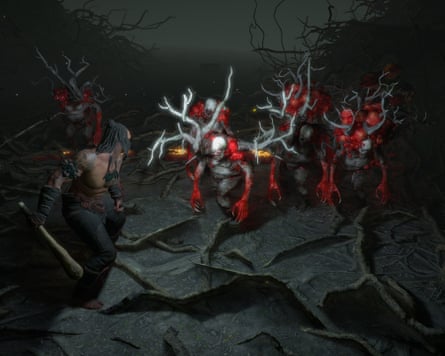
Buff An enhancement made to a character, item or ability that increases its power or effectiveness. The equivalent of having two pints at a bar to buff your confidence before speaking to someone you fancy.

Bullet sponge An enemy character that takes an absurd amount of damage before they are defeated. Also, derogatory military slang for a person whom nobody wants to be around because they always attract enemy fire. See also: “tanks”.

Button mashing Repeatedly pressing a random selection of buttons on a controller, usually as an act of sheer panic and desperation by inexperienced players trying to win difficult fights.

C

Camping A tactic, usually deployed in games involving shooting and combat, of staying in the same spot for long periods because of its strategic advantage. Often used to snipe other players from afar, which can quickly become very annoying and lead to accusations of trolling or “griefing” (see below).

Cheesing Using tactics that are not technically cheating, but are treading a fine line . Cheesing is effectively taking the easy way out and avoiding the intended challenge set by developers. Tactics include exploiting glitches and loopholes, spamming the same move again and again before an enemy can react, or making yourself overpowered (see “OP” below). One example of cheesing was in Crash Bandicoot: Warped (1998), where players could avoid taking any damage during a colosseum-themed boss fight by standing in a safe-spot corner. In the game’s 2017 remake, standing in that corner resulted in the player being pelted by blocks of cheese as a punishment.
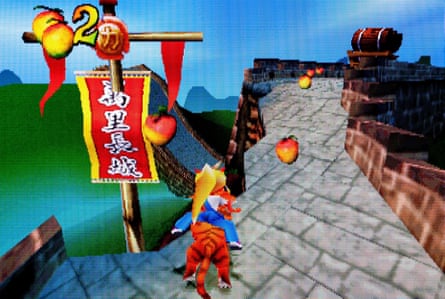
Class A character’s role or occupation (such as warrior, samurai or bandit), often chosen early in the game. Most classes fall into the categories of offence, defence and support, and each class has its own strengths and weaknesses that requires players to adapt their playing style.

D

DLC “Downloadable content”, an extra part of a game that players can pay to download, often including new levels, outfits, items or weapons.

DPS “Damage per second”, a way of calculating how effective an in-game attack or weapon is by measuring how much it damages an enemy in one second.

E

Easter eggs One of the oldest video game terms, an Easter egg is a message, reference or feature hidden in a game. It originates from Steve Wright, a software developer at Atari in 1980, who compared a hidden room in the video game Adventure to an Easter egg hunt (the hidden room contained the signature of Warren Robinett, a coder who, in his own words , was “pissed” that he hadn’t received any credit for being the game’s creator).

Emotes Short gestures players can make their characters perform to show emotions, such as waving, laughing or crying. Popular in online games such as Fortnite and World of Warcraft, where emoting is often used to rile or mock other players.

F

Farming Performing an action in a game repeatedly to gather resources such as items or experience, much like going to work every day to accumulate money, but for fun and in your free time. See also: “grinding”.

G

Gank Similar to “jumping” someone in real life, this is a gaming strategy to ambush weaker players by sneaking up on them, usually in a group.

GG Short for “good game”, used during online games as a way to show sportsmanship at the end of a match. Can be extended to GG WP (“good game, well played”) or, if a player wants to brag about defeating a particularly weak opponent, GG ez (“good game, easy”).

Glitch A bug or malfunction in a game that causes unintended consequences. One of the most infamous is the “ Corrupted Blood incident” in World of Warcraft , where a glitch meant that a blood curse spread rapidly between players, eventually spreading so widely that developers had to reset the game. The incident was later used by scientists to study the spread of infectious diseases .

God mode To be omnisciently powerful and invincible within the world of the game, sometimes achieved using hacks or code exploits. During Doge’s overhaul of US government agencies, one senior leader at USAID declared to the Atlantic : “Doge has achieved God mode.”

Griefing To grief someone, or to be a “griefer”, is to wind other players up deliberately by being annoying, disruptive and generally infuriating. Often achieved through killing other players without reason, stealing items, or refusing to engage in team activities. See also: “trolls”.

Grinding Similar to “farming”: a repeated action or task undertaken to gather a resource or level up.

H

HP “Hit points” or “health points”, used to measure the health of a character or how much damage an attack does. Increasingly used in meme culture to joke about real-life damage or embarrassment, such as seeing someone fall over and quipping: “minus 10 HP”.

I

In Minecraft A phrase adopted by far-right sites such as 4chan, often added semi-ironically to the end of threats in an attempt to avoid legal repercussions (for example: “I’m going to punch him … in Minecraft”). It backfired in 2023 when a man was arrested for making death threats against a Florida sheriff on 4chan’s politics board, despite ending his threats with “in Minecraft”.

K

KDR “Kill/death ratio”, a measure used to compare the number of kills a player achieves with the number of times they die, usually to determine skill and competence in online multiplayer games.

Killstreak A continuous series of kills made by a player without being killed themselves (literally a “streak” of kills). This year, the White House was criticised for using a killstreak animation from Call of Duty: Modern Warfare 3 in a video featuring real footage from the war in Iran.

Kiting The tactic of hitting an enemy from range while keeping enough distance to avoid harm, often leading them around like a kite on a string.

L

Loot Items players collect as a reward for killing enemies or completing tasks. In recent years, controversial “loot boxes” have gained popularity in games including Genshin Impact and League of Legends, allowing players to exchange real money for randomised virtual items (sometimes also known as “gacha games”, named after Japanese Gashapon , vending machines that dispense capsule toys).

M

-maxxing Prioritising one skill or attribute over all others. Originates from “min-maxing”, a technique of creating the best possible character by maximising desirable traits and minimising undesirable ones. It has now entered mainstream vocabulary with the advent of looksmaxxing and Chinamaxxing .

MMORPG “Massively multiplayer online role playing game”, a game in which players interact with an enormous number of other players in an online fantasy world. A notable example is EVE Online, a sci-fi MMORPG, which, in 2014, saw a battle with 7,548 participants .

Modding Fan-created modifications that change elements of a game’s appearance or add new features. A personal favourite is a Skyrim mod that turns the game’s dragons into Thomas the Tank Engine characters .

N

Nerf To weaken or water down a weapon, character or ability (“I don’t want to play as Riven any more, she’s been nerfed!”), originating from the Nerf brand of toy guns that fire harmless soft foam weapons.

Noob Gaming slang that took hold in the 00s, short for “newbie” and sometimes spelt “n00b”, it is a derogatory word for a clueless and hopeless beginner.

NPC “Non-player character”, a video game character not controlled by the player. Increasingly used as slang for people who are predictable, robotic or lacking interiority, and sometimes tied to the philosophical idea that we live in a simulation .

O

OP “Overpowered”, referring to a character, item or ability that is ridiculously strong and makes winning easy. The spiritual opposite of “nerfed”.

P

Pwned A misspelling of the word “owned”, meaning a humiliating defeat (for example, “You died so easily! Pwned!”). It emerged in the early 00s as part of “leetspeak”, an online slang dialect heavily associated with hackers and coders. A notable example of the word escaping video games is the website “ Have I Been Pwned ”, established by a Microsoft developer to check whether your email has been compromised in security breaches.

R

Ragequit To suddenly stop playing a game out of anger and frustration, usually because you are repeatedly losing. In 2017, Vanity Fair accused Steve Bannon of threatening to ragequit the White House.

RPG “Role playing game”, typically a game with a heavy storytelling element in which players assume the roles of characters, make decisions for them and follow a narrative path.

S

Side quest A mission or activity that isn’t part of the game’s main story and is usually optional to complete. Sometimes used in more general slang to refer to the whimsical activities and adventures of day-to-day life, such as taking a sewing class or getting a tarot reading .

Skins Different designs and outfits that can be applied to characters to customise their appearance, such as “Peely”, a Fortnite skin that gives characters a banana costume.

Smurfing When a highly skilled player in an online game creates a new account to disguise their skill level and play against lower-ranked players. Originating from top Warcraft 2 players Geoff “Shlonglor” Frazier and Greg “Warp” Boyko, who disguised themselves under the usernames PapaSmurf and Smurfette to play against novice players.

Speedrunning A popular spectator sport that involves completing a game as fast as possible, sometimes using loopholes or glitches (see “Any%”). The term has recently broken into common parlance through “Scientology speedruns”, a 2026 social media trend in which participants film themselves running as far into Scientology buildings as possible before being stopped. One video racked up 90m views .

T

Tanks Also known as a meat shield or bullet sponge, a tank is a class of character designed to withstand large amounts of damage, akin to military tanks. See also: “bullet sponge”. Trolls Similar to griefers, players who don’t take the game seriously and annoy other players for fun, including by being purposefully offensive – for example, by posting slurs in the in-game chat.

Turtling A strategy where players build heavy defensive fortifications and force their opponents to make risky moves to break through, akin to building a defensive turtle shell.

X

XP “Experience points”, similar to HP, are a unit of measurement used to quantify a player’s skills and progress. Typically, the more XP one has, the stronger they are. Can also be used in real life, such as when video game streamer Sykkuno said: “ My XP bar is low ” in reference to dating inexperience.