Richer than Musk: Joyce Carol Oates on her 88 years of watching, writing, feeling and loving | Joyce Carol Oates | The Guardian

Keyword – Books
Trefwoorden – Joyce Carol Oates, Books, Culture, Fiction, Women
Title – Richer than Musk: Joyce Carol Oates on her 88 years of watching, writing, feeling and loving | Joyce Carol Oates | The Guardian
Author – https://www.theguardian.com/profile/zoewilliams
Link – Richer than Musk: Joyce Carol Oates on her 88 years of watching, writing, feeling and loving | Joyce Carol Oates | The Guardian
Publish date – 2026-06-22T04:00:49.000Z
Category – Culture
URL – https://www.theguardian.com/books/2026/jun/22/joyce-carol-oates-richer-than-elon-musk-interview

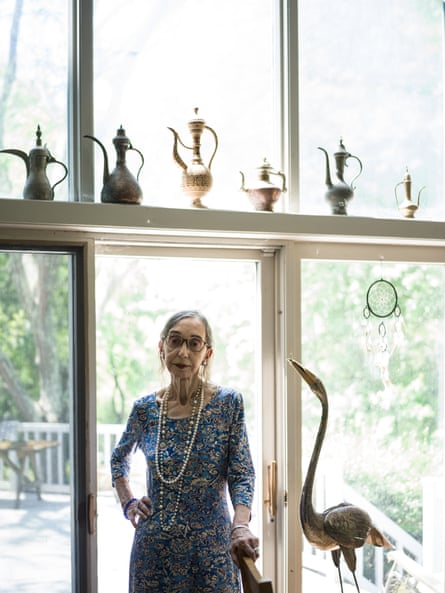
‘M any people, including myself, spend a lot of time thinking about the past. And if you’re living in the same house you were living in with a spouse, the spouse is all around. Nonetheless, it’s not healthy to live in the past; I think we all know that.” Joyce Carol Oates is speaking to me from a book-lined room – one that makes you finally understand what “den” means – at her home in Princeton, New Jersey. She teaches at Princeton University as well as teaching advanced creative writing at Rutgers, also in New Jersey.

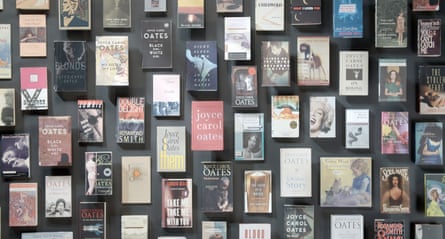
The author turned 88 this month, but she looks little changed from the 1960s, when she came to prominence: weightless like a sprite, focused and serious like a librarian. She has been a prolific writer, with more than 60 novels and many volumes of short stories to her name, earning her five Pulitzer prize nominations and a National Book award, among others, since the start of her career. Blonde, a haunting, fictionalised account of the life of Marilyn Monroe, Them, part of the Wonderland quartet, and Zombie, loosely based on the serial killer Jeffrey Dahmer, are often name-checked as career highs, but her consistency is striking. When she wanted to write mysteries, she did so under the pseudonyms Rosamond Smith and Lauren Kelly. Her works of nonfiction, mainly criticism and memoir, would constitute a career on their own.

She wastes no time between what she thinks and what she says, yet it takes me about a week to understand the conversation – specifically, what was so unusual about it. Her statements are spare and clear, some are obvious, but they work almost as camouflage, to slip in deeply idiosyncratic ways of thinking and being. She will not be drawn into territory that doesn’t interest her, but sometimes she arrives via her solitary route at a subject everyone else is talking about and drops in an observation so clear, unembellished yet unhurried, that the rest of the chatter falls away.

That is what happened last November when she got into what Forbes magazine described as a “fierce online feud” with Elon Musk, “roasting him on his own platform [X]”, according to one literary magazine, with the tweet : “So curious that such a wealthy man never posts anything that indicates that he enjoys or is even aware of what virtually everyone appreciates – scenes from nature, pet dog or cat, praise for a movie, music, a book (but doubt that he reads); pride in a friend’s or relative’s accomplishment; condolences for someone who has died; pleasure in sports, acclaim for a favorite team; references to history. In fact he seems totally uneducated, uncultured. The poorest persons on Twitter may have access to more beauty & meaning in life than the ‘most wealthy person in the world.’”
Musk, a man impervious to the opinions of others, almost seeming to delight in disapprobation, couldn’t handle something so indisputable. (His conniptions aren’t relevant here, except in so far as to say he had them.) Maybe what he minded was the idea that anyone else could be richer than him, even spiritually.

Oates’s new collection of short stories is The Frenzy, split into three parts, which, she says, “begins with people who are isolated from one another – girls becoming young adults, making their way. The second section is adults having their difficulties. Then it ends with two women really discovering the emotional impact of friendship. Two widows. I have a number of widowed friends and I have widower friends. It’s definitely so significant, so emotionally rich, and much of that richness is sharing the experience of loss. That’s probably what knits us together.”

In fact, that experience of bereavement is told through different lenses and different relationships throughout the book – bitter agony in one story, florid, hallucinatory grief in another. Even a character grieving a life not lived has a very widowed, which is to say “left behind”, flavour.

Oates was married for 48 years to Raymond J Smith, who edited the literary journal Ontario Review, which the couple co-founded in 1974. His sudden death in 2008, as a result of pneumonia, destroyed her. A Widow’s Story , her memoir of the aftermath, published in 2011, describes the loss in intricate detail – she loses not just her husband, but herself as a wife, as a writer, as everything. Seven months later, she met Charles Gross, a psychology professor at Princeton; they married in 2009. A decade on, he died. The practical details of that loss populate The Return, one of the short stories in The Frenzy.

But first, those young girls making their way. Strikingly, in each case, the interior voice of a young person, sometimes younger than 10, rings out – as if, for Oates, childhood was yesterday. “I remember it very well,” she says. “I have a natural affinity or identification with adolescent girls, and even adolescent boys, to an extent.” The condition of the artist and that of the teenager are analogous, she says. “They’re astute at seeing the inaccuracy and dishonesty, the compromises that adults make without thinking or being aware.”

She cites Nietzsche: “He spoke of the herd personality.” Then talks of Van Gogh: “You can see how alone he felt and how impassioned his brushwork was. There is no way that somebody like that would just fit in in a crowd.” It sounds as if she is saying that, for an artist, identity and alienation are inseparable, which would connote despair, at least as an element. “No, Nietzsche was filled with great enthusiasm, very optimistic about the future of humankind,” while Van Gogh’s tribulations were probably “biochemical”, she says, before conceding: “I think many writers, artists, poets are permanently in love; they yearn and they love. But the world doesn’t always reciprocate.”

While Oates describes the spine of this collection in neutral, even saccharine, terms – stages of the human life cycle, the power of friendship, wordless communication – most of the stories march to the drumbeat of male control and violence. She would hate that as a thematic description, such a coarse generalisation, so basic – and, indeed, she bats away the idea with a shake of the head. She is equally interested in female deficiencies, specifically maternal ones. “If your mother doesn’t protect you, you’re exposed,” she says. “Two close friends are both women whose mothers really failed them, just didn’t provide them with the protection and love they needed. I had a wonderful mother. My own mother was so, so loving.”
The question hanging, though, is what your mother should be there to protect you from ; so many of the inflection points in the heroines’ young lives are determined by predatory acts. That has been true since Oates’s stunning 1966 short story Where Are You Going, Where Have You Been?, based on the serial killer Charles Schmid, which was dedicated to Bob Dylan because she said the story was influenced by his song It’s All Over Now, Baby Blue.

It would be flattening to say that rape and murder are the definitive life events around which her work circles – she has been taking inspiration from real and imagined worlds since her first literary love, Lewis Carroll, from whom she absorbed “this philosophical, very sceptical and playful consciousness”, seeded in 1967’s A Garden of Earthly Delights, the first in the Wonderland quartet. The violence of these celebrated novels is not only sexual; it is racial, social, subtle and literal.

“My writing isn’t usually explicitly violent,” she wrote in 1981 in a coldly furious essay entitled Why is Your Writing So Violent? , “but deals, most of the time, with the phenomenon of violence and its aftermath.” She finds the question itself sexist (and ignorant and insulting), because it betrays an infantilising idea that happiness is the default state expected of women, and doubly sexist when readers try to trace it back to violent events in her own family. Her paternal great-grandfather tried to kill his wife, then killed himself, while her grandmother, Blanche, was close by; Oates’s maternal grandfather was murdered. But the question answers itself: violence and its aftermath are everywhere. It is almost more interesting to ask why those authors who never touch on it feel the need to shelter us.

Yet there is something more specific in this new collection, distilled in one relationship where the husband always tries to avoid scenes with his wife, and, indeed, all female-male altercations, as Oates writes, “for essentially, it is the female perceiving the male as he is, and the male hoping to convince her that she is mistaken”. Or, if I can put that more bluntly, all the men are awful: the violent ones convince themselves they are not; the predators convince society they are generous; and the men who aren’t violent are tyrannical, loveless or absent. One scene, in which nothing more physical than hiking occurs, is so finely drawn and so oppressive that it leaves the reader, and indeed the male protagonist, with a deep petrification, an aversion to patriarchal control.

To be more literal-minded still, Oates must be finding her country’s strongman politics appalling, I say. Well, she responds, she came of age when the US was bitterly divided over Vietnam. “It’s almost exactly the same thing,” she says. The generations were utterly at odds and, until Trump came along, Nixon was the avatar of a “dishonest, conniving, criminally adjacent” president. Trump is worse, she concedes, insofar as he doesn’t seem to be afraid of the law and has made much more money out of his position.

What does she think about the modern condition? Of AI, she says: “A whole generation of young people – they can’t get jobs , they send as many as 1,000 letters of inquiry, they get AI rejections, sometimes they’re interviewed by AI. This is killing these young people.” Of living in a country “dominated by extreme wealth”, she says: “‘Wealthy’ is not a strong enough word to convey how much money these people have.” She has concerns about the millions they pour into politics to further their own ends. But she sets all this aside from her work, in which, she says, she is like most writers – “interested in people, in dramatic situations with other people”.

When she arrived at Syracuse University in 1956, “it was before the women’s movement in the United States. There wasn’t any articulated feminist organisation. So, when I was hoping to be a writer, I was in an arena whose mainstream was all male. Literature was all male. I studied philosophy at Syracuse and one of my professors told me that there was not much point in majoring in it because it was literally all men.”

Nonetheless, when the women’s movement did get going, she wasn’t at its centre: “I was friendly with activists, but that’s a whole different life, to be like Betty Friedan, Gloria Steinem – you’re going out, you’re organising, you’re finding money. I was always a writer and a very introverted person. I’m not really interested in that sort of propaganda writing. I’m happy to show women imperfect. I’m not out to be critical of men; I’m perfectly capable of having a male protagonist.”

Characteristically, Oates’s stance is at once incredibly simple and deeply complicated: the notion of the writer as outside the slipstream, observing civic life and its turbulence from, by preference, a considerable distance, is baked into her idea of herself. Yet her refusal to generalise – every aftermath, every victim is different, because every victim is still a person – almost brings politics back to its core purpose. Because if the point of it all isn’t the uniqueness, the preciousness, of every perspective, then it’s not really politics; it’s just a bunch of thugs telling you what to do.

Later, still loth to generalise, she says that plenty of writers and artists are political, naming Norman Mailer, Allen Ginsberg and Bob Dylan. “But I’m not really like that,” she says. “I’m not really a proud person.” I don’t catch the word proud and have to ask her to repeat it; she does so twice, still quietly, like an echo from a myth, reminding you that pride isn’t a great idea.

The Bicycle Accident, the third story in The Frenzy, was published in the New Yorker to a huge response. It recalls an accident Oates had when she was 12. “I didn’t fall quite as hard as [the character] does,” she says, as if it is pure coincidence that she and her own creation had similar mishaps. “But I do remember the physical trauma and how I limped home. And I was bleeding and my clothes were torn, my skin was torn. When I was writing this story, it all came back, that visceral feeling of helplessness. And I thought: how would it be a story? It would be a story if the girl had that accident when she was fleeing. Fleeing from some disappointment of adults.”

It could serve as our collective noun, a disappointment of adults, and serve as her life’s work: trying to stay away from it, the better to describe it.

The Frenzy by Joyce Carol Oates (Random House USA, £27). To support the Guardian, order your copy at guardianbookshop.com . Delivery charges may apply.


Chicken nuggets, lamb lollipops and pitta pockets: Claudine Boulstridge’s family favourites – recipes | Food | The Guardian

Keyword – Food
Trefwoorden – Food, Lamb, Meat, Chicken, Bread, Vegetables, Cheese, Eggs, Herbs and spices, Middle Eastern food and drink
Title – Chicken nuggets, lamb lollipops and pitta pockets: Claudine Boulstridge’s family favourites – recipes | Food | The Guardian
Author – Claudine Boulstridge
Link – Chicken nuggets, lamb lollipops and pitta pockets: Claudine Boulstridge’s family favourites – recipes | Food | The Guardian
Publish date – 2026-06-22T05:00:50.000Z
Category – Lifestyle
URL – https://www.theguardian.com/food/2026/jun/22/chicken-nuggets-lamb-lollipops-pitta-pockets-recipes-claudine-boulstridge

F amily meals don’t need to mean hours in the kitchen or a mountain of washing-up. These crisp chicken nuggets are a healthier homemade favourite that kids absolutely love, while the lamb lollipops are fun and surprisingly simple; the stuffed pitta pockets, meanwhile, are perfect for lunches, after-school dinners or eating on the go. Above all, all three dishes are built for real family life: quick, full of flavour and designed to make mealtimes a little easier and a lot more enjoyable.

Lamb lollipops with mint yoghurt dip and pickled cucumber (pictured top)

This delicious recipe is a firm family favourite, and it’s ready in no time. Children love anything on a stick, especially when they get to dip it into a creamy yoghurt sauce. You can cook these in the oven, if you prefer – they won’t be quite as golden or crisp, but they’ll still taste lovely.

Prep 10 min Cook 25 min Serves 4

For the lamb lollipops 4 tbsp dried barberries , or finely chopped dried cranberries or sour cherries 500g lamb mince 1 egg 1 tsp ground allspice ¾ tsp ground cumin ¾ tsp baharat spice mix , or ras el hanout or shawarma seasoning 1½ tbsp tomato puree , or ketchup Flaky sea salt

For the yoghurt dip 200g thick kefir yoghurt , or greek yoghurt 2 tsp dried mint 2 tsp sumac (optional)

For the cucumber 1 medium cucumber , skin on, shaved into ribbons with a peeler 2 tbsp cider vinegar 2 tsp maple syrup 1 tsp yellow mustard seeds (don’t worry, they aren’t hot)

Mix all the cucumber ingredients and a half-teaspoon of flaky sea salt in a serving bowl, then set aside. Stir and toss a few times if you can before serving, so the cucumber gets properly coated in the liquid. You can keep or discard the liquid when you serve.

Soak the barberries in two tablespoons of just-boiled water for a few minutes, then drain. Mix all the lamb lollipop ingredients in a medium bowl with three-quarters of a teaspoon of flaky sea salt, until well combined. Divide and shape into 12 thin oval cylinders (see picture top), each weighing about 50g, pressing them tightly together to compact them.

Put a large, nonstick saute pan on a medium-high heat. Once hot, add six of the lamb lollipops and dry-fry for seven to eight minutes, turning a few times, until golden all over and cooked through. Transfer to a plate and keep warm while you repeat with the remaining lollipops.

While the lamb is cooking, make the dip. Put the yoghurt in a small, wide serving bowl, sprinkle with half the dried mint and half the sumac, if using, and stir. Top with the remaining dried mint and sumac, if using.

Push the lamb on to wooden sticks and serve with the yoghurt dip and cucumber ribbons alongside.

Chicken nuggets with celeriac fries

This is a great way to use up cooked chicken, transforming leftovers into quick, easy, delicious and minimally processed nuggets. You could use two chicken breasts instead of the thighs, but they have much less flavour. The nuggets can be made in advance, stored in the fridge, or even frozen for an effortless meal. And even if you’re not usually a fan of celeriac, these golden fries might just change your mind. If you want to mix things up a bit, add chopped fresh herbs (two tablespoons of chives, say, or a tablespoon of thyme leaves) and/or ground spices (a teaspoon of ras el hanout, Cajun seasoning, chicken seasoning, etc) to the chicken nugget mixture before blitzing.

Prep 15 min Cook 20 min Makes 14-16 , to serve 4

For the nuggets 6 cooked skinless, boneless chicken thighs (about 400g), roughly shredded 2 medium eggs 2 heaped tbsp cream cheese (55g) Flaky sea salt 3 tbsp ghee , or a mixture of unsalted butter and olive oil Ketchup , to serve (I make my own low-sugar one)

For the celeriac fries 1 celeriac 3 tbsp ghee , or unsalted butter, melted Flaky sea salt

Heat the oven to 220C (200C fan)/425F/gas 7. Start by making the celeriac fries. Trim off the top and bottom of the celeriac, then carefully shave off the skin. Cut the celeriac in half, then into thin slices. Stack a few slices on top of each other and cut into thin batons/sticks, about 5mm thick, then repeat with the rest of the celeriac slices.

Put the celeriac fries on a large baking tray, drizzle with the melted ghee and toss to coat. Spread them out into a single layer and roast for 15-20 minutes, stirring once halfway through for even cooking, until crisp and golden (the exact cooking time will depend on the thickness of the fries). Sprinkle with flaky sea salt before serving.

While the fries are cooking, make the nuggets. Weigh the shredded cooked chicken to ensure you have 400g, because too much or too little will affect the consistency. Put the chicken, eggs and cream cheese in a food processor or blender, add a half-teaspoon of flaky sea salt, then blitz until smooth and soft. If the mixture seems a bit dry, blitz in another egg or a little more cream cheese.

With wet hands, shape the chicken mixture into 14-16 nuggets (roughly a tablespoon per nugget); it will be soft, but that’s normal. You can chill or freeze the nuggets at this point.

Put the ghee in a large, nonstick frying pan on a medium-high heat, then fry the nuggets in two batches, turning carefully, for about a minute on each side, until golden and crisp.

Serve hot with the celeriac fries and some ketchup.

Middle Eastern-style pitta pockets

Inspired by a chicken recipe in Sami Tamimi and Tara Wigley’s book Falastin , these delicious and quick-to-make pitta pockets are perfect for busy evenings or summer picnics. Whether enjoyed warm or at room temperature, they’re a convenient and nutritious option for feeding a crowd, as food on the go or as a tasty midweek family meal. To keep these dairy-free, omit the feta and soured cream. Children love eating food like this with their hands, which also means less washing-up for you.

Prep 10 min, plus cooling Cook 20 min Rest 20 min Serves 6-8

For the filling 3 carrots (220g), peeled and roughly chopped 3 garlic cloves , peeled 400g tin chopped tomatoes 500g lamb mince 20g fresh coriander 65g rocket , or spinach leaves 2½ tsp baharat , or ground cumin 2½ tsp ground coriander ½ tsp ground cinnamon 80g feta , crumbled (optional) Flaky sea salt

To finish 6-8 shop-bought pitta (depending on their size – the ones I use are 16cm x 12cm) 2 tbsp olive oil 3 tomatoes , grated and skin discarded (optional) 200g soured cream (optional)

Heat the oven to 200C (180C fan)/390F/gas 6, and put an ovenproof rack on a large baking tray.

Put the carrots and garlic in a food processor and blitz until finely chopped. Add all the remaining filling ingredients except the feta (if using), and two and a half teaspoons of flaky sea salt, and pulse again to combine. Stir in the feta, if using.

Using a serrated knife, carefully cut open each pitta bread horizontally along one long edge, keeping the opposite edge intact. Divide the raw filling between the pitta pockets, pushing it in so it forms a thin, even layer. Put the stuffed breads on the rack (the rack prevents the pittas from sitting in the juices from the filling while they’re cooking and turning soggy). At this point, you can put them in the fridge for a few hours until you are ready to eat.

To cook, brush the top of each pitta with olive oil, then transfer the tray to the oven and bake for 15 minutes, until the meat is fully cooked and the bread is crisp on the outside.

Remove, leave to cool for 20 minutes, then cut each one in half with a serrated knife.

Serve warm, to be eaten with your hands, or wrap in greaseproof paper to make them portable. Enjoy them dipped into grated fresh tomato mixed with soured cream for extra flavour, if you like.

These recipes are edited extracts from Family: Healthy, Simple Recipes for Everyone, by Claudine Boulstridge, published by Bluebird at £26. To order a copy for £23.40, go to guardianbookshop.com

We are witnessing the slow death of the prestige career | Alice Lassman | The Guardian

Keyword – Opinion
Trefwoorden – AI (artificial intelligence), Income inequality, US news, Employment, Computing, US work & careers, Work & careers
Title – We are witnessing the slow death of the prestige career | Alice Lassman | The Guardian
Author – https://www.theguardian.com/profile/alice-lassman
Link – We are witnessing the slow death of the prestige career | Alice Lassman | The Guardian
Publish date – 2026-06-22T10:00:21.000Z
Category – Opinion
URL – https://www.theguardian.com/commentisfree/2026/jun/22/consulting-ai-prestige-careers

C onsulting is a delicate contract: endure two challenging, formative years – and in return, get a golden ticket to anywhere. Firms like McKinsey tout themselves as the “ CEO factory ”, and boast they’re “ not surprised ” to be consistently named the best place for future leaders.

The skills they promise to build – synthesis, sharp analysis, crisp communication, client-readiness, hypothesis-driven thinking – have enticed every generation’s top graduates. Get an offer from a place like this, and everything else will fall into place: about as clear a guarantee of future success as you could get fresh out of a bachelors. These firms spent decades marketing themselves as production houses of excellence, and until recently, they were.

But that value proposition no longer holds in the age of AI. Analysts are “either using AI for their own efficiency or being told to”, Zain Mobarik, a former consultant, put it to me. Another former consultant, speaking on the condition of anonymity, recalled a year-one analyst on her team asking if she could help him get the work done. The conventional approach would be to carve time for coaching, a “give me two minutes and I’ll work it through with you,” the way that all of us learned. He corrected her: “No, could you just send me the prompts to put into AI?” She did. His output gleamed well beyond his year of experience.

“The business analyst programme was the best possible training ground in existence 10 years ago,” Romil Depala, former analyst now at a London-based PE fund, told me. In the years before AI, the role mostly fulfilled that promise: stuck right into challenging client work, taught to turn around clean financial models in a couple of days and polish decks to crisply communicate our razor-sharp analysis. Analysts would learn by owning their own corner of knowledge, getting in the weeds deeply enough to “crack” something, then present it in front of a client. Your progression, and your learning, was contingent on that ownership.

Now, this execution lies mainly with an AI. With the likes of BCG’s Deckster, Bain’s Sage or McKinsey’s Lilli – GenAI for internal knowledge management that can answer 500,000+ prompts each month – entry-level roles (for those lucky enough to still get them) have essentially become factchecking. There’s a question mark over the whole apprenticeship model – it’s unclear how analysts will build skills like we used to, while the skills we did learn (developing your own framework, creating work plans and creative ideation) are redundant when AI can replace them all anyway.

Firm leaders frame this as getting junior colleagues up the ladder faster. “They’re just going to be doing things that are more valuable to our clients,” one senior partner told Bloomberg. But this is just spin. Firms are trimming their workforces and freezing salaries, while the people getting promoted are AI-fluent and high-churn – the ones that grease the wheels of this new business model.

Clients, driven by fear and opportunity, are desperate to infuse AI across their entire business, the kind of multi-year transformations that require “deep implementation expertise”. Enter the service-as-software model: a race to partner with frontier AI companies as a matter of survival. For junior staff on the ground, this looks like arduous, incremental work, with compressed delivery time and fixed fees tied to deliverables rather than time inputs – an unenriching AI slog that leaves little room to learn.

So the kind of people these firms are recruiting is already changing. A final-round interview might now include using a firm’s internal AI to produce output. While publicly following the same enticing playbook as the AI labs – championing EQ and creativity – firms are clearly looking for churners over thinkers, analysts who can run multiple agents at once to pluck IP from existing assets as fast as possible.

The role that used to offer unparalleled growth has essentially become an accelerated plug-and-play. Sure, there’s some value judgment and good prompting required, but how is this supposed to attract the CEOs of the future? The classic skills that would put juniors at the forefront of any industry have been reduced to “a workforce of 40,000 humans (complemented by) 20,000 agents”.

Then, there’s the exit options – the whole point of the consultancy contract. Endure, then enter into an elite pool from which to get plucked out by another equally elite firm: proof, as Mobarik put it, that “you can do things quickly and with a high level of execution,” crafting “an inner circle of high-performers”.

But with white-collar work at risk across the board, even this elite cycle is slowing – “a pool of 300 analysts going for the same five jobs”. Consulting’s entry power used to be one of the only routes into such firms, but as roles dry up, the pathway has broken.

And the famed consulting-to-startup ramp makes less sense than ever: not only has AI eroded the grind and competencies these exits depended on, but spending two years incubating means missing the rush entirely. The skills that now matter are split: the technical ones, such as deploying a full stack, are best learned by building AI itself; the ever-more-coveted human ones, such as empathy and tolerance, give public service an edge.

So, where does this leave the sharpest graduates of today? The machine that mass-produced capable generalists is being dismantled quicker than anything replacing it – and nobody, including the firms, knows what comes next. Where the next generation of leaders will be made is now up for grabs.

Alice Lassman is an economist who writes The Intimacy Economy, a Substack and forthcoming book on the economics of connection, care and relationships

Irrepressible Messi breaks World Cup scoring record as Argentina beat Austria | World Cup 2026 | The Guardian

Keyword – Football
Trefwoorden – World Cup 2026, Argentina, Austria, World Cup, Football, Sport
Title – Irrepressible Messi breaks World Cup scoring record as Argentina beat Austria | World Cup 2026 | The Guardian
Author – https://www.theguardian.com/profile/nick-ames
Link – Irrepressible Messi breaks World Cup scoring record as Argentina beat Austria | World Cup 2026 | The Guardian
Publish date – 2026-06-22T19:16:25.000Z
Category – Sport
URL – https://www.theguardian.com/football/2026/jun/22/argentina-austria-world-cup-group-j-match-report

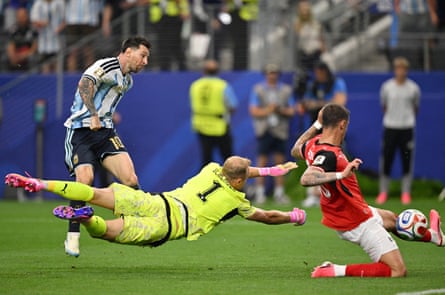
It had to be Lionel Messi, it had to be on this day and perhaps it even needed to be in Dallas too. History was made in the way he knows best, a clinical left-footed flourish setting him out on his own as the World Cup’s highest goalscorer of all time.

Another followed with the game’s final action and at this rate 18 may even seem a modest figure a month from now. Messi has already scored five goals in two games, all but guaranteeing that Argentina will win Group J. A first golden boot would not be the worst present for an icon who turns 39 on Wednesday.

The record-breaking moment was one for the ages. It came 40 years to the day since Diego Maradona felled England via infamous hand and enthralling slalom. Had there ever really been any doubt? Quite a bit, actually, in the minutes after Messi improbably missed the target with an early penalty. That, in itself, was a pinch-me moment of sorts. The real thing arrived seven minutes before half-time and perhaps it banished a few ghosts too. This is the city where, to long-festering chagrin, Maradona played his final international match – at USA 94 – before being banned for ephedrine doping.

The current vintage, playing in their natural state, were not entirely convincing against a competent Austria team who will prove a handful for anyone they may meet in the last 32. Ultimately, their defence was rarely exposed and, further upfield, they profited from the presence of genius.

This was, like most Argentina matches on this stage, an occasion awesome in scale and splendour. At least three-quarters of the stadium must have been visibly Albiceleste in persuasion, their strains echoing from the closed roof and around this stadium’s dramatic, swooping stands. It was a breathtaking noise, at once celebratory and expectant; not for the first time this summer, football had contrived to create an event that largely defied cynicism.

The sport’s modern accoutrements are, however, never far from making themselves heard. Argentina began at the kind of rattling tempo more associated with their opponents, who they pulled apart within five minutes. The referee, Amin Mohamed Omar, was unmoved when Lautaro Martínez went down in the box. The striker had been crowded out by Stefan Posch and Xaver Schlager but the video assistant referee discovered something more. Upon review Omar decided Posch had felled the striker and Messi was granted an early appointment with destiny.

What a gasp of disbelief swept the arena, then, when he fluffed it. The outcome seemed so foregone, the penalty a mere administrative procedure, that few seemed to have considered Messi might miss. But he did, and horribly, with a shot that scuffed comfortably wide of Alexander Schlager’s left post after an ill-advised short run-up.

Visibly emboldened, Austria sought to capitalise on Argentina’s bafflement before Messi, head clearing, tricked through the back line. Only a sharp stop from the Austria goalkeeper, who batted away David Alaba’s attempted interception, prevented the twinkling footwork from bearing fruit.

This had the feel of a contest now. Ralf Rangnick had demanded that Austria put in the best display of his reign and they continued pushing, Marcel Sabitzer’s half-volley demanding a block from Cristian Romero. But Messi was back in the mood, playing Enzo Fernández in with a first-time layoff and, after Alexander Schlager had blocked at the Chelsea midfielder’s feet, seeing Alaba repel his follow-up.

It turned out nobody needed to worry about Messi. The game’s tempo had dropped but there has rarely been a state of affairs he could not elevate. He could thank Thiago Almada for manoeuvring the play left to Facundo Medina and having the good grace not to attack the subsequent cutback. All that being done, Messi did the rest with a swept first-time finish past Alexander Schlager. It was a goal he has scored hundreds of times but the resonance of this one has rarely been surpassed. A roar and a punch of the air: no trademark diffidence here, because Messi knew exactly what it meant.

The rest of the first half descended into niggle, scuffle and fouls. Argentina could not care less and nor could their followers, worshipping lustily inside a Messi cathedral. But there was still work to do and Austria, bright but blunt, emerged from the interval sharply. Sabitzer failed to connect with one shooting chance and Romano Schmid reached a loose ball ahead of Emiliano Martínez only to run it out of play.

Finally they tested the Argentina goalkeeper properly when, after a crude check by Romero on Konrad Laimer, Martínez batted away Sabitzer’s free-kick. Romero, who had somehow completed almost an hour without being booked, was swiftly replaced by Nicolás Otamendi. Austria were working enough slick patterns to cause the holders concern.

Their centre-forward Michael Gregoritsch headed over shortly before the widely jeered hydration break after a bustling run from Sabitzer. But they rarely threatened again and, with the game seemingly dying, Messi set it aflame once again after his first effort had been blocked.

French towns are fining men for going topless. Quel dommage! | Emma Beddington | The Guardian

Keyword – Opinion
Trefwoorden – France, Social etiquette, Glasgow, Life and style
Title – French towns are fining men for going topless. Quel dommage! | Emma Beddington | The Guardian
Author – https://www.theguardian.com/profile/emma-beddington
Link – French towns are fining men for going topless. Quel dommage! | Emma Beddington | The Guardian
Publish date – 2026-06-22T10:00:23.000Z
Category – Opinion
URL – https://www.theguardian.com/commentisfree/2026/jun/22/french-towns-are-fining-men-for-going-topless

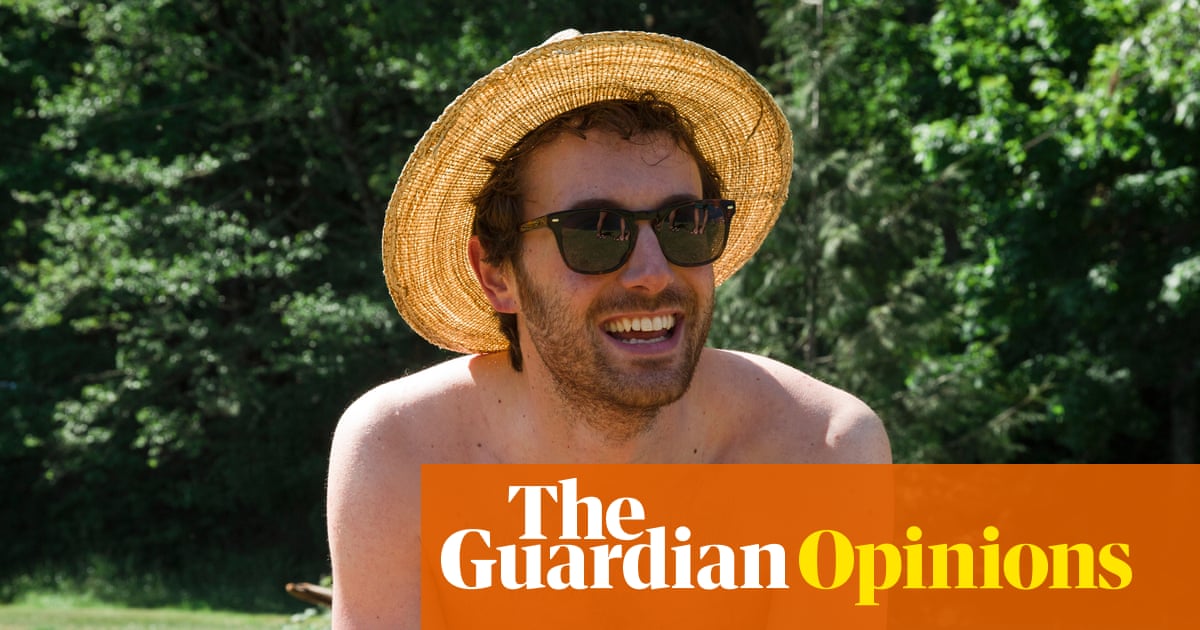
W atch out if you’re heading to France this summer: dozens of towns have started fining men for walking around with their tops off. Actually, it’s not specific to men; I just assume they’re more likely to strip off. Narbonne, near the Mediterranean coast, has joined at least 30 other municipalities in banning anyone from wandering around town bare-chested, in swimwear or even barefoot, with a €150 (£130) fine for those flashing excess flesh ( according to France Télévision , about 15 people were fined when Narbonne started enforcing its “please stay dressed” code last summer).

Could it happen in Britain? Quite apart from the police resourcing crisis , I’m struggling to imagine officers getting people to cover up in Glasgow , where stripping down at the first glimpse of the weakest rays of sunshine is a venerable civic tradition, and a public-spirited website tracks whether it’s “taps-aff” or “taps-oan” weather ( a windless, clear, 17C is the threshold for taps-aff according to site creator Colin Waddell, if you’re wondering).

And actually, I wouldn’t want them to cover up, in Glasgow or elsewhere: I look forward to the annual arrival of herds of bare-chested chaps. Like one of those Japanese micro-seasons , they’ve come to signify a particular point in early summer, coinciding roughly with the sound of swifts screaming, overpriced strawberries, excitable girls in long dresses getting their picture taken for school proms and the few hours a year I erroneously believe drinking Pimm’s is a good idea.

Then there’s the rich variety of torsos on show. It would be oppressive if going topless were the preserve of the young and buff, but there are so many ages, sizes, textures and skin tones. In an age of homogenised aesthetics, when having a Love Island-style gym physique feels mandatory, just seeing bits (not the full Monty – we’re not German) of normal bodies around the place feels like a good corrective and a sanity check.

That’s why I embrace public semi-nudity – not literally, of course, and not when the exposed bits are sunburnt, as they frequently are ( young men are less likely to use sunscreen than women ). Actually, perhaps what the police should be doing is spraying any at-risk torso with factor 50?

Emma Beddington is a Guardian columnist

Do you have an opinion on the issues raised in this article? If you would like to submit a response of up to 300 words by email to be considered for publication in our letters section, please click here

Oliver’s mum was a narcissist and his dad avoidant. His own breakup forced him to address his dysfunctional childhood | Nicholas Purcell | The Guardian

Keyword – Opinion
Trefwoorden – Family, Mental health, Relationships
Title – Oliver’s mum was a narcissist and his dad avoidant. His own breakup forced him to address his dysfunctional childhood | Nicholas Purcell | The Guardian
Author – Nicholas Purcell
Link – Oliver’s mum was a narcissist and his dad avoidant. His own breakup forced him to address his dysfunctional childhood | Nicholas Purcell | The Guardian
Publish date – 2026-06-21T15:00:35.000Z
Category – Opinion
URL – https://www.theguardian.com/commentisfree/2026/jun/22/childhood-trauma-learnt-behaviours-narcissist-mother-avoidant-father-dysfunctional-adulthood

W e inherit more than eye colour and bone structure from our parents. We inherit rules, silences, habits, beliefs. We inherit the shape of our parents’ presence or absence, the flavour of their neglect and the confusion of thinking this is love.

Every week in my therapy practice I meet people living out their inheritance, their family dysfunction: re-enacting childhoods, becoming the parents they despised, clinging to survival strategies that are slowly killing them. “I think I have a problem,” they tell me, “but I can’t see it.”

American writer David Foster Wallace summarised the problem well:

There are these two young fish swimming along and they happen to meet an older fish swimming the other way, who nods at them and says “Morning, boys. How’s the water?” And the two young fish swim on for a bit, and then eventually one of them looks over at the other and goes “What the hell is water?”

A fish doesn’t know it’s wet. A child doesn’t know her childhood is unhealthy.

While physical abuse leaves marks, covert dysfunction is absorbed as normal and most of us don’t question what feels normal. It can remain unrecognised until someone else – a spouse, a friend or a therapist – points it out. Sometimes loss, such as a divorce, is required for us to finally accept something fundamental, something we assumed was normal, needs reconsideration.

Oliver’s* father had spent the last 15 years of his life sleeping on a pullout sofa in his study. He even had a stationery cupboard converted into a wardrobe and used Post-it notes to communicate with his wife – it was a spectacular commitment to avoidance. He wasn’t the only family member to avoid Oliver’s narcissistic mother, a woman with strong but warped opinions. “Darling, you can’t date her, she works in a shop .” Oliver imitated his mother’s plummy Margaret Thatcher accent. “People like us don’t associate with people in service .” While the absurdity of that statement might be obvious, it wasn’t for young Oliver. What Oliver heard was that his family was special; what he didn’t hear was the silent second part: “ … and therefore alone, and therefore unable to seek help because needing help means you’re not special.” This is what I mean about water. You can be drowning and not realise it.

Despite rejecting his mother and idealising his absent father, Oliver had taken on features of both. He was highly avoidant in relationships and chased sexual conquests with the same desperate energy his mother pursued social status. Raised by a mother with a disordered personality, it was inevitable he would absorb narcissistic traits. When a family member urged him to try therapy, Oliver cut contact. When his long-term partner finally left (“You’re exactly like her, you know that?”), Oliver spiralled into depression. That’s when he found his way to therapy.

He was enraged at his partner: “I’m nothing like my mother! Who does she think she is!” I challenged that statement; Oliver couldn’t see he had partly absorbed what he hated. I asked him – quietly, carefully – why he thought different people kept making the same connection. He defended and justified himself and looked angry but eventually we sat in silence for a long time. “But I … ” he started and couldn’t finish. The air went out of him. Oliver glimpsed himself, finally, and it nearly broke him.

The dysfunctional things that happened are easier to see. What’s harder to grasp are the things that didn’t happen – emotional safety, stability, nurturing. I asked another client, Kate*, how she survived 25 years in a marriage where she felt completely alone. The answer was in her childhood bedroom. She had spent her early years alone in her bedroom silently eating toast she had made herself. At age six she was making and packing her own school lunches. By seven she was taking her younger sister to school on public transport. She learned early to never ask for help. For Kate, neglect was normal . Kate swam in loneliness.

While seeing the water is hard, getting out is harder. Kate, now a nurse – perhaps inevitably – took a long time to open up. She understood intellectually the connection between her lonely childhood and lonely marriage, but admitted feeling deeply uncomfortable being vulnerable. I tried to slow the pacing within our sessions, but even that felt like too much. In our last session, Kate sat with her arms wrapped around a cushion, looking at the carpet. We’d been talking about what it might mean to leave her marriage. What it would require of her. To believe she deserved something.

“I’ll think about it,” she said. We scheduled another appointment, but I felt the particular unease I feel when I sense a client isn’t coming back. Maybe it was the way she wouldn’t quite meet my eyes, or a slight pitch change. I hoped she would, but I understand why some don’t. Some see the water but choose to stay submerged. The alternative – opening yourself up when you’ve spent a lifetime closed – means feeling everything, all at once. For some people, that doesn’t seem survivable.

What haunts me is not so much the patients sitting in my office, it’s those who never arrive. How many people are losing decades – entire lives – in water they can’t see? And even when they do see the water, sometimes, like Kate, that isn’t enough. Not every adult escapes their childhood. Some do – slowly, painfully, one breath at a time – but for many, the water is just too deep.

Oliver comes to me on Thursdays. The work of learning a new way of being – one without his mother’s narcissism or his father’s avoidance – is ongoing. Sometimes I see his mother’s snarl superimposed on his face, then his father’s silence dominates, and then there’s this other thing: Oliver showing up, catching himself. I don’t know who will win. Learning what a healthy relationship feels like takes time, but now, at least, Oliver knows what water is.

Kate stayed in the water. Oliver is trying to surface. I don’t know which takes more courage: the staying or the struggling. Maybe they’re the same courage, just differently expressed. Maybe we’re all just doing the best we can with the inheritance we got.

*All clients are fictional amalgams

In Australia, support is available at Beyond Blue on 1300 22 4636, Lifeline on 13 11 14, and at MensLine on 1300 789 978. In the UK, the charity Mind is available on 0300 123 3393 and Childline on 0800 1111. In the US, call or text Mental Health America at 988 or chat 988lifeline.org

Nicholas Purcell is a relationship psychotherapist based in Adelaide. He is writing Raising Love, on why our theory of love is broken – and what an active one looks like

Mount Everest, a climber known only as ‘Green Boots’, and the mission to solve a 30-year mystery | Mount Everest | The Guardian

Keyword – World news
Trefwoorden – Mount Everest, India, Nepal, Mountaineering, Mountains
Title – Mount Everest, a climber known only as ‘Green Boots’, and the mission to solve a 30-year mystery | Mount Everest | The Guardian
Author – https://www.theguardian.com/profile/mark-saunokonoko
Link – Mount Everest, a climber known only as ‘Green Boots’, and the mission to solve a 30-year mystery | Mount Everest | The Guardian
Publish date – 2026-06-22T03:25:08.000Z
Category – News
URL – https://www.theguardian.com/world/2026/jun/22/mt-everest-green-boots-man-cave-climber-identity

Thirty years after he perished in a small limestone cave near the top of Mount Everest , the body of the climber known only as “Green Boots” may finally be heading home.

If successful, the mission into Everest’s notorious “death zone” will also lay to rest any doubts about the identity of Green Boots.

Since 1996, it was often reported – but never confirmed – that the climber was Tsewang Paljor, an Indian climber killed on Everest during a severe blizzard .

But now that has been called into question. Indian authorities recently released a plan to retrieve Green Boots that contains information about the identity of climber – and also sets up an incredibly difficult recovery process.

The plan identifies Green Boots as Dorje Morup – not Paljor. Both Indian climbers died near the summit on the same day.

“That’s kind of a mystery to me, why all of a sudden the identity has changed,” says Alan Arnette, US mountaineer and prominent Everest blogger. “I’m glad that they’re bringing him down [but] it’s going to be a gruesome task.”

For decades, Green Boots has been stitched into Everest lore.

Named after his lime-coloured Koflach boots, Green Boots became a landmark for climbers tackling the tricky north-east ridge route, accessed from the Tibet and China side of the world’s tallest mountain.

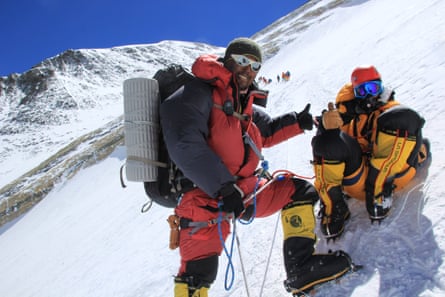
Curled up as if napping, Green Boots is fully clothed and lies nestled under a small rocky alcove about 8,500 metres above sea level and just 350 metres from the summit. A red fleece is pulled up over his face; perhaps a final act as he succumbed to -30C temperatures and hurricane-force winds in a storm that was documented in Jon Krakauer’s bestselling book Into Thin Air.

Since 1996, climbers have used Green Boots as a macabre marker of their progress and timing up Everest’s 8,848 metres. Many radio back to base camp, informing support teams they have reached Green Boots. Others rest or seek shelter alongside the body.

In 2006, on his first summit from the north side, Tshiring Jangbu Sherpa encountered Green Boots as he sought shelter from strong winds under the rocky outcrop. A light dusting of snow had mostly covered Green Boots, he tells the Guardian. “When I touch[ed] him, I clear[ed] the snow a little bit. Then I totally saw Green Boots lying down under that snow.”

About 200 bodies remain on Everest. Grieving families make hopeful inquiries, but taking dead climbers down is often too hard or expensive, and helicopters cannot safely fly at such extreme altitudes.

Use the slider below to show a picture of the body of the climber known as Green Boots where it lies on Mount Everest. Some readers may find the image distressing:

A gruelling task

India’s plan to bring Green Boots home is contained in a tender document, seen by the Guardian, asking companies to bid for the mission. The specialist team must have at least six Sherpas who have summited Everest multiple times. They must provide evidence of the mission, and transport the body to Delhi by October.

The document explicitly names Morup as the climber called Green Boots. The identification of Morup “has been confirmed through a prior verification process conducted under an earlier tender/technical assessment”, the document states, without providing further detail. The tender does not state why authorities want Green Boots brought down.

In 1996, Morup and Paljor were part of an Indo-Tibetan Border Police (ITBP) expedition attempting a historic first Indian ascent of Everest from the north side. Both men pushed for the summit on the same day, along with a third member of the team. None made it down.

Tshiring Jangbu, the founder of Everest Sherpa Expedition, has been involved in numerous body recovery efforts. He says retrieving Green Boots will be arduous and dangerous, even for an experienced Sherpa team. With only a third of the oxygen available at sea level, activity above 8,000 metres requires huge effort and decision-making can become more difficult.

An iced-up body in climbing gear can weigh up to 200kg, Tshiring Jangbu says. And limbs frozen solid at awkward angles make dragging or lowering the corpse down rocky and icy terrain exhausting and treacherous work. Sometimes, he concedes, they must amputate a limb that “we cannot bend” – a gut-wrenching act, “but there is no choice to do another way”.

Such work takes a toll on the Sherpa, who are predominantly Buddhist, Arnette says. “They don’t believe in desecrating bodies, they really don’t even believe in touching bodies.” He believes a team would seek about $150,000 to carry out the expedition.

Nepal-based Makalu Adventure says monsoon weather conditions , with its heavier snowfall, will complicate a recovery between June and October, the timeframe stipulated in the tender. It estimates the mission, from start to finish, could take 40 days.

Guy Cotter is a New Zealand climber whose company Adventure Consultants operates expeditions in the Himalayas. In 1997, Cotter coordinated the retrieval from Everest of a climber who died the same year as Morup and Paljor.

“It would have been a good thing to have done a long time before now,” says Cotter, of the attempt to bring down Green Boots.

“For families to have a body returned from the mountain brings closure, as long as it’s not putting other people at undue risk,” Cotter says. “There have been situations with body recoveries where more people have died. It’s a very thin line.”

A family wanting the body can complicate matters, Arnette says, because many experienced climbers wish to be left on the mountain if they die on a climb, but to be moved out of sight.

In the past 10 years unconfirmed rumours suggest the body of Green Boots has been moved or buried. But Arnette says he has heard from climbers who insist Green Boots remains in the cave, “right where he’s always been”.

Tell us: how is the heatwave in the UK and across Europe affecting you? | Extreme heat | The Guardian

Keyword – Environment
Trefwoorden – Extreme heat, Europe
Title – Tell us: how is the heatwave in the UK and across Europe affecting you? | Extreme heat | The Guardian
Author – https://www.theguardian.com/profile/guardian-community-team
Link – Tell us: how is the heatwave in the UK and across Europe affecting you? | Extreme heat | The Guardian
Publish date – 2026-06-22T11:27:59.000Z
Category – News
URL – https://www.theguardian.com/environment/2026/jun/22/tell-us-how-is-the-heatwave-in-europe-affecting-you

Temperatures are soaring across Europe, with forecasters warning that June heat records could be broken this week. Temperatures are set to reach 44C in some areas and authorities warning of risks to health, travel and public services.

How are you coping with the extreme heat? Has it affected your work, health, travel plans or daily routine? Are you taking any special precautions for children, older relatives, pets or vulnerable people?

‘They kill games, we fight back’: the activists campaigning to keep video games playable | Online multiplayer games | The Guardian

Keyword – Games
Trefwoorden – Online multiplayer games, Games, Culture, Consumer rights
Title – ‘They kill games, we fight back’: the activists campaigning to keep video games playable | Online multiplayer games | The Guardian
Author – Nicole Carpenter
Link – ‘They kill games, we fight back’: the activists campaigning to keep video games playable | Online multiplayer games | The Guardian
Publish date – 2026-06-19T09:00:27.000Z
Category – Culture
URL – https://www.theguardian.com/games/2026/jun/19/stop-killing-games-activists-campaigning-online-gaming

Y ou can never be sure how long an online video game will last. Developer BioWare shut off sci-fi shooter Anthem’s servers in January, after seven years. Electronic Arts discontinued access to The Sims Mobile the same month. Wildlight Entertainment shuttered its Highguard servers in March, mere months after the game’s release. Activision Blizzard took Call of Duty: Warzone Mobile offline in April. Dozens more games have had their servers shut down in the first six months of 2026, adding to an already long list of video games that are no longer playable.

There is little that players can do when a company decides to stop supporting online play. Communities work hard to keep their favourite games online, sometimes keeping dead games running on private servers , though that may not necessarily be entirely legal. Generally, though, when a game goes offline it is dead and it’s not coming back.

But there’s a movement lobbying to stop this practice. Stop Killing Games was set up in 2024 by YouTuber Ross Scott, after Ubisoft announced it was shutting down its online-only racing game The Crew . Something about that particular instance of game-death seemed to particularly rile people: two gamers filed a lawsuit accusing Ubisoft of fraud over it.

In the simplest terms, Stop Killing Games wants governments to introduce legal protections to prevent publishers shutting down video games, and advocates for “end-of-life plans” to keep them playable. Stop Killing Games’ director of US operations Jonah Goldman posits an example: if you play Call of Duty, you have the option to play multiplayer matches both online or through your own home network. If publisher Activision were to shut down the Call of Duty servers, Stop Killing Games suggests the company should allow players to buy and operate their own private online servers.

The movement has grown quickly, and Stop Killing Games has evolved into a non-governmental organisation in the US and Europe. The group has pursued “multiple legal and legislative avenues”, according to its website: a European Citizens’ Initiative petition, a lawsuit filed in conjunction with a French consumer advocacy group over Ubisoft’s The Crew, and a successful petition to get the issue debated in the UK parliament. As a result, Ubisoft CEO Yves Guillemot met with European Commissioners and the trade organisation Video Games Europe on 3 June to discuss digital policy. And on 9 June, 45 members of the European parliament sent a letter urging the commission president Ursula von der Leyen, executive vice-president Henna Virkkunen, and commissioner for consumer protection Michael McGrath to commit to legislative action.

The European Commission responded this week that “it cannot propose a legal obligation to keep video games playable after they stop being provided commercially” because of European copyright and intellectual property laws. But it stated it will work with publishers to create a “code of conduct on managing video games’ ‘end of life.’”

This is a better response than expected. In an interview with the Guardian before the decision, Stop Killing Games’ strategy lead Moritz Katzner said that it had expected the Commission to simply do nothing. Instead, the group will lobby for inclusion in a forthcoming piece of legislation aiming to regulate manipulative practices online. “The Digital Fairness Act, which is a law package coming in front of the European parliament this summer, is perfect for us,” says Moritz. “We have committed promises, public commitment, that they’re going to put [our proposals] in there.”

In the US, meanwhile, Stop Killing Games helped the Protect Our Games act pass California’s Assembly vote in June; now it will head to the California senate for a second vote. If it becomes law, this bill will require publishers to give advance notice before taking a game offline, and mandate a way for players to keep accessing the game. It would apply only to purchased games – not free-to-play titles – released after January 2027.

“A constituent in my district brought this issue to my attention, highlighting a concerning gap in consumer protection for live service games,” assembly member Chris Ward told the Guardian in an emailed statement. “As technologies and markets evolve, our laws must keep pace, in this case to ensure that Californians can make use of the games they pay for.”

Goldman says the quick progress on the bill was “slightly unexpected, but very exciting.” He is optimistic about the bill’s chances of getting through the state senate. But whether it passes or fails, he expects more states to get involved. “There’s a lot of opportunity here for a lot of different states, especially those who have members who are focused on and care about consumer rights and consumer protections,” he says.

Stop Killing Games’ advancements have encouraged other states. Legislation such as that proposed in California is a major boon for the movement. That bill’s impact could be felt across the US; a California bill about transparency of digital licensing is the reason why every player purchasing a game on Steam now sees a disclosure right below the payment button: “A purchase of a digital product grants a licence for the product on Steam.”

The bill has met opposition from the Entertainment Software Association, a US-based trade organisation for the video games industry. In a press release in June, its president Stan Pierre-Louis wrote: “Behind every online game is an enormous, invisible infrastructure … When a game’s popularity fades, that infrastructure continues to run, for a fraction of the audience, at nearly the same cost.

“A legal requirement to keep games playable indefinitely will put game publishers in an impossible situation … This proposal essentially keeps games alive long after their natural lifecycle, draining resources and energy from creating what comes next.” Pierre-Louis posited that companies will make fewer games if they become “permanent obligation[s].”

Game companies’ resistance to Stop Killing Games policies is a “pure business decision,” says Katzner. “They’re concerned that … people still playing their existing games aren’t going to buy a new one,” he said. “That’s the simple thought chain here. But if you buy a new car, your old provider doesn’t come and destroy the old one.”

The aftershocks of Brexit’s failure could be gaining strength – a fearful prospect for Ireland | Fintan O’Toole | The Guardian

Keyword – Opinion
Trefwoorden – Brexit, Ireland, Europe, European Union, Politics, UK news, World news, Foreign policy
Title – The aftershocks of Brexit’s failure could be gaining strength – a fearful prospect for Ireland | Fintan O’Toole | The Guardian
Author – https://www.theguardian.com/profile/fintan-o-toole
Link – The aftershocks of Brexit’s failure could be gaining strength – a fearful prospect for Ireland | Fintan O’Toole | The Guardian
Publish date – 2026-06-22T04:00:51.000Z
Category – Opinion
URL – https://www.theguardian.com/commentisfree/2026/jun/22/aftershocks-brexit-failure-fearful-prospect-ireland

F or Brexit’s true believers, Ireland will always be the spoke in the wheel that set everything off course, the green tarnish that took the shine off the golden age. Without the vengeful and malicious obstructionism of the Irish, all the promises of freedom and prosperity would have been fulfilled.

To understand how nonsensical this is, it is necessary to go back five years before the referendum of 2016. Back, that is, to the sense of an ending. In May 2011, Queen Elizabeth made a four-day state visit to Ireland. This should not have been remarkable – the heads of state of neighbouring countries visit each other all the time. But no reigning British monarch had set foot in what is now the Republic for almost exactly a century .

The weight of too much history pressed on these formalities – too much condescension, too much resentment, too many raw nerves. But the queen’s visit, when it finally came, was an exquisitely choreographed exercise in statecraft. It was obvious that the British state had thought very deeply about how it would make clear that Ireland and the UK now related to each other as equals.

For many of us in Ireland, this felt like an exorcism. The ghosts of a colonial past were banished and with them went the demons of Anglophobia. The ordinary experiences of adjacent islands whose people’s lives are deeply entwined through family and friendship, through culture and commerce, could now be the political realities too.

This moment didn’t come from nowhere. Two big things had made it possible. One was the extremely close cooperation between the two states in the Northern Ireland peace process. Dublin and London had understood that the Troubles could be ended only if they worked together as inseparable partners. They had to learn to speak with one voice.

The other was the European Union . Its peculiar nature is that it gives small nations most of the same rights as big ones. Over nearly half a century, Irish and British officials discovered how to work together to advance their countries’ mutual interests. They were not merely sitting at the same tables – they were often arguing for the same things.

The shock of Brexit for most Irish people wasn’t so much the event itself. We know too much about the distorting logic of certain kinds of nationalism on our own island to feel superior to anyone else who is in the throes of such passions. We also know that deciding to leave a larger union (which is what most of Ireland did a century ago, after all) is not a simple calculation of economic losses and gains – emotional satisfaction and collective pride matter, too.

The shock came, rather, from the sheer recklessness of the Brexiters. It was obvious in the referendum debates: any time Northern Ireland came up (which was rarely enough) they simply changed the subject. The Irish question wasn’t even a question. It was at best an afterthought, to be settled after the fabulous UK-EU trade deal (“the easiest in human history ”, according to Liam Fox) had been wrapped up.

David Davis’s assertion that there was “no downside to Brexit at all, and considerable upsides” was, from an Irish perspective, terrifying – not because he was lying but because he actually believed it to be true. Such confidence was possible only if it was rooted in blithe ignorance.

Only those who knew nothing of Ireland (or of the great success of British-Irish cooperation over many decades) could believe that turning the meandering, uncontrollable Irish border into one of the EU’s main external frontiers had no downside. Only those who had no sense of the human price that had been paid to get to a point where the people of Northern Ireland believed that they would be left in peace to decide their own destiny could think it was fine to drag them out of the EU against their will.

The Irish state thus had little choice but to enter damage limitation mode. Strikingly, the Irish government and diplomatic service prepared for Brexit far more thoroughly than their British counterparts did. They got in ahead of the referendum to convince all the other EU members that avoiding the reimposition of a hard border must be a precondition for any exit agreement.

Hence, of course, the tortuous (and tedious) crisis over the backstop and the eventual concession that Northern Ireland would remain, in effect, in the customs union and the single market and that the border would be in the Irish Sea.

This was a dreadful outcome for unionism – and in the tribal mentality of the zero-sum game that had to mean that Irish nationalism won. There is, it must be admitted, a limited sense in which Ireland did win. For the first time ever, it was (because of the solidarity of all the EU member states) in a stronger position than Britain in a crucial tussle.

But in truth nobody won anything. Damage limitation is not victory. Ireland managed to make the best of a bad job. Yet very few people on the island were unaware of what had been lost – the trust that had been built over decades, the deep sense of common purpose, above all that feeling in 2011 that a lot of bad history was now properly acknowledged and therefore capable of being transcended.

In fairness to Keir Starmer (not a phrase much used in Britain now) the departing prime minister’s government has done a great deal to rebuild trust. The dominant feeling about Brexit in Ireland is, I think, not anger but sadness. There is no pleasure in being proved right about the economic stasis and political instability it created. If Britain wants to move back into a closer relationship with the EU, Ireland will be there to help in every possible way.

But there is the fear in Ireland that one of the delayed consequences of Brexit could be Nigel Farage in Downing Street. It feels from our side of the Irish Sea like the aftershocks of Brexit – and of its comprehensive failure – may be not diminishing but strengthening. Having seen what a reactionary British government can do to the delicate fabric of our relationships, we cannot be complacent about that prospect.

Fintan O’Toole is a columnist with the Irish Times and the author of Heroic Failure: Brexit and the politics of pain