How do snails make their shells and which animal is fiercest? The kids’ quiz

Family
How do snails make their shells and which animal is fiercest? The kids’ quiz
Molly Oldfield
Sat 23 May 2026 08.00 CEST
News
https://www.theguardian.com/lifeandstyle/2026/may/23/how-do-snails-make-their-shells-and-which-animal-is-fiercest-the-kids-quiz

Molly Oldfield hosts Everything Under the Sun , a podcast answering children’s questions. Do check out her books, Everything Under the Sun and Everything Under the Sun: Quiz Book , as well as her new title, Everything Under the Sun: All Around the World .

Premier League 2025-26 fans’ verdicts: stars, flops, and funniest moments

Premier League
Premier League 2025-26 fans’ verdicts: stars, flops, and funniest moments
Guardian sport
Sat 23 May 2026 09.00 CESTLast modified on Sat 23 May 2026 19.21 CEST
News
https://www.theguardian.com/football/2026/may/23/premier-league-2025-26-fans-verdicts-stars-flops-and-funniest-moments

Arsenal

In this age of the managerial revolving door, I’m enormously proud that the Premier League champions (man, does that sound sweet!) stand as the antithesis to that. Admittedly, “trusting the process” aged a lot of us massively, but the agony of the past three campaigns evaporated with the final whistle at the Vitality. Sure, it would’ve been great to have enjoyed the sort of free-flowing football that the Cherries produced, but you won’t find a Gooner anywhere who gives a monkey’s how Mikel got us over the line. 19 great clean sheets. In the words of Fergie, attack wins games, but defence wins titles. Season rating: 10/10

Stars/flops Raya, Gabriel, Saliba and Rice were so consistent. But Martinelli managed only one league goal, Madueke lacked composure in front of goal and, while Eze’s one-man demolition of Spurs guarantees him cult status, he’s often struggled to influence proceedings.

What we need in the summer To shed some of the deadwood (Nørgaard, Vieira), and add dynamism to our attack (Barcola, Gibbs-White, Anderson, Tonali?)

Best/worst away fans Atlético Madrid’s staunch support in the face of defeat was impressive. Spurs fans are always worst.

Moment that made me smile The exposure of Hincapié’s backside against Burnley. But the biggest ear-to-ear grin came from the unbridled joy of Tuesday night’s celebrations in the streets around my Highbury home. And I’m hoping there’s more to come. My first question to the oncologist when I was diagnosed with cancer in 2013 was whether I’d live long enough to witness Arsenal winning the Champions League. Her response might have been: “Will any of us?” but having schlepped the length and breadth of Europe these past 30-odd years in search of that elusive trophy and, having felt like we were robbed by Barça in Paris in 2006 , if we can triumph against PSG in Budapest then I’ll be able to shuffle off this mortal coil a contented man!

Bernard Azulay onlinegooner.com ; @GoonerN5

Aston Villa

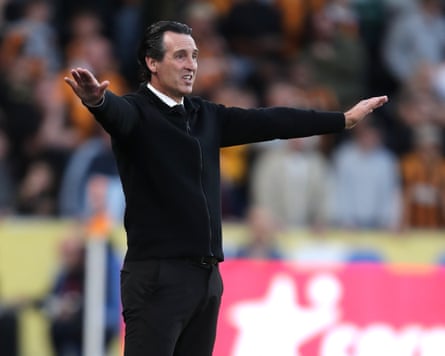
Well, it’s not been plain sailing, but there have been so many brilliant highs this year culminating in a joyous party in Istanbul this week . “In Unai we trust” has been a crucial underpin to certain months in which we looked a moderate side, but Emery’s ability to get us to perform when it matters is becoming legendary. As has this team, this connection of seemingly really good blokes who love the club and have a great relationship with the fans. They have grown into senior pros together and, while fresh blood will be required, let’s focus on them: it’s been a great year and we really should smile and enjoy it. Villa fans, go and buy a shirt with your favourite’s name on, it’ll never go out of fashion. 9/10

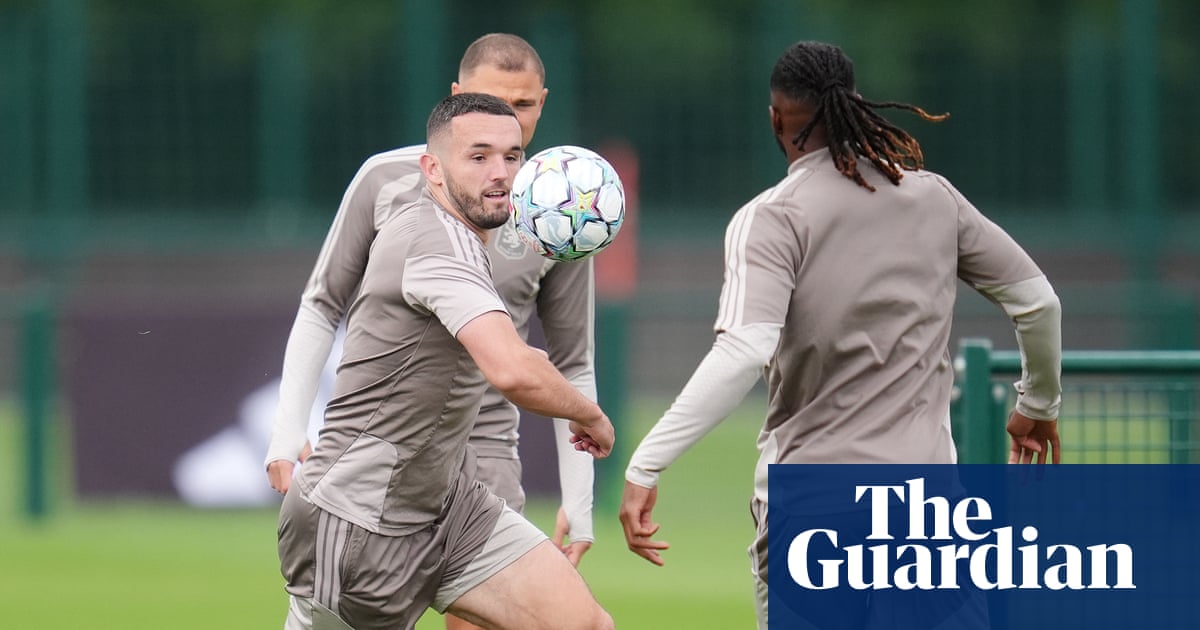
Stars/flops McGinn is the sort of bloke you want to be your son’s best mate, your golfing partner and your club’s captain. His leadership and game management is genuinely remarkable and his finishing, ball control and general contribution have improved every year when the sports scientists would predict decline. What a player. The list of “big ups” is too long but Konsa has also become tattoo material for Villa fans.

What we need in the summer I don’t want to identify weaknesses in a team that have just given us everything, so I’ll just ask for a player in each zone, to match the obvious outgoings.

Best/worst away fans Liverpool and the absent Maccabi Tel Aviv fans matched each other for noise generated. Young Boys were wild, Sunderland good limbs.

Moment that made me smile They had the last laugh, but Buendía’s winner with the final kick against Arsenal and their subsequent pitch-pounding takes some beating.

Jonathan Pritchard

Bournemouth

Astonishing. Magnificent. Historic. Like no other season ever. We will be playing in Europe for the first time next season: a massive, monumental achievement for our club. Undefeated now for 17 games, we’ve beaten Arsenal at the Emirates (again), dominated City to kill off their title hopes and gone out in every game to play a brand of football that is energetic, exciting and fearless. All this after our defence was picked apart last summer, and our best forward departed in January. Andoni Iraola is a much-loved genius who will be sorely missed – but what a legacy he leaves Marco Rose. And what foundations Bill Foley, the staff and the players have built. We’re so looking forward to the next chapter. Others may call us tinpot. But we are proud. We are the mighty Cherries and we’re in Europe! 10/10

Stars/flops Alex Scott has been superb, he can do it all. Junior Kroupi and Rayan have been spectacular. Truffert is an unbelievable upgrade at left-back. Senesi has been sensational. Tavernier, Adam Smith, Tyler Adams, Petrovic all excellent. My top choice, though, would be James Hill, a £1m signing from Fleetwood in 2022. He replaced Diakité in December and has proven himself the best English centre-half in the country.

What we need in the summer Squad strengthening and better contracts for the stars: critical so we can keep hold of them for as long as possible. We must also replace Senesi, no easy task.

Best/worst away fans Best fans, probably, Leeds. They never shut up. Worst fan Noel Gallagher. Leaving 10 minutes before the end. With the title on the line . Embarrassing, some might say.

Moment that made me smile The final whistle against Man City. Tears of joy. We’re all going on a European tour!

Jeff Hayward Back of the Net, the AFC Bournemouth Fan’s Podcast .

Brentford

What a season. When Thomas Frank left and rookie Keith Andrews stepped up, plenty of people wrote Brentford off. I felt positive about the change but still only tipped us for 14th. So to be in the mix for Europe now is a huge achievement. There were a few disappointments along the way: the League Cup defeat to City, and losing to West Ham after that awful Panenka penalty was painful. But overall, 8.5/10.

Stars/flops Igor Thiago starred, scoring 22 league goals in his first full campaign, with the fans belting out “Thiago” to the tune of Spandau Ballet’s “Gold” – an instant cult hero. I’m off to the USA for the World Cup with England this summer and after his call-up to the Brazil team I fully intend to wear my newly designed Beesotted Thiago Brentford T-shirt while mixing with my Brazilian mates. Michael Kayode was also superb: there’s way more to him than long throws. If there’s one player who has frustrated at times, it’s Kevin Schade. The raw attributes are all there – blistering pace, power and the ability to completely change a game – but his form has been inconsistent.

What we need in the summer If we want to compete for Europe again – or, if results go our way, avoid being derailed by the demands of European football – the squad needs more finished-product players. Depth is vital. And so is replacing Wissa. We didn’t have time to do it this season because of how he and Newcastle engineered his move ; if we had, we could have been pushing for the Champions League.

Best/worst away fans Wolves fans were remarkably up for it on a cold Tuesday night in west London. Honourable mention to the 30 PSG fans over from Paris who didn’t stop singing for the whole 90 minutes in a recent B-Team friendly. Worst – I always say Fulham but this time I’ll give it to Spurs. We barely heard a peep from them all game in a pretty dreadful 0-0 draw.

Moment that made me smile Seeing Igor Thiago’s family react to his first Brazil call-up. As soon as his name was announced, the whole room just erupted. A brilliant reminder of just how much football still means to people.

Billy Grant Beesotted podcast and blog; @Beesotted ; @BillyTheBee99

Brighton

Forget the strange case of Dr Jekyll & Mr Hyde. This was the strange season of Brighton & Hove Albion. Fifth at the end of November. One win in 13 matches over December, January and February with football so atrocious 80% of fans voted Fabian Hürzeler out in an online poll. And yet Brighton go into the final day on the verge of qualifying for Europe. That was the club’s publicly stated aim at the start. Hürzeler is therefore close to delivering on expectations. He has just taken a roundabout route to get there. As for a rating? 5/10 for the start. 1/10 for the winter. 9/10 for the finish. 8/10 overall.

Stars/flops Ferdi Kadioglu has been a revelation. Not as flamboyant as Marc Cucurella or Pervis Estupiñán and therefore goes under the radar – but he is every bit as good as his left-back predecessors. Carlos Baleba has been a disappointment. So much talent. So good last season. He just hasn’t looked the same player since interest from Manchester United .

What we need in the summer For all the praise the Albion get for recruitment, Hürzeler has been working with a seriously unbalanced squad. Four quality centre-backs and an abundance of midfielders, but no real full-back cover. A lack of natural width beyond Kaoru Mitoma and Yankuba Minteh. And Danny Welbeck as the only No 9 option who isn’t a Greek teenager. Any signings must better suit Hürzeler’s 4-2-3-1.

Best/worst away fans Sunderland came down in their numbers five days before Christmas. Chelsea were the worst. They all abandoned ship long before the final whistle. Although it must be tough watching your team lose 3-0 to their superior parent club.

Moment that made me smile David Raya landing on his right shoulder when Arsenal won at the Amex before writhing around and receiving five minutes treatment on his left shoulder. Superb. Don’t give up the day job in pursuit of a role on EastEnders anytime soon, David.

Scott McCarthy WeAreBrighton.com , @wearebrighton

Burnley

I was pretty convinced and bullish before the season began; seeing us win so few points and get relegated isn’t what I expected. We’ve only been really poor in probably a handful of games but those have been the games we should have been getting something from. Scott Parker was allowed to carry on for too long and should have been potted back in November. 3/10

Stars/flops It’s difficult to pick any standouts but I’d probably say Zian Flemming. He’s somehow managed to score 10 Premier League goals despite missing a few games and feeding on scraps. In terms of flops, take your pick but probably Kyle Walker from an “expected more” POV. He started well enough but has been so poor at times.

What we need in the summer A new manager for a start, someone who can bring an identity. And then probably an overhaul of the recruitment department. Our business has been all over the place and it’s clearly not working.

Best/worst away fans There’s been a few contenders for best away fans – Sunderland and Villa were decent and the West Ham fans were loud with their anti-board songs. Worst, probably Leeds United . A lot is made about how much noise they make at Elland Road but they were pretty quiet at the Turf.

Moment that made me smile Sean Dyche’s sudden love of social media is probably up there. Going from a man who didn’t want his players on Instagram to doing naff videos on the same platform is an about-turn no one expected. But I guess he’s got to fund those gig tickets somehow!

Andrew Greaves From the Bee Hole End podcast, @beeholepodcast , @andrewgreaves84

Chelsea

What an end to the season. It’s been disastrous, shambolic, embarrassingly weak, losing two managers, with fans demonstrating against the owners and a run of form that would have put us in relegation trouble had the season gone on longer. The only upside is that either Spurs or West Ham will be relegated. The Cup final was a bonus, at least, and we were unlucky to lose against City, even though no one was surprised we did. Alonso has a tough job picking this team up. 4/10

Stars/flops João Pedro was the most consistent player, growing into his role and rightly getting the fans’ player of the season award. Enzo and Reece James also had very good seasons. Our defence has collectively flopped with so many poor decisions, mistakes and weak goals conceded. Delap has never got going, and neither did Gittens before his injury ended his season.

What we need in the summer Once again we are in the same position as the last four or five seasons: struggling in key areas. We desperately need an experienced quality centre-back, a top goalkeeper and another top striker. We’re crying out for some experience and leadership.

Best/worst away fans Port Vale fans were the best – always good to see a full away allocation in the FA Cup. And Arsenal were by far the worst: smug, arrogant scarf-twirlers among a sea of YouTubers.

Moment that made me smile The look on Cole Palmer’s face as he put his arm round referee Paul Tierney during the infamous huddle. One of the most bizarre moments of the season.

Paul Baker in memory of Trizia Fiorellino

Crystal Palace

10/10 if we win the Conference League. 7/10 if not. It’s been a rollercoaster, from the heights of the top five at the beginning of December and in the League Cup quarters to the despair of crashing out as FA Cup holders at Macclesfield, a manager having a public meltdown over his squad and his future , and iconic players Eze and Guéhi departing. And now we’re 90 minutes away from our first European trophy. What a ride!

Stars/flops It is impossible to look past Ismaïla Sarr as player of the season, 21 goals and counting. Adam Wharton continues to show why he should be a starter for England – scandalous that he was left out – and Tyrick Mitchell’s consistency week in, week out merited a place in that squad, too. Maxence Lacroix’s France squad inclusion is well deserved. Jaydee Canvot at just 19 has grown immeasurably since Marc Guéhi’s departure. On the flip side, Brennan Johnson has struggled for confidence and Yeremy Pino has yet to really reflect his European performances in the league.

What we need in the summer A full campaign in Europe made it clear that it is incredibly difficult to be competitive in the league with lack of squad depth. If we make it to the Europa League then major investment will be needed, led by whoever the new manager is going to be. An additional central defender, central midfielder, and striker if Mateta leaves will be the bare minimum.

Best/worst away fans Leeds were loud, and Shakhtar were great under the lights. Burnley less so for a midweek match, but they had the last laugh, scoring three in eight minutes to win …

Moment that made me smile Palace Women bounced back to the WSL at the first time of asking with a 6-1 thrashing of Portsmouth on the last day to pip Charlton Women to promotion. The under-18s hugely impressed, reaching the FA Youth Cup semi-finals for the first time in 30 years and winning the Premier League Cup. But the biggest smile of all has been the European adventure – friends and memories made for life!

Chris Waters @Clapham_Grand

Everton

The overwhelming emotion is frustration and almost groundhog day. I’ve been a huge admirer of David Moyes and how he’s stabilised us, but he’s not delivered when the opportunity for Europe presented itself. Much of our football has been slow and passive. We look less fit than most teams. There’s a feeling we’re no longer competitive in many aspects of the modern game, from coaching and recruitment to sports science, tactics and mentality. Modern football has changed, we haven’t. 5/10

Stars/flops Ndiaye, even though form dropped in the final weeks, stood out: only one of three players to score two goals with both left and right feet. Some incredible goals, too. Dewsbury-Hall provided intelligence and was a class above most. Pickford retains his England No 1 position and James Garner should have beem on the plane. As for flops: Dibling (though he hasn’t been given a fair chance) and McNeil: infuriating in the latter half of the season.

What we need in the summer Two full-backs and, as Branthwaite is still injury-prone, another central defender. More quality up front too. Beto, bless him, tries his heart out but we need more quality. The bigger question is whether we can find a more progressive manager than Moyes, who, despite the stability he provides, seems increasingly left behind in the modern game.

Best/worst away fans? Sunderland were best: there’s a great affinity between both clubs. The worst? Our neighbours, unsavoury scenes, totally unnecessary.

Moment that made me smile November’s Gueye/Keane slap at Old Trafford was the undisputedly most surreal and bizarre moment of Everton’s season. Other entertaining moments: our first victory at Old Trafford in 12 years, the 3-0 home victory versus Chelsea proving we could take the Goodison atmosphere to Hill Dickinson, and special mention for the Everton away support. We sell out every single game (and see the best of our performances).

Paul Quinn @theesk , theesk.org

Fulham

Well below par. “We can still make the playoff” used to be the perennial cry, whatever our league position. At least that’s been superseded by “We can still make Europe”. But that one’s been put to bed for another year. Let’s be clear: Marco Silva has raised the bar at Fulham. Last season’ exploits brought a record top-flight points haul, despite the habitual tail-off. We belonged, and deservedly pushed for the upper echelons. Based on that, and the less-than-stellar state of this season’s Premier League, we’ve dipped this time around. We’ve been consistently inconsistent, wildly so, even during the same game. 6.5/10

Stars/flops No one really got into their stride as enforced team changes (due to injuries, suspensions and Afcon etc) made for a disjointed campaign. Wilson enjoyed many magic moments, of course, and Sessegnon continued to blossom. Bassey gave his all, as usual, while his central defensive partner Andersen blew hot and cold. Robinson and Muniz failed to shine post-injury.

What we need in the summer Loads. But so much depends on who’ll be holding the reins. Silva’s contract situation must surely have affected matters. How else do you explain the indifferent showings of late (bar the Villa game)? Us diehard supporters can only guess at what’s happening behind the scenes, although we scrutinise matches with a passion: is Silva looking for pastures new or is he holding out for reassurances from the owners? Certainly, his disgruntlement with the club’s unorthodox recruitment policies mirrors those of preceding team bosses.

Best/worst away fans Sunderland, Wolves, Palace and Newcastle were loud and proud. Brentford were surprisingly quiet, as were Southampton in the Cup (presumably playing I-Spy?).

Moment that made me smile Watching Special agent Rosenior at work was a hoot! But top of the pile for belly laughs was the Jean Tigana reunion evening with Chris Coleman, Sean Davis, Barry Hayles and co regaling us (and Jean) with the joys of the French revolution taking the Championship by storm 25 years ago.

David Lloyd @DMLTOOFIF

Leeds

Nearer Europe than the bottom three, an FA Cup semi-final, a first league win at Old Trafford since 1981 – most fans expected to stay up, but by scraping, not swaggering. Taking out the nine (!) bloody Arsenal scored past us, our top‑four no-gaffes defending made Leeds very hard to beat. We took points off everyone outside the top two, a classic Super Leeds first season up. 8/10

Stars/flops Dominic Calvert-Lewin showed the fun players can have at Elland Road. Gabriel Gudmundsson’s a big fave at left-back, James Justin’s a reliable guy, Anton Stach scores great goals. Ethan Ampadu became dominant in midfield, Karl Darlow is having a late career renaissance, and if I keep going I’ll have to talk about Lucas Perri so I won’t. Although his hair transplant was a roaring success.

What we need in the summer Manager and boardroom need “alignment”, to use Daniel Farke’s phrase. After speculation about his job last summer, the boss went early, letting the suits know he’s ambitious for next season. In other words, he wants 49ers Enterprises to pay for better players, even while the project to rebuild the John Charles Stand as a lucrative corporate-filled behemoth is just getting started.

Best/worst away fans All the same, aren’t they? Can’t say I’m enjoying the trend of competitive mugging for cameras and engineering virality in real time. Unless someone really hones their routine and starts sawing their glamorous assistant in half or something. I would take that over watching Arsenal again.

Moment that made me smile My view of our second goal at Old Trafford . In the background: Noah Okafor scoring. In the foreground: Bruno Fernandes lying on the ground, faking an injury. Perfect.

Daniel Chapman leedsista.com , @leedsista.com

Liverpool

It wasn’t the best season, and different from the last one for sure. We started as expected with five wins out of five – not at our best, but all the talk was “wait until we start playing”. That never came and we’ve struggled for much of it. Lots of mitigating circumstances for loss of form, but we never found consistency and looked lost and bereft of ideas in too many games. We’ve long been associated with last-minute goals but this time they were mostly for the other side. But we go again. Win the last game and we’re back in the Champions League. 6/10

Stars/flops It’s been ace seeing Rio Ngumoha get game time, and Dominik Szoboszlai gave us some wow moments. It’s been a frustrating season, but we’re there to support our players and there’s little point in slagging off individuals who’ve not played their best. The biggest stars were the supporters, particularly in recent weeks when we came together to let the club know we were not going to stay quiet about their policy of three seasons of price rises. Led by Spirit of Shankly and the Spion Kop 1906 fan group we made our voices heard. Thankfully the club saw sense.

What we need in the summer We have to reset, find consistency and play as a team again. We’ve got big players moving on, and we have to re-establish a defence and midfield. The new signings haven’t gelled and we will need to sign players in these key positions.

Best/worst away fans Crystal Palace, as ever, came and concentrated on supporting their team rather than pathetic poverty chants others find amusing. And in solidarity, they joined in with the yellow-card protest, with many of their supporters holding up cards along with our fans. See above.

Moment that made me smile The Marseille tifo of the Beatles in the Champions League game was brilliant and, returning to last-minute goals, the winner away at Hill Dickinson gave us all a smile, even if it was short-lived.

Steph Jones

Manchester City

Given how things spiralled at various points, emerging with two domestic trophies and taking the title race to the final week is some feat. In the end, we’ve had a great season. Pep leaving is obviously at the forefront of emotions right now. But it’s important as City fans that we recognise just how fortunate we’ve been to have him as our manager – for 10 years! – and to celebrate him. 8.5/10 .

Stars/flops O’Reilly, Doku and Nunes have been our most consistently reliable performers. Cherki has had an excellent first season, Khusanov’s continued to make rapid progress, and Semenyo/Guéhi have had a huge impact since January. It’s testament to Haaland’s absurd standards that he isn’t even in the conversation, after notching 52 goal contributions (!) across all comps. Flops? Reijnders has been really disappointing (and I think lacks the intensity/physicality to play in this division) and Savinho has regressed further. I’d move both on.

What we need in the summer Replacing Pep is the impossible job. But I think we’re much better placed to deal with the big man’s departure than United were post-Fergie. Hugo Viana has largely done an excellent job refreshing the squad in the last 18 months. Our priority signings are two new CMs (hopefully Elliot Anderson is one of them), a new wide forward and another right-back to compete with Nunes. The rest will depend on departures. And Maresca!

Best/worst away fans Sunderland were loud. The worst? I feel bad, but Wolves.

Moment that made me smile Is still to come … Guardiola’s send-off at the Etihad will be emotional. It’s been an absolute privilege to live through his era. His impact on English football is indelible; he is the GOAT. And we are all unbelievably grateful.

Lloyd Scragg 9320pod.com ; @lloyd_scragg

Manchester United

A season of two halves. The owners stuck with Amorim after we finished 15th and lost a Euro final to a very poor Spurs team and the season trudged on with his lack of flexibility and woeful game management. But Carrick rose to the challenge, taking us back to the Champions League with games to spare. There were moments where it looked like we might finally be building towards something as we beat Arsenal, City and Liverpool; moments where Old Trafford actually felt alive again. Adding Cunha, Big Bryan and Sesko has made us a real threat going forward. 7/10

Stars/flops Mainoo’s revival under Carrick has also been a massive positive, he looks composed beyond his years. Lammens has been immense for us as well. Sesko looks the real deal, if he could add a bit more aggression, and Cunha looks like he was born to play for United. But several senior players looked short on confidence; Mount disappeared with injuries when the pressure was on.

What we need in the summer More athleticism in midfield. Elliot Anderson would make us title contenders. I would also put in for Gibbs‑White: it could be the equivalent of the Robson + Moses double transfer, to lead us from the wilderness. We need another striker but I can’t see them blowing the budget on a forward, so expect some ageing star to come in. There also need to be ruthless decisions on players who’ve had a couple of seasons without delivering, such as Mount and Zirkzee.

Best/worst away fans Wolves were already doomed but sang their hearts out. Liverpool were very subdued bar a 15-minute spell in the second half. The reality clearly hitting them that they have quickly become a mid‑table team.

Moment that made me smile The breaking news that Amorim had gone – and with him tactics such freezing Mainoo out, playing five at the back when Everton went down to 10 men at our place, and substituting our two senior defenders with five minutes to play against Newcastle when we were clinging on to the lead.

Shaun O’Donnell

Newcastle

We’ve gone from intensity to inconsistency to incoherence. It’s been a tough watch, with a staggering 27 points dropped from winning positions, and we’ve been tortured time and again by injury-time goals. We’ve often looked a shadow of the side that brought home silverware in March last year. That said, it was an impressive Champions League campaign, and we seem to have a real taste for the Carabao Cup, at least. 6/10

Stars/flops Will Osula ignited, Lewis Hall cemented his place as one of England’s finest left-backs and Malick Thiaw has been the pick of last summer’s signings. Ever-present at the heart of our defence, the German earned his serenade – to the tune of Bella Ciao – with some imperious displays. Sadly, the flops have outnumbered the stars. The fact that Yoanne Wissa and Anthony Elanga have only six goals between them – despite costing more than £100m combined – is enough to make you weep.

What we need in the summer A major rebuild, if we’re going to challenge for Europe again. A world-class keeper is essential and we need to reshape our forward line, especially with Anthony Gordon in the departure lounge. But changes are required throughout the squad. Guile, creativity and steel were often lacking this season. We can’t afford another disastrous summer.

Best/worst away fans The best were Bradford City, who backed their team to the hilt. The worst? Manchester United, who seemed stunned by our comeback.

Moment that made us smile Arne Slot saying that Isak was struggling because Liverpool didn’t have a player like Jacob Murphy on the books. Maybe they should have thought about that before splurging £125m (and ruining our summer!).

David and Richard Holmes

Nottingham Forest

A disastrous appointment as global head of football, £150m spent, four managers, three of whom sabotaged the season through player selection and lack of tactical acumen, and still no signs of stadium redevelopments = 2/10 . On the other hand: a European semi-final (thanks to Crystal Palace’s unchecked inbox), and safety secured with two games to go brings us to 6/10 overall.

Stars/flops There cannot be a football fan who does not admire Elliot Anderson – a great player and apparently a fine young man. His best mate, Neco Williams, has also been 8/10 in every game he played (and neither miss many). And Morgan Gibbs-White must be one of the best English No 10s right now. As usual, though, some underwhelming signings: Dan Ndoye, like Remo Freuler before him, is a Swiss international who could not adapt to the pace and physicality of the Prem. Still, at least their flag is a big plus. A word for Vítor Pereira: the Reds need a manager who connects with our club and our culture. Who knows what will happen next, but Vítor delivered alchemy for the last quarter of an arduous campaign.

What we need in the summer Anderson is likely to leave, reluctantly, with both Manc moneybags clubs eyeing him up and squad cost ratio calculations looming. We hope that a trip to the World Cup can persuade MGW that he can realise his ambitions at the City Ground; however, as Murillo has missed out, he may want to move on (hopefully not in the PL). Some fringe players have shown promise under Vítor Pereira, but the squad as a whole needs shoring up.

Best/worst away fans Fenerbahce win both prizes: great co-ordinated noise and movements, but threw flares and literally ripped up our away end.

Moment that made me smile Poor Omari Hutchinson: he will learn never to mention his face cream in interviews ever again.

Rich Ferraro 1865: The Nottingham Forest Podcast: eighteensixtyfive.football

Sunderland

It’s an 8.5/10 . After promotion, survival was the aim, but the season became so much more than that. Most of us just hoped we could compete; not many expected us to look so at home so fast. Sunderland have turned up at established Premier League grounds, sold out away ends up and down the country, and we’ve proved we are not here just to make up the numbers.

Stars/flops Granit Xhaka has been the standout. There was huge noise around that signing, but he has brought control, leadership and a bit of arrogance in the best possible way. Chris Rigg has been another symbol of the season, playing top-flight football with no fear. In terms of disappointments, it’s less about outright flops and more about players struggling for rhythm. Eliezer Mayenda has shown flashes without cementing himself as much as many hoped, while Habib Diarra, through injury and other factors, has not really had the chance to hit the ground running

What we need this summer To add quality without losing what has made this work. A goalscorer, more width and another experienced defender would make sense, but the model is working. Add to it, do not rip it up.

Best/worst away fans Spurs were loud despite being in a relegation battle, and Everton brought brilliant numbers on a Monday night. Brentford felt relatively weak for a team doing so well.

Moment that made me smile Beating the Mags away . Those stairs in the away end normally feel endless, but that day we were down them in a flash. Outside, it was chaos in the best possible way. People we would never have known were it not for football were suddenly in our arms, everyone singing Stop Crying Your Heart Out, everyone laughing, everyone knowing exactly what it meant without having to say it. Sunderland were in the Premier League, winning away at Newcastle, and parading through their city once more. It was magic. Mind, watching their star striker head the ball into his own net ran it pretty close.

Eleanor McCabe @eleanor_amc for @WiseMenSayPod , wisemensay.co.uk

Tottenham

I started the season whimsically wishing for Forest to be relegated after the Morgan Gibbs-White transfer debacle. Instead, the footballing gods decided to dish out some elite irony. So here we are: Tottenham can still go down on the final day. In reality it has nothing to do with gods and everything to do with the board’s mismanagement of the club over the past several seasons. There used to be a football club over there. It’s a mess curated by us. 0/10

Stars/flops Everything has flopped. I appreciate the club’s loss of identity has fatigued the players as well as the fans. We go from one manager/style to another with no real blueprint for progression. The lack of leadership on and off the pitch has fragmented us. The club’s directors and those responsible for transfers (Johan Lange), along with the calamity medical and injury issues have left us devastated.

What we need in the summer Roberto De Zerbi has given us hope. We have to let him have full control. The squad needs gutting. We have supposedly key players that can’t even unlock open doors. Tottenham NEED an identity, we need galvanising. This starts with a genuine philosophy in all areas of the football club. It’s seismic and nobody at the club on a board level seems capable of fixing us. Long term, Enic has to sell up.

Best/worst away fans Every set of away fans were equally the best (likely watching their team win) and also the worst (they basked in positive emotions while I did not). Our home record is “historically” abysmal.

Moment that made me smile I gasped at THFC not sacking Thomas Frank earlier, then appointing Igor Tudor. The club have forgotten the business of football. I guess it’s “funny” that removing Daniel Levy left a vacuum that may (possibly) send us down.

Spooky The Fighting Cock podcast; @DearMrLevy ; @LoveTheShirt

West Ham

After review, it’s been a stress-inducing nightmare. It was a terrible start under Potter, with endless goals conceded from corners. Nuno took a long time to get going but selling Paquetá made us play more as a team and, after January, the London Stadium crowd really got behind the side. Signing Disasi and Castellanos helped and form improved but we’ve imploded in the final few matches and, with one game left, are heading down unless we win and it goes all Spursy. Nuno must take some of the blame for his tinkering in the defeat at Newcastle but most of the problems stem from owner David Sullivan’s years of poor strategy, allowing Moyes to leave and some terrible signings. 3/10

Stars/flops Jarrod Bowen has given everything but can’t carry the team on his own. “Jimmy” Summerville had a great scoring run and is finally looking like the player we signed from Leeds. Fernandes has thrived without Paquetá but needs to score more goals, while the “Greek bloke” Dinos Mavropanos really improved after looking a liability. Tomas Soucek always gets dropped but fights his way back to do the ugly stuff. Flops include Max Kilman, who was never worth £40m, and Pablo who works hard but lacks basic control and has rarely looked like scoring.

What we need in the summer If relegated it will probably be a rebuild in the Championship and relying on the kids. Bowen may have to have a difficult conversation with his father-in-law, though we all hope he stays. Fernandes, Summerville, Soucek and Castellanos will also attract suitors. If we stay up we need to sign Disasi and a striker. We need co-owner Kretinsky to show some interest and ask why we have been overtaken by Brentford and Bournemouth .

Best/worst away fans Best were Wolves for turning up and showing some gallows humour. Worst were Chelsea for their chants of: “Three more years Graham Potter.”

Moment that made me smile Mikel Arteta wanting to protect goalkeepers was comedic genius. Also enjoyed David Squires’ Guardian cartoon showing mascots Gunnersaurus and Hammerhead wrestling in the box during that infamous VAR incident.

Pete May Author, Massive: The Miracle of Prague ; hammersintheheart.blogspot.co.uk

Wolves

It’s tempting to say the season couldn’t have gone worse, but there were times I thought we might struggle to surpass Derby’s 11-point benchmark of calamity, so there’s that, at least. A little run of home results against Arsenal, Villa and Liverpool provided unexpected respite, too. But while I thought we’d struggle this season, I didn’t think we’d totally collapse. 1.5/10

Stars/flops Everyone flopped, but I’ll give special mention to Jhon Arias and Fer López. These marquee summer signings, brought in to replace the attacking output of Matheus Cunha and Pablo Sarabia, made precisely zero impact in the Premier League and have already been sold and loaned out respectively. The emergence of Mateus Mané at least provides a beacon of hope for next season. Three superbly taken goals for the 18-year-old suggests he can become a destructive force in the Championship, should the club be able to fend off inevitable summer interest.

What we need in the summer A captain. There isn’t a single leader on the pitch. We should then heavily invest in wide attacking areas. Plenty of players will leave, but I think we can retain the nucleus of a good, young Championship team and just need to shape it with smart additions.

Best/worst away fans Bournemouth always take the smallest allocation and you barely register their presence (even though they’re invariably celebrating). I don’t know whether this makes them the best or the worst.

Moment that made me smile A smile? What is that?

Thomas Baugh @thomasbaugh

The pothole puzzle: the bumpy ride to fixing Britain’s broken roads

Road transport
The pothole puzzle: the bumpy ride to fixing Britain’s broken roads
Esther Addley
Sat 23 May 2026 07.00 CESTLast modified on Sat 23 May 2026 08.01 CEST
News
https://www.theguardian.com/news/ng-interactive/2026/may/23/politics-potholes-bristol-britain-no-quick-fix

Marsh Street in the historic centre of Bristol is a modest little stretch of road with an office block at one end, a Thai restaurant at the other, and an almighty mess in between.

Along its length of 200 metres or so, the tarmac surface of the road is pockmarked with many dozens of cracks, patches, divots and holes. In some spots where the surface has worn away, three or more layers of road structure are exposed beneath. What is a bouncy enough ride in a bus or car is even more of an assault course for cyclists, a number of whom weave carefully down its length as they cut through the city centre.

“I think it’s quite ridiculous how bad it is,” says Gary Gainey, nodding at the surface – and as a Bristol bus driver, he is well acquainted with the bumpiest bits of its road network. Steering heavy vehicles over hollows and humps can play havoc with drivers’ backs and wrists, Gainey says, and his colleagues swap intel when a particularly bad crater appears on one of their routes. It’s not as if buses can swerve to avoid the hole, he says with a grin: “The oncoming traffic doesn’t really like that.”

Some people in Bristol think Marsh Street is the city’s worst road for potholes – though the title is warmly contested on local Facebook forums – but Bristol is far from the worst , and certainly not the only place to be grappling with what even the government has called Britain’s “ pothole plague ”.

Exactly how many holes there are in the country’s roads depends on who’s counting and how they define them, but the RAC reckons there are a million potholes in the UK’s residential, city centre and rural roads, or six every mile. Its data backs up anecdotal evidence that things are getting a lot worse, quickly: compensation claims for pothole damage against UK local authorities rose by 90% in the three years to 2024. More than three times as many drivers cited potholes as the cause of breakdowns in February 2025 than in the same month a year earlier.

Be in no doubt: people really, really care about potholes. A YouGov poll last month , its last before the recent council elections, found that the causes about which voters said they were most exercised locally – more than the cost of living, the NHS or immigration – were potholes, congestion and road maintenance. For many, crumbling roads have come to symbolise a society that feels a bit more rubbish than it used to be. Yet New York’s mayor, Zohran Mamdani, says he fixed 100,000 potholes in his first 100 days. Why can’t Britain solve its own pothole problem?

It’s not as if politicians are blind to the issue – and the potential payoff if they can solve it. Most roads, outside the motorway and A-road networks, are the responsibility of councils to maintain, funded by a sometimes complex mix of local and national pots of cash. The government last year announced an extra £500m to be given to local authorities for highway maintenance – tied to strict demands that they publish how many potholes they have filled, or lose cash.

The Conservatives last month declared a “ national mission ” to fund a £112m “pothole patrol” of repair vehicles. Reform politicians have been trumpeting plans to use a specialist repair vehicle called the JCB PotHole Pro – a notably brand-specific policy that followed a £200,000 political donation from the construction company . The Liberal Democrats say Britain is in the grip of a “ pothole pandemic ” and claim they have a comprehensive plan to fix it. In Scotland, the SNP has promised a £350m “ better surfaces fund ” to support councils to fill holes.

To many of those charged with actually sorting the problem, sweeping policy promises don’t necessarily get you very far (the subject of potholes, as it happens, is a pleasingly rich source of metaphor, as when the transport secretary, Heidi Alexander, recently got her Mini Cooper stuck in an Oxfordshire “moon-crater” and had to be towed).

Central to all of this, unsurprisingly, are councils’ shrivelled post-austerity budgets, and the ever-increasing challenge of keeping road networks up to scratch when their other statutory obligations such as special needs education and social care also have to be funded. Bristol city council (BCC) last week approved £10.3m over five years to boost road maintenance, part of a broader £21m investment in highways, which doubles the amount of money the council receives from the Department for Transport (DfT) for this year, according to Shaun Taylor, the council’s head of highways.

It’s all welcome, he says, but it doesn’t come close to what is needed. He has £3m to spend this year, he says, but needs £9m to really keep Bristol’s roads in a state where potholes aren’t forming in the first place. Potholes need to be filled quickly for safety reasons, but they aren’t actually the problem, he says – merely an indication that the whole road is failing and needs repair. That costs more in the short term, but within a decade pays for itself more than four times over, according to DfT figures . “It’s like a windowsill,” says Taylor. “If you paint and look after a windowsill, it will last you your whole lifetime. If you just [ignore it], it’ll crack, it will rot.”

And if the funds aren’t keeping up with the need year on year, that rot will escalate. That £500m extra from the DfT may be welcome, but local authorities in England and Wales say that just dealing with the current backlog of repairs would cost £18.6bn – this despite councils filling in 1.9m holes last year, or approximately one every 17 seconds.

“Very constrained funding is fundamentally where I see the problem of potholes,” says Phill Wheat , a professor of transport econometrics at the university of Leeds, whose work focuses on the economics of highway maintenance . “We just don’t have enough money to do anything other than keep the network roughly safe, rather than actually fixing the underlying problems.”

The challenge is greatly worsened by the climate emergency, which makes colder, wetter winters more frequent – though heavier vehicles and increased traffic certainly don’t help, water is the biggest cause of potholes.

“We’ve had a really bad winter with an awful lot of rain, so across the entire country the weather has been a really major factor,” says Ed Plowden, a Green councillor and chair of BCC’s transport policy committee. “If Britain’s going to get a lot wetter, the sort of winter we’ve had in the last year is going to get much more prevalent. And it’s going to be even more of an uphill struggle [to keep on top of potholes].”

Many in local government argue the politics of pothole funding can also be unhelpful. Westminster funding that is conditional on narrowly defined targets may make councils accountable for pothole spending – but can also limit their ability to invest in better, longer term solutions, argues Rebecca McKee , a senior researcher at the Institute for Government. “Councils want to spend money on a [broader range] of things because they might be interconnected, but they can’t do that if it must be spent just on potholes and spent in this way.

Similarly, says McKee, if funding is allocated year by year, “you can’t do the long-term fix if actually there’s an underlying issue with the road or you need think about a longer-term strategy”.

“I love the extra slug of money from government,” says Taylor. “Obviously it’s great to get it. But sometimes they say you’ve got to spend that money by a certain point in time – when this is the time of year when I want to be spending it, ahead of the winter. Sometimes a little bit of flexibility around that would help us spend the money more wisely.”

Wheat says: “The real risk to local authorities of potholes is that in five or 10 years’ time, because the underlying assets are getting worse and worse, the proliferation of defects is going to get worse and worse – which will mean there’s even less money for doing proper road maintenance that actually fixes the underlying asset.

“There is a spiral that we could get into. The status quo will only go one way unless we change the funding for local road maintenance.”

Plowden agrees: “At the moment, over the next 30 years, we’re looking at a gradual, slow managed decline of our network on current levels of funding. We will not be able to maintain it to the standard we have now and would like to maintain. That is obviously something we’re not happy about.”

In a statement, DfT said: “For the first time this government’s record funding to help end the pothole plague is designed to incentivise preventative work, not patch jobs. We’re giving councils £7.3bn of long-term multi-year funding so they can plan ahead.” Of this, £2.1bn is conditional on councils showing they have effective repair and prevention plans in place, it said.

“We are providing support to help councils invest in long-lasting repairs and end the pothole plague, including millions for Bristol. We’re already seeing progress, with 15% more pothole prevention works carried out across the country in 2025 compared to 2024.”

Having spent almost £1m earlier this year to fix potholes, BCC says it will continue working to improve its network for the longer term , this month starting a programme of upgrading 159 Bristol roads to limit water and UV damage.

And in July, in good news for the city’s cyclists, motorists and bus drivers, Marsh Street will be stripped back and completely resurfaced.

This US island is home to flora found nowhere else. Now, a wildfire threatens extinction: ‘watching with trepidation’

US wildfires
This US island is home to flora found nowhere else. Now, a wildfire threatens extinction: ‘watching with trepidation’
Roque Planas
Sat 23 May 2026 15.00 CESTLast modified on Sat 23 May 2026 19.18 CEST
News
https://www.theguardian.com/us-news/2026/may/23/santa-rosa-island-wildfire

O n the south-eastern corner of Santa Rosa Island lies a grove of a few thousand Torrey pine trees, some of them more than 250 years old . The only other place on earth where these gnarled pines exist is in San Diego county, but biologists classify the two groves as different subspecies. So when a rare wildfire broke out on Santa Rosa Island late last week, firefighters raced to keep it from spreading into the grove, where it threatened to consign the island’s Torrey pines to extinction.

So far, they appear to be succeeding – even as the 18,000-acre fire has torched nearly one-third of the island’s surface. But biologists who have studied Santa Rosa Island’s unique ecology are watching anxiously as the fire continues to burn a part of the island that is home to six plants found nowhere else on the planet.

“We’re all watching this with a little bit of trepidation,” said Dr Heather Schneider, Santa Barbara Botanic Garden’s director of research and conservation. “Are these plants going to recover on their own?”

Biologists widely view Channel Islands national park as a unique success story, where rare native plants made a resounding comeback in recent decades after more than a century of pummeling by non-native livestock and imported wild game animals. Today, the Channel Islands are home to dozens of “endemic” plants – species that grow only there. Six of them, including the Torrey pines, grow on Santa Rosa Island alone. Ten per cent of the island’s plants are considered rare, according to Schneider.

The Santa Rosa Island fire is threatening that comeback. Wildfires rarely occur on the Channel Islands, raising questions among conservationists about whether the rare species found there have the evolutionary adaptations needed to withstand a severe burn.

The threat to species found nowhere else on earth

Santa Rosa Island’s Torrey pine grove has attracted the most attention. But the fire threatens all six of the island’s endemics.

Steve Junak, a biologist who has studied the Channel Island’s flora for nearly four decades, found reasons to remain hopeful about the future of some of the plants. The Santa Rosa Island manzanita belongs to a genus of plants that tends to thrive after fires. The Santa Rosa Island live-forever grows in open areas with sparse vegetation, while the Hoffman’s slender-flowered gilia is found in sandy areas – habitats that offer less fuel to sustain wildfires.

But Junak worries about the Torrey pine grove and the East Point dwarf dudleya, a succulent whose range has already been torched by the fire.

“Their response to fire is not known at all,” Junak said of the dudleya. “They’re only found on a very small area just on the east end of Santa Rosa Island, where this fire has been concentrated. I hope they survive this event.”

It’s also unclear how fire will impact the soft-leaved Indian paintbrush, a yellowflowering herb. The federally endangered plant’s range, however, extends to the north of the island, which has yet to burn.

A rare island fire

Wildfires historically occurred on the Channel Islands only after a rare lightning strike. The one currently raging on Santa Rosa Island appears to be human-caused.

A 67-year-old sailor crashed his boat into the rocks on the island’s shore last week, according to the US Coast Guard. The man fired at least two flares in order to catch the attention of passing vessels, prompting speculation that the shots first set the blaze. Coast Guard officers rescued the man, who did not appear to suffer any injuries.

Footage obtained by SFGate , however, showed a burning sailboat on the shore of Santa Rosa Island – presumably the same boat crashed by the marooned sailor. It was unclear whether the boat exploded on its own or the sailor set fire to it.

Authorities are “aware of the multimedia related to this incident, and the fire remains under investigation”, Sierra Frisbie, a fire information officer assigned to the Santa Rosa Island fire, said in an email.

A helping hand

Drone footage captured this week appeared to show that firefighters have so far managed to shield the Torrey pine grove from the worst of the damage.

“Initial video from the area offers cautious optimism because some green canopy remains visible,” Frisbie wrote. “However, scientists say it is still too early to determine the long-term survival of many trees. Delayed mortality can occur months or even years later, especially in species that are not well adapted to wildfire.”

Biologists will have to wait until the fire is controlled to learn the full scope of the damage to the rest of the island’s rare flora. That damage may have consequences that will take time to understand, Junak said.

“When we think about the effects of this fire on the special plants on the island, we need to consider how the endemic insects and animals that interact with them are being affected,” Junak wrote in an email. “The island’s plants provide nectar, pollen, food, and shelter for them.”

“Another adverse effect of this fire will be the damage caused to the soil crusts that cover the ground around some of these plants,” Junak added. “These soil crusts – composed of lichens, algae, mosses, and liverworts – reduce the spread of invasive, non-native plants, and also reduce soil erosion, especially in heavy rainfall years.”

If the fire does wreck a cataclysmic impact on Santa Rosa Island’s rare plants, the Santa Barbara Botanic Garden may be able to help. The institution has spent several decades building a seedbank that biologists can use to help restore the lost plants, including a conservation grove of 40 Torrey pines.

“This is why we do what we do,” Schneider said. “There’s always the hope that nature will recover on its own. But if it doesn’t, we have been gathering the seeds we need to help.”

‘I thought I was the saviour of the planet’: how Game of Thrones’ Hannah Murray found a wellness cult – and lost her mind

Film
‘I thought I was the saviour of the planet’: how Game of Thrones’ Hannah Murray found a wellness cult – and lost her mind
Charlotte Edwardes
Sat 23 May 2026 07.00 CEST
News
https://www.theguardian.com/film/2026/may/23/hannah-murray-interview-wellness-cult-sectioned

A t least once a week, Hannah Murray has this one overpowering thought: “Thank God I don’t act any more.” She might be climbing her stairs, mug in hand, or at her desk opening her computer, she might be taking a casserole from the oven, or browsing the high street in the East Anglian town where she now lives. The thought will arrive along with what she describes as a sort of total bodily relief. She tries to hold on to this “I’m not an actor any more” feeling because it’s accompanied, she says, by “a real surge of joy”.

It’s not just because she doesn’t have to strip for the camera any more, although there was plenty of that, starting with Cassie, whom she played aged 17 in the E4 hit show Skins, mostly in underwear. And it’s not because she doesn’t have to cope with the relentless focus on her weight, though there was plenty of that too, accompanied by questions from journalists: was she anorexic in real life? Were her parents worried about her weight? It’s not because she’s not recognised everywhere, as she was after playing Gilly in Game of  Thrones, with grown men having tantrums if she didn’t autograph their whatever or pose for a selfie. Nor is it having to negotiate which body parts she will contractually agree to show. Or contending with the highs of landing a great part followed by the lows of wrapping the shoot only to  be thrown back on to the audition carousel and told: “Please go in looking nice. They need to believe Benedict Cumberbatch could actually be attracted to you.”

It’s a mixture of all these things. Plus, the lifestyle, the booze, the drugs, the reckless sex (she once took a Kurt Cobain lookalike to a loo cubicle in a Detroit nightclub simply because, yes, he looked like the long-dead Nirvana singer). She knows it was all desperate, a bid to feel special. “That was a big factor of being an actor: being chosen for a role makes you feel incredibly special. But it lasts only for that project. I was on this hamster wheel of, ‘Where’s the thing that’s going to make me feel special for ever?’” She tried reading from the personal growth section of the bookshop – the gateway drug, as she wryly calls those books now. She tried meditation, gratitude diaries, she had two psychoanalysts.

Given all that, perhaps it wasn’t surprising that, by the age of 27, Murray had been drawn into a wellness cult – a cult so ludicrous, looking back, the head guy wore a symbolic necklace and carried a giant Starbucks cup. It promised wisdom and specialness while costing her thousands. Far worse, however, was the cost to her mental health. Murray experienced a psychotic episode so catastrophic, she was sectioned in an acute mental health unit. Later, a psychiatrist diagnosed her with bipolar disorder.


In the nine years since, Murray has tried to make sense of what happened. Mostly through writing down everything she could remember of that intense decade, raking through texts, notes, films, and talking to friends. The result is The Make-Believe, a frank and often darkly funny exploration of the convergence of hedonism with the self-help industry that led her headlong into “the underbelly of the wellness and spiritual world”.

While Murray is best known for Skins (three series) and Game of Thrones (five series), she appeared in a host of film, TV and stage roles that drew on her vulnerability, her innate rawness and something unquantifiable that made her mesmerising to watch. Not least, there was the teen suicide movie Bridgend (2015), for which she won best actress in three separate awards; US race riots film Detroit (2017); and the Manson Family movie Charlie Says (2018). Somehow she also squeezed in a degree in English at Cambridge.

Today, sitting opposite me in a cafe in the Barbican, in London, she is fresh-faced, her brown hair middle-parted, shirt open over a bright, striped top. The two cans of fizzy water she’s ordered are on the table when I sit down. Mostly her hands are hidden in her lap, but occasionally, while recalling a fact or anecdote, she’ll loop strands of hair in her fingers. The provincial town, the cooking, the writing, that’s all part of the non-drinking, non-smoking, post-acting, post-cult Murray, now 36.

She stays away from the wellness business now. “Even the tame stuff can feel quite distressing. I don’t meditate any more. I wouldn’t go into a crystal shop. I don’t do yoga, because I don’t quite know what might come up that might feel a bit too woo-woo for my personal threshold. But I realise now how pervasive it is. How often people you don’t know will offer it as a remedy. You’ll say, ‘I’m not really sleeping,’ and they’ll say, ‘Have you tried meditation?’ It’s everywhere, seen as an inherently positive solution. And there are harmless or positive versions. But as someone looking for something to fix me entirely, a magic wand or silver bullet, the promise felt seductive and addictive.”

In general, “there’s not enough critical thought about wellness,” she says, “particularly the way it’s been transformed into an industry”. She was a vulnerable young person, she says, and she saw other very vulnerable young people staking their happiness on what turned out to be a pernicious, exploitative cult.

So, let’s talk about the cult. She doesn’t want to name it, refers to it simply as the organisation. In the book, she lays out how easy it was to be drawn in – slowly, over a period of months – and asks people who believe they’d be immune to recall all the times they’ve been tempted by a quick fix. “It’s easy to go, ‘Well, that would never happen to me’, but we do ourselves a disservice when we start saying that, because you don’t know. I had no idea I was going to go through any of the things in the book. I would’ve assumed I couldn’t, that I was safe. I was well educated, from a middle-class family; everything should have been fine. I thought, ‘I’m smart. I make good choices.’ Well, I made terrible choices. But it’s important to understand why people do these things, rather than going, ‘Oh, they must be idiots.’ Or, ‘How stupid could you be?’”

Her first encounter with the organisation was via an “energy healer” called Grace*; she had been introduced to her by her personal trainer on the set of Detroit, in which she appeared alongside John Boyega, Will Poulter and Kaitlyn Dever. The film was directed by Oscar-winner Kathryn Bigelow, whom Murray absolutely loved. Even so, the subject matter was “violent and dark”, the true story of three black men murdered by police in the 1967 urban uprising. Murray was playing Julie, an 18-year-old from Ohio, pistol-whipped, interrogated and sexually assaulted by white police. Murray stayed lean during filming, doing press-ups to raise her heart rate before every intense scene. An acting coach had encouraged her to “open up” in a way that was “almost shamanic”. Then came the dress-ripping scene. “My breasts were exposed to the room and to the camera. I covered them immediately with my arms. Then we did it all over again … So many times that I did not keep count.” Every time, she says, “my heart was racing. Every time there was pain in my stomach and chest. Nerves on fire. I was trembling with adrenaline.” It was not real, she knew that. But at the same time, it felt traumatic. She was plagued by nightmares. When she woke in the night, she rushed to the bathroom to vomit. This was her state of mind when she met the “energy healer”.

Grace asked Murray to talk. And Murray had a lot to say. She was, anyway, an “oversharer” – the girl at parties telling her life story as a way of making connections – and she liked a “confessional conversation”. She told Grace about Detroit. About acting. About the pressure to feel happy and lucky – I mean, look at her life of glamour and success – the strain of never complaining, especially professionally, even if she was asked to film half-naked in -9C New York, or on a Welsh beach in 45mph winds with a fever. About the arrogant co-stars who hadn’t learned their lines. The cruel directors, the intrusive casting agents. She spilled about her life, her family, her core sadnesses. Grace listened.

Then Grace said she could either try reiki on her or offer something more, “for people who want to get in there and sort their shit out”. Yes, that sounded like what Murray wanted. Grace presented a card reader and soon, $150 down, Murray received a session of “healing”. Afterwards, Grace told Murray about a class she could take to learn the tools to help herself. Because she’d been introduced to her by someone on set, Murray thought Grace was legit.

If she were honest, there were moments when Grace made no sense. She talked about bringing “light” into her body and how she could activate her “spiritual DNA” using “powerful and ancient” tools. Caught up in Grace’s zeal, Murray chose to move past those moments, as she “would decide to move past or gloss over or ignore so many little things” in the months to come. For whatever reason – probably exhaustion, possibly the early rumblings of a bipolar high – Grace’s healing session felt magical and Murray experienced a total release. Before she left, Grace gave her a little bottle of drops, stressing how important they were, how they’d help with the “process … to clear things out”. Murray has no idea what they were. “Most likely nothing more than water, prettily packaged, harmlessly useless, deceitfully overpriced.” That night she slept for 14 hours.

Grace had given Murray the contact details for a woman in London. When she returned from the US – via LA, where she watched a Beyoncé concert, auditioned to play Janis Joplin and attended the Emmys, then Belfast for two days shooting on Game of Thrones – she was shattered. She was met by Siobhan, a strange woman, somewhat “dazed” and “disconnected”, who was also wearing the symbolic necklace. Siobhan ran her through what she would be taught in class – the rituals, routines, ways to protect herself from other people’s energy – and Murray handed over £700, the first of many payments. Looking back, she doesn’t describe Siobhan as a con artist, more, a “guileless true believer”.

The class – also attended by an Uber driver Siobhan had recruited on an airport run – required imagination. At one point, Murray was asked to sum up the feeling of “holding on to pillars of light”. She was amazed to feel something almost solid in her hands, but reminds me today that her job at that time involved “an ability to invest in fantastical things – like CGI work on Game of Thrones, where I was looking at a tennis ball and imagining it was a giant wolf”.

Siobhan talked about shamanic and Kabbalistic rituals, sanctuaries and chakras, salt baths and magic circles, higher selves and spiritual guides. She talked of one true soul mate – something Murray, who is bisexual and open to polyamory, found a little uncomfortable and old-fashioned but again glossed over. Each class opened a path of progression to another class or course, which promised more answers, more ways to self-heal and self-protect – at a price. Murray was hooked; she wanted to be on that path. She wanted to be a “Warrior”, which was possible if she took the courses called Ritual Master Novice, Ritual Master Apprentice and Ritual Master Magus Hermeticus. “I wanted to go further and further, as far as you could go.”

So naive and trusting was Murray that she didn’t look up the organisation online. If she had, she would have read crazed testimonials from devotees as well as furious accounts of financial and spiritual swindles. She would have learned that it operated on a pyramid and that ascent would strip her of her personal freedoms and individuality. “The pyramid was structured to exploit everyone who tried to climb it,” she writes in The Make-Believe. “Except for one person, one man, who sat at the very top.” She did not meet him until she had progressed through a number of expensive courses.

But before we start on the man she calls “Steve” in the book, there’s one thing Murray thinks very relevant to her story: she is of the Harry Potter generation. “Like, that can’t be overstated,” she says. “This book that was so popular for so many people my age, and the most appealing thing was the idea that you might discover this whole magical world, just under the surface of our world. As a kid, I desperately wanted that to be true.” Similarly, she says, the young adult fiction her generation consumed offered storylines where the weird kid turns out not to be weird but special with incredible gifts. “When I was going through psychosis, my brain was a cocktail of those stories, this idea that I had discovered the truth, which was that I had this incredible destiny. I was going to save the world. I could fly. Not to say that those stories are bad or anything. I just think we are fed on a diet that makes us want this.”

So, Steve. Steve, somewhat predictably, was a Game of Thrones fan. Murray’s first impression was of a middle-aged white man with silver hair and beard, wearing a yellow jacket that clashed with his red shirt. He gave her the “heart-to-heart” hug that was a feature of the organisation. It felt a little indecent, but also exciting and maybe more intimate than it should. He was wearing the necklace they all wore, and when she looked at his face, “he looked so confident. He exuded power in a way I had never known anyone to exude it. Magical power … I knew I was in the presence of a magician … Then, he spoke. ‘Hey, I’m here in London to initiate some Ritual Masters as Celtic Shamans.’”

Most of the teachers in the organisation were women and mostly they wore skirts, a fact Murray didn’t fully clock until female devotees were instructed to wear skirts, too. Murray looked askance at this. She was more of a sweatpants girl. But she noticed other things. When the gathered were addressed by Steve, he opened with a sex joke. “How we were supposed to do 45 minutes of cardio a day and how he’d rather have sex for his cardio than do anything else.”

Did she see signs of sexual exploitation? “My own experience felt highly eroticised, without anything explicitly physical happening,” she says. “There was just this charge to the energy in the room. I think there often is in these hierarchical spiritual organisations. I found it interesting that it was a primarily quite female space – the teachers, the healer – and then this man walks in and he’s incredibly confident and magnetic. The first thing he says is a joke about sex. From this quite floaty, quite gentle, wishy-washy energy, it was suddenly, like, ‘Hey, I’m here,’ and, ‘Let’s fuck.’ I think he was doing that deliberately.”

Even at the time, she recalls, she looked at these women and thought: “Sex cult!” But when she suggested this to one of the teachers, they replied: “Oh my God, that’s hilarious. No, he’s just really good at breaking down your ego and so a lot of sexual stuff might come up.”

It was while on this five-day course held in a London hotel that Murray’s behaviour started to become erratic. She was existing on very little sleep and found she was talking at “a million miles a second”. Her brain was making random connections – for instance, linking a dinner she had with five other participants to the five miscarriages her mother endured before she was born. She felt pure and ascetic on water and vegan food, and more deliriously happy than she’d ever been on drugs. She absorbed stories told by other participants like a “bolt” as if they contained secret messages, noting them on her phone. Everywhere she saw signs and symbols. A girl called Lauren said there was a message in the film The NeverEnding Story. Then Lauren said she wasn’t sure about Steve, that he reminded her of a “dodgy used-car salesman”. Murray interpreted this as an example of how she was special; Lauren couldn’t see the truth.

That night while in a bath with the “against evil” salts she’d bought from the organisation’s shop, she started to hear Steve’s voice in her head. She believed he loved her, would marry her, that he controlled the weather, that she had special powers. By the middle of the next day, she was hallucinating diagrams on people’s necks that showed her how to “heal” them. She had the thought: “Steve is my father and I do want to fuck Steve.” (Perhaps an echo of the fact that her character in Game of Thrones was impregnated by her father).

Had Murray been surrounded by people other than cult followers, her manic high might have been spotted. Instead, she spiralled higher, experiencing something like a shattering of her mind. She sought refuge in a locked toilet cubicle, the most agonising pain in her head which felt as if she was “giving birth through my skull”. On the other side of the locked door, the teachers crowded around, holding bronze tools and chanting: “Be gone, evil spirit in Hannah.” Even in her distraught state, Murray realised on some level that this was “fucking hilarious”.

God knows how much time passed before someone called for help. Murray – by now running around looking for Steve, who had conveniently disappeared – was pinned to the floor by men in uniform. She was rushed to the Gordon hospital in Bloomsbury and detained for 28 days under the Mental Health Act. As a reader, some of the most enraging parts of the book are the text messages Steve sent Murray while she was committed. Looking for answers for what has happened, she texts him: “I feel like I have been experiencing some very bad side-effects as a result of one of your courses. I would like to know if this is normal.” Steve tells her it is not, but adds: “You got free and it will be OK.”

Hannah: “Free from what, Steve?”

Steve: “There are good things and bad things in the world and sometimes bad energy can get inside us.”

Hannah: “Do you really expect me to be satisfied with that explanation?” Steve sent a rambling answer suggesting that while Murray was working on Detroit, “a bad guy got inside you”, and concluded: “It’s a big thing but in simpler terms you got possessed.”

Murray says it took a long time for her to get angry, but there are certain passages in the book, including these texts, that she still finds “difficult”. “Because I remember how vulnerable I was at the time I received those messages. I feel sad for myself.” I ask how her parents felt, and she says that she doesn’t think it’s fair to share “every aspect of how they felt. But yeah.”

M urray grew up in Bristol. She jokes that she is the cliche: “only child of two elderly parents”. Her father, 47 when she was born, is an academic, who loved steam trains and timetables, and her mother is a lab technician (“very loving, very positive, very sweet”). She spent huge amounts of time alone as a child, giving names and personalities to her stuffed toys. “I was really bored,” she laughs. “I remember, like, playing with the blinds for hours and hours.” But she read a lot, too. “And lived mostly in my head. I was a dreamy kid. My memories of being a teenager are of being this giant head, floating, not connected to my body at all.” She craved siblings and experienced a sort of survivor’s guilt about her mother’s miscarriages. She became obsessed with the notion that she had to live a full life on behalf of each one of them.

Aged seven, she was planning her future in veterinary medicine, choosing university courses and so on. Aged 11, she changed direction after watching a play about woodland creatures and aliens who made friends. “It wasn’t, ‘Maybe I’m interested in acting.’ It was, ‘I’m going to be an actor.” Looking back, her mental health felt “odd” in her early teens. By her mid-teens she was self-harming but told no one. She remembers watching a Stephen Fry documentary about bipolar disorder and having a feeling that what was being discussed “was very relatable. But also, I was a teenager, and so everyone has highs.”

She auditioned for Skins at 16, while enrolled in youth theatre, landing the part on her 17th birthday. The first series was shot the summer before her A-level year, the second while preparing and taking exams. “I missed a lot of school in that final year.” It didn’t stop her securing a place at university, and by the time freshers’ week came around, the show “was this huge thing”, famous for its shocking depictions of teenage excess. She was recognised almost everywhere, found it “quite overwhelming” and gravitated to people who didn’t know who she was. Or didn’t care. What was Cambridge like? “Intense. I was way more organised than I am now. I did three films over the three years, and was also going to London every week to audition. I would just do my essays and hand them in early. Somehow I made it all work. Everyone was baffled by me. The first time I used my degree was when I applied to UEA for a Master’s in creative writing to do this book.”

Although she did not suffer from anorexia, she describes a “disordered relationship with food”. In those days, the IMDb film site hosted message boards on the pages of actors. “I was kind of addicted to going on and reading stuff about myself online. It was horrible, like the sewer of the internet; for every person saying my body was ‘thinspiration’, there was someone else saying: ‘She’s disgusting.’”

Were there any early signs of the bipolar disorder? “It wasn’t a word suggested by anyone else. Occasionally, there were conversations where maybe it was an unspoken word under the surface. There was talk from friends and the therapist I was seeing at the time about ‘high highs’ and ‘low lows’. I struggled for a long time with this idea that I wasn’t entitled to feel as sad as I did. There wasn’t anything wrong with me. I was privileged to have this incredible career. Why couldn’t I just be happy all the time? Be grateful.”

Once she was diagnosed, “everything made so much more sense. Diagnoses can be complicated for different people, but for me, it was a big relief to understand my emotional landscape through that lens.” She says there is a lot of stigma still attached to bipolar, which is why she wanted to be “quite raw” about the experience in her book. “I hear so much, ‘We need to talk more about mental health.’ What they mean is, like, anxiety and depression. We’re all happy to talk about that. But there’s such a taboo around the idea of people who are sectioned. They are beyond the pale. It felt really important to say, ‘I went through this.’ Lots of people go through this. That doesn’t mean they are bad or fucked up for ever.”

Somehow the biggest relief is that she doesn’t have to immerse herself in a role any more. Take herself to the edge of who she is in order to inhabit someone else. Ironically, her last full-length film was Charlie Says, about the women of Charles Manson’s murderous 1960s cult. As Murray read for the part of Leslie Van Houten, all she could think was, “That could’ve been me.” After the film wrapped, the director, Mary Harron, told her: “It was crazy … we saw so many girls for Leslie, so many actresses auditioned, and none of them could do it … You just did it effortlessly. You said the lines and it felt completely true.”

There was a time when Murray railed against the idea of being boring, “I did a lot to try and be interesting. It was crazy, chaotic, nomadic, whereas now it’s rooted, grounded, simple.” About this time 10 years ago, she was on the red carpet in Hollywood for the premiere of Game of Thrones series six, dressed in burnt orange tulle, looking big-eyed and innocent despite fighting the mother of hangovers having “pounded neat whiskey” and danced to Rihanna until 5am. Her life now is quiet. Low key. It has a lot of routine. She lives alone and goes to bed at eight or nine to wake at five to write. She hasn’t had a drink for three years. Therapy? “No. I think therapy can sometimes be positioned as that kind of panacea as well. A lot of the things that feel helpful to me are things that don’t rely on another person’s guidance or wisdom. Things that keep me stable are things like exercise, going for a walk, cooking.” Wellness culture, she says, “might be causing some of the problems it claims to be able to cure”.

* All names of people related to the organisation have been changed

The Make-Believe: A Memoir of Magic and Madness by Hannah Murray is published by Hutchinson Heinemann (£18.99). To support the Guardian, order your copy from guardianbookshop.com . Delivery charges may apply.

Former F1 world champion Alain Prost reportedly injured in robbery at Swiss home

Formula One
Former F1 world champion Alain Prost reportedly injured in robbery at Swiss home

Sat 23 May 2026 14.11 CESTLast modified on Sat 23 May 2026 14.54 CEST
News
https://www.theguardian.com/sport/2026/may/23/f1-world-champion-alain-prost-injured-robbery-switzerland

Swiss police are investigating an alleged robbery with reports that the four-times Formula 1 world champion Alain Prost was injured during a home invasion. The Swiss tabloid Blick reported late on Friday that the 71-year-old Frenchman sustained a head injury from intruders who forced his son to open a safe during the incident on Tuesday morning.

“The perpetrators entered the residence while the occupants were present, threatened them, and forced one family member to open a safe before fleeing with the stolen goods,” the public prosecutor’s office said. “Despite the extensive search operation launched, the perpetrators have not yet been apprehended.”

The police, who did not name the victim, said several balaclava-wearing intruders “broke into the house. Once inside, they threatened the occupants and inflicted minor head injuries upon one family member, under circumstances that remain to be established.

The perpetrators then forced another family member to open a safe before making their escape with stolen items, a precise inventory of which is currently being compiled.”

Blick reported that Prost, who won four world championships between 1985-1993, was “visibly shaken by this brutal intrusion” and that he has left the home in Nyon beside Lake Geneva.

F1 Canadian GP: Russell wins sprint race after heated battle with Antonelli – live updates

Formula One
F1 Canadian GP: Russell wins sprint race after heated battle with Antonelli – live updates
Philip Cornwall
Sat 23 May 2026 19.13 CESTFirst published on Sat 23 May 2026 17.00 CEST
News
https://www.theguardian.com/sport/live/2026/may/23/f1-canadian-grand-prix-sprint-race-qualifying-live

Right, time to wrap up now until qualifying. Here are the latest standings: 1 Kimi Antonelli (It) Mercedes 106pts 2 George Russell (GB) Mercedes 88 3 Charles Leclerc (Mon) Ferrari 63 4 Lando Norris (GB) McLaren 58 5 Lewis Hamilton (GB) Ferrari 54 6 Oscar Piastri (Aus) McLaren 48 7 Max Verstappen (Neth) Red Bull 28 8 Oliver Bearman (GB) Haas 17 9 Pierre Gasly (Fr) Alpine 16 10 Liam Lawson (NZ) Racing Bulls 10

I’ll be back from 8.30pm BST/3.30pm EDT to see how the Mercedes pair battle each other when not wheel to wheel …

Wolff continues, asked about Norris taking P2 off Mercedes because of the fight: “You can see how quickly it goes. You create a gap with two cars, you start to fight a bit and you can lose a race … If it’s the grand prix, Norris may well win.” At bottom, he is glad this happened in a sprint, with fewer points at stake, and wants to use it to lay down some rules of engagement.

Wolff speaks. “It was great cinema. I really enjoyed these moments … we can say how will we handle these moments in future.”

It comes down to a split second and to whether Russell could have done anything differently. As Brundle says, he couldn’t just disappear.

What will Mercedes be saying behind closed doors? How will Antonelli react? He had calmed down by the presentation, but what will he take into qualifying and how will we react in the race tomorrow?

Brundle says that had it been two teams then there would have been protests, but points out that Russell bounced on the kerb – how could he give more space to give the car’s width.

Bernie Collins asking why the race director did not look at Antonelli-Russell. It was a close call. The question is whether Antonelli was under control sufficiently to take the next corner within track limits.

Interesting to hear Russell push back at the notion that he really needed that. “I was never really concerned, to be honest. It’s just I know Miami is a bit of a bogey track for me and of course there’s been this huge break in the calendar, so lots of people with a lot of things to say. But ultimately I just wanted to get back racing and it feels like the season is going to restart now with, I think, six races in eight weeks.” Will he still feel so happy after qualifying? And what will he make of Radio Antonelli?

Jean Alesi, the 1997 winner here, does the presentations.

Norris says “It was good to watch them go at it for a while” of the Mercedes pair. “Today was a good result for us.”

Russell speaks. “It was a cool race, I was just talking to Lando, it was very difficult to get a gap around here. It felt quite easy to follow, the slipstream was quite powerful with the overtake mode.”

Antonelli says he got pushed off, but concedes he made a mistake after that. “I was quite well alongside, I got pushed off.”

That was a hell of a race, even if we never saw the lead truly change, whatever Antonelli may think. Russell had to grind that out. It was a good performance by Norris, too, though he got lucky that when he locked up Antonelli went straight on and had to give the place back.

Russell started on pole and stayed there but it was far from a stroll. Antonelli put him under pressure but lost his head and a place – and he is still sounding off. “We talk about this internally and not on the radio,” says Wolff.

Russell wins the sprint!

Here comes Russell! Ahead of Norris, Antonelli, Piastri, Leclerc, Hamilton.

Piastri takes Hamilton! Leclerc does too.

Antonelli passes! But off the track and has to give it back.

Lap 22. Russell hanging in there despite graining problems but Norris locked up.

The big overtake chance is Piastri on Hamilton. 0.2 between them.

Lap 21: Hamilton has touched a wall under pressure from Piastri.

10sec time penalty for Hülkenberg for gaining an advantage by leaving the track.

Russell seems to have pulled out a little. Up to 1sec. Perhaps we will be robbed of a grandstand finish.

Martin Brundle was arguing earlier that you might want to be second going into the final lap, the theory being that you can overtake and not be got back at. But what if there are three cars rather than two in the argument?

Hamilton-Piastri-Leclerc is as tight as Russell-Norris-Antonelli. Max Verstappen, meanwhile, started seventh, has stayed seventh, and is no threat and under no threat.

Sector times are such an oddity now: with variations in the use of the hybrid power across different parts of the circuit, it is very hard to make comparisons.

Russell struggling. Tyres not hot enough and some graining on his mediums. Antonelli putting in fastest laps in third, Norris doing well too. It is now really tight between the top three.

We’re approaching halfway of the 23-lap sprint. 1. Russell, 2. Norris, 3. Antonelli, 4. Hamilton, 5. Piastri, 6. Leclerc, 7. Verstappen, 8. Lindblad, 9. Colapinto, 10. Sainz

Norris less than a second behind Russell. The Antonelli on-board video suggests Russell was not at fault.

Correction! Hadjar back out. It will be valuable to pick up tips for tomorrow.

Hadjar is out, engine problems for the second Red Bull. A big shame for the first driver in a while to show he can at least use the Verstappen-focused Red Bull decently.

Versatile, graceful, lovable and spiky: Bernardo Silva is in a sphere of his own

Manchester City
Versatile, graceful, lovable and spiky: Bernardo Silva is in a sphere of his own
Simon Hattenstone
Sat 23 May 2026 09.00 CESTLast modified on Sat 23 May 2026 12.46 CEST
News
https://www.theguardian.com/football/2026/may/23/bernardo-silva-manchester-city-pep-guardiola-versatile-skilful-loveable

B ernardo Silva is more than a footballer. He’s a time-travelling, shapeshifting superhero. He even looks like a superhero – a nine-volt battery of a man doing battle with feral giants on the pitch. In 55 years of watching football I’ve never seen anybody or anything like him. For the past decade I’ve been lucky enough to watch him turning out week in, week out for my club, Manchester City . And now it’s time to say goodbye.

Some footballers are famous for having played in virtually every position on the field. James Milner, John O’Shea and Phil Neville come to mind. They tend to be solid, stolid types, as reliable as they are unimaginative.

Silva is in a sphere of his own, though, when it comes to versatility. Not only is he supremely skilful, he often plays in every position in a single match. Occasionally he even plays in every position in a single move. He’ll collect the ball from the keeper, the Lisbon Beckenbauer and the most unlikely libero on earth. As the ball is recycled in defence, he’ll pop up at right-back. More recycling, and he’s now the playmaker extraordinaire, turning on a sixpence for the eye-of-a-needle, defence-splitting pass. More recycling. Then he pops up on the wing to curl an inswinging cross into the back post. By the time the ball gets half-cleared to the edge of the penalty area, Bernardo will be there to blast a shot high and wide into the crowd.

To be fair there have been great goals – the curler into the top corner against Arsenal, the screamer against United, the astonishing volley against Birmingham in the FA Cup where he can-cans the ball into the net (it’s such a one-off that fans debate whether it’s a volley, half-volley or a shot that transcends language). Then there are the hugely important goals – none more so than the two against Real Madrid in the 2023 Champions League semi-final. And the surprising number of headers for a man of his height (he is a head-tennis genius).

His stats aren’t outstanding. He won’t be remembered for the number of goals or assists (76 goals and 77 assists in 459 appearances). But he will be for his astonishing grace, huge intelligence, the ability to find space where none exists, to beat men with shimmies so subtle you don’t see them, and to dribble through brick walls. Most of all he’ll be remembered for that superhuman double engine. The sheer stamina. He never seems to tire, never wants to be substituted, is hardly ever injured. Bernardo is one of life’s great endurers. In City’s 2-1 home victory over Liverpool in 2019 he ran 13.7km, the greatest distance recorded in a Premier League match. If he hadn’t been a world-class footballer, he could have been a samurai.

When it came to Manchester, he also endured. Every season he told us he wanted to leave, but that wasn’t because he didn’t love us. It was just because he and his family wanted sunnier climes. In the end, though, Manchester and City won out. Until now.

For 109 glorious games, Bernardo played in midfield alongside his namesake David. The original magician and his prodigy. This was Pep’s prime pocket-size era. Guardiola didn’t want players who could embarrass the opposition by putting the ball through opponents’ legs, he wanted players who could put themselves between opponents’ legs.

We used to sing to the Spandau Ballet classic: “Who needs Gold? Gold! We’ve got two Silvas, you know. David and Bernardo! We’re indestructible!” And we were. In the era of the two Silvas, City became the first and only Premier League team to secure 100 points in a season and the first and only to win a domestic clean sweep of trophies. With one Silva they then secured a treble of league, FA Cup and Champions League and went on to became the first team to win four successive Premier League titles.

My friend BriceyG and I have a nickname for Bernardo that shows our age. To us, he was Schnorbitz, a tribute to Bernie Winters’ adorable dog. In a way, it couldn’t have been less suitable. Schnorbitz was a huge, lumbering, slobbering Saint Bernard. But in another way it was perfect. Bernardo could dribble just as well as Schnorbitz, and there has always been something puppyish about him.

He’s cute, fun, lovable – when he likes you. There are endless videos of City players carrying him around like a doll, or chucking him into a pool because it amuses them. But he can also bite. Rivals would love him to play for them, but they can’t stand him when he’s playing for us. He’s master of the tactical foul, the sly nudge, and he has been known to let his boot linger. Against Brentford a couple of weeks ago, he clashed with Nathan Collins and I genuinely feared for the 6ft 4in defender. “Bernardo does have a tendency to rile opponents,” the commentator said, admiringly. And his tongue can be just as sharp as his tackle. When asked in one video why he hadn’t been training in the gym, Bernardo said: “I don’t do gym. That’s for the guys who don’t know how to play with their feet.”

Perhaps he was at his spikiest when City formed a guard of honour after Liverpool won the league in July 2020. He was the only City player who refused to clap the newly crowned champions. When the cameras homed in on him, it turned out he had a mug in his hand. Cupofteagate was a succès de scandale that assured him legend status at City. Afterwards he explained himself in true Bernardo style. “In my opinion, it’s a kind of a hypocrisy. It’s not a tradition we have in Portugal. If they want to do it, they can do it, but I wasn’t going to clap Liverpool because that’s not how I celebrate defeat. When I win a title, I don’t need anyone else to clap for me.”

In his final season at City he’s been captain and led a new team to triumph in the League Cup and FA Cup. Again, his numbers haven’t been anything to write home about (three goals and five assists), but the only thing this proves is that stats do lie. He’s leaving at his peak. Never has he been more omnipresent than over the past nine months. This season he’s not only been undroppable, he’s been virtually unsubstitutable. My defining memory of Bernardo 2025-26 is him flying through the air to beat Arsenal’s Viktor Gyökeres (6ft 2in) to a gravity-defying, potentially match-winning clearance. This was the header that prompted Erling Haaland to tell him: “You were like fucking Cannavaro.”

For Pep, Bernardo was more than a footballer he admired, more than a player he dare not drop, more than an obsession. For Pep, Bernardo was an addiction. He put it best last December after City beat West Ham 3-0. “Bernie’s my weakness. My favourite one,” he said. Who am I to disagree with Pep?

What does sex mean to you? I’m a sex educator – here’s why I don’t define it at all

Well actually
What does sex mean to you? I’m a sex educator – here’s why I don’t define it at all

Fri 22 May 2026 18.00 CEST
News
https://www.theguardian.com/wellness/2026/may/22/definition-of-sex-educator

I’m a sex educator . At the beginning of each of my classes, I ask a seemingly simple question: “What is sex?”

Some people might think it’s my job to answer that question. I do give accurate and inclusive information about sexual health, relationships and identity. But I don’t tell you what to do with that information or what value to assign that information.

For instance, sometimes I teach people about dental dams, and they say they will never use one. Sometimes, I talk about boundary setting in romantic relationships, only to have students tell me their friendships are much more important.

In my professional experience, no matter how much exposure you’ve had to information about sexuality, investigating your ideas about it can be fruitful.

I work with high school students, who often ask a variation on: “Does it count if you have oral sex?” Like many other sex educators, I resist the idea of a “body count”, or keeping track of how many people you’ve had sex with, as there’s no inherent value related to how much or how little sex you’ve had.

But I hear the real question bubbling beneath the surface: “ Could sex be more expansive than what I thought it was?”

What is sex, anyway?

At the start of our discussion, students regularly regurgitate mainstream definitions like “a penis going into a vagina” or “intimacy between a man and a woman”.

In response, I offer prompts like “What things have to happen for something to count as sex?” or “Does penetration always have to be a part of sex?” or “Could masturbation be a type of sex?”

As various opinions emerge, we start to move away from a universally agreed upon interpretation of sex – and students notice how something they thought was clear to everyone is actually more complicated.

Even when it comes to concepts like abstinence and virginity, there isn’t a uniform definition. Some people may abstain from any genital contact, apart from cleaning; others might engage in anal intercourse, but not vaginal intercourse, says sex educator and curriculum writer Dr Bianca Laureano.

This variety in how we understand sex, or the lack thereof, is all the more reason why I don’t use any one definition of sex. That’s why, when students ask “Does it count as real sex if I [insert behavior]?” I don’t respond outright. I reiterate that if it’s consensual and enjoyable, what “counts” as sex is up to only you to decide.

If there’s no definition of sex, isn’t the word useless?

For those who are cautiously curious about the idea that there is no “real” definition of sex, I get it.

We’re exposed from a young age to explicit and implicit messaging around what sex is. Think about the formative moments where you first heard sex being talked about, like in a TV show, or at church or by a middle school teacher. (Of course, there are also certain situations where a precise legal definition of sex will apply.)

For many, initial encounters with the concept likely revolved around penis-in-vagina (PIV) penetration between a man and a woman. We then categorize and process all other information around this reference point.

It’s understandable that creating your own understanding of sex could be intimidating. But there’s also so much you could be missing out on. Using a singular definition of sex indirectly affirms that there is a right and a wrong way to have sex, and right and wrong roles to play during sex. Such scripts might be accessible and familiar, but can be ultimately unfulfilling or even harmful if presented as having no alternative.

If you feel most connected to a partner and yourself via massage or some other type of erotic touch, who says that can’t be sex?

If I just teach the dominant understanding of what sex is, I’m not painting the full picture. That would exclude, for instance, explaining how to reduce STI risk for non-PIV sex. I would also be asserting that people aren’t experts on their own bodies – which they are.

Dr Varuna Srinivasan, a physician turned public health expert and writer, uses the word “friction” to describe how a lack of self-autonomy can show up in the tension between someone’s personal ideas of sex and what they have been told sex should be. Have you ever thought that you might want to experience sex that doesn’t fit the traditional definition?

What’s another way to think about sex?

People often think sex has to involve factors like orgasm, another partner or penetration to be “valid”. And while sex can absolutely include those things, it doesn’t have to.

Dr Damon Constantinides, a sex therapist who specializes in working with queer and trans people, says a pleasure-centered perspective can guide people to think more expansively about sex. Thinking about sex as pleasure allows for a “more open and less rigid” interpretation, says Constantinides: “There is space for people to decide for themselves what sex is and gain insight into what they enjoy and what they want.”

This means, unlike the infamous baseball metaphors – think your teenage peers referencing “first base”, “second base” and so on – there doesn’t have to be a specific goal or outcome for something to qualify as sex, just one (or more) people who are doing things that make them feel good.

Of course, not all things that are pleasurable need to equate to sex. For instance, enjoying your favorite song can be satisfying in its own right, in a non-sexual way – leisure as opposed to pleasure.

To provoke more aligned and imaginative exploration of what sex means to you, Srinivasan suggests inventorying how you currently care, use and love your body. From there, it’s easier to identify the ways you already experience sexual pleasure that might live beyond mainstream definitions of sex.

Isn’t it confusing if everyone has a different understanding of sex?

Knowing everyone thinks about sex differently might be overwhelming. But the reality is sex already exists outside a traditional definition.

How we each think about and have sex is as diverse as the human species itself, Srinivasan says. Are you totally sure your definition of sex precisely aligns with other people’s? The next time you’re with your friend, your sibling, your lover, get into the weeds of what constitutes sex – you might be surprised.

Resisting a singular definition of sex may seem vague, but that’s kind of the point. When it comes to relationships and identities, we have unique perspectives, values and experiences we’re seeking out. Learning about these differences can make our relationships much stronger.

Divergent understandings of sex doesn’t mean anyone is wrong. “It’s saying, that person interprets it differently than me,” says Laureano. Being exposed to other definitions helps you cultivate empathy, and encourages a sexual culture where we’re more inclined to communicate; individuals can “be clear about what it is that they want to experience and articulate that”, Laureano says.

The more opportunities you have to set expectations around sex, the more you can discuss consent and boundaries, and recognize experiences you may not want.

What are the benefits of defining sex on our own terms?

Redefining what sex means to you isn’t just for the high school students I work with. It can happen – and does – at any age. Maybe you’ve just come out as queer, are newly disabled or a new parent. Maybe the way you’ve been having sex simply isn’t fulfilling.

Individual benefits include more pleasurable, exciting and aligned sex – and also each individual having more power over their own experience and body.

Self-definitions in sex can be a form of liberation, particularly for Black women and femmes who’ve faced a long history of sexual violence and disempowerment, says Dr Wendasha Jenkins Hall, a sexuality researcher and educator: “We had labels put on us of being hypersexual, being lewd and lascivious, and our bodies really were not our own.”

When you can construct your own meanings around sex, you learn more about yourself, your desires and how you interact with the world. We already create our own meaning in other areas of our lives, so why not sex too? Who knows what part of you is waiting to be unearthed?

Maya Walsh-Little is a queer sex educator in New York City

Hull City 1-0 Middlesbrough: Championship playoff final – live reaction

Championship
Hull City 1-0 Middlesbrough: Championship playoff final – live reaction
Scott Murray
Sat 23 May 2026 19.18 CESTFirst published on Sat 23 May 2026 15.00 CEST
News
https://www.theguardian.com/football/live/2026/may/23/hull-city-v-middlesbrough-championship-playoff-final-live

Oli McBurnie is asked about his omission from the Scotland World Cup squad, and tells Sky: “Football is a game of opinions … I felt I gave myself as good a chance as I could to get into the squad … that’s the manager’s decision and at the end of the day I have to respect that … some of them boys in that squad are my best friends in football … so I’ll be supporting them from [big smile begins to play across his face] a warm, sunny place with a beer, hoping they go as far as they can!”

Harry Maguire’s PR team can copy and paste that for free.

Hull boss Sergej Jakirović talks to Sky Sports. “It’s an amazing feeling … we did it … we suffered a lot all the game … they are very happy with the ball … they didn’t get great chances … we agreed that [Oli McBurnie] would score 15 goals [he’s scored 25 this season] … since my first meeting [with owner Acun Ilıcalı] we clicked … he wanted to take me immediately … 100 percent support … without his trust we cannot do anything … I think they already have a player list for the Premier League … they know what I need for our football style … our main aim is 4-3-3 … sometimes we adapt … we are on the same page … Monday is open bus!”

As for what his players imbibe during this evening’s celebrations: “I am not a police officer … if there is a problem on the pitch then it’s a problem … I don’t care about private life at all.”

Post-match postbag. “Finally! A result no-one can argue with. Congratulations Hull!” – Daniel King

“Well, that was a giggle. I was born in Hull in the winter of 1963 as my parents were snowed in there for a few weeks and couldn’t get home. I’ve never been back. So I’m naturally delighted” – Bob Kurac

“The 1985 DFB-Pokal final is not only an important moment in the history of Krefeld, but also represents the career peak of one of Iceland’s greatest footballers, Lárus Guðmundsson, who played for Bayer Uerdingen. I’m a fan of VfB since I was a boy thanks to another of Iceland’s greatest footballers, Ásgeir Sigurvinsson, who was the creative hub of the great Stuttgart side of the 80s. I’ve been trying to focus on other things today than the final, but a chance to get one over on Bayern is hard to keep out one’s mind” – Kári Tulinius

Poor Middlesbrough , who still haven’t won a game at Wembley. It’s now a six-visit run that stretches back to the 1990 Full Members’ Cup final, when they were beaten 1-0 by Chelsea. They’ve since drawn 1-1 with Leicester in the 1997 League Cup final (going on to lose a replay at Hillsborough); lost the 1997 FA Cup final 2-0 to Chelsea; lost the 1998 League Cup final, again 2-0 to Chelsea; the 2015 play-off final, 2-0 to Norwich; and now this. Just the one goal scored in all that time, by Fabrizio Ravanelli against Leicester. Meanwhile it’s now three play-off final wins out of three for Hull.

A big smile on Lewie Coyle’s face now, as he traipses up the Wembley stairs, receives his medal, points to the sky, waves to his family, and eventually hoists the play-off trophy! Their goalscoring hero stands beside Coyle and hollers in delight. Their popular coach Sergej Jakirović arrives to wave the silverware about too. Acun Ilıcalı behind them hugging everyone in sight. Steve Gibson obviously not so cheerful, but he’s sportingly remained in situ to watch Hull pick up their prize and celebrate. Hull City are promoted to the Premier League!

Hull captain Lewie Coyle gives an emotional interview to Sky. “It’s tough … there’s just one man I want to celebrate with … he’s not with us … I look up to the sky in every game … I had a little look up there today … he’s with me … I don’t think there’s many people who thought I could captain a side to the Premier League … even saying it out loud seems a little bit wild … there’s certainly one man who would have believed in me and that’s my old man … he would have been saying ‘You can do it son, fuck ‘em!’ and I know I swore and I shouldn’t and I apologise but I had to get it in there because that was the way my old man spoke … he got us over the line today.”

At which point Oli McBurnie comes over to give his skipper a kiss. Given everything they’ve been put through this week, and on the pitch today, Hull will deserve their party tonight.

The match-winner Oli McBurnie talks to Sky Sports. “For the first time ever I think I’m speechless … it’s been a long hard season … that game today sums us up … we knew we weren’t going to have all of the ball … we’ve not won a game this season when we’ve had more of the ball than the opposition … so it was tough out there with the heat … Middlesbrough are a top, top team … we felt we’d have one chance … it was written for me to get it … I was knackered so I just tried to get a good contact … it’s popped up for me … I was looking forward to this game so much I couldn’t sleep … I’m just delighted … I can’t speak highly enough of the lads.”

Hull dance in delight! Oli McBurnie mobbed, the hero of the piece! In the posh seats, Hull owner Acun Ilıcalı holds his hands to his mouth, barely able to comprehend the moment. Eventually he goes over to his Boro counterpart Steve Gibson, who offers him congratulations with a warm smile and a hug. That’s a lovely sporting gesture. Meanwhile on the pitch, poor Sol Brynn is inconsolable. Hayden Hackney in tears as well. Could this be his last game for his boyhood club?

FULL TIME: Hull City 1-0 Middlesbrough

Hull City are back in the Premier League!


90 min +14: … but it comes to nothing. And still we play on. Crooks looks to make sure with a shot from the edge of the box, but that’s blocked. No matter, though, because …

90 min +13: But it’s not! And Ayling is about to launch a hail Mary from distance …

90 min +12: A free kick for Boro in the centre circle. Brynn goes up, desperate for redemption. Brittain whacks it long. Too long. Goal kick. That should be that.

90 min +11: Ajayi deals with a couple of crosses, then the flag goes up for offside. Hull so close now!

90 min +10: Boro can’t get anything going. A close-up of poor Brynn, who utters a clear and unambiguous EFF word. Delight for Hull, who have come on strong in these final stages; such a shame it’s required a fall guy to decide the game. Let’s concentrate on Hirakawa’s wingplay and McBurnie’s poaching skills instead.

90 min +8: … while Hull replace Slater and Coyle with Lundstram and McNair.

90 min +7: Boro replace Targett and Browne with Ibeh and Sarmiento.

90 min +6: That was fine wingplay by Hirakawa, who has been a thorn in Boro’s side down this left flank since coming on. But it was dreadful handling by poor Brynn, who looks utterly bereft. McBurnie is booked for his celebration. Like he’ll care. Why isn’t he going to the World Cup with Scotland again?!

GOAL! Hull City 1-0 Middlesbrough (McBurnie 90+5)

Hirakawa advances down the left again. He’s been a constant threat. He sends a low cross into the centre. Brynn gets down to meet it, but can only cushion the ball into the path of McBurnie, who lashes home from six yards! Wembley erupts! McBurnie takes off his shirt and races away! Brynn crumbles to the floor in despair.


90 min +4: Hughes is fine to continue.

90 min +3: Hughes gets the proper once-over.

90 min +2: Brittain and Hackney combine well down the right, a couple of back-and-forths up and down the channel, but can’t quite open Hull up. Ajayi batters the ball clear … and straight into his team-mate Hughes. On comes the physio.

90 min: Whittaker drifts in from the left and aims for the top-left corner, but slices his shot wildly out of play, miles wide left of the target. There will be eight additional minutes.

89 min: Some space for Morris, 30 yards out. He tries his luck but the shot slams into the nearest amber shirt, the nanosecond the ball leaves his boot.

87 min: Hughes and Hansen are lectured by the referee for some off-the-ball shoving. There’s no real aggression from either player, just petulance.

86 min: Hirakawa advances down the left and wedges a cross towards the far post. McBurnie’s not there. But Hull are beginning to get on top during these closing stages.

84 min: Hirakawa drives down the middle towards the Boro box. Morris arrives from nowhere to take the ball off him, just before the Hull sub can get close enough to shoot.

82 min: Coyle loops a cross in from the left. Targett looks to have it covered at the far post, but Gelhardt scuttles around him and, on the turn, hooks a shot across the face of goal and wide of the left-hand post. Brynn was beaten all ends up. That was fine opportunism from Gelhardt. Something out of next to nothing.

80 min: Hackney slips a pass down the inside-left channel to release Hansen into the box! Hansen opens his body and sidefoots goalwards, but it’s straight at Pandur, who nevertheless has to make a superb reaction save to divert the ball across the face of goal and inches wide of the right-hand post. Then the flag goes up, correctly, for offside.

79 min: Hackney drops deep and nearly releases Brittain with a probing diagonal pass. It’s cut out by Hughes, just in time.

77 min: Hull make a double change before the restart. Hirakawa and Drameh come on for Giles and Belloumi.

75 min: McGree can’t continue, though small mercies, at least he’s able to amble off without limping too much. Hansen takes his place.

74 min: The physio comes on. As McGree gets the once-over, it’s a chance for the players to take on more fluid.

73 min: McGree overstretches for a loose ball and goes down clutching the back of his left leg. He immediately looks over to the bench with a defeated grimace, before covering his eyes. The poor chap’s day looks over.

72 min: Targett crosses low from the left, but with Whittaker lurking, Egan hooks clear. “I’m with Daniel King, from the pre-match blog,” announces Jeremy Boyce, “in so much as Hull City should put up or shut up as regards legal action. They’ve got an unexpected chance at the biggest money-spinner they could imagine, claimed on the last day of the season, and they’re complaining, threatening legal action ? The trawlermen would be most aggrieved, they gave all and never questioned. Grow up, enjoy your day, play footie, may the better team team win.”

70 min: Hackney takes to the pitch for the first time since March. He’s warmly greeted as he replaces Strelec.

69 min: Drinks break!

67 min: McGree juggles himself into a spot of space, 30 yards out, and pings a pass wide right for Whittaker, who enters the box and attempts to jink past Giles. He can’t do it, and the ball clanks off him and out for a goal kick. Neat play by McGree, though, with that elegant spin.

65 min: The pace drops once again … though a roar goes up anyway, as the Boro fans spot Hackney getting stripped to come on.

63 min: Hull make the first change. Millar is replaced by Gelhardt.

62 min: Ajayi into a bit of space on the right. There are amber shirts in the middle, so it’s a bit of a disappointment when he larrups a wild cross miles over the bar.

61 min: Whittaker slips a ball down the middle for McGree, whose shot from the edge of the box is blocked. Hull counter, Belloumi cutting in from the right and taking a whack that flies straight at Brynn. Suddenly, a lot better from both sides.

59 min: Middlesbrough slip back into passive possession. There’s been no real rhythm to this match. No real story threatening to unfold.