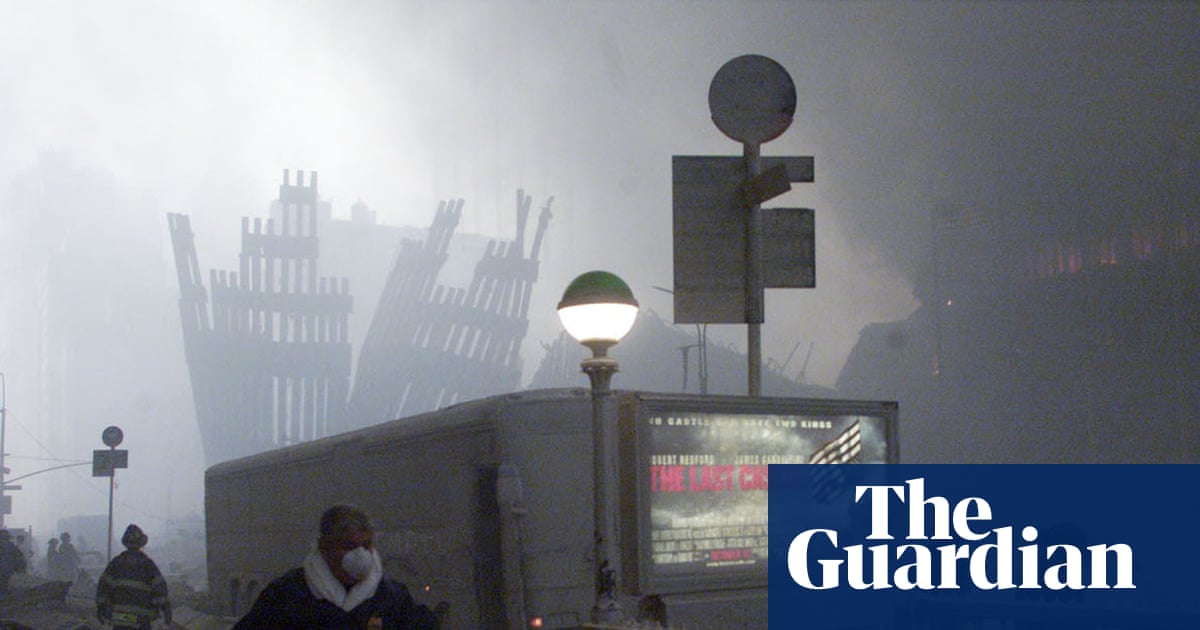
Uranium and control of strait of Hormuz key as talks to end US-Iran war continue

US-Israel war on Iran
Uranium and control of strait of Hormuz key as talks to end US-Iran war continue
Patrick Wintour
Fri 22 May 2026 13.24 CESTLast modified on Fri 22 May 2026 13.25 CEST
News
https://www.theguardian.com/world/2026/may/22/uranium-strait-of-hormuz-us-iran-war-talks-pakistan

Future control over the strait of Hormuz and a demand from Washington that Tehran export its stockpile of highly enriched uranium remain key stumbling blocks, as Pakistani mediators continued to seek a permanent ceasefire they believe is still within reach between the US and Iran.

Meanwhile, Israel and Iran each fear the other is about to launch a surprise attack on its territory while the US president, Donald Trump, continues to insist a fresh assault on Iran is an option available to him.

The Pakistani interior minister, Mohsen Naqvi, met the Iranian foreign minister, Abbas Araghchi, for the second time in two days in a bid to secure a breakthrough in talks, and it is still possible that a delayed visit to Tehran by Field Marshal Asim Munir, the commander of the Pakistani army, will signal progress is being made.

Munir had been due in Tehran on Thursday, but a lack of progress in the talks postponed his arrival and it may be that Pakistan will try to bring in China as a mediator. Pakistan’s prime minister, Shehbaz Sharif, is due in Beijing on Saturday.

Iran has emphasised it is seeking to postpone all talks on its nuclear program and focus instead on a permanent cessation of hostilities that it hopes will include a phased lifting of US sanctions, unfreezing of frozen Iranian assets, compensation for US-Israeli war damage, and commitments not to resort to force in future. The future management of the strategic strait of Hormuz is a key point of dispute, with Pakistan floating plans for joint control under UN auspices

Tehran has also proposed that its recently created Persian Gulf Strait Authority take responsibility for the channel, in which fees would be charged and ships would have to follow instructions from over selected transit routes. The Iranian ambassador to France confirmed that Iran was seeking Oman’s cooperation with the plan.

Five Gulf states have written a letter to the International Maritime Authority, a global shipping watchdog, urging merchant and commercial ships not to engage with the PGSA.

The list of signatories are Bahrain, Kuwait, Qatar, Saudi Arabia and the United Arab Emirates. It does not include Oman, but Oman, which under the proposal would be the authority on the south side of the strait, is wary of Teheran’s proposal.

In their letter, the five states warn: “Iran’s purported route should be seen for what it is, an attempt to control traffic through the strait by forcing vessels to use a route within its territorial waters, which can be exploited for monetary gain through the imposition of toll fees. Any understanding or recognition of Iran’s proposed route and PGSA as an alternative would set a dangerous precedent.”

At a Nato foreign ministers meeting in Sweden the US secretary of state, Marco Rubio warned: “Iran is trying to create a tolling system. They’re trying to convince Oman… to join them in a tolling system in an international waterway. There is not a country in the world that should accept that.”

He again expressed his disappointment at Europe’s refusal to do more to keep the strait open.

Meanwhile, analysts argue that much of what US administration officials say about the status of the talks has to be filtered through Washington’s need to massage the global price of oil down.

Esmail Baghaei, spokesperson for the Iranian ministry of foreign affairs, told state media: “At this stage, the focus of the negotiations is on ending the war on all fronts, including Lebanon, and the claims made in the media about nuclear issues, including the issue of enriched material or the enrichment debate, are merely media speculation and lack credibility.”

Baghaei was referring to speculation that has arisen after Trump’s statements on Thursday when he spoke about Iran’s stockpile of highly enriched uranium. He said: “We will get it. We don’t need it, we don’t want it. We will probably even destroy it after we get it, but we will not let them get it.”

Russia has offered to receive the stockpile, but Iran says it will downblend the stockpile inside Iran itself.

Andy Robertson: ‘It was easy to fall in love with Liverpool – I’m fortunate Liverpool fell in love with me’

Liverpool
Andy Robertson: ‘It was easy to fall in love with Liverpool – I’m fortunate Liverpool fell in love with me’
Andy Hunter
Thu 21 May 2026 23.30 CEST
News
https://www.theguardian.com/football/2026/may/21/andy-robertson-liverpool-farewell-highs-lows-anfield

T here was the Barcelona comeback on the night he ruffled Lionel Messi’s hair, the Champions League triumph in Madrid , winning Liverpool’s first league title in 30 years and pressing five Manchester City players in one career-defining run at Anfield when 4-1 up. But the best feeling Andy Robertson experienced at Liverpool was “climbing the mountain” with Jürgen Klopp’s all-conquering team. Nobody climbed higher or harder.

The boy who was rejected by Celtic at 15 and tweeted: “Life at this age is rubbish with no money” after his debut for Queen’s Park aged 18 became the man many consider to be Liverpool’s finest left-back, and arguably the best in the world at his peak. With 377 fiercely committed appearances in a Liverpool shirt behind him, Robertson will say goodbye on Sunday. The 32-year-old Scotland captain leaves “with no regrets, no bitterness” and “glad that one of our Egyptian friends might take a bit more of the limelight. I can just sneak underneath that.”

As one of the most identifiable and popular players of the past nine years, there is no chance the £8m signing from Hull will be granted a quiet exit. Robertson is “gutted” it is coming to an end – “Everyone’s gutted when you leave Liverpool,” he says – but is filled mostly with pride at overcoming his initial insecurity to cement a place in Anfield folklore. It was quite the ride.

“We were on the most amazing journey ever, all together,” he reflects. “When we started out Mo Salah didn’t sign as the best player in the world or the best winger in the world. Virgil van Dijk had the potential to be but wasn’t the best centre-back in the world. Alisson wasn’t the best goalkeeper in the world. Trent [Alexander-Arnold] wasn’t the best right-back in the world. Hendo [Jordan Henderson] was still trying to find his feet as captain. We were all just on this journey from the bottom to the very top together and climbing that mountain was the best feeling ever.

“Every day we came in knowing we were getting better and better and starting to click as a team. We’d beat teams in the tunnel. Genuinely. When I speak to my Scotland teammates, they were lining up in the tunnel and looking over thinking: ‘We’re going to need to run our socks off today to get anything.’ And more often than not they didn’t get anything.

“We had an unbelievable environment to express ourselves, to play with freedom, but in our minds we knew we had to work at 100%. That was obviously from the manager, from the coaches, and I think then all the staff and people behind the scenes bought into it and you had the whole training ground determined to achieve all our dreams. Everyone was on the same page and we just made magical things happen thankfully.”

Robertson’s reminiscence prompts an inevitable follow-up. Why does Liverpool not feel like that now? His reply stops everyone in their tracks, and brings home the tragic reality of what this season has entailed for the now deposed Premier League champions. “In terms of the club I am leaving behind I think we are not at the 2017 stage, we are at the transition stage,” begins one of Diogo Jota’s closest friends. The Liverpool forward’s death in a car crash alongside his brother in north-western Spain last July cast a dark pall over the campaign

“This year hasn’t worked out for a variety of reasons. We can’t hide away from it, and it is not an excuse, but what we went through in the summer no team will ever go through. No member of staff will go through. I hope they never go through it because the devastation we went through … football didn’t matter. We didn’t care about football for weeks. None of us wanted to train. You were getting treatment off physios and physios didn’t want to treat you. That is the reality of it.

“As footballers we of course have a duty, we have to move on and we managed that. We started the season fairly well although it was still an emotional time for us. The [season-opening] Bournemouth game was ridiculously emotional with all of Jots’ family being there. I think after the 20th minute you saw a real dip in performance because of the emotional impact that it had on all of us.

“But then the season has been inconsistent. We bought players that we all got excited about, and they will all have an unbelievable career at Liverpool. I have no doubt about that. But they are also young. The one thing I get annoyed about in football is that footballers do not control their price tag. The market controls it. These players will be successful for Liverpool but they probably need a bit of time.

“Then some players who have played at a ridiculously high level haven’t played to that level. If you add all that in then we have had an inconsistent season and that is the huge frustration for us. We have been too easy to play against. There is no hiding away from that but I believe they have more than enough in that changing room to be successful for Liverpool again.”

Robertson received a farewell gift this week from Alexander-Arnold, who sent an image of the two of them celebrating the 2019 Champions League final victory over Tottenham. The message attached almost moved him to tears. The pair pushed each other to world-class levels and reworked the role of a full-back. There were the assists, naturally, while Robertson became the pressing machine that Klopp demanded. One press in particular, when he chased City players across the Anfield pitch in January 2018, will be forever part of the Scot’s Liverpool story.

“Everyone still talks about it because I think that was the moment people could see I could potentially be the left-back for years to come,” he says. “I’m not saying it would have been nine years, but that was a moment in a big game against the best team in the world at that time, I think fans left that stadium thinking: ‘We could have a proper left-back here.’

“I believe that was the game I finally belonged in a Liverpool jersey. That was the moment I really felt: ‘I belong at this football club, I am worthy of the shirt and I’m worthy of being here.’ Everything went straight up from there. That’s why when I look back now, I do so with a massive smile on my face because it’s the moment that made me sit here nine years later.”

Born in Glasgow, Made in Liverpool reads the inscription on a new mural of Robertson that has been painted near Anfield. His connection with the city is another source of pride. He says: “Liverpool and Glasgow are very similar cities and they are very similar people with similar things that are important to them.

“I think that’s why it has been so easy for me to fall in love with this city. I’m very fortunate that a lot of people in this city have then fallen in love with me. I think they saw a player out on that pitch who, if they could get a chance to put on a Liverpool shirt and play in a competitive game, they would play similar to me in terms of giving 100% and always being at it. I put a lot of pressure on myself to try and do that and I’m very grateful to the people for how they accepted me.”

Andy Burnham’s Manchester has a defining spirit – and Britain could do with a lot more of it

Andy Burnham
Andy Burnham’s Manchester has a defining spirit – and Britain could do with a lot more of it
John Harris
Fri 22 May 2026 09.00 CESTLast modified on Fri 22 May 2026 09.38 CEST
News
https://www.theguardian.com/commentisfree/2026/may/22/andy-burnham-manchester-unique-spirit-britain-westminster

A mong the underrated later work of those revered sons of Manchester the Smiths, there is a completely jaw-dropping song simply titled London . Full of fury and excitement, it depicts a Mancunian as he boards a train, travelling to the capital full of ambition and hope, but also gripped by a gnawing ambivalence. Andy Burnham, whose love of the band is hardly a surprise, may well recognise not only its defining theme, but the song’s accidental encapsulation of his decision to try to make his way to the House of Commons, in a line crooned by Morrissey in slightly mocking tones: “And do you think you’ve made the right decision this time?”

Even if some observers only give him a 45% chance of winning , it looks like Burnham has, particularly when it comes to his pitch for power. Eleven years ago, let us not forget, a somewhat different incarnation of the future Greater Manchester mayor was one of four candidates for the Labour leadership, along with Jeremy Corbyn, and chose to stage one of his launch events at the City of London HQ of the auditing firm Ernst & Young. There he said he might back further benefit cuts , and claimed that too many people associated Labour with “giving people who don’t want to help themselves an easy ride”. In 2022, he told me this was the result of bad advice: “I listened to people that I shouldn’t have, really. It was tone-deaf … it wasn’t me. It wasn’t authentic.”

Some look at the 2026 model and see the same brazen shape-shifter. But having watched him closeup, I would argue that his progress over the last decade or so – he first became mayor of Greater Manchester in 2017 – has really been a contrasting story of rising certainty and self-confidence, deepening engagement with some of the more vibrant forces on the centre-left – such as Compass, the pressure group that gives a platform to both Labour and non-Labour voices – and the resulting ability to connect with crowds that most political figures would leave cold (witness two recent appearances at Glastonbury). But his most important attribute is a reflection of the dead end reached by Keir Starmer: the fact that Burnham has a lot of actual ideas. Remember those?

This week, he spoke at the Great North Investment Summit in Leeds, an event centred on devolution. He talked about people’s complete loss of faith in politics, and made one of his most well-trodden arguments: that for 40 years, this country has simply been on the wrong path. In keeping with an unabashedly partisan account of the UK’s past disasters and missteps, he lamented the “draining away of economic, social and political power” from the north of England, compounded by “deregulation, privatisation … and austerity”, and local economies whose wealth was siphoned “into the hands of people for whom life was already very good”. The signs of this shift include “people paying over the odds for the daily basics: energy, housing, water, transport”.

This is not particularly sophisticated stuff, but that is surely part of its power. Burnham’s conception of the north’s recent past is the crux of “ Manchesterism ” – the work-in-progress credo, with its backhanded reference to 19th-century free-trade Manchester liberalism , that he now draws on whenever he speaks. It begins with an account of history that emphasises deindustrialisation, and the convulsions of the 1980s (Margaret Thatcher is referenced in the first 35 seconds of his first Makerfield campaign video , soundtracked by Elbow’s One Day Like This). There is also a pointed emphasis on social housing, and the fact that rising so-called welfare bills are an indication of economic and social failure rather than worsening national delinquency.

The worst of modern capitalism, Burnham insists, is cynically extractive and socially damaging (shades here of Ed Miliband’s old argument about the difference between “predators” and “producers”). In its view of Westminster’s dysfunctional dominance, meanwhile, Manchesterism offers something so far monopolised by Nigel Farage: a specifically English critique of our broken systems of politics and power, the product of Burnham’s re-invention as a political outsider.

The core of all this is what Mathew Lawrence, the director of the thinktank Common Wealth, calls “ the productive state ”, in a new book about Manchesterism that he has co-authored of the same name. “Where the market coordinates and the welfare state redistributes, the productive state produces: directly owning and operating capital in essential sectors, participating in markets as builder and provider rather than as regulator or redistributor,” Lawrence says. “It is the return of sovereign economic control of the economy’s foundations.”

Reflected in Burnham’s pledge to bring energy and utilities under “stronger public control”, this foundational principle partly inspired one of modern Manchester’s ubiquitous features: the Bee Network. These yellow buses – with their uniform £2 fare – have finally brought order and coordination to a public transport system torn asunder by the Thatcher government’s deregulation of 1986. There is an interesting historical parallel here: just as the blessed Margaret avenged postwar social democracy at 40 years’ distance, so Burnham is set on “rolling back the 80s”.

And then there are the overarching vibes, and what the word “Manchester” evokes. No one should swallow any idea of the city as a progressive utopia: rough sleepers have long bedded down in the shadow of impossibly pricey apartments, and there is a painful income, wealth and influence gap between Greater Manchester’s north and south. But Burnham’s Manchesterism is clearly intended to build on the unquestionable successes that began with the miraculous regeneration delivered by the former city council leader Richard Leese and his chief executive Howard Bernstein . It conjures up images of a city centre where consumerist wonderment sits in the midst of a culture that is both entrepreneurial and collectivist. If Manchester has a prevailing spirit, this is probably it – and the UK could do with a lot more of it.

Perhaps in response to Burnham’s radicalism, things are now moving fast at the top of Labour, as evidenced by Rachel Reeves’s new commitment to a summer of cost-of-living activism and that supposed Blairite Wes Streeting’s conversion to the idea of a wealth tax. Meanwhile, Burnham’s naysayers make sneering reference to the gilt market, and question how much his agenda might actually cost.

Personally, I like Manchesterism for much the same reason as I like that aforementioned Smiths song: its ferocity, bile, energy and sense of purpose. Who knows what will happen in Makerfield, where the odds are so finely balanced? If Burnham became PM, how would he re-orientate Whitehall to even start to deliver what he wants in short order? So far we only know this: that his ideas have brought ideological oomph – not to mention hope – to a Labour party that was in dire danger of reducing politics to technocratic misery. And for that, we should be truly thankful.

John Harris is a Guardian columnist

Or, the Whale album review – Caroline Shaw and Andrew Yee collaboration offers intimacy and joy

Classical music
Or, the Whale album review – Caroline Shaw and Andrew Yee collaboration offers intimacy and joy
Clive Paget
Fri 22 May 2026 08.00 CESTLast modified on Fri 22 May 2026 08.02 CEST
News
https://www.theguardian.com/music/2026/may/22/or-the-whale-album-review-caroline-shaw-andrew-yee

I n one sense, this eight-track collaboration between Pulitzer prize-winning composer-vocalist Caroline Shaw and Grammy award-winning cellist-composer Andrew Yee is a snapshot of a friendship. The title – Or, the Whale – comes from Melville’s Moby-Dick, and in particular from director Wu Tsang’s 2022 silent film version for which Shaw and Yee provided the score. A condensed suite combines cello, electronics and ethereal vocals in a haunting, folk-infused evocation of the novel, whale song and all.

Much here is similarly imaginative. Yee’s uplifting The Trees of Green-Wood channels Meredith Monk as Shaw sings a catalogue of trees organised by diameter of trunk: the greater the girth, the louder the music. Sophisticated processing and intricate engineering, crucial elements throughout, add to the heady aural atmosphere. Another duet, Shenandoah, is a tender, exploratory arrangement of the traditional shanty.

Shaw’s versatile vocals and Yee’s emotive cello are at the centre of everything. An outlier movement from Messiaen’s Quartet for the End of Time finds Messiane’s piano replaced with a vocal harmoniser, while a repurposed early work by Shaw incorporates audio snippets of quilters living in North Carolina. Like everything here, the feeling of artistic intimacy and joy in the music-making is palpable.

Listen on Apple Music (above) or Spotify

The Pep years: season by season, how Guardiola’s Manchester City evolved

Pep Guardiola
The Pep years: season by season, how Guardiola’s Manchester City evolved
Will Unwin
Fri 22 May 2026 15.00 CESTLast modified on Fri 22 May 2026 15.02 CEST
News
https://www.theguardian.com/football/2026/may/22/the-pep-years-season-by-season-guardiola-manchester-city

2016-17: no silverware in first campaign

It was confirmed on 1 February that Pep Guardiola would be heading to east Manchester to try his hand at English football. Behind the scenes, plenty went on to create a squad suited to him but, in truth, it was a season of transition as the new head coach investigated who could fit into his system and what needed to change. It was soon apparent how influential the era-defining Kevin De Bruyne would be for Guardiola, as his class in midfield shone. City showed promise but finished third in the Premier League and were knocked out by Monaco in the Champions League last 16 as the new head coach began without a trophy.

2017-18: Premier League centurions

Bernardo Silva, Kyle Walker and Ederson headlined the summer business, while plenty of long-serving players were shipped out. Everything was in place for Guardiola’s revolution and City did not disappoint, dropping two points in the opening 20 Premier League matches. Liverpool were thrashed 5-0 in the fourth game of the campaign but got their own back by dumping City out of the Champions League in the quarter-finals. The first trophy of the Guardiola era was collected at Wembley, Arsenal the victims in the League Cup final . No one could compete and the title inevitably followed, City reaching the 100-point mark and scoring 106 goals as they showed they were the great entertainers, finishing 19 points clear of second-placed Manchester United.


2018-19: domestic treble winners

A comparatively poor 98 points and 95 goals followed but every single one was vital as Jürgen Klopp’s Liverpool fought City until the bitter end. The two clubs exchanged the lead at the top of the table 32 times over the course of the season. City won their final 14 league matches on their way to domestic glory, lifting the League Cup and the FA Cup along the way. It was an English team that would ruin the European dream once more, as Tottenham surprisingly eliminated City in the Champions League quarter-finals on away goals after a dramatic tie in Manchester.

2019-20: dethroned as Covid hits

City fell spectacularly short in the league, finishing 18 points adrift of Liverpool. Covid’s intervention made it an unusual season, as the two legs of the Champions League last 16 were played four months apart. A 4-2 aggregate win over Real Madrid felt like a turning point in Guardiola’s European journey with City but they went on to lose to Lyon in a one-off quarter-final in Lisbon. City did not finish empty-handed thanks to a 2-1 League Cup win over Aston Villa as Sergio Agüero and Rodri proved their class for Guardiola.

2020-21: champions again but Euro agony

Getting humiliated 5-2 at home against Leicester made Guardiola quickly realise all was not right. To cut a long story short, £60m was spent on bringing in the centre-back Rúben Dias and City went on to win the league 12 points ahead of Manchester United in a season largely played in front of empty stands. The League Cup found its way into the cabinet and the Champions League trophy was in sight for Guardiola and City for the first time in his tenure. They breezed to the final where they faced Chelsea, who finished fourth in the Premier League, in Porto, but Guardiola left out the defensive midfielder Rodri and City lost to Kai Havertz’s goal , a frustrating ending.

2021-22: Gündogan heroics on final day

Everything went down to the final day, with City needing to beat Aston Villa to guarantee a fourth title of the Guardiola era. The visitors went two goals ahead and, with 15 minutes remaining, Liverpool needed to score once to go top. Two of the greats of the Guardiola epoch stepped up, Ilkay Gündogan and Rodri levelling matters before a third goal, and a second from the German, in the space of five minutes turned everything around in chaotic style to create one of the most memorable ever finishes to a season . City’s Champions League exit was equally ludicrous, losing 6-5 on aggregate to Real Madrid after extra time. They were heading through at 90 minutes of the second leg, only to concede twice and eventually bow out .


2022-23: European champions at last

This was the year everything fell into place for Guardiola and City. He changed his style, signing Erling Haaland to play as a No 9, transforming the nature of the team. The Norwegian went on to score 52 goals across all competitions. The investment and tactical flexibility paid off as City bulldozed their way to the Champions League final. In the knockout stages RB Leipzig, Bayern Munich and Real Madrid were beaten 14-0 on aggregate at the Etihad Stadium. It was a nervous final against Inter in Istanbul but Rodri earned Guardiola the historic victory he craved and the treble in the process. “It was written in the stars. It belongs to us,” Guardiola said.


2023-24: English title No 6

How do you follow up a treble? By winning the final nine games to beat Arsenal to the title by two points for Guardiola’s sixth Premier League triumph. Real Madrid were once again a thorn in Guardiola’s side, beating City on penalties in the quarter-finals of the Champions League having drawn 4-4 on aggregate. Further upset was to come in the FA Cup final when they lost to their bitter foes Manchester United 2-1 at Wembley . Guardiola also said goodbye to Klopp, who left Liverpool after years of touchline battles. “They have been our biggest rivals,” Guardiola said. “And personally he has been the best rival I ever had in my life – in Dortmund when I was in Bayern, then here.”

2024-25: changing of the guard

The campaign was a disaster by Guardiola’s standards as City struggled to compete on any level. “If this were Barça or Madrid, they would have sacked me,” Guardiola said. There was loyalty to players who had brought the club so far but it was, arguably, a year too many for Walker and De Bruyne. There was surgery on the squad in January as City battled even to qualify for the Champions League in a season that would end without any major trophies in the cabinet. Their best shot at glory was in the FA Cup but City meekly lost to Crystal Palace 1-0 to add a further footnote to the misery.

2025-26: going out with a bang

A further rebuild in the summer brought together a fresh and vibrant squad but there was plenty of work to be done to get it into Guardiola’s mould. It was a slow-burner, City losing two of their opening three league games and, after four games without a win in January, challenging for first looked nigh-on impossible. City were resurgent, however, and made Arsenal sweat almost until the end.

The cups were more fruitful as Mikel Arteta’s side were brushed aside in the League Cup final and Chelsea beaten in the FA Cup final. Once again Madrid punished City in Europe, making relatively light work of matters with a 5-1 win on aggregate in the last 16.

‘Noni Madueke was rapping the whole night’: inside Arsenal’s nightclub title party

Arsenal
‘Noni Madueke was rapping the whole night’: inside Arsenal’s nightclub title party
Ed Aarons
Thu 21 May 2026 21.00 CESTLast modified on Fri 22 May 2026 06.29 CEST
News
https://www.theguardian.com/football/2026/may/21/noni-madueke-was-rapping-the-whole-night-inside-arsenals-nightclub-title-party

Daniel Bull has waited his whole life to see Arsenal win the Premier League and it is fair to say that the 22-year-old from north London will never forget the celebrations on Tuesday night. Having found himself sharing a bottle of champagne with Ian Wright as thousands of supporters gathered outside the Emirates Stadium, the devoted Gunners supporter and two close friends took a gamble as the party was petering out.

“I had just heard a whisper,” Bull says. That whisper was that Arsenal’s players were gathering at the exclusive Tape nightclub in Mayfair after they had watched from the training ground as Bournemouth drew with Manchester City to crown the club champions for the first time since 2004. An Instagram video later posted by Noni Madueke’s mother showed the England forward returning home to much acclaim before immediately announcing, “I’m going out.”

One of Bull’s friends was reluctant to try their luck after the Tape bouncers refused to confirm whether the players were inside, but Bull paid what he describes as “not the cheapest” entry fee. His hunch was proved correct when they immediately bumped into Arsenal’s set-piece coach, Nicolas Jover, the man credited with a pivotal role in the title success.

“I couldn’t believe what was happening,” Bull says. “It’s a very, very exclusive nightclub and we were the only Arsenal fans in there.”

Most of Arsenal’s squad and the manager, Mikel Arteta, were celebrating in a private room, but Bull was able to buy a table nearby that he admits cost him and his friends a small fortune.

“It was only about five steps from the lower part of the club and we could see that Madueke was on the mic for most of the night; he was basically the MC,” Bull says. “He was rapping the whole night.”

A few players also wandered into the main part of the club and Bull remembers speaking to Myles Lewis-Skelly and Ethan Nwaneri, who has just returned from his loan at Marseille. “They were both really friendly,” he says, before revealing that his Scandinavian friend was able to hold a conversation with the Danish midfielder Christian Nørgaard. “Because my mate’s Norwegian he was chatting to Christian Nørgaard, which was quite cool.

“We were in there for about two or three hours, and the next thing you know, we start seeing everyone. So there’s Declan Rice, Mikel Arteta, Viktor Gyökeres, Bukayo Saka, Jurriën Timber and Eberechi Eze. I was with one of my housemates at the pub last night, and he was like: ‘You shook Eze’s hand!’”

A short video of Arteta bellowing “champions of England” on the microphone has gone viral on social media, along with the manager photobombing Rice. The England midfielder was spotted by supporters wandering around the Emirates with Saka, Timber and Eze at 5am because they wanted to soak up the occasion. Rice was “still buzzing” and went off to play nine holes of golf with a friend after a few hours’ sleep.

For Bull, who has been to every Arsenal away game in Europe this season and will be in Budapest for next Saturday’s Champions League final against Paris Saint-Germain, the night started at the Twelve Pins pub in Finsbury Park. He headed down the road as the full-time whistle blew at Bournemouth and couldn’t believe his luck when Wright suddenly appeared alongside him clutching a bottle of champagne, even if the club’s previous record scorer initially struggled to open it.

“It was carnage,” Bull says. “The next thing you know, we start hearing: ‘Ian Wright, Wright, Wright.’ And me and my mate have just somehow ended up next to him. After he had his first sip of champagne, I had the second sip and then my mate has the third sip. The only people who had that champagne bottle were basically my crowd of mates that we go with. And then I’ve now got that bottle at home with me.”

Bull is hoping to get it signed by Wright, part of Arsenal’s title-winning team in 1998, as a memento of an incredible evening that will take some beating.

“It was the definition of a pinch-yourself moment. I was in there thinking: ‘What the hell is going on?’ I think because we just rocked up when we did and we were so chill and happy to pay whatever. It was unbelievable.”

‘My parents didn’t talk about the past’: how director Caroline Huppert recovered her family’s wartime secrets

History books
‘My parents didn’t talk about the past’: how director Caroline Huppert recovered her family’s wartime secrets
Phil Hoad
Fri 22 May 2026 14.00 CEST
News
https://www.theguardian.com/books/2026/may/22/caroline-huppert-une-histoire-cachee-second-world-war-antisemitism-nazi-france

F amilies have a way of appointing their own historians, even if the recruitment process remains obscure. In the late 1990s, Caroline Huppert – the fourth of five siblings, of whom the youngest is actor Isabelle – found herself alone with her father and a tape recorder. Over five days, he opened up about his life before and during the second world war. “I think I had that privileged position with him, because he had a taste for history, too,” she says. “But we didn’t have the same vision. I like the approach of what is called the nouvelle histoire , things like details of daily life in the past. With him, it was more emperors, kings, dates.”

More than 25 years later, their exchanges have led to her memoir, Une Histoire Cachée (A Hidden Story), a work that bundles up quotidian intimacy and big-ticket history in telling the story of how her parents, Raymond and Annick, fell in love. Their relationship so easily might never have happened: he was Jewish, she Catholic, and after they met in 1934 at Paris’s HEC business school, her haute-bourgeois family were opposed to them marrying. A big enough obstacle even before the Nazis invade France , and the young lovers are forced to flee the capital for the Free Zone near Lake Annecy. “I wasn’t aware of any of it in the least,” says the 75-year-old on a phone call from her home in Paris. “My parents weren’t people who talked about the past. They were always absorbed in the present, in action.”

Thanks to her father’s nostalgic volte-face before he died aged 89 in 2003, Huppert began thinking about how to undertake the “archaeology of her family” (her mother died earlier, in 1990). But with a hectic career as director of TV films and screenwriter, she was intimidated by the task – even with her education in history. Then in 2024, another storybook miracle unlocked it for her. While fishing for a pushchair in a storage unit, Huppert’s daughter jostled an old desk her mum had left her; a cache of 150 old letters hidden in a false drawer fell out. “She sent me a photo of them, and I recognised my mother’s writing,” says Huppert. “And this goldmine allowed me to go to the very end of what I wanted to do with the book, because it was a really great source of information about daily life.”

Her book closes with a high-wire climax – which Huppert prefers not to spoil. The courage they inspired in each other came as a surprise, notably “the intrepidness of my mother, who wasn’t afraid of anything and crossed the demarcation line in the boot of a car”. But it’s in the patient logging of banal wartime realities, thanks to Annick’s correspondence, where Une Histoire Cachée also fascinates: the struggles to find food, the freezing conditions in the Savoie house where Raymond ends up fabricating drill bits for a collaborator, how the couple still snatched moments of ephemeral pleasure amid this turmoil.

Such minutiae are especially important as they relate to the Franco-Jewish community during the time, of which there is only “piecemeal” documentation, according to Huppert. Soaking up Raymond and Annick’s routine, you realise how their privations were a direct consequence of pre-war prejudices – when a wary truce had been in place between Jewish and traditional French society since the Dreyfus affair. “I really wanted to describe what antisemitism looked like on a daily basis in French society, even before the Nazis’ racial laws,” says Huppert. “And show the continuity with what the Pétain regime decreed – and to what point it seemed natural to everyone, bit by bit, to put those laws in place.”

Huppert brings a distinctive Jewish slant to a recent mini-boom of Vichy lit and cinema that, like much French output on the occupation, tends to focus rather on questions of collaboration and resistance: the recent films Les Rayons et Les Ombres and Laszlo Nemes’ Moulin , the Cécile Desprairies novel The Propagandist. Daniel Auteuil’s drama La Troisième Nuit, premiering at Cannes, will bolster the Jewish side soon. But whatever the reasons for this surge of interest – whether it’s the looming prospect of a far-right government in France, or newly rising antisemitism – Huppert isn’t tempted to infer any contemporary resonances. “I don’t know anything about that. As an archaeologist, I lean more towards understanding the origins rather than the results. It’s sociologists who look at what is happening now.”

Not only is Huppert categorical about her work in this way, even after exploring her family’s mixed heritage, she seems detached about her Jewish roots. She says she doesn’t feel culturally or religiously more Jewish in the wake of writing – and in any case hates generalising: “It’s annoying to say ‘the Jewish people’. It’s a terrible expression. I don’t see where there’s a Jewish people – there are Jews of all different kinds.”

You wonder if this neutrality isn’t also part of her legacy from her secular father, who refused to convert to Catholicism in support of his kinsfolk – but still raised his family within Catholic norms in the postwar period. There’s something of the same withholding independence in her sister Isabelle’s acting; she has spoken of sharing her father’s tendency towards silence. At any rate, Isabelle is a fan of the book. In a text, she sums up: “A magnificent portrait of a woman, a highly moving homage to our family, and an exciting and superbly researched document of that time.”

If a rapprochement with Jewishness wasn’t Huppert’s principal aim, the notion of lineage does count for her – just as it did for her father a quarter-century ago when he decided to share: “I wanted my children and children’s children, my own posterity, to know this was their history.” But though she’s rescued her parents from the fog of time, she couldn’t do it for everyone. Huppert is still haunted by the story of Françine, a young refugee whom Annick teaches English in the French Basque country, and then crosses paths with a second time in Savoie. The references in her mother’s letters stopped there, and Huppert found no traces online. “I was very touched by the fate of this sensitive young girl whose adolescence was stolen from her. I’ve been worrying about her. I hope she survived.”

Une Histoire Cachée by Caroline Huppert is published by Editions Mercure de France

Hunger and Thirst by Claire Fuller review – a blend of social realism and gothic horror

Fiction
Hunger and Thirst by Claire Fuller review – a blend of social realism and gothic horror
Lara Feigel
Fri 22 May 2026 08.00 CEST
News
https://www.theguardian.com/books/2026/may/22/hunger-and-thirst-by-claire-fuller-review-a-blend-of-social-realism-and-gothic-horror

C laire Fuller is fascinated by corpses: by the moment when a supple, beloved body turns into inert, heavy matter. In her masterful 2021 Costa winner Unsettled Ground , adult twins veer between pathos and gawky comedy as they attempt to dress and bury their dead mother, floored by the sheer, awful weight of her. Now in Hunger and Thirst, Ursula’s destiny is shaped by encounters with two cadavers. And as the book oscillates between social realism and gothic horror, these two unruly corpses destroy her life.

The first is Ursula’s itinerant, troubled but loving mother, who’d been busking with her child alongside her since giving birth at 16. Aged seven, Ursula spent an appalling two days stuck in a bathroom in Morocco, with the door trapped by her mother’s dead body after she died of dengue fever. By the time the novel opens in 1987, Ursula is 16, and has been moved between seven children’s homes before ending up at a “halfway house” alongside recovering addicts and released prisoners. She lands a trial job in the postroom at Winchester School of Art: there she makes friends with bold, madcap Sue, who thrusts on Ursula an unfamiliar intimacy, introducing her to her enviably warm and rambling family. Ursula is narrating the book 40 years later, and it’s clear from the start that something will go so horribly wrong between Ursula and Sue that a prurient documentary-maker will end up making a film about Sue’s murder. Scenes from this documentary, Dark Descent, punctuate the book, adding to the sense of foreboding.

Back in 1987, Sue and Ursula are watching horror films with Sue’s delinquent boyfriend Vince and brother Raymond, with whom Ursula is falling in love. They watch The Stepford Wives and The Shining, and when Sue suggests Ursula move with Vince to a derelict house, it’s inevitable that The Underwood will be a suitable setting for a horror film. Thick dust coats abandoned doilies in the “warm and soupy air”. Nothing has been moved since the preposterously named Mr and Mrs Bloodworth were murdered there a decade ago. Ursula settles into her new life, uneasily rooted by some feeling that this is her natural habitat. Her life has been pulled towards the horror genre early, by her mother’s death and then by the care system, and now she’s enticed further by Sue, whose will to destruction becomes ever more intense. Sue lures them all into a seance, then into performing a filmic recreation of the Bloodworths’ murder; she even goads Ursula to choose someone to kill.

In the midst of all this, Ursula discovers her creative vocation carving on a dead tree in the garden, sculpting one figure falling into the open mouth of another, about to be swallowed whole. Upstairs, she draws “heads being swallowed by open mouths, bodies within bodies, limbs that didn’t seem to be quite human”. She’s turning the demonic energy of the house into creativity, and learning to revel in her sense of the appalling porousness of people, asking what it means to inhabit someone else: to haunt each other, gestate and birth each other.

But it’s not enough. There’s a shocking moment of betrayal when Ursula’s secrets are let out – and, even worse, caught on camera, so they can later be broadcast to the nation in the documentary. It’s appropriate that Ursula’s sculpting mallet should become a murder weapon. A second corpse will now haunt her for ever, in macabre scenes involving tapping ghostly fingers and fetid smells. The swing into full horror mode here is an outrageous aesthetic gamble that Fuller just about pulls off.

As in a film like The Shining, there are two stories going on at once. There’s the careful, astute observation of a small town in Thatcher’s Britain and the effects of the care system. And there’s the lurid, thrilling realm of The Underwood, unleashed into the larger world. In The Shining, the horror enables a dual exploration of what it’s like to have a mind on the edge of madness and what it’s like to live in a society haunted by its own failures, all while generating ambiguities about what’s real and what’s not. Something similar is achieved here, in that the social critique never loses its urgency. There’s the feeling that we may all be haunted by the 1980s – when Thatcher’s government began to under-resource the care framework, leaving people unmoored in a system that insisted nuclear families were better support structures than the sprawl of communities. Fuller seems to suggest that horror may be the most honest genre through which to represent our world. Indeed, the documentary here emerges as more exploitative and fake than the horror films – and just as capable of unleashing terrors into the world.

This is a lurid, big-boned, messy, often brilliant book, full of the intense feeling and intimate portrayal of the inner life that characterises Fuller’s work. “You watch because you want to know the worst that can happen,” Raymond says to Sue and Ursula early on, “and if it happened to someone else then you’re happy it didn’t happen to you.” This is a world in which betrayal leads to murder and then to being haunted for ever. Because it turns out that ordinary feelings can morph into horror with awful ease, and after this, any happiness will be illusory.

Lara Feigel is the author of Custody: The Secret History of Mothers (William Collins).

Hunger and Thirst by Claire Fuller is published by Fig Tree (£18.99). To support the Guardian, order your copy at guardianbookshop.com . Delivery charges may apply.

Miles Davis: Ascenseur pour l’Échafaud review – harmonic openness for Louis Malle’s haunting noir thriller

Music
Miles Davis: Ascenseur pour l’Échafaud review – harmonic openness for Louis Malle’s haunting noir thriller
John Fordham
Fri 22 May 2026 09.30 CEST
News
https://www.theguardian.com/music/2026/may/22/miles-davis-ascenseur-pour-lechafaud-review-decca

W hen Miles Davis was dying in September 1991, an invisible, neighbouring trumpet player, who this writer would frequently hear practising graceful classical phrases, began playing homages to Miles’ voice-like, blues-inflected melodies instead. It was a poignant personal tribute to a unique instrumental sound, and a unique imagination, that had profoundly enriched 20th-century music.

This month marks Miles’s centenary, and a clamour of celebrations of a musical life that led him to be dubbed (by Duke Ellington, allegedly) the “Picasso of jazz” for the many styles he explored. A standout this month is his 1957 movie soundtrack Ascenseur pour l’Échafaud – now repackaged on vinyl and CD with restored audio, beautiful photographs and revealing essays.

Composed by Davis from little more than a handful of chords, this music was mostly improvised straight to a screen showing budding New Wave director Louis Malle’s crime thriller Ascenseur pour l’Échafaud (Lift to the Scaffold), over one long night in a Paris studio in December 1957. His fine local quartet included expat New York bebop drummer Kenny Clarke, and their harmonic openness created a spacey, ethereal soundworld (a method that within little more than a year would also colour the landscape of Miles’s classic Kind of Blue) for a story following two lovers who think they’ve committed the perfect murder of an inconvenient husband, and the mishaps, farces, ecstasies and fears that populate the long night of their undoing.

Dreamily sensual sounds mirror misplaced hopes; there are car-chase scurries (Miles’s fast-bop horn virtuosity was formidable in this period), desolately bluesy accompaniments to actor Jeanne Moreau’s confused wandering in search of her partner, bar-room clamour in the trumpet/tenor-sax counterpoint between Miles and saxist Barney Wilen – but all the music stands alone, without images. A quiet slow-burn, but simmering with all of Miles Davis’s timelessly extraordinary light and heat.

Also out this week

Norwegian guitarist, composer and singer Hedvig Mollestad’s power-trio Weejuns nods to Miles Davis’ 1969 Bitches Brew with Bitches Blues (Rune Grammofon). Partnered by Supersilent keyboardist Ståle Storløkken and drummer Ole Mofjell, Mollestad edges and elbows her way into raw atonalities and spacey sci-fi shimmers through the group’s unique and strangely rapturous take on 1970s jazz-fusion. A very different and much-overlooked guitarist, Jeff Parker (also of indie rockers Tortoise and Chicago’s Association for the Advancement of Creative Musicians), unveils fascinating ways of emerging patiently from minimalism to captivating lyricism with his long-running quartet on Happy Today (International Anthem/Nonesuch). And Jason Miles , a former Miles Davis keyboardist from the albums TuTu, Amandla and Music From Siesta, revisits that groove-centric era in his own personal way, highlighting Miles’s admiration for Prince, and his own creative synth empathy in a like-minded band including trumpeter Randy Brecker and saxist Ada Rovatti on 100 Miles for Miles Davis (Lightyear).