‘The days I had to have sex with randoms, I thought thank God!’ Jamie Bell on eye-popping drama Half Man

Television
‘The days I had to have sex with randoms, I thought thank God!’ Jamie Bell on eye-popping drama Half Man
Michael Hogan
Fri 22 May 2026 14.00 CESTLast modified on Fri 22 May 2026 14.57 CEST
News
https://www.theguardian.com/tv-and-radio/2026/may/22/jamie-bell-half-man-richard-gadd-bbc-billy-elliot

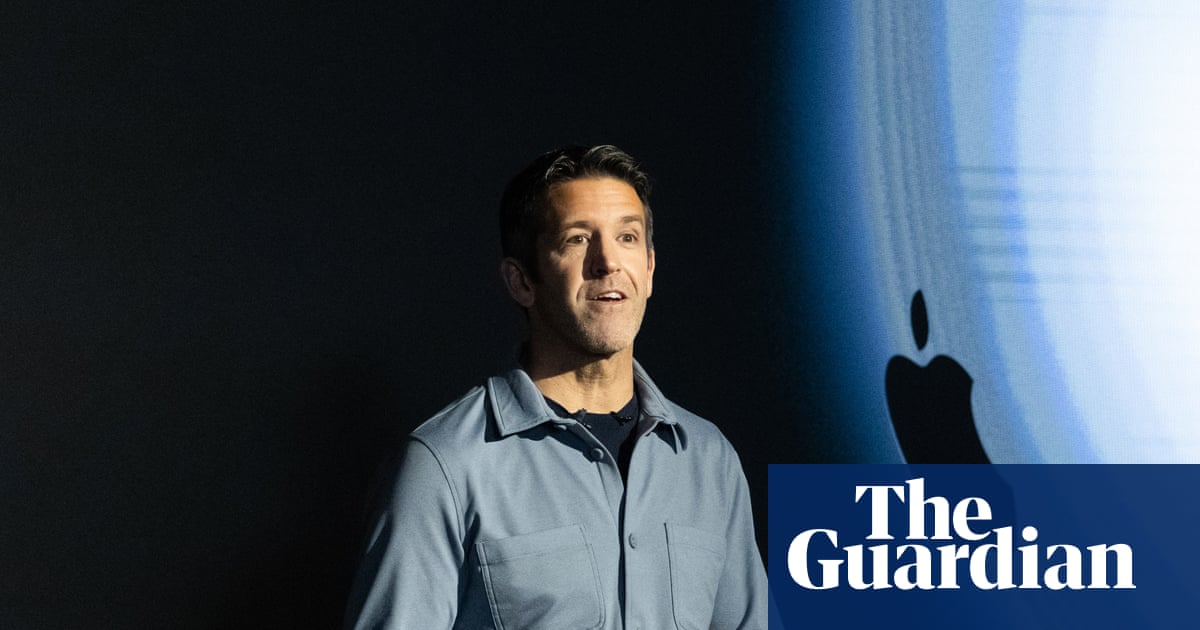
N ot many actors are relieved when they have to film an eye-poppingly explicit sex scene, but that was the case with Jamie Bell on Half Man. His role involved chemsex in saunas, dogging in car parks and illicit quickies in library loos. “Honestly, I was so grateful to be shooting that stuff and not fucking 16-page dialogue scenes, where you’re emoting and it’s so intense,” says Bell. “On days when my character had to have sex with random people, I’d think: ‘Thank God!’ Frankly, it came as a welcome reprieve.”

Richard Gadd’s first TV show since the Emmy-gobbling global Netflix hit Baby Reindeer, Half Man chronicles the combustible, codependent relationship between two “brothers from another lover”. Niall (Bell) is bookish, bullied and closeted. Ruben (Gadd) is the swaggeringly violent ex-con son of his mother’s girlfriend. The six-part drama – which reaches its devastating finale next week – traces the inseparable duo’s toxic relationship across three decades.

It’s no-holds-barred TV, full of sex, violence and gut-punch plot twists. “It’s a brutal, beastly thing that Richard has created,” says Bell. “I’d be lying if I said it was easy or fun to make.”

The role of Niall was written specifically for him. “I didn’t realise that when I initially read the scripts,” says Bell. “But later, when I met Richard in Los Angeles to discuss it, he said he wrote it with me in mind. I was incredibly flattered … It’s a sensory experience reading Richard’s material. He truly takes you to those places in your own life. It probes experiences you’ve kept hidden away somewhere and chosen to forget.”

Gadd never intended to play Ruben himself until Bell persuaded him. “When we first met, we didn’t know who was going to play Ruben,” he says. “I was like: ‘Well, why don’t you?’ It seemed obvious to me. For Richard, it meant putting his body through hell, on top of writing and producing. When I suggested it, I didn’t realise what the demands on him would be. But I’m grateful he relented.”

Was Bell already an admirer of Gadd’s work? “Not at first. My wife [American actor Kate Mara] had been watching Baby Reindeer, so I’d seen Richard’s face – usually accompanied by Kate going: ‘Oh my God, this show is wild!’ I went: ‘Hang on, I think I have a script from this guy. He’s making a new show.’ She was like: ‘Well, you’re an idiot if you don’t do it.’ When I did sit down and watched Baby Reindeer, I was blown away.”

He was drawn to his Half Man character’s complexity. “I thought: ‘Woah, this man is on such a destructive downward spiral …’ He’s got everything he wanted in life but still can’t accept who he is. Niall is living as several different people and he’s not comfortable with any of them.”

Bell really empathised with gentle Niall being drawn to such an aggressive alpha male. “Ruben is this disaster of a man. A bull in a china shop, destroying everything and everyone in his wake. Why doesn’t Niall step away? Partly self-preservation. Niall feels vulnerable whereas Ruben is intimidatingly powerful. He can be Niall’s protector. People fear him. Because of that, Niall latches on to him almost parasitically. Ruben becomes his life support system. I understood that 100%.

“I grew up in an all-female household and did ballet, so I used to attach myself to tough, troubled guys too. Not my kind of crowd at all but I’d rather have them on my team than not.”

He also relates to Niall’s self-loathing. “I’ve had that for ever,” he says. “It’s gotten worse as I’ve got older. I love what I do and I’m blessed that I still get to do it after all these years but I can’t watch anything I’m in. I hate the finality of it. You leave going: ‘You fucked that one up. Ruined it. You’re just not good enough.’ I forget that it’s just a job, not life or death. Other actors have told me to chill out but I don’t know how.”

Niall struggles with his sexuality to the extent that he undergoes conversion therapy. As a straight man, Bell felt an acute sense of responsibility portraying that. “It’s the centre of the character,” he says. “The basis of all his issues. I took that very seriously. Niall’s self-hate goes beyond shame or societal pressure. Somehow, his own sexuality doesn’t sit right within his worldview. That, to me, is beyond sad. ‘Be yourself’ is the simplest advice yet at times, the hardest to adhere to.” As a result of his turmoil, Niall goes to some dark places sexually. “Because of his repression, everything is guarded and hidden. That becomes the excitement. It’s an addiction. He gets a kick from dangerous sex.”

With its portrayal of male rage and damaged antiheroes, Half Man taps into debates about toxic masculinity. Does Bell believe his gender is in crisis? “Look at who are the majority transgressors in this world,” he says. “It’s men, on all fronts – not just misogyny but conflict, crime, everything. It’s important to shine a light on that. The conversation is ongoing. Hopefully this show adds something.”

Bell’s father walked out before he was born, leaving him to be raised by his mother and elder sister. What’s his own relationship with masculinity? “There is a clear theme throughout my work of parental dysfunction,” he says. “I must exude it because these roles come to me. People must go: ‘Orphans? Fathers and sons? Get Bell for that!’ In All of Us Strangers [Andrew Haigh’s 2023 film], you hear how Andrew Scott is talking to his father [played by Bell] and naturally it makes you reflect on your own parenting. That was a haunting, eye-opening experience.”

Half Man is full of bone-crunching violence. Gadd transformed his physique to play bruiser Ruben. Did Bell have to undergo fight training? “No, thankfully,” he says. “Niall is normally on the receiving end. There was a line in the script that says: ‘Niall is totally physically incapable.’ I was like, ‘Great! That’s easy.’”

The climactic episode features a pivotal two-hander that Gadd has described as the best thing he’s ever written. “That was one of the first scenes I read and the one that made me do the show,” says Bell. “I was like: ‘Wow, if we could sustain this long scene, bring all these men’s history to it and lay it all out on the table, that’d be a great piece of television.’ There’s nothing to cut to, no guns or gimmicks, just two men looking at each other and coming clean.” There’s also a memorable vomiting scene in the finale. “Throwing up on screen is always bizarre,” says Bell. “You fill your mouth with oatmeal, banana, peas and carrots, then spew it out.”

He’s currently shooting his starring role in the as-yet-untitled Peaky Blinders sequel series, leading the period gangster saga into its next chapter. Set in 1950s Birmingham, it sees Bell take over the role of crime kingpin Tommy Shelby’s son and heir Duke – played by Barry Keoghan in film spin-off The Immortal Man. Details are top secret but I can reveal that Bell is sporting a sharp short-back-and-sides haircut and is heading off to filming after we speak. “I’m thrilled to be part of it,” he says. “The show has such a great legacy and an incredible fanbase. People have high expectations, as they should. We hope to bring them something different and exciting.”

Was he a Peaky fan before landing the part? “First and foremost, I’m a longtime Steven Knight fan, dating back to his film scripts like Dirty Pretty Things and Locke. Steve seemed surprised when I told him that! What I admire is how he’s created this entire universe in his own back yard. Peaky takes its cues from classic Hollywood – it’s totally a western at heart – but transposed on to an urban working-class environment and given grand scale. It’s such a treat stepping into that.” He’s savouring the show’s signature tailoring, too. “It does so much work for you. You put on that iconic cap and you’re away.”

Knight is outspoken about working-class representation in the arts. Does Bell agree that it’s an issue? “I wish it wasn’t,” he says. “I came from a small town in County Durham called Billingham. There weren’t a ton of opportunities but we did have the Billingham Forum theatre. My mum took me to see touring West End shows there and that’s what gave me the bug. Reaching out to those places opens young people’s eyes and inspires their ambitions. That’s why it’s so vital local theatres get funding to remain open. It’s about access and exposure.”

Next up is The Uprising, Paul Greengrass’s film about the 1381 Peasants’ Revolt. “Paul has long been one of my favourite film-makers. I saw Bloody Sunday when I was 16 and it changed my life. The level of detail he pumps into his movies is unrivalled, so it was bucket list stuff to work with him.” Is there any truth to whispers of a long-awaited sequel to Steven Spielberg’s Tintin? “Those rumours have been rumbling for 20 years!” grins Bell. “But I love Tintin and the intrepid boy reporter all grown up could be interesting.”

To many, Bell will for ever be preserved in aspic as Billy Elliot, the role that catapulted him to overnight fame. Aged 13, he beat 2,000 other boys to the part and became the youngest ever best actor winner at the Baftas. He’s a rare child star to achieve career longevity. “I’m just grateful to still be working, because these stories frequently don’t end up that way.”

He laughs. “I turned 40 recently, would you believe? Personally, I’m fine with ageing. I just feel terrible telling people. Many still think of me as a child, so when I say I’m a 40-year-old father of three, it scares them. They go: ‘Wait, no, you’re a boy dancing on top of a toilet!’” With Half Man and Peaky Blinders, Jamie Bell is now dancing into his box set drama era. So far, he hasn’t put a foot wrong.

Half Man continues on 26 May at 10.40pm on BBC One and concludes on 29 May on BBC iPlayer. In the US, it is streaming on HBO Max and Hulu.

The Guardian view on the Mountbatten-Windsor papers: they expose the collapse of Britain’s ‘good chap’ state

Andrew Mountbatten-Windsor
The Guardian view on the Mountbatten-Windsor papers: they expose the collapse of Britain’s ‘good chap’ state
Editorial
Thu 21 May 2026 19.29 CESTLast modified on Thu 21 May 2026 19.38 CEST
News
https://www.theguardian.com/commentisfree/2026/may/21/the-guardian-view-on-the-mountbatten-windsor-papers-they-expose-the-collapse-of-britains-good-chap-state

T he most shocking revelation in files released on Andrew Mountbatten-Windsor’s appointment as Britain’s trade envoy isn’t that he loves golf or prefers ballet over theatre. It is that no one asked the obvious question: how risky would it be for a headline-grabbing prince with no business experience to front the UK’s commercial diplomacy without formal vetting ? The 11 documents that were released on Thursday show that having experience and being an expert weren’t as important as being a member of the royal family. After the Epstein scandal, those assumptions no longer look merely anachronistic. They look dangerous.

The late Queen pushed , wrongly as it turned out, for her son to inherit the role from the Duke of Kent, according to the papers released through a humble address motion. David Wright, then head of British Trade International, wrote that it was her wish for the then Duke of York to assume a “prominent role in the promotion of national interests”. In 2000, royalty was not peripheral to Britain’s commercial diplomacy. It was central to it.

The Liberal Democrat leader, Sir Ed Davey , proved his constitutional worth by getting the government to release the papers relating to the “open-ended” high-profile role for Mr Mountbatten-Windsor. No other candidates were considered. The unpaid job was designed to spare him the burden of board meetings and paperwork while granting him privileged access to Britain’s trade and diplomatic networks. The files show a British establishment so dazzled by royal status that it stopped asking normal questions about power.

Trade diplomacy is about networking: receiving “prominent” visitors, acting as host at meals and receptions, and cultivating relationships at the top. But the informal, personalised diplomacy reads differently after emails emerged that appeared to show the then trade envoy forwarding sensitive information to the disgraced financier Jeffrey Epstein. These allegations led to Mr Mountbatten-Windsor’s arrest this year on suspicion of misconduct in public office. He denies any wrongdoing. The memos do not prove anything in themselves.

But the papers are telling – exposing how the state functioned at the intersection of monarchy, business and diplomacy. They are painfully revealing about class assumptions and royal tastes for the “more sophisticated countries”. But more significantly they raise questions about the nature of soft power. The problem is that Britain created a lightly supervised global diplomacy role and applied minimal scrutiny. In short, optics mattered more than oversight. If it is true that sensitive information was shared with Epstein from inside Britain’s business and diplomatic networks, then the story becomes one of systemic failure.

It is true that even in the late 1990s, Britain relied largely on a constitutional order built on discretion, aristocratic deference and tacit understanding. It was part of the “ good chap ” theory of government, which had its upsides: public officials acted in good faith, respected implicit limits on their power and adhered to unwritten ethical boundaries. A modern bureaucratic state starts from the assumption that people are flawed, and asks about key roles: what are the reporting lines? What conflicts checks exist? What records are retained? Where’s the compliance framework? These may sound like dry bureaucratic exercises. But they are designed precisely for moments when trust alone proves insufficient.

Do you have an opinion on the issues raised in this article? If you would like to submit a response of up to 300 words by email to be considered for publication in our letters section, please click here .

Estée Lauder ends merger talks with Gaultier owner Puig

Retail industry
Estée Lauder ends merger talks with Gaultier owner Puig
Mark Sweney
Fri 22 May 2026 10.42 CEST
News
https://www.theguardian.com/business/2026/may/22/estee-lauder-ends-merger-talks-gaultier-owner-puig

The US cosmetics company Estée Lauder has ended merger talks with its Spanish rival Puig over plans to create a fashion and beauty group worth almost $40bn (£30bn/€34.5bn) after the two sides failed to agree on the balance of power in the combined company.

Estée Lauder, one of the world’s biggest manufacturers of skincare, makeup and fragrances, owns brands including Clinique, Bobbi Brown and Tom Ford Beauty .

Puig, which floated on the Madrid stock market two years ago, owns labels including Jean Paul Gaultier, Charlotte Tilbury, Carolina Herrera and Dries van Noten.

Estée Lauder said on Thursday “the parties have terminated discussions regarding a potential business combination”.

The talks, first reported in March , stalled over disagreements about how the merged entity would be structured. Sticking points are understood to have included which of the founding familieswould control the fashion and beauty giant, as well as the balance of power and allocation of board seats.

Another bone of contention, first reported by Bloomberg, was the level of compensation demanded by Tilbury. One of the UK’s richest beauty entrepreneurs , she founded her brand in 2013 and topped last year’s inaugural Sunday Times beauty rich list with an estimated fortune estimated of £350m .

Stéphane de La Faverie, the chief executive at Estée Lauder, said: “We are grateful for the conversations we have had with Puig. Today, we are reiterating our confidence in the power of our incredible brands, our talented teams and our strength as a standalone company.”

The talks had not been popular with Estée Lauder investors, with its market value falling by about a fifth after the discussions became public. On Thursday, the company’s shares climbed by 11.5% in post-market trading as investors welcomed the news that the discussions had been terminated.

The Lauder family controls the company, which was founded in 1946, through a dual-class voting structure. Although it owns about 38% of shares, it indirectly or directly has more than 80% of voting power.

However, shares in Puig, which had fallen almost 30% since its €13.9bn flotation in 2024, rose 15% when the potential merger was announced. The company’s shares plunged by the same amount after the termination of the talks.

Most of the voting rights remain controlled by the Puig family, which founded the business 110 years ago.

José Manuel Albesa, the chief executive of Puig, said on Thursday that the company “appreciate[d] the meaningful conversations”.

He added: “This decision does not alter our strategic roadmap. We will continue to take a highly selective and value-focused approach to mergers and acquisitions in order to further complement our portfolio.”

Puig has struck 11 deals to buy fragrance and fashion brands between 2011 and 2024.

In February, the Barcelona-based company announced the appointment of Albesa as its first chief executive from outside the Puig family. He succeeded Marc Puig, who had led the business since 2004 and remains the executive chair.

‘We needed a Hitler who really vibed with the dog’: meet Lexie, the world’s first cinemadographer

Film
‘We needed a Hitler who really vibed with the dog’: meet Lexie, the world’s first cinemadographer
Zoe Williams
Fri 22 May 2026 11.29 CESTLast modified on Fri 22 May 2026 13.13 CEST
News
https://www.theguardian.com/film/2026/may/22/blondi-dog-fuhrer-hitler-film-pablo-alvarez-hornia-jack-salvadori

W hen Benedict Morrison, who runs the London comedy festival, stood up to present Blondi – a new film about the dying days of the Third Reich – at its premiere at a cinema in Brixton earlier this month, he went in big. Picture the scene, he told the audience: it’s 1924 and FW Murnau has just strapped a movie camera to a bicycle and invented subjective cinematic perspective. The result was The Last Laugh which captured the precariousness of life in Germany after the first world war with such poignant precision it foreshadowed the following decade – and revolutionised cinema.

For Blondi, shot 100 years later, the camera was strapped to a dog. Lexie, a seven-month-old German shepherd, is both the title character – Hitler’s last dog, possibly the most famous hound in geopolitics – but is also the co-director of photography, or cinemadographer if you prefer, as both Pablo Álvarez-Hornia (the film’s producer) and Jack Salvadori (its co-director) certainly do. It makes for a novel cinematic experience. Sometimes you feel a bit sick at the sudden changes of pace and freaky angles. “Some things need to be made uncomfortable,” says Álvarez-Hornia, “and, in a way, it needed to be dirtier and grittier and uglier for it to work.”

The image throughout is framed by Lexie’s two enthusiastic ears, since the camera is on her back. Salvadori loves most the elements he didn’t expect, “the shakiness, for instance, is something I’d never thought of. And that’s why I really wanted to trust the dog to do this project, because I wanted to see, you know, a completely different creative input.” Originally fromItaly, Salvadori, 29, met Álvarez-Hornia, 27 and from Spain, in Cannes six years ago; both had studied directing in London.

Salvadori has always loved dogs; Álvarez-Hornia is allergic but was “happy to sacrifice a small bit of my health in exchange for making that movie.” The premiere of the short film was accompanied by a behind-the-scenes documentary, the latter of which was hilarious, part caper, part descent-into-chaos, since even though the canine element is the most experimental, none of the making of this film was what you’d call conventional. They didn’t get any permission to shoot, for one thing, so behind each scene is a crew of guys trying to redress a hotel room or London’s Senate House as a 1940s office of state, without getting busted by security guys. But the film itself is not funny.

From 1941, when she was given to Hitler by the Nazi party secretary Martin Bormann, Blondi was a propaganda tool, trotted out to demonstrate the Führer’s love of animals. She was a signalling and enforcement animal from the days before “emotional support”, whereby German citizens would show their Nazi loyalty by keeping a dog that resembled Blondi, and shop each other to the Gestapo if they were insufficiently alsatian-curious. The day before Hitler’s death in April 1945, Blondi performed her last act of service, eating a cyanide pill to test its potency. Though “performed” is maybe the wrong word since, as Álvarez-Hornia points out, “Blondi in the film is the truly innocent being, she has no conscience, no ideology, no capacity for any moral reckoning whatsoever.” The film covers the last gasps of the Third Reich, as generals deliver bad news, quaking, to Hitler, their obsequiousness does nothing to alter the course of the war and they end up, a skeleton crew, in the bunker.

The script was written by Peter Greenaway, “always one of my cinematic heroes”, Salvadori says, “and while I was working on Blondi, I realised that Greenaway had written a short story about her. I rushed to the library to find it, and it was full of wit and genius.” Greenaway agreed to repurpose it as a script from this simple approach from a fan. Meanwhile, the cinematographer Robert Richardson also lent a hand, advising Salvadori not to work with professionally trained dogs: “just get a real dog that behaves like a real dog.” He was, says Salvadori, “100% right.”

Casting the human roles, the pair were always clear with the actors that they didn’t even know who would actually end up in the film, as that would depend on who Lexie happened to look at. “They didn’t have to think about the camera at all,” says Salvadori, “so it became almost like theatre. They were just acting within themselves.” This caveat – no promise of screen time – narrowed down their pool of actors, but it also changed the mood of the piece, in an apposite way. “All of these generals of Hitler,” Álvarez-Horcnia says, “were chasing the dog for attention, because they knew whoever got the dog’s attention got Hitler’s attention. But they also had to fight the dog for the attention of their boss, so in a way it replicated that deep insecurity.” It also creates that indignity of being the last man standing in a fascist death cult: to erase yourself so totally you’ll abase yourself before an animal, including an evocative scene in which a soldier frantically and covertly fights Blondi for a piece of meat.

“I wanted to be amazed myself,” says Salvadori. “For once, I wanted to be the spectator, not just the film-maker.” Casting the Führer was another challenge, although, he says, “funnily enough, in the UK, everyone wants to play Hitler. It looks quite good on your showreel, I guess, to play the bad guy.” But both he and his producer wanted a German speaker, yet “German actors don’t want to play the Führer. We struggled a lot to find someone who could not just deliver the lines, but really vibe with the dog.” They finally found Nicola Pedrozzi – who doesn’t resemble Hitler but catches that frenetic, needy coldness – halfway up a Swiss mountain.

“Vibing with the dog” is not a throwaway line. The whole film depends on a creature highly responsive to atmosphere. “There are no jokes or pratfalls,” says Salvadori. “The idea that you’re watching something so horrible from this unique perspective was the humour that we were aiming for. But there is nothing to laugh at. They’re down in the bunker, and nobody’s happy, not even the dog. Dogs capture energies.” That the crew hadn’t yet secured permission to shoot in this bunker added to the anxiety and claustrophobia. Pity the dog who could pick up on the grim ennui and the anticlimax of the Nazi defeat, with no clue on earth what it all meant.

The pair’s next film is a full-length feature set in a colonial villa in South America, about “a Nazi exile who lives in complete seclusion, just maids and a dog. Then his daily routine starts to crumble down, and he has to step into the jungle.” That film, says Salvadori, will be shot more conventionally – and less stressfully. “I could not have given up any more control than I did in giving the camera to a dog.”

End of the Rainbow review – Jinkx Monsoon’s Judy Garland could be the talk of the town

Stage
End of the Rainbow review – Jinkx Monsoon’s Judy Garland could be the talk of the town
Chris Wiegand
Fri 22 May 2026 09.00 CESTLast modified on Fri 22 May 2026 09.01 CEST
News
https://www.theguardian.com/stage/2026/may/22/end-of-the-rainbow-review-jinkx-monsoon-judy-garland

D rag Race fans already know that the series’ “queen of all queens” Jinkx Monsoon does a mean Judy Garland impression from her lurid account of a threesome with Dean Martin and Frank Sinatra. This revival of Peter Quilter’s 2005 play puts Monsoon’s Garland in a love triangle instead, caught between steadfast, gay pianist Anthony (Adam Filipe) and opportunistic, soon-to-be fifth husband, Mickey (Jacob Dudman).

It plays out in 1960s London as the decade, and Garland’s life, draw to an end. Quilter divides the drama between private and public, moving from the performer’s hotel suite to her residency at Talk of the Town, derailed by her drinking and a drug addiction that dated back to her teenage role in The Wizard of Oz.

We’re not in Kansas any more – nor Grand Rapids, Minnesota, where Garland grew up as Frances Ethel Gumm. But unlike the 2019 film Judy, which significantly fleshed out Quilter’s play with flashbacks including a miserable 16th birthday party, you get precious little sense of how she was exploited and controlled as a child star. While it also lacks momentum, the script is friskier and funnier than the screenplay, with acidic quips and gratuitous name-dropping and shade-throwing (at theatre queen Agatha Christie no less!) but the musical numbers, orchestrated and arranged by Leo Munby, anchor the emotions in the story. Garland sings Just in Time as an ode to Mickey, fooling herself that he is her 11th-hour saviour, then reappraises the relationship in You Made Me Love You (I Didn’t Want to Do It).

It is pristinely designed by Jasmine Swan who drapes the full stepped stage in white curtains, with a black grand piano at the centre. Swan retains the same black and white palette in the costumes until a theatrical feat mimicking the famous transition to a Technicolor Oz as the band hit their stride under Nick Barstow’s music direction and the flamboyant hues of Prema Mehta’s lighting.

Monsoon has a hoot as a woman who has lost count of her husbands, goes literally weak at the knees when kissing her new beau and melts on the floor like the Wicked Witch of the West. (There are Oz Easter eggs galore.) Elsewhere she hobbles around in one high-heeled shoe while singing into another. Her voice is magnificent, incessantly rising and falling in conversation that veers from combative to caustic but especially in song. An added drawl stretches out some words like the elongated suck of a cigarette that she treats as a vocal warm-up. It transcends impersonation, particularly in the concert scenes, as Monsoon roots each song in Garland’s trauma and has the skill to show, across a single number, the flickering golden quality of her voice, alternately triumphant and tarnished. She gives a deep sense, too, of how Garland was adopting a persona for an hour or two a night.

It’s tremendous casting which also honours Garland’s status as a queer icon, which is underlined in the script by Anthony’s earnest appreciation and Mickey’s homophobic contempt. Though Filipe is touching, both of the characters remain too functional, teeing up her anecdotes, and the hotel scenes grow grindingly repetitive and exasperating, although that’s the authentic terrain of addiction. Despite opening with Monsoon among the auditorium, singing It’s Yourself as if dedicated to us, Rupert Hands’ production never theatrically exploits the sense, explicit in Rupert Goold’s film, that Garland’s everlasting relationship is with the audience. As the inevitable Over the Rainbow finale beckons, and her torch songs match the bygone glamour of this gorgeous, arrested-decay auditorium, you’re left with the nagging sense of what Monsoon would deliver in a full, one-woman version instead.

At Soho Theatre Walthamstow, London , until 21 June

Premier League: 10 things to look out for on the final day of the season

Premier League
Premier League: 10 things to look out for on the final day of the season
Guardian sport
Fri 22 May 2026 01.00 CESTLast modified on Fri 22 May 2026 11.23 CEST
News
https://www.theguardian.com/football/2026/may/22/premier-league-10-things-to-look-out-for-on-the-final-day-of-the-season

Welbeck and Seagulls push for Europe

Last week’s costly defeat at Leeds means Brighton must overcome Manchester United on the final day to ensure they secure a place in Europe for the second time in their history. The good news is that Michael Carrick’s side have nothing to play for and United have a wretched record at the Amex, losing in three of their past four visits in the Premier League including a 4-0 drubbing in 2022. Danny Welbeck could be key against his former club having enjoyed his most prolific season with 13 league goals . The veteran striker still has a chance of finishing as the highest scoring English player in the division if he can find the net on Sunday, with Ollie Watkins leading the way on 14 as it stands. Ed Aarons

Brighton v Manchester United (all games Sunday 4pm BST)

Who has been worst of the worst?

This is, without doubt, the biggest match of the final day of the season. The wooden-spoon showdown in the Premier League , to finally ascertain who was the worst team in the top flight this season. It’s been less of a rollercoaster and more like being stuck on the teacups, going round slowly in circles for 10 months for Burnley and Wolves. The serious element is that there is some hard cash at stake for the club that finishes 19th, and £2m extra “prize” money, which is not to be sniffed at in any climate. Their respective seasons have been dreadful; if their points were combined, it would only result in sitting 17th in the table. Alphabetical order meant Wolves started bottom and a win at Turf Moor would move them off the foot for the first time. It feels like a draw would be a fair result for football – this could be time for the two to prove everyone wrong. Will Unwin

Burnley v Wolves

A carnival atmosphere at Selhurst Park

All eyes were expected to be on Oliver Glasner’s team selection against Arsenal given the potential significance of that game. But Manchester City’s failure to beat Bournemouth means Sunday’s meeting of two European finalists should be a carnival atmosphere, as Arsenal celebrate their Premier League title and Crystal Palace’s Austrian manager takes charge for the final time at Selhurst Park. Expect wholesale changes from both sides as Palace prepare to face Rayo Vallecano in the Conference League on Wednesday night in Leipzig and Arsenal’s players try to recover from their big night out on Tuesday. There could even be a first Premier League start for Christian Nørgaard since he joined Arsenal from Brentford last summer. EA

Crystal Palace v Arsenal

Fulham in Mendes merry-go-round?

Could a dead rubber against Newcastle be Marco Silva’s final match in charge of Fulham? With José Mourinho on the verge of joining Real Madrid , Silva has been heavily linked with Benfica, although Fulham’s manager insists “no decision has been made”. Silva has unfinished business in his homeland: the last time he managed there was 2015, when he was reportedly sacked by Sporting because he did not wear a club suit on the touchline. Benfica’s pull is strong: one of Portugal’s biggest club can offer European football next season and a chance to work again with the director of football, Mário Branco, whom Silva thrived alongside at Estoril. Fulham are seemingly caught in a merry-go-round being spun by Jorge Mendes: Mourinho and Silva are both clients of the super agent, while another in Filipe Luís is now one of the favourites to replace Silva at Craven Cottage, if the 48-year-old does depart. Michael Butler

Fulham v Newcastle

Liverpool exits … and a return

Liverpool are scrambling over the line in the race for Champions League qualification and, despite Bournemouth needing two favourable results plus a six-goal swing to clinch fifth place, even that is not a certainty on current form. There are so many subplots to the final day at Anfield that emotional send-offs to Mohamed Salah and Andy Robertson may not prove the main event. Will Salah play after his latest public attempt to undermine Arne Slot? What reception awaits the Liverpool head coach? Will Keith Andrews complete a highly impressive debut season in management by taking Brentford into Europe? Who else is saying goodbye to Liverpool? But at some point Salah and Robertson will take centre stage and the acclaim they deserve for their magnificent Liverpool careers. The salute should also be extended to a third member of Jürgen Klopp’s great team. Jordan Henderson exited via the back door in 2023 and without the fanfare his contribution as captain deserved. His first appearance back at Anfield is an opportunity to put that right. Andy Hunter

Liverpool v Brentford

The Manchester City farewells

Farewell Pep, thanks for coming. What a decade it has been at Manchester City , where their head coach has changed the course of English football for ever. Kids are desperate to play out from the back and technique, for a long period, was favoured over physique. As when Jürgen Klopp left Liverpool, it will be a sad day for the Premier League, not that opposition fans will admit it. Nor will they be too bothered that Bernardo Silva is on his merry way too, having distinguished himself as one of the smartest operators to have graced the league, while being incredibly consistent over nine years. The Portuguese bows out with John Stones, who at his best is one of the finest defenders in world football, but has been held back by injuries. City fans will miss all three but it feels as if everyone should take a moment to acknowledge their achievements. WU

Manchester City v Aston Villa

Anderson’s final Forest flourish?

Elliot Anderson has spent a mere two years at the City Ground but has had an incredible effect on the team and club . He will be going to the World Cup in the summer and will juggle playing in midfield for his country with the swirling rumours of where his future lies. Manchester City and Manchester United are very keen on the former Newcastle man but the former are leading the race in many people’s eyes. “The market is the market and everything can happen,” Vítor Pereira said after losing at Old Trafford. “What I can say to you is that the club wants to keep him playing for us, for sure. The club wants to keep almost all the players because this is a very good group with quality and character and we have a very good base for next season.” Wherever he ends up, Sunday will be a chance for the Forest fans to laud Anderson’s ability, potentially for one final time. Forest could finish 15th with a win, but Anderson’s ambitions are higher than that and the reality that he will be sold is apparent on all sides. WU

Nottingham Forest v Bournemouth

Better late than never for Maddison

A point will, barring a ludicrous turn of events, be enough to keep Tottenham’s head above water. It’s been another dreadful domestic season for the club, which will at best conclude with a second consecutive 17th-placed finish. Their team is not good enough to play for a draw, nor is it Roberto De Zerbi’s style to be conservative . Spurs will have to go out and try to win the match against an Everton side who would love to ruin everyone’s day in north London. A raucous atmosphere feels a necessity for the hosts and one way to inspire would be to start James Maddison. A creative spark is required to push the side forward and having their captain on the pitch from the start for the first time this season would provide a huge boost to fans and teammates alike. After a year of adversity for Maddison and the team, they are seeking mutual success, however small. WU

Tottenham v Everton

Black Cats hope for historic strong finish

Back in August, newly promoted Sunderland were overwhelming favourites to suffer an immediate, and almost certainly ignominious, return to the Championship. Now, Régis Le Bris is a manager of the year contender and Europe remains almost within touching distance. If Sunderland beat Chelsea at the Stadium of Light and Brentford and/or Brighton stumble they will finish either seventh or eighth and can start looking forward to Conference or Europa League football next season. It would be only the second time in their history Sunderland have been involved in such continental combat. Back in the 1973-74 season they entered the old European Cup Winners’ Cup in their capacity as FA Cup holders but were knocked out by Sporting Lisbon in the second round. Chelsea are unlikely to underestimate Le Bris’s team, particularly after being on the wrong end of a 2-1 Sunderland win at Stamford Bridge in late October. The west London side, currently eighth, two places and one point ahead of their hosts, are also keen to please their incoming manager, Xabi Alonso, by securing a European place of their own. Something has to give. Louise Taylor

Sunderland v Chelsea

Londoners supporting West Ham?

West Ham head into the final day facing relegation with only two scenarios in their favour: they must win against Leeds and hope Everton defeat Spurs, or win with a 12-goal swing if Spurs draw. It is a remarkable fall for a club that lifted the Conference League trophy three years ago, ending a 43-year wait for major silverware​, but Jarrod Bowen admitted the warning signs ​h​ave been flashing since​. “It’s been three years this summer since we won a European trophy. Even that season, we finished 14th​, we weren’t that great,” Bowen said. “We thought we’d be better this season.”​ Relegation would create major financial problems for ​t​he club and reignite debate around one of English football’s most controversial stadium deals. The mayor of London, Sadiq Khan, said taxpayers could lose up to £2.5m per year if the club drop into the Championship because of the 99-year agreement at the London Stadium​, labelling the deal made under Boris Johnson’s mayoralty as “the worst deal imaginable”.​ Khan added: “What I say to Londoners who don’t support Spurs is you should probably be cheering on West Ham, because the taxpayer will lose out if West Ham go down.” Yara El-Shaboury

West Ham v Leeds

Is This Thing On? to Fuze: the seven best films to watch on TV this week

Television & radio
Is This Thing On? to Fuze: the seven best films to watch on TV this week
Simon Wardell
Fri 22 May 2026 10.00 CEST
News
https://www.theguardian.com/tv-and-radio/2026/may/22/is-this-thing-on-to-fuze-the-seven-best-films-to-watch-on-tv-this-week

Pick of the week

Is This Thing On?

Inspired by the true story of how John Bishop came to be a comedian, Bradley Cooper’s new film is a biting, witty drama of marriage and midlife crisis. Will Arnett plays New York financier Alex, separated from wife Tess (Laura Dern) and feeling lost and lonely. One evening, he signs up for a bar’s open-mic night to avoid the entrance fee – and is unexpectedly energised after going on stage to vent about his life. His joie de vivre as he pursues standup-as-therapy rubs off on ex-volleyball star Tess, who has lost her own drive after becoming a mother. As a dissection of a relationship, it’s satisfyingly messy and nuanced, while a host of real-life acts make the comedy club scenes zing. Out now, Disney+

Tom Clancy’s Jack Ryan: Ghost War

The John Krasinski-led espionage thriller will always be stuck in the shadow of Mission: Impossible, but there is an endless appetite for tales of spycraft that this fun feature-length outing caters for pretty well. Krasinski’s CIA analyst Jack Ryan offers an interesting contrast to the haunted Cruise: a more relaxed spook, he has a sturdy moral compass and a nice line in rather British understatement. Here, Ryan teams up with Sienna Miller’s MI6 agent to pursue Max Beesley’s rogue black ops operative – Ethan Hunt if he’d gone to the dark side – from London to Dubai. Out now, Prime Video

My Favourite Cake

Maryam Moghadam and Behtash Sanaeeha, the directors of this glorious, surprising film, were given 14-month suspended sentences last year for obscene content and propaganda against the Iranian state. On the surface, the bittersweet story of a 70-year-old Tehran widow (Lili Farhadpour) and her encounter with an elderly taxi driver (Esmaeel Mehrabi) seems inoffensive. But it proved subversive in a country where women’s lives are severely circumscribed – and where the simple pleasures of a man and a woman talking, dancing and eating together become radical acts. Saturday 23 May, 9pm, BBC Four

Sleep

In the spooky tradition of far east horror movies, but with a nod to The Exorcist, Jason Yu’s 2023 Korean film is an insomnia-inducing treat. Soo-jin (Jung Yu-mi) is expecting a baby any time now, but her actor husband, Hyun-soo (Lee Sun-kyun), has developed REM sleep behaviour disorder. This involves scratching his face, eating raw meat – and much, much worse. It’s a case of scientific rationality v supernatural faith, as Soo-jin becomes convinced he is possessed by a malevolent ghost. But are the psychological stresses of new motherhood at the root of her fears? Saturday 23 May, 11.40pm, Film4

Robot Dreams

Earth, Wind & Fire’s September will never sound the same again after you’ve seen Pablo Berger’s poignant animation. In a 1980s New York populated solely by animals, a lonely dog buys a robot and finds the pal he needs for rollerskating in the park (to September) and trips to the seaside. But when his metal mate seizes up on the amusement park beach on the last day of the season, the canine has to abandon it. The ebbs and flows of friendship are played out in the robot’s musical fantasies as it rusts there. Monday 25 May, 4.35pm, Film4

One to One: John & Yoko

Kevin Macdonald and Sam Rice-Edwards’s sign-of-the-times documentary covers 18 months in the lives of John Lennon and Yoko Ono after they moved to New York in 1971, and is a riveting snapshot of a febrile period in US history (Vietnam, Nixon etc). Pivoting round a benefit gig the ex-Beatle organised for institutionalised mentally ill children, it mixes home movies, contemporary TV footage and remarkable private phone calls to follow the couple as they dip their toes in political causes and fashion a new life away from Britain. Thursday 28 May, 9pm, Sky Documentaries

Fuze

Two of the bookies’ favourites to be the next James Bond go head to head in David Mackenzie’s tense, rug-pulling thriller. Aaron Taylor-Johnson stars as no-nonsense army bomb disposal major Will Tranter, called to defuse a second world war bomb in central London. Meanwhile, a gang of robbers, including Theo James’s cocky South African criminal Karalis, are drilling into a bank nearby … Mackenzie is a skilled choreographer of events, so the many double-crosses and murky motivations keep the film ticking along entertainingly. Friday 29 May, 6.15am, noon, 8pm, Sky Cinema Premiere

Australians allege they were abused after IDF intercepted Gaza flotilla and Itamar Ben-Gvir taunted them

Gaza flotilla
Australians allege they were abused after IDF intercepted Gaza flotilla and Itamar Ben-Gvir taunted them
Luca Ittimani
Fri 22 May 2026 08.28 CESTLast modified on Fri 22 May 2026 14.19 CEST
News
https://www.theguardian.com/australia-news/2026/may/22/australians-detained-gaza-flotilla-activists-allege-idf-abuse-beating-torture-sexual-assault-ntwnfb

A ustralian Zack Schofield watched, powerless, as Israeli soldiers beat his fellow flotilla activist, an Irish woman, to the ground after she was filmed shouting “free Palestine” at Israel’s national security minister, Itamar Ben-Gvir.

“Her hands [and] feet were zip-tied together, and then she was dragged around the rest of the processing centre, before she was taken into a prison bus,” Schofield says from Istanbul, after the activists were deported from Israel .

Schofield says many of the Global Sumud flotilla’s 428 members were treated brutally after the Israel Defense Forces intercepted their boats sailing from Turkey to deliver food and aid to Gaza.

“Many people received similar or worse treatment for much less,” the climate action organiser from Newcastle says. “There’s no consistency to the violence. It was really at the whim of whichever guard was in front of you.”

‘A very planned campaign of violence’

Eleven Australians were among those detained by the IDF earlier this week. The detainees allege they endured torture, sexual assault, beatings and non-lethal shooting.

The Israeli ambassador to Australia, Hillel Newman, has claimed that the detained flotilla members were handled with “great sensitivity”. He rejected claims of violence and sexual abuse.

“Out of the 400-plus people that were on the flotilla, no one was harmed,” he told the ABC on Thursday.

All of the Australian activists needed first aid after their detention, and three were taken to hospital in Turkey, flotilla coordinators say. Other members of the global campaign were photographed with bruises and torn skin.

Juliet Lamont, an Australian film-maker, told reporters in Turkey that Israeli soldiers had sexually assaulted and beaten her. She says soldiers had beaten 180 people on her prison boat, leaving at least 40 with broken bones, while others were Tasered and sedated.

“We were tortured,” Lamont alleges. She travelled on another flotilla in October 2025 and claimed she was sexually assaulted then. The soldiers’ violence was far worse this time, she says.

“It was a relentless and very targeted and very planned campaign of violence so that we wouldn’t come back.”

Schofield insists he would willingly sail towards Gaza again.

“Every activist on the flotilla, whether they choose to come back or not, has only had their heart more emboldened by witnessing and experiencing the brutality of the Israeli state,” he says.

Schofield says the violence began when IDF ships intercepted their aid-carrying boats on Monday and forced the crews on to prison ships.

Armed guards threatened detainees with stun guns, shot them with non-lethal “beanbag rounds” for the slightest “supposed provocations”, and left some bleeding, Schofield alleges.

They were left to sleep in light grey prison tracksuits on the cold, wet floors for two days, with no blankets or mattresses, “cheek by jowl,” Schofield says. He estimates that each exposed container had four people per square metre.

Taken to the port of Ashdod for immigration processing, Schofield says detainees complied with soldiers’ instructions until one soldier took a man of Arab appearance from the crowd to a shipping container.

“We heard his screams for about a minute, not the screams of being punched or beaten, but of a constant pressure being applied,” the 27-year-old alleges.

“When our people rose up, in protest of this shouting, they used that as an excuse to shoot beanbag rounds into a crowd.”

They were taken to Ktzi’ot prison and spent two days there, where Schofield says he had his hands handcuffed behind his back for hours at a time. Detainees were made to lift their arms over their heads “to the point of dislocation”, he alleges.

Schofield says prison guards restricted detainees’ access to water and forced them to sit in painful stress positions on the ground or pushed them to crowd into each other.

He says he never saw the face of an IDF soldier or prison guard: all of them were masked.

Ben-Gvir avoided meeting his gaze during his tour of the detainees’ prison, Schofield says.

“He was doing his tour in front of us and always looking past our ears, never in our eye. I tried to catch his eye, but no … the veneer of courage is pretty thin.”

Ben-Gvir faced condemnation in Australia and around the world after sharing footage of himself verbally abusing the kneeling and bound detainees.

He was criticised within Israel, with the prime minister, Benjamin Netanyahu, defending the flotilla’s interception but condemning his minister, stating: “The way that minister Ben-Gvir dealt with the flotilla activists is not in line with Israel’s values and norms.”

Schofield says: “He [Ben-Gvir] is a wonderful example of the policies of the Israeli state … It’s very, very good that he has been so public in displaying his attitudes towards humanitarian volunteers.”

‘Gaza is being decimated’

Melbourne student Neve O’Connor, another flotilla participant, alleges soldiers kneed her in the face and stomach, slammed her head into a table and pulled at her earrings with pliers. She was subjected to degrading comments while being strip-searched, she says in filmed testimony.

O’Connor says guards forced detainees to swap cells almost every hour, playing “mind games”, where prisoners saw drawings on cell walls left by former Palestinian prisoners.

“It was a physical reminder of the fact that we may have been brutalised, but it was nothing in comparison to what Palestinians go through,” she says.

Jewish Australian Anny Mokotow joined the flotilla after growing frustrated with the federal government’s refusal to support Palestinian voices. She says she wanted a new way to raise awareness of Israel’s genocide in Gaza.

“Gaza is being decimated, people are dying every day,” she says.

“I felt … only with my body can I make a difference now, because it seems as if nobody is really able to listen.”

The Israeli ministry of foreign affairs was contacted for comment.

Pep Guardiola’s perpetual revolutions have changed face of English football

Pep Guardiola
Pep Guardiola’s perpetual revolutions have changed face of English football
Jonathan Wilson
Fri 22 May 2026 12.30 CESTLast modified on Fri 22 May 2026 14.45 CEST
News
https://www.theguardian.com/football/2026/may/22/pep-guardiola-manchester-city-changed-face-of-english-football

When Pep Guardiola arrived in English football in the summer of 2016, there was a degree of scepticism. The quality of the football produced by his Barcelona had been extraordinary – and it’s perhaps difficult now, 18 years on, to remember the impact that side had when they first emerged, how incomprehensible the focus on passing and the manipulation of space seemed.

But his Bayern Munich had not won the Champions League and it was reasonable enough to ask whether that very precise, technically accomplished style would be as effective amid the hurly-burly of an English winter as it had been in Spain and Germany.

After a fine start, City fell away in the autumn. Then, at the beginning of December, away to the reigning champions, Leicester, they went 3-0 down inside 20 minutes. Jamie Vardy claimed a hat-trick as City, despite having 78% of the ball, were ripped apart on the counter and lost 4-2 . Guardiola sounded almost bemused afterwards. “The second balls is a concept that is typical here in England when they talk a lot about the tackles,” he said. “I am not a coach for the tackles so I don’t train the tackles .”

The feeling then was Guardiola had a lot to learn about the English game and he would have to change. And perhaps there has been some evidence of that, but Guardiola revolutionised the English game before it shaped him.

Go down the divisions, to the ninth and 10th tiers and watch the football being played. This used to be the game in its rawest, least sophisticated form, physical, direct and played in thick mud for half the year. Yet now it’s common, almost the default, for sides to take goal-kicks short, to pass out from the back.

Talk to a coach at that level and they’ll tell you that kids simply grow up playing that way, in part because that’s what they see on television and think football looks like, and in part because surfaces are so much better than they were two or three decades ago. Hybrid and 3G pitches have transformed the game.

But pitch technology always underlaid Guardiola’s vision. Not that long ago, even the most skilful players would have to carefully watch the ball on to their foot for fear of a bobble. Once pitches improved to the point a first touch could be taken almost for granted, the player receiving possession could focus less on controlling the ball than on deciding what they were going to do with it. The game became more strategic, more about the manipulation of shape and structure to create space or overloads. That was the key to Guardiola’s football and, while the English game was been more resistant than that of La Liga or the Bundesliga, the model was no less valid.

The money helped, of course. Manchester City would not have been as dominant without the vast resources of Abu Dhabi. Until the outstanding Premier League charges , which City deny, are resolved there will always be a question mark.

The widespread adoption of the Guardiola style was facilitated by the changes to youth coaching brought about by the Premier League’s elite player performance plan (2012) and the Football Association’s England DNA programme (2014). But none of those issues change the fact that Guardiola has radically changed the landscape of the global game, and that has been just as true in England as elsewhere.

He has kept evolving, from overlapping full-backs to full‑backs who inverted and tucked into midfield, to full-backs who were actually centre-backs to having John Stones step out of defence as an auxiliary midfielder, from a false 9 (or at least a centre-forward who was very involved in buildup play) to a classic No 9, from a demand for absolute control through the protection of possession to something looser, based on the capacity of technically adept forwards to beat their man.

It would be simplistic to say that the other great tactical thinkers who shaped English football had one big idea and then stopped. But, equally, Guardiola stands alone in his willingness to adapt, to tweak and to change. That perpetual inventiveness perhaps lay behind his tendency at times to overcomplicate his approach in the Champions League , but it is also why Guardiola has remained at the very peak of the game for 18 years.

It’s indicative of the state of perpetual revolution in which he exists that Guardiola leaves the Premier League with the hegemony of his tactical approach having apparently ended, control through passing yielding, at least for now, to a more direct approach that prioritises set plays and long throws.

Other visionaries have left with the world they created falling about their ears; no other, surely, has done so having ridden the change, perhaps even to an extent led the change.

The fecundity of his mind, that flexibility, that constant striving for something new, something better, that belief that football is never done, should be Guardiola’s legacy. And perhaps, the consensus ended, a new wave of coaches waiting to see in which direction the game’s tactics would go, a wealth of possibility everywhere.

But what is sure is that the English game is more tactically aware, more focused on possession than position, more convinced of the need for technical excellence than it was when Guardiola arrived. For a decade, there has been a dance of mutual influence, but Guardiola has changed English football far more than English football changed him.

Spider-Noir to Star City: the seven best shows to stream this week

Television
Spider-Noir to Star City: the seven best shows to stream this week
Phil Harrison
Fri 22 May 2026 08.00 CEST
News
https://www.theguardian.com/tv-and-radio/2026/may/22/spider-noir-to-star-city-the-seven-best-shows-to-stream-this-week

Pick of the week

Spider-Noir

Nicolas Cage can be relied upon to locate the least understated version of any character he plays. So it is again with this noir take on Marvel’s Spider-Man. He plays Ben Reilly, a jaded PI in Depression-era New York who, after failing to protect his former love Ruby, has put his Spidey skills away for good. Or so he thinks: the Big Apple is teeming with nefarious characters, not least crime kingpin Silvermane (Brendan Gleeson). When Reilly acquires illicit photographs of the mayor, events spiral out of control. It is undeniably stylish though it’s disappointing that the show hasn’t fully committed to its black-and-white aesthetic – a colour version of the show is available, too. Prime Video, from Wednesday 27 May

Untold UK: Vinnie Jones

When Vinnie Jones first came to prominence – via his intimate examination of a young Paul Gascoigne in 1988 – few could have guessed the path his life was to take. This final episode of Netflix’s football stories examines the career of a player whose on-pitch talent was limited but whose horizons were wide. With Jones himself as our guide, the documentary follows the unpredictable trajectory of a man who managed to parlay his well-deserved hard nut image into a Hollywood career. Jones is blunt, likable and, appropriately, not averse to self-mythologising. Netflix, from Tuesday 26 May

Abbott Elementary

As ever, gently personal stories intersect with subtle polemic as UK viewers finally get a chance to enjoy the second half of the fifth season of this charming, pointed comedy drama. Much of the action this time centres on the sweetly hesitant courtship between Gregory and Janine. But there is a growing sense that they might need to get on with it: there are bigger issues at hand as a new district regime looks to have threatening plans for many of the publicly funded schools in the area. With funding being slashed, could Abbott’s existence be under threat? Disney+, from Wednesday 27 May

The Four Seasons

“I hereby declare this annual Nick Weekend!” In season two, the friendship group in Tina Fey, Lang Fisher and Tracey Wigfield’s comedy drama are healing their wounds together after the death of Steve Carell’s Nick. Has this collision with mortality made them any more sensible? Thankfully, not really. Jack is struggling with his emotions (and weed habit), while Anne is trying to organise Nick’s legacy and struggling with the admin. Fey’s trademark goofy snark continues to blend with acutely observed undercurrents of midlife melancholy. Netflix, from Thursday 28 May

Deli Boys

This snappy comedy enjoys toying with stereotypes surrounding Muslim Americans. In fact, its lack of solemnity is its most pleasingly subversive quality. It focuses on Mir and Raj, two brothers who had been coasting through life in their father’s shadow until his death forced them to confront his concealed second career as a drug lord. Now, the hapless pair come face to face with casino owner Max Sugar – a man with whom they seemingly have no choice but to do business. However, he comes with unsavoury connections. Smart, silly fun. Disney+, from Thursday 28 May

Star City

This enthralling counterfactual spin-off from For All Mankind offers a Russian perspective on the space race. The obvious tonal comparison is HBO’s Chernobyl, a series that also illuminated the toll taken on individuals by a party line enforced to the point of absurdity. Star City’s focus is the politics: the Chief Designer (Rhys Ifans) who is given an award but not allowed to take it home; the callow astronaut Anastasia (Alice Englert) who gets to be the first woman on the moon because “she has been a party member since she was 18”. The superb cast also includes Adam Nagaitis and Anna Maxwell Martin. Apple TV, from Friday 29 May

Rafa

Right at the heart of an era of ridiculously brilliant men’s tennis players (Novak Djokovic, Roger Federer and Andy Murray among them), Rafael Nadal was always the odd one out. His incredible success often seemed a product of sheer relentlessness rather than innate flair but he was all the more appealing for it. This access-all-areas documentary series sees the Spaniard open up about his career as it reaches its end and confront the challenges of fatherhood and finding purpose once the single-minded pursuit of sporting excellence has ended. Netflix, from Friday 29 May