Wiggy stardust! The mind-blowing hair artist who astonished Rihanna and Cate Blanchett

Art and design
Wiggy stardust! The mind-blowing hair artist who astonished Rihanna and Cate Blanchett
Micha Frazer-Carroll
Thu 21 May 2026 06.00 CEST
News
https://www.theguardian.com/artanddesign/2026/may/21/taiba-akhuetie-hair-artist-rihanna-cate-blanchett

T aiba Akhuetie’s art is uncomfortable to look at. This is mostly because you’re not sure whether you’re in the presence of something alive or dead. She uses hair as her medium, constructing mundane items out of synthetic and human locks. Handbags, mirrors, rocking chairs and umbrellas are adorned with long, chunky braids and loose, pin-straight strands. The result is that these inanimate objects take on the eerie quality of taxidermy.

Akhuetie, whose work is about to go on show at the Sarabande Foundation in London, has memories of being fascinated by hair in her childhood. “We used to go to my mum’s friend’s house …” She stops and quickly corrects herself. “My auntie’s – she would be called auntie, obviously.” Akhuetie would watch her “auntie” braiding her sister’s hair, taken aback by how quickly her fingers moved. She also remembers doing plaits for her friends at school in Kingston, Surrey, and feeling that she was naturally good at it.

Yet for much of her childhood, Akhuetie didn’t like having her hair in braids. “I grew up in a white, middle-class area and wasn’t from money,” she says. “I started to realise that my insecurities were due to comparing myself to people that weren’t like me – and wanting to be like them.” When made to feel different due to her Blackness, she felt “gaslit” and dismissed. She decided to surround herself with people who made her feel secure in her identity.

A shift in her perception of braids ensued. “I really started looking at them as something incredibly beautiful and therapeutic,” says the 34-year-old. In 2014, she launched Keash Braids with her schoolfriend Jessy Linton: part pop-up braiding service, part creative brand. Akhuetie “ hustled my ass off” to build up clients, eventually establishing a permanent salon in Peckham, London. This was when braids were having a renaissance among Black women, in part sparked by the natural hair movement of the 2010s, when we put down our straighteners in favour of different, less damaging styles.

Then, when lockdown hit, Akhuetie had to find a new way to earn a living from braiding, with human contact not allowed. Was this even possible? “I was like, ‘You know what? I’m just going to do an installation out of these scraps of hair in my house and this random stool.’” The metal stool was wrapped in braids and teased hair, embellished with flowers and a bee. “That’s when I realised I could really use this as a medium ‘off the head’. I knew that was my path. I was like, ‘This is it. This is what I’m meant to do.’”

Akhuetie, who is based in Hackney, made her name with one piece in particular: a large umbrella affixed with abundant wefts of dirty-blond hair. She’d got inspiration when heading out one rainy day and looking for a brolly . The creation notched up 100,000 views on TikTok. And the world of couture has naturally taken interest in her wearable art, with Vogue praising her “super textural and avant-garde garments”, saying they give new meaning to the term “body hair”.

Akhuetie has been a stylist and now works with brands, happy to construct custom-made, wearable pieces to order. But she is adamant that she is not a fashion designer. Her work connects with a wide range of people and, while Black hair is clearly a direct inspiration, she describes her work as being “for everyone”.

In 2021, Akhuetie received an Instagram message from Rihanna asking for a bespoke piece and had to reassure herself that it wasn’t some kind of prank. The result – a braided Louis Vuitton handbag – is so intricate that, at first, it just looks like a handbag. Akhuetie has also dressed the Nigerian singer Tems for a Met Gala afterparty, as well as the film star Cate Blanchett.

Yet Akhuetie, who comes across as familiar and relaxed as we chat by phone, is careful to avoid getting too swept up by high-profile collaborations. “I don’t think you should fixate on celebrities,” she says. “It can be easy to be like, ‘Oh my God, a famous person really likes my work! I want to do something with them.’ But you have to ask yourself, ‘Would it really make sense if I made something for this person? Or am I just doing it to get two steps ahead faster?’” She pauses and adds: “‘If someone is wearing my pieces, it has to be someone that embodies my work as art.”

When I ask where Akhuetie sources her hair, I expect her to mention one of the emerging upmarket braiding hair brands that few women can afford. But I’m surprised to find it’s my local, Pak’s in Dalston, which gives her a discount because of how much she buys. The brands she lists – Impression, X-Pression – are all products that have recently been in my own hair, too.

This brings a groundedness, an authenticity, to Akhuetie’s creations, as well as a mirroring between the work and any potential viewer – a sort of cannibalistic gaze. “It’s the same hair I use on my own head,” says Akhuetie, who has also adorned a number of actual mirrors with braiding hair – perhaps playing on, and deconstructing, the idea of looking at one’s own hair in the mirror.

Potentially, there are many elaborate and theoretical interpretations of Akhuetie’s work. As we talk, I proffer a few, but notice she leaves things very open. How does she want people to feel when they look at her work? “A bit confused,” she says. “I want them to be like, ‘What? I don’t really understand how that’s hair.’ I also want people to be intrigued as to why I’m doing it. But actually, I just really love the beauty in what I’m doing.”

The exhibition will contain what she describes as her most ambitious work to date: a large, cylindrical patchwork of different types of hair stitched together. The show’s centrepiece, it’s composed of numerous colours and textures, speaking to the exhibition title: The Tone. But this has numerous alternative meanings, not least various racialised “undertones”, which Akhuetie describes. “As a Black person, people say the tone of my voice is aggressive. I have to tone myself down for people to relate to me. Then there’s my skin tone.”

Another work in the show is a table studded with resin beads on its underside. “I was reminded of a really beautiful glamorous Black girl with braids and beads,” says Akhuetie. “People who aren’t Black are normally so intrigued they want to touch it and almost treat you like you’re an alien. You wouldn’t ask to touch anybody else’s hair. I named it Don’t Touch My Table.” This is a nod to a phrase “Don’t touch my hair”, which became a slogan of the natural hair movement. “I want people to look at it and go, ‘Why do I want to touch somebody’s hair? What’s making me do that?’”

The exhibition marks a personal milestone for Akhuetie. “The reason I didn’t study art was because I was so insecure about being a Black person studying art. I didn’t think it made sense. I didn’t think I could do that. So it’s almost to say, ‘I can do this.’”

She thinks the art world is still very backward, in terms of what it considers to be true art. I think of Akhuetie’s auntie, how quickly she braided, and the deftness, skill and creativity that is so central to styling Black women’s hair. “I hope,” says Akhuetie, “I can show people who think this isn’t art that it actually is.”

Taiba Akhuetie: The Tone: Taiba’s World of Hair is at Sarabande Foundation, London , 22-24 May

Bournemouth race to upgrade Vitality Stadium before first season in Europe

Bournemouth
Bournemouth race to upgrade Vitality Stadium before first season in Europe
Matt Hughes
Wed 20 May 2026 16.27 CESTLast modified on Thu 21 May 2026 06.12 CEST
News
https://www.theguardian.com/football/2026/may/20/bournemouth-race-to-upgrade-vitality-stadium-before-first-season-in-europe

Bournemouth are facing a race to complete upgrades to the Vitality Stadium to enable it to stage European football next season. Uefa has granted Bournemouth a provisional stadium licence after meeting club officials in April to review their redevelopment project, but improvements are required owing to the limited size of the hospitality areas and broadcasting facilities.

A visit from Uefa’s stadium inspection and commercial operations team will take place in June after Bournemouth secured European qualification for the first time courtesy of a 1-1 draw with Manchester City on Tuesday.

Club sources said their plan was to use the Vitality for next season’s European fixtures. Bournemouth have submitted plans for a phased expansion that would almost double the 11,286 capacity to more than 20,000, with the Bournemouth, Christchurch and Poole council planning committee due to discuss their proposal on Friday.

That meeting, which will focus on the proposed demolition and replacement of the South Stand, was due to take place on 11 May, leading to concern about the potential for further delays.

Bournemouth do not have to increase their capacity to meet Uefa requirements – Bodø/Glimt competed in the Champions League this season with a stadium holding 8,000 spectators – but infrastructure improvements are needed to gain a Uefa category rating.

Planned work this summer includes creating a permanent outside broadcast compound, the installation of new perimeter fencing and turnstiles and resurfacing the pitch. They have been forced to scale back planned work, though. The club had intended to add about 1,500 seats to the ground before next season by filling in gaps in all four corners but that figure was reduced to 800, with only the north-west and south-east corners to be completed.

Bournemouth are guaranteed at least a Europa League place, but also have two possible routes to Champions League qualification. If Aston Villa win the Europa League final against Freiburg and finish fifth in the Premier League, the sixth-placed side would qualify for next season’s Champions League. Bournemouth will seal sixth if they avoid defeat at Nottingham Forest or if Brighton fail to beat Manchester United.

Bournemouth could also finish fifth on goal difference if they win and Liverpool lose at home to Brentford, though Liverpool’s goal difference is better by six.

The Premier League’s Champions League and Europa League qualifiers will go into the league stage next season, giving Bournemouth additional time to complete the work.

Israeli security minister stirs diplomatic outrage with flotilla activist abuse video

Israel
Israeli security minister stirs diplomatic outrage with flotilla activist abuse video
Emma Graham-Harrison
Thu 21 May 2026 01.45 CESTFirst published on Wed 20 May 2026 20.15 CEST
News
https://www.theguardian.com/world/2026/may/20/israeli-security-minister-itamar-ben-gvir-stirs-diplomatic-outrage-with-flotilla-activist-abuse-video

Israel’s far-right national security minister, Itamar Ben-Gvir, has sparked a diplomatic crisis by publishing footage of Israeli security forces abusing international activists who were detained as they tried to sail to Gaza with aid.

Three activists were taken to hospital as result of Israeli violence, lawyers representing the group said. They were subsequently discharged. Dozens of others have suspected broken ribs, resulting in breathing problems.

“The team reports systemic violations of due process, and widespread physical and psychological abuse by Israeli authorities,” the rights group Adalah said in a statement. There were “a large number of complaints of extreme violence”.

Ben-Gvir’s video drew a rapid and furious response from countries whose citizens were onboard the boats, including the UK, Canada, Germany, the Netherlands, Spain, Ireland, Australia and New Zealand, in many cases from the top of government.

The US ambassador to Israel, Mike Huckabee, one of the country’s staunchest allies, described Ben-Gvir’s behaviour as “despicable” and said the minister had “betrayed the dignity of his nation”.

The video includes images of dozens of men and women kneeling in rows, with their foreheads to the ground and their hands zip-tied behind their back. Ben-Gvir posted it on his social media account with the caption “Welcome to Israel” in English. He appears waving an Israeli flag, mocking and taunting the detainees, including shouting: “The people of Israel live” in the face of one bound man.

Italy’s prime minister, Giorgia Meloni, said the images were “unacceptable”, and demanded the release of all Italian citizens involved, along with an apology for the mistreatment and the display of “total contempt” toward the Italian government.

“It is inadmissible that these demonstrators, including many Italian citizens, are subjected to this treatment that violates human dignity,” Meloni said in a long statement posted on social media.

The Spanish foreign minister called the treatment “monstrous, disgraceful and inhumane”. His British counterpart, Yvette Cooper, said on social media she was “truly appalled” by the video, which “violates the most basic standards of respect and dignity in the way people should be treated”, and added that she was in touch with some of the families of British citizens held by Israel.

European Council president Antonio Costa said he was “appalled by the treatment of flotilla members,” and called for their immediate release.

Australian foreign minister Penny Wong joined international condemnation of the footage, saying: “The images we have seen are shocking and unacceptable.

“We condemn the actions of Israeli minister Ben-Gvir – who Australia has sanctioned – and the degrading actions of Israeli authorities towards those detained.” New Zealand’s foreign affairs minister, Winston Peters, instructed the ministry to call in the Israeli ambassador so his “grave concerns” could be directly passed on.

Peters said New Zealand had placed a travel ban on Ben-Gvir in 2025 for “severely and deliberately undermining peace and security, and removing prospects for a two-state solution”. He added: “His latest conduct with respect to the Gaza flotilla, which has been seriously criticised by his own prime minister, is further vindication of that position.”

Israel detained three New Zealanders – Mousa Taher, Hāhona Ormsby and Julien Blondel – after their boats were intercepted while taking part in a flotilla to Gaza, the Global Sumud Flotilla said. Peters said he expected Israel to adhere to its international legal obligations, including in its treatment of the New Zealanders participating in the flotilla.

More than 400 activists from 40 countries, travelling on 50 vessels, took part in the flotilla, organisers said. It set off from Turkey carrying food and other aid, in the latest high-profile attempt to break the Israeli blockade of Gaza.

Seven months after a ceasefire came into force in Gaza, hunger is widespread , most Palestinians live in tents or overcrowded shelters without adequate sanitation or access to clean water, and Israeli attacks are still a near-daily occurrence.

Israeli forces intercepted the flotilla in international waters on Tuesday and brought everyone onboard to Israel.

The South Korean president, Lee Jae Myung, also denounced Israel’s actions, describing them as “way out of line”, and questioned the legal basis for the arrests outside Israeli territorial waters.

Adalah attorneys and volunteer lawyers working with them met hundreds of the activists at Ashdod port, but “severe access restrictions” meant they were not able to see everyone who had been detained.

Detained flotilla members told lawyers they faced violence when their boats were intercepted, on Israeli military boats and during transfer to the port, Adalah said. This included the use of rubber bullets and tasers. Israeli authorities forced the activists into stress positions, forced them to sit on their knees for prolonged periods and forced them to bend double and when being moved around the port.

In addition to physical abuse, detainees “were subjected to severe degradation and sexual harassment and humiliation”, Adalah said. Several women reported that their hijabs were ripped off.

The Israeli military referred requests for comment about the violence detailed by Adalah to the Israeli prison service and the foreign ministry, which did not immediately respond when contacted on Wednesday evening.

The global outrage at the activists’ treatment prompted the Israeli prime minister, Benjamin Netanyahu, to condemn Ben-Gvir within hours of the video being published online.

“The way that minister Ben-Gvir dealt with the flotilla activists is not in line with Israel’s values and norms,” he said, adding that he had ordered the deportation of the group “as soon as possible”.

The Israeli foreign minister, Gideon Saar, launched a more scathing personal attack on the minister. “You knowingly caused harm to our state in this disgraceful display – and not for the first time,” he said in a statement on X. “You are not the face of Israel.”

Ben-Gvir appeared to relish the censure. “Israel has stopped being a pushover,” he replied to Saar.

Rights groups documented widespread , systemic torture and abuse of Palestinians in Israeli prisons and detention centres during Israel’s war in Gaza, sparked by the Hamas-led attacks on 7 October 2023.

Sari Bashi, director of the rights group Public Committee Against Torture in Israel, said Ben-Gvir’s video reflected a broader culture of impunity.

“To me it’s just an indication of how badly the rights and welfare of detainees have suffered under [Ben-Gvir’s] leadership,” Bashi said. “A prison guard who sees his boss’s boss express pride in the mistreatment of foreign detainees will have no qualms about abusing Palestinian detainees and he won’t even have to be afraid to get caught.

“Ben-Gvir is saying that this behaviour is welcomed and encouraged at the highest level.”

The legal rights group Adalah, which represents some of those detained, said it had “documented similar patterns of ill-treatment against activists in previous flotilla missions, for which Israel faced zero accountability”, and called for the international community to take urgent action to protect activists held by Israel.

The video was released the day after another far-right member of the Israeli cabinet – the finance minister, Bezalel Smotrich – announced that he had ordered the ethnic cleansing of a Palestinian village in response to reports that the international criminal court (ICC) was seeking a warrant for his arrest.

Smotrich called a press conference to attack the ICC and publish an order for the eviction of all residents of Khan al-Ahmar, home to more than 700 people. It lies in the heart of the occupied West Bank, about 6 miles (10km) east of the Old City of Jerusalem, ringed by Israeli settlements.

The ICC’s top prosecutor has requested arrest warrants for Smotrich, Ben-Gvir, Orit Strook, the minister of settlements and national missions, and two Israeli military officials, Haaretz newspaper reported this week.

Notre Salut review – a novelistic telling of day-to-day life in Nazi-occupied France

Cannes film festival
Notre Salut review – a novelistic telling of day-to-day life in Nazi-occupied France
Peter Bradshaw
Thu 21 May 2026 08.44 CESTLast modified on Thu 21 May 2026 08.46 CEST
News
https://www.theguardian.com/film/2026/may/21/notre-salut-review-a-novelistic-telling-of-day-to-day-life-in-nazi-occupied-france

T his, oddly, is the second film in the Cannes competition about the Nazi occupation of France, and it is more interesting than László Nemes’s rather mainstream drama Moulin – a complex, ambiguous study of national humiliation from writer-director Emmanuel Marre. He has created an absorbingly intimate, novelistically detailed procedural about the day-to-day, moment-by-moment lives of the Vichy administrators after the fall of France, mostly shot conventionally, sometimes jolting into an anachronistic dreamlike scenario on video.

It is centred on the director’s own great-grandfather Henri Marre, who held a minor but important post in the Vichy ministry of labour. The film is in fact unsparing of this conceited, petty, but weirdly sensitive and vulnerable man: Swann Arlaud plays him as a sociopathic mixture of haughty idealist, salon intellectual and conman predator, a man who doesn’t really believe in anything but his own survival and has only the vaguest idea about what such survival could mean.

The film follows Marre and the Vichy pen-pushers in almost real time as they busy themselves with what appear to them innocuous administrative tasks. But at frog-boiling speed, they gradually realise that what they are required to do is organise the transportation of the Jews, a project originally called ramassage (or “roundup”) but coyly renamed by Marre and the Vichy ministers rassemblement (or “collective relocation”). We witness a bureaucratic row about the excessive cost involved in providing Jews on cattle trucks with straw and chamber pots.

The Vichy apparatchiks are delusional and avoidant, grimly seizing on the idea of salvaging some martyred patriotic survival from the catastrophe of the Nazi invasion, building a new France as reactionary and antisemitic as the Germans. This is partly to cauterise the mortification and partly to appease the Nazis into continuing to allow this supposed “free zone” in the south under the poignantly defanged leadership of first world war hero Marshal Pétain.

Marre is shown appearing in this Vichy France out of nowhere, all but penniless, a slippery but plausible entrepreneur who has already squandered almost all of his wife’s family fortune and that of his trusting investors in his various doomed schemes. He has his left his wife and children behind and the film quotes his wife’s angry – and presumably genuine – letters to him in voiceover. Now he sees France’s catastrophe as a way of reinventing himself as a national visionary, brandishing copies of his self-published manifesto for national renewal, paid for by his wife, entitled Notre Salut (or Our Salvation).

Marre wheedles his way into Vichy soirees and embarrasses his hosts with his indiscreet contempt for the Nazis and the misjudged excess of his Pétain hero-worship. Like a petitioner in tsarist Russia, Marre hangs around ministerial offices hoping for a job, and sycophantically endears himself to one senior figure by rescuing the man’s beloved cat from behind the demarcation zone – a farcically undignified and dangerous task.

But once in employment, Marre instantly demonstrates his instinctive flair for the middle-management leadership style and maudlin patriotic Pétain-worship, supervising the hanging of a huge mural about France’s new mission. He busies himself with all manner of little tasks, ostensibly to see how costs can be cut, but really because this kind of immersion is how he imposes his own power and curates his own undistinguished career. He schools members of the public in how to shout pro-Pétain slogans, and auditions secretaries from the dozens of applicants, whimsically choosing the laziest and least competent, perhaps so that this personal assistant will never get above herself or show him up. His elegant wife Paulette (Sandrine Blancke) joins him with their children in a handsome new apartment which used to belong to a Jewish family.

But with a terrible inevitability, he realises that Vichy France’s supposed independence is a sham, and his notional responsibility for forced labour is overruled by the Germans’ chilling Organisation Todt. The Germans become more and more insistent on the antisemitic roundups and Marre’s own superiors become increasingly panicky and shrill in their demands that he simply gets on with the business of obeying. Finally, as D-day dawns, we are to see Marre reverting to type, buying up abandoned businesses with government cash and keeping back for himself a larcenous “commission”, a pathetic and lonely figure, deserted by his family and everyone else.

Marre’s film gives a very shrewd, painful account of what Marcel Ophüls’ film called the sorrow and the pity: what the Vichy administrators felt was self-pity and a kind of doomy sorrow at their own misfortune. Arlaud gives an excellent performance as an intelligent, talented man who almost, but not quite, realises the terrible swamp into which he has descended.

Notre Salut screened at the Cannes film festival .

Lithuanian leaders rushed to bunkers as drone violates country’s airspace

Lithuania
Lithuanian leaders rushed to bunkers as drone violates country’s airspace
Jon Henley
Wed 20 May 2026 15.43 CESTLast modified on Wed 20 May 2026 15.58 CEST
News
https://www.theguardian.com/world/2026/may/20/lithuania-vilnius-drone-alert-leaders-bunkers

Lithuania’s president and prime minister were rushed to underground bunkers and residents of the capital, Vilnius, urged to take shelter during a warning issued after a drone violated the country’s airspace.

Air and train traffic in and around the city was suspended after the mobile phone “take shelter” alert, the first issued in an EU and Nato country since the start of Russia’s 2022 full-scale invasion of Ukraine .

“Air raid alert! Go immediately to a shelter or a safe place, take care of your family members and wait for further instructions,” read the defence ministry’s warning, which was sent at about 10.20am on Wednesday and lasted for about an hour.

Schools brought children to designated shelters, people in office and apartment buildings went down to basements, and Lithuania’s president, Gitanas Nausėda, and prime minister, Inga Ruginienė, were rushed to bunkers along with cabinet members and MPs.

The president of the European Commission, Ursula von der Leyen, said after the alert that Russia and Belarus had been directly responsible for a spate of drone incursions into EU and Nato countries’ airspace during recent weeks.

Russian electronic jamming has been blamed for the Ukrainian drones crossing into Finland, Estonia, Latvia and Lithuania, all of which border Russia. A Nato jet shot down a drone over Estonia on Tuesday, while Latvia’s prime minister resigned last week over the incursions.

“Russia’s public threats against our Baltic states are completely unacceptable,” von der Leyen said on social media. “Russia and Belarus bear direct responsibility for drones endangering the lives and security of people on our eastern flank.”

Nato’s secretary general, Mark Rutte, said on Wednesday that even if drones crash-landing in the Baltic states had been launched by Ukraine, they were “not there because Ukraine wants to send a drone to Latvia, Lithuania or Estonia. They are there because of the reckless, illegal, full-scale attack of Russia.”

Some EU and Nato members said a more forceful response might be necessary. Poland’s prime minister, Donald Tusk, said on Wednesday: “The Ukrainian-Russian war may soon lead to a situation where we will have to react firmly.”

Lithuania’s army said a radar signal “typical of an unmanned aerial vehicle” had been detected in Belarusian airspace. Vilmantas Vitkauskas, the head of the National Crisis Management Centre, said a drone had been spotted in the Vilnius area.

“Based on the parameters we saw, it’s most likely either a combat drone or a drone designed to deceive systems and lure targets,” Vitkauskas said. “The electronic countermeasures here can’t tell us whether an explosive device detonated or not.”

Lithuania’s defence minister, Robertas Kaunas, said the drone had come from Latvia and that it was not known whether it had crashed or left Lithuania’s airspace. Nato fighter jets had been unable to locate it, authorities said.

Russia’s ambassador to the UN caused outrage on Tuesday by claiming Kyiv would soon launch drones at Russia from the Baltic states and telling Latvia that Nato membership would “not protect you from retaliation” .

Lithuania’s foreign minister, Kęstutis Budrys, on Tuesday accused Moscow of “deliberately redirecting Ukrainian drones into Baltic airspace while waging smear campaigns” against all three Baltic states.

Dmitry Peskov, the Kremlin spokesperson, said on Wednesday that Russia’s military was “closely monitoring the situation” regarding drones flying through the Baltic states’ airspace, and was formulating an appropriate response.

Nvidia’s revenue blows past Wall Street expectations as AI boom accelerates

Nvidia
Nvidia’s revenue blows past Wall Street expectations as AI boom accelerates
Sanya Mansoor
Thu 21 May 2026 00.45 CESTFirst published on Wed 20 May 2026 23.50 CEST
News
https://www.theguardian.com/technology/2026/may/20/nvidia-revenue-ai-boom

Nvidia continued its years-long streak of beating Wall Street’s expectations for growth on Wednesday, reassuring most investors that the AI boom, particularly the global explosion of datacenters, will continue apace.

“The buildout of AI factories – the largest infrastructure expansion in human history – is accelerating at extraordinary speed,” said Nvidia’s CEO, Jensen Huang, in a statement . “Agentic AI has arrived, doing productive work, generating real value, and scaling rapidly across companies and industries.”

Many analysts view Nvidia’s financial performance as a broader referendum on the AI buildout. The most valuable company in the world, Nvidia, with a $5.4tn market cap, reigns supreme in the semiconductor chip market and has cashed in on big tech’s AI aspirations by providing key components, software and infrastructure to fuel that expansion. US tech giants are collectively planning to spend some $750bn this year on AI infrastructure , a significant portion of which will go towards chips for datacenters. Huang said on Wednesday that he expected Nvidia would grow faster than the capital expenditure of hyper-scaled datacenters.

A major portion of Nvidia’s revenue comes from its datacenter business. On Wednesday, the chip maker reported 92% year-over-year growth of this vertical to a record $75.2bn. The company is facing some competition in producing chips from other tech giants, though, such as Amazon and Google.

Still, Nvidia blew past analysts’ expectations of $78.86bn in revenue for the first quarter of 2026, securing $81.62bn for the quarter. The chip maker also exceeded Wall Street expectations of $1.76 per share and reported earnings of $1.87 per share.

Huang joined Elon Musk and Donald Trump on Air Force One for a trip to China last week. Huang has expressed some hope that Nvidia will be able to expand into China, although it was unclear whether Chinese officials will agree to use American technology. In December, the Trump administration allowed Nvidia to export H200 AI chips to China, with the US collecting a 25% fee on these sales. “The Chinese government has to decide: how much of their local market do they want to protect?” Huang said in an interview last week with Bloomberg Television. “My sense is that over time the market will open.” Nvidia said in its outlook on Wednesday that it was not currently expecting datacenter compute revenue from China.

Nvidia’s CFO, Colette Kress, reiterated on Wednesday’s earnings call that Nvidia has not generated any revenue from sales of these chips to China and that it is unclear whether any imports will be allowed into the country. Sales of the company’s chips there have been in limbo. Trump has approved sales of Nvidia’s chips in China but said that Xi Jinping had blocked them .

Nvidia was also trying to expand its footprint in south-east Asia. On Wednesday, Singapore announced that Nvidia will be launching a research hub in the country, focused on increasing the efficiency of AI infrastructure.

Nvidia announced a new AI system earlier this year, which is expected to roll out in the second half of 2026. The chip maker has claimed that the Vera Rubin platform will be a “generational leap” that’s going to be “kicking off the greatest infrastructure buildout in history”.

“My sense is we will be supply-constrained throughout the entire life of Vera Rubin,” Huang said on Wednesday.

The CEOs of OpenAI and Anthropic have said Nvidia’s infrastructure – and ability to keep pace – was key for their ability to run powerful models safely and at scale.

“The world is rebuilding computing for agentic AI and robotic physical AI. Nvidia sits at the center of these transitions,” Huang said.

‘Give every item a long life’: Vinted boss on how the site is moving beyond fashion

Retail industry
‘Give every item a long life’: Vinted boss on how the site is moving beyond fashion
Sarah Butler
Thu 21 May 2026 07.00 CEST
News
https://www.theguardian.com/business/2026/may/21/vinted-boss-adam-jay-fashion-uk-clothes-retail

O nce the preserve of jumble sales and charity shops, “preloved” fashion and homewares are now leading style and shopping trends in the UK. After the rapid growth of online retail, Britain is now witnessing “the normalisation of secondhand”, according to Adam Jay, the chief executive of Vinted’s main marketplace arm – a key driver of the trend in recent years.

The UK is at the forefront of an international revolution, jostling for position with France to be Vinted’s biggest market, and is also one of its fastest growing markets, as the online marketplace moves beyond just selling clothes and into everything from smartphones and books to rugs.

“I see a deep and sustained change in how people buy and how people think about things that they own,” says Jay, who has been in the job since 2022.

“We’re a very meaningful part, now, of UK fashion, and we’re becoming a very meaningful part of the retail scene in other categories as well,” he says.

He says in the last five to 10 years Britons have embraced secondhand buying to a far greater degree, boosting not only Vinted but eBay – the subject of a recent $55.5bn (£41bn) takeover bid – and the UK startup Depop, Facebook Marketplace as well as numerous other smaller rivals. Preloved items now make up about a tenth of global fashion sales and Jay believes there is much further to go.

Together with the cut-price marketplaces Shein and Temu, Vinted has shaken up the UK retail scene, putting pressure on established online sellers including Asos and Boohoo, the budget high street chain Primark and even retailers such as John Lewis, Currys and Argos.

While Vinted’s green-tinged ambition to make secondhand the first choice may seem a world away from Shein, which sells cheap stuff direct from factories based mostly in China, Jay says both are benefiting from shoppers’ hunt for value as their spare cash is squeezed by rising energy and food costs .

He says Vinted, Shein and Temu are all growing for “fundamentally the same reason”, which is “because it’s cheap and easy. Our main competitor is new [products].” Vinted shoppers save an average 72% on the price of buying an equivalent new item, according to the company’s impact report published this week. Almost a third of the marketplace’s users say they use the savings to cover essential household expenses.

Vinted was founded in Lithuania in 2008 by then 22-year-old Milda Mitkuté, who came up with a plan – at a party with an old friend, Justas Janauskas – to clear out her wardrobe when moving house. Two weeks later, they launched a website to sell 100 items of Mitkuté’s clothing. So inexperienced were they in online retail, they forgot to include a “buy” button.

By 2014, the business had grown and launched in the UK. After a few false starts, it began to gain traction in 2021 as the nation cleaned out its wardrobe while stuck at home during the Covid pandemic.

By 2022, Vinted was being used by 8 million Britons, most of whom were women between 18 and 35. The following year that number doubled to 16 million. Now, Vinted refuses to disclose user numbers but says it is used by “millions” globally, is still growing and attracts a very broad demographic, from pensioners to parents and teens.

“My 84-year-old mother is selling on Vinted,” says Jay, a former executive at the travel company Expedia, who admits he is completely on-brand, making most of his personal purchases via the site. “Pretty much everything in our family is secondhand. The last two Christmases we had secondhand only Christmas or Vinted-only Christmas.”

The marketplace, which operates in more than 25 countries and now operates its own delivery service and financial services, was valued at €8bn (£7bn) in April when it sold €880m in shares to provide income for some longstanding investors. Sales through the site hit €10.8bn last year, putting it almost on a par with Primark on a global scale. Vinted, which takes a commission on each sale, generated €1.1bn in revenue, with net profits of €62m in 2025, down 19% on the previous year after a spending drive to expand.

In Britain, sales rose 47% last year, growing “significantly ahead” of other markets. “The UK has been incredible,” Jay says. Sales have been spurred by the company delving into new categories beyond fashion, to a total of 3,000 types of goods from phones and cameras to books.

Most have gone extremely well, except large furniture, where the difficulties and higher costs involved in handling larger items have put a dampener on sales.

Jay says Vinted is prepared to try lots of categories – even if some might not work straight away. “We want people to be thinking about how they can give every item as long as possible life. Don’t allow things to sit in the back of the cupboard for years and years untouched. Get them to someone who’s going to love them, wear them, use them.”

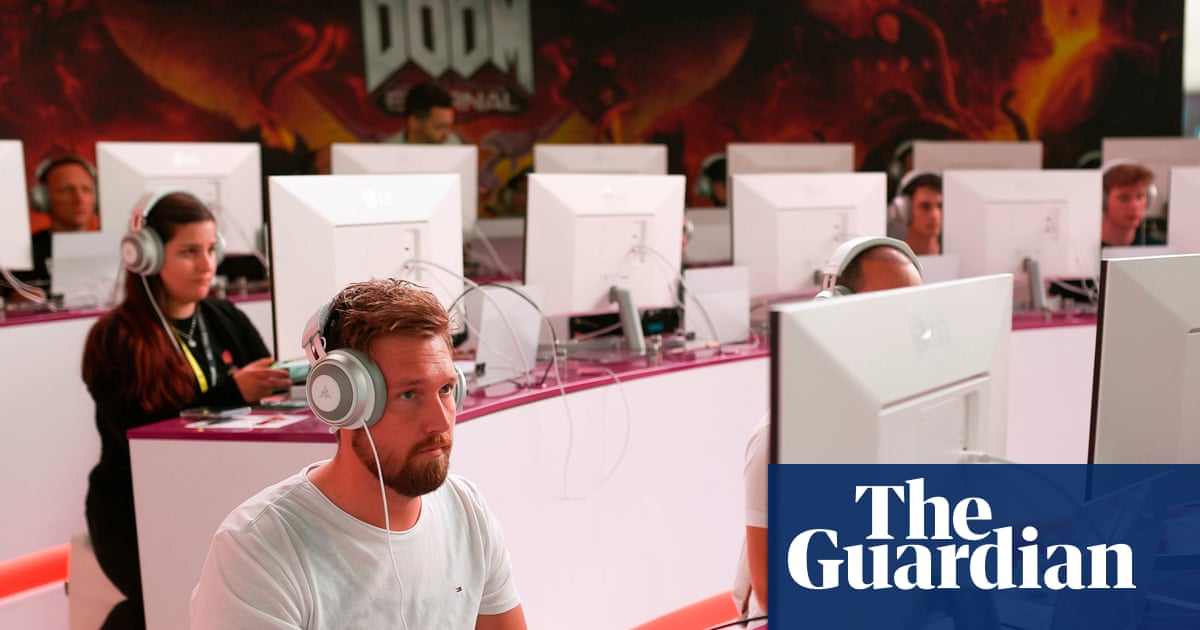
Driving sims were once all the rage – will Forza Horizon 6 get them back on track?

Games
Driving sims were once all the rage – will Forza Horizon 6 get them back on track?
Keith Stuart
Wed 20 May 2026 16.00 CESTLast modified on Wed 20 May 2026 16.03 CEST
News
https://www.theguardian.com/games/2026/may/20/pushing-buttons-forza-horizon-6

I have spent the last week careening around Japan in a Porsche 911, seeing the sights, racing other cars and occasionally veering off the road to plummet through an ancient bamboo forest. You all know what’s coming next … this wasn’t in real life, folks – it was in Forza Horizon 6 , the latest instalment in Microsoft’s series of open world driving games set in authentic-looking, real-world locations.

Reviewing this game (which is out now on Xbox and PC, and coming to PS5 later in the year) has reminded me of the sheer fun and exhilaration that driving games can provide. It’s easy to forget, but this was the biggest genre in town from the 1990s to the early 2000s. Consoles were sold on how good their racing games were: the original PlayStation had Ridge Racer, the Sega Saturn had Daytona USA. Later came the dirt-track thrills of Colin McRae Rally, the chaotic destruction of Burnout, the sophisticated realism of Gran Turismo. They were the bestsellers of the era, showcasing the future of real-time 3D visuals.

But then came time-sucking open-world fantasy adventures, mega-hit first-person shooters and the live-service behemoths Fortnite and Minecraft. The mainstream drifted away. Mario Kart hung about, of course, and there are still annual F1 and MotoGP titles, as well as hardcore sims such as Assetto Corsa Competizione and iRacing. But big-budget blockbuster racers have largely driven off into the, well, horizon.

It’s a shame because, as Forza Horizon 6 shows, there is so much joy in this genre. Driving sims are rare because they are, at their best, aspirational and relatable. Most adults who play games have driven a real car, so the experience is familiar – this is why from the late 1960s on, driving games were a staple feature of amusement arcades. At first that meant electromechanical oddities such as Kasco’s 1968 classic Indy 500, which used a rear projection system to display a simple road on the screen, but later came video games from Atari’s minimalist classic Night Driver to the 1980s legend OutRun. You put a machine with a steering wheel, a gear stick and an accelerator pedal in a seaside arcade and almost everyone would have a go.

Yet, racing games also provide a fantasy element. All drivers hold in our heads an idealised vision – an open-road, a glorious sunset, a fast convertible – that is often beyond reach. When Sega game designer Yu Suzuki designed OutRun, this is exactly what he set out to capture: you’re driving a Ferrari along coastal roads, listening to cool music on the radio, a beautiful girl by your side. It’s not about racing, it’s about living.

It’s tempting to say that gamers moved on because the technology allowed it. Circuit racing games became open world racing games (Test Drive Unlimited, Burnout Paradise), which became open world adventures such as Grand Theft Auto, where you could drive and shoot people. But I wonder if there were also deeper cultural, and even sociopolitical, elements at play. Driving in real life these days is about rapidly inflating fuel costs, traffic jams, pot holes and the growing sense that a car is like a white good: you should get something as functional, economical and environmentally responsible as possible. Perhaps driving games are like road movies – they spoke to a generation which saw the car as a source of freedom and excitement rather than expense, drudgery and environmental collapse.

All I know is that Forza Horizon 6 is incredible fun, and the chance to explore a compacted version of Japan has been wonderful. Perhaps it will spark a mainstream revival of the non-specialist driving game. Grand Theft Auto VI is also on the way later this year , and it will surely feature races and driving quests as part of its campaign and multiplayer offerings. I’m also hoping that the independent developer scene, currently drawing a lot of inspiration from the 1990s era of low-polygon 3D visuals, will come up with some crossover hit that exhumes the spirit of Ridge Racer and Daytona USA. Earlier this year, the Italian developer Milestone revived its Screamer title, a neon-drenched retro arcade racer, with some success. I think there will be more.

The escapist fast-car game is not dead – it’s just in a layby, revving up.

What to play

I am very into the trend of games that remix one or more genres into weird new experiences – à la Mythmatch , Titanium Court and Forbidden Solitaire – so I had to download Amberspire , by Lunar Division. It’s a sort of city building game, except you’re building the city on top of a giant mausoleum dedicated to a long-dead civilisation, and also, you get resources by rolling giant dice across the landscape and seeing what comes up.

In this way, urban planning becomes a chance-filled endeavour, rather than a purely intellectual task, and this sense of precariousness is amplified by the fact that in each turn, there is also an event dice roll that may suddenly inflict some ruinous storm on your brittle community. It’s an intriguing concept with an eerie mythology and ecological elements. If you enjoyed SimCity, but were frustrated by your inability to roll dice in order to decide the fate of your population like some sort of crazed deity, this one is for you.

Available on: PC Estimated playtime: 10-plus hours

What to read

Haters of gratuitous caps lock abuse, look away now. Microsoft has rebranded Xbox : from now on it will be XBOX . On 13 May, incoming CEO Asha Sharma put this vitally important change to fans via the democratically reliable medium of the Twitter poll, and 64% of voters were onboard, so here we are. XBOX!

Writer and academic Cameron Kunzelman considers the particular form and meaning of nostalgia found in the coming-of-age adventure, Mixtape, over on his blog, a question of machines .

Is the games-as-a-service era over? Gamesindustry.biz looks at the latest earnings figures and wonders whether the industry can learn anything from Capcom’s spate of successful (and sensibly budgeted) single-player titles.

What to click

How Forza Horizon took on Japan with deep research – and 360-degree cameras

Gotta catch an MP! Players ‘debate’ UK politicians in Pokémon-style game

From Smashing Pumpkins to Ferris Bueller: new Australian indie video game Mixtape is a blast of nostalgia

Question Block

A question from reader Jamie :

“I was telling my children about the ZX Spectrum and Commodore 64 games I used to love and I wondered if there are any museums where they could see and perhaps even play these glorious old machines?”

There are plenty of museums around Britain dedicated to computers. The largest are the National Museum of Computing in Bletchley, the Centre for Computing History in Cambridge (soon hosting a special event for the 50th anniversary of the Z80 processor, which powered the ZX Spectrum) and the Museum of Computing in Swindon. These all house a range of machines from the very first electronic computers to more recent models, including classic 8-bit micros such as the Speccy and Commodore. They also hold regular events and workshop sessions, so your kids could try programming in Basic or building little robots. There are plenty of smaller local museums too, including the Cave in Stroud and the Micro Museum in Ramsgate. I’d also recommend the National Videogame Museum in Sheffield, which always has playable exhibits. Oh, and watch out for occasional computing exhibitions and events at the National Museum of Scotland and the Science Museum in London.

Alternatively, you could just go wild and buy an old computer? You can get a ZX Spectrum or Commodore 64 in reasonable condition for around £50-75 on eBay or at a retro computing fair ( RetroFest an annual event dedicated to old home computers, is in Swindon from 30-31 May), although make sure it comes with all the leads and a compatible cassette player or disc drive. You’ll also need a TV with an RF cable port, or an adaptor that will convert the RF output to modern HDMI so you can plug it into an LED monitor. Although admittedly, this is quite a lot of expense and effort to go to just to show your kids Horace Goes Skiing.

If you’ve got a question for Question Block – or anything else to say about the newsletter – hit reply or email us on pushingbuttons@theguardian.com .

Rachel Reeves tells foul-mouthed Reform UK heckler good manners matter

Rachel Reeves
Rachel Reeves tells foul-mouthed Reform UK heckler good manners matter
Helena Horton
Thu 21 May 2026 10.30 CESTFirst published on Thu 21 May 2026 10.27 CEST
News
https://www.theguardian.com/politics/2026/may/21/rachel-reeves-foul-mouthed-reform-uk-heckler-good-manners-matter

Rachel Reeves surprised onlookers when she gave a stern rebuke to a foul-mouthed heckler who shouted at her from his van as she conducted a broadcast interview.

However, the chancellor has won support from unlikely sources, with Conservative politicians backing her response.

As Reeves answered questions from the media at a petrol station in Leeds after announcing she would scrap a planned fuel duty rise, she was heckled by a man who appeared to be a Reform UK supporter.

As he walked into the station to pay, he shouted: “Get Keir Starmer fucking out.” When he left in his van, he continued to yell at the chancellor: “Get Labour out. Get Keir Starmer out. Nigel Farage, Come on, Nigel.”

Driving off in his van, St George’s flags flying, he continued: “Am I going to get arrested? We’ve got English flags on here, Rachel. Are we going to be arrested? You’re ruining the country. Get Keir Starmer out. Look, England flags. Yous are useless. Labour party is useless.”

Reeves responded by saying: “I love our country, and one of the things about our country is good manners. Not very British.” She then joked that he appeared not to have heard her announcement about freezing fuel duty.

The shadow chancellor, Mel Stride, defended Reeves’s comeback to the heckler.

He told Sky’s Sophy Ridge: “On the point of good manners, she is right … our discourse around politics should be civil and polite and that’s part of being British and that’s something we should fight for.”

He added, however, that some people were right to feel “disappointed by decisions this government has taken” and said Reeves had made a “mess” of the economy.

The Tory peer Daniel Hannan said: “I sense that this is out of temper with the times but, for once, I am on Rachel Reeves’s side. Civility matters in politics and if we stop policing the boundaries, things slide very quickly. I’m afraid I don’t see it as remotely brave to shout at a woman while you drive away.”

Reform UK politicians did not share this view. Nigel Farage posted on X: “I’d like to buy this man a pint. Does anyone know how I can find him?”

Robert Jenrick, Reform’s spokesperson for economics, said: “He sounds British to me, Rachel! Good for him. This reaction explains why Reeves rarely leaves her bunker in Westminster.”

Zia Yusuf, Reform’s home affairs spokesperson, also offered him a future peerage, saying: “Could this legendary gentleman please get in touch. A future Reform government would like to give him a peerage for this outstanding public service. He can do similar to all the crooks currently sitting in the House of Lords!”

Republicans could abandon $1bn proposal for Trump’s ballroom – US politics live

US news
Republicans could abandon $1bn proposal for Trump’s ballroom – US politics live
Maham Javaid
Thu 21 May 2026 14.34 CESTFirst published on Thu 21 May 2026 12.39 CEST
News
https://www.theguardian.com/us-news/live/2026/may/21/donald-trump-ballroom-reconciliation-bill-republicans-democrats-war-powers-iran-epa-ai-latest-news-updates

Republicans could abandon $1bn security proposal for Trump’s ballroom complex

Hello and welcome to the US politics live blog.

Senate Republicans could strip Donald Trump’s lavish White House ballroom complex from the Department of Homeland Security funding bill after members queried the timing and lack of detail in the $1bn Secret Service request.

Facing pressure from the Trump administation, Republicans have tried to add the money to a roughly $70bn bill to restore funding to US Immigration and Customs Enforcement and the Border Patrol.

However, the security proposal met with backlash from some GOP lawmakers who are questioning the cost and how the taxpayer dollars would be used, AP reported. While the bill’s text has yet to be released, the Senate hopes to pass it this week and send it to the House before leaving for a week-long Memorial Day recess.

The dispute comes as Senate majority leader John Thune acknowledged “ongoing vote issues” on Wednesday with leaders attempting to measure Republican support, as well as “ongoing parliamentarian issues” as they try to figure out what will be allowed in the bill under the chamber’s rules.

“There’s always a consequence with taking on United States senators,” Thune said. “[The president] obviously has his favorites and people he wants to endorse and that’s his prerogative. But what we have to deal with up here is moving the agenda, and obviously that can become slightly more complicated.”

Republican senator John Kennedy said on Wednesday that the bill would be “back to square one” without the security money because “the votes are not there.”

Meanwhile, senator Thom Tillis said the effort to add the security package to the bill was a “bad idea” because he does not think there is enough backing to pass it, even if the cost were reduced. Axios reported recently that Tillis would not support the bill if it is considered this week.

Democrats have criticized Republicans for trying to fund Trump’s ballroom when voters are concerned about basic affordability issues.

In other developments:

The US issued a federal criminal indictment against Raúl Castro , Cuba’s former president, potentially paving the way for a US military raid to capture him.

Two police officers attacked by rioters at the US Capitol during the January 6 riot sued Donald Trump over plans to create a $1.776bn “anti-weaponization” fund.

Brian Fitzpatrick , a Republican congressman from a Philadelphia-area district carried by Kamala Harris in 2024, pledged on Wednesday to “try to kill” the $1.776bn slush fund created by Donald Trump ’s Department of Justice this week, which could be used to compensate rioters who tried to keep Trump in office after he lost the 2020 election.

Republican senator Bill Cassidy denounced two of Trump’s passion projects: $1bn in taxpayer funding for the White House ballroom the president can’t stop talking about, and the $1.776bn slush fund he plans to use to reward supporters who stormed the Capitol to try to keep him in office despite losing the 2020 election.

A former federal prosecutor in Florida pleaded not guilty on Wednesday to charges that she illegally emailed herself a copy of the unreleased special counsel report on Trump’s mishandling of classified documents.

In addition to the indictment of former Cuban leader Raul Castro and Trump’s comments about Cuba being a “failed nation,” US Secretary of State Marco Rubio delivered a direct video address to the Cuban people in Spanish Wednesday.

“The real reason you don’t have electricity, fuel, or food is because those who control your country have plundered billions of dollars, but nothing has been used to help the people,” he said.

Rubio spoke about GAESA, the Cuban military business conglomerate founded by Castro.

“Cuba is not controlled by any ‘revolution.’ Cuba is controlled by GAESA,” he said. “The only role played by the so-called ‘government’ is to demand that you continue making ‘sacrifices’ and repressing anyone who dares to complain.”

Video shows ICE violently arresting Oregon farm workers and using facial recognition

Body-cam footage shared with the Guardian shows US immigration officers forced farm workers out of a van, in what a judge has called ‘unlawful’ arrest, in Oregon, smashing their windows and using facial recognition software to try to identify one of them.

Videos from a 30 October 2025 operation were disclosed in court as part of an ongoing class-action lawsuit challenging Immigration and Customs Enforcement’s (ICE) arrest tactics and racial profiling by agents . Lawyers for one of the detained farm workers shared the footage with the Guardian.

The officers did not have warrants to detain the workers, and a federal judge later said the arrests appeared to be unlawful and unjustified .

The footage shows an agent using his phone to capture the face of one of the detained workers, and agents later admitted in court that they used a facial recognition app during the operation. The case provides a window into ICE’s expanding use of this surveillance technology across the US , which has raised significant privacy and civil liberties concerns , particularly since the app can yield inaccurate results .

A previously undetected outbreak of Ebola is coursing through parts of central Africa , and the US appears to be doing little to help stop it, after massive cuts to global and domestic public health efforts.

There is no cure and no vaccine for the rare Bundibugyo variant of Ebola, which has caused two outbreaks in recent decades. Health leaders and scientists are now racing to understand where the virus is spreading and attempting to stop it – but the US is notably absent in these efforts.

In the past year, the US Agency for International Development (USAID) has been dismantled, thousands of staff at US health agencies were laid off, communications stalled and key scientific research canceled.

There are 482 suspected cases and about 116 deaths reported since April in the Democratic Republic of the Congo (DRC), with two cases and one death in Uganda and potential spread to neighboring South Sudan. The outbreak “might have been going on for a few months”, said Kristian Andersen, a professor of immunology and microbiology at Scripps Research.

The outbreak was immediately declared a public health emergency of international concern (PHEIC) by Tedros Adhanom Ghebreyesus, the director general of the World Health Organization (WHO), before even convening the committee that usually makes that determination. Officials say it may last for months.

“The DRC is one of the most vulnerable health systems in the world, and was the second-biggest recipient of USAID funding,” said Matthew Kavanagh, director of the Center for Global Health Policy and Politics at Georgetown University. The US withdrawal of funding with “zero notice” has been “disruptive to the country’s basic activities”, he said.

US foreign assistance to the DRC dropped from $1.4bn in 2024 to $431m in 2025 and only $21m so far this year. Assistance to Uganda dropped from $674m to $377m in 2025 and a negative $1.2m so far in 2026.

President Donald Trump’s plan to build a triumphal arch in Washington is getting a second look from a federal agency that suggested changes before it approved the concept last month.

The proposed 250ft (76m) arch is one of several projects the Republican president is pursuing alongside a White House ballroom to leave his imprint on Washington.

He has said some of his other projects, such as adding a blue coating to the interior of the Lincoln Memorial Reflecting Pool , will beautify the city in time for 4 July celebrations of America’s 250th birthday.

The US Commission of Fine Arts, whose members were appointed by Trump, approved the concept for the arch at its monthly meeting in April.

Commissioners are set to consider and possibly vote on updated plans when they meet again on Thursday.

A prominent environmental organizer calling for a nationwide moratorium on data centers as he runs for the Democratic nomination in a swing Michigan congressional district has secured an endorsement from Bernie Sanders .

Will Lawrence, co-founder of the youth-led Sunrise Movement climate justice group, was a key figure behind the campaign for a Green New Deal to battle economic and racial injustice while also fighting climate change.

Now he’s running for US Congress, in a three-way Democratic primary to represent the party in Michigan’s purple seventh district.

“I learned at Sunrise just how important it is who is in office,” Lawrence, a Lansing native, said. The group made headlines in 2018 when it stormed the office of then House of Representatives speaker Nancy Pelosi, demanding a swift end to fossil fuels and a jobs guarantee.

Voters in Michigan’s seventh district voted for Donald Trump in the 2016, 2020 and 2024 US presidential elections, and also elected Republican Tom Barrett to Congress in 2024. But the district has been labelled a “toss-up” by the Cook Political Report ahead of November’s midterm elections, and is a key target for Democrats.

On Thursday morning Sanders, the influential independent US senator from Vermont, threw his support behind Lawrence.

In a statement, Sanders praised Lawrence as an “accomplished organizer” who will “demand real accountability for big tech and AI companies” as gargantuan data centers are constructed across the US .

Republicans could abandon $1bn security proposal for Trump’s ballroom complex

Hello and welcome to the US politics live blog.

Senate Republicans could strip Donald Trump’s lavish White House ballroom complex from the Department of Homeland Security funding bill after members queried the timing and lack of detail in the $1bn Secret Service request.

Facing pressure from the Trump administation, Republicans have tried to add the money to a roughly $70bn bill to restore funding to US Immigration and Customs Enforcement and the Border Patrol.

However, the security proposal met with backlash from some GOP lawmakers who are questioning the cost and how the taxpayer dollars would be used, AP reported. While the bill’s text has yet to be released, the Senate hopes to pass it this week and send it to the House before leaving for a week-long Memorial Day recess.

The dispute comes as Senate majority leader John Thune acknowledged “ongoing vote issues” on Wednesday with leaders attempting to measure Republican support, as well as “ongoing parliamentarian issues” as they try to figure out what will be allowed in the bill under the chamber’s rules.

“There’s always a consequence with taking on United States senators,” Thune said. “[The president] obviously has his favorites and people he wants to endorse and that’s his prerogative. But what we have to deal with up here is moving the agenda, and obviously that can become slightly more complicated.”

Republican senator John Kennedy said on Wednesday that the bill would be “back to square one” without the security money because “the votes are not there.”

Meanwhile, senator Thom Tillis said the effort to add the security package to the bill was a “bad idea” because he does not think there is enough backing to pass it, even if the cost were reduced. Axios reported recently that Tillis would not support the bill if it is considered this week.

Democrats have criticized Republicans for trying to fund Trump’s ballroom when voters are concerned about basic affordability issues.

In other developments:

The US issued a federal criminal indictment against Raúl Castro , Cuba’s former president, potentially paving the way for a US military raid to capture him.

Two police officers attacked by rioters at the US Capitol during the January 6 riot sued Donald Trump over plans to create a $1.776bn “anti-weaponization” fund.

Brian Fitzpatrick , a Republican congressman from a Philadelphia-area district carried by Kamala Harris in 2024, pledged on Wednesday to “try to kill” the $1.776bn slush fund created by Donald Trump ’s Department of Justice this week, which could be used to compensate rioters who tried to keep Trump in office after he lost the 2020 election.

Republican senator Bill Cassidy denounced two of Trump’s passion projects: $1bn in taxpayer funding for the White House ballroom the president can’t stop talking about, and the $1.776bn slush fund he plans to use to reward supporters who stormed the Capitol to try to keep him in office despite losing the 2020 election.

A former federal prosecutor in Florida pleaded not guilty on Wednesday to charges that she illegally emailed herself a copy of the unreleased special counsel report on Trump’s mishandling of classified documents.