Diabolic review – Mormon-country horror takes ayahuasca down to the creepy cellar

Film
Diabolic review – Mormon-country horror takes ayahuasca down to the creepy cellar
Mike McCahill
Thu 21 May 2026 08.00 CESTLast modified on Thu 21 May 2026 08.01 CEST
News
https://www.theguardian.com/film/2026/may/21/diabolic-review-mormon-country-horror-takes-ayahuasca-down-to-the-creepy-cellar

T hough it features few recognisable faces, this Australian-shot, US-set indie horror displays a core competency that gets it some of the way to where it’s heading – only to collapse in the final reels into the usual hacky manoeuvres. Ten years after fleeing a fundamentalist branch of the Latter-day Saints, snub-nosed artist heroine Elise (Elizabeth Cullen) has started shunning the attentions of boyfriend Adam (John Kim), instead obsessively digging holes in the couple’s back garden and trashing the living room in the middle of the night. Could it have something to do with the grimy cellar door she feels compelled to paint, or the traumatic baptism we witness in a pre-title sequence? What are the chances?

For somewhere between half and two-thirds of its running time, we’re watching a diagnostic case study: Elise and close pals return to Mormon country – more specifically, the in-no-way ironically named hamlet of Haventon – to undergo a regression therapy involving an ayahuasca variant; this will strike anyone as ill-advised even before an actual cellar door is uncovered outside and everybody starts throwing up. (Cue the especially dreadful line: “She must have torn internally.”) Thereafter, flashbacks reveal what’s been suppressed or concealed: the younger Elise’s growing closeness to the bishop’s daughter Clara (Luca Sardelis) would seem to indicate our girl isn’t possessed, merely bisexual.

The results prove middling at best, not on any level dealing the knockout blow that religious conversion practice deserves; nor is it ever the campy scream the set-up might have licensed. Cinematographer Michael Tessari gives matters a wintry, low-lit, persuasively un-Australian look, and gathers the odd suggestive image, like a dream sequence scattering of petals. More of that would have done Diabolic a world of good, but co-writer and director Daniel J Phillips heads the other way, cranking up the soundtrack’s parping and underlying Mormonphobia with supporting players going heavy on the repression and hysteria.

Diabolic is on digital platforms from 25 May.

Arsenal to reward Mikel Arteta with huge pay rise and put Kroupi among transfer targets

Arsenal
Arsenal to reward Mikel Arteta with huge pay rise and put Kroupi among transfer targets
Ed Aarons
Wed 20 May 2026 14.52 CESTLast modified on Thu 21 May 2026 06.12 CEST
News
https://www.theguardian.com/football/2026/may/20/arsenal-mikel-arteta-new-contract-pay-rise-kroupi-alvarez-transfer-targets

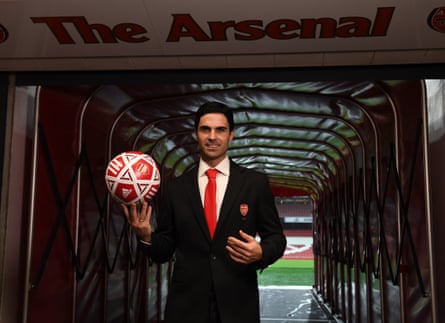
Arsenal will reward Mikel Arteta for ending Arsenal’s 22-year wait to be champions by offering him a ­lucrative new contract that will cement the Spaniard’s status as one of the best-paid managers in the world. The club are also well advanced with plans to strengthen his squad.

Talks over extending Arteta’s deal beyond next summer were put on hold while Arsenal battled it out with Manchester City in the Premier League, although insiders insist there was an expectation he would have stayed even if the season had ended without a trophy. The 44-year-old has become the second-youngest manager to win the Premier League, after José Mourinho with Chelsea in 2005, and matched Kenny Dalglish’s achievement with Liverpool in 1986 in ­making a team top-flight champions in his first ­senior management job.

Arteta has transformed Arsenal since he was appointed in December 2019 and it is understood his new deal is likely to reflect his achievements.

His contract is believed to be worth about £10m a season, plus a £5m bonus for reaching the ­Champions League, but Arteta will be offered a large ­salary increase that some sources have predicted could mean he comes close to matching ­Atlético Madrid’s Diego ­Simeone. He is thought to be the world’s best-paid manager, earning a reported €30m (£26m) a year. Pep Guardiola is paid a reported £20m a year by ­Manchester City. Arteta will become the longest-serving manager in England’s top four divisions when Guardiola steps down after Sunday’s final Premier League game.

Arteta, the eighth manager to lead Arsenal to the title and first since Arsène Wenger in 2004, will resume talks after the Champions League final against Paris Saint-Germain a week on Saturday.

Arteta has been heavily involved in recruitment plans with the sporting director, Andrea Berta. The co-chairs, Stan and Josh Kroenke, promised in their programme notes for Monday’s win over Burnley that “there will be no standing still when the season ends”. There is unlikely to be the same outlay on players as the £250m Arsenal spent last summer, but funds are in place to make a marquee signing to rival the purchase of Declan Rice for a then-British record £105m in 2023.

Eli Junior Kroupi, the ­Bournemouth striker whose goal against City helped Arsenal seal the title on Tuesday, is a target, although his club could value the 19-year-old at about £80m. He broke the league record held by Robbie Fowler and Robbie Keane for most goals scored by a teenager in his debut season with his 13th on Tuesday and joined the agent Moussa Sissoko – whose ­clients include the reigning Ballon d’Or ­winner, ­Ousmane Dembélé – this year in anticipation of a summer move. Kroupi, who has also been scouted by Real Madrid and Chelsea, is regarded as an option for the left of Arsenal’s attack as well as someone who could compete with Kai Havertz and Viktor Gyökeres for a central role.

Arteta has made a forward his ­priority and there is strong ­interest in Julián Alvarez, although it is unclear how much Atlético would demand for the Argentina international. Khvicha Kvaratskhelia would be the dream signing, but PSG are not expected to entertain offers for the Georgian.

Other longstanding targets include Kvaratskhelia’s teammate Bradley Barcola, Nico Williams of Athletic Bilbao and Newcastle’s Anthony Gordon, who also interests Bayern Munich. Gabriel Martinelli would be allowed to depart if a ­suitable offer arrived.

Interest in Newcastle’s Sandro Tonali could be revived, but Myles Lewis-Skelly’s performances as a midfielder may persuade Arteta to prioritise elsewhere. Ethan Nwaneri’s future looks less secure. He spent the second half of the season on loan at Marseille after signing a new five-year contract in August and is wanted by clubs including Borussia Dortmund.

There could be a handful of other departures, with Christian ­Nørgaard linked with Ajax after playing 56 minutes in the Premier League since his move from Brentford last year and Gabriel Jesus – among the club’s top earners and with a year of his £250,000-a-week contract remaining – also ­surplus to requirements.

Arsenal are in talks with representatives of the 16-year-old Leicester winger Jeremy Monga, who this season became the youngest goalscorer in Championship history, over a potential move that would involve a compensation fee being paid for the England Under-19s international. They have this year signed the defender Jaden Dixon from Stoke and the Scottish striker Evan Mooney to boost their youth ranks.

SpaceX reveals plan for $1.75tn stock market debut that could make Musk a trillionaire

SpaceX
SpaceX reveals plan for $1.75tn stock market debut that could make Musk a trillionaire
Nick Robins-Early
Thu 21 May 2026 00.57 CESTFirst published on Wed 20 May 2026 23.22 CEST
News
https://www.theguardian.com/science/2026/may/20/spacex-finances-stock-market-debut

SpaceX unveiled its plans to list publicly on the US stock market Wednesday, disclosing its investor prospectus and revealing details about its financials for the first time. Elon Musk ’s rocket and satellite operations company will go public on the Nasdaq exchange at a valuation of about $1.75tn under the symbol SPCX, likely on 12 June. It is seeking up to $80bn in investment.

The company, which is the world’s most prominent rocket maker and which has extensive contracts with the US government, confidentially filed for an IPO last month. The filing allowed for a period of regulatory review before the details became public.

“Our mission is to build the systems and technologies necessary to make life multiplanetary, to understand the true nature of the universe, and to extend the light of consciousness to the stars,” SpaceX declared in its filing.

SpaceX has grown since its founding in 2002 into the most valuable piece of Musk’s vast tech empire. Its forthcoming IPO also stands to make the world’s richest person even wealthier, moving him closer to becoming a trillionaire from a current net worth of $807bn, according to Forbes .

The disclosure on Wednesday shed light on SpaceX’s usually secretive finances, showing that it is plowing billions of dollars into AI and had a capital expenditure last year of more than $2obn against $18.7bn in revenue for 2025. It also showed that the company lost over $4.2bn in the first three months of 2026.

The company also revealed in its prospectus that its connectivity segment, which includes its Starlink satellite internet provider, has been the strongest pillar of its business. The connectivity segment brought in over $3.2bn in revenue between January and end of March 2026 alone and $11.4bn in 2025.

While SpaceX for years touted its mission of expanding humanity to Mars, that goal has been sidelined amid several other plans that include creating data centers in orbit to help fuel the AI boom and expanding its Starlink services. The company also acquired Musk’s AI firm, xAI, in February.

The disclosure takes some of the eyes off of Musk’s loss earlier this week in his court battle with OpenAI and its CEO Sam Altman . A federal jury found, after a three-week long trial, that Altman and OpenAI were not liable for Musk’s claims that he broke a founding agreement of the business and unjustly enriched themselves.

SpaceX’s investor prospectus lists OpenAI along with other major AI firms such as Anthropic as key competitors to its business. All three businesses are set to go public this year, each at valuations of hundreds of billions or more than a trillion dollars, in what is one of the most blockbuster periods for public offerings in market history.

‘Spooks hotel’: inside the five-star nerve centre of the US takeover of Venezuela

Venezuela
‘Spooks hotel’: inside the five-star nerve centre of the US takeover of Venezuela
Tom Phillips
Wed 20 May 2026 11.00 CESTLast modified on Thu 21 May 2026 06.09 CEST
News
https://www.theguardian.com/world/2026/may/20/venezuela-hotel-us-takeover

O ver breakfast in one of the swankiest hotels in Caracas, you can hear them mulling Venezuela’s past, present and future in sporadically hushed tones. As diners tuck in to plates of fried eggs, black beans and arepas, snatched fragments of conversation speak of election roadmaps, political fragmentation and oil-fuelled economic growth.

But the murmured discussions are not being conducted in Caribbean Spanish by Venezuelan officials pondering their country’s direction after the abduction of President Nicolás Maduro. The accents are North American and belong to the US officials, diplomats and spies now calling many of the shots here after Donald Trump’s controversial military intervention on 3 January. Neighbouring tables are occupied by huddles of musclebound US marines, tattoos covering their bulging calves, baseball caps covering their heads, and walkie-talkies strapped to their hips.

“How long will you be staying, sir?” a receptionist asks one of countless US government guests as they check in downstairs in the lobby.

“Oh, 26 or 27 days,” the man replies in thickly accented Spanish.

Since Trump’s decision to snatch Maduro in January and reboot relations with his successors, the five-star hotel has become the nerve centre of Washington’s efforts to steer a country some now call a US protectorate – and which Trump has even said he hopes to turn into the 51st state .

“It’s [effectively] the US embassy. I don’t think anybody’s going to work at the actual embassy,” said Phil Gunson, a Caracas-based political analyst for Crisis Group.

Having been closed for seven years since the collapse of diplomatic relations in 2019, “the embassy building is full of rats and cockroaches, and it’s being fumigated ,” Gunson explained.

The conversations that can be overheard in the JW Marriott’s restaurant offer a fascinating insight into Venezuela’s plight as it emerges from nearly 13 years of economic mayhem and authoritarian rule under Maduro.

One sunny afternoon a North American energy specialist sat on the veranda, holding a conference call with colleagues back home about the dire state of Venezuela’s electrical grid – the cause of frequent blackouts, even here in the capital.

“The distribution is a mess – that’s the biggest issue right now … the wiring, the transformers – and the software is a mess,” he said, before grumbling: “The Chinese came in and did their little Chinese thing, which did not work.”

Another morning, diplomats debated the likelihood of fresh elections, which opposition leaders hope will soon be called but which Maduro’s heir and former vice-president, the interim president, Delcy Rodríguez, seems in no rush to hold.

Throughout the day, English-speaking officials and fortune hunters can be seen roaming the 17-floor redbrick building, which has nearly 300 rooms, a gym and a palm-flanked pool. Bullet-proof SUVs wait outside to ferry guests, who include Trump’s top diplomat to Venezuela, John Barrett, around town. Two buildings down the street, not far from the stock exchange, a large propaganda poster of a smiling Maduro still hangs from a government office.

In the hotel’s restaurant, corridors and meeting rooms, patrons and visitors plot what some locals call “the corporate takeover” of Venezuela to the sound of Brazilian bossa nova. One particular favourite on the hotel playlist is Tom Jobim’s Triste, the Portuguese lyrics of which offer a poetic word of caution to any gringos hoping to decide the South American country’s future. “It’s sad to know that nobody can live off fantasies, that will never come to pass, that will never happen. The dreamer must wake up,” the song warns.

Across the street sits the Juan Sebastian Bar, a jazz and salsa nightclub named after Johann Sebastian Bach, where foreign visitors can let off steam.

If the $250-300-a-night JW Marriott – or “the spooks hotel” as some journalists call it – is the HQ of the US presence in Venezuela, it is at another luxury hotel a few miles away where many of the big-money deals are being done.

Since Maduro’s downfall, foreign tycoons have been flocking to the Cayena, where rooms cost about $600 a night, wagering that even if Rodríguez stays in power and there is no transition to democracy, Venezuela’s economic future looks bright.

One deal-maker who has spent time there recalled encountering at least four foreign billionaires they could identify – but believed there were others whose names they did not know. “They never give you a card. They don’t give you their last names … and what is very interesting to me is that they are all asking about the same things: mining and privatizations,” they said.

The Trumpian takeover has generated widespread discomfort, even among patriotic members of Venezuela’s elites who were glad to see the back of Maduro but privately bristle at the suggestion that their country is being turned into a US colony. After giving Rodríguez his blessing in January, Trump warned she would face an even worse fate than Maduro if she failed to toe the US line.

On the streets there is anger too. During a Workers’ Day rally on 1 May, a socialist economist called Oswaldo Pacheco marched towards a line of riot police wielding a white banner denouncing the government’s “neocolonial collaboration” with Trump. “It’s a complete capitulation,” complained Pacheco, 53, accusing Venezuela’s new rulers of following US orders “to the letter”. “Clearly these [US] demands are not about bringing us democracy but about plundering our resources and increasing worker exploitation,” he said.

Among Caracas-bound capitalists the mood is buoyant, even if huge doubts remain over Venezuela’s future and, above all, its democracy.

At a third luxury hotel, the Renaissance, a Venezuelan oil man waxed lyrical about his country’s post-Maduro prospects. “This is going to be the best country in the world,” he predicted, declaring: “I’m more than optimistic.”

‘He had a unique ability to be human’: late-night TV says goodbye to Stephen Colbert

Stephen Colbert
‘He had a unique ability to be human’: late-night TV says goodbye to Stephen Colbert
David Smith
Wed 20 May 2026 11.00 CESTLast modified on Wed 20 May 2026 17.38 CEST
News
https://www.theguardian.com/tv-and-radio/2026/may/20/late-night-tv-says-goodbye-to-stephen-colbert

H ugh Jackman sang a parody of Neil Diamond’s Sweet Caroline. Bette Midler performed a satirical rewrite of Wind Beneath My Wings. John Lithgow wrote and recited a poem entitled The Mighty Colbert. Jake Tapper hand-delivered a painting of Colbert as Gollum from The Lord of the Rings. And Jimmy Fallon offered a pointed take on Frank Sinatra’s My Way: “And now the end is near / And so you face the final curtain / But Trump, he made it clear / He wants you gone / Of that we’re certain.”

A roll call of celebrities have made pilgrimage to the Ed Sullivan Theatre in New York in recent months to join a long goodbye to CBS’s The Late Show With Stephen Colbert, honouring a voice that will be sorely missed from the national conversation when the lights go dark on 21 May.

Colbert, 62, has provided a nightly antidote for millions of viewers feeling discombobulated at the end of another day in Donald Trump’s dystopia. He cut through the malign chaos to reassure them that no, it was not them going mad but the world around them. And he offered a contrast in character: where Trump is vainglorious, Colbert is irreverent; where Trump is narcissistic, Colbert exudes empathy; where Trump is indecent, Colbert manifests decency to the core.

When CBS announced last July that the Late Show would be cancelled, ending a 33-year television institution hosted first by David Letterman then Colbert, many found the timing suspicious. The move came just three days after Colbert used his monologue to ruthlessly mock a $16m legal settlement between CBS’s parent company Paramount and Trump – and just a week before Paramount’s $8bn merger with Skydance was approved by federal regulators.

CBS claimed it was “purely a financial decision against a challenging backdrop in late night”. Letterman, for one, isn’t buying it. “I’m just going to go on record as saying: They’re lying,” he told the New York Times earlier this month. “They’re lying weasels.”

For a generation late-night TV was ruled by Johnny Carson on NBC. Carson retired in 1992; a year later CBS launched The Late Show with Letterman as host (it has now outdone Carson’s version of The Tonight Show for longevity). Colbert took over the desk in 2015, having previously portrayed a bombastic, rightwing blowhard on Comedy Central’s The Colbert Report .

Bill Carter , the author of four books about TV, including The Late Shift, says: “I thought he was brilliant almost beyond description in his previous late-night show. It was like no one’s ever done. He was doing essentially a sketch for nine years. It was satire on such a high level.”

Carter was therefore not surprised when Colbert landed the Late Show job and recalls interviewing him about it. “I said, you must be looking forward to this because you just have to be yourself, and he said something like, well, you know, I’m not sure yet, it’s going to be different.

“And darn if he wasn’t wrong-footed by it when he started. I remember thinking he doesn’t look comfortable at all. He did struggle and he was definitely on the ropes. He was disappointing the management and I think Les Moonves , who was running CBS at the time, basically gave Stephen a bit of an ultimatum: you’ve got to get the thing working.”

That he did, with the help of two men in 2016. First there was Chris Licht , a producer with a background in news rather than entertainment, who was brought in by Moonves as showrunner. Under his guidance, Colbert stopped trying to be a traditional host and embraced his satirical intellect.

Carter comments: “He focused more on politics. He gave himself a voice and he got better and better at being a monologist, which is something he had never done; he was a sketch performer his whole life. Once he started to get it, he really got it. He is a very bright man with great comedy instincts. I was happy for him that he solved it and he went on to have the highest ratings in late night.”

Second, and more improbably, was Trump, whose political ascent changed everything. Each night Colbert delivered a perfectly honed mini-state of the nation address – caustic, piercing, witty, redemptive – that included his own Trump voice impression. Future historians struggling to comprehend this era could do much worse than study them. For a comedian finding his authentic voice, the 45th and 47th president was the ultimate catalyst.

Stephen Farnsworth , a co-author of Late Night With Trump: Political Humor and the American Presidency, says: “If late-night comedy wanted to build a foil, it would look just like Donald Trump.

“You’re talking about someone who is an extraordinarily target-rich environment for late-night humour: his bluster, his demeanour, his inconsistency, his aggressiveness – all of these things create a very rich environment for mockery. The Arc de Trump , ingested bleach, arguing that an election he lost he didn’t really lose. This is a through-the-looking-glass time in American politics.”

This represented a shift from Carson’s gentler, mostly apolitical humour. But in a recent New York Times interview , Colbert rejected the notion the late-night hosts have become politically partisan. He said: “I don’t have any problem with Trump being a Republican. I have a problem with Trump being a complete narcissist who is only working for his own interest and does not appear to care if the entire world burns. That’s not a partisan position.

“I have eyeballs and ears, and I think calling late-night partisan is just roughing the ref. And we don’t even want to be refs, but they perceive us as refs. I reject the partisan description. Partisan means you’re never, ever going to make a joke about a Democrat, and that’s just not true. There’s just no comparison of how fertile the fields are.”

Colbert offered more than mockery. There was also a moral anchor in the monologues that despaired of Trump but never despaired of America, the sensitive interviews with everyone from Anderson Cooper to John Oliver and from Bernie Sanders to Neil deGrasse Tyson, the references to his Catholic faith, the lack of bitterness about his own sacking and a recurring segment with his wife Evie McGee Colbert, an advertisement for how a marriage can age like a fine wine.

David Litt , an author and former speechwriter for Barack Obama, comments: “He’s been an important satirical voice but I actually think he has also been an important moral voice. We’re not living in particularly kind times and Colbert always obviously had a strong point of view, which is why Trump worked so hard to get him cancelled, but he also seemed like there was a fundamental kindness to him, and a generosity.

“One of the things I remember most was the interview he did with Joe Biden , where they both talked about the tragedies they’d experienced in their lives and what grief had meant to them. That’s a hard kind of conversation to imagine happening on late-night television in general. Colbert could pull that off and I don’t know how many other people could. That’s not a dig at them; it’s just saying he had a unique ability to be human.”

Colbert was 10 years old when his father and two of his brothers were killed in a plane crash . He brought a unique emotional honesty to the late-night genre. Carter observes: “As Johnny Carson once said, if you do this show long enough, who you are comes out and is going to be transparent to people.

“That is true of Stephen. He is a very human guy, a very deep guy, and he did suffer a terrible loss when he was a child and it shaped him . People who watch these late-night shows like seeing the human side of this guy. If they are going to spend time with him on a relatively frequent basis, they want to know who he is .”

Yet this profound connection with audiences, the highest ratings in late night and last year’s Emmy award for outstanding talk series were not enough to save Colbert from becoming collateral damage in Trump’s full-front assault on US democracy.

Trump had sued Paramount over a 60 Minutes interview with Vice-President Kamala Harris. Critics widely viewed the settlement as an attempt to clear hurdles ahead of Paramount’s pending sale to Skydance Media – a merger that required approval from the Trump administration. Colbert did not hold back , declaring on air that the legal term for the deal was a “big fat bribe”, adding, “I don’t know if anything – anything – will repair my trust in this company. But, just taking a stab at it, I’d say $16m would help.”

Trump’s response to The Late Show’s demise was swift and vindictive. On his Truth Social platform, he proclaimed: “I absolutely love that Colbert got fired. His talent was even less than his ratings. I hear Jimmy Kimmel is next. Has even less talent than Colbert!” Kimmel was indeed taken off the air by ABC for a week and has recently faced renewed attacks.

Late-night TV has been facing economic pressures for years . Ratings and ad revenue are down and many young viewers prefer highlights online, which networks have trouble monetising. Even so, Carter is among those who remain sceptical about CBS’s reasons for pulling the plug on Colbert.

He says: “They have said it had nothing to do with politics. At some point you have to say, come on folks, we’ve seen the president attacking these people and doing everything he can to get them off the air and they had to get approval from the government to get their sale through. It’s not hard to connect those dots.”

The Late Show will be replaced by Comics Unleashed , a syndicated talkshow that features standup comedians joking with host Byron Allen. Carter regards the move as effectively waving a white flag for late-night TV. “They are saying to the public: this is something we’re not gonna try to do any more. We’re not going to try to have an entertainment show at 11.30 that has a star who is a signature star and basically the face of the network.”

Farnsworth warns of a chilling effect. He says: “It’s been a challenging environment for late-night comedy because of these increasing commercial pressures. You have an environment where Kimmel is pretty regularly under siege, where questions of ABC licence renewals and demands to be taken off the air arise from time to time.

“You have growing conservative ownership of key media properties and a growing aggressiveness to use the FCC [ Federal Communications Commission ] as a weapon to reduce criticism of the president. That creates a very difficult environment for media companies but the opportunity continues to exist for more combative content to exist in places away from the television networks on cable.”

This could be Colbert’s next move, Farnsworth speculates. “There may be a third act, if you will, for Colbert but it’s not clear yet what shape that might take. There’s certainly an audience that would follow him if he were to go to HBO or some place so we’ll have to see where he finds his most compelling offers.”

The JRR Tolkien superfan is already working on a script for Warner Bros for a new Lord of the Rings film. And in a recent interview filmed at Barack Obama’s new presidential centre in Chicago, Colbert said: “How dumb do you think it is for people to say I should run for president?”

Obama replied: “The bar has changed. Let me put it this way: I think that you could perform significantly better than some folks that we’ve seen. I have great confidence in that.”

Colbert thanked Obama and asked if this was a formal endorsement. “It was not,” the 44th president said.

For Carter, a Colbert presidential campaign would be no more ridiculous than that of Trump, previously a reality TV star on The Apprentice . “Colbert is a thoughtful, smart man who hasn’t had 20 women accusing him of sexual impropriety and everything else. He does have enough credentials to run for president: smart guy, incredibly good on TV, etc. He’s a very talented man.”

Carter adds: “I don’t think he wants to retire. He’s made no noise about that. If he has a plan, I haven’t heard about it. There’s a range of things he could do from going on cable to doing a podcast thing like Conan O’Brien does to Broadway. Why couldn’t he do a one-man show? He has a lot of skill, he can do whatever he feels like doing, but I think he mostly wanted to do what he was doing, so that’s a shame.”

Open plan is not the answer: design professionals on the dos and don’ts of small space living

Homes
Open plan is not the answer: design professionals on the dos and don’ts of small space living
Doosie Morris
Wed 20 May 2026 17.00 CESTLast modified on Thu 21 May 2026 08.47 CEST
News
https://www.theguardian.com/lifeandstyle/2026/may/21/tiny-homes-design-ideas-advice-professionals-small-living-spaces

In 2010 Colin Chee picked up the keys to his 37 square metre off-the-plan apartment in Melbourne’s city centre. “It was only then that I realised how shit it was.”

With no design experience and a limited budget, his quest to find inspiration eventually led to the birth of Never Too Small, a YouTube channel showcasing clever designs for small spaces from around the world. Launched in 2017, it now has more than 3 million subscribers.

A housing crisis and a surge in apartment building means more Australians are searching for ways to make the most of small-scale abodes.

This weekend Chee will join Claire Scorpo, a director of Agius Scorpo Architects, and Tahj Rosmarin, a director of Card Practice, for Small Spaces, Big Living – a free talk at the National Gallery of Victoria . In the lead-up to the event they share their experiences of designing their own diminutive domiciles.

Formulate your furnishings

When we move into a new space the first instinct is to settle in as quickly as possible. But Chee cautions against hasty fit-outs in smaller spaces. He urges people to move in with whatever they have that fits, then take time to live in a space before trying to find solutions.

“People think a home needs to be finished instantly,” Chee says. “But what I try to convey is that homes will never be perfect.”

Small spaces take more time to understand, he says, and we should regard our living spaces like a flatmate; with pros and cons, good days and bad.

When he moved into the 40 sq m converted warehouse he now shares with his partner, those extra 3 sq m felt like a luxury.

To keep costs down the apartment was furnished with a mix of second-hand items and budget customisations. Economical solutions, Chee says, are essential for most people living in tiny homes: “If I was rich, I’d live in a bigger house. Budget is our biggest consideration.”

In the kitchen Chee placed a bar fridge and a separate small freezer to avoid the bulk of one large unit. He installed a DIY entryway shelf, months after moving in, once he was clear on the purposes it needed to serve. He looked for “skinny legs” when sourcing furniture, which he says maximises the floor space you can see, giving an illusion of spaciousness. Instead of a coffee table, he says, “maybe you just need a stool for your drink” that can double as a step ladder.

Rosmarin installed a piece of multifunctional custom joinery along the main wall of the living space in his North Melbourne apartment. He and his partner store their camping gear beneath the bench seat in their dining nook. Measuring six metres long, the piece also functions as a display shelf and a television cabinet. At a cost of about $5,000 it wasn’t cheap but it serves so many purposes – “It just removes the need for any other furniture.”

Don’t default to an open plan

Rosmarin says 1960s walk-ups like his have great external features but inside the trend was to box everything off, making things feel pokey.

“What we tried to do is connect the spaces a bit better while still keeping that sense of separation, because that is especially important for small homes – you don’t want to feel like you’re in just one big room.”

Rather than demolish the wall between the kitchen and living areas, the couple knocked through a cafeteria-style window.

“It created a bit of visual connection so that when you’re in the kitchen, you can see people in the living area but it also hides all the mess.”

Demolishing load-bearing walls is expensive, he adds, “so creating these tactical openings” also helps with the budget.

When Scorpo and her husband – who’s also her business partner – moved in together at the Cairo block in Fitzroy, it was a badly renovated bedsit.

In the tiny bathroom, they managed to retain the bath and divided the space in half using a fluted glass partition that diffuses light, while breaking the room into separate dressing and bathing areas.

The most sanity-saving design choices keep rooms usable for different purposes by two people at the same time,” she says. “We get lured into the idea that open-plan living is the best kind of design for small spaces but often that one big space can only do one thing at once.”


Make use of vertical space

With just 23 sq m of floor space to work with, Scorpo’s first step was to downsize to a double bed. And rather than let it dominate the space, the couple created a “nook” to conceal it. As long as you don’t have mobility issues, Scorpo says, it makes sense to eliminate wasted bedside space, elevate the bed for storage – a washing machine, in their case – and climb in.

Scorpo’s is custom designed and built but Chee says there are countless “hacks” online that make DIY bed elevation more affordable. Having set themselves a $5,000 budget to upgrade their space, he and his partner leaned into Ikea and Bunnings solutions that emulate custom options while being considerably cheaper.

“We used an Ikea Elvarli modular shelving system, salvaged some wood for the shelves and had that cut to size,” Chee says.

While Chee’s Federation conversion has 3.3-metre-high ceilings, for apartments with more standard dimensions, raising shelving and curtain rods as close as possible to the ceiling accentuates height. Painting those ceilings with a glossy paint, he says, adds to the illusion too.

Small Spaces, Big Living is one of four free talks at the NGV on 23 May. The Interior Design Today series is part of Melbourne Design Week

How often should you go to the toilet? How can you get the better of wind? Experts’ tips for a healthier gut

Life and style
How often should you go to the toilet? How can you get the better of wind? Experts’ tips for a healthier gut
Sarah Phillips
Thu 21 May 2026 06.00 CESTLast modified on Thu 21 May 2026 06.01 CEST
News
https://www.theguardian.com/lifeandstyle/2026/may/21/how-often-should-you-go-to-the-toilet-how-can-you-get-the-better-of-wind-experts-tips-for-a-healthier-gut

Think balance, diversity and routine

“Our gut is a complex machine,” says Dr Ajay Verma, a consultant gastroenterologist at Kettering general hospital in Northamptonshire. “It is constantly providing us with the nutrition we need, initially to grow and develop, and then for us to survive, thrive and repair from injury and illness.” How can we keep it functioning well? Put simply: “Make sure what you put into it is balanced, and that you clear out its waste products adequately,” says Verma.

“In a general gastroenterology clinic, the most common conditions we see are irritable bowel syndrome (IBS), gastroesophageal reflux disease, inflammatory bowel disease and constipation,” says Dr Nisha Patel, a consultant gastroenterologist and interventional endoscopist at Imperial College healthcare NHS trust in London. “A healthy gut is built on three main things: balance, diversity and routine.”

Give your gut a break

The starting point for good gastric health is focusing on a diet that is high in fibre, fruit, vegetables, legumes and wholegrains, says Patel, and avoiding irritants: “alcohol, caffeine, fatty or spicy foods and artificial sweeteners. We know that large, late meals can also trigger gastrointestinal symptoms.”

Ultimately it is about “everything in moderation and giving your gut a break sometimes”, says Verma. “If you’ve had a heavy, rich meal one day, then the next day have something a bit lighter, so it can recover from the excesses.”

“Studies have shown that a Mediterranean diet leads to better digestive health,” says Dr Nurulamin Noor, a clinical lecturer in gastroenterology at the University of Cambridge and Cambridge University Hospitals. “So eat plenty of fruit, vegetables and fish, and try to reduce or have a low intake of processed foods, high dairy foods and red meats.”

What are some of the best things to eat to aid digestion? “Kiwi is one of the most effective dietary interventions for constipation,” says Verma. “We also recommend linseeds or flax seeds, because these are low-cost, natural laxatives that are very well tolerated. Stir them into yoghurt with some fruit.”

Get involved with fibremaxxing

It is likely that you aren’t consuming enough fibre. “ Over 90% of Americans don’t meet their fibre goals,” says Dr Wendi LeBrett , a California-based gastroenterologist; a 2023 report found that 96% of British people aged 11 and up don’t eat enough fibre, either. The accepted recommendation is 25-35g of fibre per day depending on your size, and a few servings of fruit will help you on your way, LeBrett says: “An apple has about 4g of fibre. Then for lunch or dinner, a serving of beans can get you 5-6g of fibre.” From almonds to broccoli to oranges , you often have to consciously choose fibre to meet the target, says LeBrett. “Some people need to take a fibre supplement to reach that goal.”

If you don’t have digestive issues, it is still well worth trying to max out on fibre . “We know there is a strong association between how much fibre you have and a lower risk of getting colon cancer,” says LeBrett. “It feeds your gut microbiome, and that plays a role in your mood, skin and many other factors around your body. Fibre has been shown to be beneficial for cardiometabolic health : it helps with blood sugar regulation, cholesterol and overall heart health.”

For those focusing on protein, Verma says: “You may be having more protein in your diet to help with muscle building and the way your body functions, but that may mean you reduce how much fibre you have.” Again, being mindful of balance is key; add more fibre where necessary, says Verma.

More fibre can help to deal with wind, too. “Wind to a degree is a normal phenomenon as we digest our food,” says Verma. “If you have a lot of wind, it is probably because you’ve got stuff sat in your bowels for longer than it needs to be. Increase the amount of fibre in your diet to clear your bowels as much as possible.”

Cut down on UPFs

“We’re in a bit of a mess with bowel cancer,” says Verma. “We are seeing more and more people with these cancers under the age of 50 , with high profile-cases such as Deborah James and Adele Roberts . We are still not fully sure why these cancers are rising among younger people, but some have suggested, without concrete evidence, that ultra-processed foods (UPFs) may be a component of that.”

“It is virtually impossible to have a UPF-free diet,” continues Verma. “Having a burger is not a terrible thing: having a burger twice a day, every day for a week, is a problem. Make sure you are having regular meals, that a proportion of them are fresher, and you have plenty of fruit and vegetables, so you are getting all the vitamins and minerals you need.”

And take up bowel cancer screenings when offered, says Verma. “In the UK, individuals aged 50-74 will be sent a national screening faecal immunochemical test (a poo test for blood) every two years and, if positive (even if with no concerning symptoms), they will be offered an urgent colonoscopy.”

Eat like a gut doctor

What do gastroenterologists eat and avoid, knowing what they do? “I eat a varied, plant-rich, low-sugar, moderate-fat, low-UPF diet, avoiding too much alcohol,” says Patel. “It sounds boring, but I try not to make it boring. I never say no to things; I will eat pizza very happily. It is all about balance. Life’s got to be fun.”

“I focus on a healthy, Mediterranean-style diet and try to restrict having takeaways and processed foods,” says Noor. Meanwhile, LeBrett says that what she restricts is processed meats, like sausage, bacon and ham: “We know that they have a strong colorectal cancer risk, so I try to limit that. But sometimes I really want bacon in my sandwich, and once in a while is fine. I don’t buy it to cook at home.”

Avoid toxins

Aside from UPFs and alcohol, there are other things that can be harmful to the gut, says LeBrett, “such as certain types of medications, like nonsteroidal anti-inflammatory drugs (NSAIDs)”. She also advises against the overuse of antibiotics .

“ Smoking can cause reflux and increase the risk of bowel cancer,” says Verma.

Clear out your bowels

“We must make sure that, when we poo, we clear out the bowels properly,” says Verma. You should feel empty, and not gassy or bloated. “Like any machine, if the waste product doesn’t clear, then that machine might not work as well as you’d want it to.” Squat stools help to “open up the bowel, allowing easier defecation”, Verma adds. “Some swear by them.”

How often is “normal” varies greatly. “This is one of the most common questions I get asked,” says Patel. “People come in saying, ‘What is normal? Because I’m sure this can’t be right.’ But normal really is a range, and it might vary, anywhere from three times a day to three times a week. Any of those will be healthy if it’s your usual pattern.”

Deal with stress

“We know that the gut and brain are in constant conversation,” says Patel. “Stress can speed up or slow down gut motility. It can heighten pain sensitivity, and trigger bloating and cramping. In some people, it can alter the microbiome as well. It is often why people feel symptoms during certain stressful periods. Managing stress isn’t soft advice: it really is the core of good health.” To address stress, Patel advocates “slow, diaphragmatic breathing exercises that affect the nerves and signal to the gut to slow down or speed up, depending on the symptoms. Failing that, we suggest cognitive behavioural therapy and gut-directed hypnotherapy.”

“We’re only starting to scratch the surface on how important the brain-gut connection is,” says LeBrett. “There are certain conditions, like IBS or functional dyspepsia, where we think that there is an issue with how the brain and the gut communicate. People always quote the fact that there are more serotonin receptors in your gut than there are in your brain. The same hormones and neurotransmitters that affect the brain can also impact the gut.”

Stay hydrated

Hydration is one of the simplest, underrated ways to stabilise digestion, says Patel, “particularly when the gut is sensitive to stress. Water softens the stool and supports the smooth movement of stools through the colon, so low intake obviously causes harder stools, which affects draining and you get bloated.” Although 1.5-2 litres a day might sound like a lot, this includes coffee , fruit, soups and other food. “I have a bottle that tells me to drink 150-200ml every hour, so I maintain my hydration that way,” says Patel.

Move your body

“Movement is really important in promoting digestion,” says LeBrett. “I always recommend walking after a meal if you’re able to. I walk after dinner; it helps to promote digestion and gets your body ready for sleep and rest as well.”

Exercise-wise, the recommendation is 150 minutes a week – “not specifically for the gut per se, but for the body generally”, says Patel. “Core strengthening exercises, such as pilates and yoga, help with the diaphragmatic breathing and to regulate the gut/brain axis .”

Brush your teeth

“The digestive tract is anywhere from your mouth to your bottom end,” says Noor. “We know that oral health is really important and probably has a major role in diseases lower down the gut, but it is relatively underappreciated.” To be on the safe side, good oral health care, brushing, flossing and seeing the dentist are advisable.

Get enough sleep

The gastroenterologists all stress the importance of prioritising sleep. LeBrett has researched the impact of sleep on digestion: “ Studies show that, in patients with IBS who had poor sleep, it was associated with worsened symptoms the next day.”

Ditch the probiotics

“Some people swear by probiotics,” says Verma, “but we don’t have compelling evidence that they can be used for a wide variety of conditions. Probiotic yoghurt drinks are not expensive, so if someone taking them feels well on them, then it’s not an unreasonable step.”

“It is more important to focus on prebiotics,” adds LeBrett. “The food that we eat – fruit, vegetables, wholegrains, legumes – that the microbiome thrives on.”

See a doctor when …

“We can all have stomach bugs and get a bit of bleeding if we’ve got a sore bottom,” says Verma. “But if you have rectal bleeding or a change in your bowel habits that persists for three to four weeks or more, then you should get that checked out. Another red flag symptom is unintentional weight loss. If you suddenly lose half a stone, then it is always worth seeking medical advice.”

Don’t be embarrassed

Patients often apologise when they’re talking about digestive symptoms, says Patel, but “we talk about it every day, and there is really no embarrassment on our side. It is only a desire to help people feel better, put their mind at ease and to rule out anything serious. I always say to my patients that their symptoms really do matter, and they deserve to feel well. Getting help early is always the best step.”

Maybe don’t loo-scroll

“There was a study that found scrolling on the toilet and smartphones in the toilet increases your risk of haemorrhoids , and can also cause pelvic floor dysfunction,” says LeBrett. “I won’t say I never do it, but it is something I try not to do. Plus, it’s not very hygienic to have your phone in the bathroom.”

But Verma has a more relaxed approach: “A direct link between phone use and bowel issues has not been proven and perhaps may be a simple association. Those who need to spend a lot of time in the loo will often use their phone to pass the time.”

Louis Vuitton revives Keith Haring collaboration at lavish New York show

Louis Vuitton
Louis Vuitton revives Keith Haring collaboration at lavish New York show
Jess Cartner-Morley
Thu 21 May 2026 09.51 CESTLast modified on Thu 21 May 2026 10.06 CEST
News
https://www.theguardian.com/fashion/2026/may/21/louis-vuitton-keith-haring-collaboration-new-york-nicolas-ghesquiere

The allure of travelling in style helped make Louis Vuitton the biggest luxury house in the world, and no expense was spared for a trip to New York to showcase Nicolas Ghesquière’s latest collection.

The first model stepped on to the catwalk carrying a 100-year-old Louis Vuitton suitcase on which the artist Keith Haring had doodled several of his signature grooving stick figures in 1984. Prised from the Vuitton archives, the case heralded a collaboration with Haring’s estate that will include the classic LV Speedy handbag reissued with the artist’s dancing babies and barking dogs.

The show was held in the lavish marble galleries of Manhattan’s Frick Collection, home to masterpieces by Ingres, Rembrandt and Vermeer – an honour recompensed with a three-year sponsorship, with Louis Vuitton pledging to fund exhibitions, public access and a curatorial position at the gallery. From next year, the museum’s monthly free entry evenings will be rebranded as Louis Vuitton Free Fridays.


Louis Vuitton wanted to make noise with this show. Over the past year, fashion conversation has been dominated by the upheaval and rivalry at Chanel, Dior and Gucci – all of which have new designers. Ghesquière, by contrast, has been at Louis Vuitton for 13 years.

Zendaya, Emily Blunt, Anne Hathaway, Cate Blanchett and Oprah Winfrey in the front row were reminders that Louis Vuitton still outsells its competitors, while the Haring motifs – and the musician Alana Haim taking a turn as a catwalk model – underscored Ghesquière’s continued ability to surprise. Ghesquière said he was not only inspired by Haring’s art, but by his “wonderful values, as a pioneer or unity and of liberation for so many people”.

The designer had fun with the contrast between the Frick’s Upper East Side swank and Haring, who made his name with illegal chalk sketches in New York’s subway stations. Louis Vuitton, founded as a maker of luxury trunks for first-class passengers, now commands more than £2,000 for a handbag.

However, its power lies in the universal recognition that sets it apart from other elite brands and secures its place in pop culture. “The starting point for this collection was the New York friction between uptown and downtown,” Ghesquière said. “I wanted to celebrate that duality.”


The show was a celebration of New York as a pop-cultural experience, with handbags shaped like takeaway boxes, records and soft-drink cans. Downtown was represented through fabulous jeans – denim being the ultimate American casual wear – while the richly pleated silks and statement chokers recalled the New York elite who once lived and partied in the Frick when it was a private house.

“What is special about this place is that you can feel the ghosts,” Ghesquière said. “Not just the art, but the furniture, the objects, the lifestyle.”

Rose Coffey, a senior foresight analyst at Future Laboratory, notes that the city’s culture and the Louis Vuitton business model share a broad demographic appeal. “New York is a city where street culture and super-high luxury coexist, which reflects Vuitton’s brand positioning,” she said. “They have a strong American consumer base ranging from the VICs [very important clients] to younger, aspirational consumers.”

The cross-pollination of fashion and art – a lucrative fixture on museum calendars, with exhibitions such as the V&A’s current Schiaparelli show – was pioneered by Louis Vuitton in 2001 , when the designer Marc Jacobs collaborated with Stephen Sprouse on graffiti-style monogram bags that became collectors’ items. Takashi Murakami and Yayoi Kusama later added their signature motifs – cherries and dots respectively – to Louis Vuitton handbags.

‘Aramco is selling our sweat and blood’: workers in World Cup sponsor’s supply chain faced safety risks, report finds

Aramco
‘Aramco is selling our sweat and blood’: workers in World Cup sponsor’s supply chain faced safety risks, report finds
Pete Pattisson
Thu 21 May 2026 08.00 CESTLast modified on Thu 21 May 2026 09.16 CEST
News
https://www.theguardian.com/business/2026/may/21/aramco-migrant-workers-oil-firm-supply-chain-fairsquare

L ying in a hospital bed in Saudi Arabia , his legs encased in plaster casts, Shrawan Shah Rauniyar clung to the hope that at least he would be fairly compensated. After all, when his legs were crushed under a giant metal beam that fell off a forklift, he was working on a project belonging to one of the most profitable companies in the world: Saudi Aramco.

Rauniyar, a migrant worker from Nepal, was not employed directly by the state-owned energy company, but like tens of thousands of other migrant workers in the Gulf kingdom, he worked for a small labour supply company, which sent him to work on a project managed by the Italian firm Saipem, which in turn was contracted to Aramco .

When staff from Saipem came to visit him in hospital, they brought him some flowers, chocolates and a blunt message. “Don’t ask us about compensation. We don’t know about it. You’re a contract worker for us. Talk to your employer,” Rauniyar alleges.

But the labour supply company appeared in a hurry to wash its hands of him. Men from the company came to threaten Rauniyar in hospital, he says. “Go home. Otherwise, we’ll kill you. We’ll kick you out on the street. Then who will give you food and shelter?” they allegedly told him.

Rauniyar refused to give in and demanded the compensation he was entitled to in his contract and under Saudi law , but less than three weeks after the accident, he claims staff from the labour supply company “forcefully” took him to the airport and put him on a plane back to Nepal.

Saipem confirmed Rauniyar was injured and said it “ensured full medical assistance” for him.

Rauniyar believes some of the responsibility for his fate lies with Aramco. “I get enraged thinking about Aramco. Since it is taking workers from other companies, shouldn’t they pay attention to them? It’s their responsibility, too,” he says. “Aramco has become rich selling our sweat and blood.”

Rauniyar’s story is one of 23 cases of alleged labour rights abuses among workers employed by Aramco’s contractors and subcontractors in Saudi Arabia documented in a report by the human rights group FairSquare . Based on these allegations, the report finds that migrant workers in Aramco’s supply chain “are exposed to serious safety and health risks, and face significant challenges in claiming compensation in the event of injury or death”.

Workers interviewed by FairSquare alleged they also endured grave labour rights violations, which included exposure to extreme heat, work shifts of up to 19 hours and being put up in what the rights group calls “slum housing”.

FairSquare’s director, Nick McGeehan, said: “Aramco obviously has a responsibility to protect these workers, but it also has tremendous influence to set standards that flow down its supply chain to hundreds of thousands of workers across Saudi Arabia. The neglect that we see in its supply chain indicates that it takes migrant worker protection no more seriously than the Saudi state.”

The findings are particularly striking given that Aramco is one of the wealthiest, most profitable and influential corporations in the world. As Saudi Arabia’s national oil company, it provides about two-thirds of the government’s revenue. It is the fourth largest company in the world by revenue, with a market value of about $1.7tn (£1.3tn) – roughly the same as the next five energy companies combined.

Aramco is not just the economic engine of Saudi Arabia but also plays a leading role in the kingdom’s efforts to rebrand itself on the global stage, notably through sports, where, as one of Fifa’s main sponsors, its name will be plastered all over this summer’s World Cup .

Aramco employs more than 76,000 people , but this figure hides a far larger number of workers employed through a long and complex chain of thousands of contractors and subcontractors. These workers, who are overwhelmingly migrant labourers from south Asia, may not show up in Aramco’s annual reports but they do the often difficult and dangerous work that drives its profits, from constructing its facilities to transporting its petrol.

Such an extensive labour supply chain does not exempt Aramco from its responsibilities to its entire workforce. The UN’s Guiding Principles on Business and Human Rights require companies to prevent human rights abuses “throughout their operations”. Aramco appears to accept this, stating online : “Aramco is committed to supporting and empowering our workforce and the communities where we operate. The safety and wellbeing of our employees, their dependents, and our company’s contractors is paramount to our strategy and operations.”

As a majority state-owned company, the UN’s guiding principles put additional responsibilities on the Saudi government “to ensure that relevant policies, legislation and regulations regarding respect for human rights are implemented”.

Now, Rauniyar is confined to a small room he rents in the south-east of Nepal.

Doctors have told him the bones in his right leg have not joined properly and he may need further surgery, but he says he does not have the money for it. “My legs hurt when I walk. I can’t lift weights. If my legs hadn’t been broken, I could have worked somewhere, but not in this condition,” he says.

Even before the accident, Rauniyar was struggling in Saudi Arabia. He says he was put to work on 10-hours shifts for just 1,000 rials a month (£200). “If we took a day off, they [the labour supply company] would deduct three days’ wages from our salary,” he says. He claims he was housed in overcrowded rooms “like pigs”, and his fellow workers fell sick because of the “rotten” food.

Now he relies on his wife’s meagre teaching salary of 7000 rupees (£35) a month and some fees from tuition classes he runs for local children. “We are poor. I don’t have a home. I don’t have anything. My life has collapsed,” he says.

FairSquare’s findings are consistent with reports from Human Rights Watch and the Business and Human Rights Resource Centre , which last year found evidence of rights abuses in Aramco’s labour supply chain. Severe labour violations were also uncovered at Aramco Stadium, the first new venue to be developed for the 2034 football World Cup. Earlier this year, the Guardian reported that the family of a Pakistani worker who fell to his death at the stadium was still waiting for compensation almost a year after his death.

Under Saudi law, when a worker is injured or dies in the course of their job, they or their family should receive compensation from a government insurance scheme or directly from their employer. Yet compensation was only paid out in one of the six cases of injury or death documented in FairSquare’s report.

Among those who failed to receive any compensation from Saudi Arabia is the family of Manjay Kumar Sah. When Sah gave his wife, Babita, a call early one morning in December 2023, there was no hint that the day would take a devastating turn. They would often have a quick chat, mostly to talk about their four young children.

After the call, Babita returned to work in the fields near her home on the southern plains of Nepal, while Sah set off for his shift as a scaffolder for a subcontractor on an Aramco project in eastern Saudi Arabia. As he waited at the work site to be assigned his work for the day, he suddenly collapsed. An ambulance was called, but Sah, 40, died shortly afterwards, a co-worker and relative told FairSquare.

Sah’s family was told by the subcontractor a postmortem would take three months, and so, still numb with grief, they agreed to bring his body home without one. Despite this – and a medical report stating “the cause of death is unknown” – Sah’s death certificate classified his death as “natural”. The term “natural death” is a catch-all used on the death certificates of many migrant workers who die in Saudi Arabia, but it provides no information about the underlying cause of death, suggests no in-depth investigation has taken place and allows some employers to avoid paying compensation.

Sah’s brother Santosh, who also worked in Saudi Arabia, told FairSquare no one was willing to take responsibility for his death or for compensation for his family. He said he asked the subcontractor’s supervisor dealing with the case about compensation many times, but he refused to listen. “Talk to your embassy. They’re the ones who settle it,” Santosh claims he was told. The only compensation Sah’s family did receive came from insurance schemes in Nepal.

When news of her husband’s death reached Babita, she “fainted again and again. I was not even aware of what was happening,” she says. Two years later, Sah’s death still weighs heavy on Babita. “We’ve lost our breadwinner. Life has become very difficult,” she says. “We used to have many dreams for our children, but I’ve given up on them now.”

In a statement, Aramco said: “Safety and wellbeing is a core value of the company. Our project guidelines contribute to supporting safe working conditions and straightforward communication channels for raising concerns; and reflect our efforts to conducting business in an ethical, safe and responsible manner.” It said it had introduced a programme to “support the wellbeing of the contractor workforce”.

Saipem said it “takes the health and safety of all people involved in its projects very seriously and strives to act responsibly in every instance, including with regard to workers employed by contractors and subcontractors”.

Enhanced Games explained: sport’s most controversial event unpacked

Enhanced Games
Enhanced Games explained: sport’s most controversial event unpacked
Sean Ingle
Thu 21 May 2026 09.00 CESTLast modified on Thu 21 May 2026 12.06 CEST
News
https://www.theguardian.com/sport/2026/may/21/enhanced-games-explained-sports-most-controversial-event-unpacked

What exactly is the Enhanced Games?

A controversial new sports event that allows athletes to take performance enhancing drugs that are outlawed in official competitions – and also offers huge prizes to participate and “break” world records.

When is it happening?

This Sunday, 24 May, at a specially built 2,500-seater arena at Resorts World in Las Vegas. As things stand, 42 athletes will compete in the following events:

Swimming: 50m and 100m freestyle, 50m and 100m butterfly.

Track & field: 100m.

Weightlifting: snatch, clean & jerk.

Strongman: deadlift.

There will then be a post-event show from the Killers.

How many stars are involved?

More than a dozen Olympic swimmers have signed up, including Britain’s Ben Proud , who won a silver medal in 50m freestyle at the Paris Games; Ukraine’s Andriy Govorov, who holds the world record for the 50m butterfly; and the Australian former 100m freestyle world champion James Magnussen.

In track and field, the biggest name by far is the 2022 world 100m champion, Fred Kerley of the United States, whose personal best is 9.76sec.

Two other British athletes are competing: the 100m sprinter Reece Prescod , whose personal best is 9.93sec, and the swimmer Emily Barclay.

What banned substances are athletes allowed to take?

The Enhanced Games says that only drugs approved by America’s Food and Drug Administration (FDA) can be taken. They include the following – which, it is important to note, are all outlawed by the World Anti-Doping Agency (Wada):

Testosterone and anabolics such as methenolone and nandrolone.

Hormones and growth factors, such as human growth hormone and EPO.

Metabolic modulators, such as meldonium, and stimulants, including Adderall.

The Enhanced Games says that 37 of its 42 athletes have been involved in an International Review Board (IRB) trial in Abu Dhabi from January to May, in which health professionals have monitored the substances being used and the competitors’ health.

Two athletes involved (Hunter Armstrong of the USA and Tristan Evelyn from Barbados, both swimmers) are not enhancing. Three others (Cody Miller, an American swimmer who won a gold medal at Rio 2016, and Wes Kitts and Dylan Cooper, both American weightlifters) are enhancing with private approved doctors outside the trial.

How does the Enhanced Games justify drug taking?

By claiming that far more athletes cheat in traditional sports than are caught – and therefore the Enhanced Games claims it is being more transparent by allowing them to take drugs administered by qualified professionals.

It also claims that athletes undergo “frequent and multilayered medical screenings including musculoskeletal, cardiovascular, brain, liver, kidney scans, blood and urine analysis, bone density analysis and a mental health battery.”

What is Wada’s response to those claims?

Wada dismisses them completely . It calls the Enhanced Games a “dangerous and irresponsible concept” and points out that the FDA-approved drugs are all on its banned list and may not be safe.

“This event seeks to promote the use of powerful substances and methods by athletes,” it says. “Over the years, there have been many examples of athletes suffering serious long-term side-effects from their use of prohibited substances and methods. Some have died.”

How much are the athletes getting paid?

The Enhanced Games says that its athletes are receiving yearly salaries, often three to five times what they would get from their national federations, as well as an appearance fee. For all events there is a $500,000 prize pool, with the winner receiving $250,000 of that.

If a winner breaks a world record they receive an additional $250k, except in the two glamour events (the 50m freestyle and 100m sprint) where the prize is an additional $1m.

Will world records be beaten?

Yes and no. It’s impossible to imagine Usain Bolt’s 100m record of 9.58sec being lowered without some serious shenanigans with the track. However swimming is a different story, given that the athletes will not only be using performance enhancing drugs but wearing polyurethane speed suits, which are also banned from official competition. None of these “world records” will count officially.

Last year, for instance, the Enhanced Games swimmer Kristian Gkolomeev was paid $1m after unofficially breaking the 50m freestyle world record in a time of 20.89sec – however the Greek was using banned drugs and the speed suit.

The current all-time raw deadlift world record of 510kg, set by the Icelandic strongman (and Game of Thrones actor) Hafthór “Thor” Björnsson, is also likely to be broken.

Where can I watch it?

The Enhanced Games will be live streamed on Sunday evening local time through Roku across the US, and internationally on its YouTube channel.

What is the view of mainstream sport?

Sebastian Coe, the president of World Athletics, spoke for many sports federations. “It’s bollocks isn’t it?” he said in February 2024. “I can’t really get excited about it. There’s only one message, and that is if anybody is moronic enough to officially take part in it, and they are in the traditional part of our sport, they’ll get banned for a long time. But I really don’t get sleepless nights about it.”

Travis Tygart, CEO of the US Anti-Doping Agency, was equally blunt, saying: “This is a dangerous clown show, not real sport.”

So why is it happening?

The Enhanced Games claims to be a “global movement that develops scientific insights, medical discoveries and record-breaking sports events to unite humanity and inspire innovation.”

But it also wants to sell a range of performance-enhancing drugs and supplements. It knows that the market for anti-ageing products is booming and wants to be a global leader. It claims that, unlike with many unregulated supplements bought from China, its products’ quality is proven. And it hopes the exposure that Sunday night will give it will have people rushing to its supplements, testosteroneand peptides – many of which are not yet approved by the FDA.