‘Out of reach’: George Russell refuses to think about F1 title after Antonelli surge | George Russell | The Guardian

Keyword – Sport
Trefwoorden – George Russell, Formula One 2026, Formula One, Mercedes GP, Motor sport, Sport
Title – ‘Out of reach’: George Russell refuses to think about F1 title after Antonelli surge | George Russell | The Guardian
Author – https://www.theguardian.com/profile/luke-mclaughlin
Link – ‘Out of reach’: George Russell refuses to think about F1 title after Antonelli surge | George Russell | The Guardian
Publish date – 2026-06-11T18:37:09.000Z
Category – Sport
URL – https://www.theguardian.com/sport/2026/jun/11/george-russell-kimi-antonelli-formula-one-title-race-mercedes

George Russell insists the pressure is off in the battle for the Formula One drivers’ championship. A succession of mishaps – combined with the exemplary form of his Mercedes teammate , Kimi Antonelli – has left him 68 points off the pace.

Sunday’s round seven is the newly styled Barcelona-Catalunya Grand Prix, with the Spanish Grand Prix shifting to a new venue in Madrid in September. Mercedes are expected to excel again this weekend, but it is the 19-year-old Antonelli who has established a firm grip on the drivers’ championship after five consecutive victories .

Russell’s latest misfortune arrived in Monaco on Sunday when he was one of five drivers penalised for speeding in the pit lane. That was magnified when his initial five-second penalty was incorrectly observed and he received a further drive-through punishment. Russell finished 12th as Antonelli delivered a flawless drive to extend his championship lead, while Lewis Hamilton moved into second for Ferrari.

“The pressure feels off,” Russell said on Thursday. “I’m going to try to enjoy every race, not even think about the championship: it’s so far out of reach. It’s just going to enjoy the races and have fun, drive fast and do what I know I’m capable of doing. That’s what I’m excited for.”

Russell was more upbeat than after Sunday’s travails, when he said he was “beyond frustration”. The 28-year-old led the Canadian GP last month, but was forced to retire when his battery failed and also suffered costly bad luck in China and Japan in March.

“It has been very tough,” Russell said of dealing with Sunday’s disappointment in particular. “But when I’ve sat down and thought about this season as a whole – if it was just a neutral season, I think I’d have had three more podiums and it would have been five out of six races on the podium, maybe a couple of wins, two out of three sprint race victories.

“I’d probably be slightly behind Kimi, but the picture is totally different. Now I’m going to do every race to try to control the controllables. I can’t do anything about the engine breaking down, I can’t do anything about a bad safety car timing or this pit lane infringement situation. That is out of my control.”

Alpine were the only team to appeal against the pit lane speeding penalties after Pierre Gasly was denied a place on the podium, and on Thursday two elements of their case were ruled admissible by the FIA, with a final decision expected on Friday.

Gasly described losing third in Monaco as “the hardest day I’ve had in F1 and in my sport career”, but with new evidence suggesting the speed measurements may have been inaccurate he could yet be reinstated to third, with Red Bull’s Isack Hadjar currently occupying that place.

Meanwhile, the FIA have announced that Pirelli will remain the single tyre supplier for Formula One until 2028.

Jesse Marsch says he had to ‘beg’ US players to sing anthem as he talks up Canada’s pride | Canada | The Guardian

Keyword – Football
Trefwoorden – Canada, World Cup 2026, Football, World Cup, Sport
Title – Jesse Marsch says he had to ‘beg’ US players to sing anthem as he talks up Canada’s pride | Canada | The Guardian
Author – https://www.theguardian.com/profile/ben-fisher
Link – Jesse Marsch says he had to ‘beg’ US players to sing anthem as he talks up Canada’s pride | Canada | The Guardian
Publish date – 2026-06-11T23:47:46.000Z
Category – Sport
URL – https://www.theguardian.com/football/2026/jun/11/jesse-masrch-canada-us-national-anthem-world-cup

Jesse Marsch urged Canada to embrace the pressure of being co-hosts on the eve of their Group B opener and trumpeted his players’ pride at representing the nation, adding that when he was part of the US setup they had to sometimes “beg players to sing the national anthem”.

Canada will host their first World Cup game on Friday, with Bosnia and Herzegovina their opponents for the history-making match in Toronto.

Marsch, who became the first American to manage Canada upon his appointment two years ago and was the US assistant coach at the 2010 World Cup, said he loves the multiculturalism in his squad.

“When I first came, I had to learn a lot about what it meant to be Canadian,” he said. “Being a leader in this sport, I’ve always tried to create an environment where our differences make us stronger, not weaker. From the moment I stepped into the environment with this team, I was incredibly impressed by how much they loved each other, how much they were drawn to each other and how much, even though there were differences, their back stories had similarities: first and second-generation Canadian, Portuguese, French, Jamaican, Colombian, Scottish …”

The 52-year-old continued: “Every one of these boys is incredibly Canadian and the pride they have in putting on the jersey, representing the country, hearing the national anthem … in the US sometimes we had to beg players to sing the national anthem … these guys belt it out to the top of their lungs because they want to show the country how proud they are to be here, to be Canadians and to represent what Canada is.”

Marsch does not want his players to shy away from an occasion that is likely to be supercharged at Toronto Stadium, the smallest venue in the tournament. “We all know a home World Cup is special,” he said. “If you do this for a living, this is where you want to be. I came to Canada to lead them in a home World Cup; I wanted this responsibility. Nobody here is afraid of that. Actually, this is why we’re doing it. Yeah, it’s responsibility, yeah, it’s pressure, but that’s what we want, it’s meaningful. I love sitting on that coach’s box when the stadium’s full, the pressure is on and everyone thinks you’re an idiot.” Marsch said both midfielder Ismaël Koné and centre-back Moïse Bombito will be fit to feature and offered a positive update on Alphonso Davies, Canada’s captain who continues to recover from a hamstring injury. “We did an MRI with him yesterday [Wednesday], it showed very positive signs that he is healing incredibly well – almost completely – so we’re getting ready to ramp things up,” Marsch said of the Bayern Munich defender. “I think having his private physio here has been very helpful and the concentration on his body’s needs every day. We’re really hopeful over the next days and week that we can accelerate things and give him a chance to contribute soon.” Toronto’s fan festival for the opening match was evacuated halfway through Mexico’s victory over South Africa due to the threat of lightning, but Marsch dismissed concerns that weather could affect Friday’s match.

“All of us in North America are used to this … for Europeans it’s going to be a hot World Cup,” he said. “I remember back to 1994 … it was a hot tournament and it affected teams in a big way, so I think we have the benefit of some of those experiences, the Copa América, the Gold Cup, but there is no doubt as much as it’s a physical challenge, it’s a mental challenge. We have some familiarity with that … it’s going to be warm, but we’ll be ready.”

Women held at much-denounced ICE detention camp sign on to hunger strike | New Jersey | The Guardian

Keyword – US news
Trefwoorden – New Jersey, US immigration, ICE (US Immigration and Customs Enforcement), US news, US politics
Title – Women held at much-denounced ICE detention camp sign on to hunger strike | New Jersey | The Guardian
Author – https://www.theguardian.com/profile/jose-olivares
Link – Women held at much-denounced ICE detention camp sign on to hunger strike | New Jersey | The Guardian
Publish date – 2026-06-12T12:00:44.000Z
Category – News
URL – https://www.theguardian.com/us-news/2026/jun/12/delaney-hall-ice-detention-strike

Dozens of women detained inside the Delaney Hall immigration detention facility in New Jersey announced their participation in a hunger and labor strike, advocates announced on Thursday.

The women, detained in unit 1 of the contentious privately run facility, also released a new list of demands. They are calling on Immigration and Customs Enforcement (ICE) to release women under 21, women with medical conditions and mothers. They are also demanding improved conditions inside the facility and for their immigration cases to proceed more quickly.

The Delaney Hall detention facility, run by the private prison company Geo Group, has in recent weeks become a flashpoint in the Trump administration’s efforts to engage in mass deportations. A group of over 300 men launched a hunger and labor strike last month, leading to demonstrations in support of the strikers and an aggressive police response.

The announcement that detained women in Delaney Hall were engaging in a strike came just one day after Trump signed a $70bn spending bill for immigration enforcement agencies and as immigrants in other detention centers participate in strikes of their own.

On Thursday morning, advocates, religious leaders and family members with detained loved ones gathered in front of the Delaney Hall facility to announce nearly 40 women were signing on to the strike. A series of speakers decried the conditions inside.

“Today, we stand with the women demanding release, safe living conditions, medical care, legal representation, family visitation, safe drinking water and protection from abuse,” said Archange Antoine, a minister with the Clergy Coalition for Liberation. “These are not radical demands – these are demands rooted in basic human rights.”

On 22 May, a group of detained men inside Delaney Hall announced a hunger and labor strike, making a list of demands including meeting with the New Jersey state governor, improved conditions, the release of sick and elderly detainees and for their cases to proceed in immigration court. At the time, a few women inside the facility joined in that effort, advocates told the Guardian.

Soon after the 22 May strike was announced, protesters outside the facility gathered in support of the striking detainees. Lawmakers have also come out in support of the striking detainees and to conduct oversight visits.

ICE officers responded to the protests by deploying pepper spray and using Tasers and batons. But later, amid national attention on the heated protests, New Jersey’s governor and Newark’s mayor deployed the state and local police forces who deployed teargas and arrested dozens in an effort to disperse the protesters.

After the detained immigrants’ strike began, advocates and detainees have claimed that ICE and Geo Group have retaliated against them by canceling family visitations, removing communication tablets from units and transferring detainees to other facilities. Advocates estimate about 90 people were transferred to other detention centers this week.

“We know that engaging in a strike is really hard,” said Catalina Adorno, a volunteer with Cosecha, an immigrant rights organization in New Jersey. “Not just because of what it does to the physical body, but also because we have seen that the guards and that ICE are retaliating against the strikers.”

The Delaney Hall facility opened last year after ICE signed a billion-dollar contract for 15 years with Geo Group. Since its opening, it has faced repeated accusations of substandard medical care, inedible food and neglectful guards. Multiple oversight visits by members of Congress have found conditions at the facility to match claims by detainees, according to the lawmakers’ accounts.

“We all want our family members home,” a woman, whose husband has been detained in Delaney for two months, said on Thursday. She requested anonymity for fear of retaliation by ICE. “He’s not a criminal. He sacrifices himself every day for his family and for his home.”

Amid the strike and protests, two 18-year-old women detained inside Delaney were released, along with all pregnant women, which advocates celebrated as a win.

In a statement, the Department of Homeland Security (DHS) denied that a hunger strike is taking place at Delaney Hall.

“Another day, another hoax about ICE,” a DHS spokesperson said in a statement. “There is no hunger strike at Delaney Hall at this time. No detainees are being beaten or abused.”

“All detainees are provided with three meals a day, clean water, clothing, bedding, showers, soap, and toiletries,” the statement continues. “It is a longstanding practice to provide comprehensive medical care from the moment an alien enters ICE custody.”

The DHS statement also encouraged undocumented immigrants to self-deport.

Geo Group did not respond to a request for comment by time of publication.

When the first hunger strike began on 22 May, a group of women detained inside the facility also wrote a letter to the public, denouncing the conditions inside. The letter was published this week by advocacy groups.

“Most of the women detained at this center were illegally detained by ICE,” the letter reads. “We were taken at the entrances of our immigration court check-ins, at our jobs, taking our kids to school.”

“The treatment we received from this center is deplorable from screams, racism, and bad medical attention,” the letter adds.

Other hunger strikes have been taking place at different facilities around the US. In California, detained immigrants inside the Adelanto detention center and the nearby Desert View Annex are currently engaged in a strike. DHS is denying that a hunger strike is taking place, but advocates claim that striking detainees have faced retaliation .

According to the American Civil Liberties Union , the Northwest detention center in Washington state has had nine separate strikes since 2026 began. Similarly, immigrants inside other detention centers, including in Texas, in Pennsylvania and in Michigan, have launched hunger strikes since mid-April, the ACLU reports.

As John Healey goes, the political vultures circle Starmer. And so continues our history of PM-icide | Simon Jenkins | The Guardian

Keyword – Opinion
Trefwoorden – Labour party leadership, Labour, Politics, UK news, Keir Starmer, Makerfield byelection
Title – As John Healey goes, the political vultures circle Starmer. And so continues our history of PM-icide | Simon Jenkins | The Guardian
Author – https://www.theguardian.com/profile/simonjenkins
Link – As John Healey goes, the political vultures circle Starmer. And so continues our history of PM-icide | Simon Jenkins | The Guardian
Publish date – 2026-06-12T11:00:44.000Z
Category – Opinion
URL – https://www.theguardian.com/commentisfree/2026/jun/12/john-healey-political-vultures-keir-starmer-history-pm-imicide

O ne thing is clear. British politics has yet to rid itself of the torments of the past decade. The resignation of Keir Starmer’s defence secretary, John Healey , and the armed forces minister, Al Carns , indicates that the prime minister lacks cabinet support for his chancellor’s desperately needed budgetary balance. This gives ever greater prominence to next week’s Makerfield byelection , its multiplicity of feuding parties adding to its uncertainty. But its purpose is plain, to enable Andy Burnham to challenge Starmer’s leadership of the Labour party.

Healey is not the first defence secretary to have had to fight a lone battle for his budget. But Starmer’s argument with most of his colleagues is not over policy or principle. It is personal. It reflects the raw ambition of rivals eager to exploit his unpopularity in office. Burnham has said a byelection victory would presage a leadership vote, and it is clear that the party’s paid-up members would probably go for a change. A small town in Lancashire has thus the privilege of staging a Downing Street coup.

At this point, the British constitution goes from eccentric to deceptive. Starmer’s “landslide” Commons majority of 174 might have ranked in size only with Tony Blair’s win in 1997, but Labour got just 33% of the popular vote in 2024. In terms of number of votes cast, it was fewer than the election in 2019, when the party, led by his predecessor, Jeremy Corbyn, lost.

Labour’s 411 MPs should have slunk into Westminster with their tails between their legs and a silent nod of thanks to Reform UK’s Nigel Farage as their seats were gained not by a swing to the left but by the split of the vote on the right. The historian Anthony Seldon has reckoned that any Commons majority of more than 50 tends to be insecure . Starmer has as many as 200 backbench MPs in vulnerable constituencies, hypersensitive to local public opinion.

Starmer’s majority was quick to honour the Westminster whips’ maxim that large majorities are a nightmare. Within three weeks he had suspended seven rebels over the two-child benefits cap. More revolts followed over winter fuel allowances, personal independence payments, trade union rights and policy on Gaza. Over the past two years, he has had a dozen MPs suspended .

Labour has regularly ridiculed the Tories for their recent habit of assassination. Conservative leaders have tended to fall like tinpot emperors. Edward Heath was ousted by Margaret Thatcher, Thatcher by her colleagues after an assault led by Michael Heseltine. John Major survived a challenge only by resigning and standing again . Theresa May, Boris Johnson and Liz Truss were hounded out by motions or threats of no confidence.

Parliamentary Labour in contrast had been curiously well behaved; no Labour leader has been formally voted out of office by his party. Most have resigned after election defeats or colleagues hinting it was time for them to go, as with Blair after the Iraq war. The most severe threat to Labour was near existential, under Michael Foot in 1981 from the gang of four . But neither Roy Jenkins nor the others stood against Foot. They resigned and formed the short-lived Social Democratic party.

The reality is that many of the previous generation of British politicians – Jenkins, Denis Healey, Douglas Hurd, Heseltine, Kenneth Clarke, David Blunkett – never reached Downing Street. The British electorate was never offered them as an option. The smoke screen that is British party politics descended and blotted them out. The most prominent of leaders, Thatcher, emerged from nowhere as a stalking horse for enemies of Heath.

As it is, the nation’s leadership is chosen by old-fashioned party members, Labour’s currently numbering fewer than 250,000. MPs, who are surely best qualified to decide, can merely vet nominees. An eccentric minority of voters has the privilege of deciding between candidates whose qualities they can hardly know. It is what gave the Tories Iain Duncan Smith, Johnson and Truss, and Labour Foot and Corbyn.

It is hard to imagine a more damaging gesture for Westminster’s politicians to inflict on the country at present than a change in No 10. Most prime ministers admit that they make their biggest mistakes in their first two years in office. That must have applied to Starmer. But Britain has endured a decade of those two years. It would be madness to stage another repeat.

Simon Jenkins is a Guardian columnist

Brown Wimpenny: Long Live Brown Wimpenny review – Manchester folk collective get bawdy and shambolic | Folk music | The Guardian

Keyword – Music
Trefwoorden – Folk music, Music, Culture
Title – Brown Wimpenny: Long Live Brown Wimpenny review – Manchester folk collective get bawdy and shambolic | Folk music | The Guardian
Author – https://www.theguardian.com/profile/juderogers
Link – Brown Wimpenny: Long Live Brown Wimpenny review – Manchester folk collective get bawdy and shambolic | Folk music | The Guardian
Publish date – 2026-06-12T07:30:38.000Z
Category – Culture
URL – https://www.theguardian.com/music/2026/jun/12/brown-wimpenny-long-live-brown-wimpenny-review

B rown Wimpenny arrive with a name suggesting the softness of a twee indie band, before you discover it belonged to a fourth great-uncle of banjo player Seth Lockwood, who emigrated from a West Yorkshire farm to the 19th-century US. Then you hear the exploratory, hour-long debut album of this sprawling young collective, formed in Sunday sessions in Lockwood’s Manchester living room. A band happy to show their music’s muddy roots, these expansive eight tracks nonetheless pulse with ambition.

The album begins with a high-reaching medley, building from an atmospheric fiddle-led instrumental over a low cello drone. Dusty live production makes a feature of the music’s cracks and creaks, but when Lockwood’s athletic banjo takes the lead, it carries the rest of the group with arresting dynamism.

The Sheffield Grinder/Black Joak, linking a northern industrial ballad to a bawdy London broadside, has similar energy, though accordionist and singer James Brown, who sounds like the Only Ones’ Peter Perrett fronting the Pogues, overplays the swashbuckling. Other adventurous blends include O’Keefe’s/Farewell to Whalley Range, beautifully led by flautist Ella Evans, and Often Drunk/Kings of Kerry/Teddybear Jig, which travels somewhere unholy before tipping into extravagance.

Belonging in the same world as Shovel Dance Collective and Goblin Band , they are clearly devoted to unearthing and celebrating folk music, but their foregrounding of shambolic rough edges risks sounding fetishistic, distracting from the songs themselves, lessening their impact. The group are strongest in quieter territory: in the gorgeous opening passages of Raglan Road, the dying minutes of Jesus at Thy Command, and the moving communal singing of Pratty Flowers (The Holmfirth Anthem). The least showy track, Old Molly Metcalfe, introduced by a sample of Yorkshire chansonnier Jake Thackray, is the album’s best moment, every strummed string, fiddle shimmer and soft harmony landing with emotional impact.

Also out this month

Magic Tuber String band ’s raging, broiling and beautiful Heavy Water ( Thrill Jockey ) explores the effects of a nuclear arms plant on the local landscape and the communities of rural South Carolina. Stunningly played folk tunes and field recordings create an astonishing world touched by magic and terror, from the mesmerising Blooms in the Rapids to the apocalyptic Sound of a Million Stars.

Norway’s Hytta Trio release a striking debut album Vindespel (self-released) , which mixes the hardanger fiddle’s folk roots with new music and jazz (its title means “wind chime”). Especially lovely are Dråpeslått (Drop Tune) and Sildreslått (Murmuring Melody), which take rhythms reminiscent of jigs and reels into stranger, dreamier spaces.

Frankie Archer ’s The Dance of Death (self-released) is also fantastic, a collection of nine “nu-ancient trad bangers” that does something tricky but terrific, injecting trip-hop atmospheres and beats into ballads while preserving their edge and avoiding glossy novelty.

‘I’m hoping to meet a river goddess’: a wild journey through Britain’s mythic waterways | United Kingdom holidays | The Guardian

Keyword – Travel
Trefwoorden – United Kingdom holidays, Wales holidays, Scotland holidays, England holidays, Travel, Isle of Skye holidays, Rivers
Title – ‘I’m hoping to meet a river goddess’: a wild journey through Britain’s mythic waterways | United Kingdom holidays | The Guardian
Author – Kim Willis
Link – ‘I’m hoping to meet a river goddess’: a wild journey through Britain’s mythic waterways | United Kingdom holidays | The Guardian
Publish date – 2026-06-11T06:00:08.000Z
Category – Lifestyle
URL – https://www.theguardian.com/travel/2026/jun/11/wild-journey-through-britain-mythic-waterways-river-goddess

I t’s just past midday and I appear to be inside a rain cloud. Soaked to the skin, my walking boots squelching through tufts of grass and black bog mud, I can hear hundreds of streams rolling off this wide mid-Wales peak, each vying to be the fastest. I’ve hiked around more than 8 miles (13km) of Hafren Forest trails to the top of Pumlumon Fawr (Plynlimon), to reach a wooden post carved with the words Source of the Severn. And I’m here, alone, because I’m hoping to meet a river goddess.

It’s perhaps not as strange as it first sounds. Starting about 150 years ago, the folklorist John Rhys travelled across Wales to archive as many local myths as possible, and among them was the very tale that brought me to this peak: the story of the birth of the River Severn, in which three sisters – Hafren (Severn), Rheidolyn (Rheidol) and Gwy (Wye) – each choose their own route to the sea. My trip to the river’s source was itself a moment of mythically inspired travel, something that has been common practice in the British Isles for as long as we’ve told stories, not least as a means of passing them on.

Folklore is experiencing a revival in Britain, whether it’s in wild tales told around festival campfires or in the rise of Mabinogion-inspired romantasy fiction. I was here on my own adventure, travelling around the islands to rediscover our lost goddess myths and what they mean for modern womanhood, for my new book, No Fair Maidens . My journey took me from Somerset to Skye, from Gower to Eryri, and was less about archaeological sightseeing and more a journey into the landscape and waterways themselves: the river sources, lakesides, spring wells and seashores that feature so vividly in old lore.

Water, it seems, is often the site of powerful women and magical happenings. In Roman and perhaps pre-Roman times, Britannia was a network of waterways represented by goddesses, from Sulis’ hot spring in Bath to Coventina’s well near Carrawburgh on Hadrian’s Wall. For centuries, wells and river sources have been places of pilgrimage for people to bring their wishes, throwing in stones and coins and asking for help from forces unseen. They are also places where magic can sometimes cross over. In local Welsh myth, the Ffynone waterfall is regarded as a portal to the mystical Otherworld, where the goddess Rhiannon lived before riding her white horse into the real world to choose a husband. Up the road at Llyn y Fan Fach in the Bannau Brycheiniog (Brecon Beacons), the mountain lake is known as the home of a beautiful nymph who agrees to marry a mere mortal, only to return to the waters, taking her large dowry with her, when he breaks their covenant.

The shores are also home to some of our most renowned female fighters. On the Isle of Skye, in the dark ruins of Dunscaith Castle on the edge of Loch Eishort, we meet Scáthach: a fearsome Scottish warrioress from eighth-century Irish mythology, who was tasked with training Celtic princes to become warriors. She was said to be invincible, wielding supreme combat skills and a giant spiked spear, leading many a man to seek out her tutelage. Today, it is easy to picture her on the battlements, battered by wind and rain, wearily awaiting the next wannabe hero.

Indeed, as I travel across the island, powerful women weave through our folklore so readily that they feel like a source code, even though their stories are mostly unmarked in the landscapes from which they come. In England on the River Stour, I hear the 12th-century legend of Gwendoline, who was said to have raised an army in Cornwall and seized the crown from her cheating husband’s dead hands, making her the mythic first queen of a peaceful, united England. Further down the road as I climb Glastonbury Tor, it’s the matriarchal myth of Avalon that’s calling me, the tale of a magical island of sisters bound by the powers of shapeshifting, healing and prophecy. It’s wild to imagine that Britain might once have been home to that benevolent circle of women.

It seems as if, across Britain, the landscape is brought to life through story. As I discuss in my book, exploring the island through the lens of myth and folklore invites us to see Britain in a different light; as a place full of wonder, where wild and strange things are possible. And with more of us investigating how to build a stronger, healthier connection with the natural world, folklore and myth can create a kind of bridge, inviting us to see waterways less as “resources” and more as living beings with their own stories and a curious will of their own. This is Britain, but not as you know it; and perhaps by travelling through the landscape with myths as our guides, we might find new inspiration too.

Back on Plynlimon, I was never quite sure how to go about meeting a river goddess, lacking the rituals and training our ancestors might once have known. But perhaps it was enough simply to know her story, so I could appreciate the land a little better. Whenever I see a river now, I can’t help saying hello, still in awe of how vast she has become, and how quickly she grew from nothing.

Kim Willis is the author of No Fair Maidens: A Wild Journey with the Lost Goddesses of Britain ( Doubleday , £20 ). To support the Guardian, order your copy at guardianbookshop.com . Delivery charges may apply.

This article was amended on 12 June 2026 to replace an incorrect image: the original showed Llyn y Fan Fawr but was captioned Llyn y Fan Fach.

‘Thank God for the Knicks’: New Yorkers abuzz after historic Game 4 comeback | New York | The Guardian

Keyword – US news
Trefwoorden – New York, New York Knicks, San Antonio Spurs, NBA finals, NBA, Basketball, US sports, Sport, Culture, US news
Title – ‘Thank God for the Knicks’: New Yorkers abuzz after historic Game 4 comeback | New York | The Guardian
Author – https://www.theguardian.com/profile/anna-betts,https://www.theguardian.com/profile/bryan-armen-graham
Link – ‘Thank God for the Knicks’: New Yorkers abuzz after historic Game 4 comeback | New York | The Guardian
Publish date – 2026-06-11T17:30:04.000Z
Category – News
URL – https://www.theguardian.com/us-news/2026/jun/11/new-york-city-knicks-basketball

New Yorkers woke up on Thursday morning – those who had even slept in the city that never sleeps – still jubilant after the Knicks men’s basketball team had made history the night before.

The team staged the largest comeback in NBA finals history to overcome the San Antonio Spurs in the dying seconds of the fourth game of the finals – and put themselves 3-1 up and within one game of a rare championship win.

The Big Apple is buzzing to its core. There was dancing, singing and chanting into the wee hours in the streets in parts of all five city boroughs but especially around midtown Manhattan. There, the New York Knickerbockers, to give the team its full name, had overcome a whopping 29-point lead by the Spurs at Madison Square Garden to turn dismay into delirium for home-town fans. The Empire State Building glowed as it was lit up in the team’s orange-and-blue colors.

Early the next morning, bleary-eyed commuters rushed to work, double coffees in hand after a late night, and pedestrians criss-crossing sidewalks and busy junctions had a spring in their step.

“Oh, man, I’m feeling fantastic,” 53-year-old Kiba Bones said in midtown Manhattan early on Thursday as he paused to talk for a few seconds. “It was epic, it was history made. Thank God for the Knicks.”

Bones, who was born and raised in the Bronx but now lives in Queens, said he watched the game at home. “Knicks in five,” he said, adding that the “last time we won was when I was born”.

Bones was referring to the fact that, if the Knicks win the fifth game this Saturday out of the seven potential games in the finals, they will be national basketball champions for the first time since way back in 1973.

Despite an absolute crowd frenzy outside the Garden as Wednesday night turned into Thursday, by the time the morning sun and humidity were starting to steam up Manhattan in an early summer heat bump, the streets had been cleaned and crews were clearing safety barricades.

Among the morning rush was a sea of orange and blue. Dozens of commuters were sporting Knicks caps and jerseys. Strangers wearing orange and blue caught each other’s eyes and nodded to each other knowingly.

“Let’s go, Knicks!” one man shouted across Seventh Avenue. The call was answered instantly by another with: “Knicks in five!”

Inside the arena after the winning shot on Wednesday night, even seasoned celebrities sitting in their prime courtside seats seemed floored.

Spike Lee almost collapsed in euphoric surprise after OG Anunoby’s winner dropped through the net. Jerry Seinfeld stood frozen with his mouth agape while Larry David and John McEnroe stared toward the court in apparent disbelief. Nearby, Taylor Swift threw her arms around Mariska Hargitay, then later danced, as fans leaped from their seats and roared in unison. Timothée Chalamet grasped his face in shock. In a city accustomed to spectacle, where a certain blasé detachment and cosmopolitan indifference are often treated as civic virtues, even some of its most recognizable faces appeared briefly overwhelmed and genuinely astonished.

Many of the heightened security measures introduced for Donald Trump’s appearance at Game 3 remained in place on Wednesday at Game 4 in anticipation of potential unrest. Beginning at around 4pm, authorities had sealed off several blocks around the arena, creating what the New York City police commissioner, Jessica Tisch, described as a “frozen zone”.

But within minutes of the final buzzer, thousands of orange-and-blue-clad revelers converged on the streets with fans streaming out of the arena, filling the streets around Penn Station and erupting into chants of “Knicks in five!” and “Fuck you, Wemby!”, referring to the Spurs’ towering star player Victor Wembanyama , that echoed through the midtown skyscraper canyons. At one point, they were joined by former Knicks guard Iman Shumpert, who strolled through the crowd wearing his No 21 jersey as supporters mobbed him.

Some scenes turned feral as supporters scaled street signs and traffic signals while shirtless women crowd-surfed overhead.

Some violence also erupted. The New York police department said on Thursday that across multiple locations, a total of 56 people were taken into custody, of whom 15 were arrested and 41 were released with criminal court summonses in incidents relating to the game. The NYPD also said that 10 officers were injured.

As the Spurs returned to their hotel after the game, videos posted to social media showed Knicks fans hurling objects toward Wembanyama outside the entrance, prompting the 7ft 4in Frenchman to duck and hurry inside.

The morning after, riders on the city’s packed subway trains could be overheard discussing key moments of the game – the mistakes, the Knicks’ defense and, of course, Anunoby’s winning put-back.

“The city feels alive,” one passenger said to a friend. “Knicks in five,” another responded.

In the Hell’s Kitchen neighborhood not far uptown from Madison Square Garden, Jaynee Byrd, 31, who grew up in Queens and now lives in Brooklyn, paused to share that she felt hopeful that the Knicks would win the next game and secure the team’s first NBA championship in more than half a century.

“We got this,” she said. “We got one more game, that’s it, and we’re done.”

Byrd, wearing a shirt in the team’s signature orange-and-blue, said she too watched the game at home.

“Knicks in five!” she exclaimed.

Is it true that … sugar is ‘toxic’? | Life and style | The Guardian

Keyword – Life and style
Trefwoorden – Life and style, Health & wellbeing, Sugar, Nutrition
Title – Is it true that … sugar is ‘toxic’? | Life and style | The Guardian
Author – https://www.theguardian.com/profile/kate-lloyd
Link – Is it true that … sugar is ‘toxic’? | Life and style | The Guardian
Publish date – 2026-06-08T07:00:04.000Z
Category – Lifestyle
URL – https://www.theguardian.com/lifeandstyle/2026/jun/08/is-it-true-that-sugar-is-toxic

‘I t’s a common myth,” says Dr Emily Leeming, a dietitian at King’s College London – and one that thrives on social media. The confusion, she says, often comes from people cutting out sugary foods and feeling better. But that can be because removing ultra-processed sweet treats improves the overall quality of a diet (making more room for wholefoods).

Leeming says influencers who call sugar “toxic” often see it as inherently harmful – solely responsible for weight gain, poor blood sugar control and heart problems. But in controlled studies where calorie intake is kept the same, diets high in sugar don’t appear to worsen weight loss, metabolism or key health markers. “It’s not ideal nutritionally if you’re missing out on fruits, vegetables and whole grains,” Leeming says, “but sugar isn’t in itself directly harmful in that context.”

So why does sugar have such a bad reputation? It’s partly because foods high in sugar are often high in calories, which, if you’re eating over your energy needs, can lead to increases in inflammatory markers. In addition, persistently high levels of blood sugar elevate advanced glycation end product (AGEs) toxins, which are linked to ageing and diseases.

“It’s chronically elevated blood sugar levels where harm can be done, rather than simply eating a bit of added sugar now and again,” says Leeming.

It’s also important to note that not all sweet foods are created equal. UK guidelines recommend no more than 30g a day of “free sugars” – those added to foods such as sweets and biscuits, but also found in fruit juice. Sugars in whole fruit, however, don’t count because their sugars are contained within the fruit’s structure, and come with fibre and micronutrients.

“It makes me so upset when people say, ‘Oh, you shouldn’t have that fruit because it’s high in sugar,’” Leeming adds. “That is the wrong advice.”

‘This is what I was born for’: the drought-ridden Colombian town that took on Coca-Cola Femsa – and won | Access to water | The Guardian

Keyword – Global development
Trefwoorden – Access to water, Colombia, Coca-Cola, Americas, Global development, World news, Food & drink industry, Business, Water, Environment, Conservation and indigenous people, El Niño southern oscillation, Conservation, Drought, Food
Title – ‘This is what I was born for’: the drought-ridden Colombian town that took on Coca-Cola Femsa – and won | Access to water | The Guardian
Author – Alfie Pannell in La Calera, Colombia
Link – ‘This is what I was born for’: the drought-ridden Colombian town that took on Coca-Cola Femsa – and won | Access to water | The Guardian
Publish date – 2026-06-12T11:30:43.000Z
Category – News
URL – https://www.theguardian.com/global-development/2026/jun/12/colombian-town-coca-cola-la-calera-water-rationing-springs-drinks-giant-subsidiary
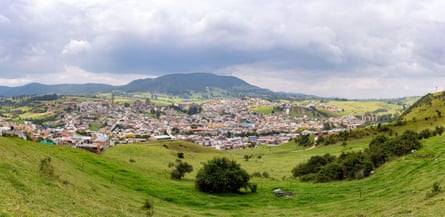
W hen a severe drought struck La Calera near Bogotá, many of its residents lost their water for drinking, cooking and farming and faced up to 15 days of strict water rationing each month. Yet the area is home to Chingaza reservoir, which supplies about 70% of the drinking water for Colombia ’s capital.

As the drought stretched from April 2024 to April last year, people began to look more closely at how their water was being managed.

“With rationing, people started to reflect a bit about where the water was coming from: ‘Why is there no water in my house, if we always had it on tap?’” says Javier Cifuentes, a local councillor and campaigner for water rights in La Calera.
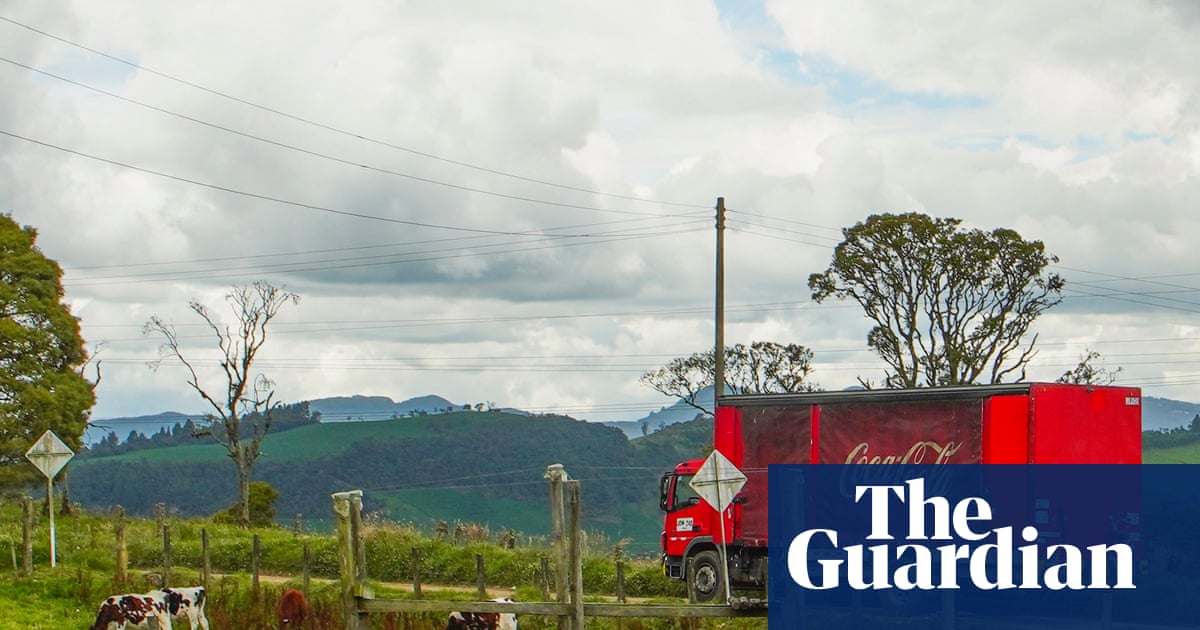
Attention soon turned to Indega, a subsidiary of Coca-Cola Femsa – the world’s largest Coca-Cola bottler – which was still filling thousands of water bottles a day to sell under the popular Agua Manantial spring water brand, which is sold across Colombia.

News that the plant was continuing to extract water during the drought sparked uproar in La Calera. “They asked us – the people – to ration water but not the companies,” says Alexander Hernández, a local resident.

After a bruising campaign, in which he and his fellow activists faced intimidation and abuse, including death threats, Cifuentes says, they secured a rare victory for the environmental cause in Latin America: in April this year, the local authorities slashed Indega’s water concession to the lowest level since it began in the 1980s.
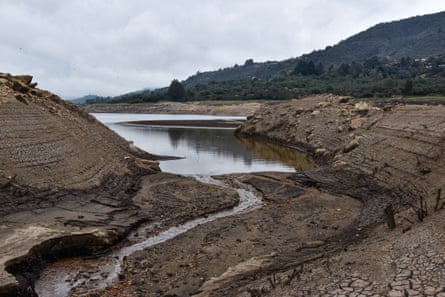
La Calera’s battle began more than a year and a half ago. The town is one of 11 municipalities in the Chingaza national park . Despite being a historically water-abundant area, the Chingaza reservoir system was depleted from 2023 to 2024 by a particularly extreme El Niño weather pattern, leaving it only 15% full – the lowest level ever recorded. That year was one of the five strongest El Niño events on record, and research suggests global heating has intensified such patterns.

In investigating Indega, the community discovered that the company not only had privileged access to water, but also paid just 120 pesos for a cubic metre to pump and sell water, while households in La Calera are charged between 697 and 3,720 pesos (15p-78p), depending on their income.

“This is a multinational company that has been extracting resources for 40 years practically without paying for them,” says Hernández.

Outrage over Indega’s water usage turned to action, as members of the community united to oppose the company’s request to renew its concession ahead of a December 2024 expiry date. In October 2024, with the help of Cajar , a legal non-profit organisation, local leaders became parties to the concession’s renewal process.
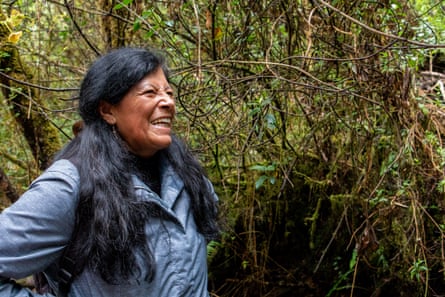
Among them was Herminia Cristancho, who heads the female-led Association of Hamlets in La Calera. Over the past 40 years, she says she has witnessed dozens of corporations extracting precious water from Chingaza.

“They stay until they wipe out everything, then they leave and find a new victim in another country,” she says. “They don’t care about the state in which they leave us.”

Under Colombian law, she was able to access hundreds of documents related to the Coca-Cola Femsa subsidiary’s water use and petition the regional autonomous corporation (CAR) – the local government body that manages water concessions – to hold a public meeting.

Cristancho and other leaders spent many hours poring over the complex papers and with Cajar’s help drafted a letter of opposition to the renewal, arguing that Indega’s use of seven springs depleted the San Lorenzo basin, whose levels had dropped significantly during the drought.

In response, Indega commissioned a study that concluded the springs it used were replenished by rainwater and existed independently of the San Lorenzo basin. The report was dismissed by CAR authorities and campaigners as technically flawed.

Community leaders spearheaded social media and political pressure campaigns to bring the problem in La Calera to a national audience. Cifuentes, who is also a leader of the local Muisca Indigenous people, says: “The Muisca people have always protected the water in this territory, and it is thanks to the Muisca people that there is still water left.”

Not everyone in La Calera opposes the concession, however. Some people living in rural areas around the Indega plant say it brings employment and investment in local infrastructure.

Cristancho and Cifuentes argue that the Coca-Cola Femsa subsidiary embarked on a charm offensive shortly after locals challenged the concession, with efforts such as painting the local school, installing water filters and pledging to re-pave the roads.

Discord over the concession has sparked a bitter feud in the town, with Cifuentes and Cristancho facing personal attacks for their activism, including death threats.

Cifuentes says that on 27 March last year, a hooded man dressed all in black came up to him with a pistol in his hand. “He told me, ‘You don’t know who you’re messing with,’” Cifuentes recalls. “‘Keep fucking around and we’ll come for you and your family,’” Cifuentes recalls. “‘We know where you live.’”

The activist has no evidence that the threats were sanctioned by or related to Coca-Cola Femsa or its subsidiaries, which did not respond to a request for comment. Yet violence targeting environmental activists is a real concern in Colombia, which recorded the world’s highest number of murdered land defenders between 2012 and 2024.

After reporting the threat to the police, Cifuentes was issued a government protection unit, but that did not deter his enemies. On two occasions last November, his vehicle was followed by masked men on motorbikes, forcing his bodyguards to perform evasive manoeuvres to escape.

Posts on social media have also accused the water defenders of corruption and false activism, while pamphlets distributed at a town hall meeting in May 2025 called Cifuentes a “fake Indigenous drug addict”.

Cristancho has also faced intimidation, including silent phone calls and abusive text messages. She says she felt a “brutal fear” at the meeting as members of the crowd yelled obscenities at her and attempted to drown out her speech with vuvuzelas, a deafeningly loud plastic horn.

The land defenders fought on, keeping their pressure campaign alive through mural paintings, marches and public workshops.

Finally, in April this year, the CAR decided to renew the concession but slash Indega’s water extraction rate from 3.23 to 1.9 litres a second. It also reduced the number of springs the company could exploit from seven to four, halved the concession length from 10 to five years and can now temporarily suspend the concession in case of severe drought.

The decision was a milestone for Colombia, where victories for land defenders are few and far between. “For the first time, we succeeded in getting the country to open a debate on water use,” says Cristancho, hailing the widespread media attention brought to the issue and unprecedented community participation.

Yet Cristancho notes that concerns remain, specifically about how authorities will monitor Indega’s water use. For Cifuentes, who continues to live under state protection, the case is simply the “first step” in an existential battle to protect water resources.

“We will keep fighting until not a single millilitre of water in the Chingaza is exploited by a multinational corporation,” Cifuentes says. “This is what I was born for.”

Ruth Ozeki: ‘All my books are an attempt to recreate Charlotte’s Web’ | Ruth Ozeki | The Guardian

Keyword – Books
Trefwoorden – Ruth Ozeki, Books, Culture
Title – Ruth Ozeki: ‘All my books are an attempt to recreate Charlotte’s Web’ | Ruth Ozeki | The Guardian
Author – Ruth Ozeki
Link – Ruth Ozeki: ‘All my books are an attempt to recreate Charlotte’s Web’ | Ruth Ozeki | The Guardian
Publish date – 2026-06-12T09:00:43.000Z
Category – Culture
URL – https://www.theguardian.com/books/2026/jun/12/ruth-ozeki-all-my-books-are-an-attempt-to-recreate-charlottes-web

My earliest reading memory I was reading – or pretending to read – before my brain could encode memories, so probably around three or four? I “read” Goodnight Moon by Margaret Wise Brown and Clement Hurd, but that was mostly pictures.

My favourite book growing up Charlotte’s Web by EB White. For years, I remembered it as a story about a little girl named Fern who saved her pet pig, Wilbur, but it’s not. It’s a story about a writer named Charlotte, who happens to be a spider, who spins words into her web that save Wilbur from slaughter. It’s about the power of language to save lives. Looking back at the books I’ve written, I can see now that all of them are an attempt to recreate Charlotte’s Web. It’s the perfect book.

The book that changed me as a teenager Teenagers change constantly, hour by hour, book by book. I read voraciously as a teenager because we didn’t have smartphones, and every book I read left its mark. The Catcher in the Rye certainly was one of them . I must have read it when I was 12 or 13 and learned two skills critical for my adolescent survival: a disaffected attitude and how to spot a phoney.

The writer who changed my mind Every writer I read changes my mind. Isn’t that the point of reading? But OK. One Hundred Years of Solitude by Gabriel García Márquez. I read it in 1975 in Nepal, when I was 20, during a month-long trek in the Himalayas from Pokhara to the Tibetan border. That was 50 years ago, and there were very few trekkers back then. We had no GPS. I was trekking with my friend, following winding trails across the mountains, through forests of bright pink rhododendron. Sometimes we’d pass sherpa heading down to town. Their donkeys wore bells on their harnesses, and we could hear them echoing long after they’d passed. I didn’t know the term “magic realism” yet. I just knew that magic was real.

The book that made me want to be a writer Most of the books I read as a child were about smart little girls (or spiders) who were writers: Harriet in Harriet the Spy by Louise Fitzhugh; Jo in Louisa May Alcott’s Little Women; Emily of New Moon; Anne Frank; Meg in A Wrinkle in Time by Madeleine L’Engle – she wanted to be a scientist, but still. And then there were books about obstinate, contrary, misbehaving little girls, like Eloise, Madeline, and Pippi Longstocking, who were obviously destined to be writers even if they didn’t know it yet. I’d also argue that any story told in the first person by a misfit female narrator, like Jane Eyre, is about being a writer, since their subtext is always “Dear reader, I survived to tell the tale.”

The book or author I came back to I don’t really have a simple answer to this question, so I’d rather talk about Kurt Vonnegut, whose novels I read and loved when I was younger, but who I haven’t revisited. Why? I learned something important about humour from Vonnegut. About the difference between irony and cynicism. About earnest irreverence. That it’s OK to be funny about serious things. I hope I would still find this quality in his books, but what if I didn’t? I’d rather just keep his tone alive in my mind.

The authors I reread Poems and poets: Emily Dickinson, Adrienne Rich, Elizabeth Bishop. I tend to give their books away and then buy new ones. I bought Geography III after reading Bishop’s poem One Art in the New Yorker in 1976. That poem is all about loss. Every time I survive another loss, I reread it, and every time I reread it, I am reminded of how to survive.

The book I could never read again Zen and the Art of Motorcycle Maintenance by Robert M Pirsig. I love Zen. I love motorcycles. I loved this book when I was a teenager, and I’m still inspired by Pirsig’s ideas about quality and craft. But when I tried to read the book again as an adult, I found the narrator’s pomposity irritating. Naturally I didn’t notice it earlier, when it was eclipsed by my own teenage pomposity.

The book I discovered later in life A 13-volume set of Tales of Chekhov, translated by Constance Garnett, first published in 1929 and reissued in 2006. I was never much interested in short stories until I started teaching the form in a fiction-writing class and realised I had a lot to learn. There are 201 stories in the 13-volume set. I’m still reading and learning.

The book I am currently reading Sublimation by Isabel J Kim. It’s a debut set in contemporary alter-worlds of Seoul and New York. It’s a take on the classic immigrant story, wherein the characters, at the moment of border crossing, split into two selves. As a mixed race person, I can relate. I’m also reading The Typewriter Revolution: A Typist’s Companion for the 21st Century, which is excellent.

My comfort read Lydia Davis’s Collected Stories . I am comforted by the brevity of her stories and the precision of her sentences.

The Typing Lady by Ruth Ozeki is published by Canongate. To support the Guardian, order your copy at guardianbookshop.com