‘I thought – gosh, he’s going to be some player’: the making of England’s Declan Rice | World Cup 2026 | The Guardian

Keyword – Football
Trefwoorden – World Cup 2026, England, World Cup, Arsenal, West Ham United, Football, Sport
Title – ‘I thought – gosh, he’s going to be some player’: the making of England’s Declan Rice | World Cup 2026 | The Guardian
Author – https://www.theguardian.com/profile/jacob-steinberg,https://www.theguardian.com/profile/davidhytner
Link – ‘I thought – gosh, he’s going to be some player’: the making of England’s Declan Rice | World Cup 2026 | The Guardian
Publish date – 2026-06-13T04:00:05.000Z
Category – Sport
URL – https://www.theguardian.com/football/2026/jun/13/making-england-declan-rice-world-cup-west-ham-arsenal

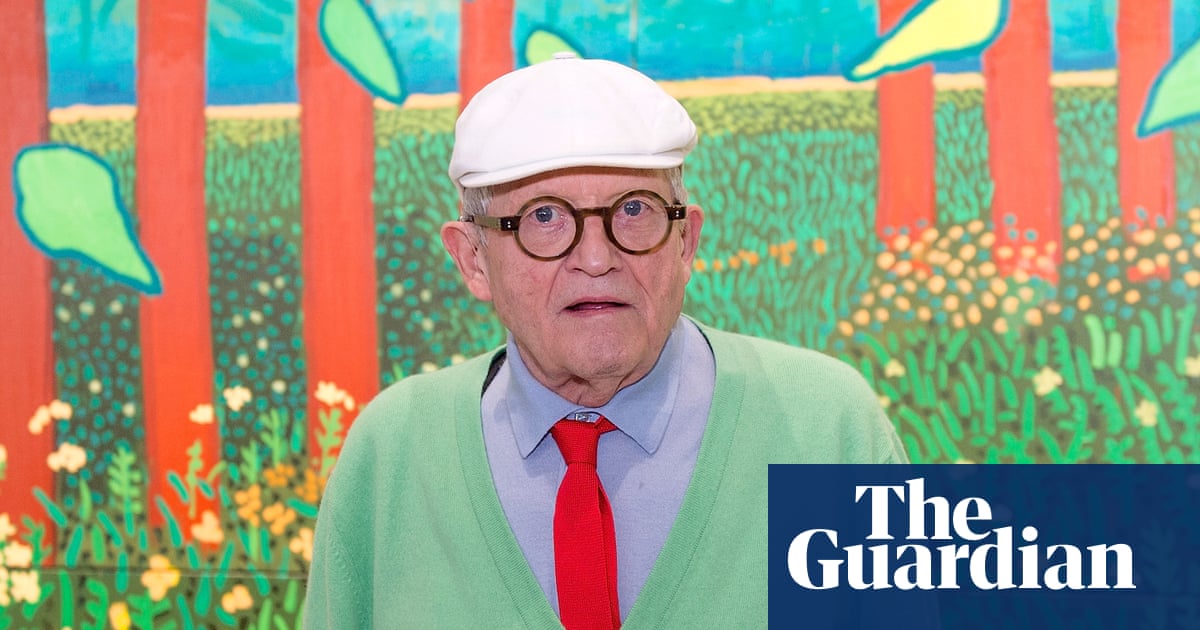
T hree years ago Declan Rice was the star guest at a Soho House event about the power of effective leadership. Tickets were in hot demand and Rice, who was due to play a European semi-final for West Ham two days later , could not understand why so many people were interested in what he had to say.

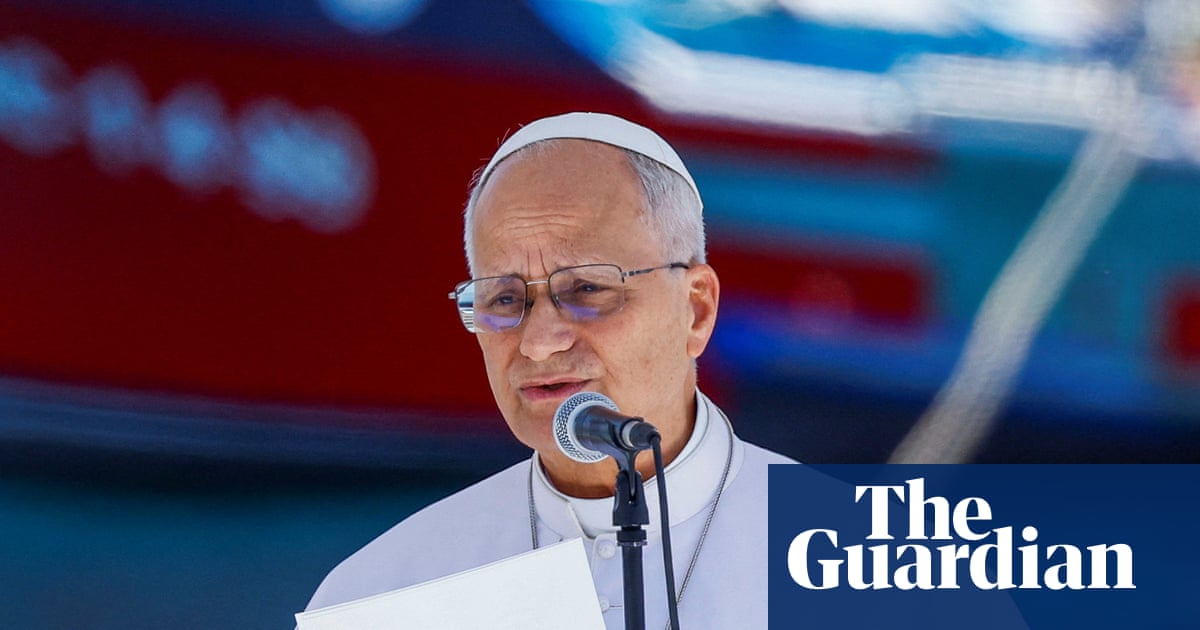
The audience was packed with marketing directors and CEOs, all eager to hear the England midfielder speak. To Rice, though, it just seemed weird. Why him? What made him so special? The answer lay in his everyman appeal. It was because of his ability to form connections with everyone he comes across. It was because Rice, who goes into the World Cup fresh from winning the Premier League with Arsenal , would be a leader in any setting. More than anything, it was because England’s new vice-captain is authentic, genuine and always ready to charm, no matter if the 27-year-old is speaking to a room of high-powered executives or heading back to his old school to spend an afternoon with a group of awestruck kids.

Perhaps this world-class footballer’s superpower is to be both normal and extraordinary. “He’s hardly changed,” Stephen Willmore, Rice’s old PE teacher, says. The stories are positive no matter who tells them. An 11-year-old Rice was part of Chelsea’s academy when he started at Grey Court school in Ham, south-west London. There was no arrogance, though. Rice still captained the school football team. Harry Kane is not going anywhere any time soon but the expectation is that Rice will take over from England’s captain one day.

“He never missed a game for us,” Willmore says. “If we had to change the kick-off times he would always want to play for the school and then go to training with Chelsea afterwards. He was a leader already. Even though he was so young he was hugely respected for the fact that he always wanted to play for the school team.

“He didn’t hold back. He would play for us and go straight off to training, but he would give his all within that time with us. He was charismatic. He had a great personality. We’d go on away journeys in the minibus and he would be the central figure. He was just a really nice young man who’s carried on in that way. I still see that Declan you see now.”

Rice does not use a traditional agent. He leans heavily on his two older brothers, his father and a handful of close friends. Rice has never lost touch with his roots and is still in touch with his old schoolmates. He was a good student and loved his sport. He liked tennis and cross country running. On the football pitch, he was a driving force from midfield. He passed well and dominated. At Chelsea, though, standards were high. Rice, who comes from a family of Chelsea fans, faced dejection when released from his boyhood club at the age of 14.

“That shock of my dad telling me, I just burst into tears,” Rice said in 2019. He had to be resilient. Rice had an immediate offer to join West Ham. The east London club had tracked him since he was nine and could not believe their luck when Chelsea let the youngster go.

Academy staff had never seen a better trialist at West Ham. Rice had gone through a growth spurt and his physique needed attention, but offering him a deal was the right call. Staff trusted him. Rice was the type of person who would tell the coaches if another boy was struggling emotionally.

That speaks volumes for his character given that joining West Ham meant Rice had to cross London and leave the family home in Kingston. He comes from a tightknit family and had to get over his homesickness. “His mum and dad were always really supportive,” Willmore says. “He had really nice parents.”

The path was never straightforward. There were times when West Ham’s youth coaches were divided over whether to keep Rice. But his development continued, he was handed his first-team debut by Slaven Bilic in May 2017 and he caught the eye of senior players when he joined training.

Mark Noble, West Ham’s former captain, remembers Rice stepping out of defence to “hit a diagonal ball out to the left wing with a lovely bit of fade on it”. Noble suspected Rice would take his place in midfield one day. Rice was a teenager but his attitude set him apart.

“We played Rubin Kazan in pre-season,” Aaron Cresswell, the former West Ham left-back, says of a July 2016 friendly. “Dec gives the ball away and the lad went on and scored. But his reaction just told me what he was like. It wasn’t like his head was down and he didn’t want the ball. It was: ‘Fine, give me the ball, I’m going to show you what I’ve got.’ I thought: ‘Gosh, he’s going to be some player.’”

Cresswell talks fondly of a “cocky little kid” who could hold his own in the first-team dressing room. “He could speak to anyone. And when the going gets tough, he’s first to put his chest out and carry the team. In the latter part of his West Ham career he certainly pulled us through games, whether it was making that last-ditch tackle or dragging a team up the pitch.”

Leadership came naturally to Rice. He was not afraid to lay into older players. He even spoke his mind to West Ham’s then manager, David Moyes. “If he felt something needed to be said, he’d say it,” Cresswell says. “He was brilliant in and around the place. Everyone loved him.”

A key part of Rice’s character is his ability to stay professional while not taking life too seriously. There is a story about him winding up Joe Hart when the former England goalkeeper was on loan at West Ham during the 2017-18 season.

“He did a shooting session with Joe,” Cresswell says. “Dec put it in the top corner. Joe came out and he tried to chip him. Dec said: ‘You won’t get that, son’ and Joe lost his head. He wanted to kill him. He chased him all around the training ground. I think he actually filled him in when he got hold of him. But Dec’s heart was in the right place. It was never crossing that line into arrogance. You need that little bit of character.”

Rice soon moved out of central defence and into midfield. He was always destined for the top but his focus never dipped when he was about to leave West Ham. He drove them to the Conference League title in June 2023 and soon became the most expensive British player ever, joining Arsenal for £105m .

Bayern Munich and the Manchester clubs were interested but Mikel Arteta wooed Rice with his footballing vision. Arteta said Rice could be Arsenal’s lighthouse – someone to guide and improve those around him. At Arsenal, though, Rice has become more than a facilitator. He was more defensive at West Ham but has become a No 8 under Arteta. With England he has more freedom thanks to the emergence of the metronomic Elliot Anderson. Rice’s increased attacking threat was evident when he made a box-crashing run during England’s 3-0 win in their friendly against Costa Rica on Wednesday, arriving late to open the scoring by converting a low cross from Anthony Gordon.

“I don’t think a lot of people appreciate actually the ability he’s got with the ball,” Cresswell says. “You’re seeing it a lot more at Arsenal side. No disrespect to the West Ham team we had, but his game was kind of different. I remember getting slated a bit for this. I remember saying: ‘If he’s around better players he’ll naturally become a better player.’ He’s one of the best in the world in that position.”

Cresswell talks about Rice’s set-piece deliveries, which were crucial to Arsenal winning the league, and his two spectacular free-kicks against Real Madrid in the 2024-25 Champions League quarter-finals. “That was the first time he’d scored a free-kick in his career,” Cresswell says. “I was thinking: impossible. I watched him take free-kicks all the time at West Ham. His ball strike … I was astonished.”

The Madrid game felt like Rice announcing himself as a global superstar. He has 10 commercial partners and works with one charity. The interest in him is vast and varied. Rice has his serious face on when he works with fashion and beauty brands such as Burberry and L’Oréal; he can let loose when he did the “Rice, Rice baby” advert for Müller Rice.

He can lift the mood by playing the joker and maintain standards by behaving as the consummate professional. He has an eclectic music taste and a deal with JBL headphones. He listens to Gunna and Lil Baby but also likes house music and Harry Styles. Golf is another passion. When Arsenal won the league, Rice was out celebrating until the early hours. There were clips on social media of him taking selfies with supporters on the street. Then, after a few hours’ sleep, it was off to play golf. “It’s how he relaxes,” a friend says. He plays off a handicap of six.

The day job is demanding, after all. Rice has had near misses with England, losing the Euro 2020 and 2024 finals. He was involved in two of Arsenal’s three consecutive second-place finishes before they finally finished first. There were times when Rice wondered whether the big prizes would come. Friends told him it was better to be slow and steady; that consistency was always the aim and the wait would be worth it.

Perhaps that was why the cameras caught Rice saying: “It’s not done” when Arsenal lost to Manchester City in the league in April. His faith in Arteta and his teammates would be vindicated. “He sometimes doesn’t need to have the armband,” Arteta said. “When he talks people listen.”

Cresswell laughs at people on social media who reckon that Rice turns it on for the cameras. “I was at the Arsenal game a couple of weeks ago at West Ham and he’s still the same kid now,” he says. “I’ve got a little eight-year-old boy. Dec came in, gave him a shirt and signed it for him and took pictures with him. He’s never forgotten West Ham or the lads who’ve helped him develop. He’s got all the time in the world for everyone.”

These days Rice has flowing locks and does lifestyle interviews about his hair care routine. Cresswell laughs when he thinks back to Rice’s teenage look. “He had a skinhead,” he says. “He looked like a little scally. But we’ve all been a little bit wet behind the ears. He’s a fully grown man now.”

Rice, who is in line to win his 74th cap when England face Croatia in Group L on Wednesday, is a family man and a father. The boyish, playful streak persists, though. England have been gearing up for the World Cup by training in stifling conditions in Florida and Rice has laughed at pictures of his bright red face, saying he got a telling off from his mum for not using suncream.

It is a disarming way for one of England’s most important players to talk. Rice, who switched allegiance from the Republic of Ireland in 2019 , can do self-deprecating. He has that rare combination of being able to clown around without making his managers doubt his dedication.

It is not a surprise that Thomas Tuchel has entrusted Rice with the responsibility of being Kane’s deputy. England will rely heavily on Rice’s drive and leadership this summer. The aim, as the head coach keeps saying, is to put a second star on the shirt. There will be plenty more talks on leadership if Rice gets his hands on the World Cup.

Meera Sodha’s recipe for fried courgette, black bean and goat’s cheese tacos | Vegetables | The Guardian

Keyword – Food
Trefwoorden – Vegetables, Food, Mexican food and drink, Cheese, Beans, pulses and legumes, Vegetarian food and drink, Herbs and spices, Summer food and drink
Title – Meera Sodha’s recipe for fried courgette, black bean and goat’s cheese tacos | Vegetables | The Guardian
Author – https://www.theguardian.com/profile/meera-sodha
Link – Meera Sodha’s recipe for fried courgette, black bean and goat’s cheese tacos | Vegetables | The Guardian
Publish date – 2026-06-13T05:00:06.000Z
Category – Lifestyle
URL – https://www.theguardian.com/food/2026/jun/13/fried-courgette-taco-recipe-black-bean-goats-cheese-meera-sodha

I had my head turned by fried courgettes while watching Stanley Tucci eat spaghetti alla Nerano (on Searching for Italy). So much so, in fact, that I went so far as to book a table at Lo Scoglio da Tommaso in Nerano while I was in Italy last year, only to be thwarted by a broken-down car. Still in search of the pleasure, my husband, Hugh, made that pasta when we got back home, and we slapped our thighs in amazement that so much flavour and pleasure could be achieved by frying courgettes until bronzed. I’ve been using them in all sorts of ways ever since and this is hands down my favourite.

Fried courgette, black bean and goat’s cheese tacos

Put on a good album or podcast while you’re frying the courgettes, because, once you start, you need to keep your eye on them. Soft corn tortillas can be found in larger supermarkets and online; if you can’t find them, use small wheat ones instead.

Prep 10 min Cook 40 min Serves 2-3

Rapeseed oil 800g courgettes (3-4 medium ones), trimmed and cut into 5mm-thin coins 3 garlic cloves , peeled and minced 1 400g tin black beans , drained and rinsed 1½ tbsp chipotle paste – I like Gran Luchito 1 tsp fine sea salt Juice of 2-3 limes , to get 2½ tbsp 15g coriander leaves and thin stems , chopped 80g mild hard goat’s cheese , cut into small, paper-thin shards – I use Woldsway Small corn tortillas , to serve

Pour enough oil into a wide frying pan to come a quarter-centimetre up the sides, then put it on a medium heat. Test that the oil is hot enough by putting the handle of a wooden spoon in the centre of the pan: if small bubbles form around the tip, it’s ready.

Divide the courgette coins into four roughly even piles and line a large plate with kitchen paper. Carefully drop the first pile of courgettes into the hot oil, then fry for seven to eight minutes, flipping them every now and then, until golden brown all over. Using a slotted spoon, transfer the fried courgettes to the paper-lined plate and repeat with the remaining three piles of courgettes. Once all the courgettes are fried and drained, put them in a medium serving bowl.

Put two tablespoons of fresh oil in a small saucepan on a medium heat and, when it’s hot, add the garlic and fry for two minutes, until pale gold. Add the beans, cook for a couple of minutes until warmed through, then mix in the chipotle and salt. Take off the heat, add the lime juice and tip into the courgette bowl. Fold in the coriander and the goat’s cheese.

Heat the tortillas according to the packet instructions, then keep them warm by wrapping them up in a clean tea towel. Put the courgette bowl and tortillas in the middle of the table and tuck in.

What to read this summer by Mark Haddon, Samantha Harvey, Zadie Smith and more | Books | The Guardian

Keyword – Books
Trefwoorden – Books, Fiction, Autobiography and memoir, Poetry, Biography books, History books, Culture, Summer reading
Title – What to read this summer by Mark Haddon, Samantha Harvey, Zadie Smith and more | Books | The Guardian
Author – https://www.theguardian.com/profile/zadie-smith,https://www.theguardian.com/profile/mark-haddon,https://www.theguardian.com/profile/nina-stibbe,https://www.theguardian.com/profile/joe-dunthorne,https://www.theguardian.com/profile/sarah-waters,https://www.theguardian.com/profile/gary-shteyngart,https://www.theguardian.com/profile/tahmimaanam,https://www.theguardian.com/profile/marian-keyes,https://www.theguardian.com/profile/jonathan-coe,https://www.theguardian.com/profile/williamdalrymple,https://www.theguardian.com/profile/olivialaing,https://www.theguardian.com/profile/sarah-moss
Link – What to read this summer by Mark Haddon, Samantha Harvey, Zadie Smith and more | Books | The Guardian
Publish date – 2026-06-13T08:00:09.000Z
Category – Culture
URL – https://www.theguardian.com/books/2026/jun/13/what-to-read-this-summer-by-mark-haddon-samantha-harvey-zadie-smith-and-more

Zadie Smith Margaret Busby’s Part of the Story: Writings from Half a Century is the record of one woman’s lifelong passion for the literature and life of Africa and its diaspora, wherever she finds it. A beautiful collection. The funniest and smartest novel I’ve read in a while is Black Bag by Luke Kennard.

Mark Haddon Can I recommend some metaphorical summer travel? Taiwan Travelogue by Yáng Shuāng-zǐ, translated by Lin King, won the International Booker prize so you’re legally obliged to read it. But there are three other books on the shortlist I would strongly urge you to get your hands on. The Director by Daniel Kehlmann, translated by Ross Benjamin, brilliantly fictionalises the story of the film director WG Pabst who fled Germany before the outbreak of the second world war, felt ignored in Hollywood and made the foolish decision to return home. On Earth As It Is Beneath by Ana Paula Maia, translated by Padma Viswanathan, is a short, sharp cleaver-blow of political horror set in a Brazilian prison camp. And She Who Remains by Rene Karabash, translated by Izidora Angel, is the story of Bekija/Matija who escapes an arranged marriage in Albania’s Accursed Mountains by becoming a “sworn virgin” under the ancient laws of the Kanun and living her life as a man.

Nina Stibbe Prestige Drama is a darkly funny debut novel from Séamas O’Reilly. Locals are already in a tiz when glamorous Hollywood actor Monica Logue arrives in Derry to prepare for a TV series about “the Troubles”. Then she goes missing. An assortment of characters narrate the mystery, skewering the packaging of past conflict-as-content. A “chorus of perspectives” is employed also in Helen Bain’s beautiful novel The Daffodil Days about a pivotal year in the marriage of Sylvia Plath and Ted Hughes. The story unfolds via vignettes from local people: the housekeeper, the doctor, a shop girl, assorted friends and neighbours, and visitors to their rural Devonshire home. Finally, Maria Semple’s long-awaited new novel Go Gentle combines smart humour, reflections on optimising later life, intellectual depth and romance. An intricately plotted art-heist adventure that works also as an introduction to the principles of stoicism – such is the appeal of narrator Adora Hazzard. You’ll laugh and learn, and might start waking up and telling the world, “Surprise me!”

Stephen Grosz Deborah Treisman’s A Century of Fiction in the New Yorker: 1925–2025 is a magnificent anthology of 78 stories from the magazine’s first 100 years – a big book to keep by the bed and dip into. JL Carr’s A Month in the Country is a brief, beautiful novel about a damaged man restored not by psychoanalysis, but by art, friendship and love. And Stefan Zweig’s The World of Yesterday , completed in exile shortly before he and his wife took their own lives in 1942, remains one of the great memoirs of memory, exile and loss.

Virginia Evans In summer I read to be whisked away. Give me a book that transports me to another landscape or life or time. My most common summer recommendation for years has been Beautiful Ruins by Jess Walter, which delivers in every way and is, to me, a perfect novel. Another one I go back to – and plan to revisit this summer, in fact – is I Capture the Castle by Dodie Smith. Delicious.

Joe Dunthorne I recently read and loved Benjamin Markovits’s The Rest of Our Lives , a novel which is pleasingly old-school in its commitment to the pleasures of character, plot and dialogue. I’d forgotten how much I like those things. It made me realise that this is what I want from a holiday read. Similarly absorbing is Harriet Armstrong’s To Rest Our Minds and Bodies , an electrifying debut about young love and obsession. Her voice feels so natural and effortless (which, of course, belies the skill involved). Poetry-wise, Joy Is My Middle Name by Sasha Debevec-McKenney will do exactly as the title suggests and bring jolts of delight and transgressive wit to your summer. To repurpose her own lines, these poems “ran through me like beer / through a dirty tap line and into a freshly polished glass.”

Sarah Waters I was bowled over by Siri Hustvedt’s Ghost Stories , a gorgeous, poignant memoir of her life with Paul Auster, written in the rawness of the wake of his death. I loved Hallie Rubenhold’s illuminating retelling of the Crippen murder case, Story of a Murder . And I’ve been absolutely gripped by all 900-plus pages of Patricia Highsmith: Her Diaries and Notebooks , brilliantly edited by Anna von Planta. Candid and detailed, the book gives fascinating insights into Highsmith’s writing and troubled life, and is full of eye-popping snapshots of the lively lesbian goings-on of 1940s and 50s New York.

Gary Shteyngart In Help Wanted by Adelle Waldman, we have, finally, an American novel not set in Brooklyn. Instead, it’s a brilliant exploration of what it’s like to labour for a pittance these days. Bindu Bansinath’s Men Like Ours (published in the UK in September) shows that the Immigrant Novel is not dead yet. Absolutely hilarious, mesmerising and disturbing. And for anyone who thought that the Soviet Union, despite all its problems, was at least progressive enough to get gender relations right, think again! Motherland by Julia Ioffe is a brilliant corrective.

Samantha Harvey A Glass of Blessings by Barbara Pym is true reading delight – funny, with a tinge of sadness and Pym’s usual curious and irrepressible take on the world. Joan Barfoot’s Gaining Ground, first published in 1978 and reissued this summer, is the most brilliant thing I’ve read in ages. A life-changing book. I don’t say that lightly.

Tahmima Anam On Morrison by Namwali Serpell: these essays are the most insightful liner notes to accompany your favourite Morrison novels. I am currently re-reading Jazz and remembering that among her many gifts, Morrison can make a city sound incredibly sexy. I’d also recommend Feminism for a World on Fire by Natasha Walter. Walter’s book is an urgent call to arms for those of us who are left despairing about the state of the world. Here she urges us towards a radical, collective movement that tackles the two-headed Hydra of the apocalypse: misogyny and the climate crisis.

Marian Keyes How does a former child star survive adulthood? Set in LA and moving between 2002 and 2025, the characterisation in Louise O’Neill’s Whatever Happened to Madeline Stone? is excellent and the plot irresistible. It asks hard questions about the ethics of childhood stardom while being a glamorous, propulsive read. Summer reading at its finest. Also: Famesick by Lena Dunham . Park any preconceptions, she’s a great writer. An account of her stratospheric rise to fame and fortune, and the many prices she paid, this is a serious book. Devastatingly honest, insightful, compelling and entertaining.

William Boyd My ongoing obsession with the philosopher Ludwig Wittgenstein was further encouraged by Anthony Gottleib’s short but fascinating biography Ludwig Wittgenstein: Philosophy in the Age of Airplanes. He explains the philosophy with great lucidity and, equally impressively, brilliantly depicts Wittgenstein’s weird and highly unusual personality. Talking of unusual personalities, I wouldn’t have thought Muriel Spark could stand another biography after Martin Stannard’s and Frances Wilson’s but James Bailey’s Like a Cat Loves a Bird: The Nine Lives of Muriel Spark is both remarkably shrewd and surprisingly amusing.

Ali Smith I’ve just read the brand new novel, out in July, by Valeria Luiselli: Beginning Middle End . It’s the ostensibly random – by which I mean its randomness is structurally masterful – story of a mother and daughter, clever and sassy both, on the road, meandering through the heating-up landscapes of Italy, family, history, geology, myth and legacy, accompanied by nothing more than ancient classicism and a set of very contemporary tensions. Mind-expanding and heart-expanding; a summer book for life.

Tessa Hadley I loved Daniyal Mueenuddin’s debut story collection, In Other Rooms, Other Wonders , and for years I’ve hoped there would be another book. Now at last he’s published his first novel, This Is Where the Serpent Lives : a marvellous, richly layered study of class and power and culture in Pakistan from the 60s almost into the present – as rich as a 19th-century novel in its psychological subtlety and the confident scope of its stories. I’ve also loved Peter Godfrey-Smith’s Living on Earth , which came out in paperback last year: wise and sane reflections on our human relations to the Earth’s complex systems.

Anne Enright I have been telling everyone about Said the Dead by Doireann Ní Ghríofa, a remarkable engagement with the archive of a mental asylum in Cork – which sounds miserable but manages to be sublime. Reading it, I had the uncanny feeling that the book had been out there waiting for her to come along and write it. I am also looking forward to Lucy Caldwell’s Devotions : her short stories are always nuanced, light-footed and deeply felt. Rachel Aviv’s You Won’t Get Free of It : Stories of Mothers and Daughters has a slightly terrifying title, but these essays struck deep notes when I read them in the New Yorker; she is simply brilliant.

Jonathan Coe Landscape, for most writers, is often a mere backdrop to something else – plot or character, for instance. But in The Given World , Melissa Harrison places landscape in the foreground, her main character being the village of Lower Eodham itself. This group portrait of some of its villagers offers a way of rethinking the relationship between fictional characters and the natural world. I’ve also very much enjoyed Cecile Pin’s Celestial Lights , the story of an ambitious astronaut on a 10-year mission, which offers an affecting study of childhood romance hitting the brick wall of adult reality – not to mention a canny retelling of the Odyssey.

Bernardine Evaristo Raymond Antrobus is a much celebrated poet whose first foray into prose, The Quiet Ear , is a stunning and illuminating memoir about his life. He writes beautifully and movingly about his deafness, childhood, Jamaican and English heritage and all the intersections that have shaped him. Mother Mary Comes to Me by Arundhati Roy is an outstanding memoir about her early life and relationship with her difficult mother, Mary. Internationally renowned as an extraordinary writer and activist for justice, Roy employs her narrative brilliance to share how she was shaped by her outsider childhood and early adulthood.

Luke Kennard Djamel White’s All Them Dogs is an essential summer read – west Dublin gangsters with an unexpected enemies-to-lovers angle – jealousy-inducingly well written. As is Ben Pester’s Sail Away Land – immersive, beautifully strange stories that dig so deep into the uncanny soul of England and leave you feeling oddly consoled or psychoanalysed. Ashton Politanoff’s Dad Had a Bad Day is probably the funniest book I’ve read this decade – an inheritor of the flame of greats like Donald Barthelme, Lydia Davis, Robert Coover. It’s about tennis and the crisis of masculinity.

Sarah Moss Jan Carson’s new novel, Few and Far Between , is perfectly balanced between comedy and darker reflections. My taste rarely includes speculative fiction, but this – set on the islands of Lough Neagh in a just/barely alternative Northern Ireland – is irresistibly diverting and vivid. Miriam Toews’s first novel, Summer of My Amazing Luck , has similar qualities of warmth and sadness. Set among a picaresque community of young single mothers and children living in public housing in Winnipeg during a hot summer, it’s smart and serious and funny. I love Sarah Orne Jewett’s The Country of the Pointed Firs , set in late 19th-century coastal Maine, where the narrator goes every summer to write, staying as a paying guest with the local herbalist and wise woman. Published in 1896, it’s an episodic and gentle account of a community of mostly single and often solitary people, written with love for them and for landscape and plants. Henry James was a fan, but I’d choose this over James any summer’s day. Also Tove Jansson’s The Summer Book , obviously.

William Dalrymple This Little World by Nandini Das contains a wonderful gallery of precisely drawn yet constantly surprising Tudor and Stuart portraits, like an album of perfect Hilliard miniatures that dazzle us with their cosmopolitan attitudes and globalised lives. Taking us from Italian renaissance scholars in Oxford to English Jesuits in Goa via a Kentish samurai in 17th-century Edo, this is a perspective-altering take on a world we usually think of in far more domestic and provincial terms. Lloyd Llewellyn-Jones achieves a remarkable feat of urban resurrection as he brings Babylon to life and shows us how far Mesopotamia’s greatest metropolis rose above its caricature as the City of Sin and home of the Tower of Babel. Alexander rides again into battle in Alexander: God, King Man , a masterpiece by one of our most brilliant classicists. Edmund Richardson presents his deep research in a rich cornucopia of ancient languages with visual and evocative prose and a talent for gripping narrative. Impossibly colourful and drawing on some extraordinary new sources, this is biography of rare resonance.

Olivia Laing In 2011, I was at a residency with a lovely man with a red pickup truck who was working on a biography of James Baldwin. Fast forward 15 years and Nicholas Boggs’s Baldwin: A Love Story has been internationally acclaimed. I can’t wait to read it, though I might employ the Janet Malcolm trick of carving it into sections with a kitchen knife before taking it to the beach. I’m also excited about Gwendoline Riley’s The Palm House – she’s extraordinary on complex emotional dynamics. Lastly, The End of Everything by visionary M John Harrison. The world gets weirder by the hour, but Harrison is always one step ahead.

To explore all the books in the Guardian’s summer reading list visit guardianbookshop.com . Delivery charges may apply.

70 brilliant books for the summer | Books | The Guardian

Keyword – Books
Trefwoorden – Books, Culture, Fiction, Autobiography and memoir, Biography books, History books, Politics books, Health, mind and body books, Science and nature books, Paperbacks, Children’s books: 7 and under, Children and teenagers, Summer reading
Title – 70 brilliant books for the summer | Books | The Guardian
Author – Justine Jordan
Link – 70 brilliant books for the summer | Books | The Guardian
Publish date – 2026-06-13T08:00:08.000Z
Category – Culture
URL – https://www.theguardian.com/books/ng-interactive/2026/jun/13/70-brilliant-books-for-the-summer

Fiction

Fiction

Transcription

Ben Lerner

A middle-aged writer returns to his college town to record the final interview with his 90-year-old intellectual mentor. But he’s broken his phone, and doesn’t seem able to confess that it’s not recording … this anxiety dream of a beginning leads us into a series of sharp insights into family, memory, inheritance and storytelling – all that it means to be human, and how smartphones are changing our sense of the world at every level.

Fiction

Land

Maggie O’Farrell

Following Hamnet and The Marriage Portrait , O’Farrell’s latest historical novel has a personal connection. Inspired by an Irish ancestor who drew up maps for the English in the aftermath of the great famine, it builds into a multigenerational tale of folklore, migration and the meaning of home.

Fiction

Yesteryear

Caro Claire Burke

A social media influencer pushing a confected olden-days lifestyle of babies, baking and prairie dresses wakes up in the actual olden days – to dirt, poverty and domestic abuse. Critics have argued about a lack of political depth in this buzzy tradwife debut , but there’s no denying the power of the high-concept hook – or the furious energy of the voice.

Fiction

John of John

Douglas Stuart

In the much-anticipated new novel from the Booker-winning Shuggie Bain author, young Cal returns from art school to his childhood home on the Hebridean island of Harris, and his fervently religious father, John. Both men are keeping secrets in a heartfelt and gorgeously wrought tapestry of faith, isolation, community and gay love.

Fiction

The Palm House

Gwendoline Riley

Riley excels at dysfunctional family relationships, but is on gentler form here with the story of a long friendship between two prickly souls: Putnam, ageing out of relevance, and Laura, making her precarious way through midlife. It’s a wry take on the comforts of comradeship and the frustrations of other people, with the prose – as ever – sharp as a knife.

Fiction

The Infamous Gilberts

Angela Tomaski

An irresistible old-fashioned comfort read about the slow demise of an eccentric family trapped in a crumbling stately home, as seen through their possessions and mementoes when the house is sold off, ready to be turned into a hotel. Romantic misadventures, dastardly characters, lost boys and lashings of atmosphere: it’s all here.

Fiction

Honey

Imani Thompson

Thompson’s buzzy debut follows Yrsa, a Black PhD student who embarks on a series of killings targeting men, each murder reminiscent of the violence more typically inflicted on women. A serial-killer thriller with a side of feminist theory, Thompson’s alchemical fusion of racial politics and “weird girl” fiction feels genuinely fresh.

Fiction

The Children

Melissa Albert

A bestselling children’s author writes her own kids into her much-loved fantasy series – then dies in mysterious circumstances. As adults, Guin and Ennis must reconcile to confront their traumatic legacy. Set between an isolated house in the woods in 1990s Vermont and present-day New York, this slippery investigation into the price of creativity is a dark fairytale.

Fiction

Villa Coco

Andrew Sean Greer

A sunny holiday read about a young American falling for the delights of Italy when he takes a job as assistant to a 92-year-old aristocrat at the eponymous mansion in the Tuscan hills. Full of eccentric characters, it’s a love letter to friendship and discovery.

Fiction

A Bad, Bad Place

Frances Crawford

This slow-burn crime debut set in 1979 Glasgow begins when 12-year-old Janey, walking her dog Sid Vicious, comes across a body. Told in alternating chapters from Janey and her Nana, it’s a pitch-perfect depiction of time and place.

Fiction

Prestige Drama

Seamus O’Reilly

A major new TV series about the Troubles is to be filmed in Derry – but its Hollywood star has gone missing. The first novel from the author of the tragicomic memoir Did Ye Hear Mammy Died? is a sparkling ensemble portrait of a city still dealing with its difficult past.

Fiction

Nonesuch

Francis Spufford

In a London on the brink of the second world war, an ambitious young woman working in the City stumbles into a magical realm of angels, time travel, possible worlds – and a fascist conspiracy to assassinate Winston Churchill and usher in a Nazi future for Britain. Packed with adventure and romance, this delightful fantasy has teeth – a very grown-up pleasure.

Fiction

Black Bag

Luke Kennard

As part of a psychology experiment, a struggling actor agrees to appear in university lectures zipped into a large black leather bag with only his feet sticking out, and see how the students react. From this premise, Kennard spins a charming and comical discourse on the absurdity of modern life, riffing on everything from the perilous state of the arts to masculinity and the disappearing horizon of adulthood.

Fiction

The Daffodil Days

Helen Bain

A lyrical, impeccably researched reimagining of the final year in the marriage of Sylvia Plath and Ted Hughes, as seen by their friends and neighbours in the small Dartmoor town they escape to from London. With multiple narrators and a reverse chronology, it’s an ambitious and impressively achieved debut , and a luminous portrait of the effect literature’s most famous couple had on the people around them.

Fiction

Good People

Patmeena Sabit

A family saga, a whodunnit and an investigation into assimilation in the US: this kaleidoscopic debut about the community response after an Afghan-American teenager is found drowned in a canal at the wheel of the family car keeps the reader guessing, with gossip, prejudice and contradictory accounts pulling in all directions.

Fiction

Cast Away

Francesca de Tores

Alexander Selkirk, 18th-century privateer and the real-life inspiration for Robinson Crusoe, is marooned on an island in the South Pacific with only a Bible and a cask of booze for company. What follows is a fantastically fresh, gripping adventure story and psychological journey combined, as over the years he develops his survival skills and faces up to his isolation.

Fiction

Lost Lambs

Madeline Cash

This exuberant comic saga about a dysfunctional American family features childish parents, precocious daughters, church shenanigans, conspiracy theories and a nefarious local billionaire. With snappy dialogue, absurd flights of fancy and a heartwarming centre, it’s a feelgood treat for fans of The Bee Sting .

Fiction

I Want You to Be Happy

Jem Calder

A romance for the doomscroll era , Calder’s debut follows a poet-barista and a wannabe author, stumbling towards an intimacy that’s almost wholly mediated by the digital world. All the textures of modern London life – expensive flatshares, overpriced coffees, emotional avoidance – are rendered with deadpan precision.

Fiction

The Things We Never Say

Elizabeth Strout

The author who brought us Lucy Barton and Olive Kitteridge introduces us to Artie Dam, a fifty­something teacher struggling to make sense of his troubled marriage and a changing United States, in her wise and tender 11th novel .

Fiction

Wimmy Road Boyz

Sufiyaan Salam

Set over one chaotic night on Manchester’s Curry Mile, Salam’s debut is a turbo-charged coming-of-age novel following three young British-Pakistani men hurtling towards trouble in a white BMW. Written in slangy, rhythmic prose that feels somewhere between Trainspotting, hip-hop and Shakespeare, it is volatile and completely alive – an adrenalised portrait of gen-Z masculinity.

Fiction

Glyph

Ali Smith

Against a backdrop of political breakdown, Smith is an ever more essential voice: wise, playful, profound. This story of two estranged sisters finding their way back to each other explores childhood, family and our relationship to history, whether that’s the first world war or contemporary Gaza, setting a spirit of resistance and the ways we comfort each other against apathy and state repression.

Fiction

Jean

Madeleine Dunnigan

In the long hot summer of 1976, a troubled teenager at a progressive boarding school for boys begins a dangerous affair. This charged and unusual debut is a powerful excavation of shame, desire and pent-up emotion.

Fiction

Natural Disaster

Lisa Owens

A frazzled mother of two little boys is determined that her last day of maternity leave with them will be fun, spontaneous, perfect – but things don’t go to plan in this sharply observed and deeply relatable comedy of life with small children. Bring snacks.

Fiction

The Ten Year Affair

Erin Somers

An adultery novel for millennials. Which is to say that the cheating occurs almost entirely inside the head of our heroine, Cora, a young mother who has fled New York with her husband Eliot for the Hudson Valley where, at a local playgroup, she meets the object of her lustful fantasies: fellow Brooklyn transplant Sam. A razor-sharp study of modern motherhood and marriage that skewers its cast of high-minded, downwardly mobile hipsters as they navigate middle age.

Fiction

​Kin

Tayari Jones

​Set in the American south during the civil rights era, the new novel from the author of An American Marriage follows two motherless girls as they set out to find their way in the world. A richly imagined tale of female friendship and found families.

Fiction paperbacks

Fiction paperbacks

The Correspondent

Virginia Evans

This much-loved novel is made up of letters sent and received by Sybil Van Antwerp, a seventysomething retired lawyer living in Maryland, USA, whose spiky, often funny correspondence adds up to a moving, compelling reflection on a life.

Fiction paperbacks

Seascraper

Benjamin Wood

Longlisted for the Booker prize, this short, profound novel tells the story of Thomas, who trawls the seashore for shrimp with a horse and cart and dreams of more. A mysterious American could make his dreams a reality – but is the future he’s offering too good to be true? An atmospheric dive into inner worlds and the transcendent possibilities of creativity.

Fiction paperbacks

The Director

Daniel Kehlmann,

translated by Ross Benjamin

Kehlmann uses a fictionalised account of the life of 20th-century film director GW Pabst to explore questions of vanity, complicity and moral collapse in this brilliantly dark page-turner which was shortlisted for the International Booker. Returning from Hollywood to Austria to see his ailing mother, can the man who made Pandora’s Box continue to make art under the Nazis, and at what cost?

Fiction paperbacks

Heart the Lover

Lily King

A 1980s campus love triangle deepens into a poignant story of friendship and loss in King’s tear-jerking follow-up to Writers and Lovers.

Fiction paperbacks

Dominion

Addie E Citchens

In the fictional Mississippi town of Dominion, a charismatic preacher and his golden-boy son preside over a community thick with repression and simmering violence. Told from the perspectives of the long-suffering women around them, it’s a rich, southern gothic exploring the excesses of unchecked male entitlement.

Nonfiction

Nonfiction

Famesick

Lena Dunham

The creator of Girls reflects on her sudden fame after being hailed as the voice of a generation, and what happened next – namely chronic illness, addiction and heartbreak. The dark side of celebrity is laid bare in this compulsively readable memoir.

Nonfiction

The Art Cure

Daisy Fancourt

Can Gauguin treat gout and Beethoven lower your blood pressure? Psychobiologist Fancourt sets out the very real physiological effects of art and culture in this inspiring call for us to lean into aesthetic experiences as a form of medicine.

Nonfiction

This Dark Night

Deborah Lutz

Emerald Fennell’s hallucinatory adaptation of Wuthering Heights invited us to consider Emily Brontë in one light; Lutz’s painstaking account shows her in quite another. Far from the eccentric, isolated genius, Lutz’s Brontë is grounded in her material reality, from everyday household tasks to illness and grief.

Nonfiction

Enough Said

Alan Bennett

The latest instalment of the inimitable critic and playwright’s diaries runs from 2016 to 2024 , hardly a period of rest and relaxation. But ordinary life goes on as Bennett, now 92, reflects on Brexit, the pandemic and the distant past.

Nonfiction

Super Nintendo

Keza MacDonald

An affectionate portrait of the people who bought us Super Mario and Animal Crossing combines deep research, extensive interviews and serious fun . MacDonald, the Guardian’s video games editor, positions the Japanese company as a “toymaker” with very different priorities from the tech giants that dominate the rest of our digital lives.

Nonfiction

A World Appears

Michael Pollan

After feeding our heads with a bestselling book about psychedelics, author and journalist Pollan returns with an exploration of consciousness itself. He asks who has it (plants? AI?), how it feels and what it actually consists of. He may not come up with definitive answers, but delivers mind-boggling insights along the way.

Nonfiction

On Morrison

Namwali Serpell

Novelist and critic Serpell zooms in on the Beloved author’s craft in this series of 12 essays, rich with material from the archives. Edits, hesitations and revisions tease out the humour and fallibility of one of the greatest American writers of the 20th century.

Nonfiction

Ancient

Luke Barley

Forester and ranger Barley tells the beguiling story of Britain’s mature woodlands – now reduced to fragments, but still more than capable of enchanting us – and how living alongside them shaped our culture and language.

Nonfiction

A Hymn to Life

Gisèle Pelicot

Pelicot became an icon of courage and resilience during the trial of 51 men, including her husband, accused of extraordinary sexual crimes against her. This painful but riveting memoir tells the story of how her life as she knew it was shattered, and what it took to start building a new one.

Nonfiction

The Last Kings of Hollywood

Paul Fischer

The golden era of late-20th century film-making is evoked in documentary detail by screenwriter and author Fischer as he tells the story of how three relative outsiders – Francis Ford Coppola, George Lucas and Steven Spielberg – came to dominate cinema as we know it.

Nonfiction

The Dog’s Gaze

Thomas W Laqueur

Can you spot the pooch in a Picasso? The canine in a Canaletto? In this deeply researched and beautifully illustrated book, art historian Laqueur argues that the presence of dogs in a series of canonical western paintings is no mere afterthought.

Nonfiction

Monsters in the Archives

Caroline Bicks

Granted exclusive access to Stephen King’s personal archive, literary academic Bicks sifts through annotated drafts, scrutinising revisions, comments and disagreements with editors. Her close reading reveals the master of horror’s obsessions, his pedantry – and alternative versions of some of his most loved stories.

Nonfiction

The Savage Landscape

Cal Flyn

The author of Islands of Abandonment returns with a vivid and visceral tour of Earth’s wildest places, from the bottom of the ocean floor to lava-filled calderas. But this is an exploration of an intellectual territory too – namely, our idea of “wilderness”, and the often destructive role that has played.

Nonfiction

Backtalker

Kimberlé Crenshaw

The legal trailblazer who developed the concept of intersectionality – the notion that discrimination on the basis of race, class and gender can intersect and compound – recounts her formative years in Ohio and subsequent career fighting injustice.

Nonfiction

London Falling

P atrick Radden Keefe

Asked by grieving parents to investigate their vulnerable son’s death, New Yorker journalist Radden Keefe uncovers a world of terrifying criminality and extraordinary police incompetence – or worse – lurking beneath London’s gilded surface. A tour de force of contemporary storytelling.

Nonfiction

Stephen Sondheim

Daniel Okrent

He may have transformed American musicals, but he didn’t always have the easiest relationship with the people around him – or himself. From Oscar Hammerstein to Barbra Streisand and Lin‑Manuel Miranda, Sondheim mentored, collaborated and fell out spectacularly with all sorts of people, as Okrent shows in this definitive, gossipy biography.

Nonfiction

Said the Dead

Doireann Ní Ghríofa

The acclaimed author of A Ghost in the Throat used the archives of Our Lady’s Hospital, Cork – and her vivid imagination – to bring the experiences of long-forgotten psychiatric patients to life. The result is a book of “extraordinary formal and ethical force”, according to our reviewer.

Nonfiction

Crossing the Wine-Dark Sea

Emily Wilson

The translator of the Odyssey and Iliad, whose unfussy, sometimes surprising choices have inspired both acclaim and disapproval, sets out her philosophy of translation in a series of fascinating essays .

Nonfiction

Tonight the Music Seems So Loud

Sathnam Sanghera

What made one of the greatest pop stars of his generation tick? George Michael superfan Sanghera, best known for his books on the British empire, tries to get to the bottom of a man of contradictions: a supreme musical perfectionist who fired 12 saxophonists before he found the perfect rendition of the solo in Careless Whisper, Michael’s personal life was anything but carefully orchestrated.

Nonfiction

Leaving Home

Mark Haddon

The Curious Incident … author revisits his childhood and adolescence in Northampton. This work of personal archaeology unearths “a near-total absence of love or affection”, and exposes the roots of his ongoing anxiety and self-harm. The extraordinary illustrations keep the reader alive to the absurdity and poignancy of it all.

Nonfiction

Lady C

Guy Cuthbertson

In the autumn of 1960, a sensational trial provided ample material for both newspaper columns and what we might now call water-cooler conversations. Cuthbertson’s book focuses less on the scandalising content of Lady Chatterley’s Lover, and more on the case’s reverberations across the wider culture – from comedy to music.

Nonfiction

Iran and the Revolution

Homa Katouzian

The Islamic Republic and its politics can be hard for outsiders to parse, but an understanding of how the regime came into being is essential for anyone hoping to understand the current conflict. In the thoroughgoing history, Iranian historian Katouzian offers a much needed guide, “clear and free of preconceptions”, according to our review.

Nonfiction

Strangers: A Memoir of Marriage

Belle Burden

This story of betrayal by an unfaithful husband and the subsequent destruction of a marriage was an instant bestseller when it was published in January. But the plot has thickened after reporting by the New Yorker suggested a more complicated emotional and financial picture. Burden says “I stand by everything I wrote,” and so far the furore seems only to have added to the appeal of her can’t-look-away book.

Nonfiction

Why Populists Are Winning

Liam Byrne

What can a thoroughly conventional politician – a former New Labour minister, no less – tell us about how to defeat the insurgents promising radical change? Byrne, who remains an MP in a constituency where Reform is in the ascendant, manages to approach the subject with “rigour and originality”, writes our reviewer.

Nonfiction

David Bowie and the Search for Life, Death and God

Peter Ormerod

Is listening to David Bowie a religious experience? That might explain the devotion he inspired among generations of fans. In this survey of how spirituality influenced the rock god’s oeuvre, Ormerod argues that we’ve been missing a key part of his appeal.

Nonfiction paperbacks

Nonfiction paperbacks

A Mind of My Own

Kathy Burke

Actor and comedian Burke tells the story of her childhood, teenage years and the prejudice and kindnesses she experienced as she met with increasing acclaim. As our reviewer put it, this memoir “has its painful moments, but the joy radiating from it is palpable and invigorating”.

Nonfiction paperbacks

The Age of Diagnosis

Suzanne O’Sullivan

Can diagnoses – from ADHD to chronic Lyme disease – sometimes do more harm than good? In this humane, well-informed book , neurologist O’Sullivan seeks not to dismiss suffering, but to understand the trade-offs that come when a medical label is applied to complex, distressing experiences.

Nonfiction paperbacks

Careless People

Sarah Wynn-William

The book Meta were so keen you didn’t read that they banned its author from doing any promotion. Wynn-Williams – a former senior adviser at Facebook – had a ringside seat during its transformation from a way to catch up with friends into a catalyst for revolutions, riots and political upheaval.

Nonfiction paperbacks

Proto

Laura Spinney

One tongue to rule them all? Not quite, but proto-Indo-European, the common ancestor of English, Hindi, Irish and Greek, is the most extensively reconstructed language for which there are no written records. Spinney travels to its birthplace on the Asian steppe to tell a remarkable story of trade, migration and conquest.

Nonfiction paperbacks

Mother Mary Comes to Me

Arundhati Roy

The Booker prize-winning author’s mother, Mary Roy, was famous long before her daughter was – as a women’s rights activist and educational reformer. But there was a dark side to her, as told in this unsparing memoir of a relationship with someone the author describes as both “shelter and storm”.

Children’s and YA

Children’s and YA

We Were a Two

Eoin McLaughlin and Emma Chichester Clark

Eoin and his Nana spend every summer in their caravan by the sea, having wild adventures as a family of two. This joyous, riotous picture book celebrates intergenerational bonds and free-range seaside exploration.

Children’s and YA

Bone Head: Guardian of the Underworld

Jamie Gregory

Demise, AKA Bone Head, thinks he’s the best skeleton guard in Hades’ kingdom, even when he’s demoted to taking care of Cerberus, the three-headed dog with a taste for bones … An anarchic diary-format series of misadventures for 7+, ideal for Loki fans.

Children’s and YA

Korobá: The Case of the Missing Kolo

Àlàbá Ònájìn

Korobá is looking forward to the festival, when children break open their kolo piggy banks – until her best friend’s kolo is stolen, and Korobá must turn detective to track it down. Set in a small Nigerian fishing community, this instantly engaging, Tintinesque graphic novel for 7+ is full of summery colour, intricate detail and compelling characters.

Children’s and YA

The Children of Wolf Rock

Natasha Farrant

The students at Stormy Loch Academy revel in their freedom to explore the natural world – but when Minna, Kass and Tom stumble upon an older girl hiding out in a deserted bothy, they find themselves on a dangerous journey to discover the secrets of her past in this glorious, immersive 8+ adventure.

Children’s and YA

Crow: Thief of Magic

Fiona Dixon

An unexpected encounter, a heist gone wrong, and Crow, a 12-year-old thief, finds himself flung into a spectacular new life as a Dreamcatcher’s apprentice – but is his magical master Viktor as benevolent as he seems? Absorbing, inventive and thrilling, this 9+ fantasy debut will delight Greenwild fans.

Children’s and YA

Like a Brother

Nathanael Lessore

Happy-go-lucky Londoner Owais enjoys his carefree life until his cousin Abass suddenly arrives, loud and unpredictable with a hair-trigger temper (and worst of all, he’s a Tottenham fan). The cousins’ antipathy gradually gives way to sympathy and understanding in this laugh-out-loud, sometimes gross-out story of teenage self-discovery.

Children’s and YA

The Victors

Wren James

Four years after defeating the Demon Overlord, youthful hero Dirk Earnest, now a second-year student at his war-damaged university, is horrified to meet his new roommate: Medusa de la Tempête, notorious war criminal and Dirk’s former nemesis. This witty, stylishly drawn enemies-to-friends YA graphic novel elegantly subverts the “chosen one” trope, asking pointed questions about what happens after the final battle.

Children’s and YA

Breakout

Dhonielle Clayton,

Angie Thomas and others

The bestselling Blackout crew return with a sweltering, atmospheric thriller, featuring six affluent teenagers trapped in a private island resort by a tropical storm. As the body count rises, each of them must face up to the secrets of their past in this page-turning six-author YA collaboration.

Children’s and YA

Tell Your Friends

Lauren Wilson

Trapped by the fame of her influencer parents, first-year student Crystal Shaw needs help to shatter her mother’s perfect image and win her freedom – but she’s unaware that Alyssa, her chosen confidante, is heavily invested in “At Home With the Shaws”, seeing them as the ideal surrogate family. An enthralling YA cat-and-mouse thriller with a toxic female friendship and a steely twist.

Children’s and YA

To Steal a Throne

Gabi Burton

After helping her half-brother Luc take the throne of Virdei, Mira uses her secret lie-powered magic to keep him secure, blackmailing and intimidating any possible challengers – until upstart Kaidren Vale appears, his own magical gift threatening Mira with exposure. When Mira begins to warm to Kaidren, her ambition wars with her softer feelings in this gripping YA fantasy of intrigue, seduction and betrayal.

Injury deprived me of chance to play so I am going to the World Cup to support Brazil | Brazil | The Guardian

Keyword – Football
Trefwoorden – Brazil, World Cup 2026, World Cup, Football, Sport, Carlo Ancelotti
Title – Injury deprived me of chance to play so I am going to the World Cup to support Brazil | Brazil | The Guardian
Author – https://www.theguardian.com/profile/rodrygo
Link – Injury deprived me of chance to play so I am going to the World Cup to support Brazil | Brazil | The Guardian
Publish date – 2026-06-13T04:00:04.000Z
Category – Sport
URL – https://www.theguardian.com/football/2026/jun/13/rodrygo-world-cup-injury-support-brazil

I am travelling to the United States this week to watch some of the Seleção ’s games at the World Cup . I’ll be continuing my daily treatment to recover from the knee injury I suffered in March and, during this routine, I’ll try to experience the competition in a different way. While Rodrygo, a boy from Osasco [a city in the state of São Paulo], recognises the privilege this represents, Rodrygo the player, who took part in the entire qualifying cycle, the Copa América and other matches, has feelings that are difficult to explain.

Ever since our last World Cup game in 2022, when the Croatia goalkeeper Dominik Livakovic saved my penalty and we were eliminated at the quarter-final stage , returning to the tournament wearing the national team jersey has been a desire that has dominated my thoughts on many nights.

The path we have gone down in these past four years has not been easy. All of us – players, coaches, staff, CBF (Brazilian Football Confederation) employees, and, of course, the fans – have faced numerous challenges. So to suffer an injury that ruled me out of the tournament just months before the squad was announced was a huge blow, taking away from me a dream to which I have dedicated my life.

The injury – and learning the extent of it through the scans – brought immense sadness. The week of the actual surgery brought me suffering, sleepless nights, a lot of pain and the urge to vomit and faint. But soon an inner strength came, a certainty that life goes on and that I will recover and continue pursuing my World Cup dream.

Also, one of the worst days of my life transformed into a huge wave of support from so many people. My faith strengthened me too, as did the unconditional presence of my family and the countless messages and conversations with important people in my life. There was incredible support from Real Madrid, calls from the CBF, the national team staff and the players. I am certain I will return stronger, dedicating myself as I have always done to achieve my goals.

Being unable to play during the final part of Real Madrid’s season and not taking part at the World Cup with the Seleção is a feeling impossible to explain. Watching Real Madrid’s crucial matches on TV without being able to step on to the pitch and give my all for the club left a bitter taste. And watching the World Cup squad announcement without the expectation of hearing my name called by Carlo Ancelotti was tough.

On the other hand, the joy I have felt wearing the Real Madrid and Brazil shirts is also pretty impossible to put into words. Even with this setback, I believe I still have incredible experiences ahead of me and that I once again can bring joy to those who support me, whether that is for club or country. I am only 25 years old and still have many important dreams to pursue. And I know that, to do that, I need to be strong, as I’ve always been in other decisive moments of my life. The Seleção Brasileira is synonymous with pride. I feel proud to be Brazilian and to always support a team that represents our culture as something beautiful, magical, joyful, united and hardworking. Wearing the Seleção Brasileira shirt is a sensation that is difficult to describe.

It’s a pride that comes from the boy in Osasco who wore a replica jersey and dreamed of being a professional player. And a dream, when lived in reality, ends up being shared with everyone who is part of my life and who likes me: family, friends, the team around me, fans and teammates.

My first national team game in a stadium was as a fan, Brazil beating Paraguay in a World Cup qualifier at the Arena Corinthians on 28 March 2017 (goals by Neymar, Coutinho and Marcelo). Previously, we hadn’t been able to afford to go to a national team game. I went with my father and the atmosphere was so special, a different energy, with all the club fans cheering for the same team. It’s a moment when we all share the same colours.

When the time came for me to wear the shirt, I could feel the affection of the fans – and that made me go back in time and remember the sensations I had felt when I watched the team on TV. We always want to see the national team win titles, but I realised that the people’s love for the team doesn’t depend only on that. People want to be a part of it, to receive a wave, a photo, a hug. They want to see the bus passing by and show that they are together. All of Brazil wants the Seleção in their city. I’ve always had a very beautiful reception in Belém, Brasília, Cuiabá, São Paulo, Curitiba, Rio de Janeiro … it doesn’t matter which region it is.

I’m going to the US to follow the team closely and maybe meet my teammates and the staff to bring positive energy. Above all, I am going as a fan of the Brazilian national team. When the game kicks off, I will get nervous, be focused on the game, watching the patterns of play and wanting Brazil to score goals. And, when they score, there will be a mixture of happiness and relief because I know that the whole country expects the Seleção to win the whole tournament.

The World Cup involves much more than just what happens on the pitch. It demands total concentration, daily dedication, collaboration before, during and after games, and support from everyone involved. And I’m sure the Seleção possesses all the elements of this package. Above all, we trust Ancelotti.

The entire football community knows his history of winning titles but I want to emphasise that this group of players can also count on Ancelotti the human being, someone who helped me when I faced enormous challenges and who supported me in the most difficult moments. He’s a special guy. He knows how to lead in the difficult environment of elite football and knows what he is doing in charge of the Seleção . Let the World Cup begin.

Trump as Don Corleone: ‘Every time he does somebody a favour … he expects a quid pro quo’ | Donald Trump | The Guardian

Keyword – US news
Trefwoorden – Donald Trump, US politics, US news, Books
Title – Trump as Don Corleone: ‘Every time he does somebody a favour … he expects a quid pro quo’ | Donald Trump | The Guardian
Author – https://www.theguardian.com/profile/davidsmith
Link – Trump as Don Corleone: ‘Every time he does somebody a favour … he expects a quid pro quo’ | Donald Trump | The Guardian
Publish date – 2026-06-13T10:00:13.000Z
Category – News
URL – https://www.theguardian.com/us-news/2026/jun/13/trump-don-corleone-book

“I believe in America.”

So says Amerigo Bonasera, a humble funeral director, in the opening scene of the 1972 film The Godfather . As Barbara McQuade recounts at the start of her new book , Bonasera has come to the shadowy office of Vito Corleone to ask him to avenge a brutal attack on his daughter. Ultimately, Corleone agrees, whispering: “Someday, and that day may never come, I’ll call upon you to do a service for me.”

The lesson that McQuade, a former federal prosecutor, draws from this is that Corleone is demanding fealty. “What he’s saying is I’m going to do this thing for you but now you’re beholden to me.” And for Don Corleone, she says, read Donald Trump . “Every time he does somebody a favour, whether it’s an appointment or something else, he expects there to be a quid pro quo.”

It is a principle that informs The Fix: Saving America from the Corruption of a Mob-Style Government, a piercing exposé of how the president is eroding democracy by turning the US into a mafia state – with some proposals for how ordinary citizens can fight back. There is even a cover blurb from the Godfather Part II star Robert De Niro .

McQuade, 61, is a professor at the University of Michigan Law School and legal analyst for the MS Now network. From 2010 to 2017 she served as the US attorney for the eastern district of Michigan. She has prosecuted high-profile corruption cases, including that of the former Detroit mayor Kwame Kilpatrick, as well as the “underwear bomber” Umar Farouk Abdulmutallab and the Volkswagen emissions scandal.

Now she turns her prosecutorial gaze on the occupant of the White House and makes the case that Trump governs like a mob boss. “He uses his power to try to control others, especially would-be critics,” she says, sitting outside Comet Ping Pong, a Washington pizza joint targeted in 2016 by an armed man motivated by the baseless conspiracy theory that it was harbouring children as part of a Democratic-led child sex-trafficking ring.

“He uses any leverage he can get, inflicting pain to try to coerce them to come to the table to negotiate their own punishment. He’s done it with law firms and the media and universities and even foreign allies with tariffs.”

McQuade draws on an example from her home state of Michigan. “He has threatened to hold up the opening of the Gordie Howe bridge between Detroit and Canada and there’s an owner of a private span next to it who made a million-dollar donation to the Maga SuperPac at around the same time. The fix is in: rigging the system to amass power and exert control. ”

It is an approach that McQuade argues Trump learned decades ago from his notorious lawyer, Roy Cohn, who represented Trump and his father in the 1970s when the justice department sued them for racial discrimination.

Cohn, a former assistant US attorney and counsel to Senator Joseph McCarthy’s red scare hearings and various mob figures, taught Trump the dark arts of surviving legal peril. “ He showed Trump the way to deal with being charged or attacked is to always fight back, to never admit to anything, to always turn the tables and accuse your accusers and we see him do that to great success,” McQuade says.

While Trump’s first term was somewhat constrained by traditional government officials who pushed back against his worst instincts, his second term is different. “He has learned this time around that what he should prize instead of expertise and competence is loyalty – people who will do his bidding and sing his praises as he wishes .”

McQuade notes that democratic institutions were turned against the people in 1930s Germany while oligarchs and loyalists replaced public servants in post-Soviet Russia. Hungary and Turkey offer contemporary examples of democracies hollowed from within. In America the dynamic manifests in what McQuade – borrowing a phrase from the House Democratic leader, Hakeem Jeffries – calls the three Cs of the Trump era: corruption, cruelty and chaos.

The corruption is ostentatious . McQuade points to Trump’s pardons for January 6 rioters and political donors, his acceptance of a $400m plane from Qatar and his cosying up to tech billionaires seeking favourable merger regulations in violation of the constitutional emoluments clause.

The cruelty is performative and is the point. It is there in Trump’s rhetoric and official White House social media accounts, including dehumanising memes about locking up and deporting immigrants with Hollywood-style music. Last month the White House launched a sci-fi-style web page, aliens.gov , that seems to be about the search for extraterrestrial life and declares “They walk among us,” but then reveals: “These ‘Aliens’ are the millions of ILLEGALS … Deport them all.”

McQuade reflects: “The effect is to chip away at our humanity. The cruelty is the enjoyment of inflicting harm on other humans, which is just not the way the United States has conducted itself in the world, at least in the post-World War II order. ”

The chaos is a product of what historian Ruth Ben-Ghiat terms “engineered incompetence”. Cabinet appointments are no longer based on merit but subservience. McQuade points to the surreal reality of a vaccine denier, Robert Kennedy Jr, leading the Department of Health and Human Services and Pete Hegseth , a former Fox News host with no senior leadership experience, running the Pentagon at a time of war.

“If you put people in these very high-level positions, who don’t deserve to be there and wouldn’t be there under any other administration, they feel beholden to the leader who put them there and, even though nobody ever has to say so out loud, they understand you got this job for one reason and one reason only. I talk about the story that [former FBI director] Jim Comey tells in the first administration when he said Trump invited him to dinner and said, I expect loyalty. That’s not how this works. ”

Trump uses both carrots and sticks to extort compliance. When he pardoned the Texas congressman Henry Cuellar, indicted on corruption and money laundering charges, Trump was subsequently outraged to learn that Cuellar still intended to run for re-election as a Democrat. McQuade interprets: “If I do something for you, you are now beholden to me. I control you. I own you.”

The sticks are equally insidious. McQuade details how Trump issued executive orders to punish elite law firms that had previously employed attorneys who investigated him, such as Robert Mueller or Andrew Weissmann. These firms lost security clearances and access to federal courthouses. Most of these powerful firms succumbed to the president’s demands, prioritising their business over the rule of law.

“When an extortionist makes a demand, so often what I’ve seen in my career is people will make a payout and think there, now I’m done, it’s over and I can get back to business as usual. But that’s not the case because the bully always comes back for more – it’s the bully and your lunch money. It’s the extortionist and their prey. They know you’re an easy mark and so they’ll come back for more.

“The way we’ve seen that play out with the law firms is they’ve been sidelined from challenging any of President Trump’s programmes or executive orders . In some ways, Trump has bought silence from his most stringent challengers and critics. ”

That applies to sections of the media, too. McQuade, who in 2024 published Attack from Within : How Disinformation is Sabotaging America, highlights CBS settling a baseless “consumer fraud” lawsuit filed by Trump over standard editing of a 60 Minutes interview with Kamala Harris.

“A big part of it is they are more focused on money than on journalistic ethics. These big media companies now are interested in mergers. They have to get approved by the federal government and so they are performing favours for President Trump in hopes that they will get favourable treatment.”

McQuade praises the Associated Press for refusing to change the name Gulf of Mexico to Gulf of America, the Wall Street Journal for defying threats to publish Trump’s birthday note to Jeffrey Epstein and news organisations that refused to sign a Pentagon pledge to only report approved news. “The heroes of this administration when the history is written will be those who did resist and fight back,” she says.

If some institutions of civil society are faltering, what about the courts? McQuade offers a mixed assessment. Lower court judges – regardless of the party of the president who appointed them – have largely held the line against the administration’s most egregious overreaches.

The supreme court, however, is a different story. McQuade does not believe the conservative justices are simply “in Trump’s pocket”, but warns that their ideological commitment to the “unitary executive theory” (which holds that the president possesses sole authority over the executive branch) is disastrously timed. “As Justice [Ketanji Brown] Jackson has said, now is not the time to allow the executive to kind of run wild. Now is the time to stand up for what we do here in courts.”

In a scene reminiscent of The Godfather Part II, Trump showed up at a supreme court hearing on birthright citizenship , staring at the justices and sending a message by his mere presence. McQuade recalls: “I’ve seen that in court cases where there are gang members and others in an organisation who will just sit in the courtroom and look at them as they testify and remind you who’s boss and it can be very intimidating.”

But her title, The Fix, has a second, more hopeful meaning. McQuade, who lives with her husband in Ann Arbor, Michigan, and has four children, outlines a roadmap for civic action. She cites research by the Harvard political scientist Erica Chenoweth , who found that when just 3.5% of a population engages in peaceful, sustained protest, they can bring down an authoritarian government.

McQuade points to No Kings rallies as evidence of this energising force. Visiting a protest in Gettysburg, Pennsylvania, she found “Americana” in action: priests, teachers, students and ordinary citizens holding signs. The author also urges Americans to run for local office, work on campaigns and join grassroots organisations such as the League of Women Voters to combat election disinformation.

Crucially, she believes the political opposition must rethink its strategy. Drawing on the recent success of the Hungarian lawyer Péter Magyar in challenging the country’s illiberal leader Viktor Orbán, McQuade argues that US politicians must stop retreating to their partisan bases and instead forge alliances between progressives and rural populists.

“We need to get back to governing for the majority of the people. Let’s focus on the things where we have things in common, what we can do, what we can achieve. Let’s address affordability. Let’s address the housing crisis. Let’s talk about jobs. Let’s talk about how we’re going to get our arms around AI and climate change.”

She insists that the authoritarian “house of cards” will eventually collapse, as voters realise that Donald Corleone cannot deliver on its promises amid rising gas prices and foreign entanglements in Iran. “We have the power to fix what’s wrong with us,” she adds. “We the people have the power to take back our democracy. We have the power to run for office, to work on campaigns, to control our own destiny and what I hope is people will read this book and be inspired to do just that.”

The Guide #246: Does World Cup fever leave you in a cold sweat? Here’s how to escape the footie | Culture | The Guardian

Keyword – Culture
Trefwoorden – Culture, World Cup, World Cup 2026, Football, Film, Television, Music, Sport, Television & radio
Title – The Guide #246: Does World Cup fever leave you in a cold sweat? Here’s how to escape the footie | Culture | The Guardian
Author – https://www.theguardian.com/profile/gwilym-mumford
Link – The Guide #246: Does World Cup fever leave you in a cold sweat? Here’s how to escape the footie | Culture | The Guardian
Publish date – 2026-06-13T06:00:07.000Z
Category – Culture
URL – https://www.theguardian.com/culture/2026/jun/12/world-cup-avoid-tv-film-music-this-summer

H ave you, like me, got an incurable case of World Cup fever? Have you spent hours staring intently at the wallchart, attempting to memorise the kick-off times of all 104 games, even – no, especially – Uzbekistan v DR Congo? Have you signed up for the office sweepstake, played Bracketology , listened to approximately 831 preview podcasts (including the Guardian’s Football Weekly , of course), and quietly left your moral reservations about the Trump of it all at the front door? I’m all in.

For people with no interest in football, however, this must be the most hellish of periods, where every last billboard, newspaper front page (and website) and cola can is devoted to the sport. And that’s before you even switch on your TV, where the tournament has laid waste to regular scheduled programming.

On that count, there’s good and bad news: the good news is that, due to the time difference, in the UK at least, just under half of this year’s tournament will take place in the wee small hours; the bad news is that due to the increased size of this Biggest World Cup Ever, there are 40 more matches than there were during the last tournament, and the thing drags on for more than a week longer.

Fear not though – pop culture is here to save you. Over the next five-plus weeks there is an abundance of great film and TV being released, enough of it to completely blot out this most bloated of tournaments.

Here’s the Guide’s guide to avoiding the World Cup.

Film

The cinema seems as good a place as any to escape hordes of celebrating Scotland/England/Cape Verde fans (unless your local cinema is showing the World Cup – make sure to Google in advance), and it’s a decent time for big releases, with horror sensations Obsession and Backrooms still screening, and Steven Spielberg’s latest blockbuster Disclosure Day arriving (see Take Five below for more on that). There’s another big one out next Friday, too: Toy Story 5 , which is getting some very positive early buzz for its screen addiction-themed storyline.

Jackass: Best and Last , out 26 June, is the final ever bone-crunching outing for Johnny Knoxville and friends: expect to witness more shots to the testicles than even Vinnie Jones could serve up. Also out that day, right as France are playing their final group game, Jodie Foster makes her French-language debut in the elegant psychological mystery drama A Private Life . Gentleminions : get your suit back from the dry cleaners in time for Minions & Monsters on 1 July. Olivia Wilde’s much-buzzed-about wrong-com The Invite arrives two days later, as does Nirvanna: The Band – The Show – The Movie , a very funny, very scrappy spin-off of a beloved Canadian web series. On 10 July, as the World Cup is reaching its sharp end, you have two very different films to choose from: Evil Dead Burn and the live-action remake of Moana . And then, just in time for the final, some truly blockbuster counter-programming, in the form of the biggest film of the year: Christopher Nolan’s The Odyssey (17 July). Top that, Infantino!

Television

The World Cup has block-booked much of the primetime real estate this June and July, but there’s still plenty of alternative viewing to be found, starting with next Wednesday’s finale of Apple TV’s comedy-horror sensation Widow’s Bay . The following day brings yet another twisty Harlan Coben thriller, I Will Find You , to Netflix: the main reason to recommend this one is that it stars Britt Lower, for anyone suffering Severance withdrawal. The following week is a big one for returning series: House of the Dragon season three (HBO Max, weekly from 21 June) promises the biggest battle ever to hit Westeros in its opening episode; while The Bear (Disney+, all episodes 26 June) returns for its final season – and hopefully an uptick in form, after a couple of ropey recent outings.

Hopefully undercutting all the “U! S! A!” chest-beating of both the World Cup and the upcoming 250th American independence anniversary celebration is Life, Larry and the Pursuit of Unhappiness (HBO Max, 26 June), Larry David’s sideways look at the nation’s messy history. After some doomy dystopian drama for the height of summer? Season three of twisty thriller Silo (Apple TV, 3 July) has you covered. Ted Lasso is perhaps wisely holding off on its return until after the World Cup has finished (though the man himself is making an appearance at the US’s opening match tonight), but Hannah Waddingham fans won’t have to wait until then: she stars alongside Octavia Spencer in action comedy thriller mashup Ride Or Die (Prime Video, all episodes 15 July). And, ahead of World Cup final weekend, another final just as major (to its fans at least): Heartstopper Forever (Netflix, 17 July), a last feature-length episode of the utterly charming LGBTQ+ comedy drama.

Music

Festivals are a good way to escape the football (well, besides the fact that every second person at one tends to wear some sort of retro kit these days): there are a fair few running throughout the World Cup across the UK, from Isle of Wight and Creamfields in Cheshire to Glasgow’s TRNSMT : check out the Guardian’s summer festival guide for the full rundown. There are, of course, a ton of big outdoor gigs this summer too: Harry Styles , Bad Bunny , System of a Down , Wolf Alice and Kneecap are some of the major acts playing in parks or stadiums while the World Cup is on.

Can’t make any of those? Well, we’re blessed with a fine roster of new albums over the next six weeks. Big hitters include The Strokes ’ Reality Awaits (24 July); Madonna ’s Confessions on a Dancefloor: Part II (3 July); the 25th – TWENTY FIFTH?! – album by The Rolling Stones , Foreign Tongues (10 July); ascendant pop titan Gracie Abrams ’ Daughter From Hell; and future funk wunderkind Steve Lacy ’s Oh yeah? (both 17 July). I’m also excited to hear Graham Coxon’s Castle Park (19 June), recorded in 2011 but mysteriously shelved until now, the first album in 15 years from noise rockers Parts & Labour called Set of All Sets (10 July) and Alone Together (10 July), the new one from ferocious punk rockers Show Me the Body – catch them live, they’re brilliant and a bit terrifying.

To read the complete version of this newsletter please subscribe to receive The Guide in your inbox every Friday

Momfluencers are co-parenting with AI. Is it better than a man? | Arwa Mahdawi | The Guardian

Keyword – Opinion
Trefwoorden – Parents and parenting, AI (artificial intelligence), Women, Family, Vaccines and immunisation, Israel, Palestine, Niger, Gwyneth Paltrow, Nasa, Australia news, JD Vance, US news
Title – Momfluencers are co-parenting with AI. Is it better than a man? | Arwa Mahdawi | The Guardian
Author – https://www.theguardian.com/profile/arwa-mahdawi
Link – Momfluencers are co-parenting with AI. Is it better than a man? | Arwa Mahdawi | The Guardian
Publish date – 2026-06-13T12:00:13.000Z
Category – Opinion
URL – https://www.theguardian.com/commentisfree/2026/jun/13/momfluencers-ai-co-parenting

I n honour of Pride I’d like to share some important news: Being Straight is Great, Actually! This public service announcement is brought to you by the New York Times which, in an offering to the Ragebait Gods, published an op-ed with that headline on the eve of Pride month. It then changed the headline of the piece, which was written by a Playboy editor, to There’s Nothing Wrong With Wanting Men. “I’m going to go out on a limb and say it,” author Magdalene J Taylor bravely wrote. “There has still never been a better time in human history to happily and successfully pursue heterosexuality.”

A sincere congratulations to Ms Taylor for her successful pursuit of heterosexuality, and her brave dismantling of straw men. But, look, while I don’t like to rain on anyone’s (straight) parade, I do have a few little quibbles with her argument. Namely, I keep seeing data which somewhat contradicts the idea that we live in a golden age for straight women.

Take, for example, the fact that women in opposite-sex marriages continue to do the bulk of the housework and caregiving. A 2023 repor t from the Pew Research Center found that in so-called egalitarian marriages where husbands and wives earn about the same salaries, women are stilling spending more than double the amount of time their partners do on housework. They’re also spending almost two hours more a week on caregiving. Husbands, meanwhile, spent three-and-a-half hours more on leisure activities. Dads are certainly helping out more than they used to, but much of the day-to-day domestic drudgery is still considered women’s work.

But perhaps AI is poised to solve that problem and usher in Taylor’s golden age of heterosexuality. According to a new feature in Wired , momfluencers are increasingly outsourcing their household tasks to chatbots and “pitching AI as a better coparent than men”. One of the leaders of this momfluencer movement is Swiss woman called Lilian Schmidt, who has a three-year-old daughter. Schmidt recently went viral for saying she’d outsourced 97% of her mental load to ChatGPT and has capitalized on her newfound fame by selling access to a custom GPT called Coparent.

Schmidt, by the way, has a partner who she says “does his fair share”. Still, she’s said that most of the household planning still falls to her. “Our brains work differently. He’s a doer and takes on the planning,” Schmidt said in interview . “I do the thinking. That mental load falls on me.” She expanded on that in her conversation with Wired. “Unfortunately, mental load is still considered a female problem,” Scmidt said. “A lot of men don’t even know what mental load even is.”

The good news for straight women with partners whose brains are too fragile to carry a mental load is that a whole host of enterprising momfluencers are now selling handbooks to help you co-parent with AI. It’s not just Schmidt; there’s a growing genre of YouTube videos and online courses AI-ifying parenting. As the Cut recently noted, we’re also seeing “ the girlbossification of AI ”, as high-profile women such as Reese Witherspoon and Sheryl Sandberg encourage women to lean in to chatbots to make themselves more productive parents and workers. Truly, there has never been a better time in human history to happily and successfully pursue tech-enabled heterosexuality. Just ask ChatGPT.

Anti-vax dating apps are hosting in-person meetups

“We’re still some of the most persecuted people in society right now,” an event organizer for a “Summer of Love” mixer hosted by Unjected , an anti-vax dating app, told WIRED . “It just continues to encourage us to host these meetups.” In other news, measles has been making a huge comeback. Nothing says “romance” like unnecessarily succumbing to a once eliminated disease.

Israel has been detaining members of Palestine’s women’s national football team

As the World Cup kicks off, Israel has continued what the Palestinian Football Association described as “a well-documented pattern of systematic targeting of Palestinian athletes, which continues without accountability”.

Niger military junta criminalizes same-sex relations

According to the Washington Post , the new penal code punishes anyone who “commits or attempts to commit an immodest or unnatural act or practices lesbian, gay, bisexual, trans-gender, Queer, intersex, Asexual (LGBTQIA+) acts” with between five and 10 years in prison and a fine. (Fascinated to know how they are going to identify asexuals!) Laws criminalizing same-sex activity are common across Africa and can even carry the death penalty in places like Uganda.

Why has Gwyneth Paltrow been nicknamed ‘Gwynocide’?

I explain here .

Nasa faces backlash for all-male Artemis III crew

Out of Nasas 37 active astronauts eligible for flight assignments, 15 are women, NBC reports . Alas, none of these women made the cut for the four-person Artemis III crew which will head to lower Earth orbit next year as part of a project (named for a Greek goddess) to return humans to the moon and prepare for crewed missions to Mars. “I don’t think anyone should be reading into this,” the Nasa administrator, Jared Isaacman, said after backlash to the crew announcement. Next time, just call Katy Perry , OK?

A shadowy overseas group is trying to influence Australian abortion policy

An anti-choice group called CitizenGo, founded in Spain and described by a UN research institute as a global leader of anti-gender ideology, has been trying to make inroads in Australia .

What the heck is a fraysexual?

The Guardian gallantly tries to explain .

The week in pawtriarchy

JD Vance has installed a custom-built chicken coop on the grounds of the vice-president’s residence. Those lucky hens are getting better living conditions than some Americans are: the luxury coop is designed to look like the VP’s own home and features a faux slate roof. An anonymous source told the Associated Press that taxpayer money was not used to build the chicken hut, which is eggcellent news. Anyway, I hope Vance enjoys his omelets. And, rather more importantly, I hope that one day his chickens come home to roost.

Arwa Mahdawi is a Guardian columnist

‘I think about him every time I go swimming’: David Hockney remembered by Rachel Whiteread, Jeremy Deller and more | David Hockney | The Guardian

Keyword – Art and design
Trefwoorden – David Hockney, Art and design, Culture, Tacita Dean, Jeremy Deller, Rachel Whiteread, Helen Marten, Mark Wallinger
Title – ‘I think about him every time I go swimming’: David Hockney remembered by Rachel Whiteread, Jeremy Deller and more | David Hockney | The Guardian
Author – Guardian Staff
Link – ‘I think about him every time I go swimming’: David Hockney remembered by Rachel Whiteread, Jeremy Deller and more | David Hockney | The Guardian
Publish date – 2026-06-12T17:27:33.000Z
Category – Culture
URL – https://www.theguardian.com/artanddesign/2026/jun/12/david-hockney-remembered-artists-rachel-whiteread-jeremy-deller

Rachel Whiteread, artist: ‘It was like he was breathing art’

My earliest memories of modern artists were of David Hockney , Andy Warhol and Bridget Riley. I remember seeing a TV programme about David in the 1970s as a young kid and thinking “wow, is that what being an artist is like?” Because my mum was an artist but she wasn’t anything like that!

Compared with Bridget Riley, who was very sort of cool, David seemed out there, embracing it all. He was charismatic and fashionable and very out and proud. He made being an artist look fun. I don’t know if it always is that fun, but he made it look that way.

I actually think about him every time I go swimming. And I swim a lot . I might be diving to the bottom of a pool or looking up from the bottom, and it always astounds me how he painted water, and figures within water. The multitudes of layering and light and depth. Those LA swimming pool paintings were like such an alien landscape compared with cold, dreary London. They were my favourite period of his, but I also liked when he got really bold and colourful in the 1990s. And as a kid I loved his drawings: the lines, the draughtsmanship, the space … they just showed you what a master he is. He’s created such an incredible body of work. I can’t say I’ve loved all of it but I do love how he just never stopped painting. It was like he was breathing art.

Jeremy Deller, artist: ‘He made an anti-smoking councillor hit the roof!’

David was a great role model – always up to something and enjoying it. He humanised technology in a way that few have managed. In 2009 he helped me by designing a banner titled The Unrepentant Smokers for a procession in Manchester. When an anti-smoking councillor found out about it he hit the roof, which DH found funny. The last work I saw by him was his Lightroom immersive show. That, in itself, was a fun and tech savvy obituary.

Tacita Dean, artist: ‘He gave us our family motto: Inspiration, she does not visit the lazy!’

Of course my husband, Mathew [Hale], and I were utterly awestruck when printmaking publisher Sidney Felsen first took us up through the Hollywood Hills to meet David in 2014. Every art student of our era had a copy of the David Hockney on David Hockney book. Even back in the 1980s, he was mythical. But David was instantly warm and welcoming and had little interest in too much reverence. After that, we saw him often at Getty events and, once, on a terrace looking out over Los Angeles, I observed the particular way he was holding his cigarette, between his third and fourth fingers, as he smoked. I later asked him if I could film him smoking and he replied that he’d happily sit for me. He was in the midst of an extended portrait series himself, which was the work that enabled him to transition to working again in LA after his period back in Yorkshire.

It was Thanksgiving break so we took our son Rufus with us to recce the space and talk the film through with David. Rufus had just had his 11th birthday and always chose to dress himself in a tie and a three piece suit, possibly in reaction to his poorly dressed parents. Looking at him, David said: “Actually, Rufus, you might be rather good to paint yourself.” And then, as his assistant Jonathan Mills went to fetch a canvas, he added “Inspiration, she does not visit the lazy” and started that morning to sketch Rufus out. That phrase has since become our family maxim.

We spent the next three days going up to the studio. There have been few greater pleasures in my life than watching David paint Rufus. He painted him with blue eyes (they are brown) because, we believe, he saw something of his young self in him. When the time came to film David smoking, the painting he’d made of Rufus was hanging with the others on the wall behind him, which is why I titled the film Portraits.

After that, we became friends. David even came to see Rufus in his school play Cabaret. Some years later, my brother Ptolemy, newly appointed as surveyor of the fabric of Westminster Abbey, was asked by the then Dean, John Hall, if he knew how to get in contact with David to invite him to make a stained glass window in the Abbey in honour of the queen’s Platinum Jubilee. David took a bit of convincing and the long email chain bore the subject line 3 Deans, but in the end he resolved it by thinking of the hawthorn bushes exploding like champagne in celebration in the hedgerows in his native Yorkshire.

David was insatiably curious and deeply intelligent. His curiosity guided him to understand optics, master new technologies and new mediums, seek out scientists, watch recent movies. He was a voracious reader. His studio was full of friends coming through who he was always happy to entertain while looking at his morning’s work on the wall beyond them. He was a passionate smoker but never smoked when he painted, only when he was looking and he looked a lot. Like few other artists of his stature, David felt assured enough as an artist, and who he was, to be unencumbered by prevailing styles and prohibitions. His 2025 show in LVMH was unafraid and generous and finally vanquished those who had underestimated him. David was an inspiration to artists and an evangelist for joy who gave the gift of his art to a world that really needs more not less of him right now.

Marlene Dumas , artist: ‘He showed me it was possible to paint love stories and do it delicately’

Hearing the news of Hockney’s death made me quite tearful. I went back to the poems of CP Cavafy and the etchings that Hockney made in the late 1960s as a homage to them … and then I got really sad. Hockney inspired the young me in many colourful ways, but the most important for me was discovering an artist that could make such touching work with simplicity and tenderness about love.

I admired the works of Francis Bacon about human relationships, but this was something very different! Up until then, I never thought of gentleness as something strong in terms of modern art. Yet these drawings and etchings of intimate gay couples are not only special because of their subject matter, and when it was made, but also because Hockney’s technique is so arrestingly sparse. He showed me that it was possible to paint love stories and to do it delicately.

Hockney said about Vincent van Gogh: “he really looked … and what he saw, he loved.” That was the special quality of Hockney too. He treated his subjects lovingly. He seemed to completely lack the aggressive neurosis that is part of so many artworks of our time.

Mark Wallinger , artist: ‘He was the best draughtsman since Picasso’

David didn’t just paint things – he shaped the way we see the world. Think of his move to Los Angeles in the 1960s: what we think about LA today really rests upon those swimming pool paintings. I would say he’s the best draughtsman since Picasso. He really did know how to look – and you looked with him. He’s one of those rare artists where you sort of felt you were joining in with him. What a privilege and an honour.

He was always pushing things forward. In his last show at Annely Juda his iPad works of gardens in moonlight were miraculous. He had this uncanny facility to find the right medium for whatever it was he wanted to depict. My most gobsmacking moment with Hockney was 13 years ago. I was in San Francisco and saw a series of charcoal drawings of the coming spring in East Yorkshire. Through the most delicate marks you could feel the light reflecting from melting snow in a field.

He said he painted the things he loved, and he loved life. His work was really all about the pleasure of being alive. And actually, he painted quite humble pleasures. There’s passion and light and heat and libido and all the rest of it, but he’s only painting things we’ve all felt or known. Our eyes are the things that conjure the world for us and yet we can take the act of seeing and looking and examining for granted. David wanted us to look properly. Beyond all else, it was a delight to see the world refracted through his eyes.

Andy Holden, artist: ‘My mum bought me some Hockney socks’

When I left Bedfordshire for Los Angeles, my mother bought me a pair of David Hockney picture socks. At a party soon afterwards, everyone had to take their shoes off, and my Hockney socks were suddenly very visible. I wasn’t embarrassed: no harm in wearing your influences on your feet. Hockney threw down a gauntlet: be consistent, but keep changing. I always keep a postcard of My Parents, his painting of his mother and father, somewhere in my studio, because it is, to me, a perfect painting. It has the quality I want from any work of art. So too do the Los Angeles paintings: even when cool and detached, they do the rare, enviable thing of arresting time. The splash of pool water after the dive is suspended for ever. As a teenager, it was the Grand Canyon paintings that first hooked me: the most splendid tourist pictures, so vast they required multiple panels and gave you vertigo. Hockney’s work was a crucial early gateway into art. You soon realise he has laid out a full syllabus, a rounded lesson in art history. He takes photography seriously, points you towards Matisse, shows you mirrors, and makes you aware of the possibility that anything can be your subject, as long as you stay present and look at what is in front of you.

Helen Marten , artist: ‘He made teabags and toothpaste glamorous’

David Hockney made the wild milkshake of the world a place of granular human interest, a place where teabags and toothpaste held equal pathos or glamour with the wide blue pools and naked torsos of Hollywood. I have looked so often at his work with great jealousy and consternation, perhaps the two greatest gifts one artist can give another. Treachery in making is not ultimately deception but rather the kind of carnal, political, or erotic power that instills new knowledge in things we believe we already know. Hockney taught everyone how to read a puddle, a scratch, a bloom, a cartoonish line, the enveloping totality of vivid colour. And he did so much, never falling into the vacuum of technological reproduction, but dancing gleefully at its edge, lighting fires that placed substance and taste in ever-changing relationships with image-making. To find a radical queer articulacy is to persist continually against the lodged social anticipation of problems solved via seduction or silence. Hockney imbued everything he did with a defiant semantic touch, working all the while with wild optimism and without hubris. He is one of those rare, obsessive intellects who knew that between the danger of carnage and the miracle of beauty, there might be a measure to find that marks the point at which ourselves begin, amid the chaos of our strongest feelings. The passing of David Hockney is a cultural paradigm shift; a deep legacy that holds great magic and eternal pleasure.

Nicholas Serota, Arts Council England chair: ‘He announced a new generation of painters’

In his paintings, drawings, iPad compositions and opera set designs, David touched the popular imagination – his exhibition at the Fondation Louis Vuitton last year drew nearly a million visitors. His curiosity about the way the world can be depicted encouraged him to explore many different styles. He saw himself as being in a dialogue with great masters like Picasso and Matisse, but was also inspired by other traditions such as Japanese scroll paintings. In the early 1960s paintings like We Two Boys Together Clinging, painted at a time when homosexuality was a criminal offence, announced the arrival of a new generation of painters. Throughout his career, Hockney continually explored new forms of painting and new subjects ranging from his striking views of life in Los Angeles to the rolling landscapes of Yorkshire and the abundance of nature in Normandy. His influence, generosity, and legacy are immeasurable. He was, quite simply, a great artist.

James Dyson , inventor: ‘At lunch he revealed his iPad, hidden in a poacher’s pocket’

I was lucky to have been at the Royal College of Art shortly after him, following in the wake of his artistic energy. I will always recall his charming Yorkshire voice explaining in his unique and articulate way his approach to art. I remember a lunch with him in Paris, where he revealed his iPad which had been hidden in a poacher’s pocket. He inspired every one of us with his bold realism, his perceptive colours and his breathtaking iPad paintings. David experimented and experimented. He was a creative genius.

Benjamin Myers, novelist: ‘I go on pilgrimage to see his works in Saltaire’

I’ve always known Hockney represented the pinnacle of his chosen art-form, just as I knew the Beatles did. Growing up British, he was just always there – telling the truth, enjoying himself and being the living ideal of what a working artist can be (in a word: free).

For nearly two decades I have made visits to Salt’s Mill in Saltaire, a cathedral-like space that Hockney helped find a new purpose for. For the past 10 years my trips have been specifically to view his The Arrival of Spring collection. These were the master’s attempts to capture a different spring day, using only an iPad and the Brushes app, of the same tree-lined road near in Woldgate in the East Riding. This, I believe, was the moment that painting truly went digital; even Luddites could see that an artist’s eye will aways matter more than the format and that beauty transcends materials and form.

For years I stood in front of these works, drawing inspiration, energy and peace from them. Then, duly revitalised, I’d pop to the art shop downstairs to buy a postcard of the famous picture of Hockney and Alan Bennett together in profile – “Dave” and “Al”, two of the great Yorkshire gay men – and smile at it all the way home.

Jonathan Anderson, designer for Dior and JW Anderson: ‘He depicted queer love unapologetically’

Hockney was the first artist I was completely obsessed with. His paintings were sun-soaked and joyful, but more importantly for me they opened up a world in which queer love and desire were depicted unapologetically. They were a life-saving escape for a young gay kid in rural Northern Ireland (it’s incredible to think that his “love paintings” were made more than 20 years before homosexuality was decriminalised there). He’s remained an inspiration to me ever since: his endless curiosity, his effortless style, of course, and the fearlessness with which he explored new tools and ideas, always somehow a couple of steps ahead of everyone else.

Jane and Louise Wilson , artists: ‘He never stopped looking or questioning’

David Hockney’s passing marks the loss of an artist who truly transformed how we see the world. Although we never met him, his work has always been there for us, something that we have revisited many times both in our lives and art practice. We remember not only Hockney’s iconic pools in the California light, but his constant curiosity about how images are created and how we experience them. His work with photography and reproduction was not just about technique, it made us all ask the question: what does it mean to see, and how does technology change what we see? Hockney’s set designs for The Rake’s Progress were remarkable. Based on William Hogarth’s engravings, transformed into three-dimensional space using perspective and heavy cross-hatching. He created these immersive drawings that you could almost step into. It was a brilliant vision of how a drawn line doesn’t just describe space but can become space itself. Hockney’s impact on contemporary art is profound, and it will take us all time to fully appreciate his loss. But what still feels so inspiring is the sense that he never stopped looking, questioning and testing the limits of how we see ourselves and how an image can be made.

Clarrie Wallis, director of Turner Contemporary: ‘Few have done more to shape the world we see’

David Hockney was one of the greatest artists of our age. Few have done more to shape the way we see the world. Throughout a career spanning seven decades, he combined extraordinary innovation with a rare generosity of spirit, reminding us that the world is, in his words, “very, very beautiful if you look at it”. Whether working in paint, photography or on an iPad, Hockney encouraged us to look more closely, finding wonder in the changing seasons, the landscape and everyday life. This spring at Turner Contemporary we were honoured to unveil Hockney’s 27th April 2020, No 1 as this year’s Sunley Gallery Window commission. Drawn on an iPad in his home in Normandy, this sunrise scene forms part of his celebrated exploration of light and the changing rhythms of nature. Here the work is enlarged to architectural scale and illuminated after dark – transforming our seafront window into a radiant celebration of light, hope, and renewal. It embodies the optimism and joy that characterised Hockney’s remarkable practice.

Thomas Demand, artist: ‘I learned a great deal from one little blue spot’

David Hockney was a significant influence on me, especially as a student, and I have always watched closely what he was up to. I read his early writings and learned a great deal from them — David Hockney by David Hockney, for instance, and his notes on photography. I did not always share his views, but they were full of fundamental insights. His tone in these books was unpretentious and lucid, directly applicable to daily practice, even for someone like me, who at the time neither painted nor made photographs.

In Bavaria, at the moment when the Teutonic wave of bad figurative painting swept through like a tempest, one hardly ever saw his works in the flesh. So I travelled, and discovered how carefully considered they were — and yet how much he allowed things to happen. He was undogmatic, generous towards the work in a way that almost no one else was at the time.

One detail in particular stayed with me: the unpainted white border around A Bigger Splash, with a small drop of blue paint at the bottom — the kind of thing one might furiously try to clean away or somehow rescue. Hockney simply let it remain. I learned a great deal from that little spot: about beauty, perfection, and the grace of not being rigid.

Philippe Parrenom, artist: ‘With Hockney, colour becomes intelligence. Perspective becomes desire’

Seeing, in Hockney’s work, was never passive. We do not simply receive the world through the eyes; we construct it through memory, desire, movement and attention. The painting becomes a plane where time suddenly appears.

A splash!

Synchronicity between sound and image does not come only from the fact that they happen at the same moment. It comes from the feeling that the sound has already been heard. What we recognize is not a cause, but a memory. We are haunted by an earlier listening.

Hockney’s splashes, pools and beaches are acoustic. A brief sound enters the image: a disturbance of the surface, something appearing and disappearing at the same time. It is not only water being represented; it is an event. Something has happened, or is about to happen. The painting holds that interval.

The ancient theory of extramission imagined vision as something emitted by the eye. Greek mathematicians and astronomers described eye-beams as straight, conical rays extending outward from the eye toward the observed object. Seeing was a form of emission. As a science, the idea belongs to the past. But as a poetic truth, it feels very close to David Hockney’s work. His paintings do not seem to receive the world passively. They send something toward it.

In questioning the single fixed viewpoint, Hockney made this even more explicit: the feeling that seeing is mobile, constructed, alive. Classical perspective places one eye before one world. Hockney opened that structure. He allowed many moments of vision, many positions, many durations to coexist.

The visible world feels unfinished in his work. Colour becomes intelligence. Perspective becomes desire. Painting becomes a form of attention to something that may happen.

Andrew McMillan, poet: ‘Things seem slightly duller now’

Two quickly sketched thoughts on David Hockney 12.6.2026

i) how so often in his portraits he seemed to capture the sitter in the moment just after they’d been told that they were beautiful

ii) how things seem slightly duller now a little drier    my friend Joe saying he feels a sudden urge to live while I’m thinking of trees    our brevity   how they’ll outlast

‘Looks like Chornobyl’: life in Kyiv’s most bombed neighbourhood as Ukraine braced for new mass strike | Ukraine | The Guardian

Keyword – World news
Trefwoorden – Ukraine, Kyiv, Russia, Europe, World news
Title – ‘Looks like Chornobyl’: life in Kyiv’s most bombed neighbourhood as Ukraine braced for new mass strike | Ukraine | The Guardian
Author – https://www.theguardian.com/profile/peterbeaumont
Link – ‘Looks like Chornobyl’: life in Kyiv’s most bombed neighbourhood as Ukraine braced for new mass strike | Ukraine | The Guardian
Publish date – 2026-06-13T04:00:05.000Z
Category – News
URL – https://www.theguardian.com/world/2026/jun/13/lukianivska-square-kyiv-most-bombed-neighbourhood-ukraine

O n Lukianivska Square, in Kyiv’s most bombed neighbourhood, the white letters on a busy McDonald’s have melted from a fire that engulfed a nearby shopping centre during the last major attack, on 24 May.

Inside, however, the restaurant is busy – until an air raid alarm goes off, sending staff and customers down the escalators of the metro next door to shelter deep underground. The last strike collapsed a section of the metro’s ceiling and filled the platforms with a fog of dust.

The McDonald’s has been damaged three times this year alone (a Kyiv resident jokes that the chain’s golden arches logo has become a “symbol of resistance”). On heat maps showing the frequency of air raids in Kyiv, the area around Lukianivska Square and the wider area of Shevchenkivskyi stand out for the concentration of strikes over the past four years.

Local residents say the situation has only got worse in recent months. In a large and sprawling city where evidence of war damage is swallowed up, this corner of Kyiv looks more like a scene from far closer to the frontlines.

The ostensible reason why is located across the busy street from the metro entrance: the long, red, shattered facade of the gutted Artem plant, once a weapons factory, now largely ruined and partly covered with a huge mural.

The recent massive strikes, however, have hit civilian structures. A glass tower that looms like a ship’s prow over the street is without many of its windows. A pair of burnt-out cars sit by the kerb. The entrance hall of the metro, which has been hit five times, is boarded in large areas, while passersby pause to look up at a scorched and eviscerated building.

Aside from the station and restaurant, most activity in the neighbourhood is now centred on the small collection of flower and vegetable stalls in the little market that is still open beneath one of the ruined structures.

Drinking her coffee before going to work is Anastasiia Prymak, 23, a product manager who lives in one of the tower blocks nearby. “I moved to Kyiv from Nikopol two years ago because of the constant bombardment there. Now we have had massive bombardments here in recent months,” she says.

First was a drone strike on the rough of a nearby apartment building on 28 April. “I thought I could hear planes. Then I told myself it can’t be planes because of the war. Then I looked out and saw the explosion on the roof,” Prymak says. “I’ve been diagnosed with severe anxiety disorder. I have anxiety all the time even with no reason, and panic attacks.”

She opens a picture on her phone that shows the view from her apartment window. Below, a building is burning with flames like jets coming out of the windows.

“Last month there were these huge strikes. My boyfriend took me to the shelter and I was praying even though [I] don’t believe in God. Now I’m begging [my] boyfriend to move to Lviv [in western Ukraine]. Then the neighbourhood was hit again a couple of weeks ago. This is just outside my building.”

Prymak shows a video of wrecked buildings. “I say to friends that it looks like Chornobyl. It is becoming more and more dangerous here. I sleep curled up like an embryo because I am afraid drone or a rocket will hit. I want to be killed in one go. I don’t want to lose a limb.”

In a long-range and escalating air war between Russia and Ukraine, the damage in this single neighbourhood serves as a warning of the direction of the conflict. Kremlin officials and Vladimir Putin have flagged Russia’s intention of launching heavier and “systematic” strikes against Ukraine’s urban concentrations.

The increase in Russian missile threats against Kyiv and other cities comes as Moscow has sought to take advantage of a global shortage of missile interceptors – most notably for the Patriot system – that has been exacerbated by the US-Israeli war against Iran.

Volodymyr Zelenskyy has scrambled to secure promises of more interceptors, warning the leaders of the UK, France and Germany during a visit to London on Sunday of “the urgent need to scale up” Ukraine’s air defences and deep-strike capabilities.

Sitting at her flower stall, Faina Polishchuk says that while most of the stallholders have come back, the customers have gone. “It’s dangerous,” she says. “After the last massive strike in May, most of my colleagues here were crying and nervous and didn’t want to come back at first for a few days. But this is my livelihood.”

She saw the last strike from her apartment window. “The whole building was shaking. I went to the shelter then and there was a young man who came and showed me what was happening on his phone. He said everything is burning.”

At first, Faina says she will stay come what may, and expresses optimism. “I’m not afraid,” she says, but she quickly adds a caveat. “If it does get worse then I’ll go to Vinnytsia [her original home city].”