Keyword – UK news
Trefwoorden – Kent, UK news
Title – World Custard Pie Championships 2026 – in pictures | Kent | The Guardian
Author –
Link – World Custard Pie Championships 2026 – in pictures | Kent | The Guardian
Publish date – 2026-06-13T18:21:14.000Z
Category – News
URL – https://www.theguardian.com/uk-news/gallery/2026/jun/13/world-custard-pie-championships-2026-in-pictures
Kretinsky set to become West Ham‘s biggest shareholder and addresses Sullivan allegations | West Ham United | The Guardian
Keyword – Football
Trefwoorden – West Ham United, Football, David Sullivan, Daniel Křetínský, Sport
Title – Kretinsky set to become West Ham‘s biggest shareholder and addresses Sullivan allegations | West Ham United | The Guardian
Author – https://www.theguardian.com/profile/jacob-steinberg
Link – Kretinsky set to become West Ham‘s biggest shareholder and addresses Sullivan allegations | West Ham United | The Guardian
Publish date – 2026-06-13T14:44:54.000Z
Category – Sport
URL – https://www.theguardian.com/football/2026/jun/13/kretinsky-set-to-become-west-hams-biggest-shareholder-and-addresses-sullivan-allegations
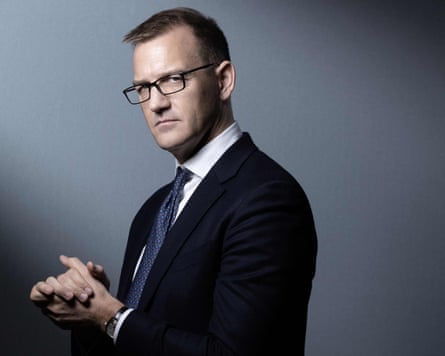
Daniel Kretinsky, the owner of Royal Mail, is set to overtake David Sullivan as West Ham’s largest shareholder after agreeing to buy an additional stake in the club from the Gold family. The Czech billionaire has moved to increase his power at West Ham after Sullivan stepped down as a director and co-chair of the club last Saturday, before a joint investigation by the Times and Panorama reporting on seven women accusing him of abusing his power and preying on them for sex in claims that date back to the 1980s and 90s.
Kretinsky will increase his stake from 27% to 43% after agreeing to buy a portion of shares from Vanessa Gold, who inherited her 25% stake after the death of her father, David Gold, in January 2023.
Gold and Kretinsky have said the deal will be ratified in the next few weeks and revealed they have “agreed to vote jointly on key matters and to support the strategy targeting an immediate return to the Premier League”.
West Ham are in major financial difficulties after their relegation last month , and Kretinsky intends to inject capital in an attempt to help Nuno Espirito Santo, the club’s manager, build a squad capable of winning promotion.
Sullivan, who categorically denies all of the allegations against him, has been the club’s largest shareholder until now and was the most influential figure at West Ham. It remains unclear if Sullivan intends to sell his 38.8% stake, although that decision could be taken out of his hands if the Independent Football Regulator decides to follow its preliminary inquiries into the allegations against the 77-year-old.
The IFR has the power to force the former pornography baron to divest his shares if it concludes he no longer meets the required standards of honesty and integrity to own a football club. A nonexecutive director on the IFR, Tara Warren, has been removed from any potential investigation into Sullivan to avoid conflict of interest. Warren was a senior director of West Ham until February.
Kretinsky, who became a shareholder at West Ham after paying £150m for a stake from Sullivan and David Gold in 2021, will face a battle to lift morale and get the club back on track.
A source with knowledge of the club’s inner workings described the situation behind the scenes as a “mess”. West Ham made a loss of £104.2m last year and need to raise more than £100m in transfer sales, raising the prospect of them losing key talent such as Jarrod Bowen, Mateus Fernandes and Crysencio Summerville. They do not have a sporting director and their head of technical recruitment, Max Hahn, has handed in his resignation.
Kretinsky and Gold released a statement on Saturday morning saying they were “deeply concerned” by the allegations made by the Times and Panorama. A source said it was not until 21 May that Sullivan informed the full board at West Ham of the potential of the story concerning his alleged behaviour towards women being published.

It was only after relegation to the Championship that board members were also told Sullivan has been restricted from interacting with West Ham’s women and youth teams since 2023 after a safeguarding inquiry by the Football Association. The women’s team were not aware of the restrictions imposed on Sullivan. It is understood this followed the FA receiving a complaint about a historical allegation dating back to the 198os, which Sullivan has denied.
Kretinsky and Gold said: “We were deeply concerned by the revelations made by The Times and Panorama this week and our thoughts go out to those women who have fought so hard to make their voices heard. Any abuse of power is abhorrent, and it takes great courage and determination to speak up against it.
“As shareholders and directors of West Ham, our focus is now firmly on protecting the future of this football club. Our goal is to stabilise West Ham United , retain as many of our key players as possible and, under the management of Nuno Espírito Santo, secure an immediate return to the Premier League. We are also committed to engaging with our fans and all business partners to build a stronger future for our club. We have already taken concrete steps toward this goal.
“As such, we have reached agreement on the key terms of a share purchase transaction between the Gold family and 1890 Holdings, which, subject to other shareholders’ pre-emption rights and necessary approvals, would make 1890 Holdings (part of the broader group EP) the largest shareholder in West Ham with an approximately 43% stake. As the largest shareholder, group EP will be able to provide the additional financing the club needs.”
Welcome to California: land of plunder and hypocrisy | California | The Guardian
Keyword – US news
Trefwoorden – California
Title – Welcome to California: land of plunder and hypocrisy | California | The Guardian
Author –
Link – Welcome to California: land of plunder and hypocrisy | California | The Guardian
Publish date – 2026-06-14T13:00:43.000Z
Category – News
URL – https://www.theguardian.com/us-news/ng-interactive/2026/jun/14/california-land-of-plunder-and-hypocrisy
I was a fourth-grader in the public schools of California when I first learned about the Gold Rush. I remember our teacher, Mrs Dyer, passing down the story in the manner of lore.
On the morning of 24 January 1848, James Marshall, a New Jersey boy come west, stumbled upon four shiny nuggets alongside the American River. He tried to keep his discovery a secret, but the shout of “eureka” from the dirt streets of San Francisco rang out across the shore. It unleashed a force that could not be contained.
No need for manifest destiny. Overnight, 80,000 dreamers of every color, creed and country poured in.
I didn’t know back then how story became myth and myth became story. The sordid details of history would be mine to fill in. The Gold Rush was California’s first extraction, a flash that cannonballed the whole mad state into being, and it ended the way all such plunders do. A handful of wealthy San Francisco industrialists made off with the riches. Marshall died so poor he could barely cover the price of his burial.
Hydraulic mining, the state’s first invention sold to the world, had blasted out an immense crater in the Sierra Nevada, a desecration that let loose a torrent of environmental ruin. In a landmark decision, a judge shut down the mining industry in 1884. The crater, a symbol of California creation and destruction, was declared a state historic park.
But the fever of gold mining did not pass.
All around me, from inland to coast, the fire of extraction still burns. I have spent more than half my life chronicling the exploitations of California, so I know delirium to be a condition of the land. It took up residence in the body of the infant state and went on to spawn further extractions – a piling-on of audacities – so that one unthinkable taking gave rise to an even more unthinkable taking, and on and on through the generations.
Now, the Golden state has spun itself into a new and more menacing age of plunder: the mining of water and the mining of our minds.
In the San Joaquin valley, farmers divert the great rivers and tap the ancient aquifer to grow nuts, fruits and vegetables. Their irrigated flatland is one of the most dramatic alterations of the Earth’s surface in human history. But the water can no longer keep up with the bounty. The drained earth, and all that has been built upon it, is sinking .
In Silicon Valley, lords of tech harness untold amounts of water and electricity to power more data-processing centers. The project of artificial intelligence feeds on human consciousness itself. Algorithms lay waste to our brains. Robots instruct our children how to expertly tie nooses to better hang themselves. Bombs guided by the pinpoint of AI erase Gaza and slaughter tens of thousands of innocents.
Each thing sprouts from the same fertile ground: the soil that is California. From my perch in the middle of the state, I swear I can feel an agitation disrupting the land and its people. Like a drone, it carries the sound of a hum.
California’s eternal grab for more has never seemed so desperate.
On a fall day, chasing the hum, I set out on the road to tell the story of two places, without heed, each pursuing one last extraction.
I am driving across the western flank of the San Joaquin valley, heading in the direction of Coalinga, a small town in Fresno county that owes its entire existence, right down to its name, to the digging for earth’s riches.
The leveled ground seems to be holding its breath. The nut harvest, nearly 5bn pounds of almonds and pistachios jolted off the trees in a filthy cloud, is already in swing. These are the factories in the fields conceived in the mid- to late 1800s by the same San Francisco barons who pocketed gold’s riches.
Year after year, Fresno county, where I was born and have lived most of my life, ranks No 1 in food production for the nation. Our crop counts on a sun that shines 300 days a year, a never-ending flow of water and a workforce that won’t tire. What are the men and women toiling in the fields if not a faithful extraction, whereby the beckoning arm of California, for a century and counting, reaches deep into the rural heart of Mexico for a new generation’s fresh bodies.
Our crop also counts on an ungodly amount of poison, which we regard as our dirty little secret never to be broached in a social setting. The year-round drift of insecticides, herbicides and fungicides floats from farms to schools to houses and into so many bodies now riddled with neurological disease. Parkinson’s Alley , as the epidemiologists at the University of California, Los Angeles have pinned it on the map, is the very road I’m driving on.
I had shut tight my car windows before leaving suburbia, but there’s no escaping the air, for this is California’s sacrifice zone. Miles and miles stink of dung and diesel. We dwellers of cornucopia breathe in more particulate matter than anywhere else in the country.
Our dairies aren’t mom and pop but factories of fine calibration that squeeze out milk from the teats of 1.3 million Holsteins. Out the other end shoots a river of shit that never stops flowing. The methane and ammonia toxify the already toxic air. Nitrates seep into the dwindling aquifer, fouling the wells people drink from.
Industrial agriculture was the first modern system of extraction that California exported to the world. It inspired the other systems – ballistic warfare, higher education, suburban sprawl, green energy – that we happily produced on a mass scale, pretending not to notice whether it was wonder or woe we were selling.
Our abuse of the state’s extraordinary gift of natural resources collides with our desire to clean the air and water, shrink carbon’s footprint and create solar, wind and battery power. This is California’s great paradox, we tell ourselves, a state big and complicated and enough of a work in progress that we can have it both ways.
In the halls of Sacramento governance, where our split personality is a grand exhibition, the recurring chant from Governor Gavin Newsom and his fellow Democrats is “abundance, abundance”, a magic wand that if waved wholeheartedly can summon the glories of California’s wide-open past.
The abundance agenda, in the fever of their dream, will bring AI prosperity, more housing and less homelessness, and a high-speed rail line that isn’t a boondoggle but will connect rural to urban, coastal to inland, red to blue, so we’ll finally become one. There’s no capitalism, they whisper, like California capitalism. Let it do what it can do once more.
On the outskirts of Coalinga, Chevron’s pump jacks are draining crude from the brown hills, and tens of thousands of cattle fatten up for slaughter in the largest feedlot in the west. There’s a gravel mine, a state prison and acre after acre of pistachio trees growing in dirt that still knows itself as desert. Turbine pumps hum, pulling up water that tastes like the sea. The pistachio, God blessed, is the one fruit-bearing tree that can stand such salt.
Jimmy Anderson pulls up to Coalinga city hall with a rumble. His big white Ford Raptor is gleaming. His leather boots are shiny, too.
He has come to the monthly meeting of the Pleasant Valley water district not from his own cattle feedlot on the dusty edge of town. He’s made the long drive from suburban Fresno, where his house sits along the river on the fifth hole of a country club. Anderson is partial to fifth holes. His multimillion-dollar house on the California coast, the one he flies to in his Swiss-made jet, is a chip shot from the fifth tee at Pebble Beach.
As to any insinuation that he’s a faux farmer, Anderson has a swift and practiced reply. His family on his mother’s side, the Mourens, herded sheep here as far back as the 1860s. This was before miners in Coalinga pulled out the coal that gave the town its name, before wildcatters struck a gusher named “blue goose” in 1898 and turned Coalinga into the No 1 oil field in the state. The Mourens survived hard times to amass tens of thousands of acres. A trust-fund kid now nearing 60, Anderson has been wily enough to add on to the family fortune.
This morning, a look of disquiet in his manner, he takes a seat in the meeting room with fellow farmers and district staff. Together, they listen as a young consultant with a water engineering firm explains just how dry they are. Whether they’re growing pistachios or row crops, overseeing thousands of acres of grazing land or feedlot ground, family farmers or big company men, their dominion as they knew it is no more.

For a century, California had allowed the full-throttle pumping of groundwater. The agriculturalists believed that the aquifer, straight down to thousands of feet, was theirs to do as they pleased with. Then the drought of 2012 to 2016, the worst dry times, struck. Politicians in Sacramento decided the state couldn’t very well regard itself as America’s great progressive hope if it kept signaling to agriculture to “get yours while you can”.
In 2014, California enacted the Sustainable Groundwater Management Act to limit the mining of our most imperiled resource. To keep the growers from complaining too much, the law came with a decade-long rollout. This led, quite expectedly, to a race to the bottom of the aquifer across five valley counties. Hedge funds, pension funds, the insurer John Hancock and the Mormon church joined a stampede of farmers, planting 600,000 more acres of nut trees and drilling thousands more wells. The land was sinking by the foot.
Only recently had the free-for-all exhausted itself, and the law showed its teeth. One million acres and more of valley farmland, one-fifth of agriculture’s footprint here, will now have to be fallowed to achieve something close to sustainability. The axe, as it should, will fall first on the farmland beyond the reach of a river.
Sustainable isn’t a word that rolls off the tongues of growers. When they figured out what sustainable meant – that California would be curtailing their draw of groundwater to no more than what the rain and snowmelt replenished each year – they did what entitled men do. They hired high-priced lawyers and reached for each other’s throats – a good ol’ western water war.
In Pleasant Valley, no river runs through the land. Instead, the groundwater is replenished by creeks that come alive only in hard rains. This has left the cattle ranchers and pistachio growers feuding over a small, briny aquifer that has plummeted 125ft since the first orchard was planted in 1991. The rancor over how they might share their dwindling resource has the sound of a reckoning long overdue.
Pleasant Valley measures 14,000 acres of permanent crops. To grow nuts and vegetables worth tens of millions of dollars each year, the farmers are pumping the aquifer to the tune of nearly three acre-feet of water for every acre. This is enough water to supply 90,000 households for a year. Such an extraction won’t outlast the next long drought.
Sustainability’s bottom line is brutal. To meet the state’s demands, farmers in Pleasant Valley are going to have to cut their pumping to a new level every five years. By 2042, their draw of the aquifer will be reduced by nearly two-thirds. At that point, having achieved a “safe yield” in the eyes of the state, their land will be radically altered. Six-thousand acres of pistachio orchards will need to be ripped out.
“That’s what sustainability is going to look like here,” says Brad Gleason, the district’s board president. “We’ll have to get smaller or smarter.”
I’ve known Gleason since the seventh grade, and when he says “smarter” I get what he means. There’s another option available to wealthy farmers like him: they can build a pipeline and haul in river water from northern California. This way, they’ll still comply with the state law and not drain the local aquifer dry. And they’ll be able to ship in enough water to keep every orchard bursting with nuts.
It won’t be cheap, Gleason says. The pipeline will cost $8m, and they’ll pay $3m a year for the imported water. But by simply extracting snowmelt from up north, the footprint of irrigated agriculture in Pleasant Valley can stay the same. Only the tired old delta, where the northern rivers converge, will feel the loss. This is how the growers plan to outwit the law.
Jimmy Anderson, the biggest landowner in Pleasant Valley, who not only ranches cattle but raises pistachios, has a different plan in mind. To maximize his draw of the local aquifer, he needs to change the district’s formula on sustainability. By late fall, he’s figured out the numbers. But before he can execute his move, he has to wait out Gleason’s tenure and then assemble a new board that will install him as president.
“Jimmy wants to undo everything we’ve worked on for the past year,” says Gleason, who lives near Anderson on 17-Mile Drive in Pebble Beach.
Gleason’s main duty as president is to meet the sustainability goals of the state and avoid costly sanctions for the district. His board, he believes, has adopted the fairest way forward. Standing in his orchard in the desert, he paints a future of environmentally friendly farming. “I was the first farmer to plant pistachios in this ground,” he tells me. “Agriculture still has a place here.”
Before Gleason is able to hand over his plan to the state, however, his tenure as board president ends. By the second meeting of the new year, Jimmy Anderson has executed his takeover. Not only does he make himself president, but with a majority of board members loyal to him, he sets in motion a scheme to monetize the water for his own gain.
As it plays out in stages, one rival board member marvels at Anderson’s execution. Like jiujitsu, he says, you must see his moves in slow motion to truly appreciate their craftiness.
Anderson starts by altering the math of sustainability. The new numbers make sense, at least from the cab of his Ford Raptor. He expands the district’s category for irrigated acres from 14,000 to 22,000 by changing the definition of “irrigated”.
Under Gleason’s plan, “irrigated acres” meant land in Pleasant Valley that was planted and watered year after year. This definition honored a certain code. The landowners who farmed the ground on a continual basis, putting the aquifer to “beneficial use”, would have first dibs on the water.
Anderson’s definition – call it a cattleman’s bent on things – regards the land as a shifting shape. The 8,000 acres he’s added to the ranks of irrigated grow no permanent crops. Many of the acres sit parched. At best, some tracts have been irrigated now and then for vegetables or grain. It’s all the same to Anderson. If a piece of ground has sipped water for a single season over the past decade, he considers it irrigated and thus forever eligible to draw from the aquifer.
Of these entitled acres, it’s no surprise that the lion’s share, 5,000 acres, belong to Anderson and his kin. How much of their ground is farmed or fallowed isn’t a question Anderson cares to answer. To him, the matter is moot. The entire 5,000 acres are now counted as “irrigated.” For each acre, Anderson gets a credit. In his case, the credits add up to no trivial prize: they’re worth 1.5bn gallons of real water that can be lifted from the aquifer each year.
Anderson can either bank his credits for drought times or sell them now on the local market. And who will be lining up to buy his credits? Well, that would be his fellow pistachio growers, the same ones who lost their collective draw to 1.5bn gallons when Anderson became president and threw out Gleason’s plan.
As brazen as it sounds, Anderson is now poised to sell his neighbors the same quantity of water he just seized from them.
“The Johnnies-come-lately are the ones who pumped our little aquifer dry,” he says bluntly. “They bought the land for cheap and planted it wall to wall with pistachios. They knew it couldn’t last.”
Gleason and his farming partner, Brian Whelan, an attorney by profession, argue that Anderson used his status as the district’s biggest landowner to commandeer the board and adopt a water allocation plan that mostly benefits himself. More than 3,000 acres of Anderson’s “irrigated” lands have long been barren, they argue, and should never have been awarded irrigation credits. “This isn’t farming crops,” Whelan says. “It’s farming water.” They intend to file a lawsuit.
Anderson isn’t too worried about the boundaries he’s pushing. He knows the state’s groundwater management act doesn’t spell out the meaning of irrigated. Neither does it outlaw agrarian cunning. As long as agriculture throttles back its pumps and keeps the valley from sinking more, each district can decide its imperfect way.
“I’ve got records showing I planted that land in garlic, onions, carrots, safflower and wheat,” he says. “[Gleason and Whelan are] either blind or ignorant.”
Anderson is confident his sustainability plan will fly with the state. In the meantime, he’s wheeling and dealing, selling his credits for $200 an acre-foot. If he sells all of them – a decent bet – he’ll make close to $1m this year alone.
Gleason and Whelan, in a strange turn, are among the desperate buyers. They’ve wired Anderson $200,000 for the privilege of his water–1,000 acre-feet to be exact, enough to help irrigate their pistachios for this growing season. “Jimmy’s got us over a barrel,” Gleason says. “ Until we can build a pipeline to bring in water, we have to pay him to keep farming.”
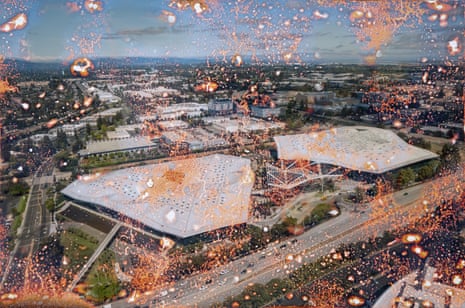
I cross the Pacheco Pass through the Diablo range and come down into Silicon Valley, a place that used to be known as “the heart’s delight” for its plums, pears, apricots and cherries. It’s a different valley now, one devoted to a strange fruit, the algorithm, and its unimaginable harvest.
The algorithm ascertains our thoughts and emotions creep by creep and then feeds them back to us, over and over, until the information we’re consuming no longer even requires us to chew. By the time the whole process is finished, we’re eating our own regurgitations. It goes down so smoothly, the slurp of Gerber baby food, that we might as well be infants again.
My interrogations of California over the past 35 years have largely steered clear of this place. Its language is one I find foreign. Its gadgets hold no thrall for me. Yet there’s no remaining aloof from the fallout of Silicon Valley’s greed. Artificial intelligence is the final mode of its human capture. If I get challenged by a techie or two about the nature of this extraction, I know what to do. I’ll trot out Gemini, part of Google’s DeepMind.
“Yes artificial intelligence is actively mining the human mind in several ways,” Gemini coughs up, “functioning both as a tool that extracts and analyzes human data to understand cognition and as a force that is actively altering or rewiring human cognitive processes.” In human words, AI isn’t simply picking our brains in a supreme act of mimicry but atrophying our brains each time the software performs a thinking task for us.
The tech lords are no less barefaced in their aim to take us to a place they call “post-human”. Elon Musk, for one, has long believed the transition will work out rather seamlessly, that the smartphone has so softened us up as targets that we’ll go there willingly, with neural chips planted in our brains.
“Your phone is already an extension of you. What most people don’t realize is they’re already a cyborg,” Musk told podcaster Joe Rogan in 2018. “The merge scenario with AI is the one that seems like probably the best. Like if you can’t beat it, join it.” He’s repeated this belief many times since.
The hothouses where the hereafter germinates in blind arrogance (read the billboards from Palo Alto to San Francisco to understand the conceit) are off-limits to outsiders like me. What I want to explore instead is the infrastructure they’ve built – a clutch of land, water and electricity – to make such a future true.
On the borderline of Sunnyvale and Santa Clara, I meet up with Masheika Allgood, a lawyer turned techie who worked at the chip giant Nvidia before losing faith in the AI rush. She had agreed to act as my tour guide. “I won’t be driving a Tesla or a Porsche,” she’d said. “Look out for the Nissan Altima.”
I hop in and off we go, past gleaming corporate headquarters and office parks, past $1.5m ranch houses and strip malls with sprawling parking lots where the prunes once dried. Across the expressway, we enter the bleak industrial heart of Santa Clara, stuffed full of datacenters edged by small power plants and diesel-fired generators, the second-most AI farms of any city in the nation, buzzing a hum that gives the place a fit of tinnitus.
Allgood is among a growing band of California activists asking questions about datacenters – questions that neither the state nor local governments are able to answer. How much water are they using? How much power? What do the emissions from the diesel generators mean for human health? If whole parts of AI go bust, who among the ratepayers of the Pacific Gas & Electric Co, the investor-owned utility whose electricity is the most expensive in the nation, will be left holding the bag?
The AI boom, cloaked in opacity, is exempt from even the most basic inquiry. “There’s absolutely no doubt that the environmental impacts of datacenters are significant,” Allgood says. “How can they not be given that they operate 24/7? But when it comes to water and electricity, we can’t peg anything down. The only answer we get from government is: ‘Don’t worry about it.’”
The California legislature passed a bill last September that required datacenters to disclose and certify their water consumption as part of their local business licenses. Calling the measure too onerous, Newsom vetoed it. He’s done the same with other proposed guardrails that would have addressed the more existential harms posed by artificial intelligence.
Yet it is also true that California, under his leadership, has become one of the few states to adopt measures to protect children from some of AI’s more base appetites. “Newsom’s adopted a few regs, so he’s not nearly as bad as Trump,” Allgood says. “But for the most part, he’s given the tech billionaires free rein.”
I confess to her that I spent four years writing Newsom’s memoir, Young Man in a Hurry , and saw up close the grit he summoned to tell a family story marked by suicide, alcoholism, mental illness and ties to the Communist party and the wealthy Getty clan. The governor’s sister and wife pressed him to remove details they found unsettling, but he held true to our probing vision of the book.
At the same time, I had watched the politician in him embody the state’s great paradox. He could speak and even act with passion to address the gravity of climate change and fight back against Trump’s ceaseless environmental assaults. But then he could turn around and embrace a paean to growth that was little more than a hunt for the next bonanza.
The houses California kept planting in the path of wildfire, the warehouse distribution centers paving over the beleaguered inland, the giant tunnel the governor was seeking to build so that billionaire farmers and suburban housing developers could siphon more water out of the delta – at what point in critical times did paradox turn into hypocrisy?
As for Newsom’s alliance with the tech bros, it traced back to his days as San Francisco’s mayor. He admired them. He considered them pals. And he was taken with their gadgets, so much so that he could summon the details of an evening in the Fairmont Hotel when a young Steve Jobs unveiled to him, Sergey Brin and Larry Page an early version of his futuristic phone. Jobs lifted the device from his pocket and swiped the sleek screen.
“Whoa,” they chanted. Jobs let Newsom swipe it, too. “Whoa,” he said. The way the governor recalled the unveiling, it was its own shout of “eureka”.
A young Newsom, “the Great Gavini”, loved performing magic tricks for his family at holiday gatherings. What was the alchemy of AI if not a conjuring? His directive that placed ChatGPT genies in every classroom of the California State University system – the biggest partnership between AI and higher education in the world – was a gift of young minds to a handful of thieves. To feed their robots, the AI giants had stolen nearly the whole of the humanities, my own books among the fodder.
On the San Tomas Expressway, Allgood drives into the dystopic wingspan of Nvidia, where CEO Jensen Huang churns out the chips that power AI, amassing a personal net worth of $164bn. His towering new campus brings to mind a giant spaceship aiming to get to Mars.
Like Pleasant Valley and its growers, Santa Clara and its 57 datacenters have run up against a limit line. The city’s own utility, Silicon Valley Power, is tapped out. Datacenters are sucking up more than 60% of Santa Clara’s electricity, subsidized in part by higher rates charged to residents.
Even so, city leaders aren’t in the mood to entertain any doubts about their pact with AI. They’re too busy expanding the grid to bring on more datacenters for the future.
If I’m looking for a city whose embrace of AI is even more gung ho than Santa Clara, we need to go to San Jose, Allgood says. Led by Mayor Matt Mahan, the state’s third-most-populous city is vowing to become “the west coast’s premier destination for datacenter development”.
San Jose is partnering with PG&E in a $1.5bn deal to triple the city’s electrical capacity over the next 10 years. The giant utility is even covering salaries and benefits, $670,000, for two city hall employees tasked with growing as many as 20 new datacenters.
On Great Oaks Boulevard in south San Jose, Allgood points to a behemoth rising out of an 18-acre tract of land. “There it is,” she says. The city’s newest and grandest datacenter stands in a historic part of town called Edenvale, surrounded by schools and $1.3m houses, commercial strips and business parks, and a cluster of smaller datacenters that preceded it.
We park in front of a tall, black, iron fence that borders the new building. A security guard with a strange haircut bounds out of his cubicle. “This is private property,” he says. “What’s your business?” I tell him I’m a writer, which is just about the most laughable thing I could have uttered. “You need to move on,” he says.
The distance we move on, a half-block, is enough to appreciate the structure in all its colossal infliction. On a plot of old hay ground where residents had envisioned a community park, a fortress of the carceral form has come to be. It’s rectangular, topped with security cameras and painted shades of dull. Where is the front door, where is the back door, where is a window? There’s no telling. What else to read of its architecture but the unwelcome of the human being.
Allgood drops me off at my car, and we say our goodbyes. Only later do I learn that the new datacenter isn’t one digital farm but three. When fully built, the cluster will measure 547,000 sq ft and house endless racks of computing equipment cooled with refrigerant and drinking water. A power substation and three dozen diesel-fired generators will be added to the mix. This is the backup that datacenters require in the event PG&E has to shut off power, a now-and-then occurrence in a land of wildfires and drought.
I find a small group of residents who protested the project back in 2020. The alarm they expressed in meetings and letters – “You’re going to put this thing in our backyard?” – fell on the deaf ears of bureaucrats and regulators. “I saw greed. I saw corruption. I saw so many of my neighbors bury their heads in the sand,” says Mimi Patterson, a longtime resident.
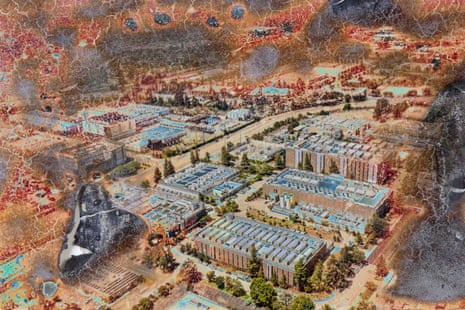
She counts seven datacenters, including the new ones, built in her part of town. While these models aren’t the monsters going up in Nevada, Texas, Louisiana and Virginia, their side-by-side impacts are cumulative. The noise and fumes are only half of it. How to measure the assault to neighborhood scale and flow and civic pride? And yet the city of San Jose, documents show, never bothered to do an environmental impact study.
If you knew the history of San Jose’s southside, government laxity of this sort seems unforgivable.
In the late 1970s, right in this same neighborhood, Fairchild Semiconductor, the first maker of silicon chips, began leaking hundreds of thousands of pounds of volatile organic compounds into the soil and groundwater. The spills explained the mystery of so many miscarriages and children born with cardiac defects and dying of cancer. Fairchild landed on the EPA’s superfund list, one of 23 toxic sites across Santa Clara county, more than any other county in the nation.
Now confronted by the race for AI, residents are concerned that local and state regulators are greenlighting datacenters by way of streamlined review. If a center requires no more than 100 megawatts of backup diesel power, enough to light up maybe 75,000 houses, the California Energy Commission exempts it from a more demanding regulatory process. Of the 15 datacenters fully vetted for such an exemption since 2011, not a single one was denied.
Toxic emissions from diesel generators trouble the regional Bay Area air district and the powerful California Air Resources Board, but not enough for the state to insist that datacenters use green energy for their backup power. With their dirty fuel, AI and its robots will enjoy the privilege of never having to suffer a power outage like the rest of us.
“Instead of asking hard questions about AI, California has chosen to operate in the dark,” says Robert Sarvey, a retired cobbler who has papered the state with lawyerly briefs critical of its oversight.
In the dark. That’s the state of our mind when it comes to AI. It means forgetting the energy crisis of 2000-2001 , when California and its utilities built too many natural gas-powered plants. The panic turned into an energy glut and saddled ratepayers with billions of dollars in costs for infrastructure that sits idle today.
In the dark explains how we blithely accept big tech’s assurances that the water it uses is no big deal. Or how we ignore that datacenters, once constructed, hardly employ a soul. The centers sell no taxable goods. The property taxes they do yield are made to sound like a windfall. But what’s a windfall in California where property taxes are capped?
We’re a state where land is valuable and water scarce, and building more houses and reducing carbon emissions are longstanding goals. Might we have just told the datacenters to pound sand elsewhere?
When San Jose’s mayor cancels a meeting with me – he’s running for governor and raking in millions of dollars in campaign dough from the tech lords – I call his deputy city manager, Manuel Pineda, who oversees AI infrastructure. I tell him I come from a valley where the agricultural fields, for all their environmental peril, produce a crop I can touch, smell and taste, one that feeds the nation and the world.
What is the crop that’s coming off the fields of datacenters?
He seems confounded by my question, and so I venture a run down the list: pornography, robot friends and lovers, deepfakes erasing the line between real and unreal, cheaper research for lawyers, more diagnostic tools for doctors, more profits for bankers and billionaires, more carbon spewed into the environment, mass joblessness, mass surveillance, AI-generated genocide.
I might have gone on, but he breaks his silence with a chirp of abundance. Datacenters are good for business, he says. They keep the oligarchs, who suffer from wanderlust, tethered to Silicon Valley.
There was no reckoning to be found here.
The unearthing of gold in California progressed like all plunders do. By the 1870s, the San Francisco barons had grown tired of their miners merely digging for nuggets. In the northern Sierra Nevada, at a place called Malakoff Diggins , they erected a first-of-a-kind hydraulic system – dams, reservoirs, canals, ditches, flumes, pipes and hoses with nozzles – that industrialized gold’s taking.
Theirs was a force of the ice age now in the hands of man. Big cannons shot jets of water at such velocity that they blasted out an immense crater in the mountain. Cascades of brown water, boulders, cobblestones, pebbles and mud poured out. The ruin ran great distances, clogging up the rivers and delta and the San Francisco Bay. Vast tracts of farmland on the alluvial plains suffocated under the debris.
The road I’m driving climbs to the lip of that crater – the most enduring symbol of California’s first extraction, now a state historic park. I get out of the car and stare down into the abyss. The skull of the mountain is gone, the innards hollowed out. What’s left in the emptiness a century and-a-half later is not easy to fathom: a mercury-tainted pond with a few ducks and turtles, a stand of bulrushes, a scattering of contorted little pines and twisted manzanita.
The sheared-off walls, jagged with rocks, are leaking mottled red iron. The blood stained. The wound was eternal.
What lore of a last extraction would get passed down to the next generation staring into a new abyss, this one blasted out by a force of a far graver magnitude, this one infinitely wider and deeper, a plunder of all things that made the human race human?
At crater’s bottom, what scattering, if any, might someday be found of us?
Mark Arax is the author of The Dreamt Land and other books about California
Brazil find that everything good flows through Vini of New Jersey | Vinícius Júnior | The Guardian
Keyword – Football
Trefwoorden – Vinícius Júnior, World Cup 2026, Brazil, Football, World Cup, Sport
Title – Brazil find that everything good flows through Vini of New Jersey | Vinícius Júnior | The Guardian
Author – https://www.theguardian.com/profile/leanderschaerlaeckens
Link – Brazil find that everything good flows through Vini of New Jersey | Vinícius Júnior | The Guardian
Publish date – 2026-06-14T07:00:37.000Z
Category – Sport
URL – https://www.theguardian.com/football/2026/jun/14/vinicius-junior-brazil-world-cup-2026
Vinícius Júnior is not wearing the famous Brazil No 10 at this World Cup. For now, the hallowed shirt of Pelé, Zico, Rivellino, Rivaldo, Ronaldinho and all the rest belongs to Neymar.
Or at least it belongs to a man faintly resembling Neymar. Now 34, he showed just enough at Santos to make Carlo Ancelotti’s squad after two lucrative but mostly wasted years in Saudi Arabia. Ancelotti could have chosen João Pedro or Richarlison or Savinho or Gabriel Jesus or Igor Jesus or, hell, even Antony, but he took Neymar. Who is injured again – a calf problem this time – and whose fitness will loom over the Brazilian campaign, just as it has at some point during every one of his four World Cups.
Neymar, who will loom over Vinícius Júnior, too.
If Vinícius is now Brazil’s undisputed star, the 25-year-old has also yet to really make the team his own. He has turned in frustrating and often fruitless performances at major international tournaments, while scoring a mere nine goals in 49 appearances entering this, his second World Cup.
He has yet to wrest top billing from Neymar, whose jersey was worn by huge swaths of the Brazilian fans in their draw with Morocco on Saturday .
Neymar, visibly hobbled, ambled by the adoring Brazilian crowds before the match, confirming that he is still here, that he still matters. He sported a backwards hat, like the teenager who once dazzled us before injuries sapped his powers over the last decade. He got what he wanted: loud cheers, even though he wasn’t even in the matchday squad. Neymar, and the No 10, were there but they also were not. He attempted a bit of coaching from the sidelines during the game, trying to exert influence over a team he can help in no other way.
So if ever there was a time for Vinícius to announce, or indeed confirm, that he was taking charge, this was it: the only group-stage match of this World Cup featuring two of Fifa’s top-10 teams.
He did just that, under the watchful eye of Brazil legends Ronaldo, Kaká and Roberto Carlos. And he did it for his coach, Ancelotti, who oversaw Vinícius’s maturation at Real Madrid, who coaxed him from prodigy to superstar.
Vinícius was man of the match – admittedly a tad generously, given the performance of Morocco’s marvelously efficient 18-year-old playmaker Ayyoub Bouaddi. And it was Vinícius’s 32nd-minute equalizer that roused Brazil from their early slumber.
Several times in the first half, Brazil’s players felt compelled to wave their arms upwards at their own fans, who far outnumbered their Moroccan counterparts, demanding more support. They may as well have asked the same of themselves, stunned as they seemed that the semi-finalists at the last World Cup – a stage the Brazilians have not reached on foreign soil in nearly a quarter-century – played right through them.
“The team was a bit anxious and at the beginning nerves were all over the place,” Ancelotti confessed after the match. “In the second half we did a lot better.”
Yet out wide for a side still finding itself, Vinícius was a relentless danger. In the 14th minute, he hurtled up the last strip of grass in direct sunlight, beat his club – and now international – rival Achraf Hakimi, and shuffled into the shadows, unleashing a cross that Igor Thiago couldn’t quite get his head on.
Later, Vinícius found a pocket of space in the Moroccan box, where Bruno Guimarães gave him a clever ball. He cut inside to improve an acute angle, turning Neil El Aynaoui inside out, and blasted his finish past Yassine Bounou. The goal canceled out Ismael Saibari’s delightful 21st-minute dink.
It was the last goal of the game, from a chance that carried no more than 0.1 expected goals.
“I believe I can improve a lot, I managed to score a goal, but I didn’t have 100% of my best technical part,” Vinícius said after the match.
From there, Brazil settled down and Morocco set up in a deep block. Most of whatever threat Brazil still posed emanated from Vinícius’s left flank. He danced his way into space but nobody had joined him in the attack to connect with his cross – something which may well become a theme in Ancelotti’s striker-less system. Then Vinícius loped into the space behind Hakimi after being sprung again, finding Raphinha, whose finish was feckless.
“When you’re up against Vinícius, it’s hard to defend,” Morocco manager Mohamed Ouahbi lamented.
He was hardly perfect. Vinícius gave the ball away a lot, tried a fair few things that didn’t come off. But on the night, he was there for his nation. When Brazil needed a spark, not to mention a goal, they got it from the Real Madrid star.
For now, that will suit the five-time champions just fine. And there was something fitting about a man called Vini doing the business in North Jersey.
Amoc collapse could change Europe’s climate 10x faster than expected. We aren’t ready | Penny Holliday, Femke de Jong and Sjoerd Groeskamp | The Guardian
Keyword – Opinion
Trefwoorden – Environment, Europe, Climate crisis, Sea level, European Union, Trump administration, Oceans, World news
Title – Amoc collapse could change Europe’s climate 10x faster than expected. We aren’t ready | Penny Holliday, Femke de Jong and Sjoerd Groeskamp | The Guardian
Author – Penny Holliday, Femke de Jong and Sjoerd Groeskamp
Link – Amoc collapse could change Europe’s climate 10x faster than expected. We aren’t ready | Penny Holliday, Femke de Jong and Sjoerd Groeskamp | The Guardian
Publish date – 2026-06-14T10:00:40.000Z
Category – Opinion
URL – https://www.theguardian.com/commentisfree/2026/jun/14/amoc-collapse-europe-climate
I magine we detect a large asteroid heading straight for Earth. We are able to intervene and prevent disaster, but instead we cut the funding needed to track it. A few million dollars, it was argued, was too expensive to have a chance to save society.
While this scenario isn’t real, the metaphor is alarmingly accurate. In Europe, we spend €1bn to monitor space for asteroids, even if the actual risk of a civilisation-ending asteroid strike is close to zero .
But governments don’t commit to spend a fraction of that amount to adequately monitor a threat that is more imminent, more likely, and located here on Earth: a major change in the Atlantic Meridional Overturning Circulation (Amoc).
The Amoc is a vast system of ocean current that moves heat from the south to north in the Atlantic Ocean, thereby playing a crucial role in regulating global climate upon which modern civilisation is built – from agriculture, through infrastructure to health, prosperity and culture. Changes in Amoc can impact food security, coastal flooding, storms, energy demand, migration, infrastructure planning, etc.
Under current climate change, the Amoc is projected to weaken enough to radically change the weather and cause sea level rise in Europe. However, there is little consensus on when and how fast this will occur. Projections of the future Amoc vary between climate models, and while scientists continue to improve the ability of models to represent the real ocean, progress is hampered by insufficient understanding of the physics of the Amoc.
Consequently, this complicates matters for policymakers to implement adaptive strategies to reduce financial loss and impact on human lives. It is even more astonishing, then, that today’s minimal monitoring of the Amoc, our best hope of understanding what lies ahead, is now under acute threat of being discontinued. This will leave us unaware, unprotected and unprepared.
Worse, there is potential for Amoc weakening to become a collapse . In that specific scenario ,Europe would experience climate change up to 10 times faster than today . Considering that current climate change is already hard to keep up with as a society, we can’t begin to imagine what impact an Amoc collapse could have on our daily lives.
Further confusion is sown by an avalanche of new studies that bring a different interpretation of whether the Amoc has already weakened . This is because many new studies are based on approximations of Amoc strength that attempt to fill a gap caused by the lack of past direct measurements, for example by using historical sea surface temperature data.
The subsequent scientific debate may appear like disagreement, but it is really reflecting high levels of uncertainty because of the scarcity of data.
Underlying these high levels of uncertainty is the absence of long-term Amoc observations that allow us to describe past changes and understand how the Amoc works. We are in a situation where are trying to understand a planetary-scale system with very little direct observation.
Systematic monitoring of the Amoc began only two decades ago when a handful of visionary researchers in different countries patched together individual nationally funded research projects within the competitive science domain.
Yet, these measurements are now a benchmark for climate models and have critically improved our understanding of the Amoc. The extreme vulnerability of funding for Amoc observing has been confirmed by a recent assessment that showed how funding issues have already reduced Amoc observing capabilities.
Several Amoc monitoring initiatives are at a risk of being defunded and could be discontinued at any moment. While we can’t go back in time to do more observations, we can improve our observation strategy for the future.
Instead, the Trump administration has proposed budget cuts to Nasa, NOAA and NSF – agencies that together provide about 50% of the total Amoc monitoring budget. Last week the US announced the descoping of the Ocean Observing Initiative which was part of a programme observing the Amoc.
The recently launched European OceanEye initiative has allocated €50m for ocean observations and is a great incentive to continue Amoc observations. However, before OceanEye is up and running, the research vessels that service the present-day observing systems will already have to be financed, planned and packed.
In short: monitoring, understanding and forecasting the Amoc is at risk. Without sustained Amoc observations, we cannot know what lies ahead. An Amoc collapse may be imminent, a century away, or, if we act boldly to limit climate change, it might be averted altogether.
For too long, understanding and monitoring the Amoc was viewed as an academic pursuit. Instead, it should now be treated as what it truly is: an urgent, global priority. There is an acute and essential need to construct an alternative international funding strategy to secure long-term Amoc monitoring that realises a robust, continuous and open-access Amoc monitoring program to provide the knowledge to build a safer and more resilient world.
The cost of all Amoc monitoring adds up to about €25m a year. Meaning that for five cents per person per year, the EU can maintain one of the world’s most important climate monitoring systems that impacts our everyday lives and improves resilience to the climate crisis.
We therefore urge the EU, the UK and other international partners to step up, make haste, get organised and collaborate to assure long-term continuation of Amoc monitoring before it is lost.
Penny Holliday is chief scientific officer of the National Oceanography Centre and has been researching ocean circulation for 30 years
Dr M Femke de Jong is senior scientist at the Royal Netherlands Institute for Sea Research (NIOZ) and has been researching the Atlantic circulation for 23 years
Dr Sjoerd Groeskamp is senior scientist at the Royal Netherlands Institute for Sea Research (NIOZ) studying ocean physics and thermodynamics
Do you have an opinion on the issues raised in this article? If you would like to submit a response of up to 300 words by email to be considered for publication in our letters section, please click here .
Jamaica’s beach access crisis: ‘We shouldn’t be forced to fight for what is already ours’ | Jamaica | The Guardian
Keyword – News
Trefwoorden – Jamaica, Caribbean, Americas, World news, Access to green space, Environment
Title – Jamaica’s beach access crisis: ‘We shouldn’t be forced to fight for what is already ours’ | Jamaica | The Guardian
Author – https://www.theguardian.com/profile/natricia-duncan,https://www.theguardian.com/profile/anthony-lugg
Link – Jamaica’s beach access crisis: ‘We shouldn’t be forced to fight for what is already ours’ | Jamaica | The Guardian
Publish date – 2026-06-14T11:00:41.000Z
Category – SpecialReportAlt
URL – https://www.theguardian.com/news/2026/jun/14/jamaica-beach-access-crisis-plantation-tourism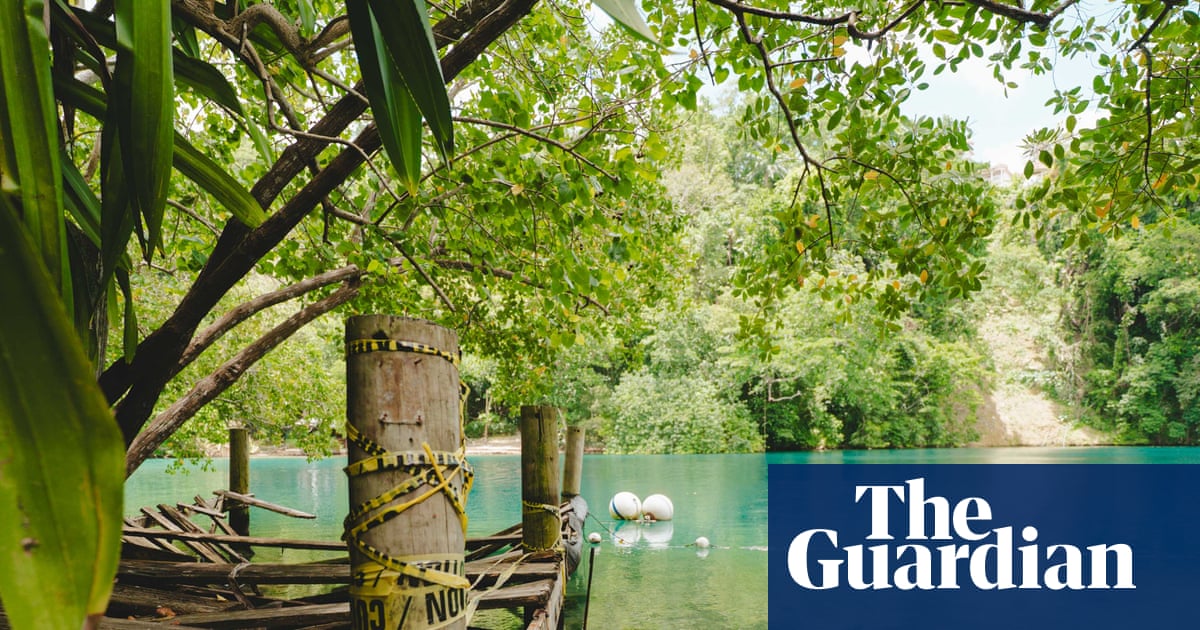
D evon Taylor remembers when the Mammee Bay shoreline in St Ann, Jamaica , was filled with children frolicking in the ocean after school, fishers haggling with locals over the price of their daily catch and craft vendors carving souvenirs under almond trees.
“I grew up on Mammee Bay,” Taylor says. He recalls fetching seawater in bottles for his grandmother when she was no longer able to go to the beach, learning to swim in the shallows, and watching generations of fishers cast their nets. “That beach raised us. It fed us.”
Today, Mammee Bay is ground zero in his war against a multibillion-dollar all-inclusive tourism model that the government says is the backbone of the country’s economy, but that he and other activists argue is “plantation tourism”, designed to benefit rich visitors and the elite and disadvantage most Jamaicans.
In 2019, locals were locked out of the beach by a fence and armed state and private security guards hired by investors building all-inclusive luxury hotels, Taylor says.
“In protest, the community ripped down the fence and reoccupied the beach, but because of the restrictions on movement in Covid, you could not be there at certain times, and when they came back they met concrete walls,” he says.
This escalated into a “violent displacement”, says Taylor, the founder of the Jamaica Beach Birthright Environmental Movement (Jabbem). “Gunshots were fired to disperse the protest.”
For the people, it was a fight for survival, Taylor adds. “When you cut us off from the sea … you are actually setting us up to starve.”
Mammee Bay and Little Dunn’s River in the northern parish of St Ann, the Blue Lagoon in the north-east, Bob Marley beach in St Andrews and Flankers/Providence beach in Montego Bay are the subject of five court cases, with the first trial scheduled for later this month.
Each beach has its own story, Taylor says, but what they all have in common is communities that are being denied access to spaces that have social, economical and even spiritual significance, because successive governments have failed to address inequities inherited from colonial times when beaches and other land were owned by the British monarch.
Still referred to as “crown land”, these were handed over to the Jamaican state when the country gained its independence in 1962, but much of the legal systems managing these lands, including the 1956 Beach Control Act, were retained.
The law, which gave the state ownership of the island’s foreshore and seabed, meaning anyone wanting to use or develop on the beach needed government permission, is at the core of the all-inclusive tourism model that Taylor views as discriminatory.
“We call it plantation tourism because it has all the characteristics of a plantation – exploitation of a poorly treated labour force, and wealth that either does not stay in our country or is only in the hands of the elite.”
In the parish of Portland, campaigners say they were misled and betrayed by local authorities who closed the Blue Lagoon in 2022 with a promise to reopen in 90 days with improved facilities and more opportunities for local guides and vendors.
They claim it was later discovered that the intention was to permanently close public access roads to the lagoon to facilitate the building of private villas, which they describe as an infringement on their rights.
The 55-metre-deep (180ft) lagoon, hugged by lush, green vegetation and renowned for its mystical, fluid colour palette that is turquoise, sapphire or azure depending on how the sun hits it, is a treasure that they refuse to surrender.
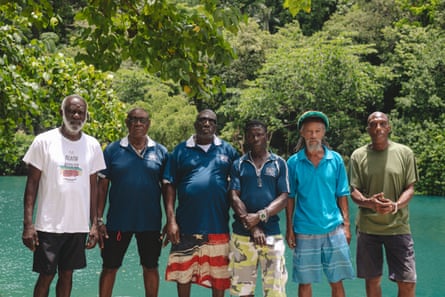
“For generations this beach has sustained all the communities around it,” says Colin Beckford, the president of the Blue Lagoon Alliance.
Wilbourn Carr, 73, who has been going to the lagoon to swim since he was 14, says: “This space is not just for recreation, food and vending, it is also where our elderly come for the healing properties of the mineral spring from the mountain that feeds the lagoon.”

More than 100 miles away in Flankers, fellow campaigners have filed an injunction to block developers from building in the sea and are fighting for the beach, which has been neglected by the state for decades, to be restored.
“Our foreparents shed blood for this land. We shouldn’t be forced to fight for what is already ours,” says one campaigner, Olando Brown. “Being a Rastafarian, I meditate a lot, and this provides a space for me to do that. Why take away this beautiful gem from the people instead of trying to develop it with us?”
“The fisher folk need this space,” says Jabbem’s community coordinator for western Jamaica, Monique Christie, adding that it is important for local families who cannot afford expensive holidays. “You can pack some food, freeze some juice, walk to the beach and enjoy some of the natural resources of your country without it being a massive expense for the family.”
In Little Dunn’s River, Jabbem’s director of community engagement, Damion Coombs, echoes Taylor’s concerns. “We are generating the revenue but we’re not gaining from it,” he says.
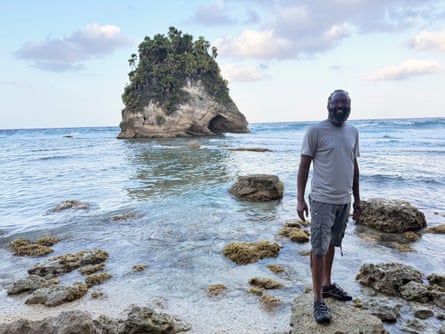
Speaking above the acoustic rush of the cascading waterfall, he compares the justification that beach access protects the tourism industry from crime to the colonial logic of “keeping out the savages”, with the local people considered unworthy of enjoying their coastlines.
Matthew Samuda, Jamaica’s minister of environment and climate change, said his government was committed to ensuring “that its natural assets also benefit its citizens”.
“It’s why we built the Harmony beach park in Montego Bay. It’s why we will build the Success beach park on the eastern side of St James,” he said.
He added that recent approvals for new development, “especially where public land was involved in the development, have insisted that developers carve out what you call corridors to the sea”.
Jamaica’s geography made beach access a complex issue, Samuda said. “Jamaica is not blessed quite with a total surrounding of our coastline by beach. We have a lot of rocky areas … [and] areas that are inaccessible because of wetlands and biodiversity reserves that you simply can’t get through to get to.”

In March, the prime minister, Andrew Holness, proposed a beach access and management policy , which promises to modernise the legislation and increase access . Campaigners say the policy still allows unacceptable restrictions.
Coombs says: “We are still talking about ‘qualified rights’, meaning somebody can decide if you come in – and maybe charge a fee. What we are fighting for is free, legal, unfettered, forever rights.”
Jabbem is also concerned that the National Reconstruction and Resilience Authority (Narra) Act, passed in March to fast‑track the country’s post‑Hurricane Melissa rebuilding, will have a negative impact on current and future court cases.
Campaigners say the act is designed to weaken the older Prescription Act , which they say protects the legal right to land or pathways that have been continuously used as a public access route for at least 20 years.
Taylor says Narra lacks checks and balances and concentrates power in the office of the prime minister.
But Samuda defended the act, insisting that it facilitated the “large-scale, urgent procurement … required to build in resilience before the next storm”.
“There’s no weakening of oversight,” he said. “You still have to come to the parliament. You still require the necessary permits. What it does is it guarantees a timely response to delivery of projects.”
Jabbem has stressed it is not partisan and that administrations from both the ruling Jamaica Labour party and the opposition People’s National party (PNP) created the beach access crisis. “The government’s power … also comes from the opposition’s complicity when they formed the government,” Coombs says.
The shadow environment minister, Omar Newell, said he recognised the “significant value” of the beaches to local communities and his party was listening to the concerns of beach access activists. “Yes, successive administrations have presided over the privatisation of our beaches. It needs to stop,” he said.
Taylor, an immunologist who has a PhD in biochemistry, says the battle for beach access has made him an “anti-colonial fighter”.
“I am a Rastafarian and a son of Jamaica,” he says, “and so this movement has driven me to become an environmental defender, but also an anti-colonial fighter, fighting against the vestiges of colonialism and the colonial logic of land dispossession, exploitation of people and the degradation of the natural environment.”
The Guardian’s connections to enslavement: can an institution atone for its history?
On Thursday 2 July, join Maya Wolfe-Robinson, Ebony Riddell Bamber, Prof Verene A Shepherd and Ahmad Ward in this free event for a wide-ranging discussion on the Guardian’s Legacies of Enslavement programme. Book tickets here or at guardian.live
‘He is him’: indomitable Jalen Brunson quiets doubters as Knicks end 53-year wait | NBA finals | The Guardian
Keyword – Sport
Trefwoorden – NBA finals, New York Knicks, San Antonio Spurs, Basketball, NBA, Sport, US sports
Title – ‘He is him’: indomitable Jalen Brunson quiets doubters as Knicks end 53-year wait | NBA finals | The Guardian
Author – https://www.theguardian.com/profile/bryan-armen-graham
Link – ‘He is him’: indomitable Jalen Brunson quiets doubters as Knicks end 53-year wait | NBA finals | The Guardian
Publish date – 2026-06-14T07:00:37.000Z
Category – Sport
URL – https://www.theguardian.com/sport/2026/jun/14/jalen-brunson-knicks-championship-reaction-finals-mvp-spurs
The New York Knicks spent decades searching for the player who could carry them back to the top of the NBA. On Saturday night, Jalen Brunson removed any remaining doubt that they had found him.
With Karl-Anthony Towns limited to two points and New York struggling offensively for much of the evening, the Knicks’ 6ft 2in floor general erupted for 45 points in a 94-90 victory over the Spurs that delivered the team’s first championship in 53 years and earned him Most Valuable Player honors.
The performance lifted Brunson into rare company. He became only the third player 6ft 3in or shorter to lead a championship team in scoring and win NBA finals MVP, joining Isiah Thomas and Stephen Curry. For years, conventional wisdom held that smaller guards needed a larger superstar beside them for a team to win basketball’s biggest prize. Brunson spent this postseason dismantling that notion one game at a time, never more so than in Saturday’s pièce de résistance .
“That was unreal, just literally unreal,” Knicks center Mitchell Robinson said afterward. “I’m speechless. I’ve seen it a couple times here and there, but to do it in a closeout game against a good team like that, it’s different.”
Brunson averaged 32.6 points, 4.2 rebounds and 4.6 assists in five games against San Antonio, but his teammates seemed almost as impressed by the manner in which he delivered the championship as the numbers themselves.
“We owe him,” guard Landry Shamet said. “We weren’t great offensively tonight, but he is generationally great offensively.
“There’s really not a whole lot to say. We all saw it. He carried us in a lot of different ways. What he does, it’s not really a surprise to us anymore, being his teammate. But nights like tonight, you’ve got to look at it and really appreciate it.”

Knicks coach Mike Brown used the occasion to make a larger point about Brunson’s place among the league’s elite.
“I’ve said it, and I hope you guys will listen to me, but he’s a top-three MVP candidate,” Brown said. “Everybody kind of mentions his name in passing. They don’t do it seriously enough. People say he’s too small. People say he’s a 1B or a 2B or whatever. He is a freaking 1A. He is an MVP candidate.”
Brown then offered the simplest possible assessment.
“He is him.”
Brunson has never seemed particularly interested in debates about where he ranks among the league’s stars. Asked after the game about the pressure that came with becoming the face of the Knicks franchise, he offered a different definition.
“No pressure whatsoever,” Brunson said. “My dad [Rick Brunson] being on eight or nine unguaranteed contracts throughout his career and not knowing when you’re going to get cut, while your family is on the east coast and you are wherever you are in the country, that’s pressure.”
Brunson said watching his father, now an assistant coach with the Knicks, fight for roster spots throughout his NBA career shaped his perspective.
“I’m just never afraid to fail,” he said.

For Brunson’s oldest brothers-in-arms, the performance felt like the culmination of years of work.
Mikal Bridges first met Brunson as a teenager at Villanova, the small Catholic school on Philadelphia’s Main Line that’s always punched above its weight . A decade after winning national titles together under Jay Wright in 2016 and 2018, the pair are champions again on an even bigger stage.
“I’ve known him for so long,” Bridges said. “I know how much he works, how good of a person he is, how good of a basketball player he is. I’m just grateful to be on his side again.”
Bridges said Brunson’s influence extends far beyond the box score.
“We follow him,” Bridges said. “It makes it easy for us. Very grateful to have Jalen be that guy, and we just follow his lead.”
For Josh Hart, one of Brunson’s closest friends and a member of the 2016 title team at Villanova, none of it came as a surprise.
“Nah,” Hart said when asked if he was still shocked by Brunson’s brilliance. “We’ve been built for this moment. We’ve been forged in fire. We’ve had a lot of long moments and times and days at ‘Nova and we just continued to build and build and build. I feel like definitely Coach Wright helped us be cut from a different cloth. No matter what the moment is, it’s never too big for us.”
Hart described Brunson and Bridges as “brothers for life” and said winning an NBA title together surpassed their college exploits. The achievement completed a journey that began at Villanova and made the trio the first teammates in basketball history to win both an NCAA title and an NBA championship together.
“This one takes the cake,” Hart said.
Robinson, the longest-tenured Knicks player, credited Brunson with changing the culture of the organization after arriving as a free agent in 2022 .

“His mindset, his work ethic, his energy that he just brings,” Robinson said. “When stuff gets rough, we have a little sit-down talk and he gets us back on track, like a leader, like a captain.”
Brown argued that impact was visible long before Brunson ever stepped onto the court.
“I’ve got to give his mom credit, and I hate to say this but I’m going to give his dad credit, too. He understands what winning is about,” Brown said. “He set the bar before he even stepped on the floor.”
For Brunson, the emotions finally bubbled over after the final buzzer as he spent most of the post-game celebrations fighting back tears with occasional success.
“I walked right to half-court, shook [Spurs coach] Mitch Johnson’s hand, and then turned around and my dad was there,” Brunson said. “Then I just remember Josh talking into my ear and him just saying, ‘We did it. We did it.’”
Asked what it took to score 45 points and carry the Knicks to a long-sought championship, Brunson gave a one-word answer.
“Everything.”
On the biggest night in franchise history, that’s all it took.
‘It’s shaped who we are now’: young people affected by Grenfell fire fight for justice and healing | Grenfell Tower fire | The Guardian
Keyword – UK news
Trefwoorden – Grenfell Tower fire, London, UK news
Title – ‘It’s shaped who we are now’: young people affected by Grenfell fire fight for justice and healing | Grenfell Tower fire | The Guardian
Author – https://www.theguardian.com/profile/jessica-murray
Link – ‘It’s shaped who we are now’: young people affected by Grenfell fire fight for justice and healing | Grenfell Tower fire | The Guardian
Publish date – 2026-06-14T11:00:41.000Z
Category – News
URL – https://www.theguardian.com/uk-news/2026/jun/14/young-people-affected-grenfell-fire-fight-justice-healing
Y ousra Cherbika was 12 when the Grenfell fire broke out, a stone’s throw from her home. She and her family were evacuated that night and spent over a year living in a hotel, where she had to continue studying and revising for her exams.
At school, she faced empty chairs for classmates who hadn’t returned after the fire – for weeks, no one knew if they were dead or alive. One of her friends never came back.
“We grew up with Grenfell; it was a huge part of our childhoods,” she said. “We were forced to grow up really quickly – we were still sitting the same GCSE exams as everyone else, but we were dealing with this at the same time.
“For many of us this was our first experience with death, and for it to be so traumatic, it’s completely shaped who we are now.”
Cherbika, now 21, is one of a growing number of young people affected by the Grenfell fire stepping up to fight for justice, and for a better understanding of how the trauma of the fatal fire affected young people who lived through it.
Through the local community hub The Space, they have created a youth-led support service to allow people to share their experiences and trauma without judgement. They have also launched a campaign – Hear Their Healing – calling for a parliamentary inquiry into the impact the fire had on children’s mental health.
A number of young people said the mental health support they had been given in the aftermath of the fire was woefully lacking, and mainly consisted of art therapy sessions, while some children were simply “written off” and excluded from school for bad behaviour.
“How can you exclude someone after they’ve gone through that?” said Cherbika. “There was this perception at the time that we were too young to understand, so let’s just put them in art therapy. I didn’t even know what therapy was.

“I’m sure for some kids it worked, but they never gave us any choice and they didn’t understand the context of where we live. I’m Muslim and one of the ways I healed was through a religious pathway but that was never an option, it wasn’t even spoken about.”
Rabab Chentouf, 20, who attended school underneath the tower, said she didn’t understand the full scale of the disaster at the time, or how it had been caused by huge systemic failures. The mental health toll came later, as she slowly realised the scale of negligence.
“Obviously at the age of 11, I’m not going to understand death as much adults, and our parents tried to protect us,” she said. “As I got older, I began to see how deep it actually was, how the government and council were at fault. I’ve become more exposed to the truth of everything and it has started to impact me more.”
Chentouf added that bringing in people from outside the area to run therapy sessions had created backlash when emotions were running high, and when trust in authorities had been lost.
“Personally, I don’t think those in power care about us. We don’t really trust them or have respect towards them because of what happened,” she said.
Samia Badani, the chief executive of The Space, which she set up in the aftermath of the fire, said: “We need to learn from what happened after Grenfell, the fact there was no safe space for children and young people to even start expressing themselves.
“The government failed to do an impact assessment on the mental health of young people, and they consistently fail to include young people’s voices in policies or services.”

Joe Powell, the Labour MP for Kensington and Bayswater, where the tower sits, said young people across the area had been “profoundly affected” by the fire and “it’s right we listen to their voices on what they need.”
“Our community has some of the largest health inequalities in the country, so I expect the NHS and the government to take seriously the call for further investigation into what young people need to heal and thrive,” he said.
Nine years on from the fire, and still awaiting charges from the police investigation into the cause of the blaze that killed 72 people, young people are keen to take on the burden from older, longstanding campaigners who have been fighting for justice for years. Some of the oldest residents fear they may not see justice in their lifetime.
“We feel a sense of responsibility to carry on the legacy that older people started,” Cherbika said.
On the eve of the anniversary they run a Young People’s Remembrance Day to allow the younger generation to grieve and pay respects on their own terms, as well as running a wellbeing hub with qualified therapists on the day of the anniversary itself.
“Being 12 when the fire happened, I feel a sense of responsibility to give people who are 12 now the voice we weren’t given when we were younger,” said Cherbika.
Badani said she was proud to have watched young people in the area flourish and embrace new opportunities, despite the trauma they had lived through.
Cherbika is about to start working as a primary school teacher, hoping to pass on everything she has learned from her own experience to help the next cohort of young people.
“We realised on the night of the fire the authorities weren’t around, we couldn’t wait for someone to help, we needed to create the change. And young people are doing it even better than us,” said Badani. “Their energy has been really uplifting in the community.”
Trial of 12mph bike lane speed limit grinds gears of Dutch cyclists | Netherlands | The Guardian
Keyword – World news
Trefwoorden – Netherlands, Cycling, World news, Road transport, Europe, Health
Title – Trial of 12mph bike lane speed limit grinds gears of Dutch cyclists | Netherlands | The Guardian
Author – https://www.theguardian.com/profile/senay-boztas
Link – Trial of 12mph bike lane speed limit grinds gears of Dutch cyclists | Netherlands | The Guardian
Publish date – 2026-06-14T06:00:36.000Z
Category – News
URL – https://www.theguardian.com/world/2026/jun/14/trial-of-12mph-bike-lane-speed-limit-grinds-gears-of-dutch-cyclists
As road deaths increase and cycle lanes overflow with e-bikes, the Netherlands is considering a cycling speed limit of 12mph (20km/h).
The government has started a two-week trial in Houten, near Utrecht, to gauge whether freedom-loving Dutch cyclists are willing to slow down – and whether they have any idea how fast they are going in the first place.
Last year, an estimated 80,900 cyclists ended up in A&E departments after accidents, and cyclist deaths rose 14% to 281 .
“Traffic safety is ever more important because more and more different types of road users are on the bike paths,” said Houten’s transport chief, Wouter van den Berg. “ Speed pedelecs , fat bikes, racers, golf carts with children in them – you name it. So when the government suggested this pilot, Houten stuck up its hand.”
Cameras were installed last week to measure the normal situation on Fossa Iberica, a 130-metre road that includes a low-visibility crossroads where 3,000 people a day travel in one direction and 1,000 travel in the other. Speed limit signs were installed on Monday and next week a research team will measure the results.
The Netherlands may have excellent cycling infrastructure, with bikes used for 27% of all journeys , but Van den Berg said it was difficult to retrofit the urban environment. “It all starts with how you organise public space, the roads and the streets – especially in new developments – so that the slowest traffic gets priority,” he added. “But here, you can’t widen the cycle lane, otherwise you’d be in people’s living rooms.”
JanPeter Westein, 80, of the cycling association Fietsersbond Houten, said the group was glad the council was taking its concerns seriously. “I avoid the busy times because I’m an older chap. But pretty much all of the primary schools in Houten are on the bike paths … and you don’t want parents to say they will take their children by car because it’s not safe.”
Some cyclists were unenthusiastic, even before anyone proposed handing out fines. One man told the current affairs programme EenVandaag that he probably cycled at about 14mph. “But how am I supposed to know?” he said. “I just have a normal bike.”
A woman told the programme: “This is all about cyclists on motorised bicycles, so I should think you would do something about motorised cyclists. Make a rule for them and not for all cyclists.”
The speed limit trial is just one of a number of measures to address increasing road accidents. Amsterdam and Enschede are banning wide-tyre fat bikes from some central locations or parks and – to the anger of many cycling advocates – the government plans to introduce helmets for under-18s on electric vehicles.
Marcel Aries, of the Doctors for Safe Cycling group, said behaviour and the environment needed to change. “Safer cycling requires a package of measures, including a minimum age of 16 for e-bike riders, e-bike registration and licensing, better infrastructure and greater use of cycle helmets,” he said.
But, added Anke Huss, an associate professor at Utrecht University, any cycling was better than none – even accounting for air pollution and accident risk . “The public health case should focus on that: keep people cycling, and keep cycling safe for everyone.”
Polite but deadly: John Healey skewers Keir Starmer as he heads for the door | John Crace | The Guardian
Keyword – Politics
Trefwoorden – John Healey, Keir Starmer, Labour, Defence policy, UK news, Politics
Title – Polite but deadly: John Healey skewers Keir Starmer as he heads for the door | John Crace | The Guardian
Author – https://www.theguardian.com/profile/johncrace
Link – Polite but deadly: John Healey skewers Keir Starmer as he heads for the door | John Crace | The Guardian
Publish date – 2026-06-11T16:00:28.000Z
Category – Opinion
URL – https://www.theguardian.com/politics/2026/jun/11/john-healey-resignation-worst-possible-time-keir-starmer
D uring Wednesday’s prime minister’s questions, the defence secretary was standing at the other end of the Commons, away from other cabinet members on the government frontbench. His expression gave nothing away as Keir Starmer and Kemi Badenoch blamed one another for spending too much on welfare and not enough on defence. In hindsight, he was possibly thinking “to hell with both of them”. Most defence secretaries go native sooner or later, imagining themselves to be embedded officers serving on the frontline. Tory Ben Wallace appeared to hate most of his cabinet colleagues by the time he resigned in 2023.
Less than 24 hours after PMQs, Healey had also resigned , his departure being all the more powerful for being so unexpected. This exit seemed to come out of a clear blue sky. There had been no briefings to the media in the preceding days. No threats to stand down if his demands were not met. All the arguments had taken place behind closed doors. A determination to do the right thing throughout.
His resignation letter to Starmer was polite but deadly . Amid the standard pleasantries in which he said what an honour it had been to do the job and listing the Labour government’s achievements came the killer lines. Rachel Reeves had failed in her duty to give the armed forces the bare minimum to safeguard the defence of the country. And the prime minister had been too weak to overrule his chancellor. Keir had always talked the talk about the security of the country being his prime priority but when push came to shove he hadn’t walked the walk. So Healey had been left with no choice but to act according to his conscience.
For Starmer, this was devastating. The wrong resignation at the worst possible time. He could brush off the departure of a health secretary. Wes had just been Wes. Always on manoeuvres. No one would really miss him. But Healey was in a different league. There wasn’t anyone who thought he had resigned as part of a self-promotion strategy. This was a resignation of a man who felt he had been left with no other choice.
The defence investment plan had been meant to be Starmer’s legacy. Not that anyone was allowed to mention the L word. Within earshot of the prime minister, everyone in No 10 is obliged to act as if he will lead Labour into the next election and a dreamland beyond. But Keir must know the game is almost up. Surely his family have had a quiet word. The drum beats from Makerfield are getting ever louder. This time next week Andy Burnham is odds-on to be an MP. After that it’s only a matter of when.

Now it looks like the Dip will struggle to see the light of day before Makerfield. Far from positioning himself as the prime minister who ringfenced the security of the country, Keir might end up being remembered as the man who put it at risk. By mid-afternoon on Wednesday, the wagons were circling. Kemi Badenoch and other opposition MPs were wasting no time in putting the boot in. Praising Healey to the heights – no flattery is more insincere than a politician pursuing their own advantage – while accusing Starmer of epic levels of betrayal. No one will care or remember it was the Tories who did most to hollow out defence spending.
The danger was not just coming from just the opposition. Tan Dhesi, the Labour chair of the defence select committee, spoke out against the apparent shortfalls in the Dip budget. As did the junior defence minister Al Carns. He described the Dip as not fit for purpose and Healey as a man who had given serious service.
Starmer appeared trapped. Unless he could squeeze at least £15bn more out of the chancellor, he would struggle to appoint a new defence secretary. Because who would want a job the previous incumbent had said was untenable from a lame duck prime minister? And Keir would be equally damned if Reeves did find the money. Because why had it taken the resignation of one of his most able ministers to do it? He was screwed either way.
Still, at least Healey’s departure was a distraction from the riots in Belfast that had spilled over into a second night on Wednesday with 12 police officers injured in the violence. No one seems to be listening to the wishes of Stephen Ogilvie’s parents as they appeal for calm. Then no one listened to Mark Nowak either. People now think they have a right to act on their anger. No one in Northern Ireland batted an eyelid when dozens of white women were killed by white men. Not worth getting out of bed for. But when a black man attacks a white man …
At times like this, the world seems to be tilting ever further to the right. Kemi tries to make the Tories ever more like Reform. First by promising to abolish the public sector equality duty and then telling the Spectator she would be happy to put Nigel Farage into No 10.
Reform meanwhile become ever more like Restore with Nige calling for “pure, cold rage” and then feigning amazement when he gets it. Restore now spend their time chasing Tommy Robinson as he makes helpful suggestions about areas with immigrant populations where it might be fun to riot. And Robinson has the endorsement of Elon Musk. Musk now has so many personalities, he isn’t quite sure who he is at any one time so sends avatars of himself out to chase the others to the extreme right. All the time sitting in his bedroom by himself as he becomes the world’s first trillionaire. Maybe you can call this following the money.
It was left to the Northern Ireland secretary, Hilary Benn, to try to make some kind of sense of this on the morning media round. Was the violence racially motivated, he was asked on the Today programme. Er, hello? When a mob of white people attack black people, what else are you going to call it.
He then tried to dial things down. “This isn’t who the people of Northern Ireland are,” he insisted. Except it clearly is who some of the people of Northern Ireland are. Because they are doing it. The attacks are happening. And older members of the country can clearly remember a time when violence was an almost daily occurrence with the police in the frontline. Most had hoped that was a thing of the past. But for some it has moved on from religion to race.