Keyword – Environment
Trefwoorden – Biodiversity, Zoology, Heritage, Conservation, Environment, Science, Wildlife, Climate crisis, Kew Gardens, Libraries
Title – A bonanza for fans of the natural world: the digital library sharing 64m pages of scientific knowledge with everyone | Biodiversity | The Guardian
Author – https://www.theguardian.com/profile/donna-ferguson
Link – A bonanza for fans of the natural world: the digital library sharing 64m pages of scientific knowledge with everyone | Biodiversity | The Guardian
Publish date – 2026-06-18T07:00:03.000Z
Category – News
URL – https://www.theguardian.com/environment/2026/jun/18/natural-world-digital-biodiversity-heritage-library-scientific-knowledge-free-access-aoe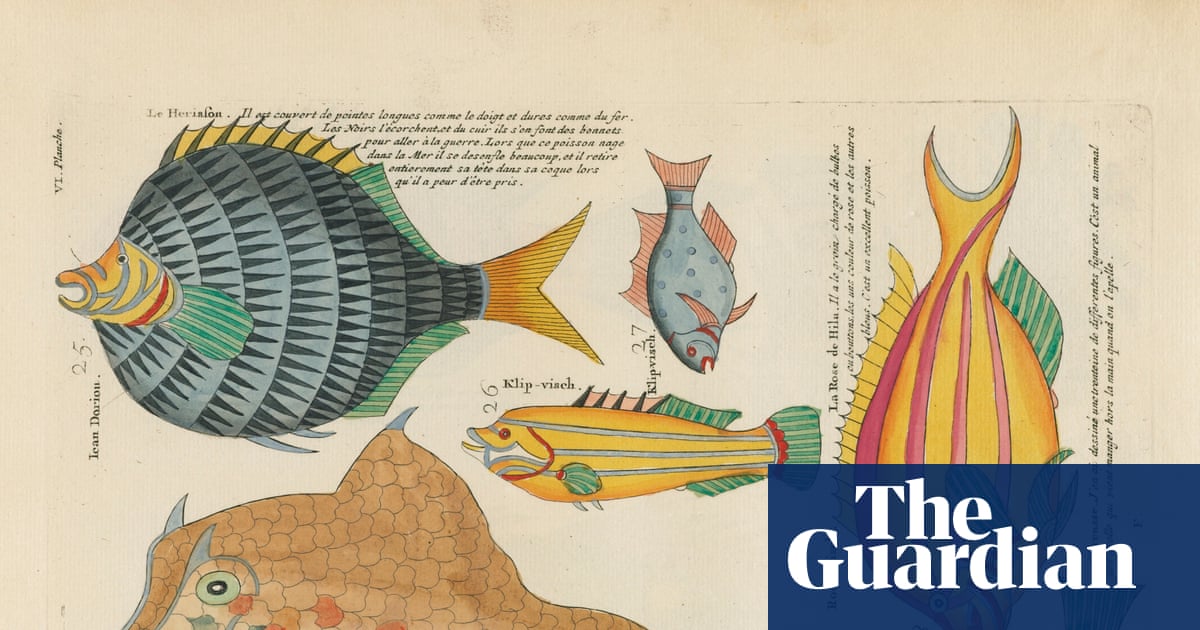
S ome go there to read about the wood that Victorian manufacturers used to make walking sticks. Others want to see an illustration of a Tasmanian tiger or marvel at the field diary of one of the first known botanists to explore the Antarctic.
Over the past 20 years, more than 64m pages have been made freely available through the Biodiversity Heritage Library (BHL) – a digital treasure trove for fans of the natural world. More than 680 museums, universities, libraries and scientific institutions from China, Singapore, Australia and New Zealand to Europe, Africa, Mexico, Canada and the US, have contributed to the library.
This week, a report from Royal Botanic Gardens (RBG), Kew revealed the crucial role digitisation is playing in “transforming our ability to understand and respond to the climate and biodiversity crises”, but it was the creation of the BHL 20 years ago that first demonstrated how bringing centuries of scientific knowledge online can unlock transformative discoveries and insights about the natural world.
David Iggulden, who chairs the BHL executive committee alongside his job as head of data and digital, library and archives at RBG Kew, describes the library as an invaluable and “absolutely essential” resource for scientists in the field. But it is also used by scientific researchers, environmental historians, educators, art historians, artists, citizen scientists and members of the public who – like Iggulden – simply enjoy browsing its contents on a rainy weekend.
“I just get caught up in it sometimes, looking at the various collections,” he says. “I think it’s amazing that we can explore such a vast array of different collections from very different institutions.”
As well as published biodiversity literature and journals, there are letters, illustrations, climate records, field diaries, ecosystem profiles, distribution records and manuscripts containing the original collecting stories of a particular species or detailing voyages of discovery.
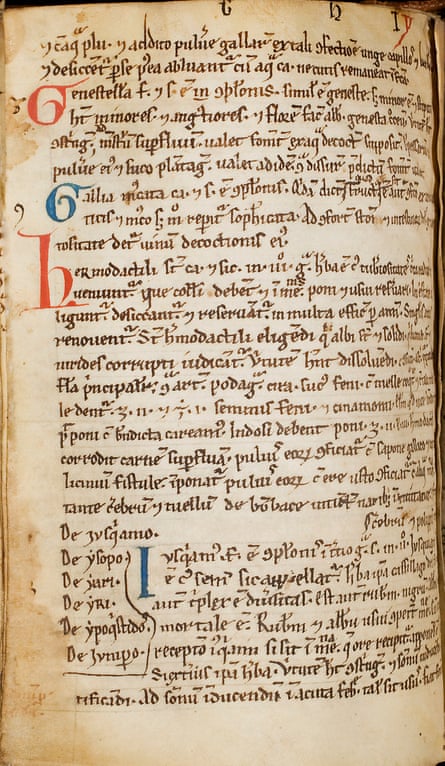
Manuscript on parchment from the Circa instans . Dating from about 1190, it is the oldest book in the digital library. Photograph: LuEsther T Mertz Library/New York Botanical Garden/Biodiversity Heritage Library
The oldest book is one of the earliest western medical manuscripts, a medieval pharmacopeia known as the Circa instans , which dates back to approximately 1190. Considered a fundamental text in the development of modern botany, it helped to provide clarity across medieval Europe by standardising plant names and their uses, and was digitised by the New York Botanical Garden last year.
Another highlight for Iggulden is an 1892 illustrated exhibition catalogue by Henry Howell & Co, a Victorian firm based in London, which marketed itself as the world’s largest manufacturer of walking sticks.
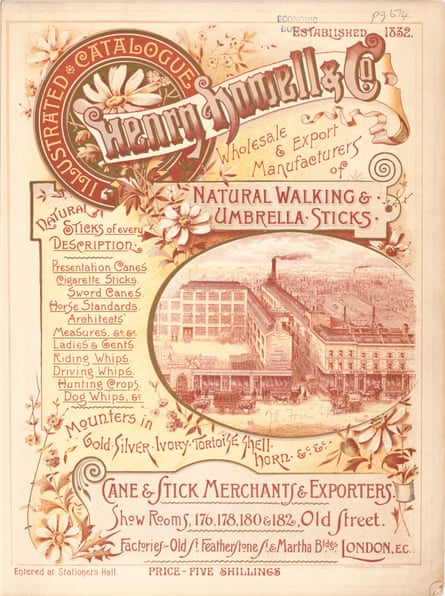
The illustrated exhibition catalogue of Henry Howell & Co. Photograph: Trustees of the Royal Botanic Gardens, Kew/Biodiversity Heritage Library
Catalogues such as this are helpful for scientists studying plants used for economic purposes, as well as the importance and characteristics of wood, and how wood has been used over history, he says. “It’s a really fascinating find – and quite different to what you’d expect in the BHL.”
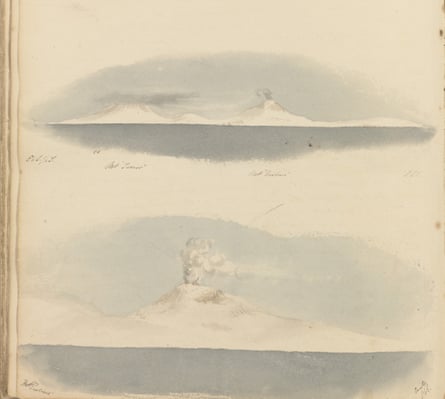
Watercolour sketches from Sir Joseph Hooker’s illustrated Antarctic journal. Photograph: Trustees of the Royal Botanic Gardens, Kew/Biodiversity Heritage Library
One of the most significant books in the collection is the botanist Sir Joseph Hooker’s illustrated Antarctic journal , which includes his watercolour sketches of two volcanoes, first sighted in 1841 on his expedition to the continent with Capt James Clark Ross. “It’s the personal account of Hooker’s adventure … to the Antarctic and the sights he saw there,” says Iggulden.
Being able to share such unique, handwritten manuscripts with the world fulfils one of the key aims of the BHL, says Nicole Kearney, who leads the Australian branch of the library, based at Museums Victoria. “I once uploaded a handwritten field diary about birds in Australia, and someone who was studying the flooding of the river in the region wrote to me and said: ‘you’ve just given me this incredible resource where I’m able to tell every time this river flooded between 1947 and 1957’ because it was written down in this diary in the mid-20th century – which I thought was all about birds.”
During the pandemic, historical journals uploaded to the BHL helped scientists to show that there had been a “massive change” in the distribution and abundance of rare Australian orchids during the “black summer” of the wildfires , in late 2019 and early 2020. “That meant that those orchid species could be reassessed and their threatened species status was changed as a result,” Kearney says.
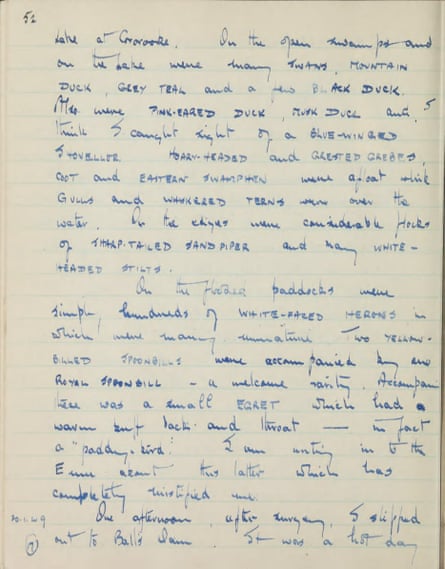
Handwritten pages from the 1947-1957 Australian ornithological field diaries of A Graham Brown. Photographs: Museums Victoria/Biodiversity Heritage Library
When she talks about the role that BHL plays for scientists, she often quotes Charles Darwin: “The cultivation of natural science cannot be efficiently carried on without reference to an extensive library.”
She says: “I’m sure Darwin would agree that, in today’s world, it is essential that we can access the world’s biodiversity knowledge online. And that this knowledge is freely accessible for everyone.”
One of her favourite books in the collection is The Mammals of Australia by the British naturalist John Gould , published in 1863. It features an arresting illustration of a Tasmanian tiger, a native Australian marsupial which was hunted to extinction after it was – perhaps erroneously – blamed for killing sheep. “The last one died in a zoo in Tasmania in 1936,” says Kearney. “It was such a stunning creature. It had a pouch but looked very much like a dog or wolf with stripes. There is nothing else like it in Australia, it’s like nothing in existence today.”
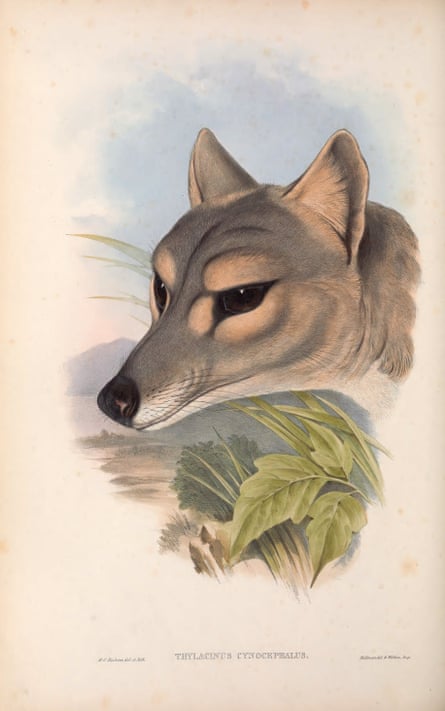
The entry for the thylacine, or Tasmanian tiger, in The Mammals of Australia (1863), by British naturalist John Gould. Photographs: Smithsonian Libraries and Archives/Biodiversity Heritage Library
The BHL Flickr album is followed by tens of thousands of people and highlights some of the more unusual copyright-free illustrations in its collection (some of which have been turned into an award-winning jigsaw puzzle app, The Art of Fauna ).
One popular album is Louis Renard’s 18th-century book, Poissons, Ecrivisses et Crabes , which was uploaded to the BHL in 2016. It features an illustration of a mermaid and other imaginary creatures mixed in among the scientifically accurate representations of real fishes, crayfishes and crabs.
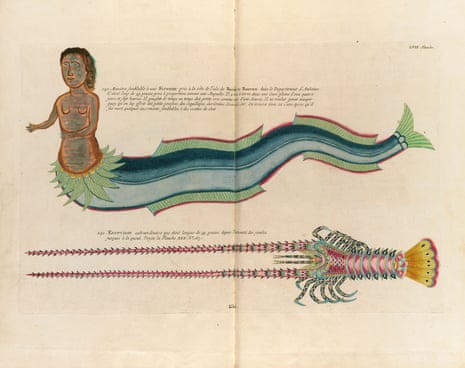
The mermaid and another imaginary creature illustrated in Poissons, Ecrevisses et Crabes by Louis Renard, 1754. Photograph: Ernst Mayr Library/Museum of Comparative Zoology/ Harvard University/Biodiversity Heritage Library
“It was originally published in 1719 and is considered to be the very earliest known publication in colour on fish, yet about 10% of the species are actually completely fantastical,” says Kearney. “It’s a really important part of scientific literature from the age of enlightenment, [when] people were going out and reaching parts of the world that had never been seen before. Artists would interpret what people had told them and they would copy drawings from other artists who may not have ever seen the species,” says Kearney. “They believed they were all real.”
T he BHL was born 20 years ago after librarians came up with a radical idea to improve global research into climate change and biodiversity loss at a transformative moment in internet history. It was the dawn of web 2.0, when using the internet for networking and socialising was starting to become fashionable, and a sense of optimism and opportunity was in the air. What if 10 prominent museums and institutions in the UK and the US digitised their historic biodiversity literature collections to create one online library that every scientist around the world could access for free?
At the time, the idea of working internationally on a mass digitisation project was “really revolutionary”, says Iggulden.
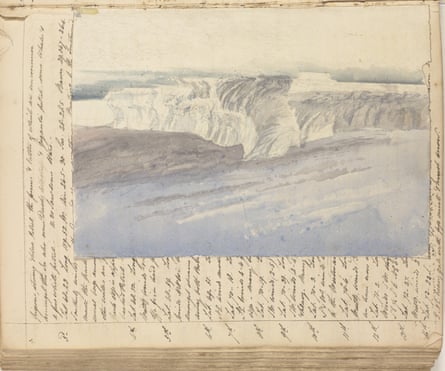
An excerpt and illustration from Sir Joseph Hooker’s illustrated Antarctic journal 1839-43. Photograph: Trustees of the Royal Botanic Gardens, Kew/Biodiversity Heritage Library
Today, however, the future of the world’s largest open-access digital library for biodiversity literature is under threat. Earlier this year the Smithsonian Institution, which has faced severe funding cuts under the Trump administration , stopped hosting the BHL’s administration functions, paying some staff wages and supporting its technical infrastructure. “A ‘tick over budget’, just to keep it running as it is, would be ideally about a million dollars a year – and we only have funding, we estimate, until the end of 2027,” says Iggulden.
“It would be just horrendous – devastating, really – to lose it after coming so far and unlocking so much.”
Even additions to the library’s Flickr page were paused because “we don’t have the resources to keep adding to it”, says Kearney. “There is so much more functionality we could bring in [to the BHL] if we had the money to incorporate AI, improved optical character recognition software and a mobile-friendly and multilingual platform,” she says.
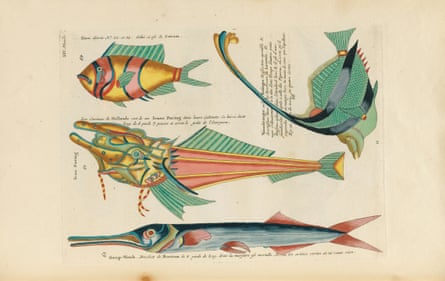
Illustrations from Poissons, Ecrevisses et Crabes by Louis Renard, 1754. Photograph: Ernst Mayr Library/Museum of Comparative Zoology/ Harvard University/Biodiversity Heritage Library
Iggulden says the potential for BHL to use AI to unlock data is huge. “AI is a real positive for BHL,” he says. “The library contains vast quantities of taxonomic, geographical, ecological and specimen-level knowledge that remains inaccessible to modern computational workflows. So, unlocking this at scale would create new opportunities for biodiversity synthesis, collections linkage, historical ecological analysis and AI-assisted scientific discovery.”
Kearney says the journey of enlightenment told by the books in the BHL can remind us of how much we still don’t know about the natural world, and help us to rediscover a sense of wonder and awe about the species which have – and have not – gone extinct.
“The BHL is fundamental to our understanding of all the species that we share this world with, and our ability to save them,” says Kearney. “We now have 64m pages of knowledge at our fingertips, which we need to make more discoverable and accessible. There’s so much more we could be doing.”
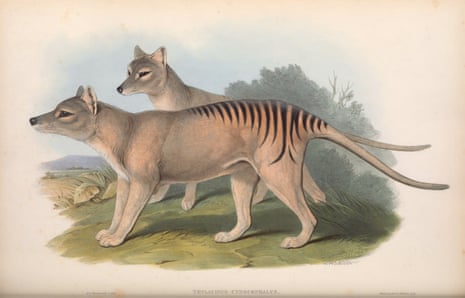
John Gould’s illustration of the thylacine, also known as the Tasmanian tiger or Tasmanian wolf, in his 1863 book, The Mammals of Australia. Photograph: Smithsonian Libraries and Archives/Biodiversity Heritage Library
Readers can help secure the future of the Biodiversity Heritage Library, and keep its collections free and open to the world, via the Donate button at biodiversitylibrary.org .